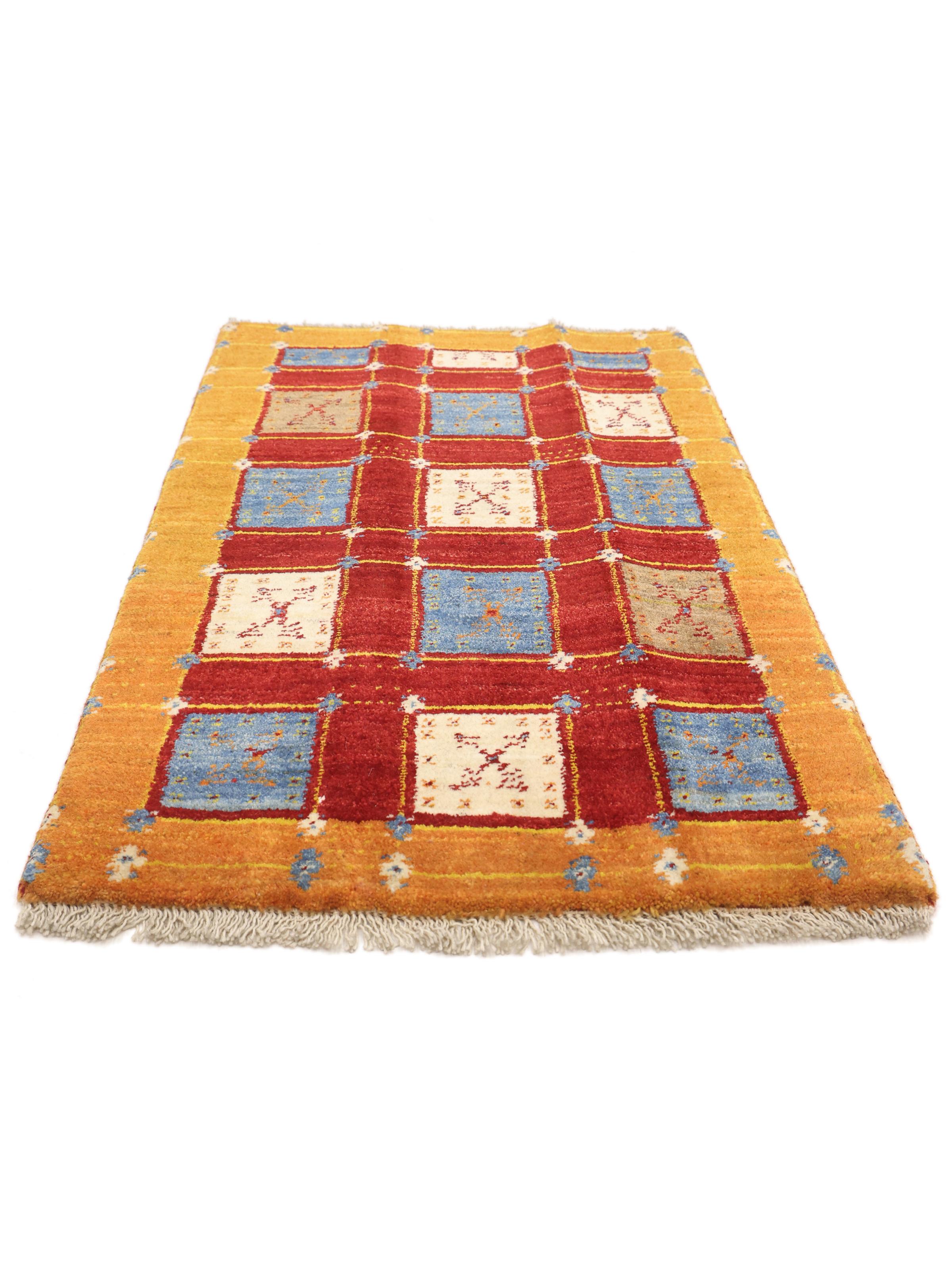
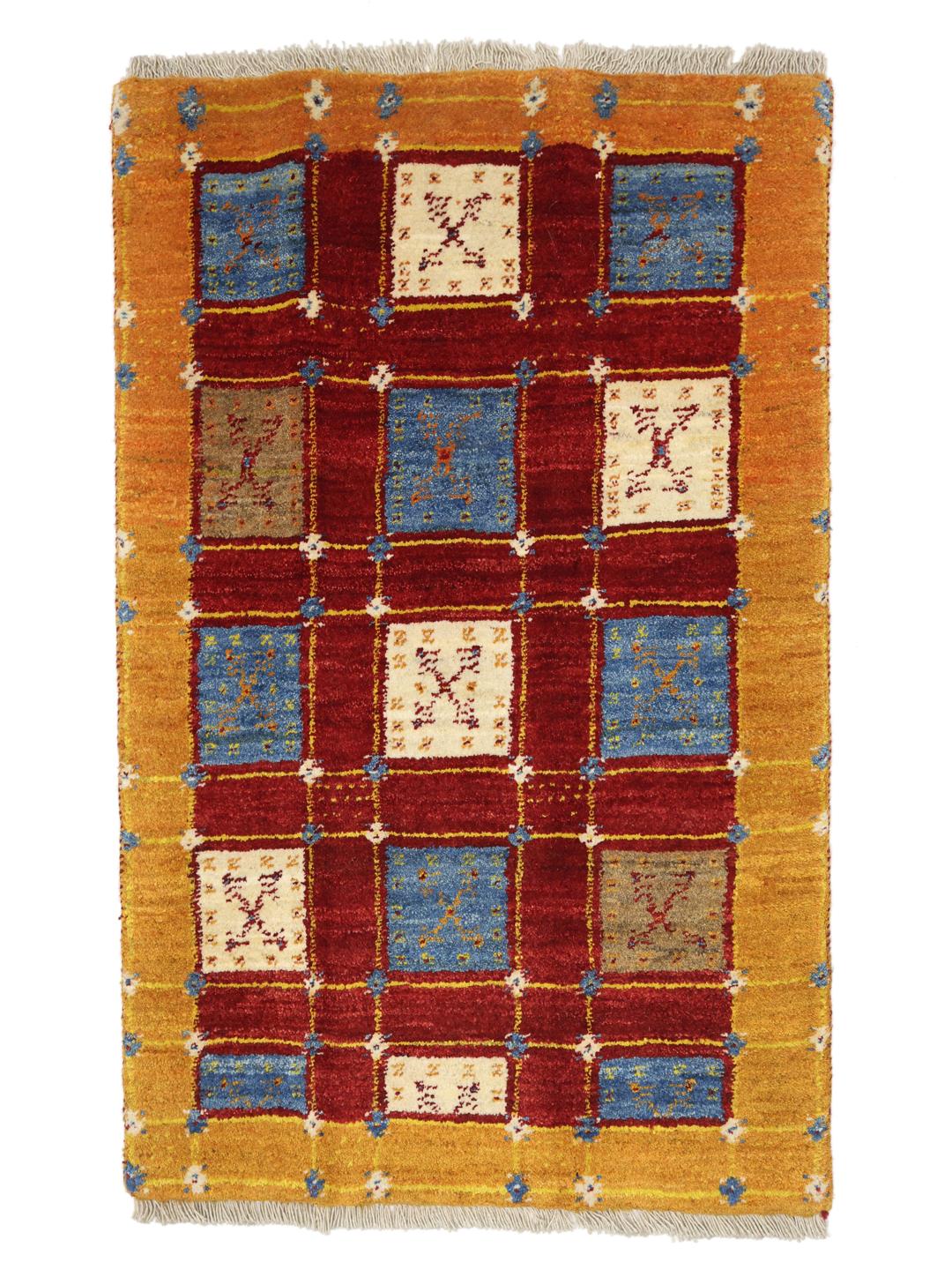
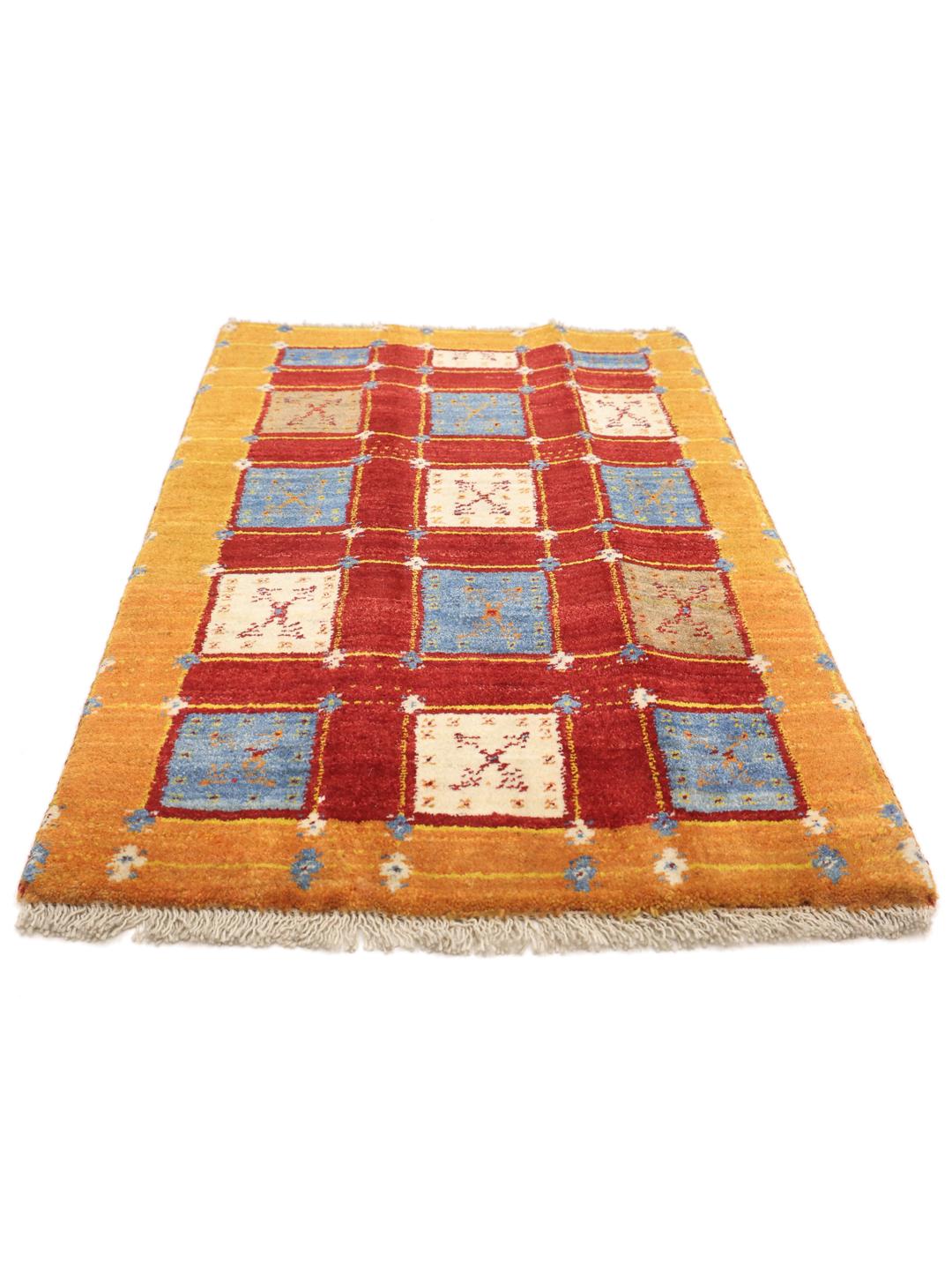
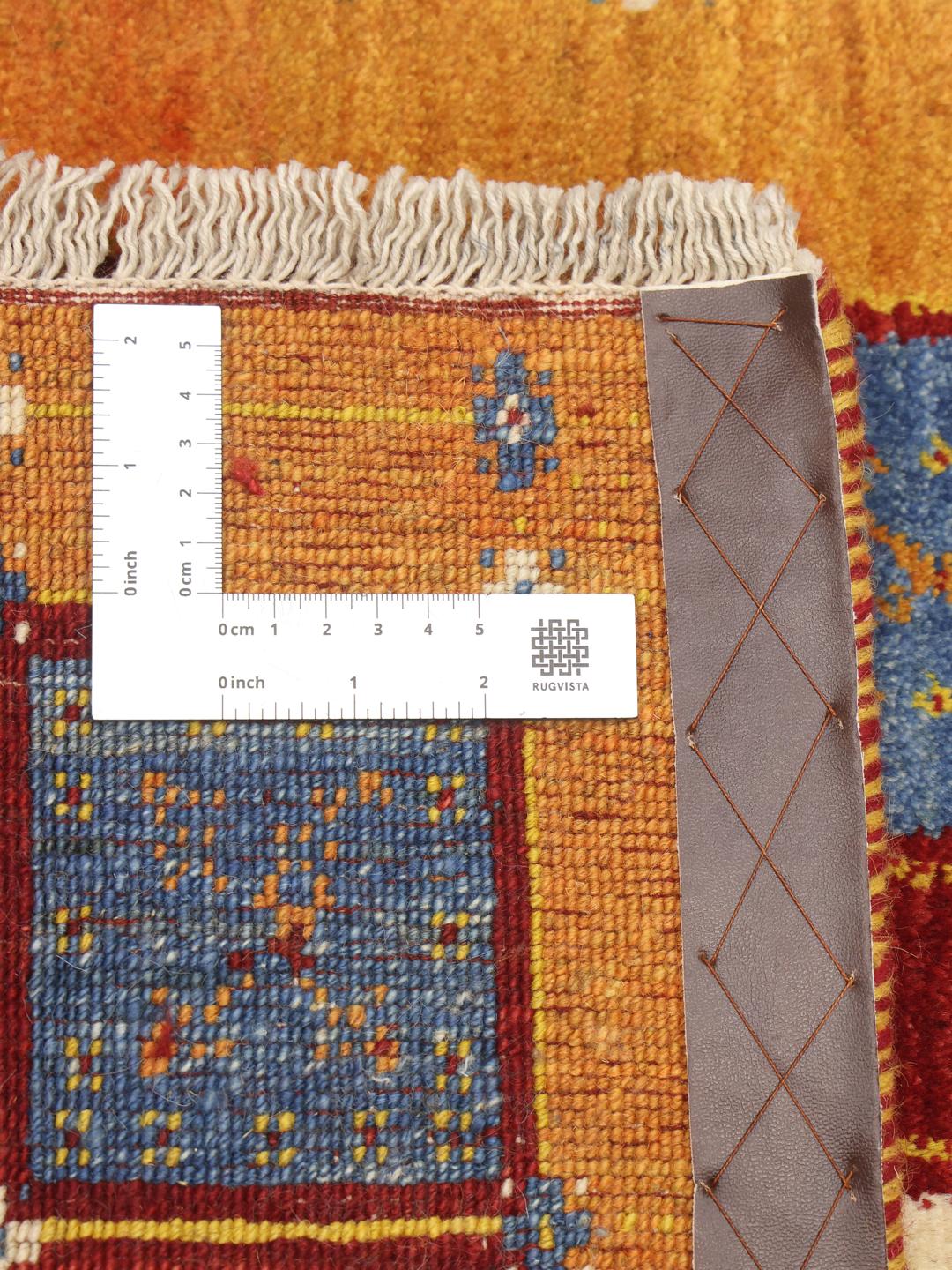
Gabbeh rugs trace their roots back to nomad communities across the Middle East, where they were originally woven as thick, cozy floor coverings and bedding for tents. Over time, the weaving tradition expanded into specialist workshops across Pakistan, where weavers adapted these traditional designs using refined hand-knotting techniques.
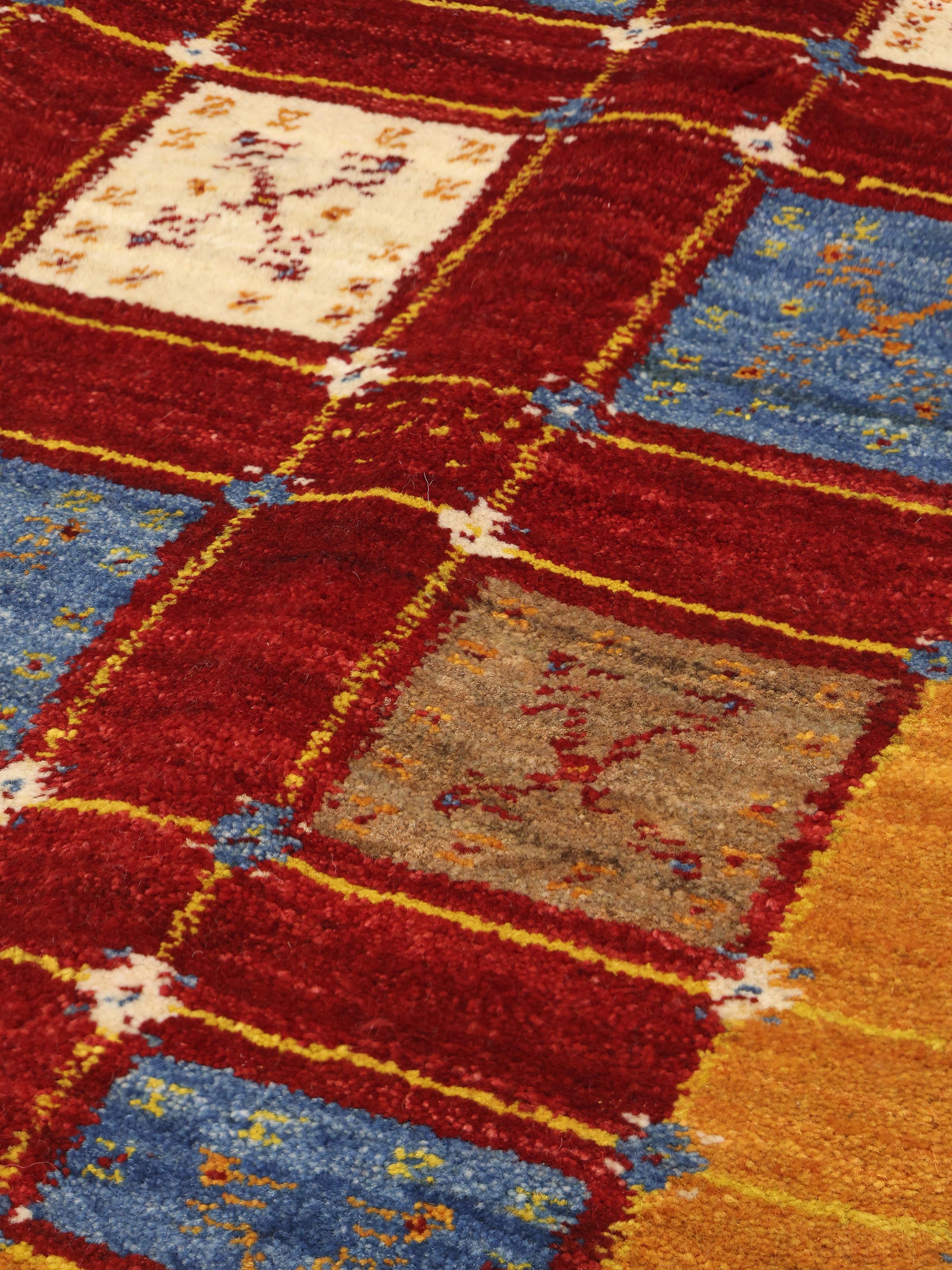
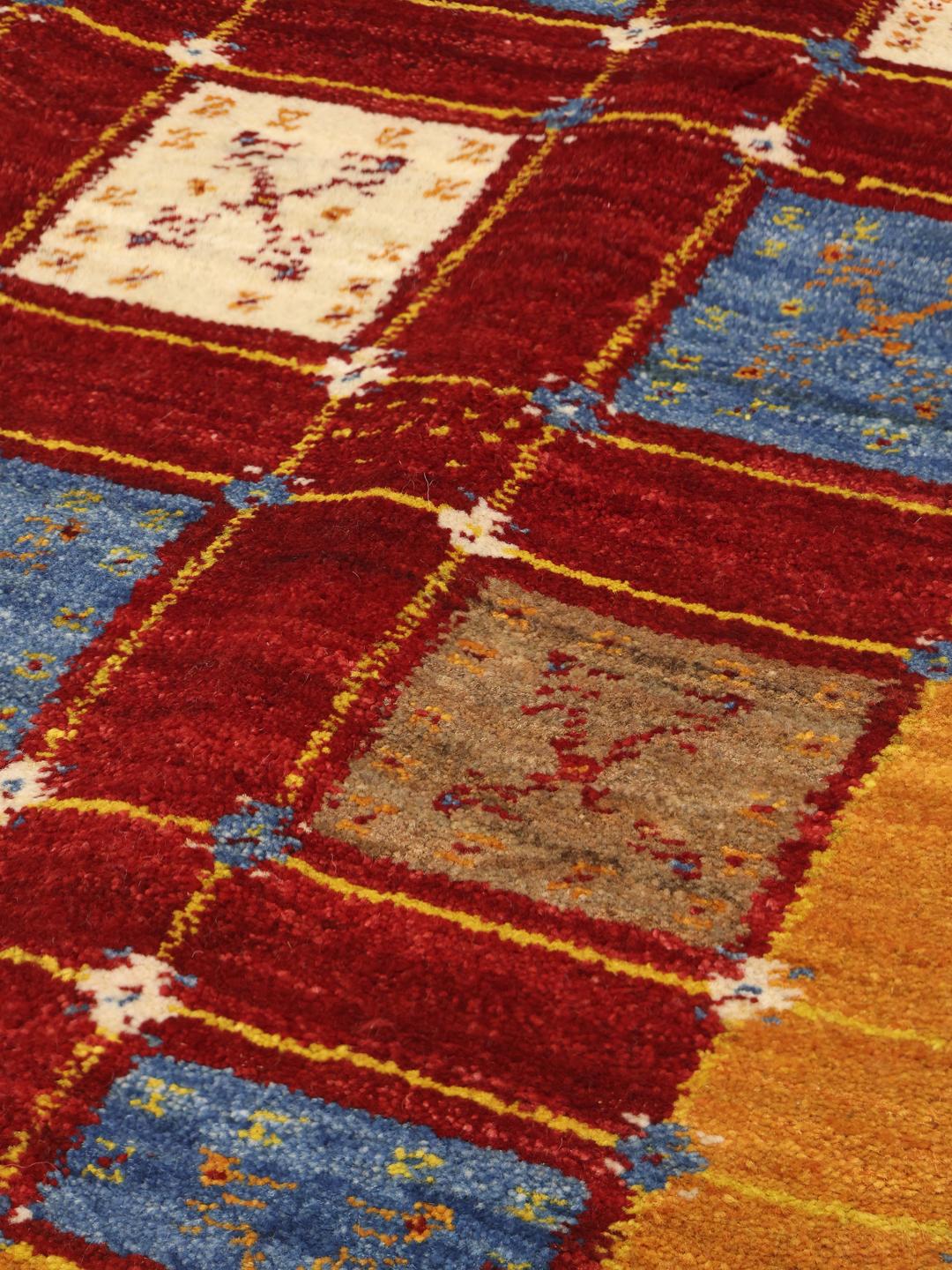
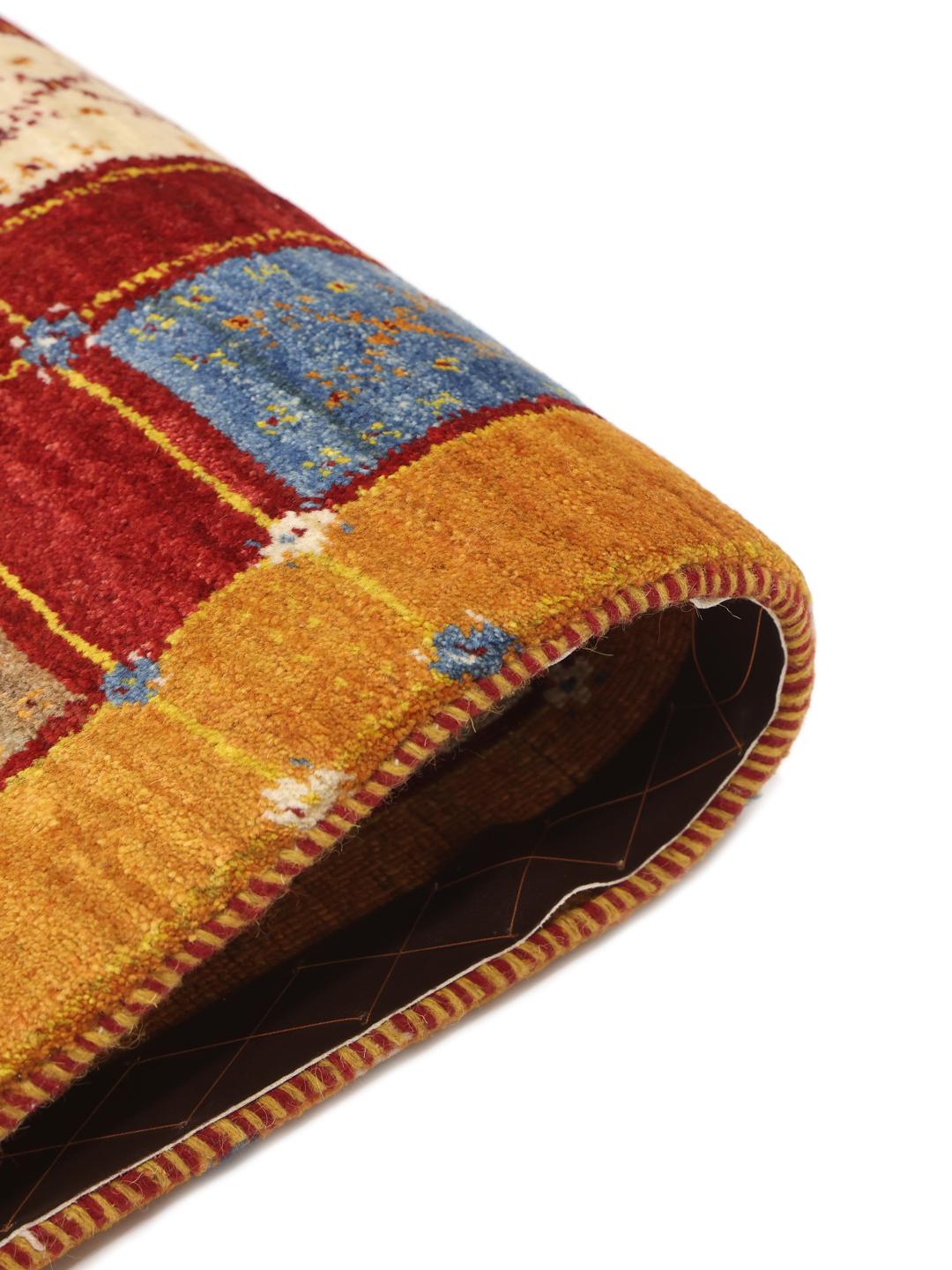
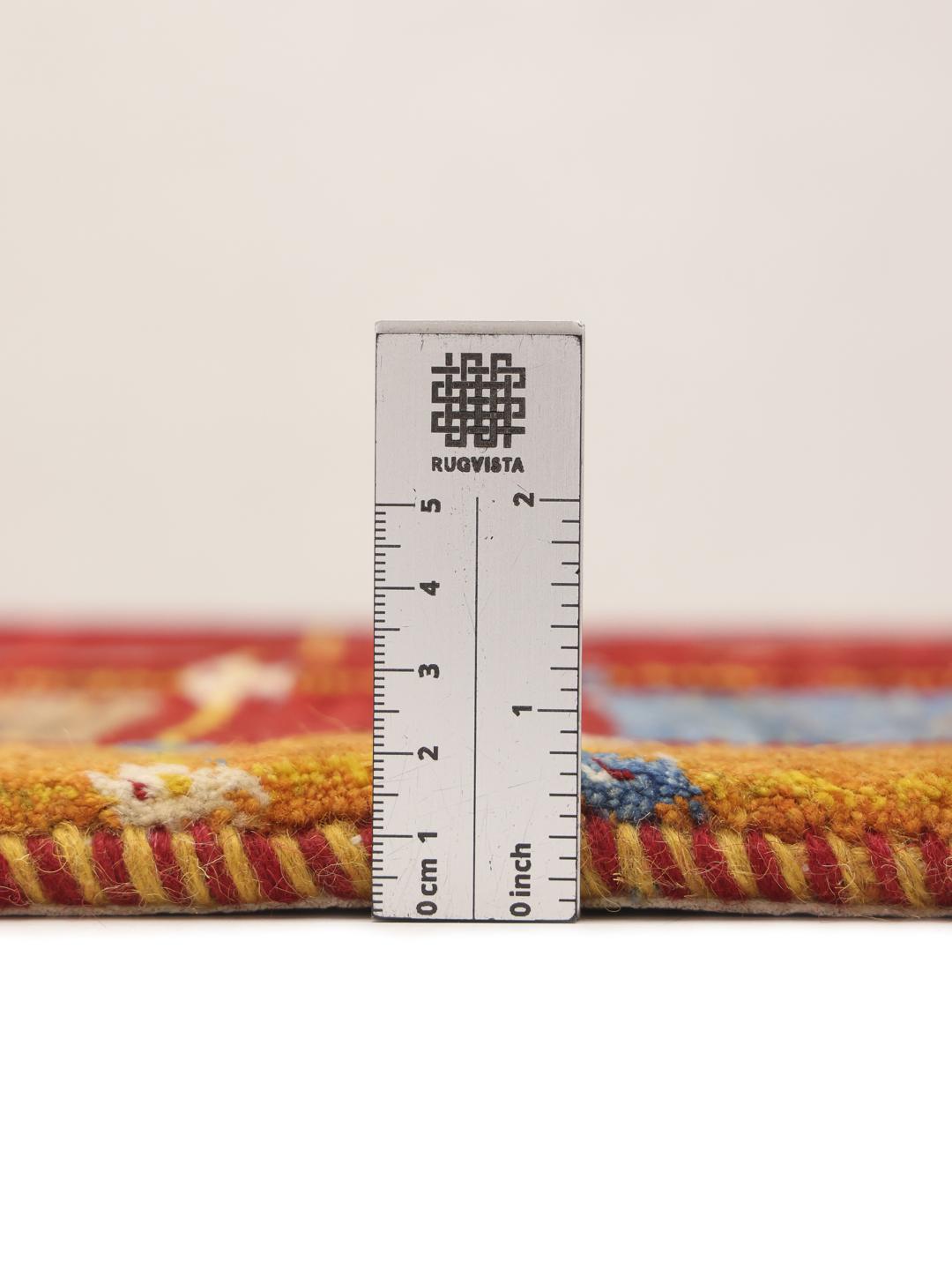
The term Gabbeh translates roughly to raw or natural, referencing the thick pile and expressive, uncomplicated patterns that define the style. By using robust natural wool and traditional hand-knotting, weavers create a dense pile that holds warmth exceptionally well and resists everyday wear.
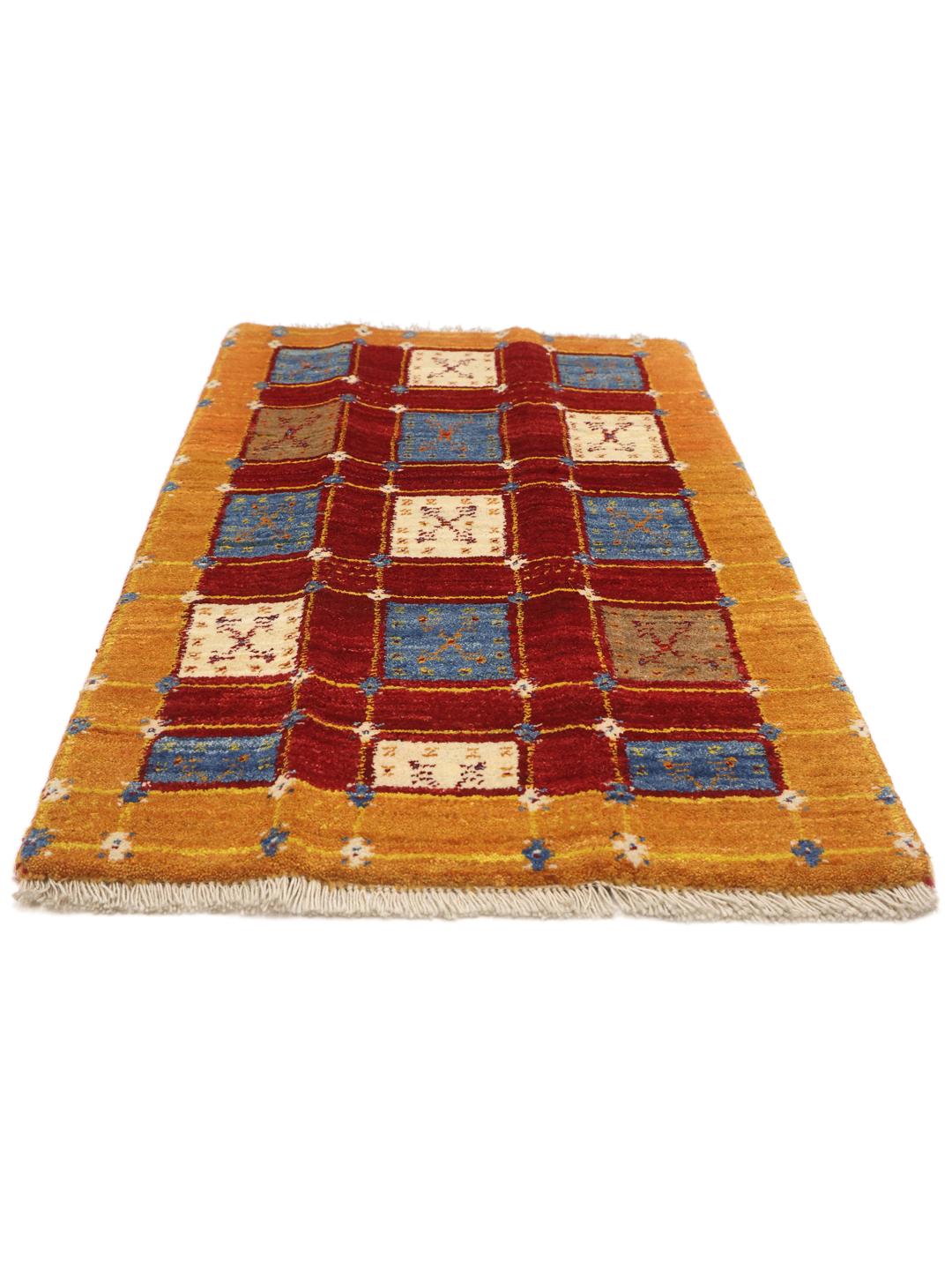
Visually, Gabbeh rugs are famous for their bold blocks of colour, playful grid layouts, and primitive tribal motifs. While traditional nomadic versions featured simple central fields, Pakistani Gabbeh rugs often incorporate structured borders and geometric lattice patterns that balance rustic charm with formal symmetry.
Valued by collectors and interior enthusiasts alike, Gabbeh rugs are celebrated for their authentic artistic expression. Because each rug is knotted individually without a rigid pattern template, every piece remains a genuine, non-replicable expression of textile heritage.