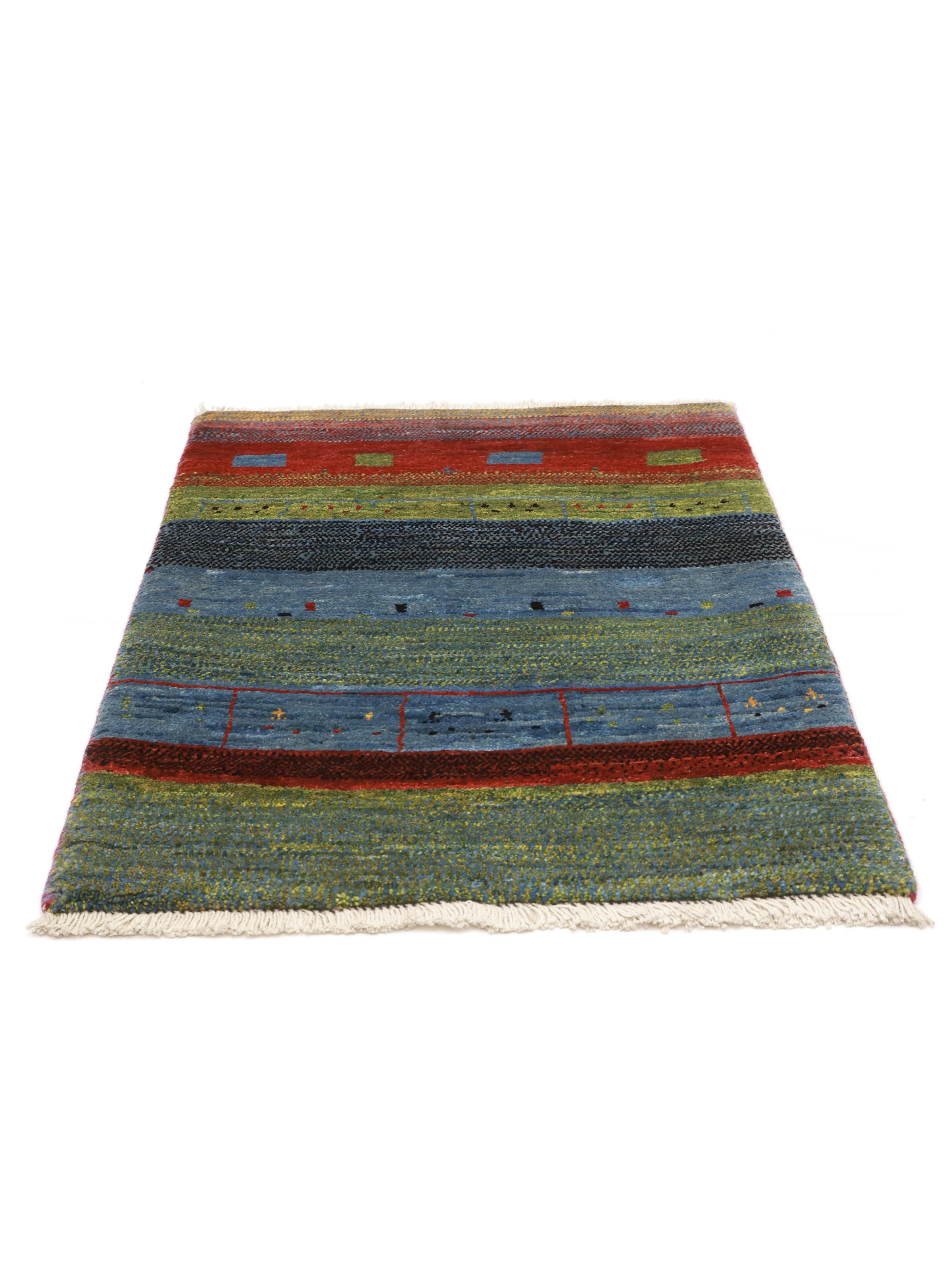
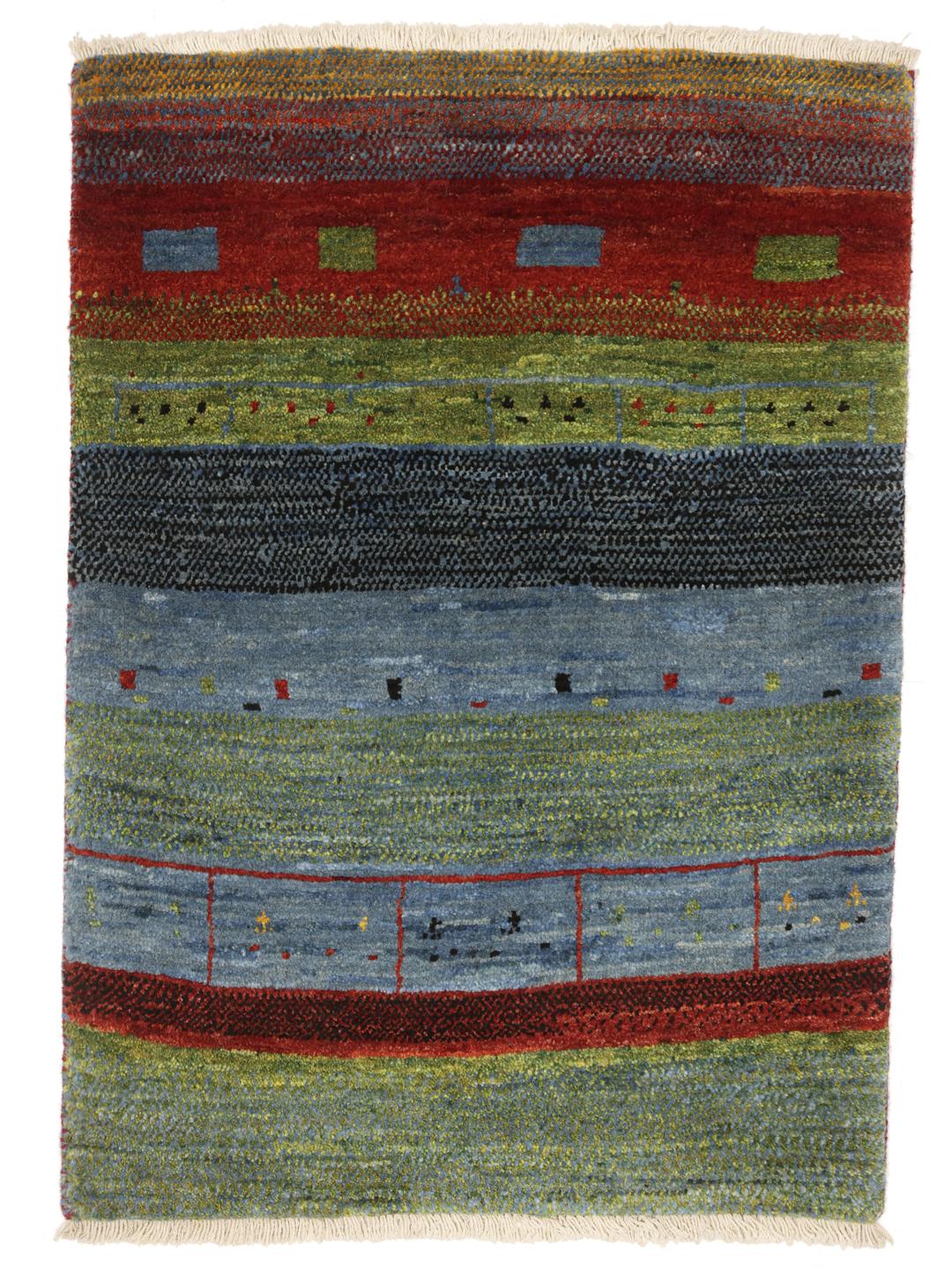
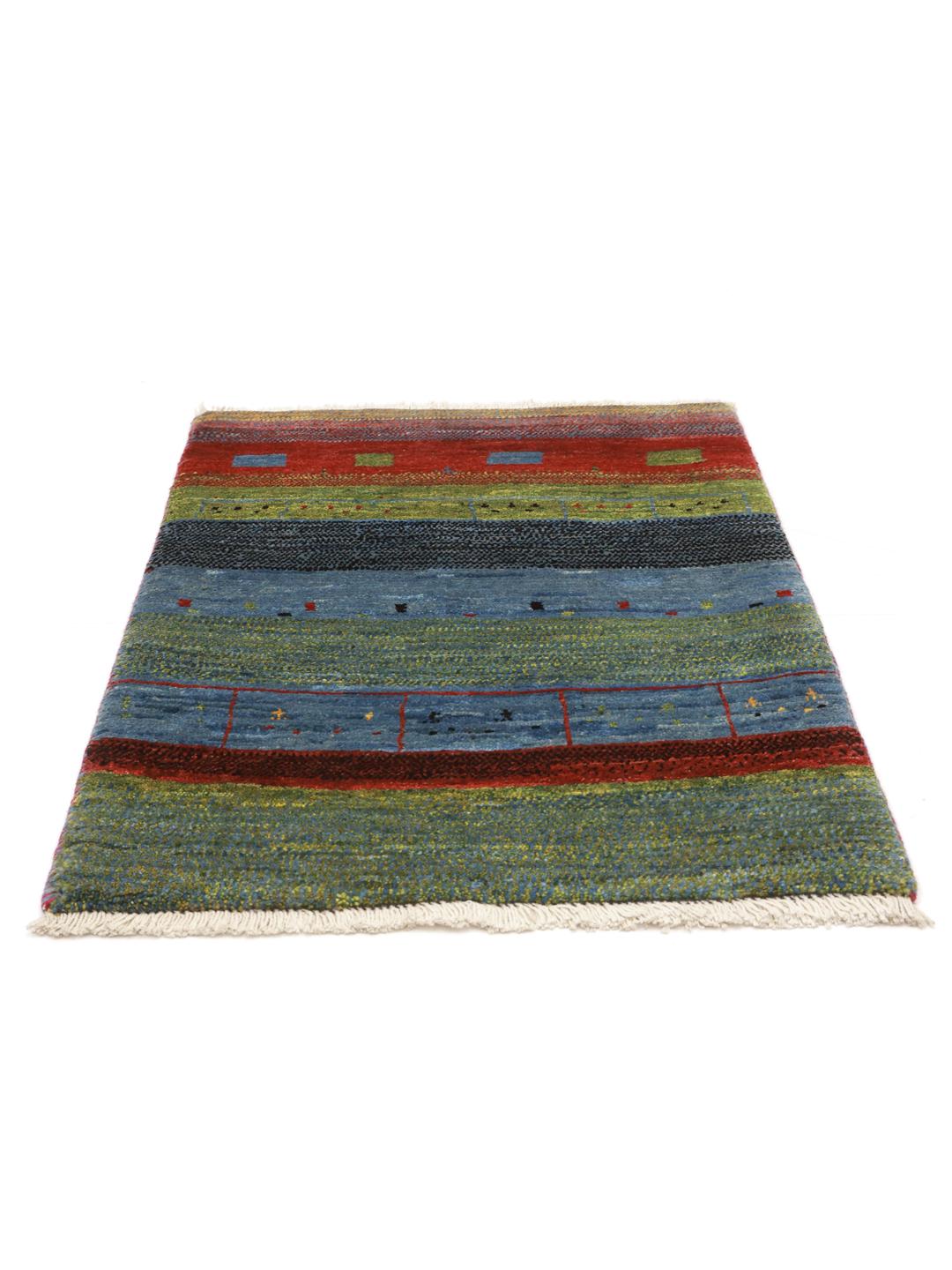
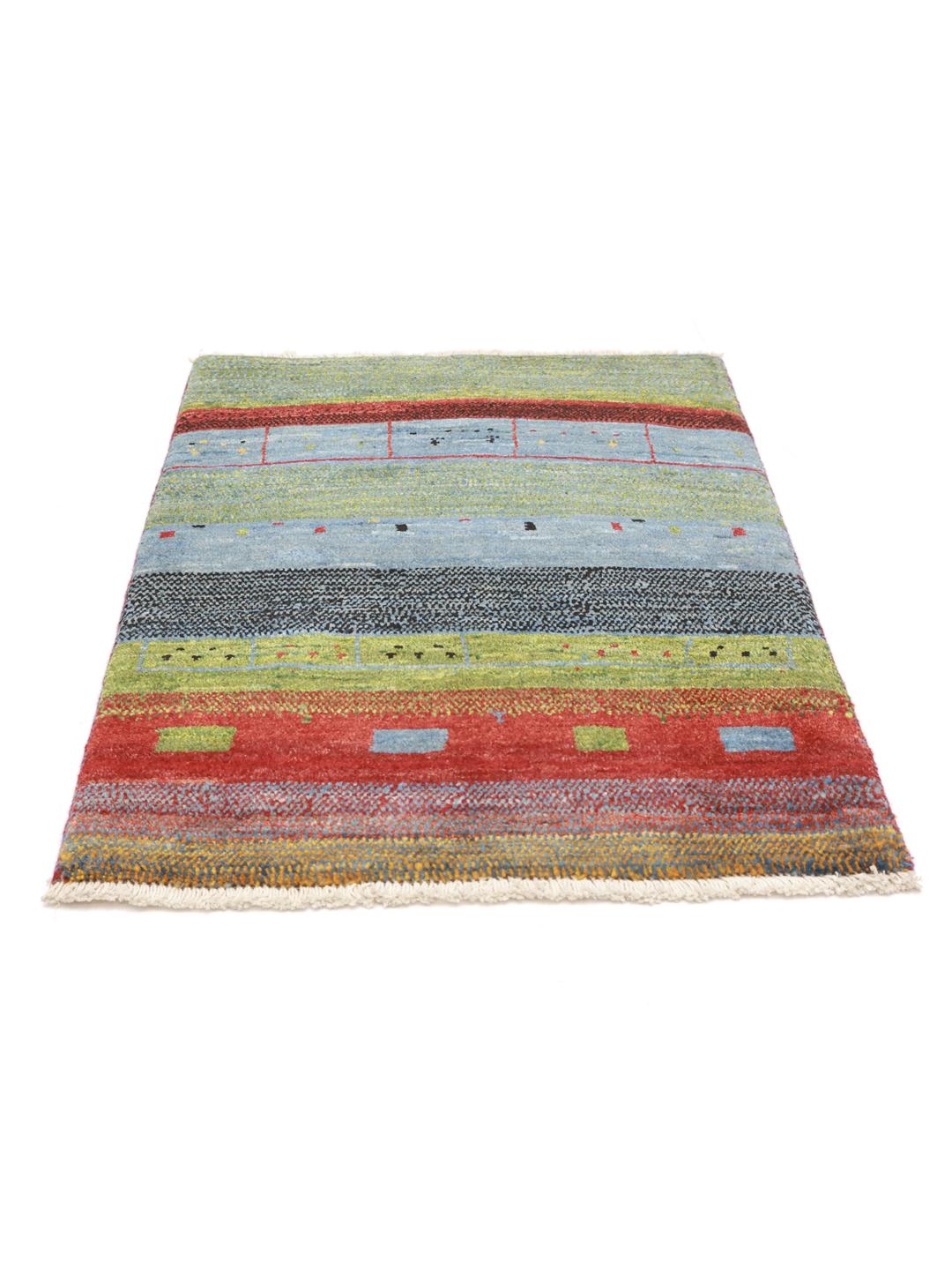
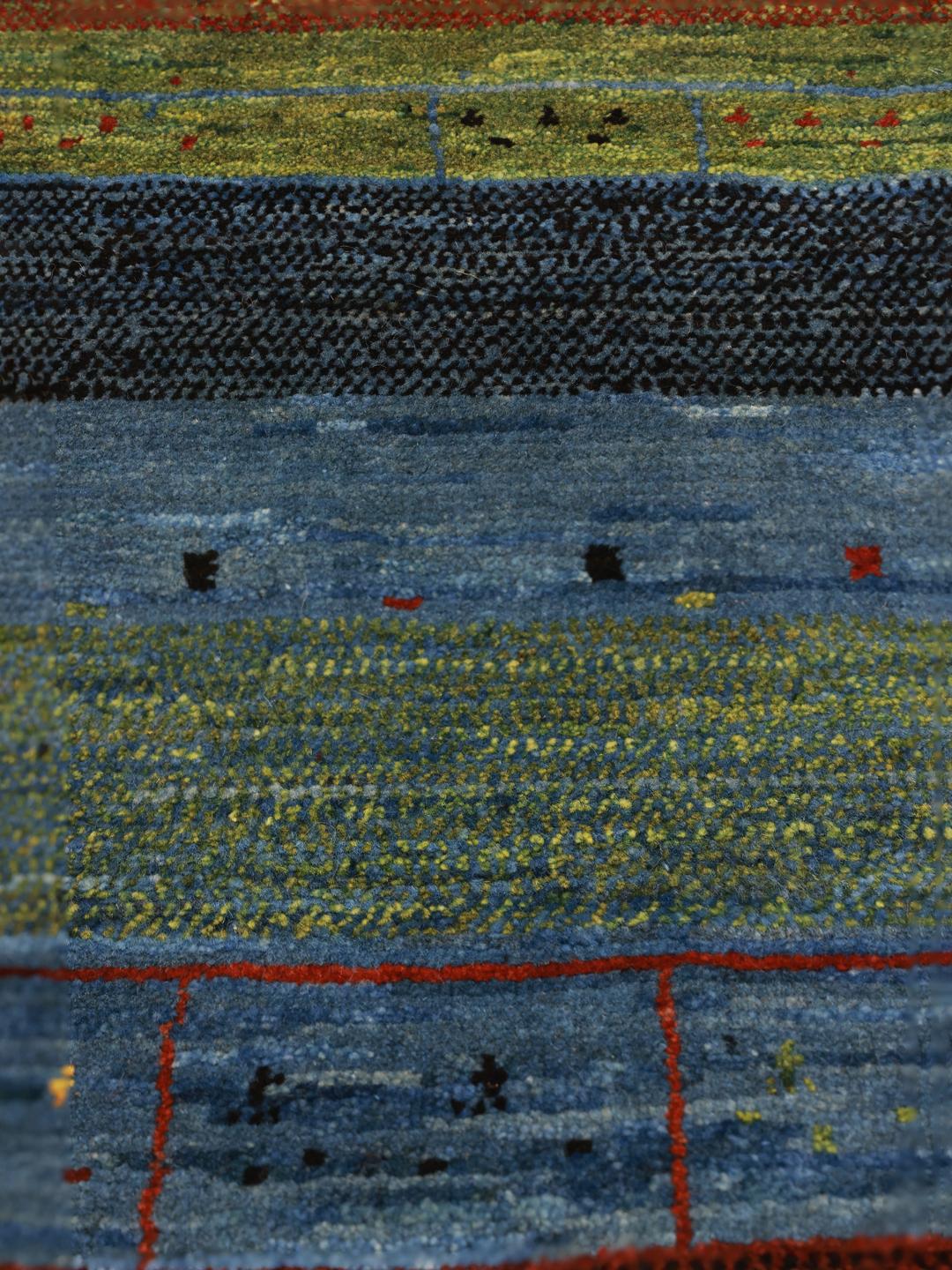
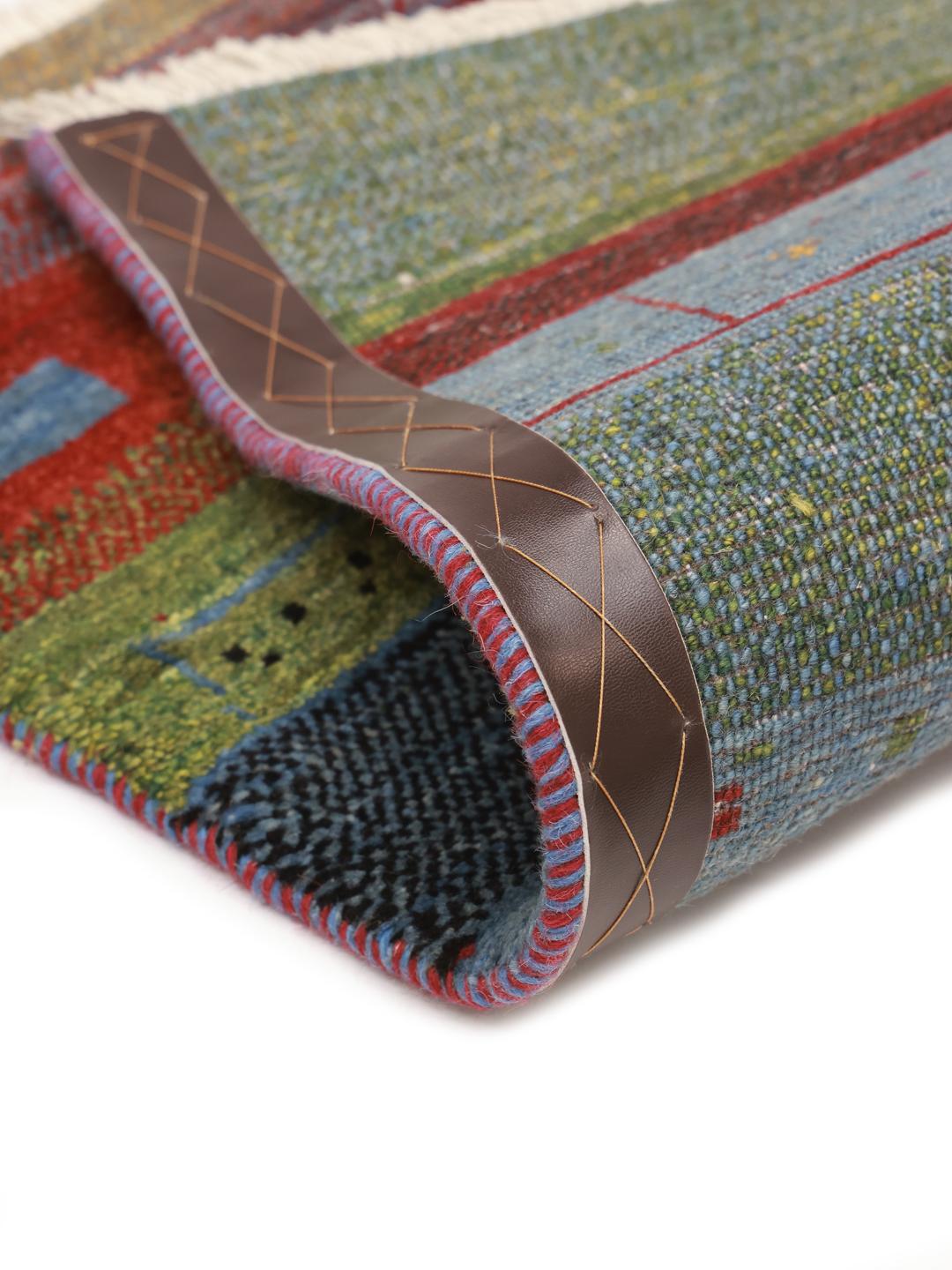
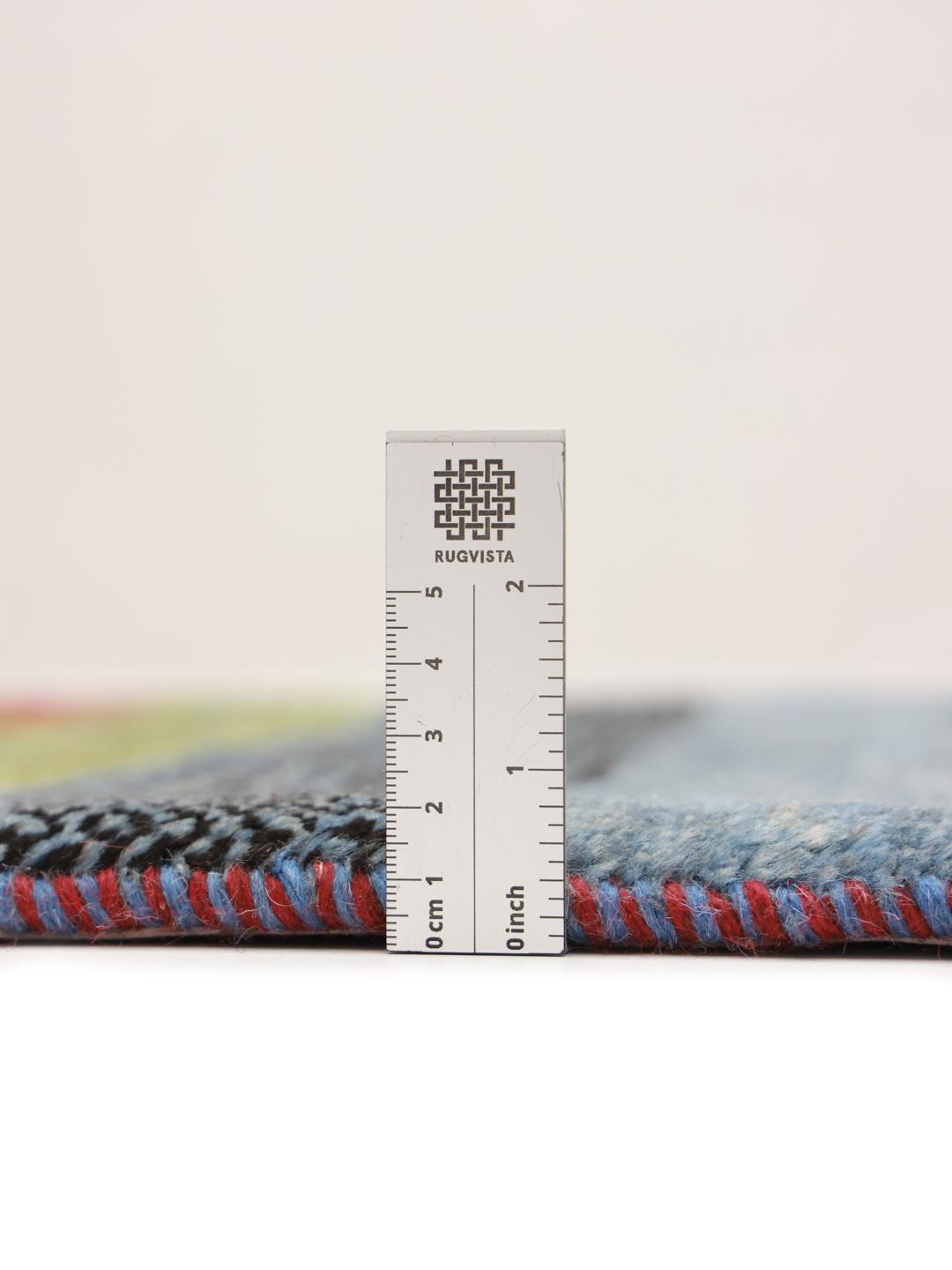
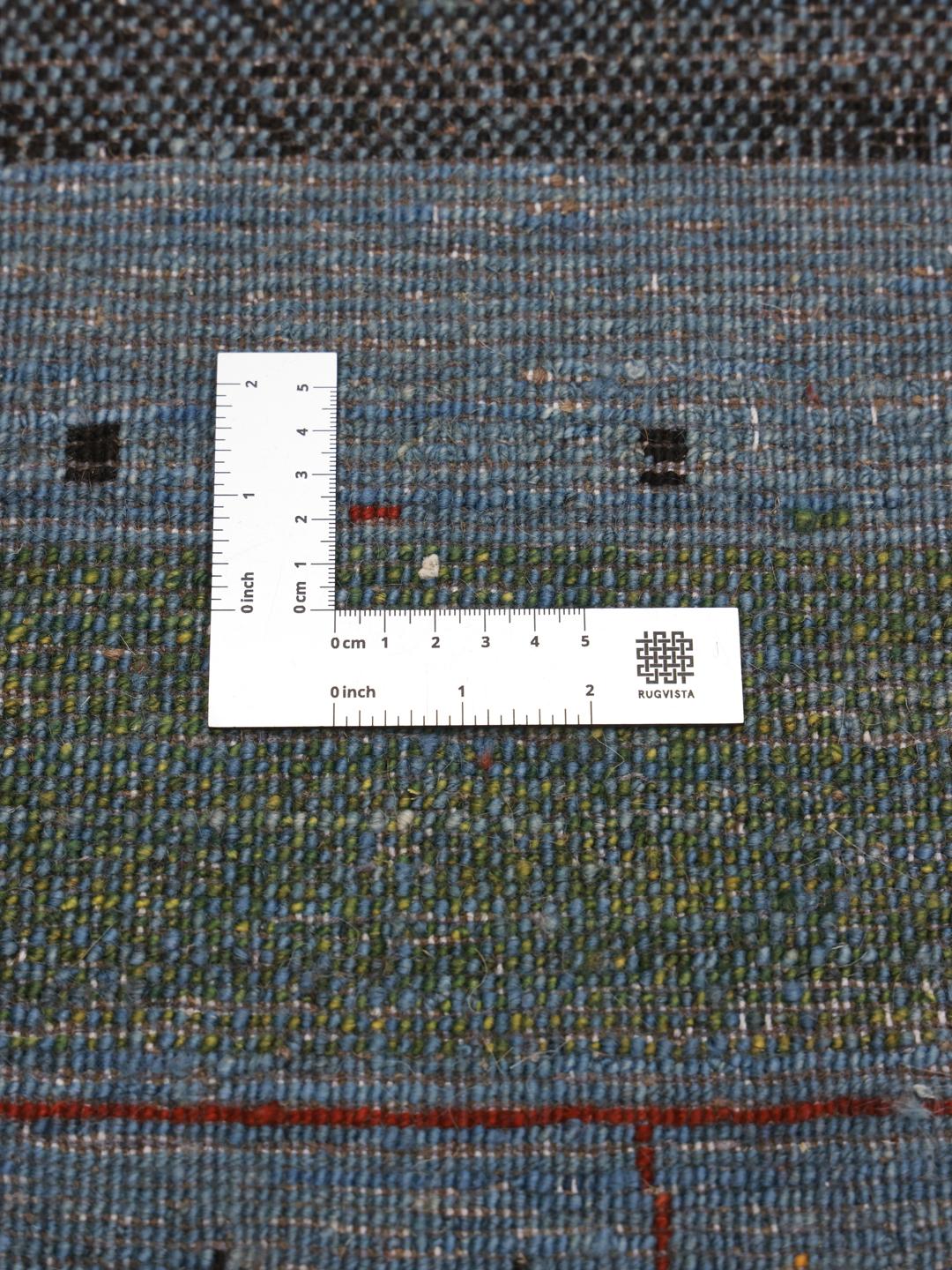
Gabbeh rugs were originally woven by nomadic tribes across the Middle East as practical, soft floor coverings and sleeping blankets for tents. Traditionally crafted for personal family use rather than commercial trade, these rugs were defined by thick piles, simple geometric motifs, and rich natural dye colors.
Over time, the Gabbeh tradition spread across neighboring weaving regions, including Pakistan. Weavers adopted the characteristic thick pile and open design style, combining traditional tribal iconography with local hand-knotting expertise to create pieces that fit beautifully into modern living spaces.
The visual language of a Gabbeh rug relies on abstract, playful compositions rather than rigid symmetry. Simple animal motifs, geometric blocks, and horizontal color fields are woven spontaneously from memory, turning each rug into a personal expression of the artisan's daily environment and heritage.
Today, Gabbeh rugs are highly valued by collectors and homeowners alike for their contemporary feel and authentic roots. Acquiring a hand-knotted Gabbeh means bringing a piece of living textile history into your interior, defined by lasting quality and honest craftsmanship.