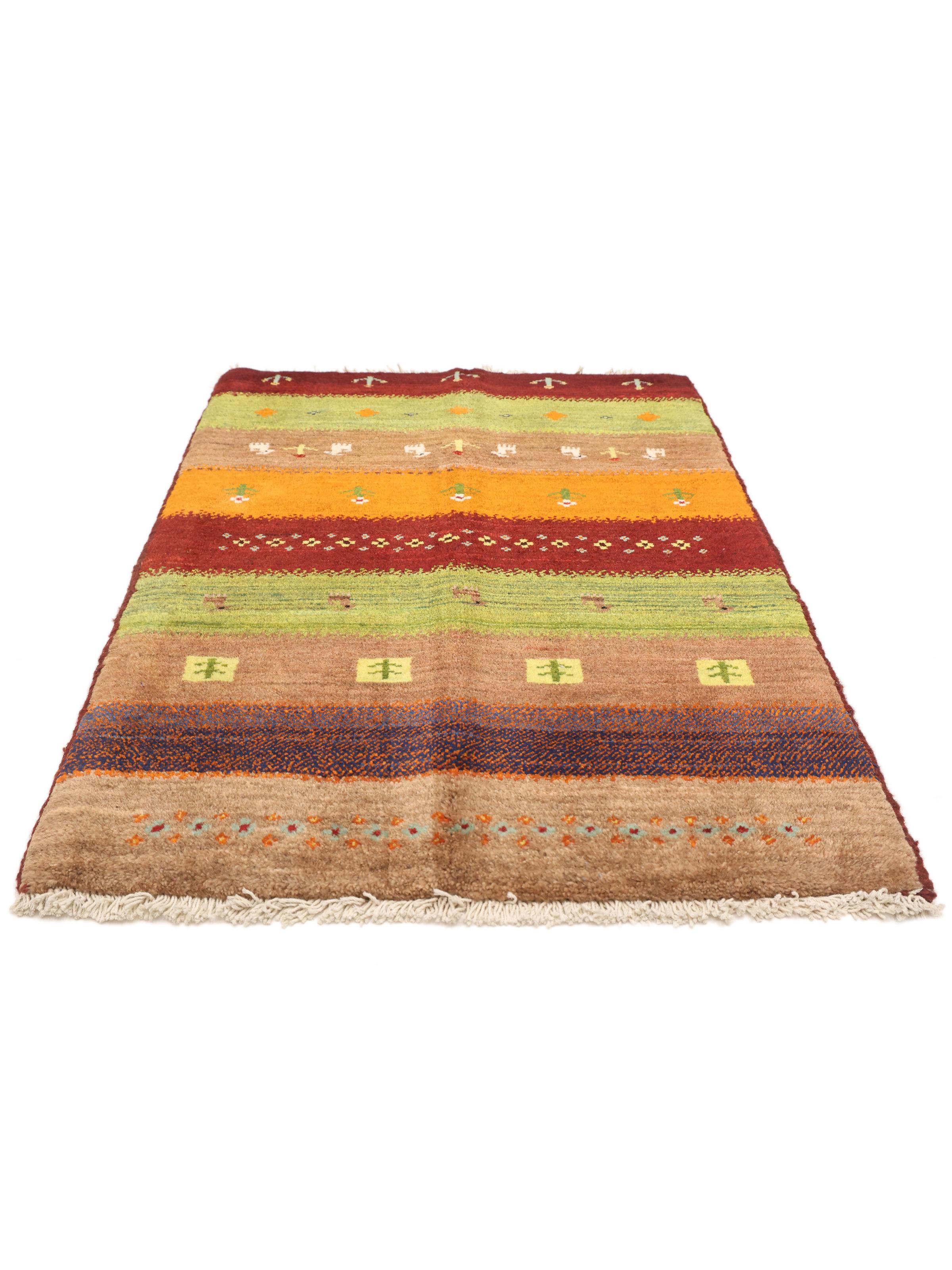
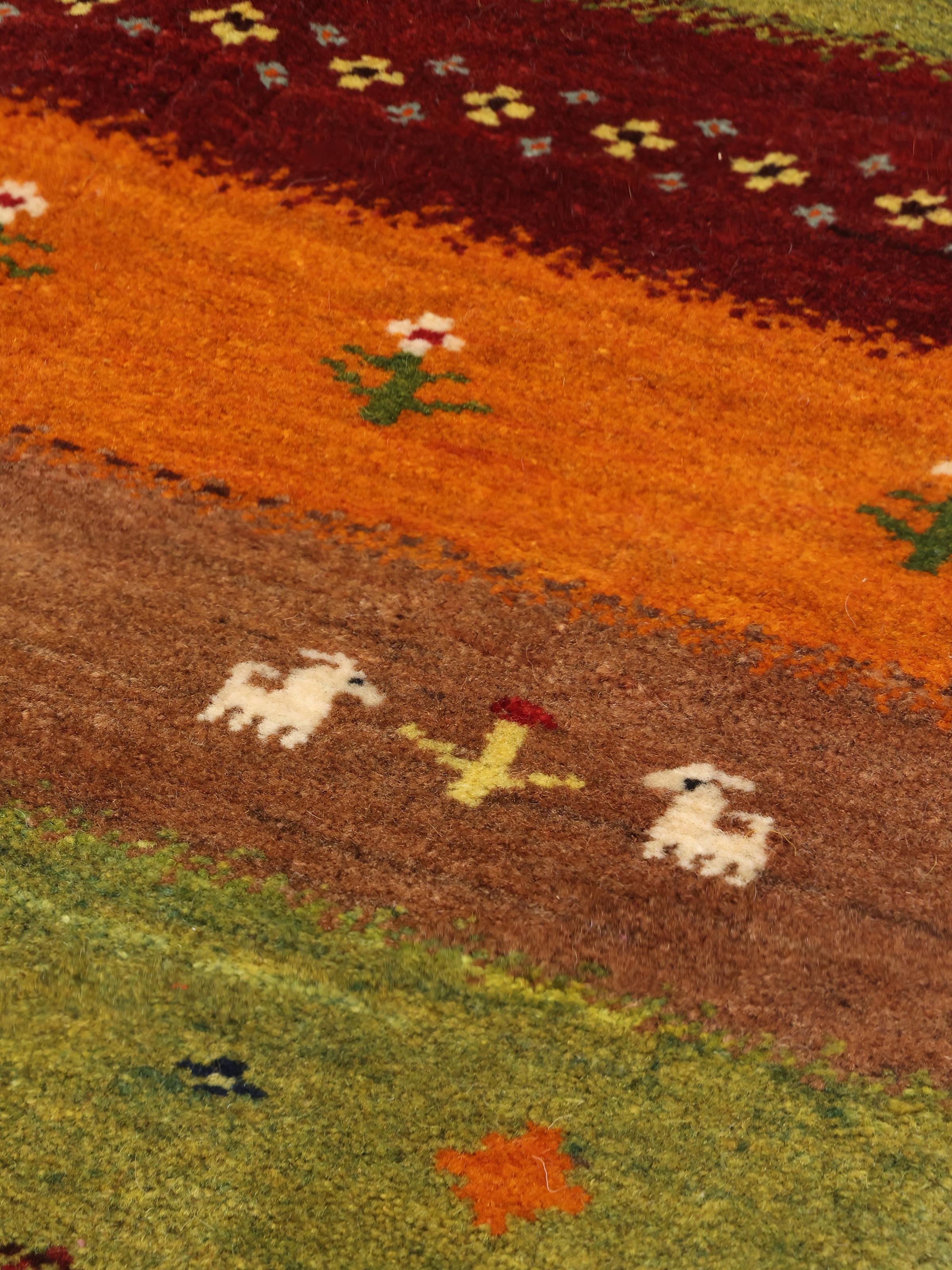
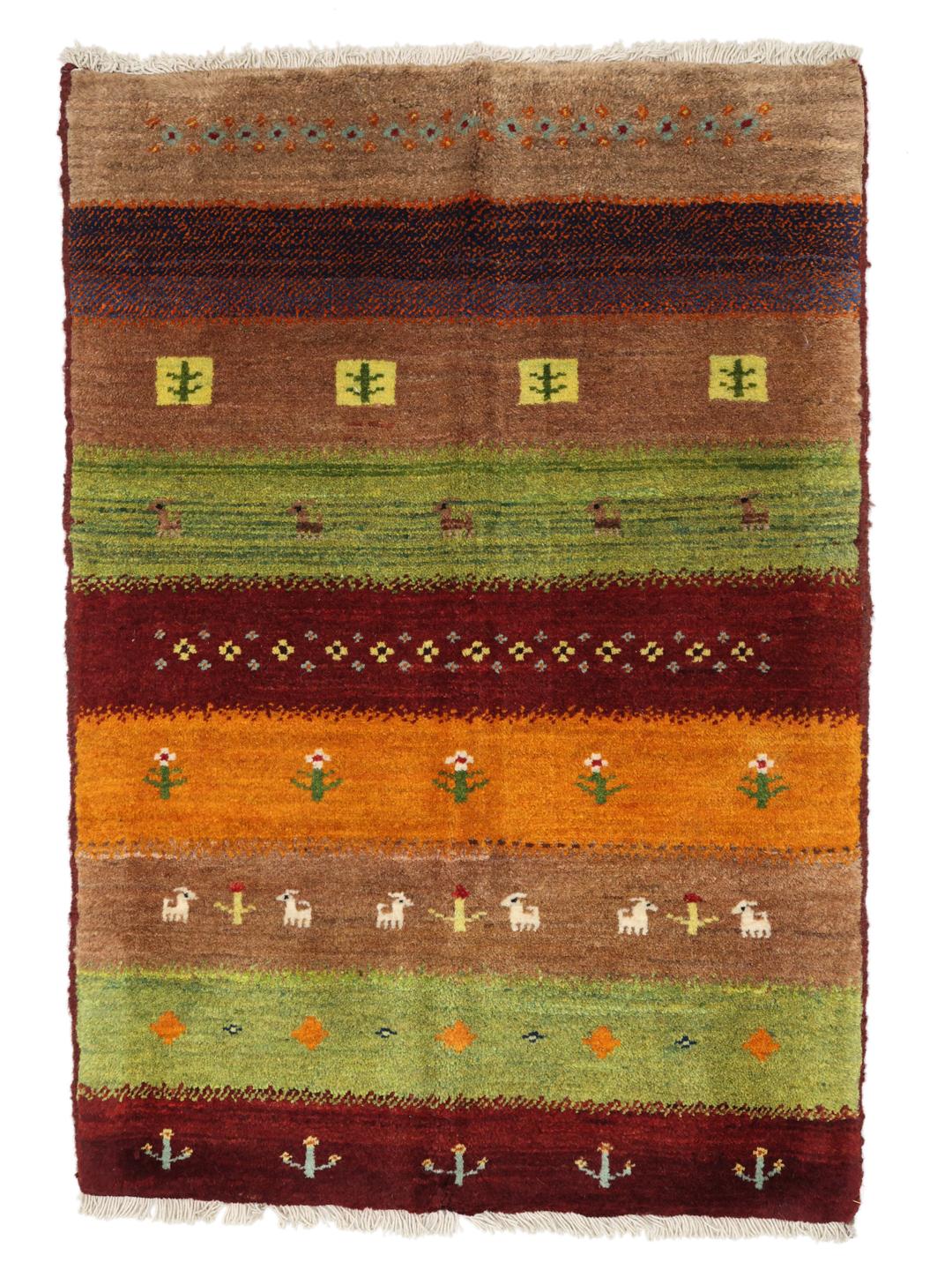
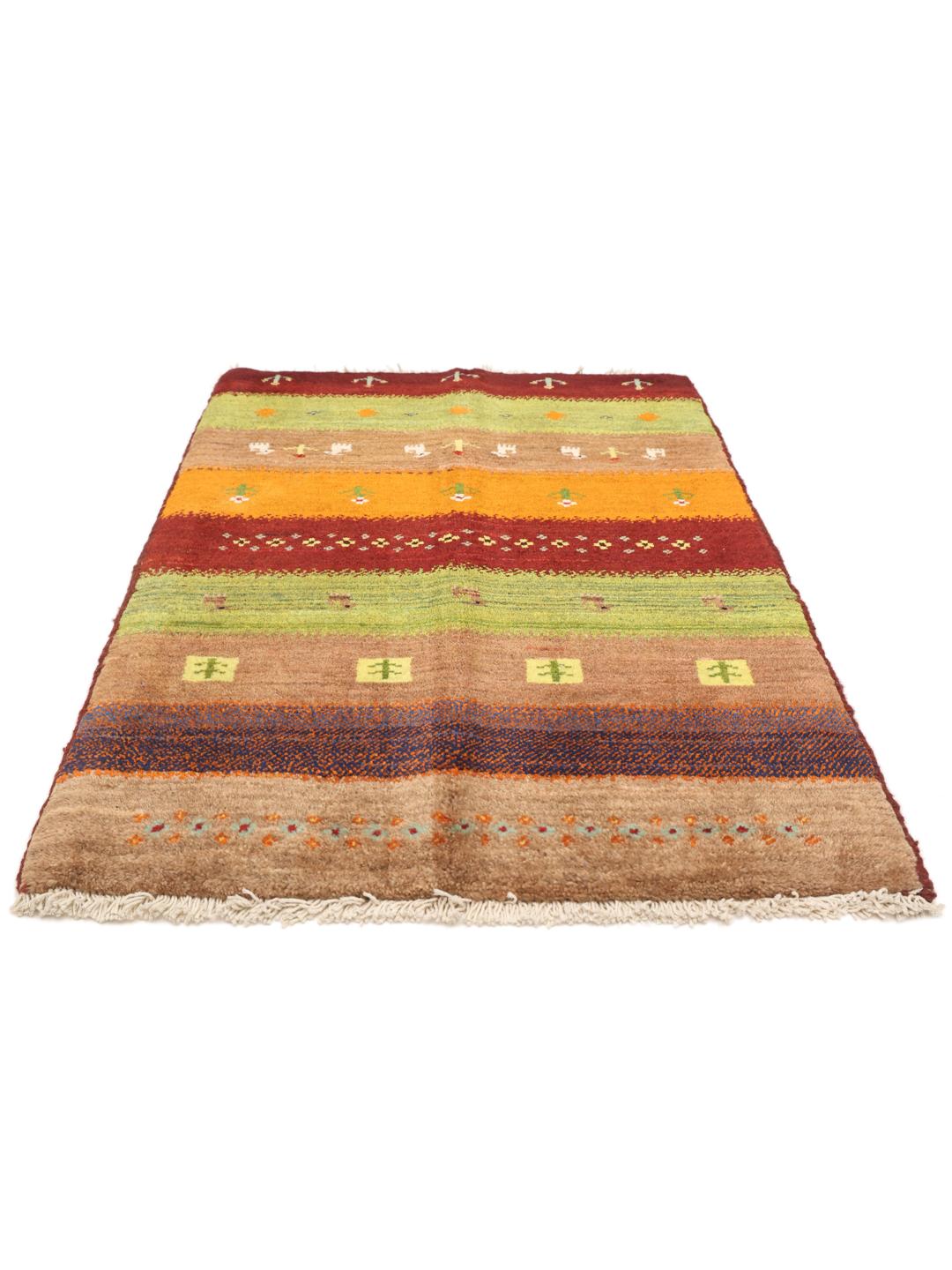
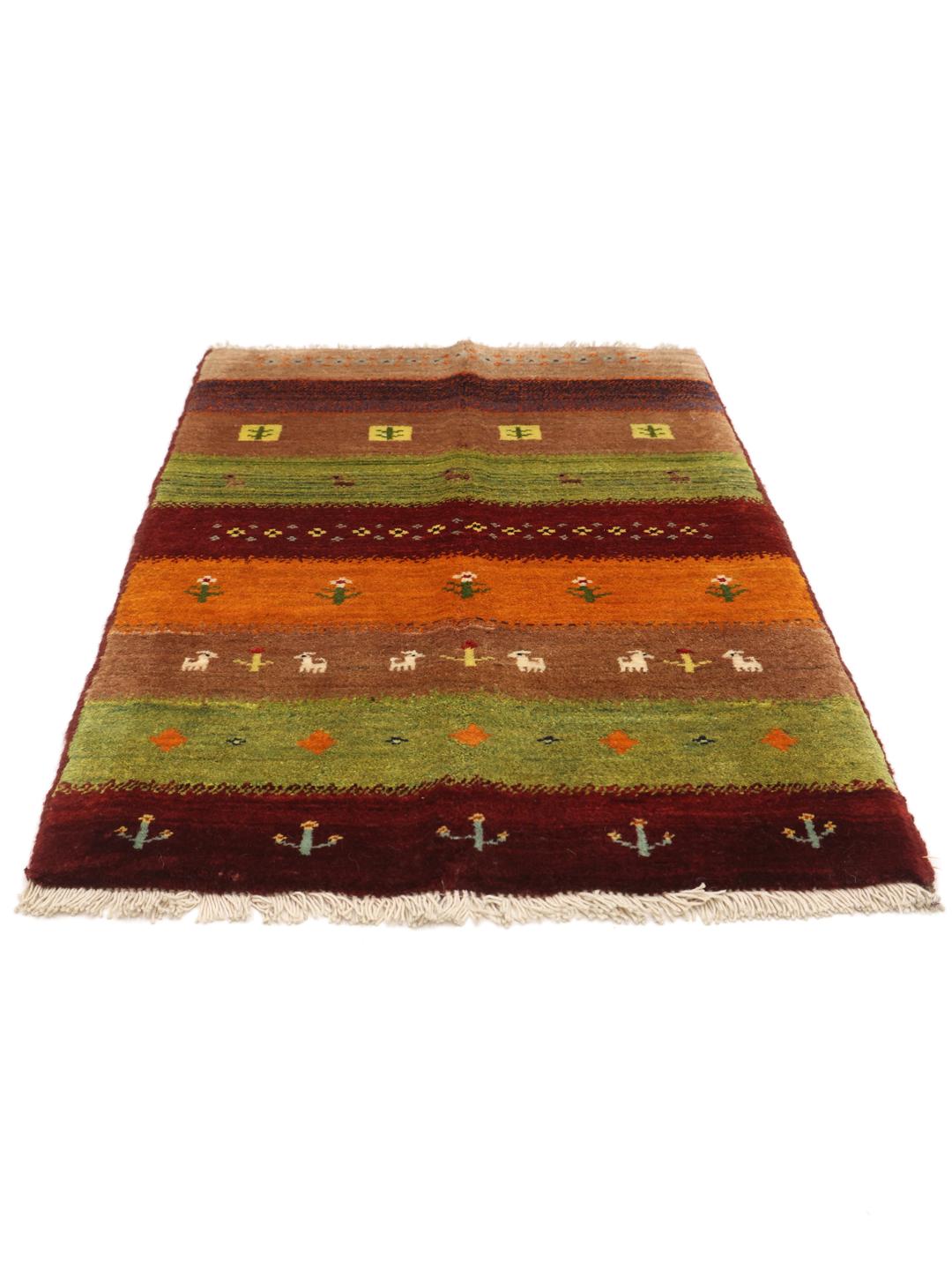
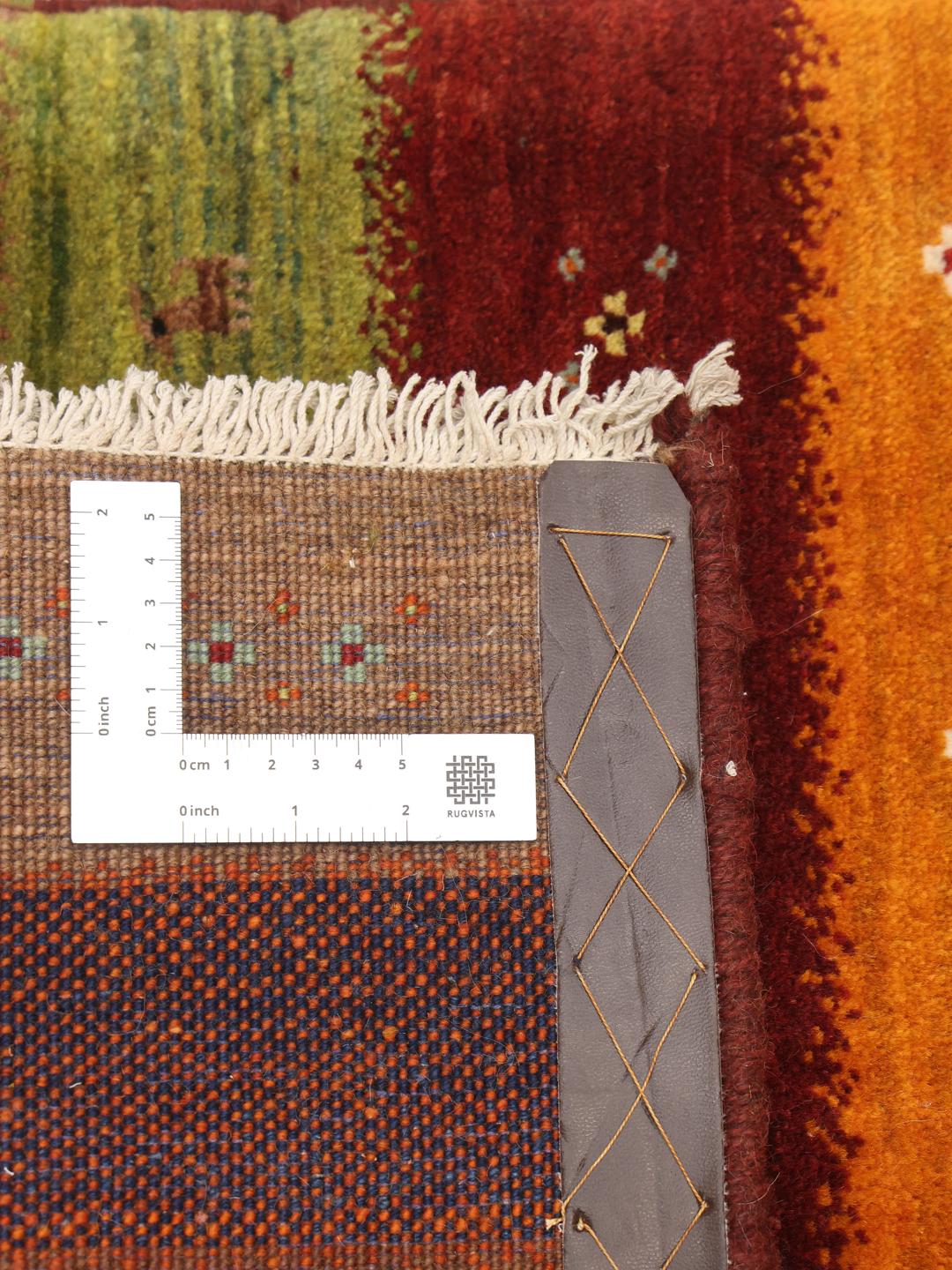
Gabbeh rugs trace their origins to nomadic weaving traditions across the Middle East, where local weavers created thick, heavy rugs primarily for practical use within tented homes. While the style originated among nomadic tribes, its popular visual language led skilled artisans in Pakistan to adopt and refine the tradition, continuing the craft with exceptionally fine knotting techniques.
The word Gabbeh translates roughly to raw or natural, referring to the unstructured, highly intuitive way these pieces were traditionally woven. Rather than following rigid pre-drawn cartoons, weavers drew directly from memory and personal experience, creating spontaneous compositions that feel relaxed and authentic.
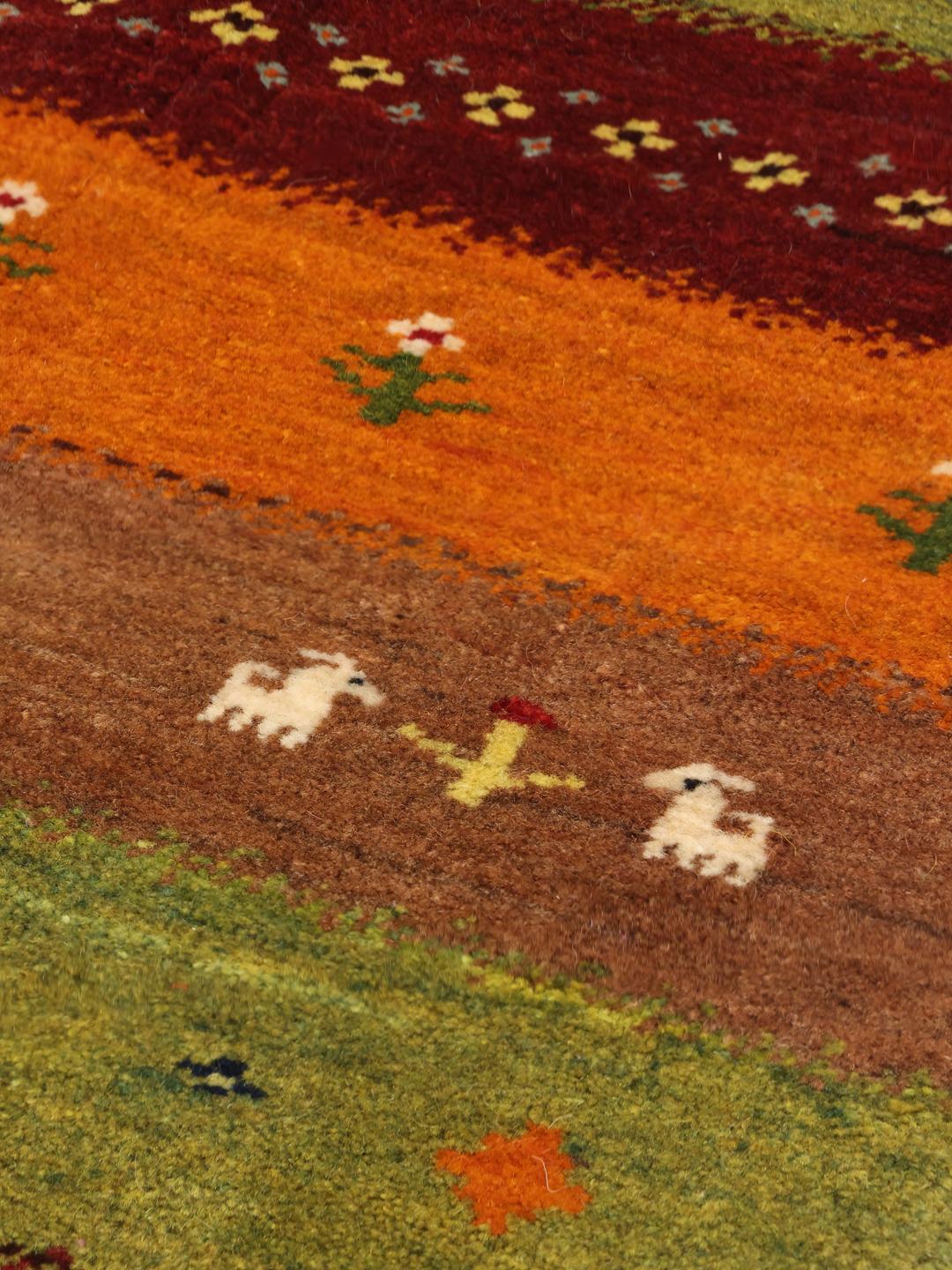
Signature design elements of the Gabbeh include broad fields of vibrant color interspersed with simple tribal motifs. Rows of small animal shapes, geometric figures, and stylized plant life are woven into horizontal bands, serving as traditional symbols of good health, prosperity, and connection to the natural world.
Today, Gabbeh rugs are highly valued for their expressive artistic freedom and tactile warmth. Acquiring a unique hand-knotted piece bridges historical folk art with modern living, bringing real human storytelling into contemporary homes.