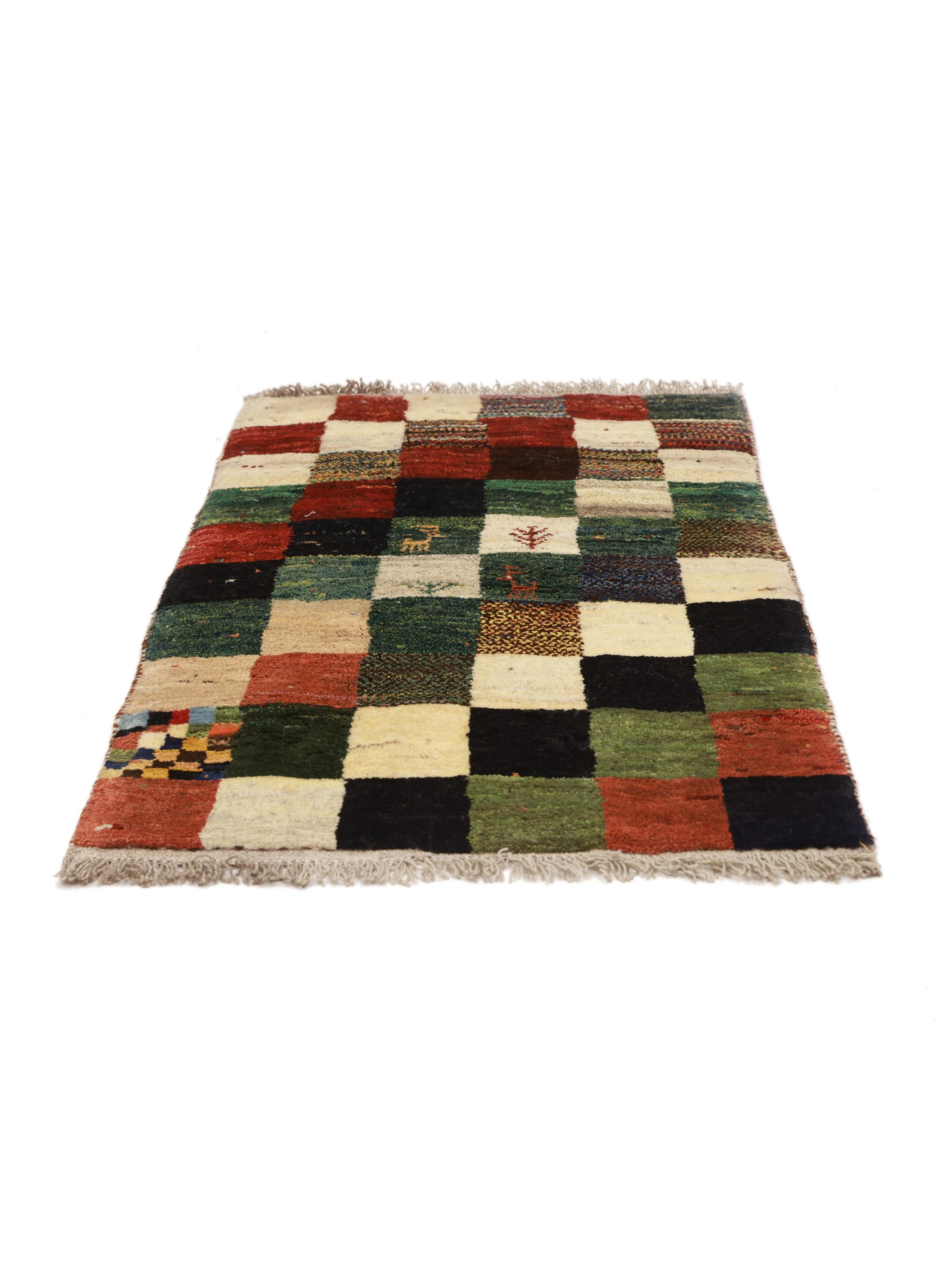
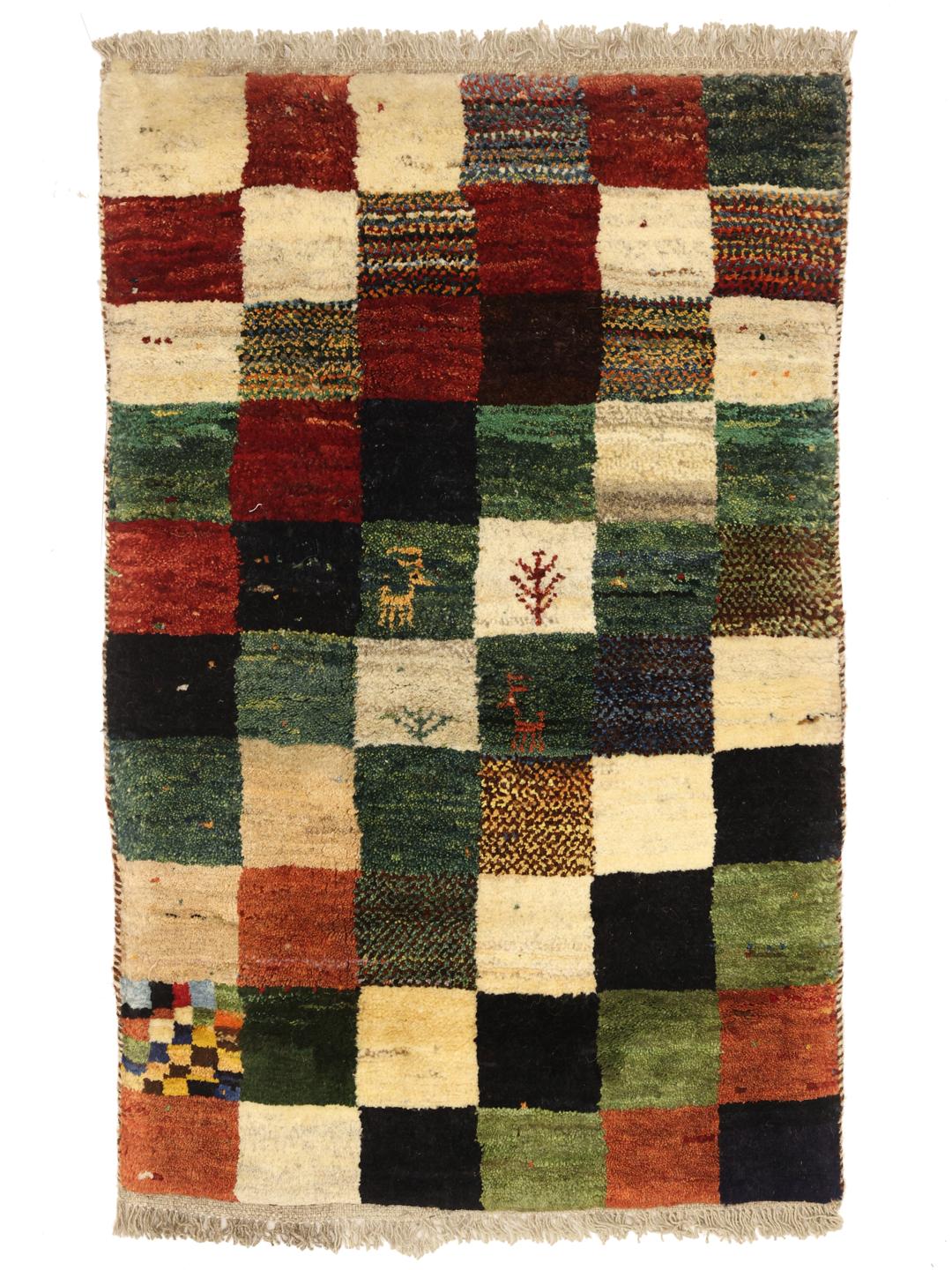
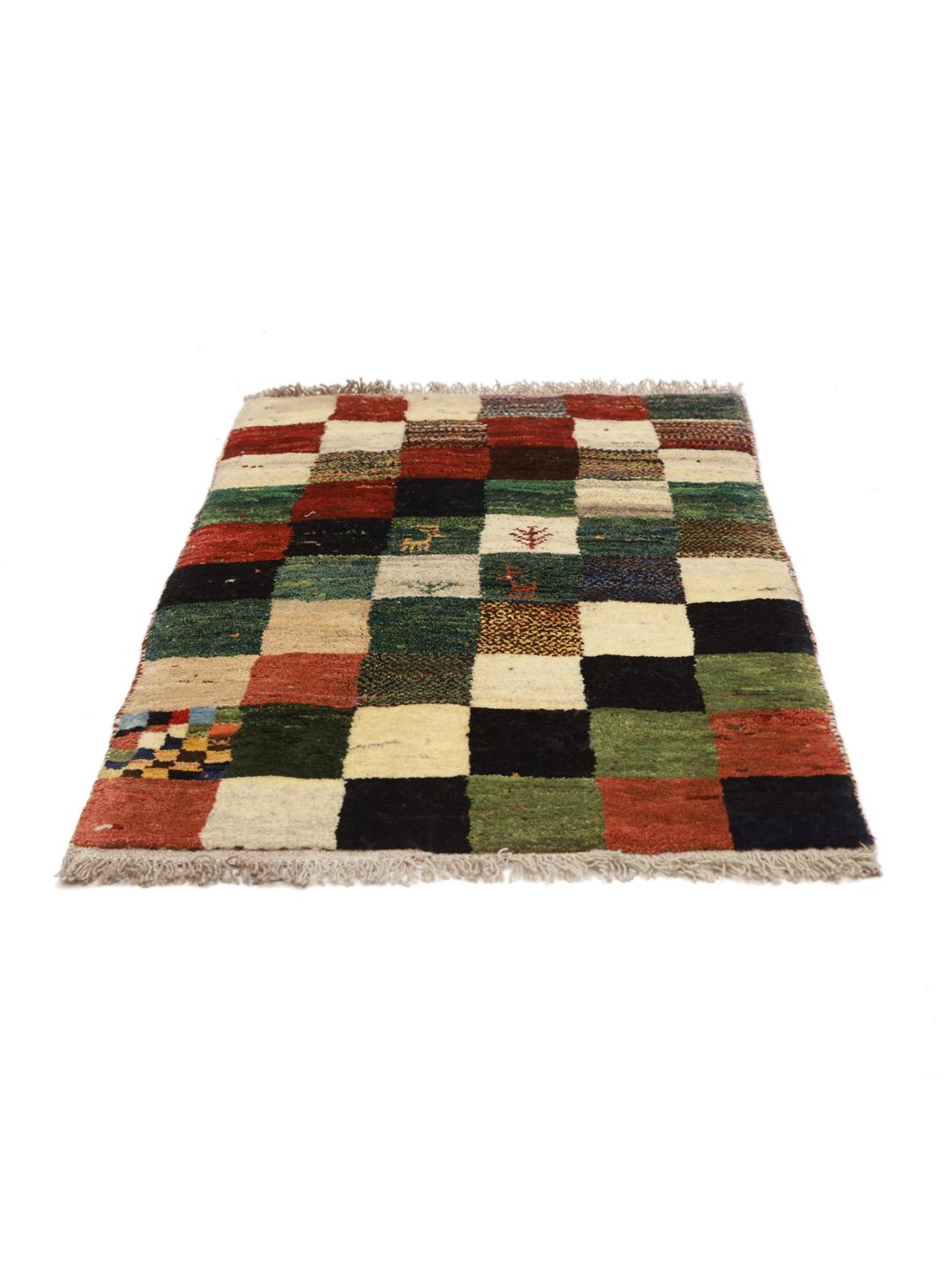
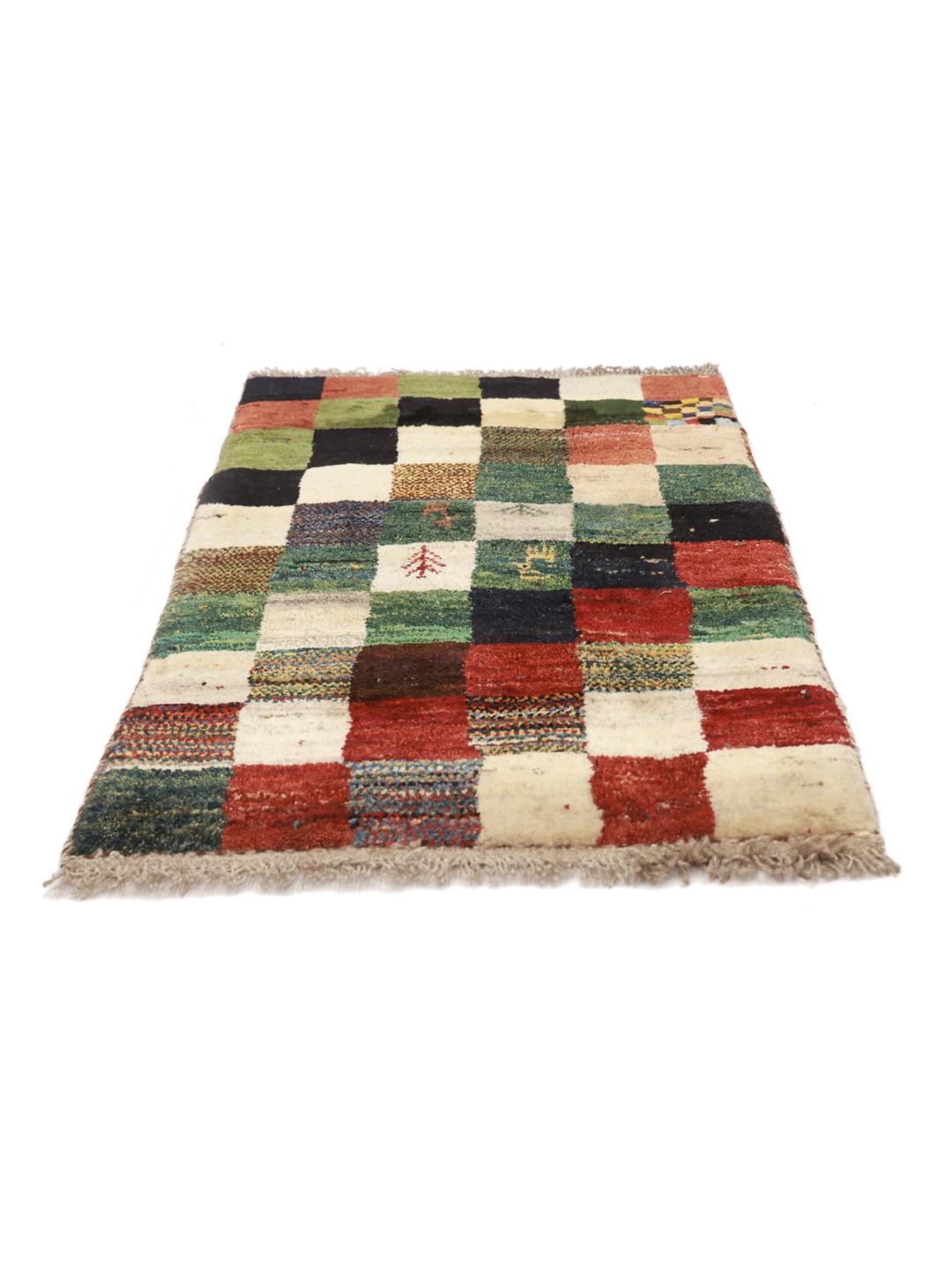
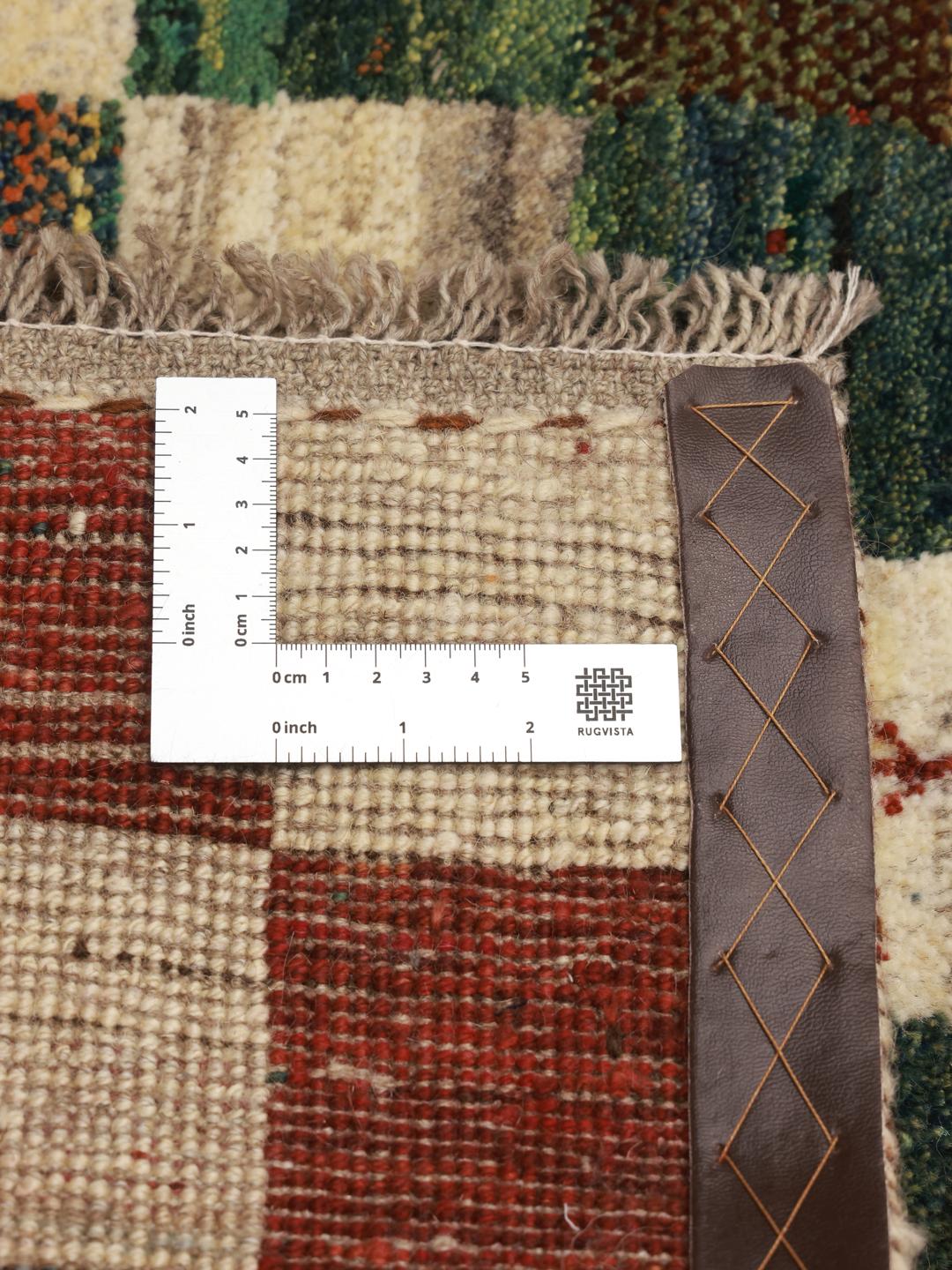
Gabbeh rugs originate from the nomadic and semi-nomadic tribes of the Middle East, where they were initially crafted for practical home use rather than commercial trade. Traditionally used as thick sleeping blankets and floor coverings inside tribal tents, their primary purpose was to provide maximum warmth and insulation against harsh landscapes.
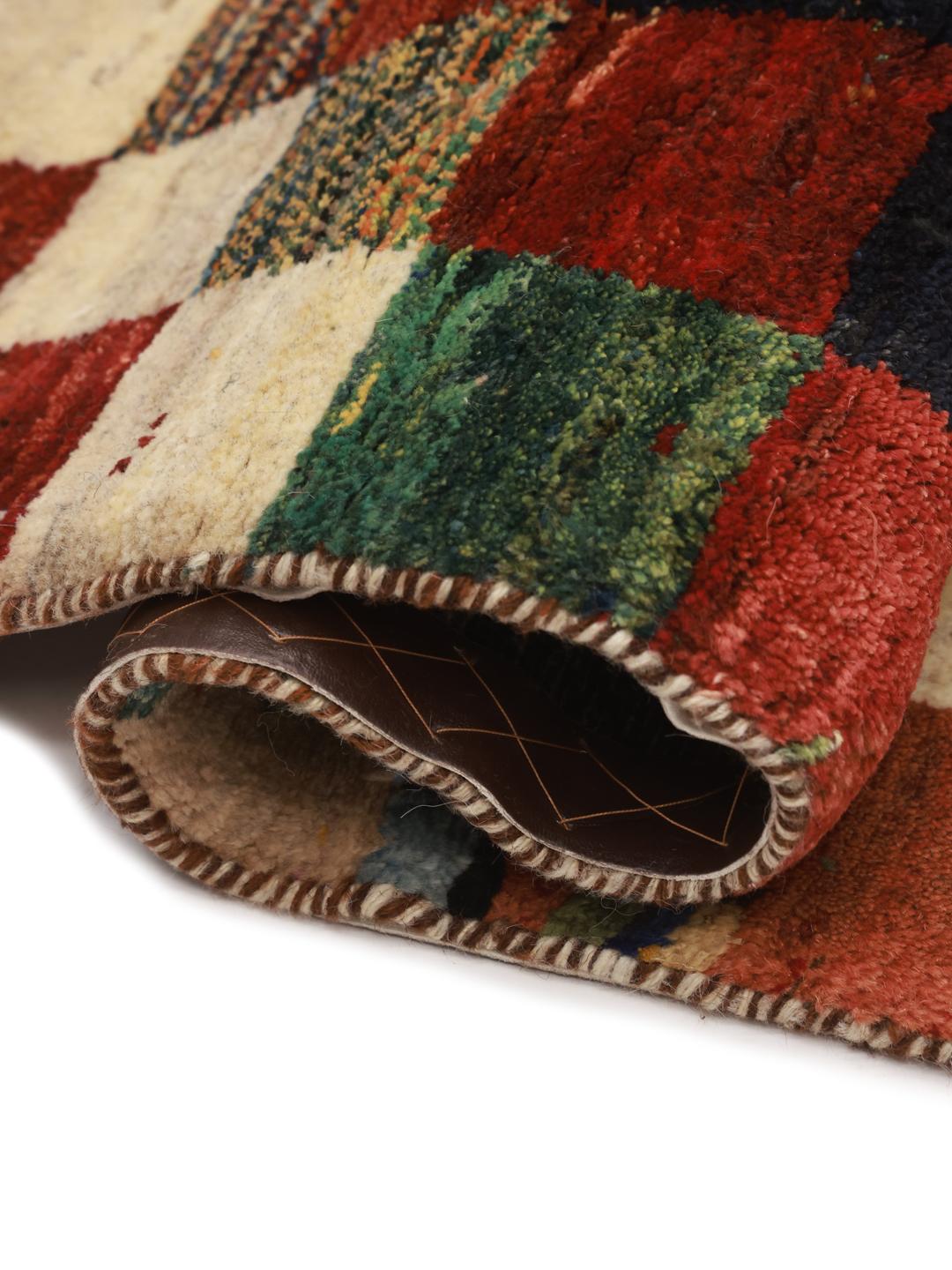
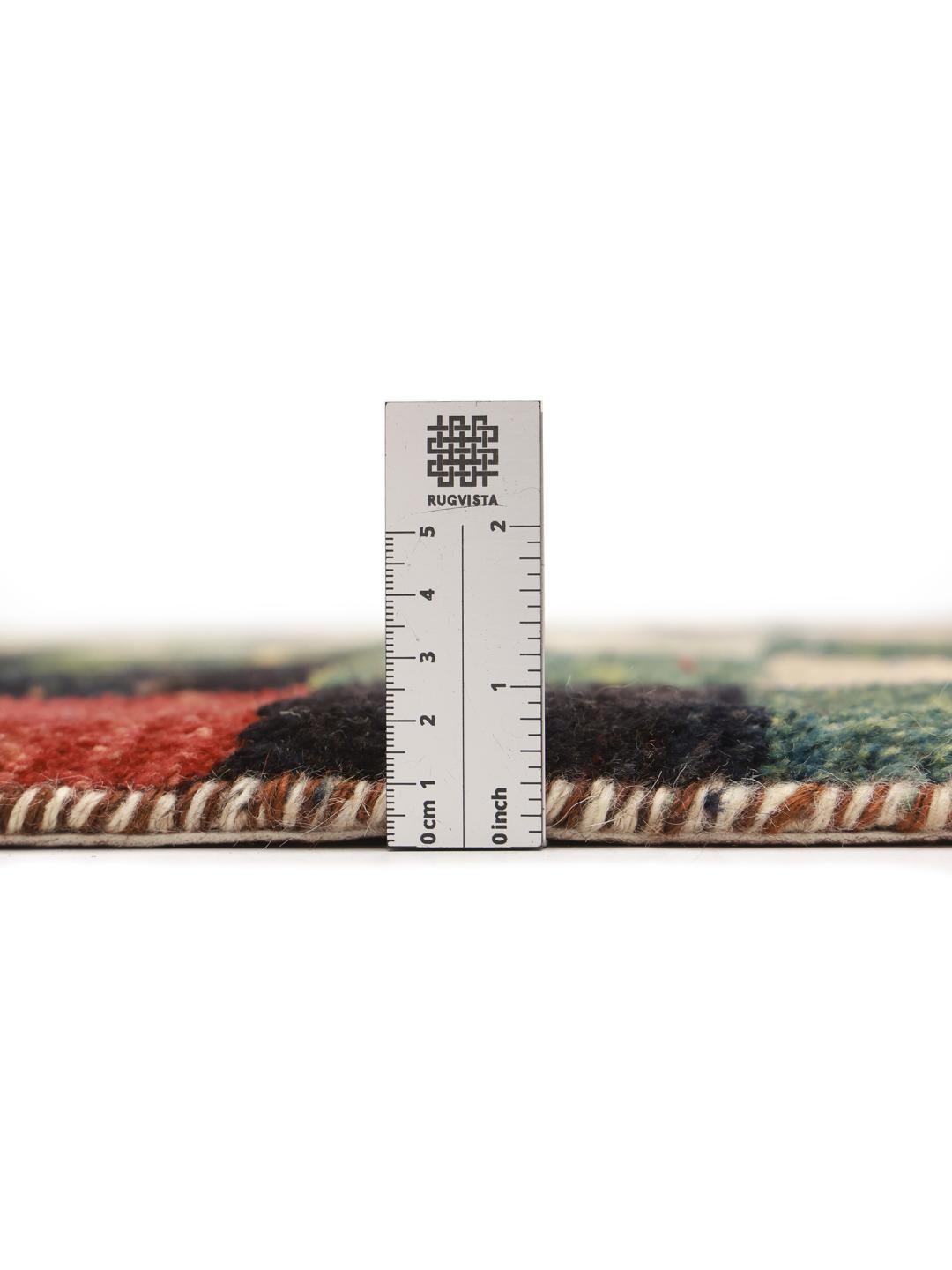
The term Gabbeh translates loosely to raw, natural, or unclipped, pointing to the thick pile and long pile construction that sets these rugs apart. Unlike formal city rugs that follow strict symmetry, Gabbeh weaving relies on hand-spun wool and traditional knotting techniques that prioritize comfort and durability over uniform precision.
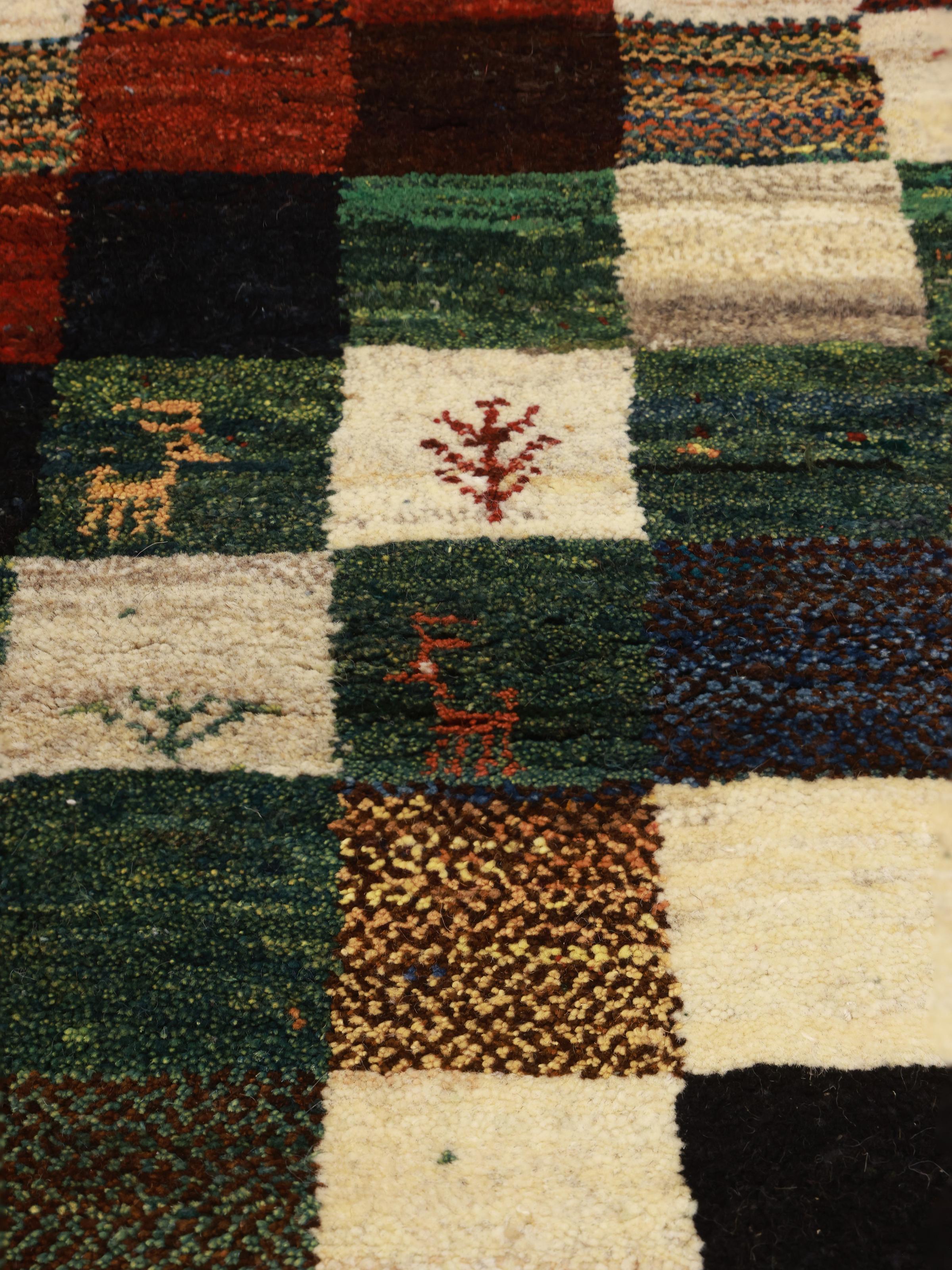
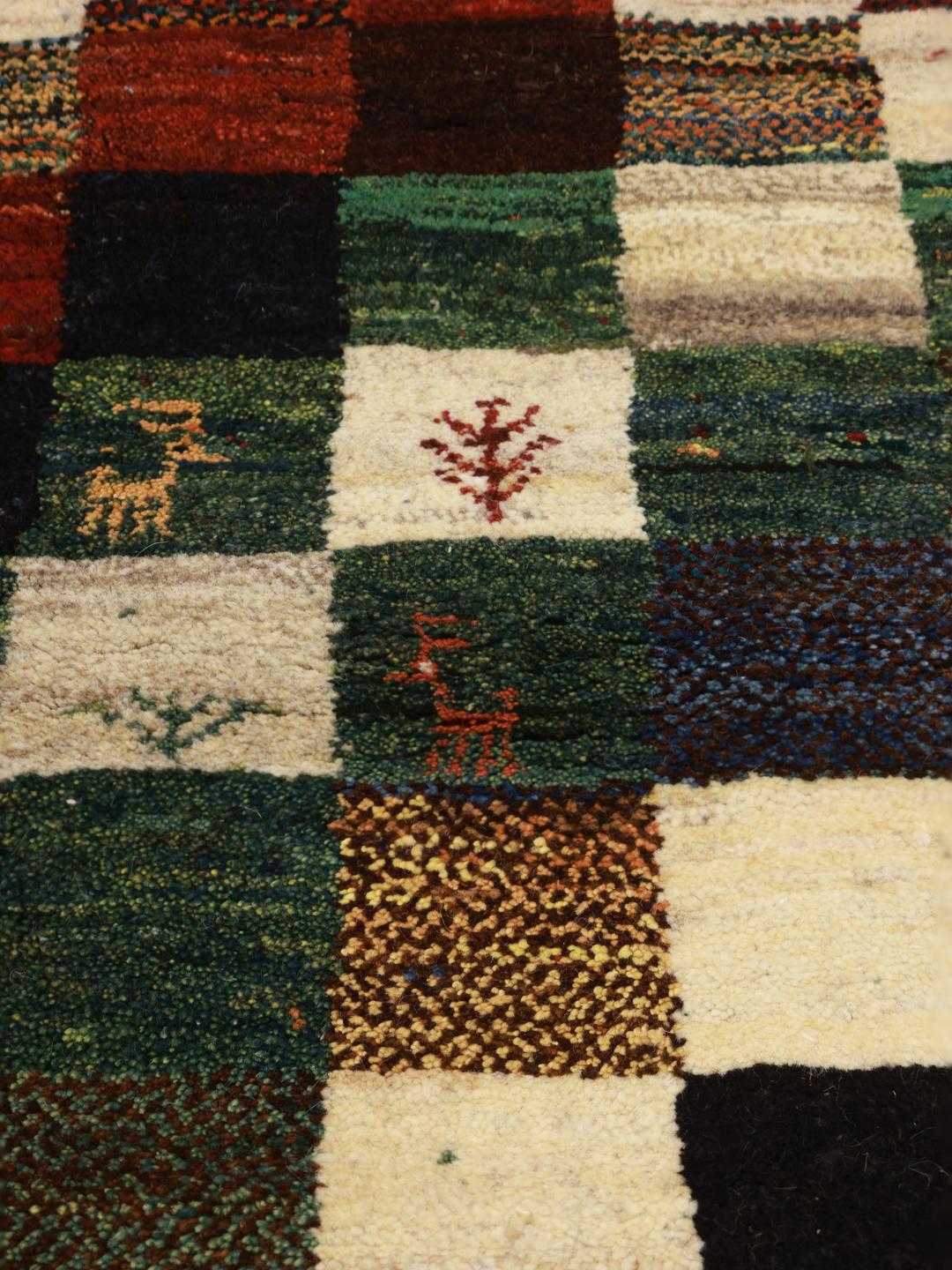
Visually, Gabbeh rugs are famous for their bold folk art aesthetic. They frequently feature simple geometric blocks alongside charm-filled pictorial motifs like goats, camels, and cypress trees. These small symbols often represent everyday tribal life, wishes for good fortune, or personal stories of the weaver, making each finished rug a narrative canvas.
Today, Gabbeh rugs are highly prized by collectors and design enthusiasts worldwide for their naive beauty and artistic honesty. Owning an authentic Gabbeh means bringing a piece of enduring Middle Eastern weaving tradition into your home, celebrating a craft that has remained largely unchanged for centuries.