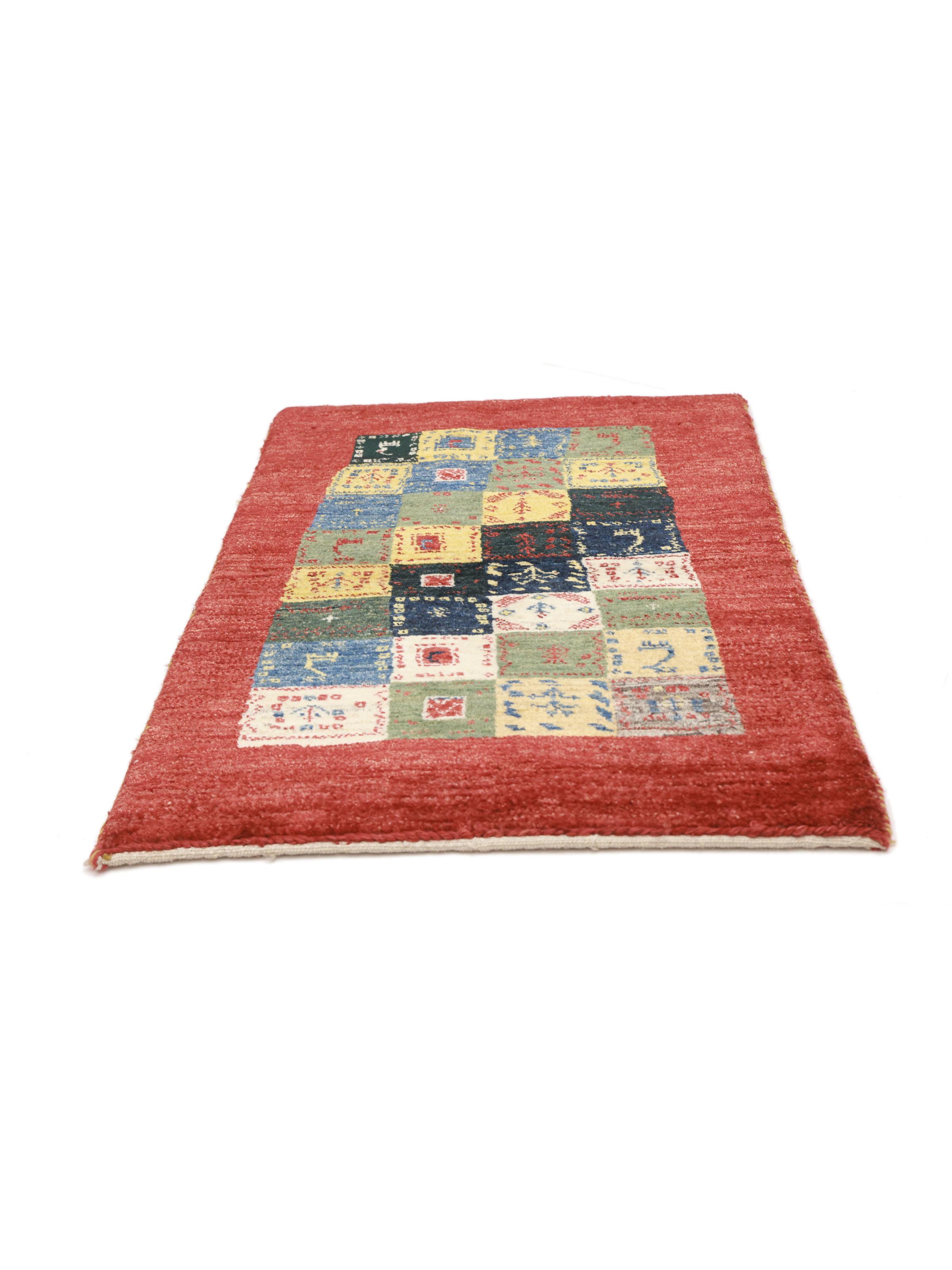
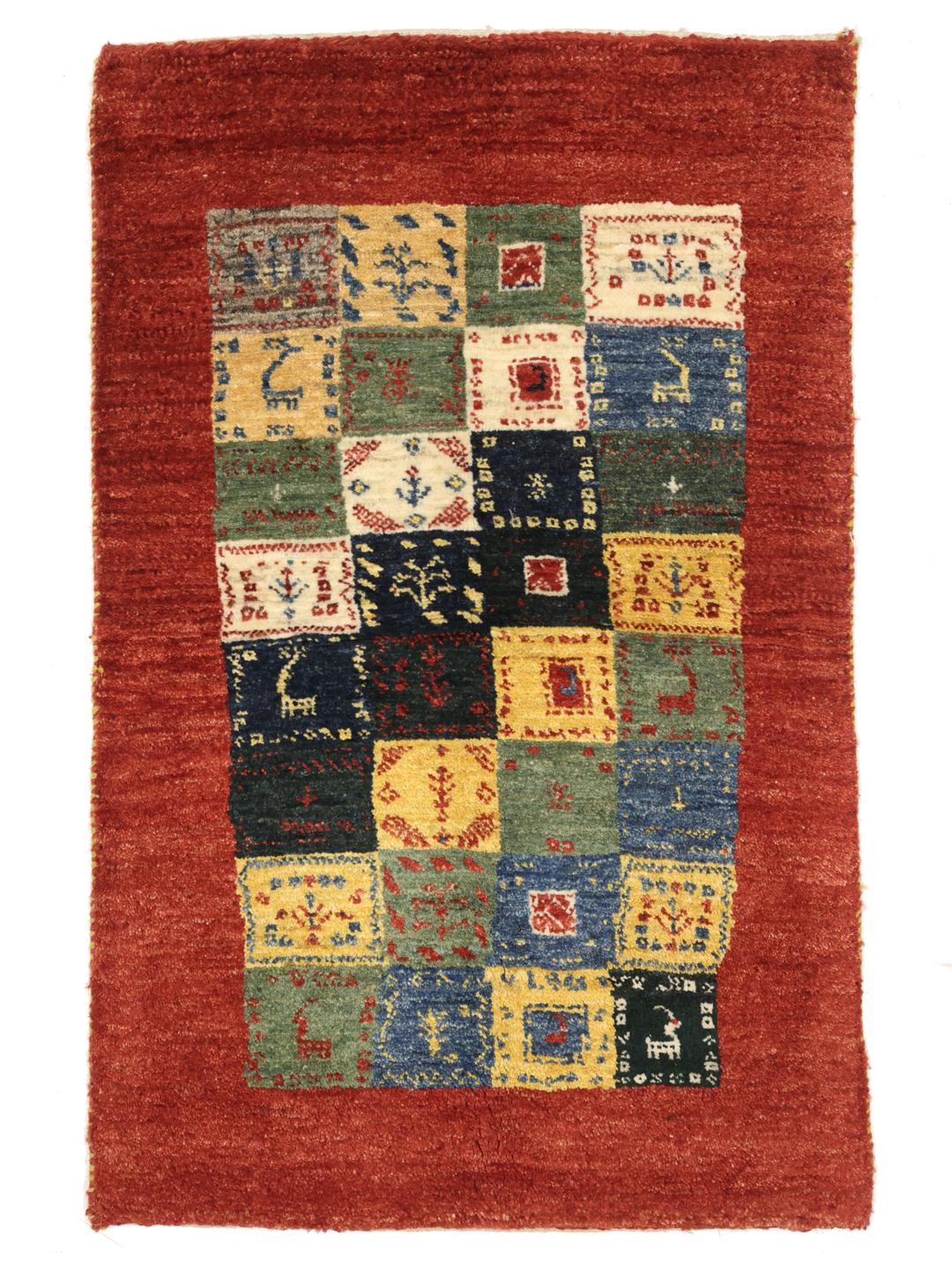
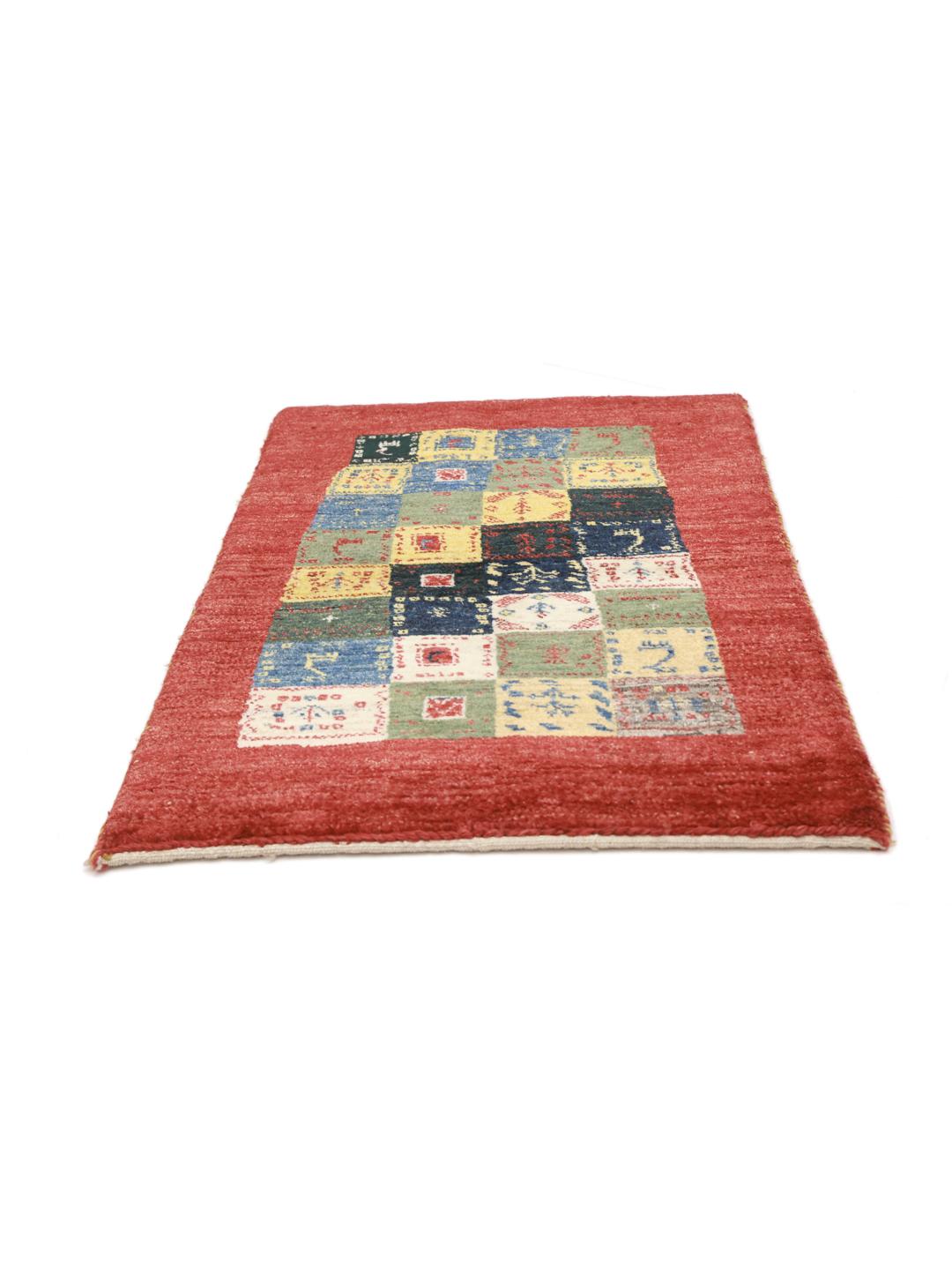
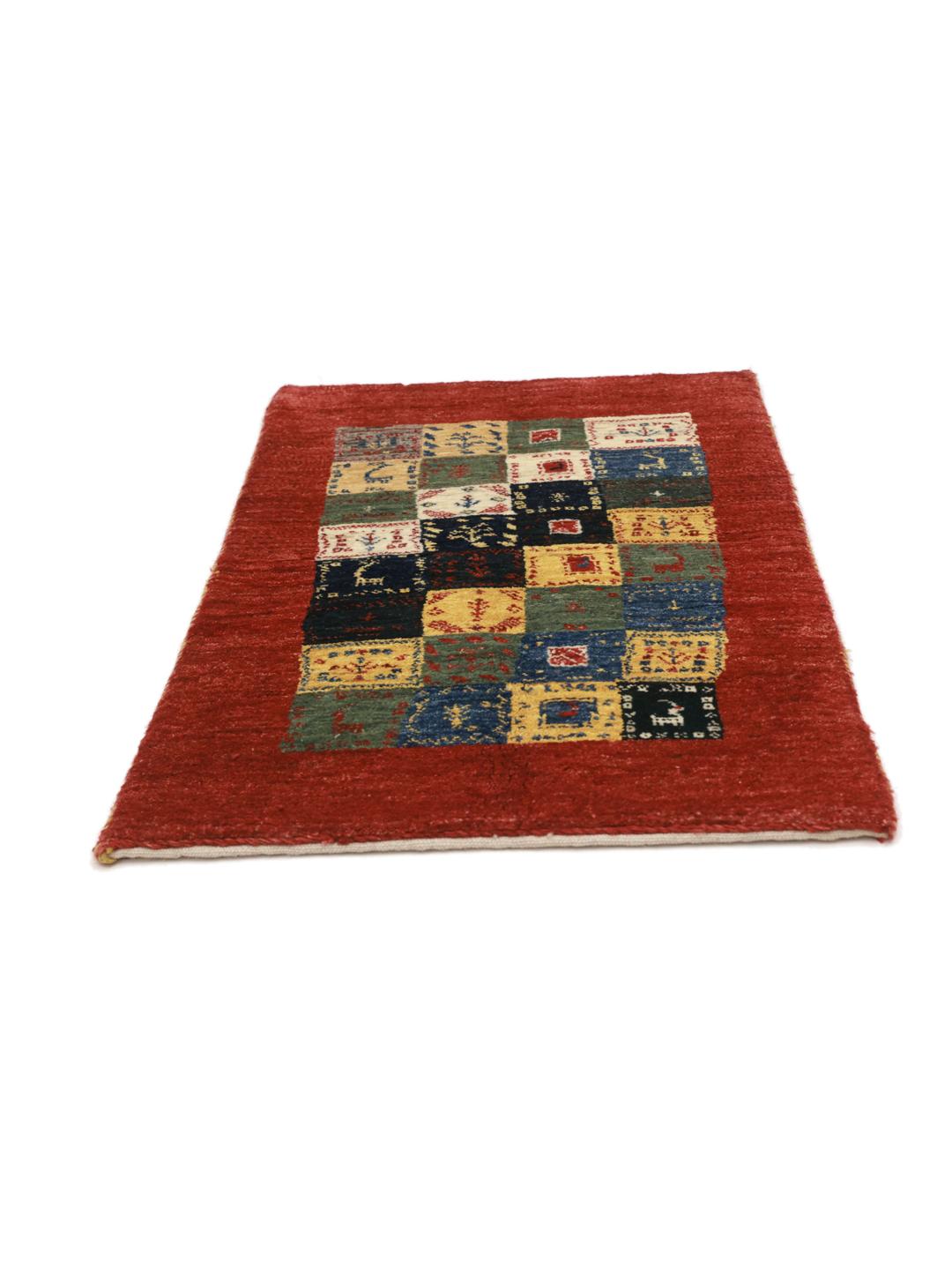
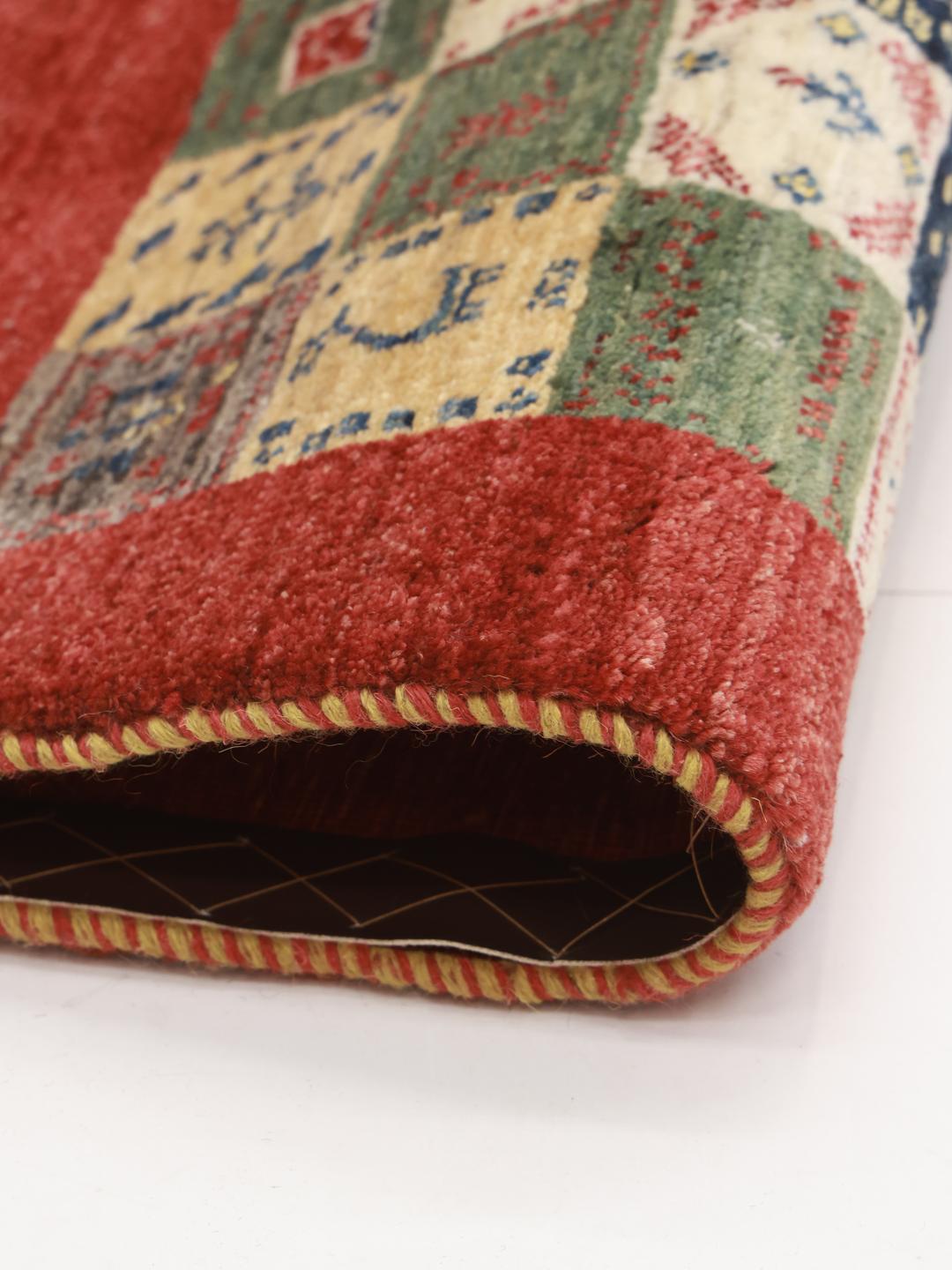
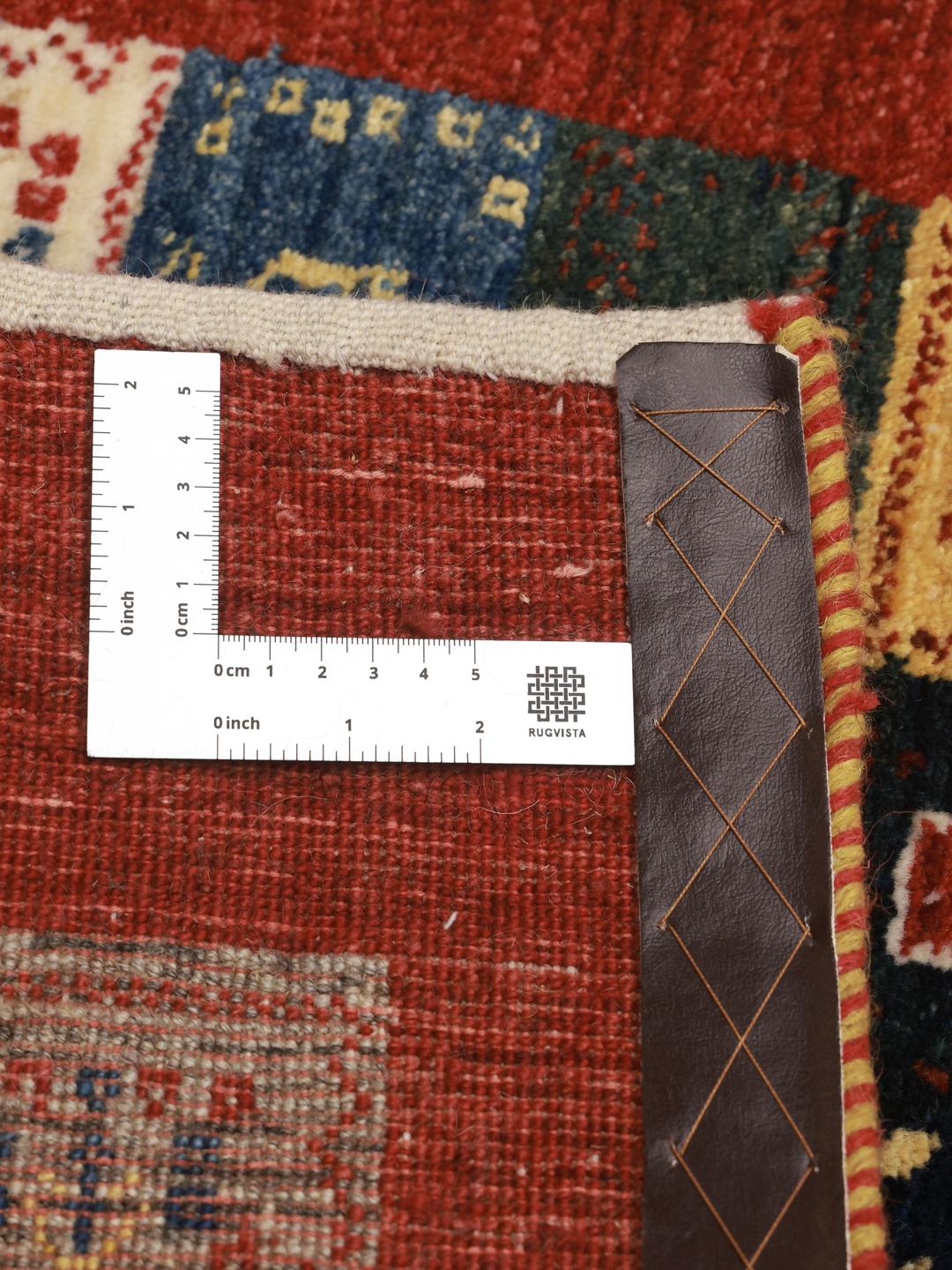
Gabbeh rugs originate from the nomadic and semi-nomadic tribal communities across the Middle East. Traditionally woven for everyday use within family tents as sleeping mats and warm floor coverings, these rugs were valued for their heavy pile and practical protection against cold ground rather than formal market sale.
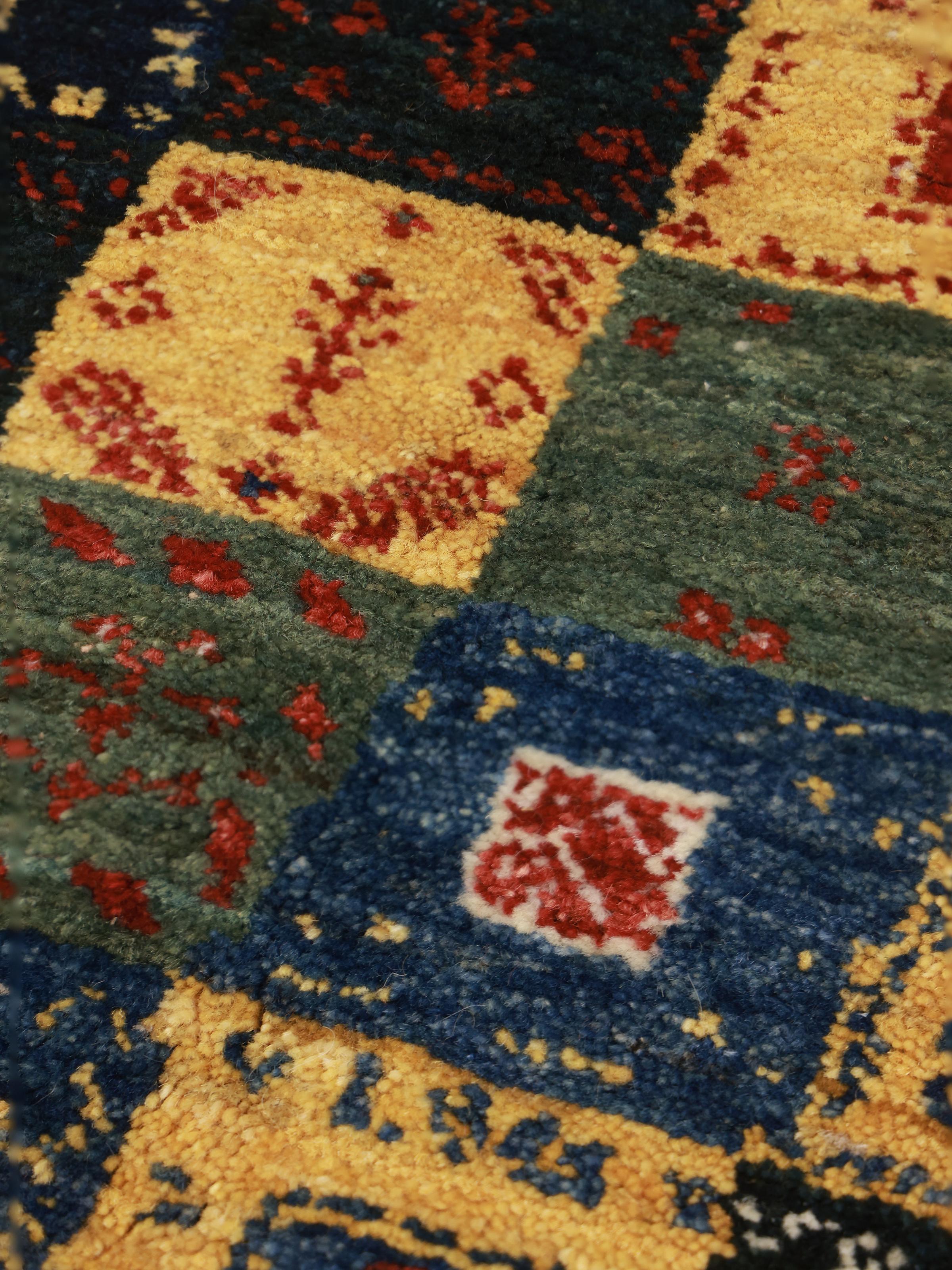
The term Gabbeh translates roughly to raw or natural, reflecting the simple, unpretentious weaving style that defines the genre. Unlike formal city rugs that rely on complex, pre-drawn paper patterns, weavers of traditional Gabbeh pieces tie knots spontaneously, drawing designs directly from their personal experiences, surroundings, and tribal folklore.
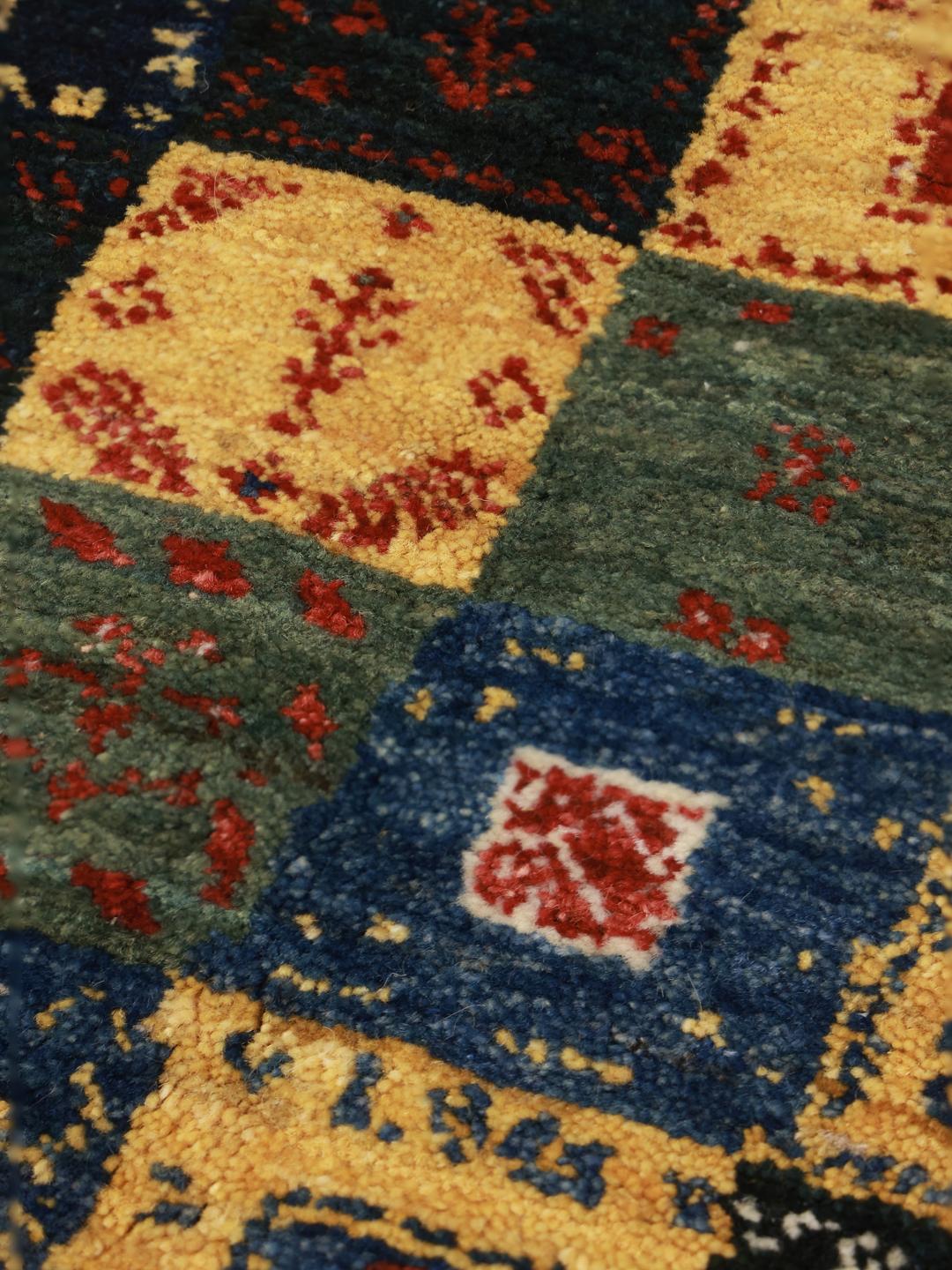
Visually, Gabbeh rugs are recognized for their expressive use of field color, thick borders, and simplified figurative symbols. Stylised trees, small animal figures, and geometric checkerboards appear frequently, serving as subtle representations of daily life, prosperity, and the natural landscape of the region.
Today, traditional Gabbeh rugs are highly valued by collectors and homeowners alike for their authentic artistic freedom. Owning a true hand-knotted piece means preserving a living craft tradition, bringing a touch of authentic textile history into a contemporary setting.