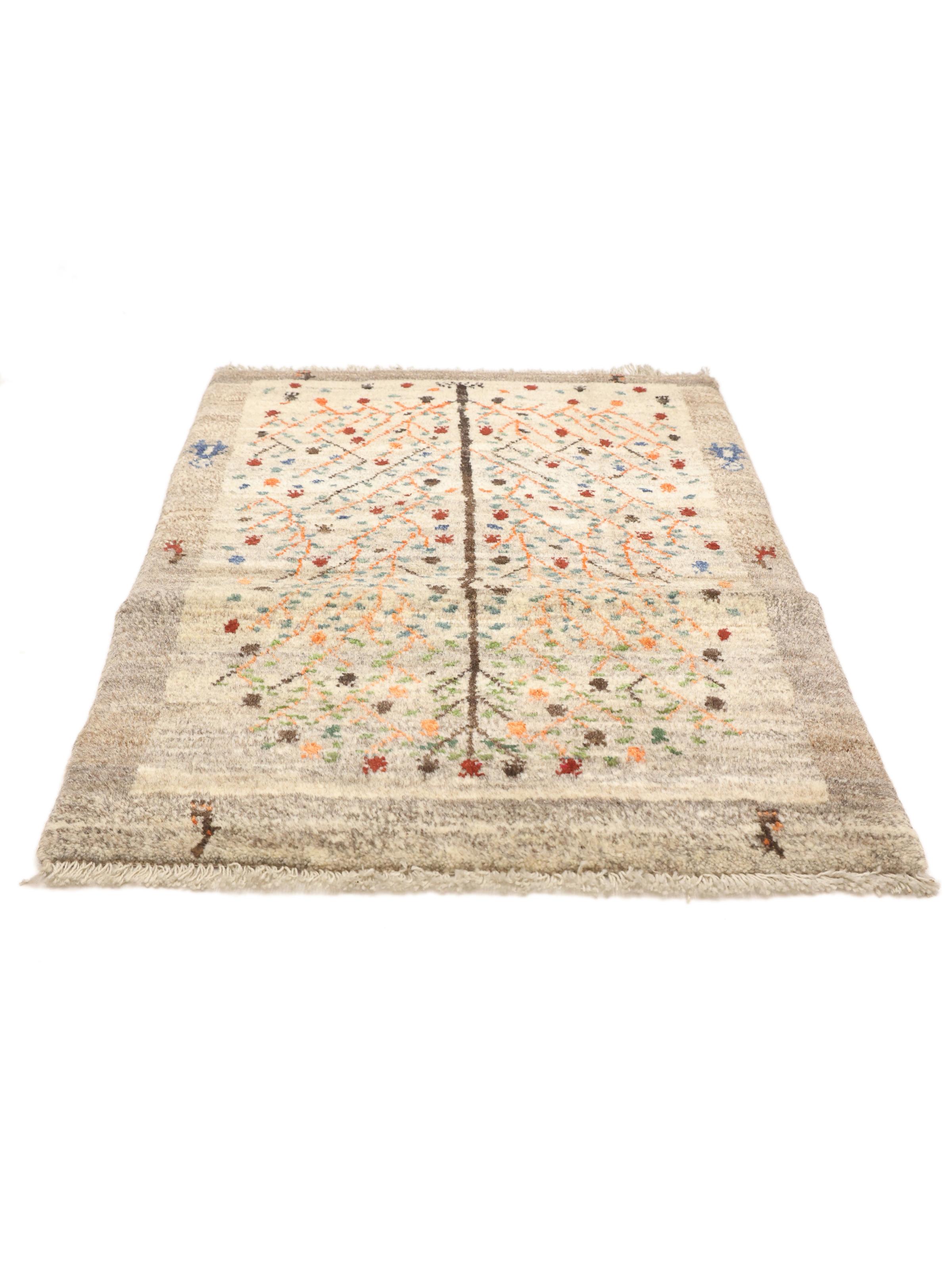
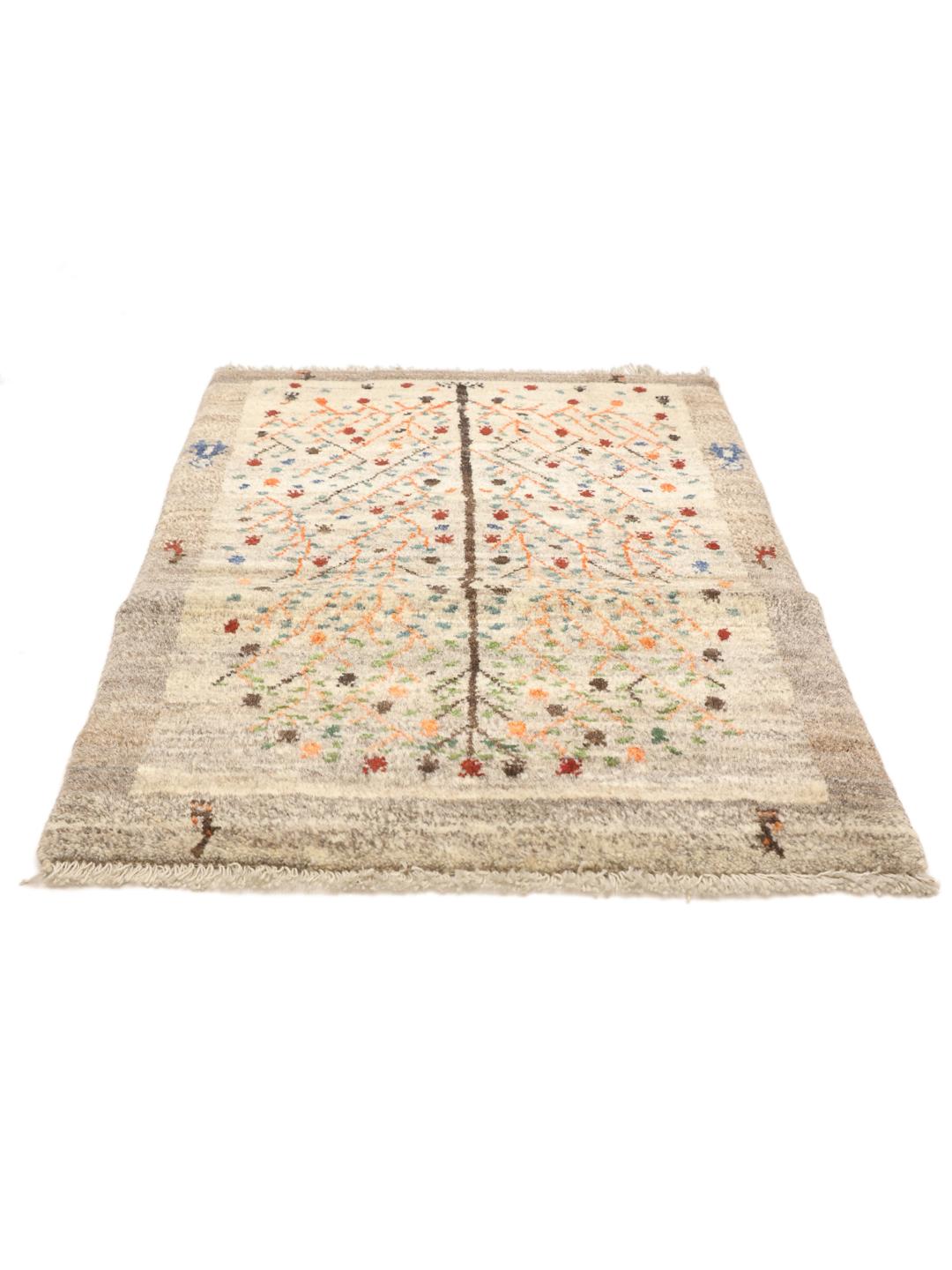
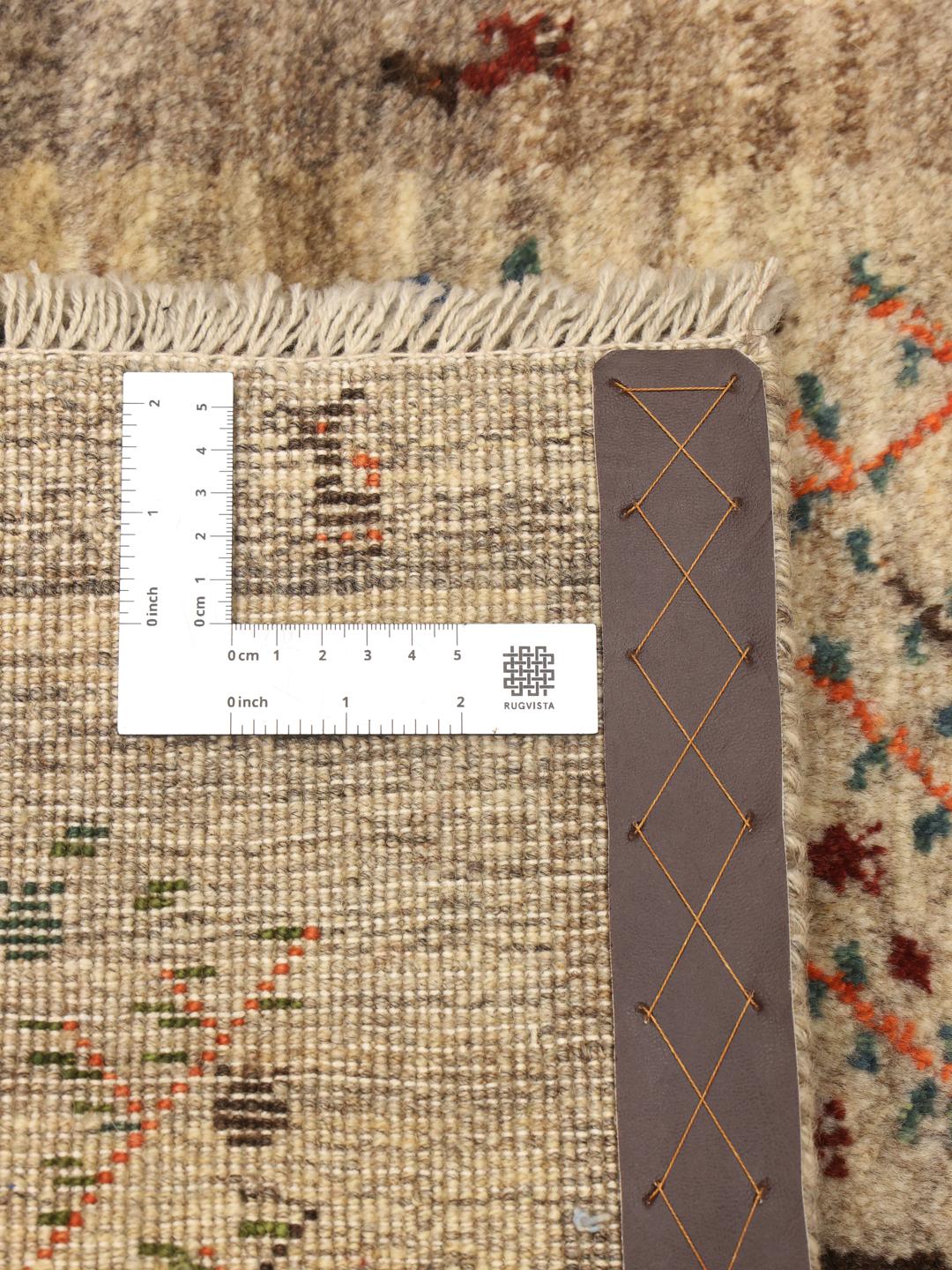
Gabbeh rugs trace their roots back to nomadic weaving traditions across the Middle East, where they were originally created as thick, practical floor coverings and bed covers for tribal tents. The word itself translates roughly to raw or natural, reflecting the simple, unpretentious aesthetic of early village weavings. Over time, master weavers in regions across Pakistan adopted these nomadic design concepts, refining the craft while preserving its rustic charm.
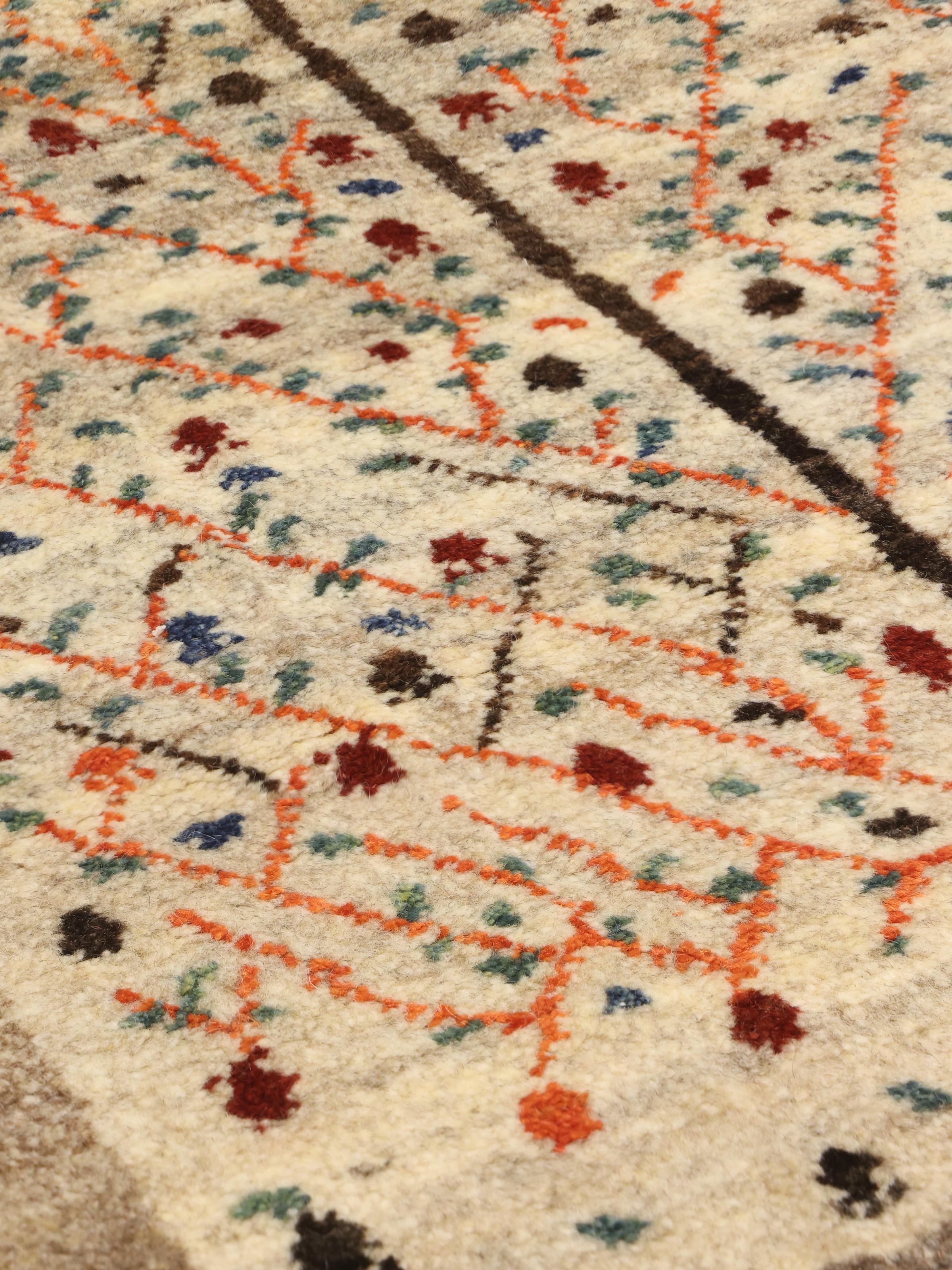
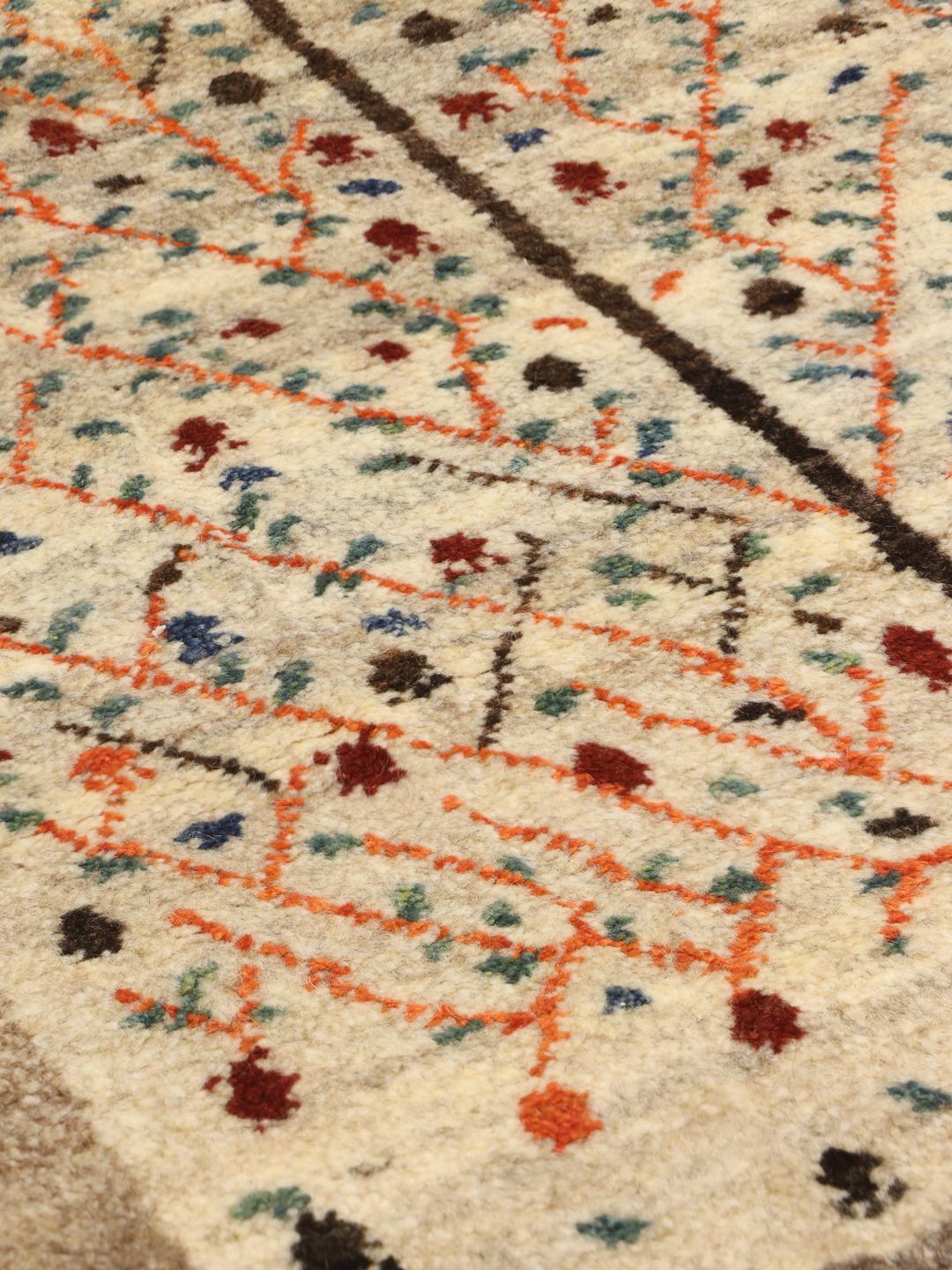
Traditional Gabbeh weaving relies on thick hand-spun yarns and generous pile heights. Rather than following rigid grid diagrams, artisans historically knotted these rugs from memory or personal artistic choice, resulting in expressive compositions that emphasize raw texture and spontaneous pattern work.
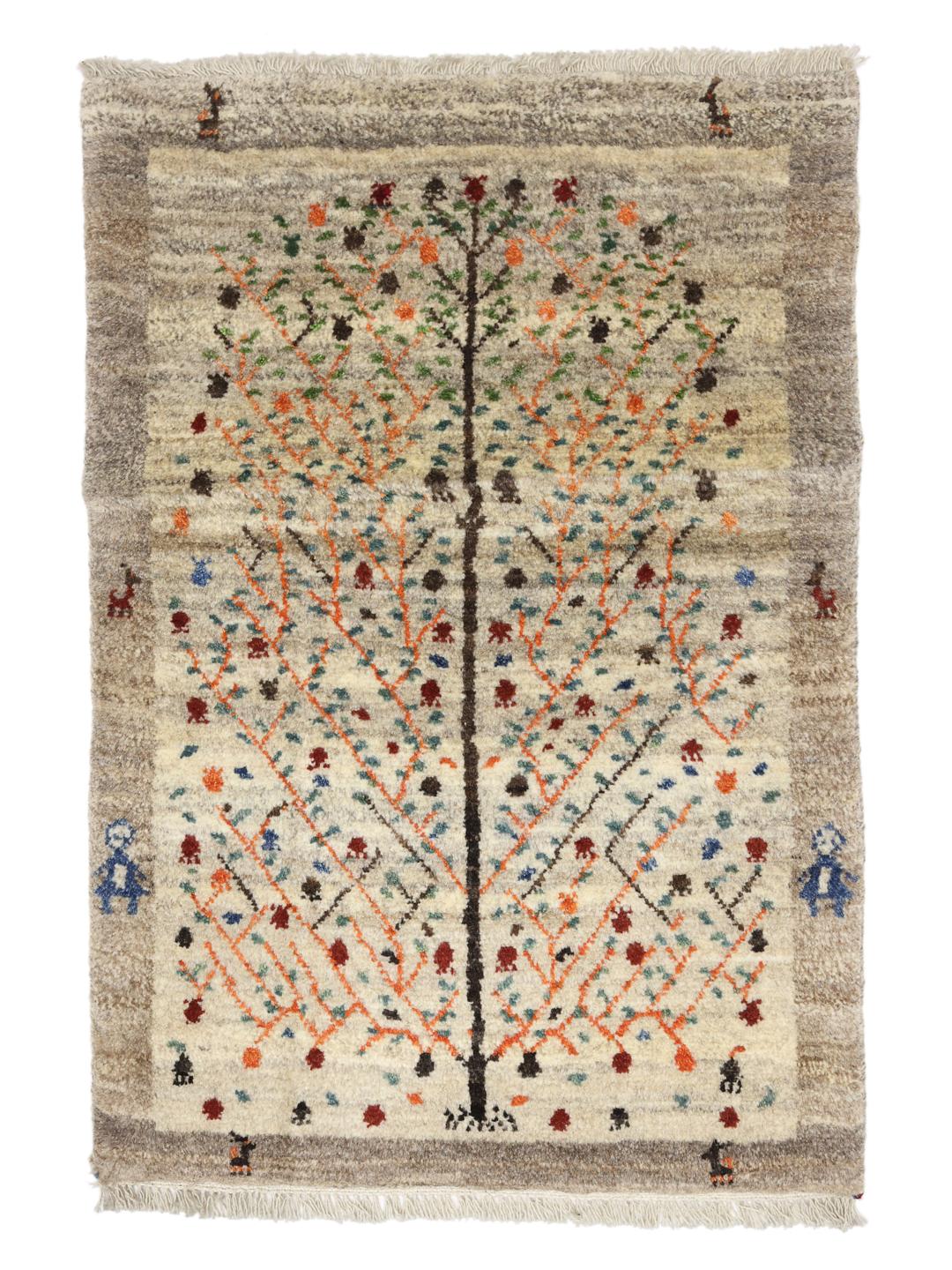
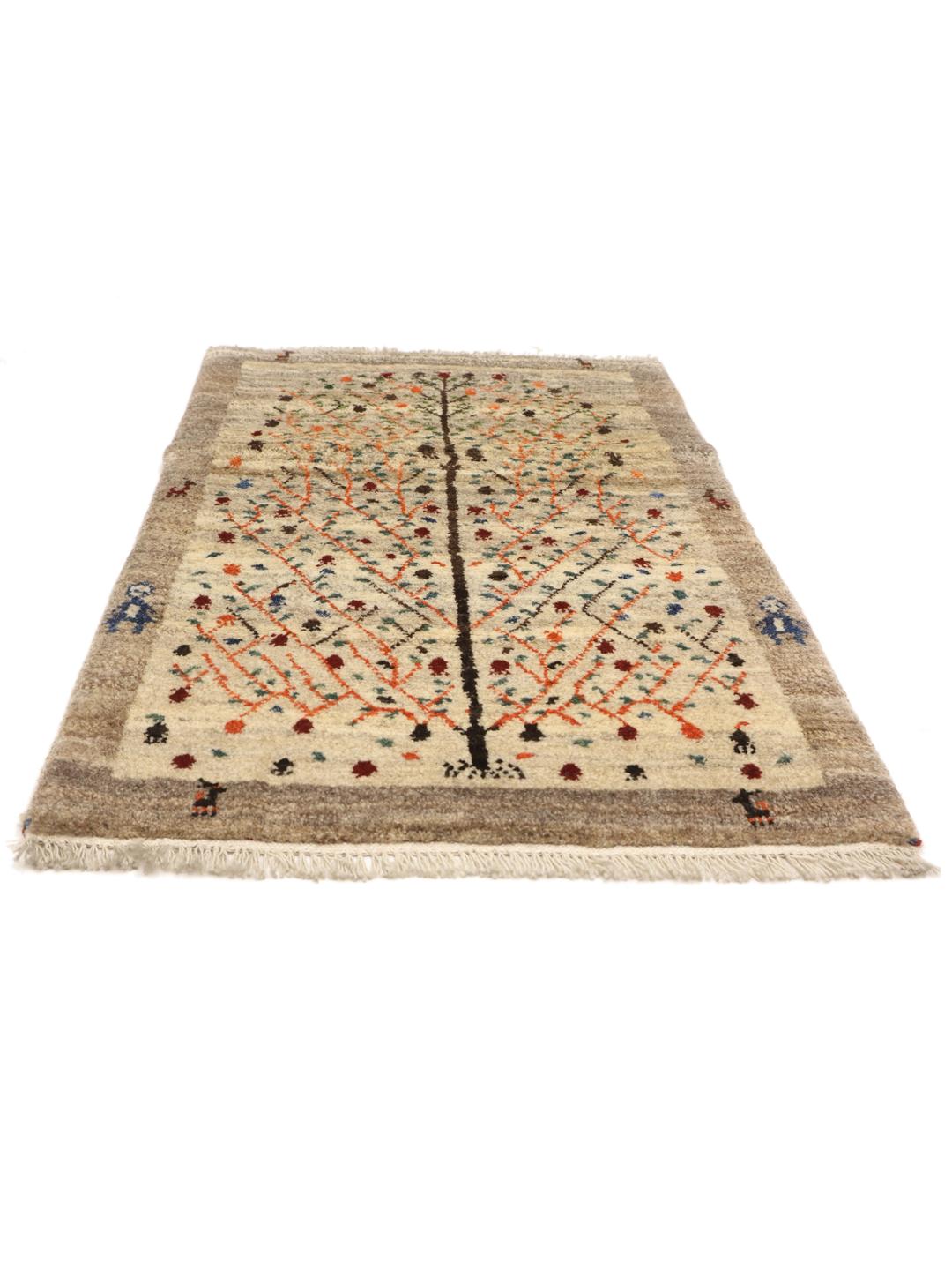
The visual language of Gabbeh rugs is defined by open fields, minimal borders, and simple pictorial symbols such as trees, figures, and animals. The central tree motif seen in this piece is a classic element in tribal iconography, historically symbolizing life, growth, and connection to nature. Frame elements remain clean and uncluttered to let the central story stand out.
Today, Gabbeh rugs are highly appreciated by collectors and interior enthusiasts alike for their balance of primitive folk art and modern warmth. Owning a hand-knotted Gabbeh connects your living space to centuries of textile history while bringing an authentic piece of human craft into the home.