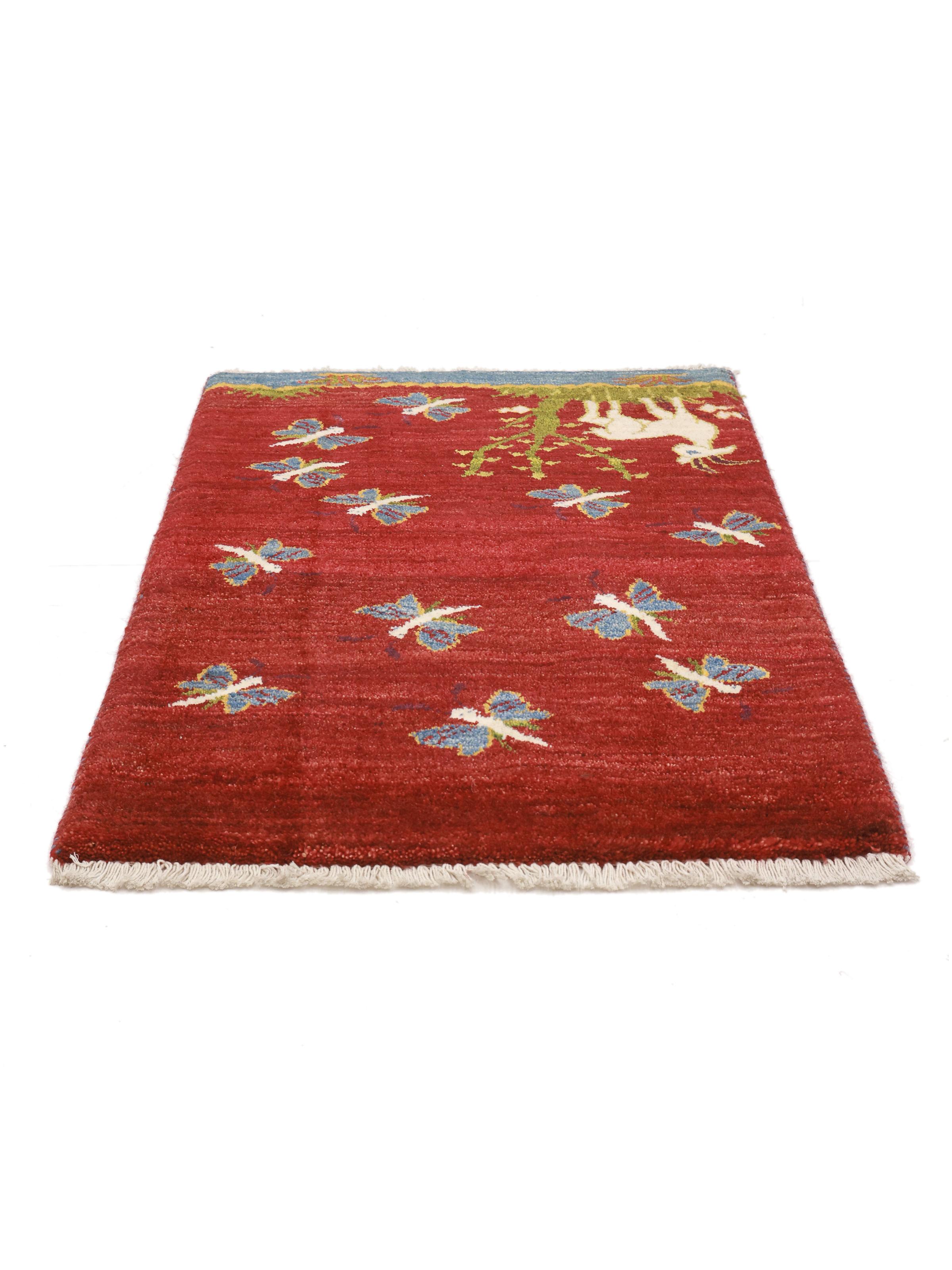
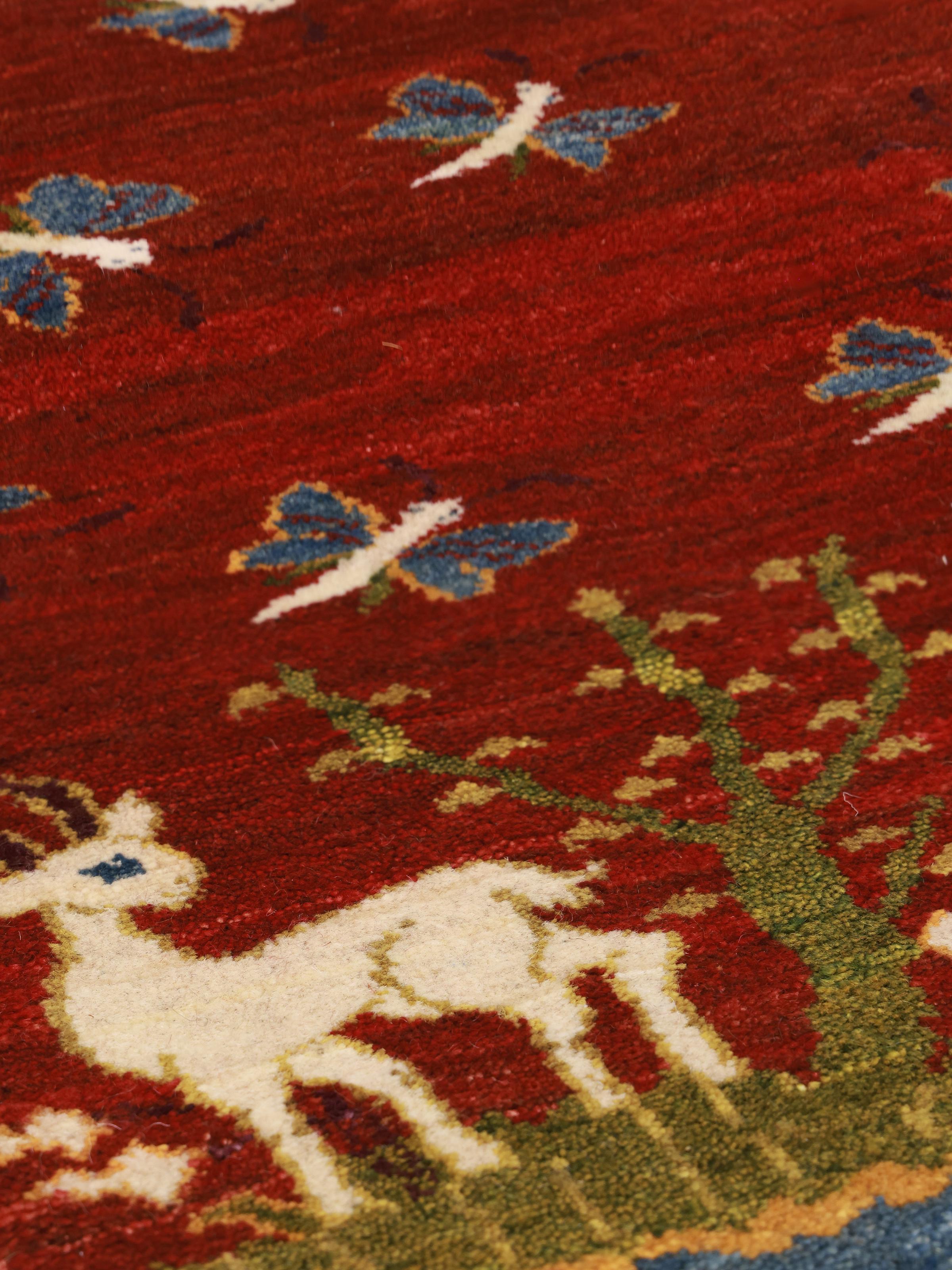
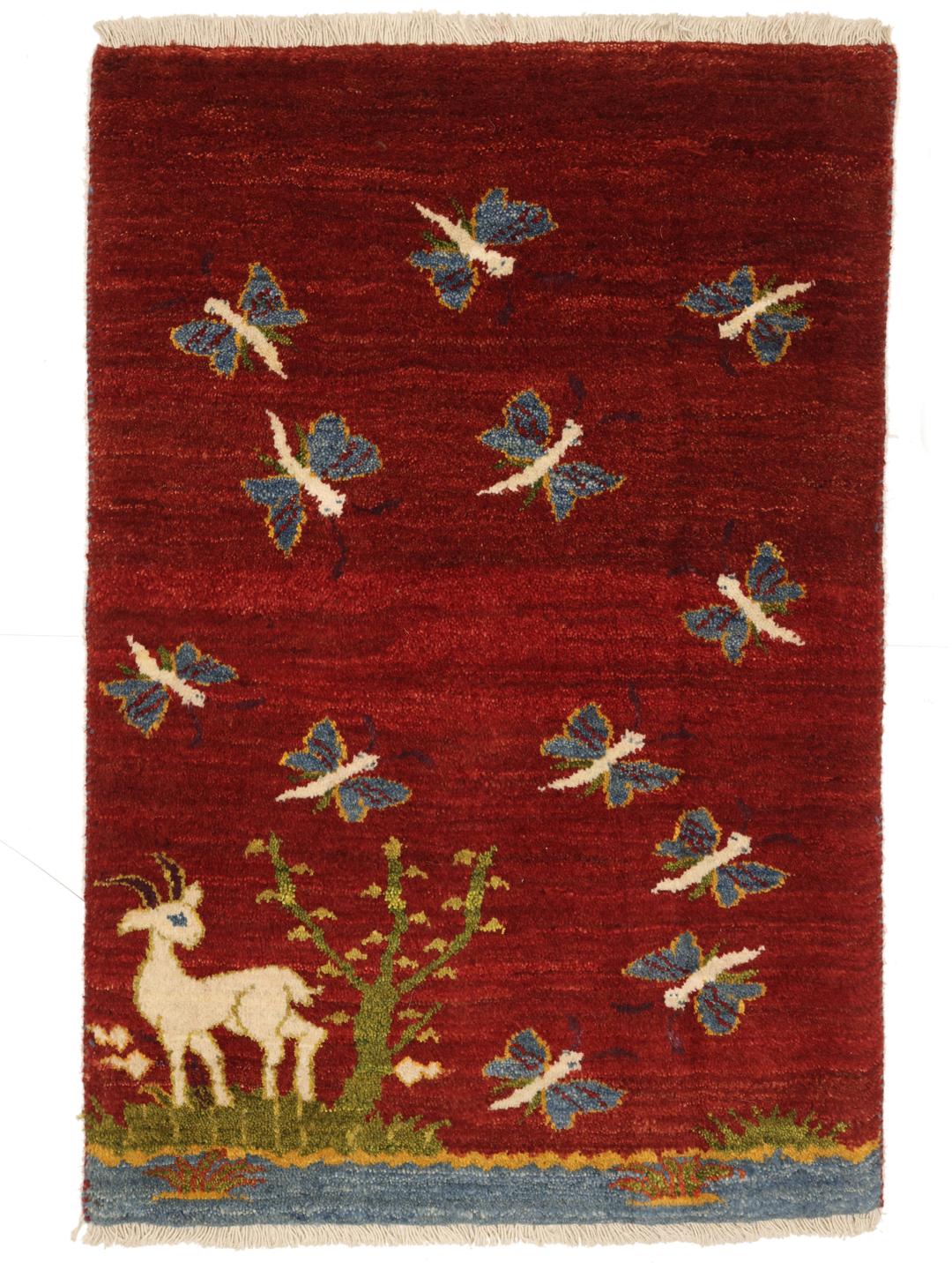
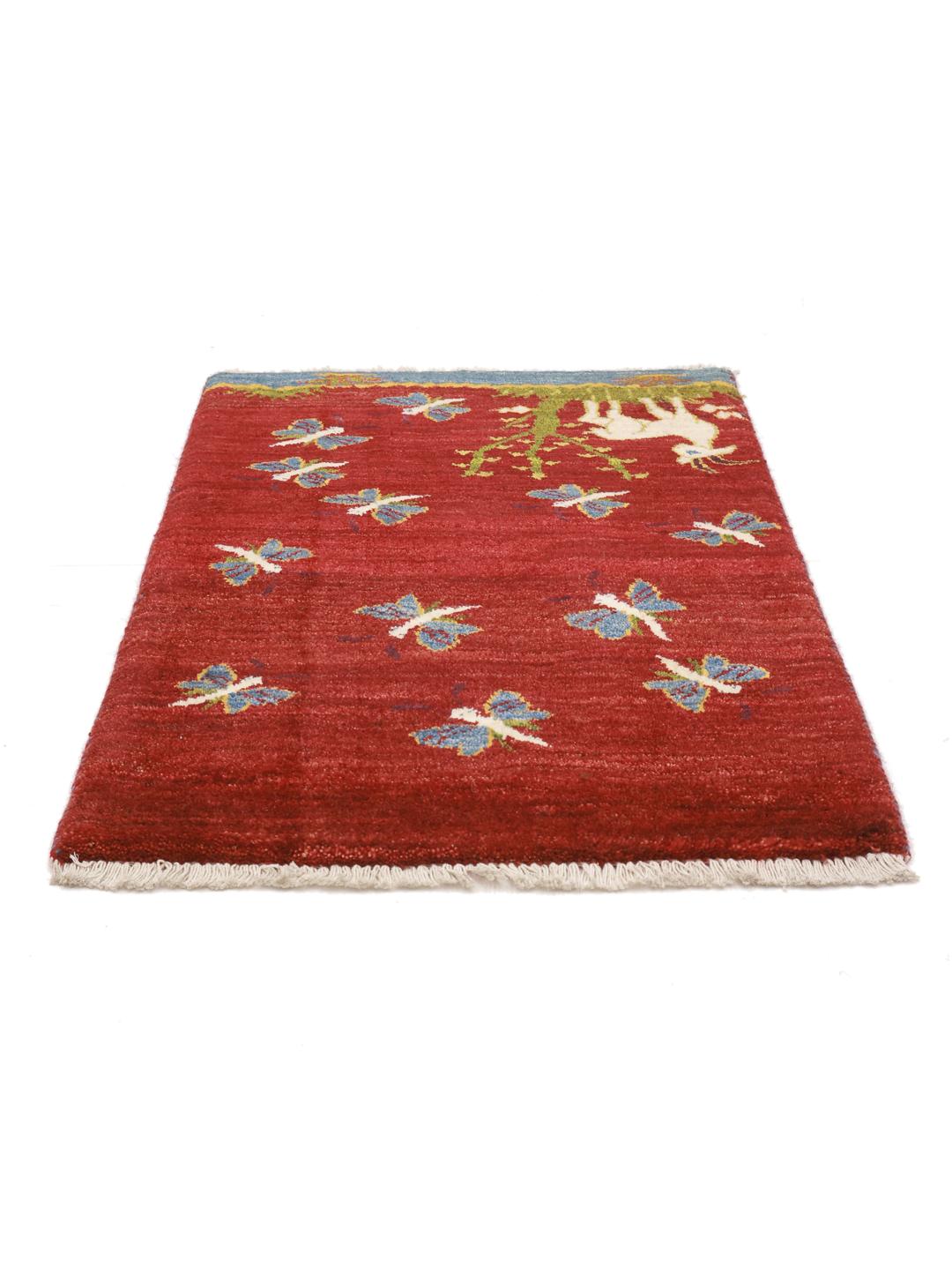
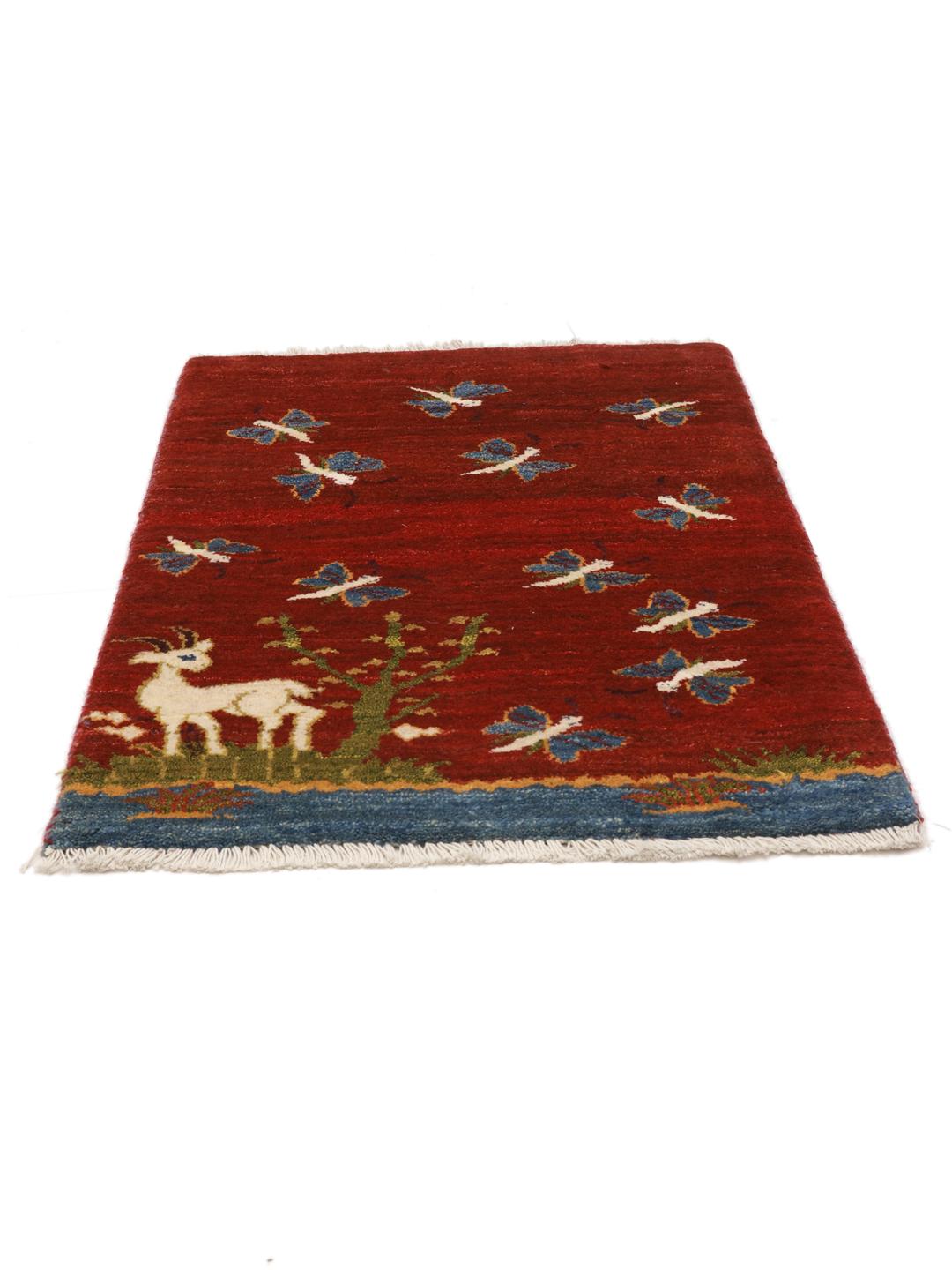
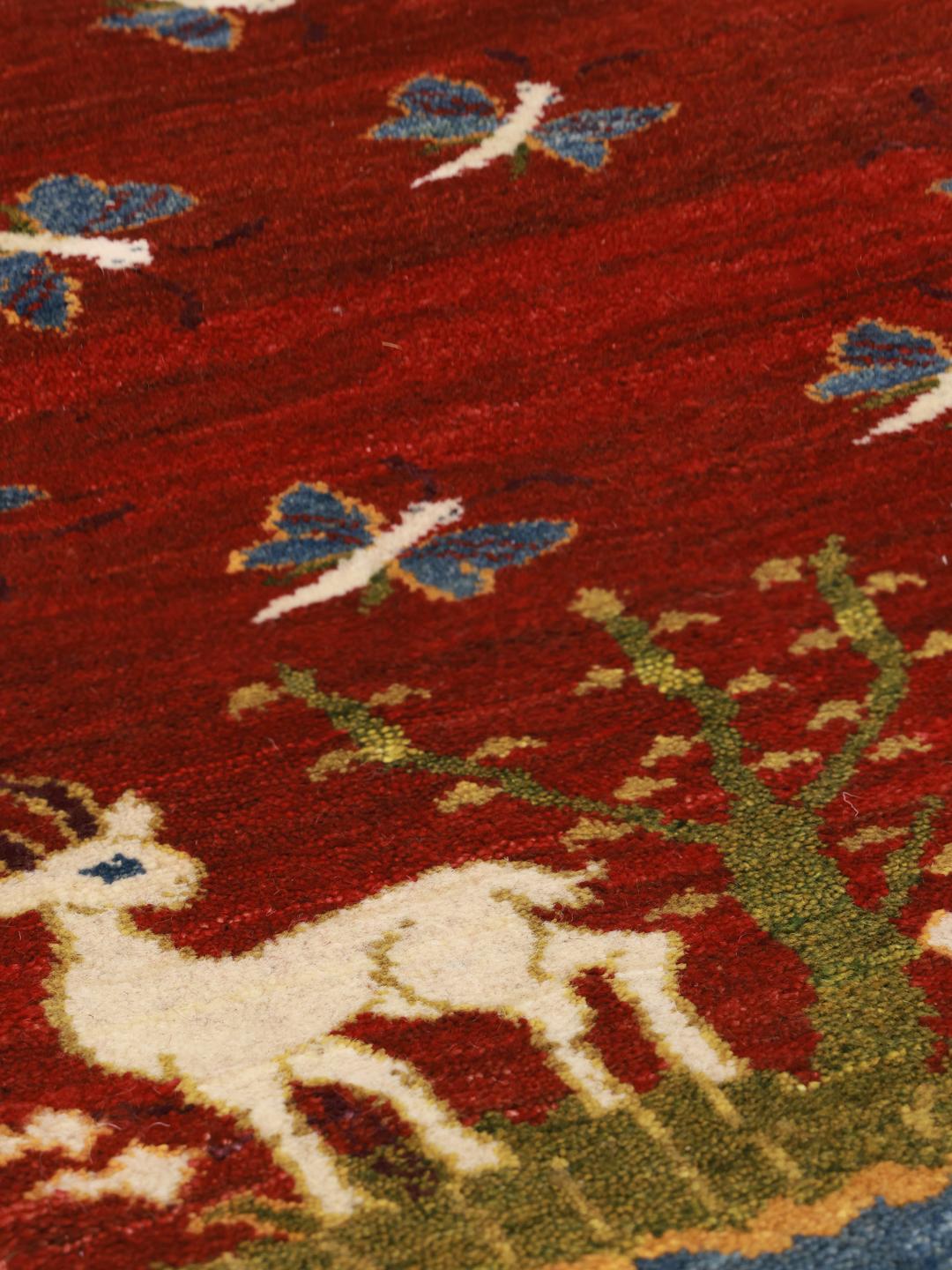
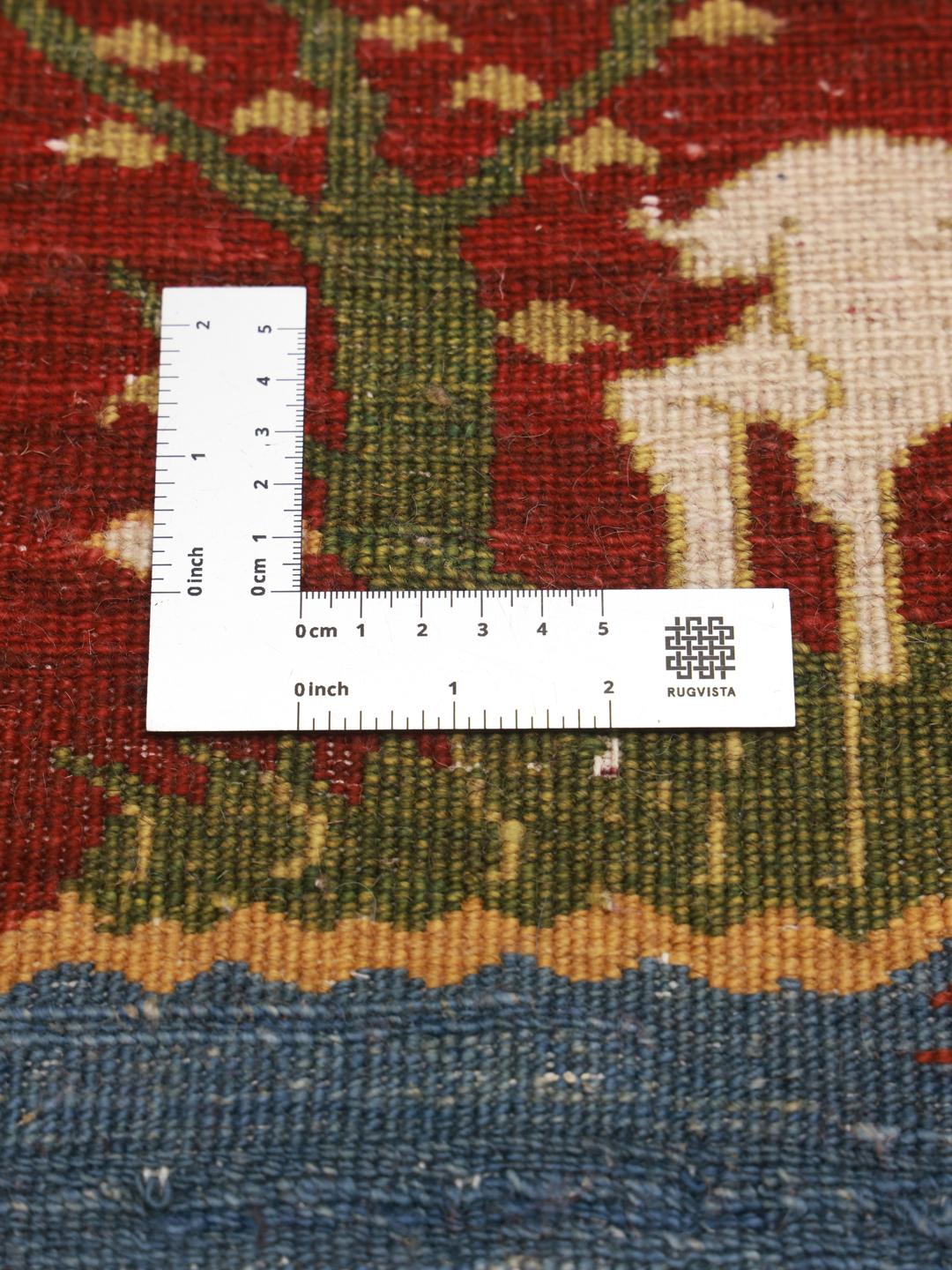
Gabbeh rugs were originally woven by nomadic tribes across the Middle East for personal use within their tents and homes. Unlike more formal city rugs designed with rigid symmetry, Gabbeh weaving has always prioritized creative freedom, yielding thick, plush floor coverings decorated with simple, expressive figures.
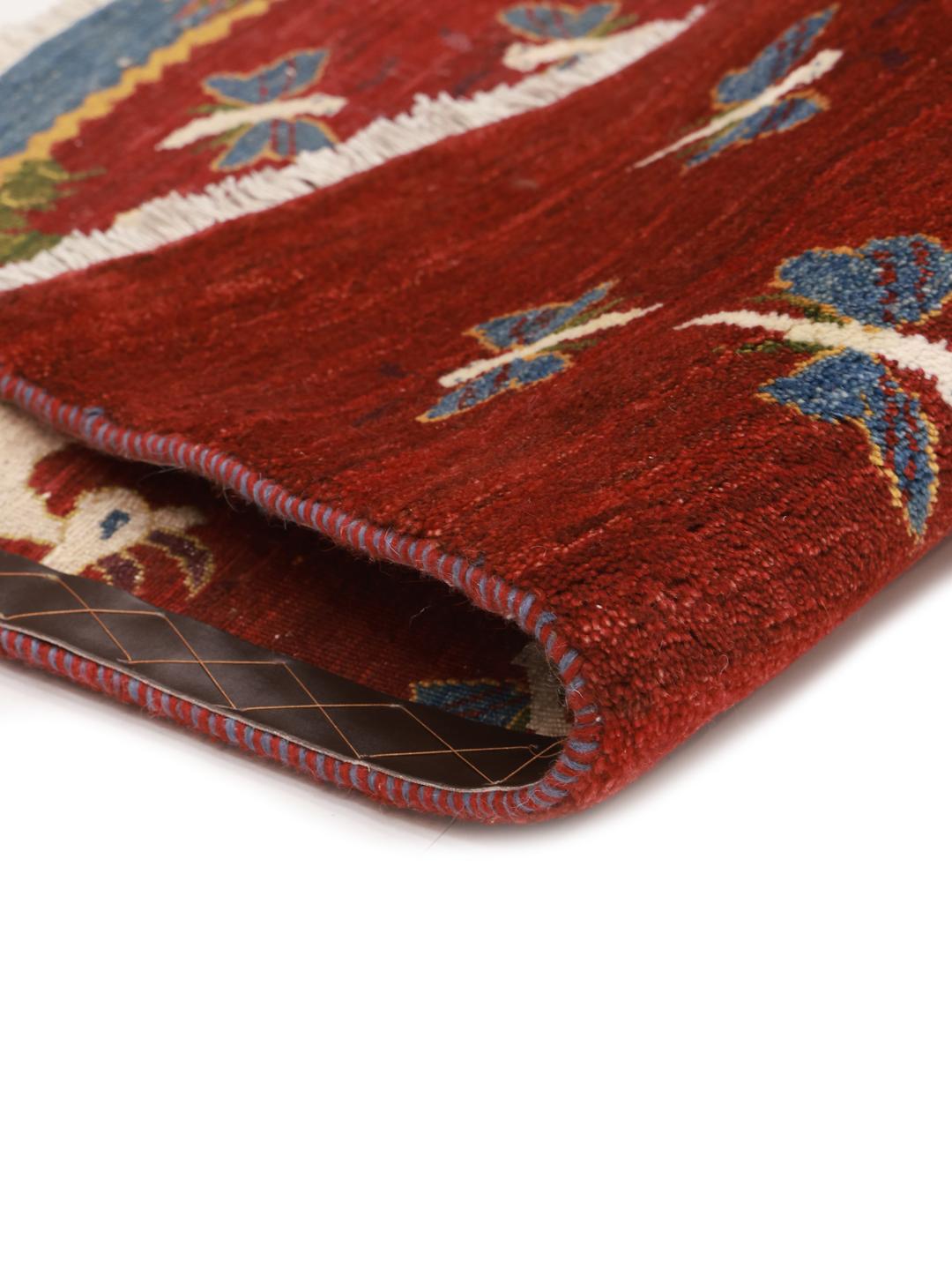
While the tradition originated among nomadic weavers, skilled craftspeople in Pakistan have adopted these iconic methods. Pakistani artisans apply traditional hand-knotting techniques to produce Gabbeh rugs that honor the original aesthetic while maintaining high construction standards for modern homes.
The visual language of a Gabbeh rug is defined by storytelling. Simple geometric animals, trees, and small figures like butterflies are placed onto fields of solid or gently Abrash-dyed color. These motifs historically symbolized simple everyday wishes, such as water, luck, and connection to nature.
Today, Gabbeh rugs are highly valued by collectors and homeowners alike for their modern artistic appeal. Their minimalist, folk-art quality allows them to fit seamlessly into modern interiors while carrying authentic tribal roots and lasting craft heritage.