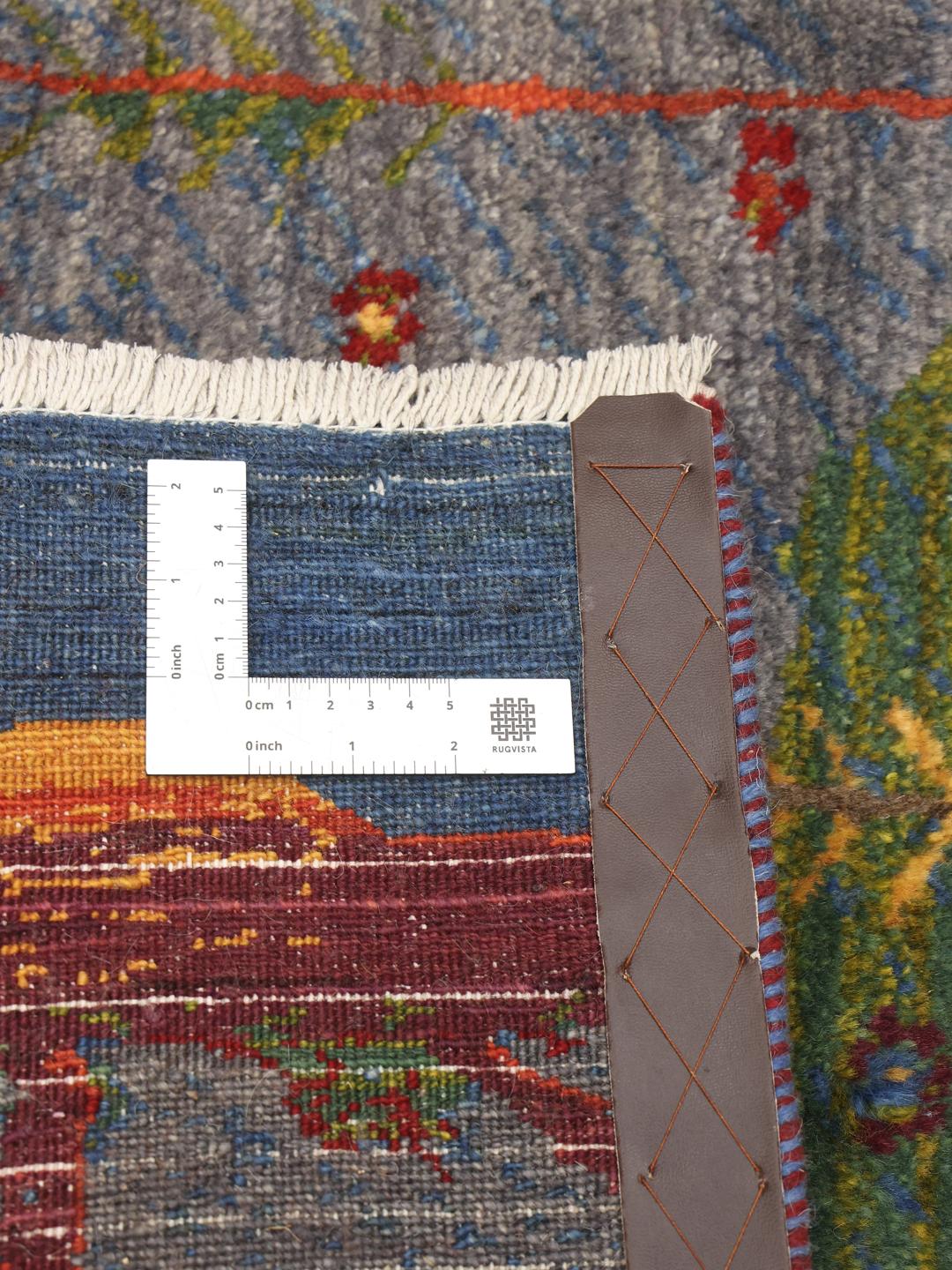
Gabbeh rugs originated among the nomadic tribes of Southwestern Asia, traditionally woven for personal use within tribal tents rather than for commercial markets. Over time, regional weavers across Pakistan and nearby areas adopted and refined this style, preserving its expressive storytelling nature while enhancing knot consistency.
The term Gabbeh translates roughly to raw, natural, or unclipped, pointing to the tradition of leaving a deep, thick pile. Unlike formal court rugs with symmetrical grid layouts, Gabbeh weaving relies on simple, spontaneous expressions of daily life, landscape views, and local flora or fauna.
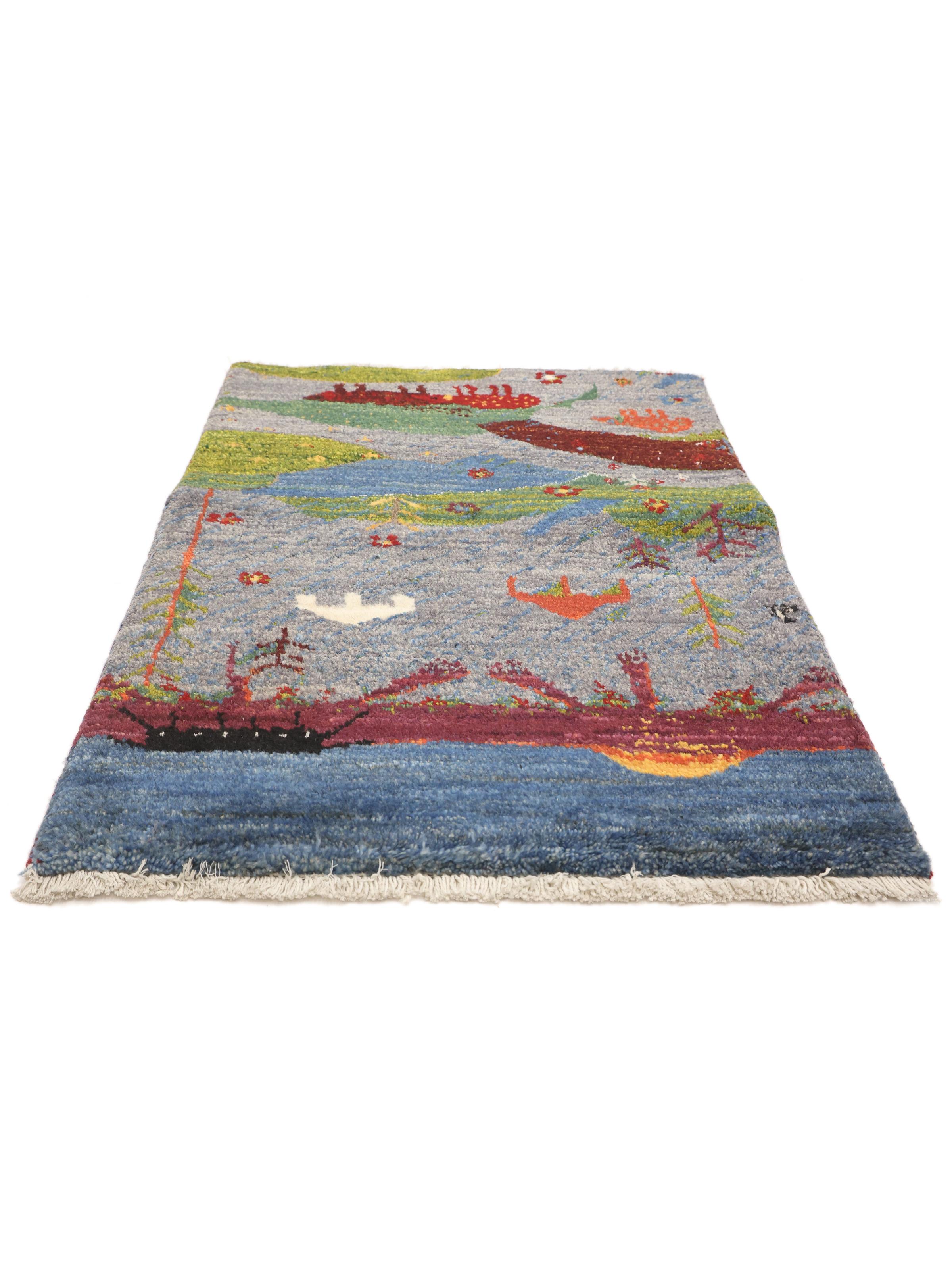
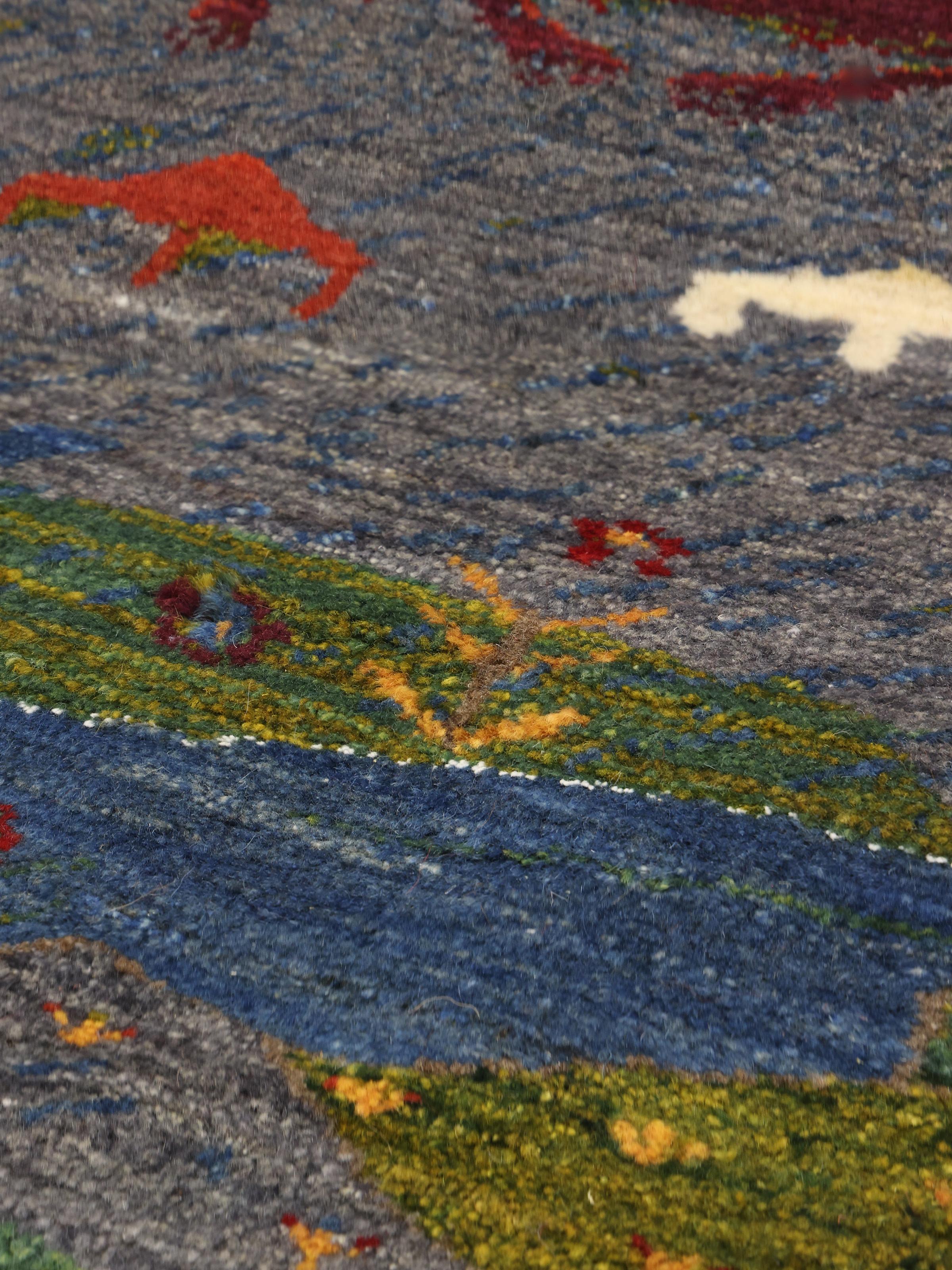
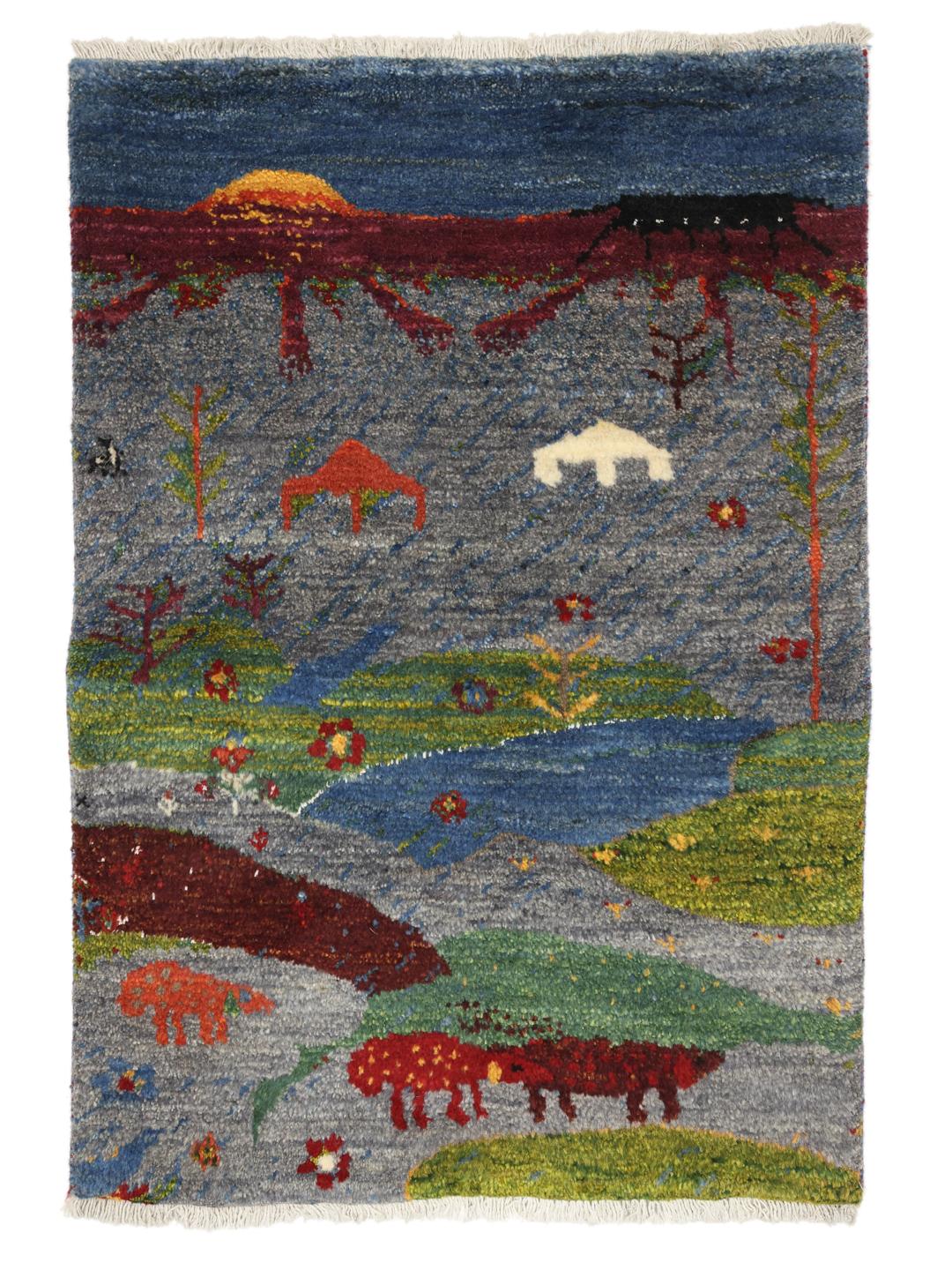
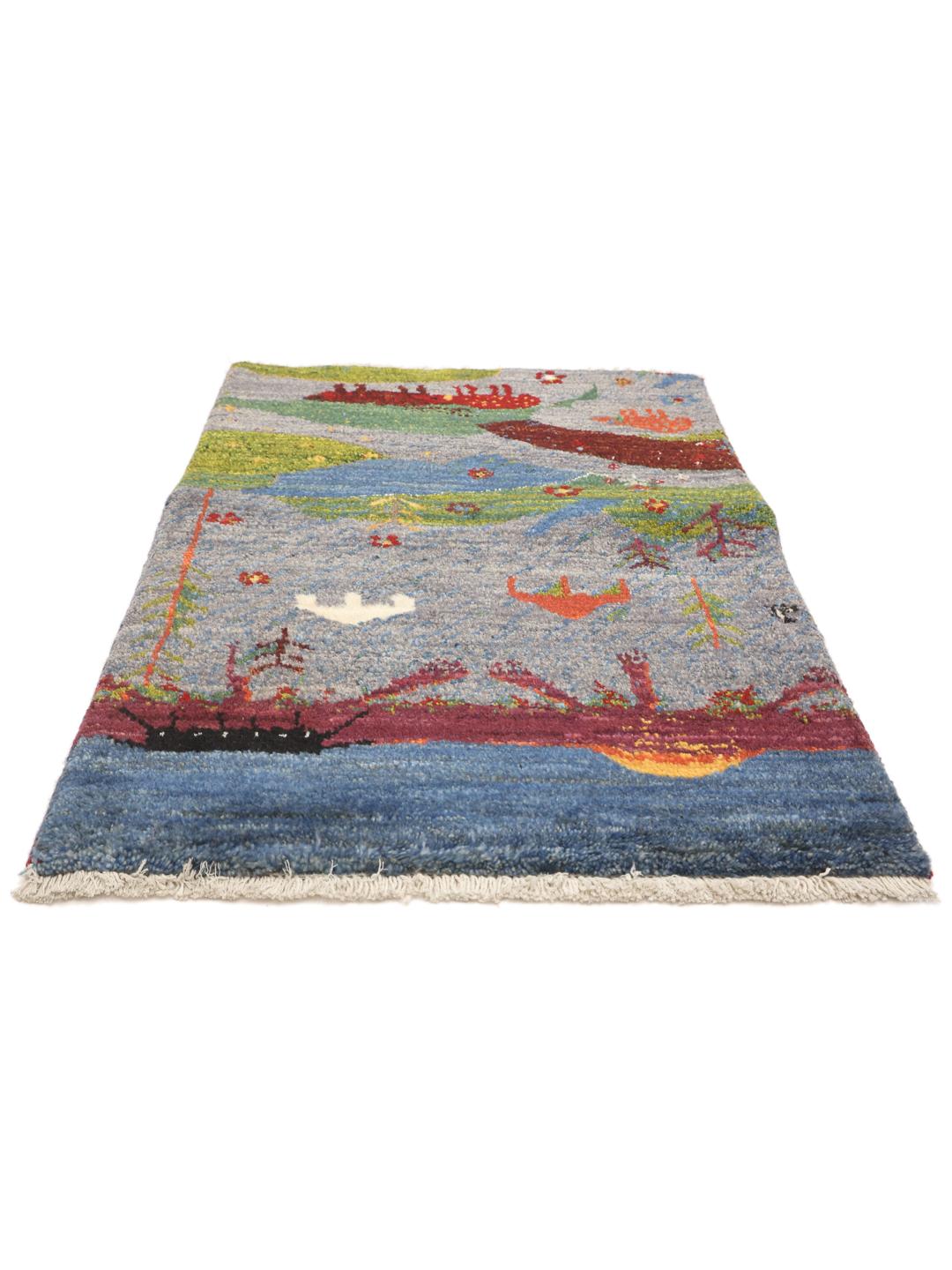
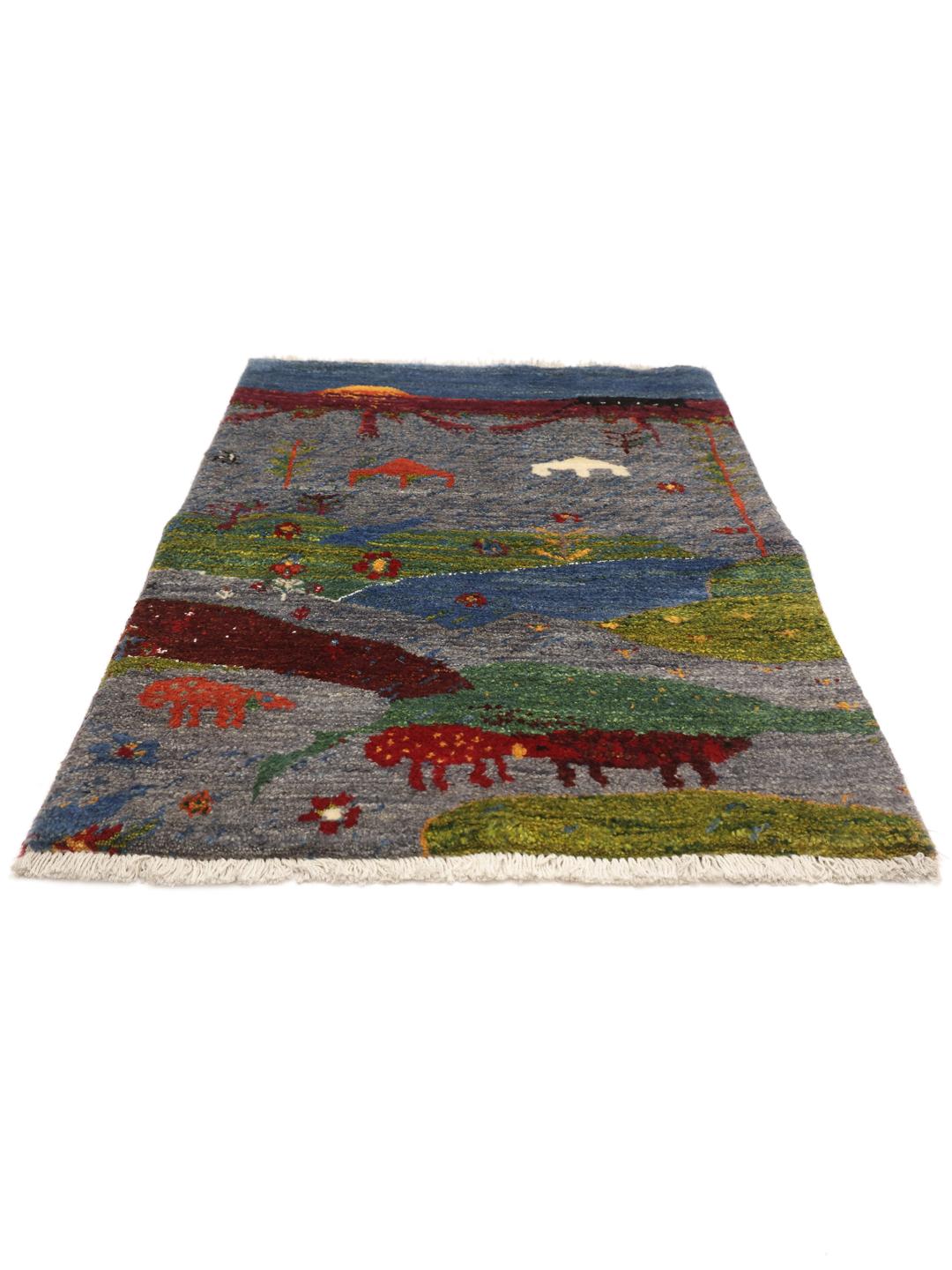
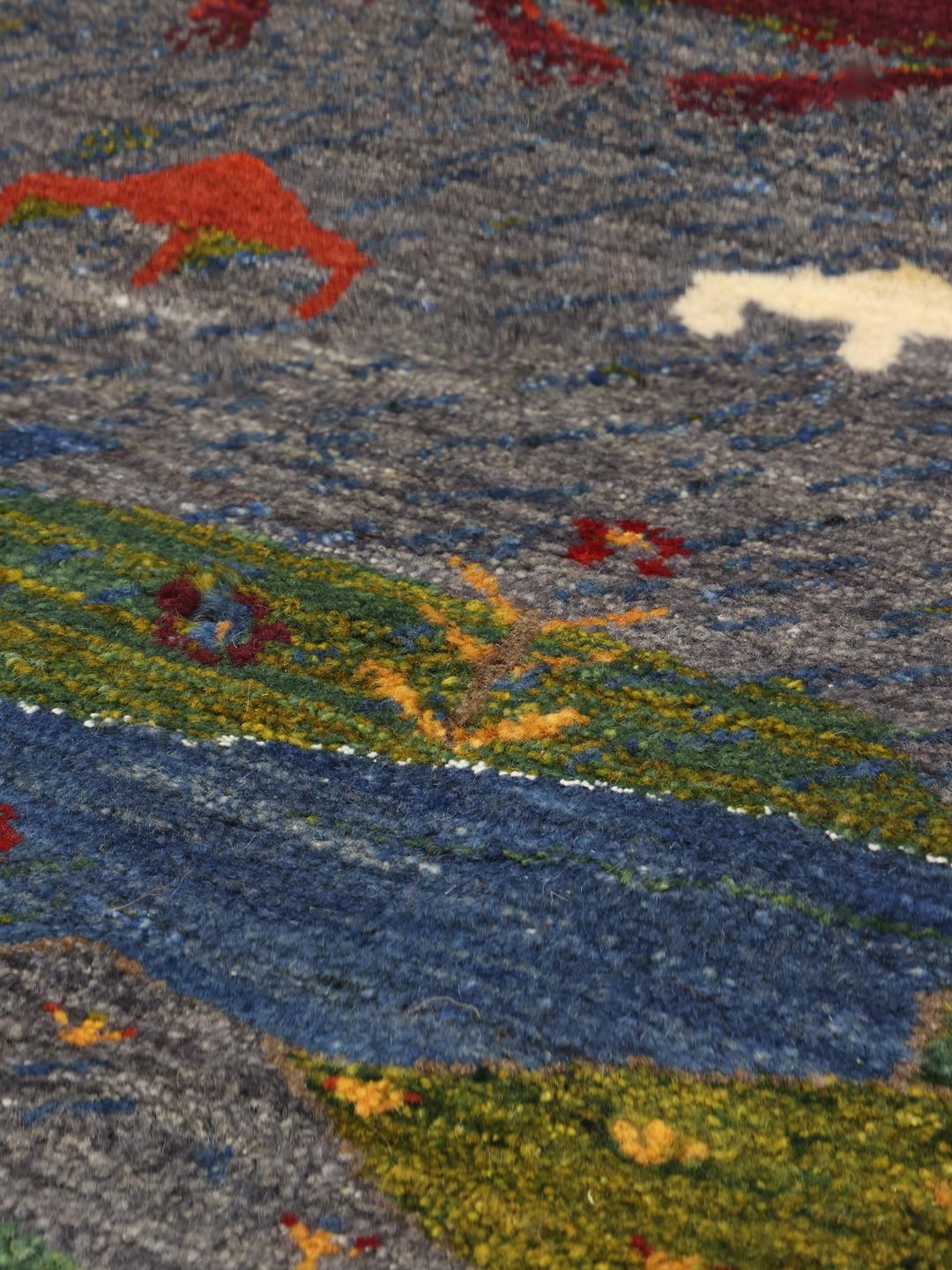
Signature visual elements include simplified tree shapes, stylized animals, and small human figures scattered across painterly fields of color. The wide variety of shades used in this piece highlights the traditional technique of using varied yarn batches to build visual depth and rich tonal contrast.
Today, traditional Gabbeh rugs are valued by collectors and homeowners alike for their naive charm and artistic freedom. Owning a hand-knotted Gabbeh means bringing a piece of living folk art and timeless storytelling into the modern home.