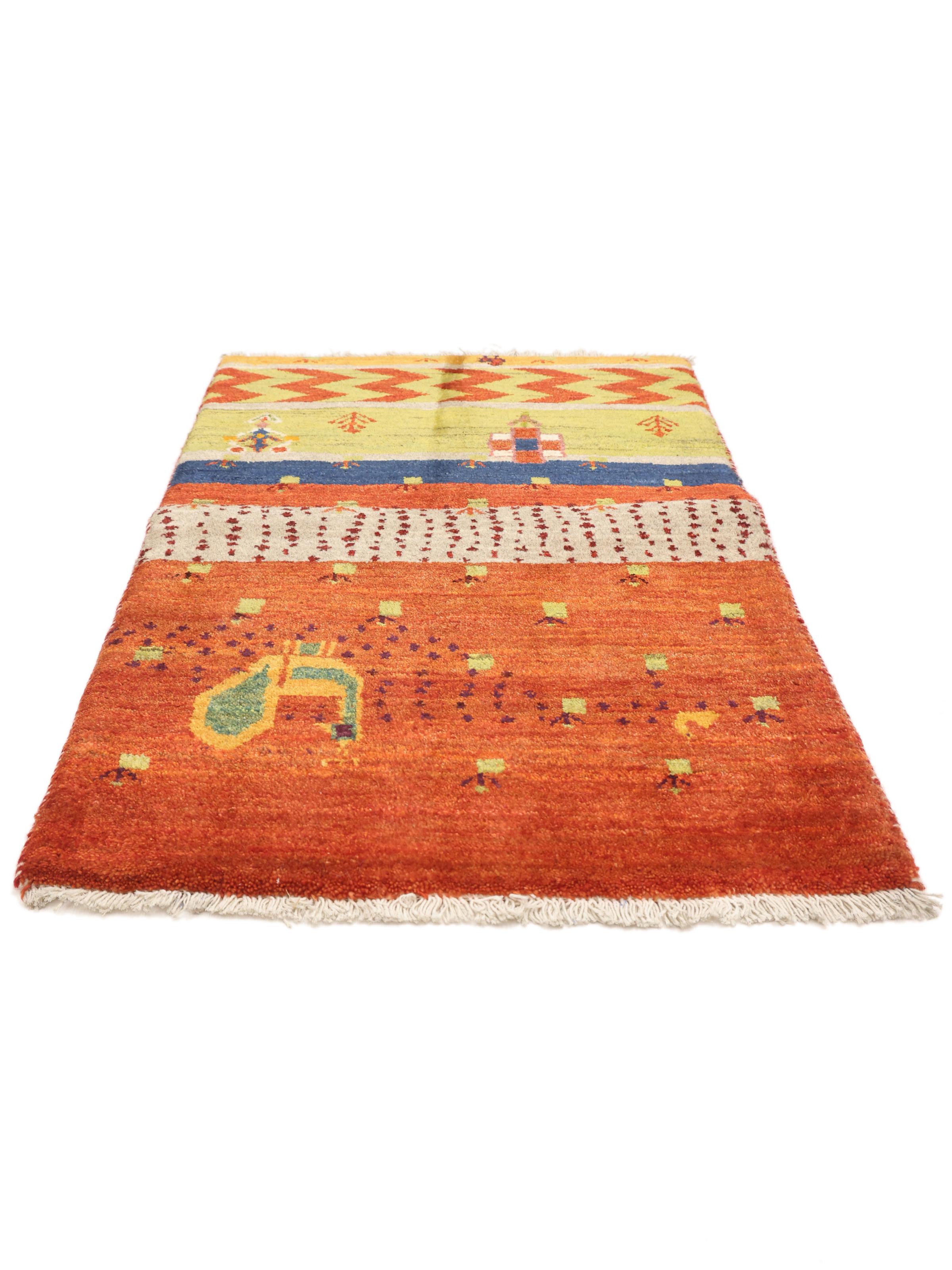
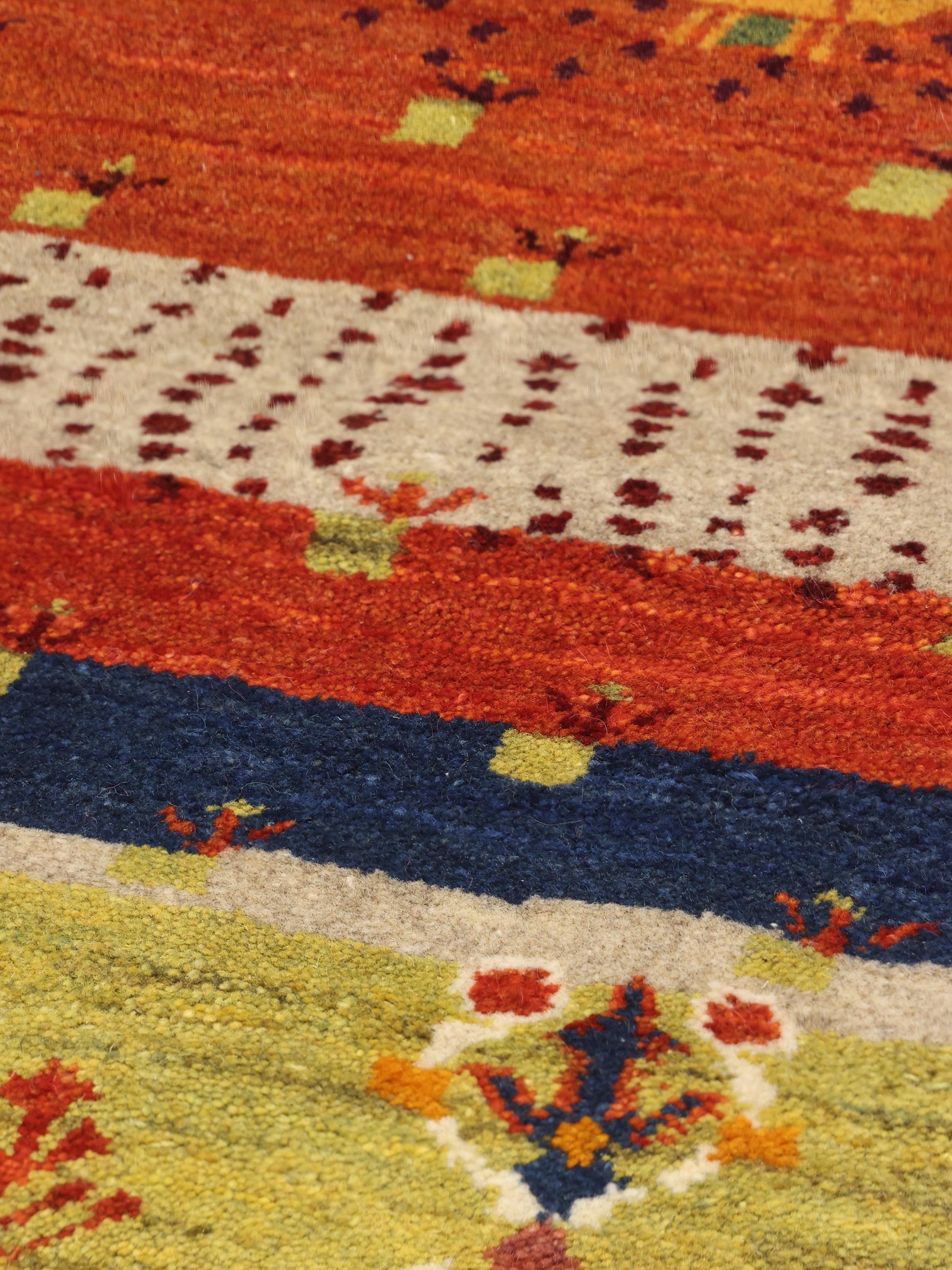
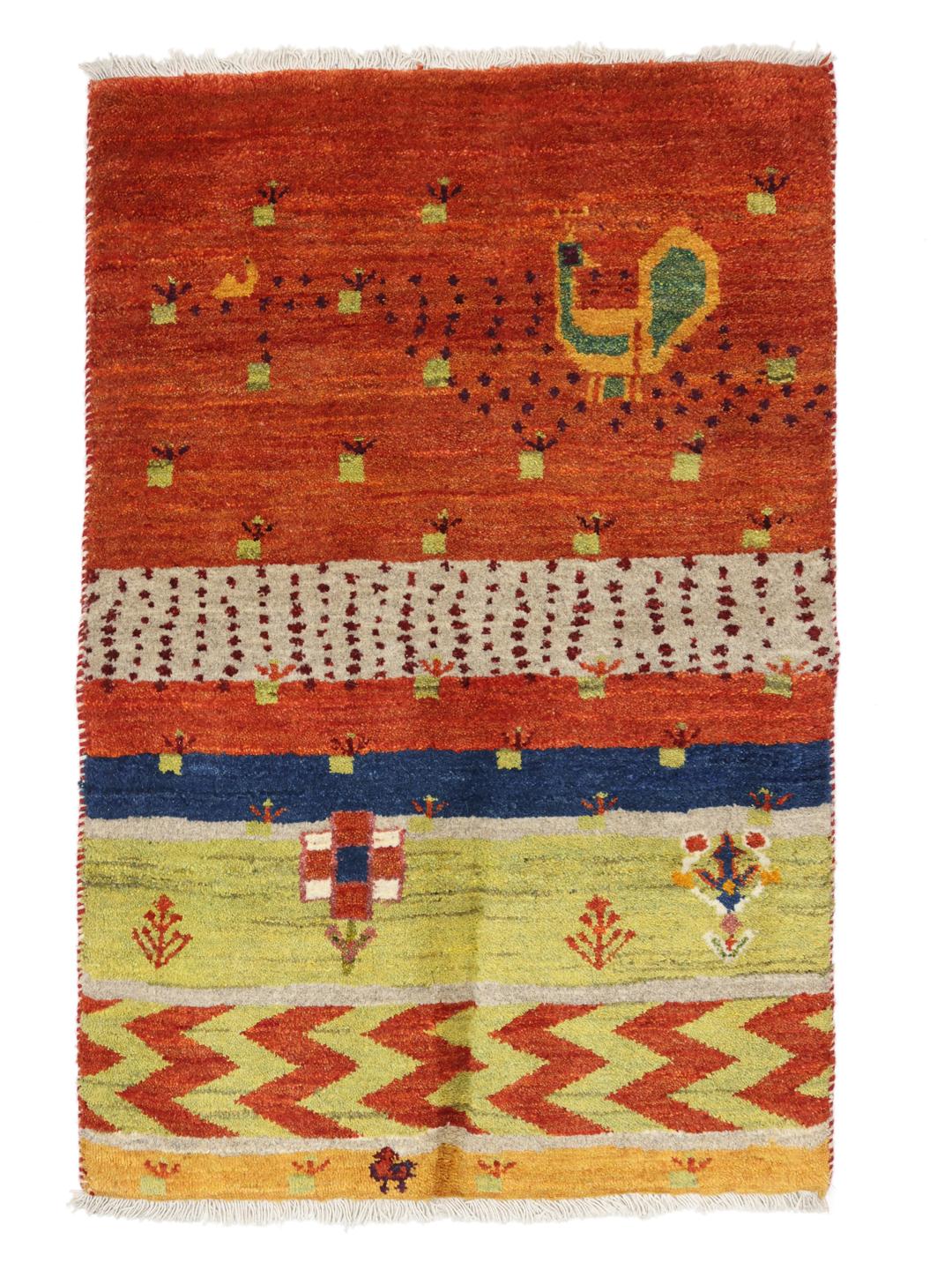
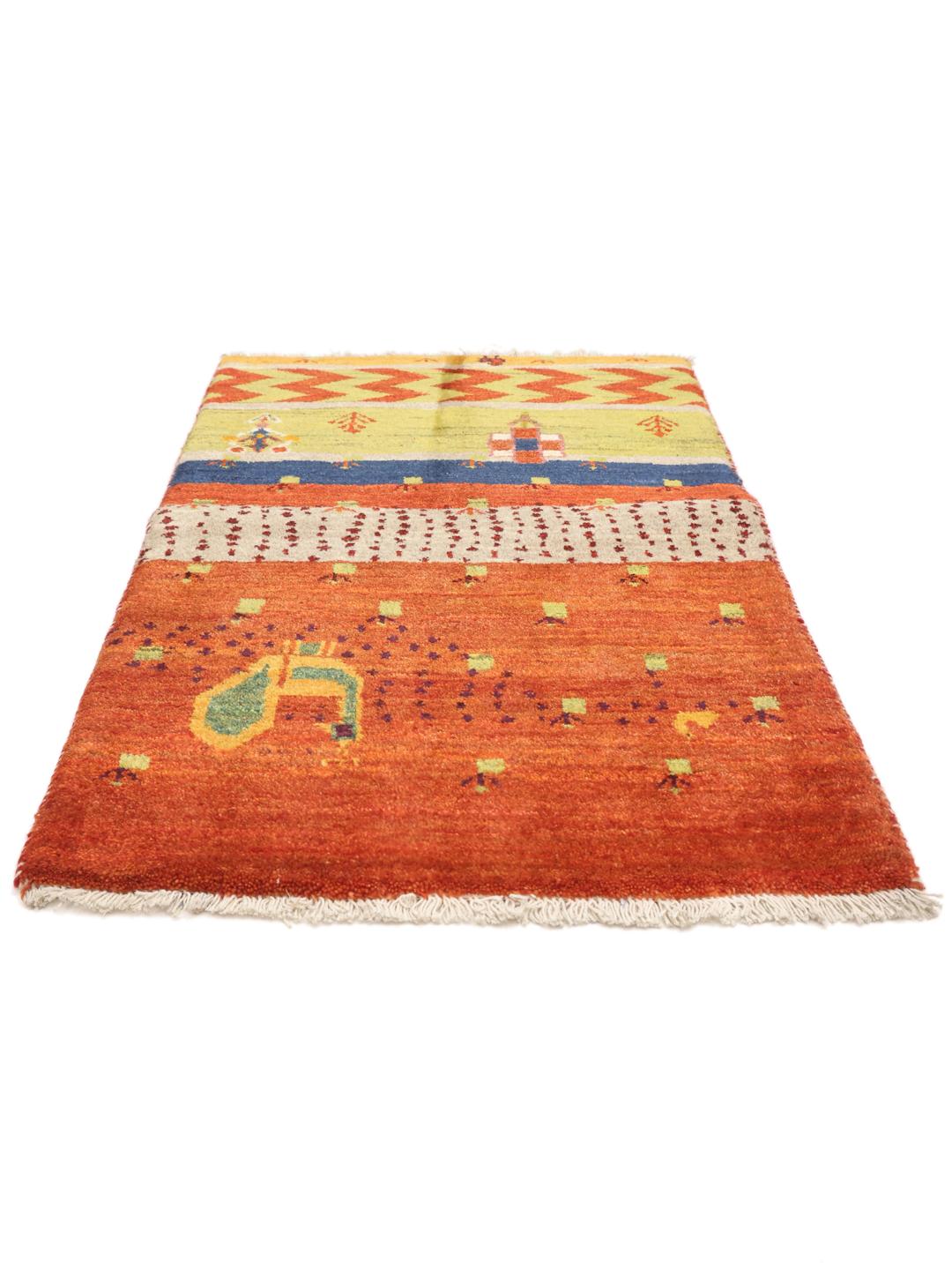
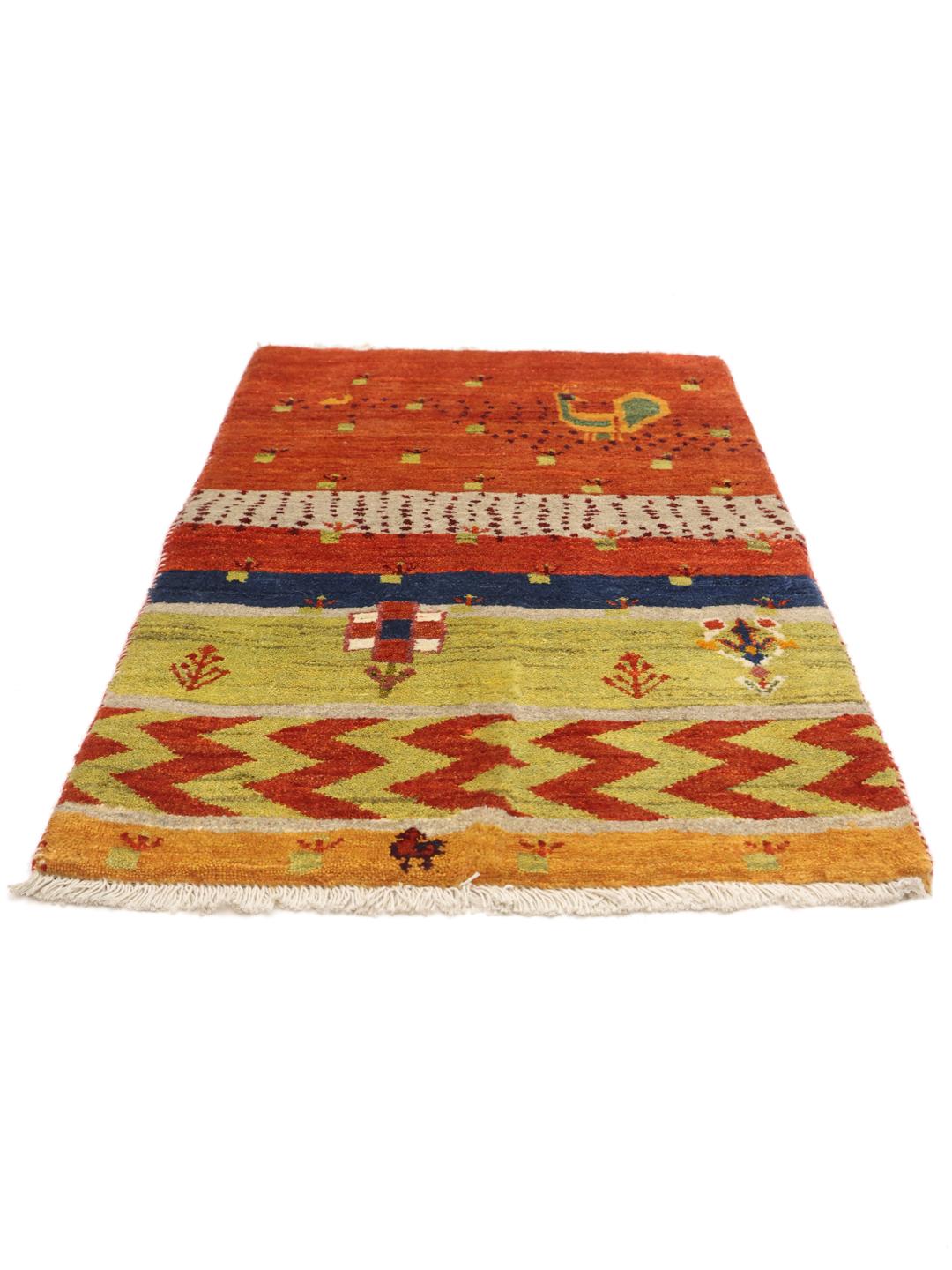
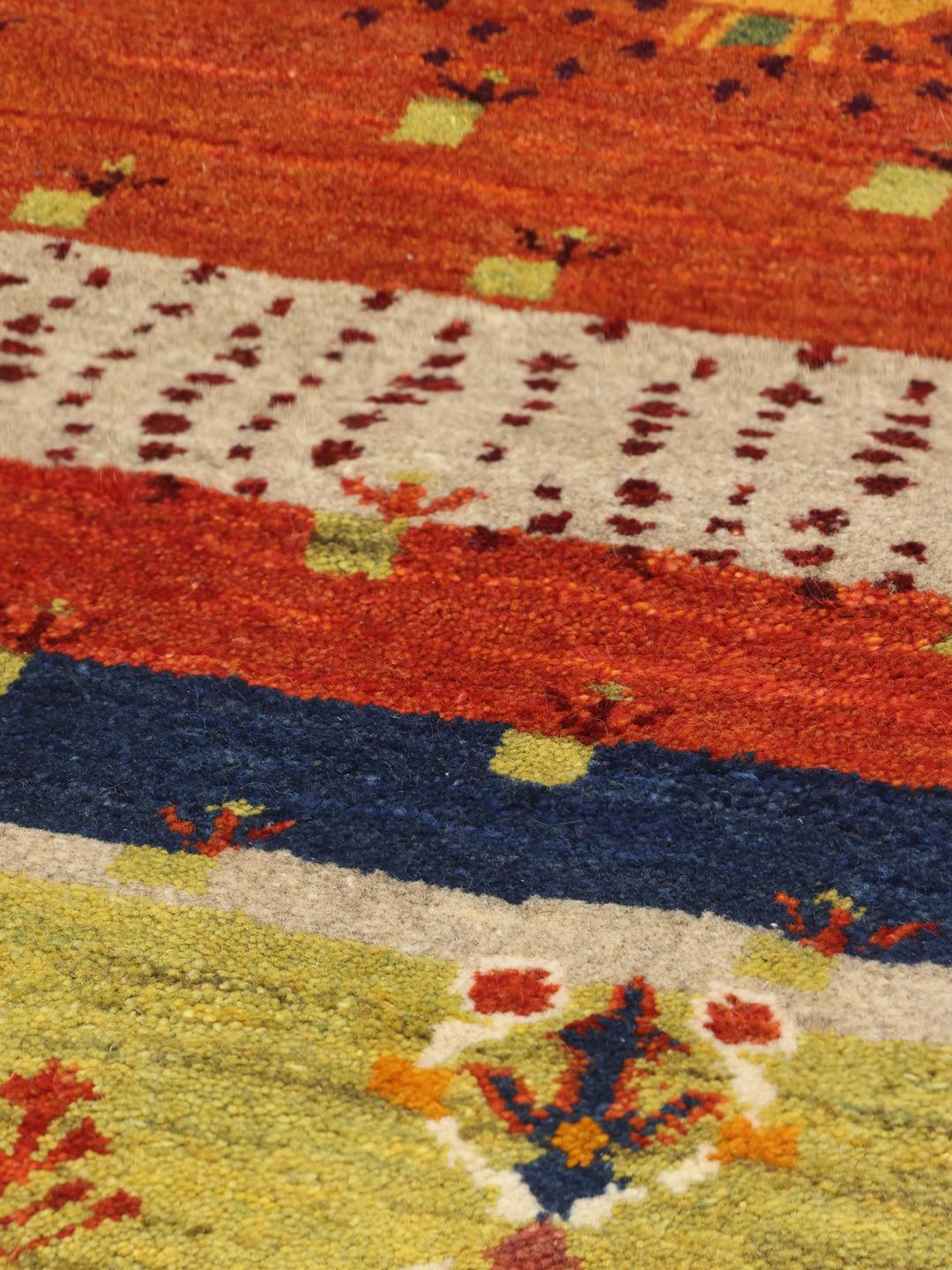
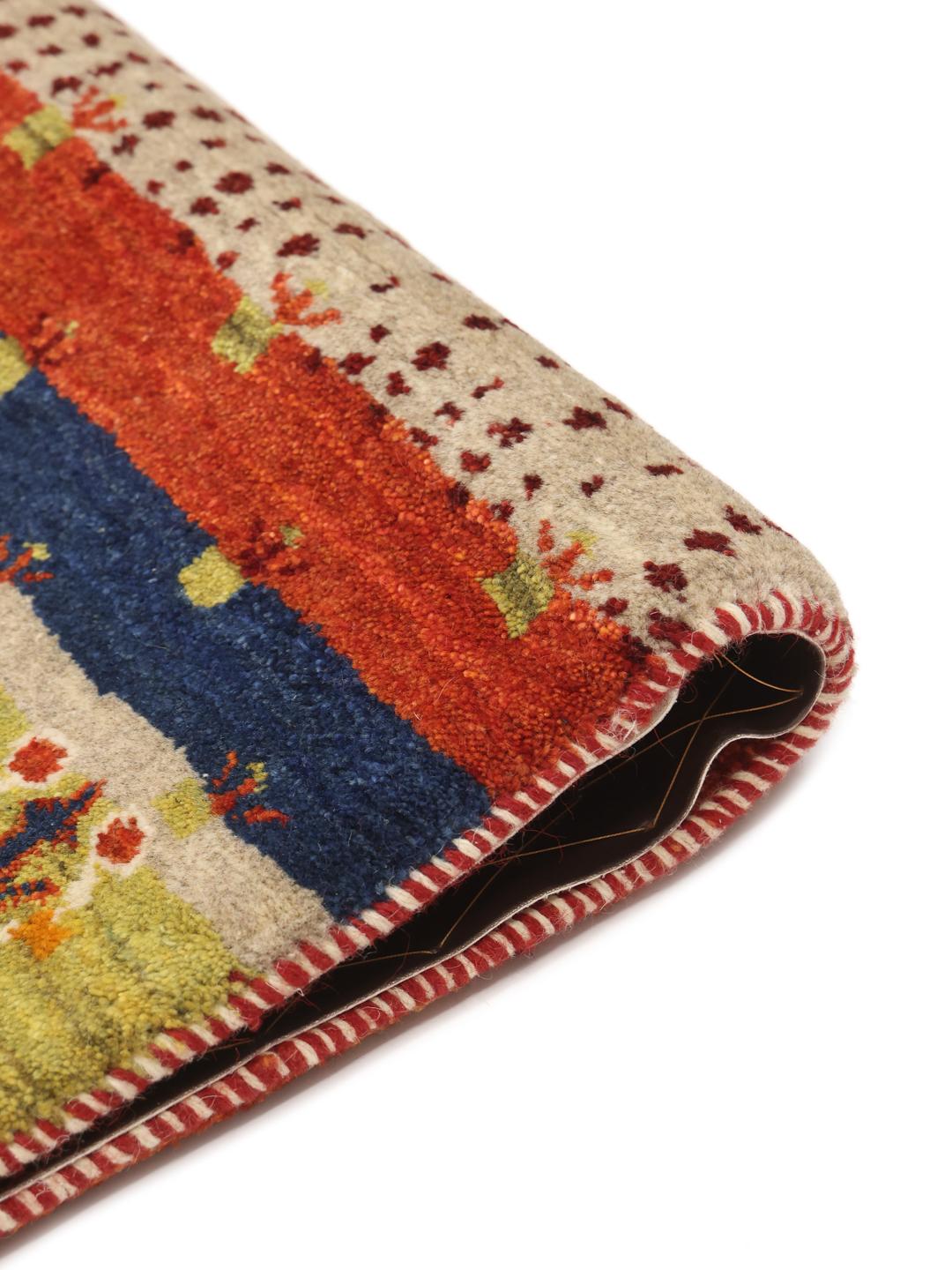
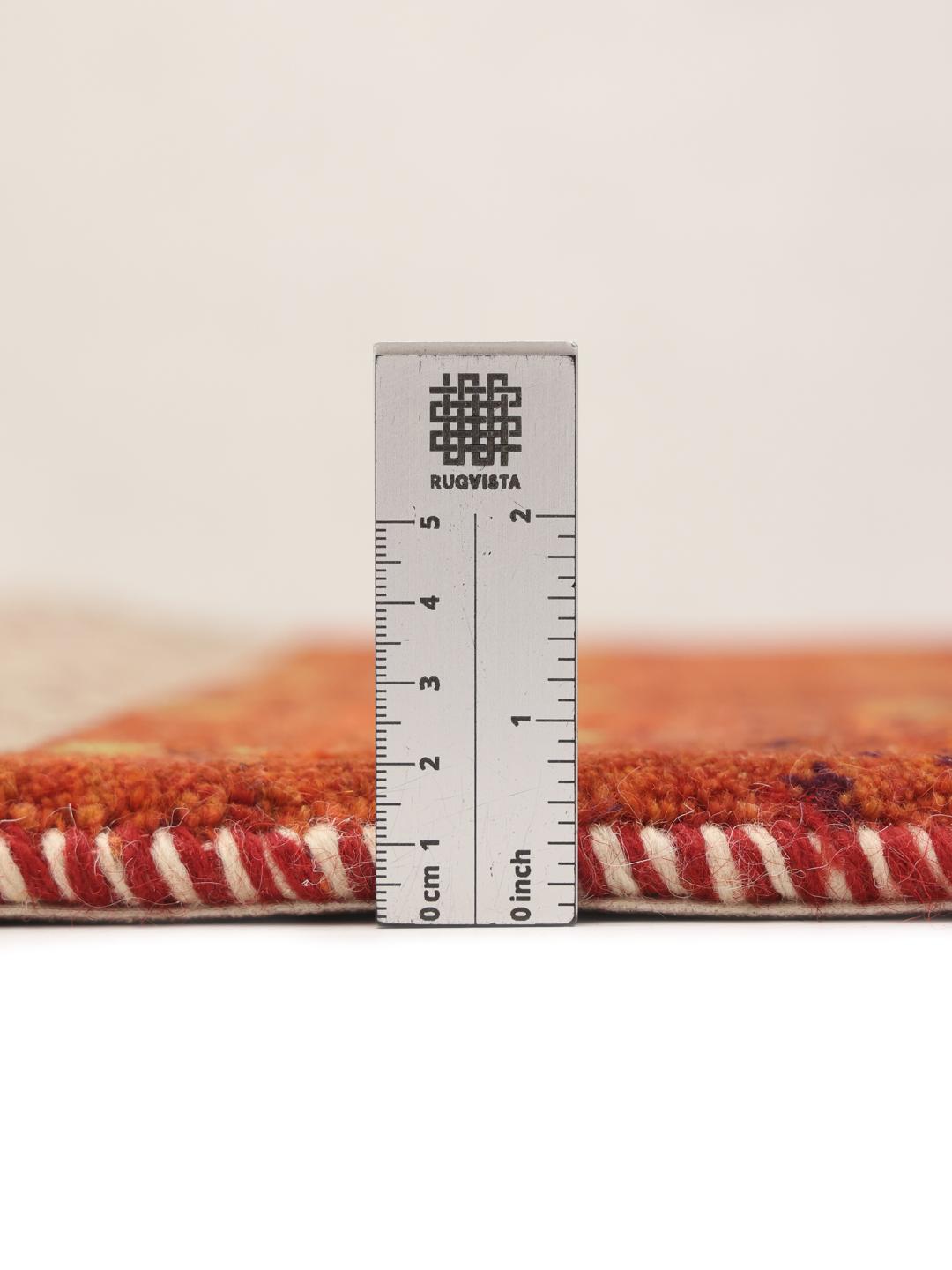
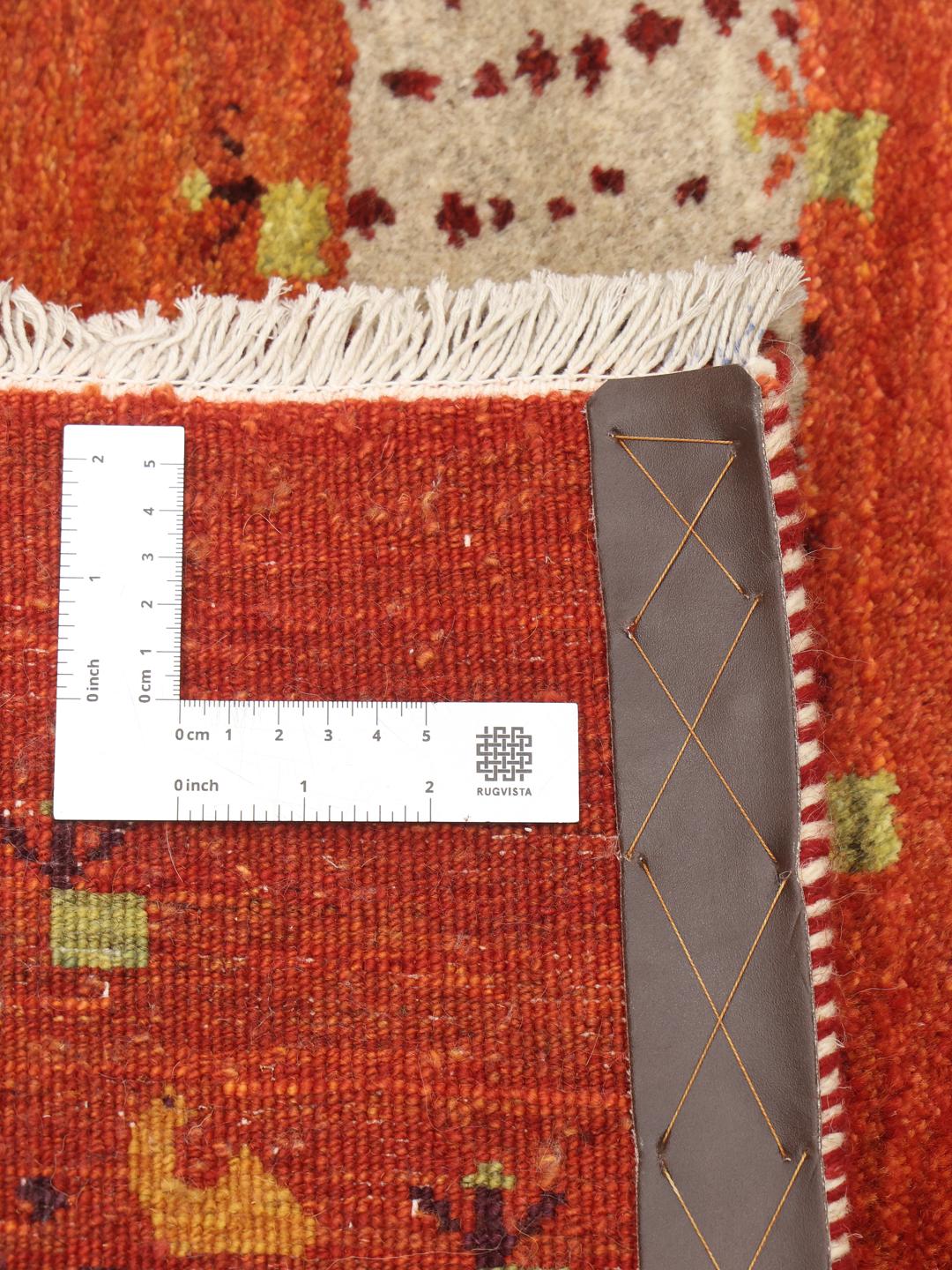
Gabbeh rugs trace their origins back to nomadic tribal weavers across the Middle East. Traditionally crafted for personal use within families rather than commercial sale, these rugs were designed for practical warmth, featuring thick piles and spontaneous, intuitive patterns.
While the tradition originated among nomadic tribes, skilled weavers in Pakistan have embraced the Gabbeh style, crafting pieces that honor ancient nomadic aesthetics while maintaining exceptional knotting standards. This cross-regional evolution has helped preserve the celebrated Gabbeh identity for modern homes.
The visual language of a Gabbeh rug is instantly recognizable. Rather than rigid, formal symmetry, weavers use freeform compositions filled with stylized trees, animals, and geometric bands. The motifs act as small symbolic stories, capturing moments from daily life, nature, or surrounding landscapes.
Today, traditional Gabbeh rugs are prized by collectors and homeowners alike for their modern artistic appeal. Their combination of painterly color choices, soft thick piles, and rustic charm makes them enduring design elements that anchor a room with real human history.