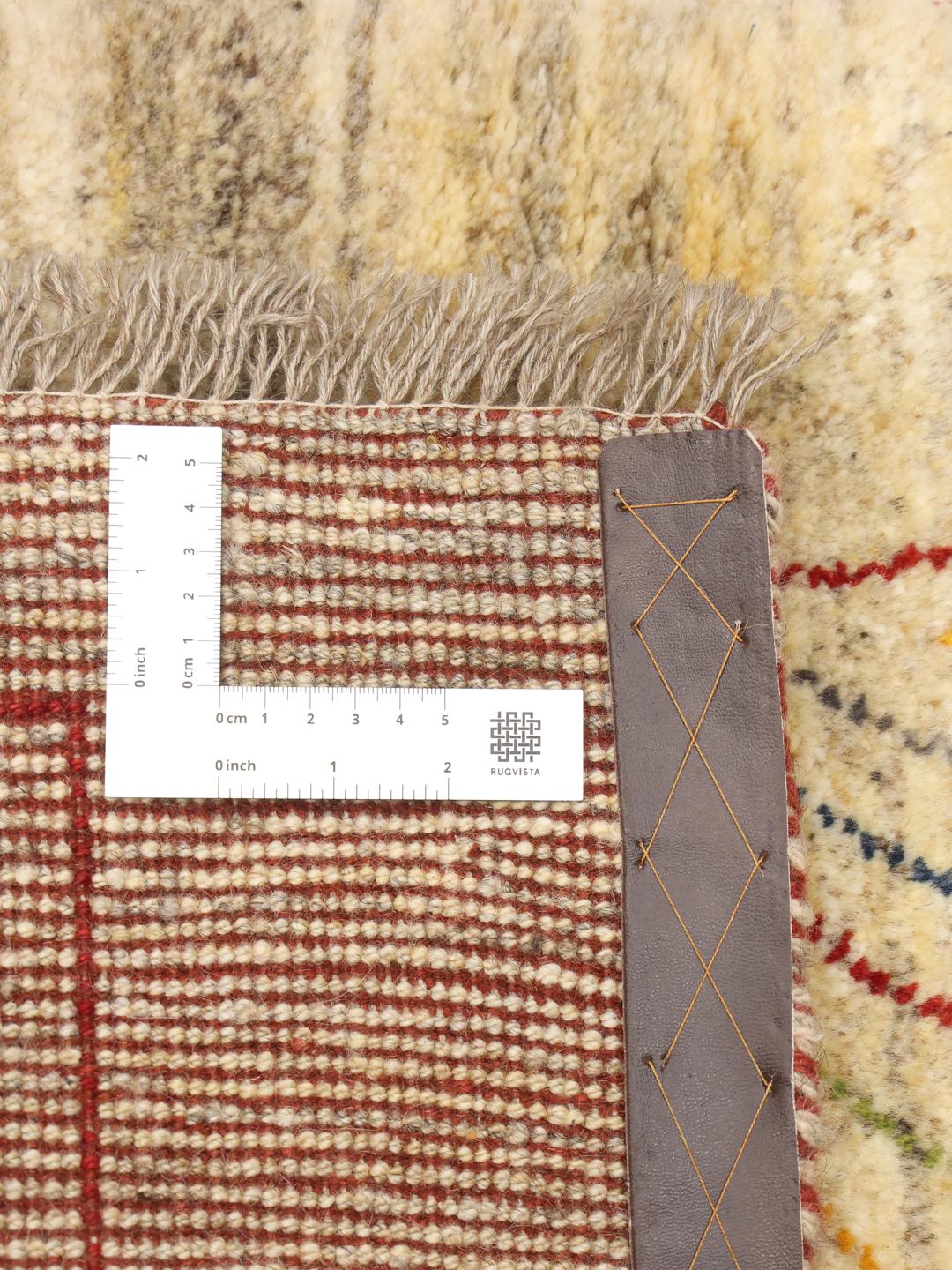
Gabbeh rugs originate from the nomadic tribes of the Middle East, specifically the Ghashgai and Luri peoples. Historically, these rugs were woven primarily for personal use within the family, serving as thick, protective floor coverings that offered warmth against the cold desert nights. Unlike more formal urban rugs, the Gabbeh was never intended for commercial export, which allowed the weavers complete creative freedom to express their surroundings and inner world.
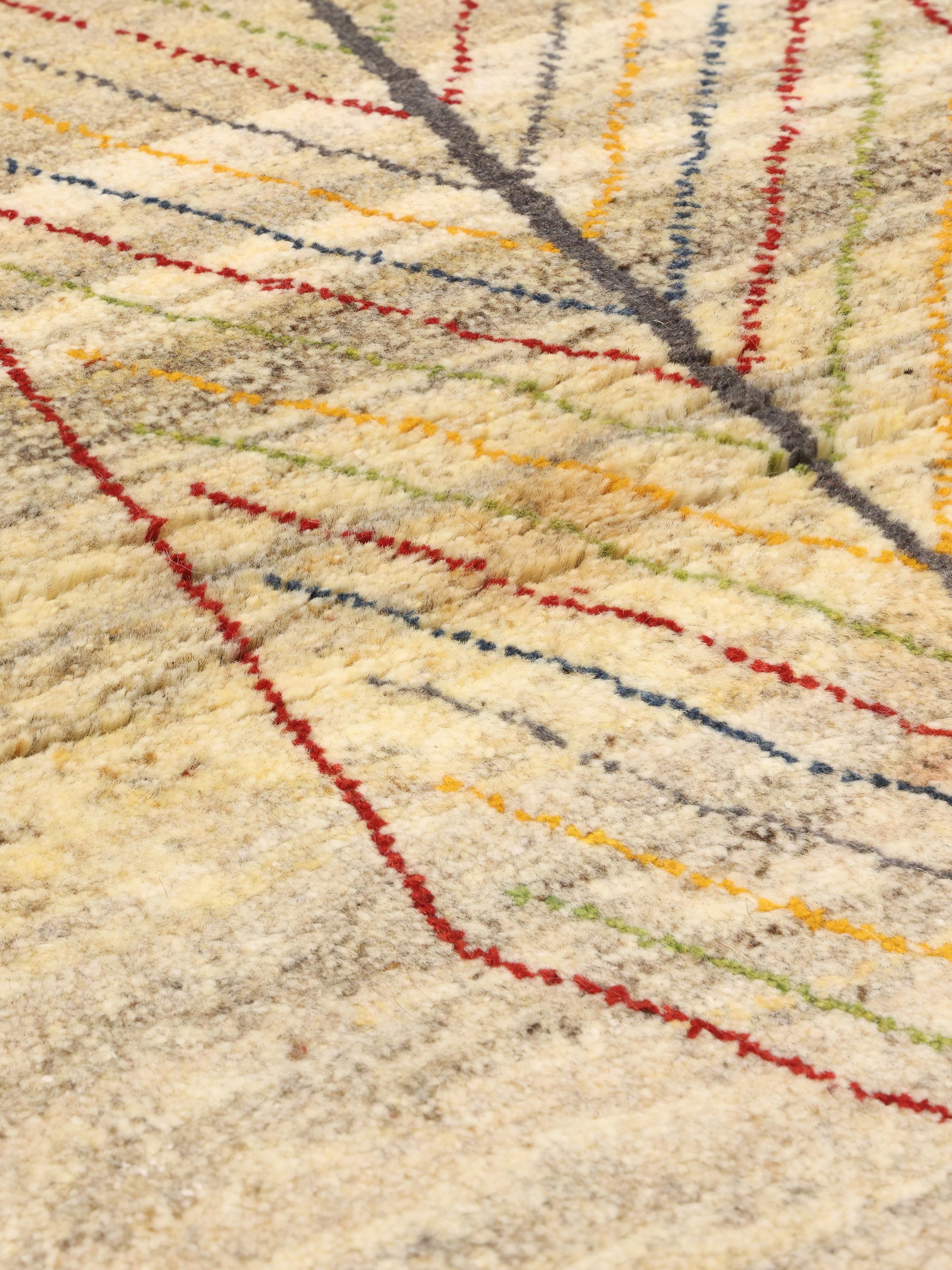
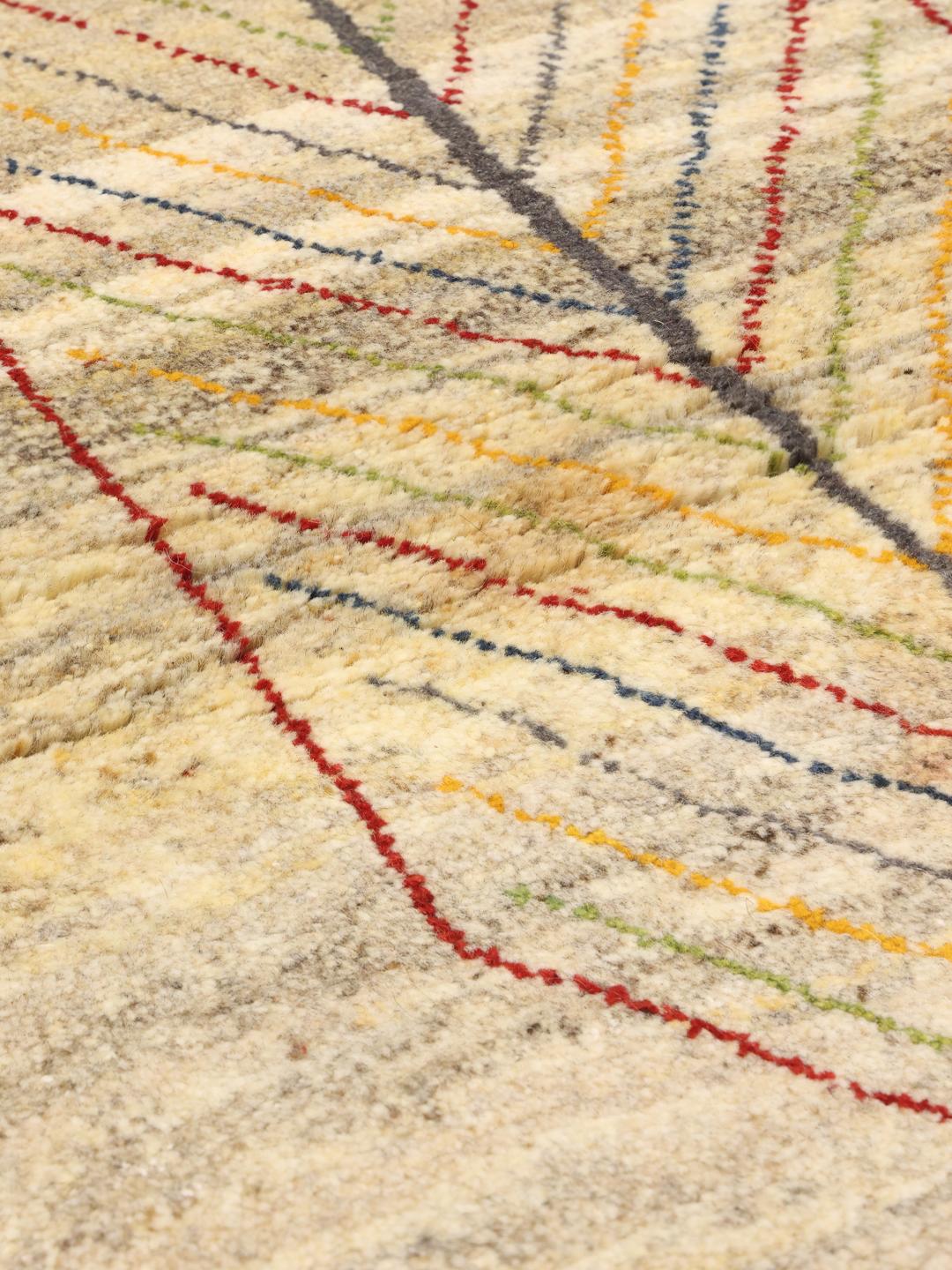
The term Gabbeh itself refers to a 'natural' or 'raw' style of weaving, characterised by a thicker, longer pile and a simpler, more abstract aesthetic. This style relies on the quality of the hand-spun wool and the natural dyes derived from plants, roots, and minerals found in the local landscape. The result is a rug that feels organic and deeply connected to the environment where it was made, with a focus on tactile comfort over rigid symmetry.
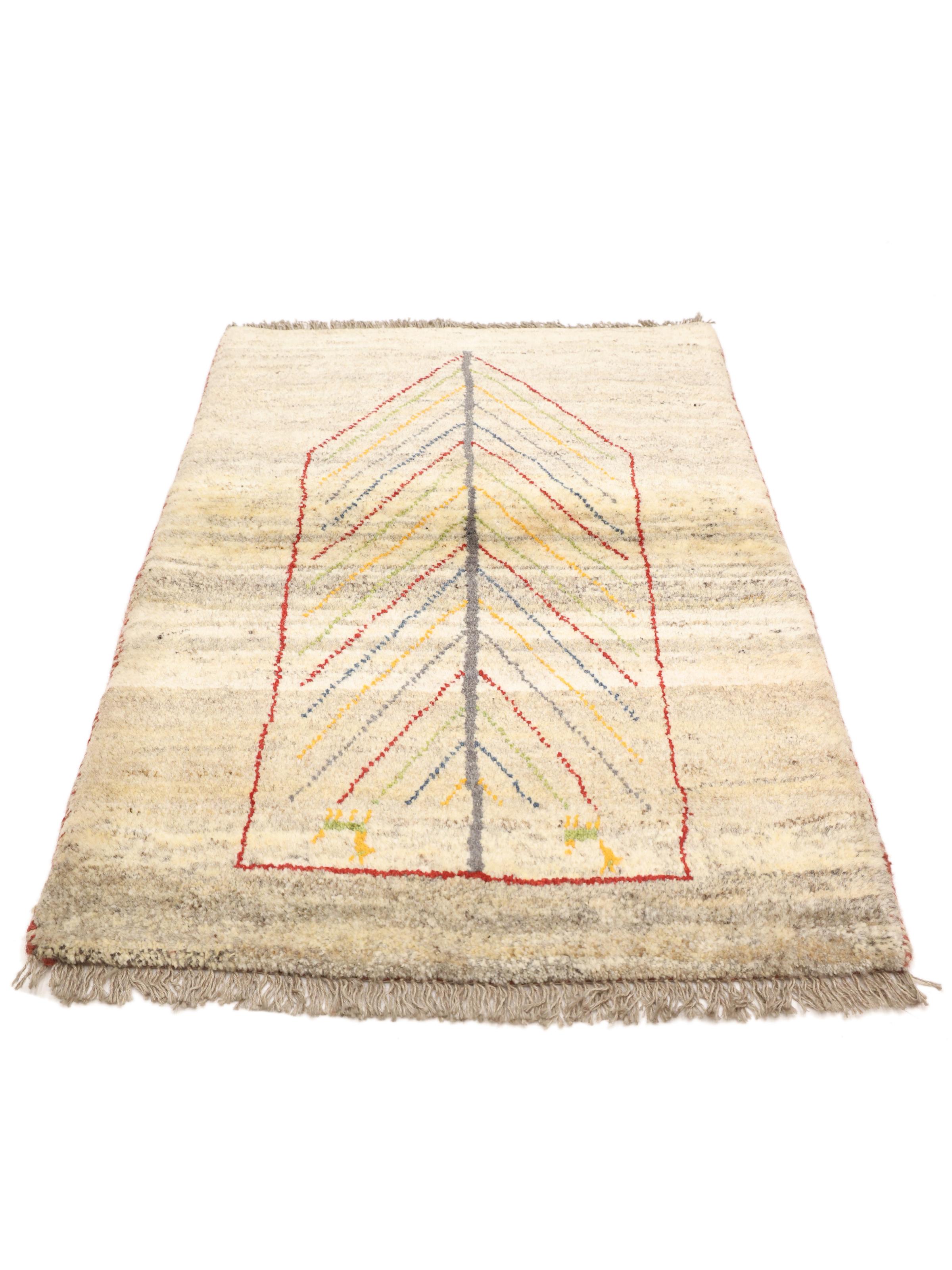
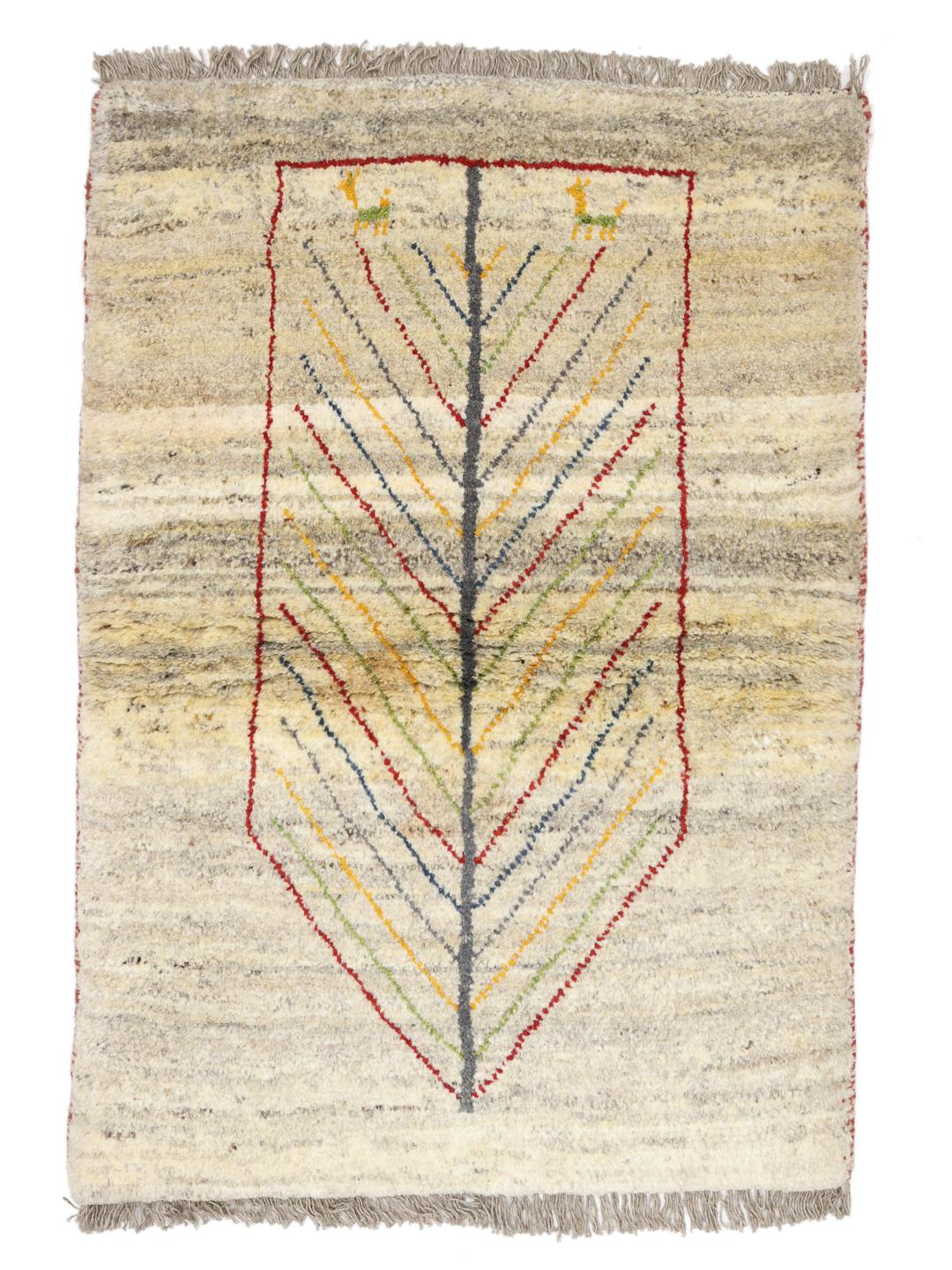
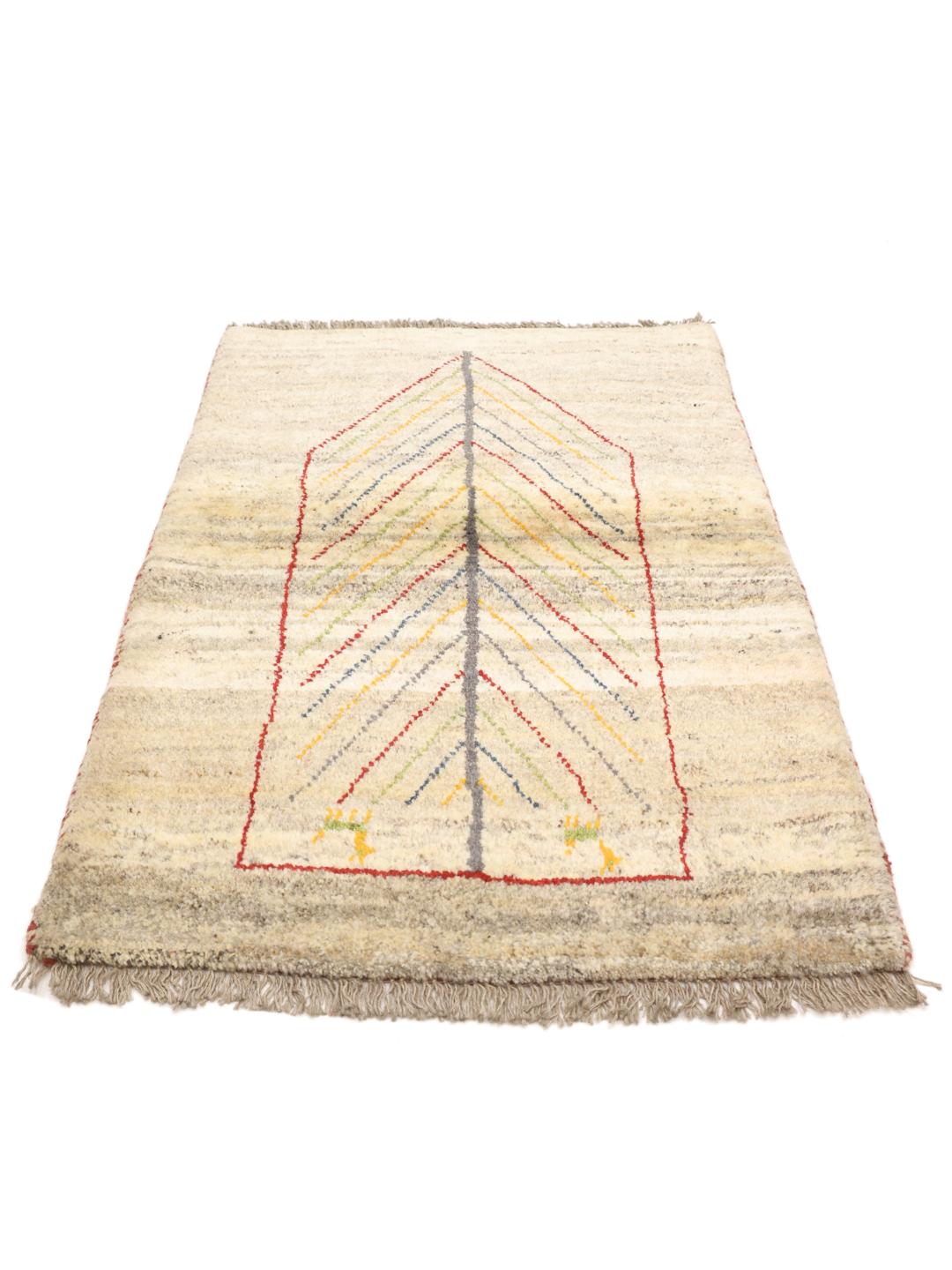
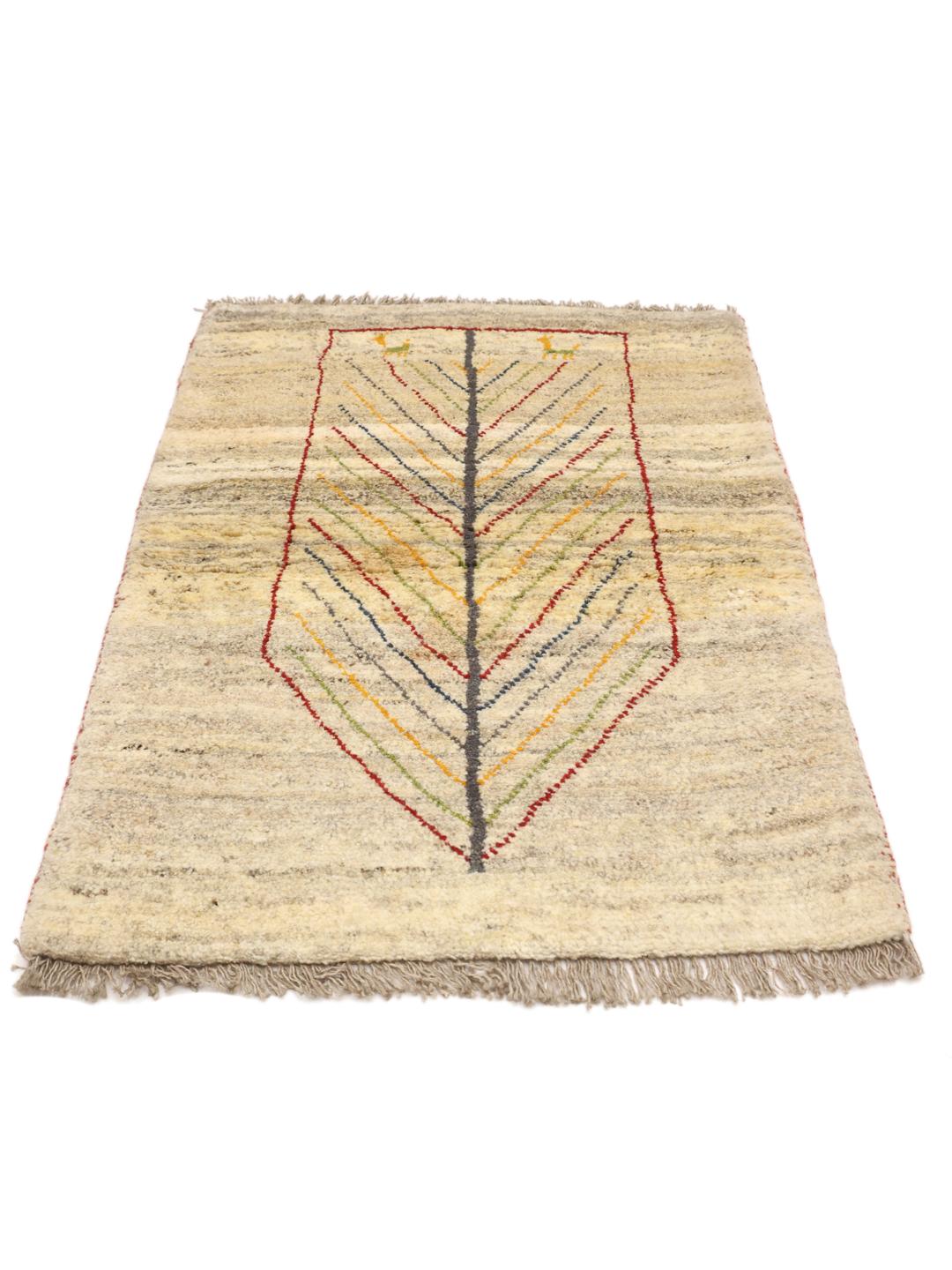
The signature design elements of a Gabbeh often involve simplified, stylised motifs that represent the weaver’s life, such as animals, plants, or geometric shapes that symbolise protection and good fortune. In this particular piece, the artistic depiction of stylised figures within a central frame showcases the whimsical and narrative nature of tribal weaving. These symbols are not just decorative; they are a language of the weaver, reflecting a heritage passed down through generations.
Today, Gabbeh rugs are highly valued by collectors and interior enthusiasts for their raw beauty and the human story behind every knot. Owning a Gabbeh is not just about acquiring a floor covering; it is about preserving a tradition of nomadic craft. Each rug is a testament to the skill and cultural identity of its maker, offering a sense of history and authenticity that brings a unique, soulful energy to any contemporary home.