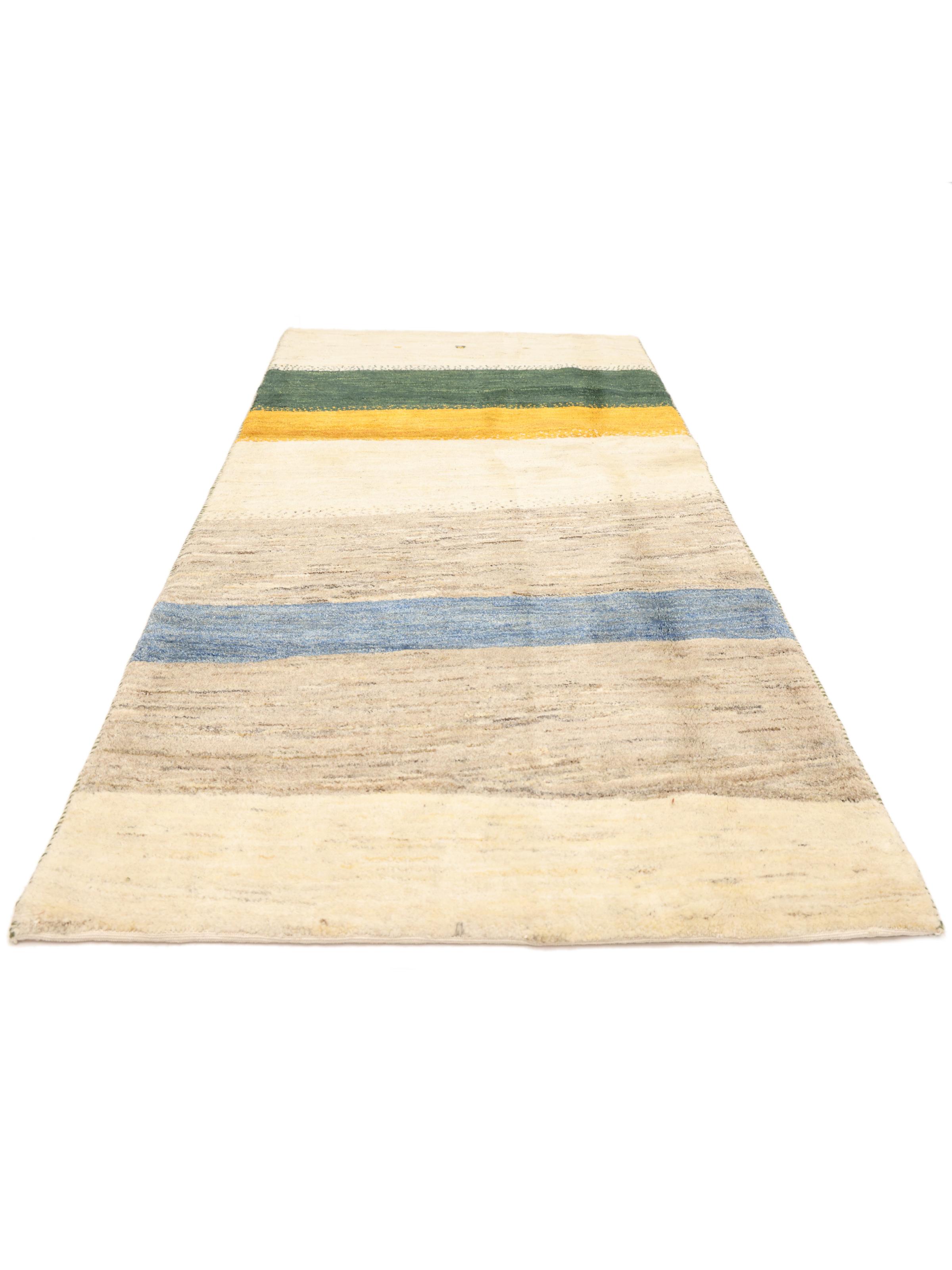
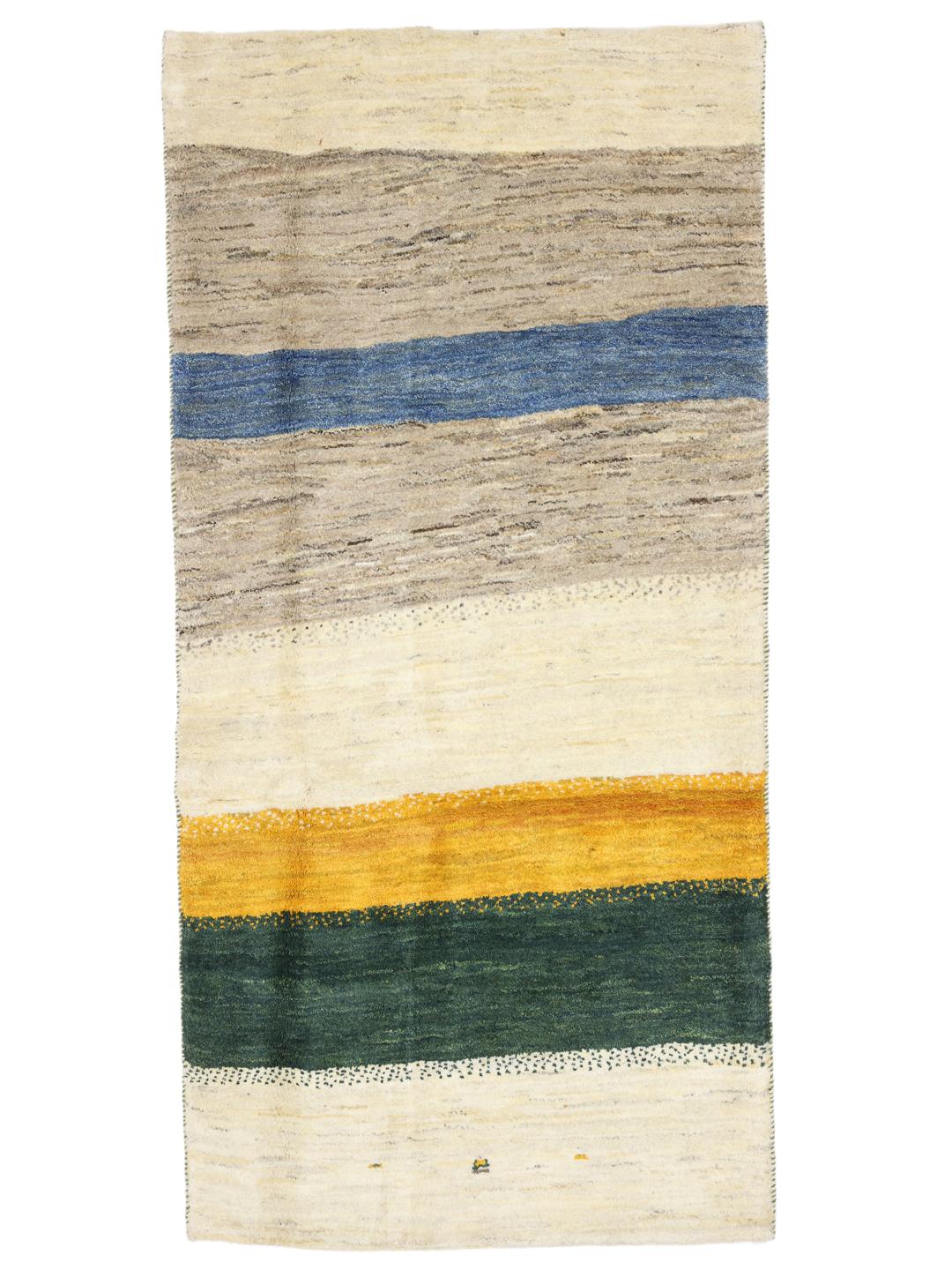
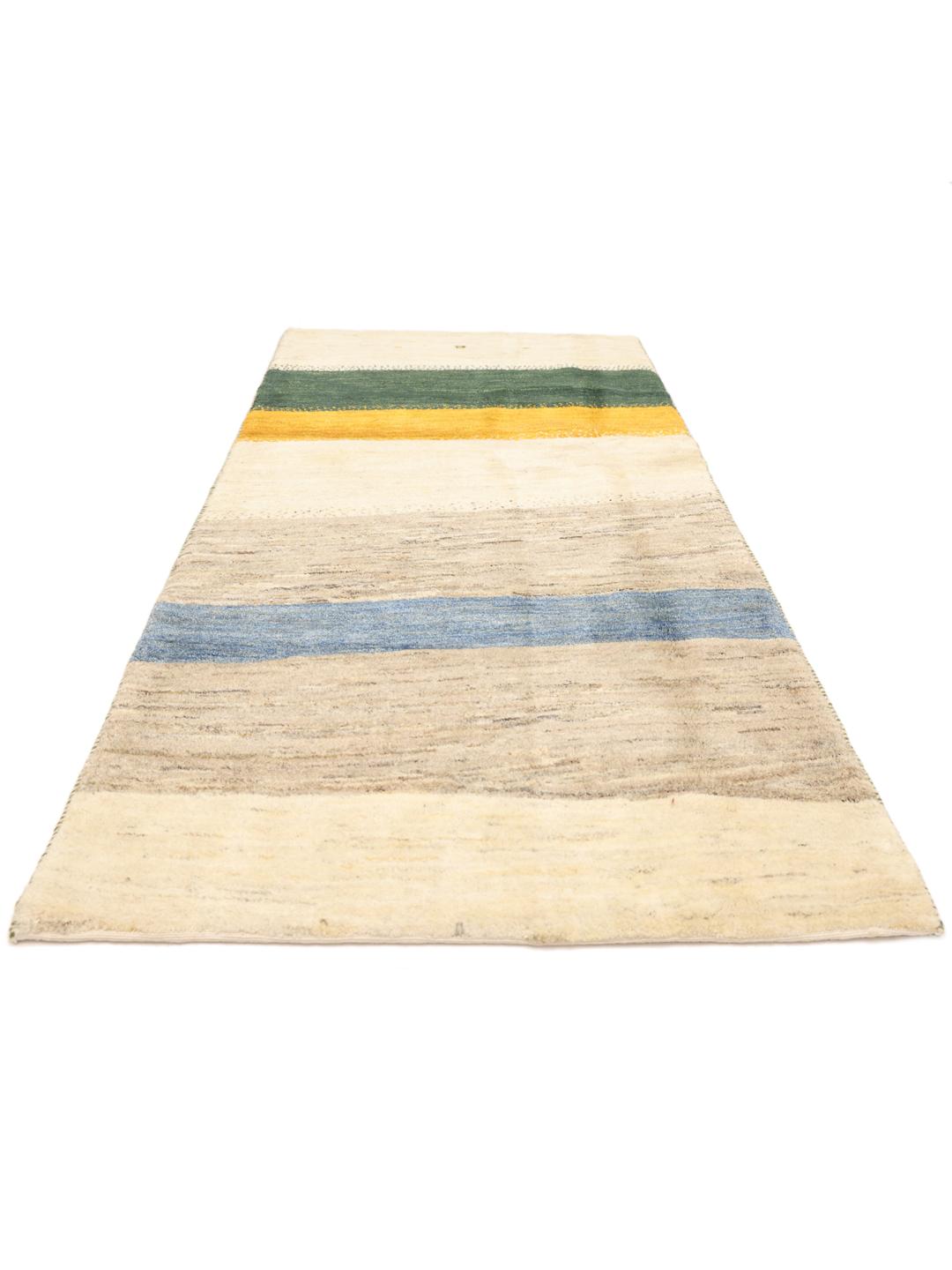
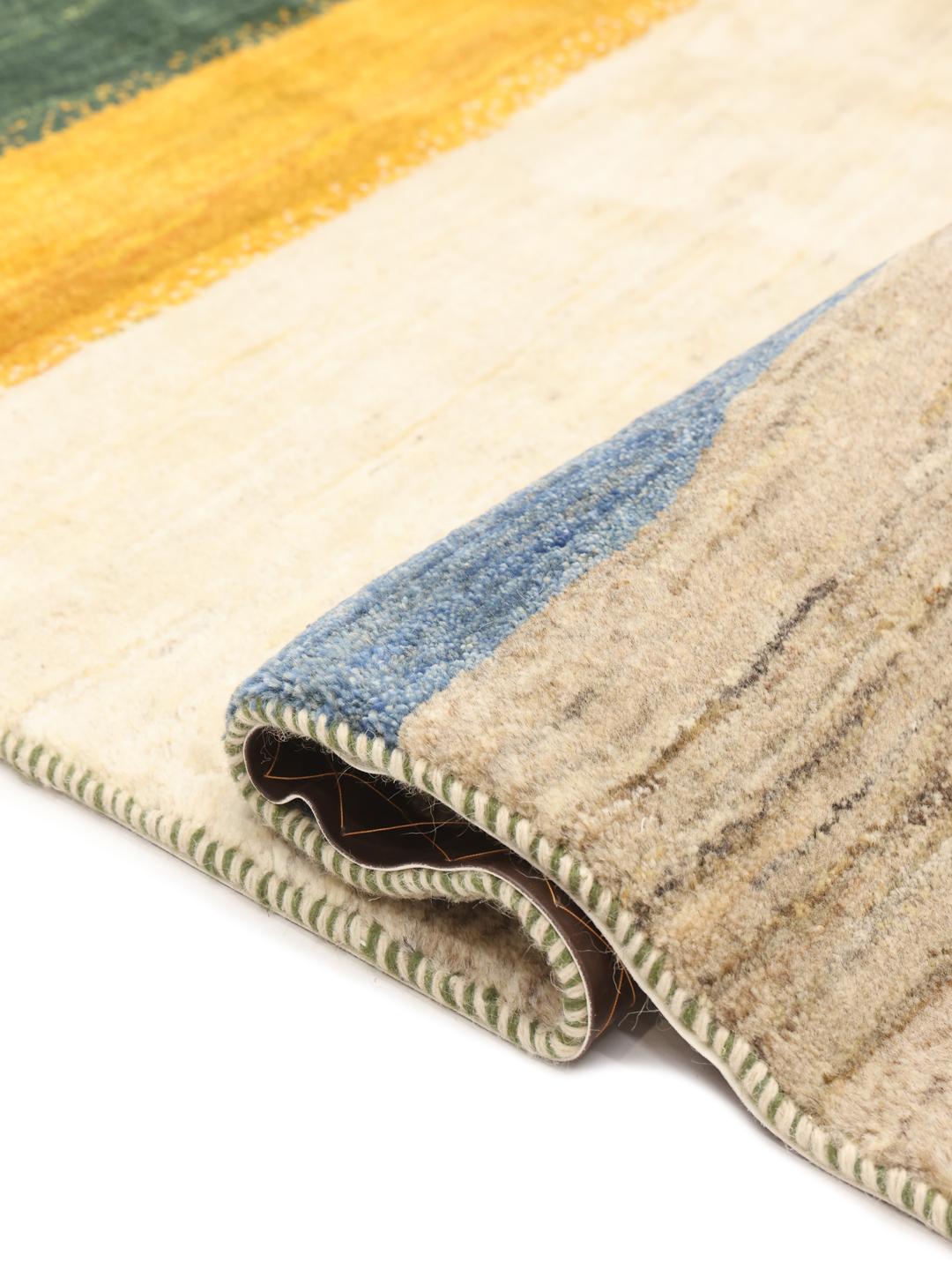
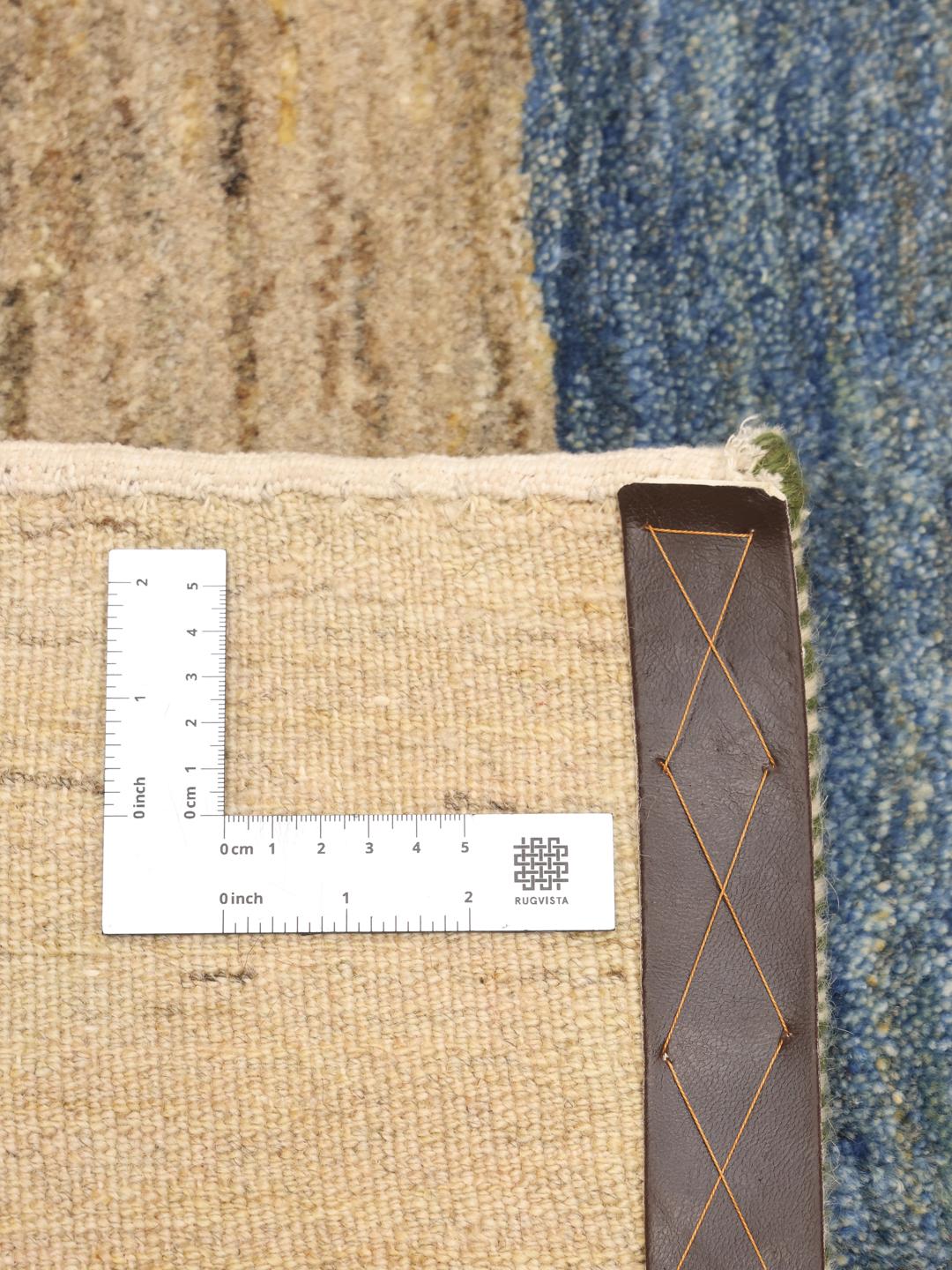
Gabbeh rugs originally developed among nomadic tribal groups across the Middle East, where they were created as functional, heavy floor coverings and sleeping blankets. While traditionally rustic, modern Gabbeh weaving has expanded to dedicated craft centres in Pakistan, where artisans continue to adapt these traditional designs using refined techniques.
The term Gabbeh translates roughly to raw or natural, referencing the thick pile and simple design language that defines the style. Unlike formal city rugs with precise medallion patterns, Gabbeh textiles are celebrated for their open fields, playful proportions, and relaxed geometry.
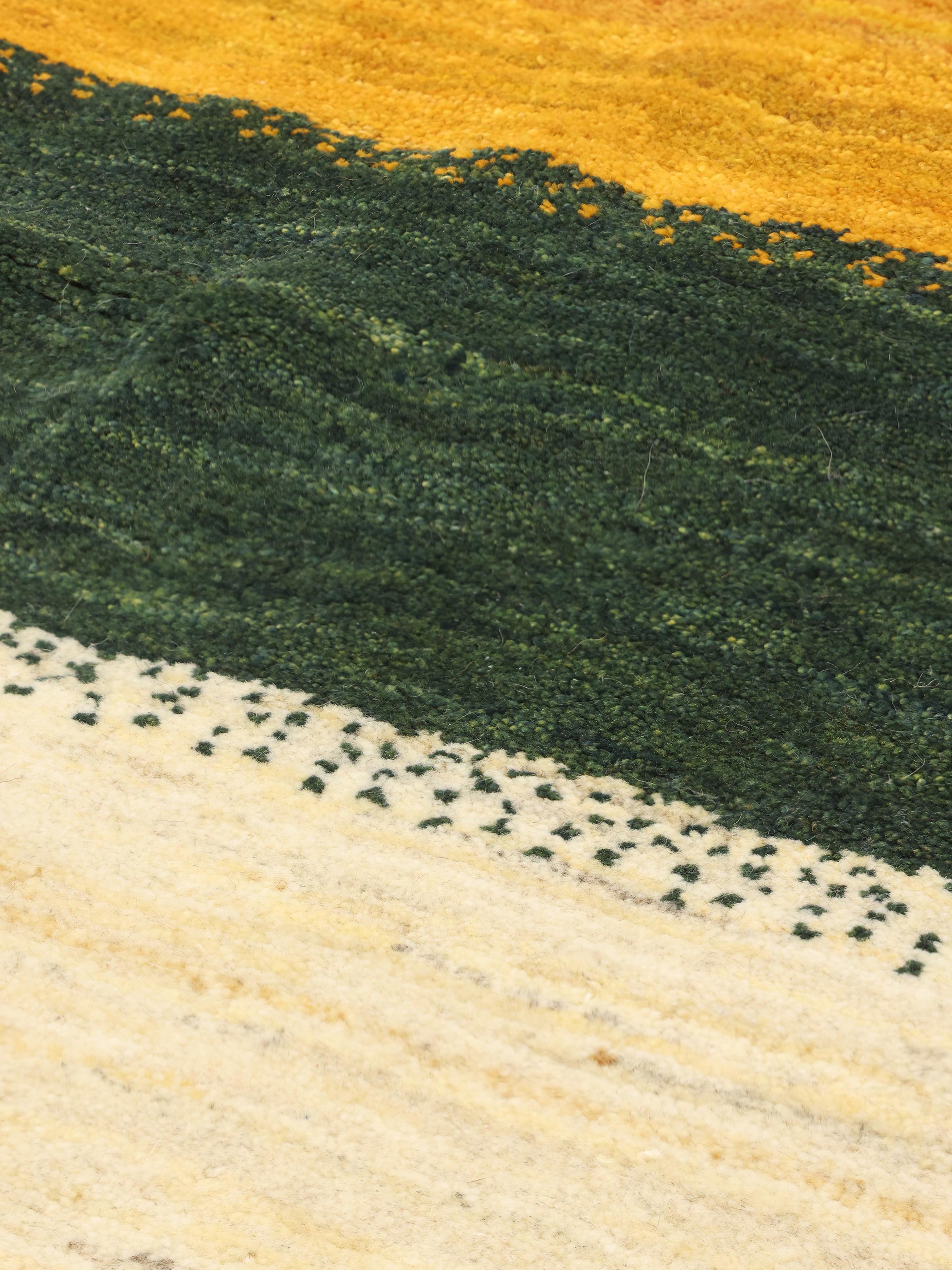
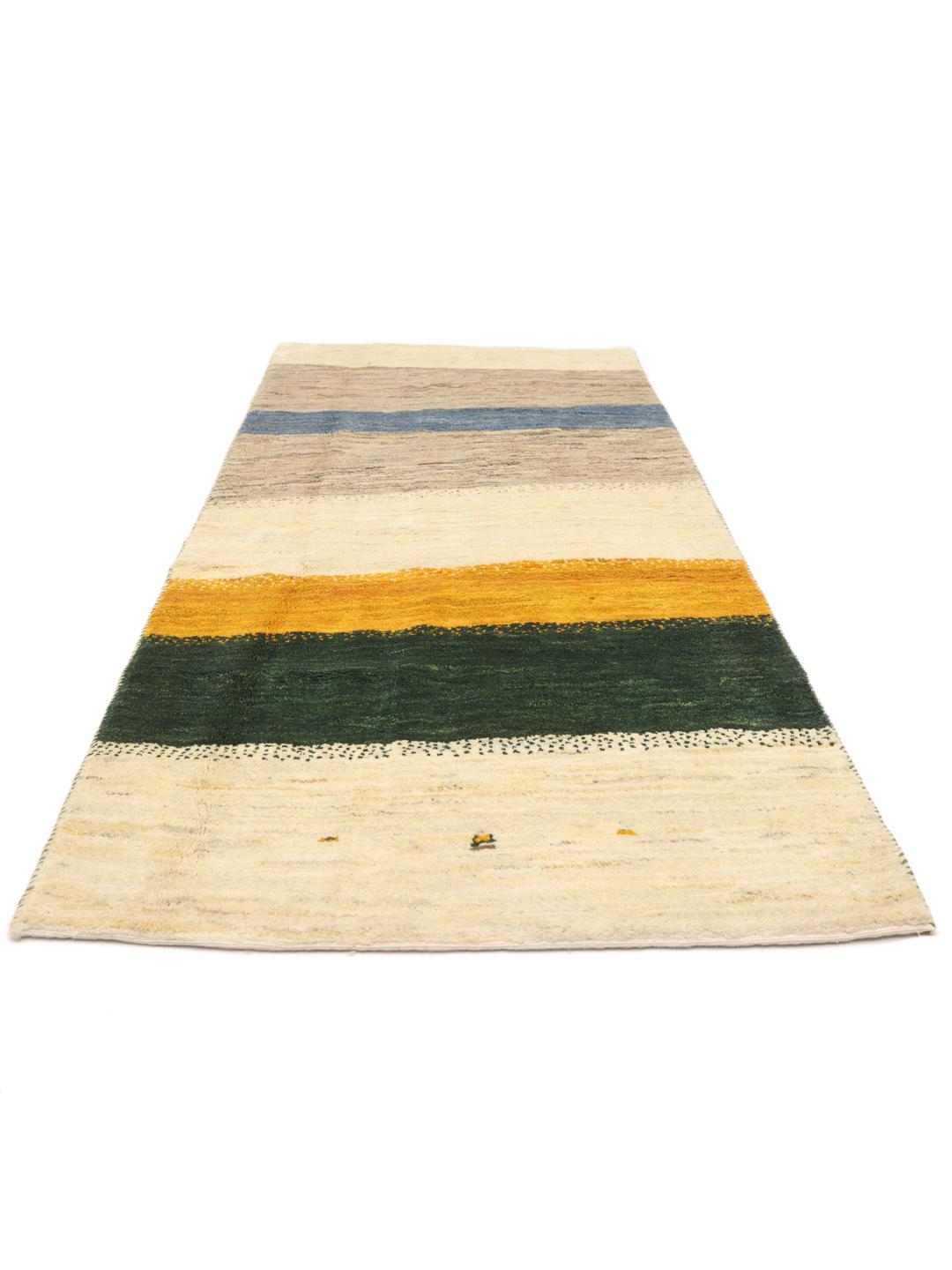
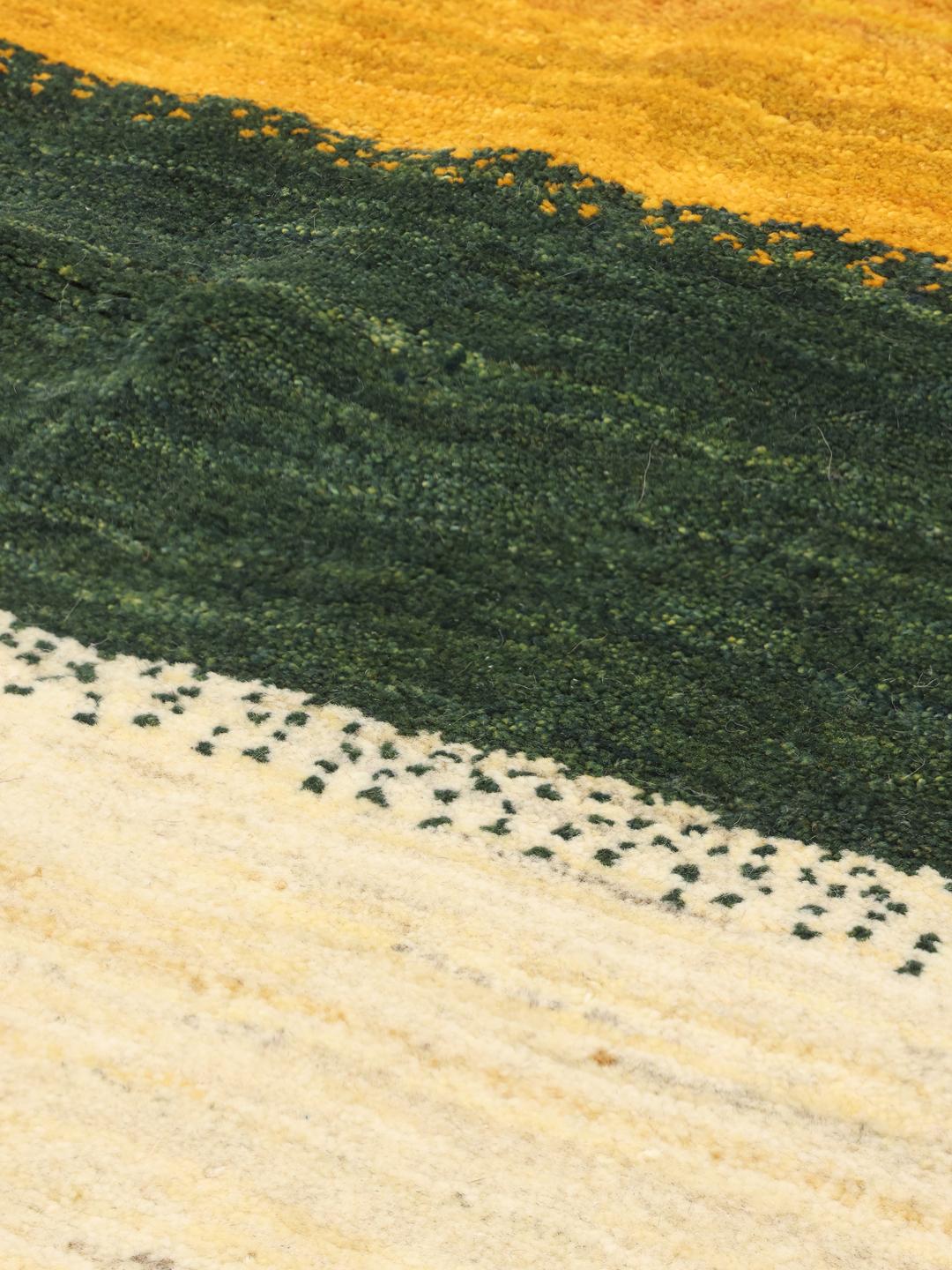
Visually, Gabbeh rugs are known for their bold horizontal bands, simple geometric accents, and rich abrash — the subtle tonal variations that occur naturally when hand-dyed yarns are woven into the pile. These shifts in colour give each band depth and dynamic movement.
Today, Gabbeh rugs are highly prized by interior designers and collectors alike for their modern artistic appeal. Owning an authentic hand-knotted Gabbeh offers a direct connection to ancient weaving traditions, brought to life through contemporary colour palette choices.