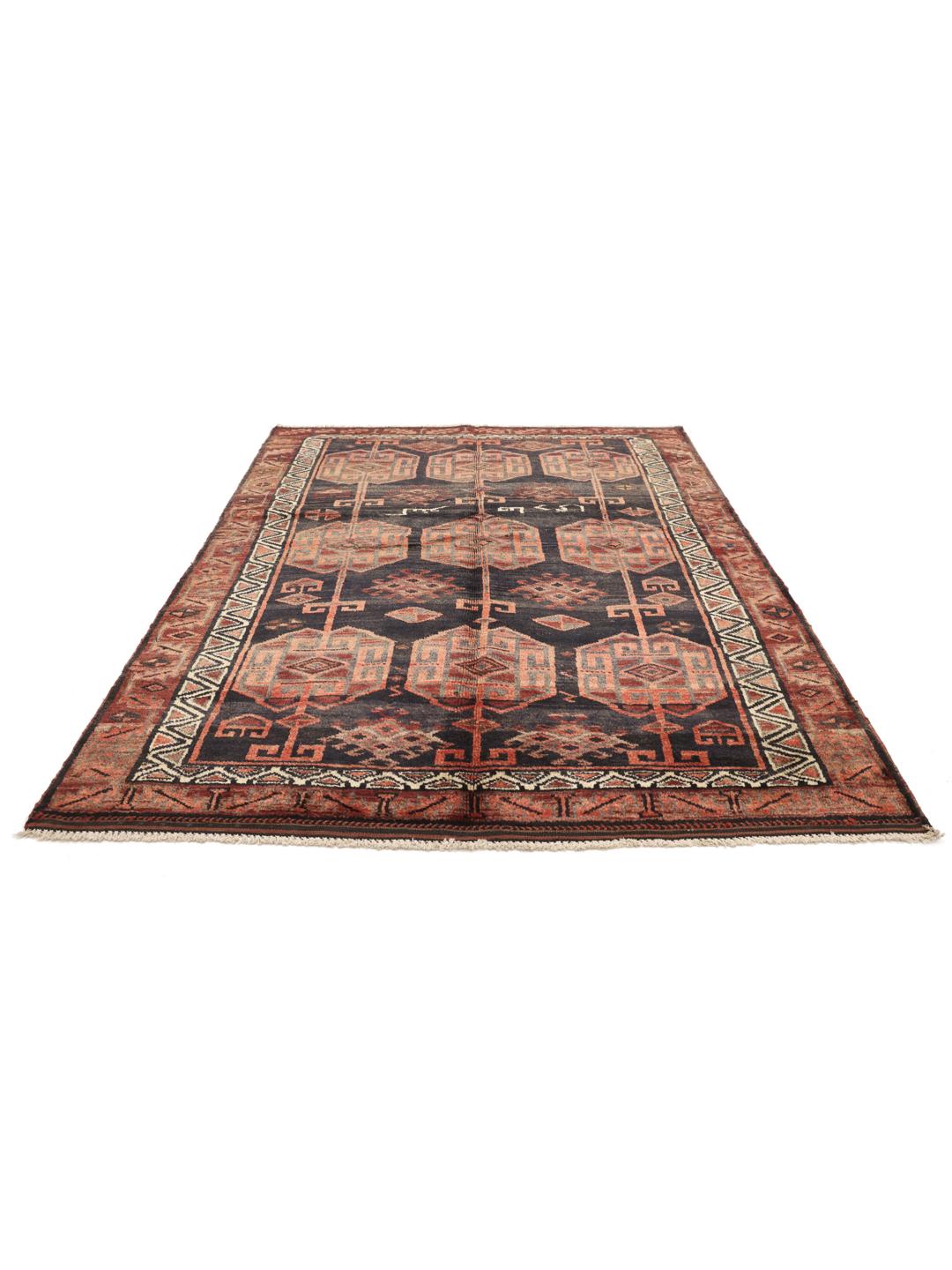
Hamadan rugs originate from one of the oldest and most prolific weaving territories in the Middle East, centred around the ancient city of Hamadan. This vast region encompasses hundreds of surrounding villages, each with its own local design variations and weaving traditions. Historically, these rugs were woven by villagers and nomadic weavers, creating a rich tapestry of styles that have been highly valued for centuries.
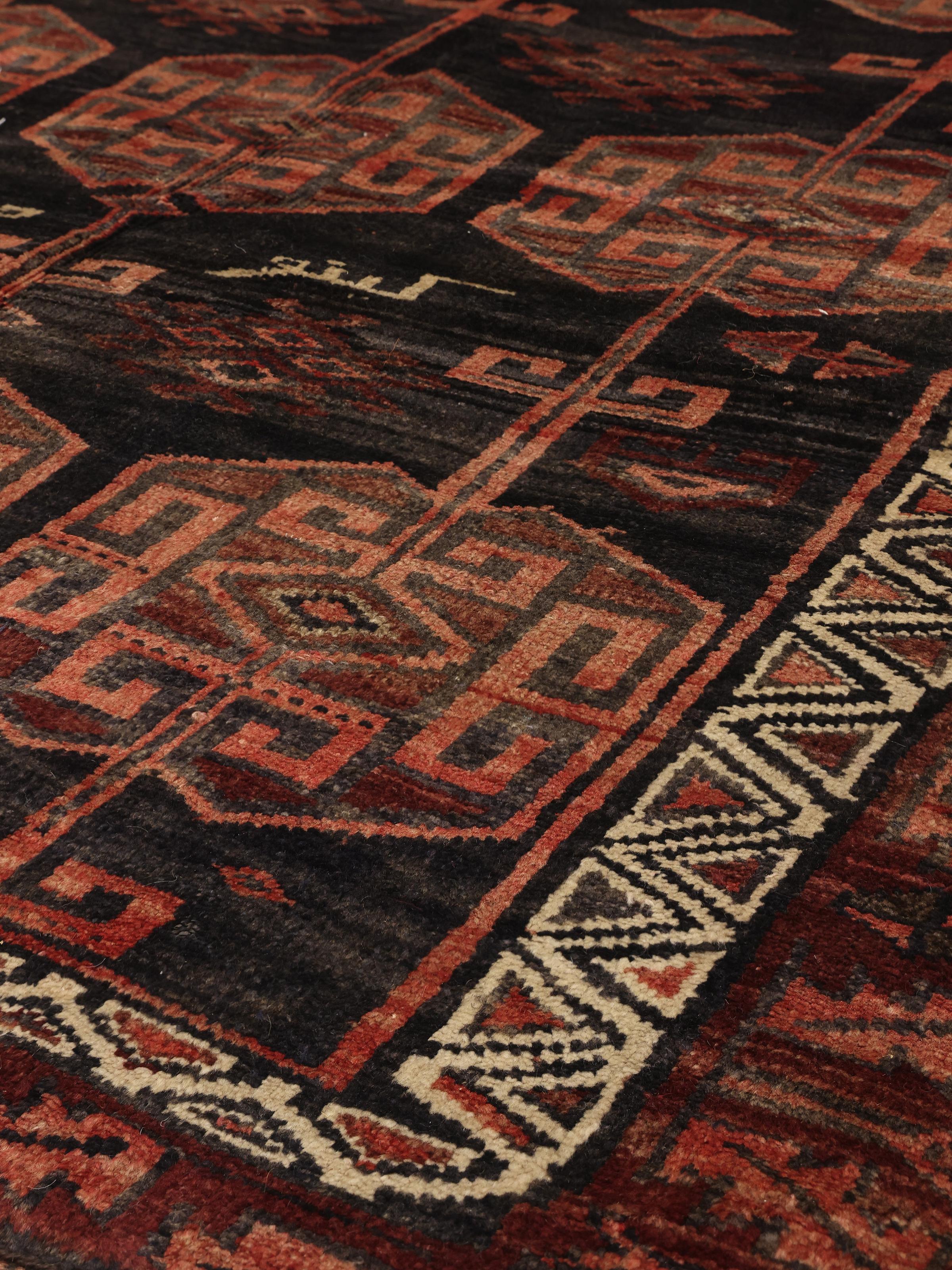
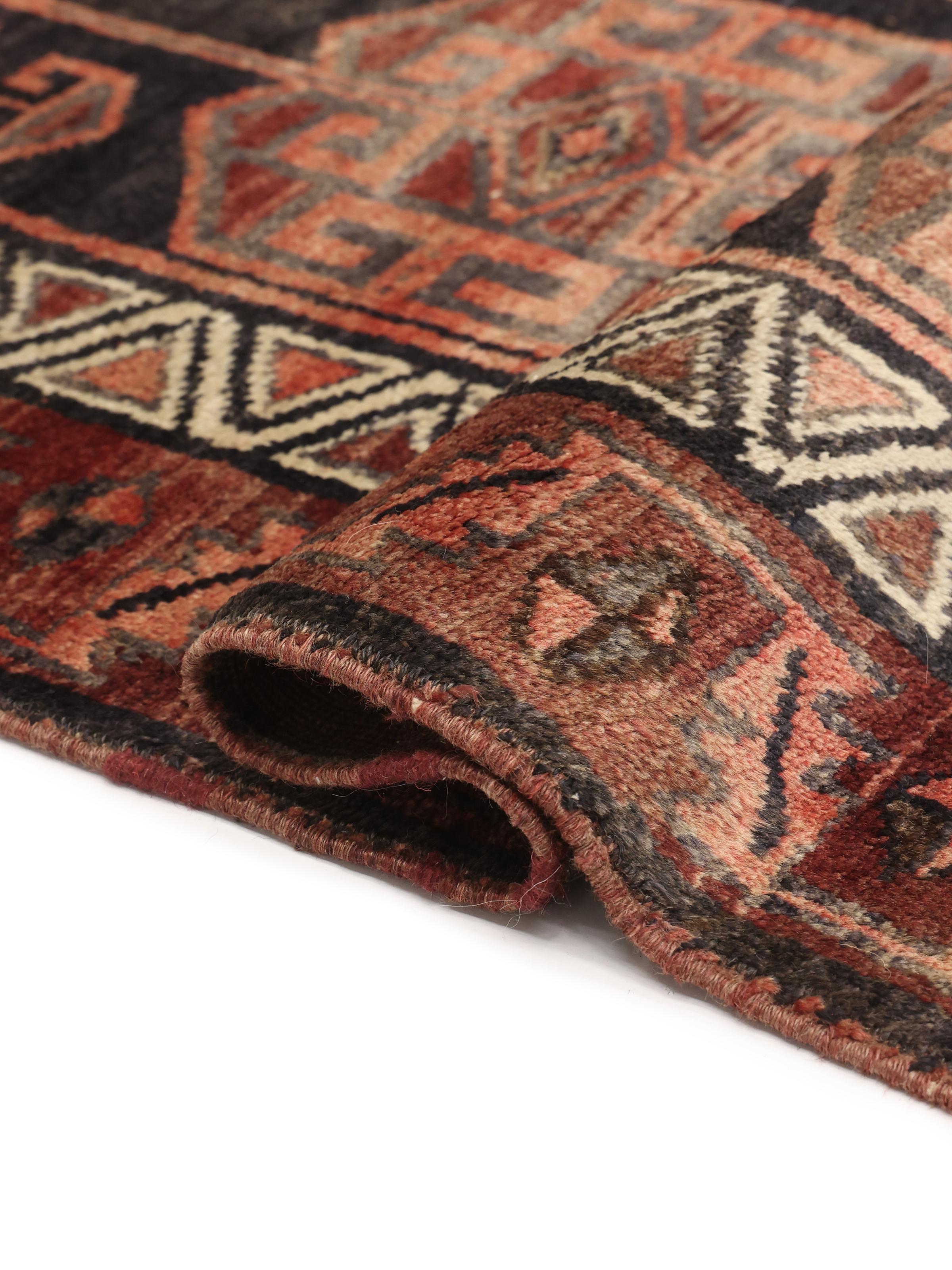
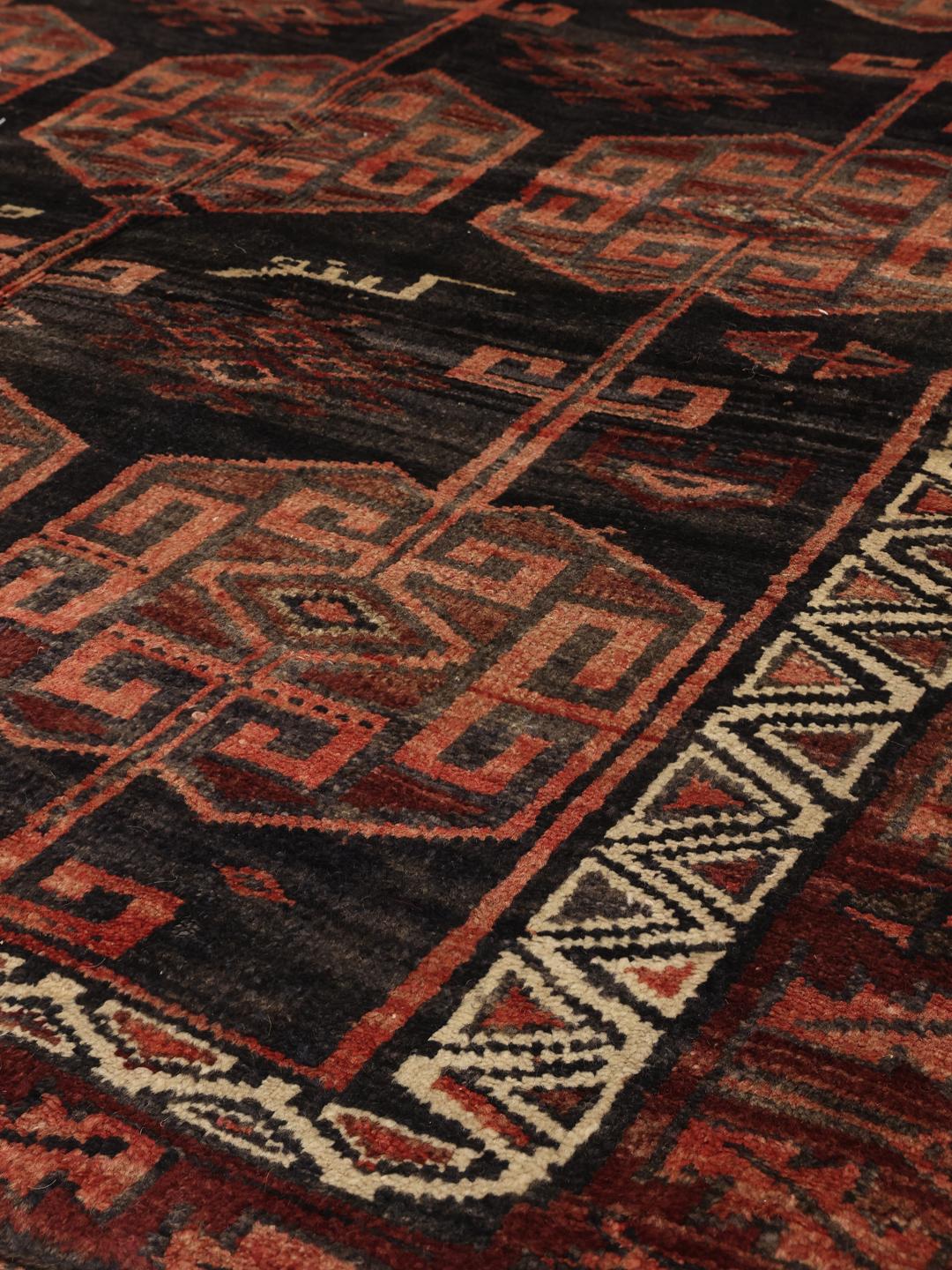
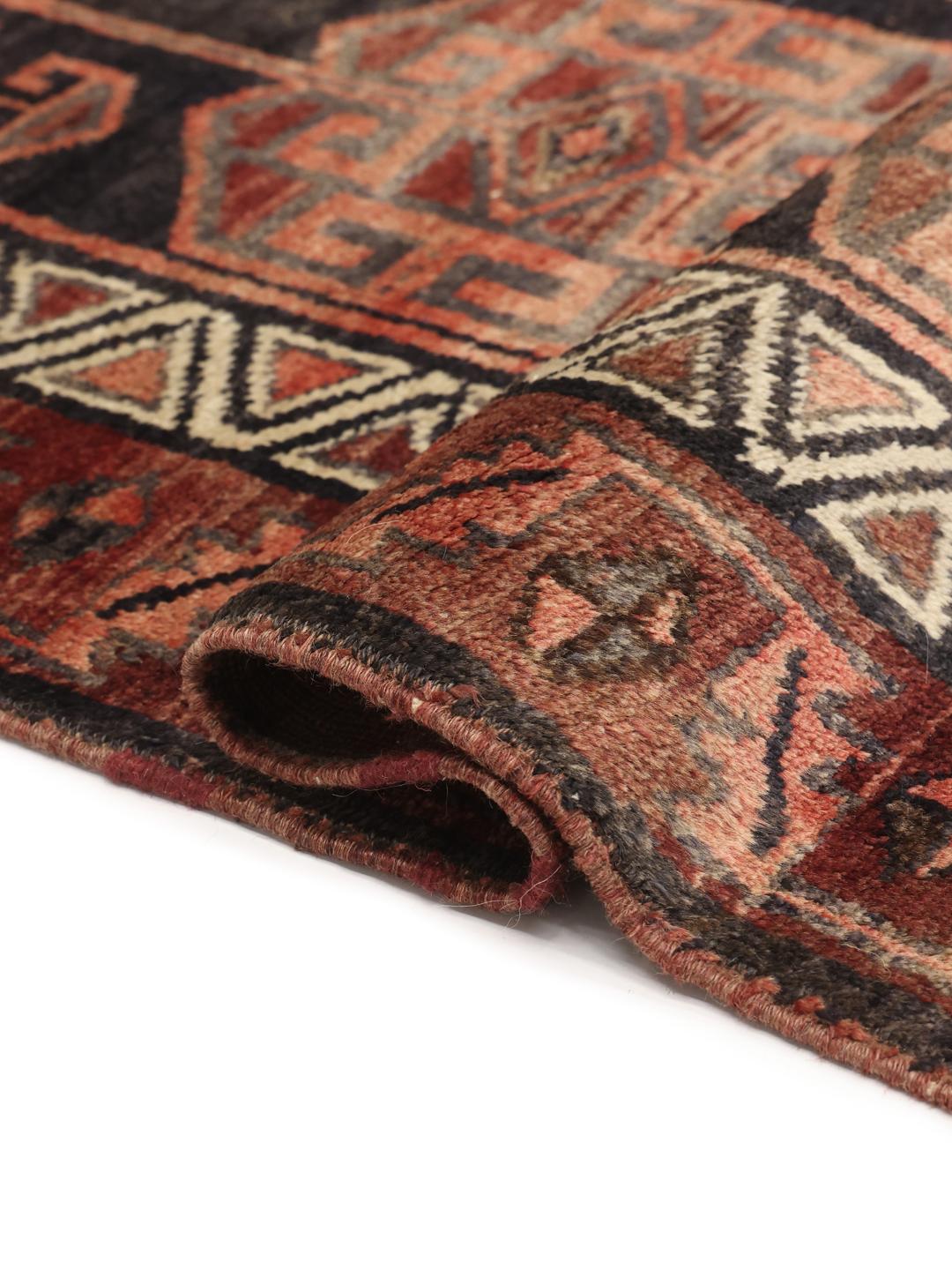
The term patina in this context refers to the beautifully weathered appearance that develops naturally over time, giving the colours a softer, more integrated look. In traditional hand-knotted rugs, this gentle fading is highly prized by collectors as it highlights the depth of the natural dyes and the individual character of the wool. It transforms a simple floor covering into a living piece of history that tells a story of time and care.
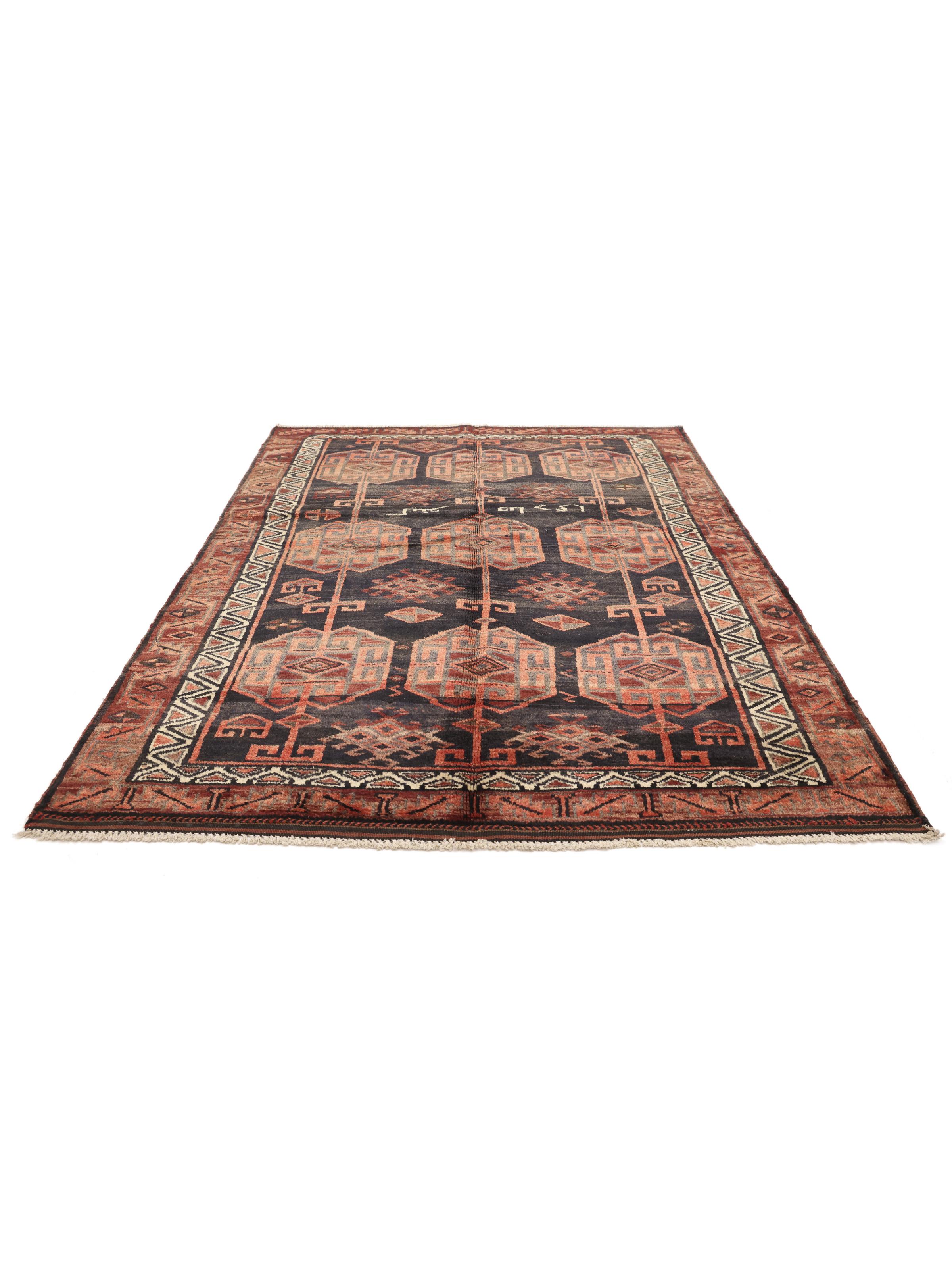
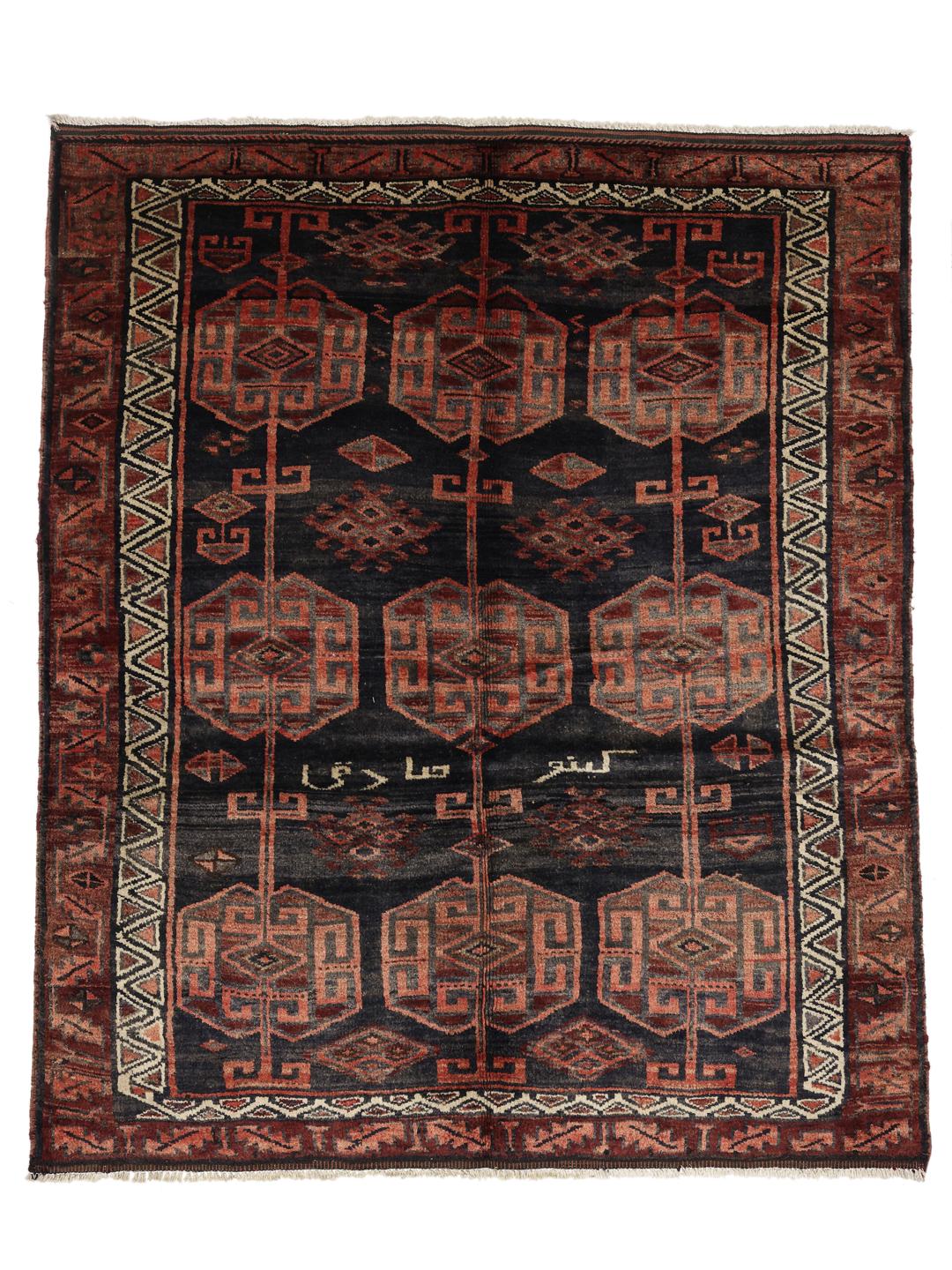
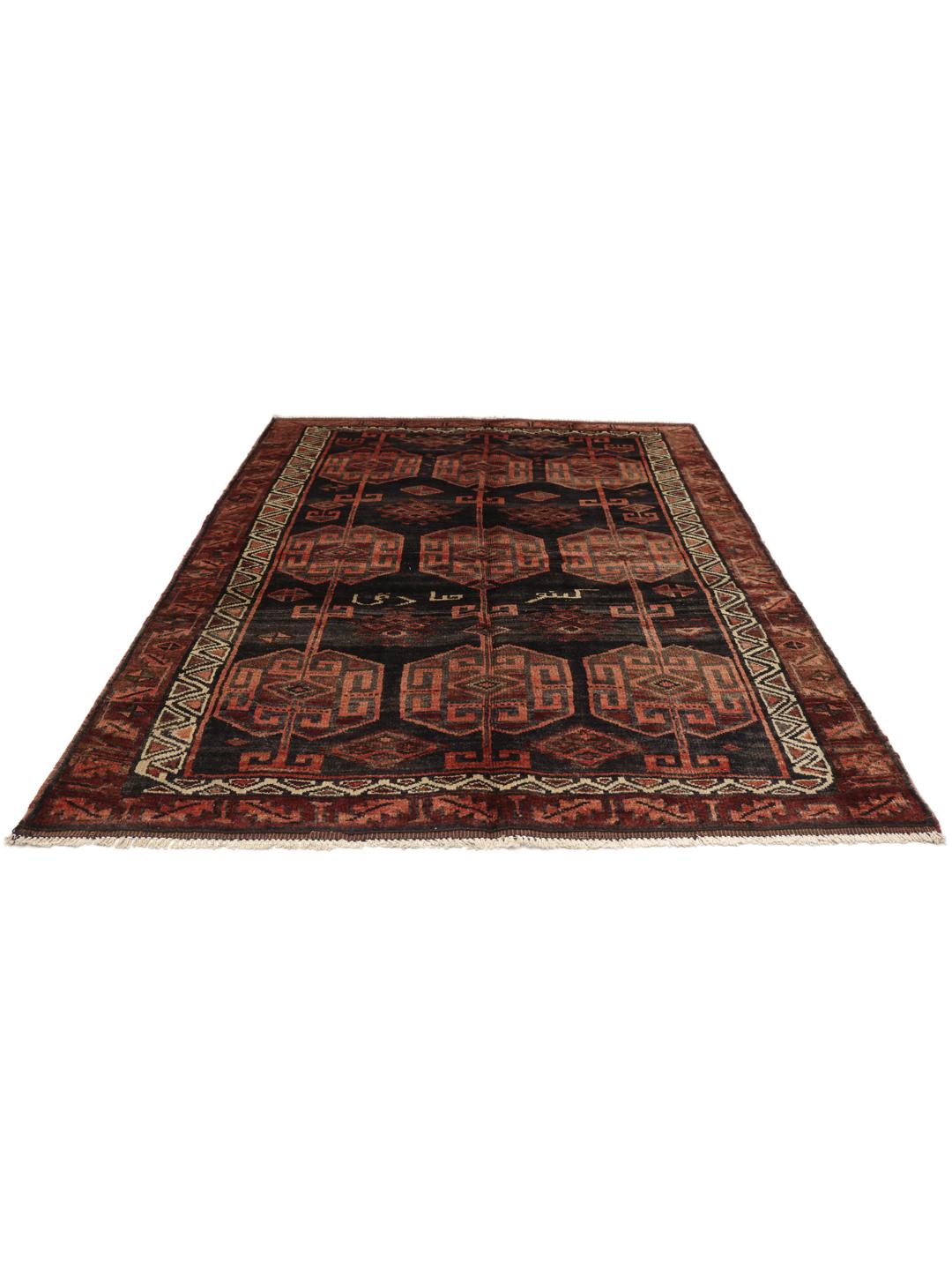
Visually, Hamadan rugs are celebrated for their bold geometric patterns, often featuring a strong central medallion or repeating tribal motifs enclosed by formal decorative borders. This specific piece showcases striking geometric medallions set against a dark field, framed by intricate borders that direct the eye inward. The inclusion of subtle script or symbolic motifs within the field is a classic characteristic of weavers leaving a personal mark on their creation.
Owning a Hamadan rug means acquiring a piece of enduring cultural heritage that has survived generations of changing tastes. These rugs are celebrated not just for their utility, but as expressions of regional identity and artistic freedom, where every weaver brought their own interpretation to traditional patterns. They remain highly sought after by collectors and homeowners alike for their ability to bring a sense of history, soul, and timeless beauty to modern spaces.