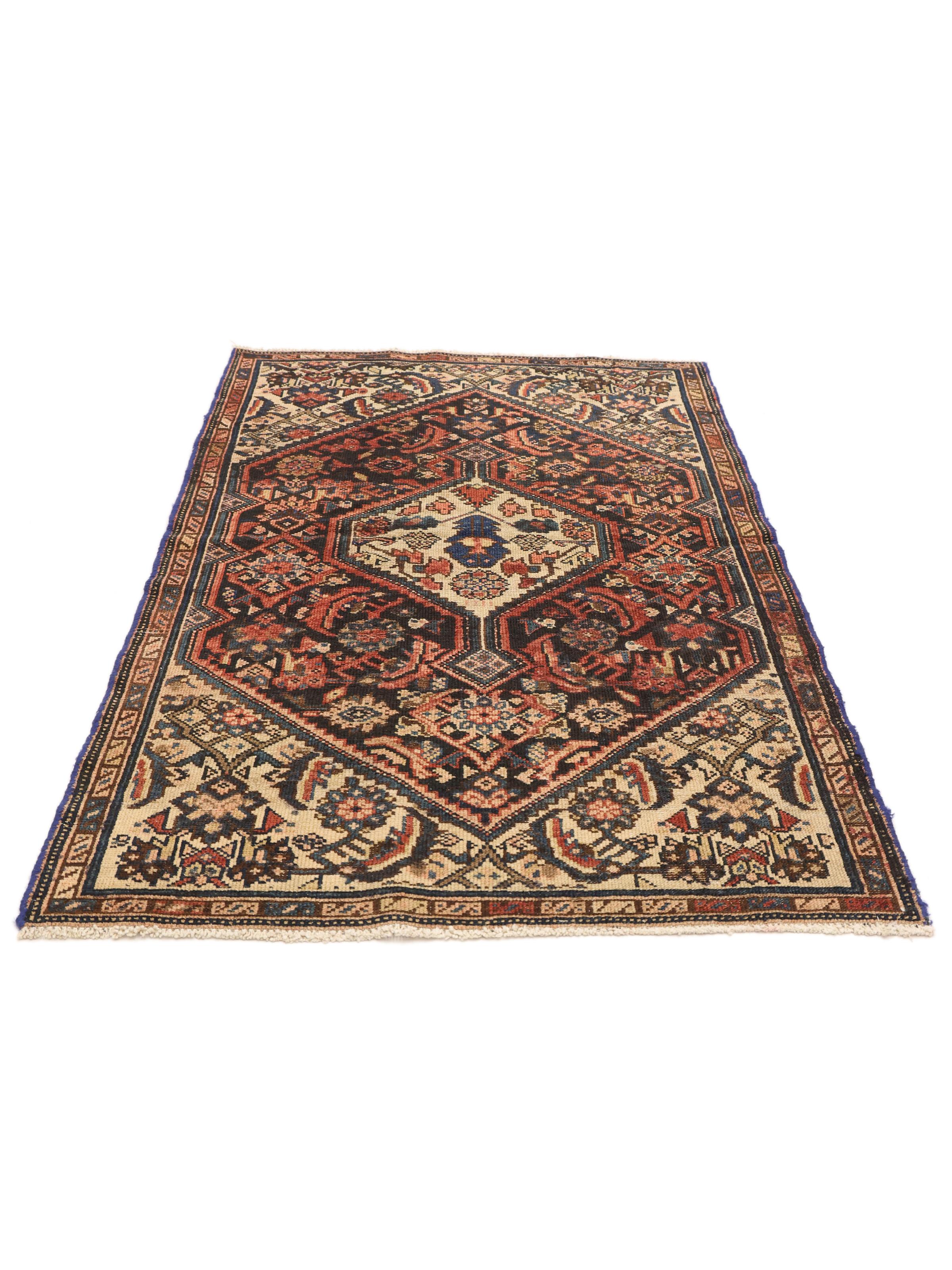
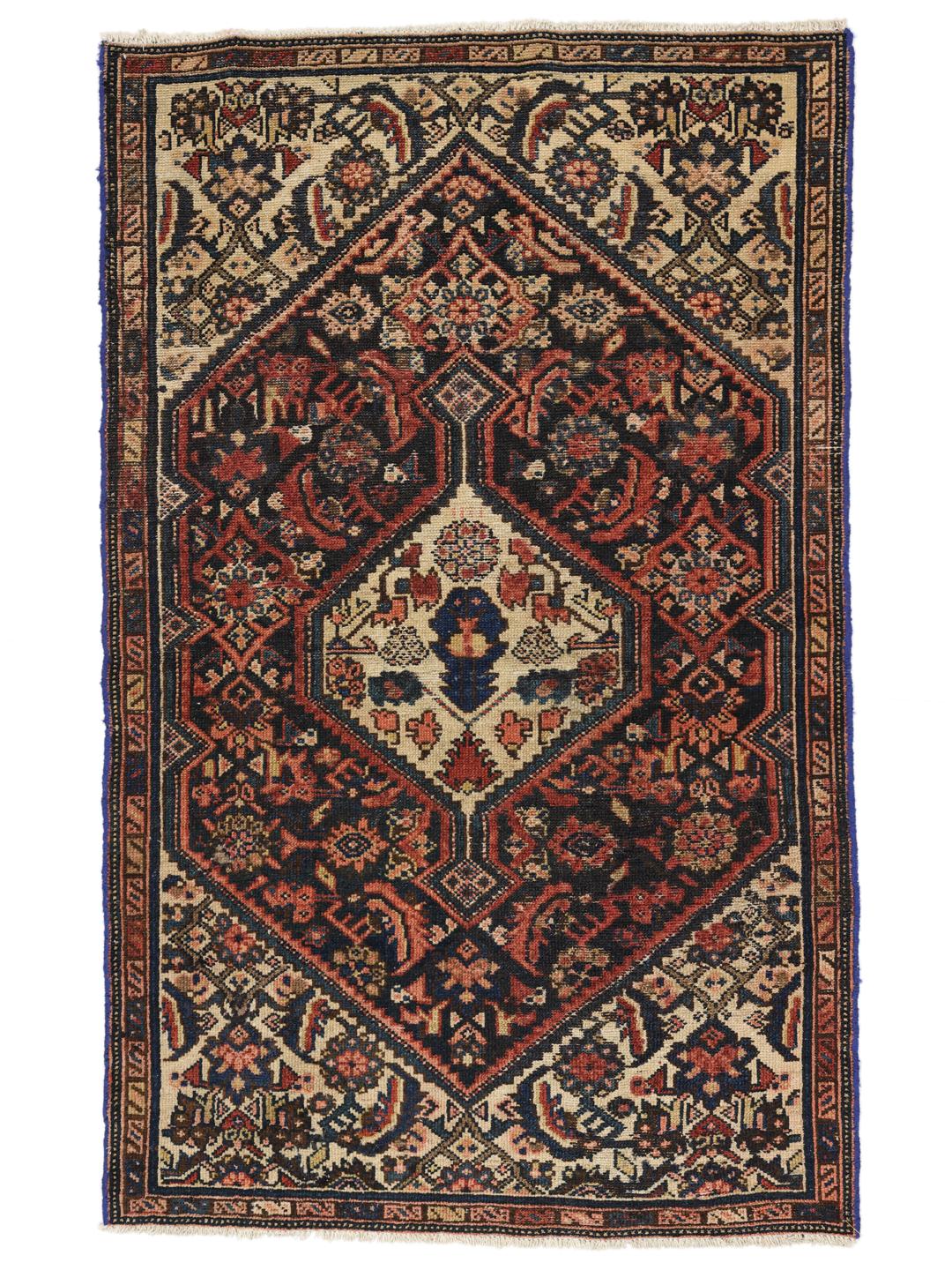
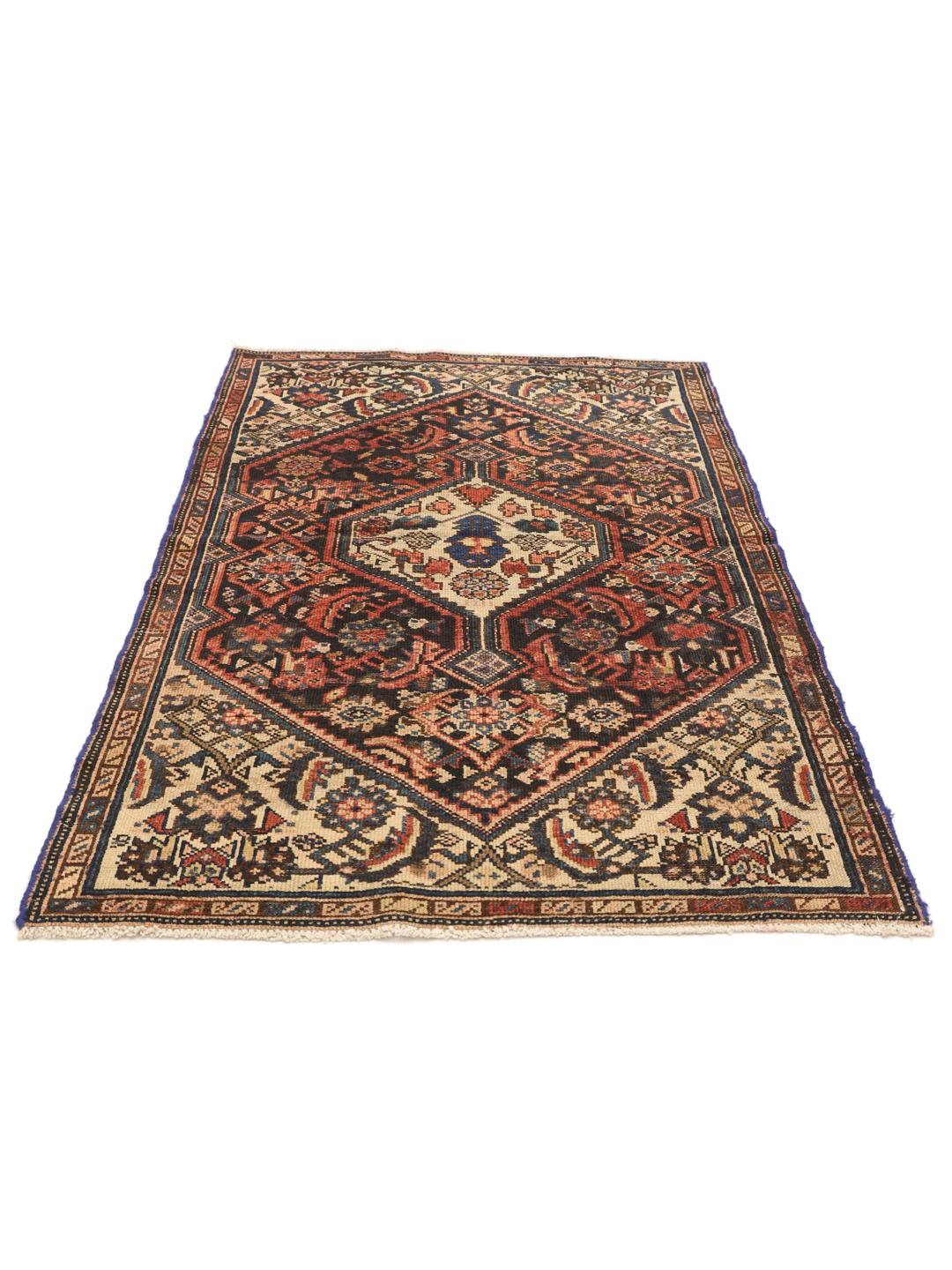
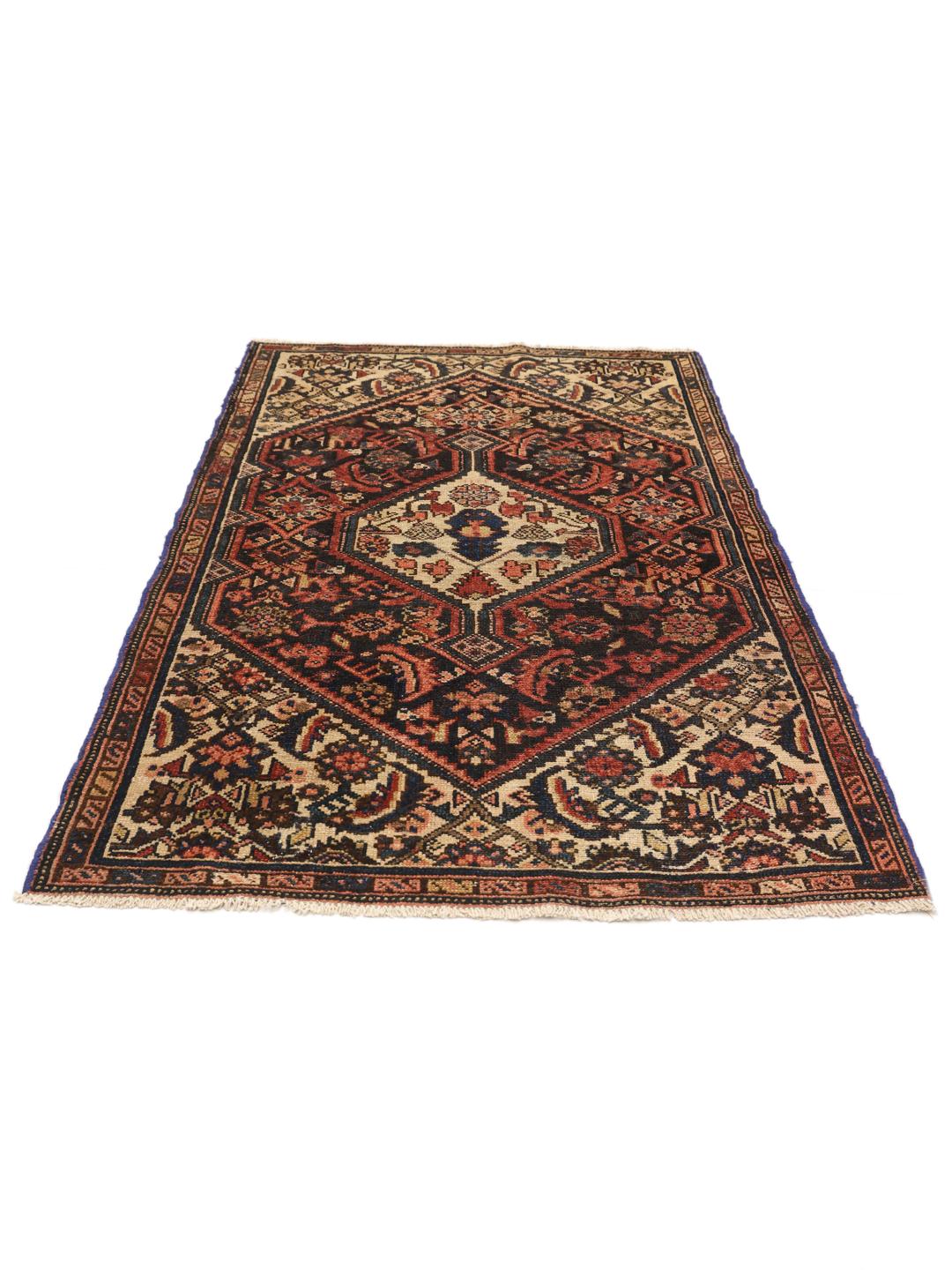
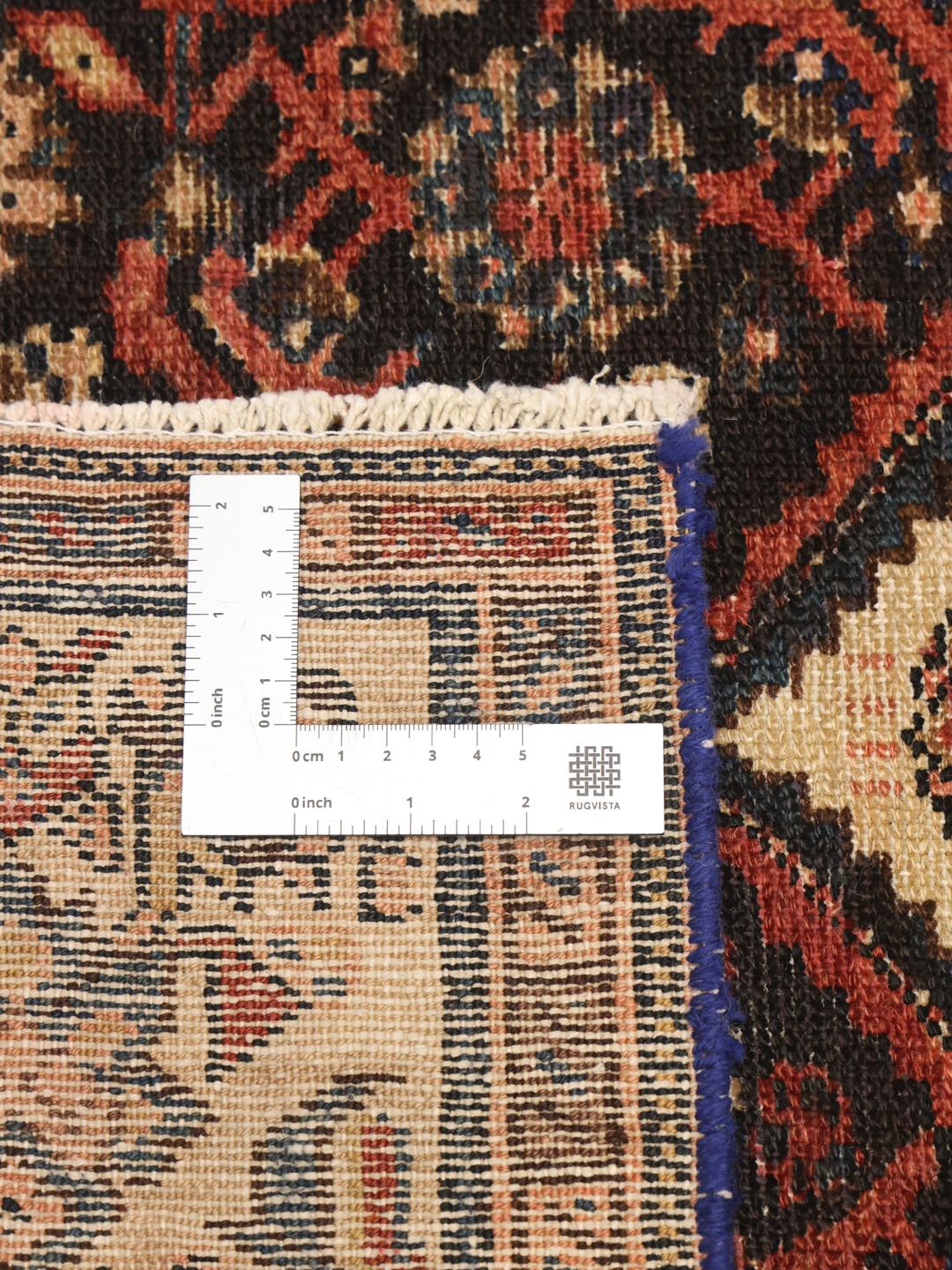
Hamadan is one of the oldest cities in the Middle East and has served as a central hub for rug weaving for centuries. The surrounding region encompasses hundreds of individual villages, each with its own local variation of weaving styles, motifs, and color palettes. Historically, these rugs were brought to the central market in Hamadan to be traded along major historical trade routes.
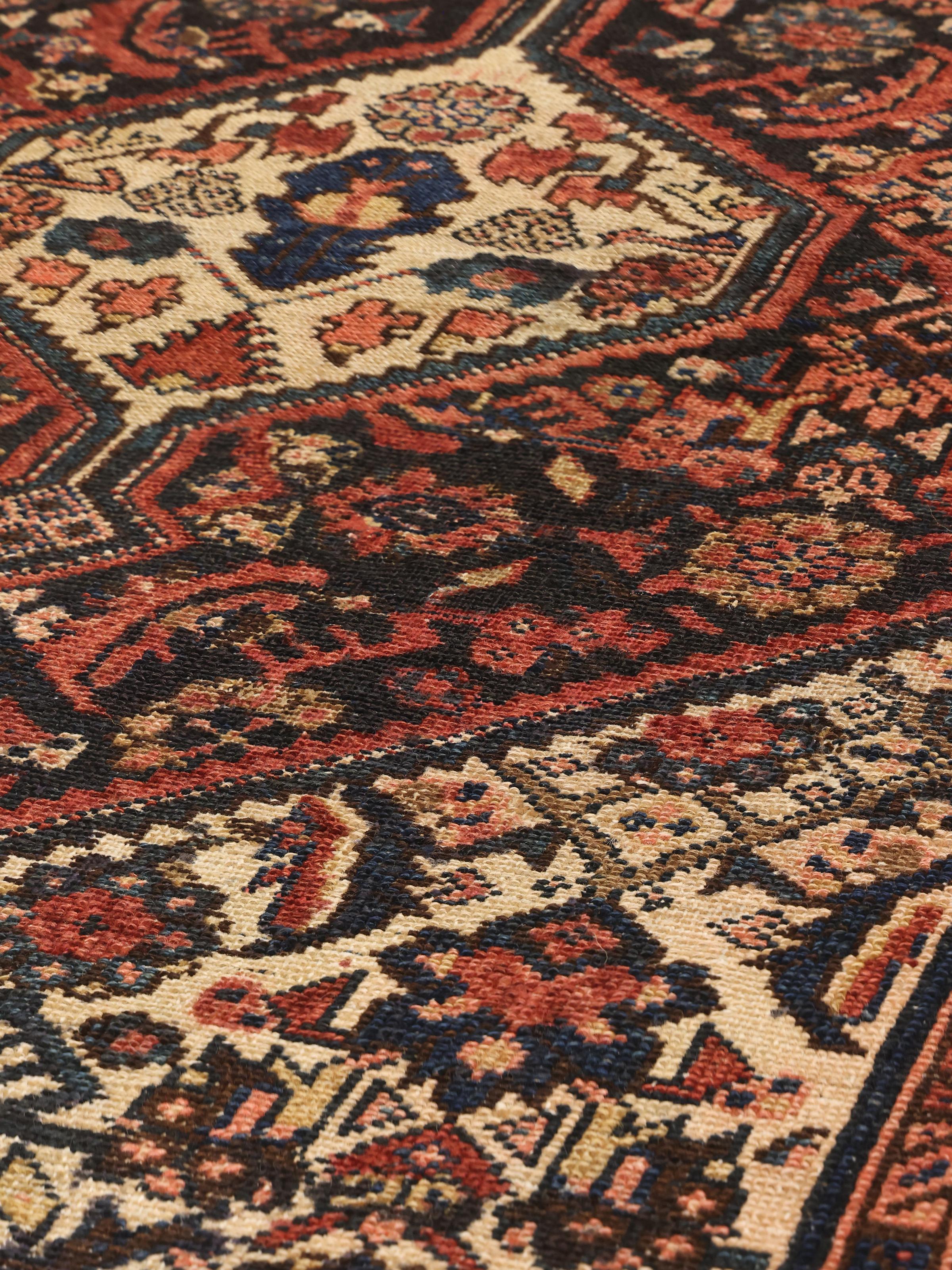
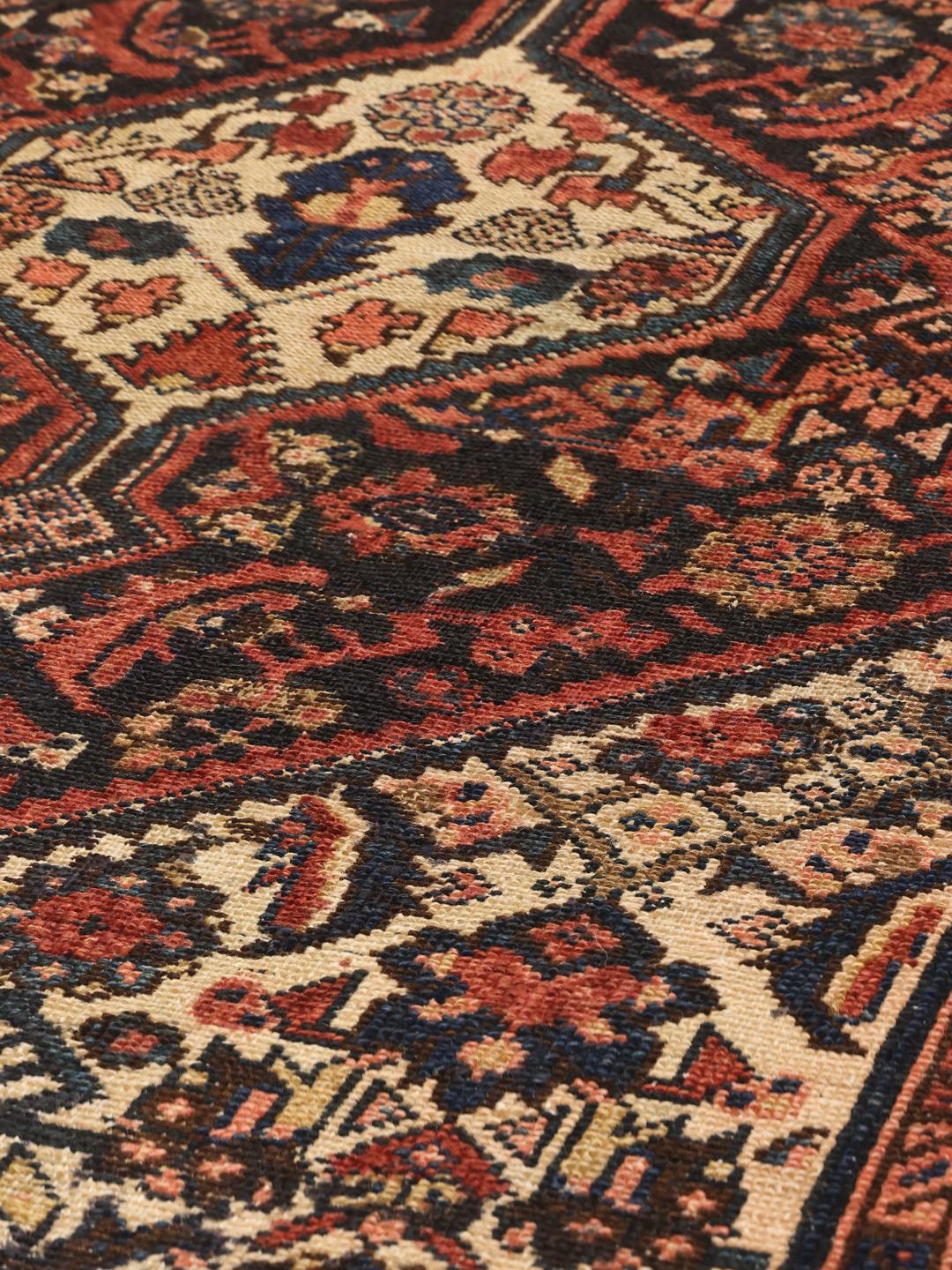
The term Patina refers to the soft, gentle muted quality that wool develops naturally over decades of use and light exposure. As a vintage rug ages over 20 to 50 years, the initial sharpness of the dyes softens into a harmonious, balanced palette that modern production techniques cannot artificially recreate.
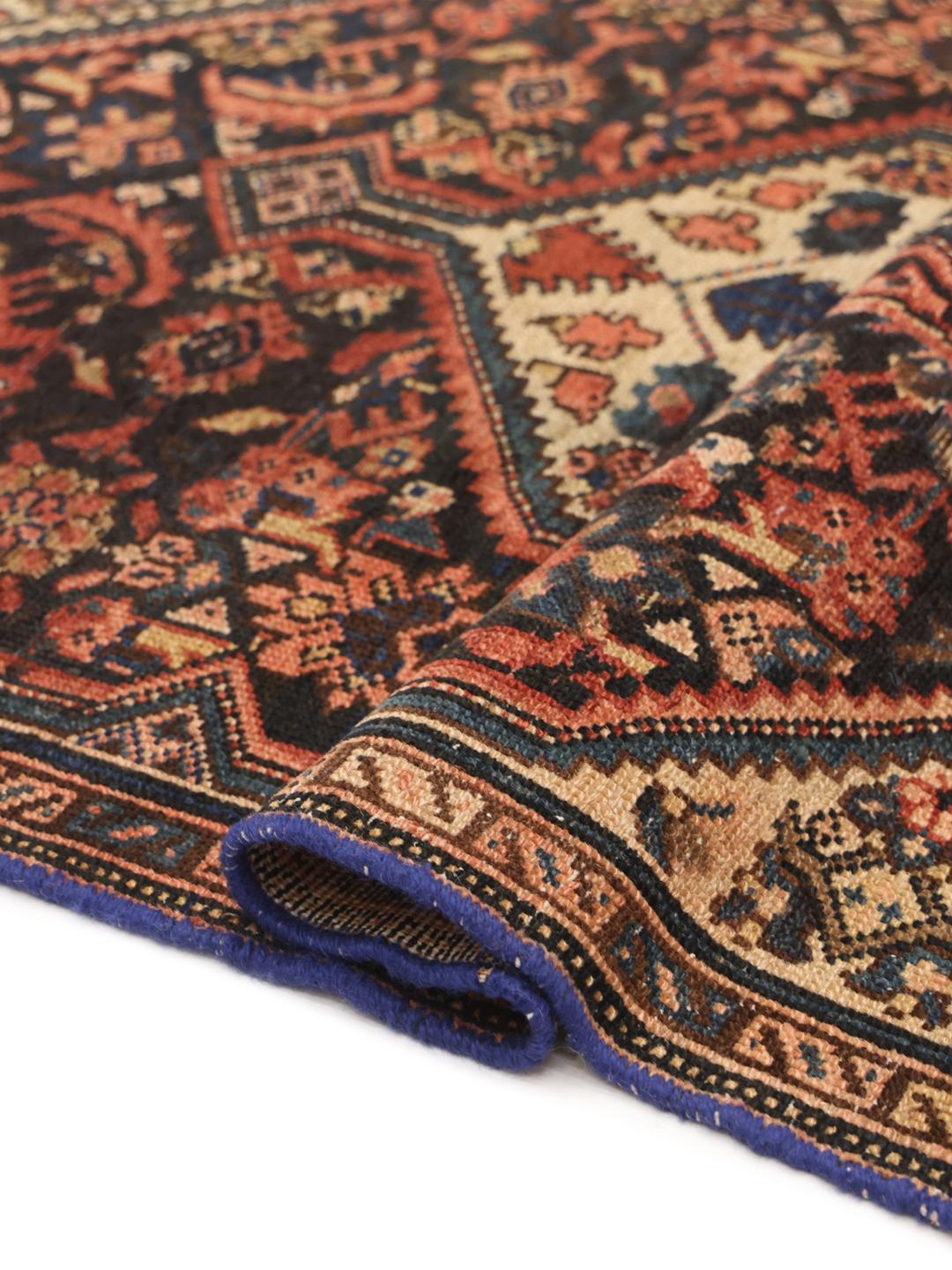
Visual language in Hamadan rugs traditionally favors bold geometric forms, prominent central medallions, and structured corner floral motifs. Enclosed by multi-tiered decorative borders, these designs reflect local village traditions where patterns were woven from memory rather than drawn out on paper, giving every traditional piece an individual artistic voice.
Vintage Middle Eastern rugs are prized by collectors and homeowners alike for their physical durability and historic substance. Acquiring a vintage Hamadan piece means bringing a piece of genuine weaving heritage into your living space, holding both functional value and enduring visual depth.