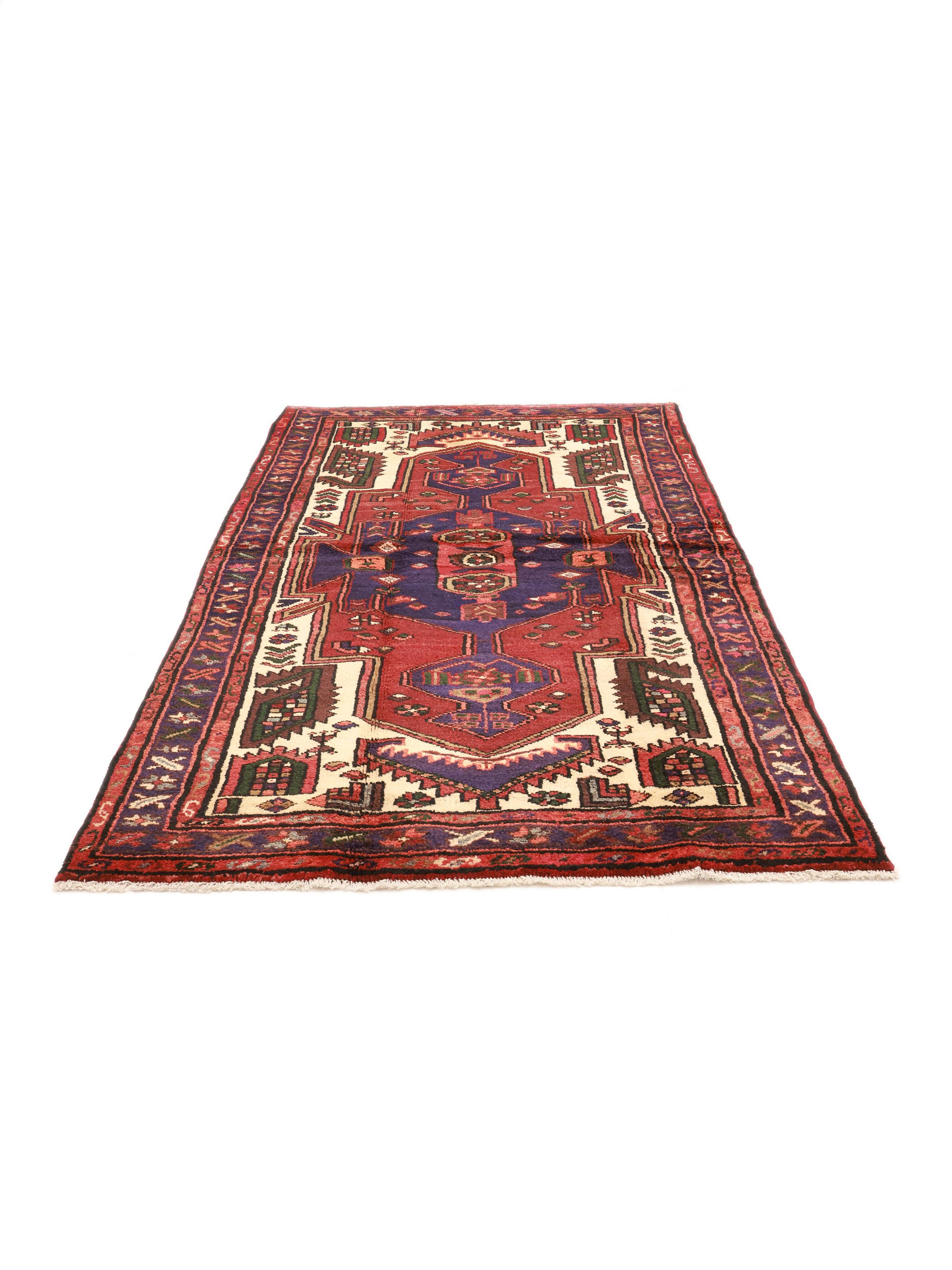
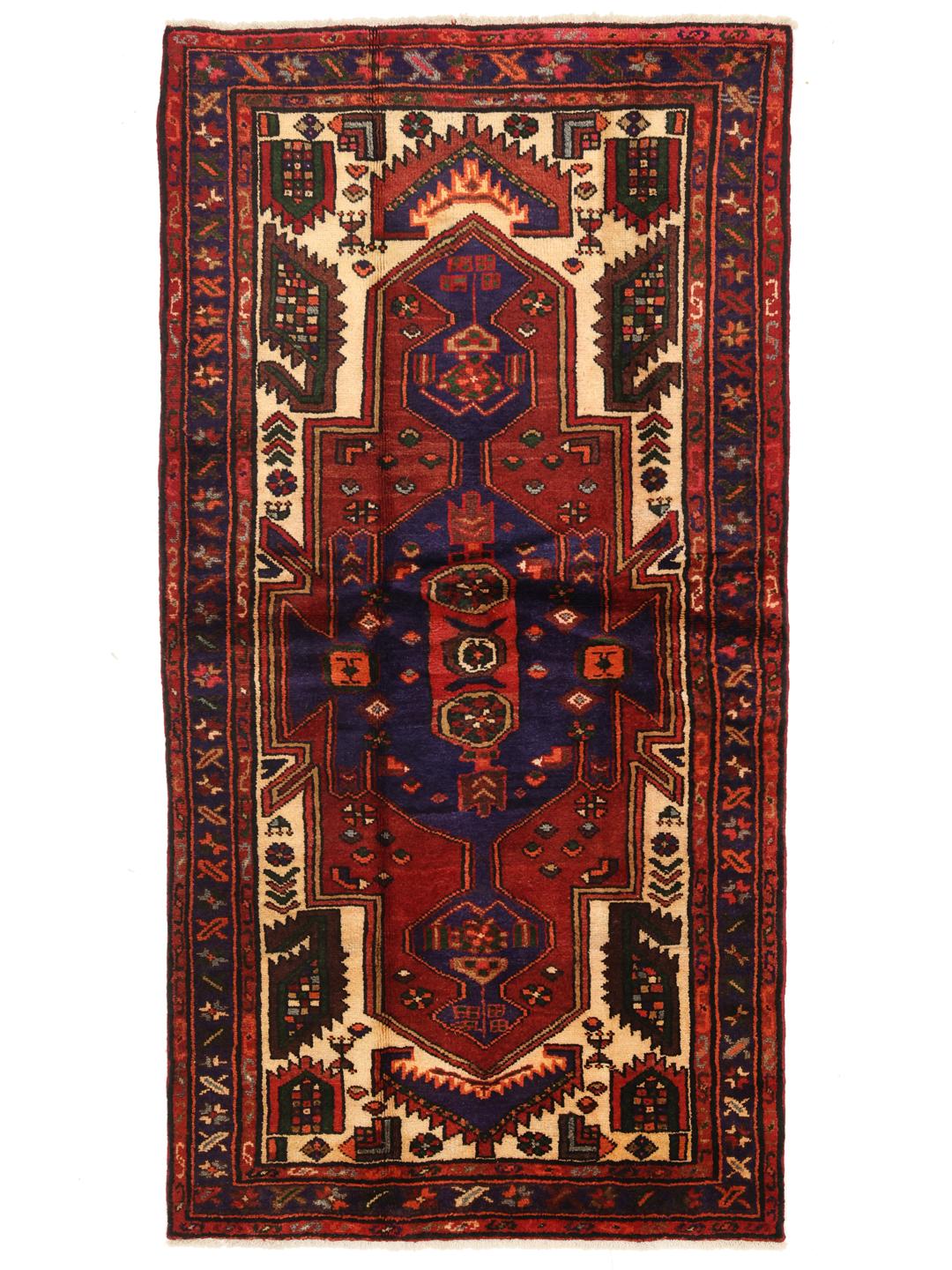
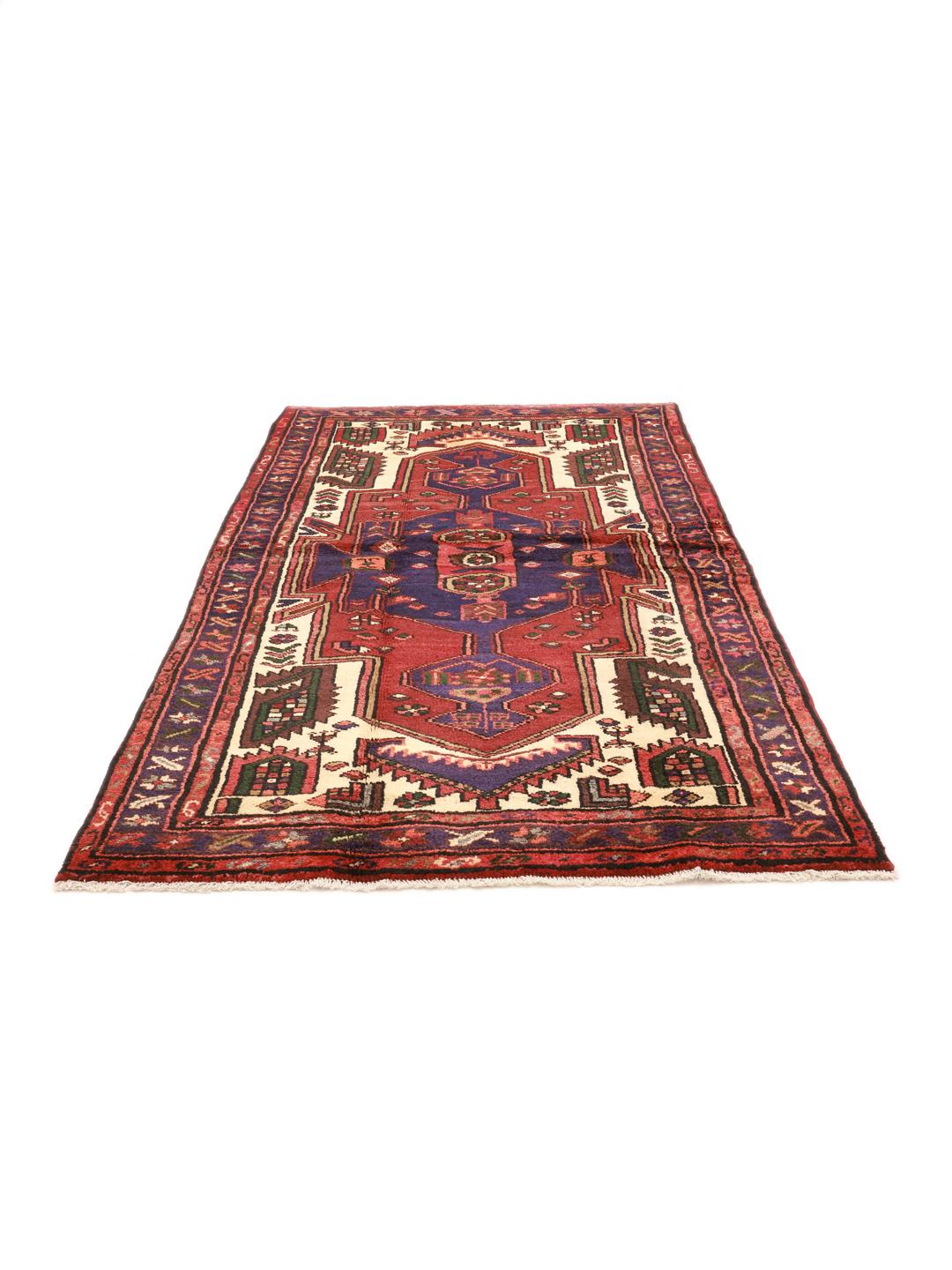
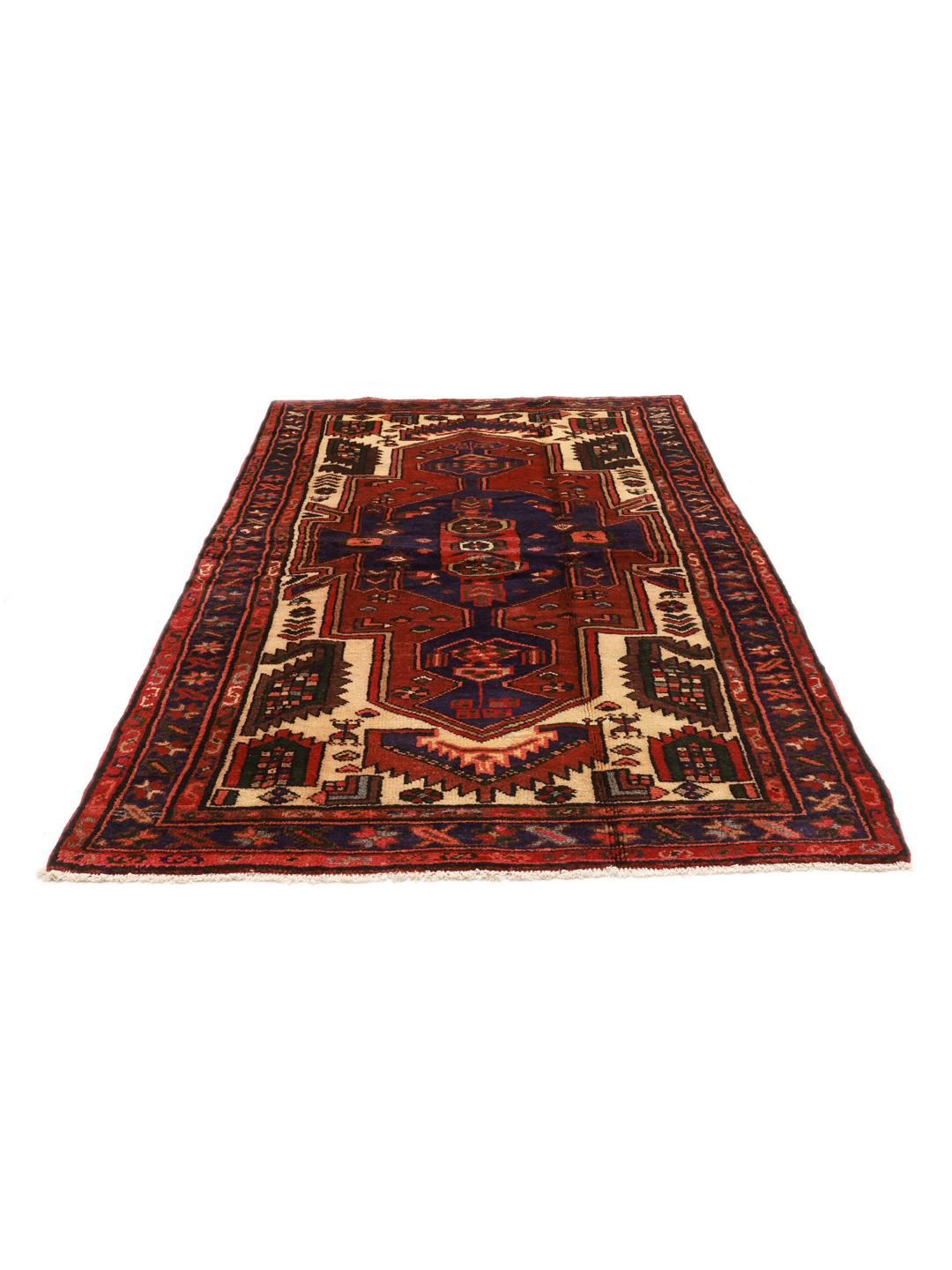
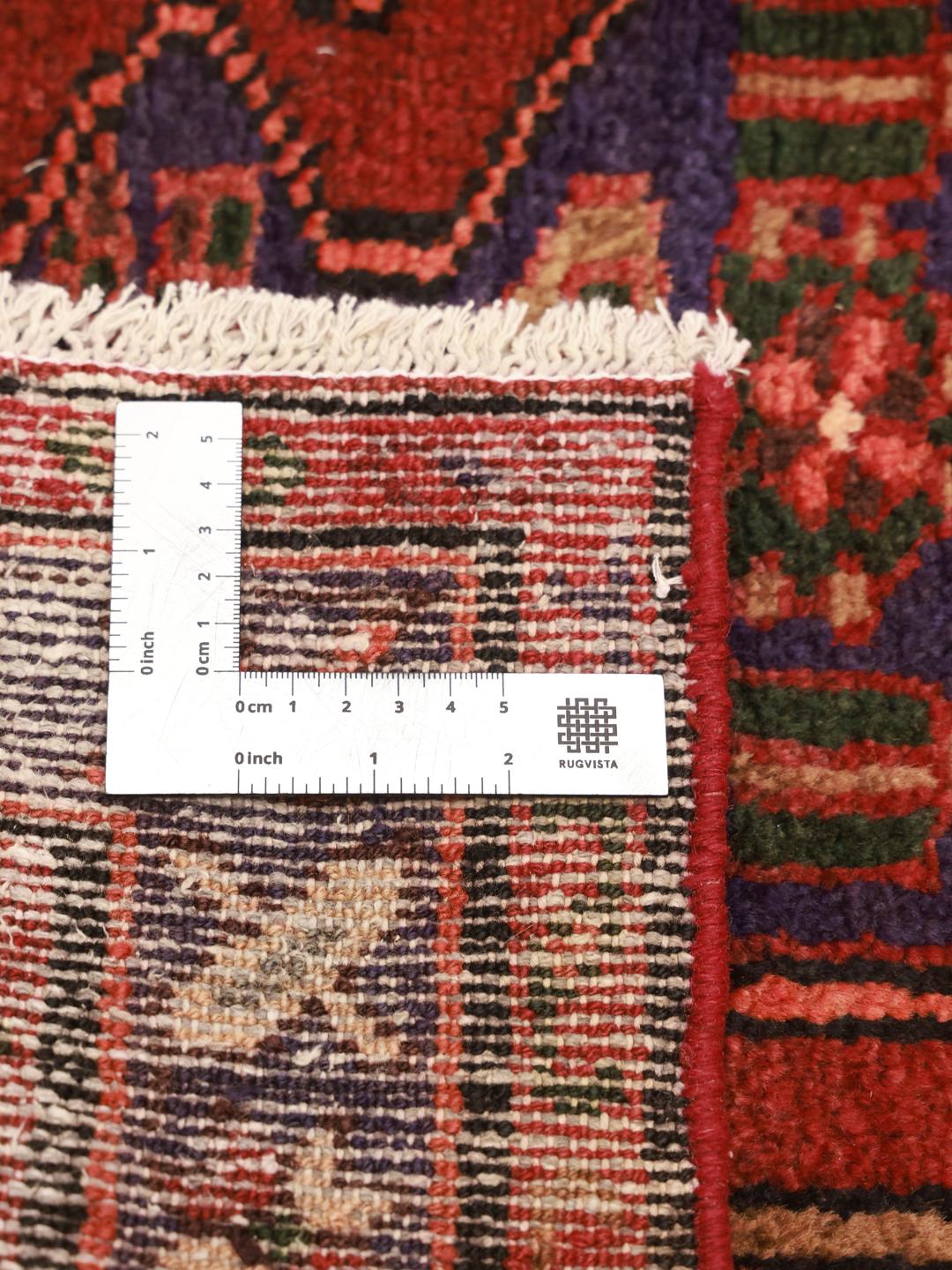
Hamadan rugs take their name from one of the oldest cities in the Middle East, a historic hub located on the ancient trade routes that connected East and West. This region has long been a centre for weaving, where generations of families have preserved and evolved traditional techniques to create floor coverings that are as durable as they are beautiful.
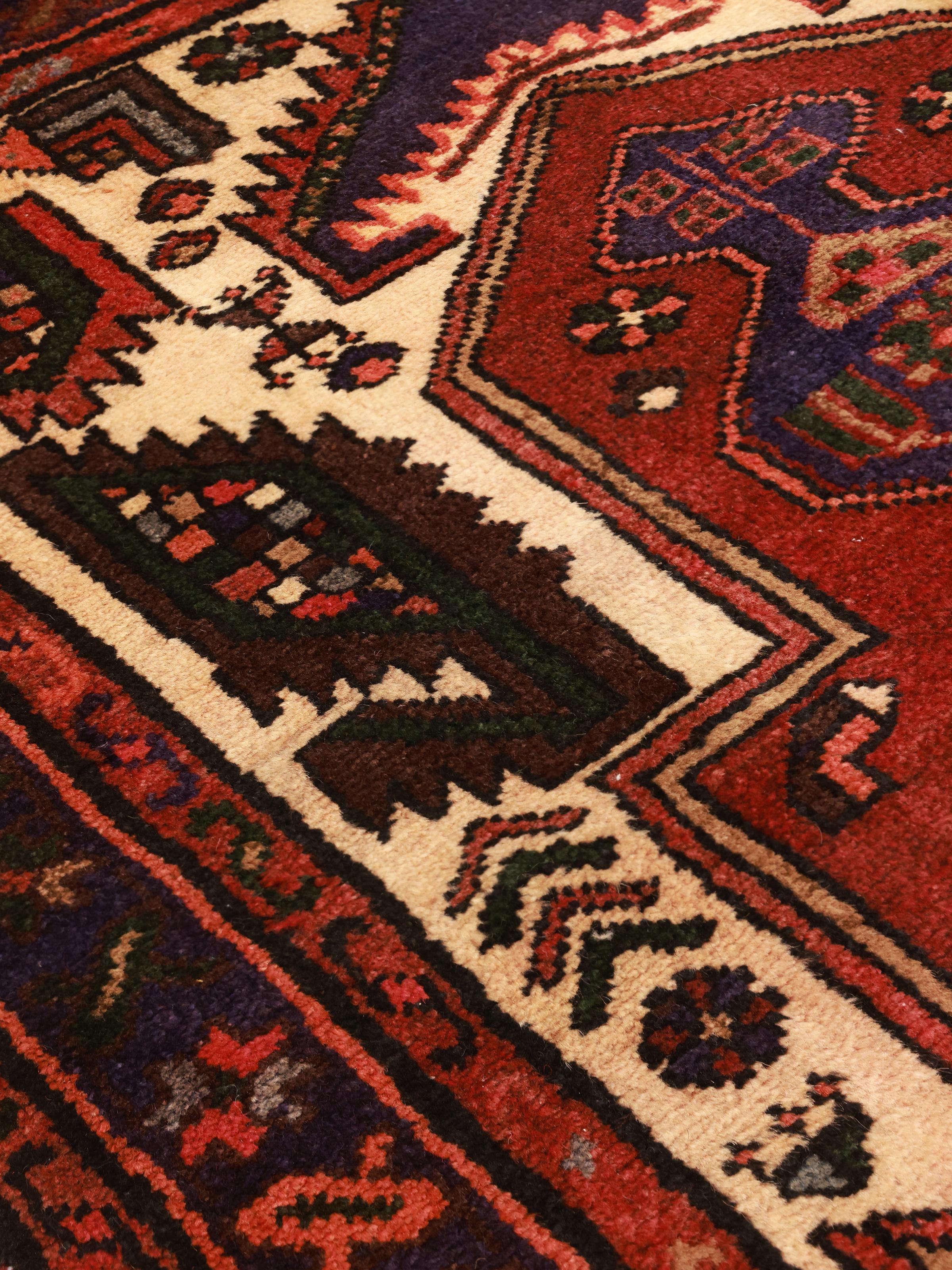
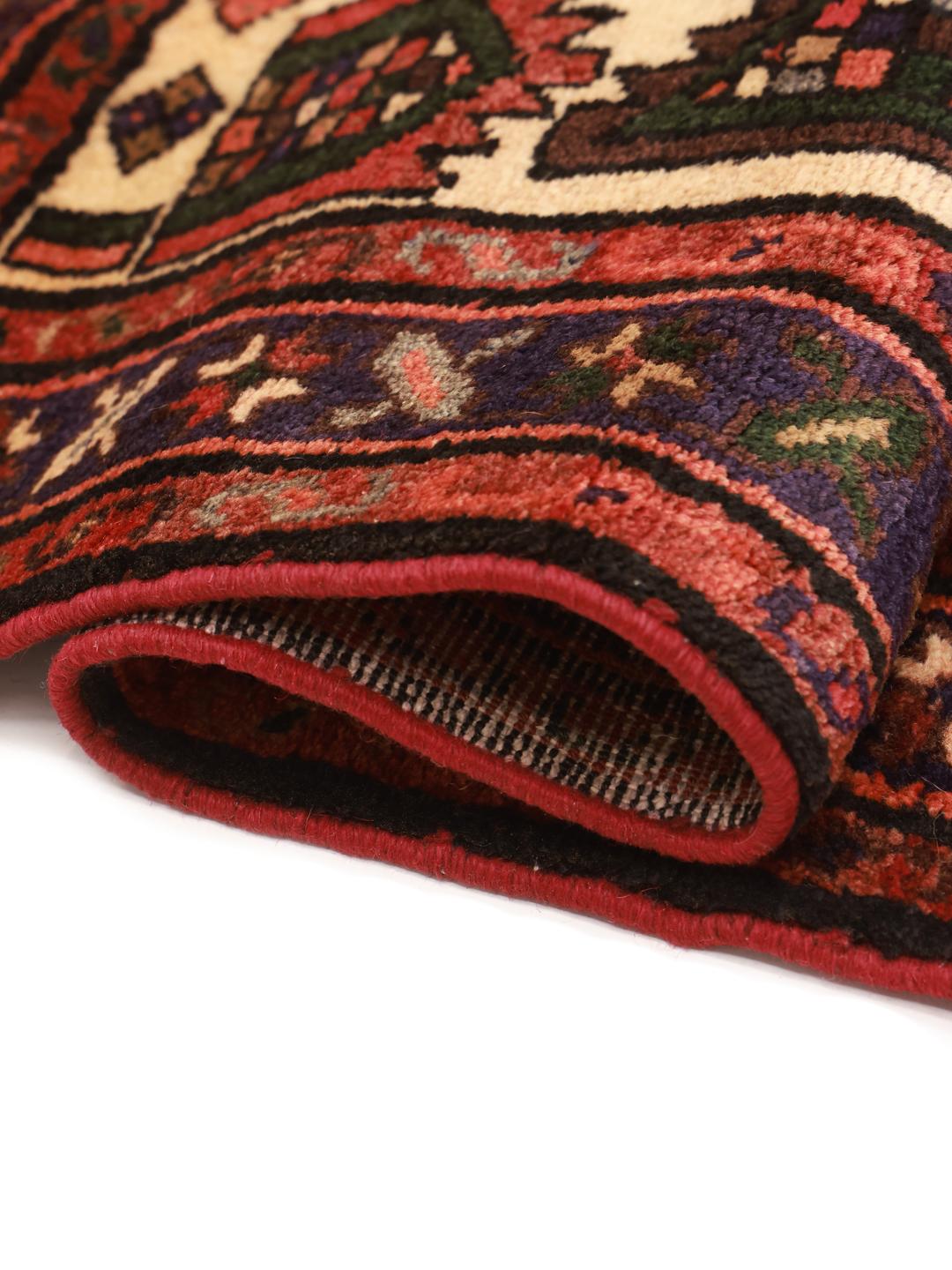
The term Hamadan refers to a diverse family of rugs rather than a single style, as the craft encompasses hundreds of surrounding villages, each with its own signature approach. These rugs are known for their sturdy construction and the use of high-quality wool, often sourced from local mountain flocks, which gives the pile a lustrous and robust character.
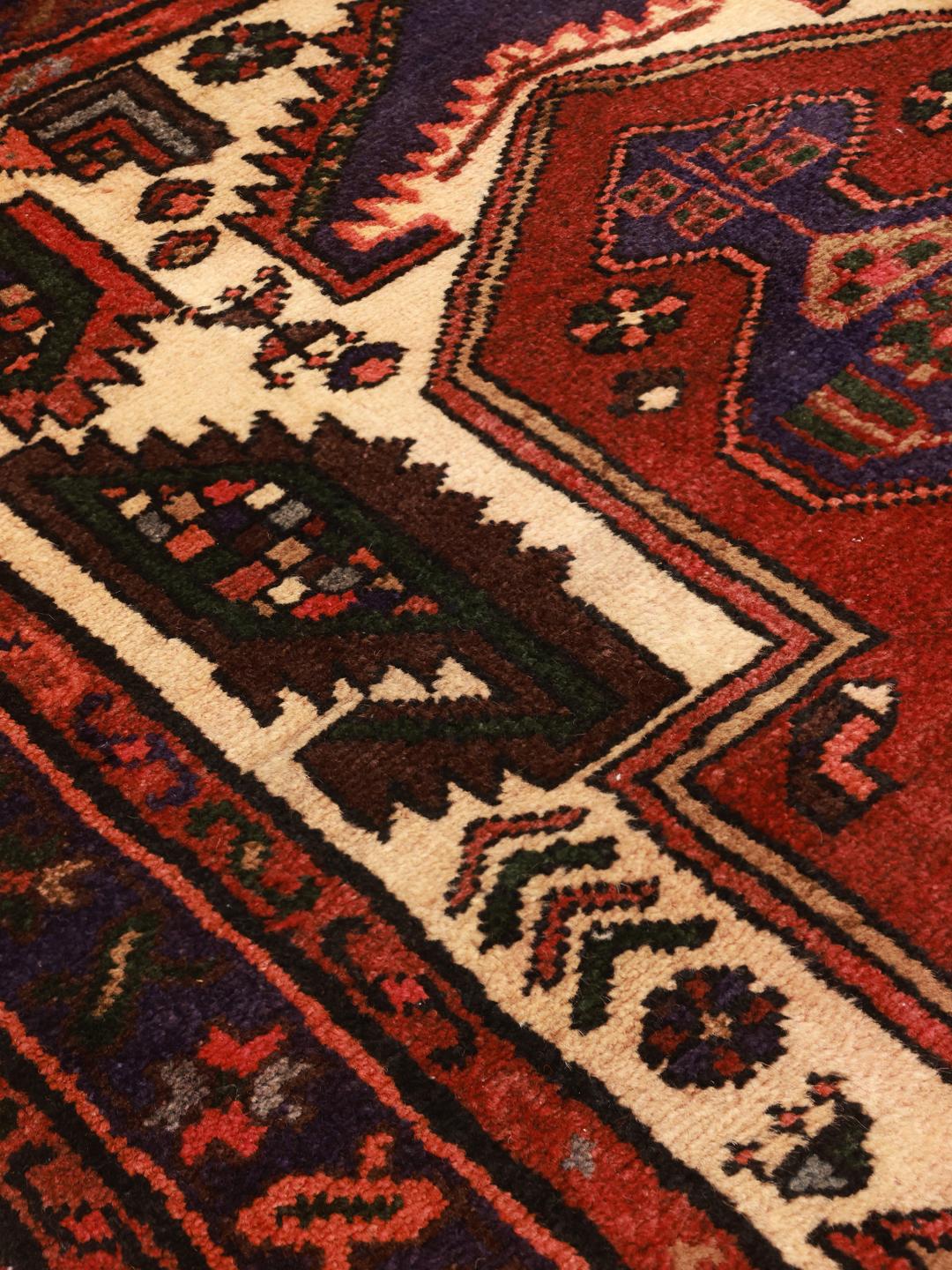
Visually, these rugs often feature central medallions and repeating geometric motifs, frequently rendered in deep, saturated shades of red and blue. The borders are typically decorative, often incorporating stylised floral elements or geometric shapes that frame the central field and provide a sense of balance and structure to the overall composition.
Collectors value Hamadan rugs for their authenticity and their connection to a deep-rooted cultural heritage. Owning one is a way to bridge the gap between the past and the present, as these pieces are not merely decorative items but expressions of a living tradition that continues to thrive through the skill of dedicated artisans.