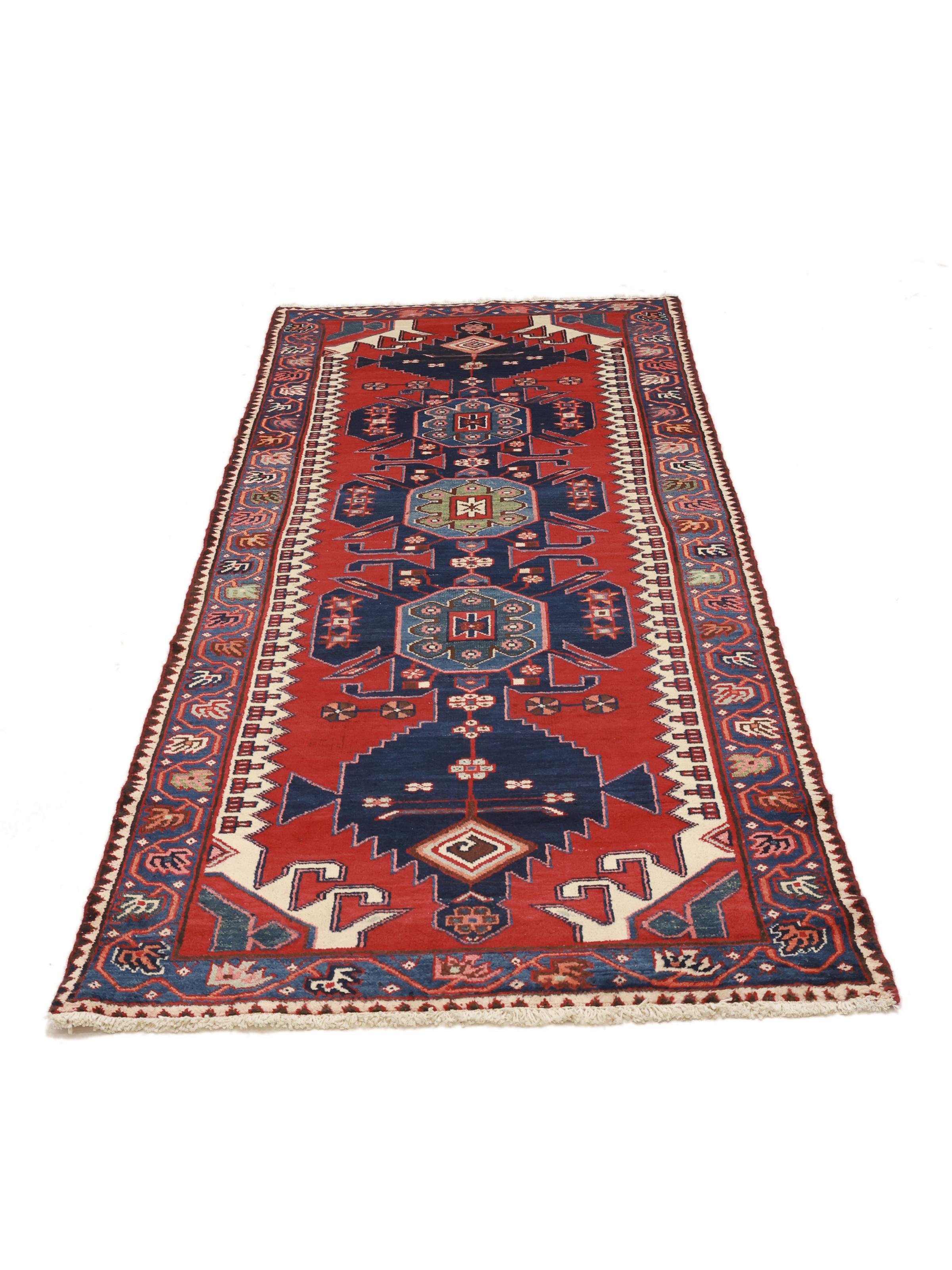
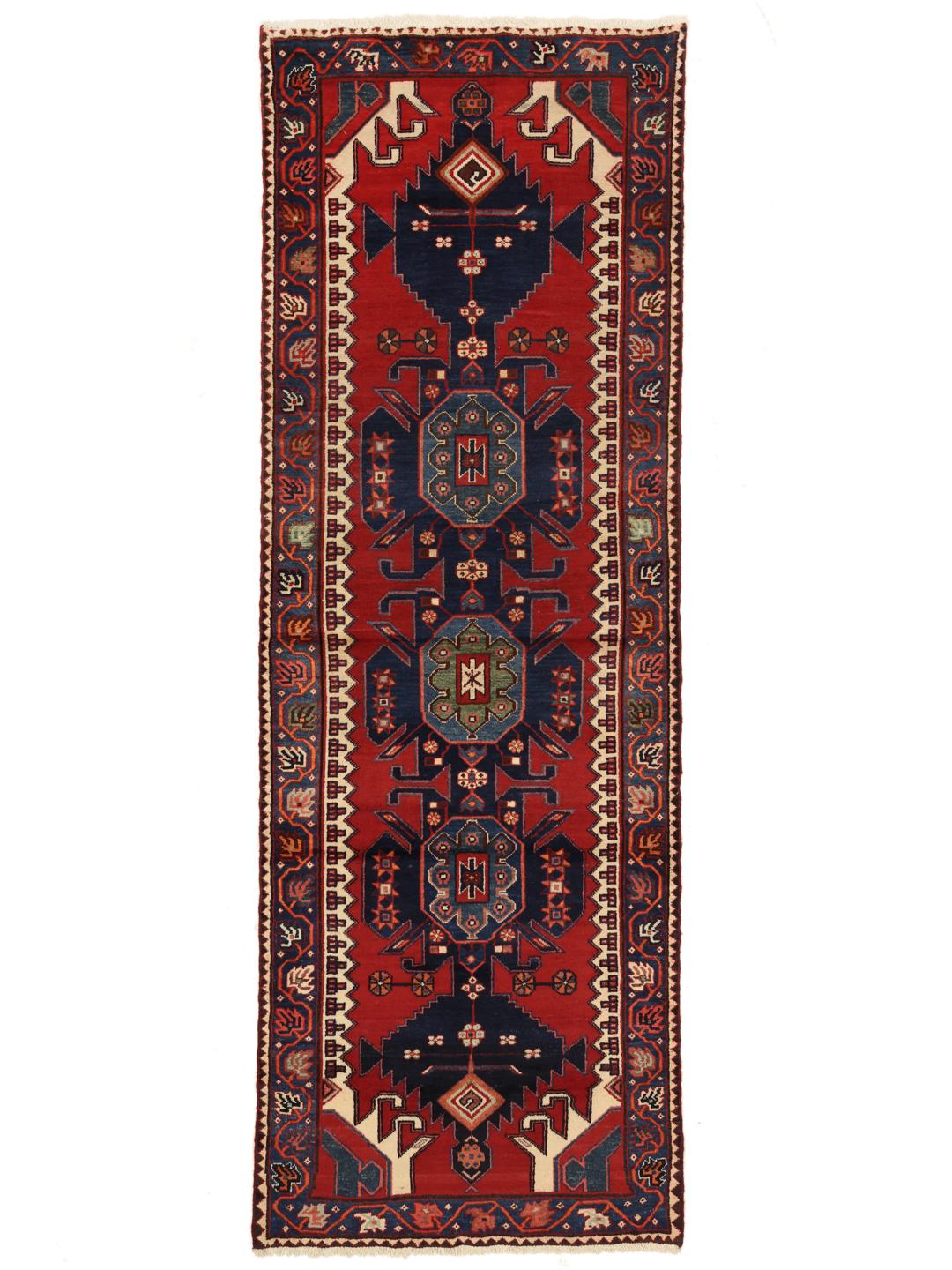
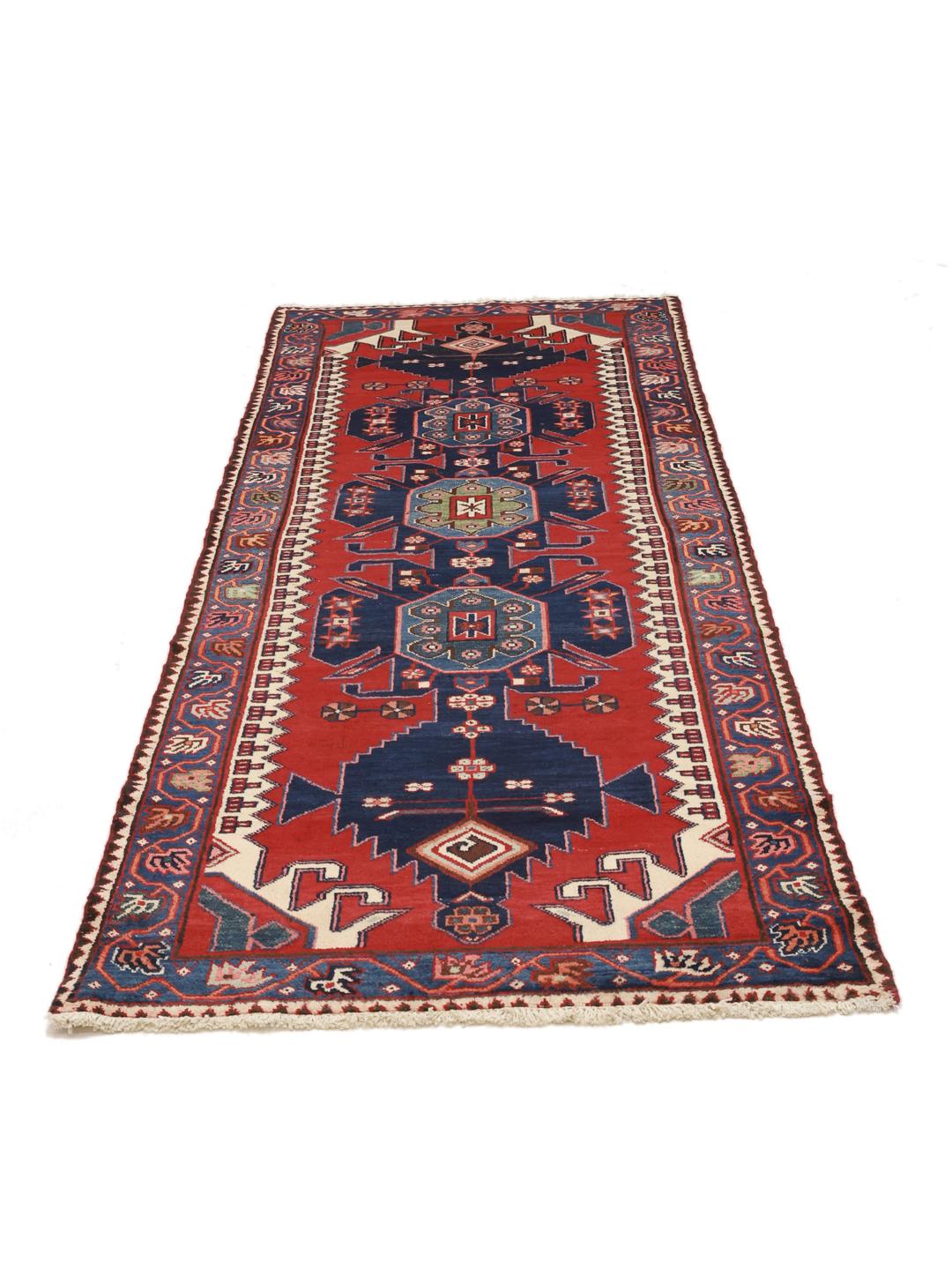
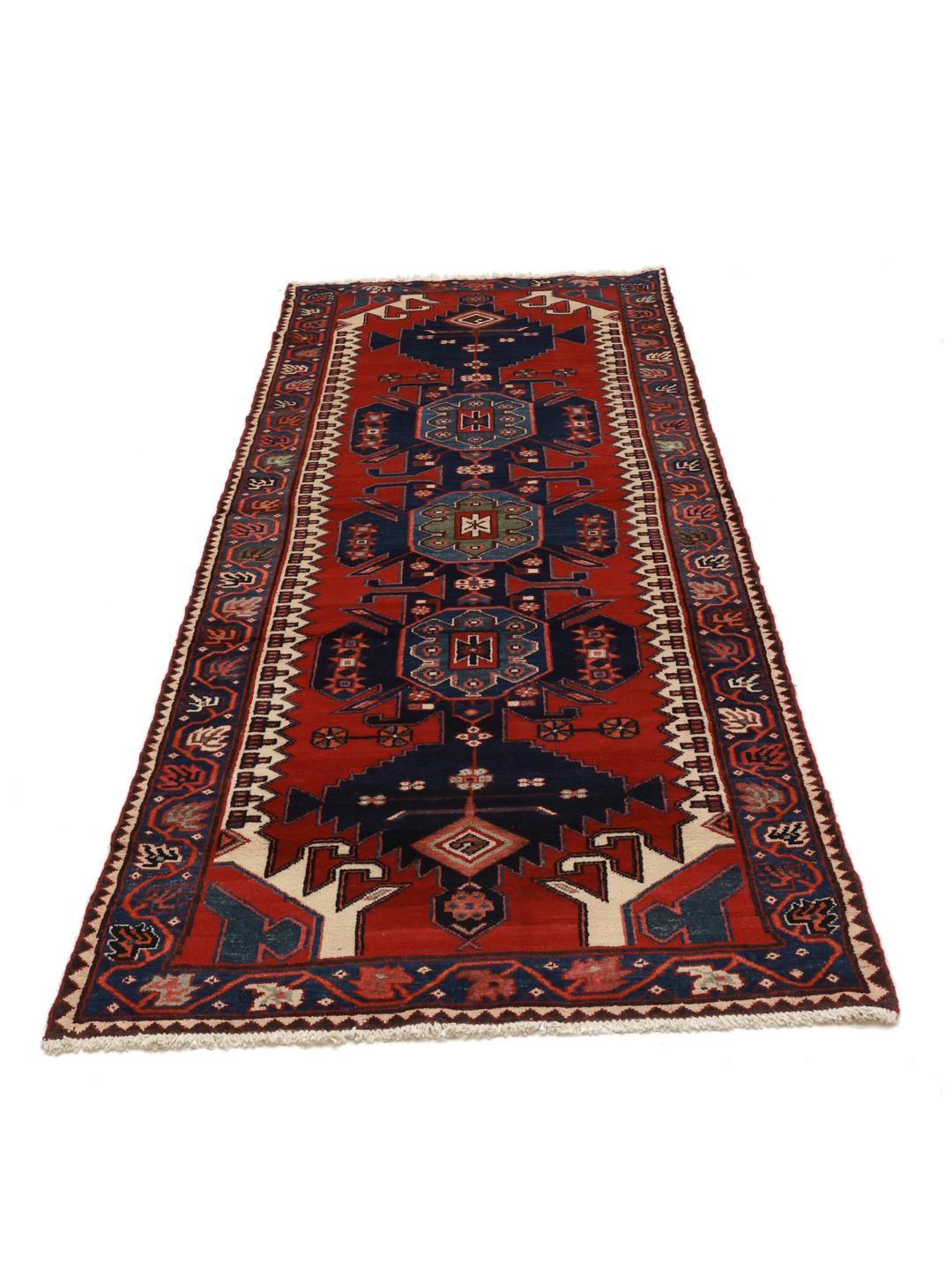
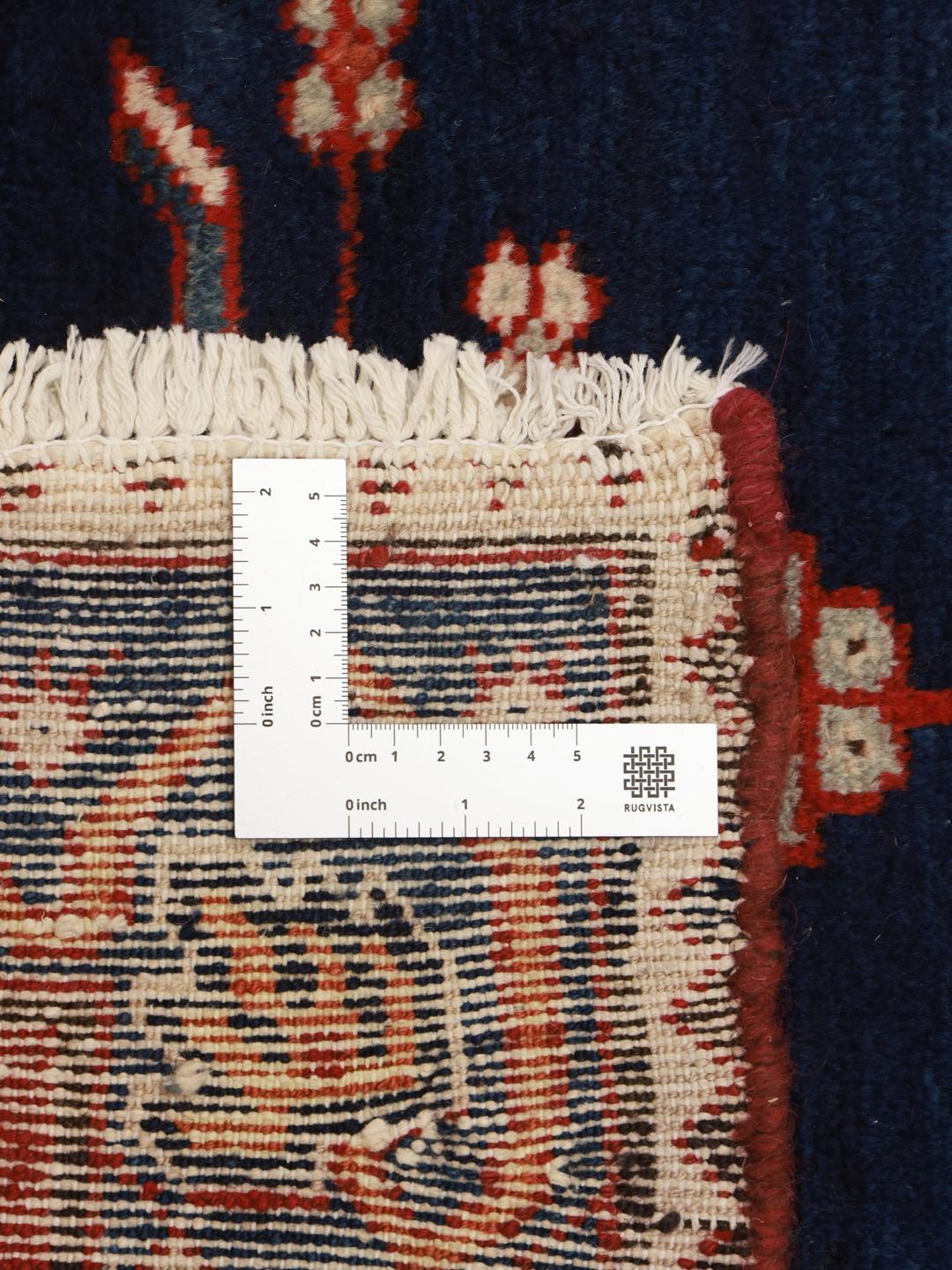
The Hamadan region in the Middle East is one of the most prolific and historically significant centres for rug production. Known for its vast diversity of styles, Hamadan has long been a hub where village weavers express their cultural identity through unique, locally inspired motifs. These rugs are highly regarded for their ability to blend traditional regional aesthetics with a sturdy, practical construction that has been perfected over centuries.
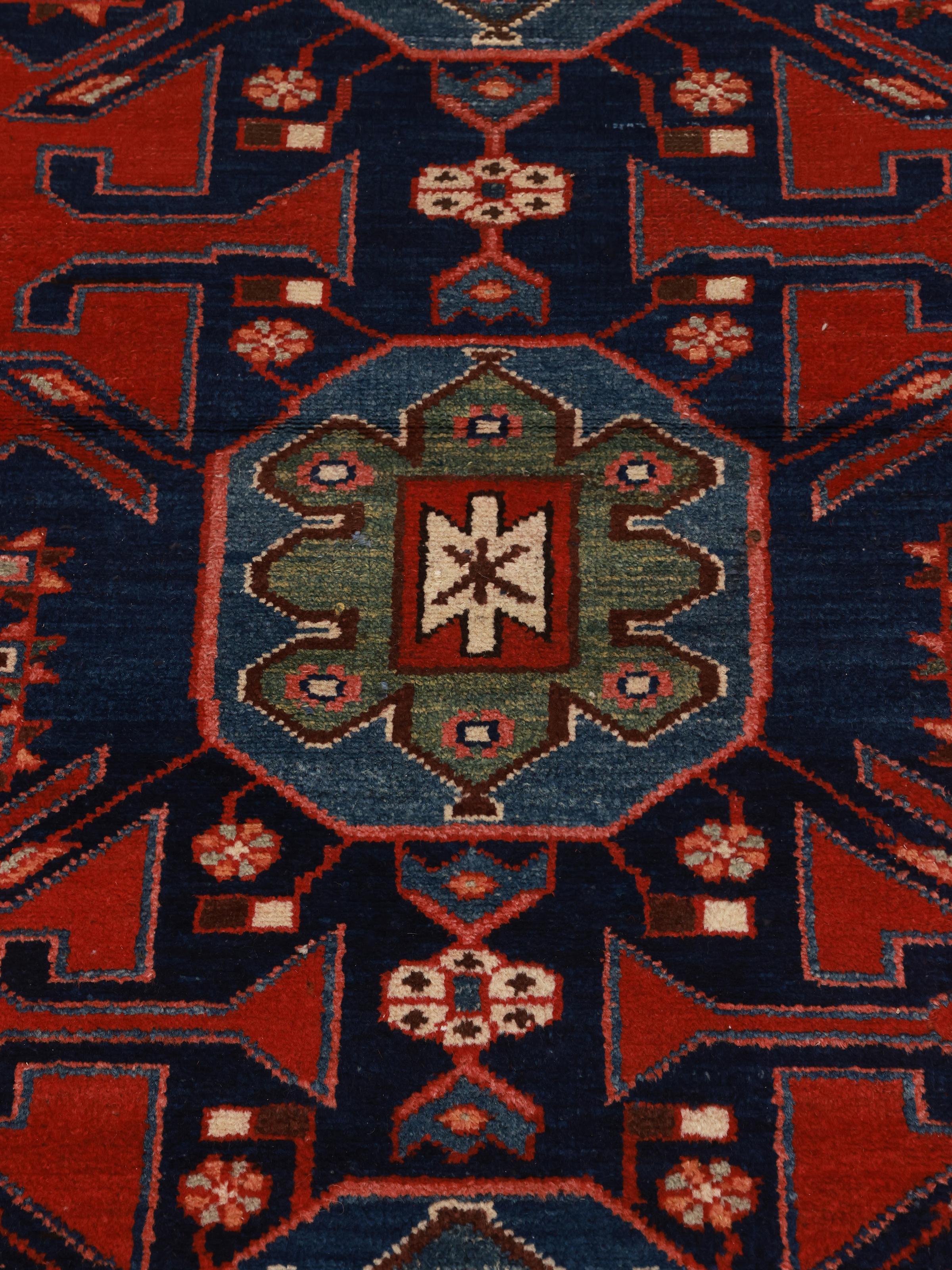
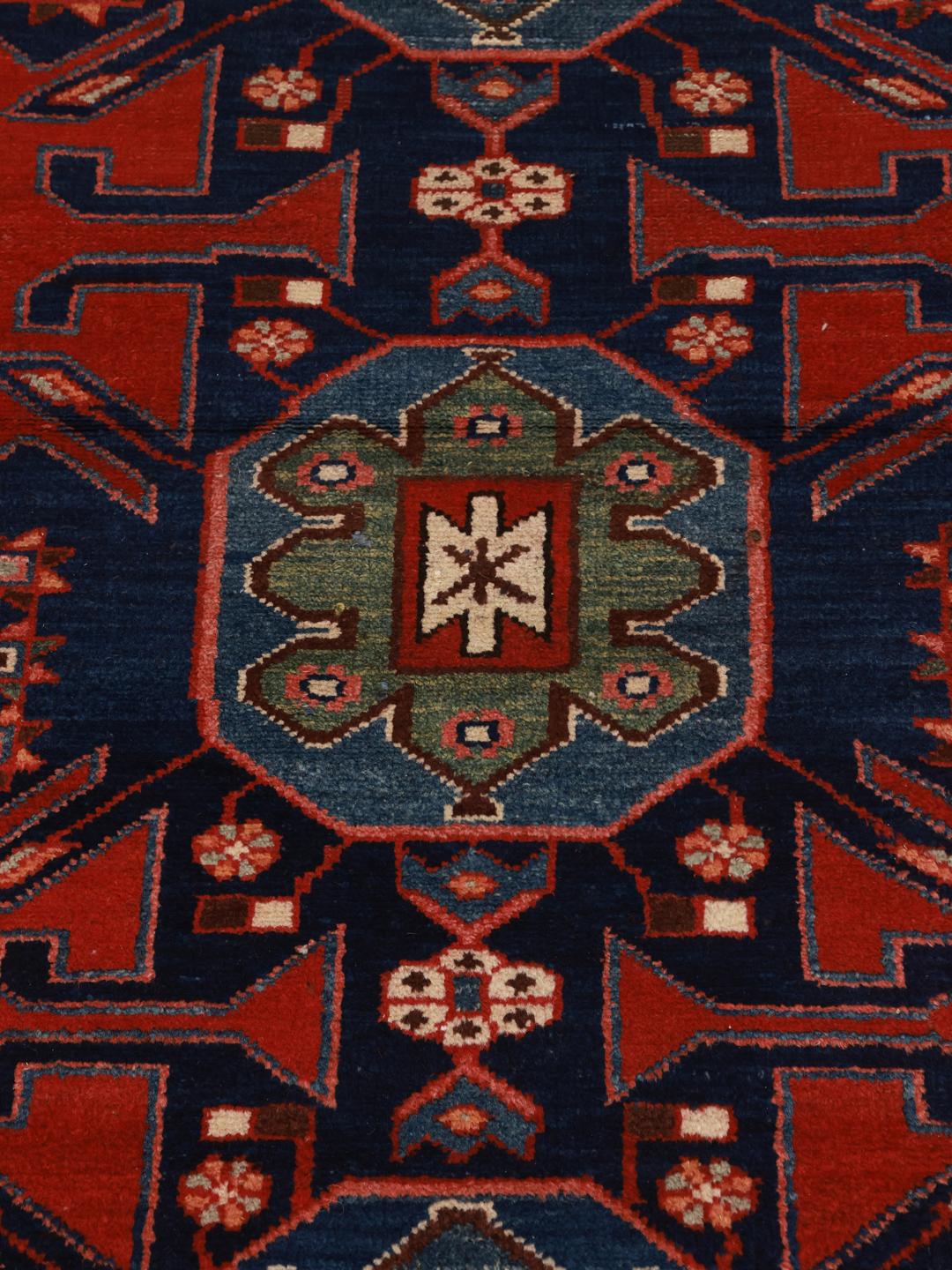
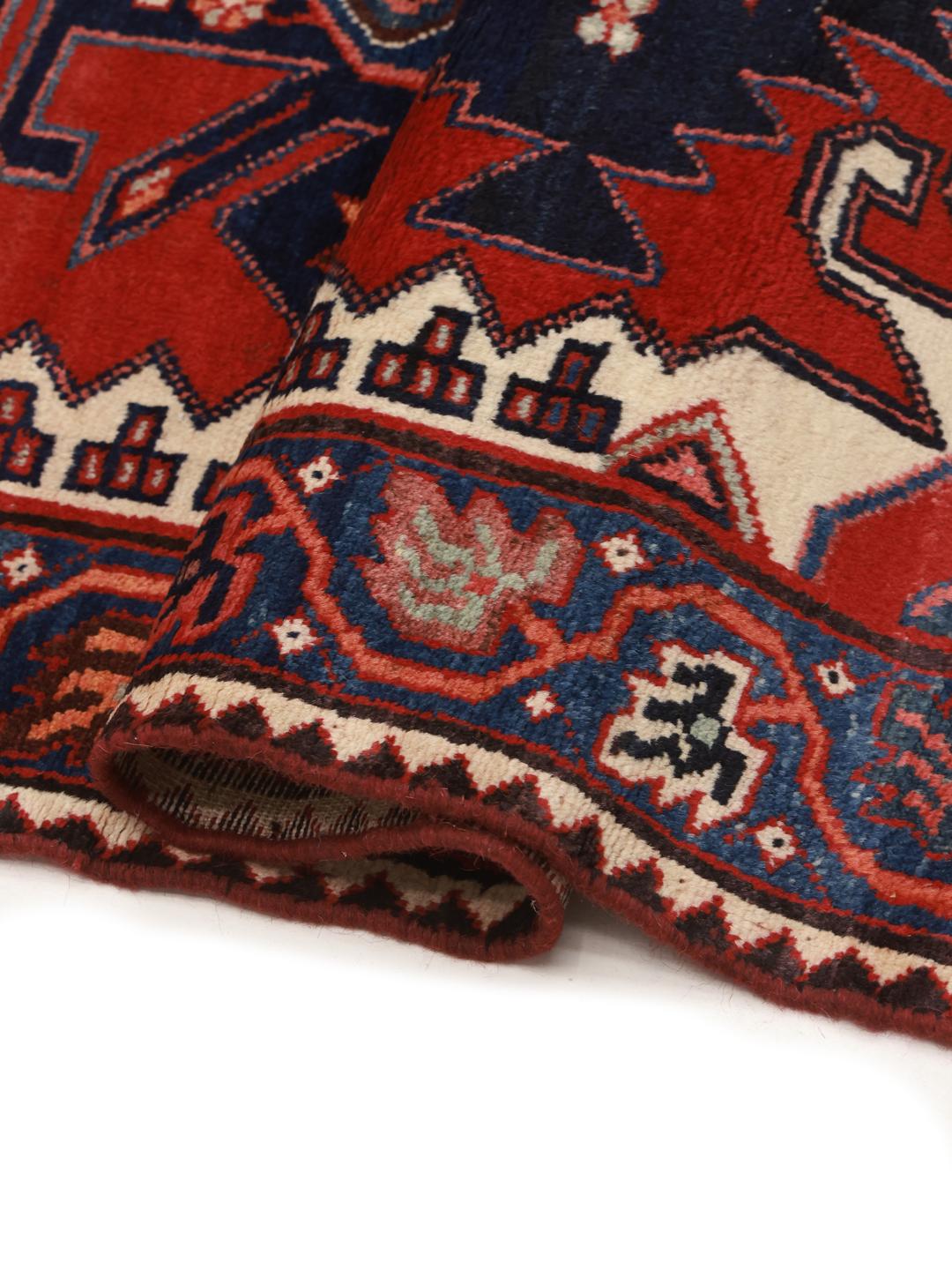
The term 'hand-knotted' refers to the essential method of construction where each knot is tied by hand to the foundation. This method is the hallmark of quality in the region, as it allows for intricate detailing and a durable, long-lasting pile that single-ply or machine-made rugs cannot replicate. The precision of the knotting directly correlates to the clarity of the patterns, ensuring that the geometric motifs remain sharp and defined.
Signature design elements of this tradition often include bold, geometric medallions and stylised floral motifs that repeat across the field. The use of a central medallion is a classic feature, often framed by elaborate, symbolic borders. The colour palette typically draws from natural dyes, favouring deep, earthy tones like red and blue, which have become synonymous with the aesthetic of this storied region.
Collectors and homeowners alike value these rugs for their authenticity and the cultural weight they carry. Owning a piece from this tradition means preserving a craft that has been passed down through generations of families. It is a choice that honours the human element of design, celebrating the small variations and imperfections that prove this was made by human hands rather than a machine.