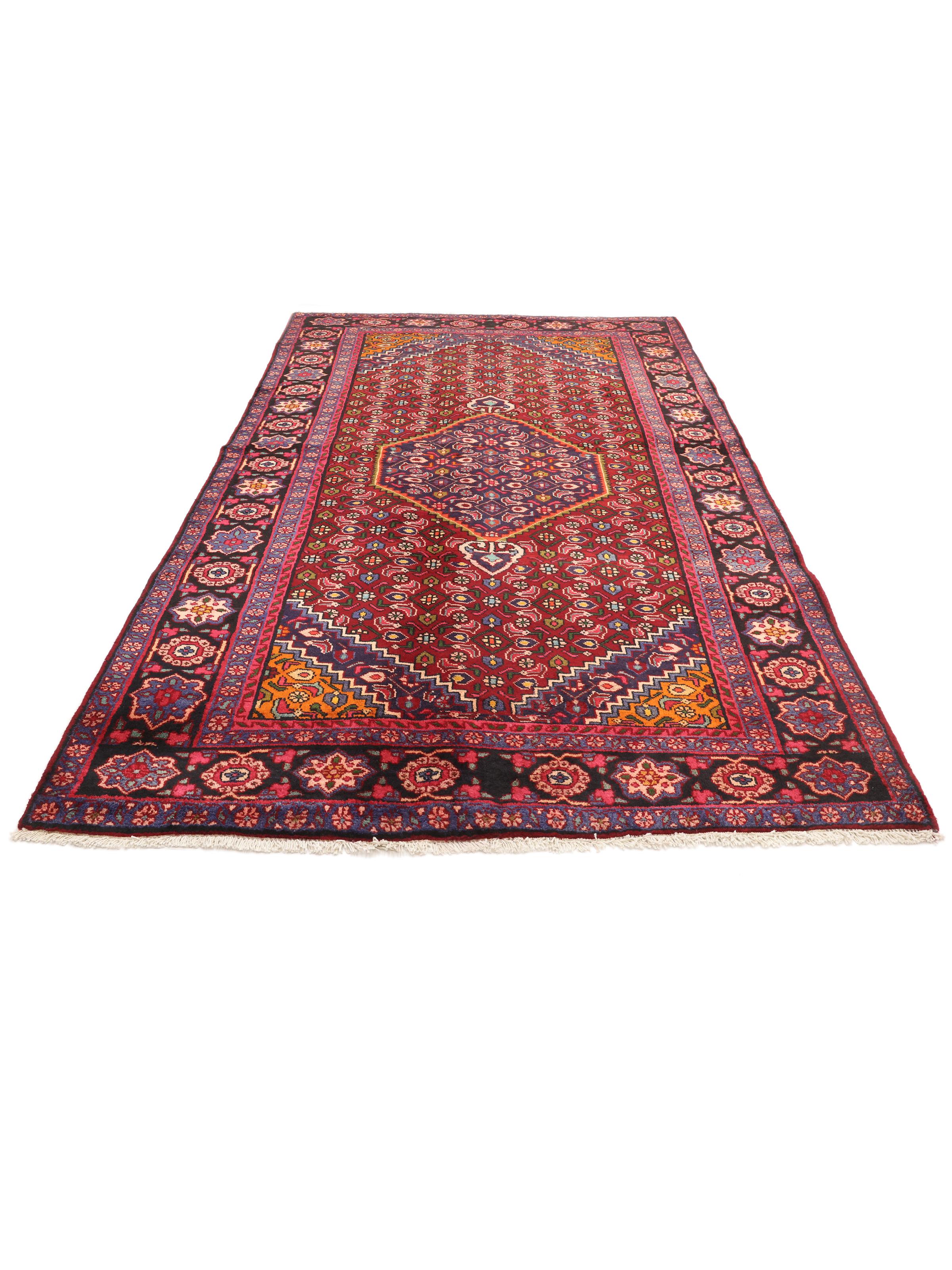
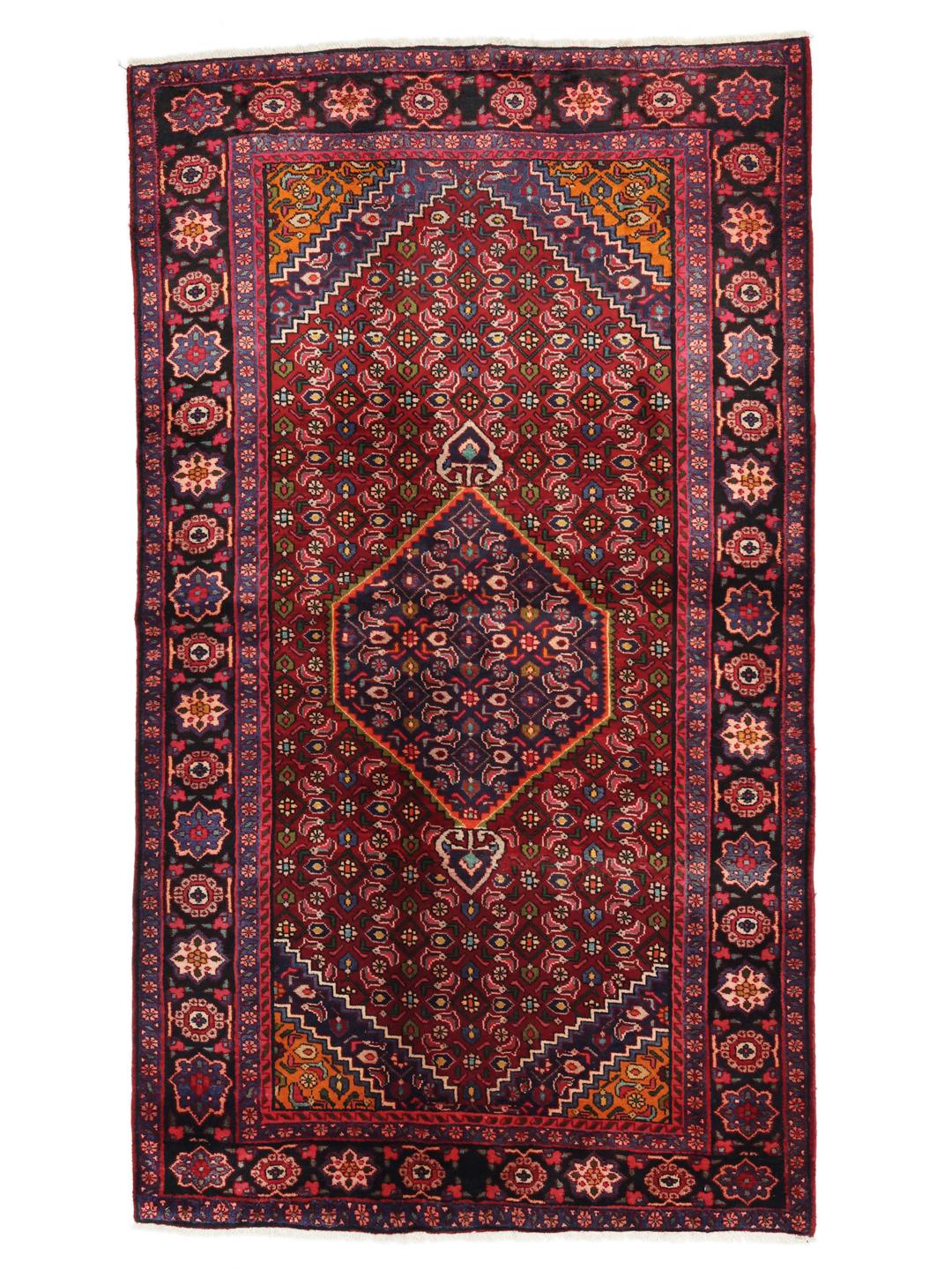
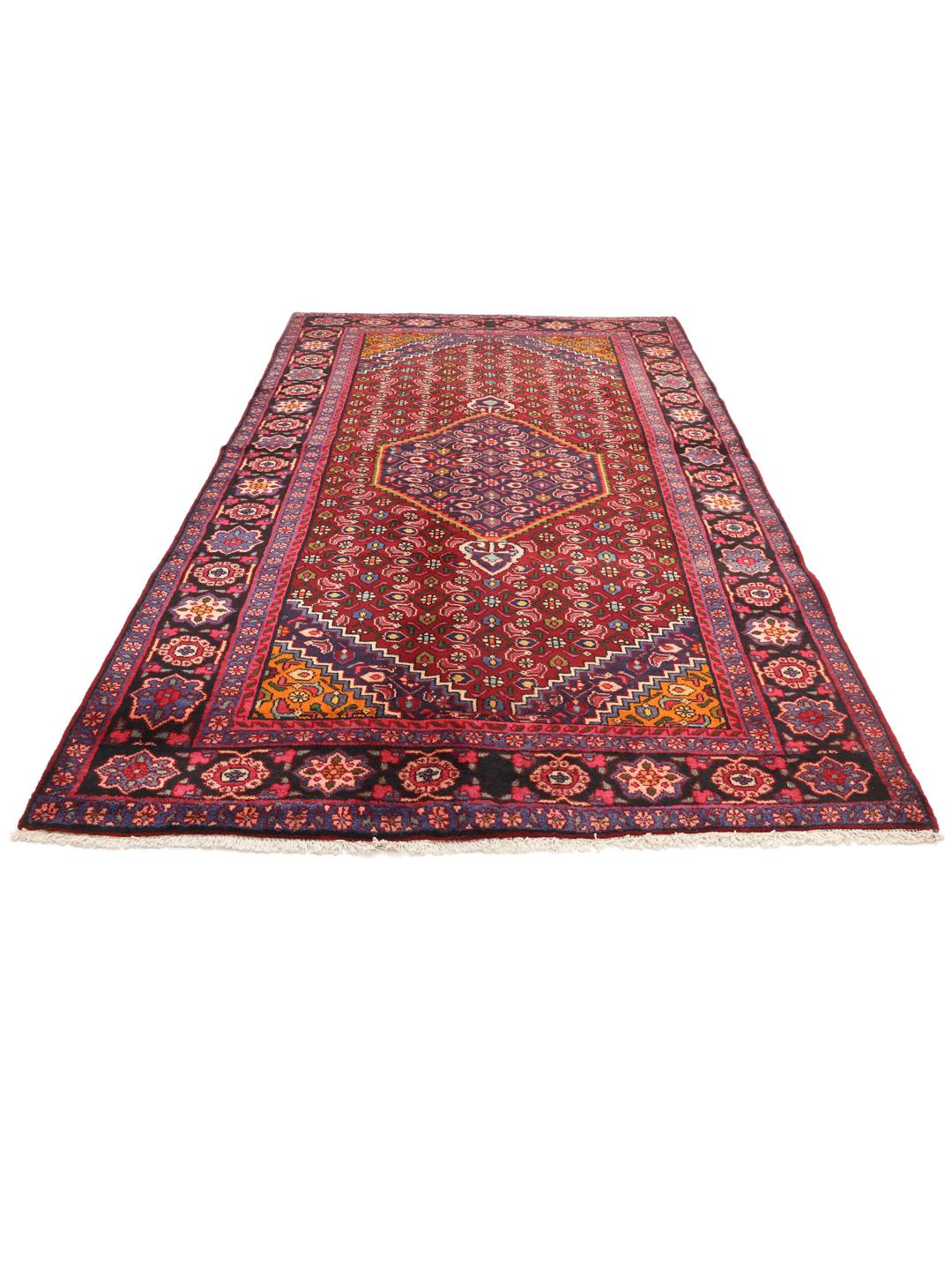
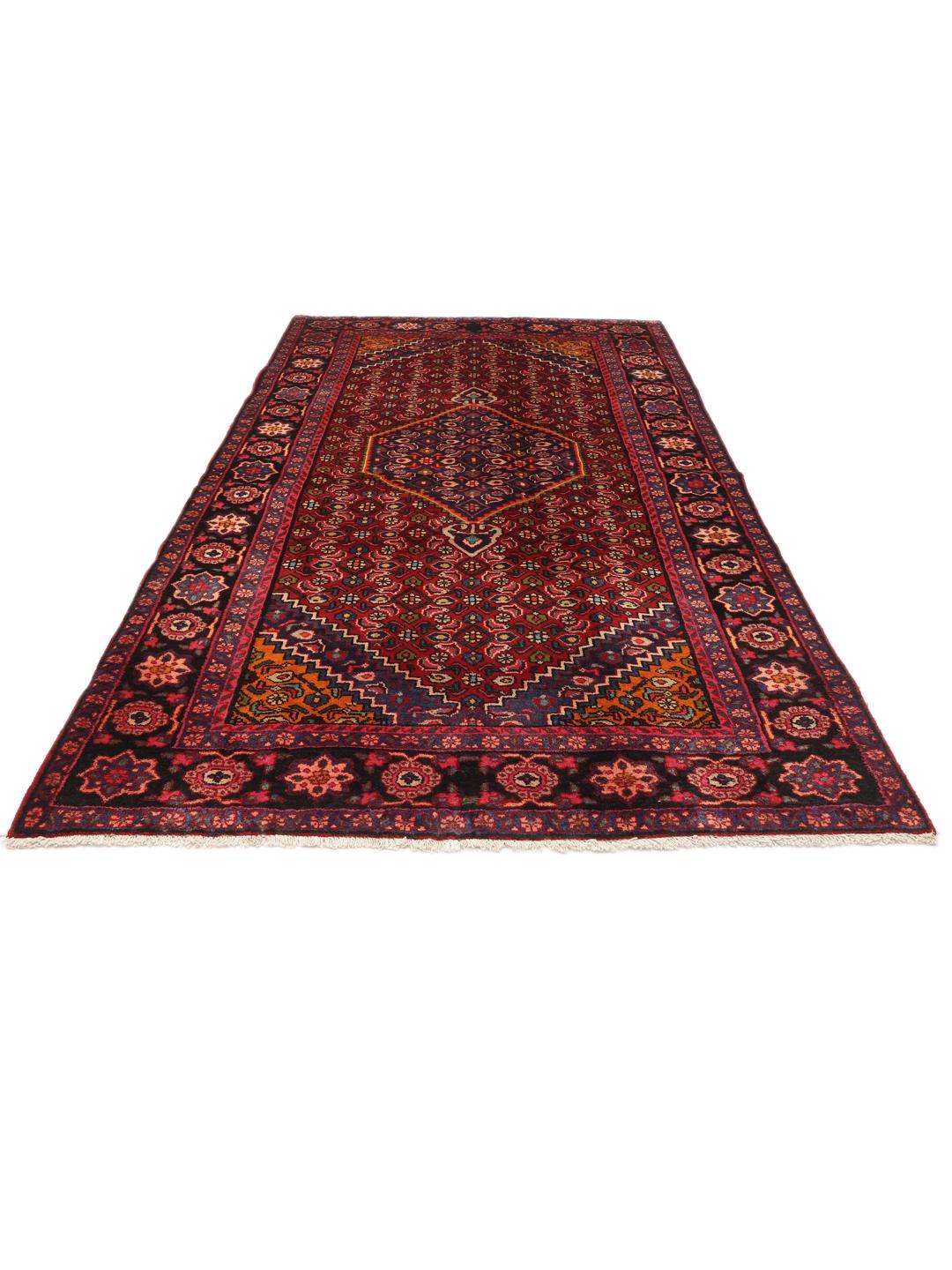
Hamadan is one of the oldest and most prolific rug-weaving centres in the Middle East, located in a historic city that has served as a hub for trade and craftsmanship for centuries. Rugs from this region are celebrated for their incredible diversity, as they are often created in hundreds of surrounding villages, each contributing its own local variation to the broader Hamadan tradition.
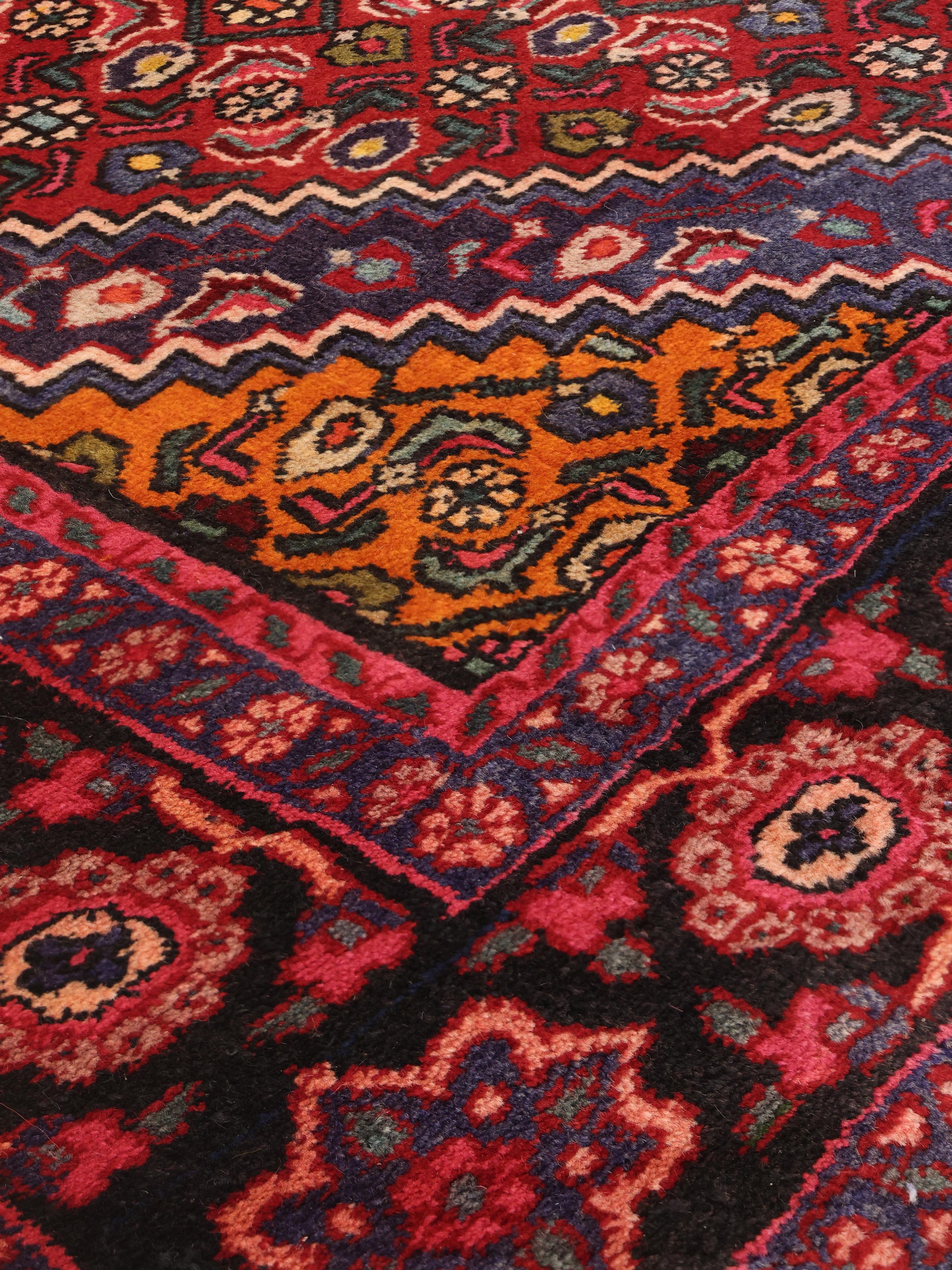
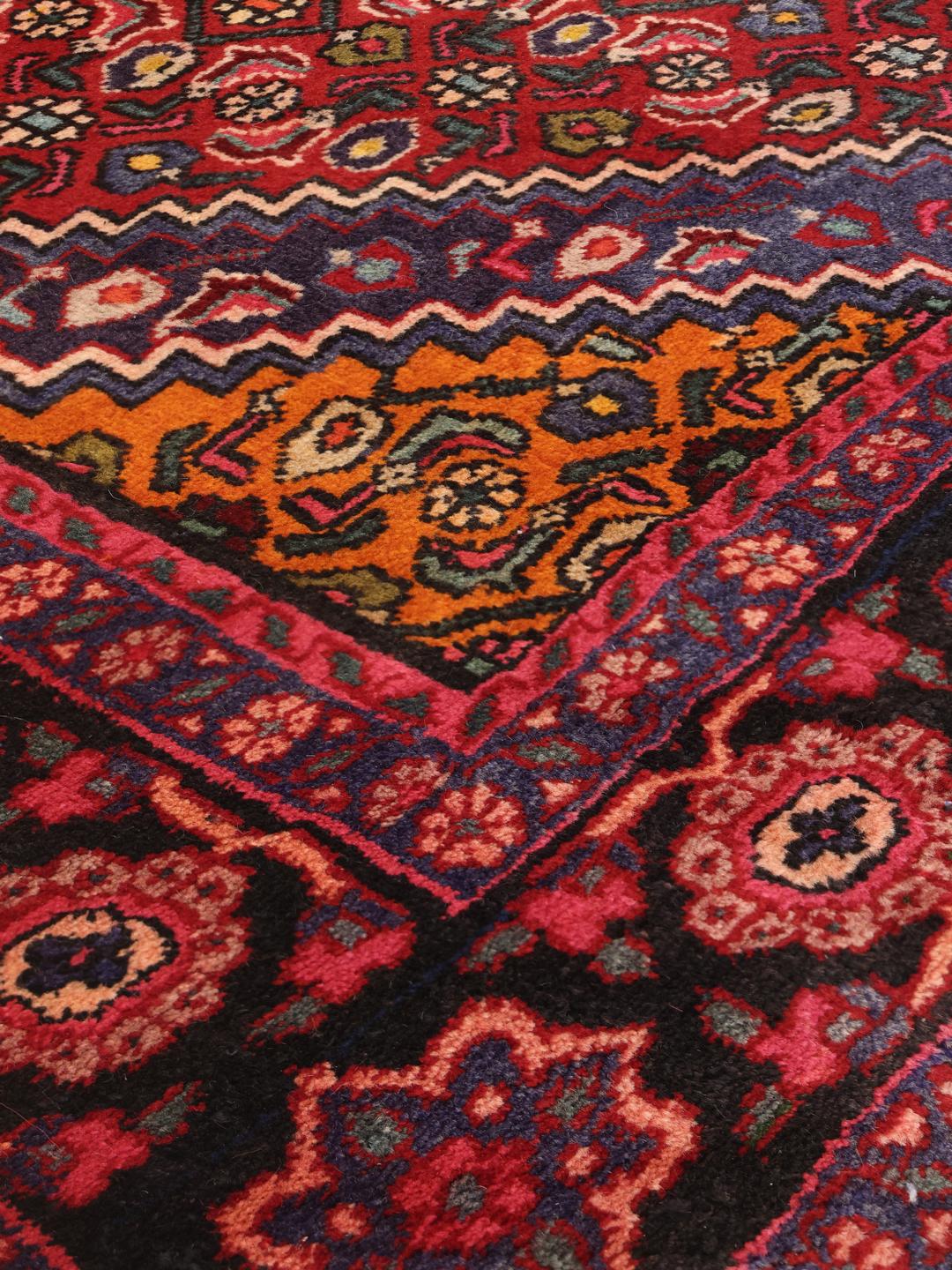
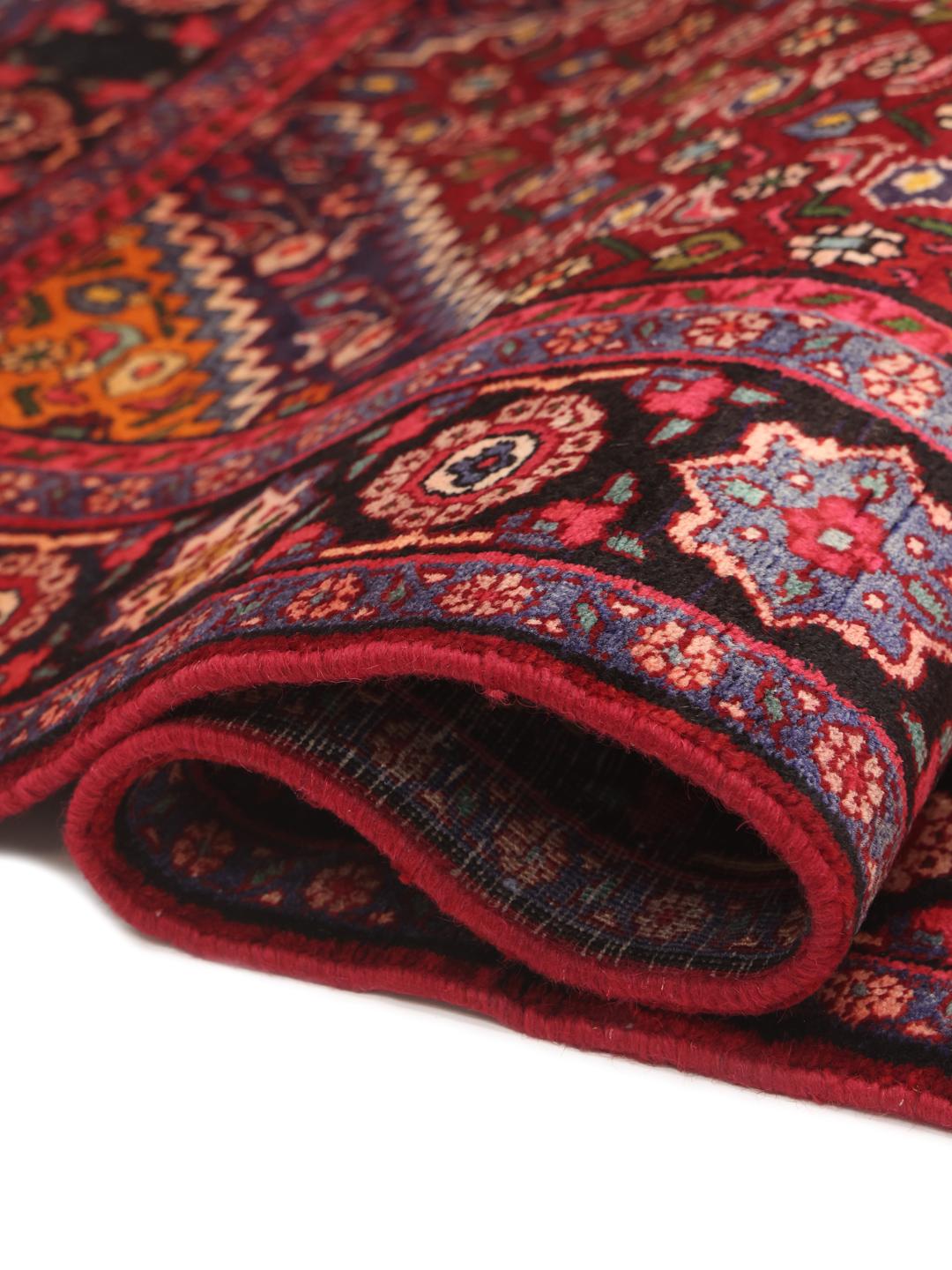
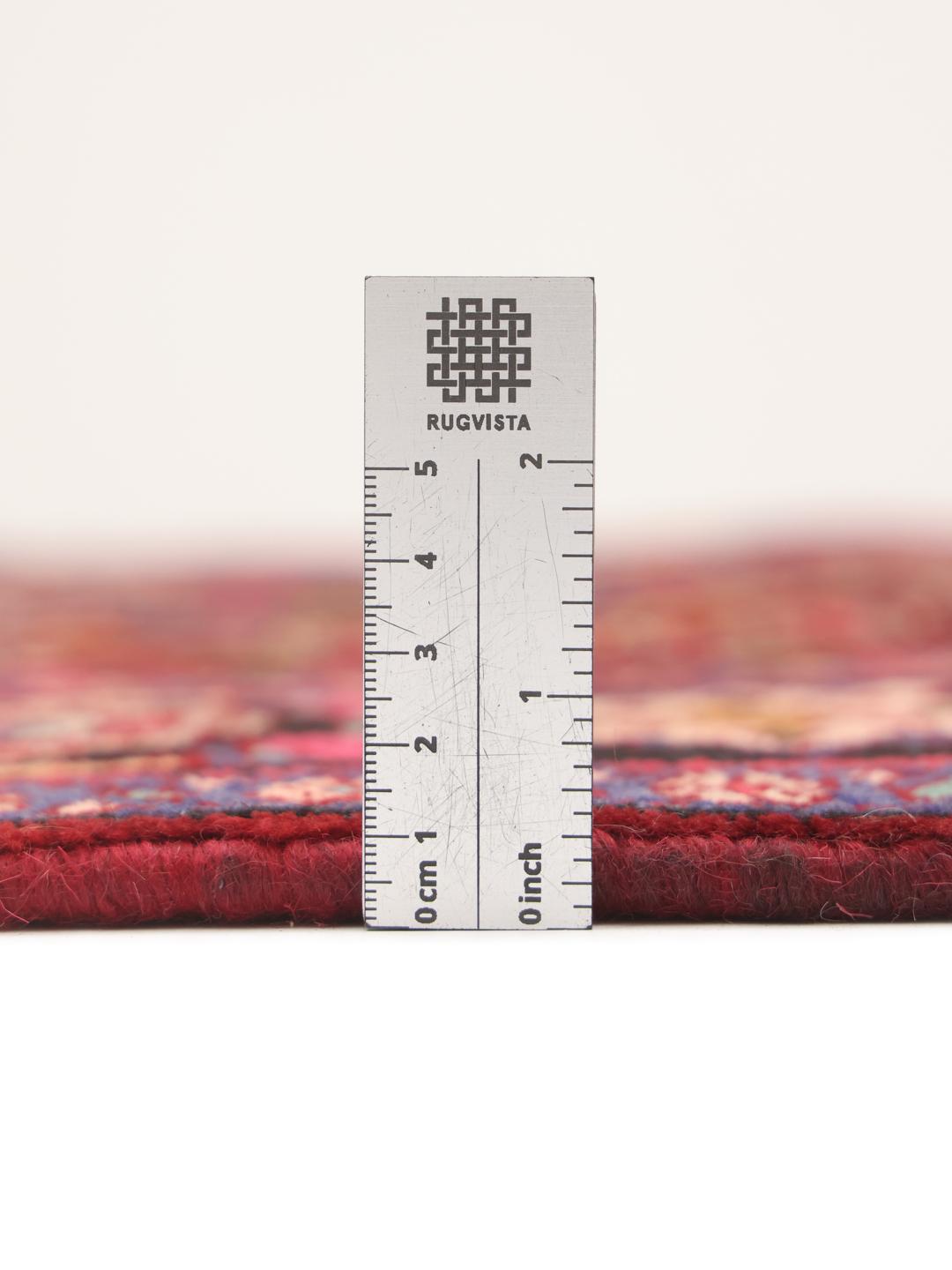
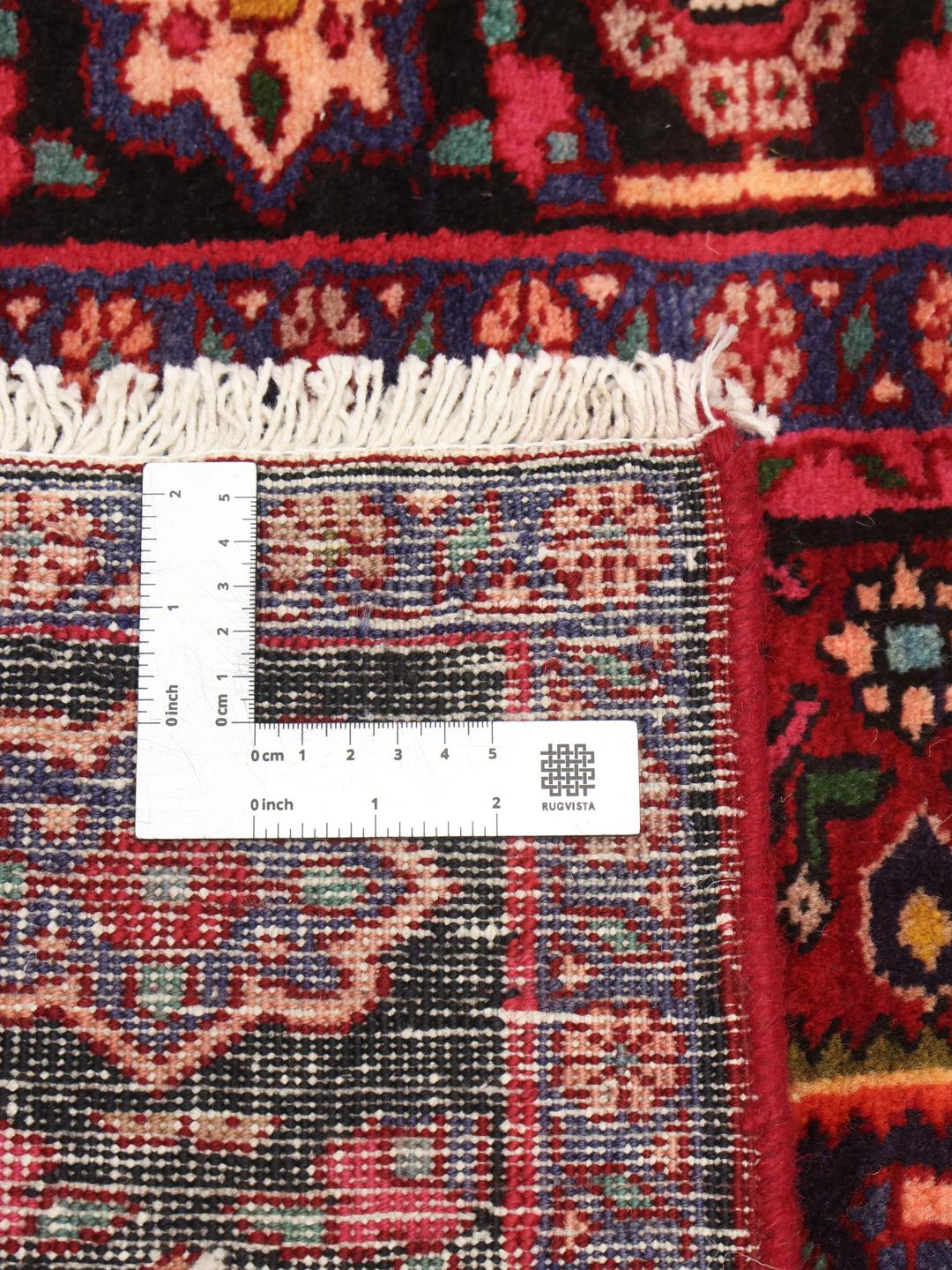
The term 'hand-knotted' refers to the specific technique where artisans loop and tie yarn around the foundation threads. This creates a dense, durable pile that is structurally superior to tufted or woven rugs. For the owner, this means a rug that is not only beautiful but also capable of withstanding the rigours of a busy household, keeping its texture and pattern clarity over time.
Visually, Hamadan rugs are often identified by their bold geometric language and the presence of iconic medallion motifs. While many follow a traditional layout, the beauty of these rugs lies in the spontaneous creativity of the weaver. It is common to see small, charming irregularities in the pattern or colour shifts—known as abrash—which are considered marks of authenticity rather than flaws.
Owning a Hamadan rug is an investment in cultural heritage. Because these pieces are made by hand using traditional methods, they carry a story of regional skill and design evolution. Collectors value them for their honesty, their vibrant use of natural dyes, and the way they bridge the gap between functional floor covering and heirloom-quality textile art.