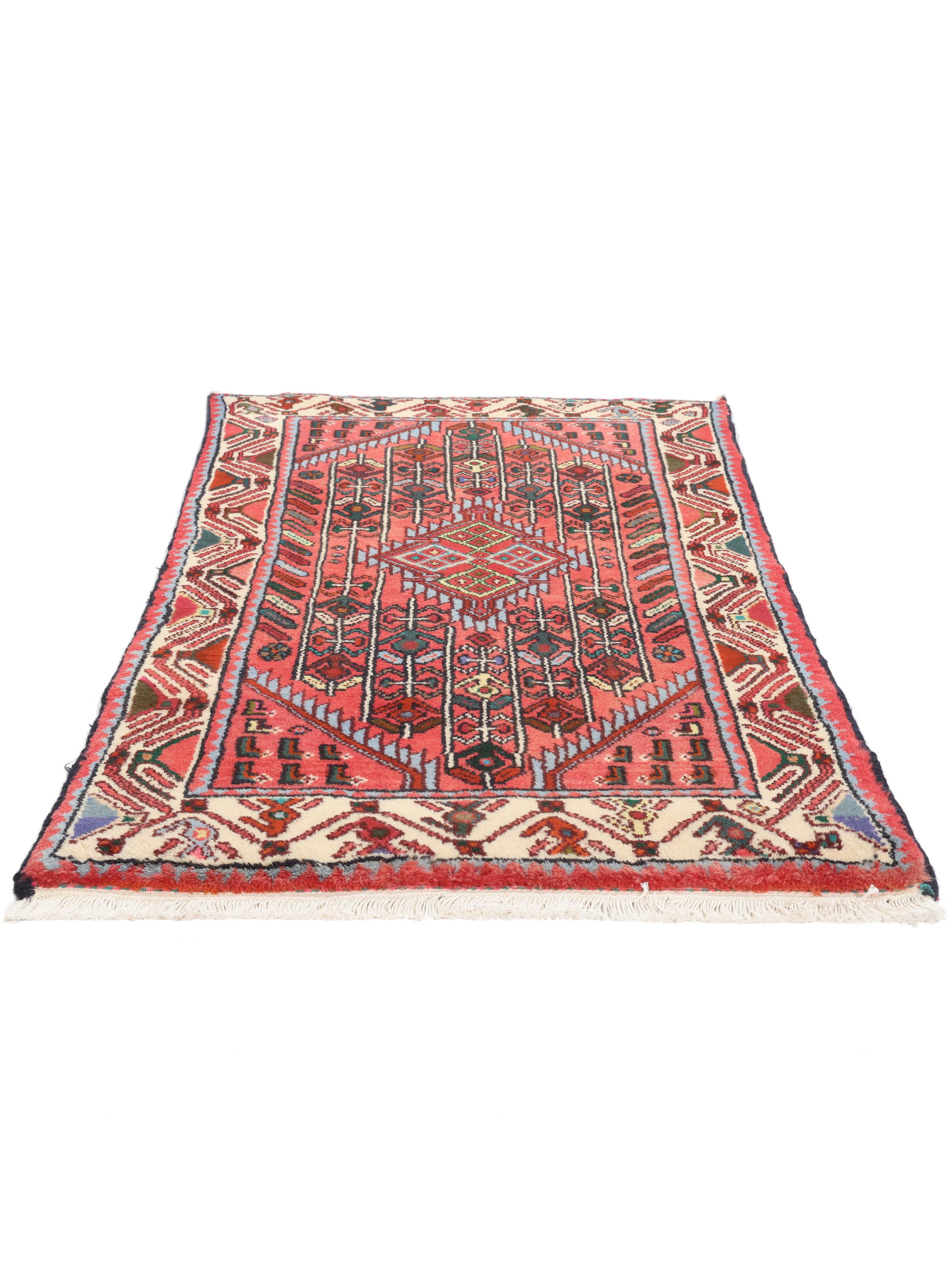
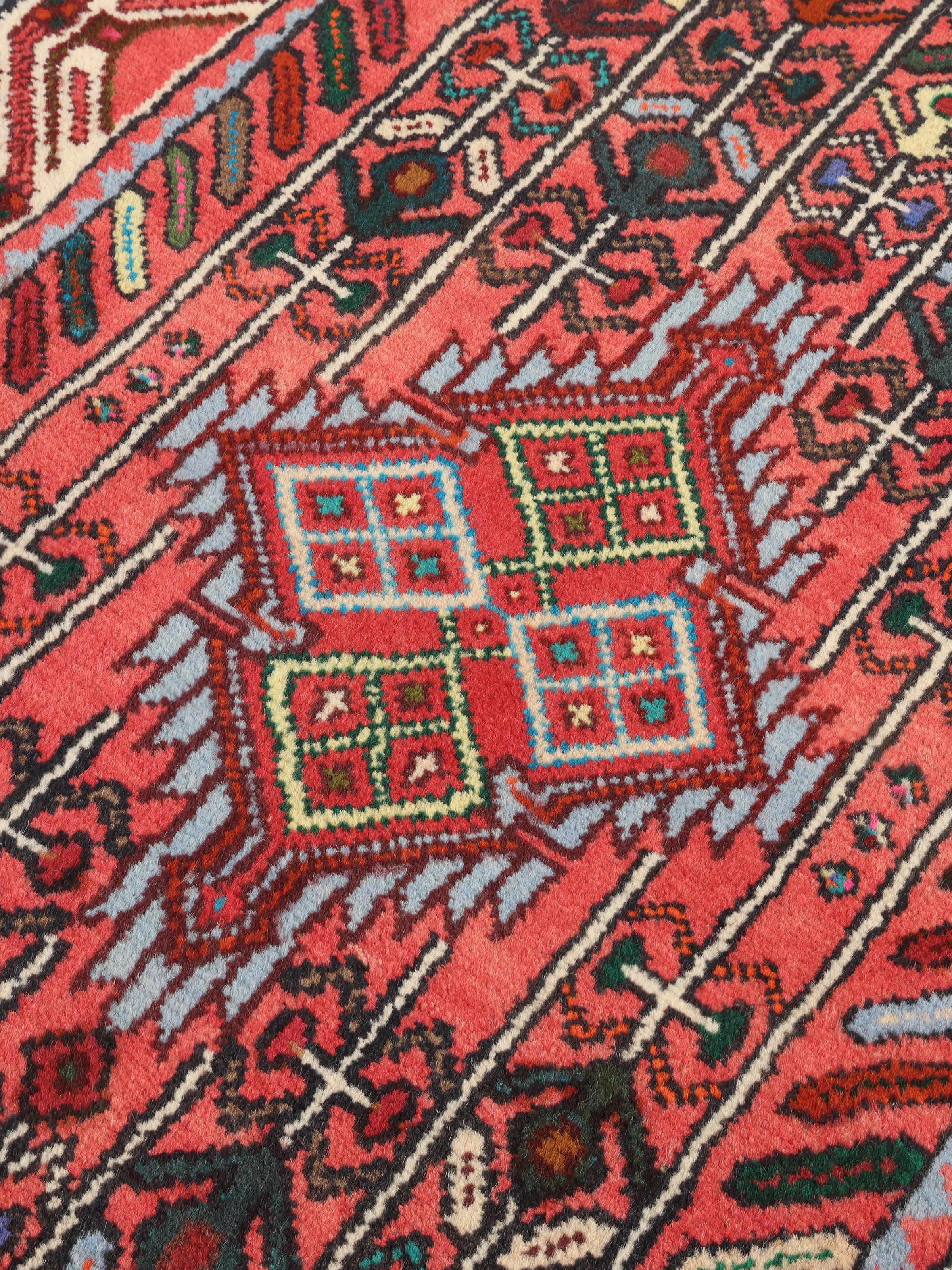
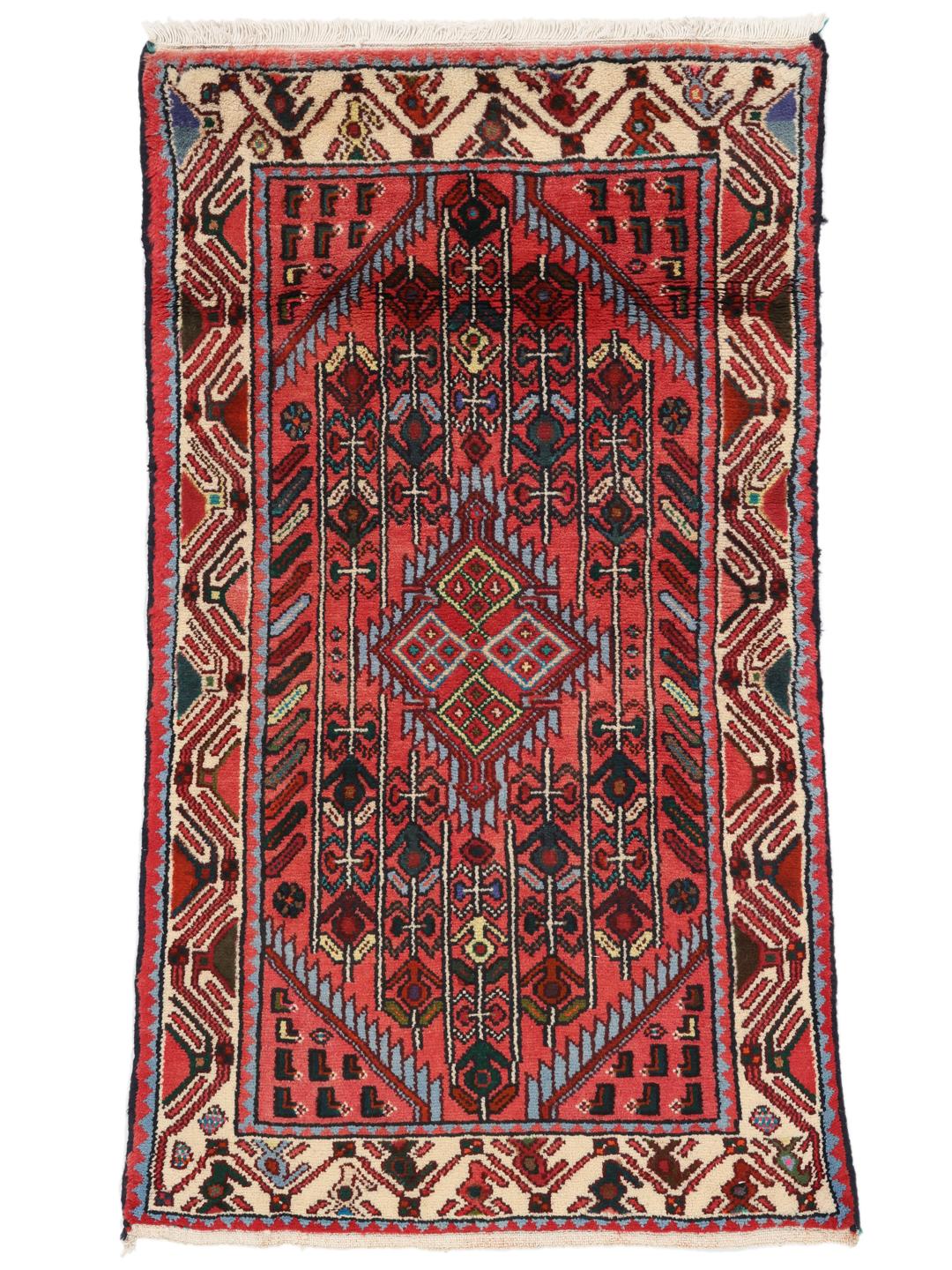
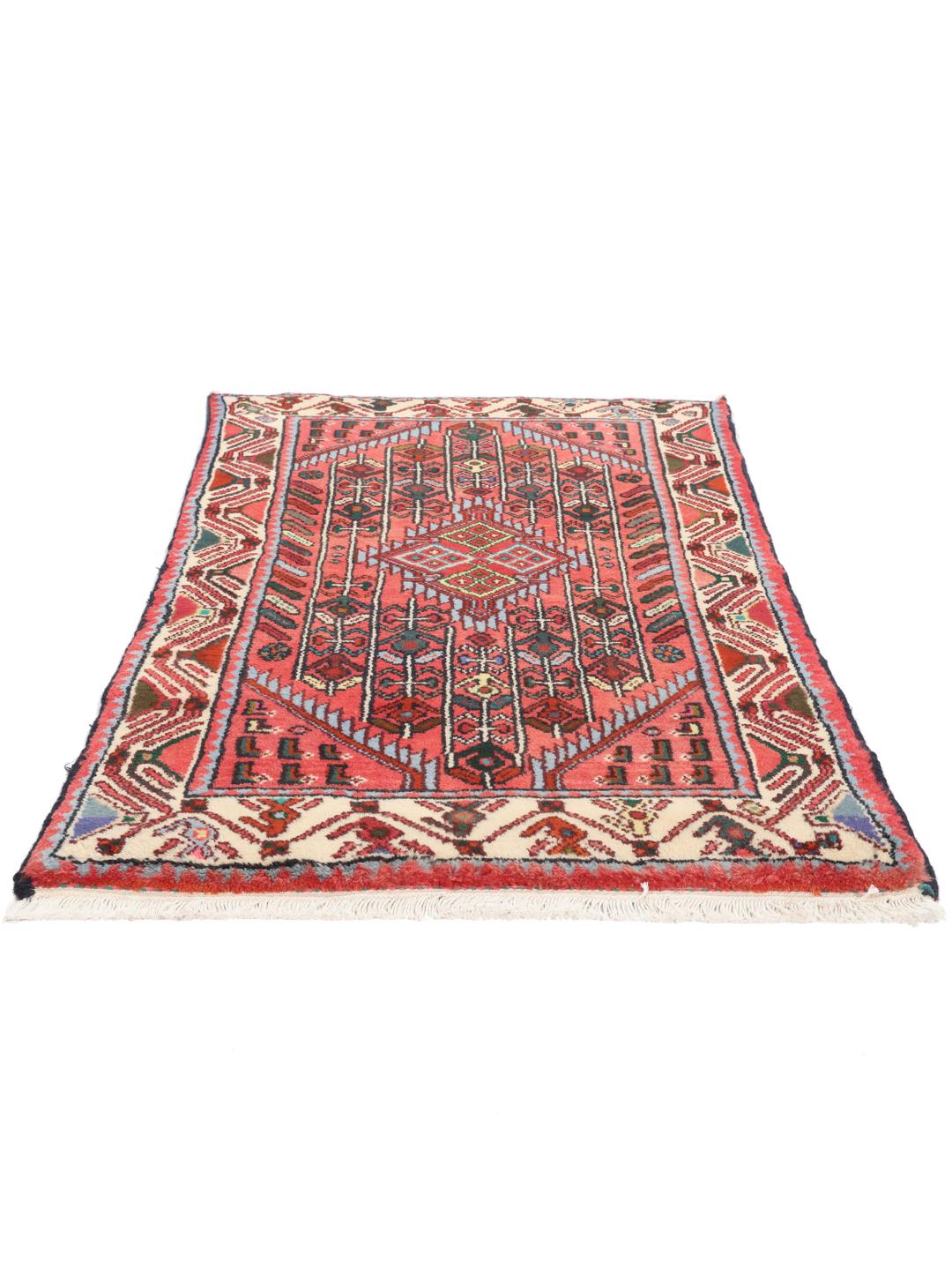
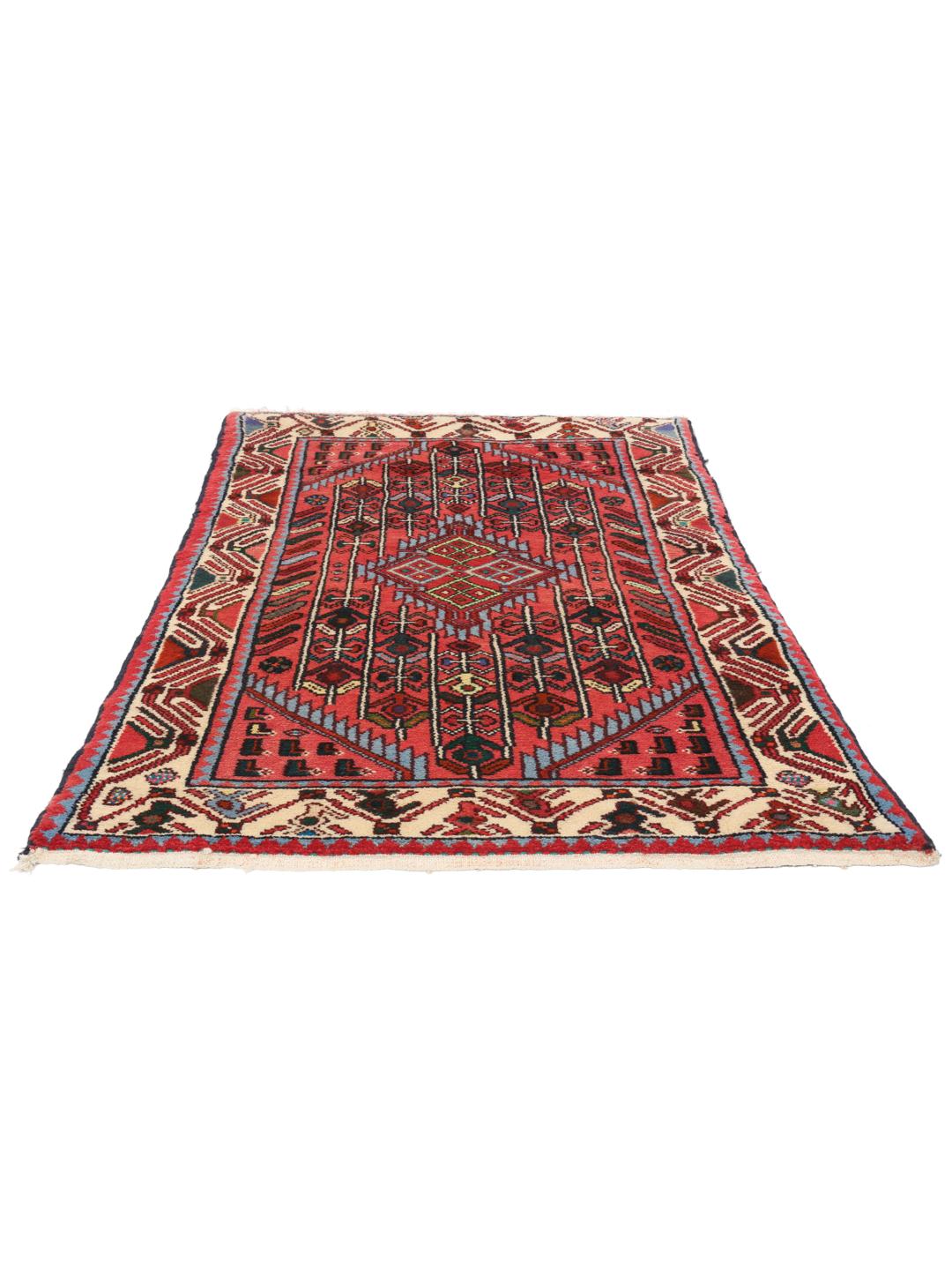
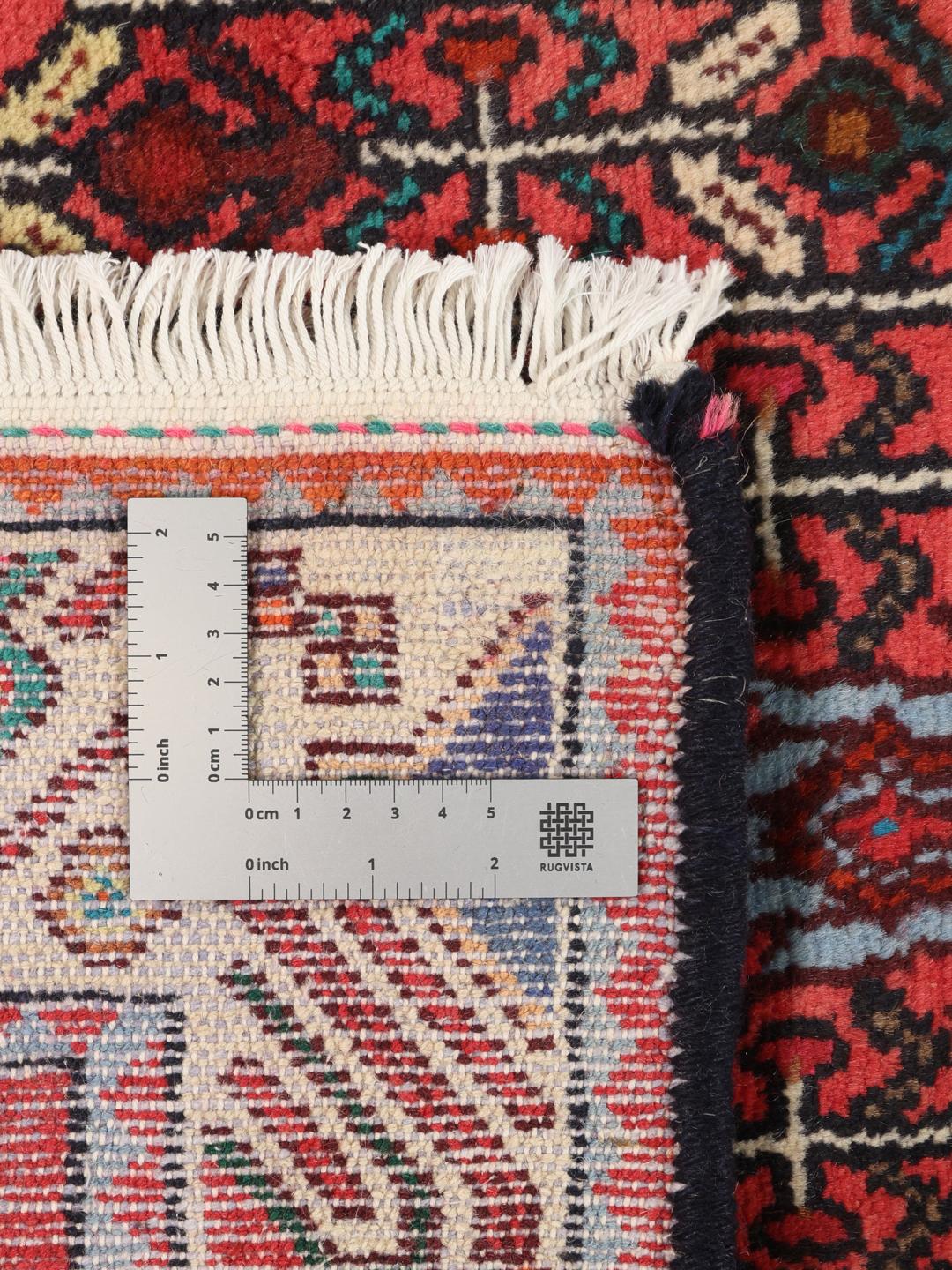
Hamadan rugs hail from one of the oldest cities in the Middle East, a region with a rich history of weaving that stretches back centuries. Situated on the ancient Silk Road, the city has long been a hub for trade and cultural exchange, which is reflected in the diverse and evolving design language of its rugs.
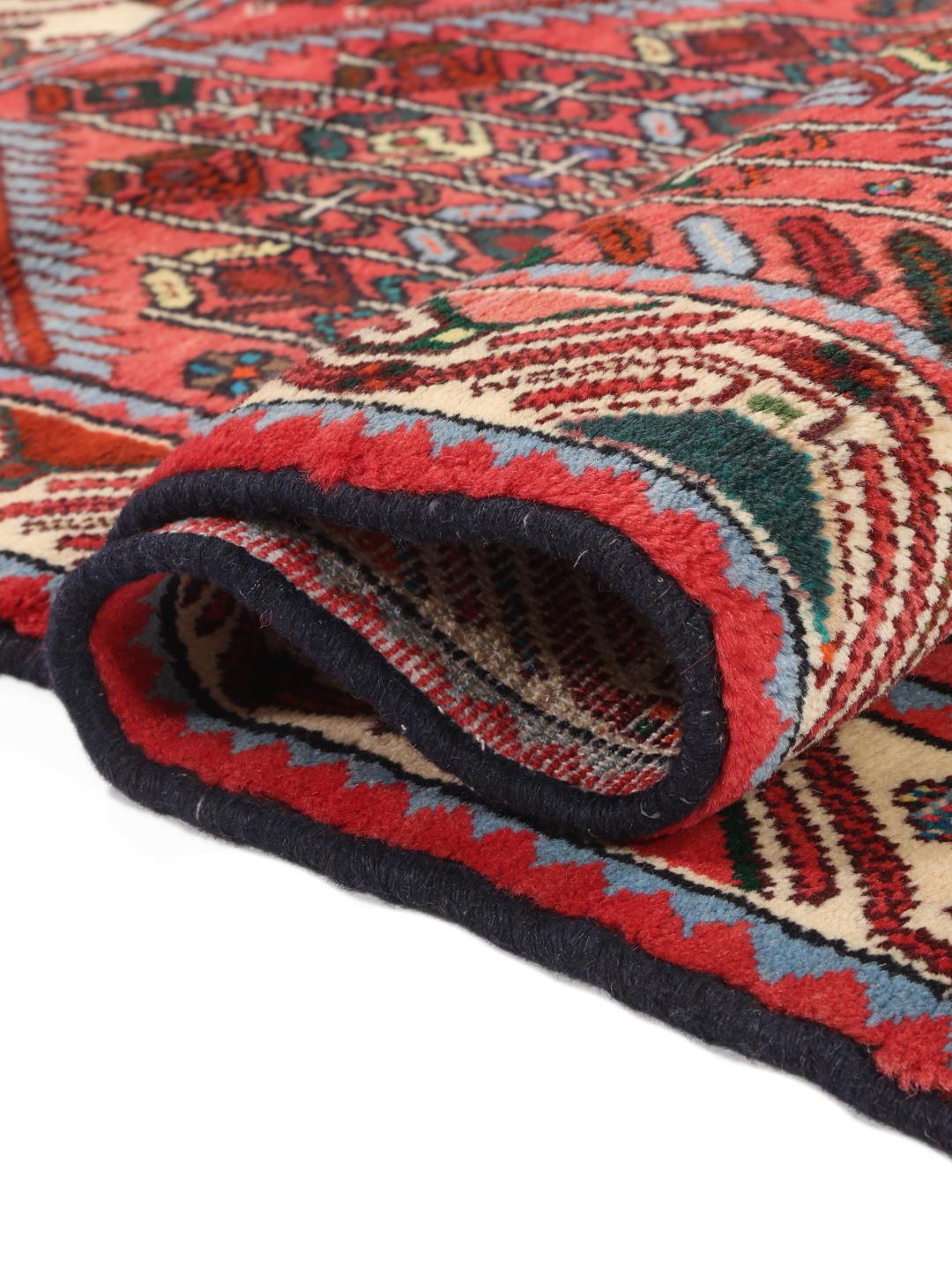
The term Hamadan refers to a vast category of rugs produced in the city and the surrounding hundreds of villages. Each village often maintains its own distinct interpretation of traditional patterns, yet they share a commitment to using local, high-quality wool that is known for its durability and natural sheen.
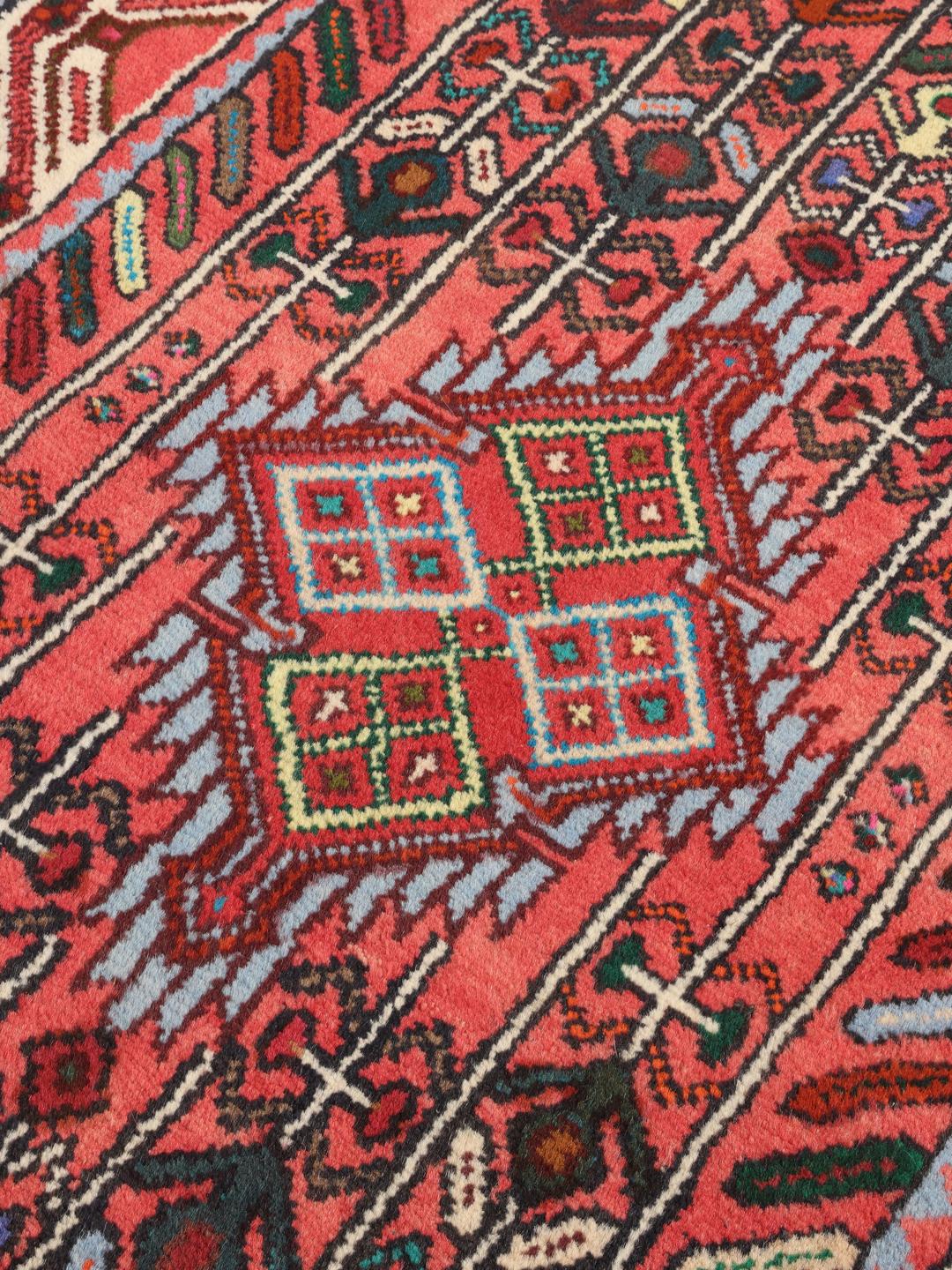
Visually, these rugs are celebrated for their geometric artistry. Common motifs include stylized floral elements, diamond-shaped medallions, and intricate borders, all rendered in a palette that frequently highlights deep reds and blues. The use of repeating patterns creates a sense of harmony and balance that is a hallmark of the regional style.
Collectors value Hamadan rugs for their authenticity and the skill required to produce them. Owning one is an investment in a living heritage, as these pieces capture the spirit of nomadic and village life in the Middle East. They are not merely floor coverings, but storied objects that connect the modern home to an ancient craft.