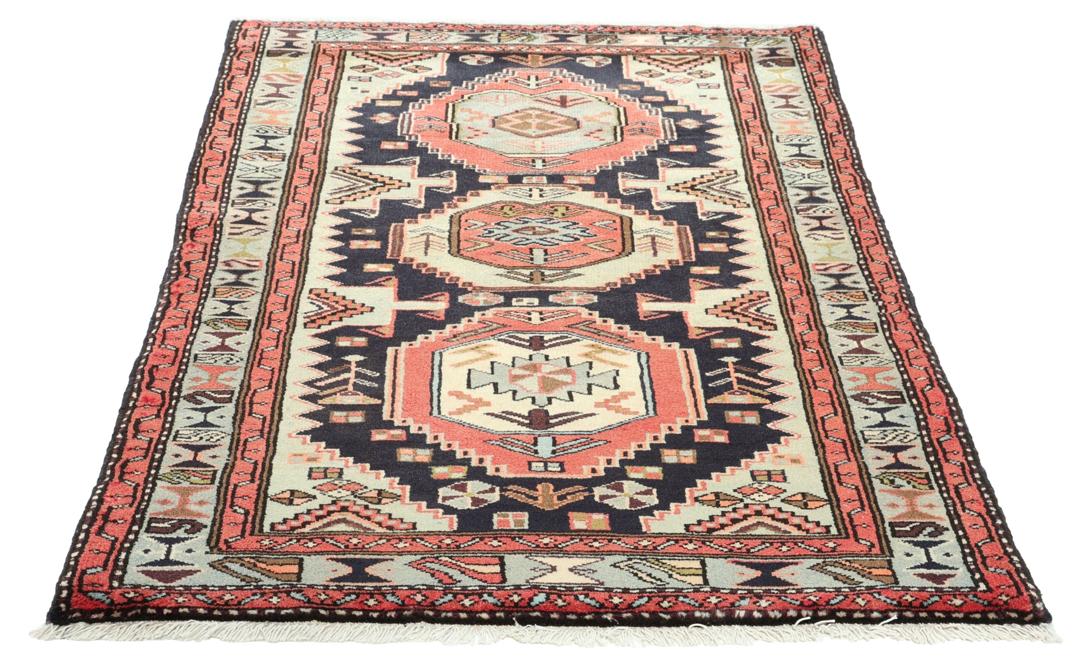
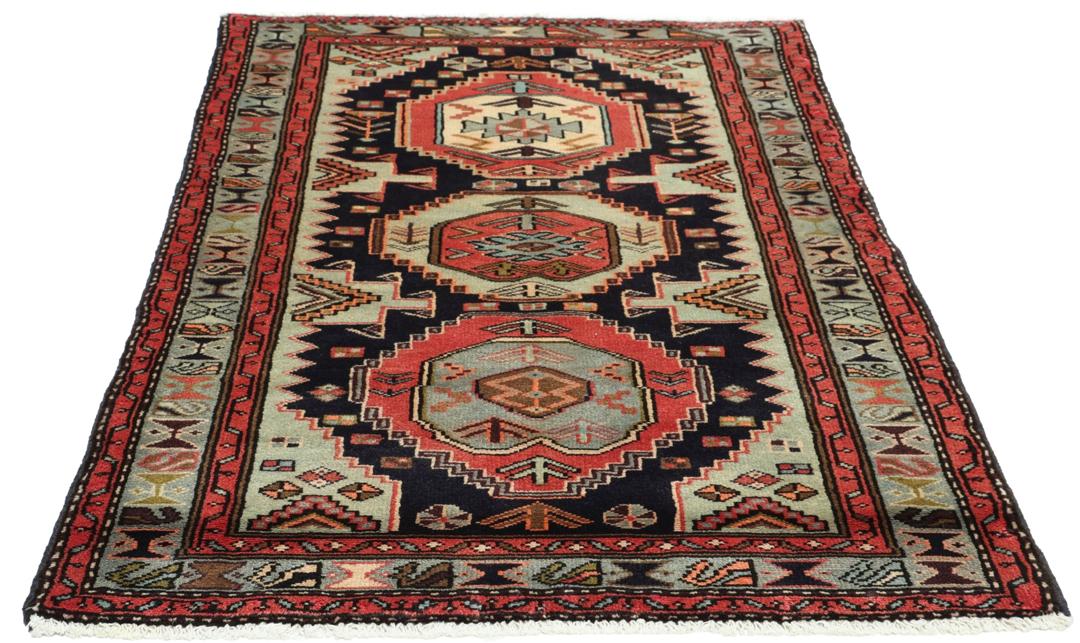
The Hamadan region in the Middle East is famous for its long-standing tradition of rug weaving, which has been passed down through generations of families. Historically, Hamadan served as a major centre for trade, and the rugs produced in this area reflect a blend of influences from various nomadic and village tribes that have inhabited the surrounding plains and mountains.
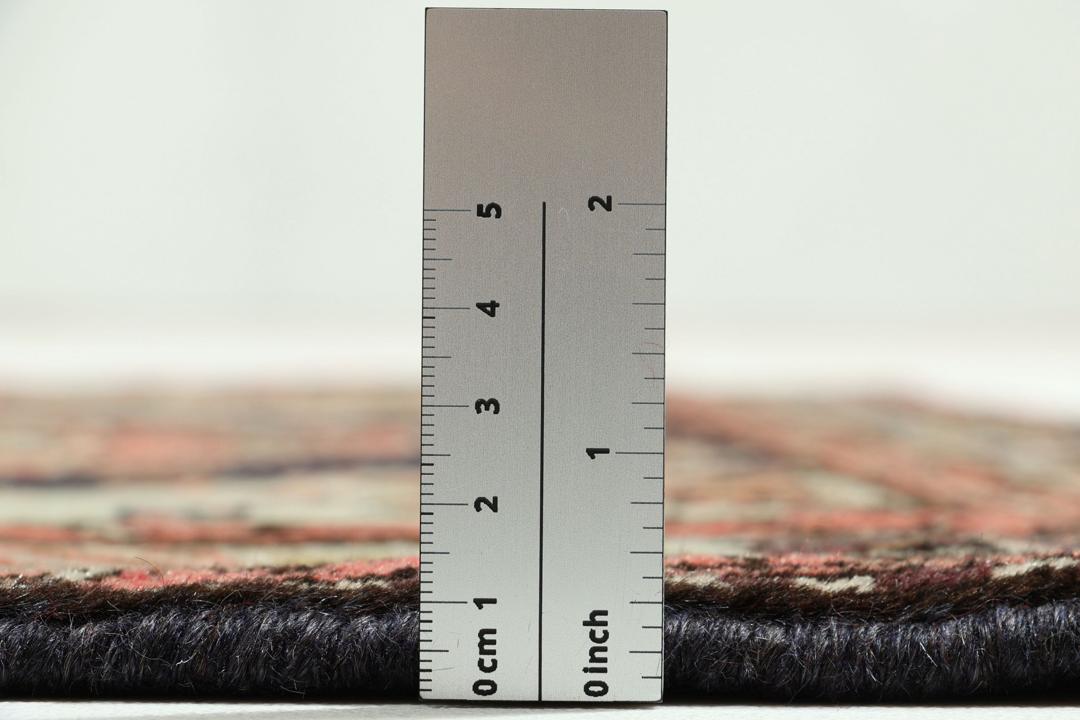
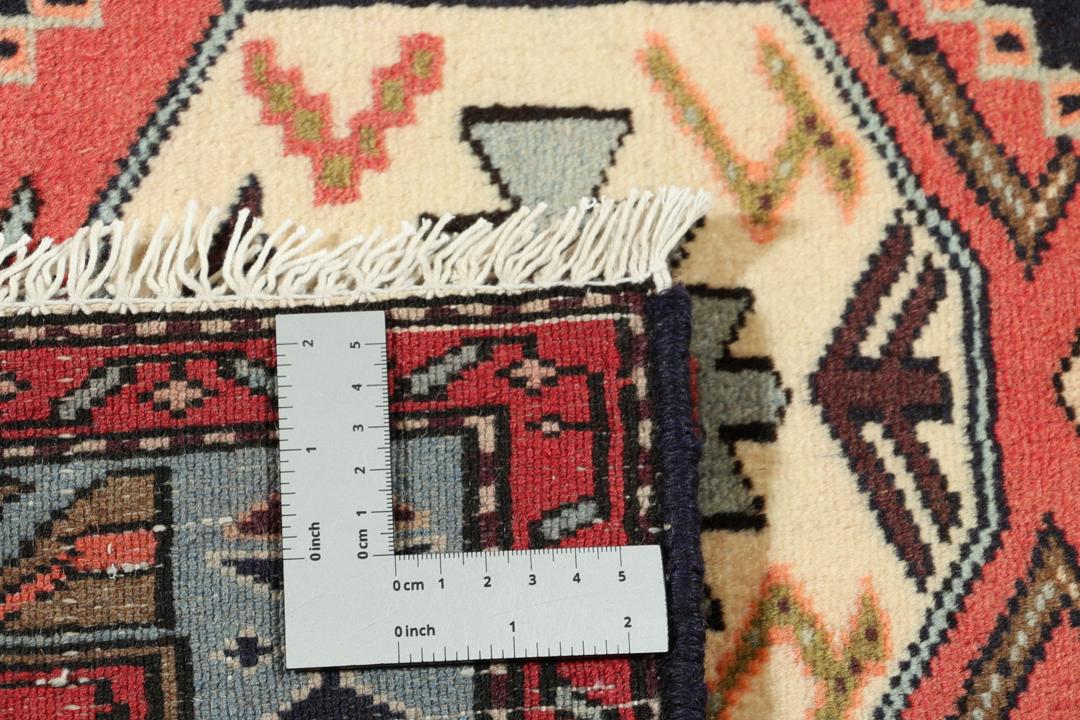
Technical terms associated with these rugs often refer to the specific types of wool and foundation materials used, which are chosen for their resilience. The use of robust materials is a defining feature of the region's craft, ensuring that these rugs are not only beautiful but also practical for daily use in a busy home.
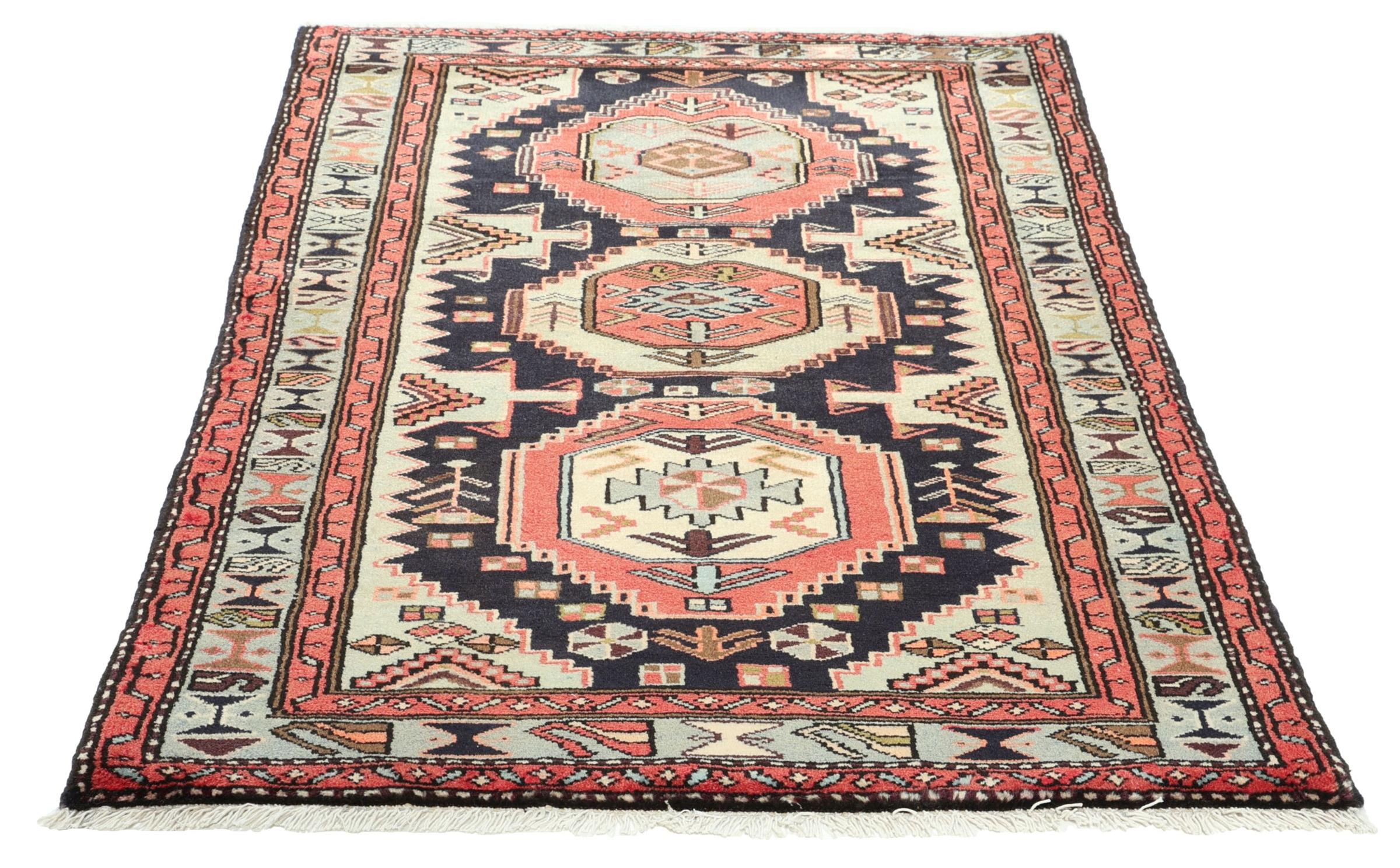
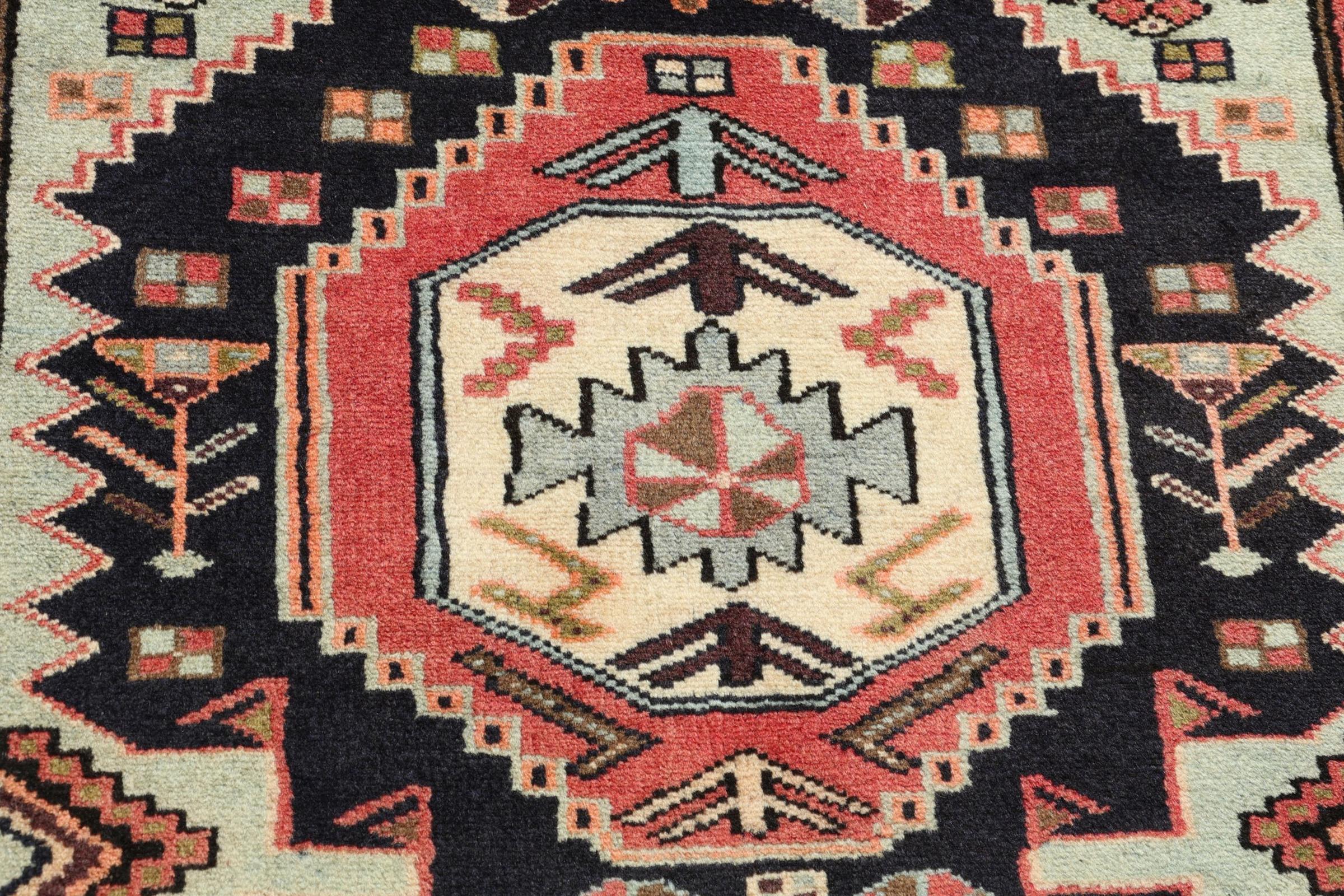
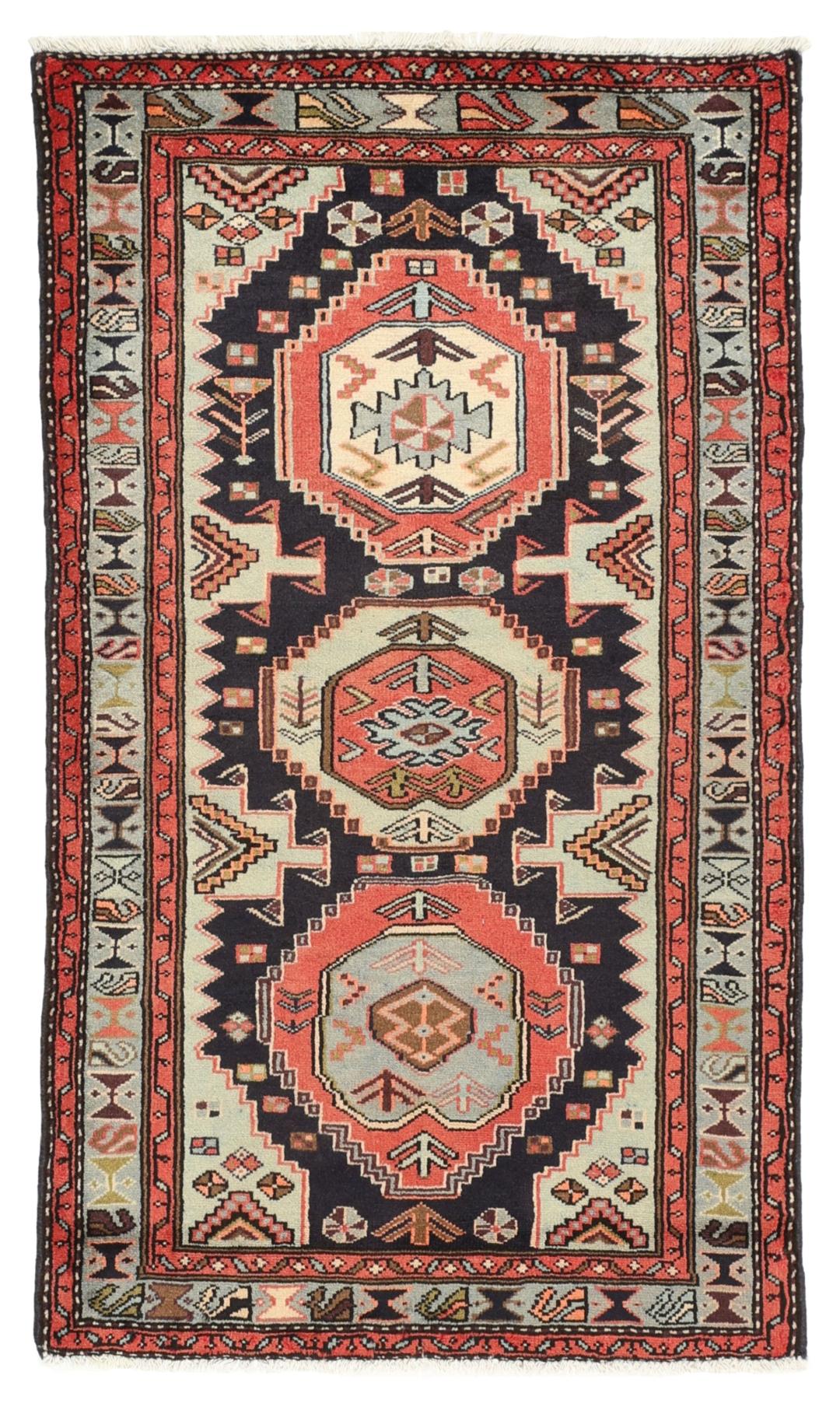
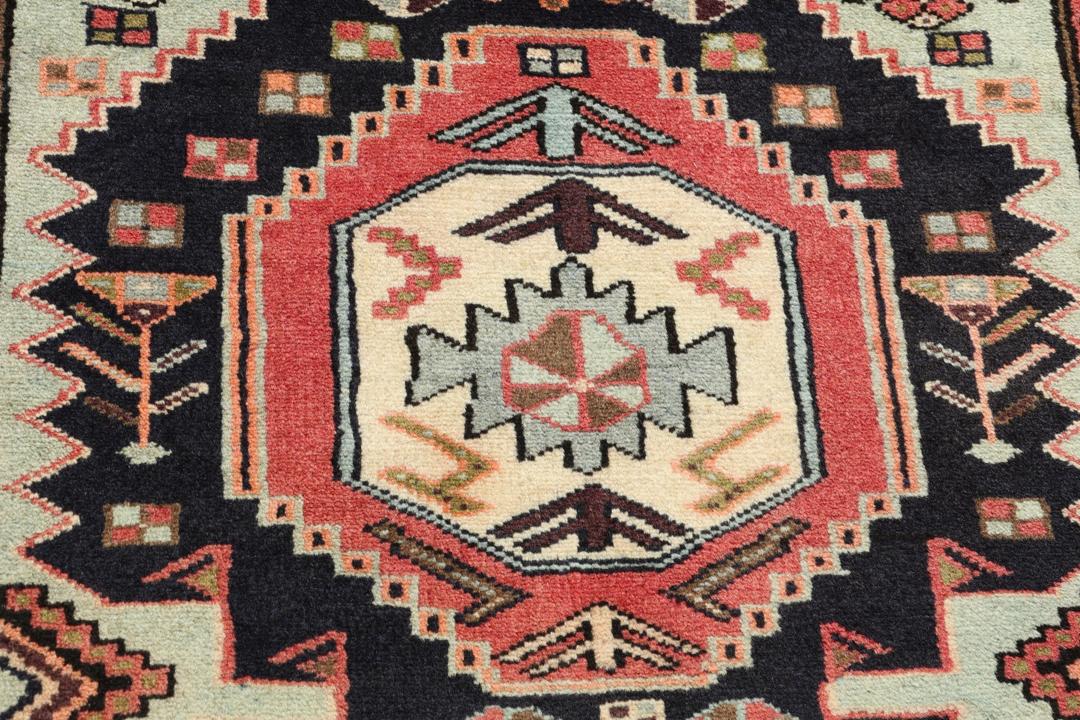
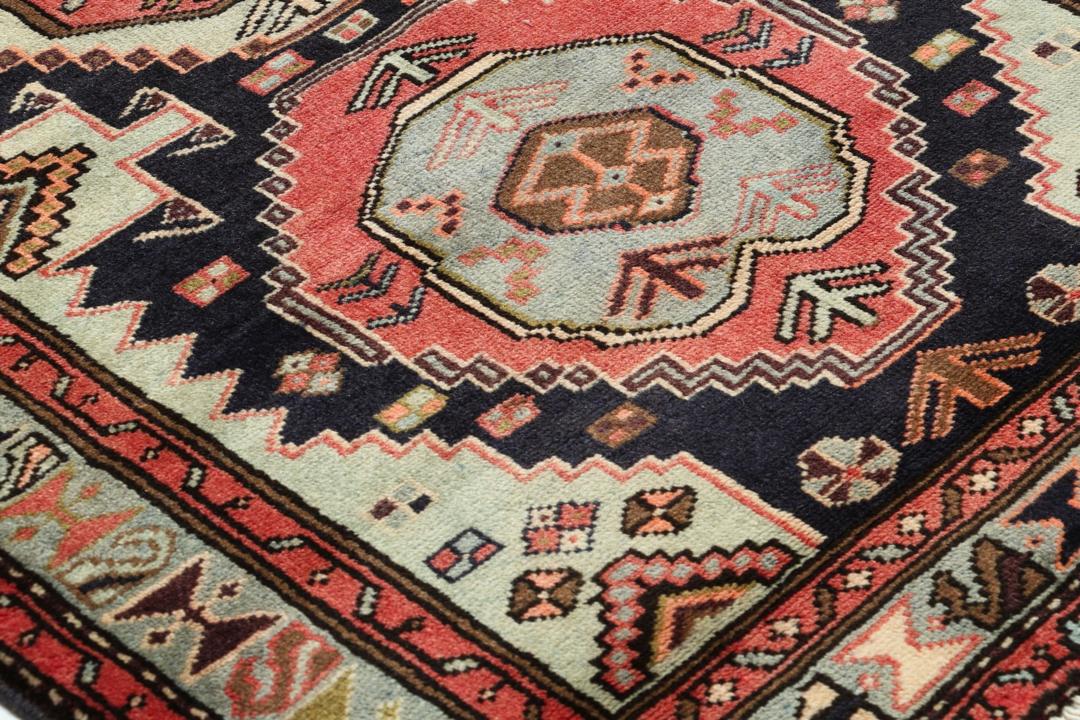
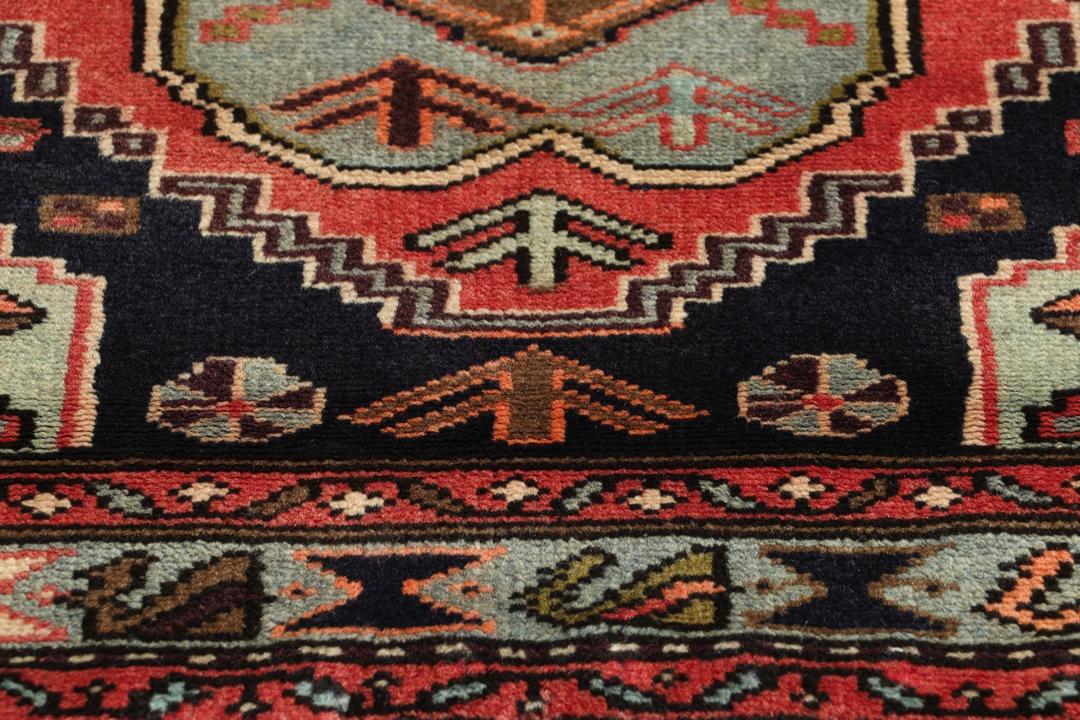
The signature design language of Hamadan rugs often features bold, geometric medallions and stylised floral motifs. This particular rug captures that tradition, using a balanced arrangement of patterns that draw the eye toward the centre. The borders are typically filled with intricate, repeating symbols that frame the main design, creating a sense of harmony and structure.
Owning a Hamadan rug is an investment in cultural heritage and skilled artistry. These pieces are highly valued by collectors because they represent a living history, connecting the modern home to the ancient techniques of the Middle East. By choosing this rug, you are preserving a craft tradition that has defined the aesthetic of the region for centuries.