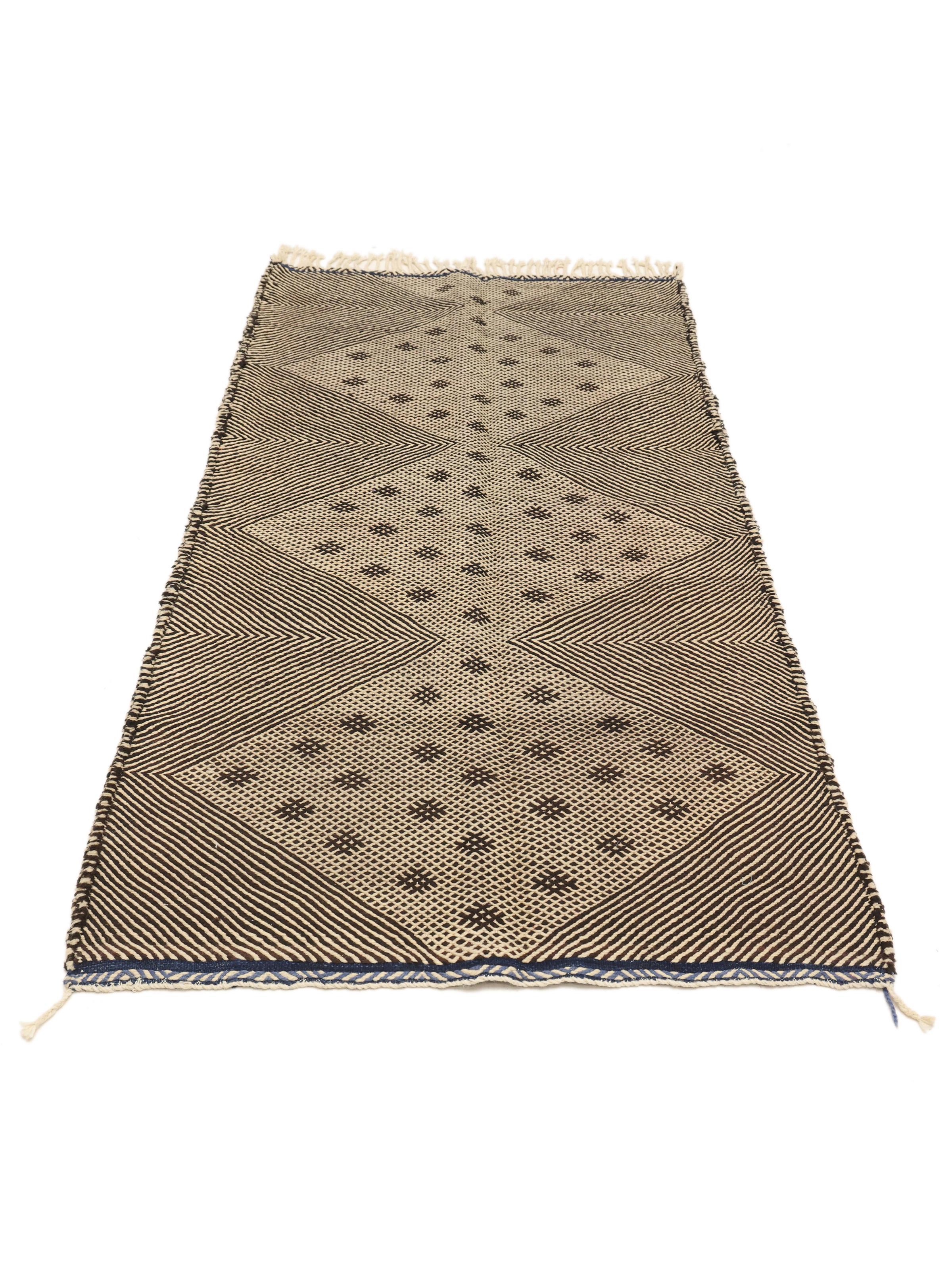
The High Atlas Kelim is deeply rooted in the cultural history of the Berber tribes residing in the rugged Atlas Mountains of Morocco. These rugs have served as essential functional items for centuries, acting as floor coverings, blankets, and even decorative wall hangings within nomadic and semi-nomadic households. The tradition is intrinsically linked to the landscape, with patterns often reflecting the local environment and the heritage of the weaving families.
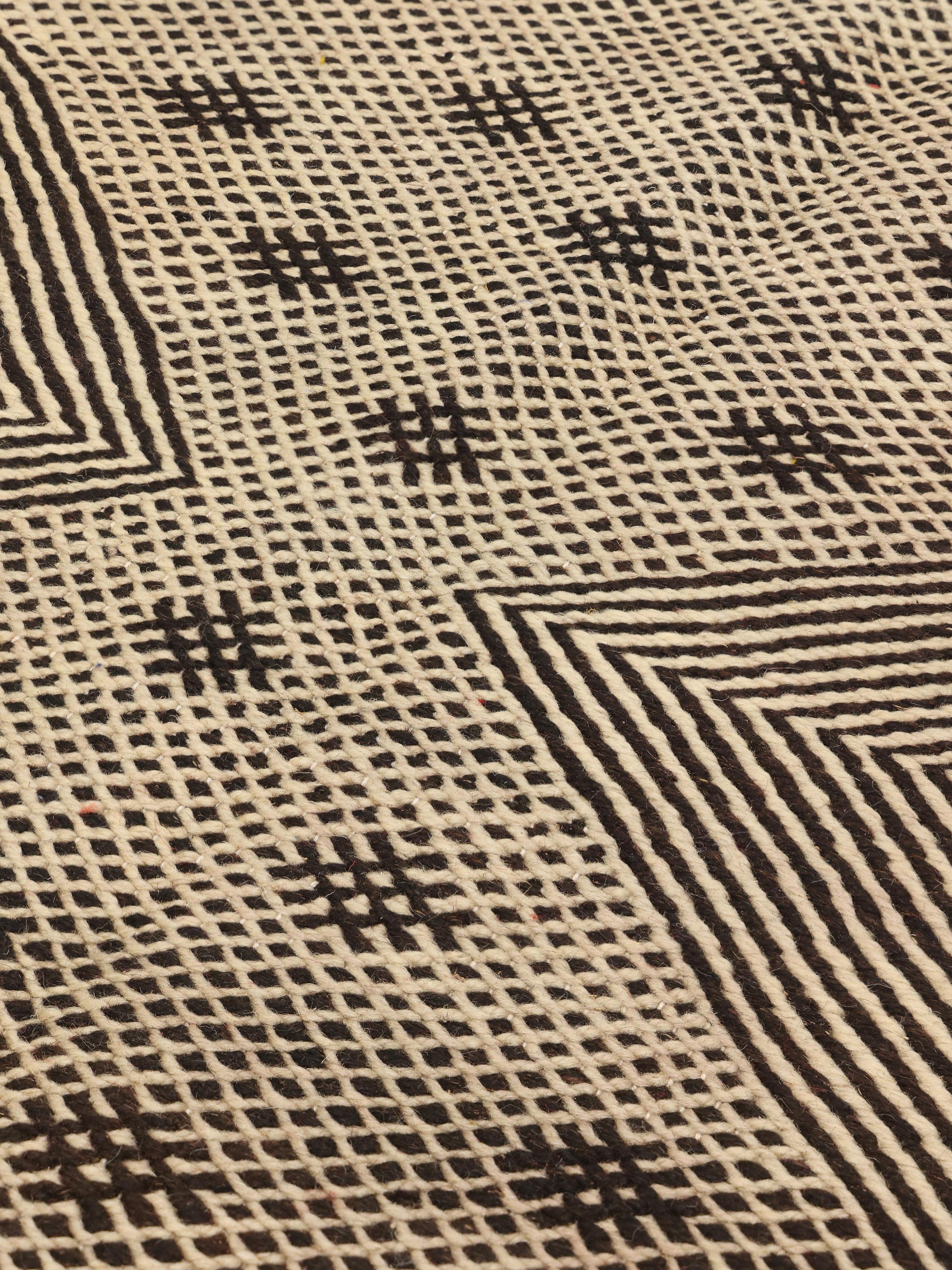
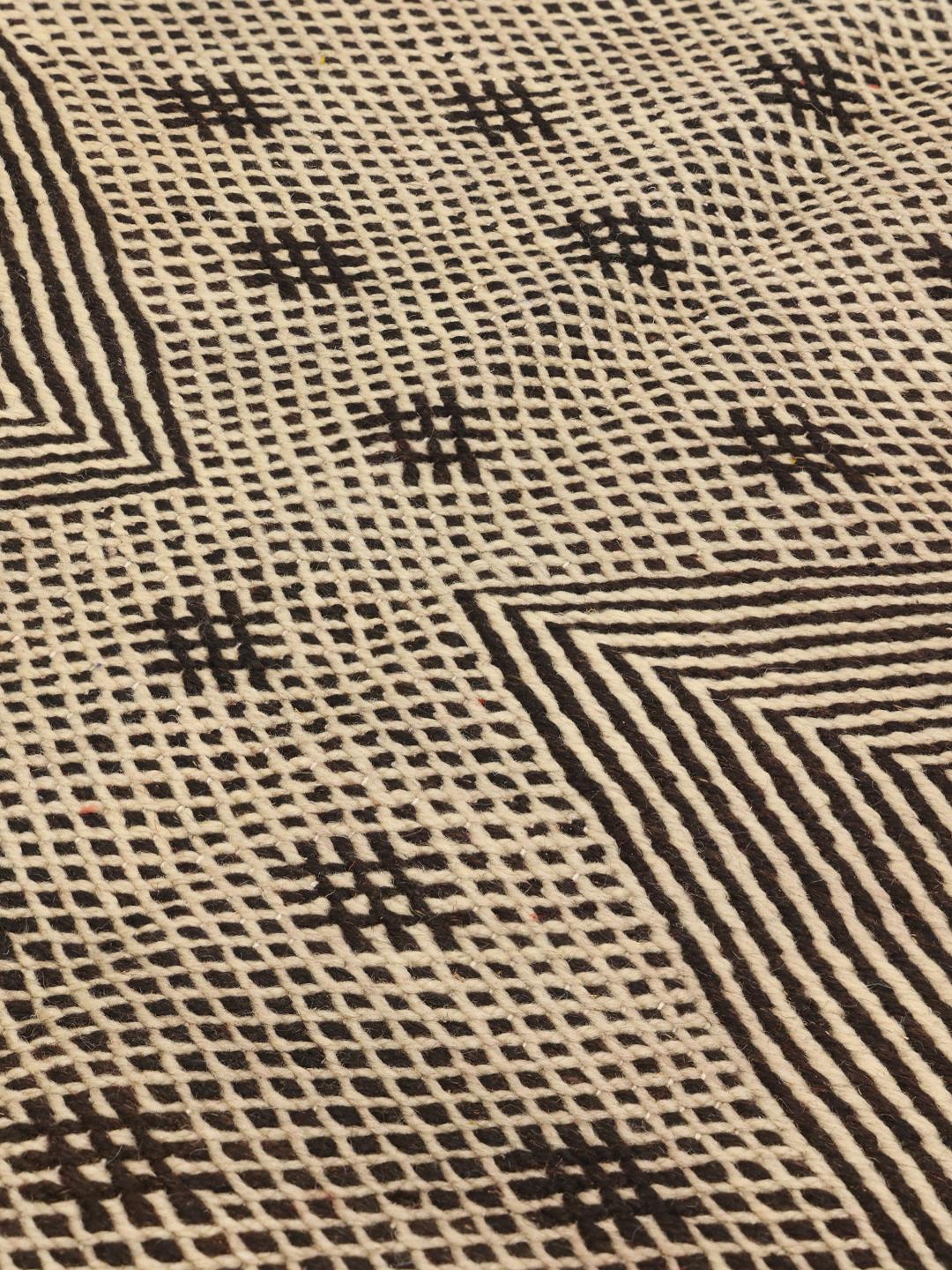
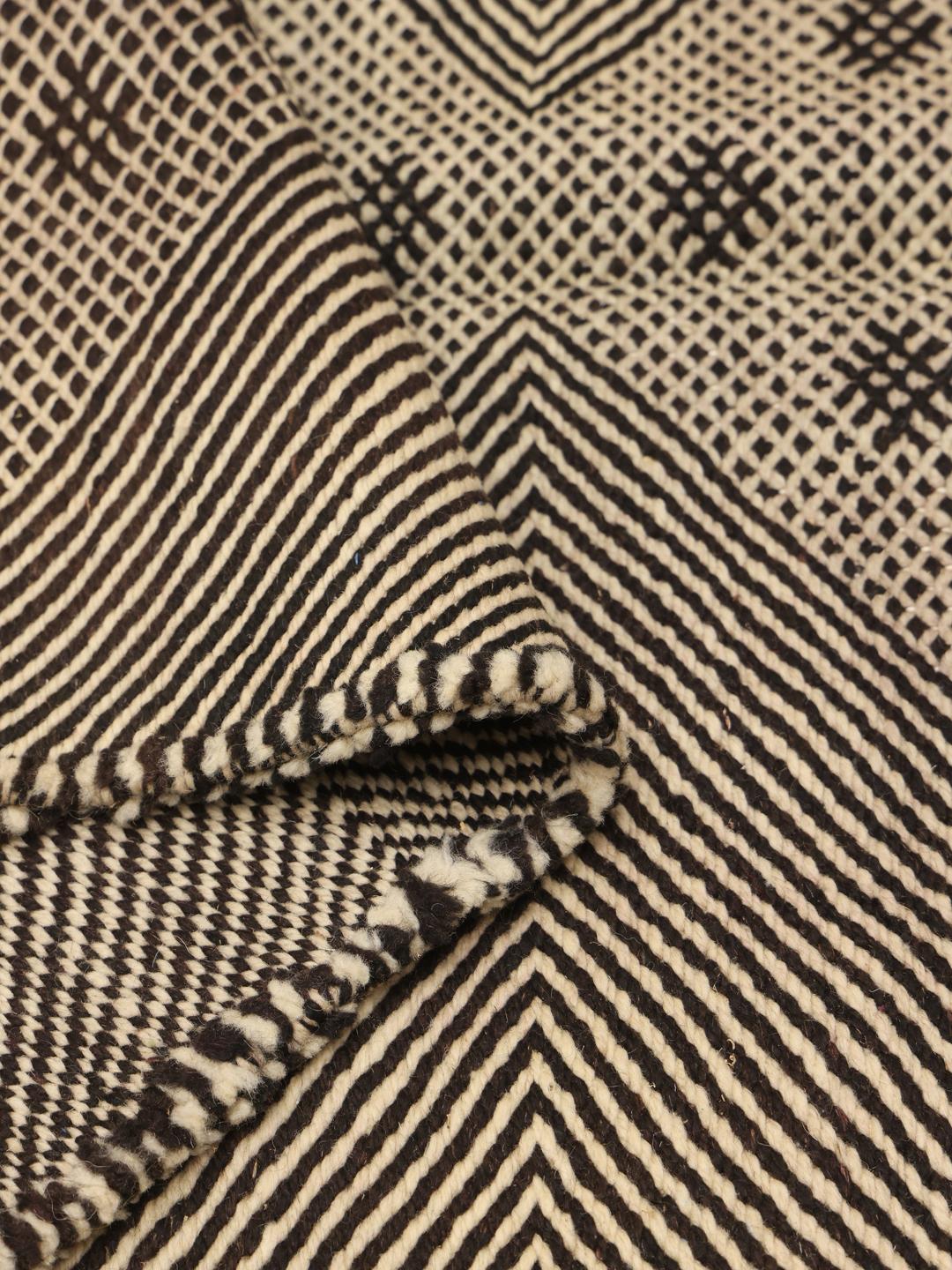
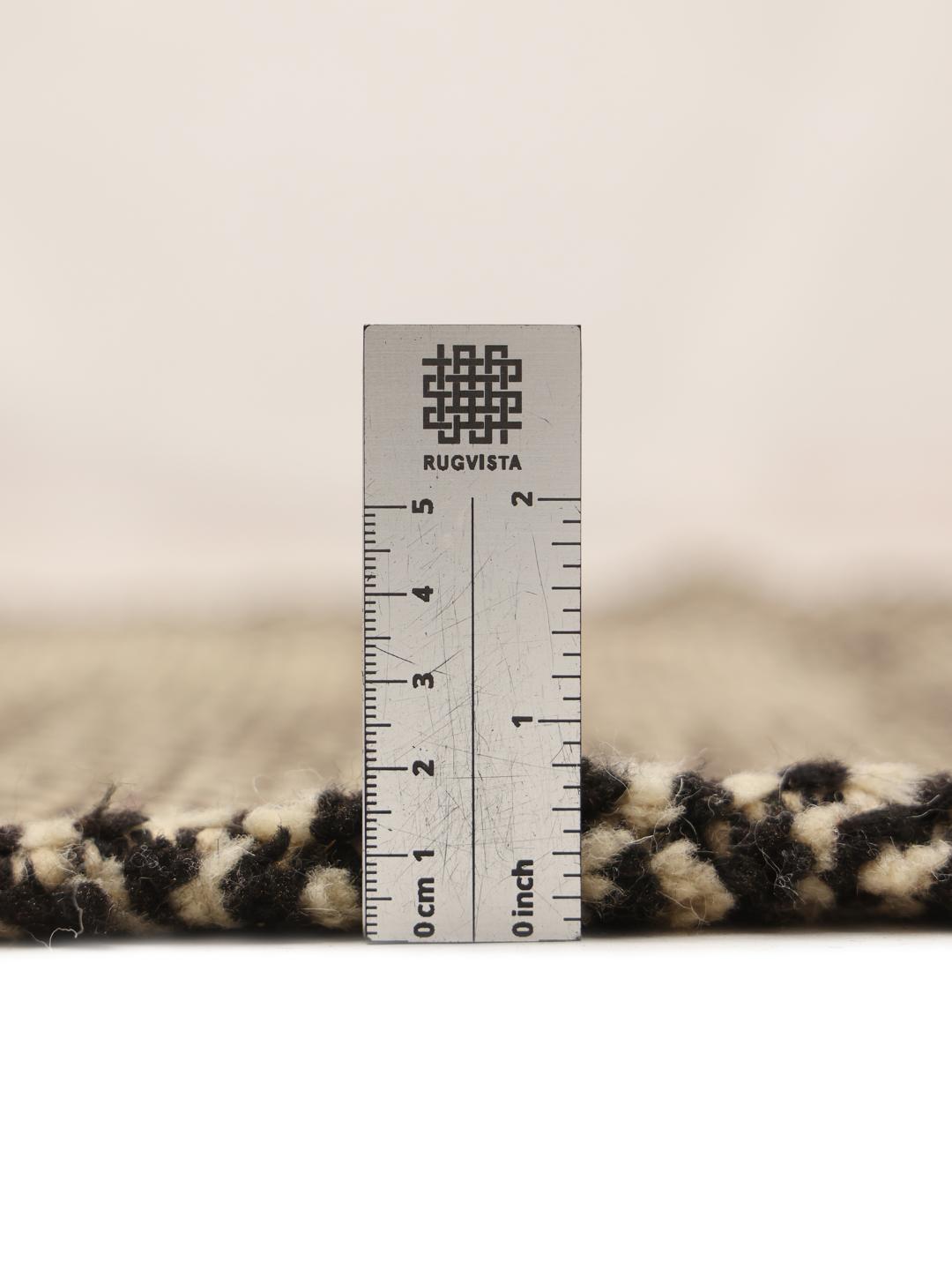
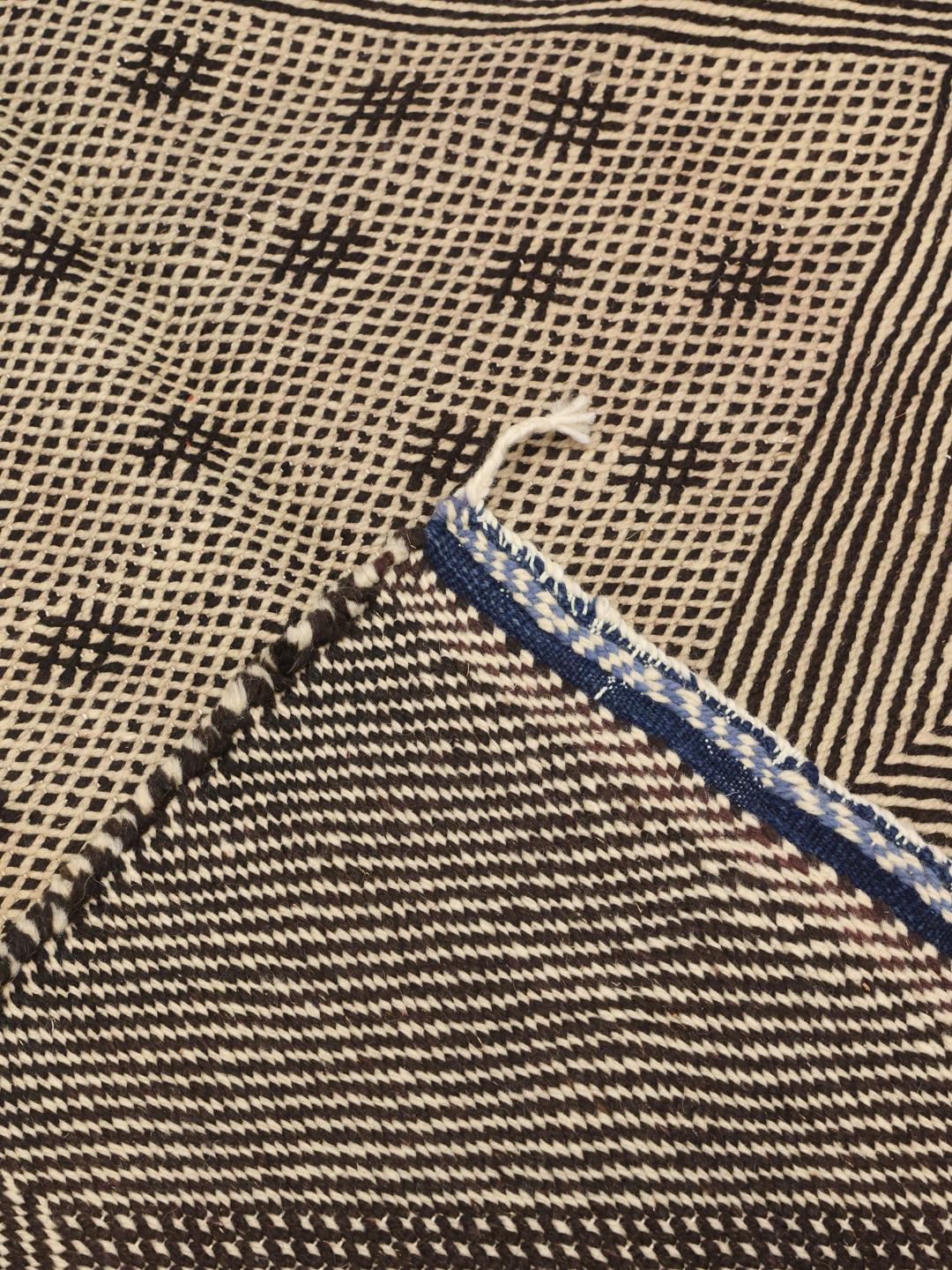
A Kelim is characterised by its flat-weave construction, meaning it is created without a pile. This technique produces a durable, reversible, and lightweight textile that was historically prized for its portability. By interlacing the warp and weft threads, the weavers create intricate geometric motifs that are built directly into the structure of the fabric, rather than being knotted onto a foundation.
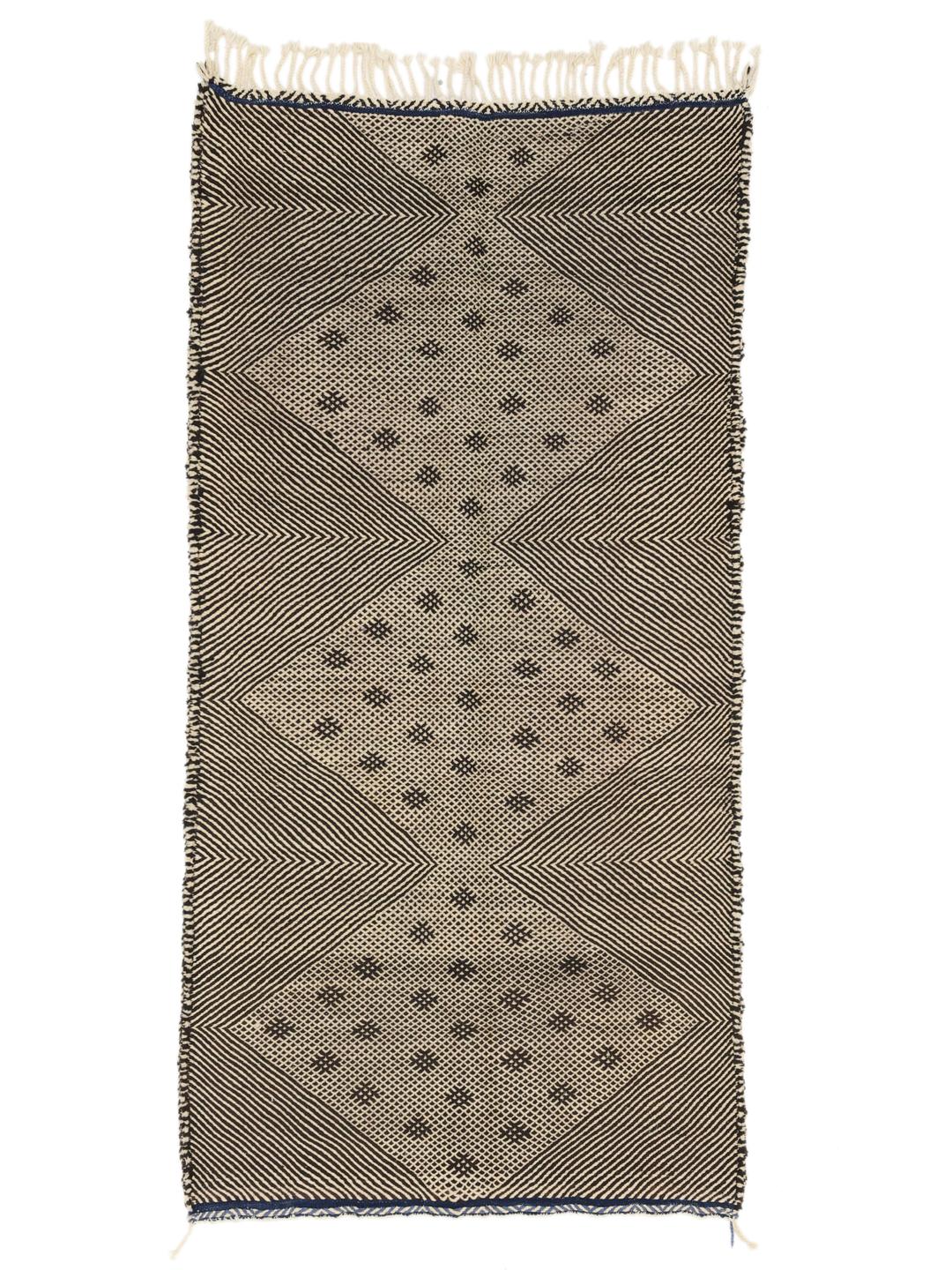
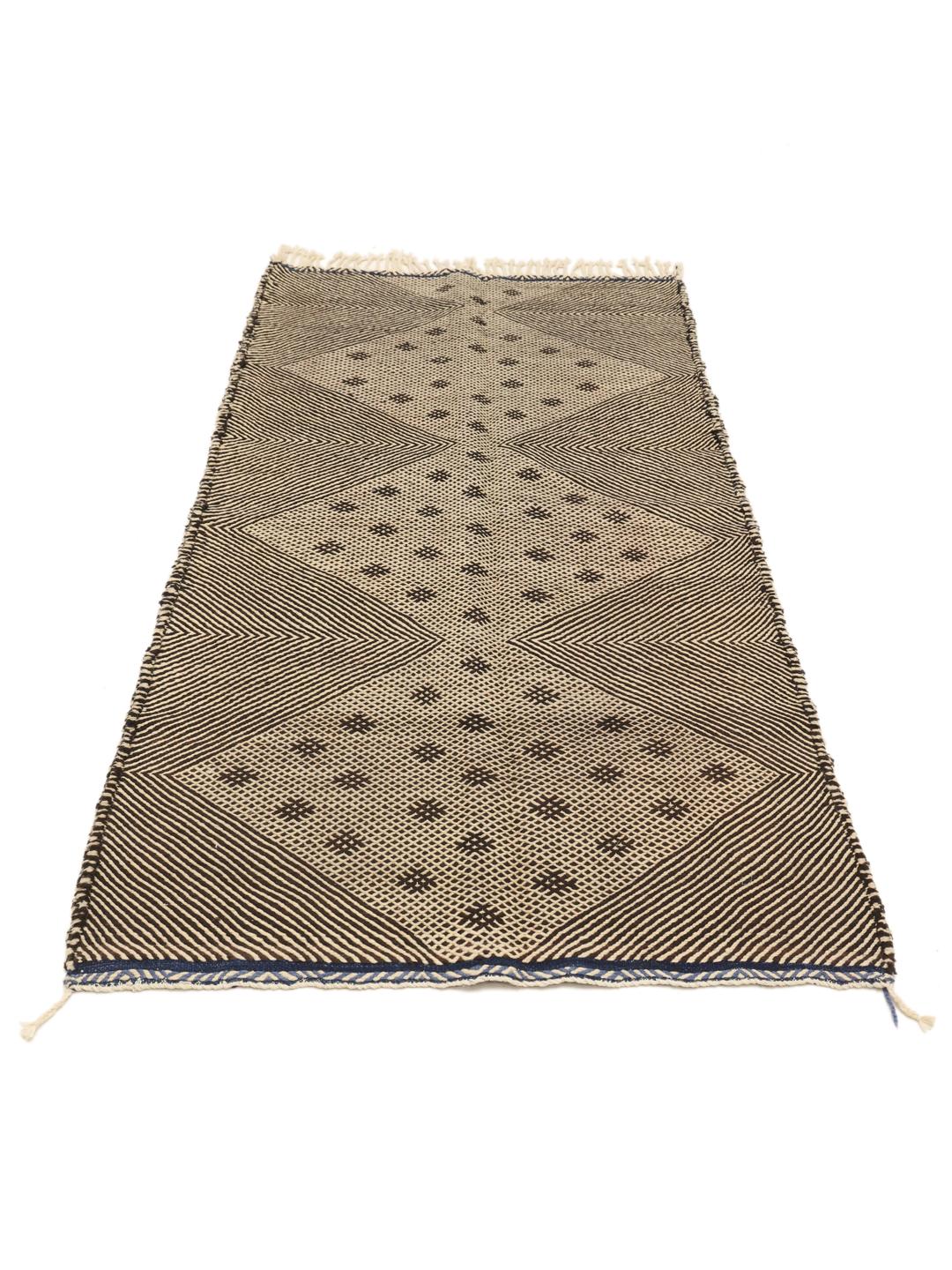
Signature design elements in these rugs typically include bold geometric shapes, such as diamonds, triangles, and zig-zags. The use of black and natural wool colours is a hallmark of the Berber style, reflecting a preference for earthy, organic palettes that highlight the raw beauty of the sheep's wool. The diamond patterns found on this piece are traditional motifs often used to represent protection and fertility in local folklore.
Owning a piece from this tradition is an act of preserving a rich heritage. These rugs are not just floor coverings but are considered significant cultural artefacts that carry the identity of their makers. Collectors value them for their raw, honest aesthetic and the profound skill required to maintain consistency in such complex geometric designs without the aid of modern machinery.