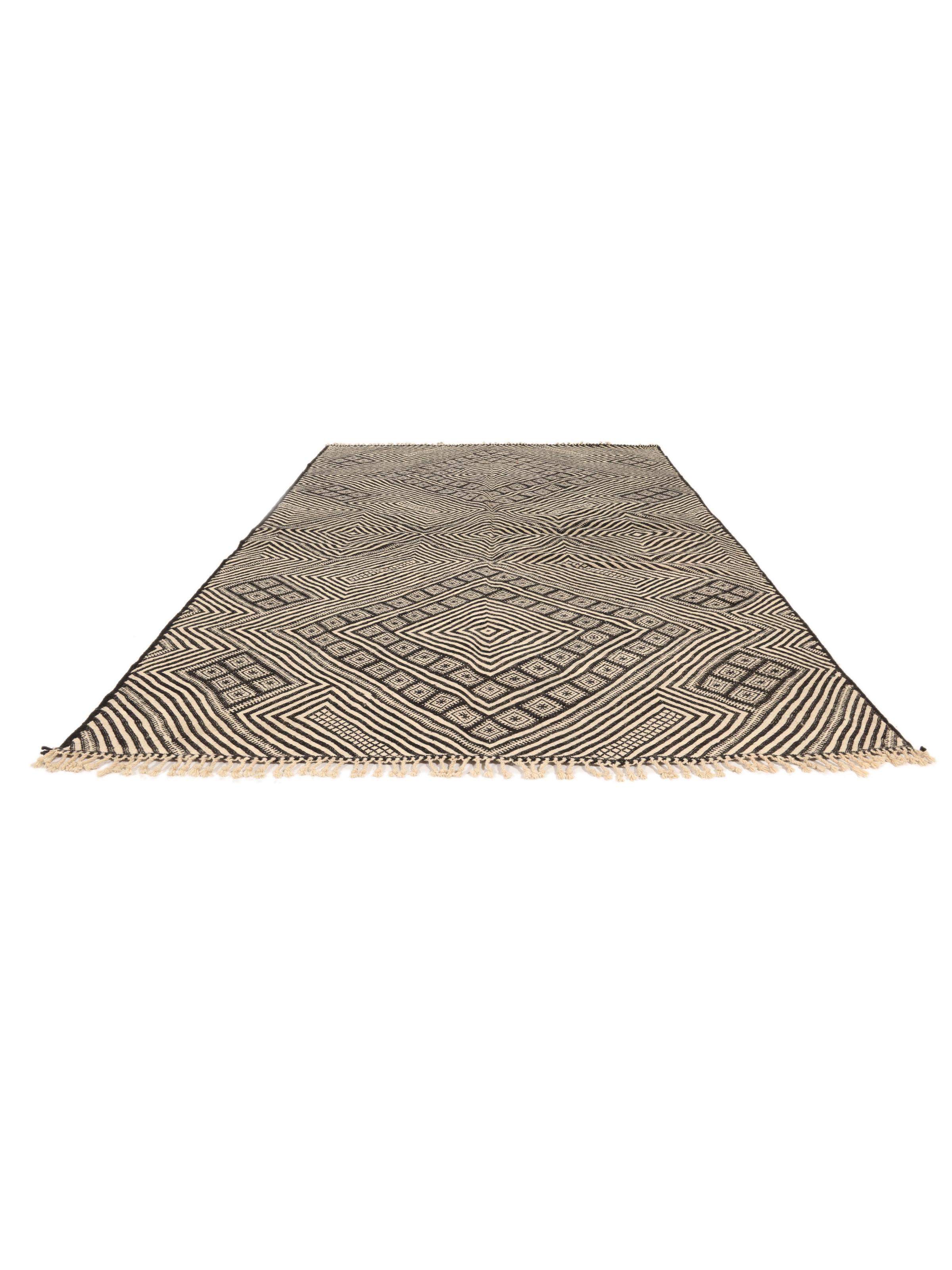
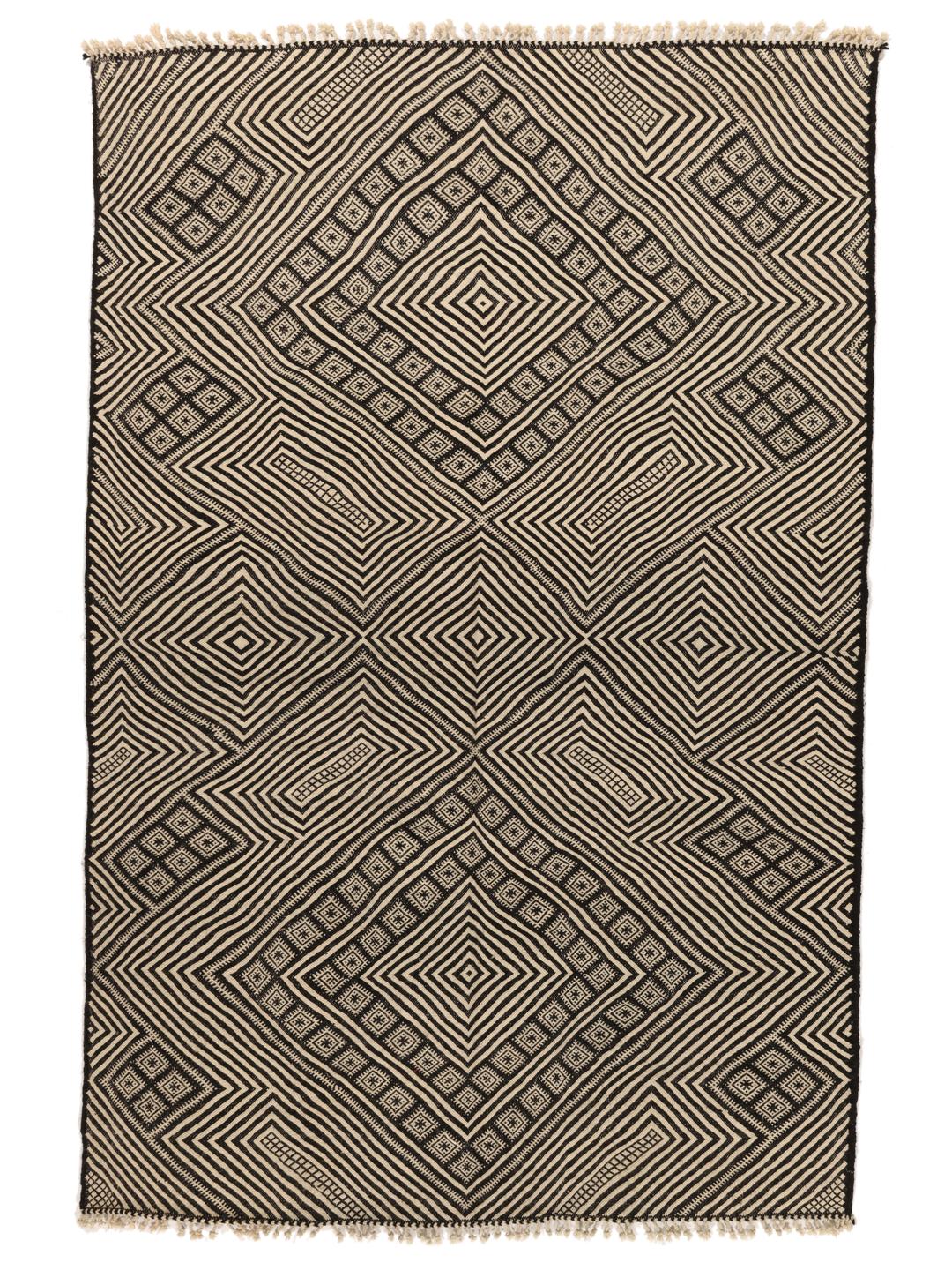
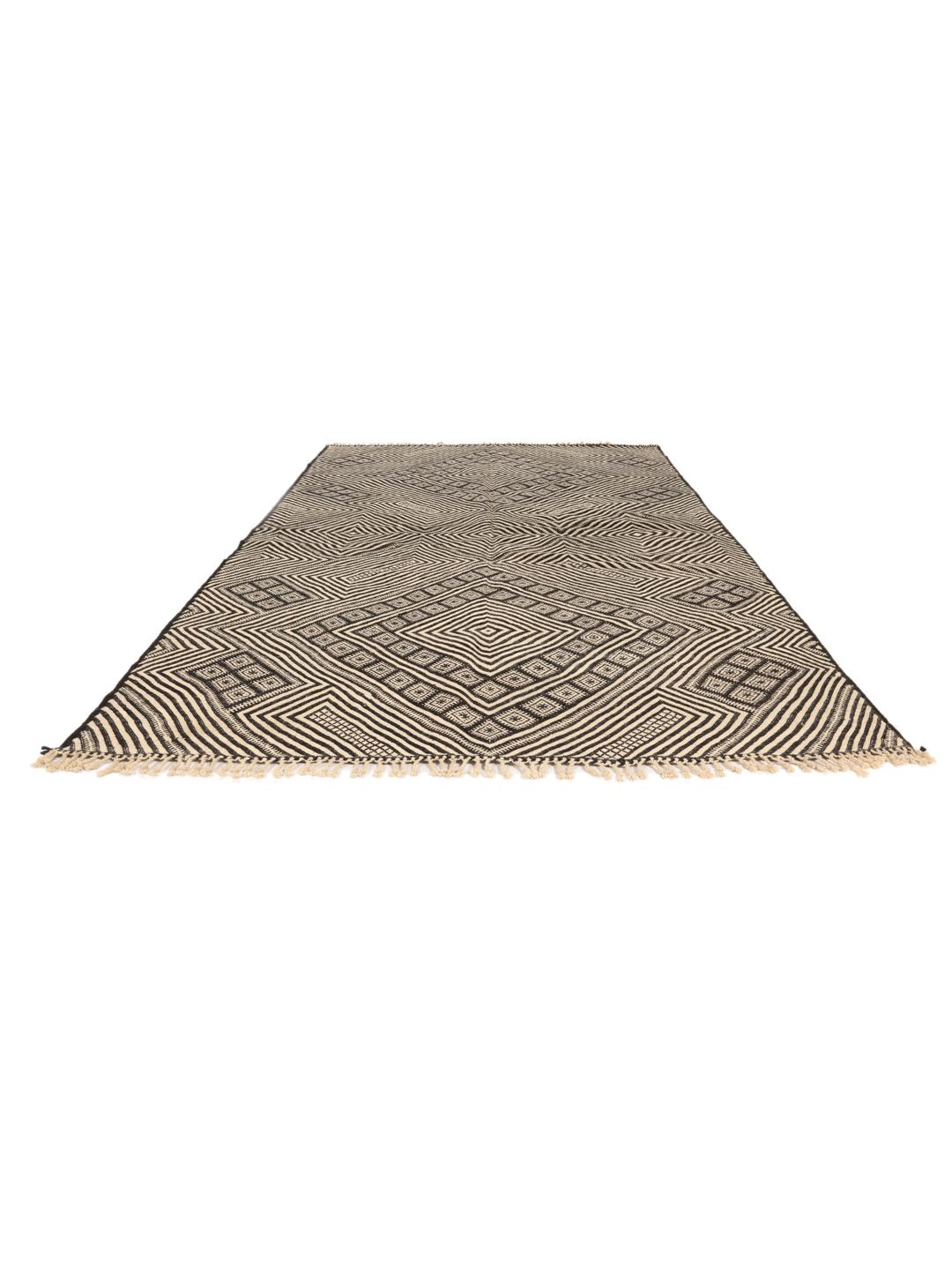
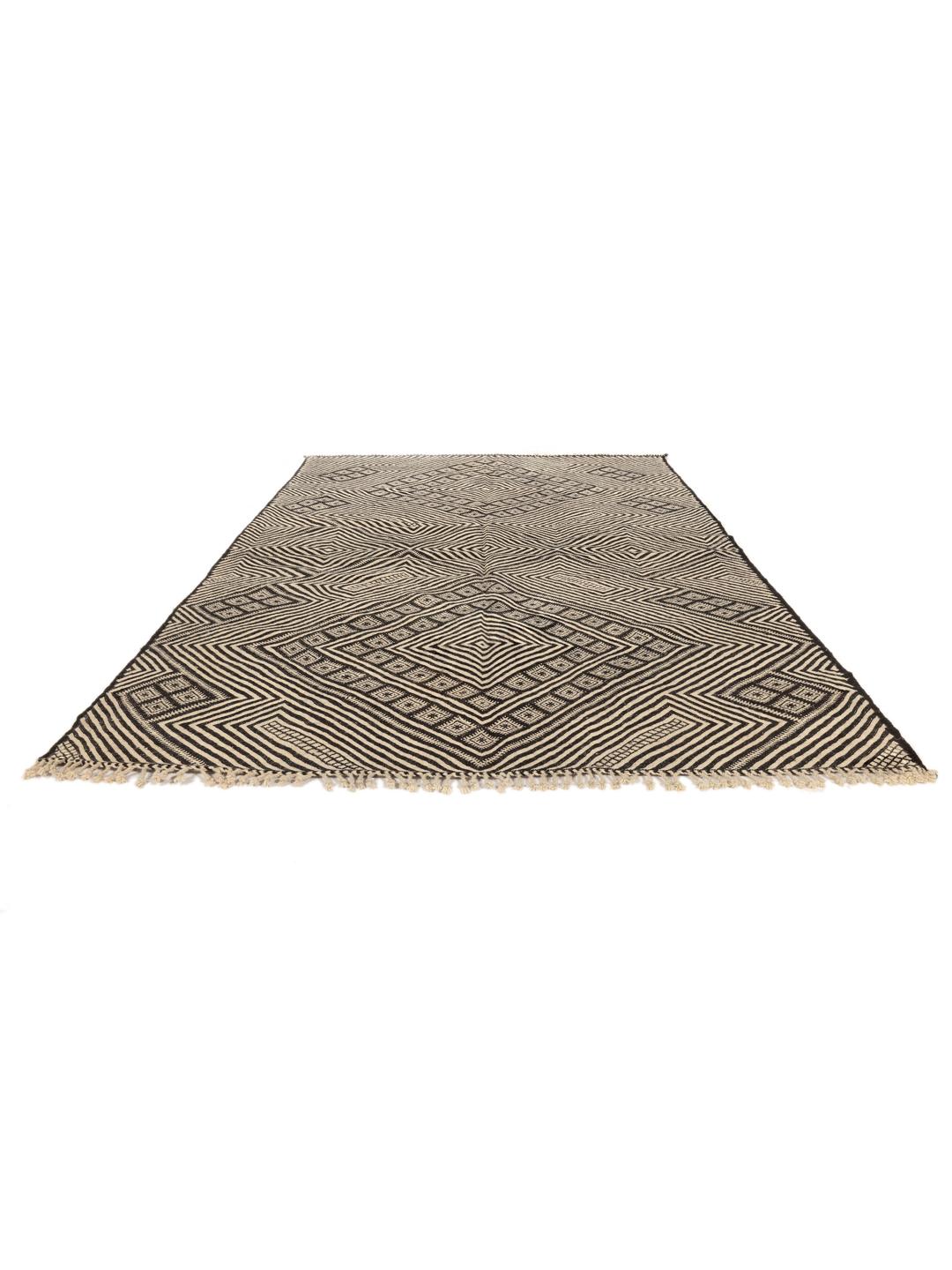
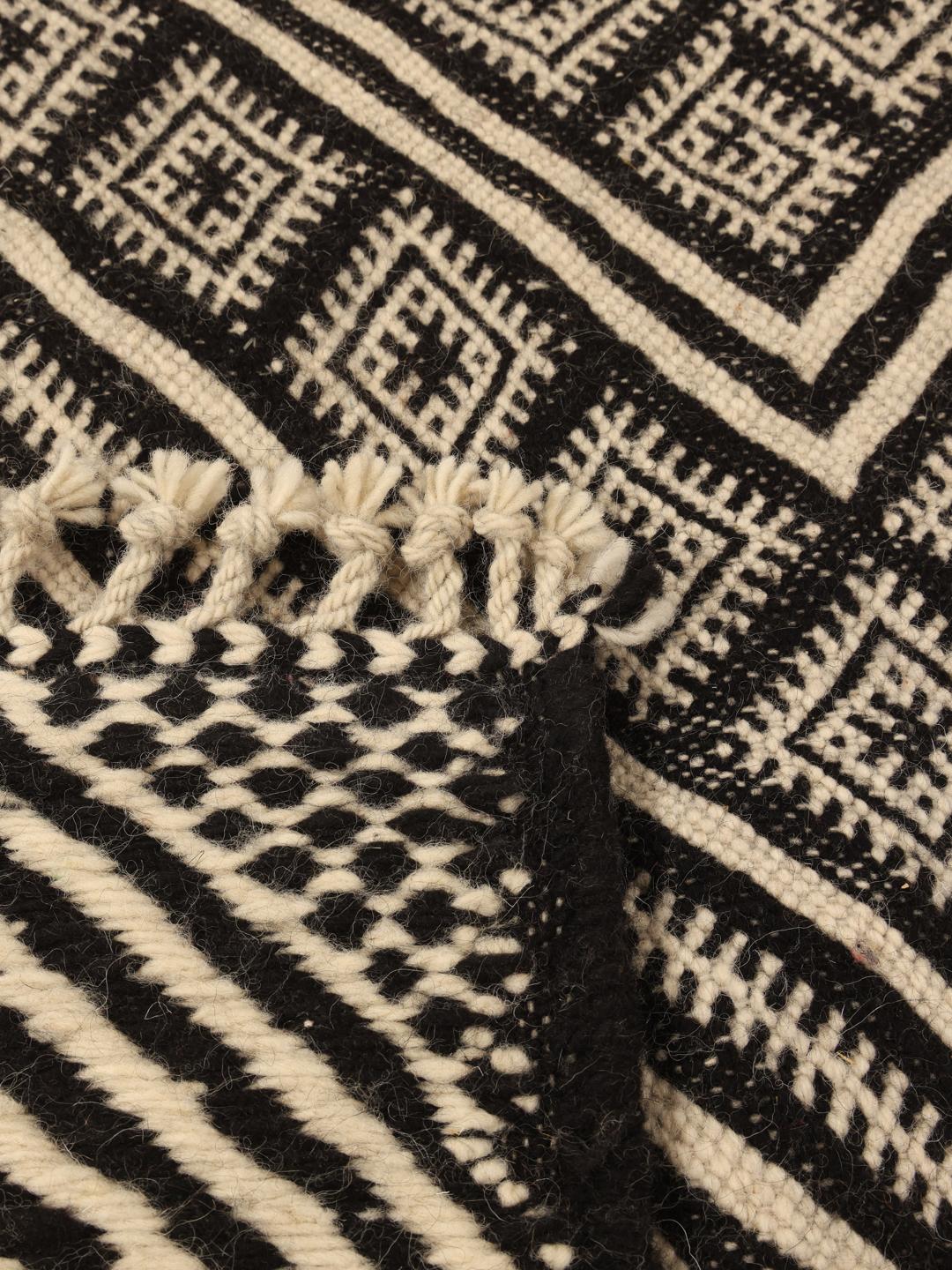
The High Atlas Kelim finds its roots in the remote, rugged mountain regions of Morocco, where Berber tribes have been weaving textiles for centuries. These rugs are not merely floor coverings but are deeply embedded in the social and cultural fabric of the Berber people, often created for personal use in the home rather than for commercial trade. The designs are passed down through generations, reflecting the environment and the life experiences of the weavers.
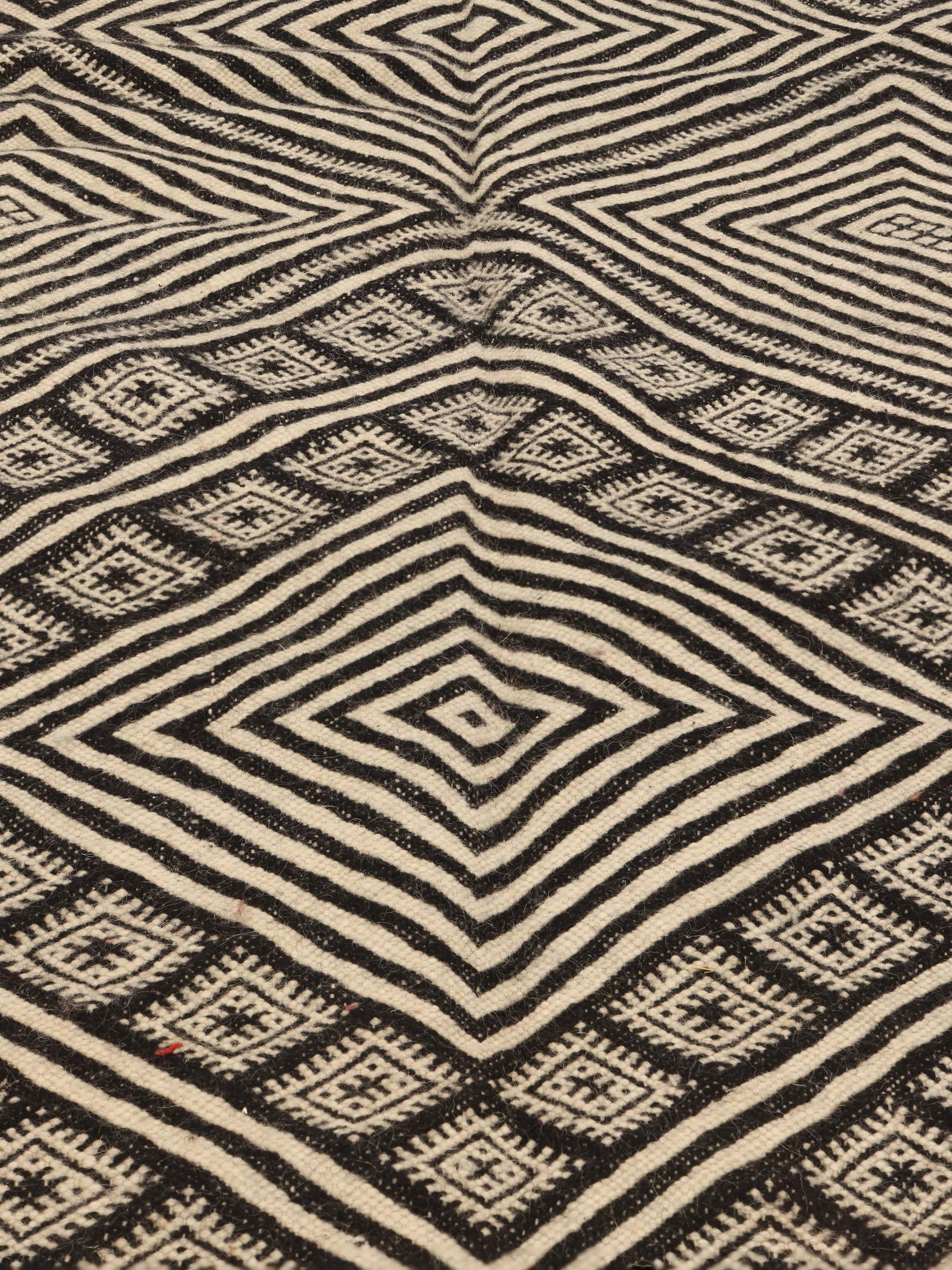
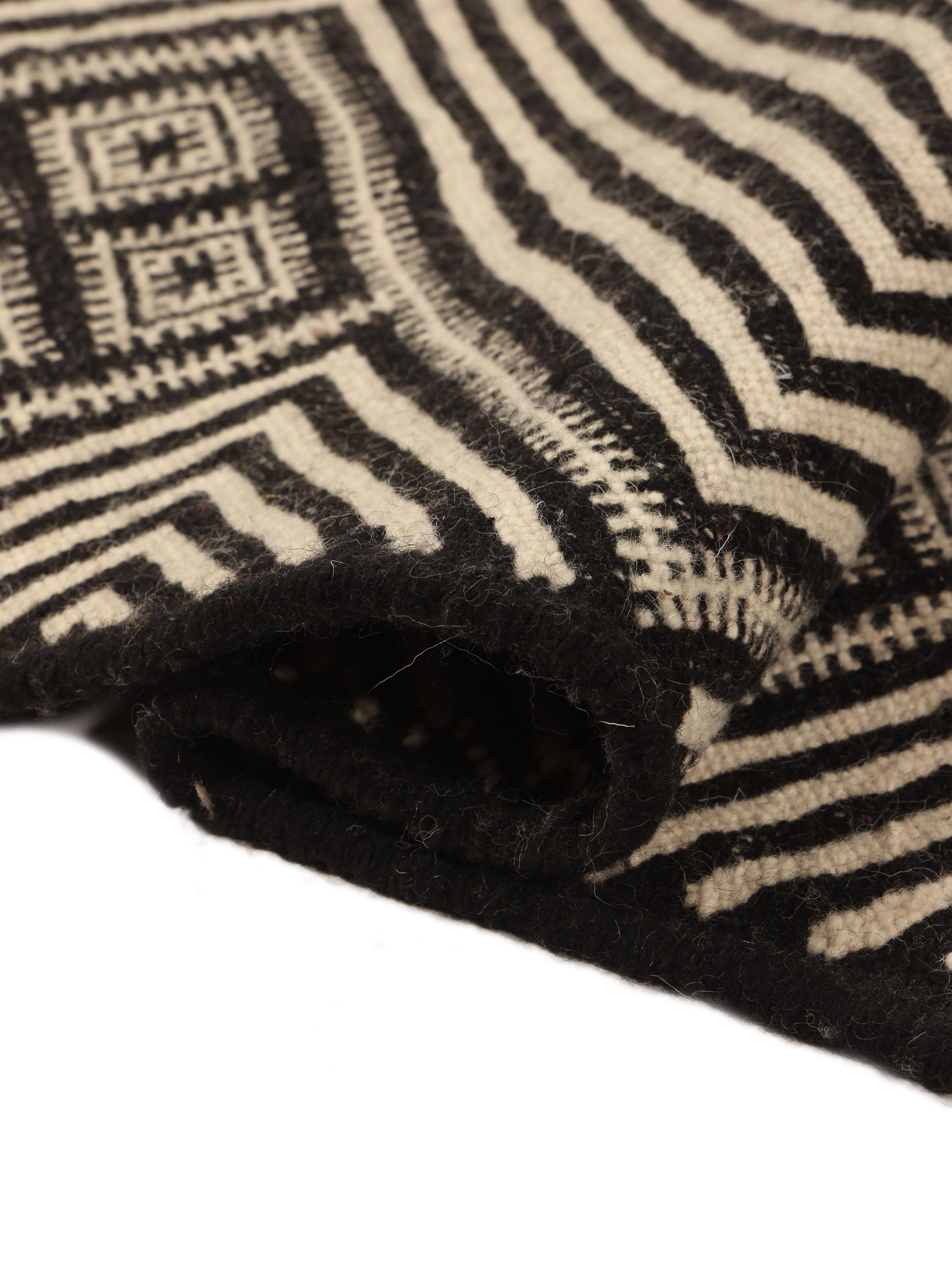
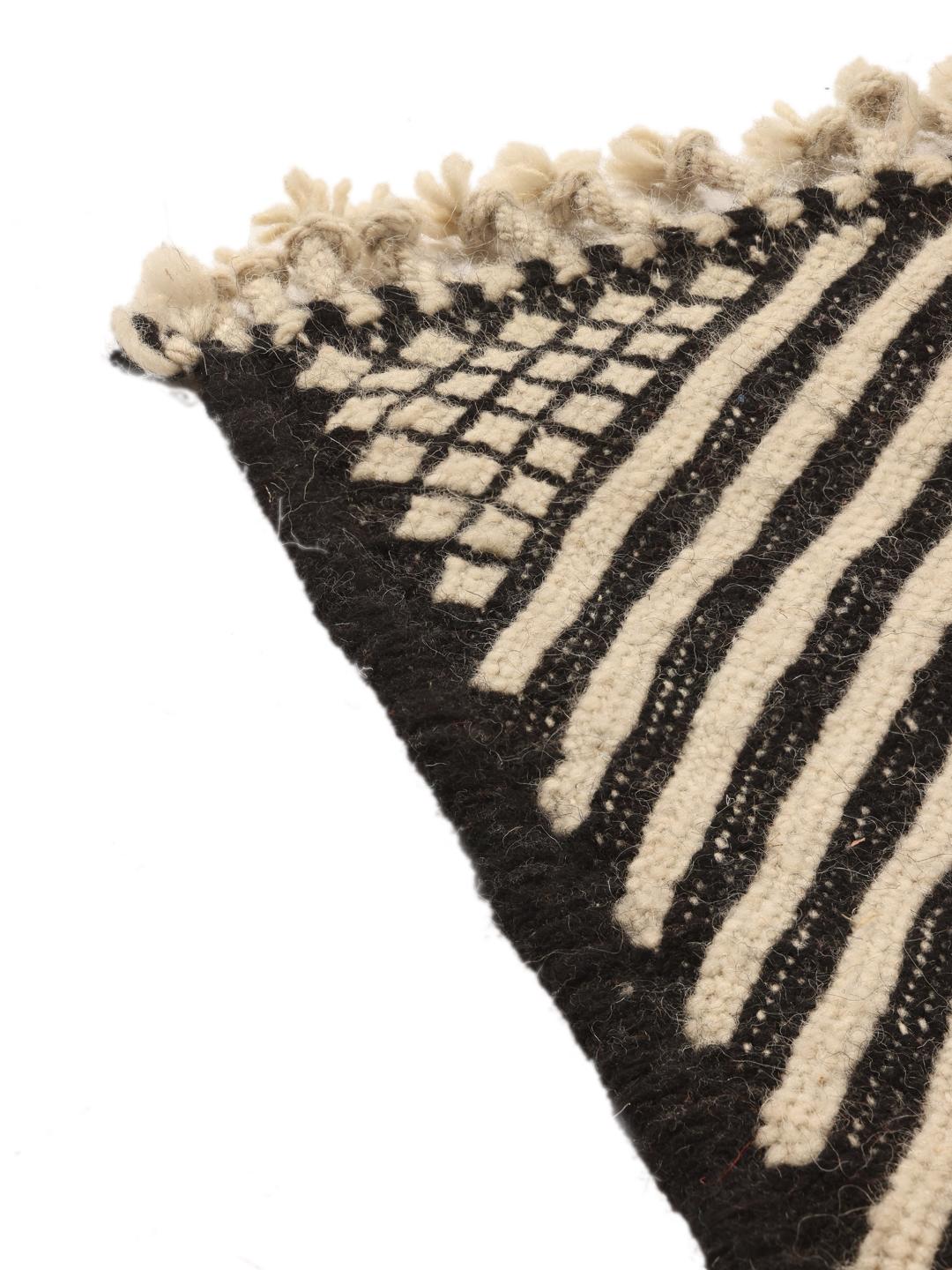
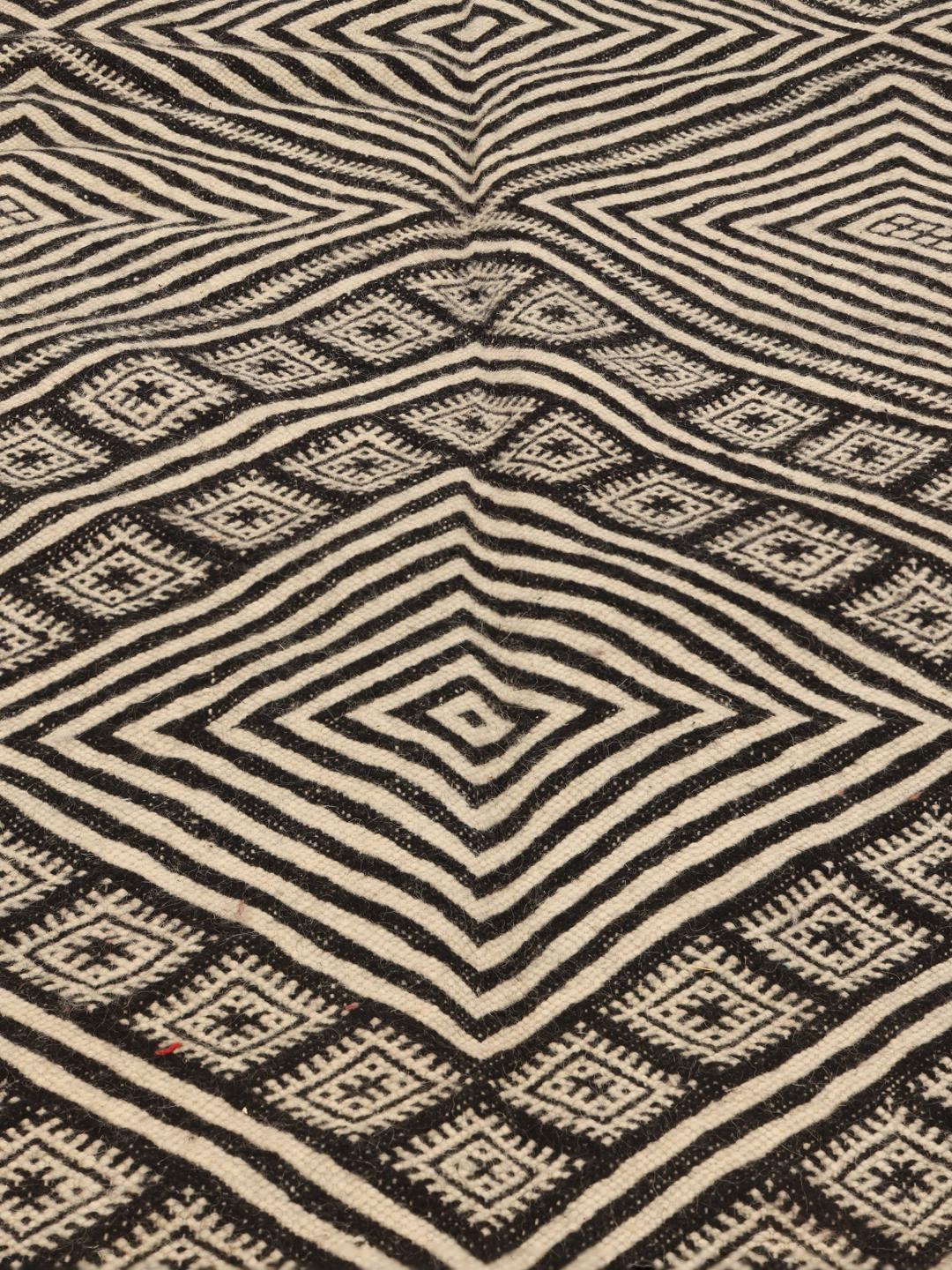
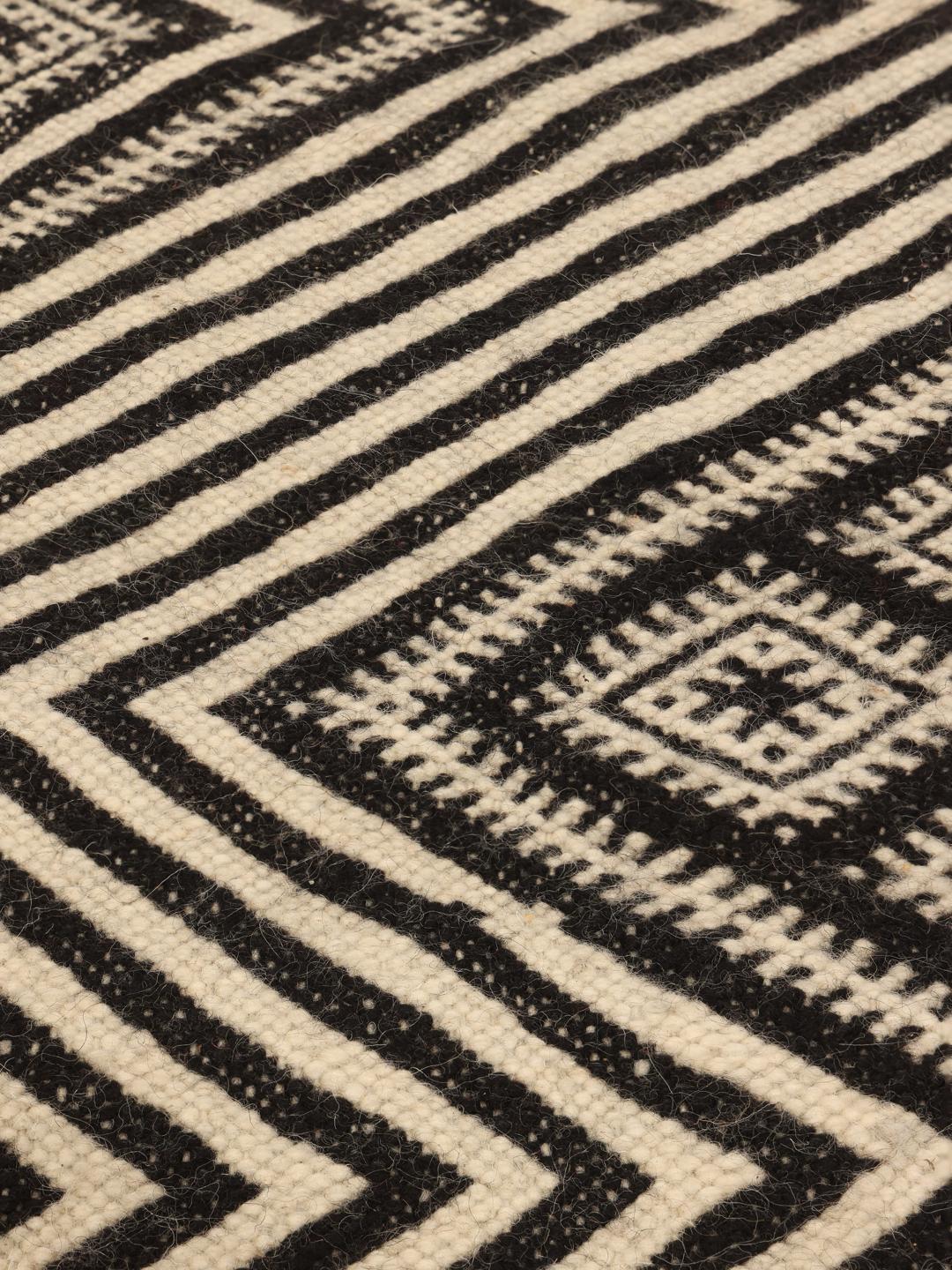
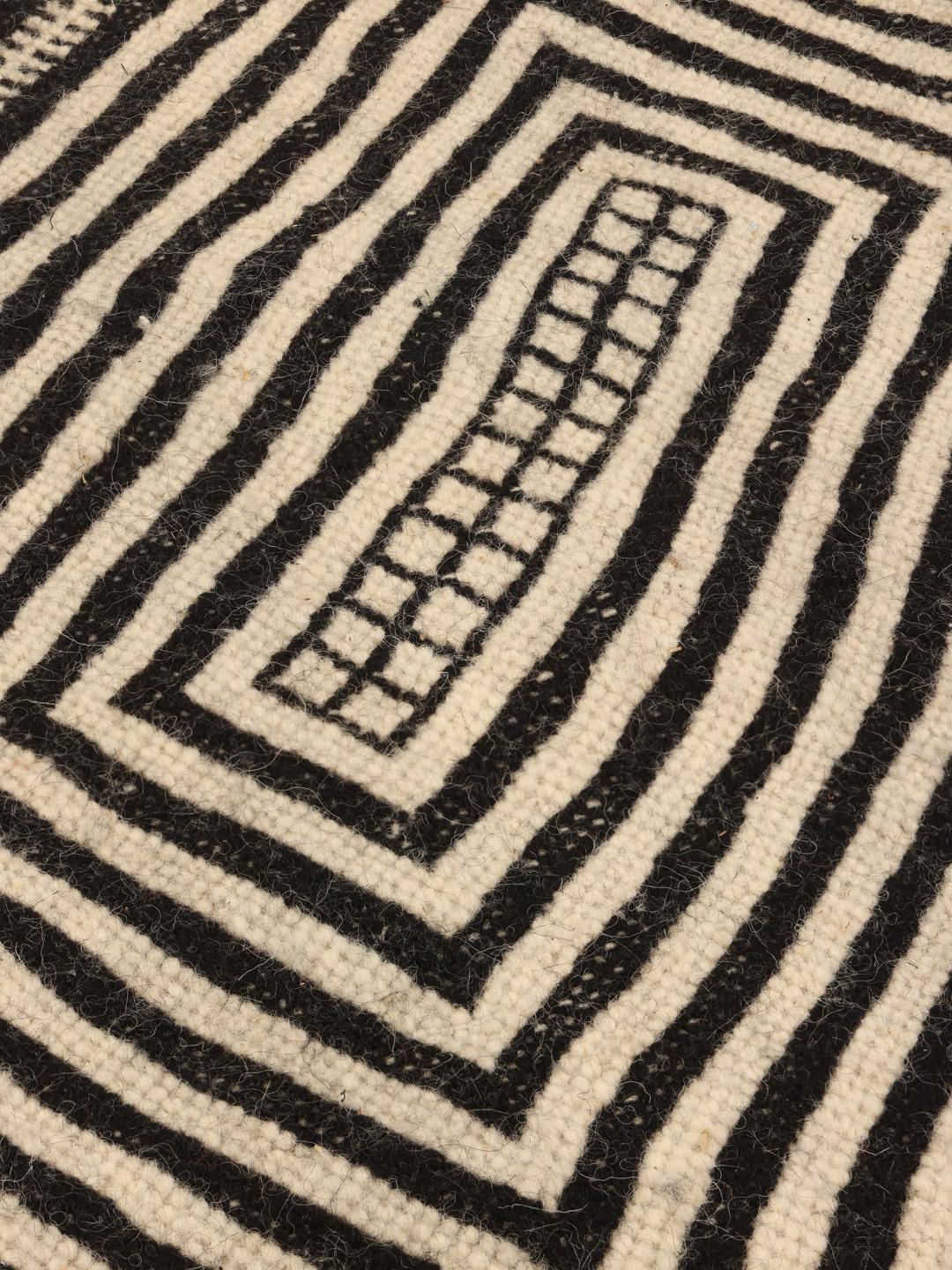
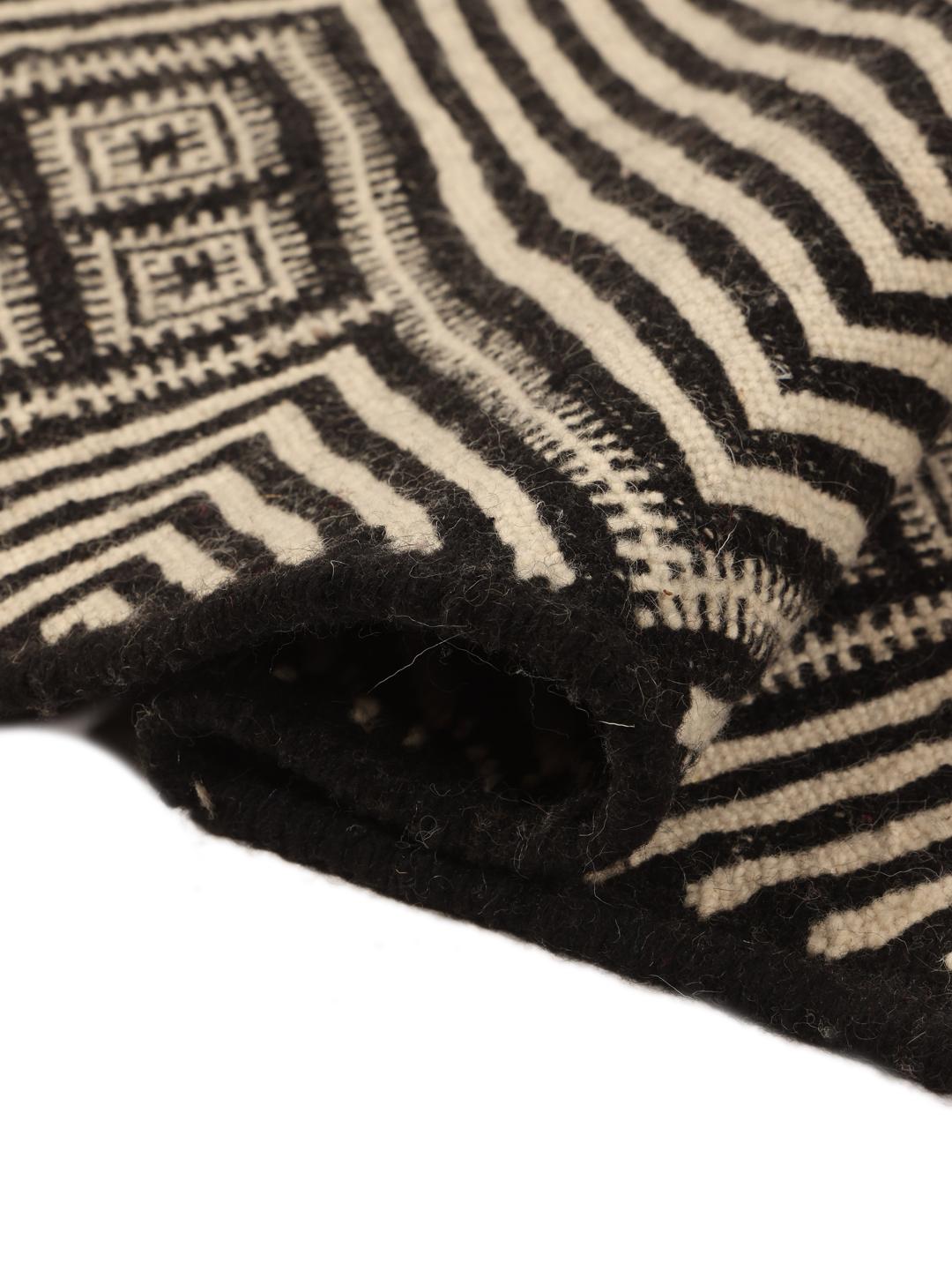
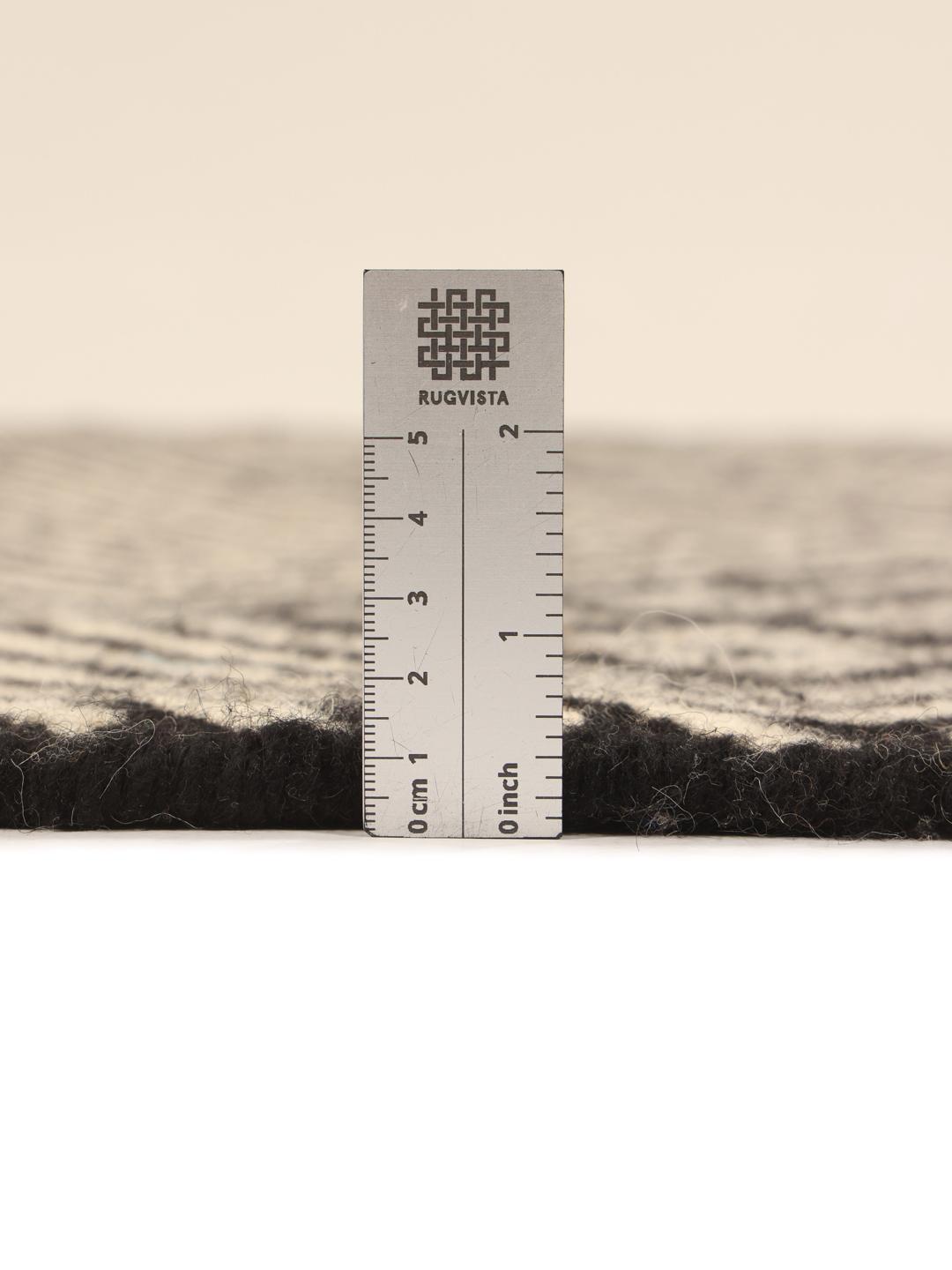
Kelim refers to the flat-weaving technique used to create these rugs, which involves no pile. Instead, the coloured weft threads are pulled tightly across the warp to create the pattern, resulting in a thin, durable, and reversible textile. This technique allows for the intricate, precise geometric motifs that are characteristic of the region, as the structure of the weave naturally lends itself to angular, diamond-based designs.
The design language of the High Atlas region is defined by its bold, large-scale geometry. You will often see repeating diamond motifs, zig-zags, and stepped patterns that symbolise protection, fertility, or the natural landscape of the Atlas Mountains. The use of natural, undyed wool alongside dark, earthy tones is a hallmark of this tradition, grounding the rug in the raw materials of the Moroccan highlands.
Collectors value these rugs for their authenticity and the personal narrative woven into every thread. Owning a High Atlas Kelim is an opportunity to connect with a living tradition that prizes ancestral knowledge and individual expression. It is a piece of cultural heritage that brings a sense of history and quiet strength to the contemporary home.