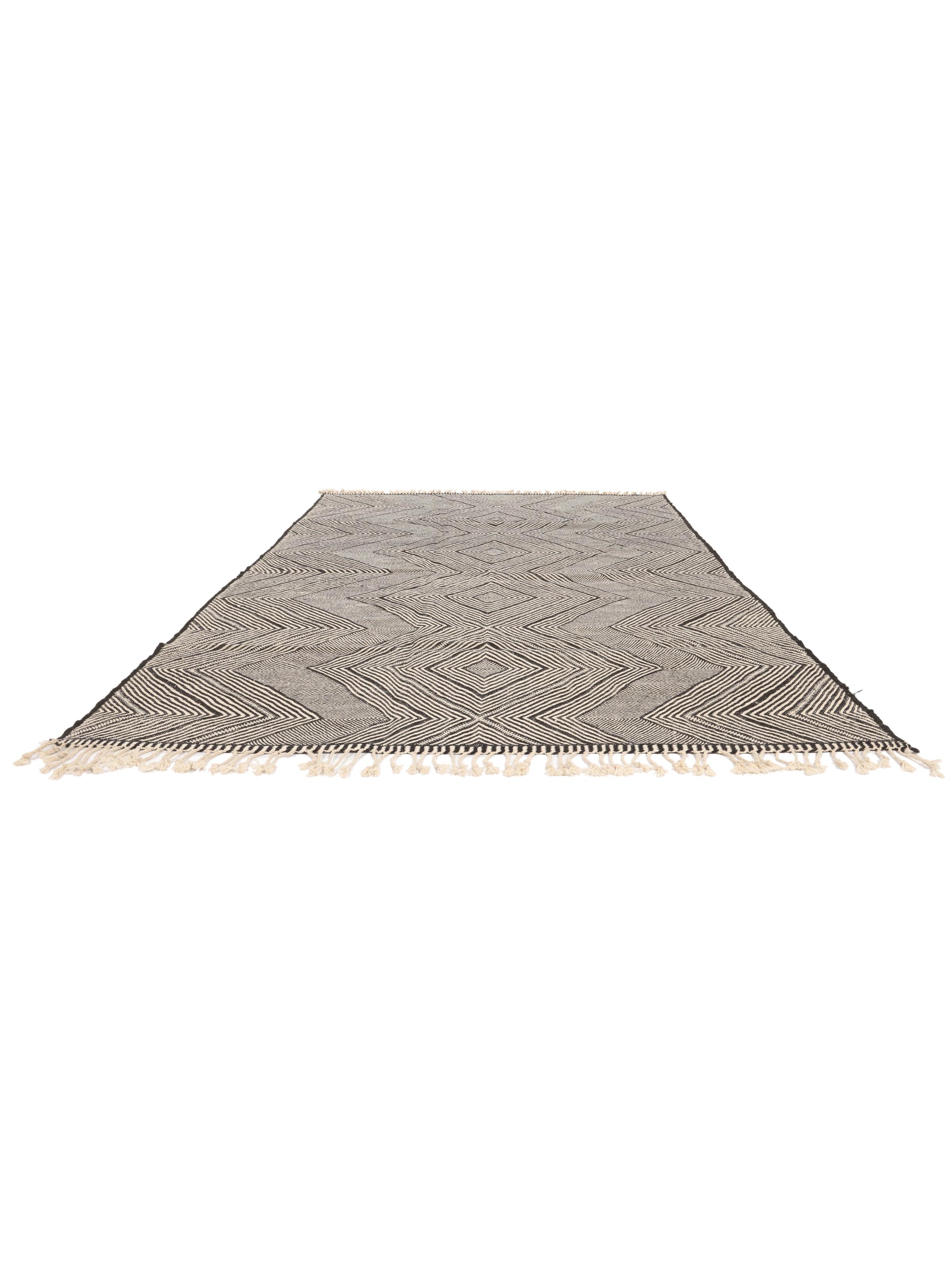
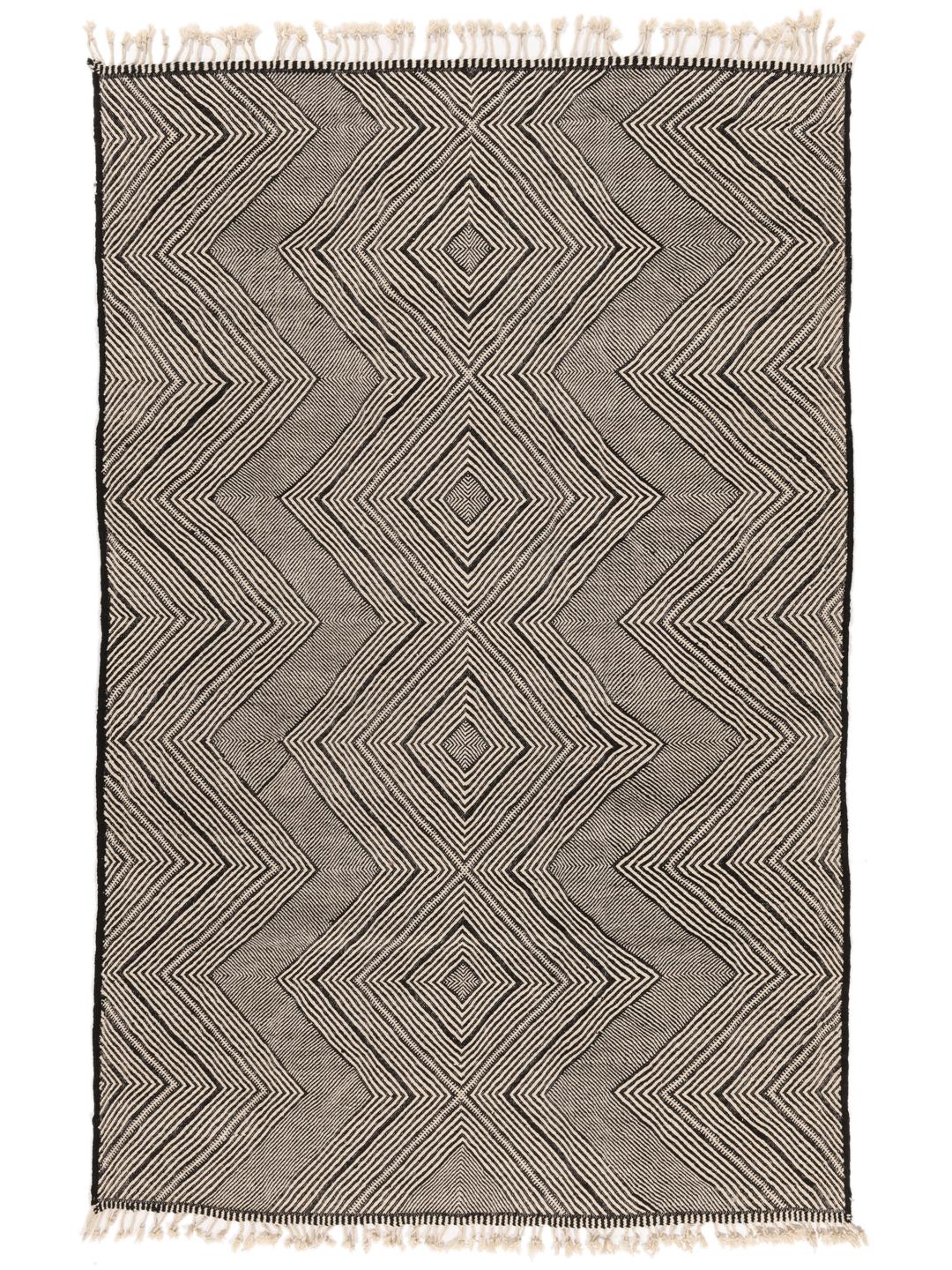
The High Atlas kelim tradition finds its roots in the mountainous regions of Morocco, where Berber tribes have woven textiles for centuries. These rugs were historically created for domestic utility, used as blankets, floor coverings, or room dividers within nomadic tents and mountain homes. The designs often served as a visual language, with motifs passed down through generations to record tribal identity and individual stories.
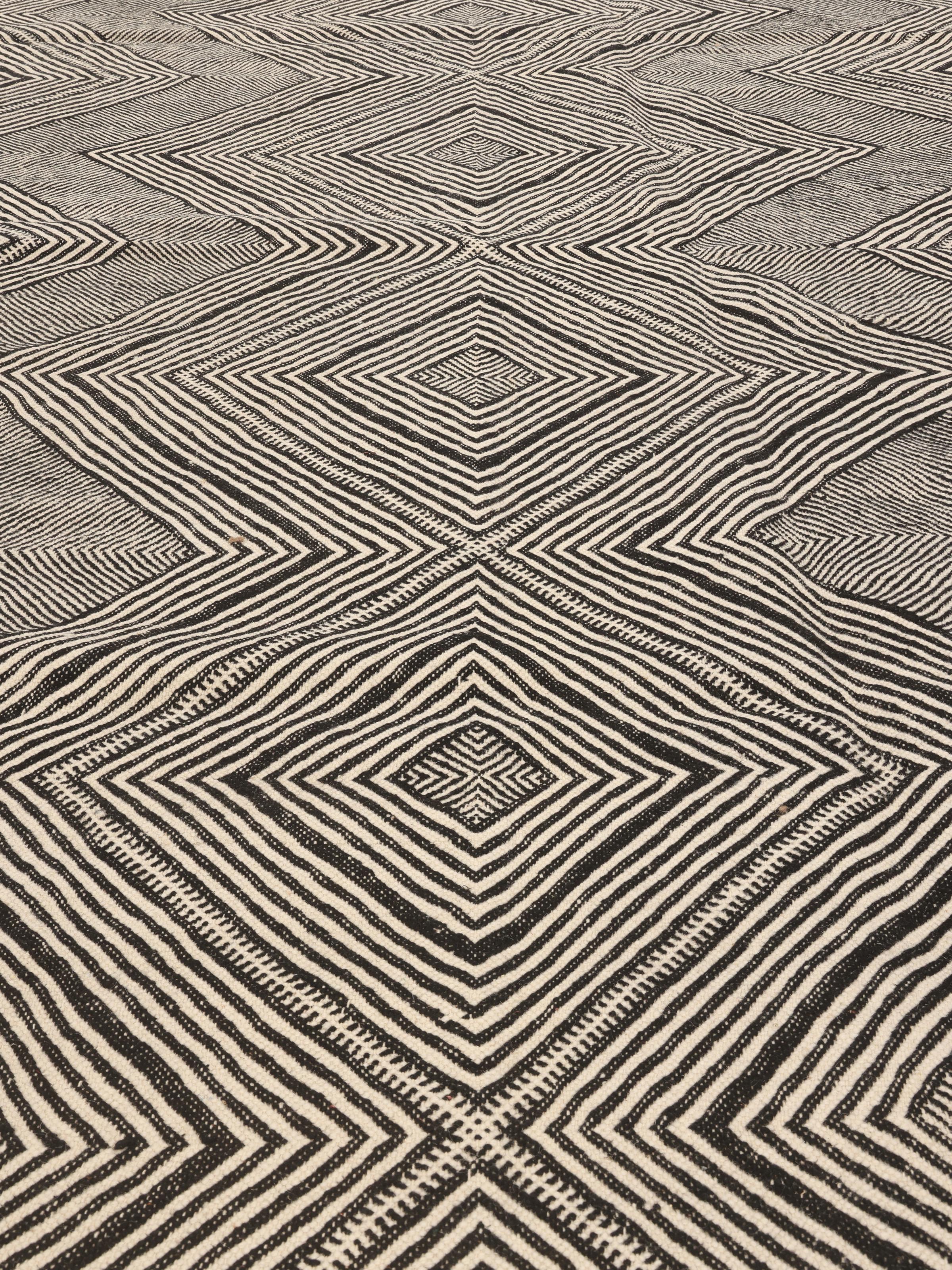
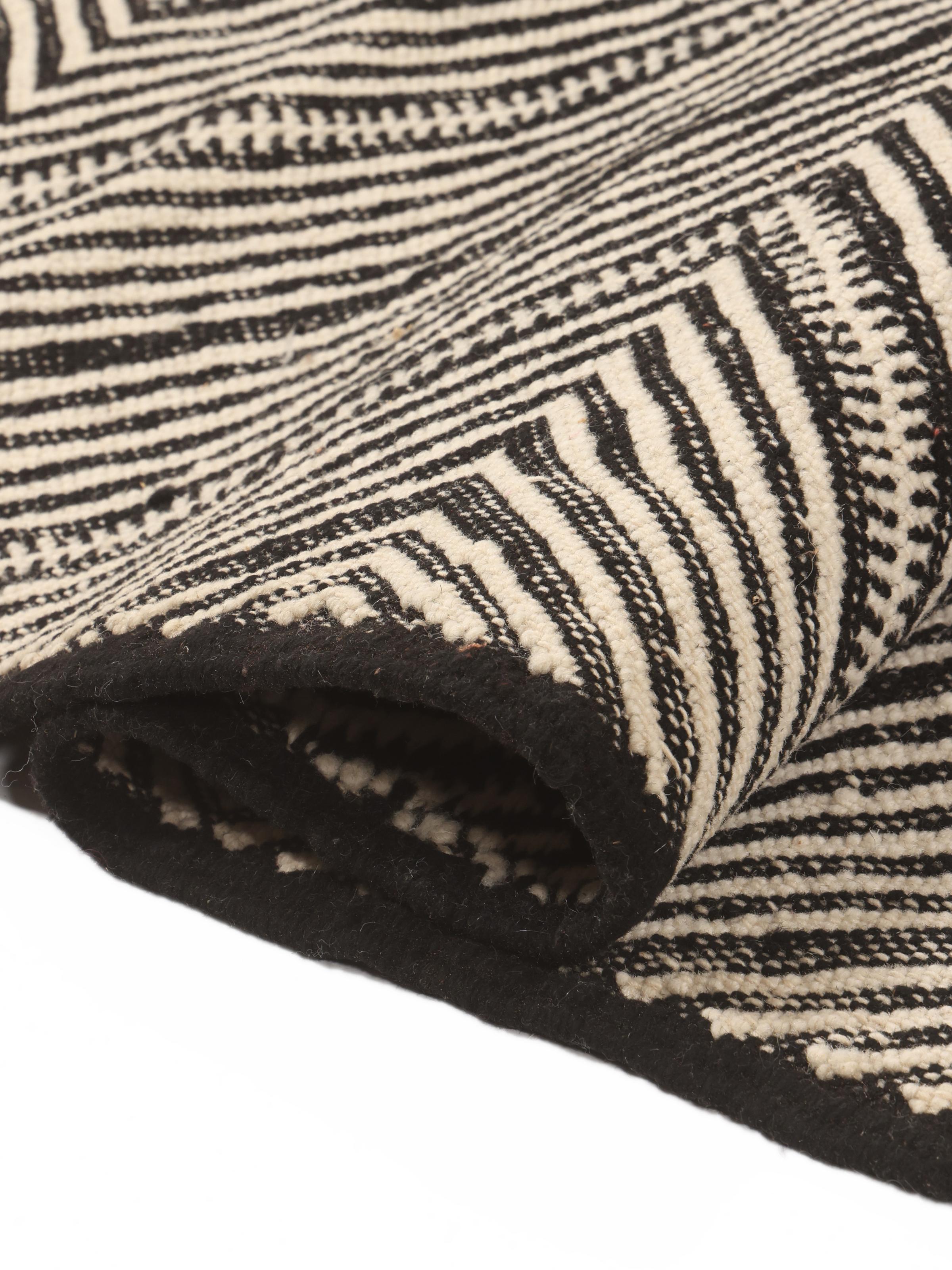
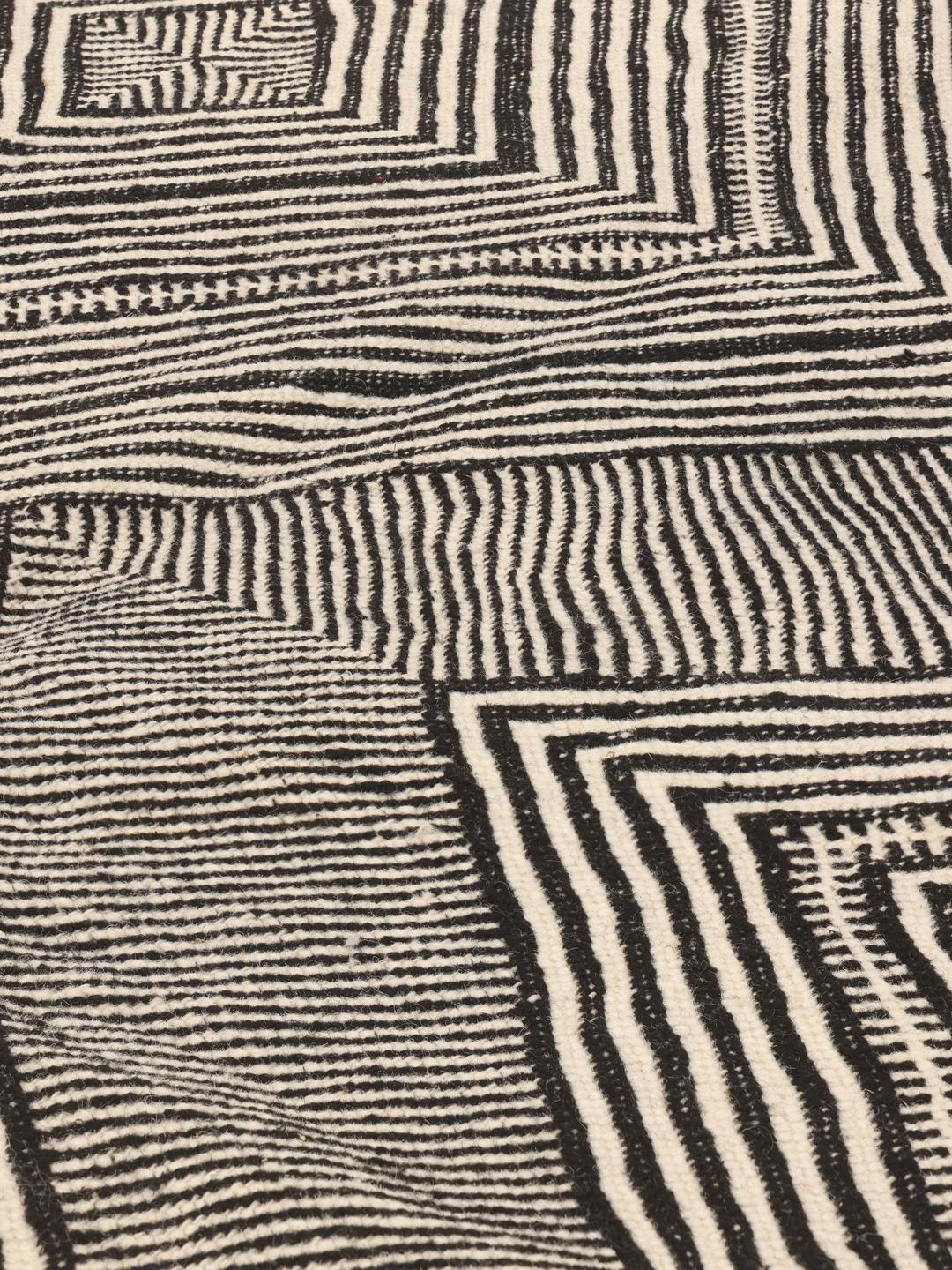
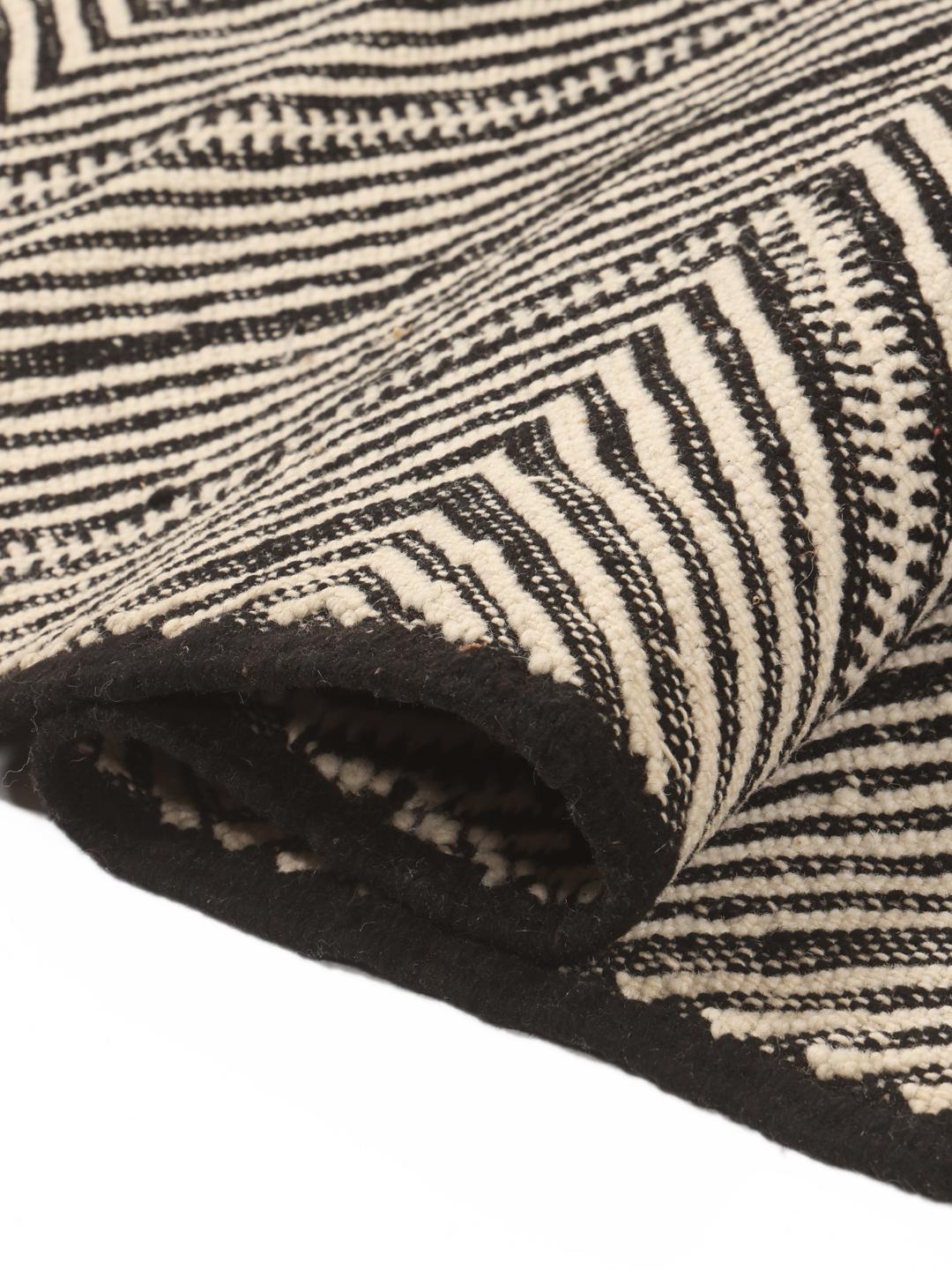
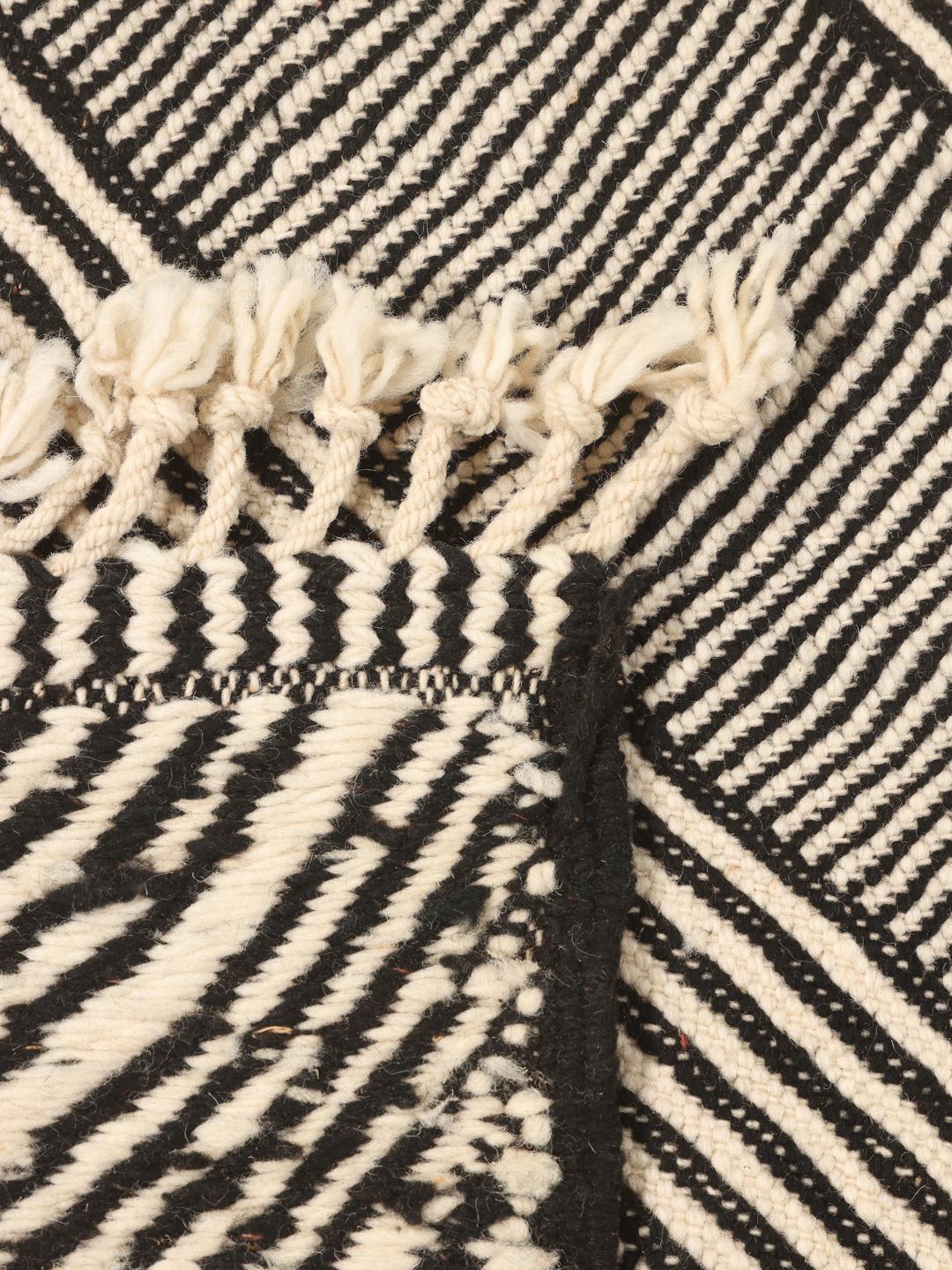
A kelim is distinguished by its flat-weave construction, meaning it is crafted without a pile. This technique is achieved by interweaving the coloured weft threads tightly through the warp threads, which creates a durable, reversible textile. In the context of Moroccan weaving, the use of high-quality wool is paramount, as the natural lanolin content in the fibre provides inherent resilience and a subtle, soft sheen that improves with age.
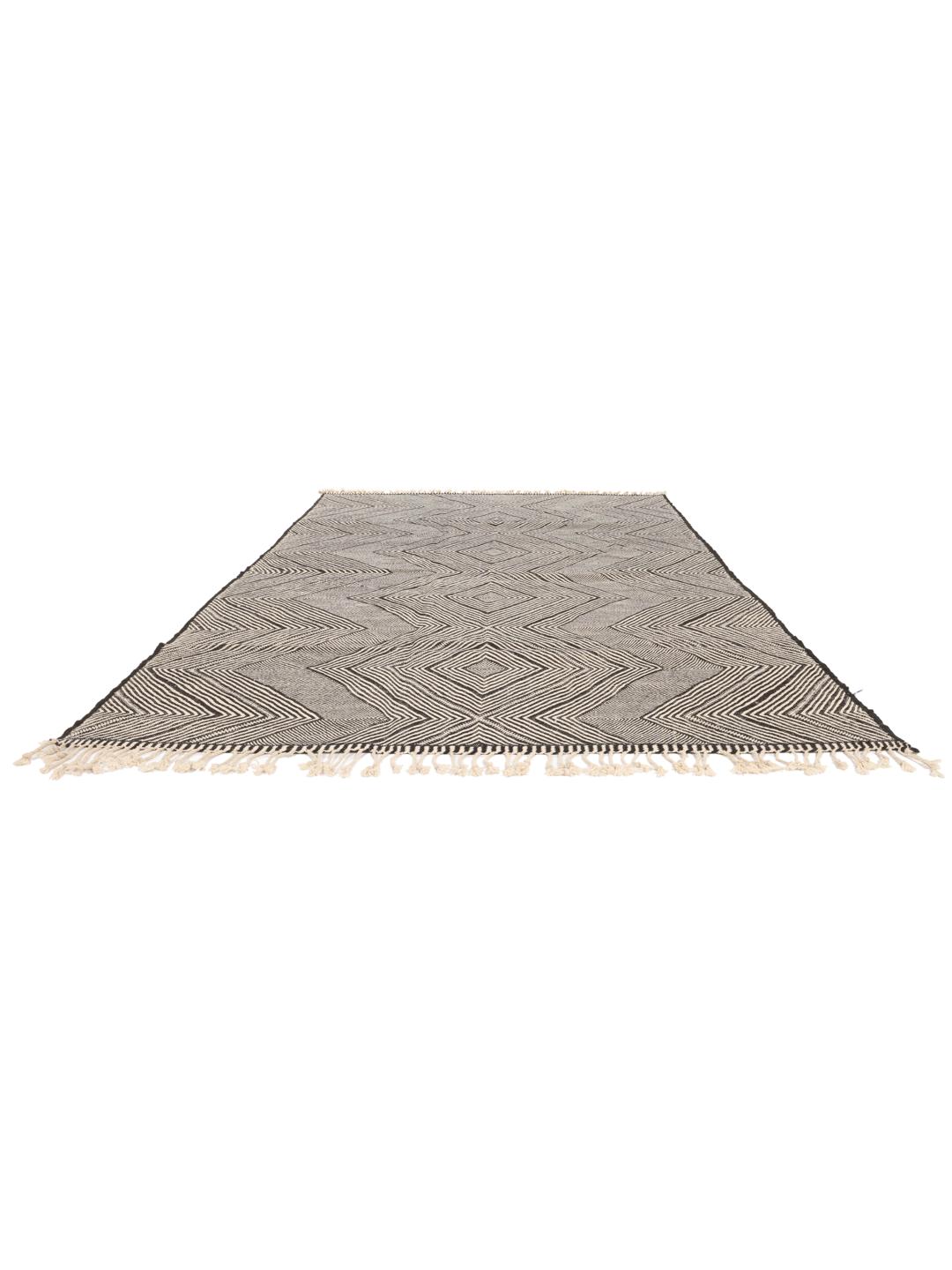
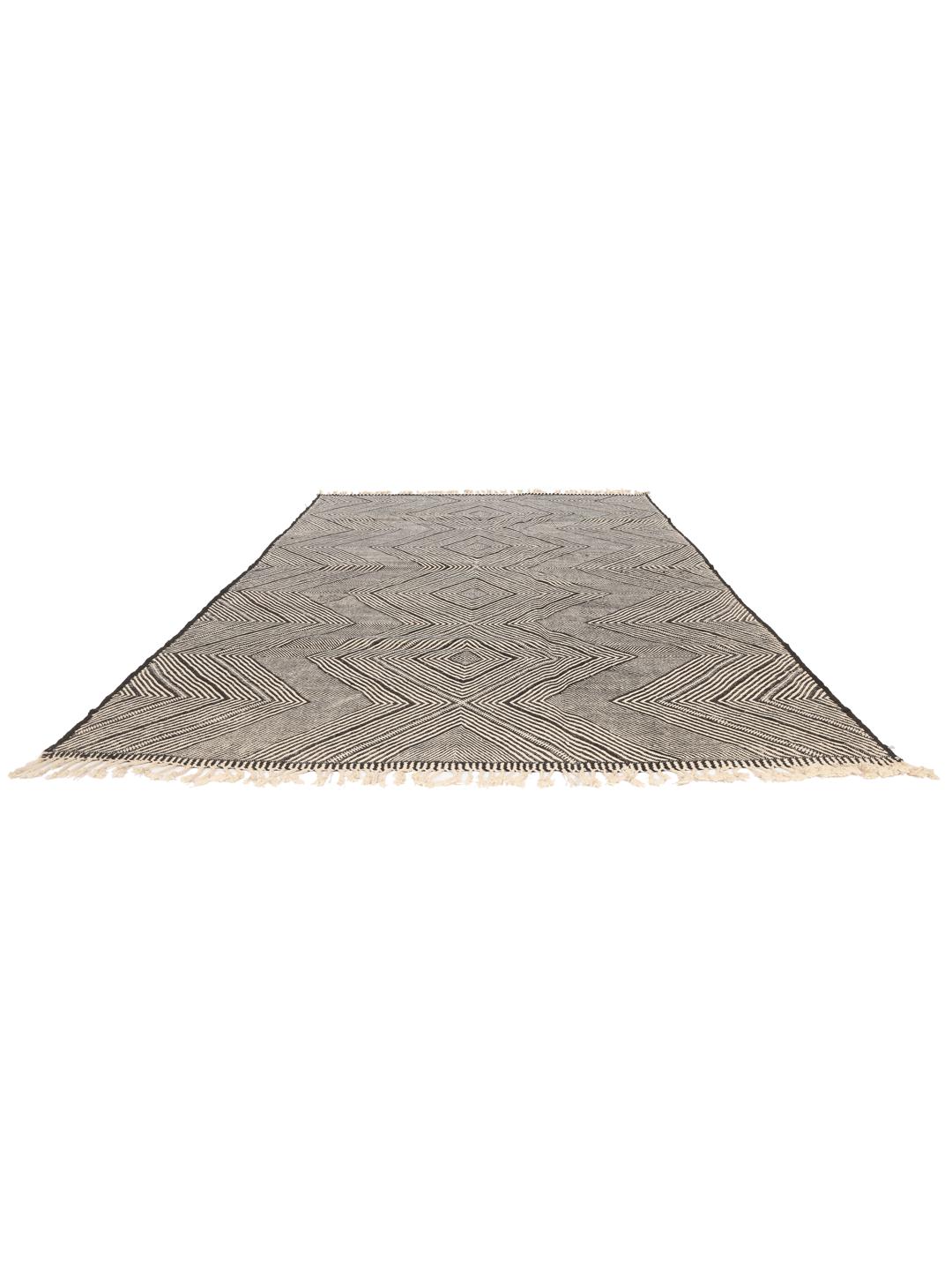
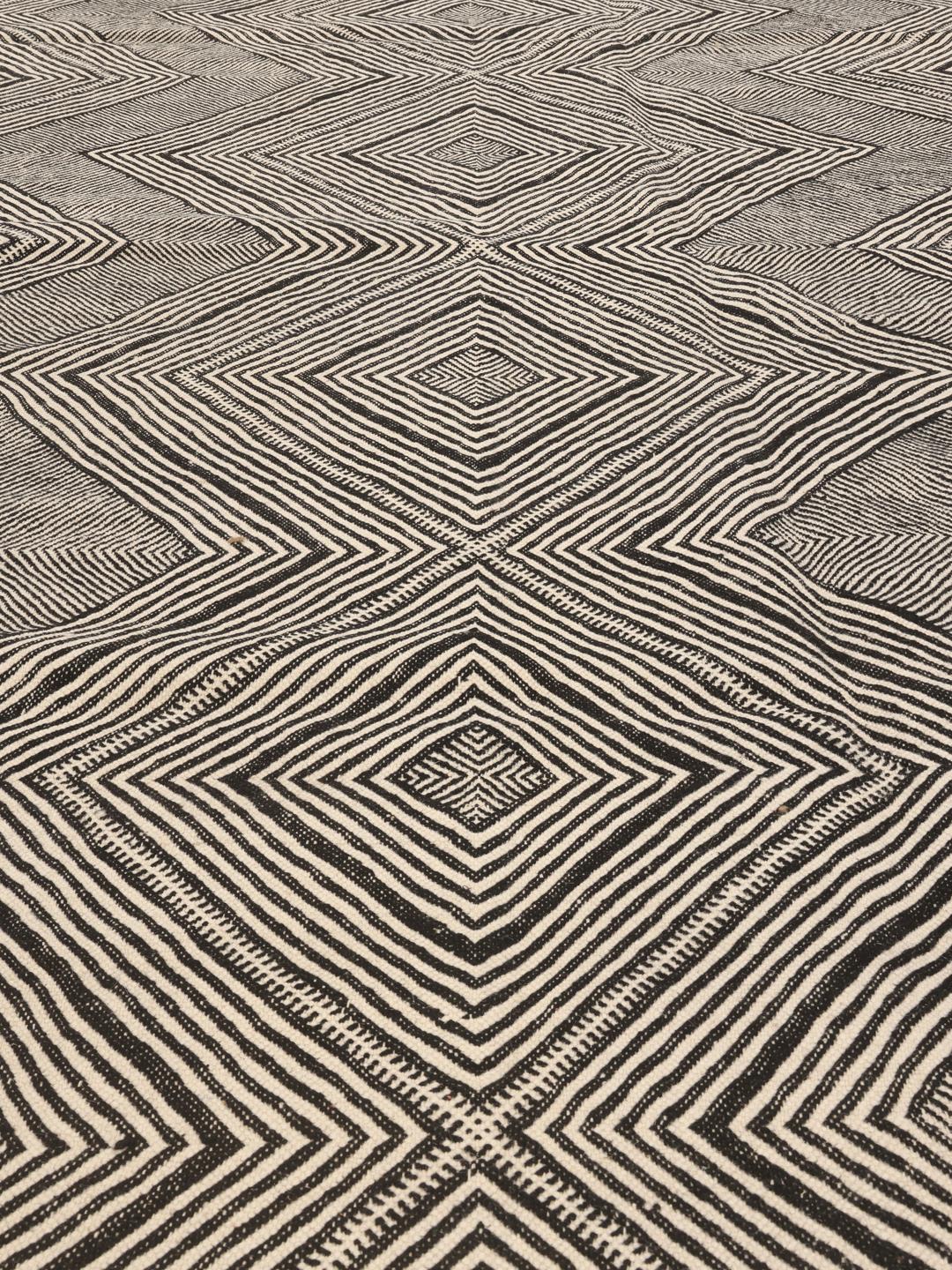
The geometric language found in this rug is typical of the Berber aesthetic, where diamonds and zig-zags are used to create a sense of movement and harmony. While traditional palettes often featured natural, undyed wool tones, the bold use of black and white seen here is a classic, powerful combination that highlights the precision of the weaver's work. The contrast makes the intricate pattern pop, turning the floor into a canvas of bold, rhythmic shapes.
Collecting a High Atlas kelim is an investment in cultural heritage and human skill. These rugs are valued not just for their striking visuals, but for the connection they offer to an ancient way of life that remains vibrant today. By welcoming this piece into your home, you preserve a tradition of artistry where the weaver's intent is woven directly into the fabric, creating a lasting legacy of craftsmanship.