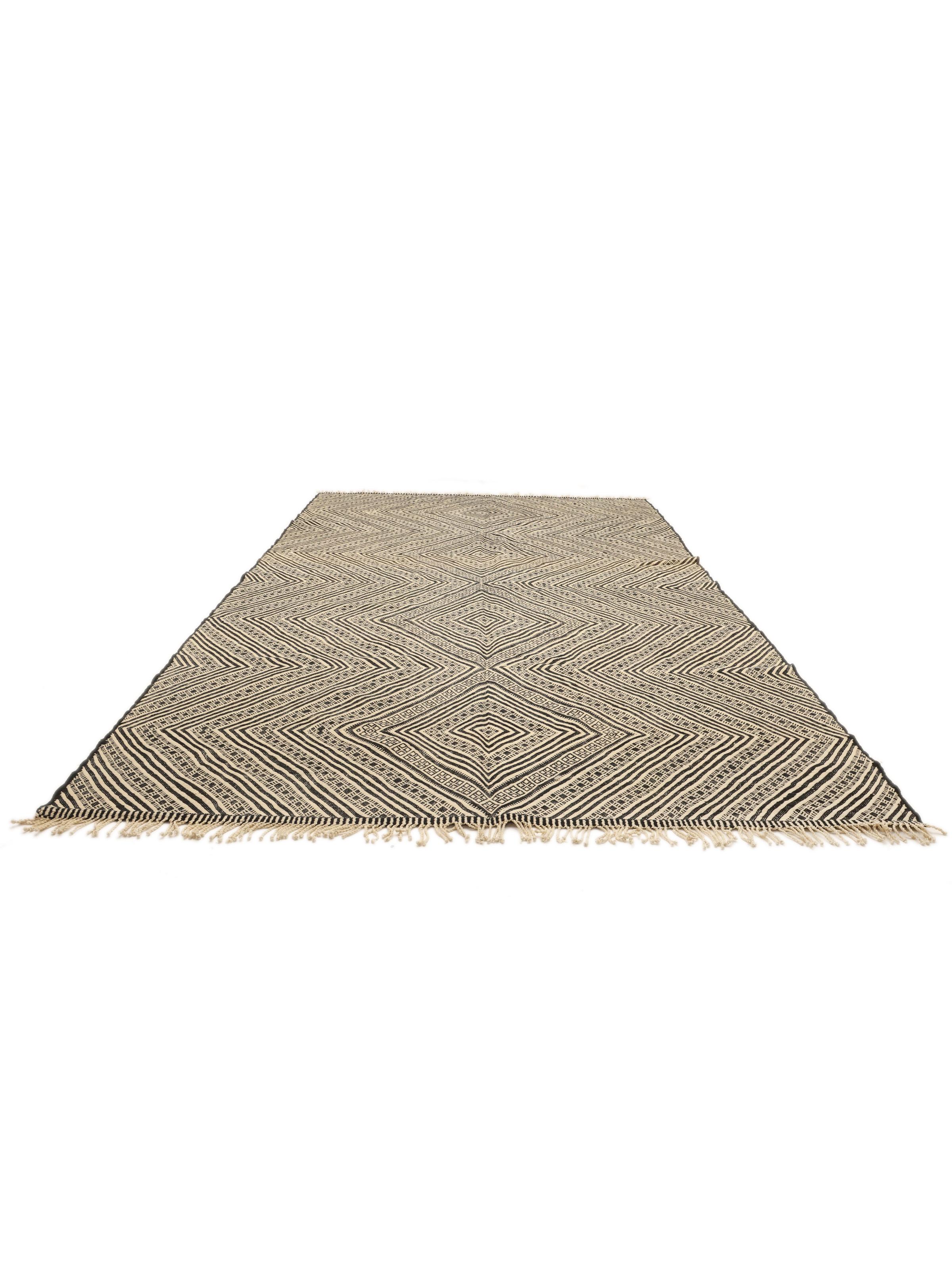
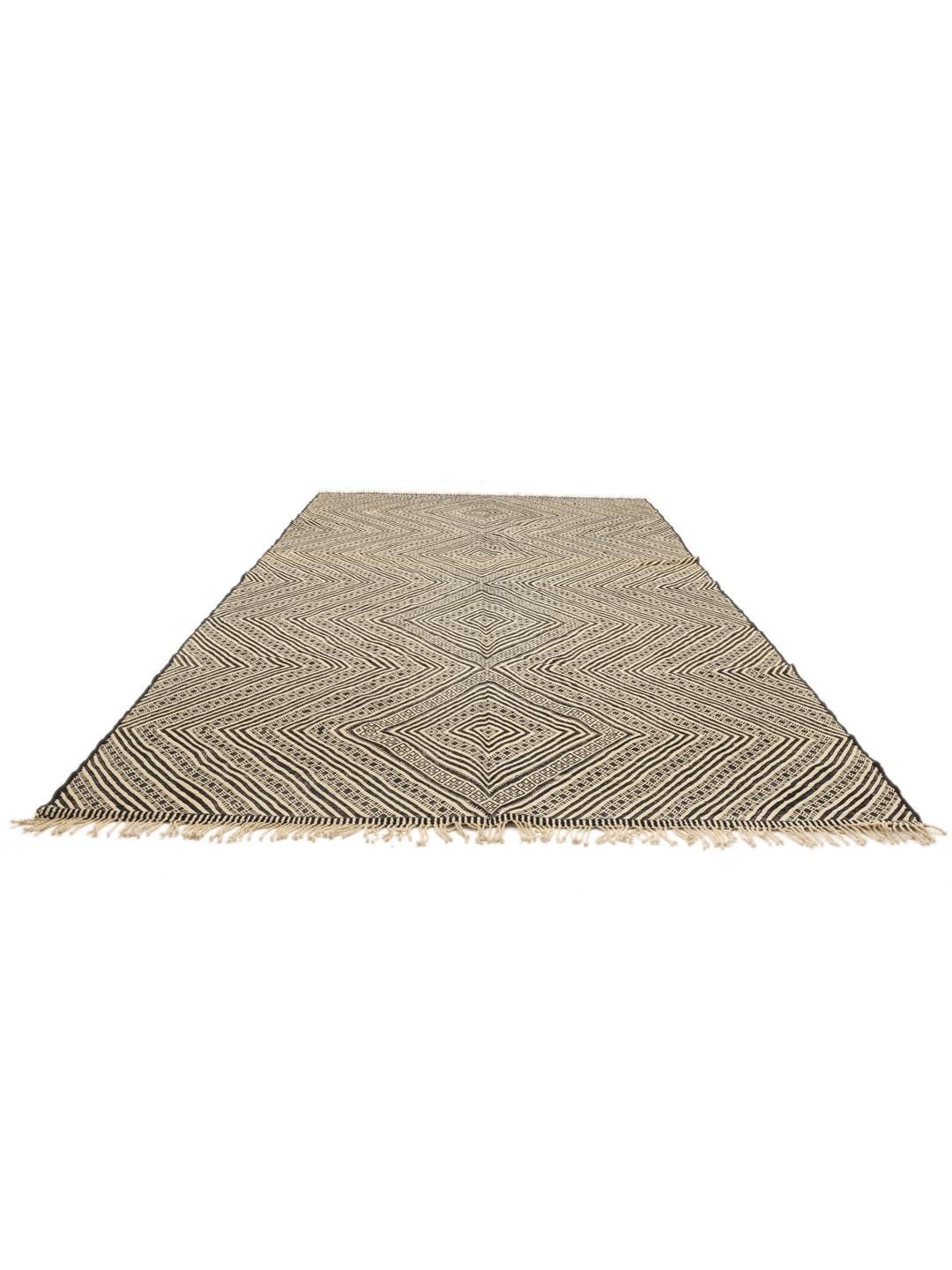
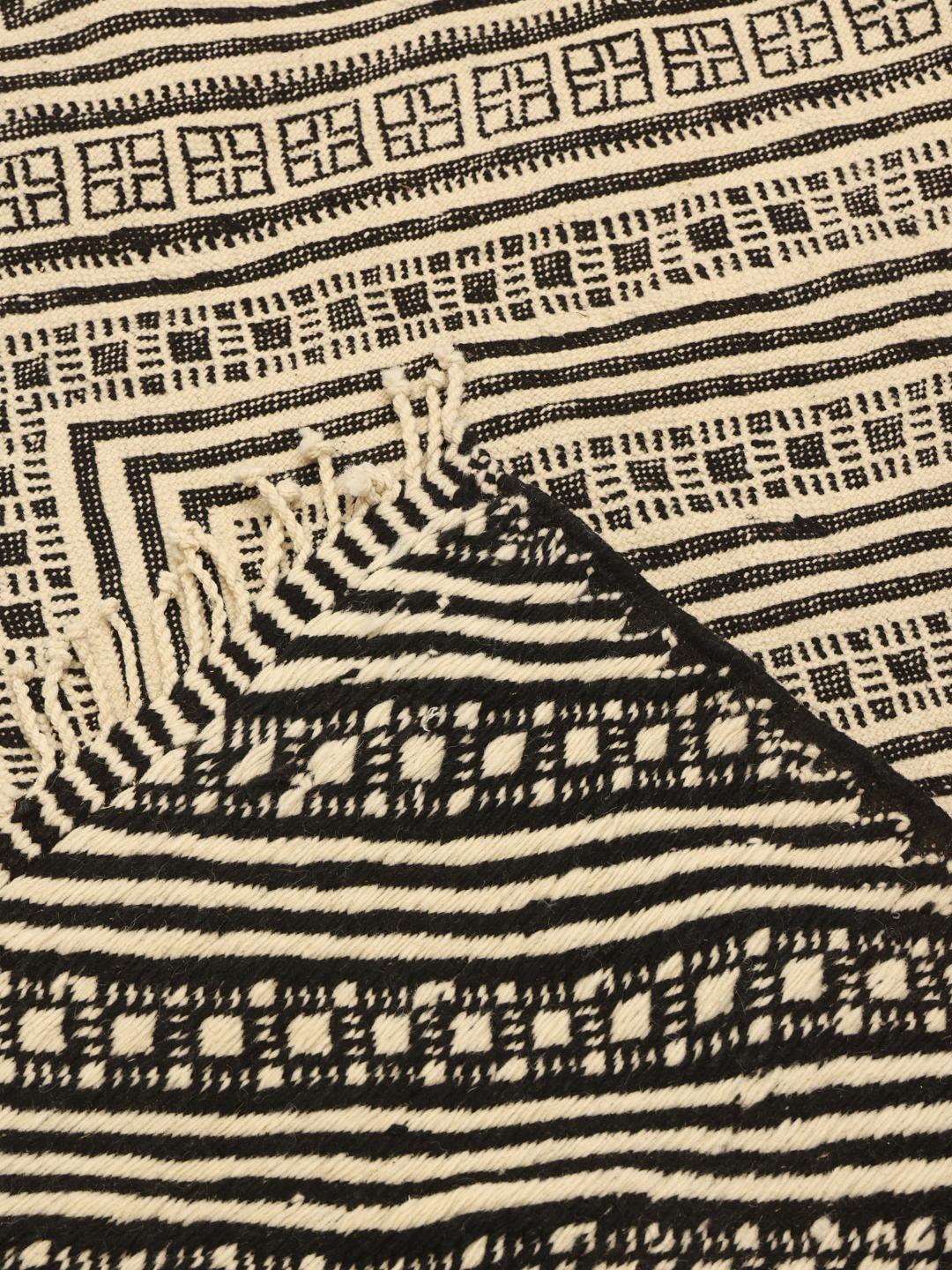
The High Atlas Kelim represents the rich weaving heritage of the Berber tribes residing in the mountainous regions of Morocco. For centuries, these communities have used the loom as a primary medium for storytelling, weaving their lives, beliefs, and the surrounding natural landscape into the fabric of their rugs. Unlike many other regional traditions, these pieces remain deeply connected to the daily life and domestic needs of the weavers.
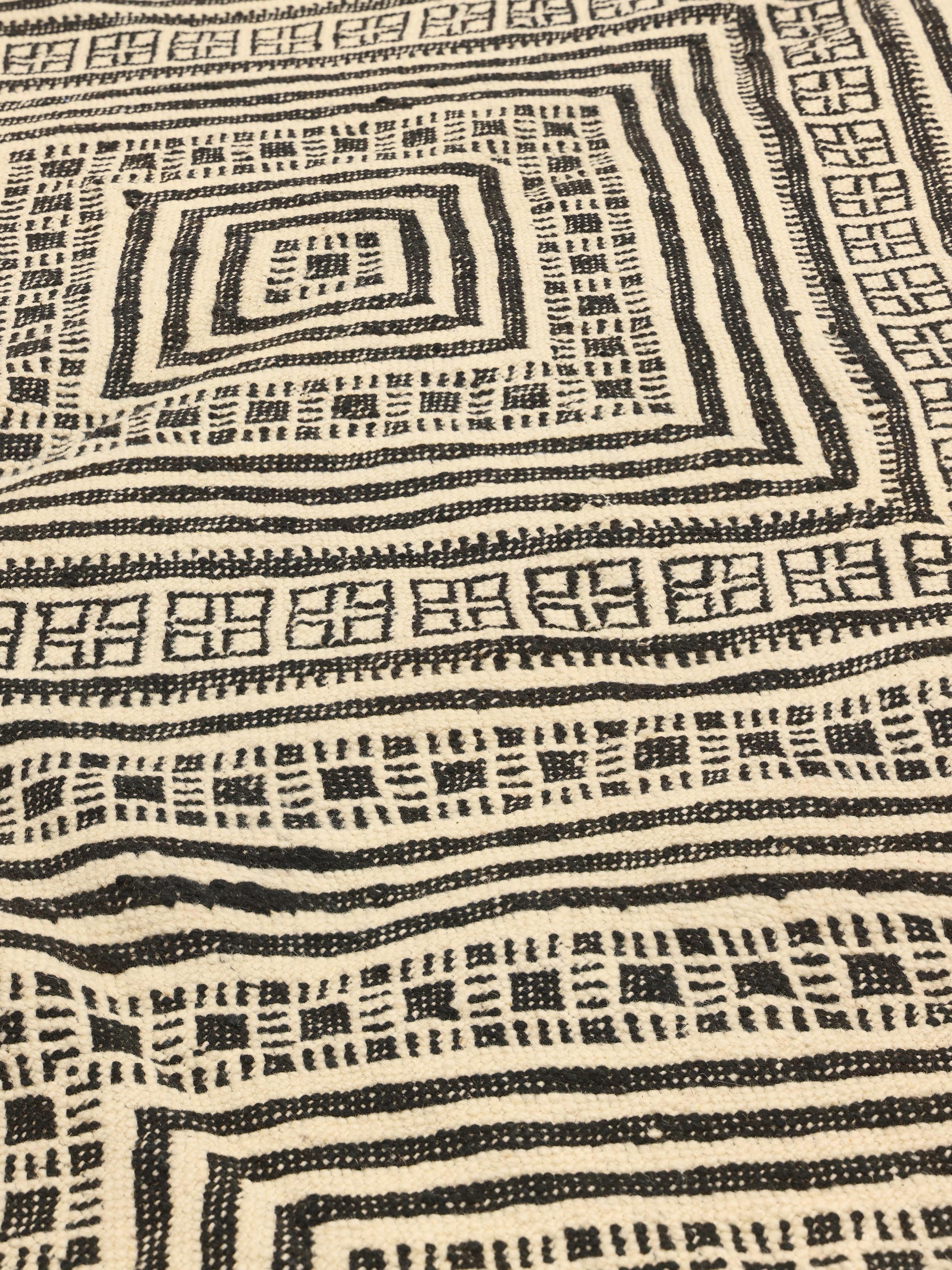
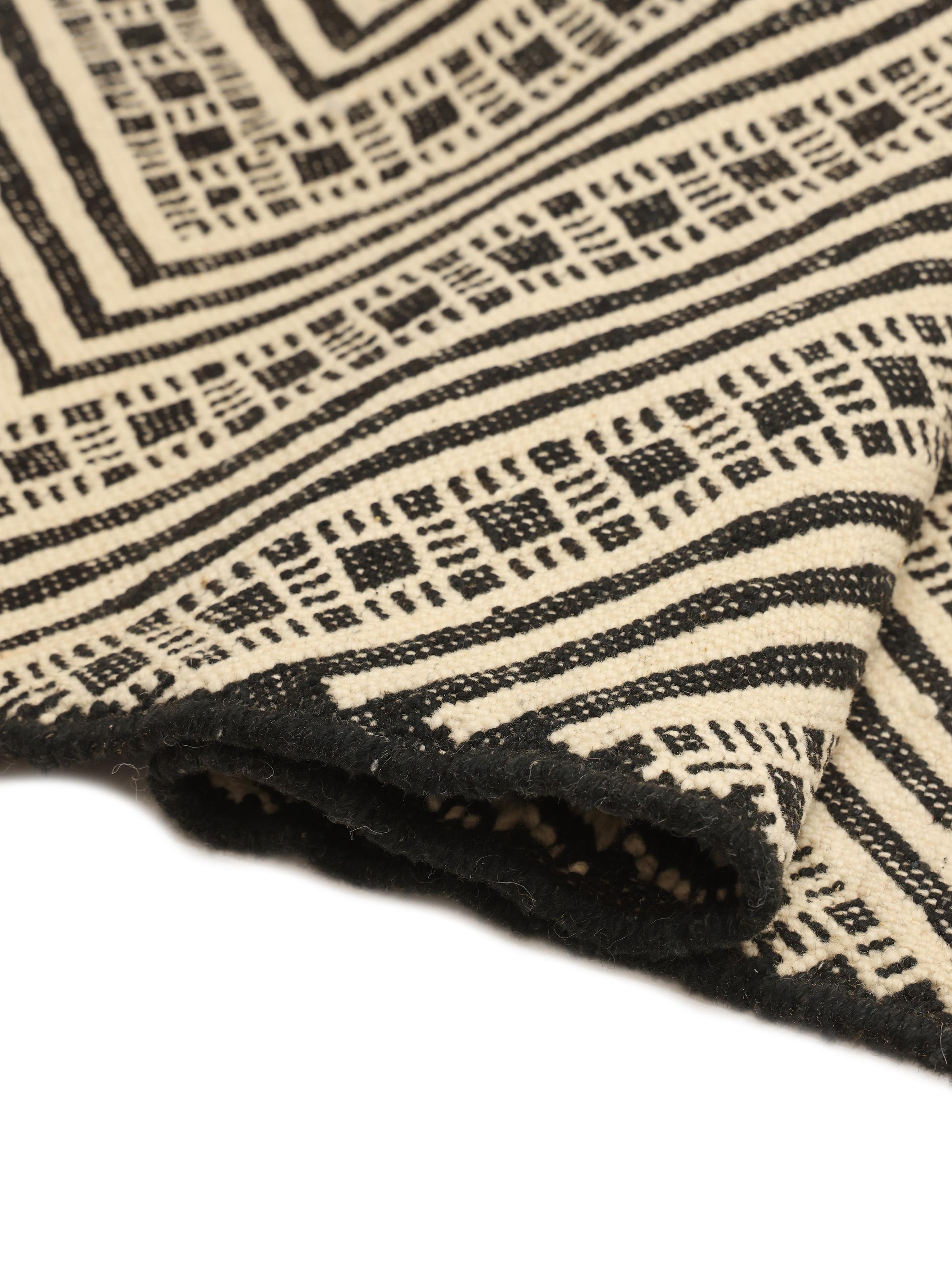
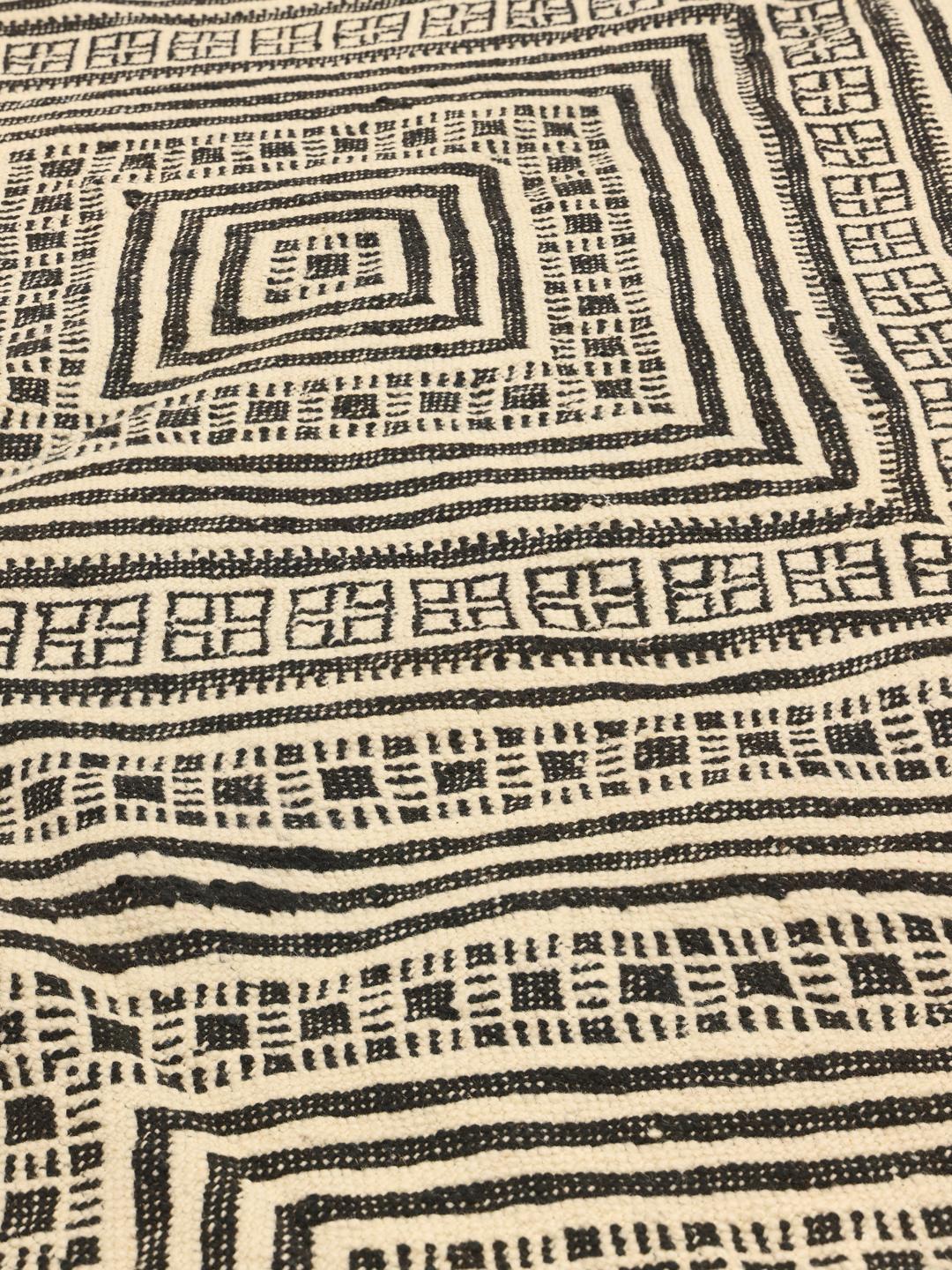
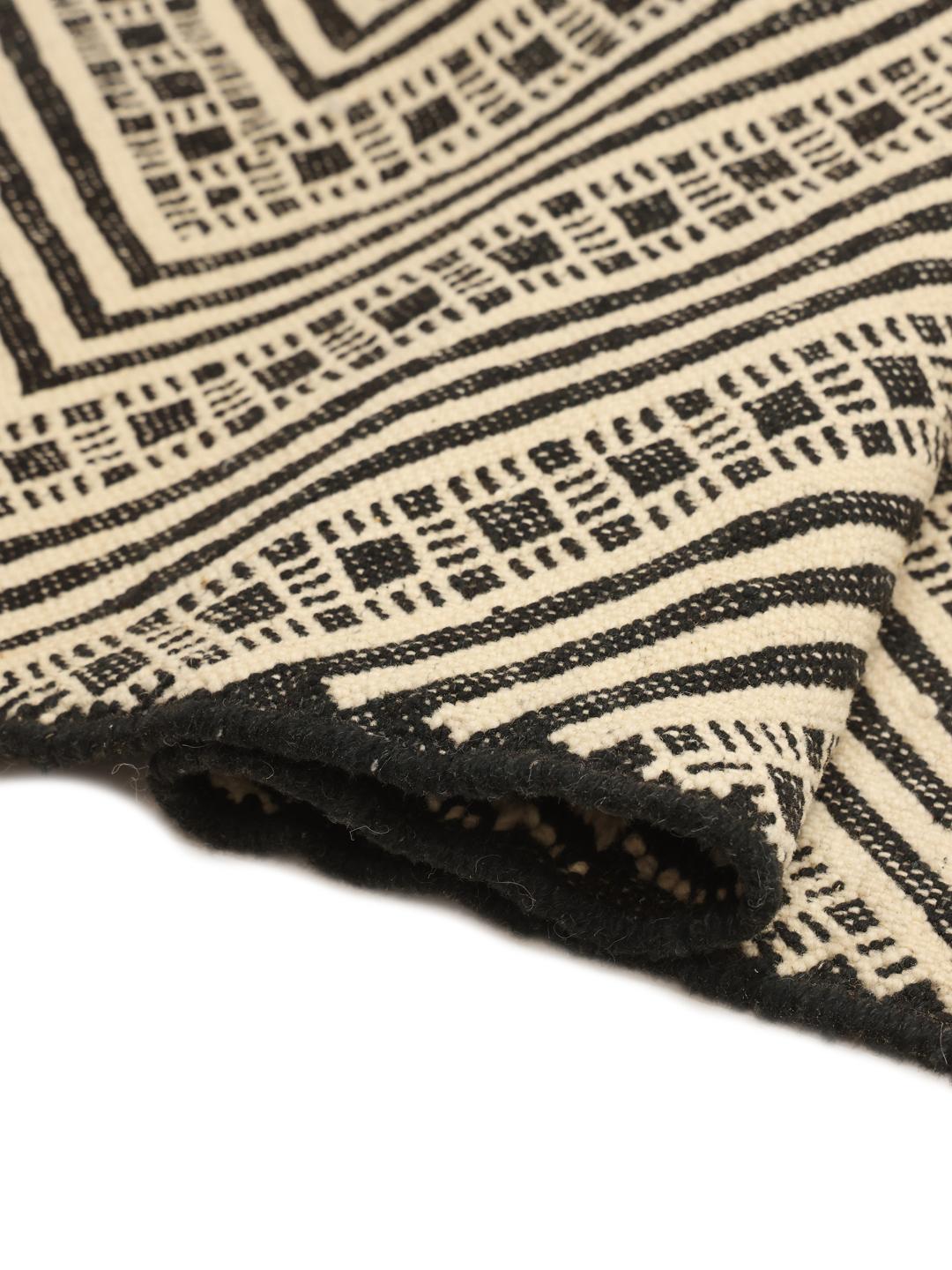
The term 'Kelim' refers to a flat-woven technique, which distinguishes these rugs from their knotted counterparts. By interweaving the weft and warp threads, the weaver creates a smooth, durable, and reversible surface that is both lightweight and incredibly strong. This technique is highly valued for its ability to showcase sharp, clean geometric designs, as the lack of pile allows for intricate pattern work that remains crisp and visible over time.
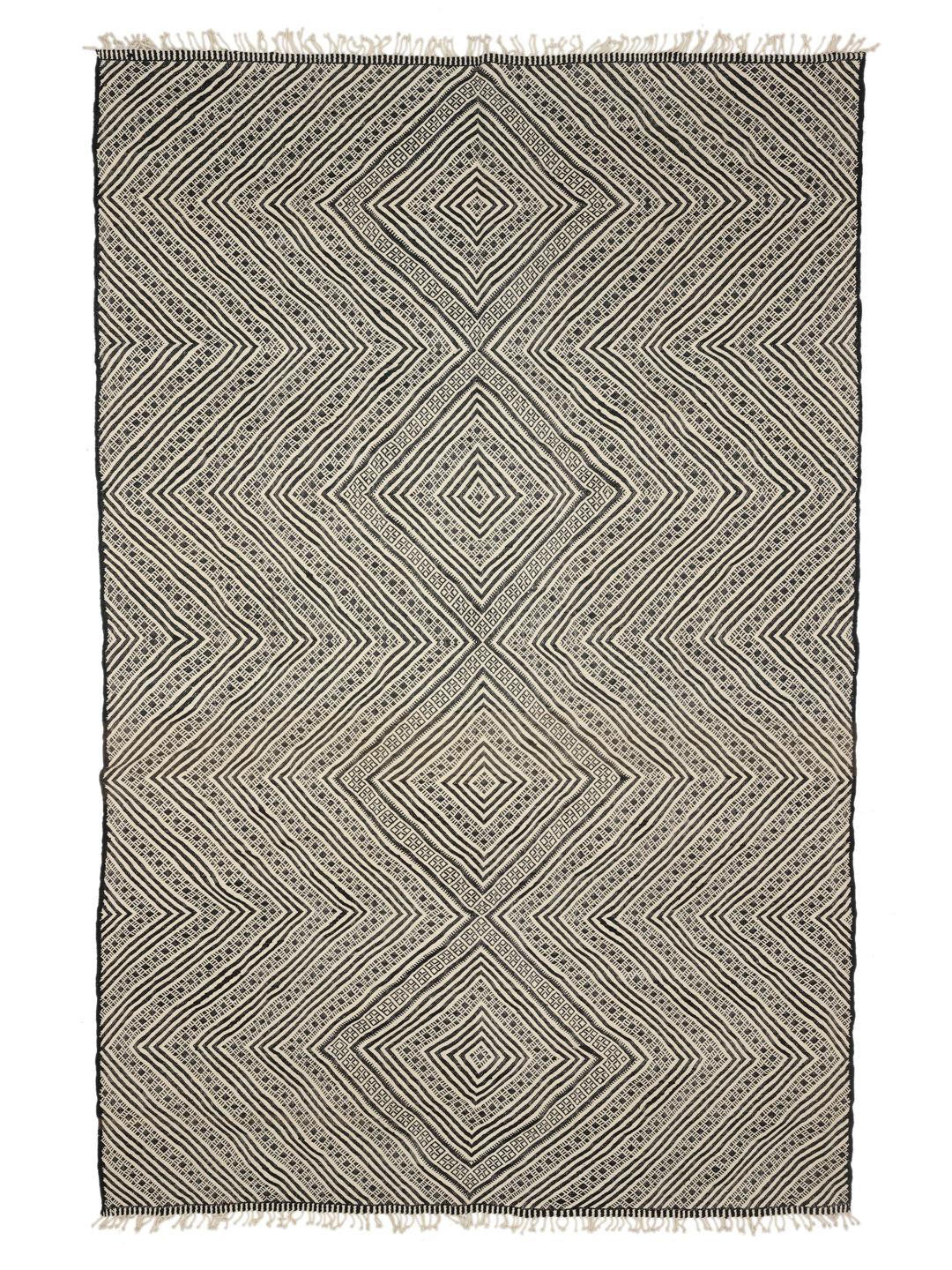
Signature design elements of these rugs often include bold, abstract motifs like diamonds, triangles, and zig-zags. These shapes are not merely decorative but serve as a symbolic language, often representing protection, fertility, or the natural world. In this specific piece, the repeating geometric structure highlights the rhythmic precision common to the best Moroccan work, where symmetry is used to create a sense of harmony within the composition.
Today, these rugs are highly sought after by collectors and interior designers alike for their ability to bridge the gap between traditional craft and modern aesthetics. Owning a piece from the High Atlas is a commitment to preserving a living tradition. It is an investment in human skill, cultural history, and the enduring beauty of hand-woven textiles that grow more characterful with each passing year.