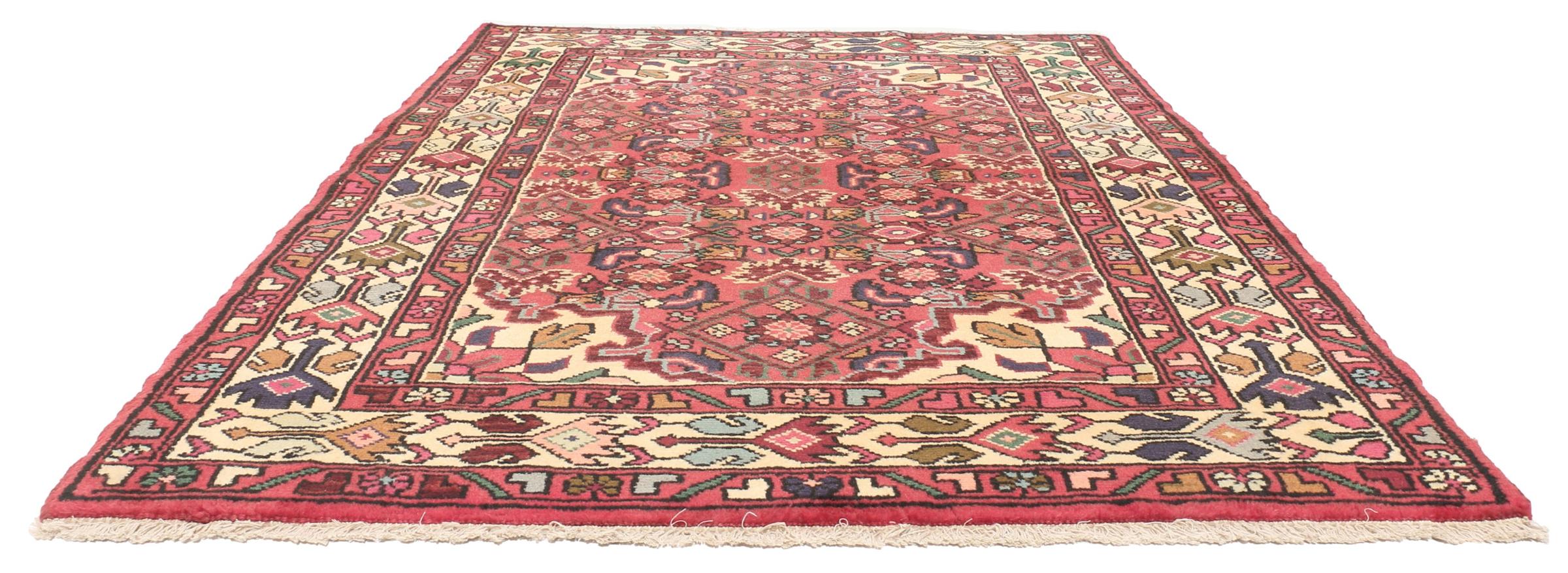
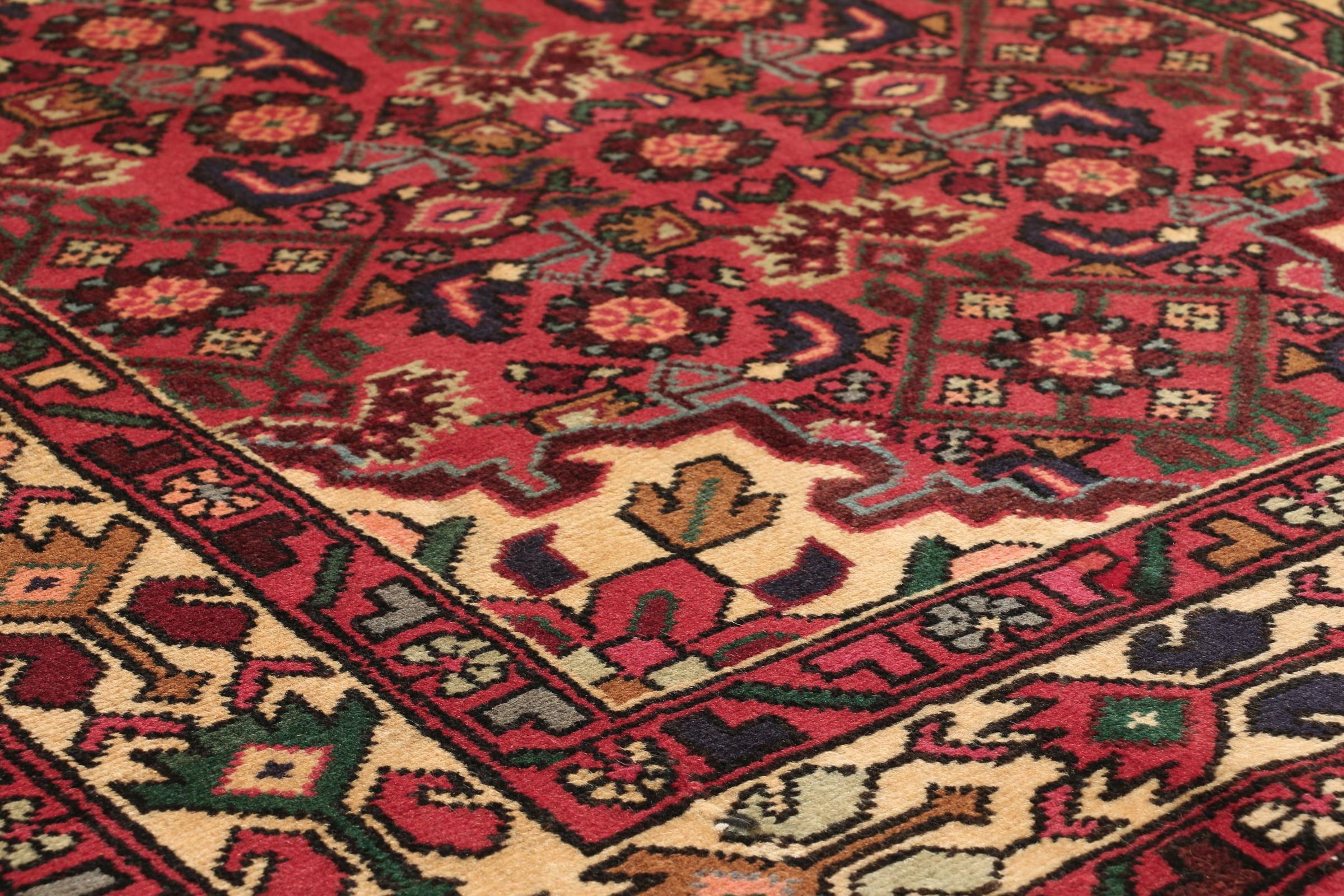
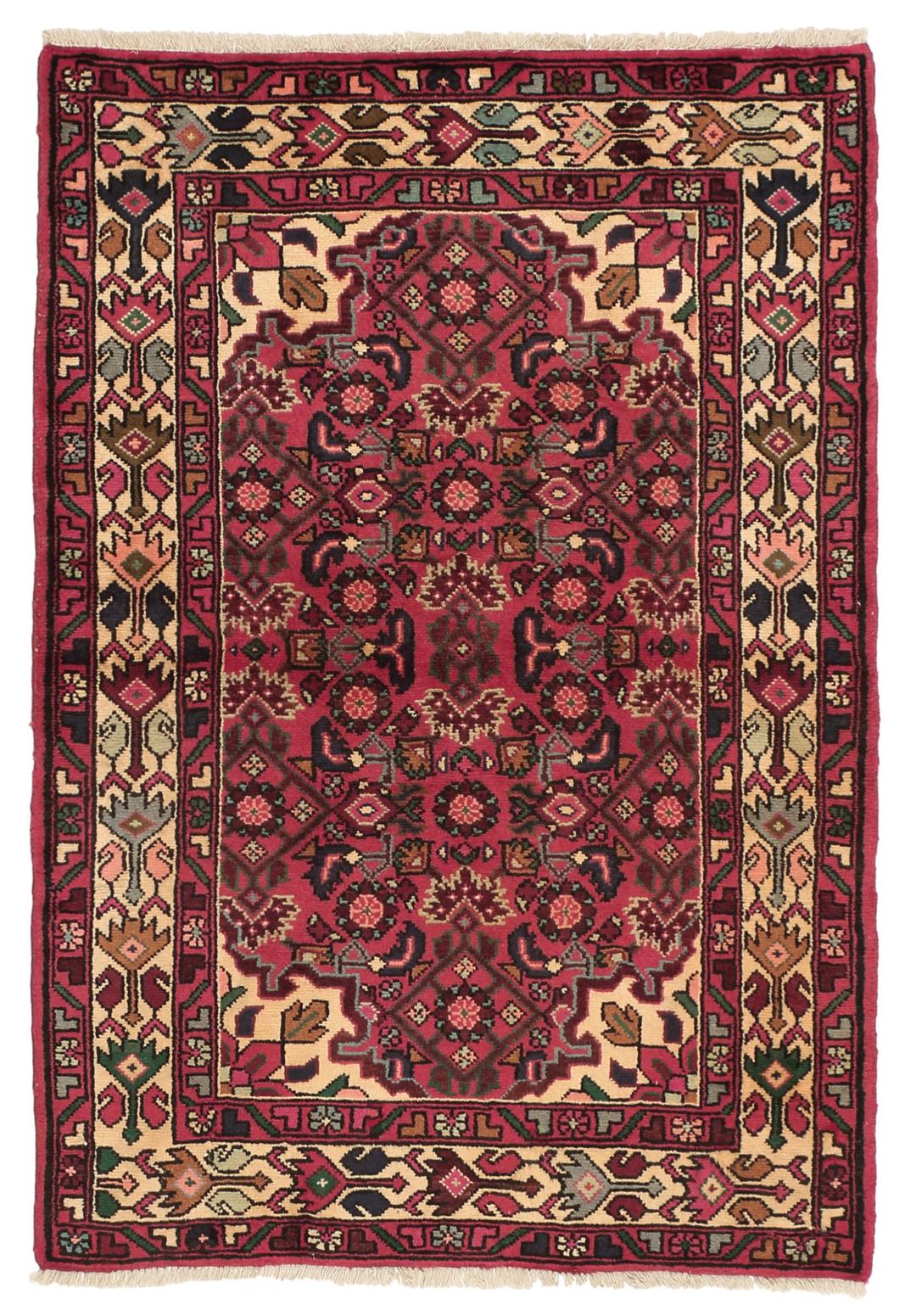
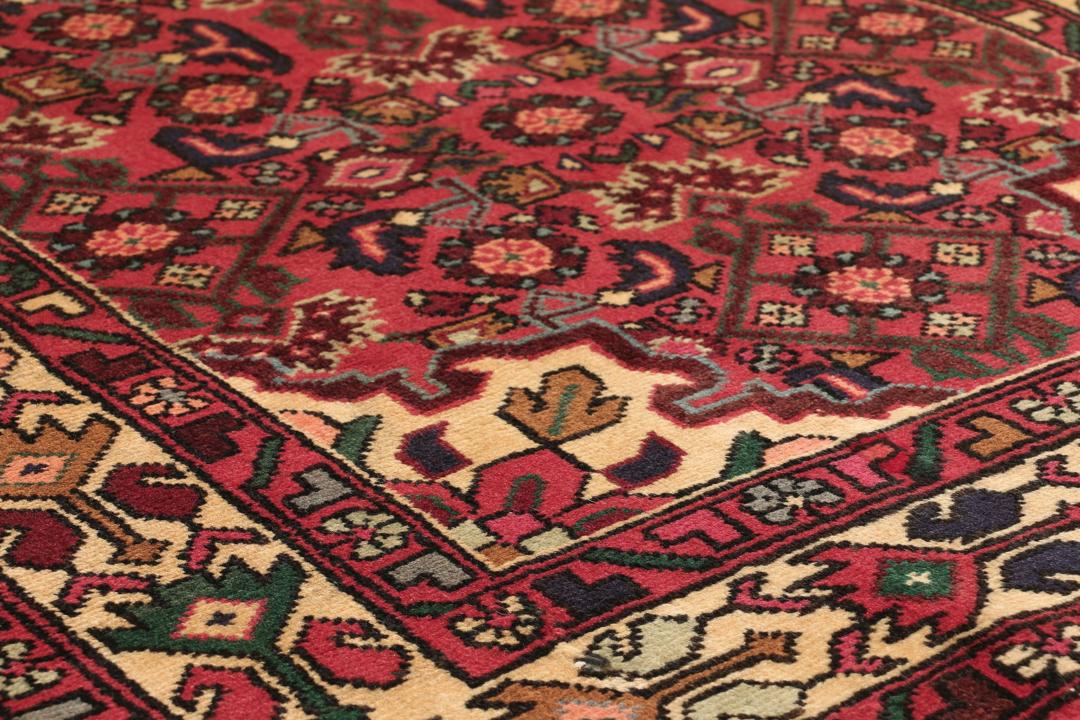
Hosseinabad rugs originate from the Hamadan region of the Middle East, an area long celebrated for its prolific and diverse rug-making traditions. These rugs are deeply rooted in the village weaving culture, where techniques and patterns are passed down through families, reflecting the specific aesthetic preferences of the local community.
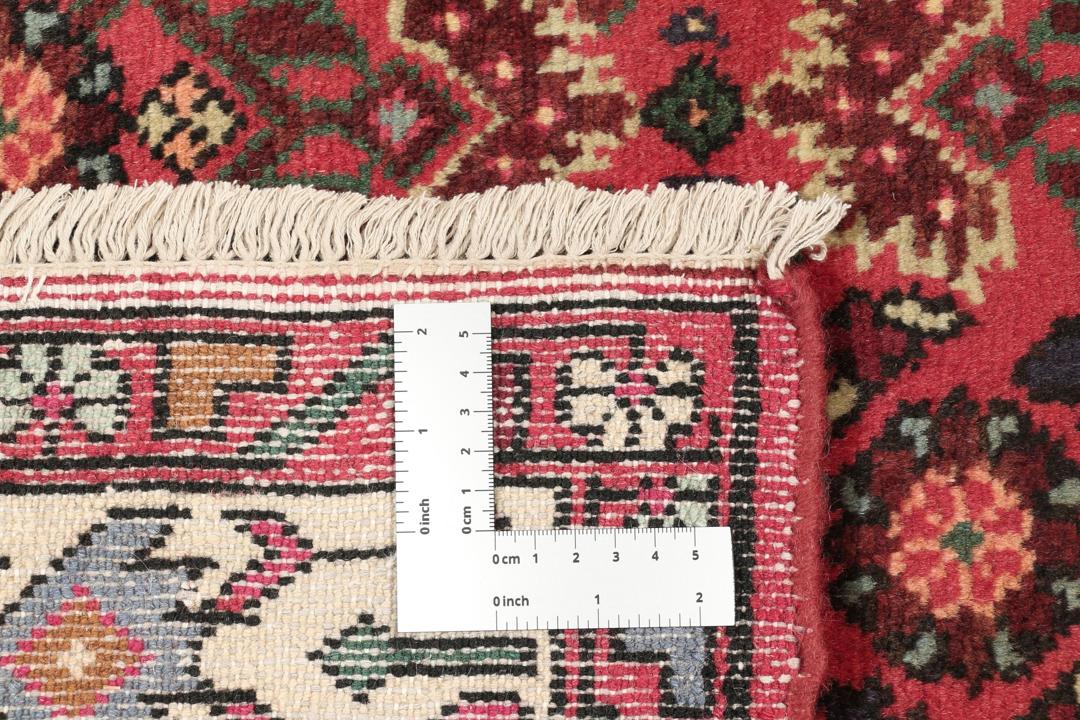
The term Hosseinabad refers to the specific village or district where these pieces are created, often serving as a hallmark of the local style. These rugs are typically hand-knotted with a focus on durability, utilising locally sourced Wool that is known for its strength and ability to take on rich, vibrant dyes over time.
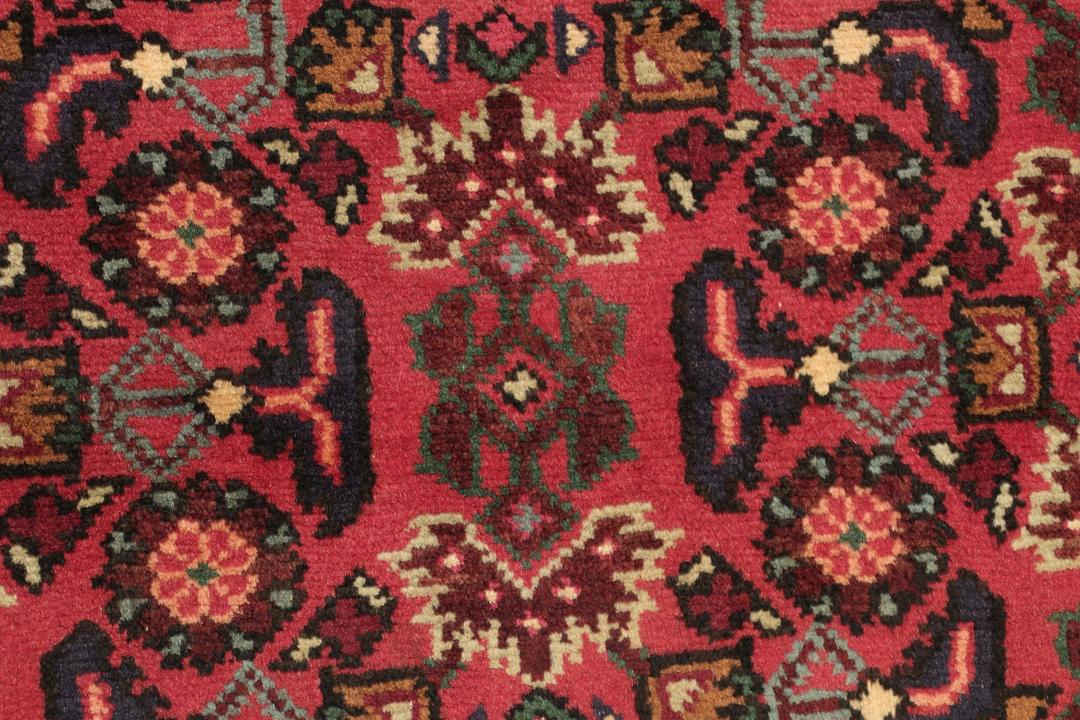
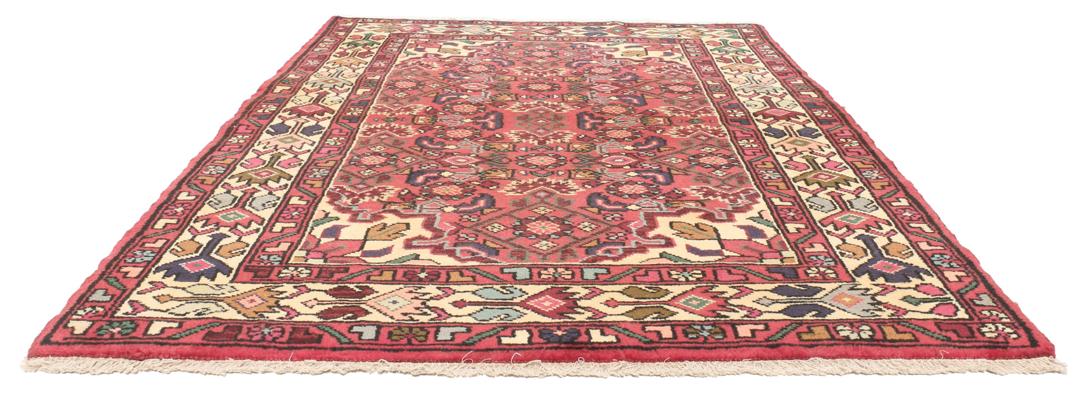
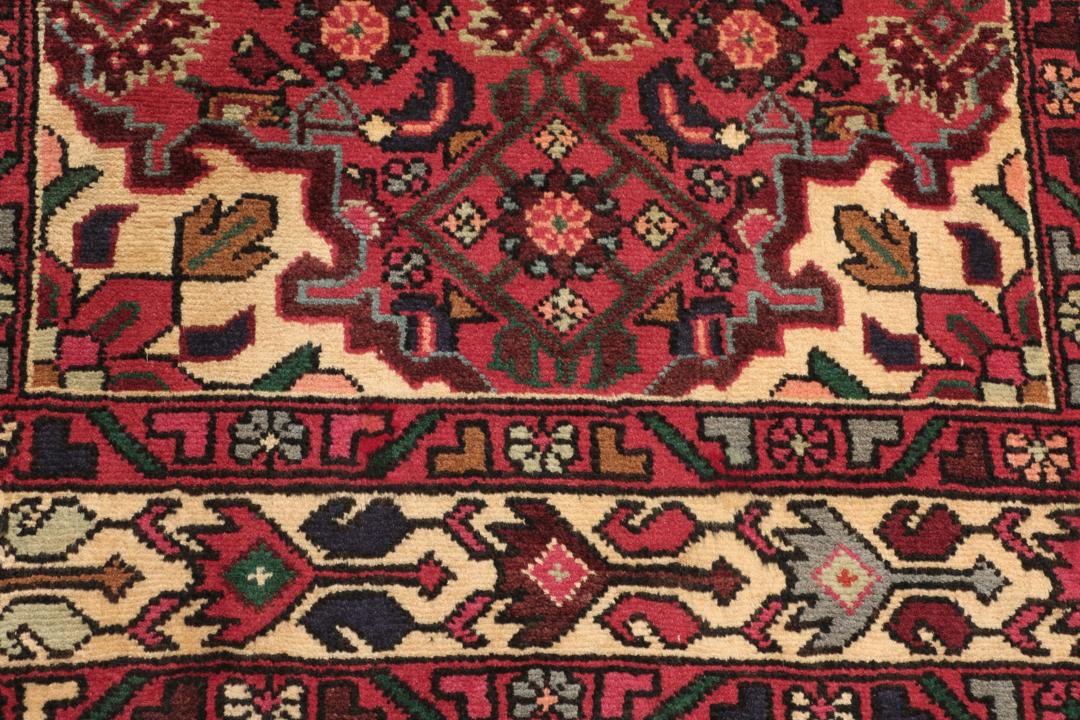
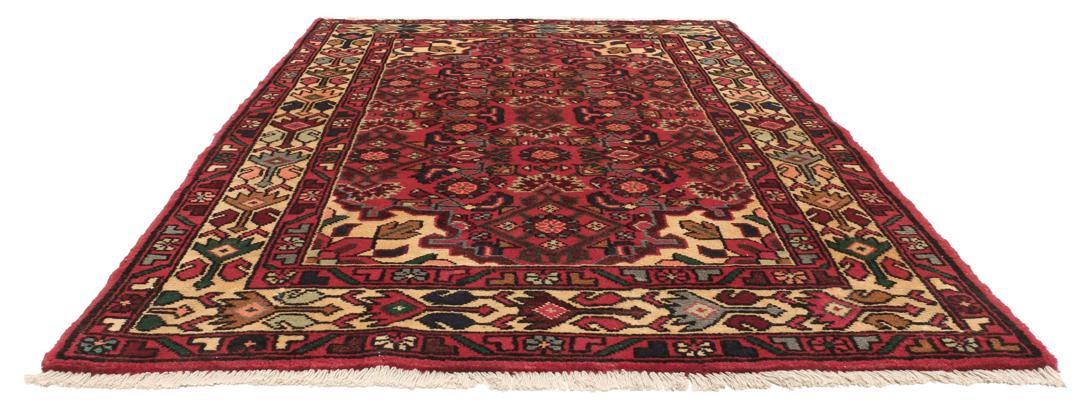
Visually, these pieces often feature bold, geometric interpretations of floral motifs and central medallions, framed by wide, expressive borders. The design language is characterised by a charming, slightly rustic spontaneity that distinguishes village-made rugs from more formal, court-style designs. The use of deep reds and contrasting beige or ivory tones is a hallmark of this tradition.
Collecting a Hosseinabad rug is an opportunity to own a piece of living heritage. These rugs are valued not just for their aesthetic beauty, but for the skill and cultural identity they represent. Owning one means bringing the history of a specific village into your home, ensuring that this traditional craft continues to be appreciated and cherished for generations to come.