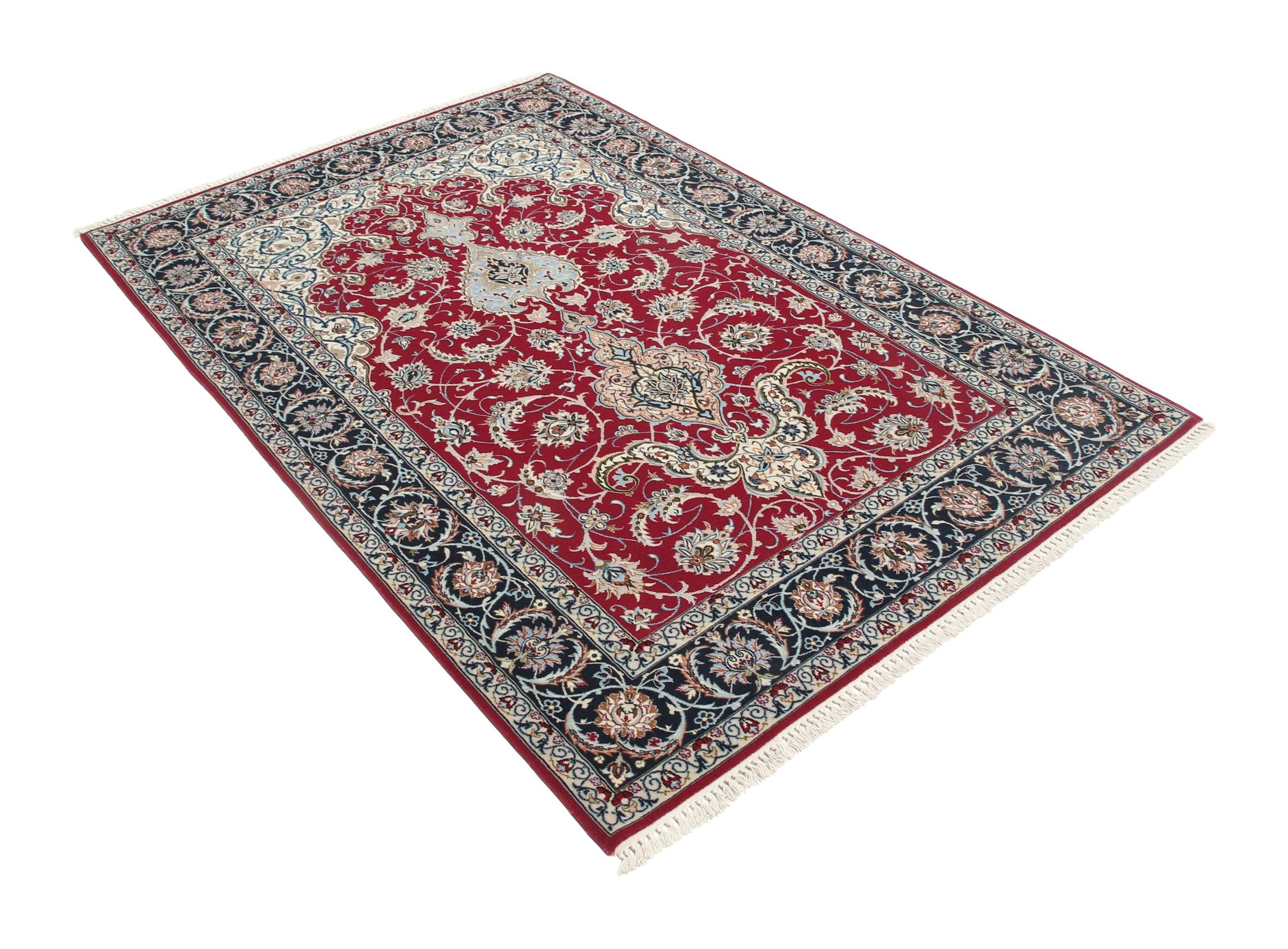
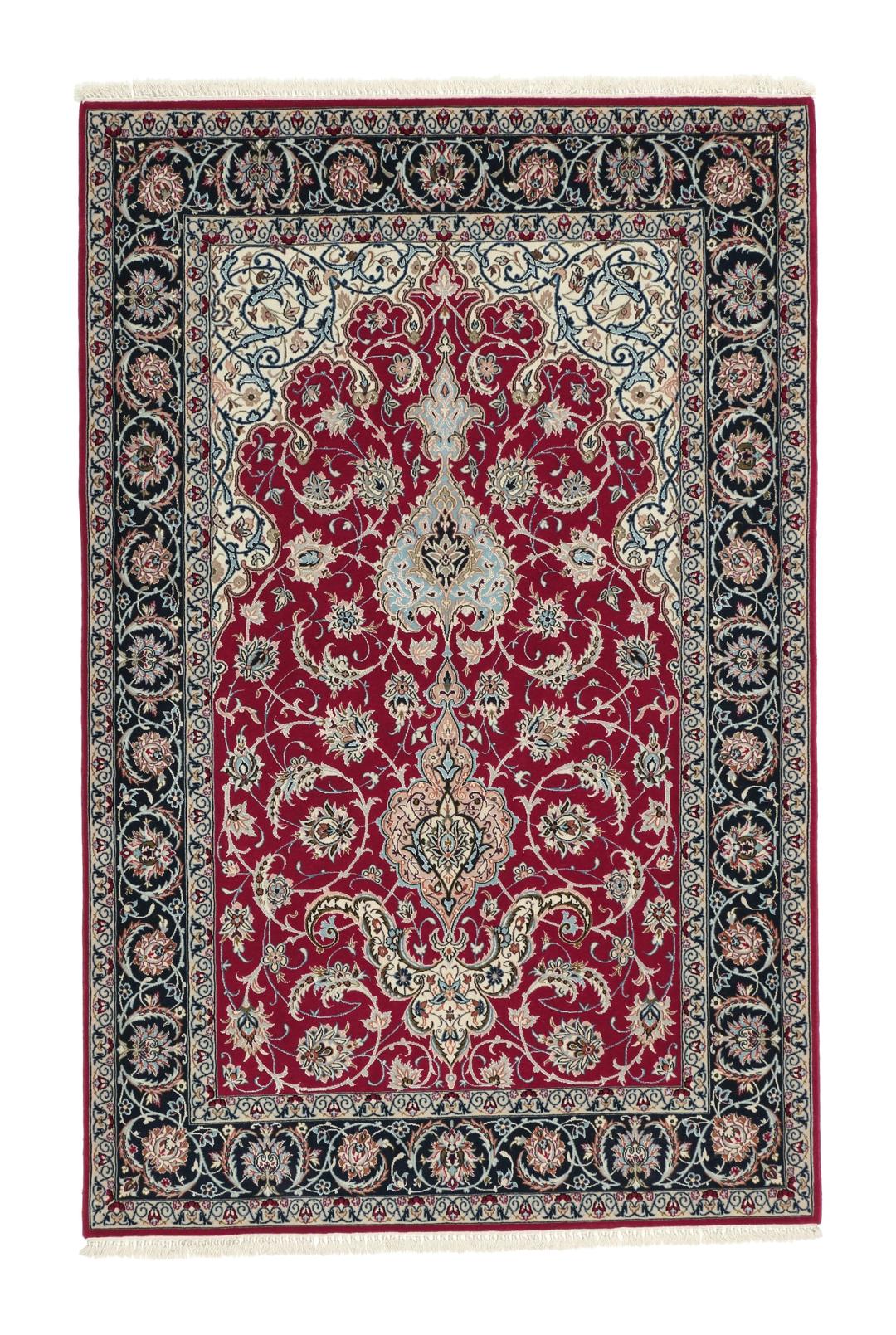
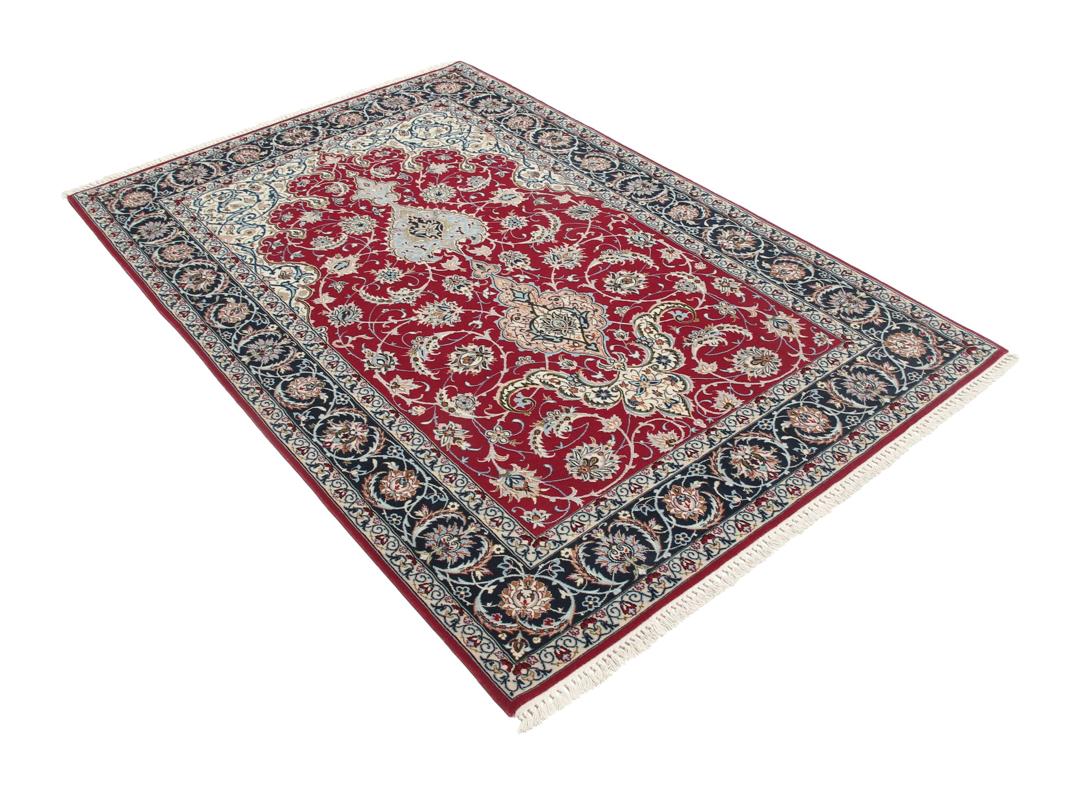
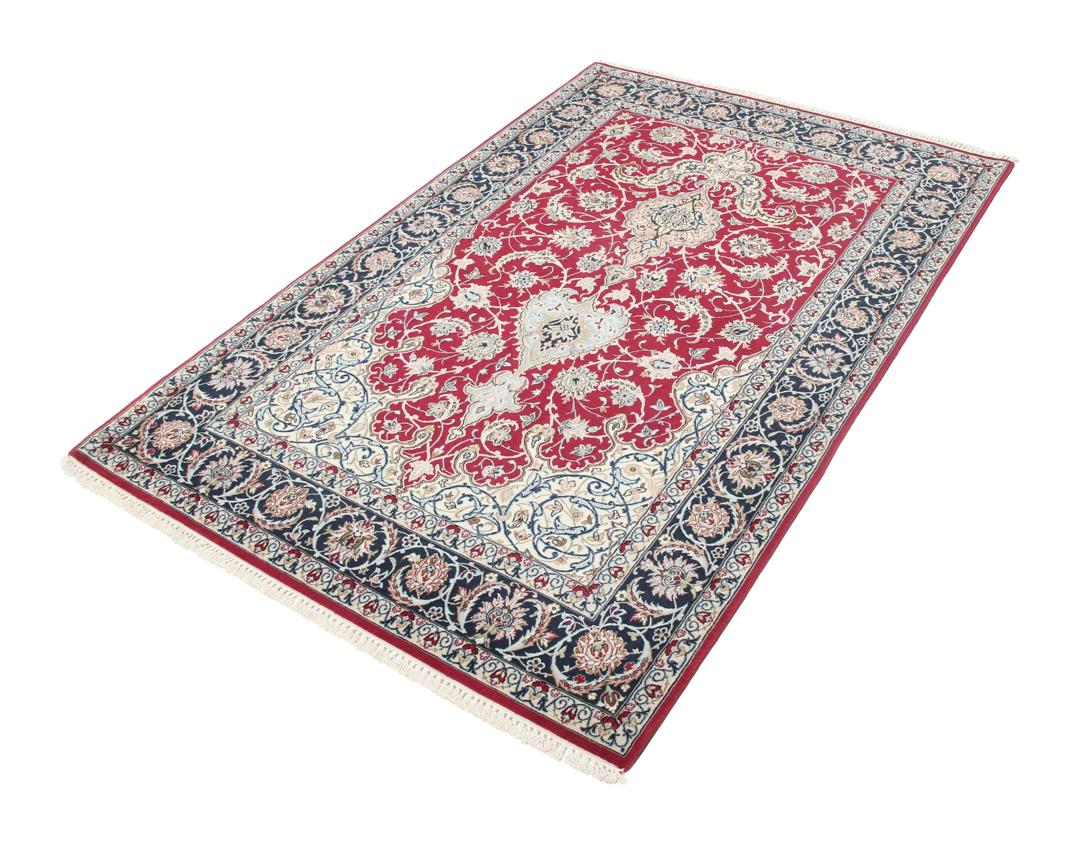
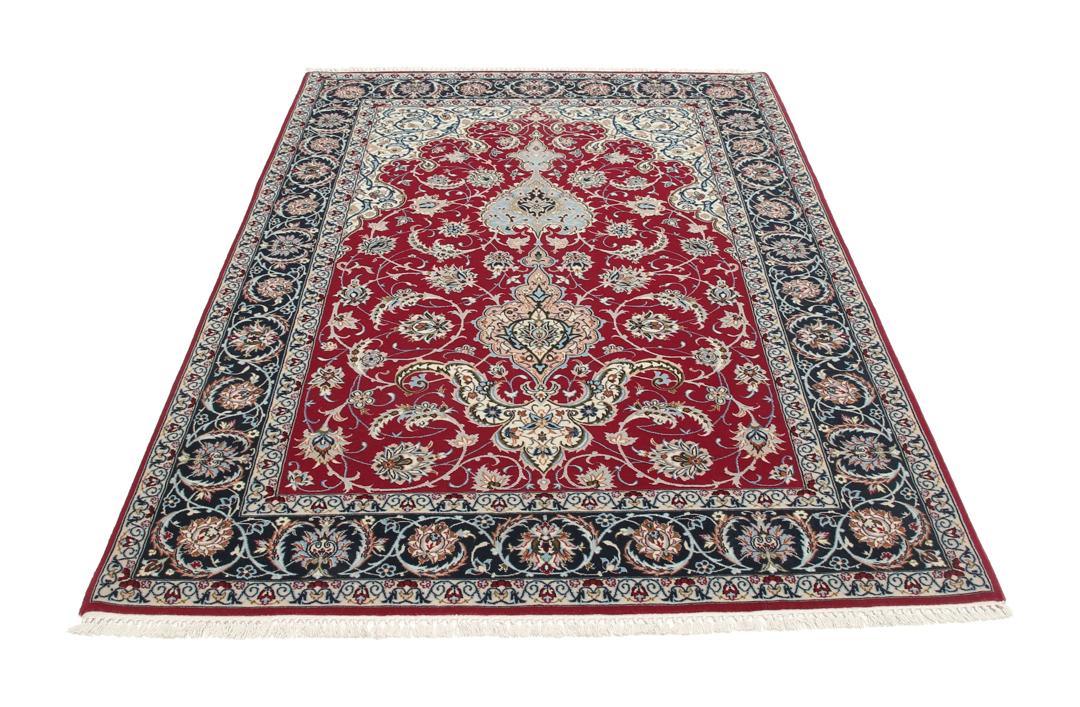
Isfahan rugs originate from the historic city of Isfahan in the Middle East, a former capital that has long been a centre for arts, architecture, and luxury textile production. The tradition of weaving in this region dates back centuries, evolving alongside the grand imperial courts where rugs were commissioned as symbols of prestige and cultural refinement.
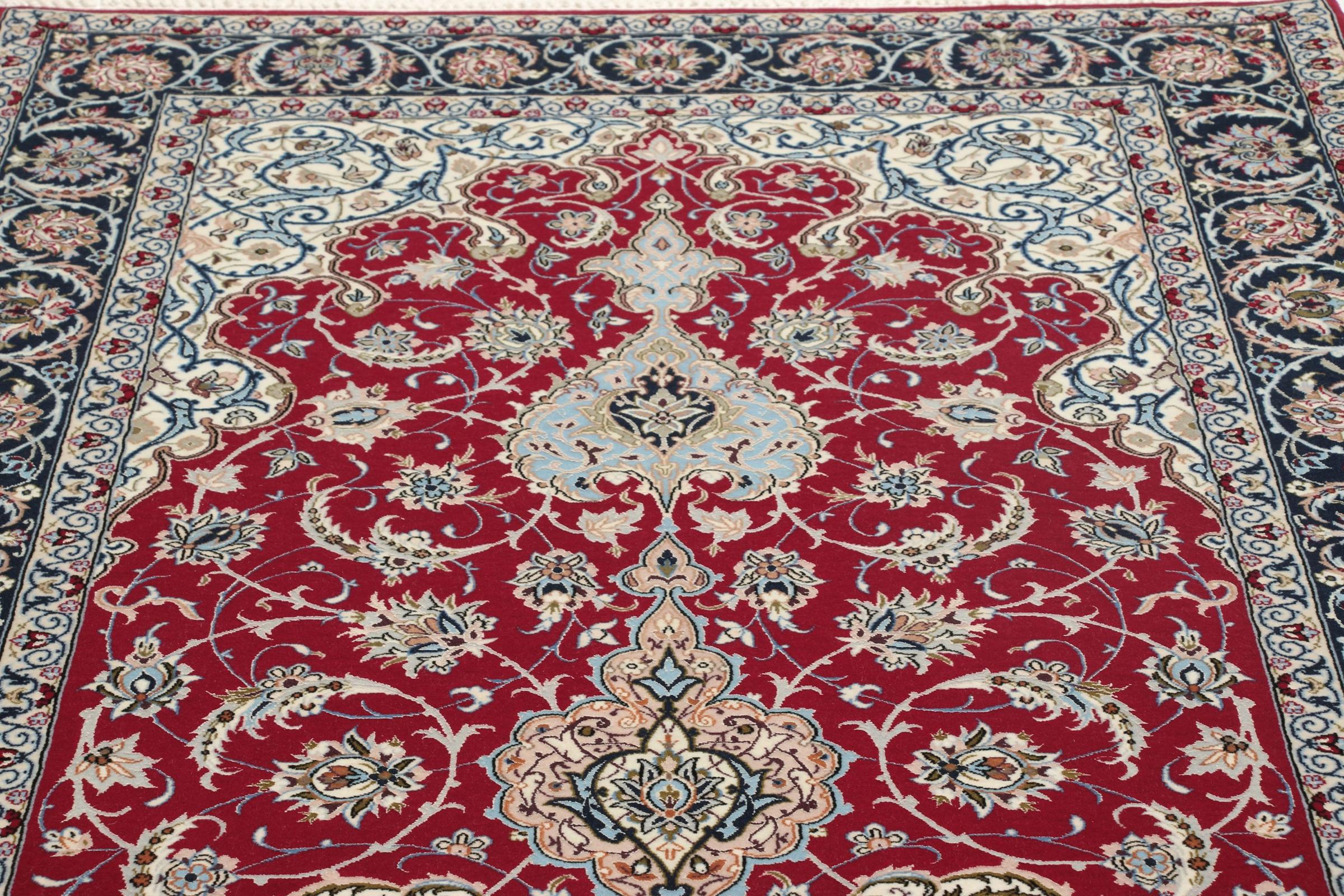
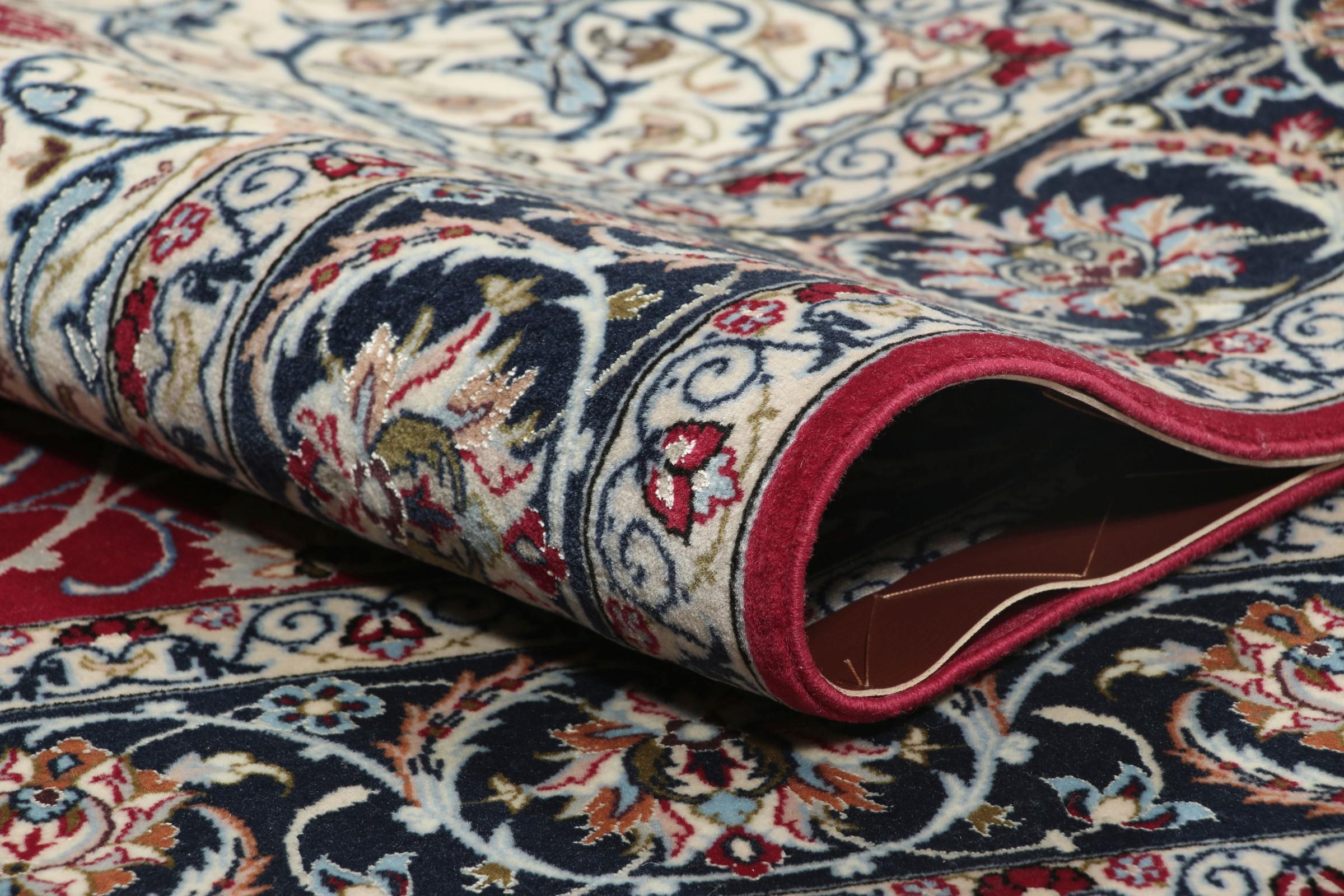
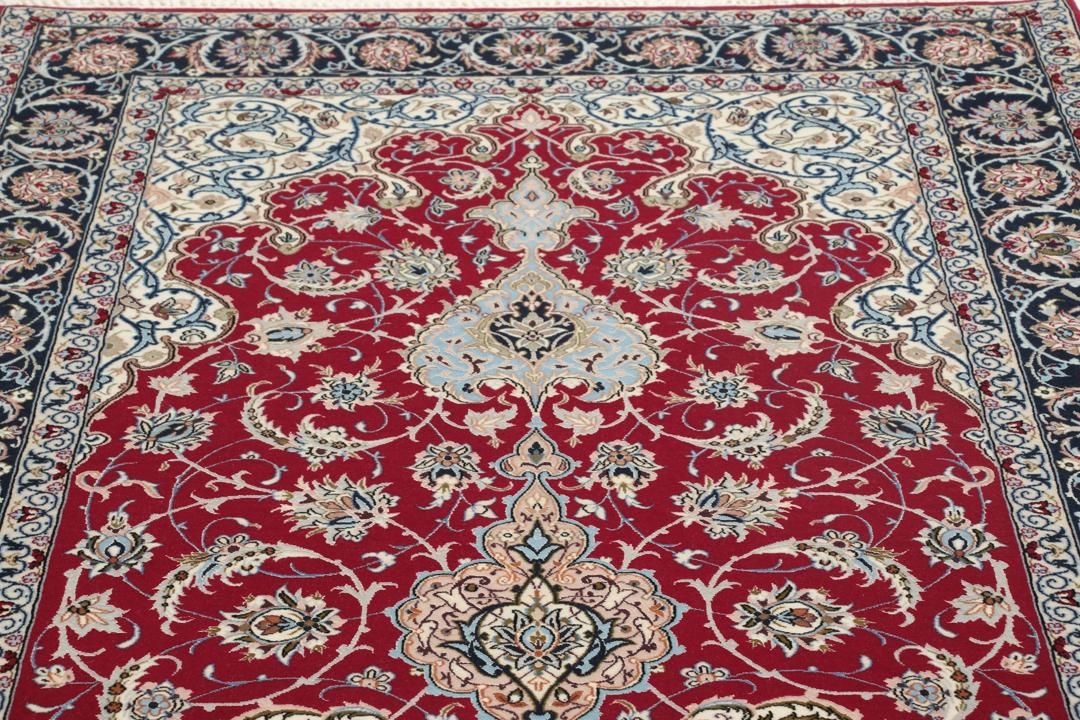
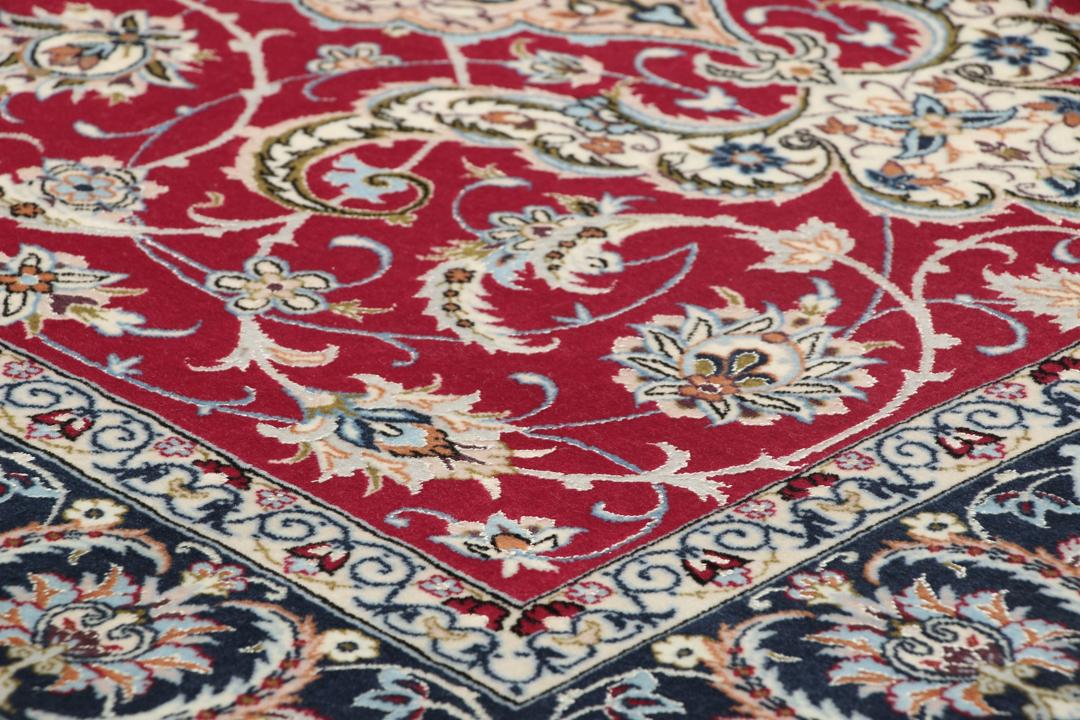
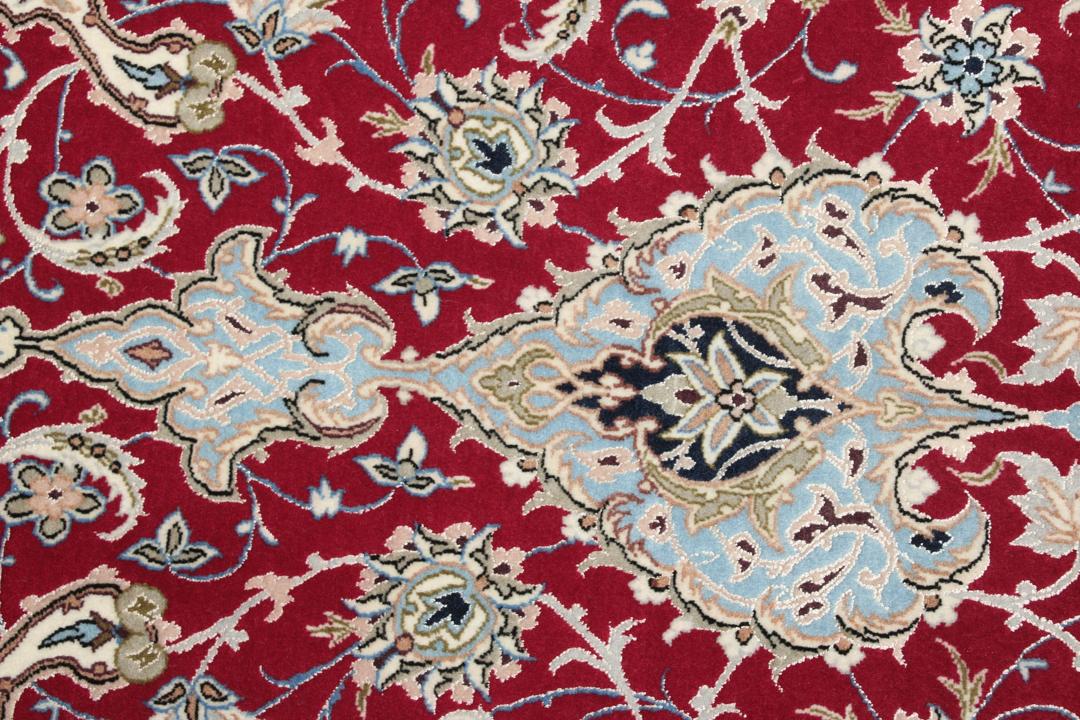
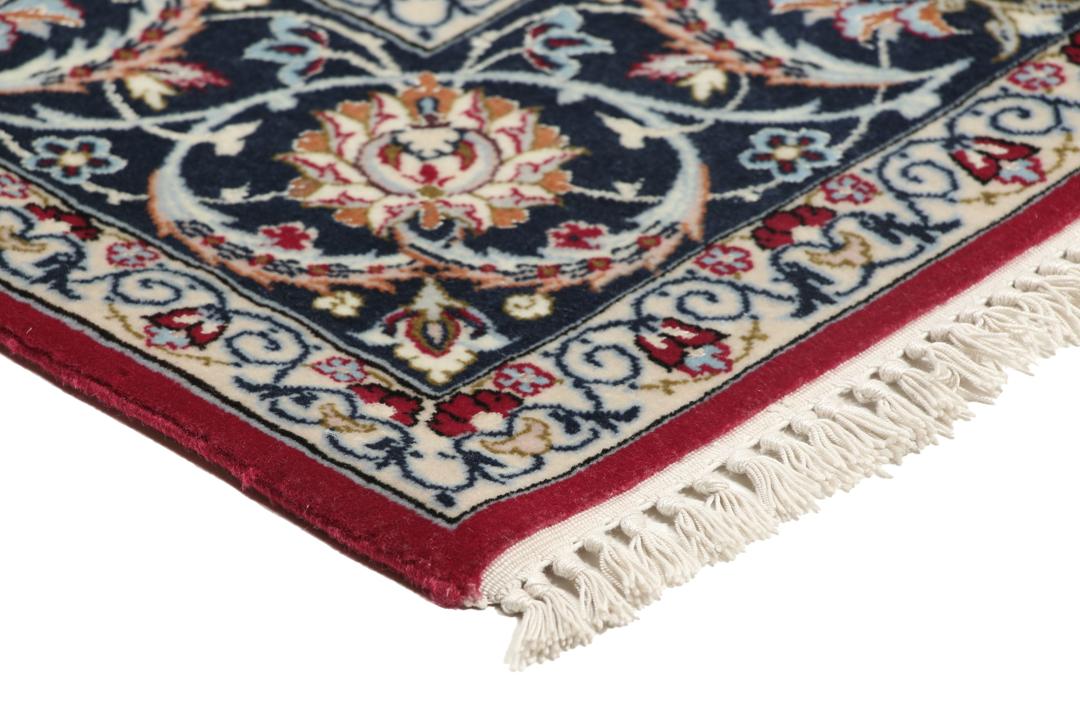
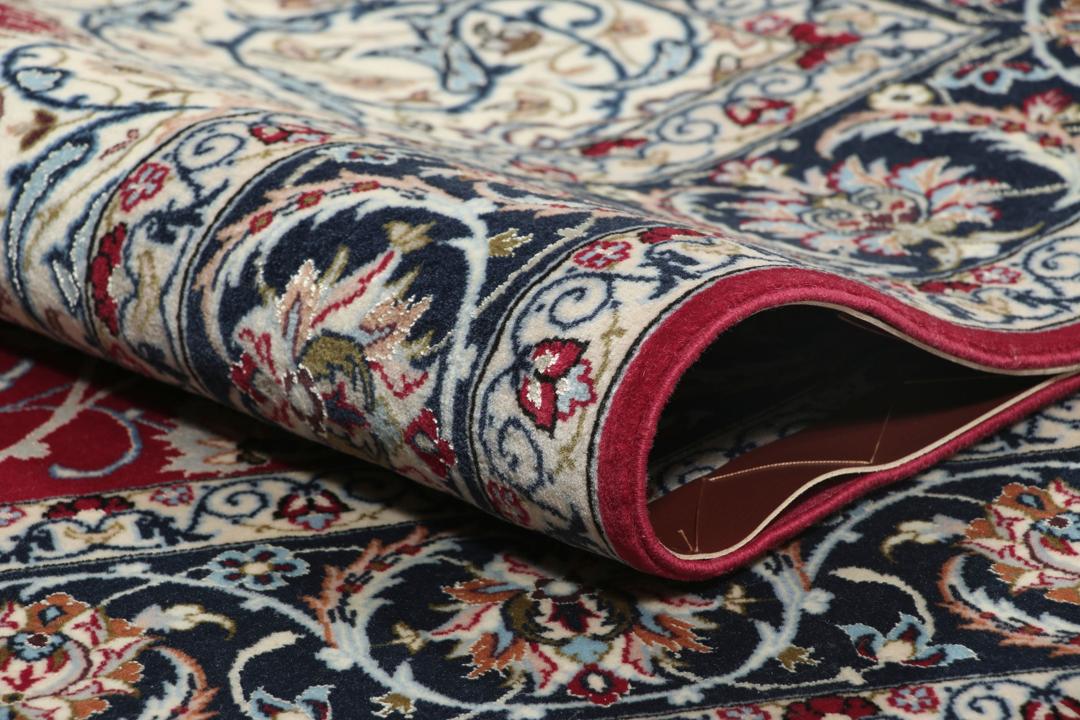
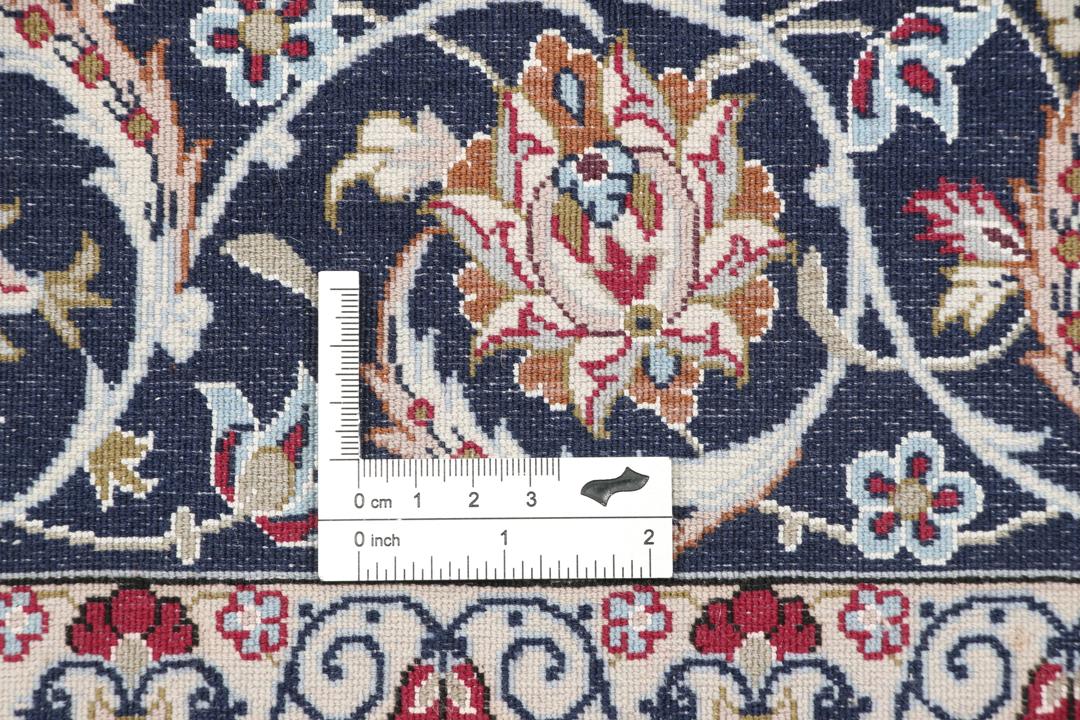
The term Isfahan refers to a specific standard of quality and design characterised by extremely high knot densities and the use of the finest materials. The inclusion of silk within the foundation, as seen in this piece, is a hallmark of the highest quality, allowing for the creation of delicate, curvilinear patterns that appear almost painted onto the surface of the rug.
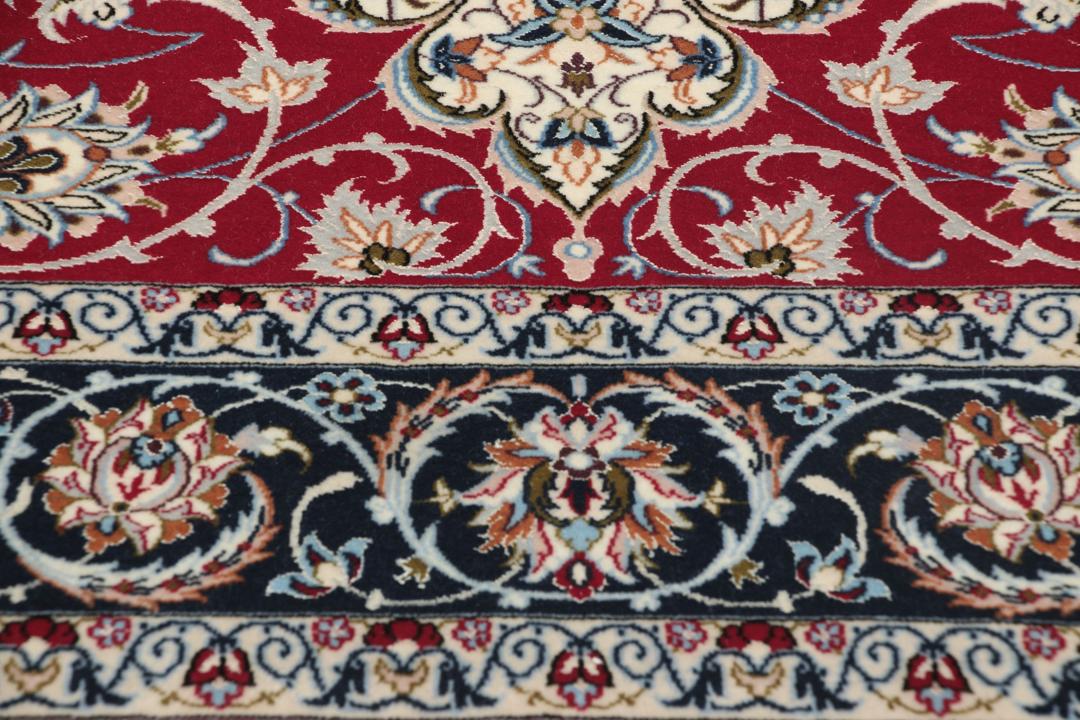
Visually, Isfahan rugs are celebrated for their balanced, often medallion-centred compositions, surrounded by intricate floral arabesques and vines. The colour palette typically features deep reds, indigos, and creams, reflecting the natural dyes used historically. This particular rug adheres to these classic motifs, showcasing the meticulous design language that has defined the Isfahan style for generations.
Collectors value these rugs for their combination of artistic vision and extreme technical skill. Owning an Isfahan is considered a mark of appreciation for the history of fine textiles. It represents a living connection to a tradition of excellence, where every knot contributes to a legacy of beauty that has been curated and perfected over hundreds of years.