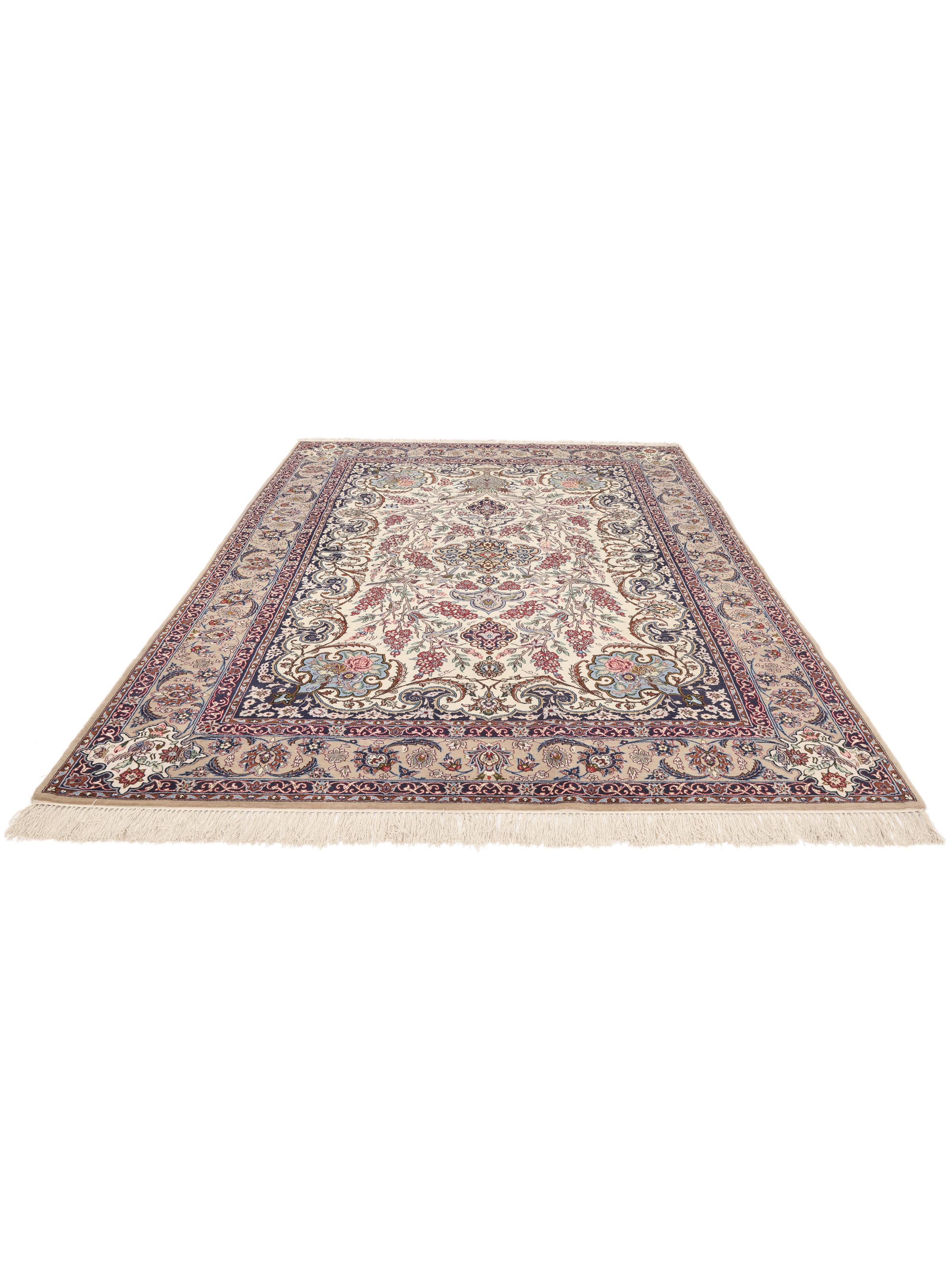
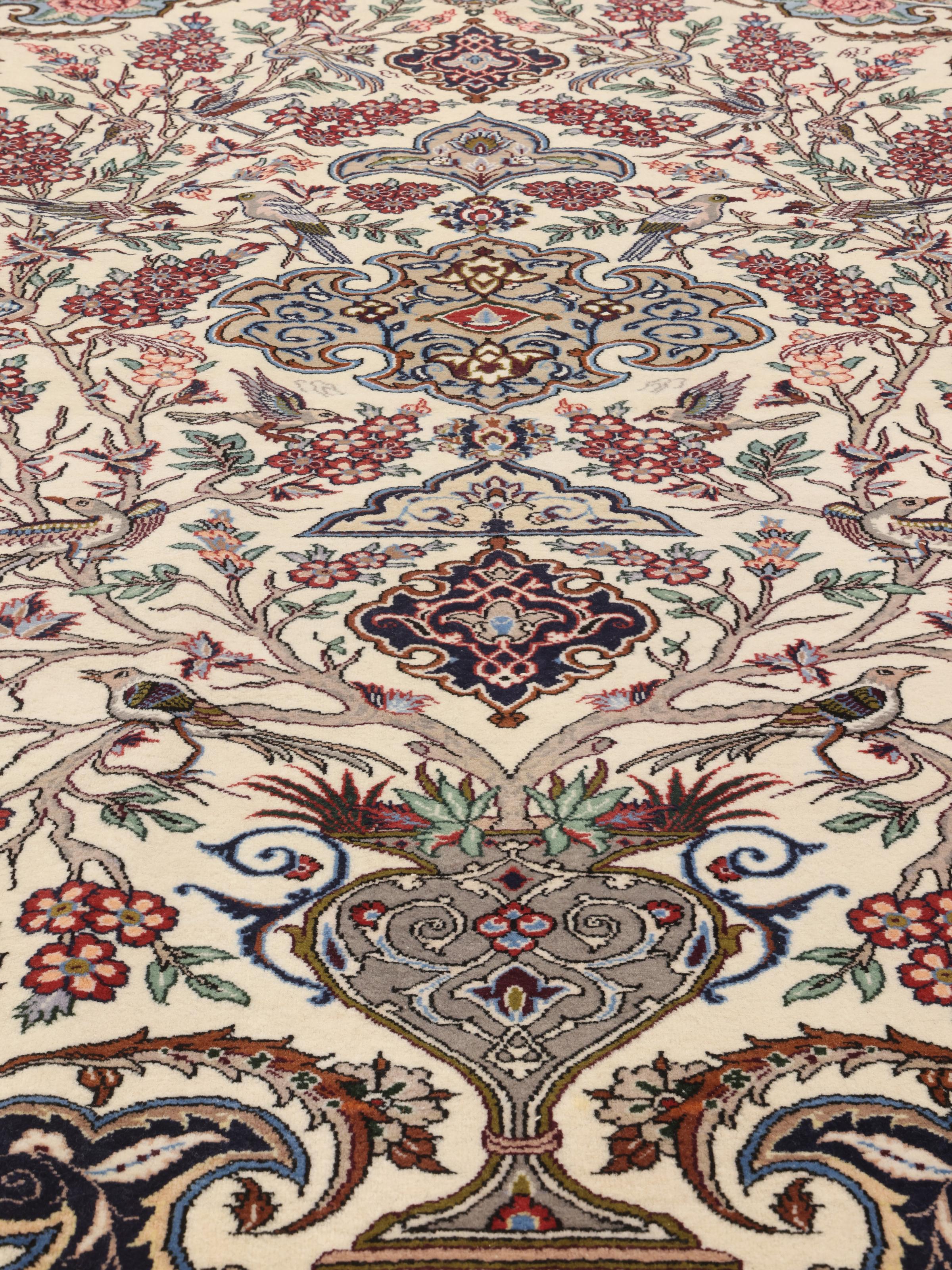
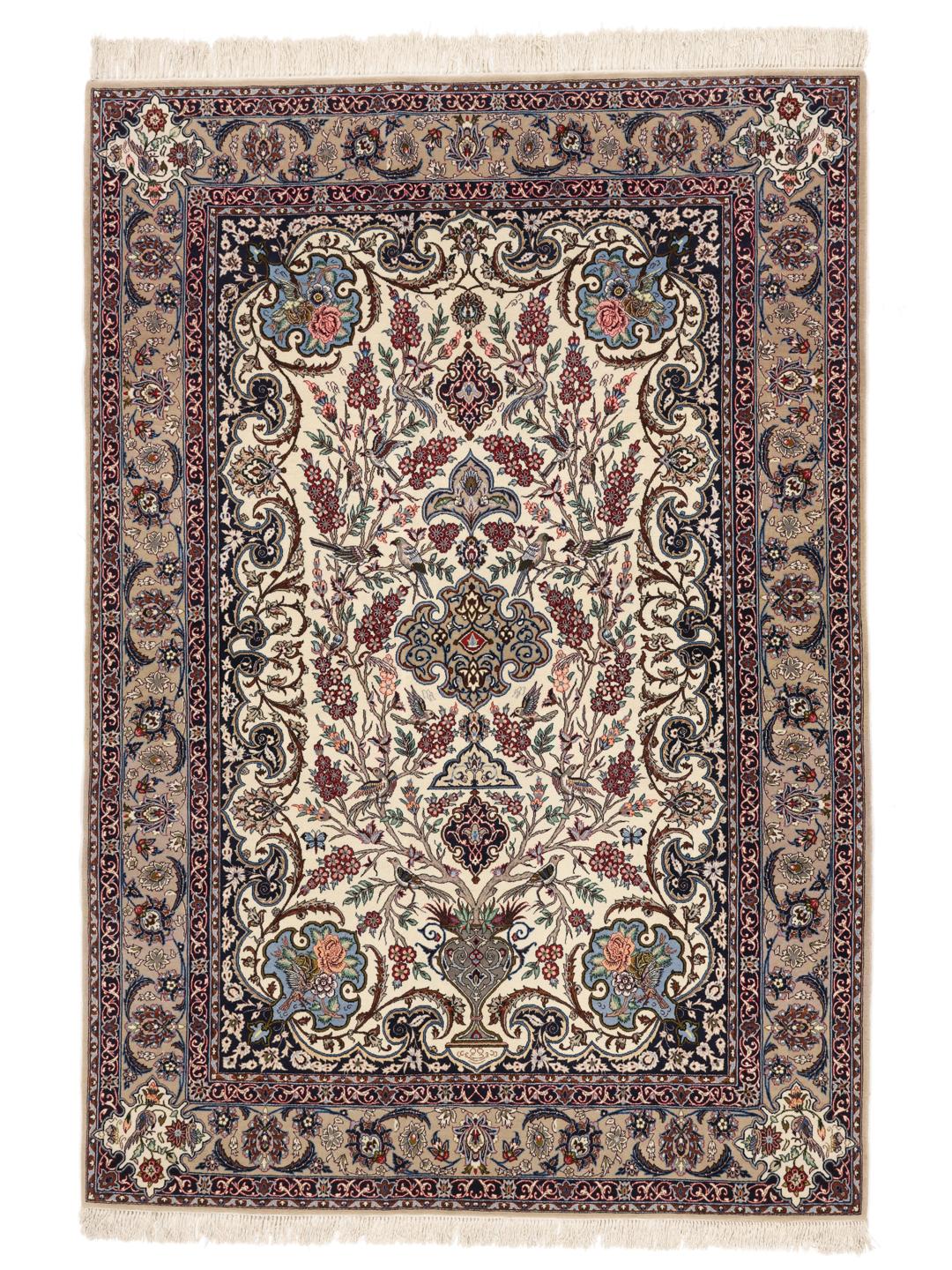
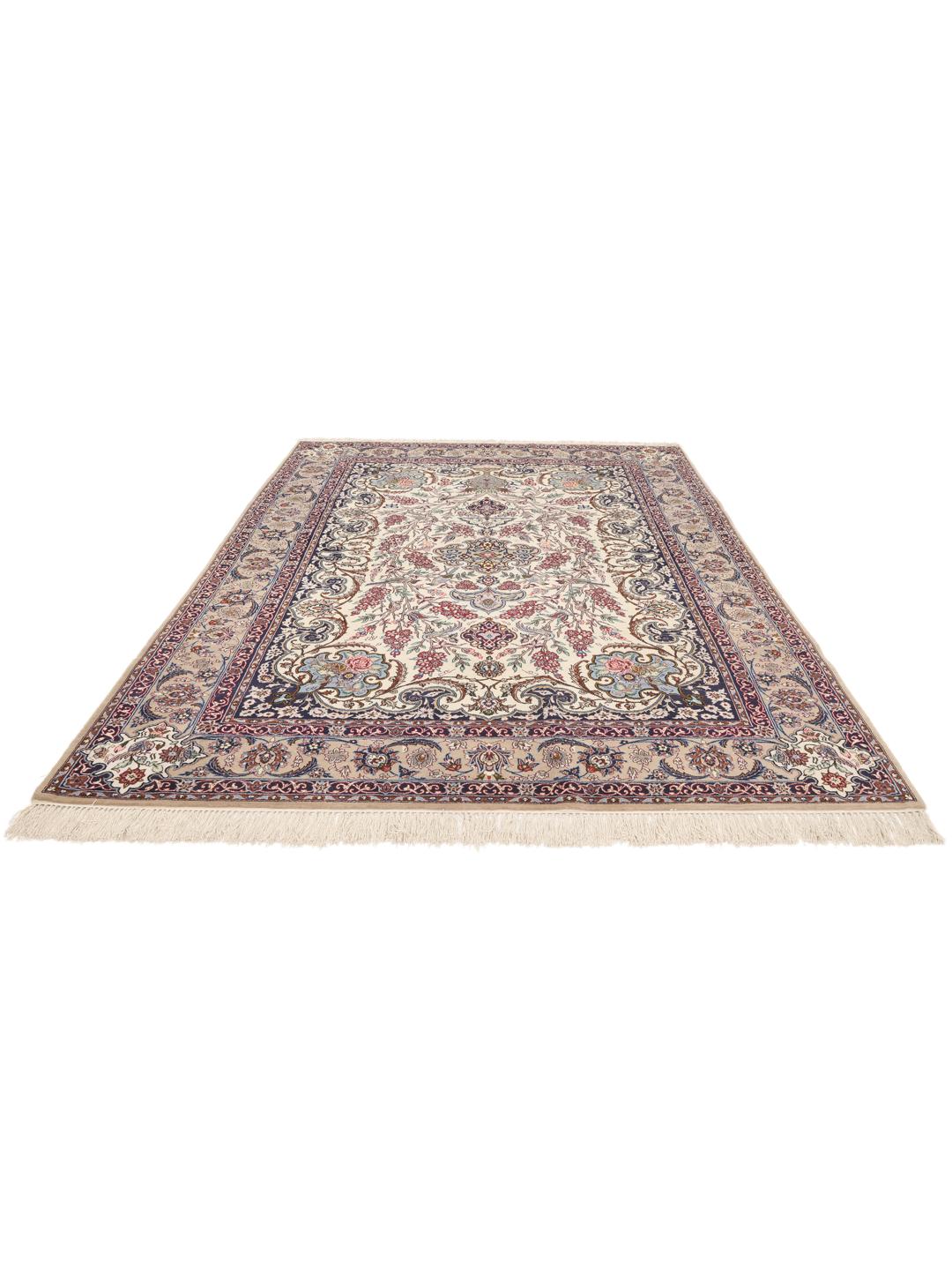
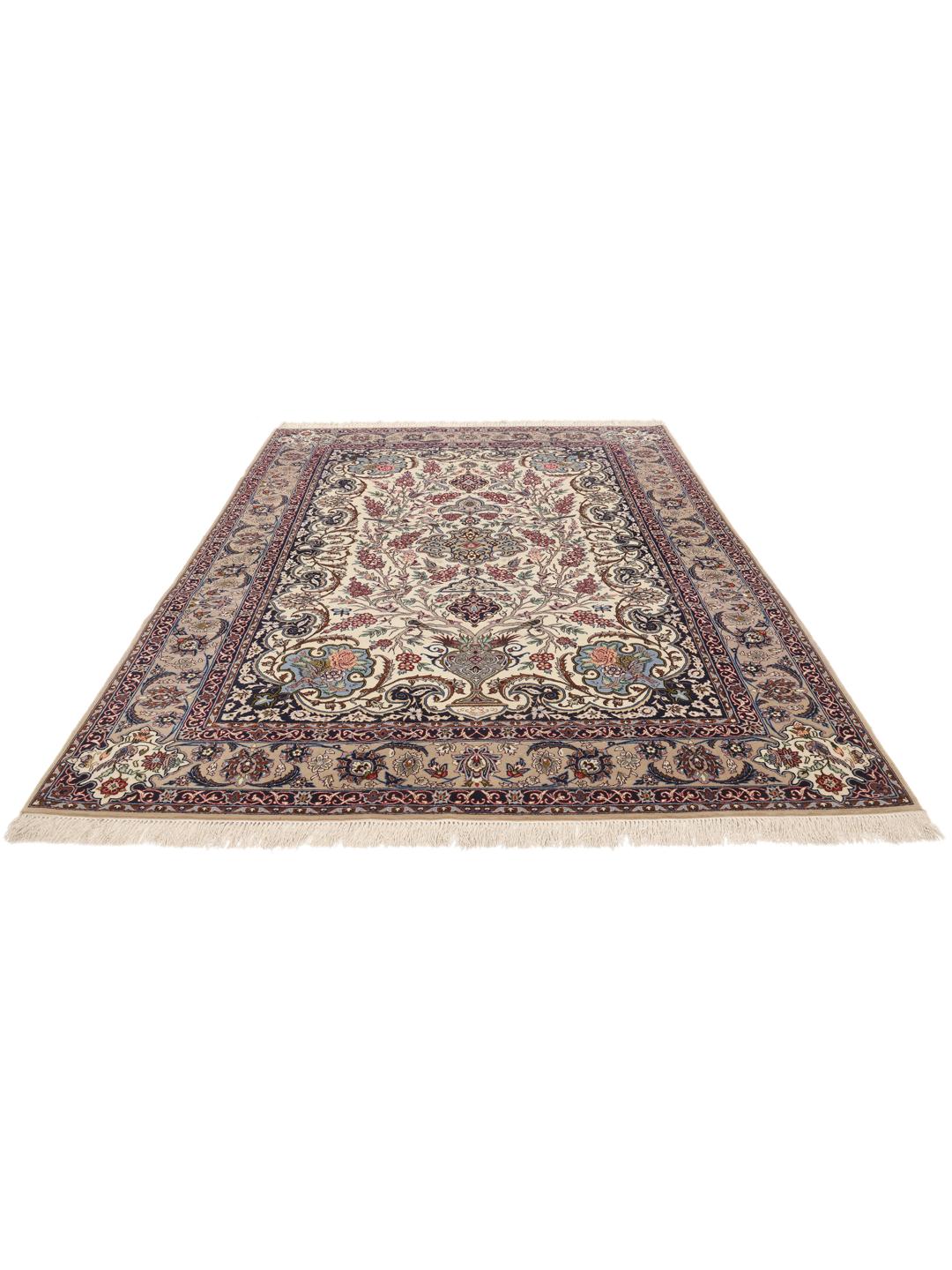
Isfahan rugs are celebrated globally as some of the most refined and sophisticated carpets to emerge from the Middle East. Originating from the historic city of Isfahan, which was once the capital of the Safavid Empire, these rugs are deeply rooted in a tradition of royal patronage and artistic excellence. The city has long been a centre for the arts, where weavers were inspired by the intricate tiles of the city's mosques and the delicate designs of miniature paintings.
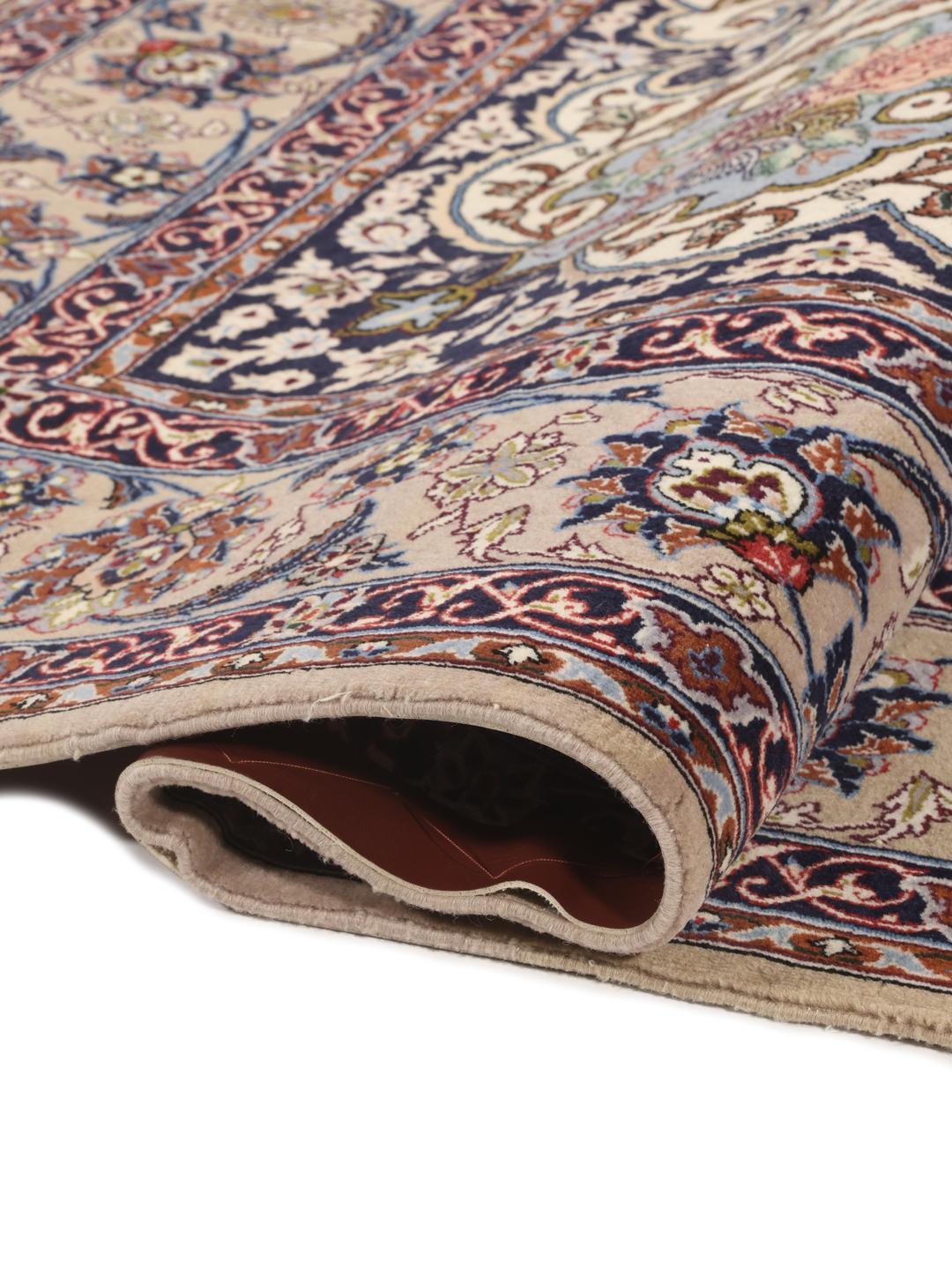
The term Isfahan refers not only to the geographic origin but also to a specific, high-standard of technical construction. These rugs are known for their exceptionally fine knotting, which allows for the creation of complex, curvilinear designs that would be impossible to replicate in coarser styles. The use of a silk foundation provides a subtle, lustrous sheen to the edges of the motifs, creating a sense of dimension and light that defines the high-end nature of these carpets.
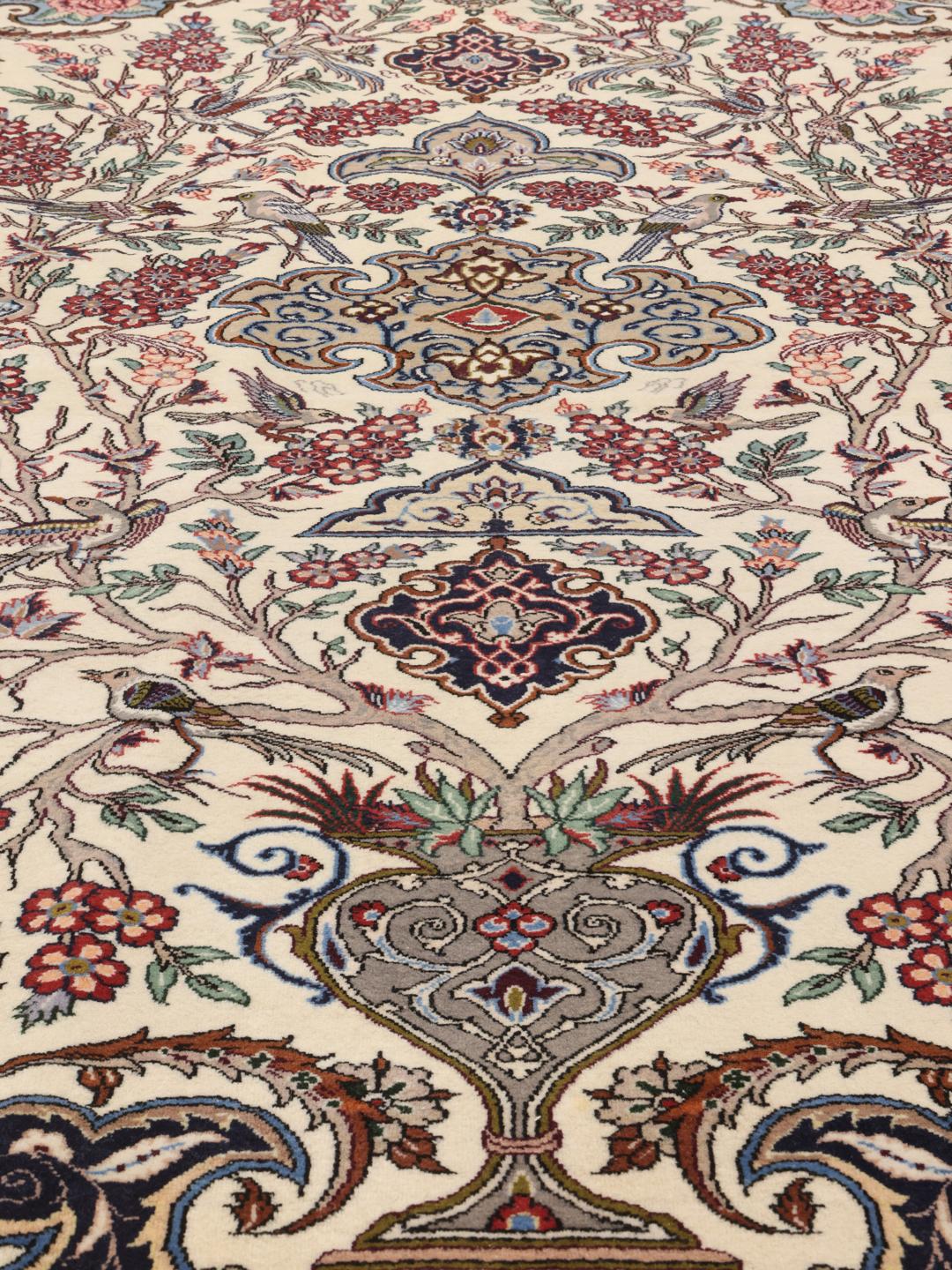
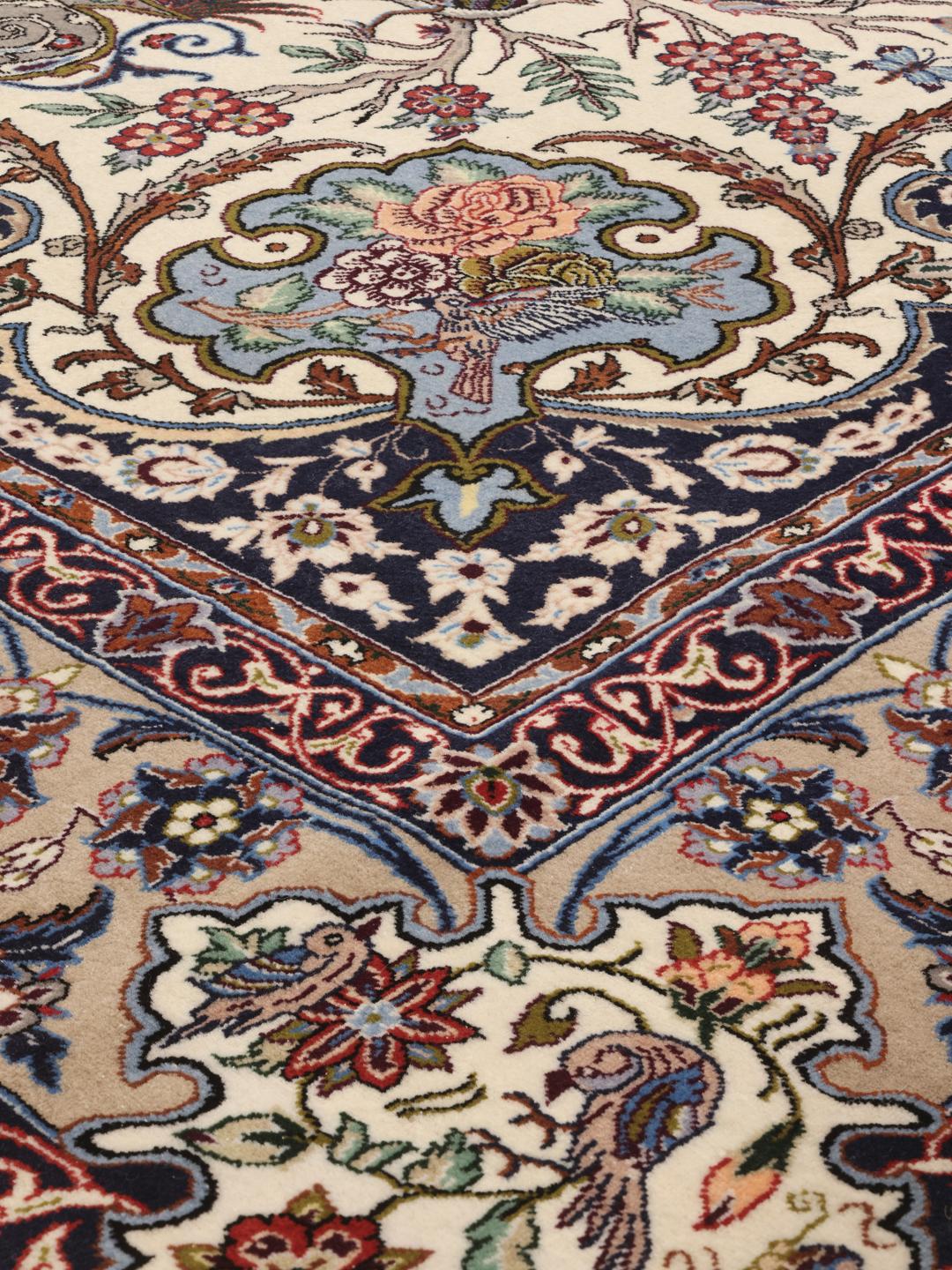
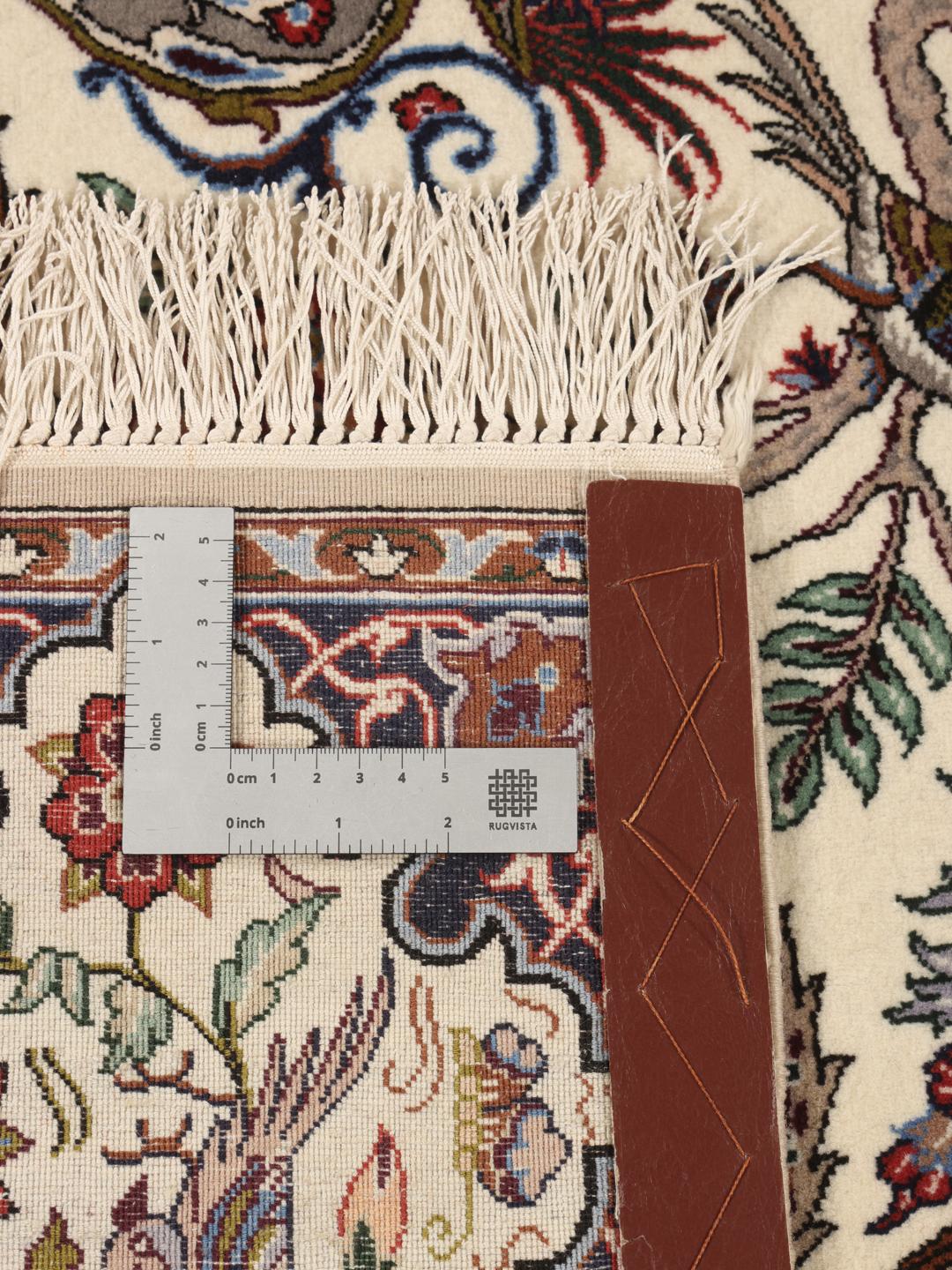
Signature design elements often include the Shah Abbas motif, named after the 17th-century ruler who championed the arts, along with elaborate floral sprays, vases, and songbirds. The field is typically balanced and symmetrical, reflecting a classical approach to beauty that prioritises harmony. This specific rug features a vibrant floral garden scene, a classic Isfahan trope that demonstrates the weaver's ability to blend naturalistic detail with formal, decorative borders.
Collectors value Isfahan rugs for their ability to bridge the gap between functional floor covering and fine art. Owning one is a commitment to preserving a legacy of skill that has been passed down through generations of families in the region. These rugs are highly sought after because they represent the pinnacle of Middle Eastern weaving, offering a combination of historical prestige, artistic vision, and enduring physical quality.