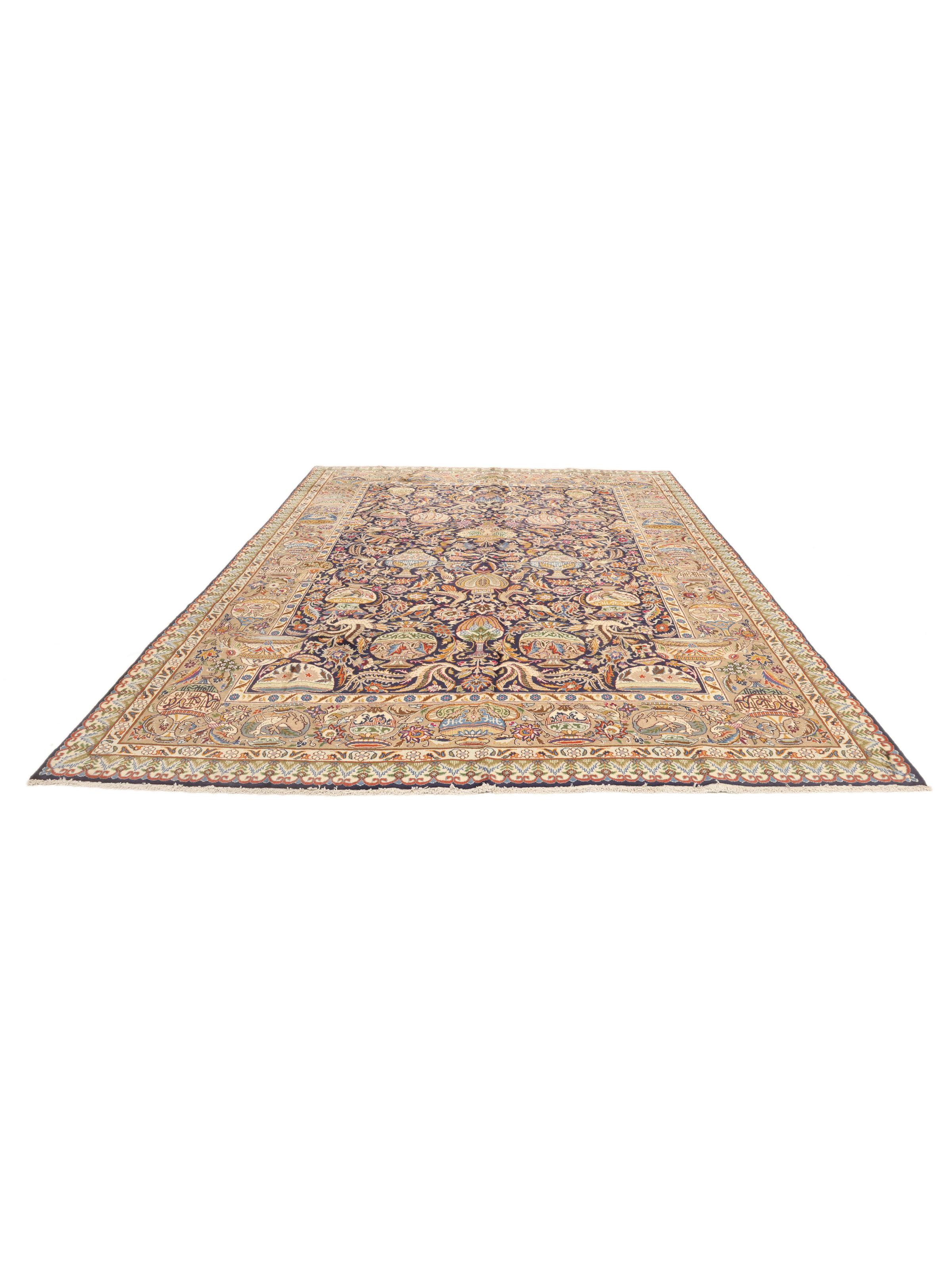
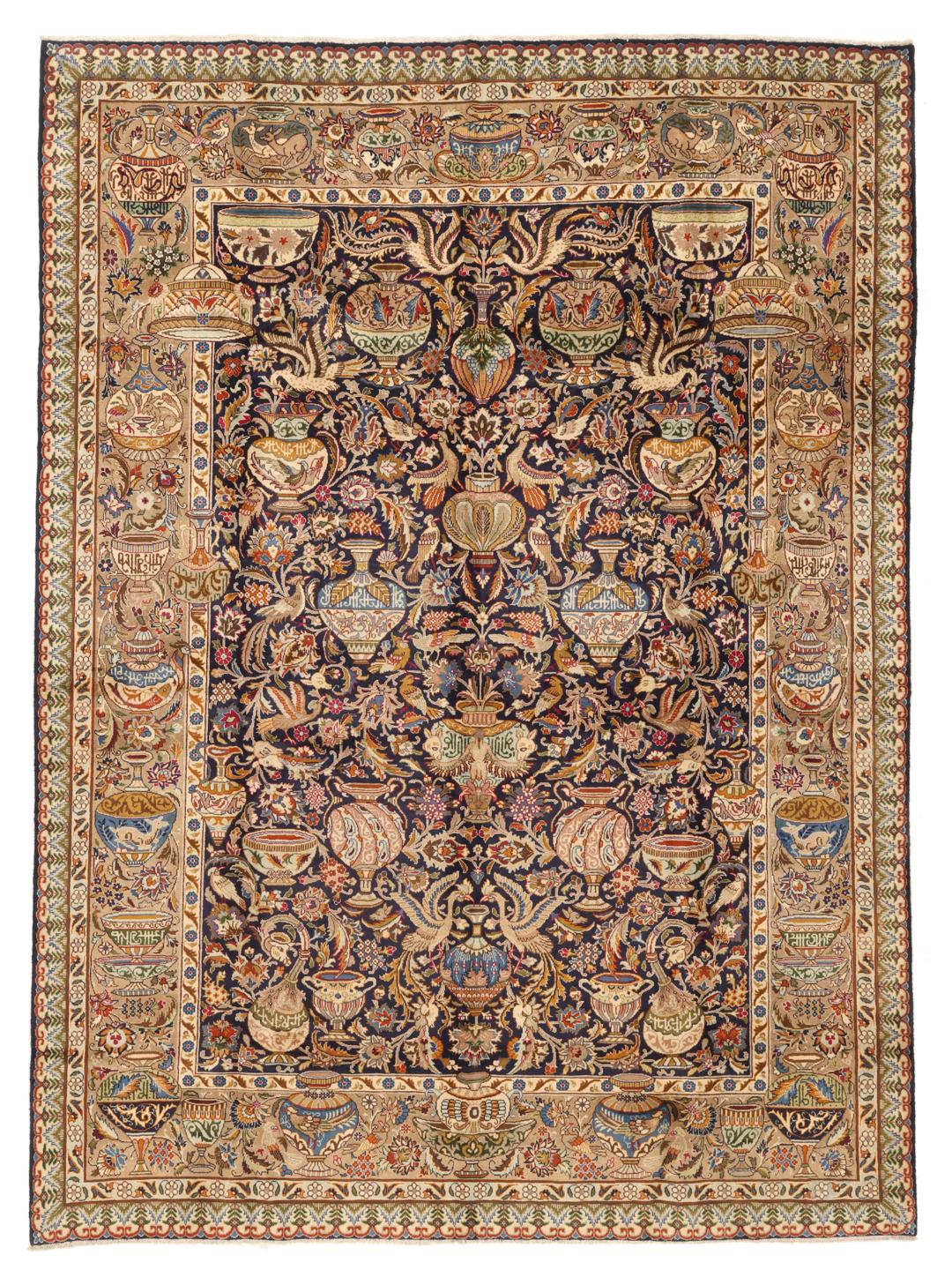
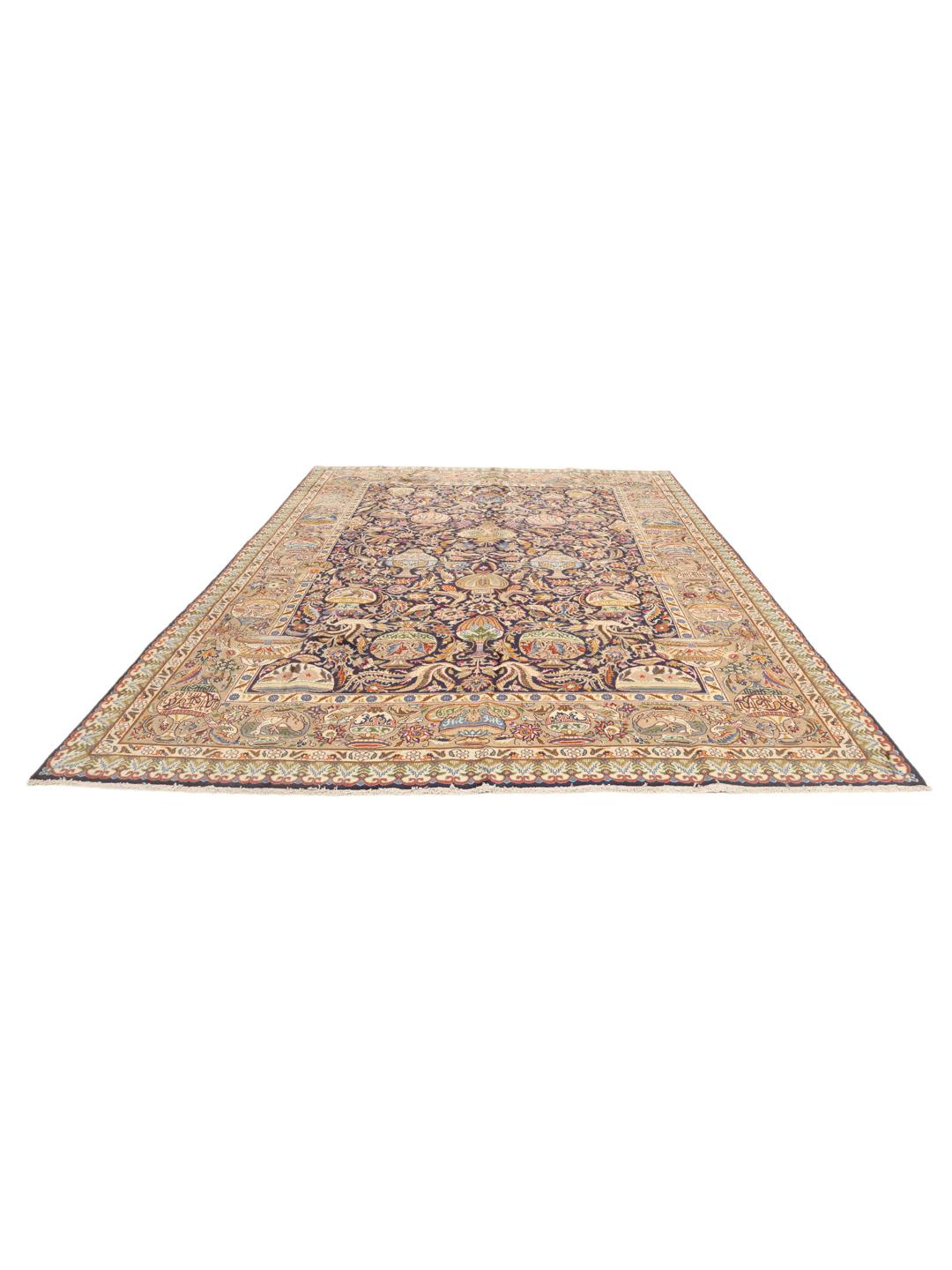
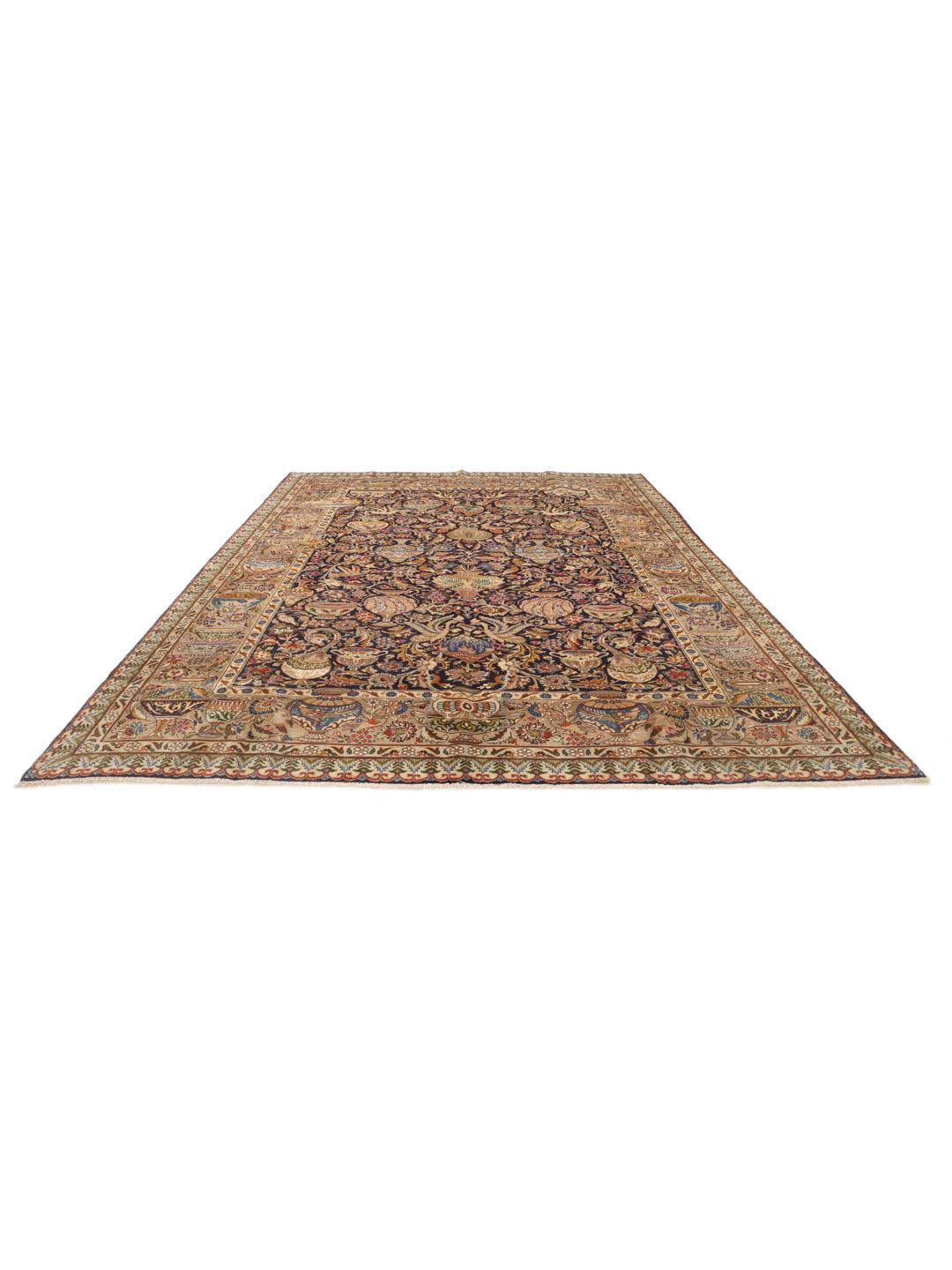
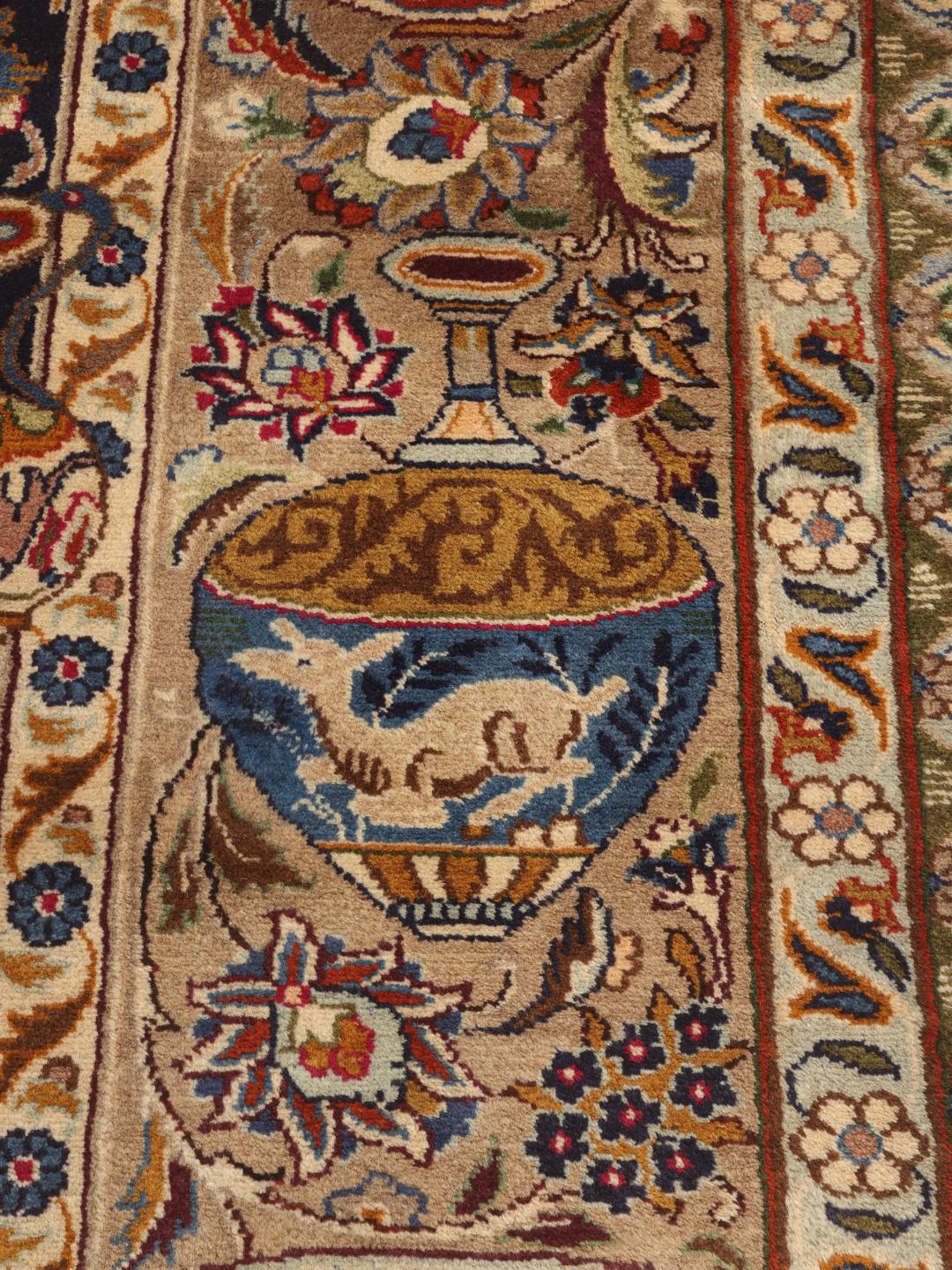
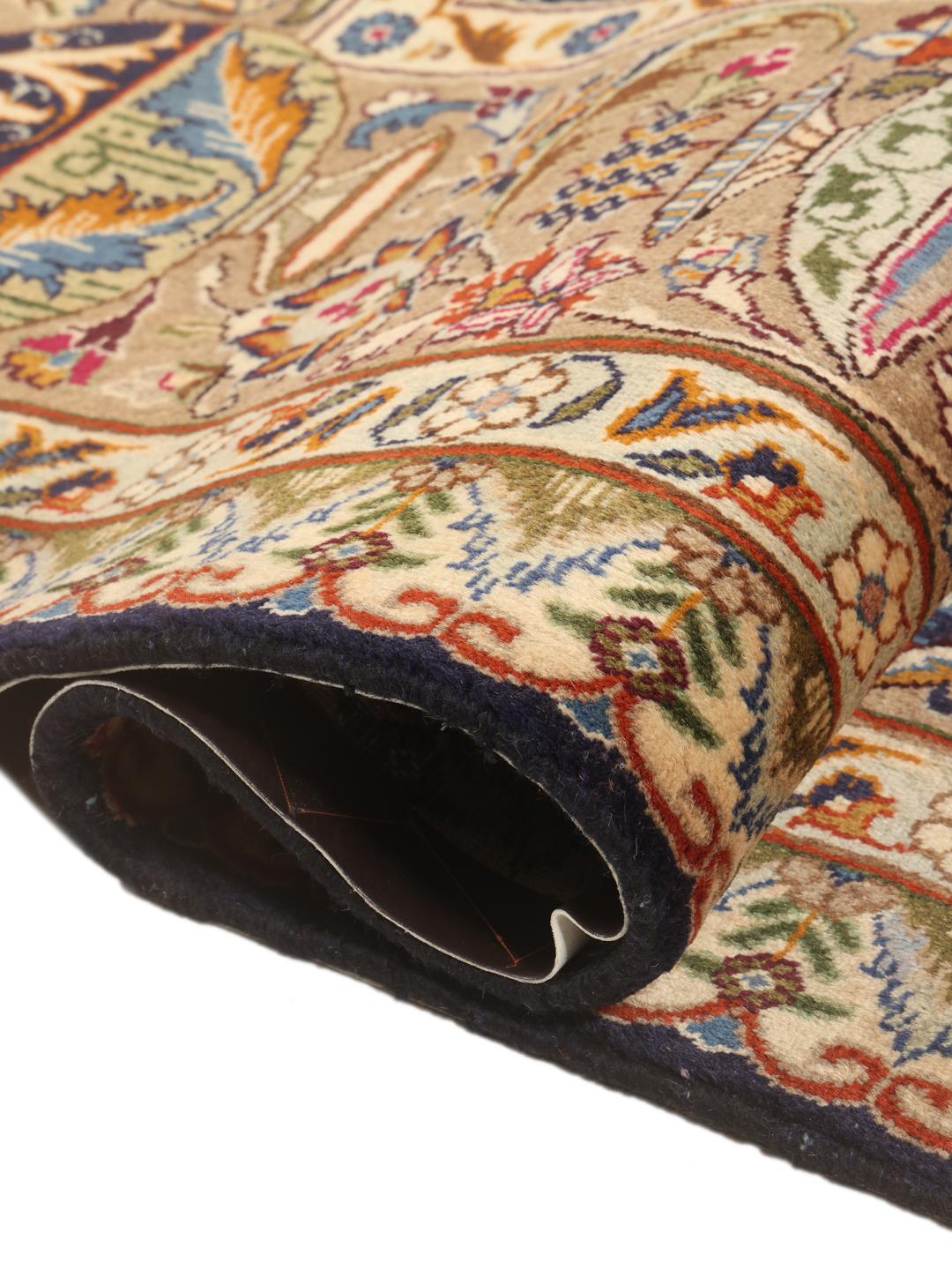
Kashmar rugs originate from the city of Kashmar in the northeastern part of the Middle East, a region with a storied history of textile production. Historically, the area was known for its agricultural wealth, particularly in wine and silk, which fostered a culture that valued intricate design and artistic expression. Over the centuries, the weaving traditions here have evolved to incorporate complex, large-scale pictorial designs that often reflect the natural world and cultural narratives of the region.
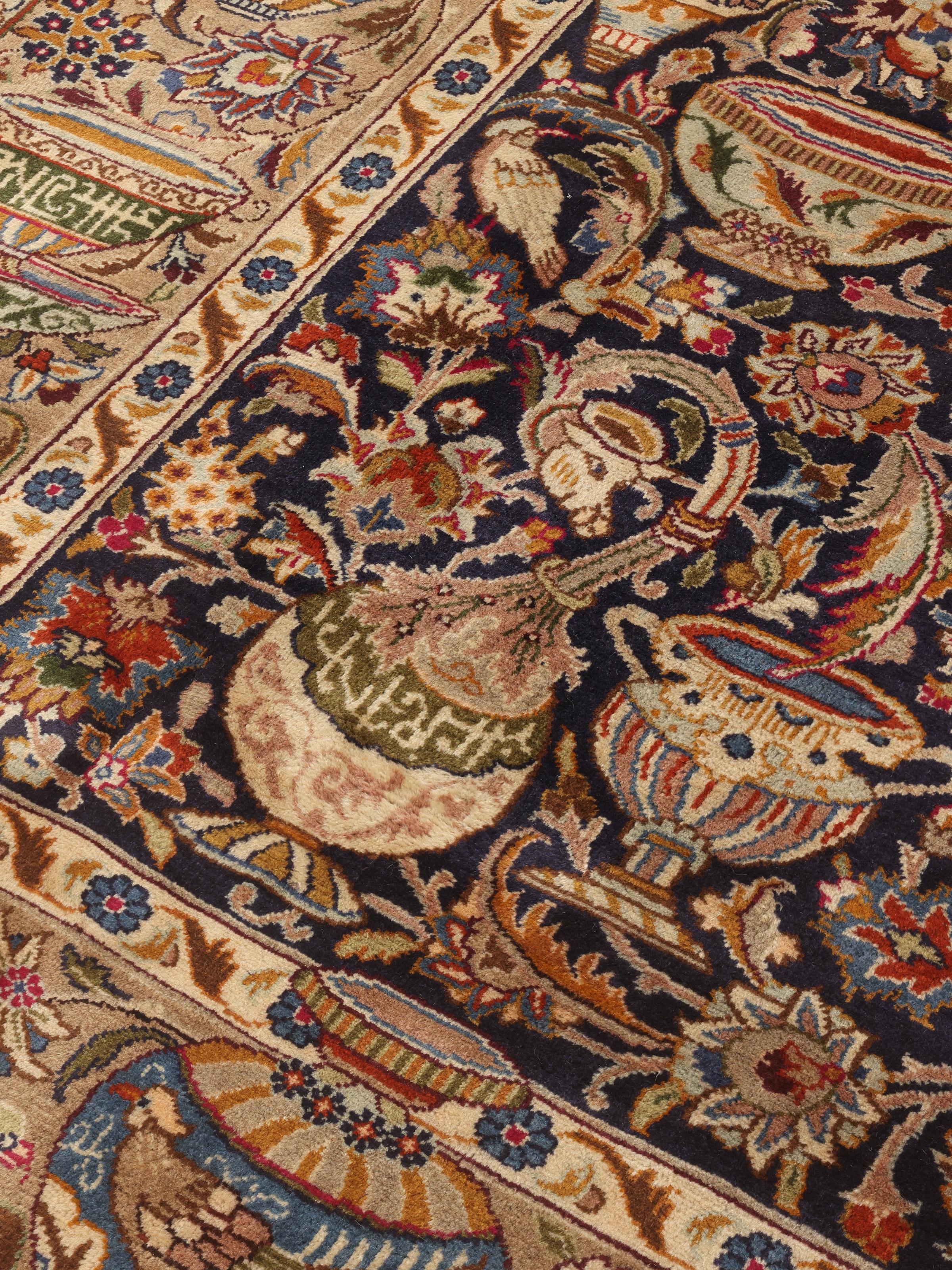
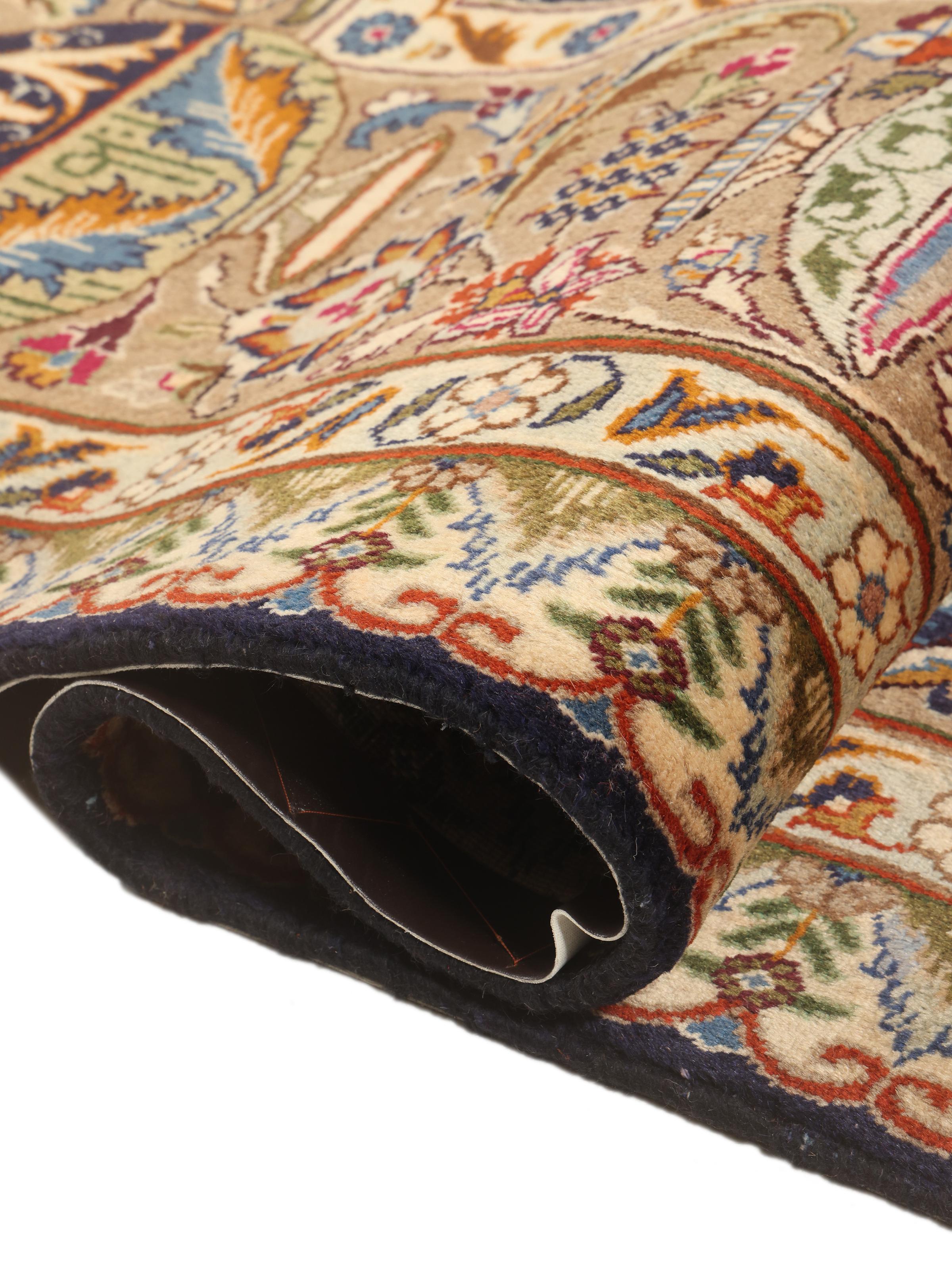
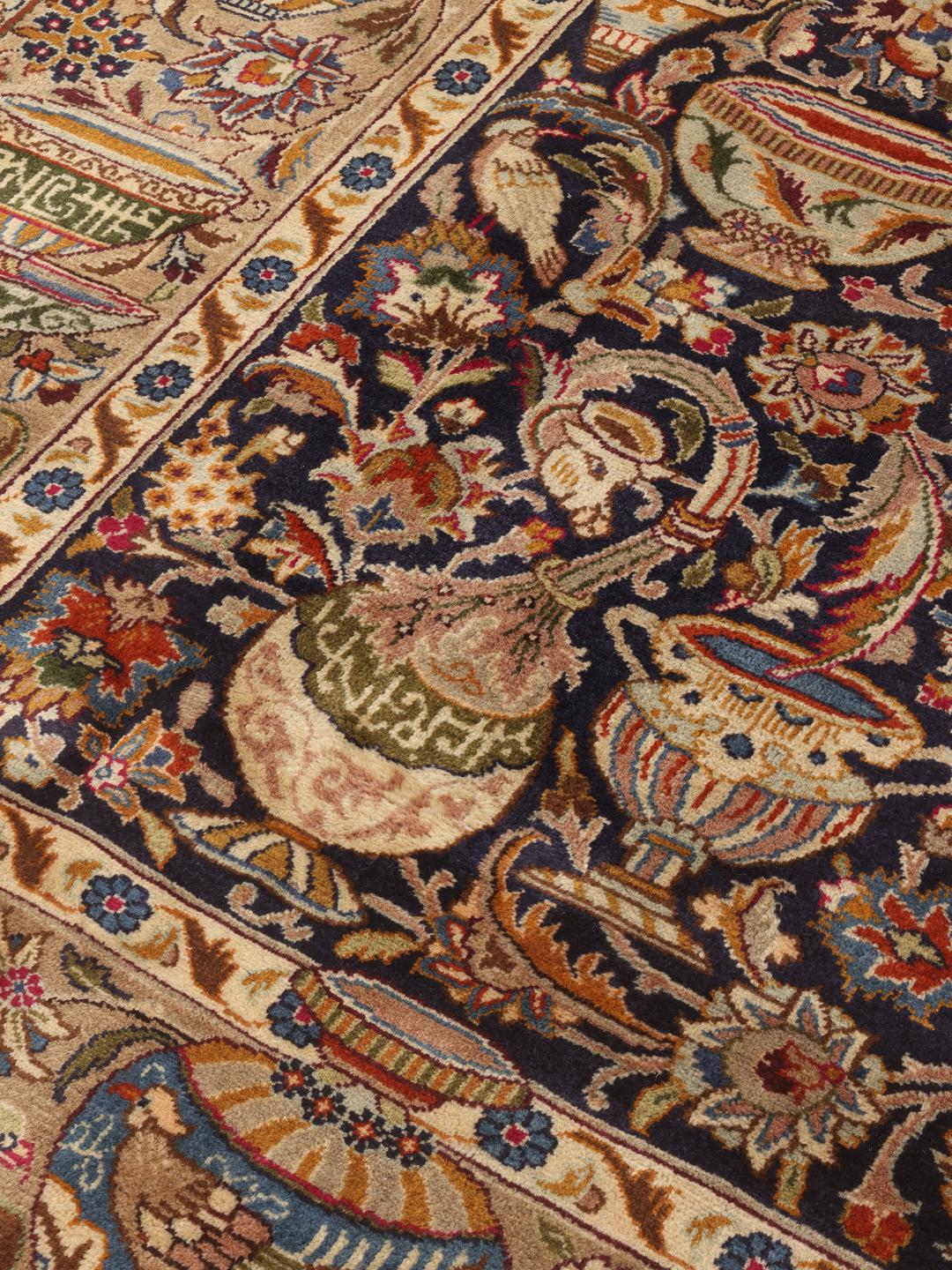
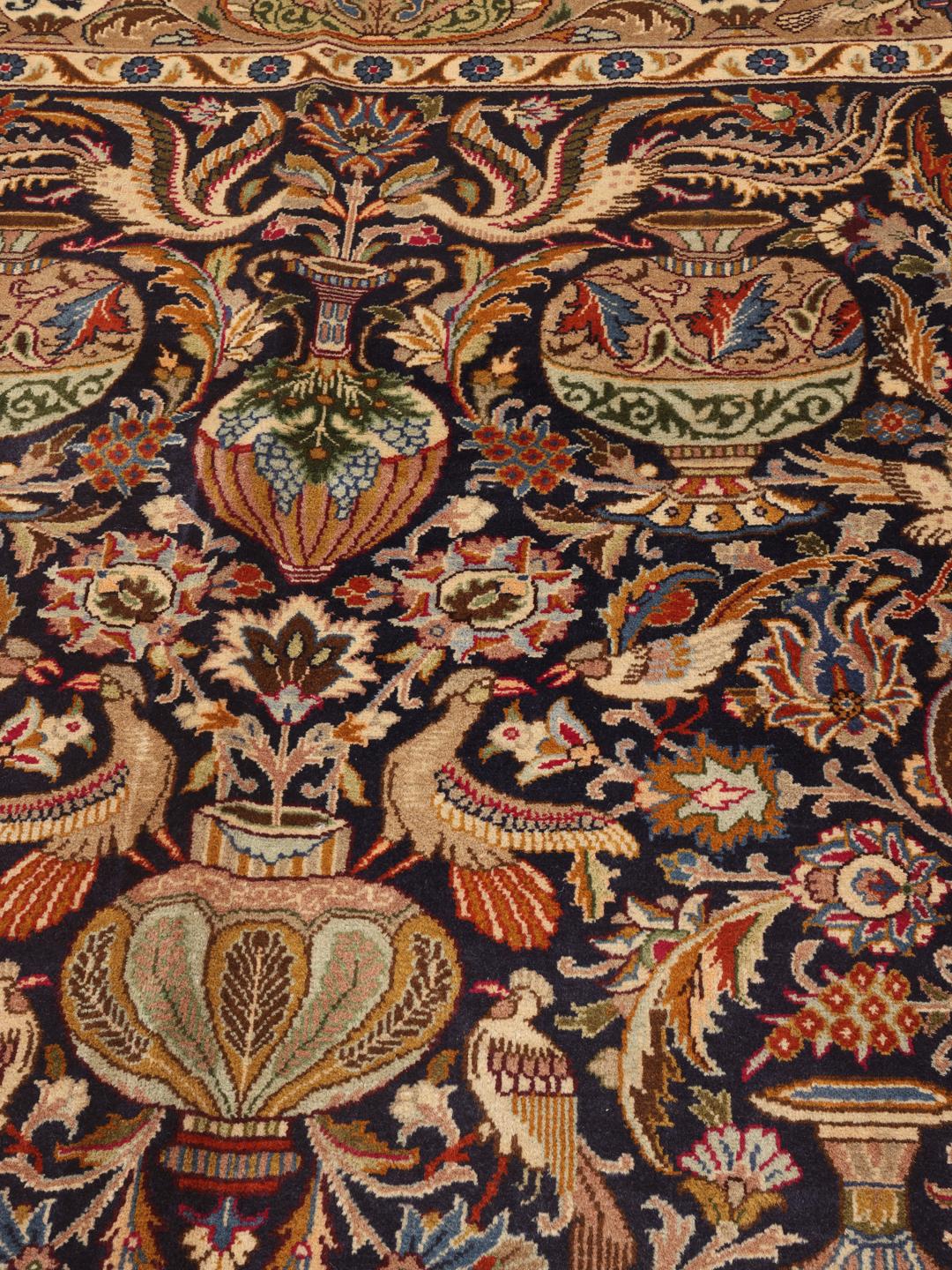
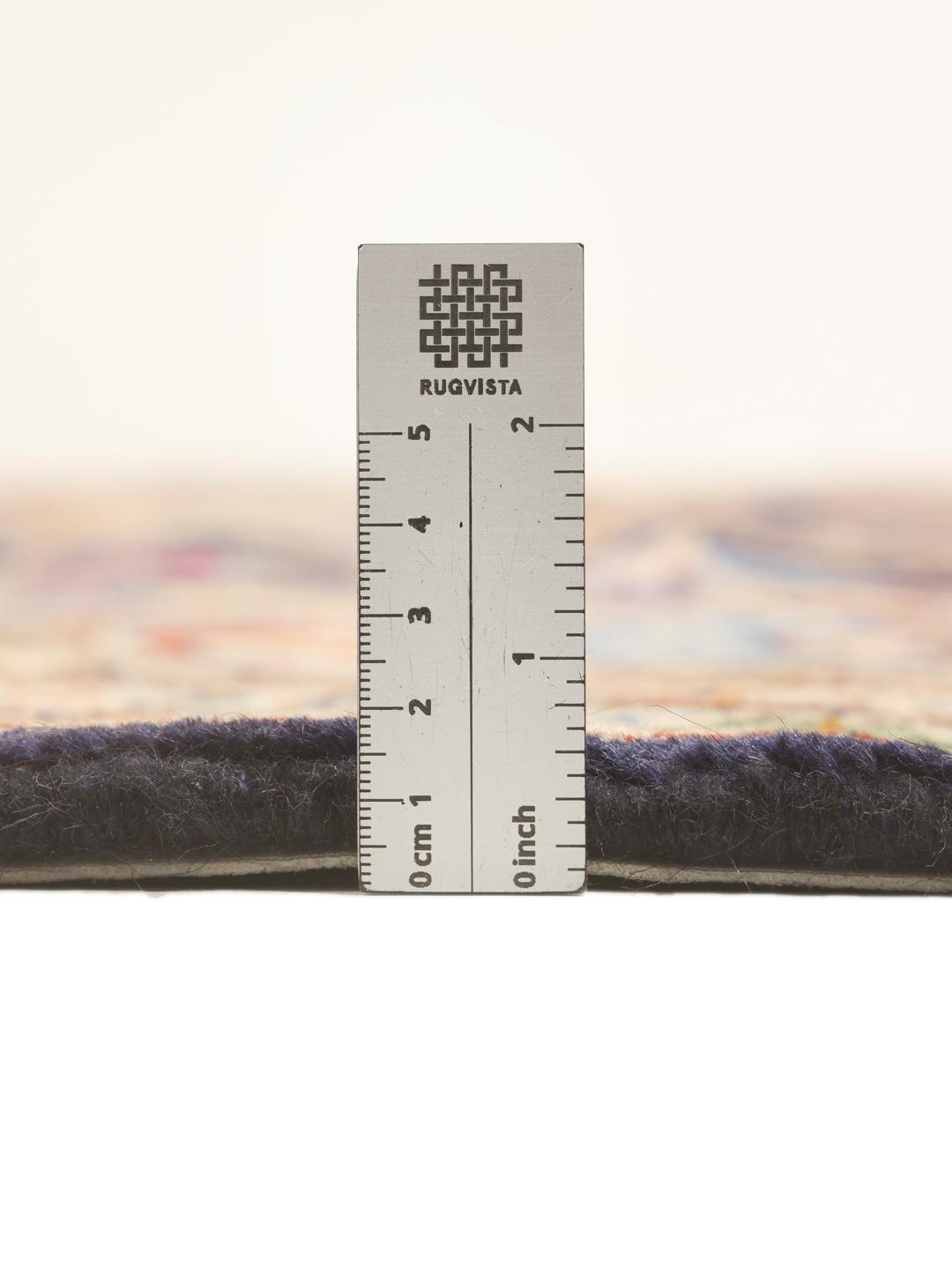
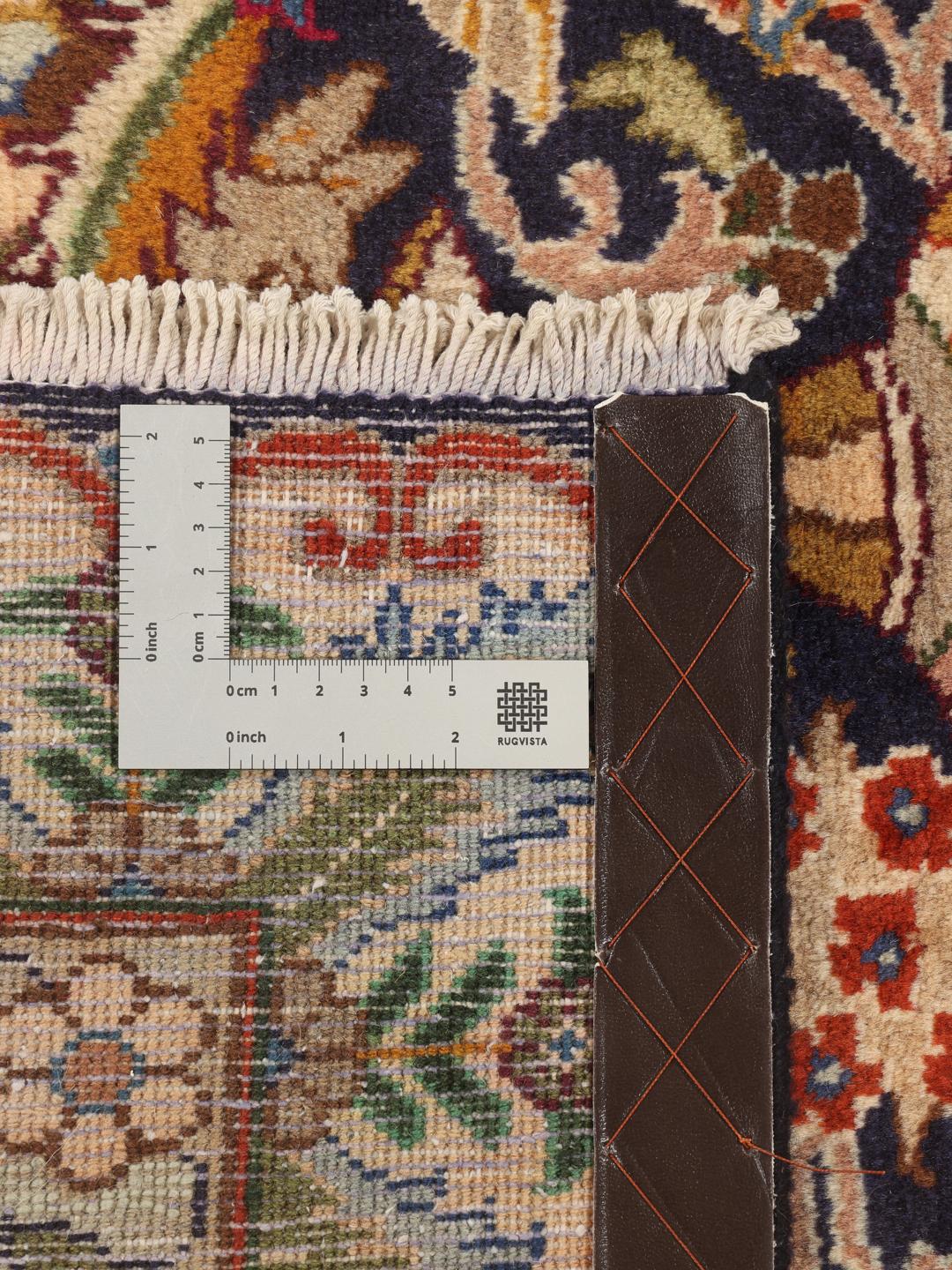
The term 'Fine' in the context of Kashmar rugs refers to the quality of the wool and the precision of the knotting process. These rugs are celebrated for their ability to balance a dense, durable pile with the fine, fluid lines required for intricate imagery. Unlike simpler geometric styles, the Kashmar tradition emphasises fluid curves and complex, multi-layered patterns that require a high level of skill to execute without distortion.
The signature design elements of a Kashmar rug often include 'vases' or 'urns' overflowing with floral arrangements, surrounded by birds and other symbolic motifs. These designs are frequently arranged in a symmetrical fashion, framed by elaborate, multi-layered borders that guide the eye around the central scene. The use of deep, resonant colours like dark blue and warm beige is a hallmark of this tradition, providing a sophisticated backdrop that makes the detailed motifs pop.
Owning a Kashmar rug is an investment in a specific branch of Middle Eastern art history. These rugs are highly valued by collectors not just for their aesthetic beauty, but for the immense human effort and cultural heritage they represent. Because they are often produced as individual works rather than mass-market goods, each Kashmar rug acts as a permanent record of the artisan's skill, making them prized additions to homes that value history, craft, and lasting quality.