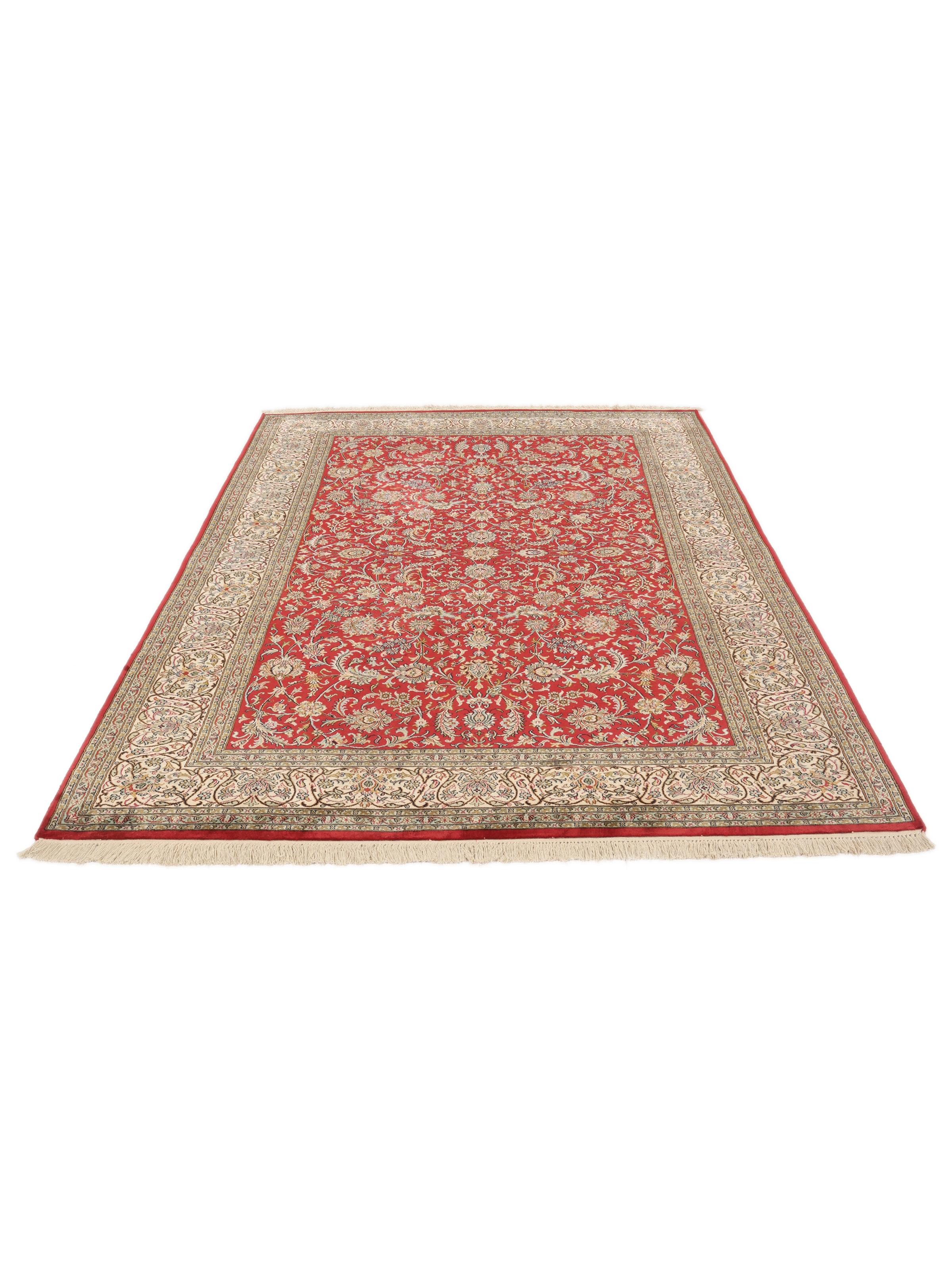
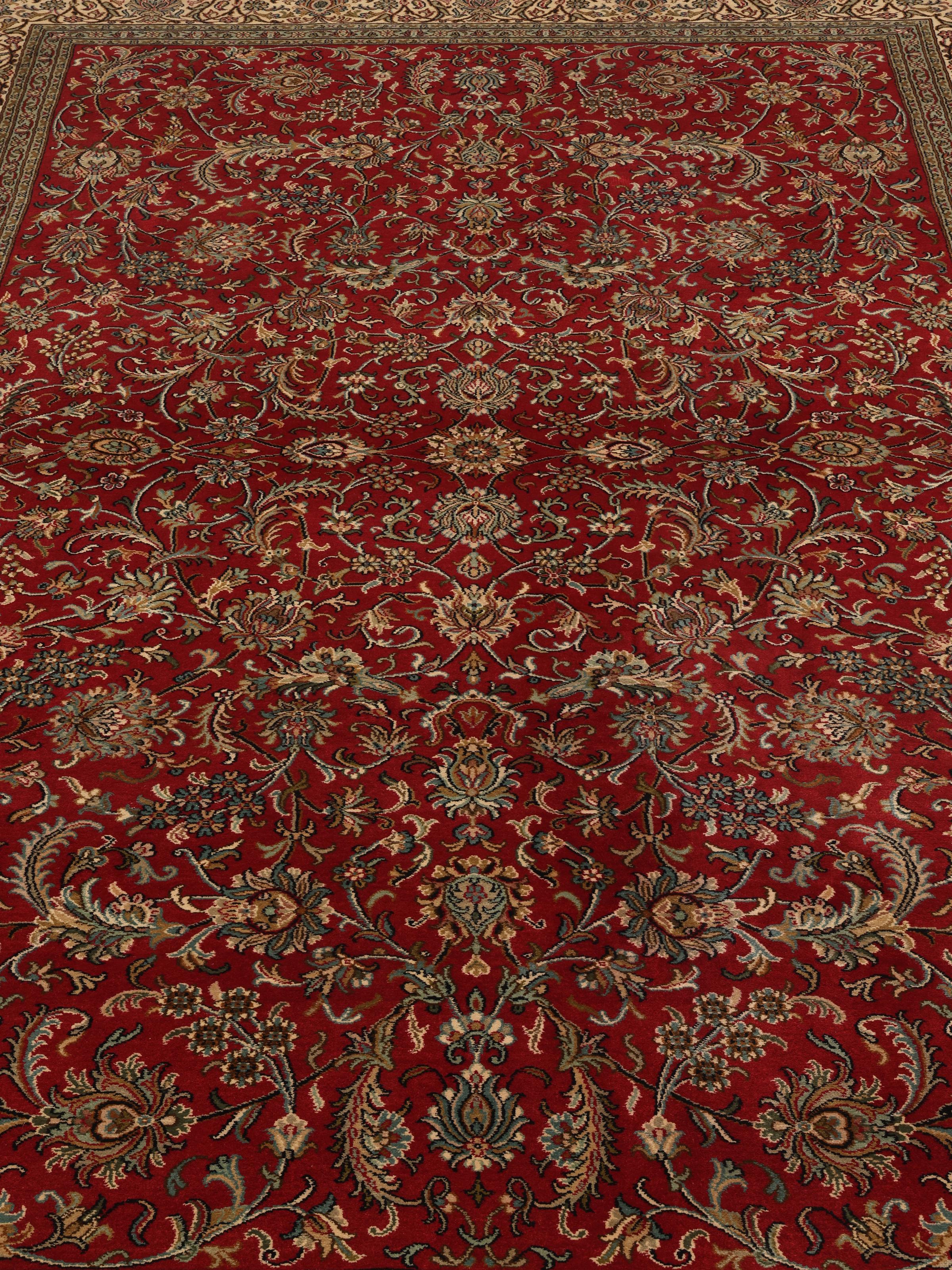
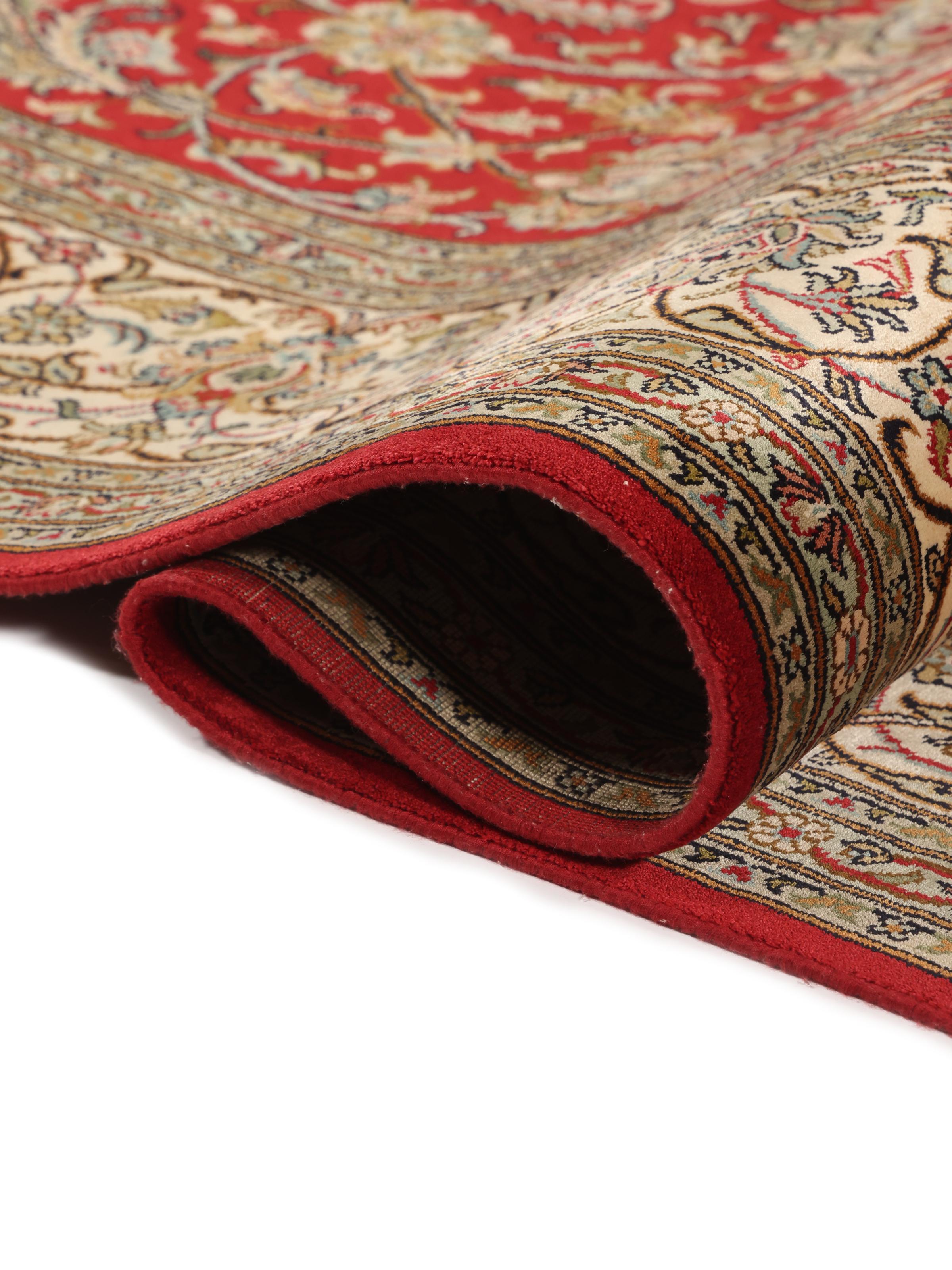
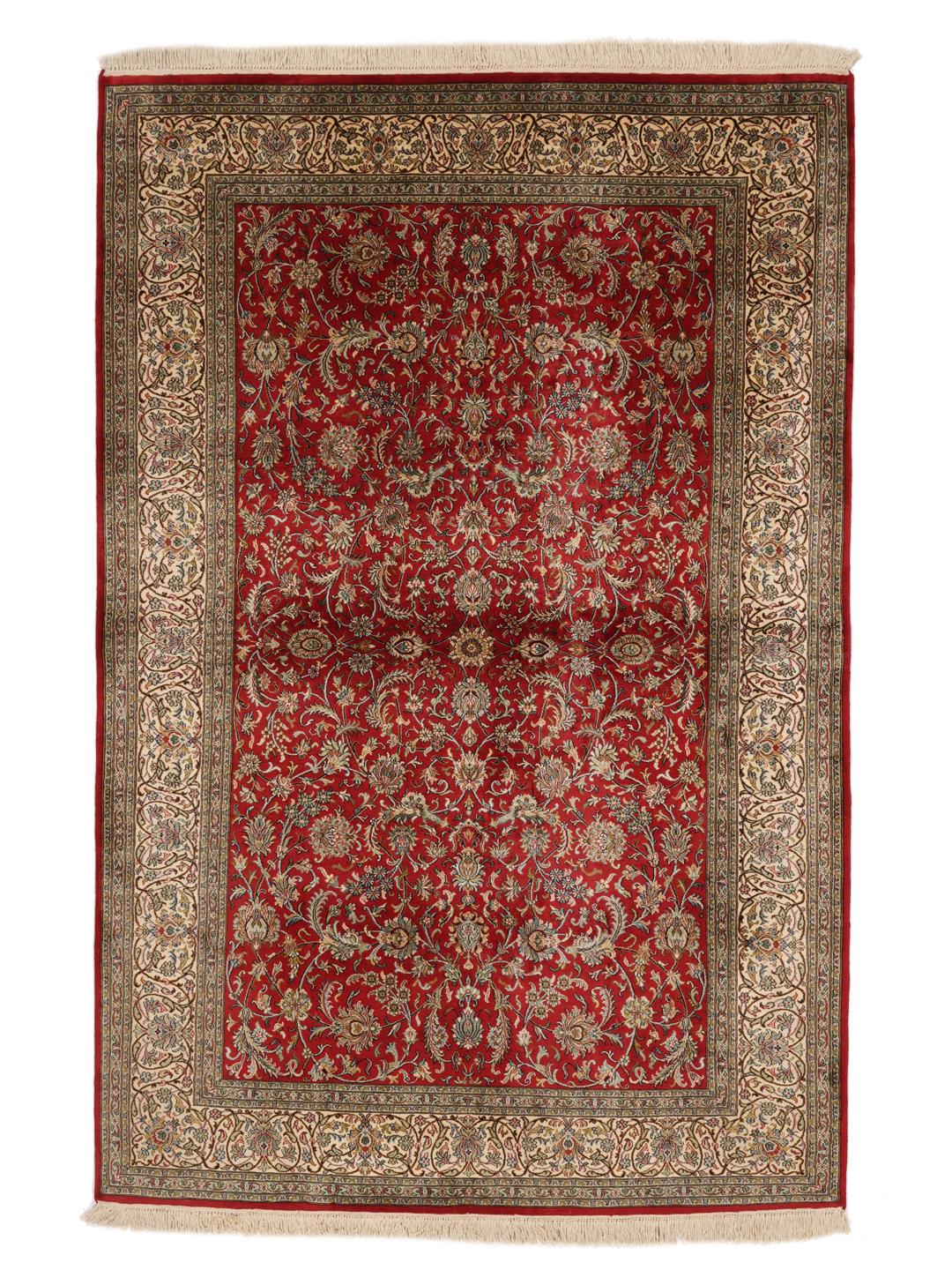
The tradition of silk weaving in the Kashmir region is rooted in centuries of cultural exchange and artistic refinement. Historically influenced by the grand textile traditions of the Middle East and Central Asia, Kashmiri artisans have spent generations perfecting the art of silk knotting. This regional evolution has resulted in a style that is celebrated for its delicate floral patterns and superior material quality.
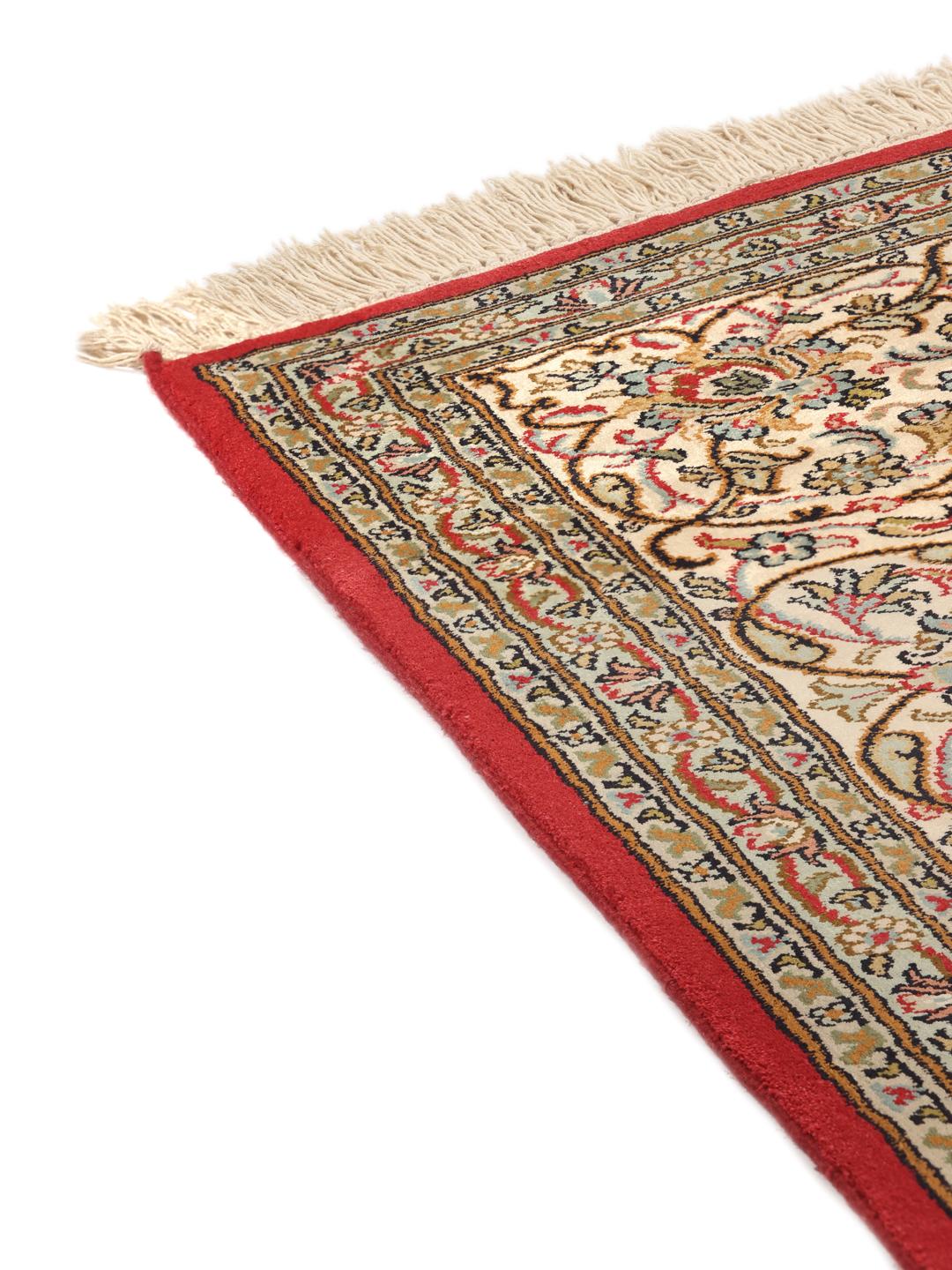
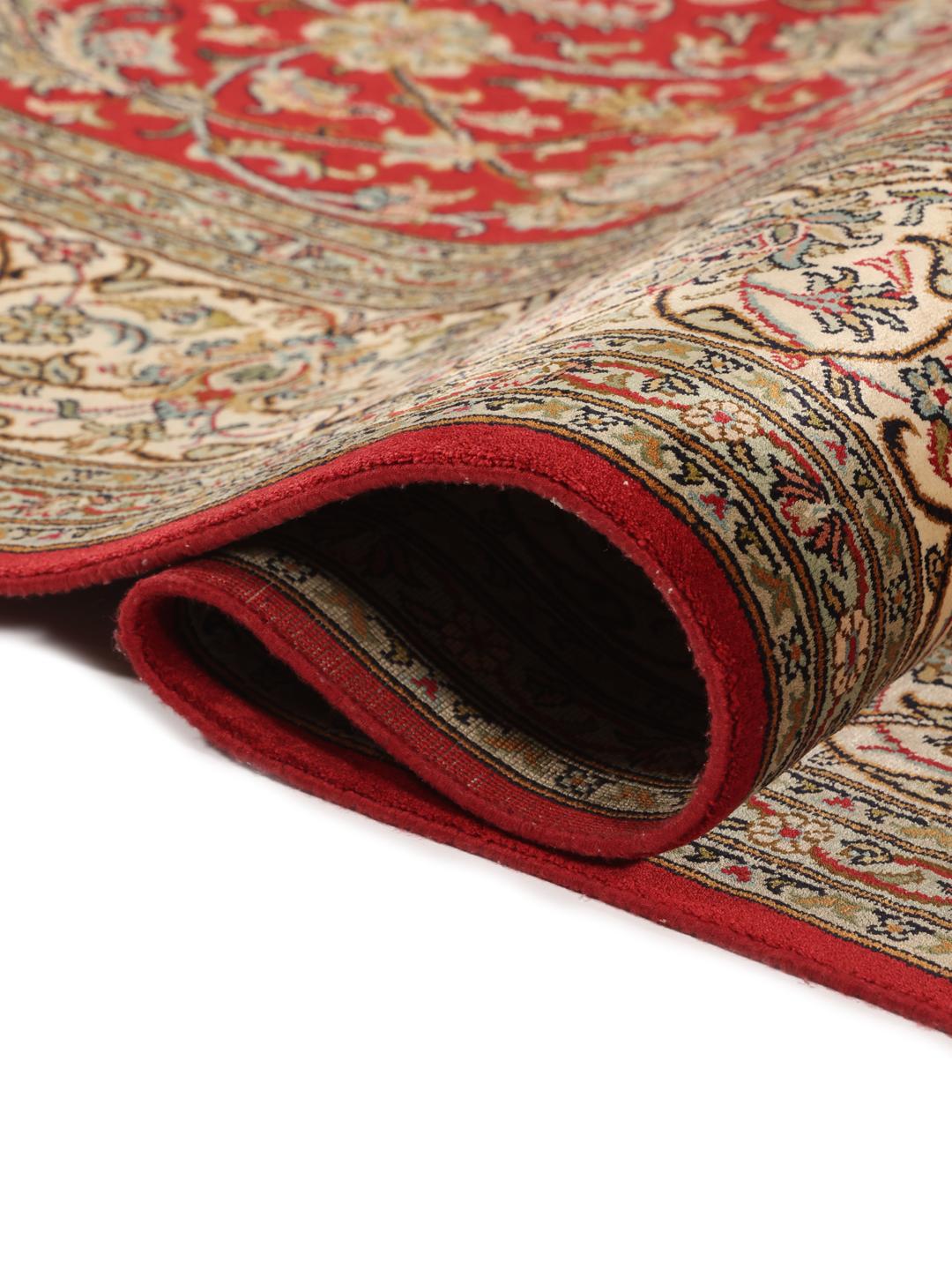
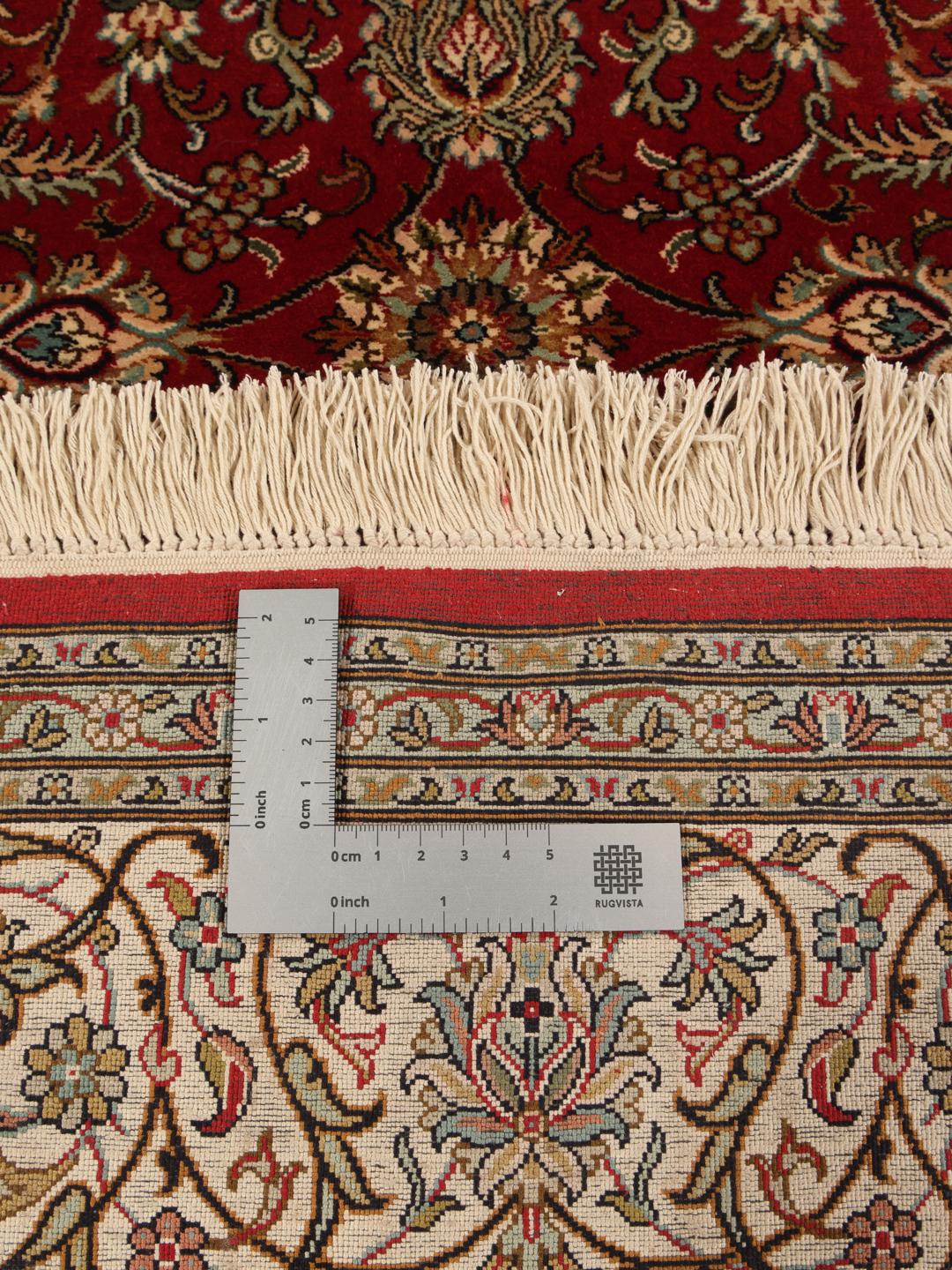
The 24/24 quality designation refers to a specific, high-standard measurement of knotting density and precision. This technical classification is a hallmark of the finest workshops in the region, ensuring that each rug is constructed with a consistent, tight weave. This level of technical excellence is what allows for the intricate, flowing designs that define the Kashmir aesthetic.
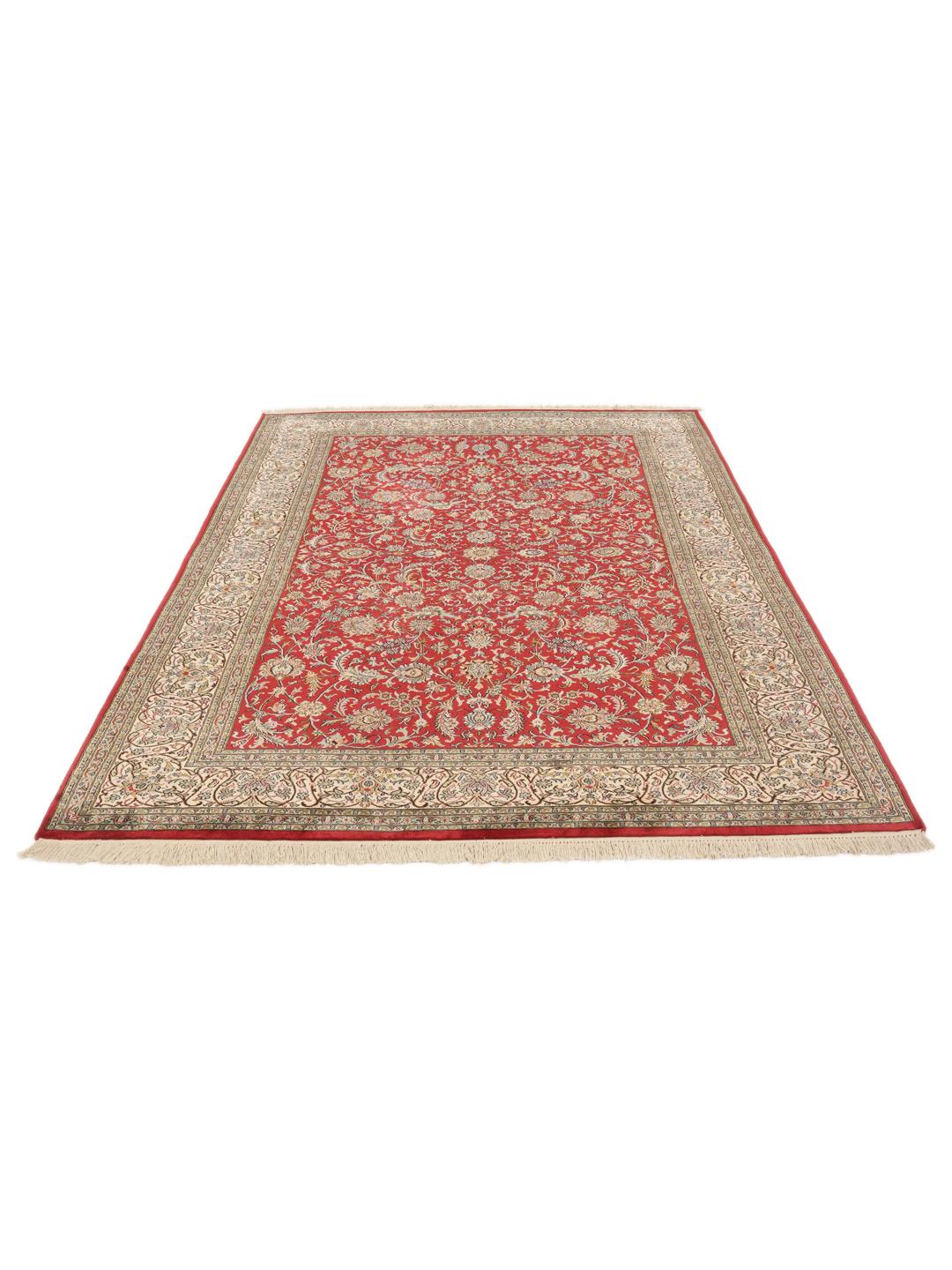
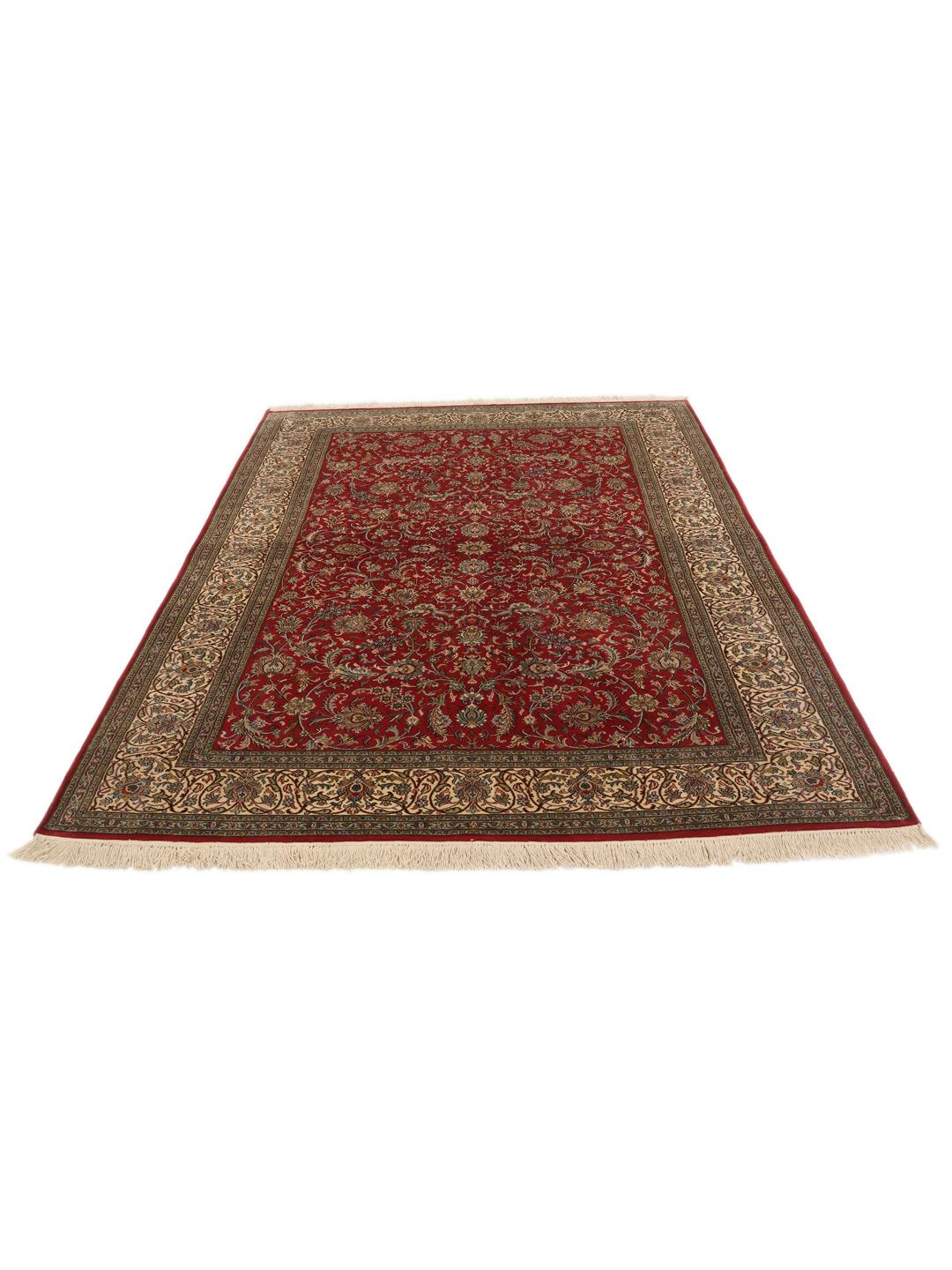
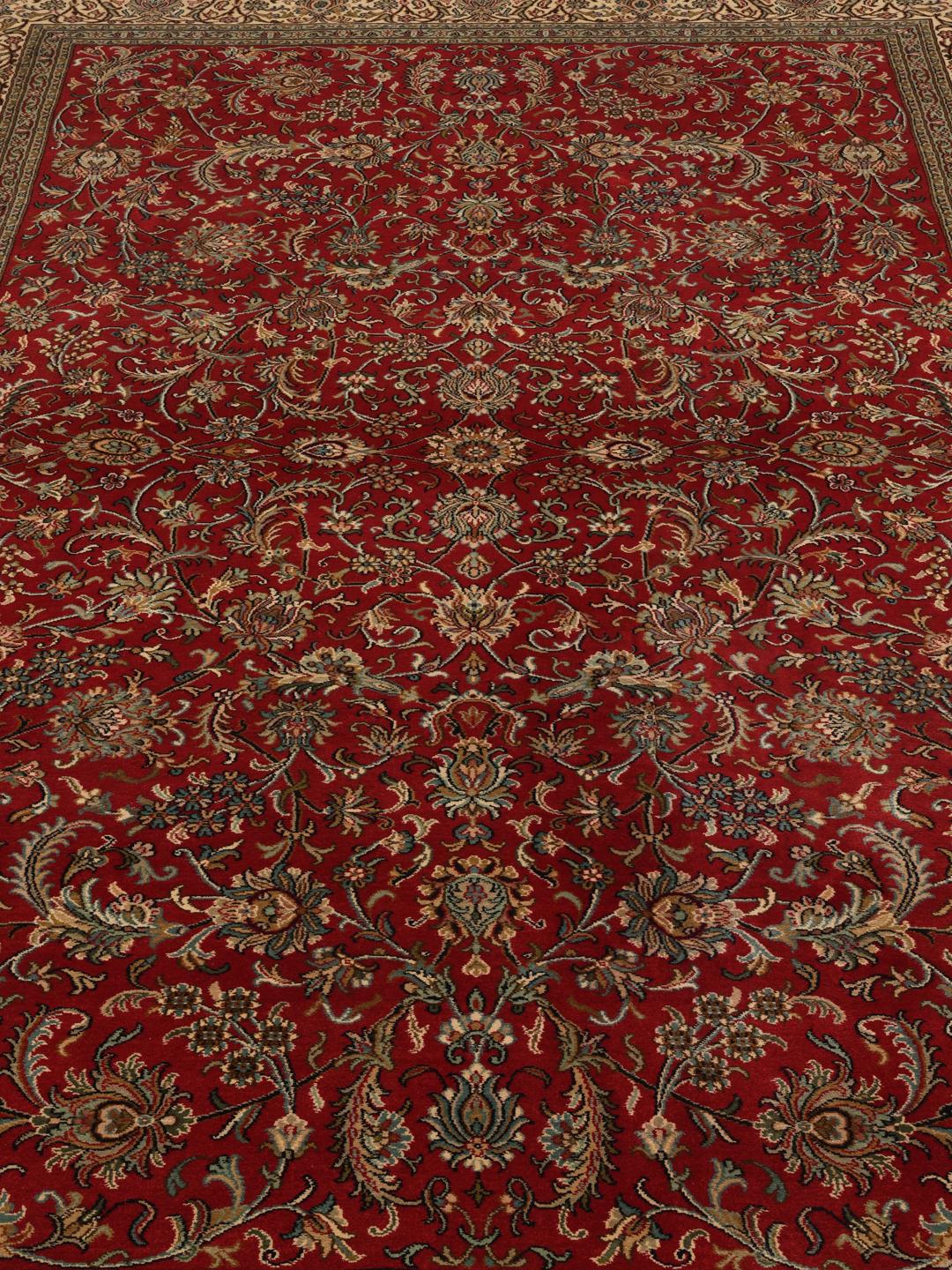
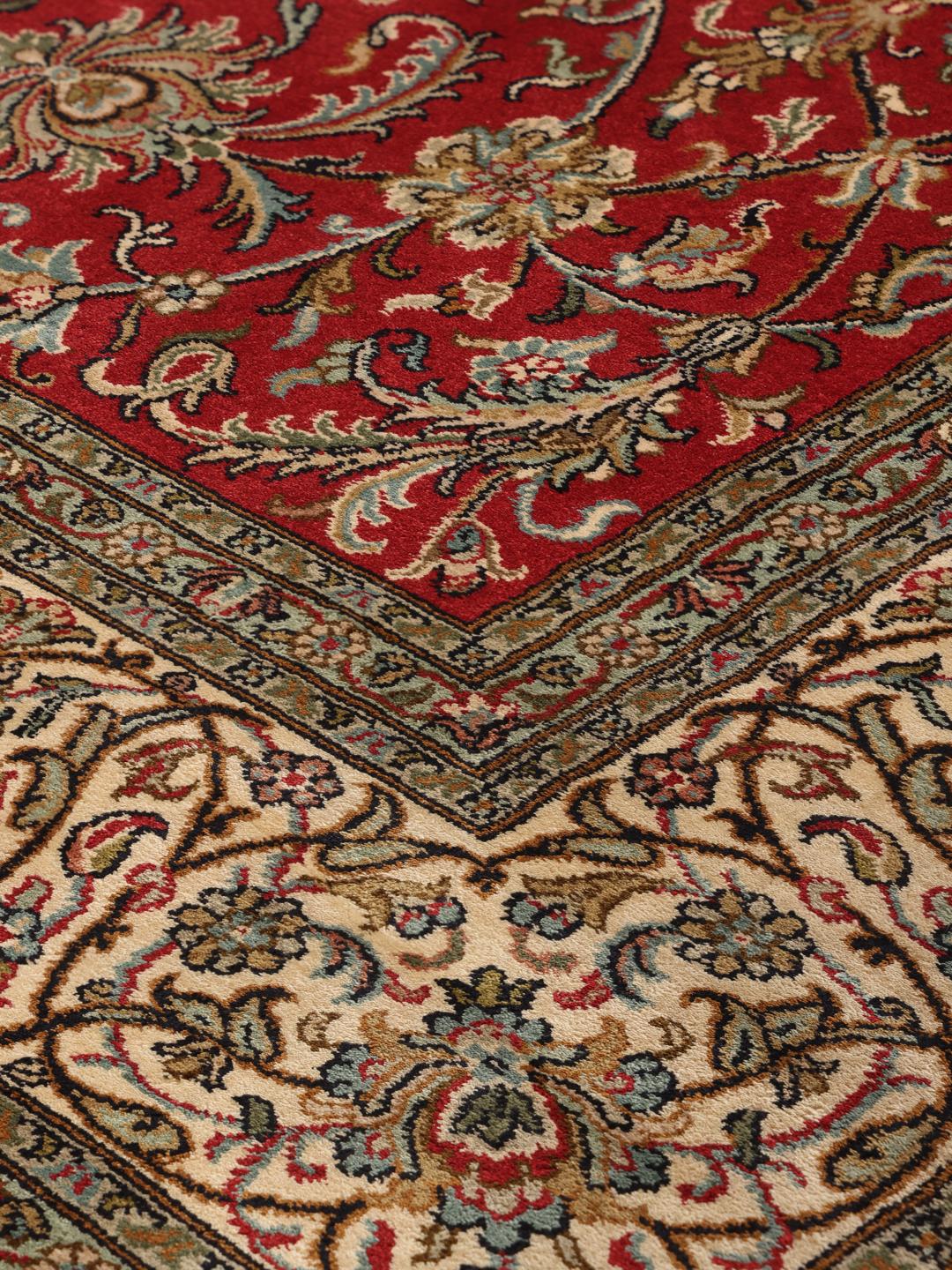
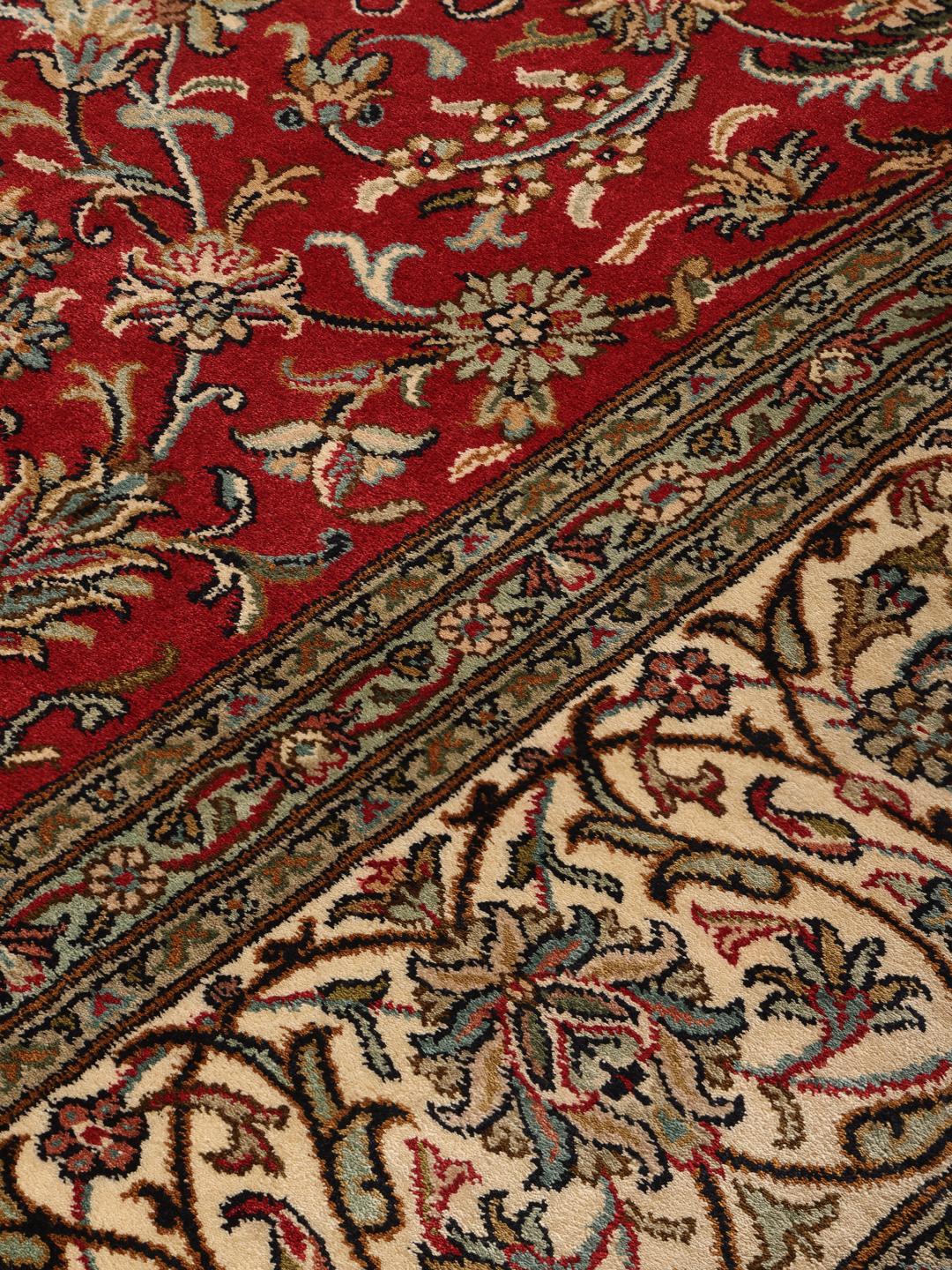
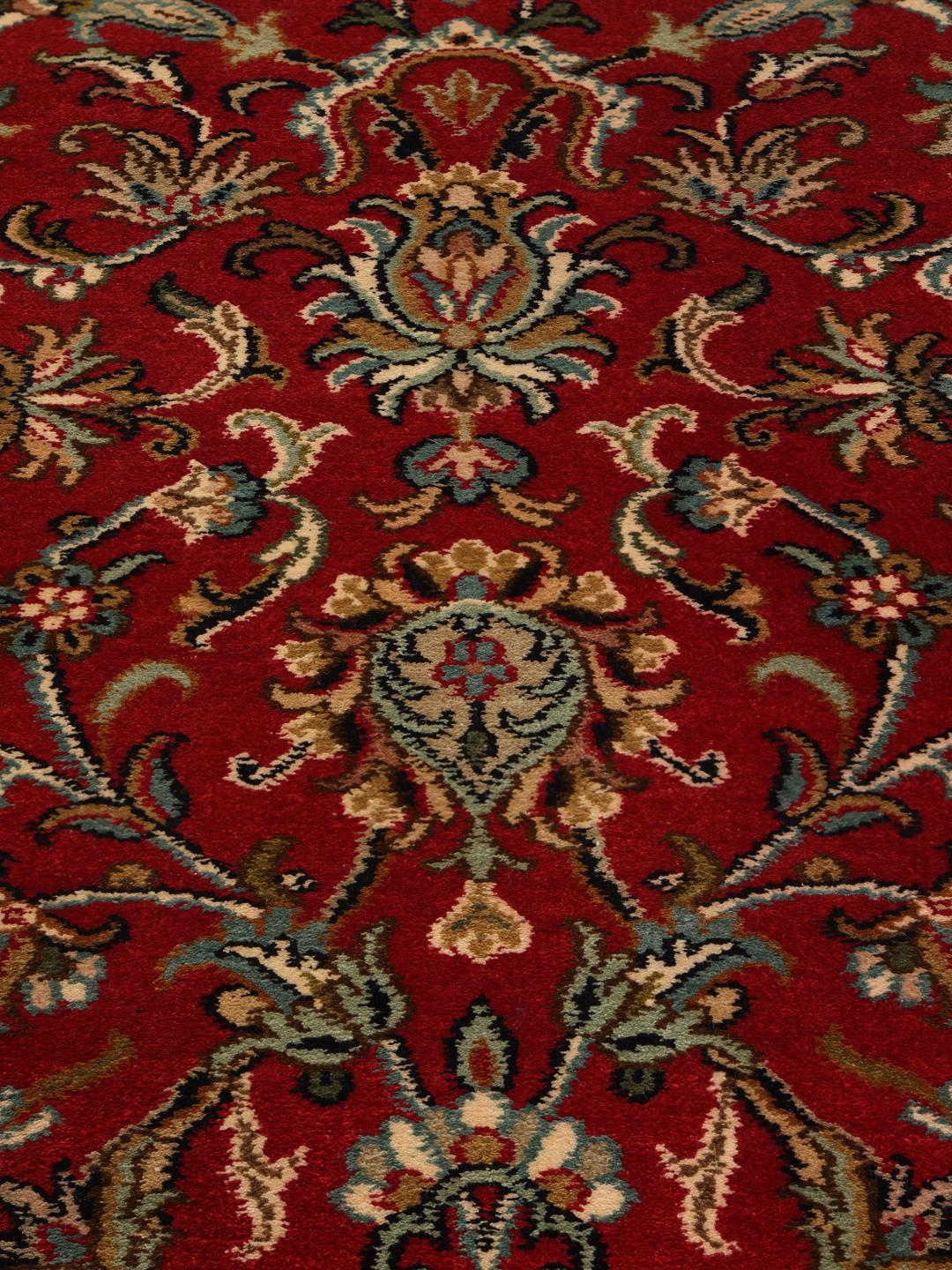
The visual language of these rugs is deeply connected to the natural beauty of the Himalayan landscape, often featuring elaborate floral sprays, vines, and paisley-inspired motifs. The borders are typically as detailed as the field, creating a balanced and formal composition that draws the eye. The use of vibrant, deep red tones is a classic choice, intended to provide a warm and inviting contrast to the complex, lighter-toned floral patterns.
Kashmir silk rugs are highly valued by collectors and enthusiasts who appreciate the intersection of heritage, skill, and enduring aesthetic appeal. Owning one is seen as an investment in a living tradition, representing a standard of work that prioritises quality above all else. These pieces are intended to be passed down through generations, serving as a testament to the enduring value of human artistry.