Kashmir rugs carry a rich legacy rooted in the 15th century, when the craft was introduced to the region by central Asian artisans. Over the centuries, the art form evolved to incorporate local sensibilities, blending influences from the Middle East with the vibrant, natural beauty of the Himalayan landscape.
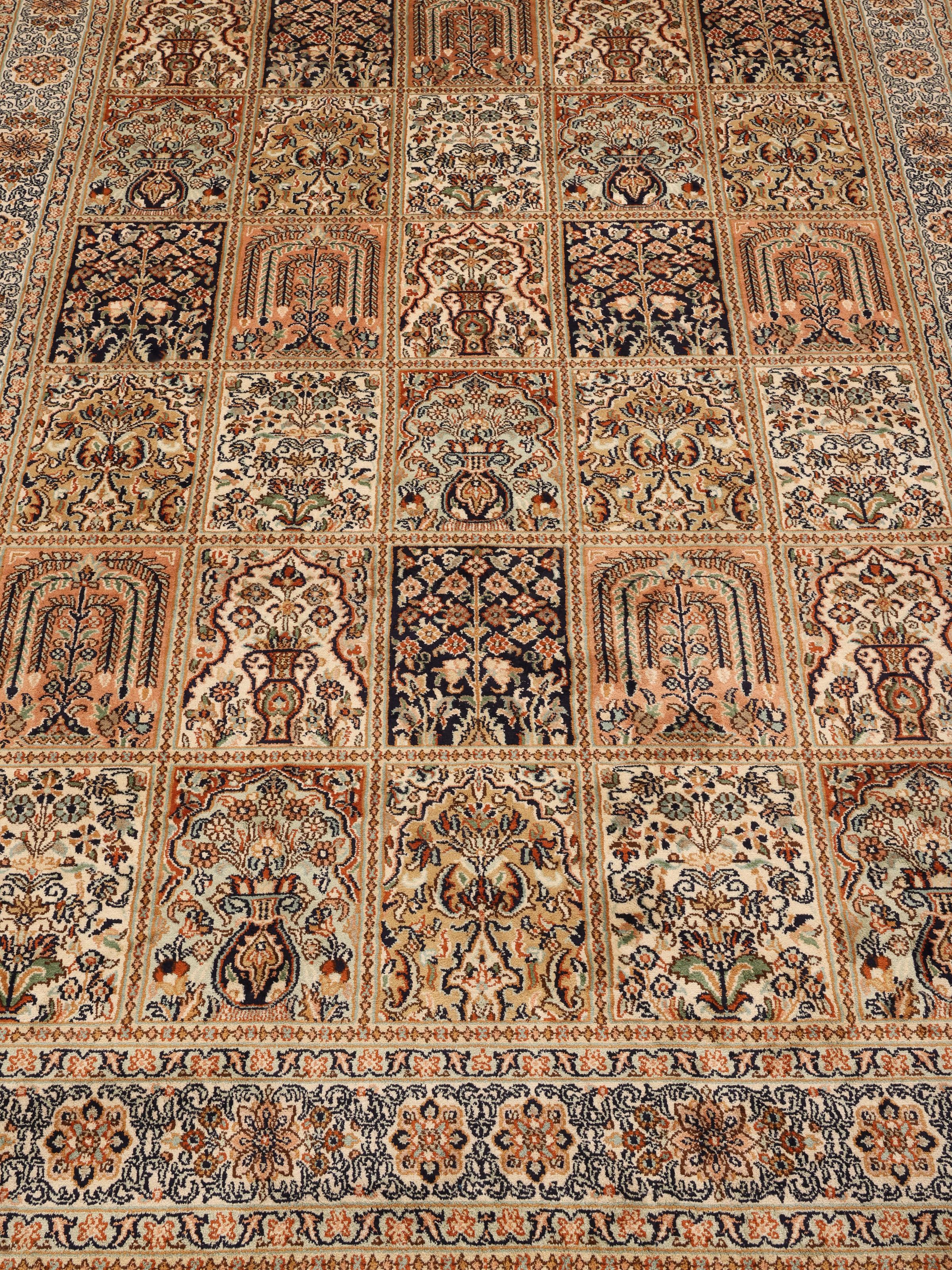
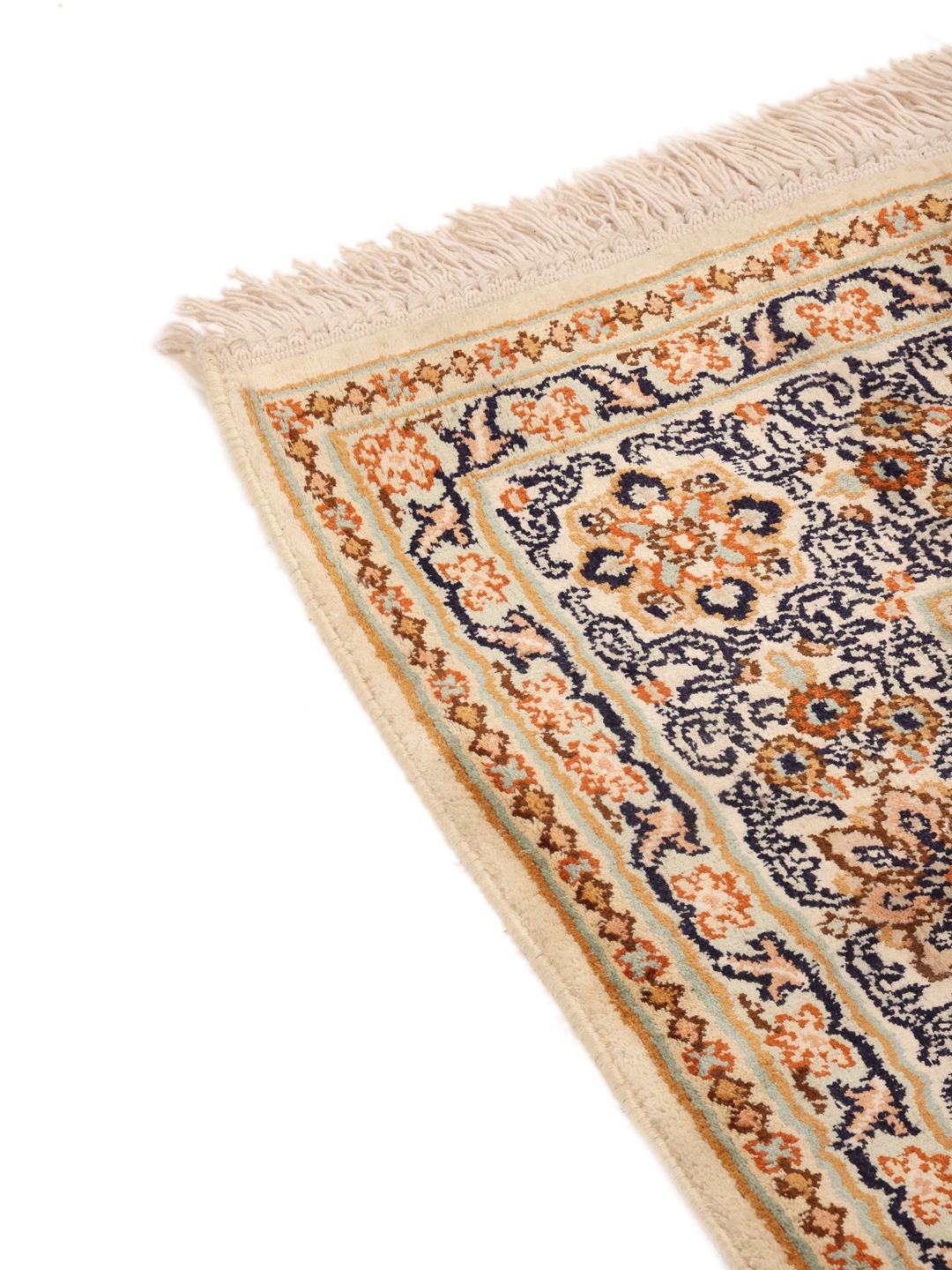
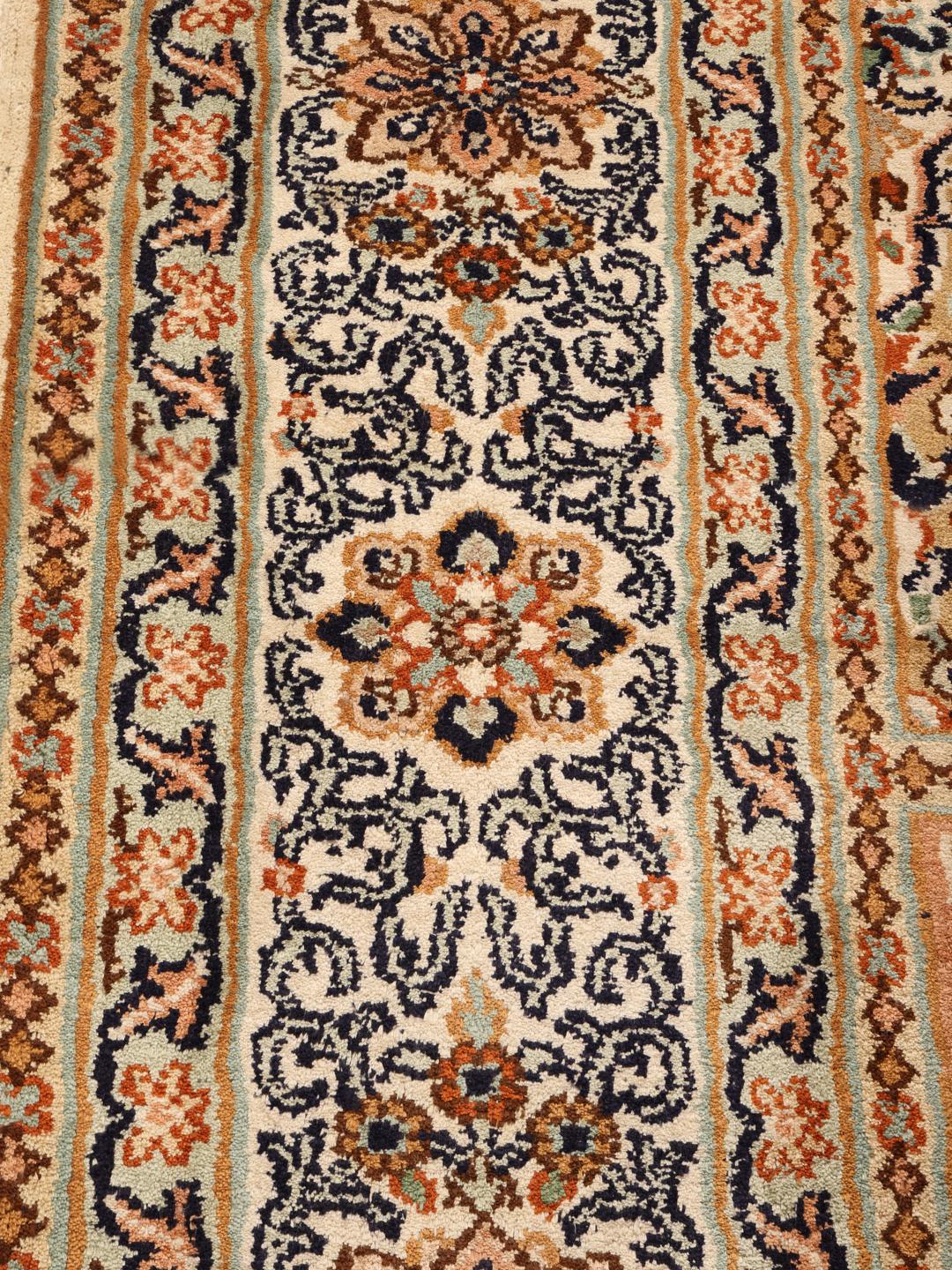
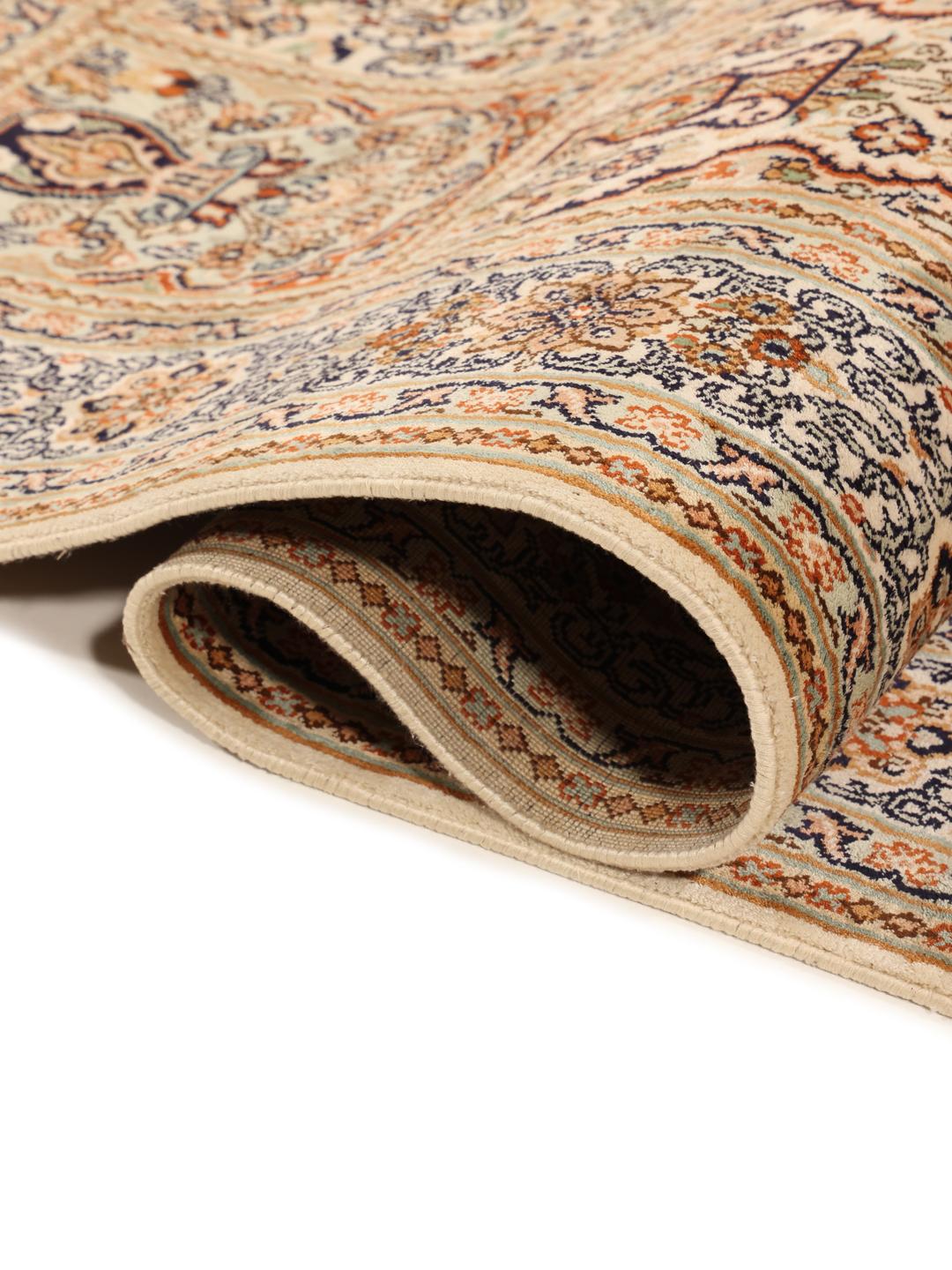
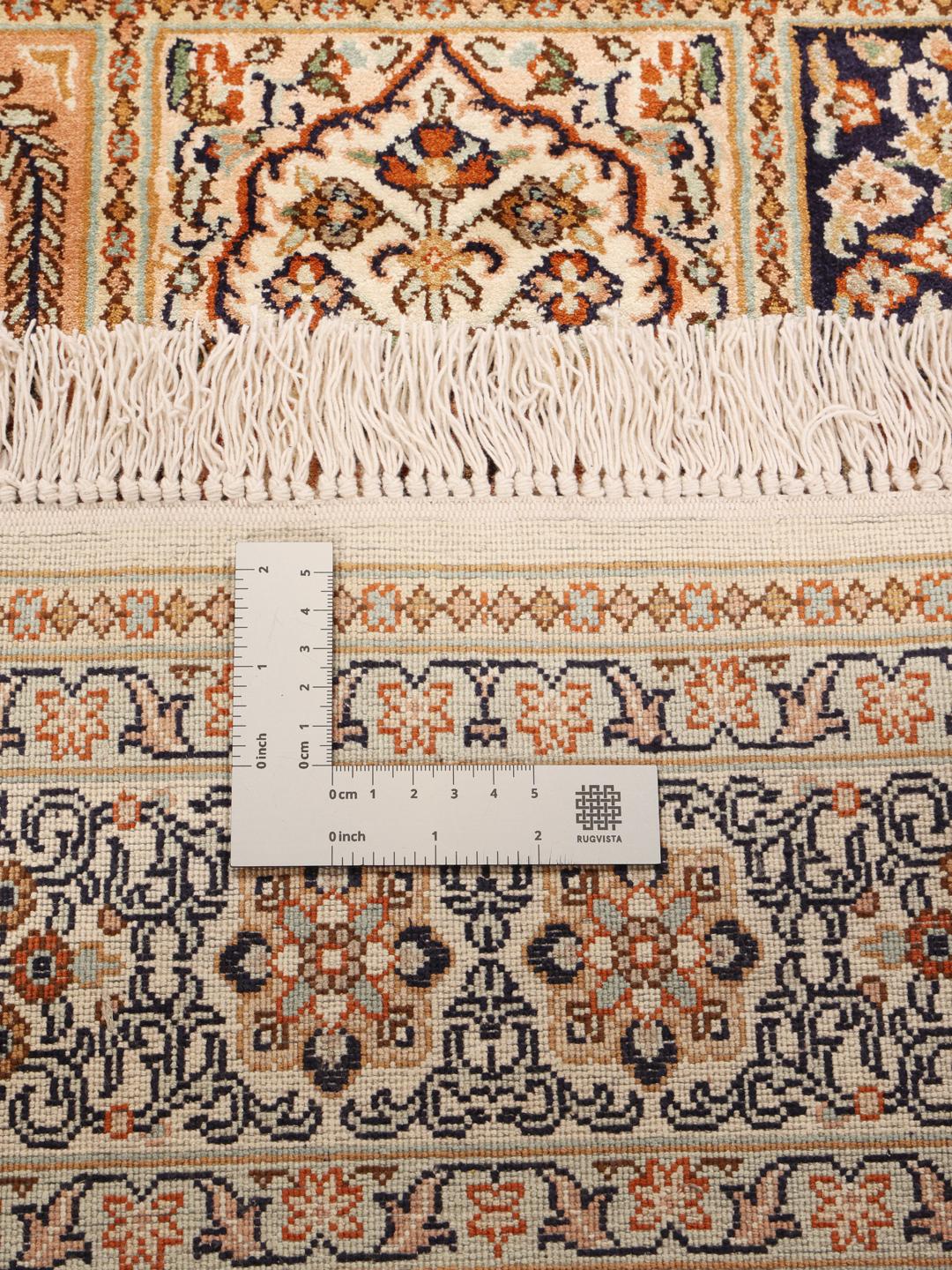
The use of silk as a primary material in Kashmir rug making is a hallmark of the region's dedication to luxury and fine detail. Silk allows for thinner, more delicate threads compared to wool, which enables weavers to create exceptionally high knot densities and achieve a level of intricate design and color clarity that is simply impossible with coarser materials.
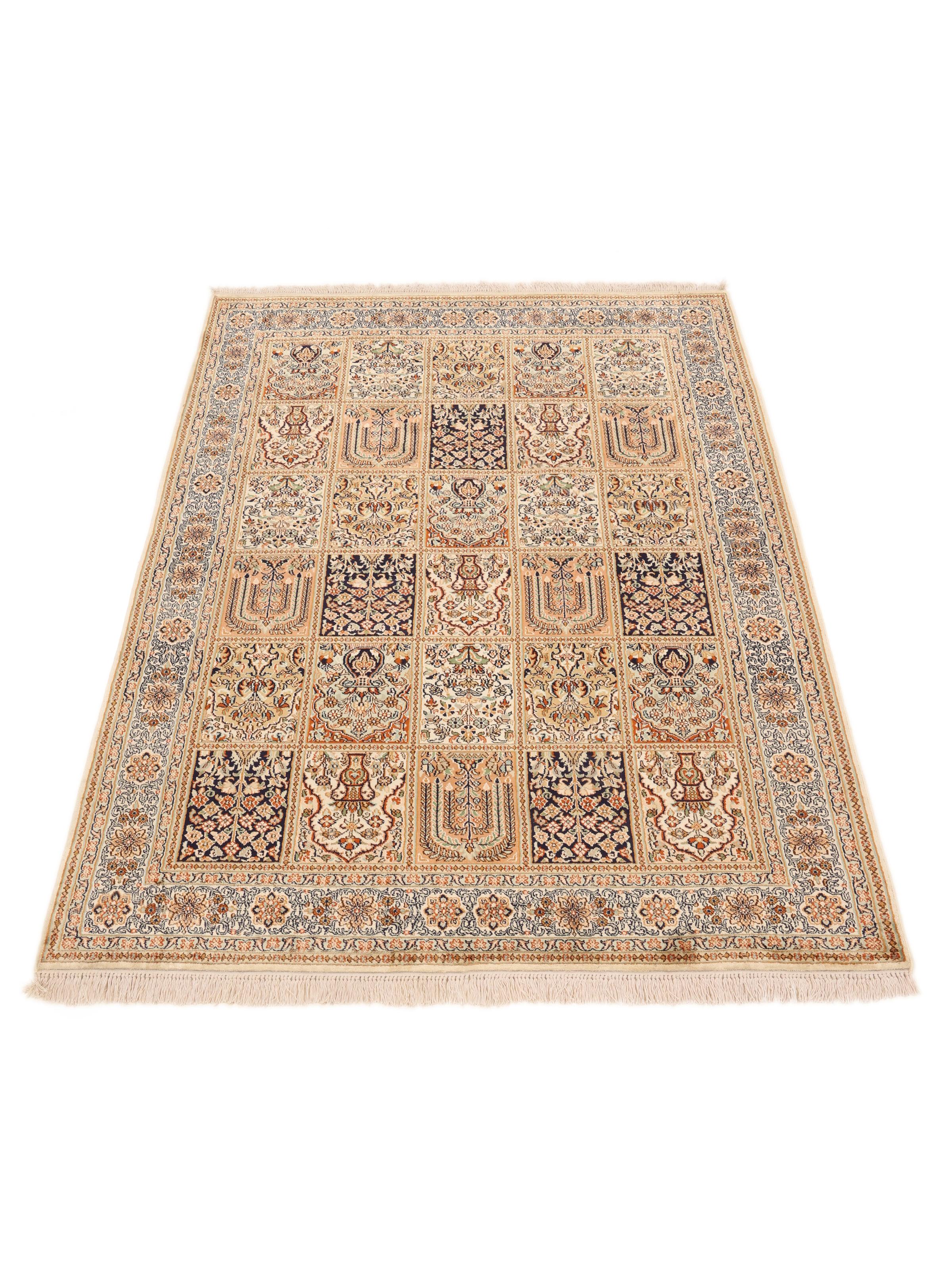
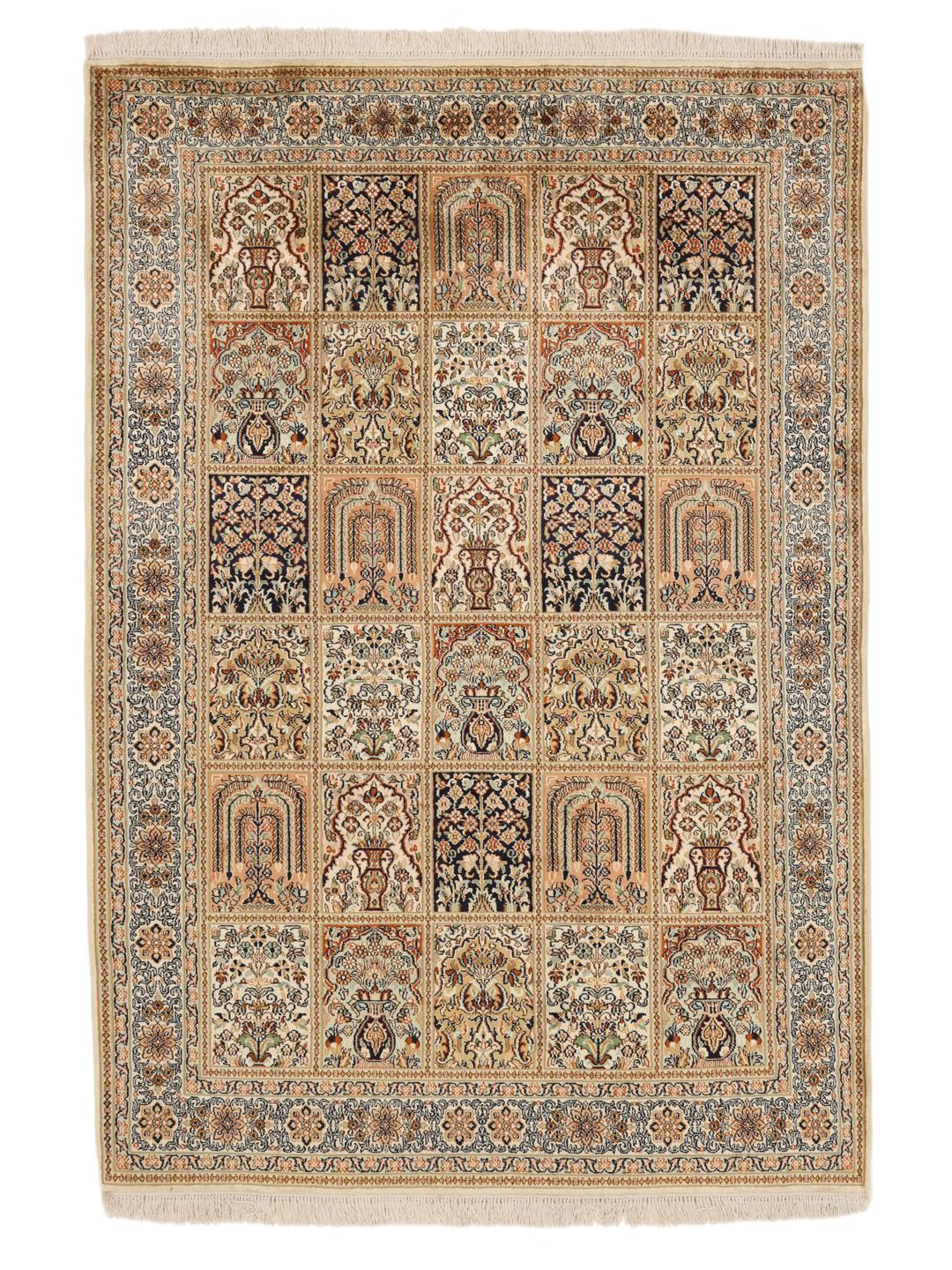
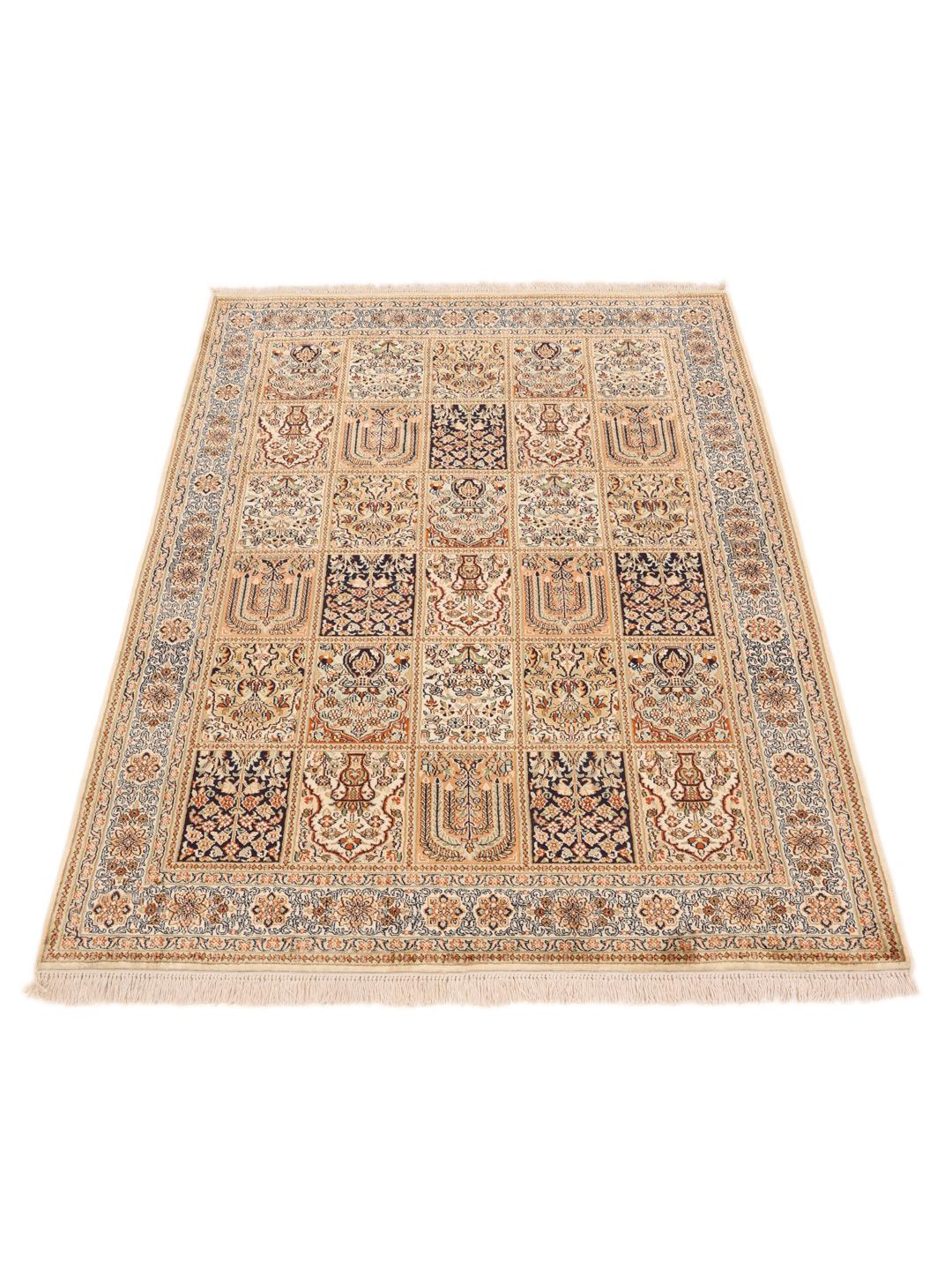
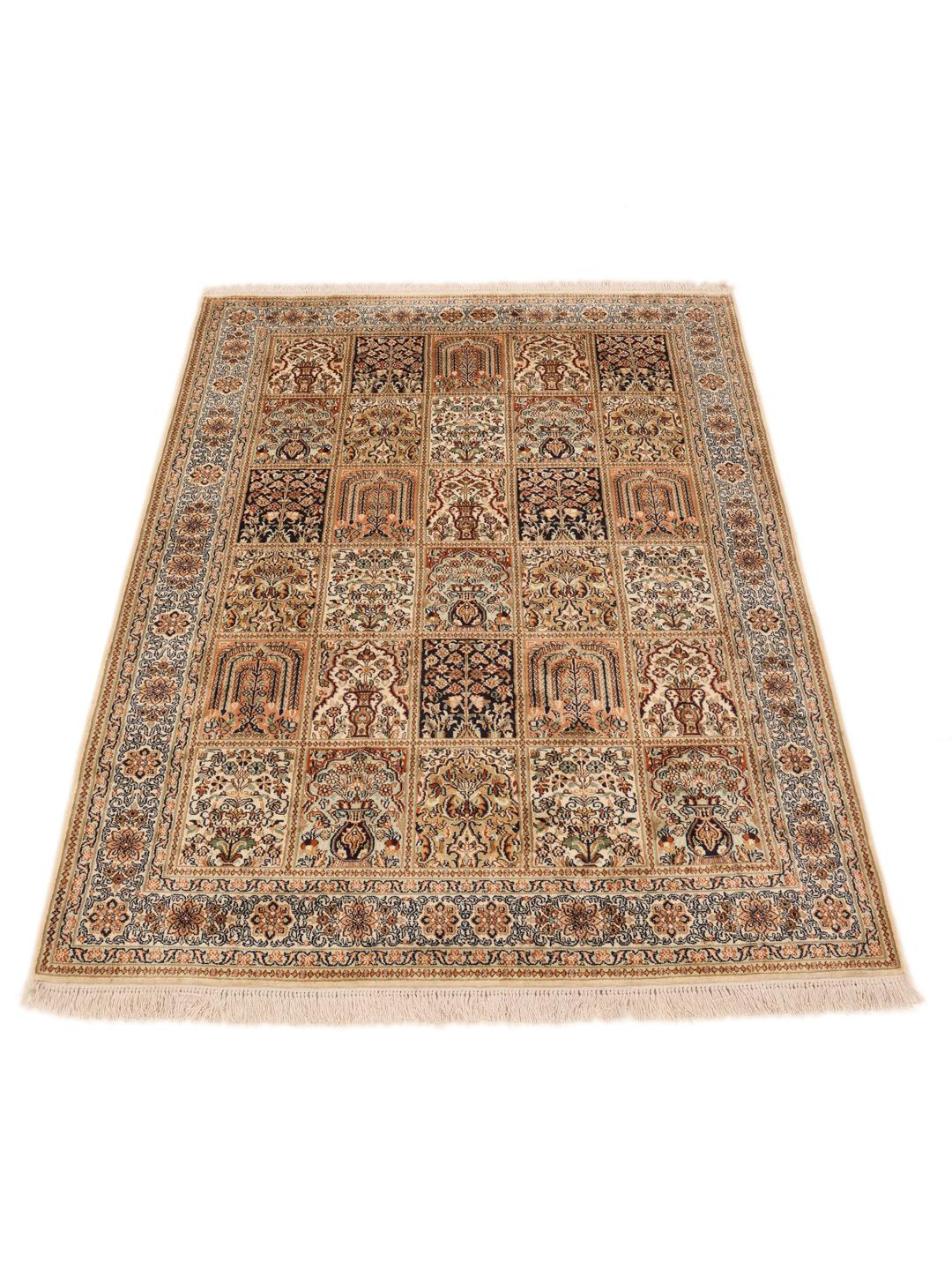
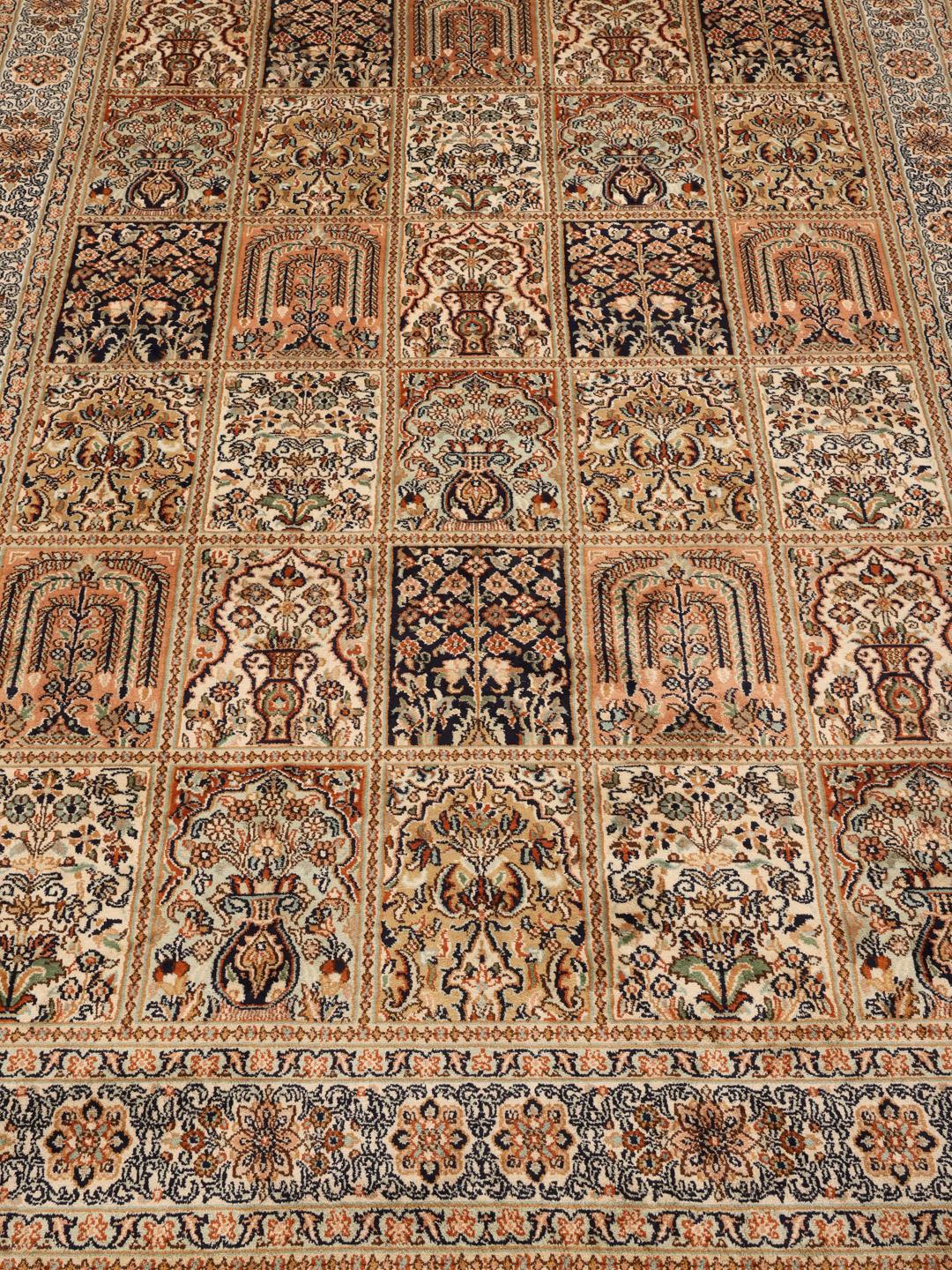
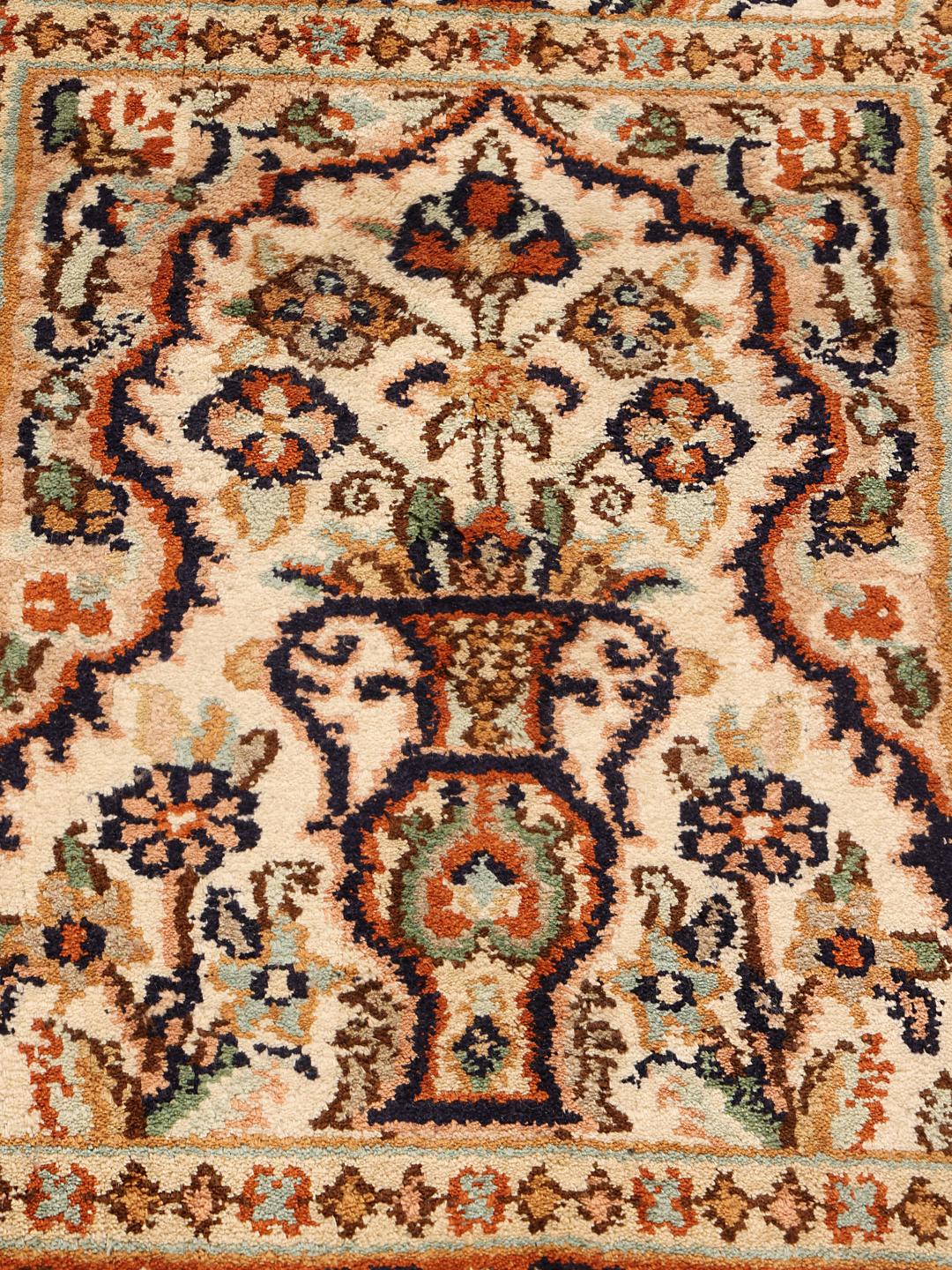
The design of this rug features a traditional garden-inspired panel layout, a motif that has historically represented paradise in various cultural traditions. Each rectangular panel often depicts a different aspect of a formal garden, with floral vases and botanical patterns that demonstrate the weaver's ability to render complex, organic shapes with geometric precision.
Owning a hand-knotted silk rug from Kashmir is an investment in a storied tradition that values patience, skill, and an eye for beauty. These pieces are highly prized by collectors for their ability to bridge the gap between functional floor art and historical textile craft, serving as a testament to the enduring talent of Indian artisans.