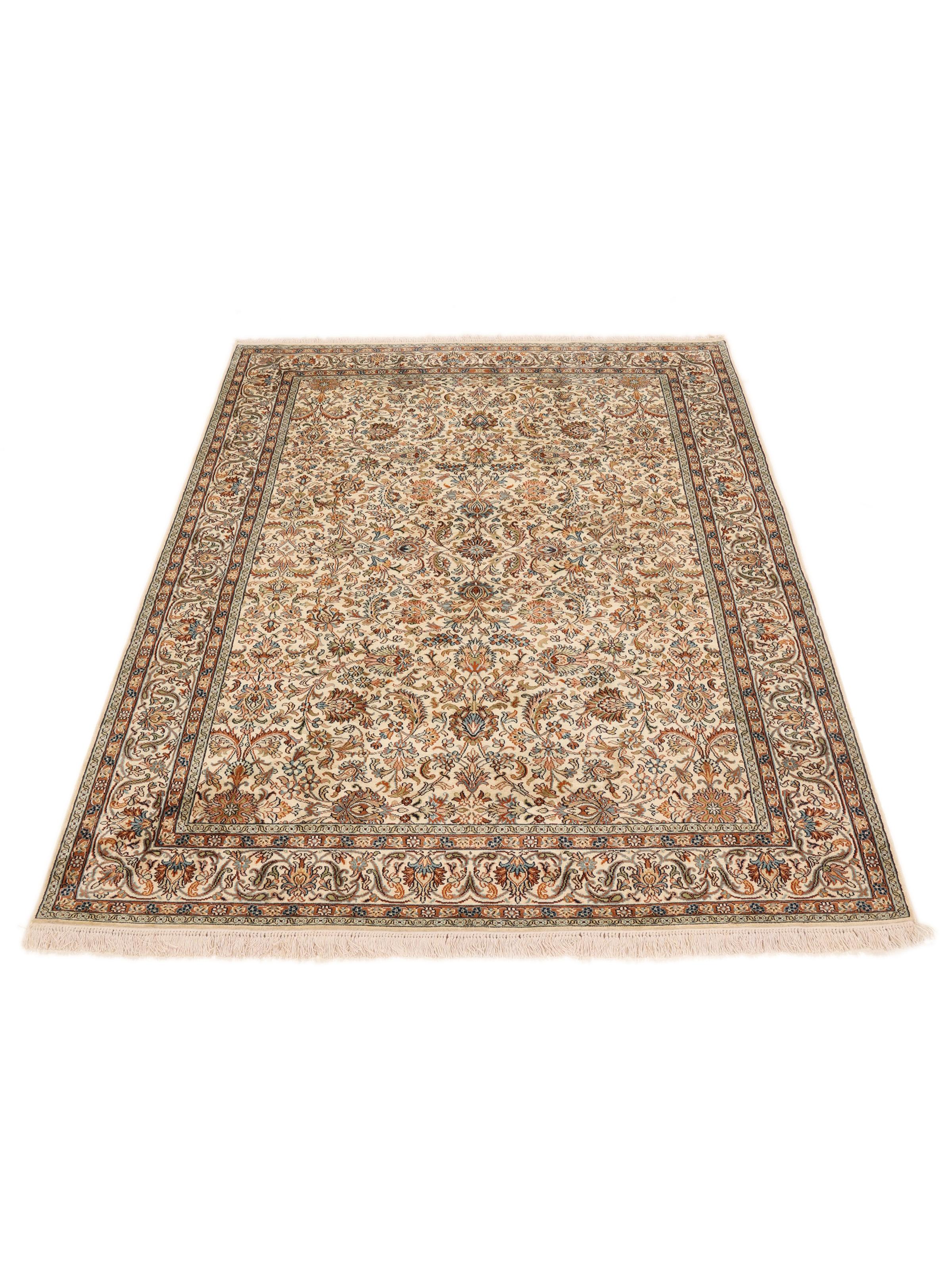
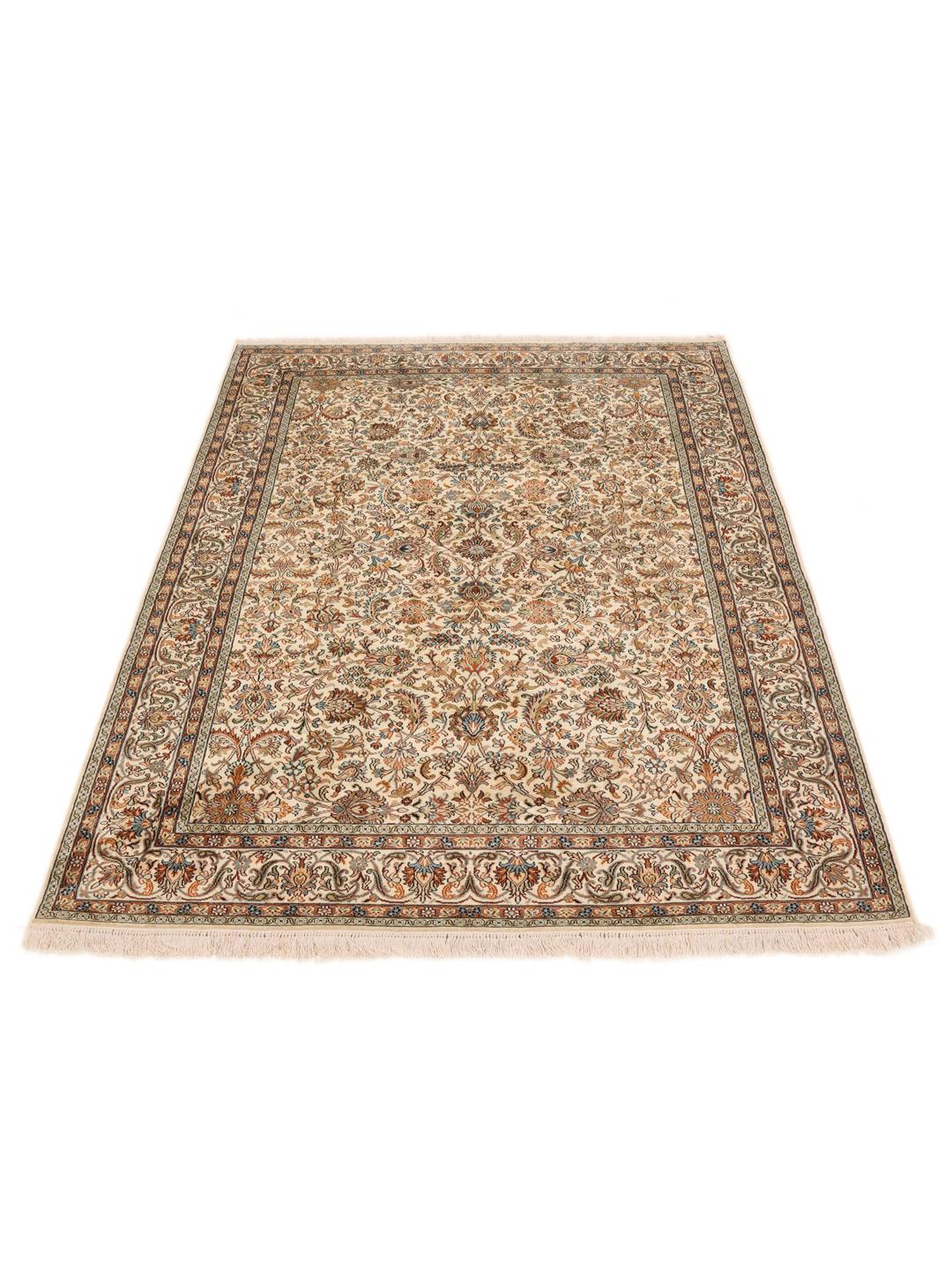
Kashmir silk rugs are celebrated globally for their connection to the legendary weaving centres of Northern India. This tradition, which flourished under the patronage of Mughal emperors, is deeply rooted in the cultural exchange along the ancient trade routes that once connected Central Asia to the Indian subcontinent.
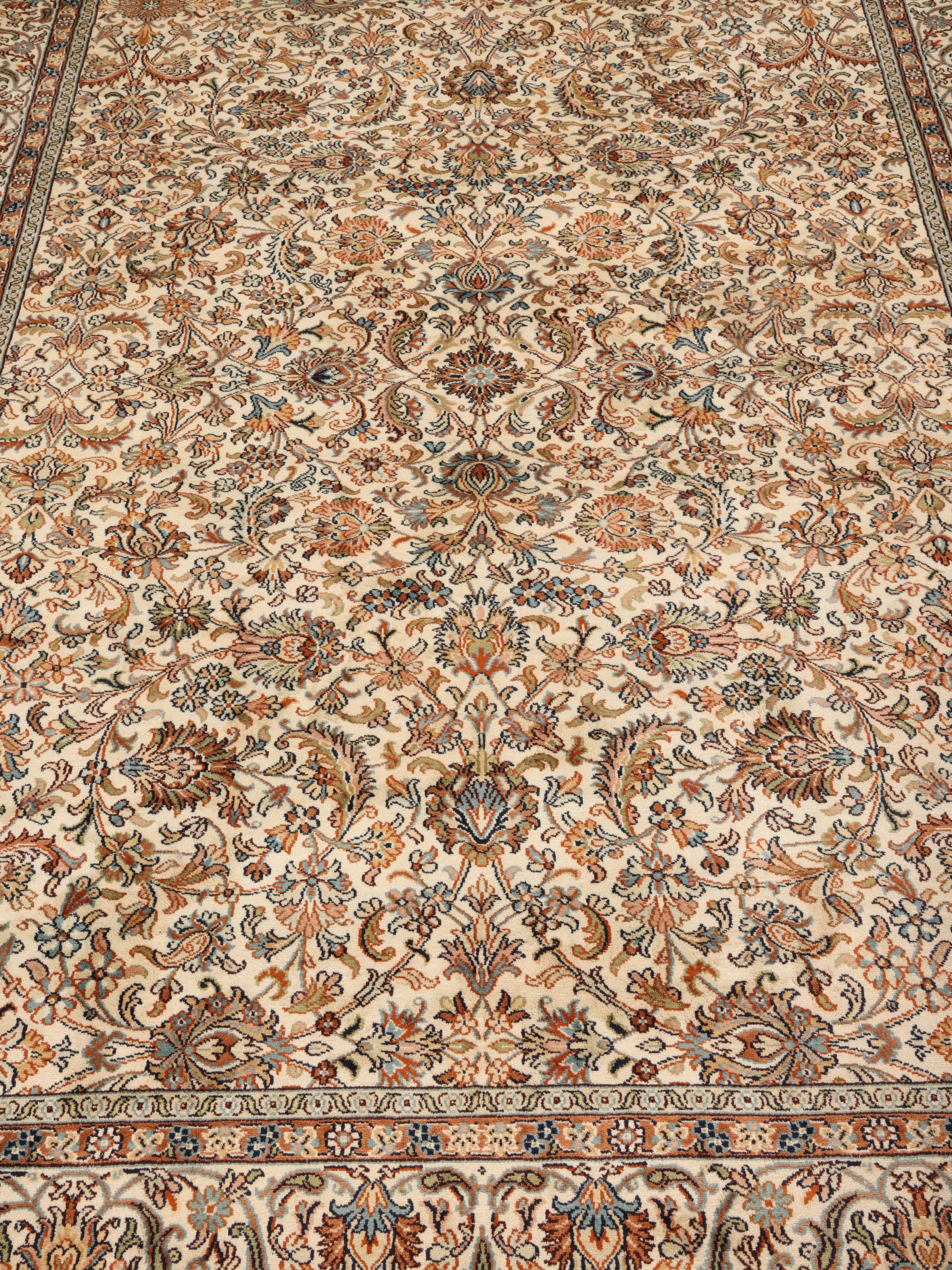
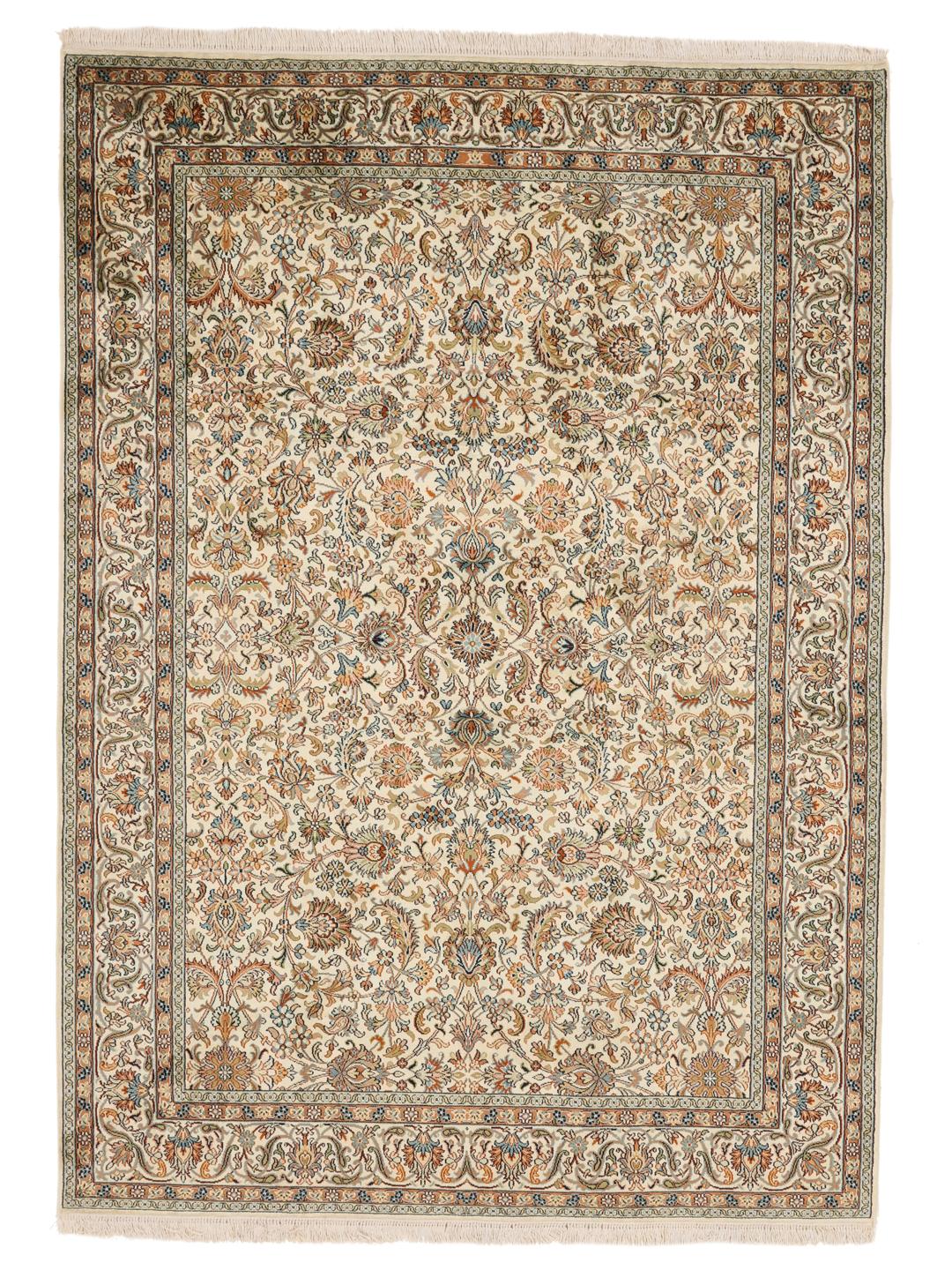
The term Kashmir refers not only to the geographical origin but also to a specific, highly refined aesthetic that emphasises intricate, curvilinear patterns. Unlike the more geometric styles found in nomadic traditions, these rugs are defined by their sophisticated floral motifs, often inspired by the natural beauty of the Himalayan valleys.
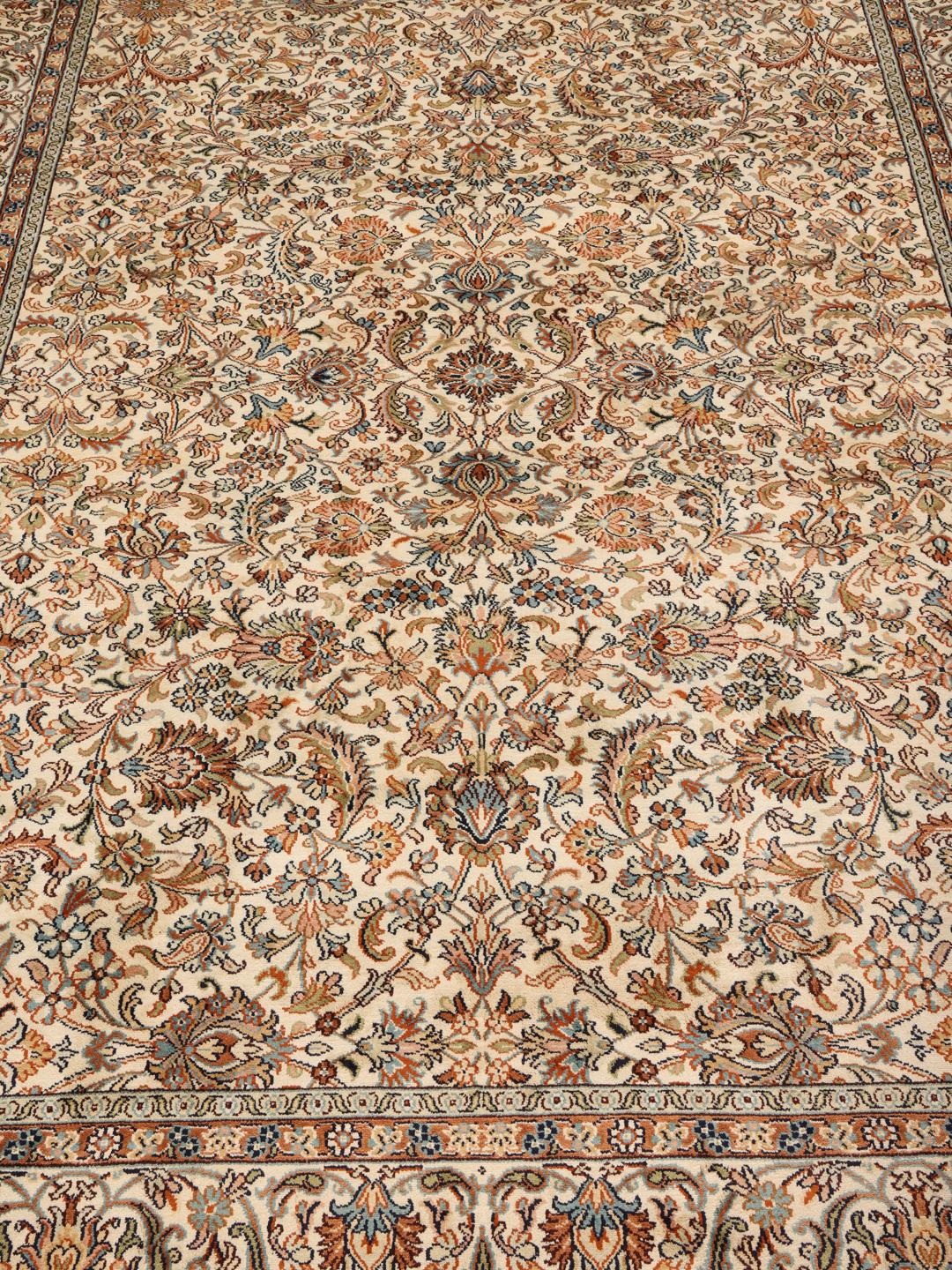
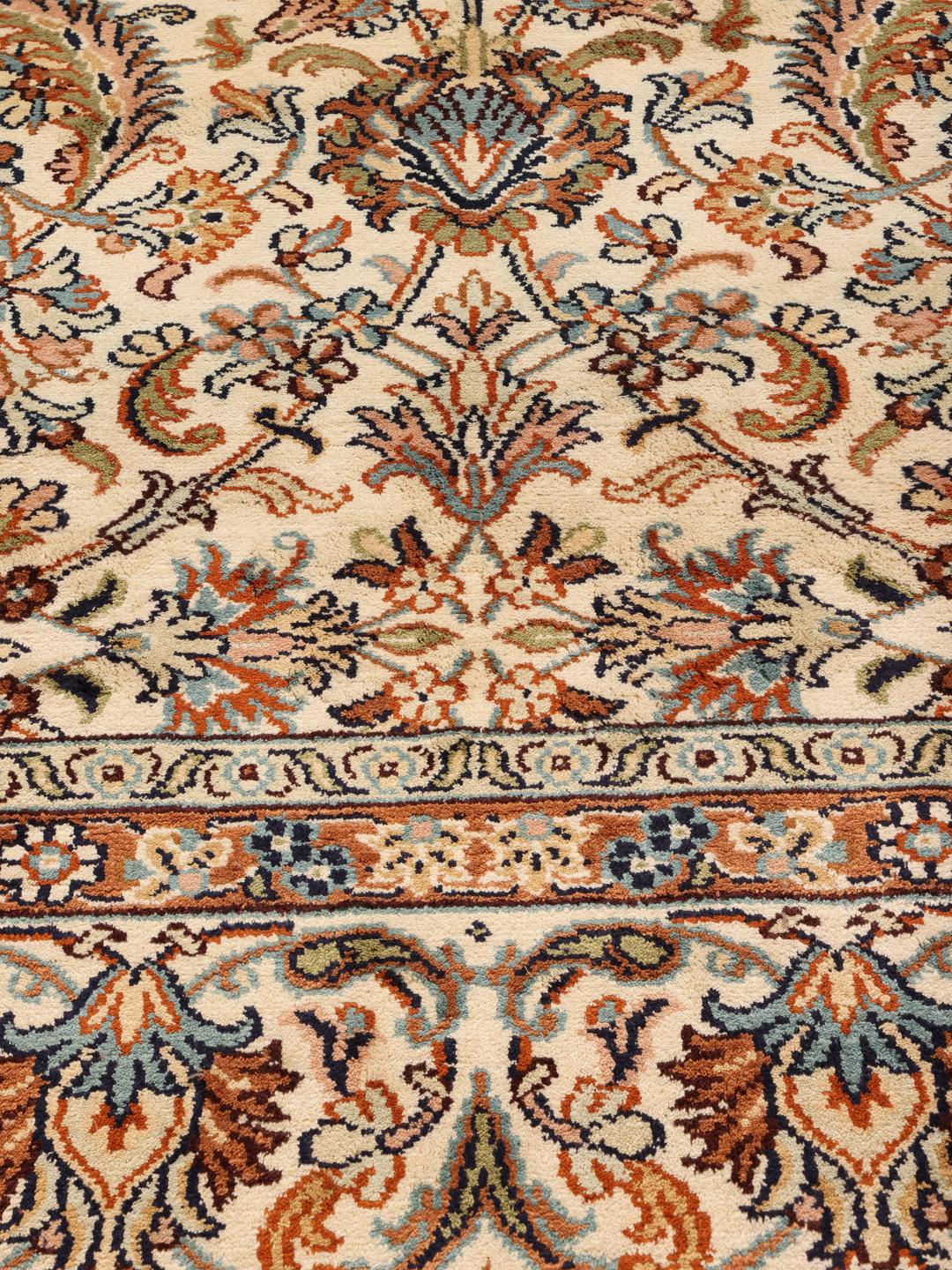
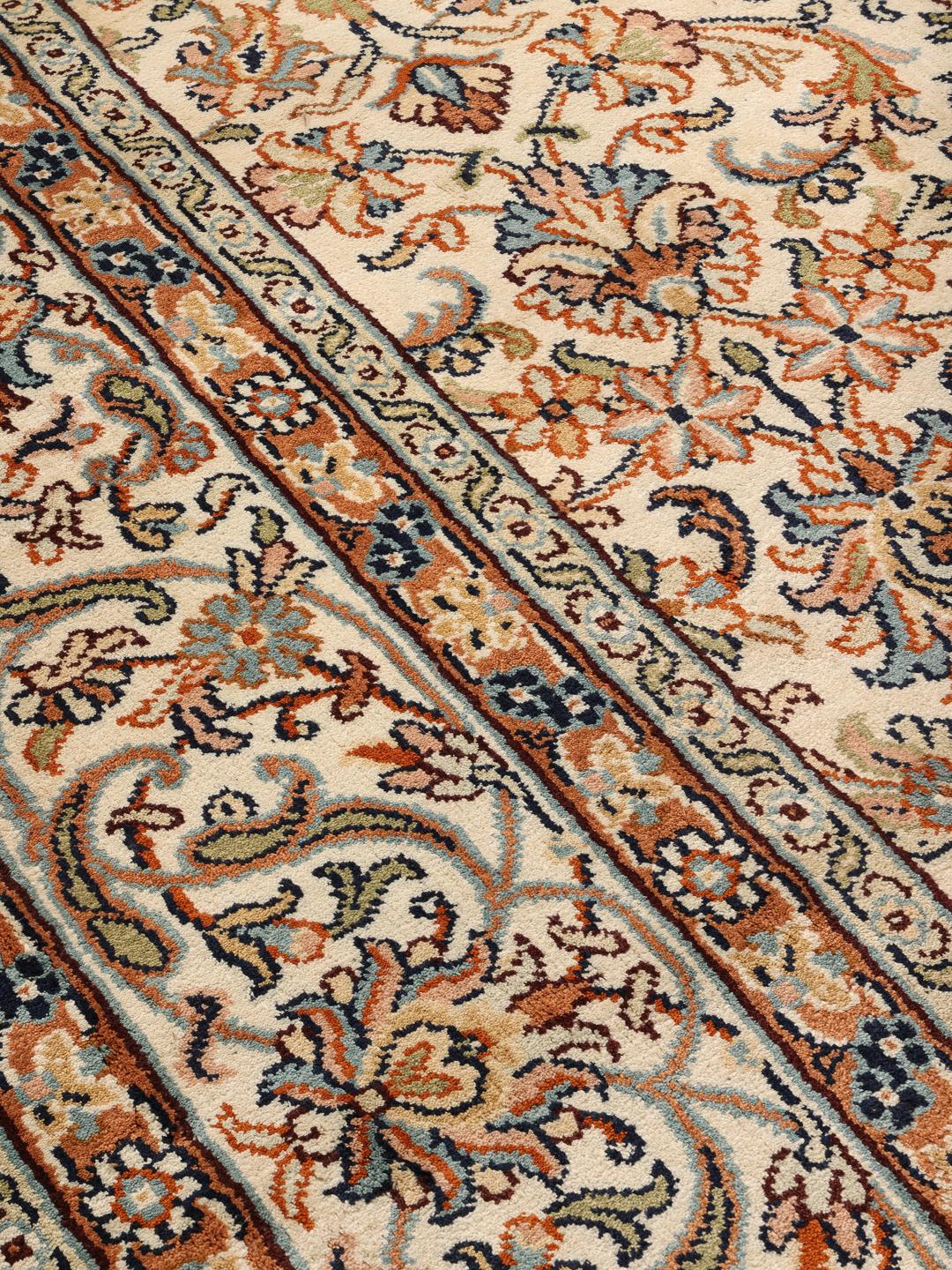
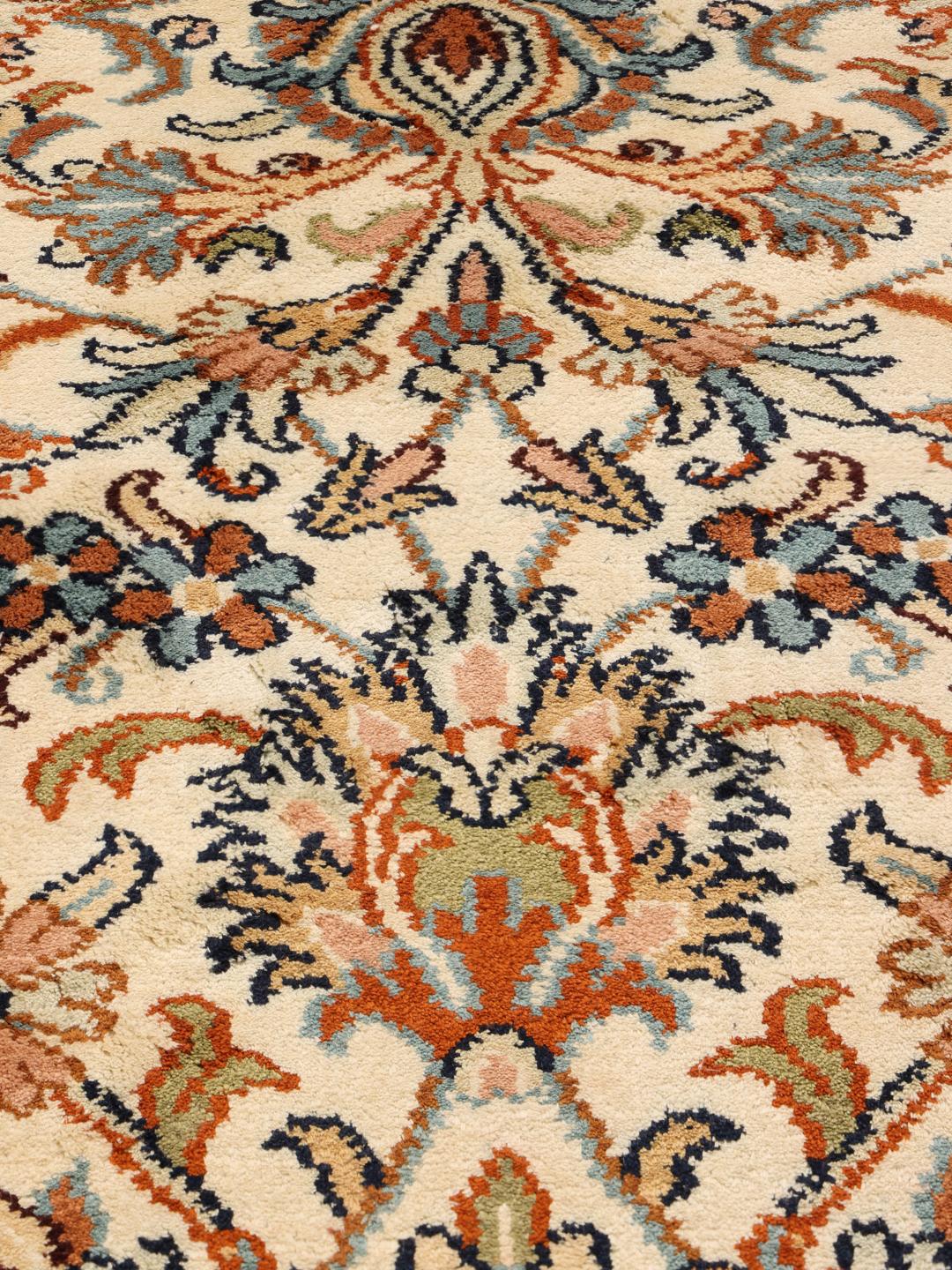
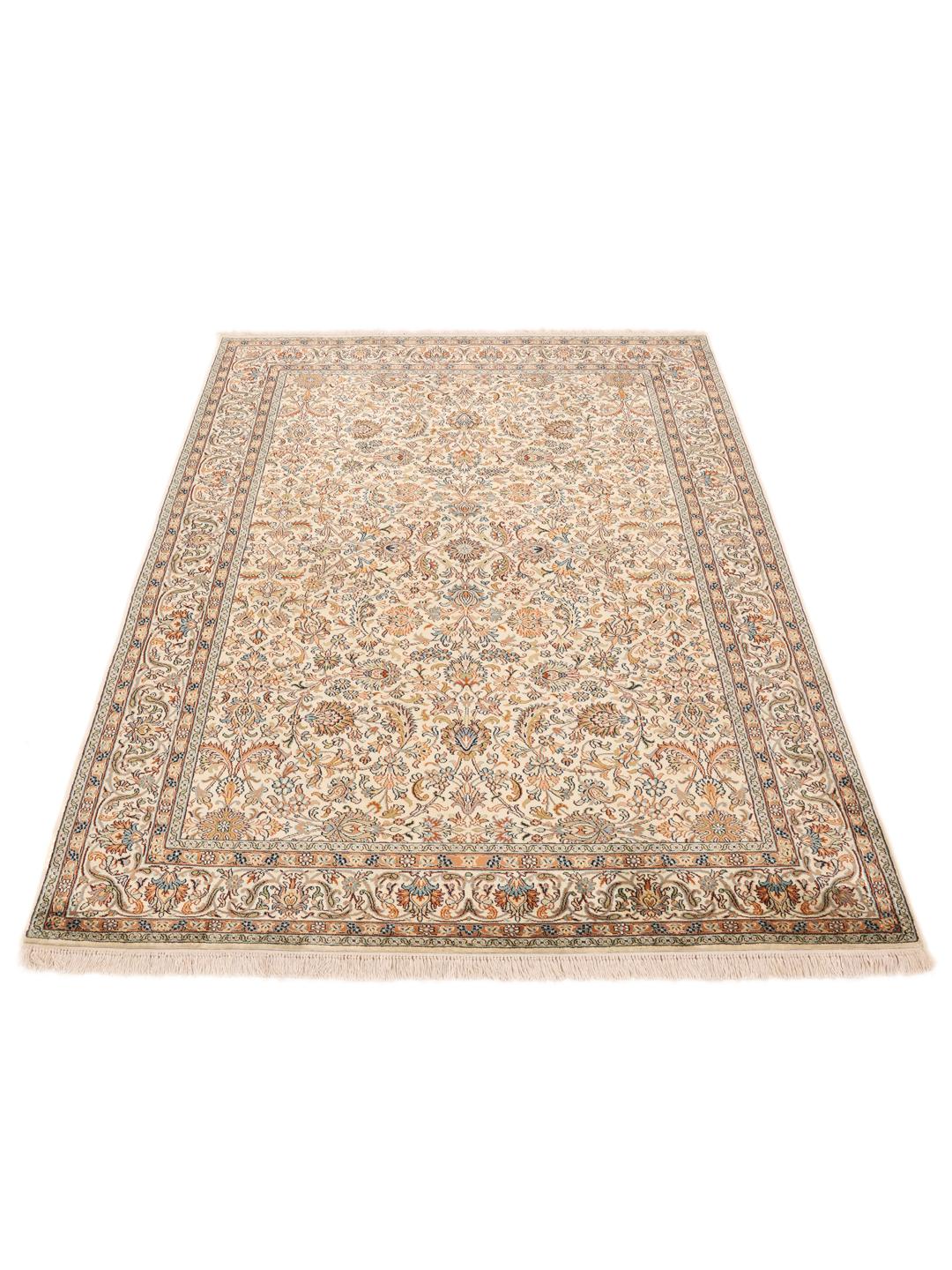
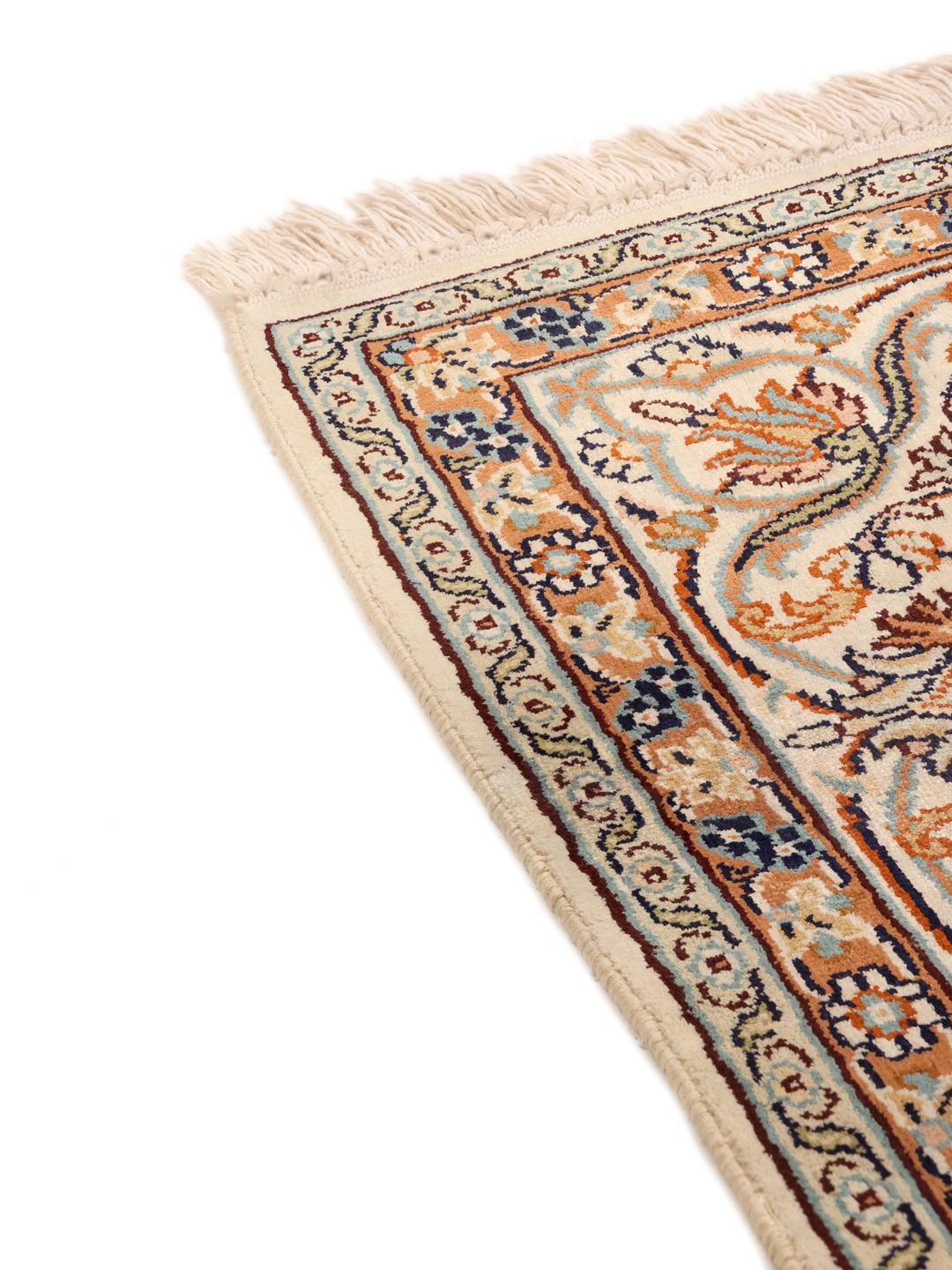
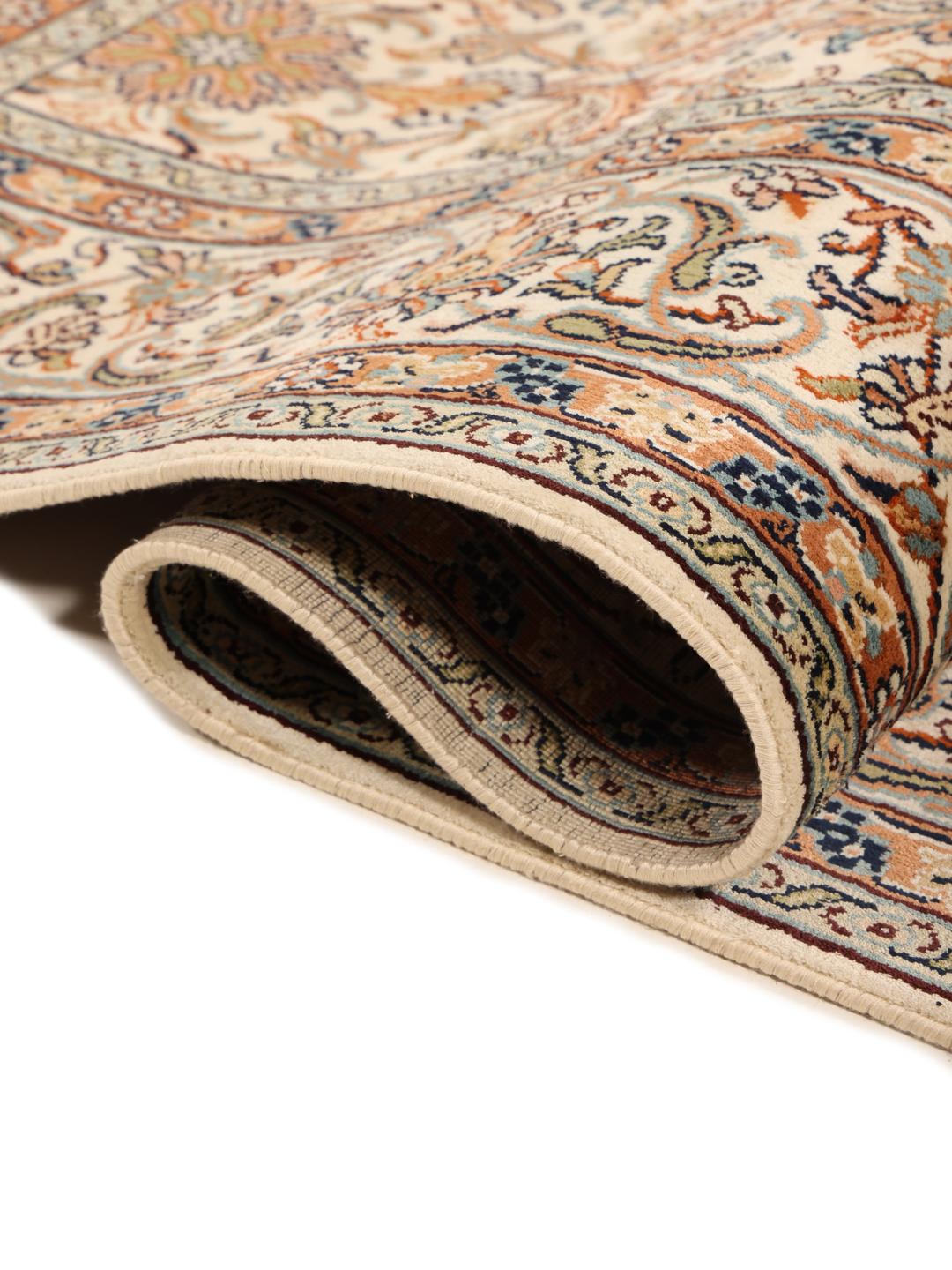
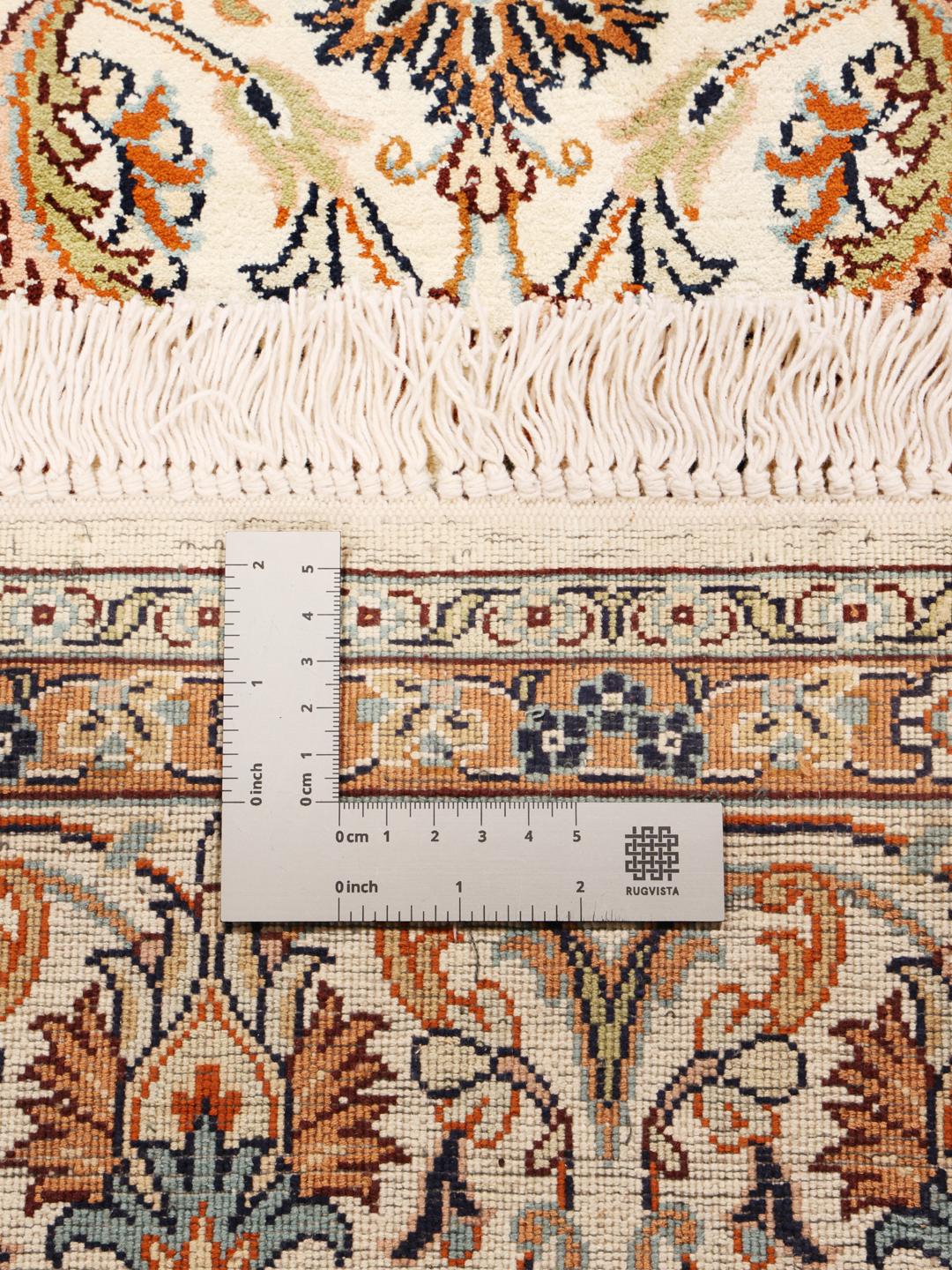
A hallmark of these rugs is the use of complex, flowing designs that often feature elaborate borders enclosing a highly detailed central field. The floral arrangements, often depicting stylised vines, blossoms, and leaves, are balanced with a masterful use of colour that creates a sense of harmony and grace, characteristic of the finest Indian textile work.
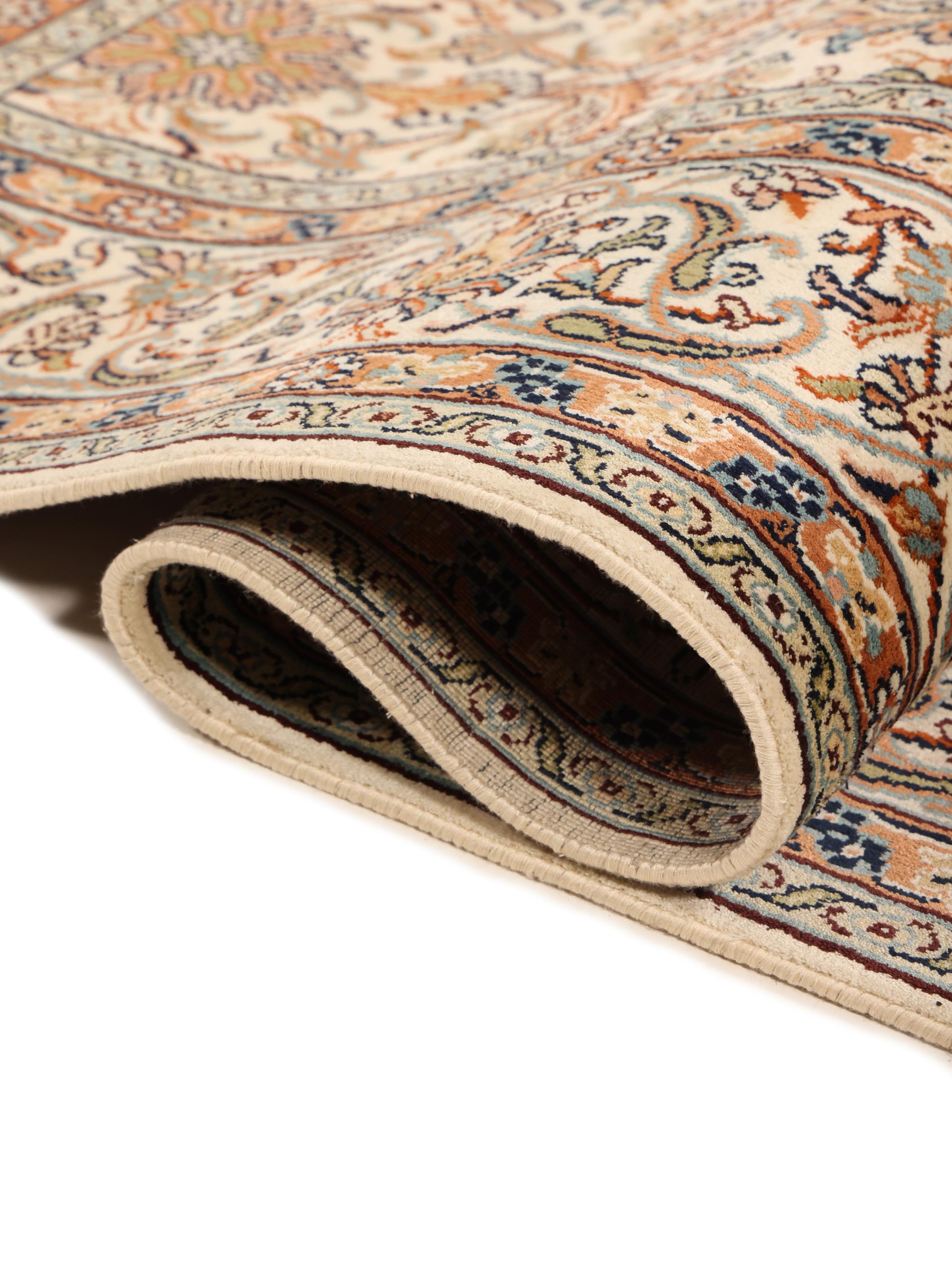
Owning a Kashmir silk rug is widely considered an investment in cultural heritage. These pieces are highly prized by collectors for the exceptional skill required to translate such fluid, organic designs into a knotted medium, ensuring that each rug stands as a lasting symbol of artistic dedication and technical mastery.