Kashmir silk rugs represent one of the most prestigious traditions in Indian textile history, drawing inspiration from centuries-old artistic exchanges along the Silk Road. While the techniques were historically influenced by Middle Eastern weaving styles, Indian artisans in the Kashmir region developed a distinct design language characterised by incredible precision and the use of the finest materials available.
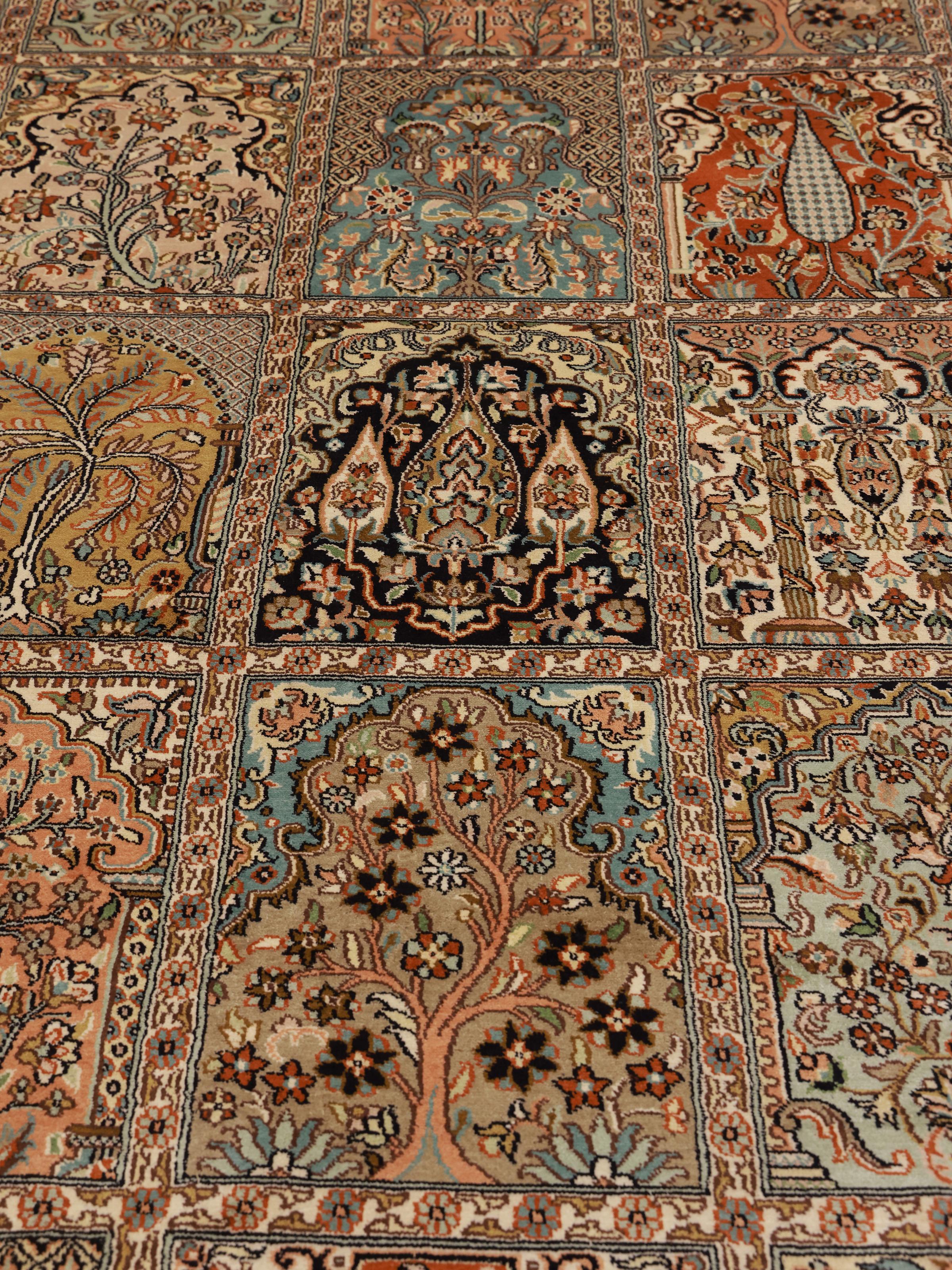
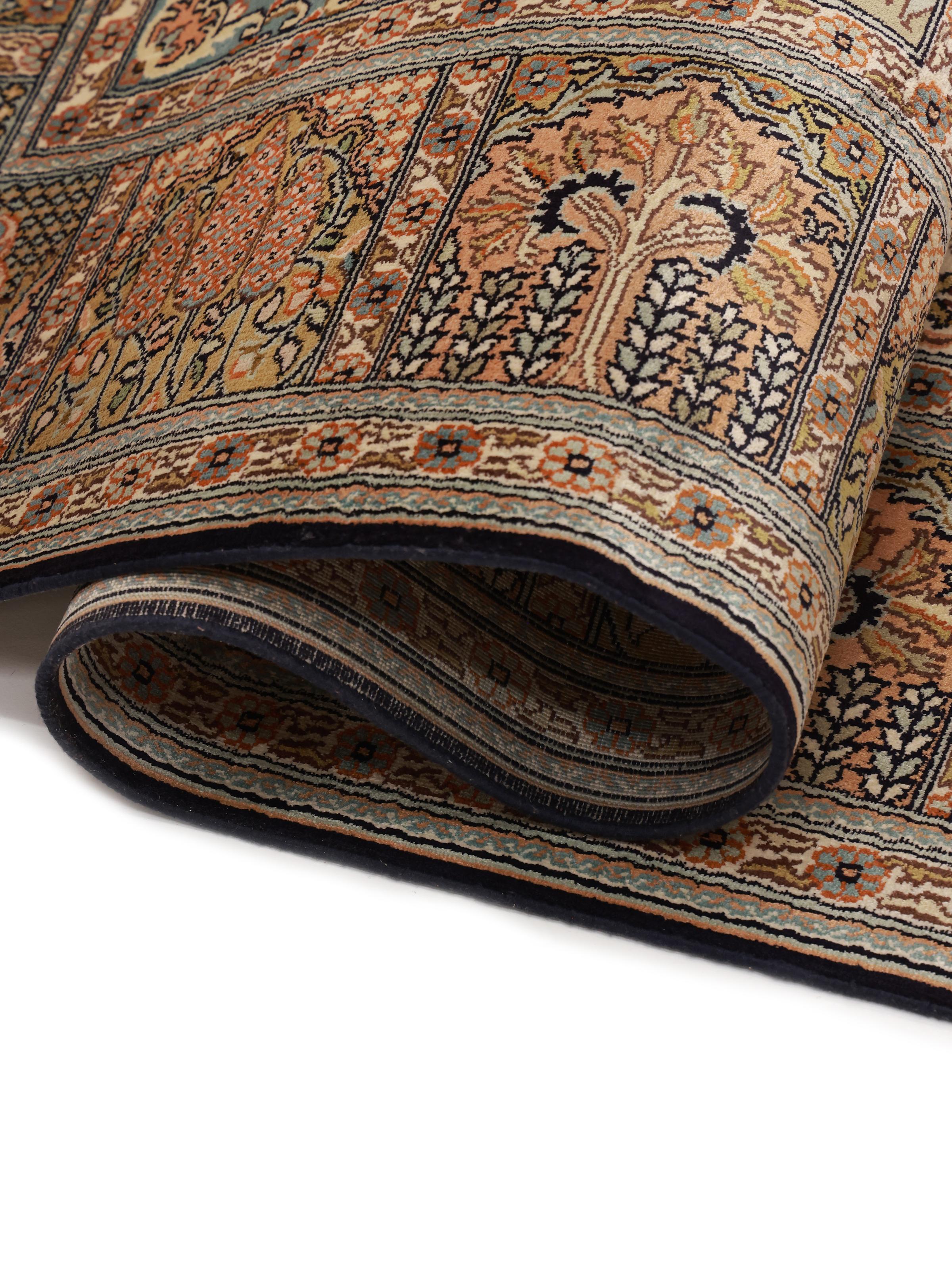
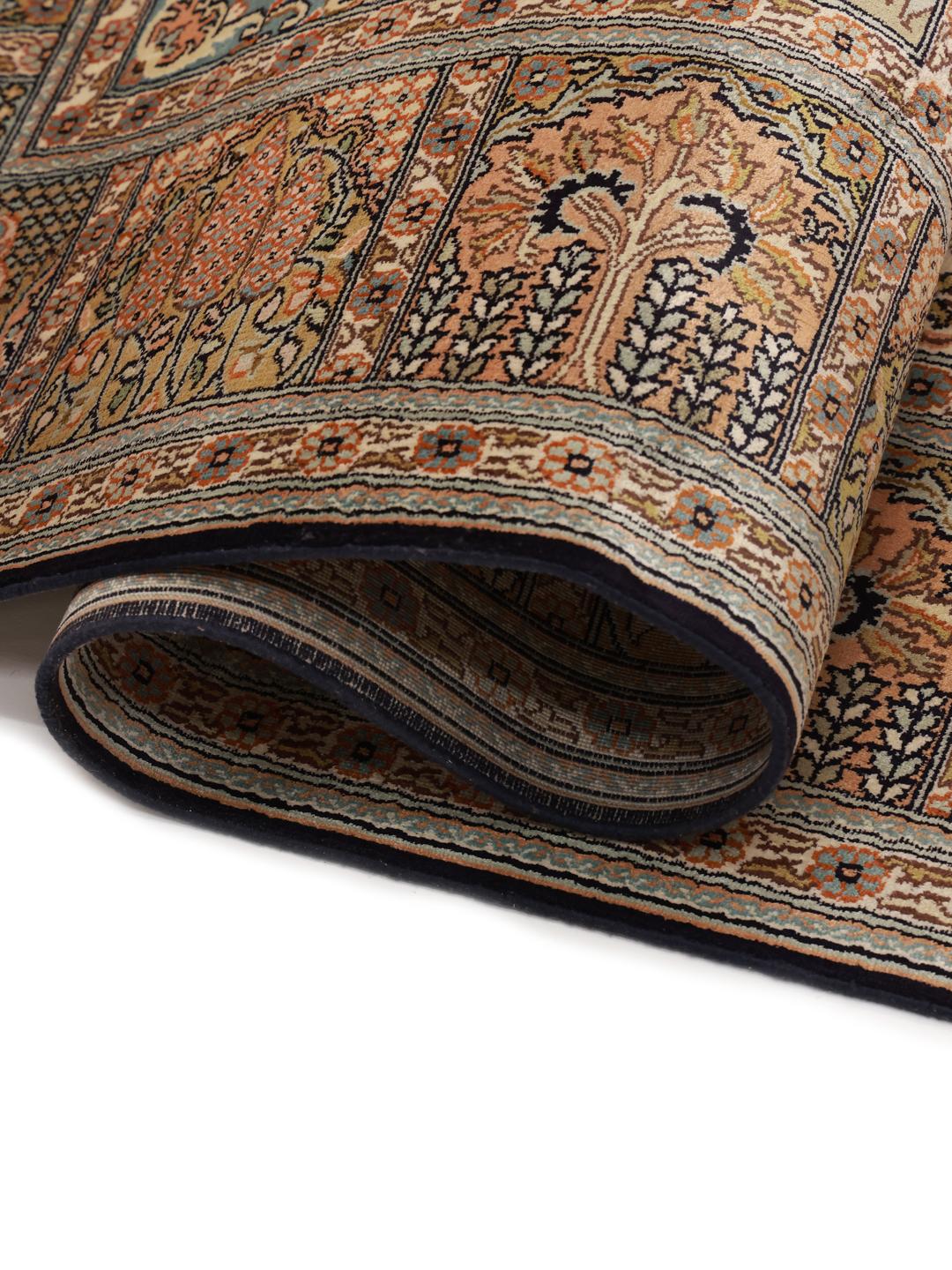
The term 'Kashmir' in the context of these rugs denotes a specific regional identity known for its dedication to high-density construction. When we speak of knot density, we are referring to the number of knots per square metre, which directly impacts the rug's ability to hold complex patterns. A higher density means the artisan can create curves and fine lines that would be impossible in coarser weaves, resulting in a piece that functions as both a floor covering and a canvas for detailed artistic expression.
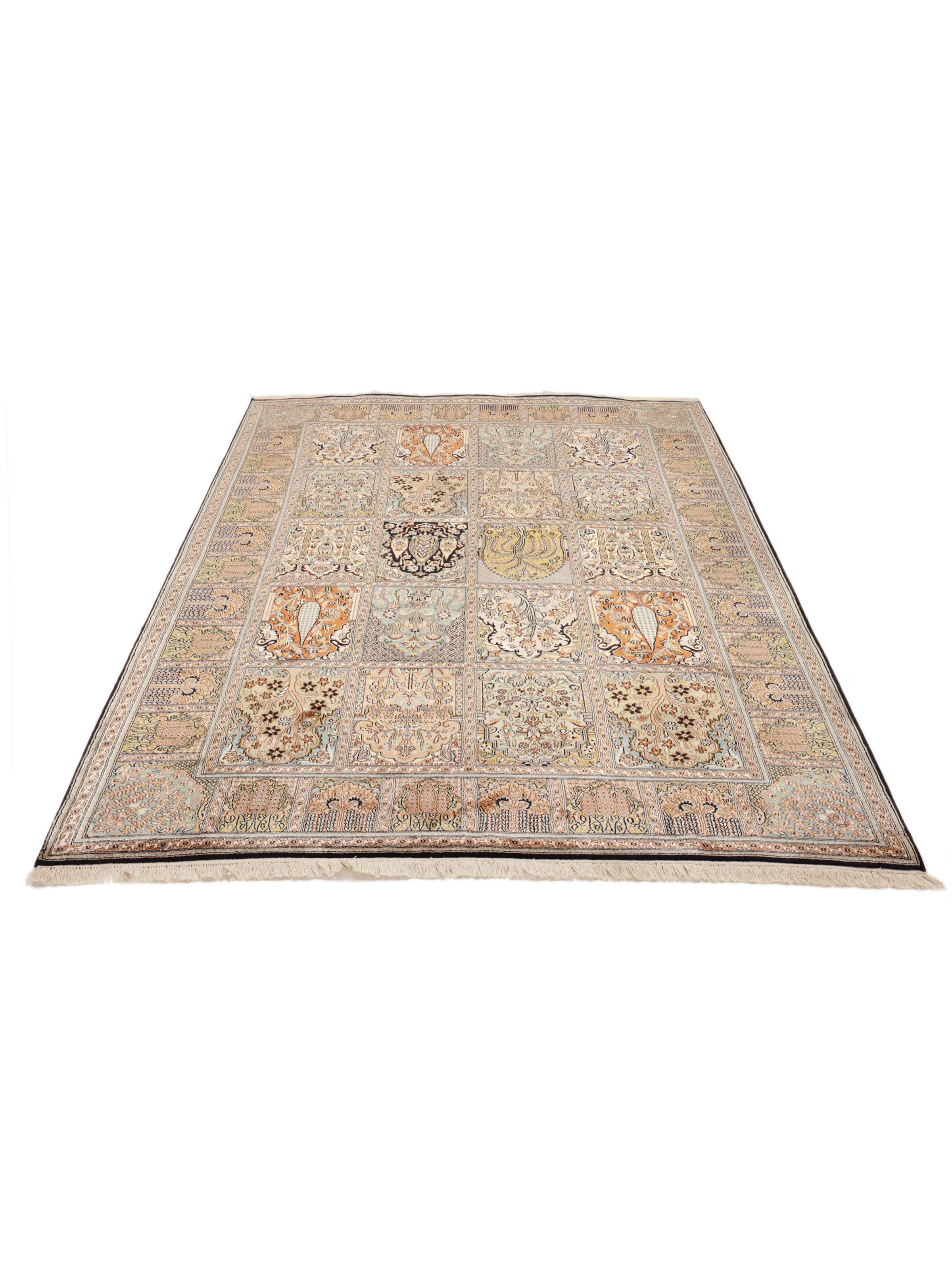
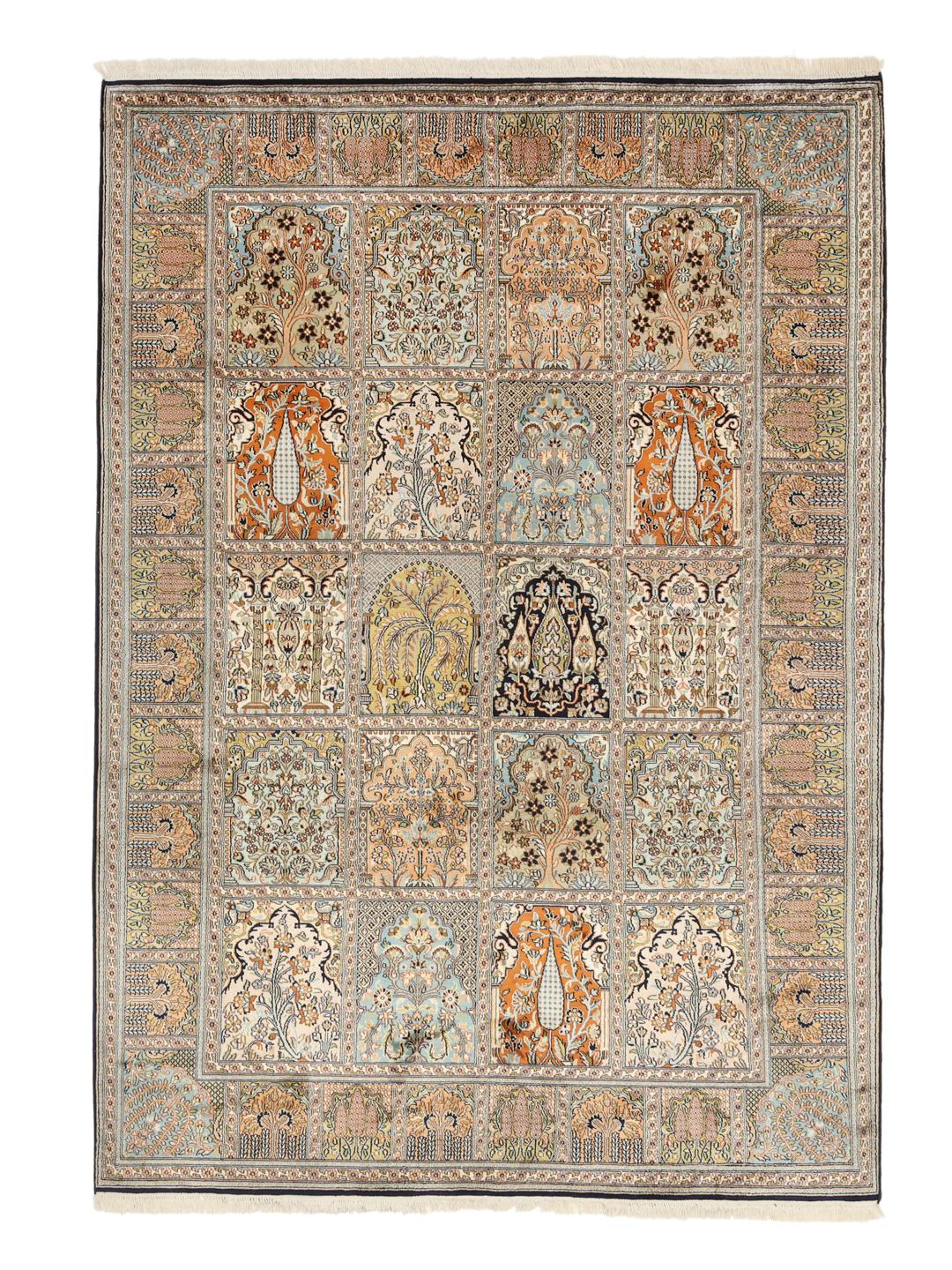
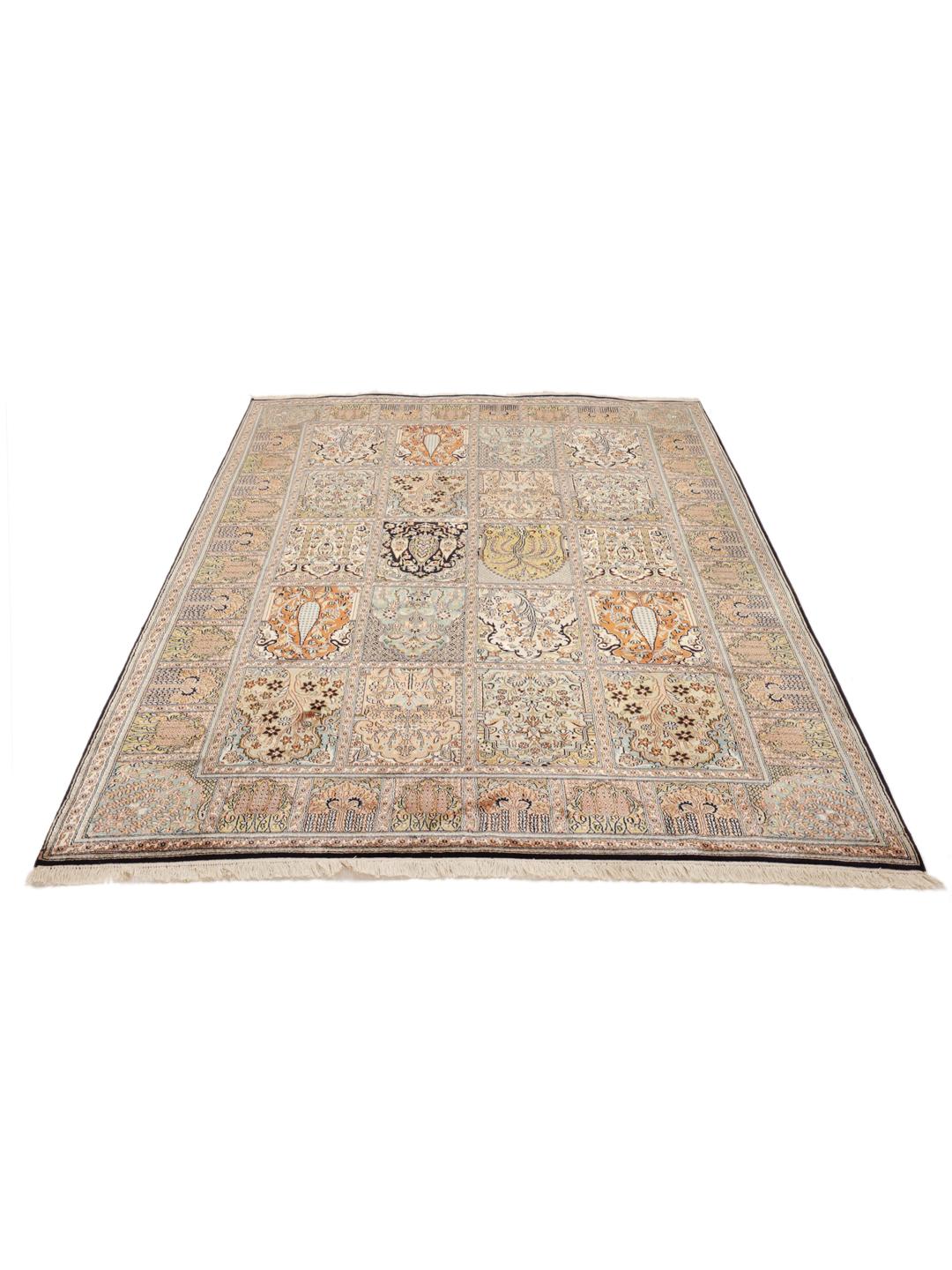
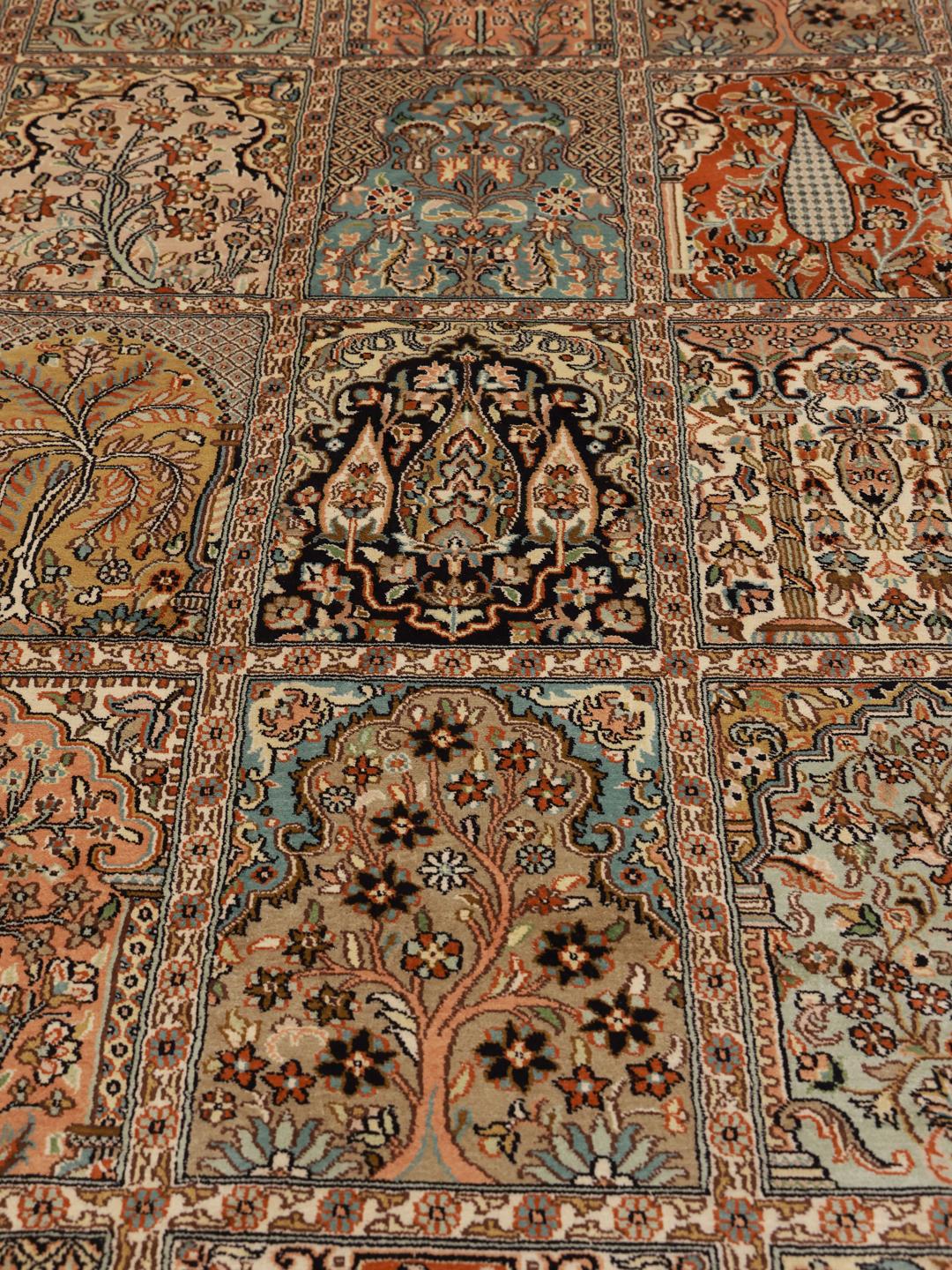
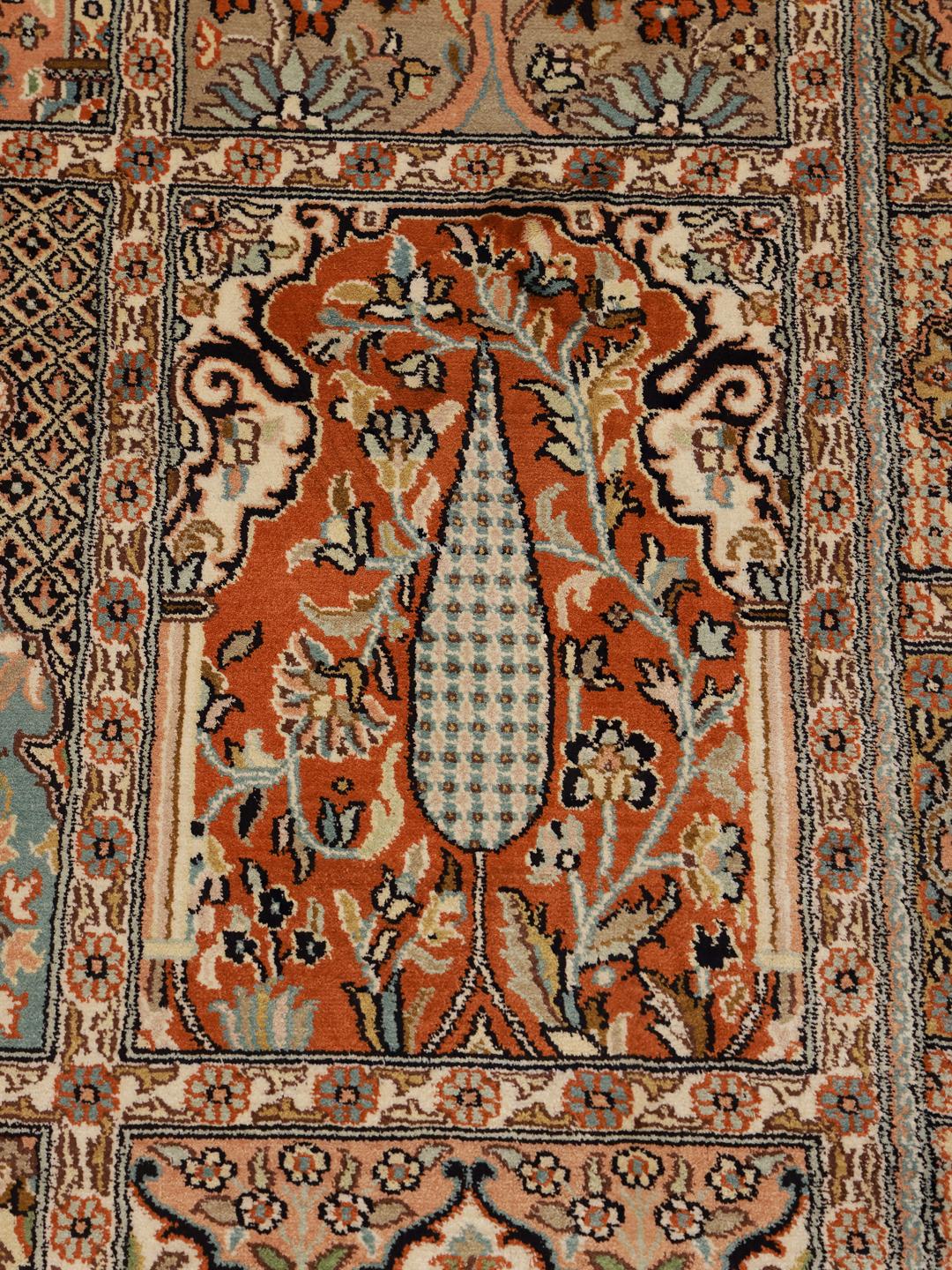
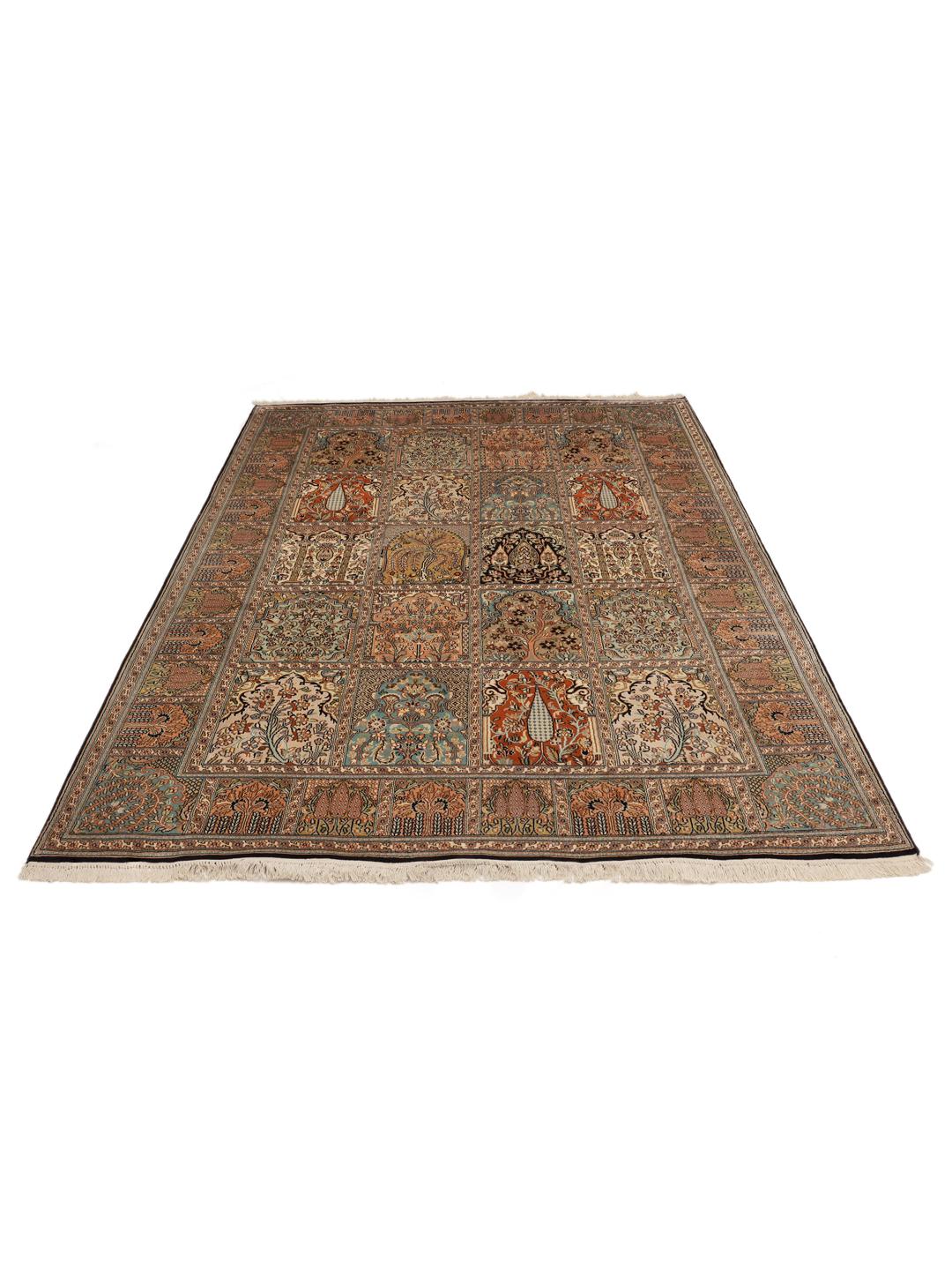
Signature design elements often include the 'Tree of Life' motif, various floral arrangements, and formal garden layouts contained within a grid or medallion framework. These patterns are deeply symbolic, often representing growth, paradise, and the natural beauty of the Himalayan valleys. The use of a grid layout, as seen here, is a classic way to organise these motifs into a balanced, harmonious composition that draws the eye across the entire surface.
Owning a Kashmir silk rug is a significant commitment to heritage and skill. These rugs are highly sought after by collectors not just for their material value, but for the labour-intensive process that goes into every square inch. To possess such a piece is to hold a connection to an ancient craft, ensuring that the legacy of these dedicated weavers continues to be appreciated in modern homes.