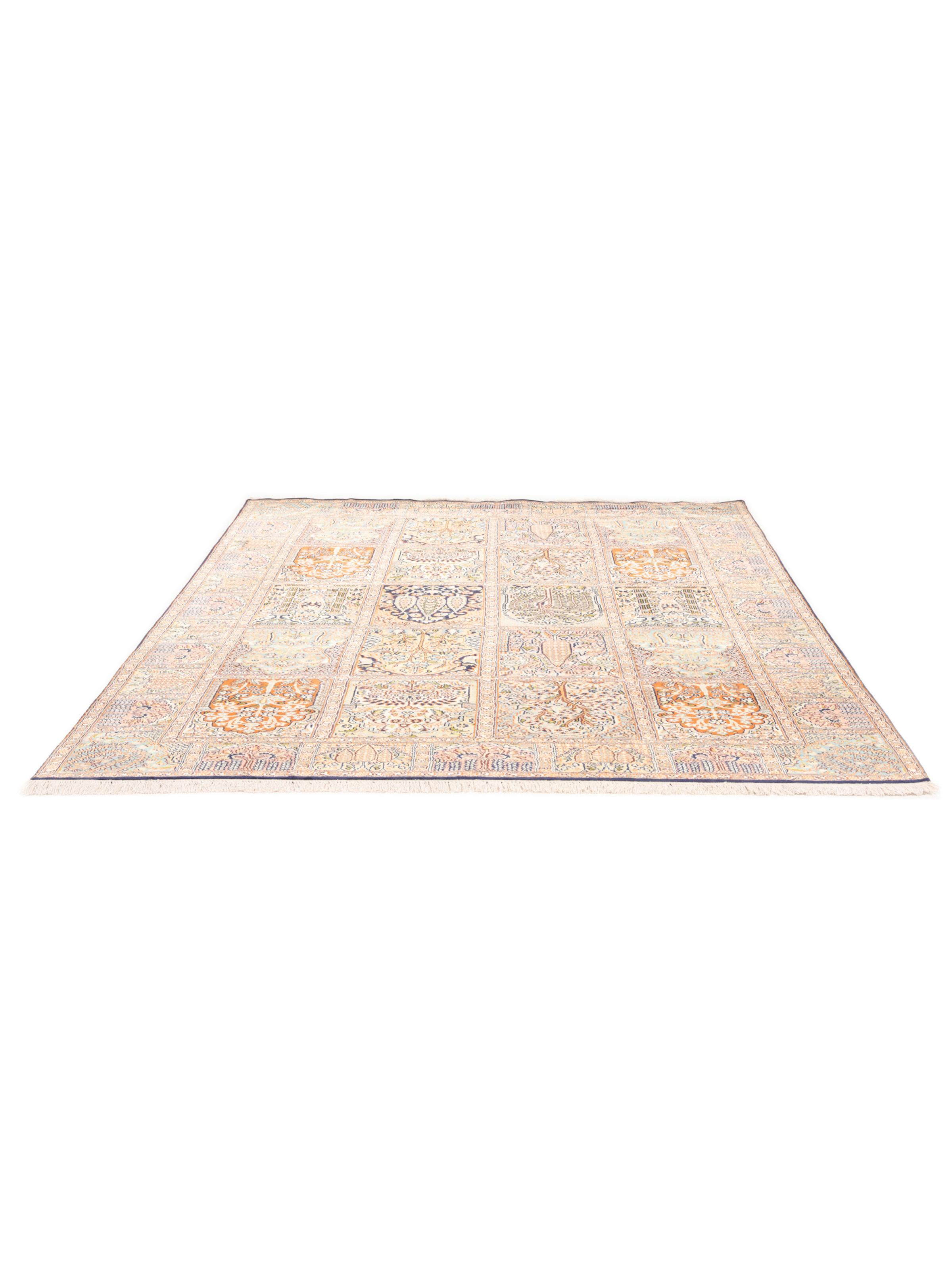
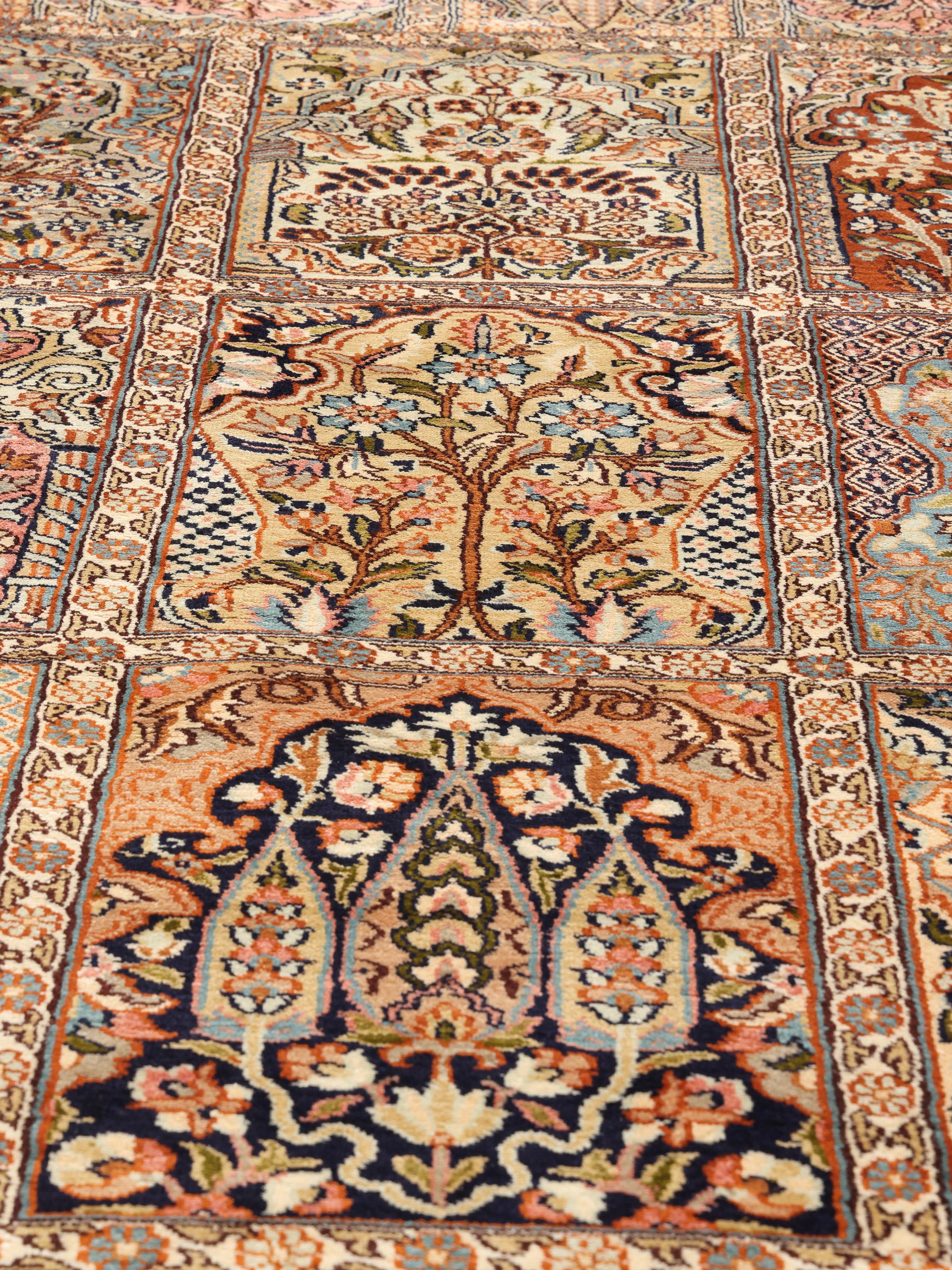
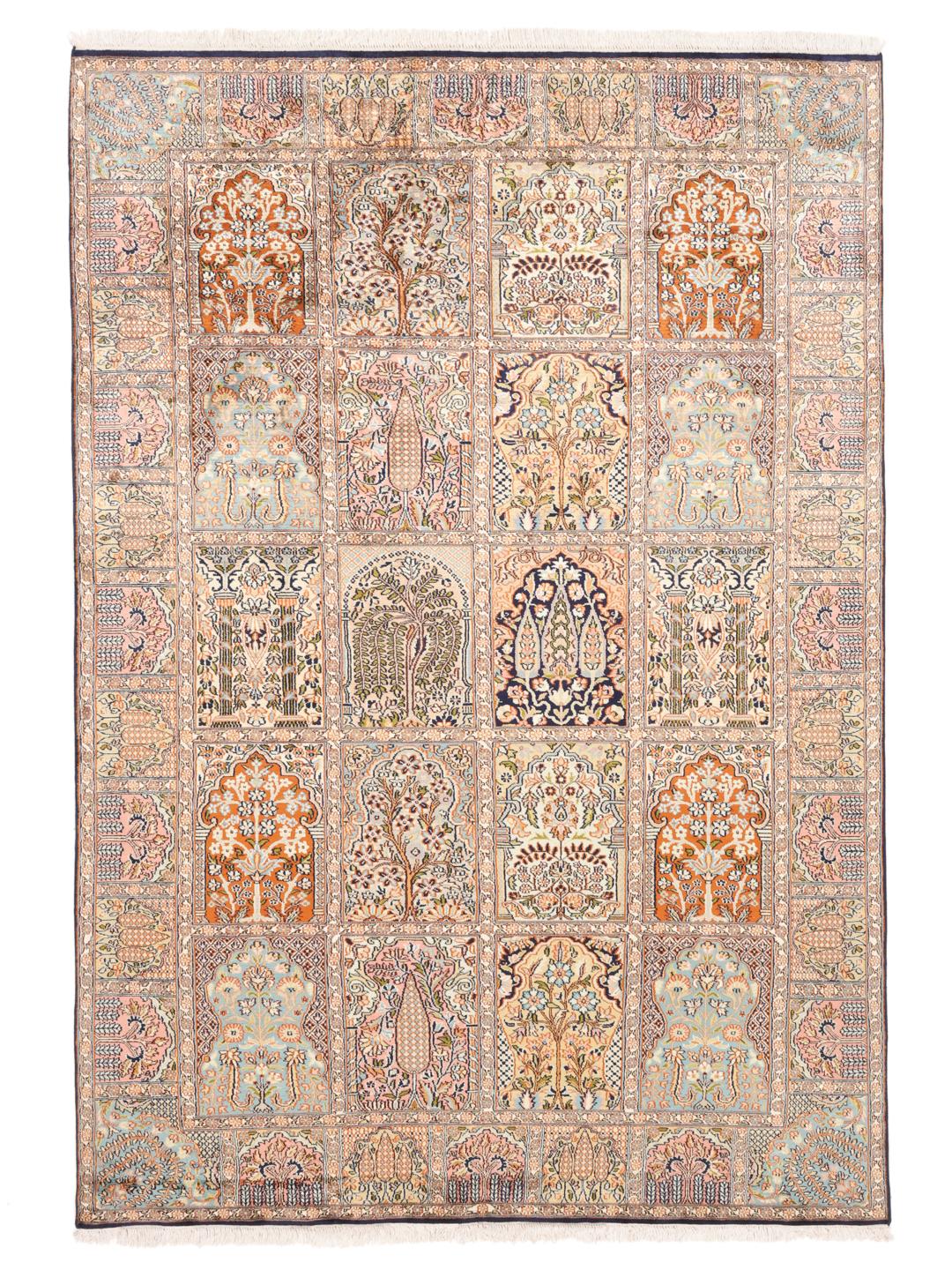
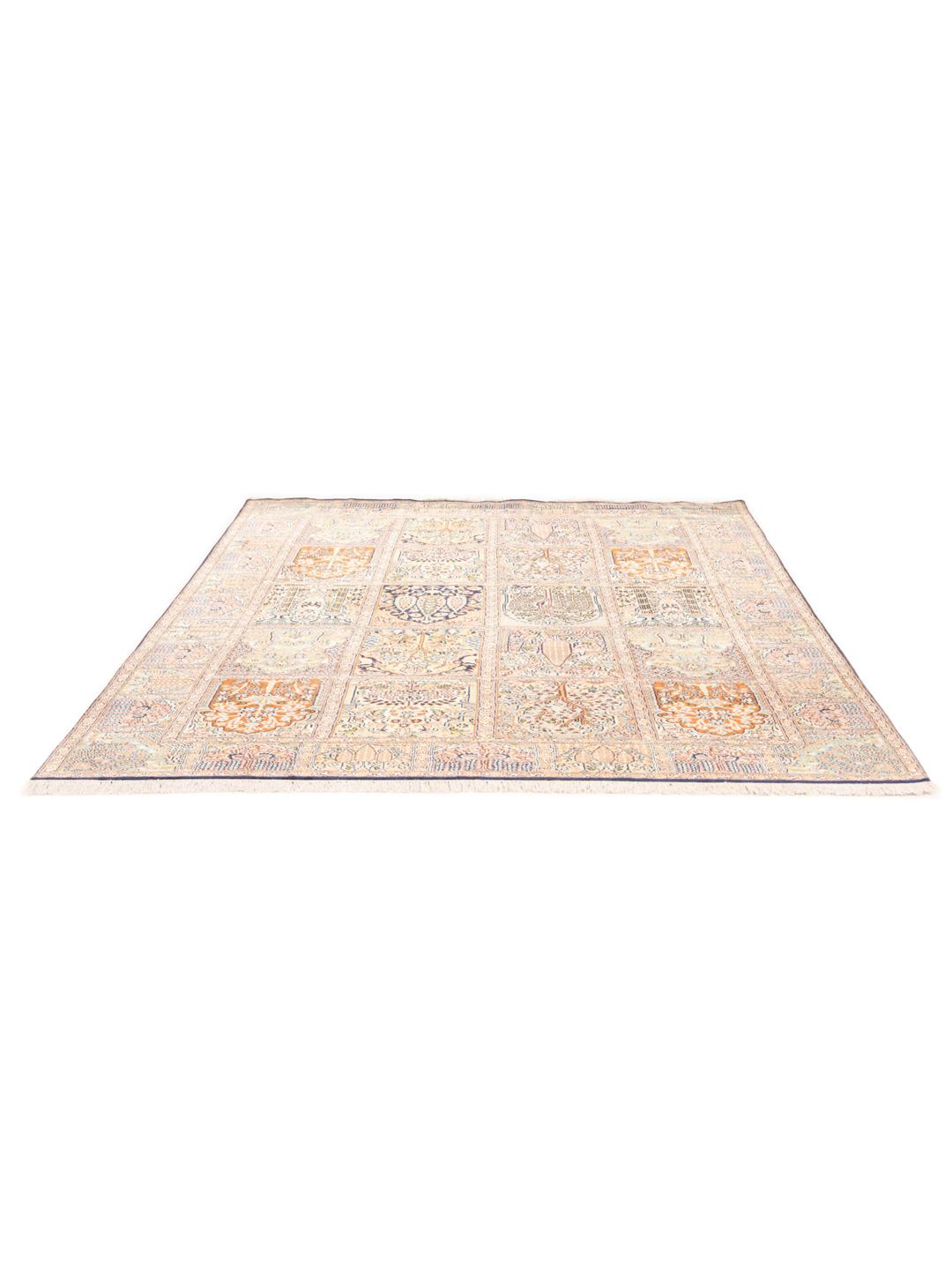
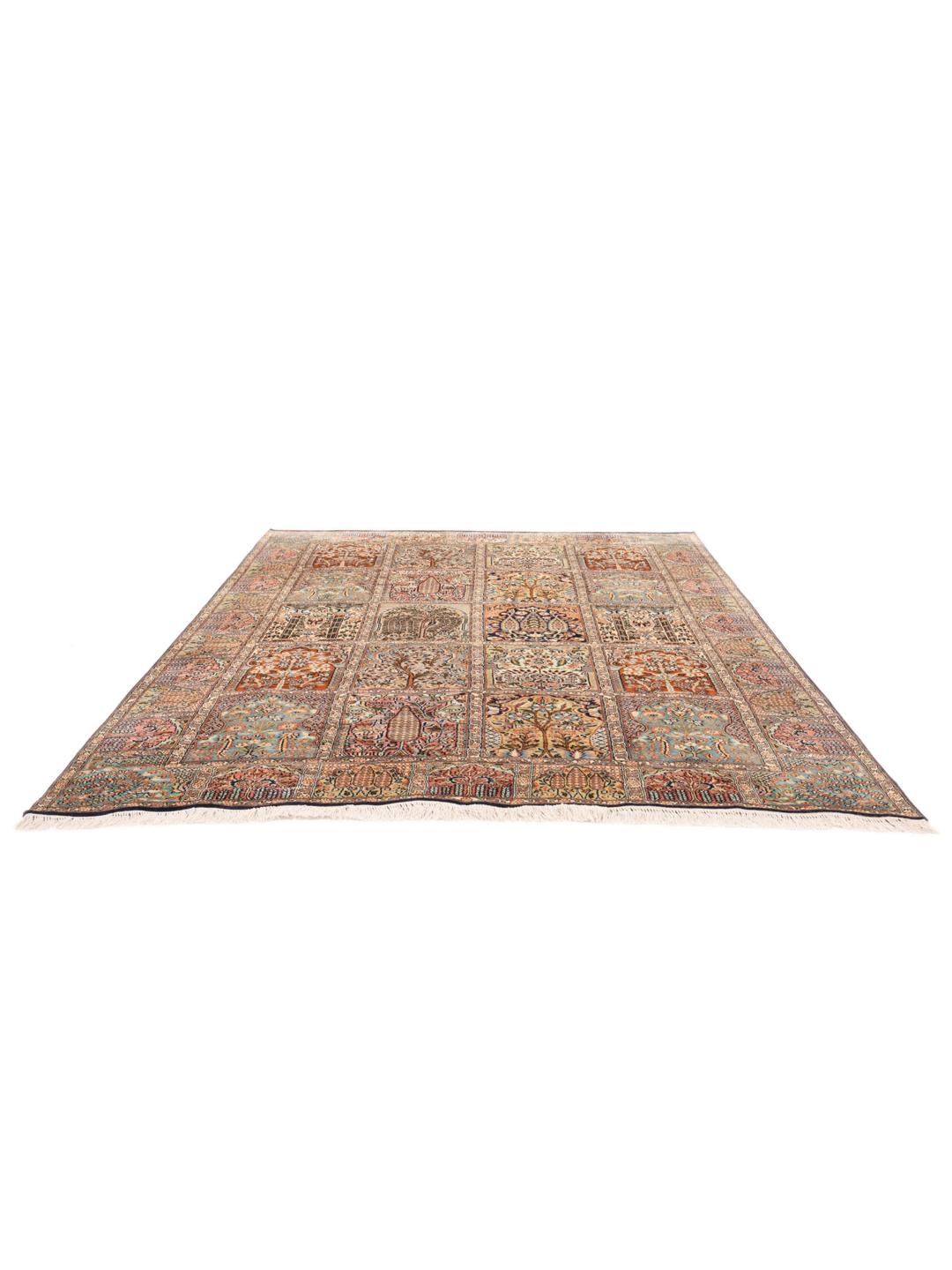
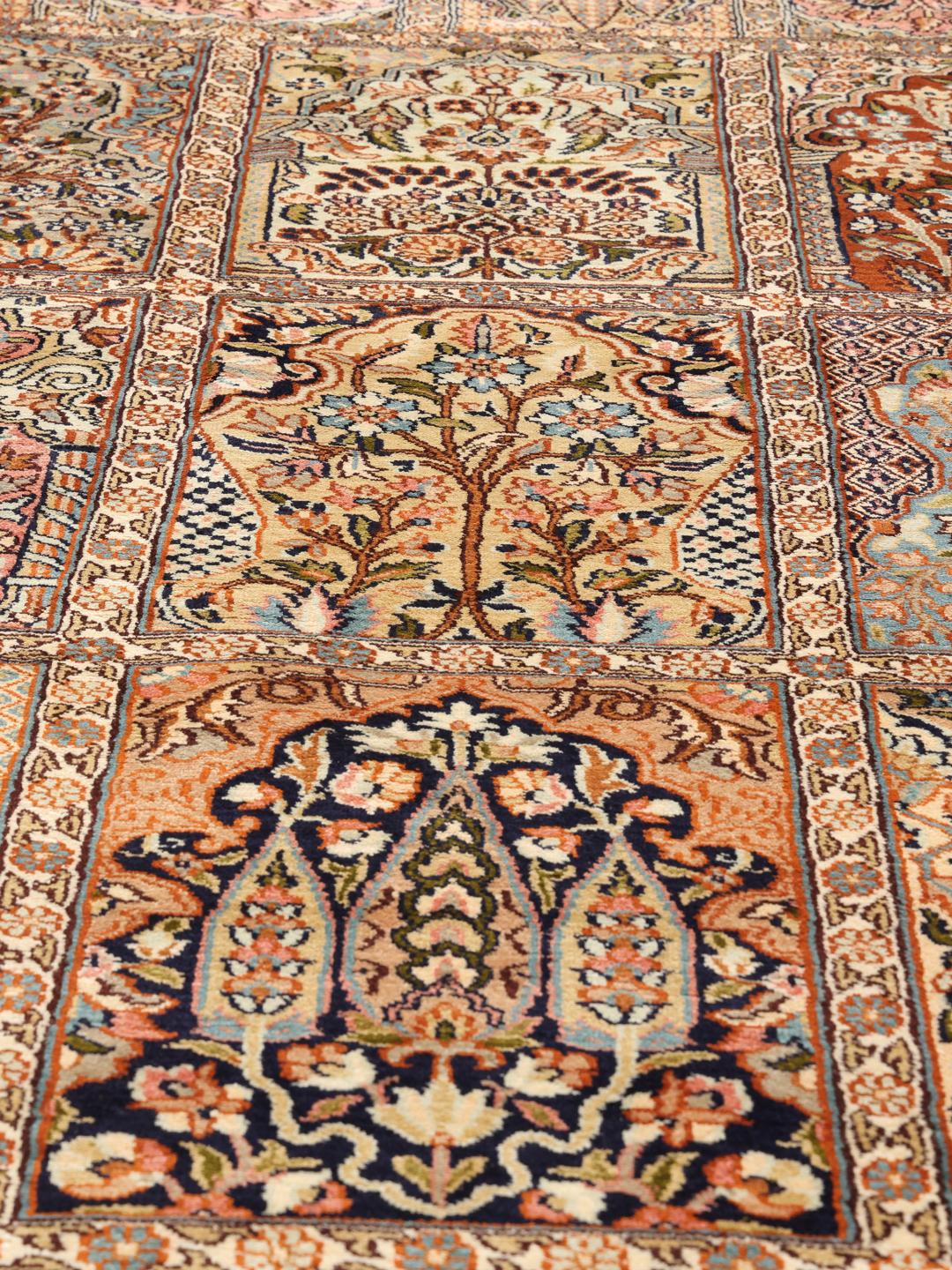
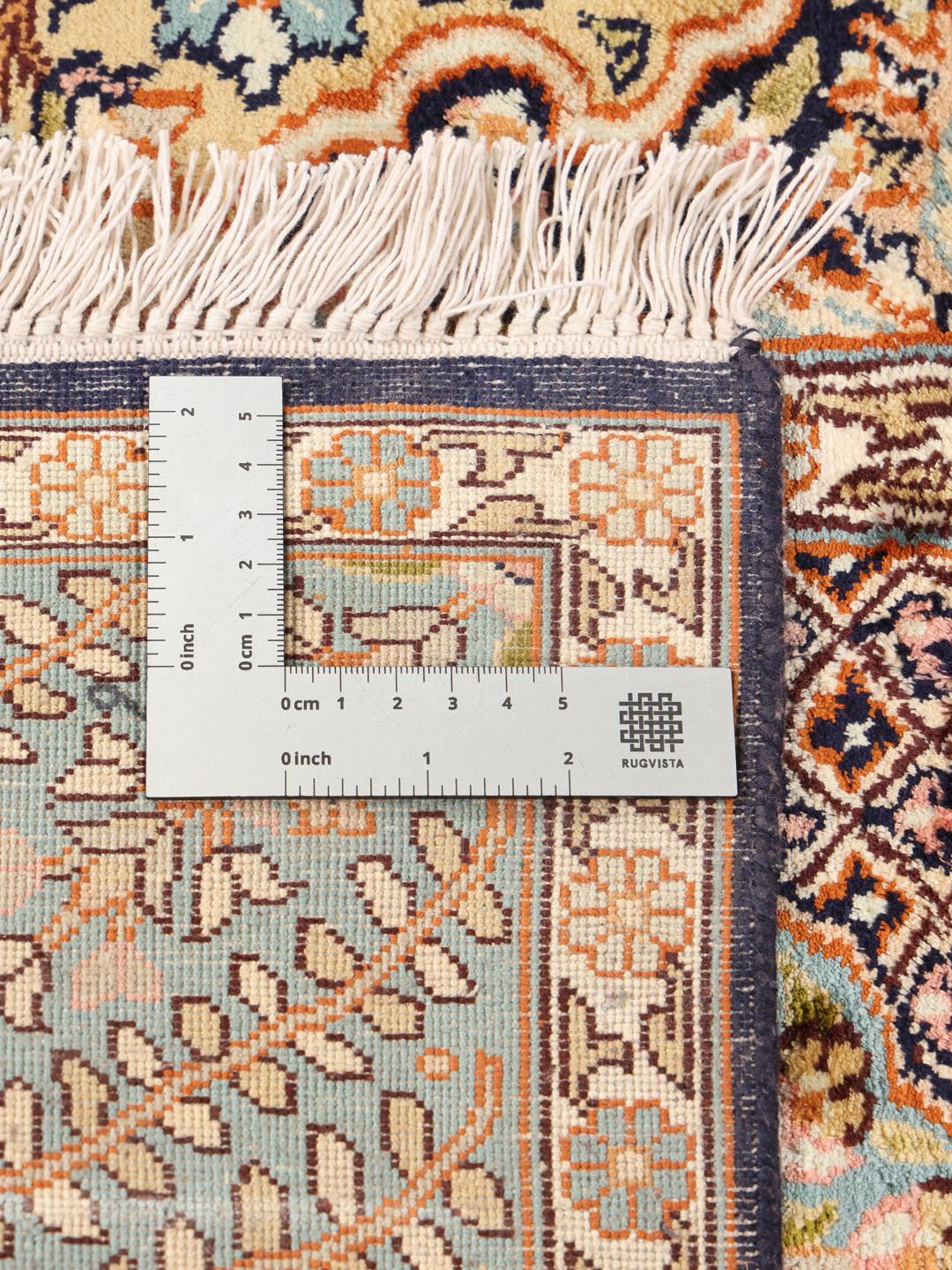
Kashmir silk rugs are world-renowned for their fine craftsmanship and deep roots in the textile traditions of the Kashmir Valley. This region, nestled in the Himalayas, has a long history of weaving, initially influenced by Middle Eastern techniques brought along the Silk Road. Over centuries, these influences blended with local artistic sensibilities to create a distinct style characterised by intricate floral patterns and the iconic paisley motif.
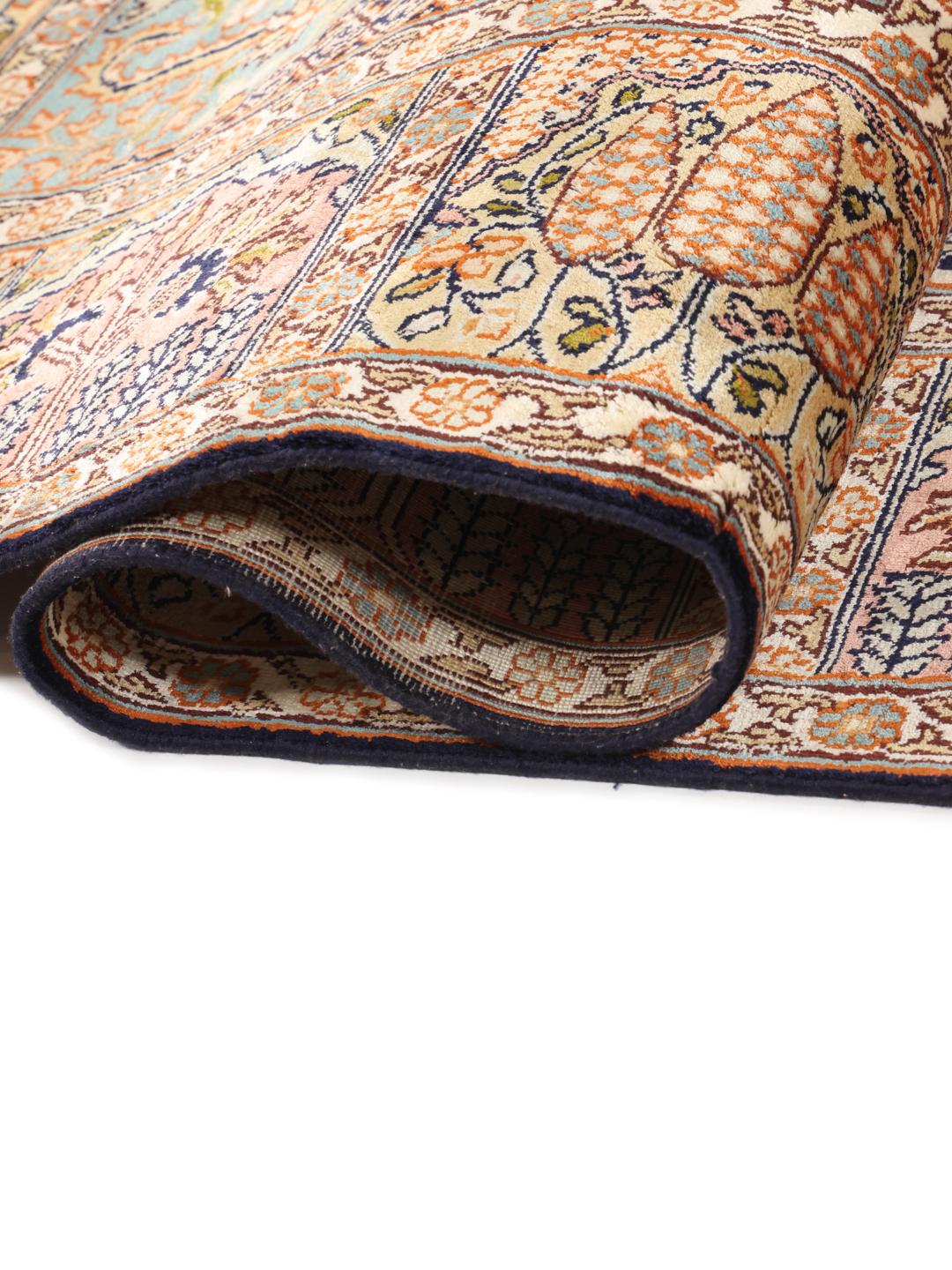
The term 'silk' in the context of these rugs denotes the use of high-quality, lustrous filaments that are prized for their ability to take vibrant dyes and hold complex designs. The construction typically involves a very high knot density, which is essential for achieving the fluid, painting-like quality of the patterns. This technical precision is not just for show; it creates a durable, dense foundation that ensures the rug remains a beautiful heirloom for generations.
Design-wise, the garden motif—often referred to as a 'tree of life' or 'chahar bagh' layout—is a central theme in this tradition. These designs represent paradise on earth, with symmetrical panels often depicting flowering trees, birds, and decorative borders. Each rug tells a story, with the weaver often incorporating subtle variations that make every piece a unique narrative of their skill and the local flora.
Collectors value Kashmir silk rugs for their combination of artistic beauty and technical mastery. Owning one is more than just having a decorative item; it is a connection to a long lineage of craft. These rugs are respected as significant cultural artifacts, reflecting a level of patience and dedication that is becoming increasingly rare in our fast-paced world, making them prized possessions for those who appreciate heritage and longevity.