Kashmir silk rugs are celebrated globally as some of the finest examples of textile art, with a history deeply rooted in the cultural exchange of Central and South Asia. The tradition of silk weaving was introduced to the Kashmir valley centuries ago, flourishing under the patronage of local royalty who valued the combination of delicate materials and complex, narrative-driven designs.
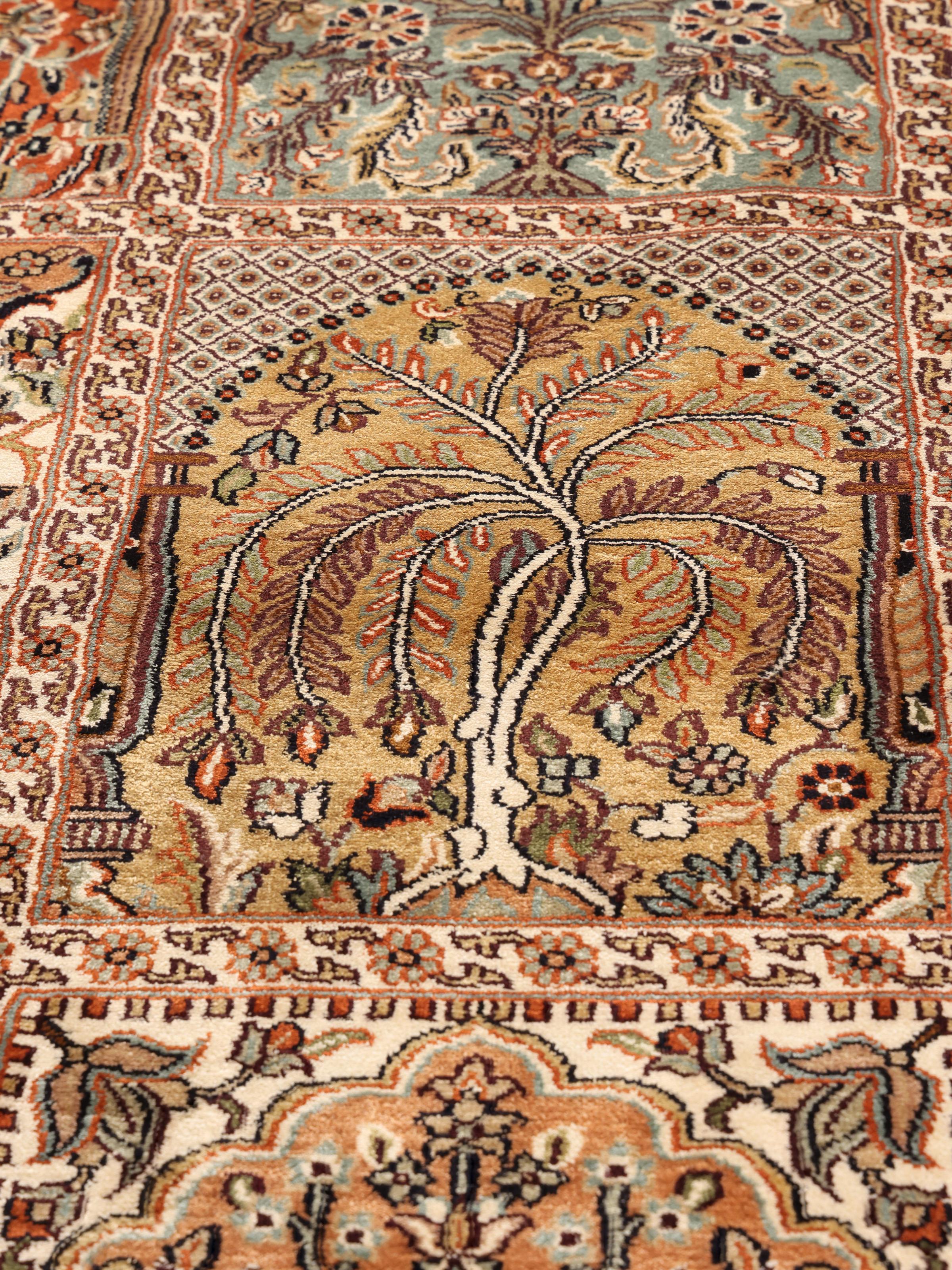
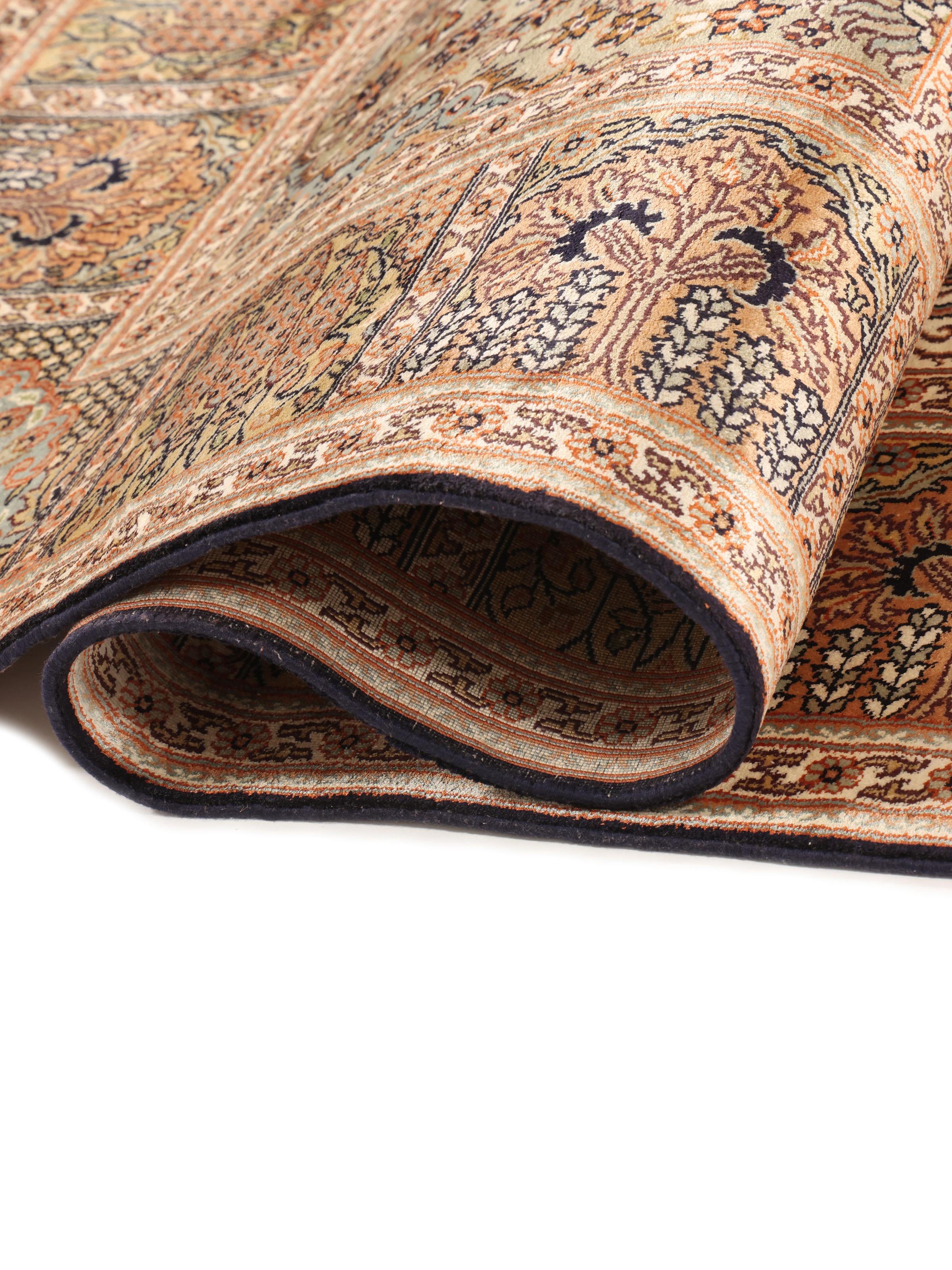
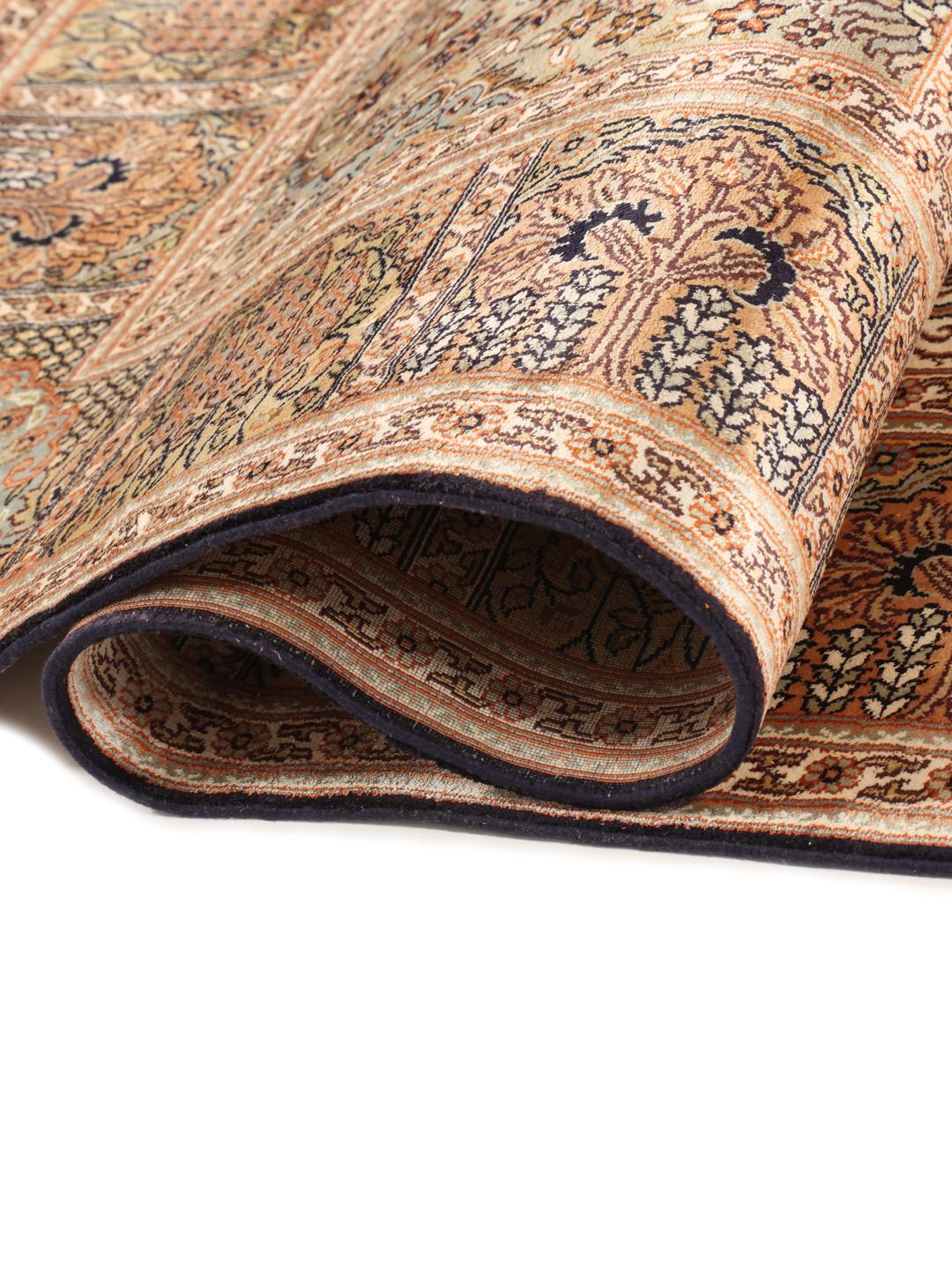
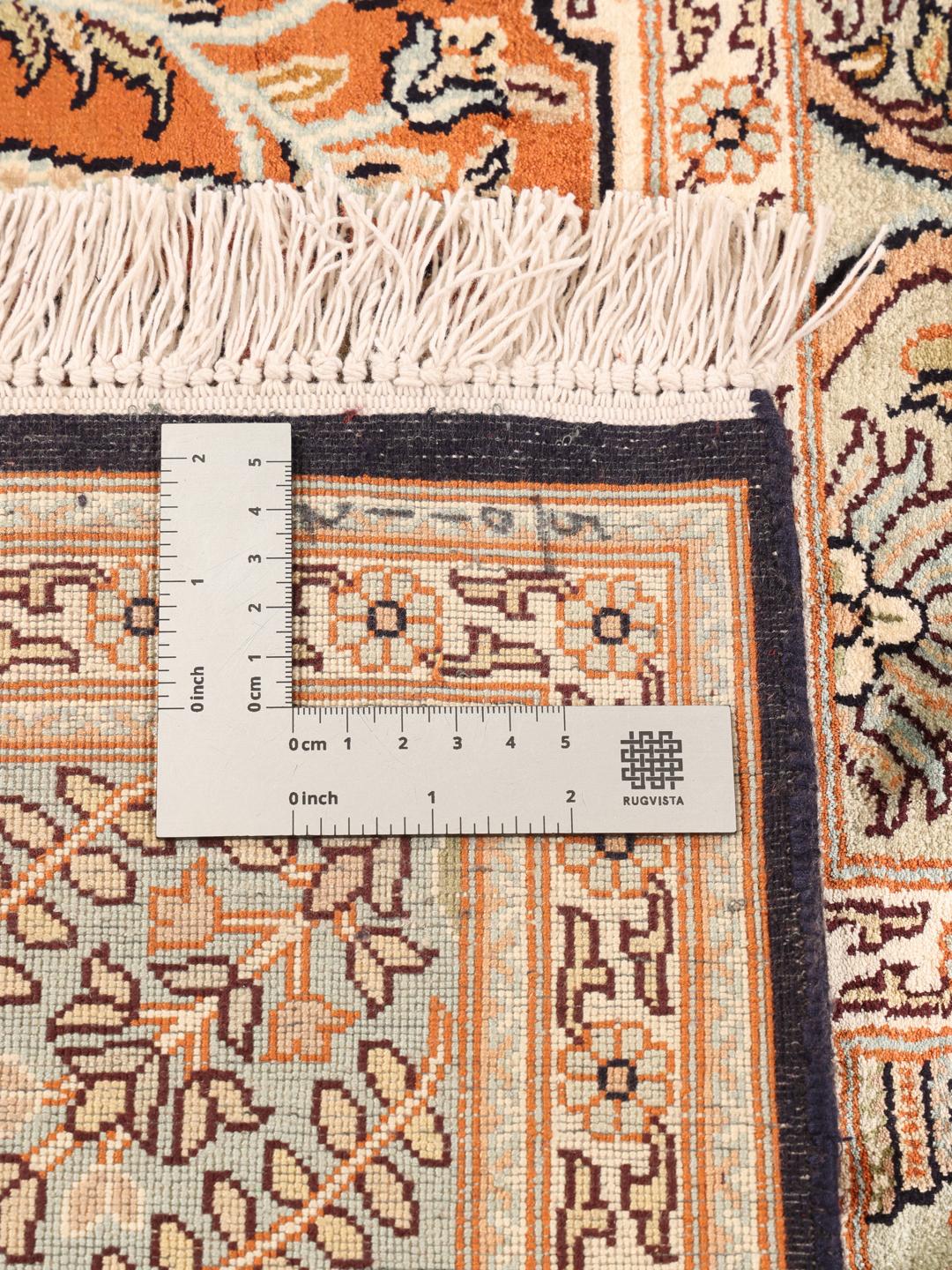
The term Kashmir silk refers to the exceptional quality of the silk used in the pile, which is prized for its strength, elasticity, and brilliant lustre. These rugs are traditionally woven on a sturdy foundation, which allows for the intricate, curvilinear patterns that define the style. The use of high-quality silk ensures that the colours remain vivid and the pile keeps its soft, luminous texture over time, making these pieces highly desirable.
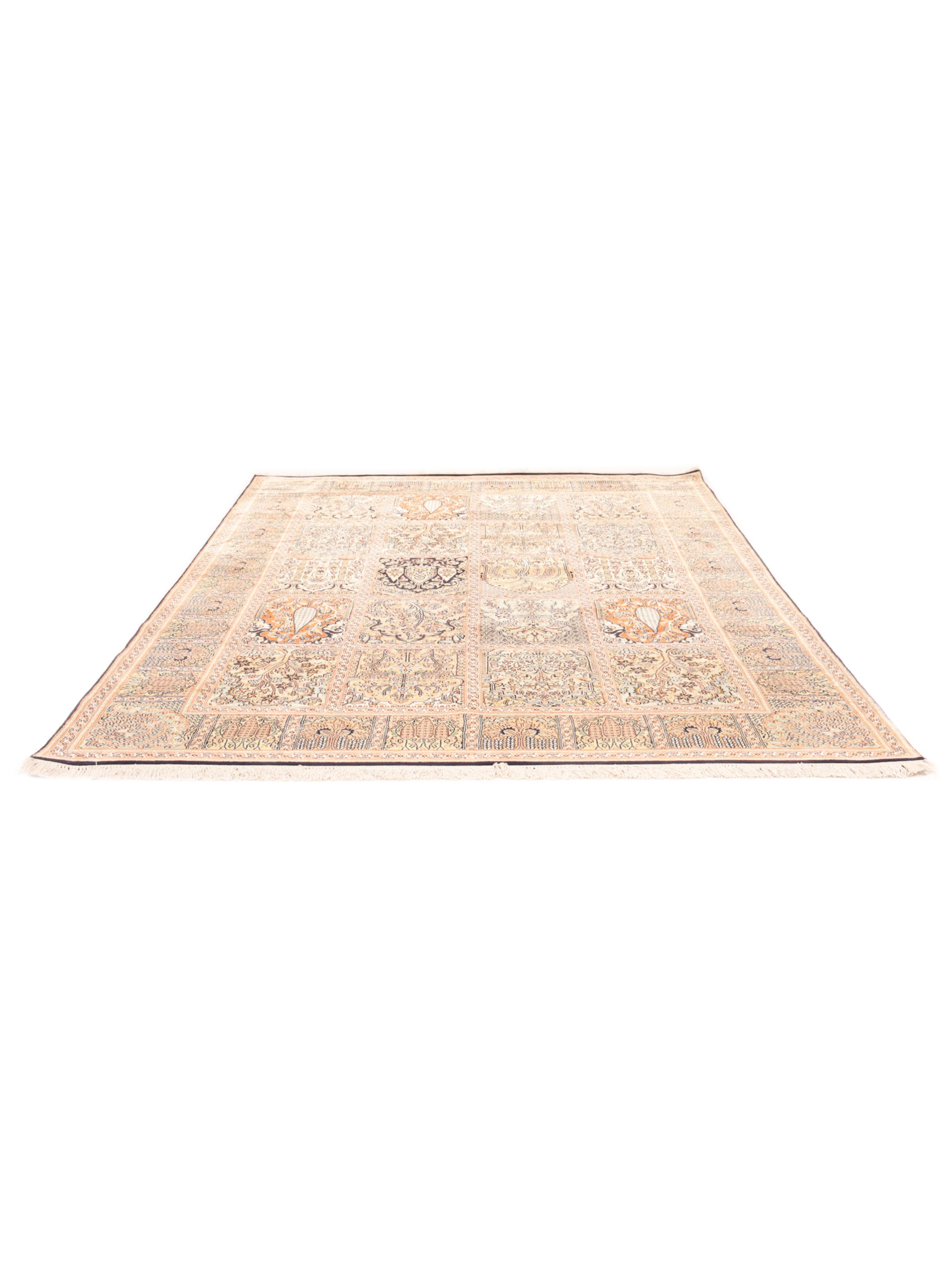
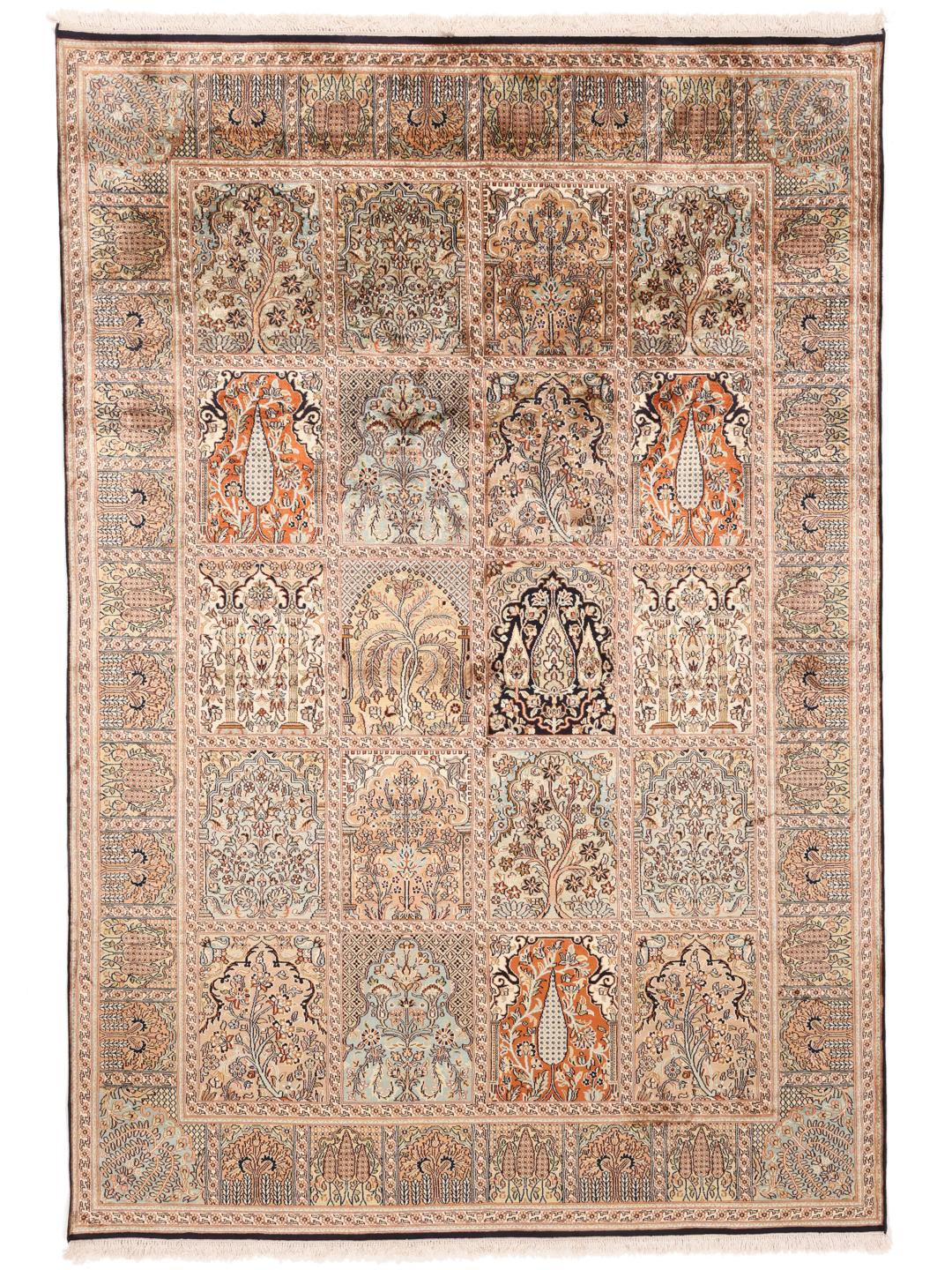
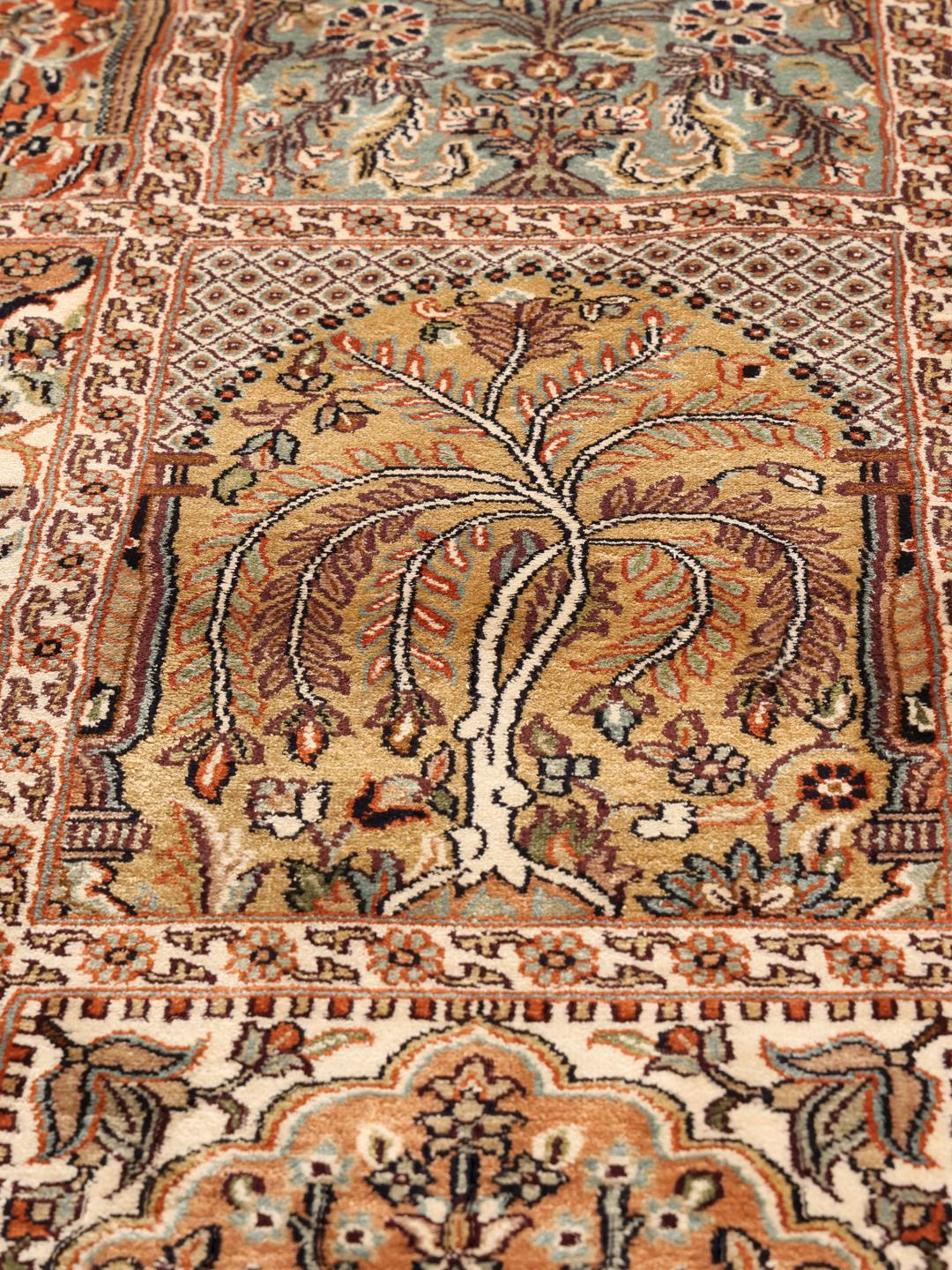
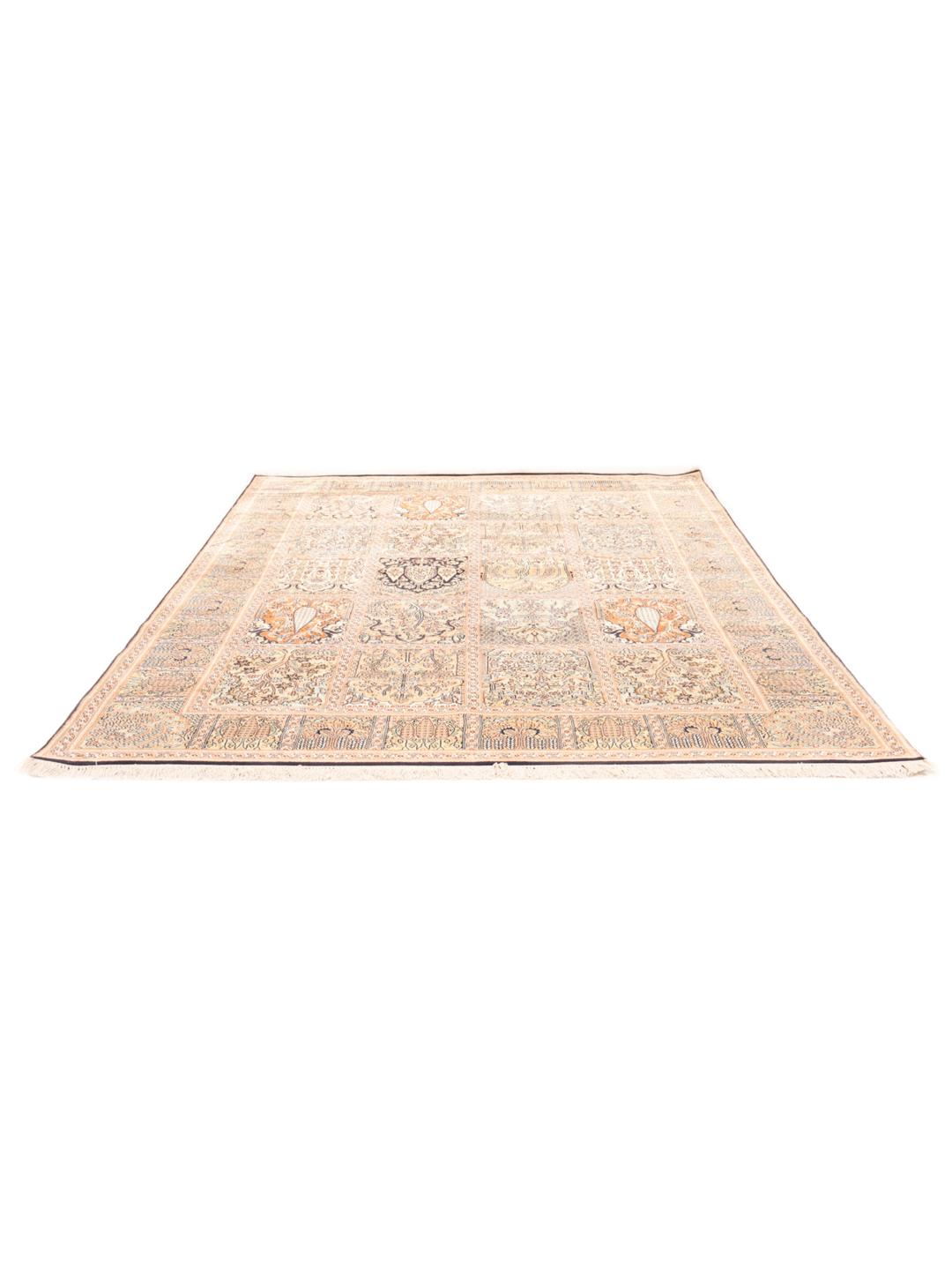
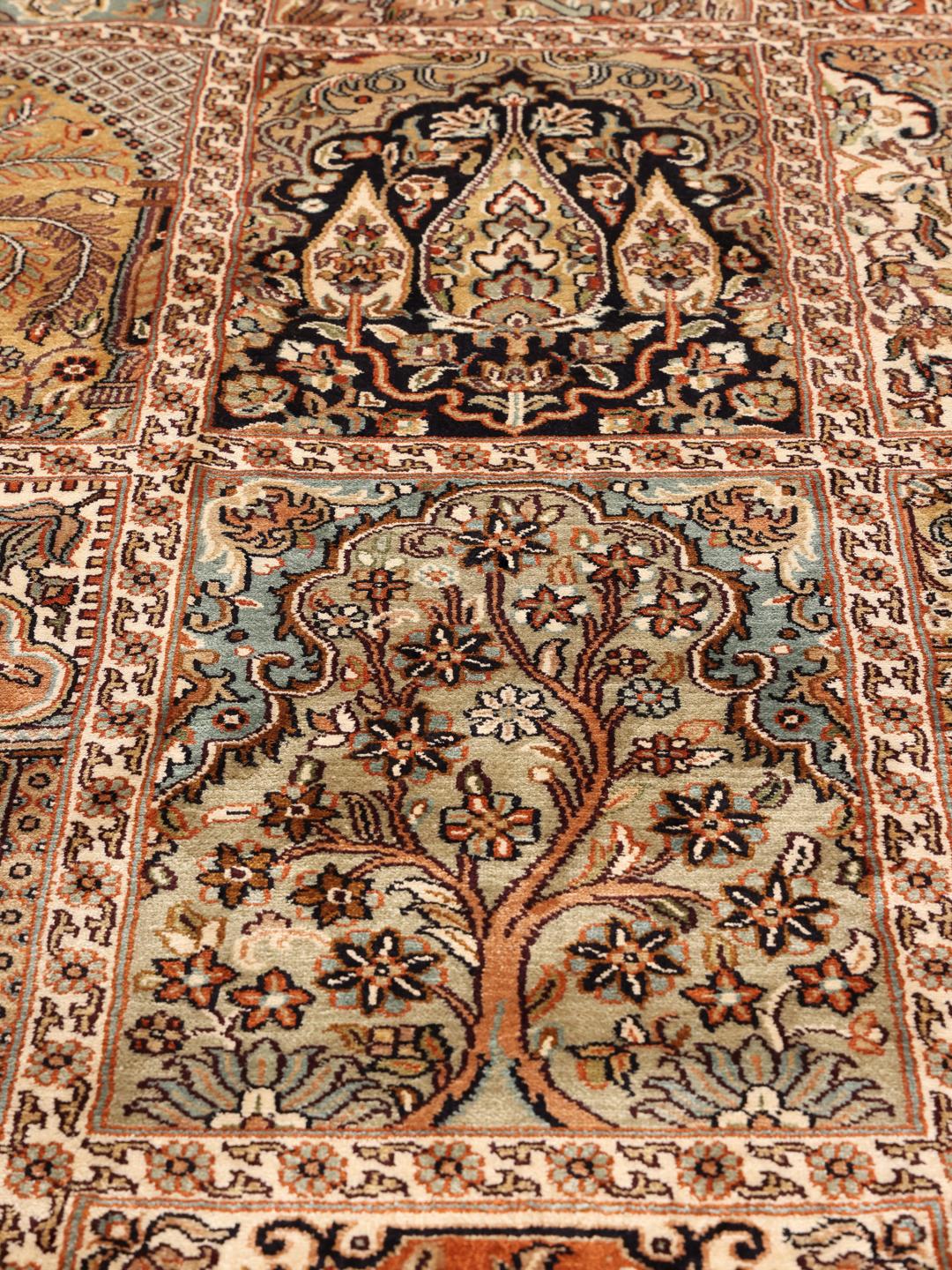
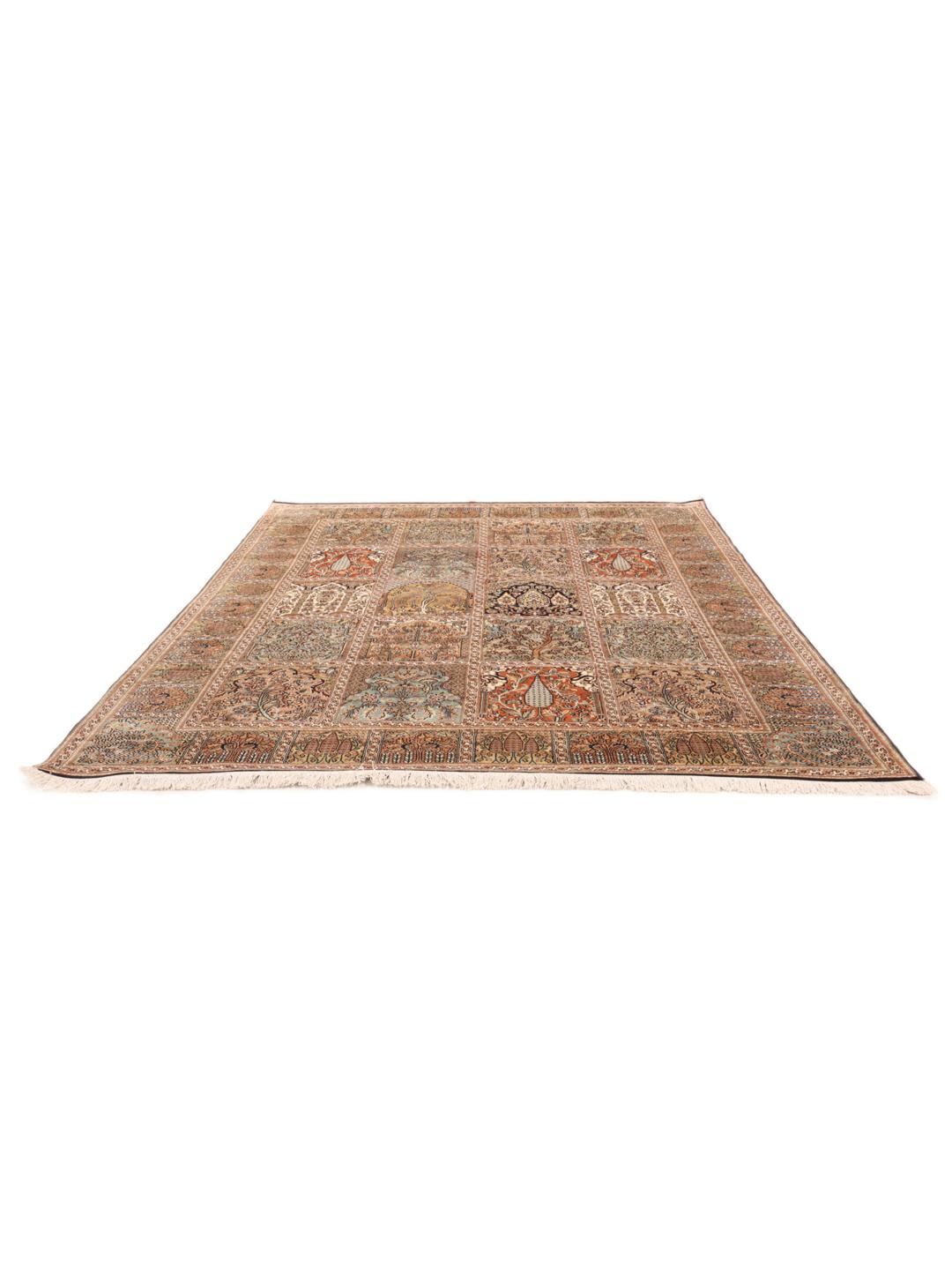
Signature design elements often include garden themes, floral motifs, and intricate tree-of-life patterns, all rendered with a precision that mimics miniature paintings. The borders are frequently as detailed as the centre field, creating a balanced and harmonious composition. This specific piece showcases a remarkable variety of motifs, reflecting the versatility and storytelling nature inherent in the Kashmir weaving tradition.
Owning a Kashmir silk rug is widely considered an investment in cultural heritage. Collectors value these rugs not only for their beauty but for the incredible human skill required to produce them. To possess one is to connect with a long lineage of master weavers who have perfected their craft over generations, ensuring that these rugs remain timeless symbols of status, skill, and sophisticated interior design.