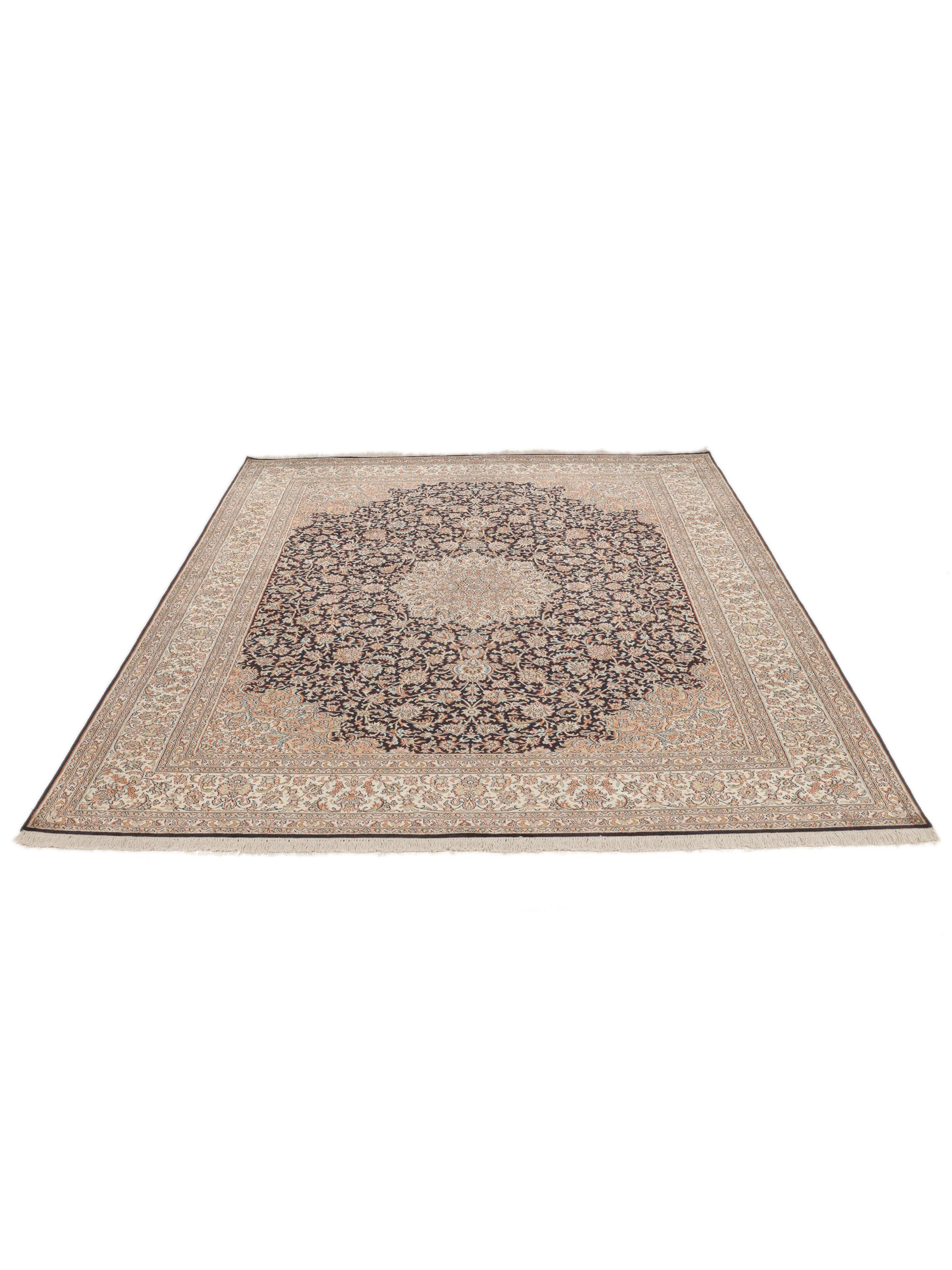
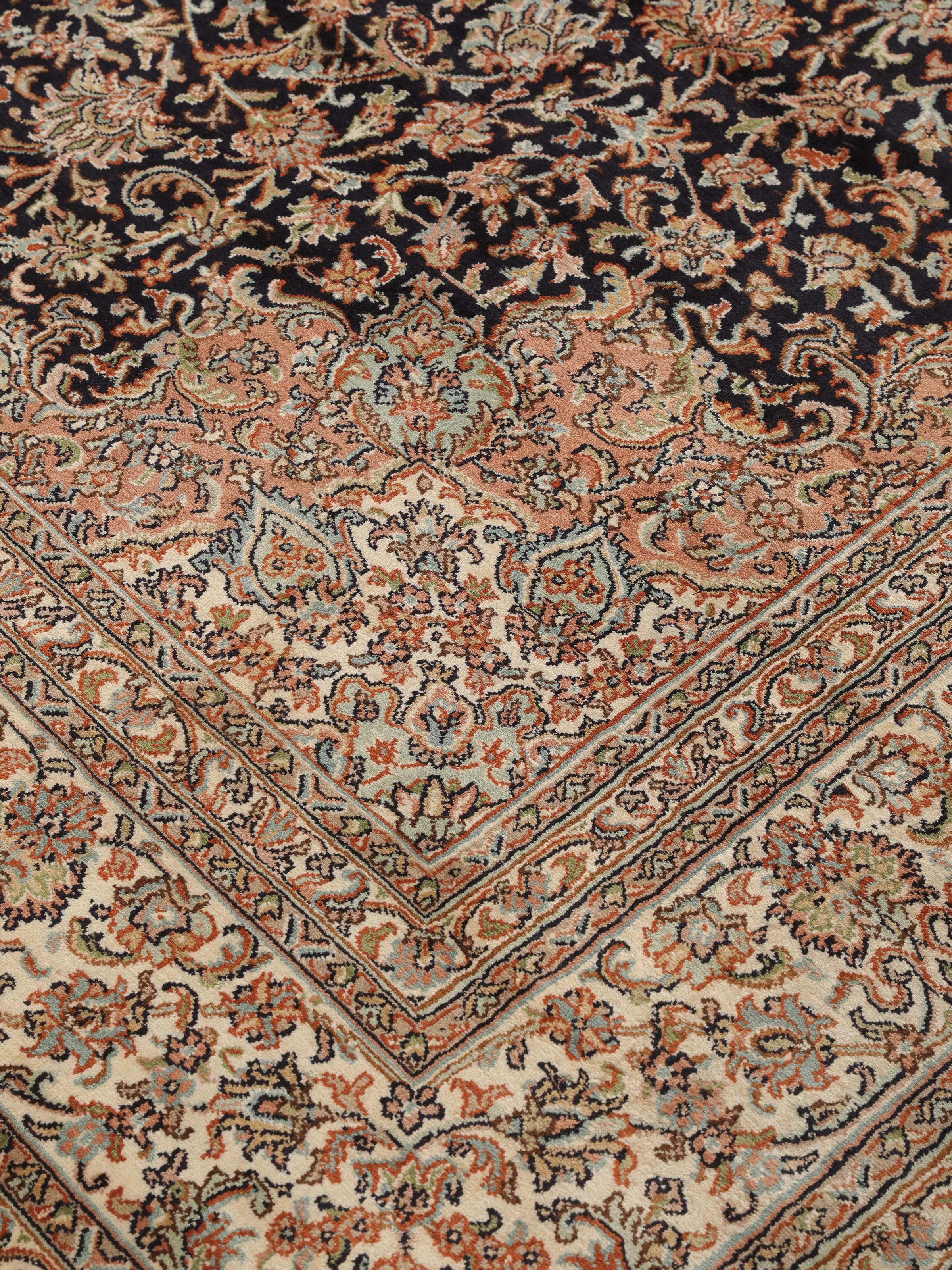
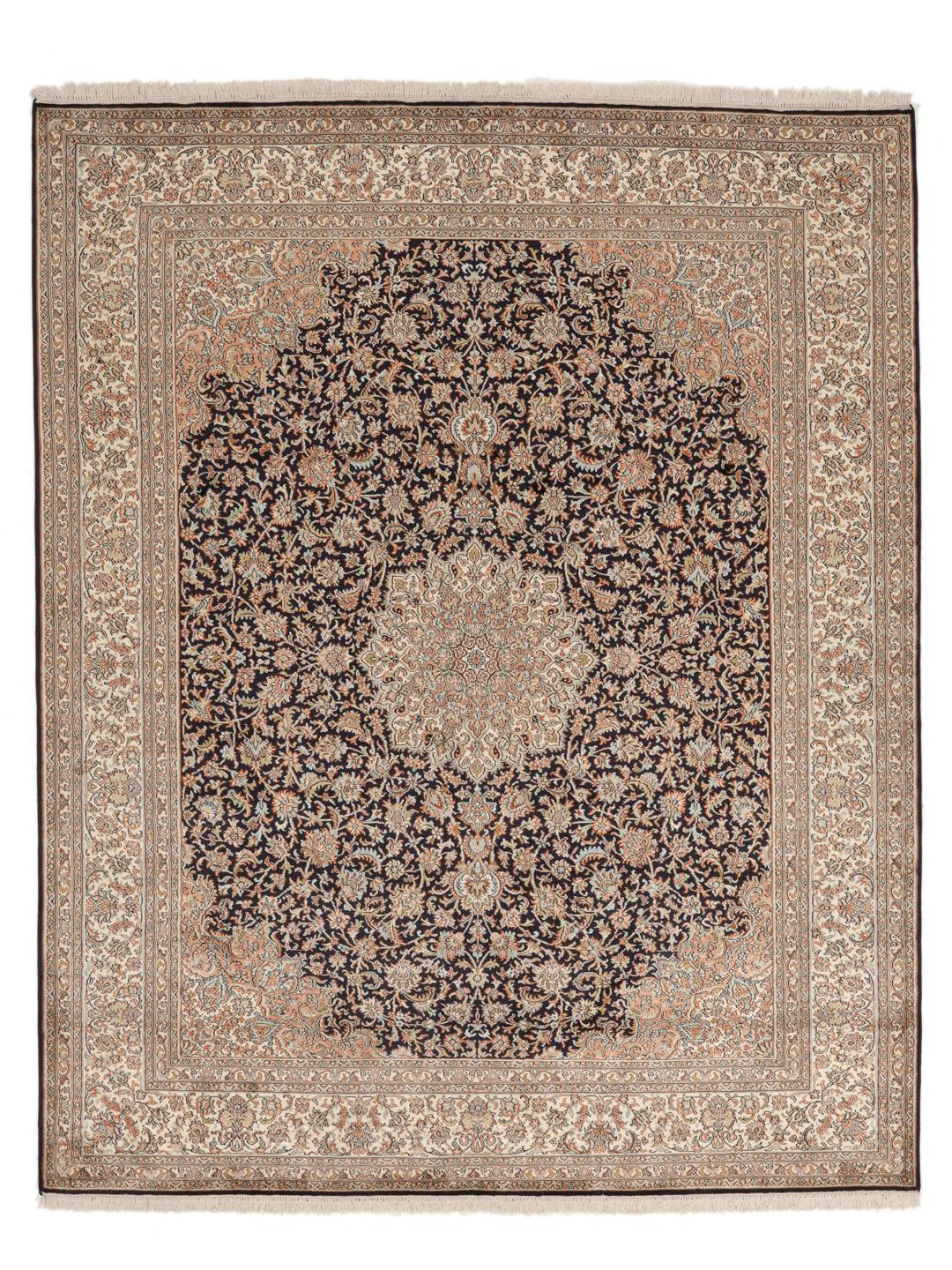
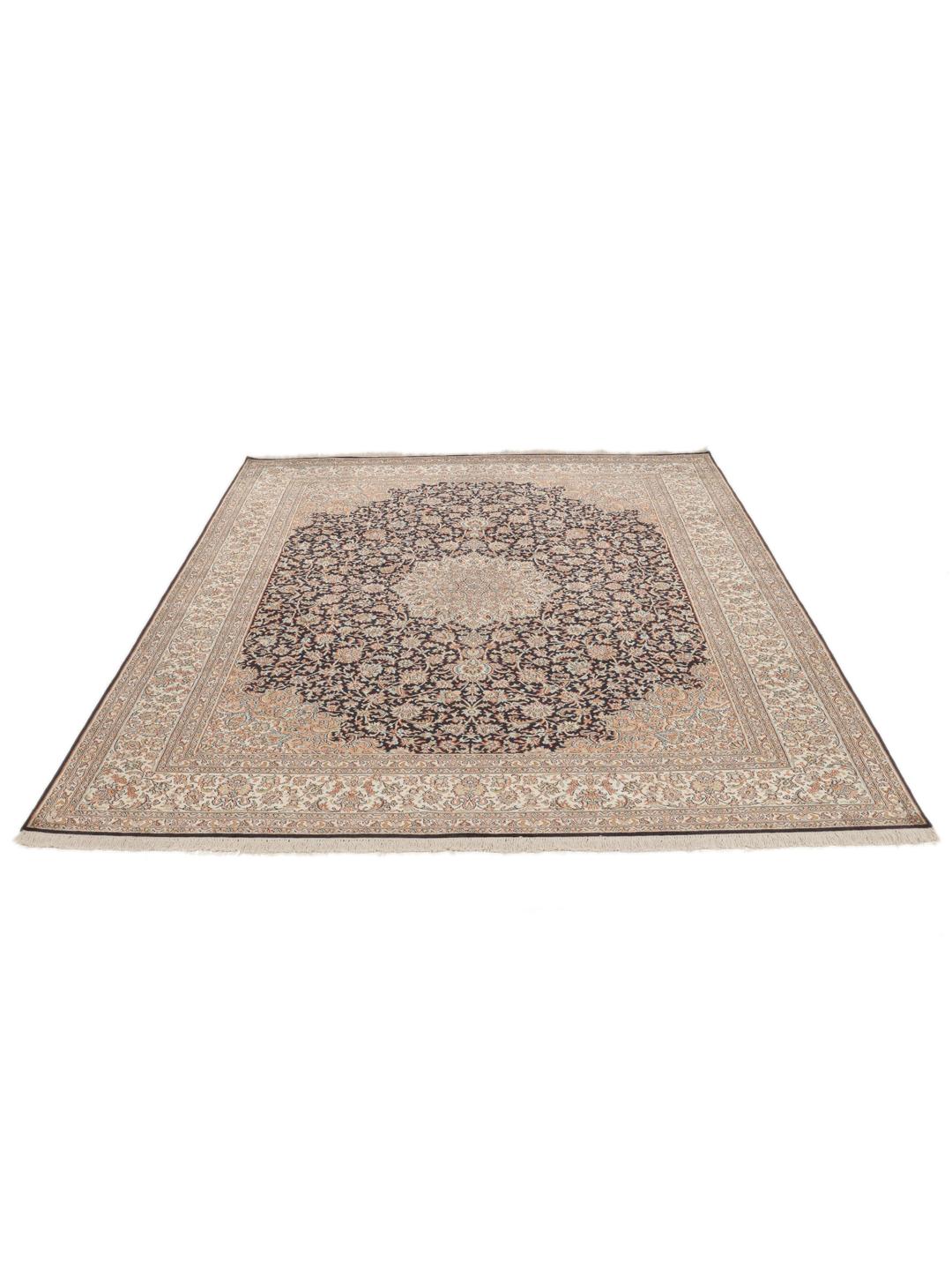
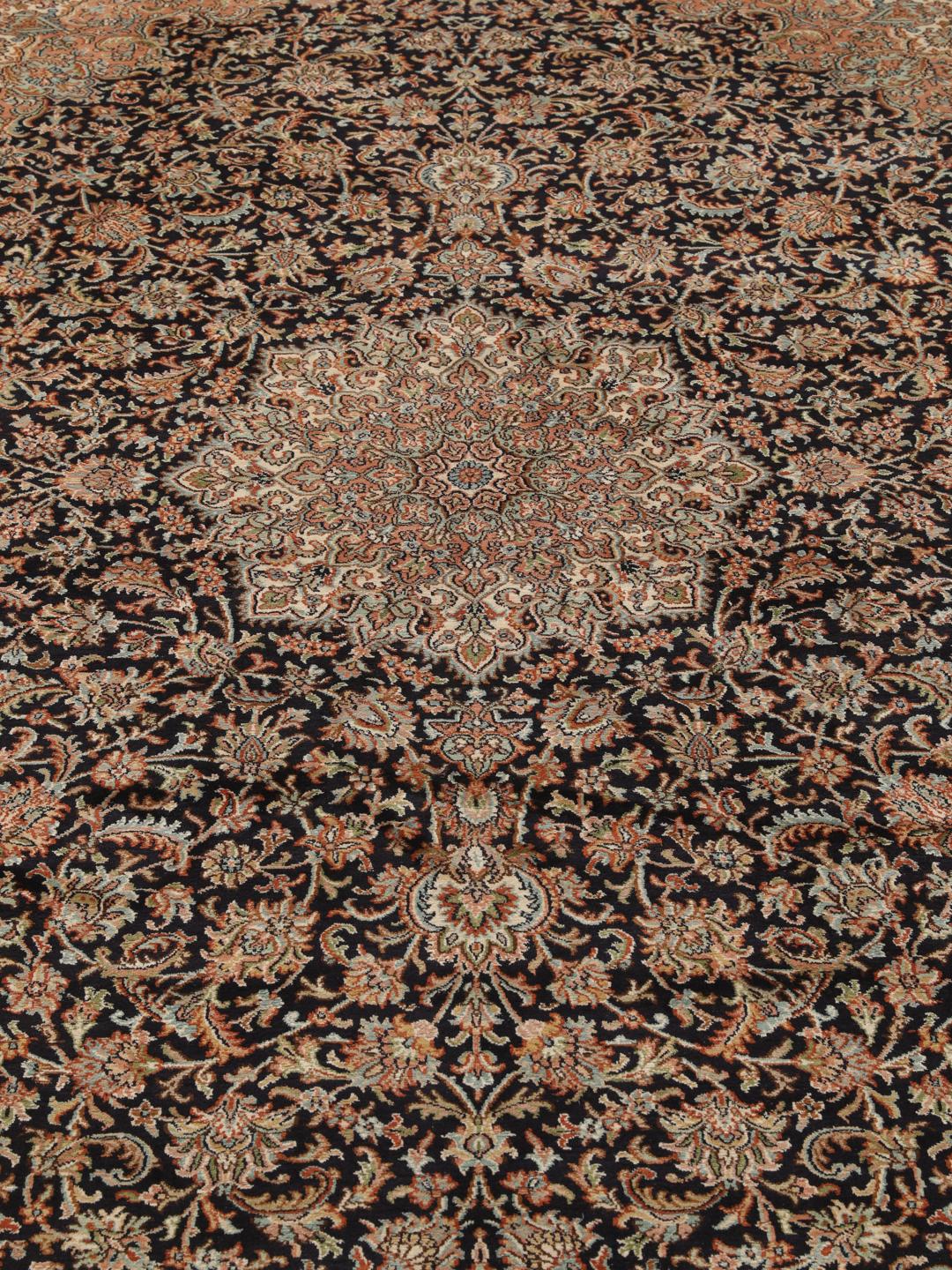
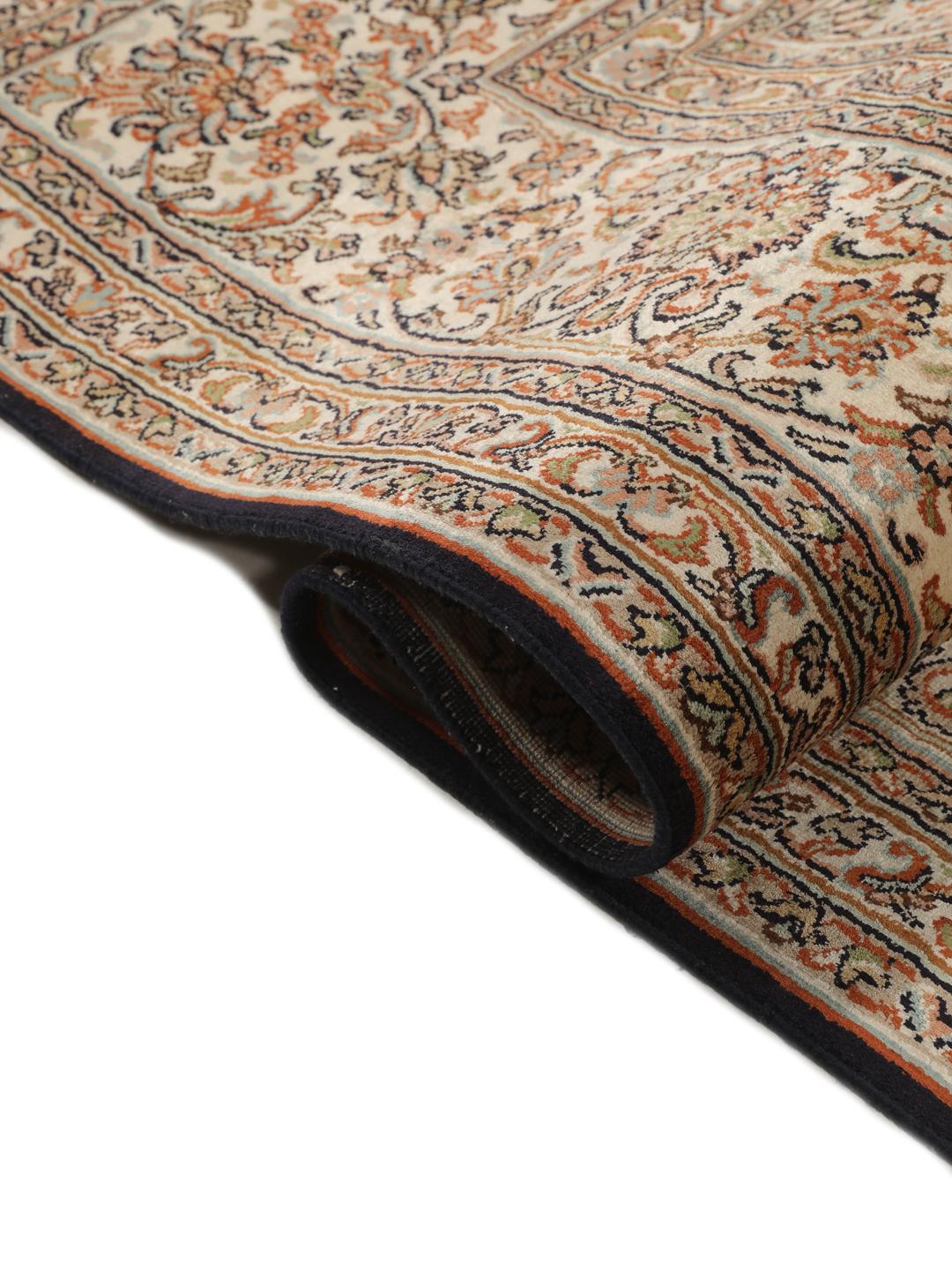
The tradition of Kashmir silk weaving is deeply rooted in the history of Northern India, where the craft was influenced by the artistic exchanges along historical trade routes. Over centuries, local weavers have refined their techniques, blending traditional Middle Eastern design influences with indigenous Indian sensibilities to create rugs that are celebrated worldwide for their elegance and fine detail.
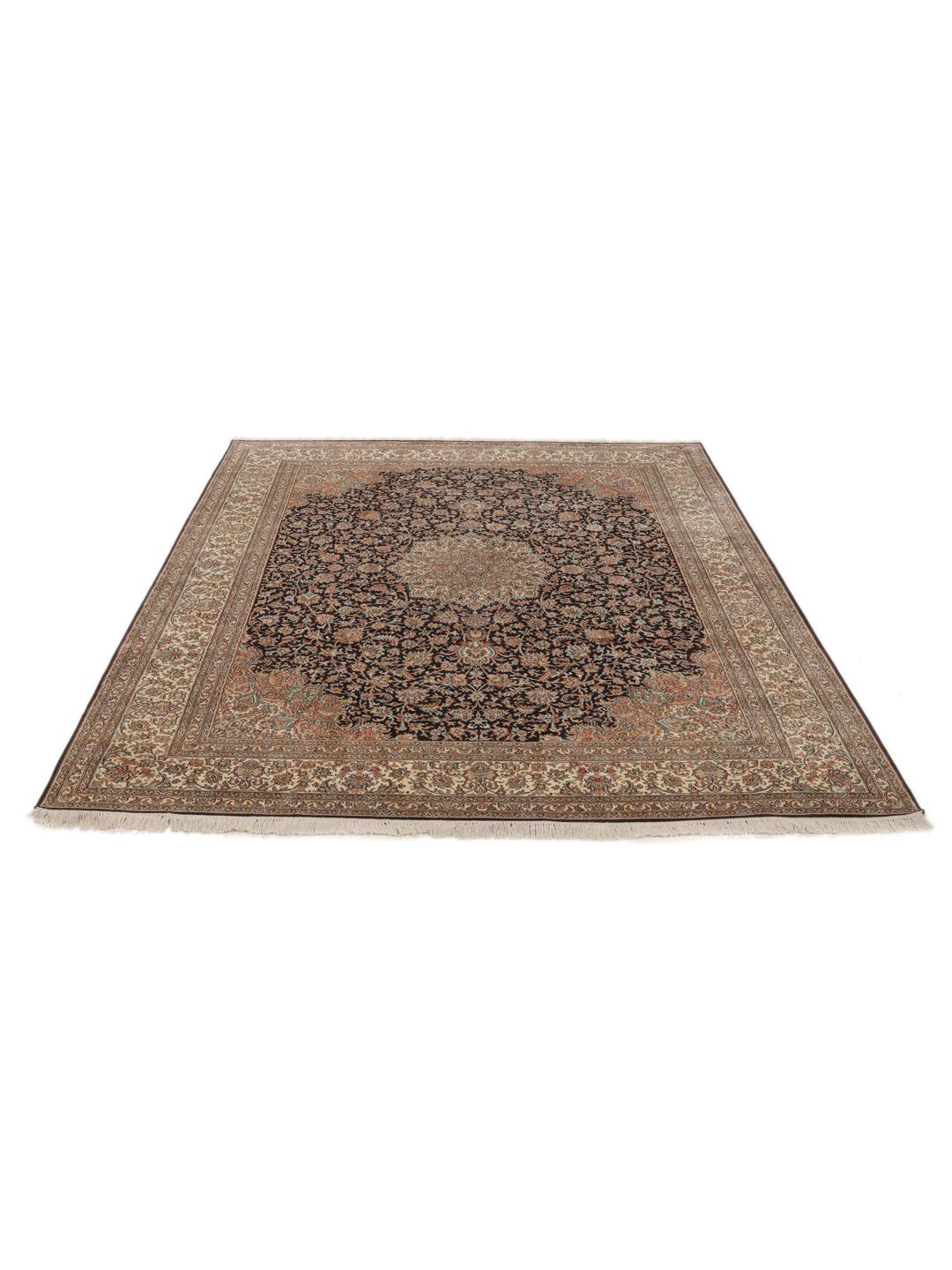
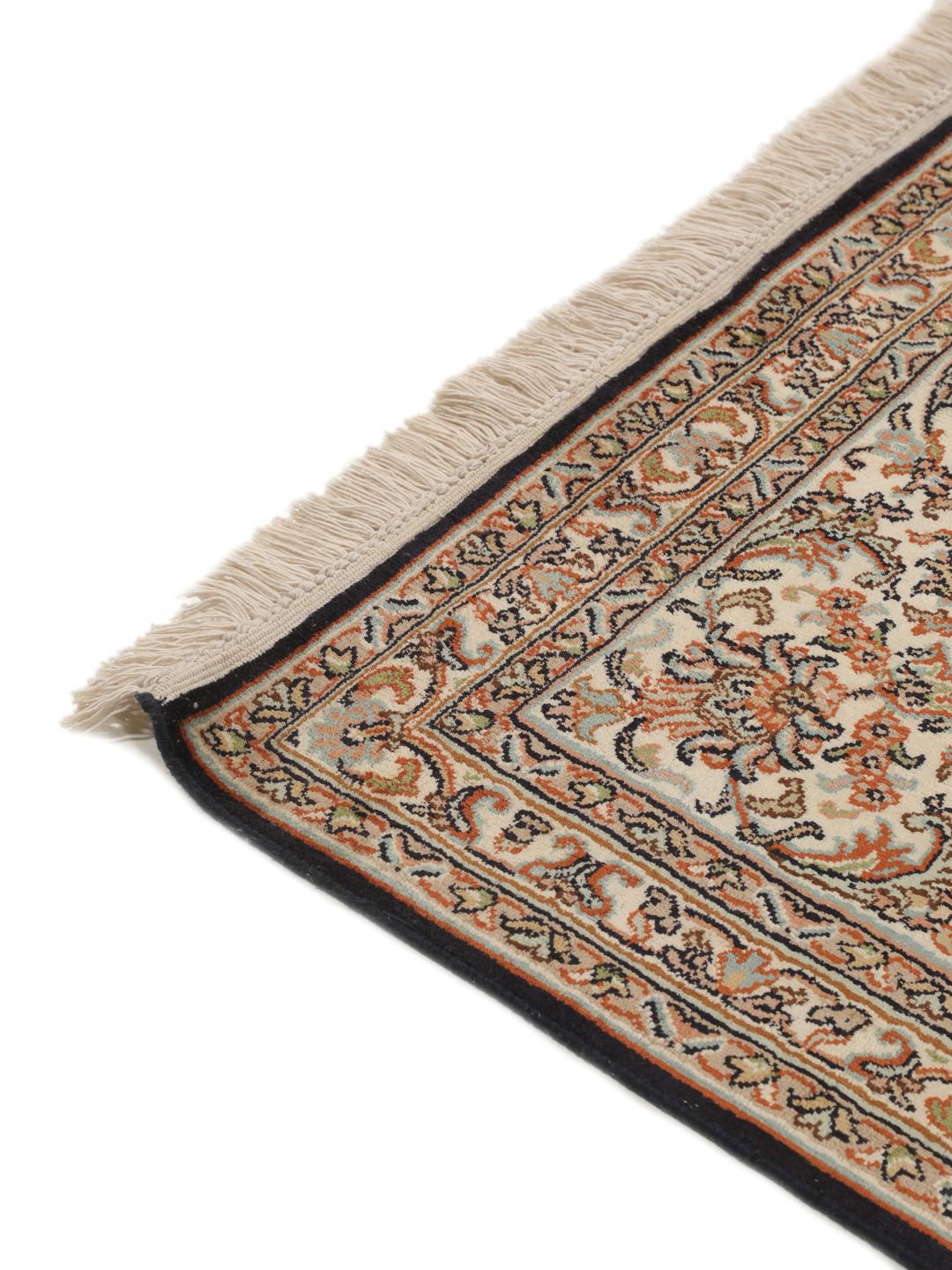
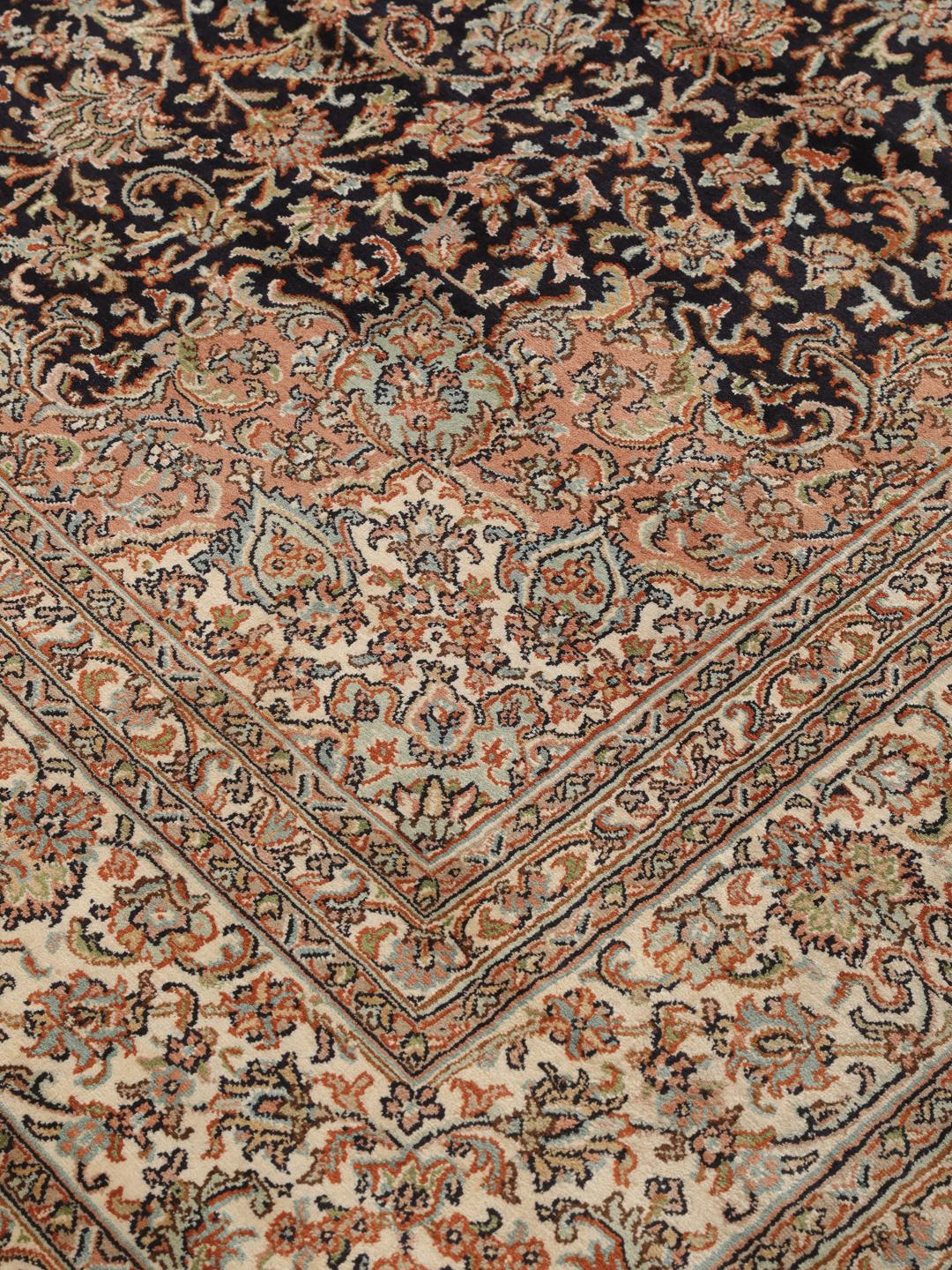
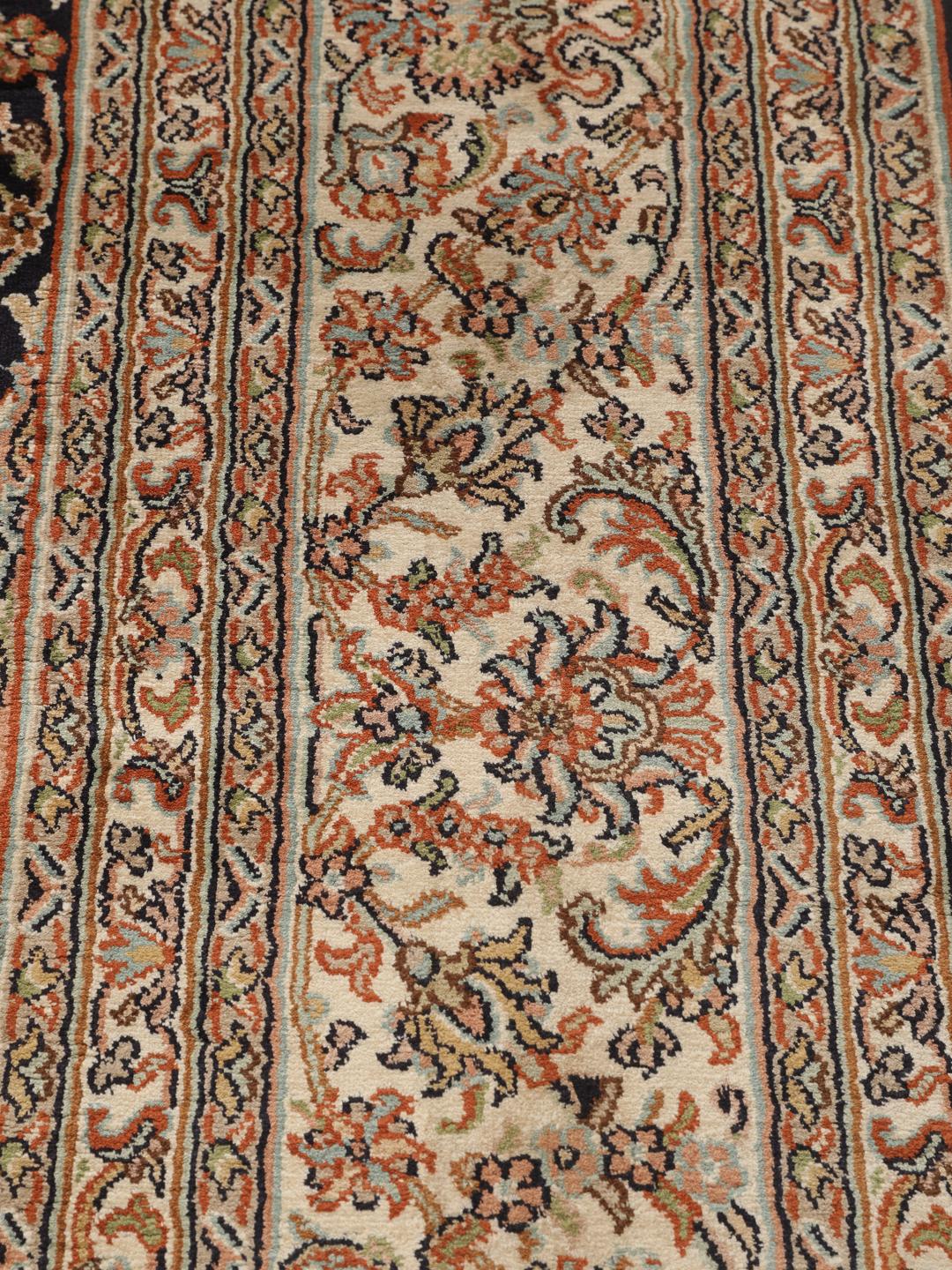
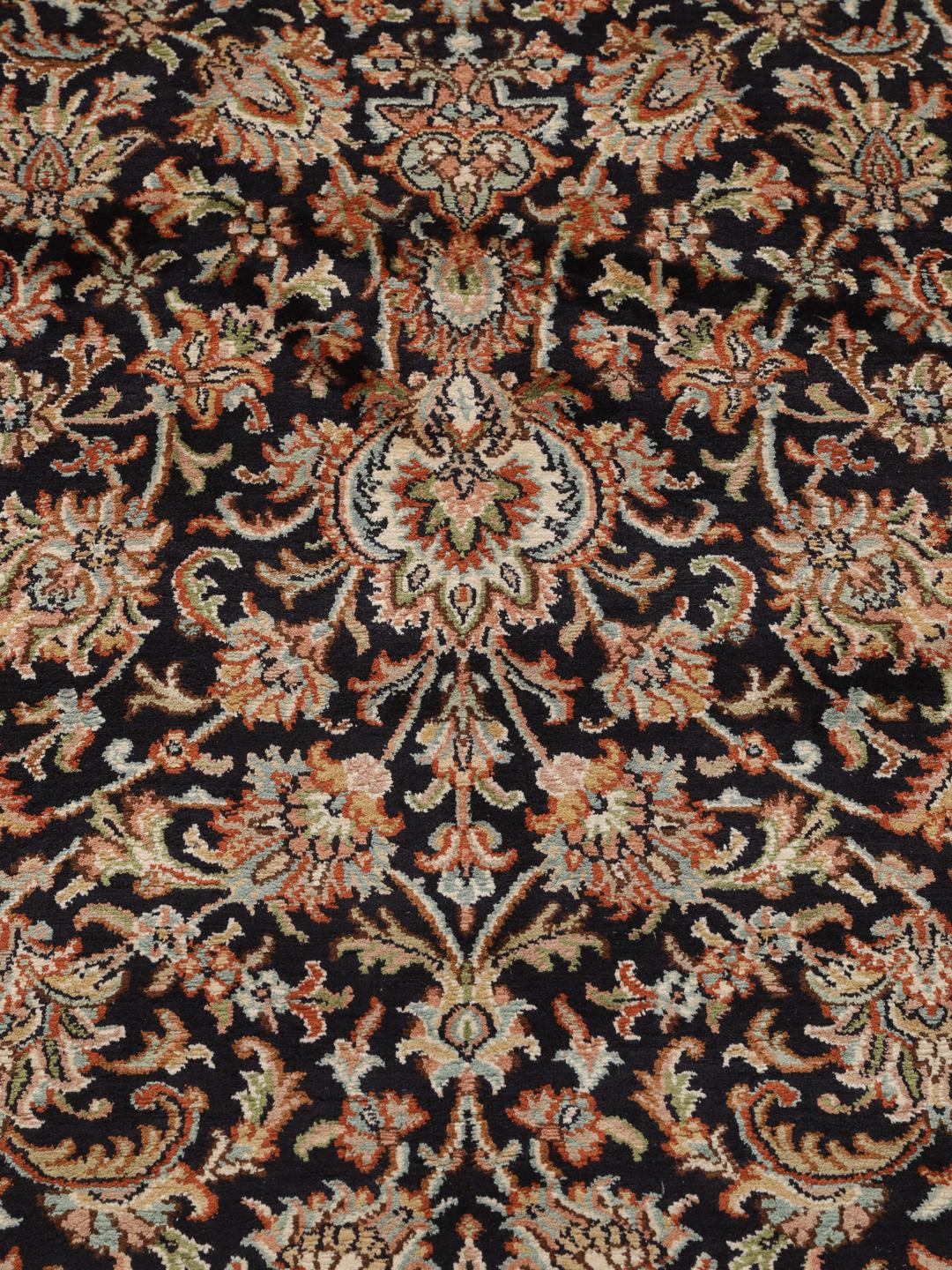
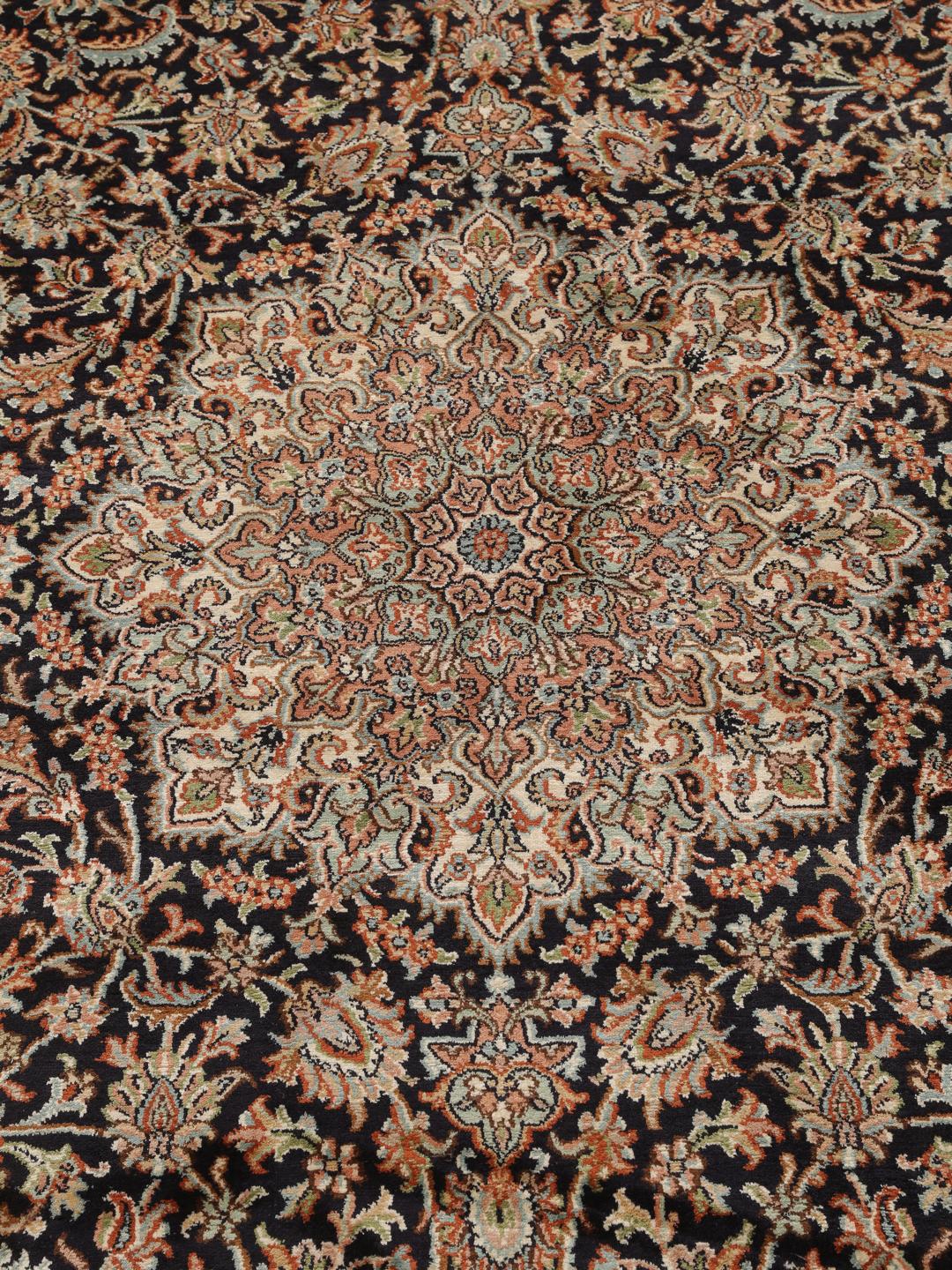
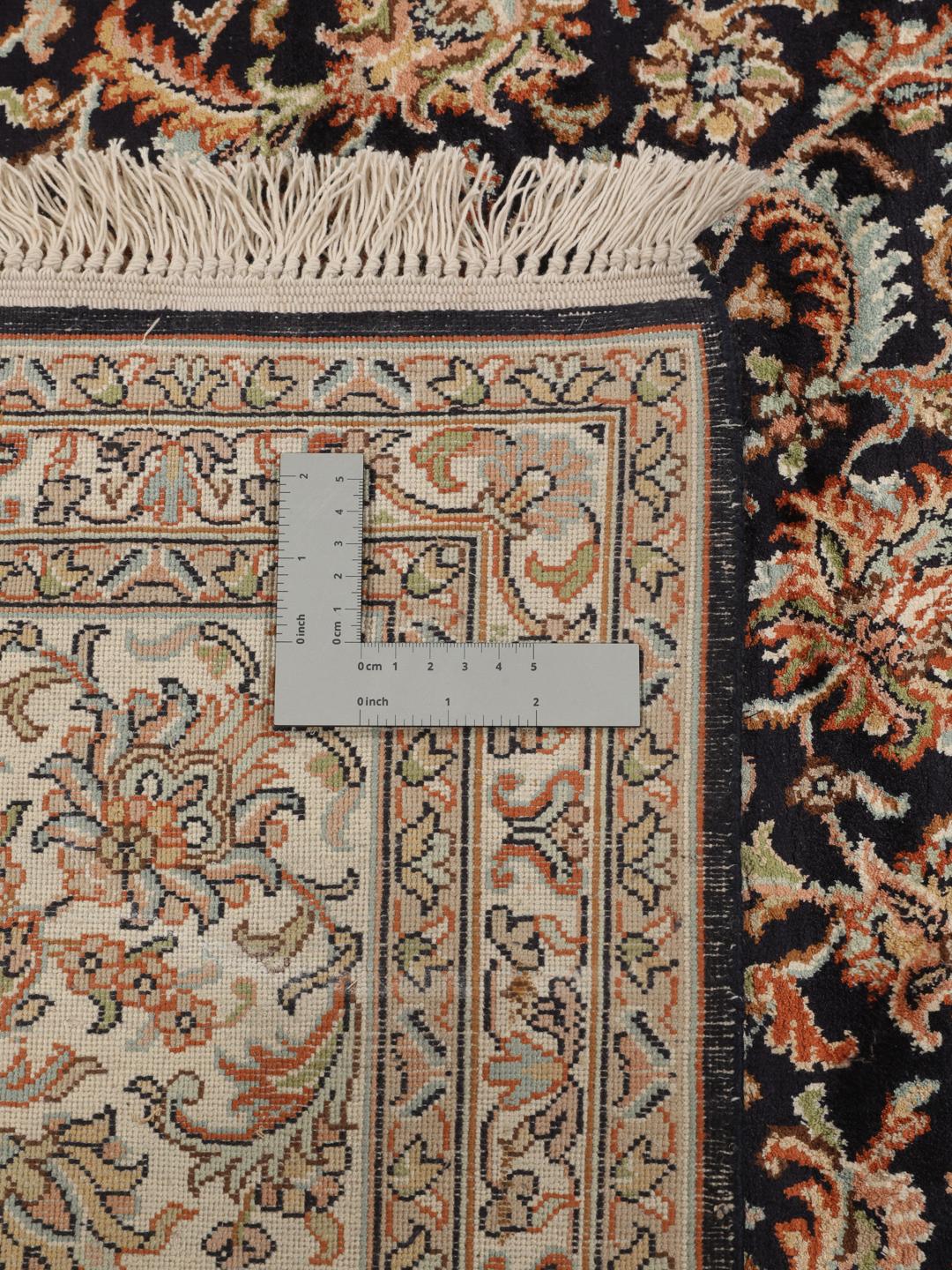
Kashmir rugs are known for their intricate designs, often featuring elaborate floral patterns and central medallions that require immense concentration and skill. The terminology used in these rugs, such as the specific knotting techniques, is indicative of the region's dedication to high-quality output. The density of the knots is what allows for the characteristic 'painting with wool and silk' effect, where curves and fine lines appear fluid and lifelike.
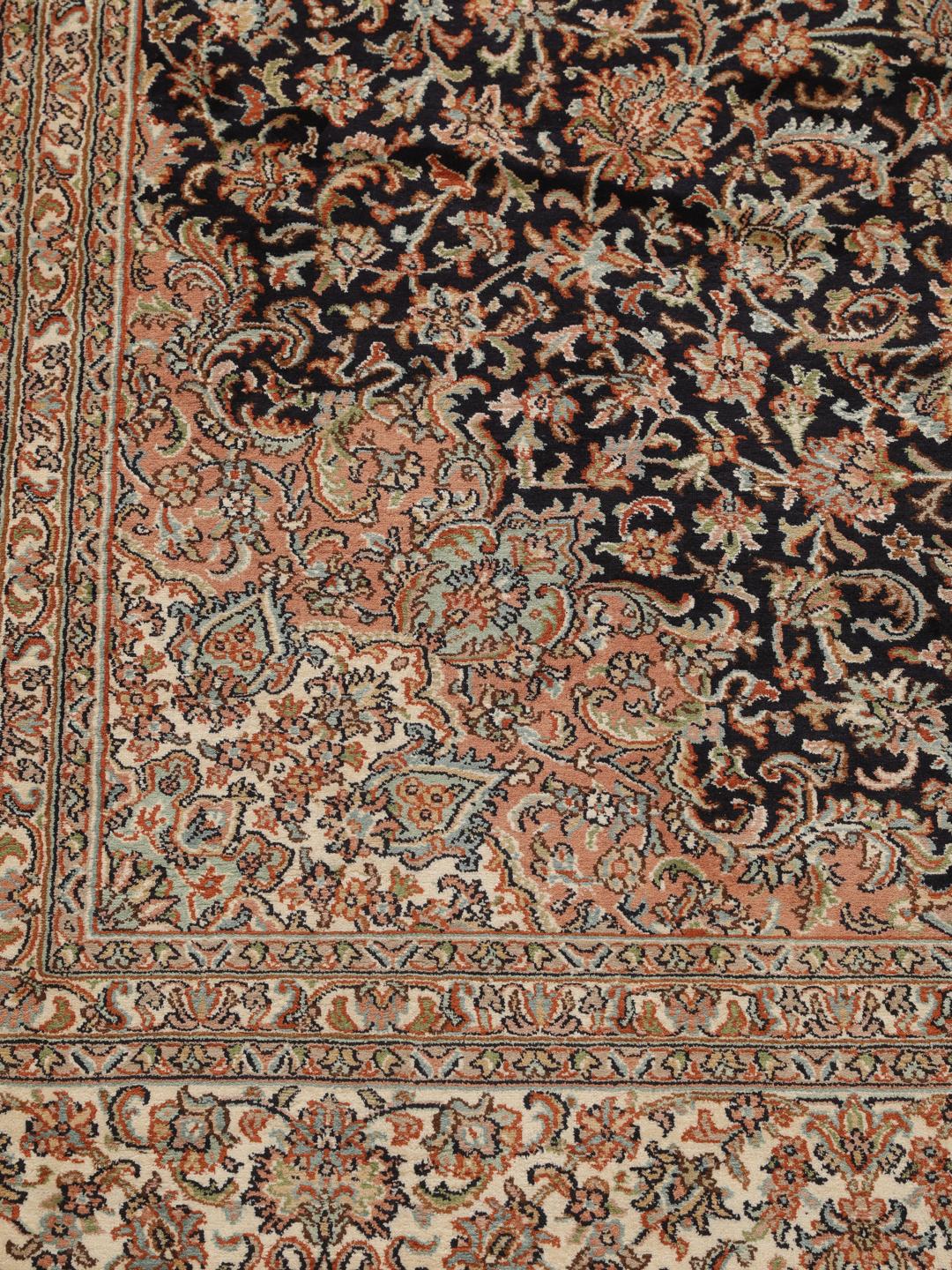
Signature elements of these rugs include stylized floral motifs, scrolling vines, and complex borders, all arranged with a sense of symmetry that creates a balanced, harmonious effect. While traditional designs often lean into deep, rich colours, the modern evolution of Kashmir weaving continues to explore diverse palettes, ensuring that each piece remains relevant to contemporary homes while honouring its historical roots.
Owning a hand-knotted Kashmir rug is more than just purchasing a floor covering; it is an act of preserving a cultural legacy. These rugs are highly valued by collectors for their combination of artistic beauty and manual labour. They represent a bridge between the past and the present, serving as a reminder of the patience and dedication required to create objects of lasting beauty.