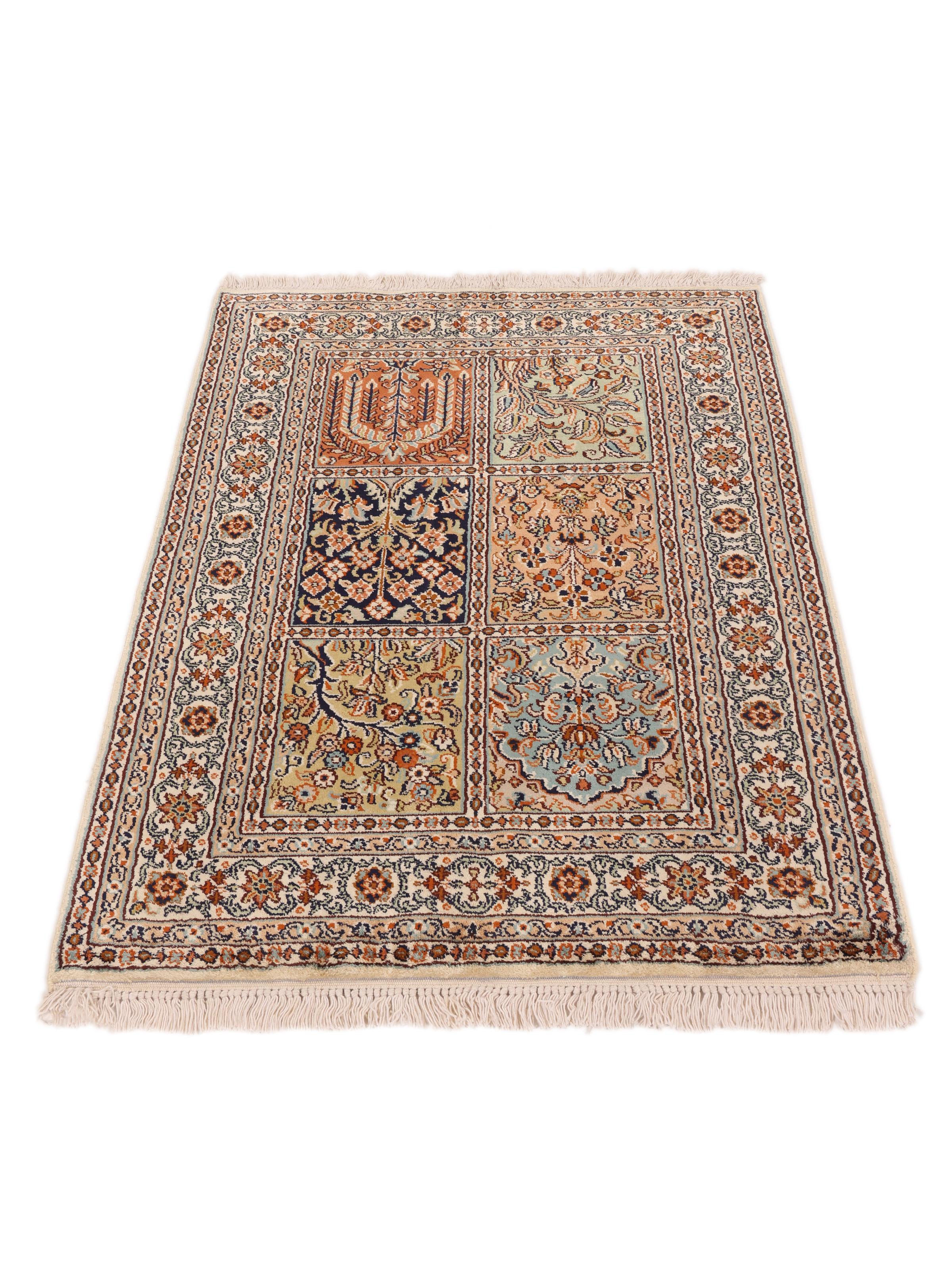
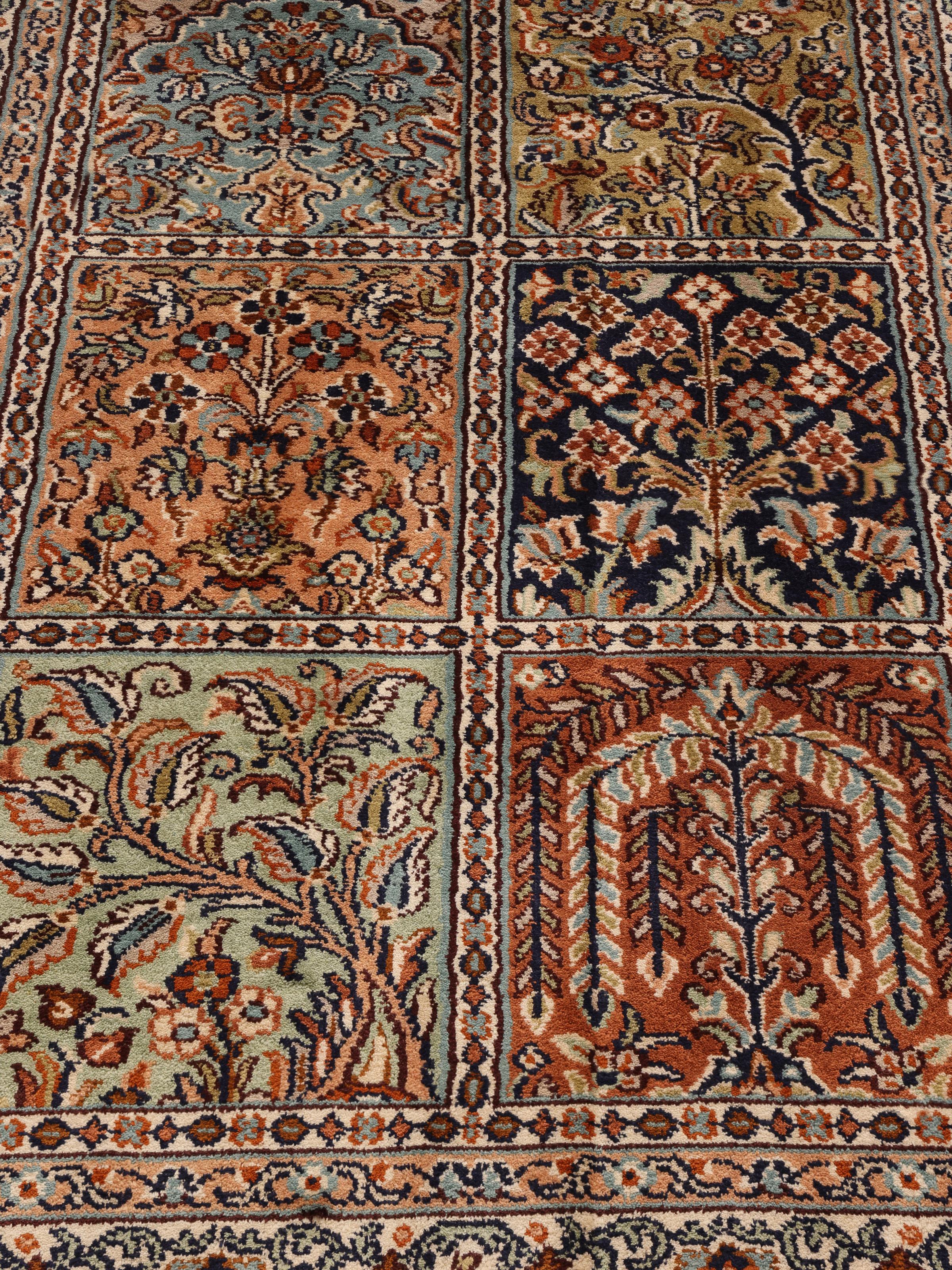
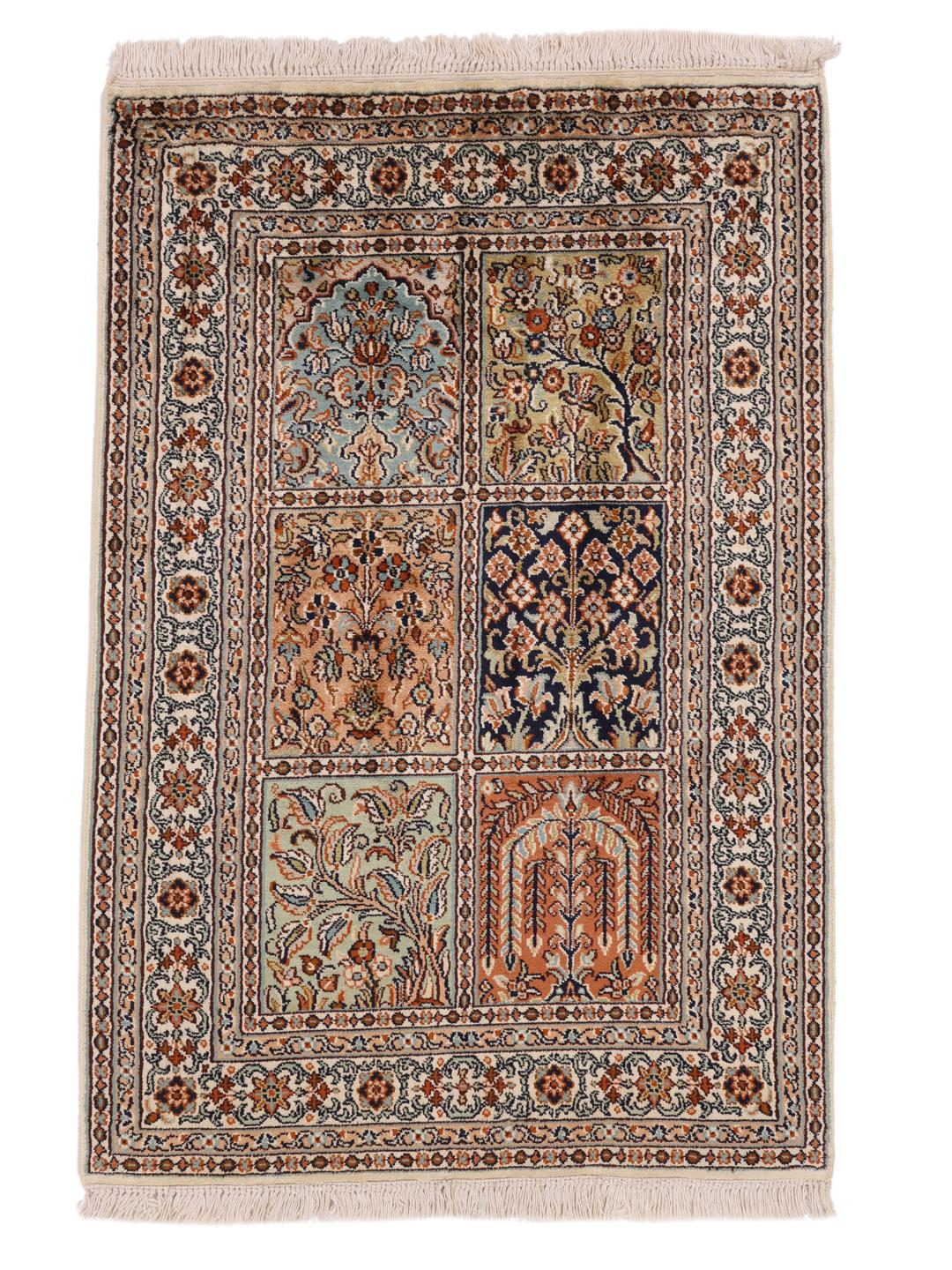
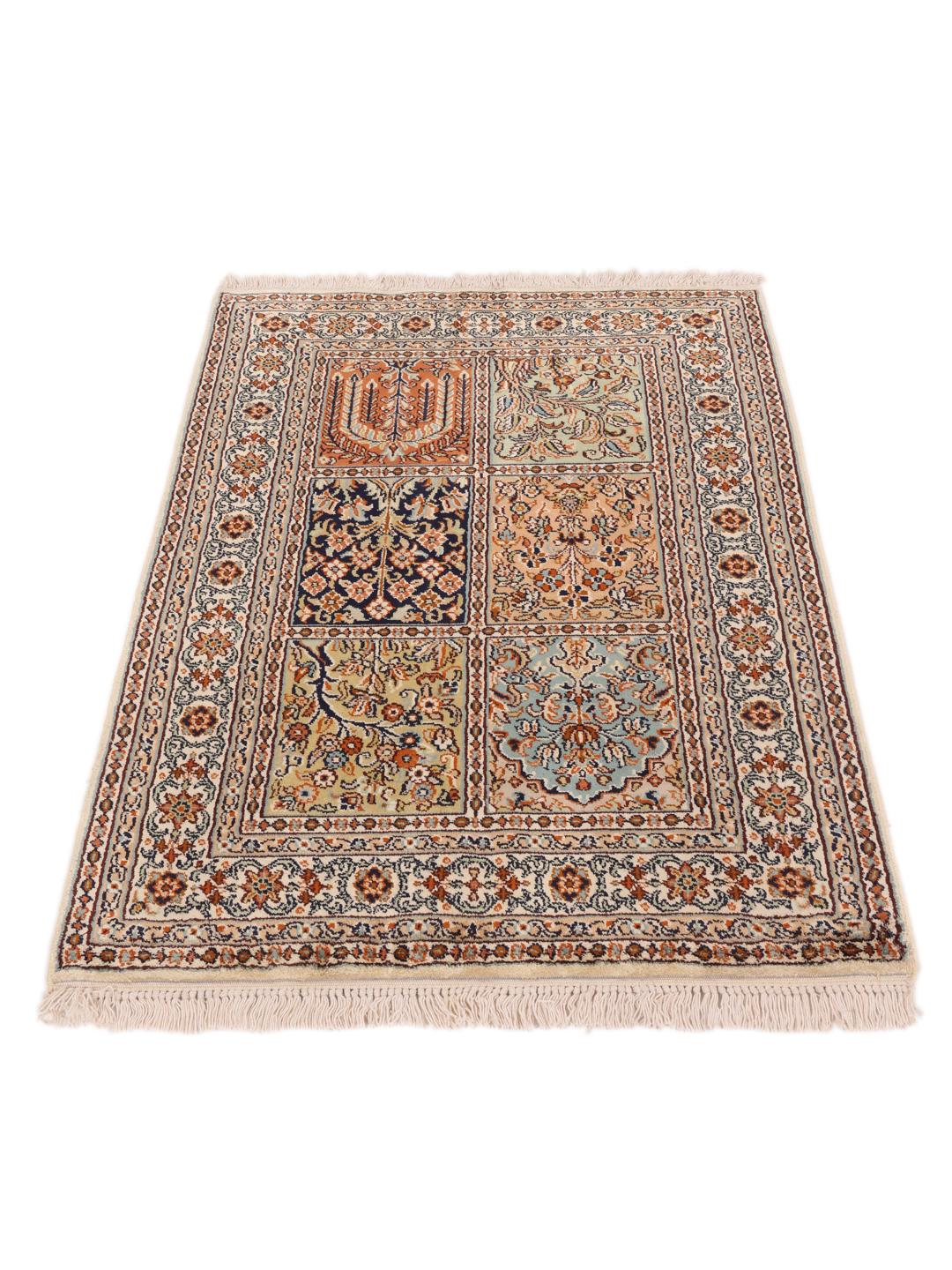
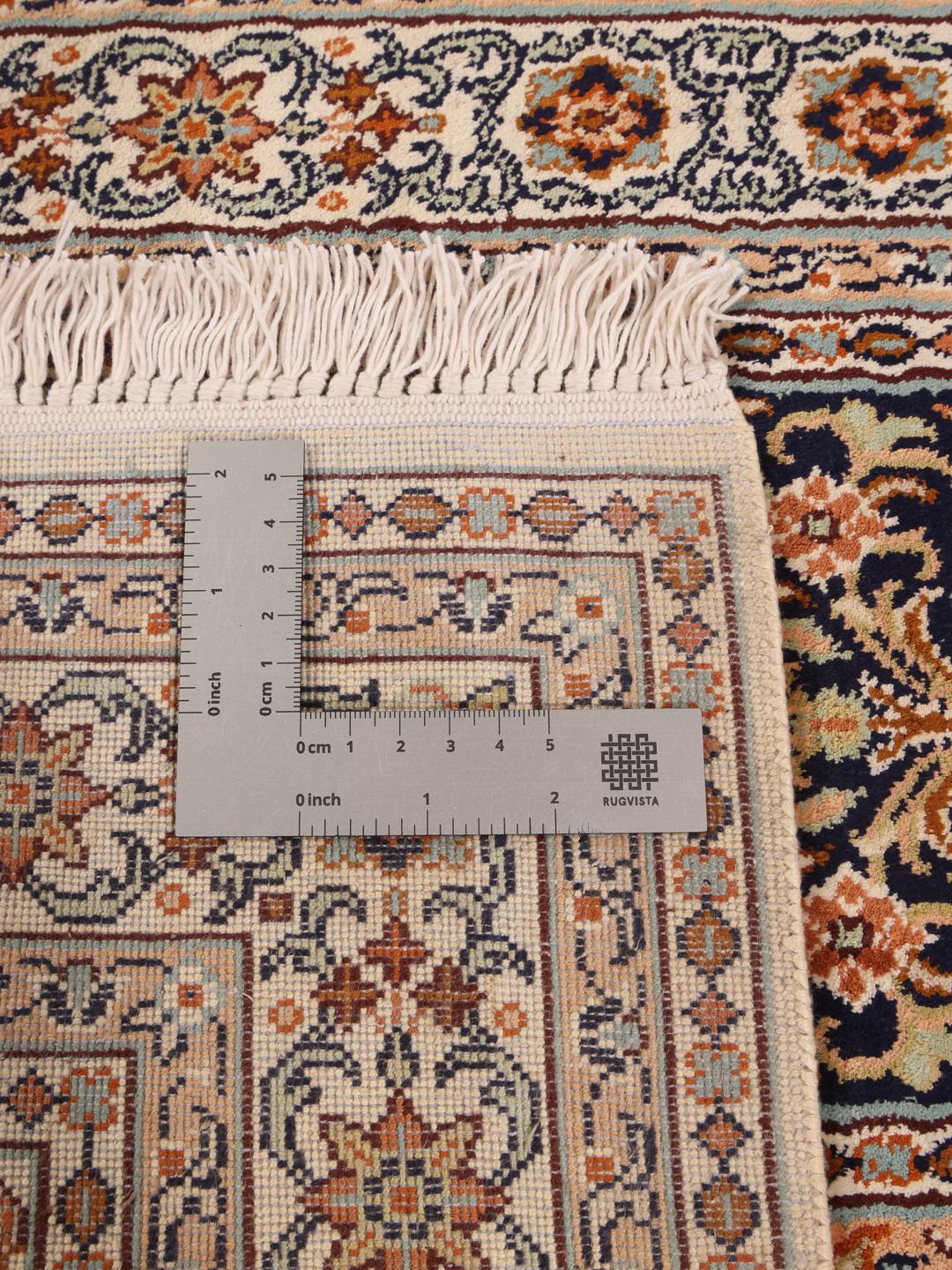
Kashmir silk rugs are celebrated globally for their roots in the rich textile traditions of Northern India. The craft was introduced to the valley of Kashmir centuries ago, evolving into a unique style that draws inspiration from both local flora and the classic, intricate designs found throughout the wider Middle Eastern carpet-weaving traditions.
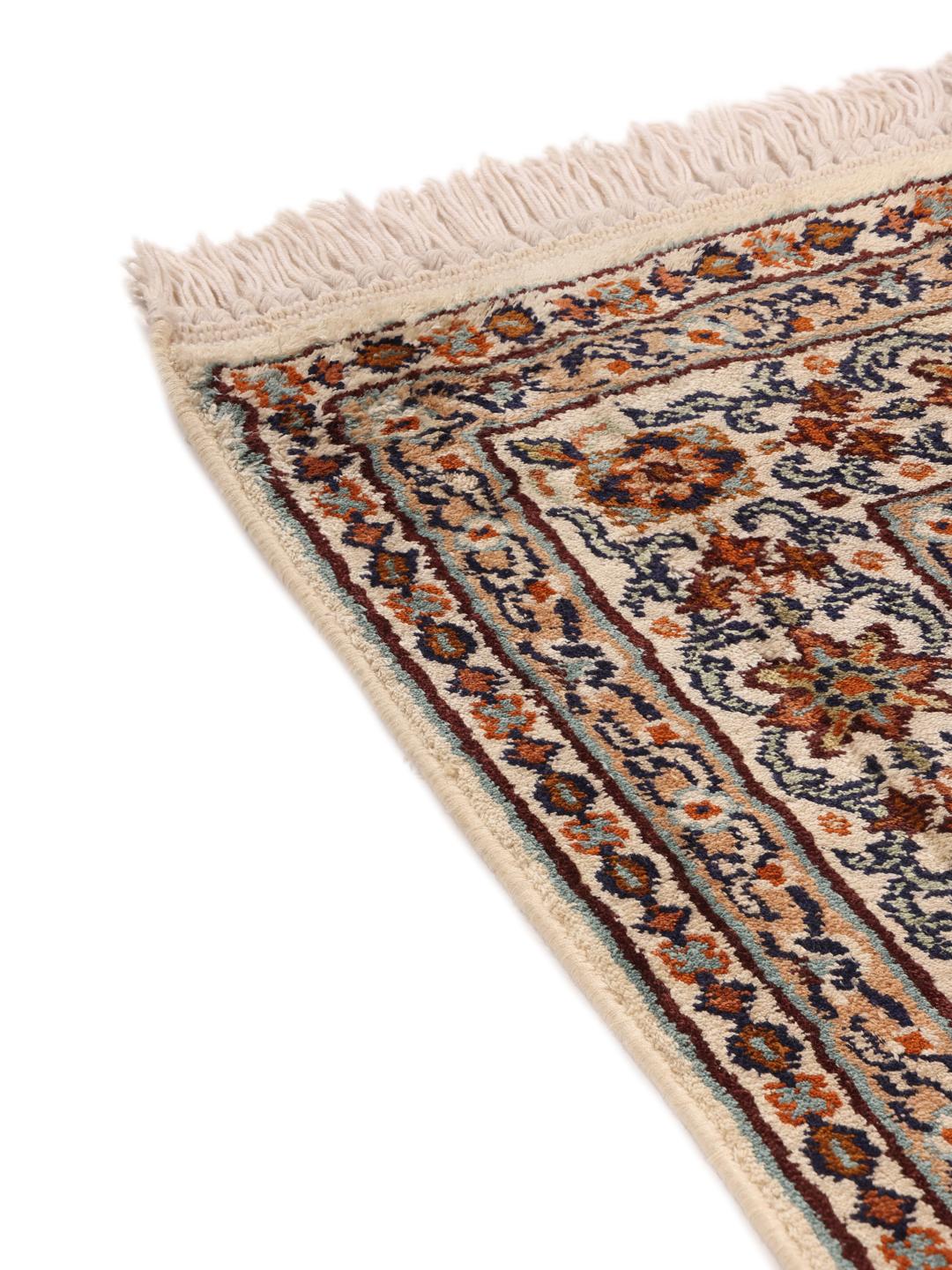
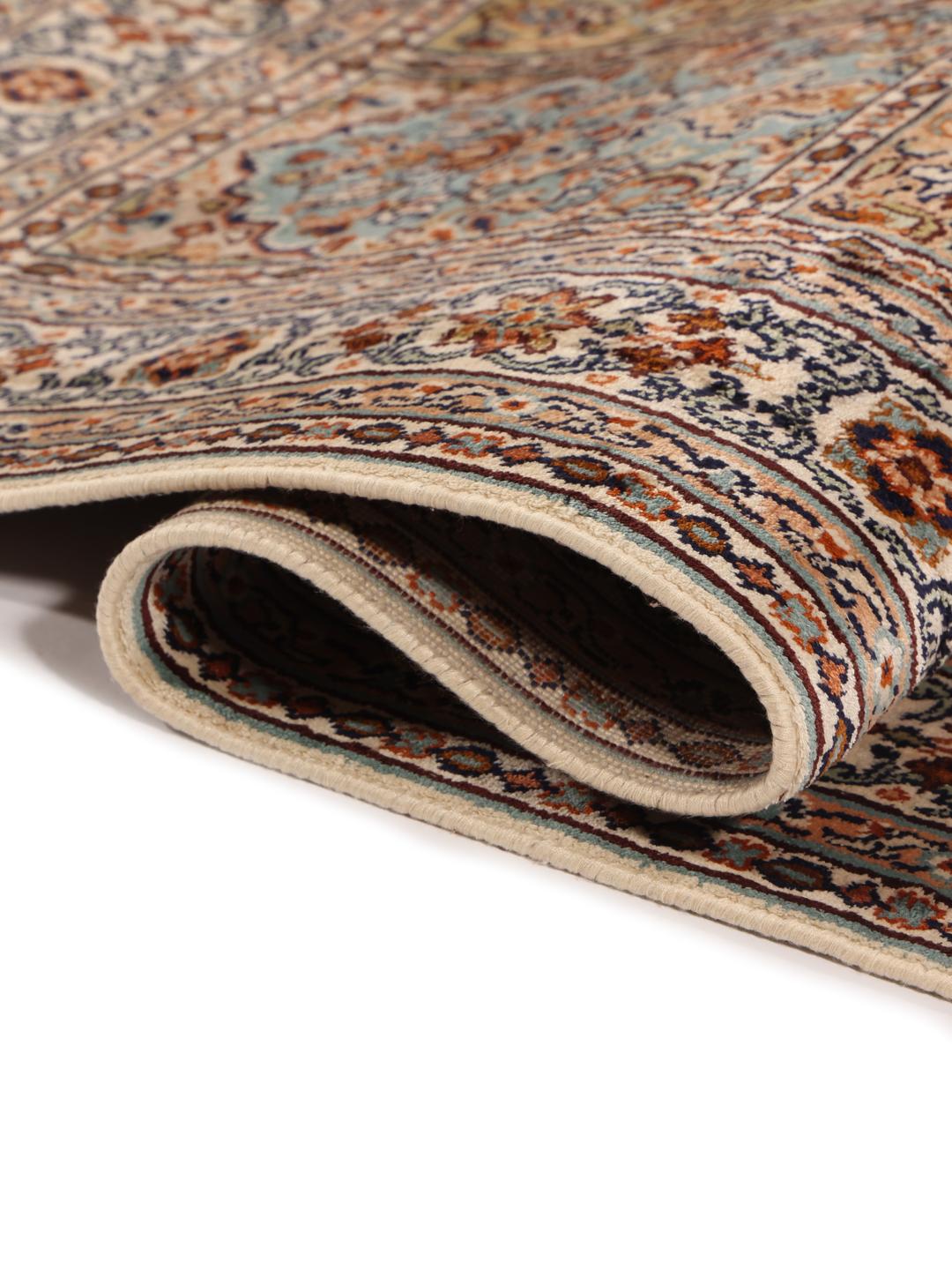
The term 'Kashmir silk' refers to the use of high-quality silk threads that are prized for their strength and natural lustre. These rugs are typically hand-knotted, a labour-intensive process that allows for the creation of incredibly detailed, curvilinear patterns that would be impossible to achieve with coarser materials or techniques.
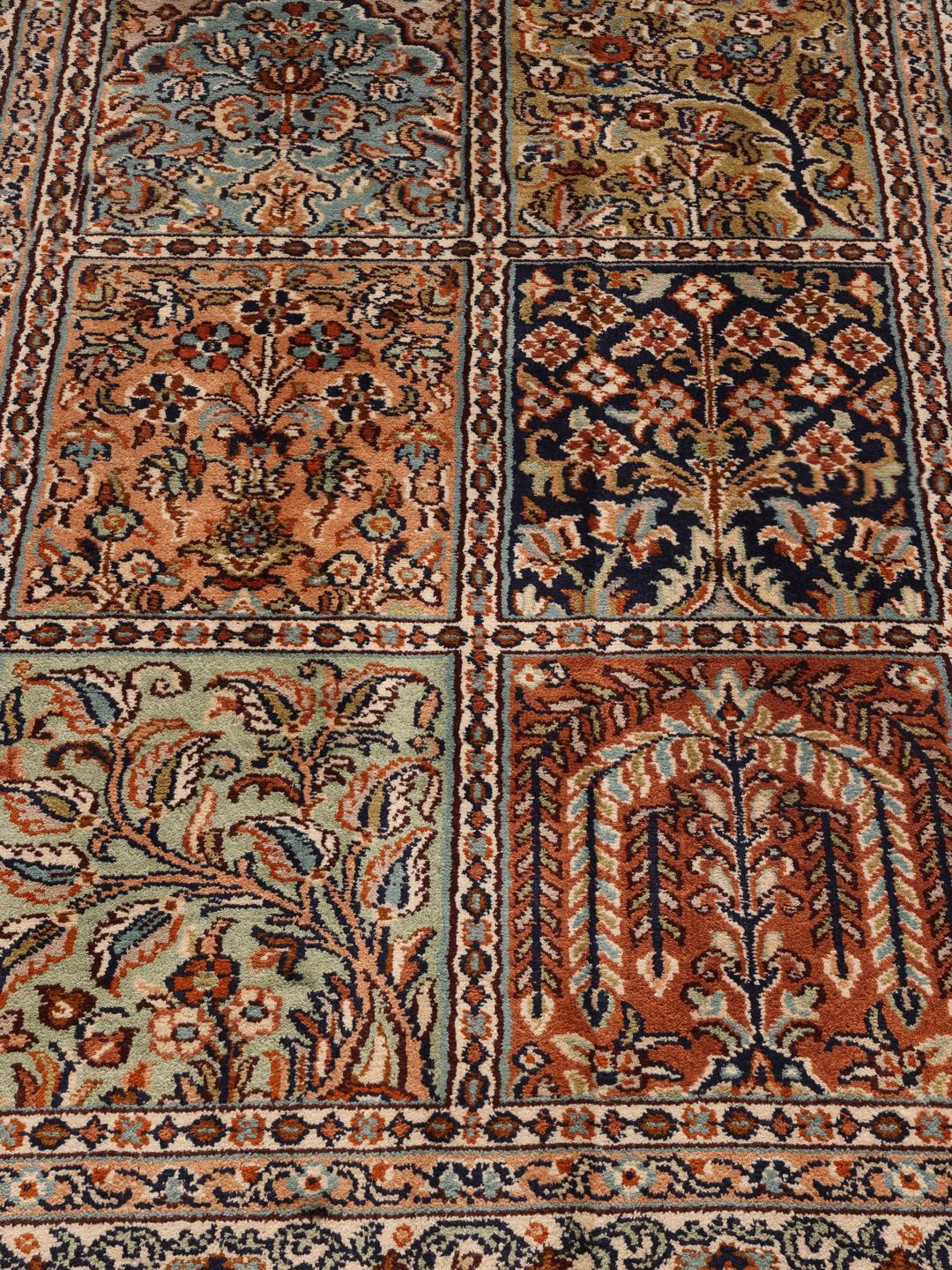
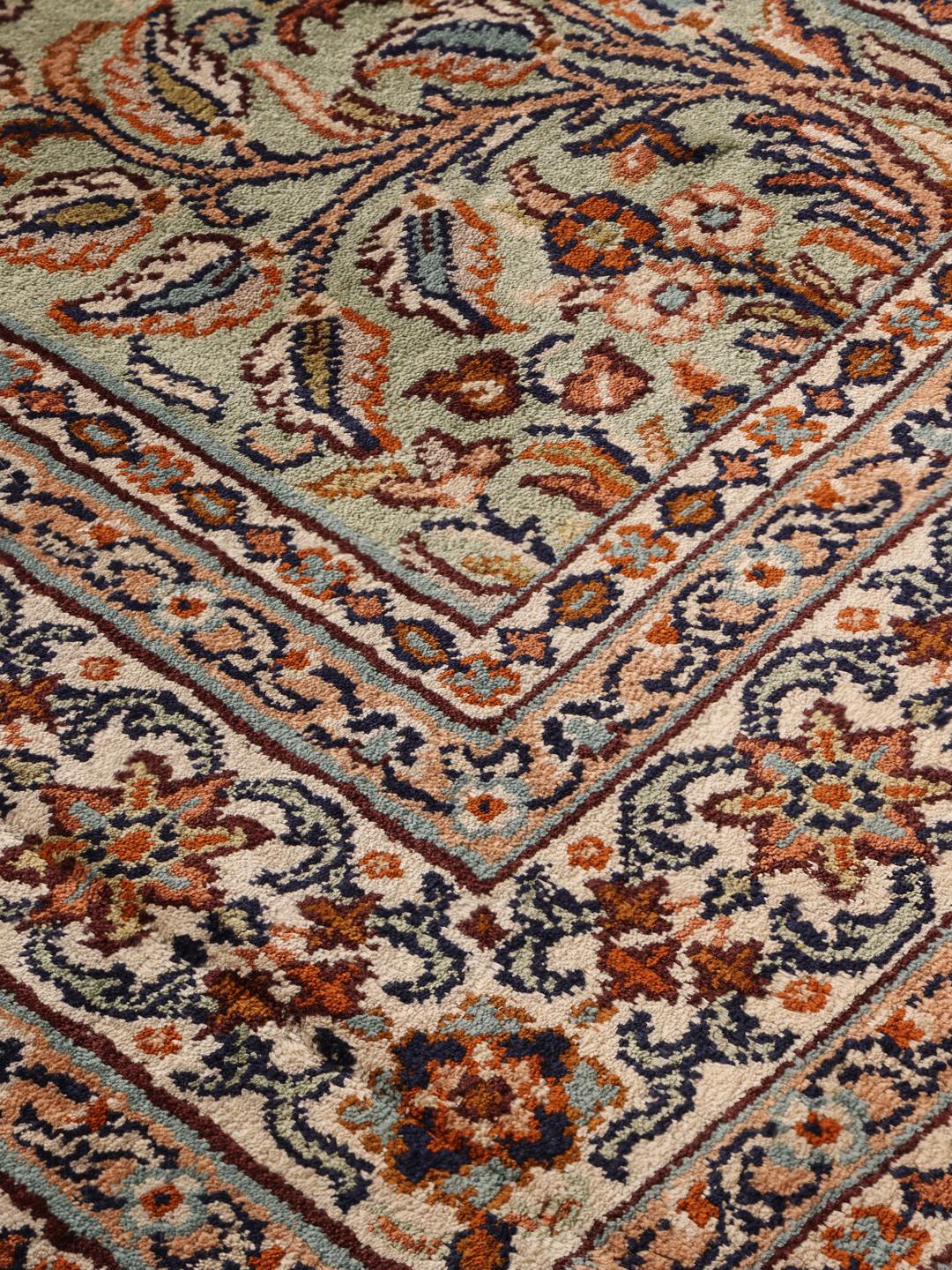
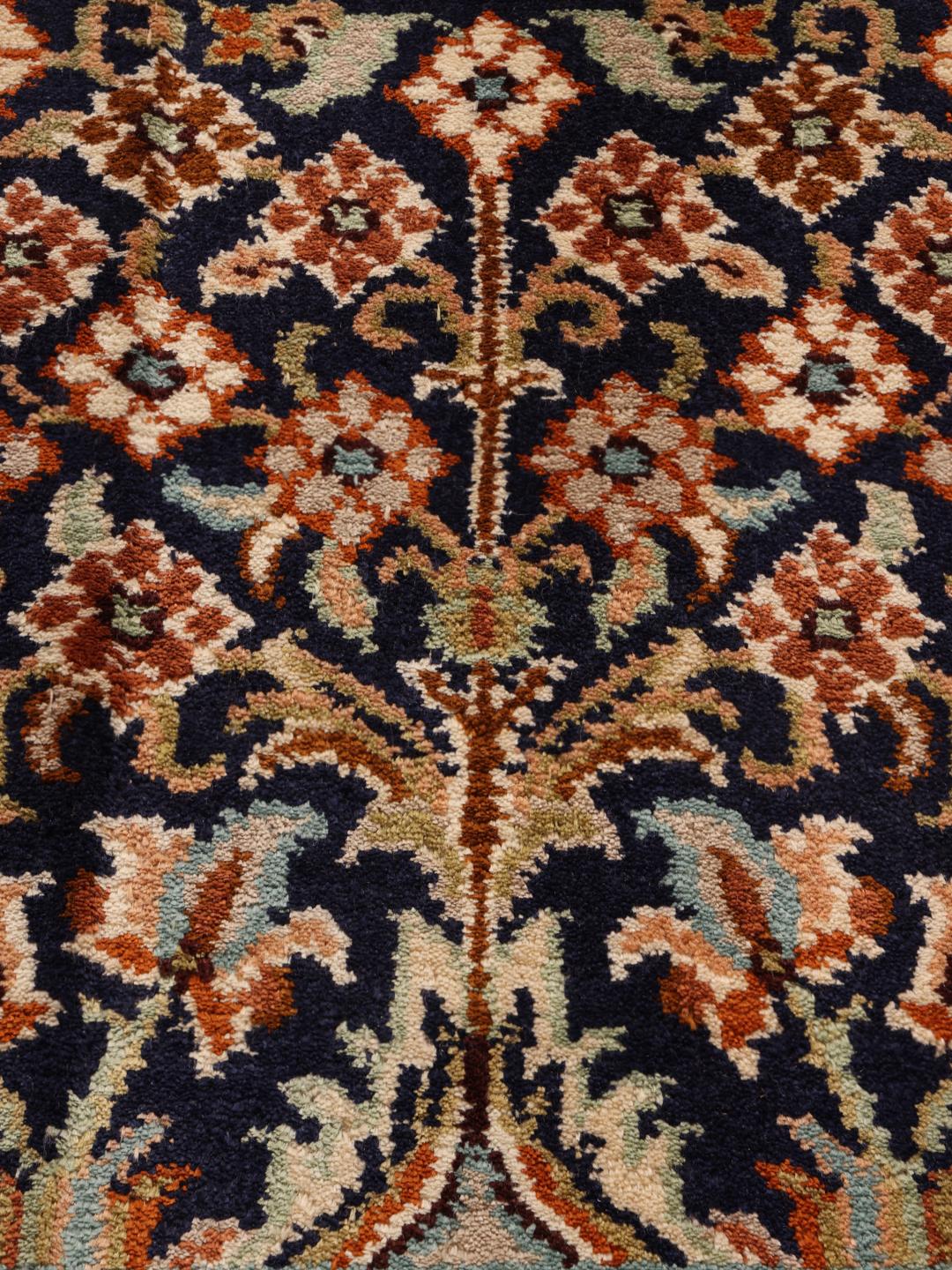
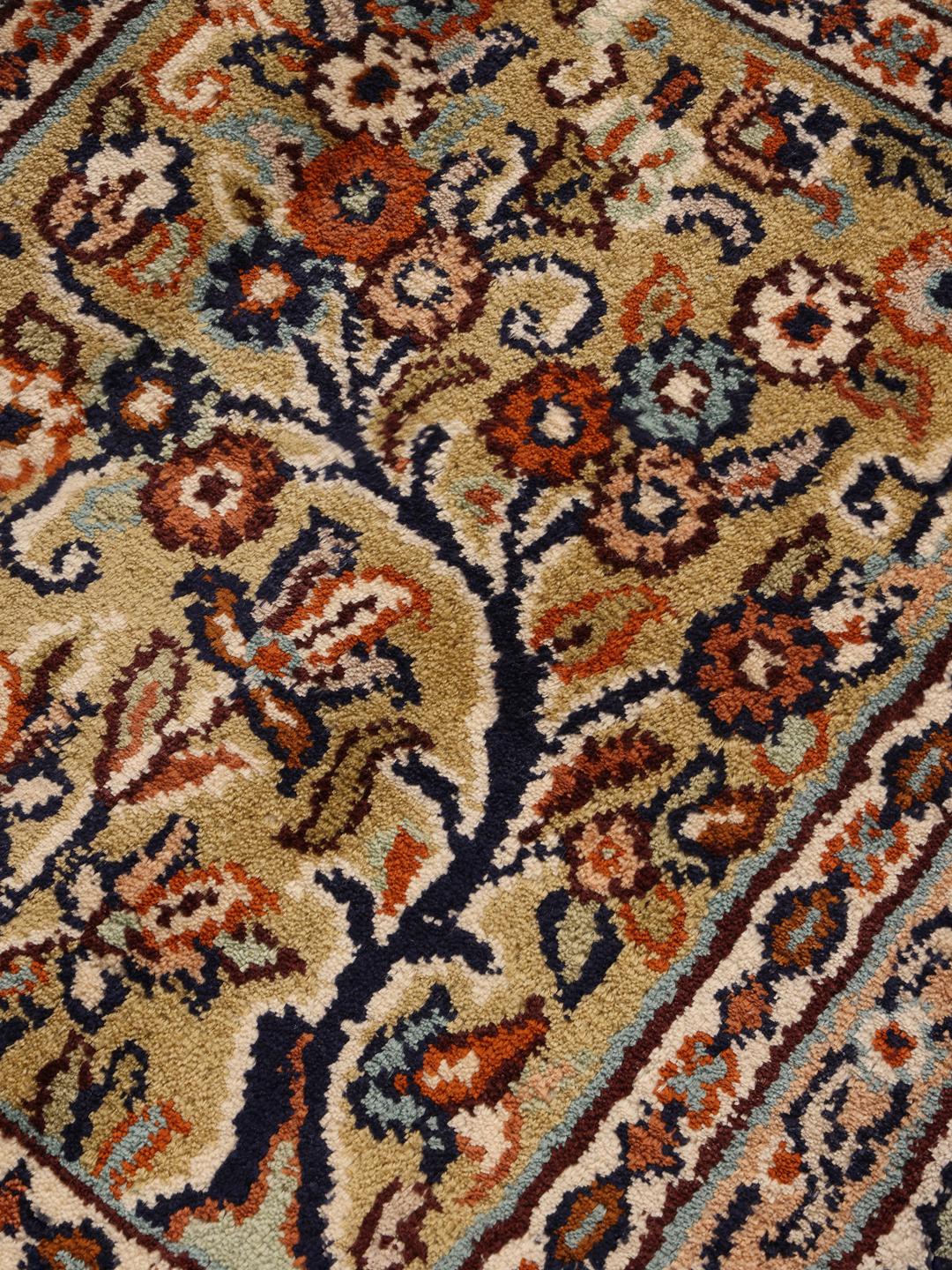
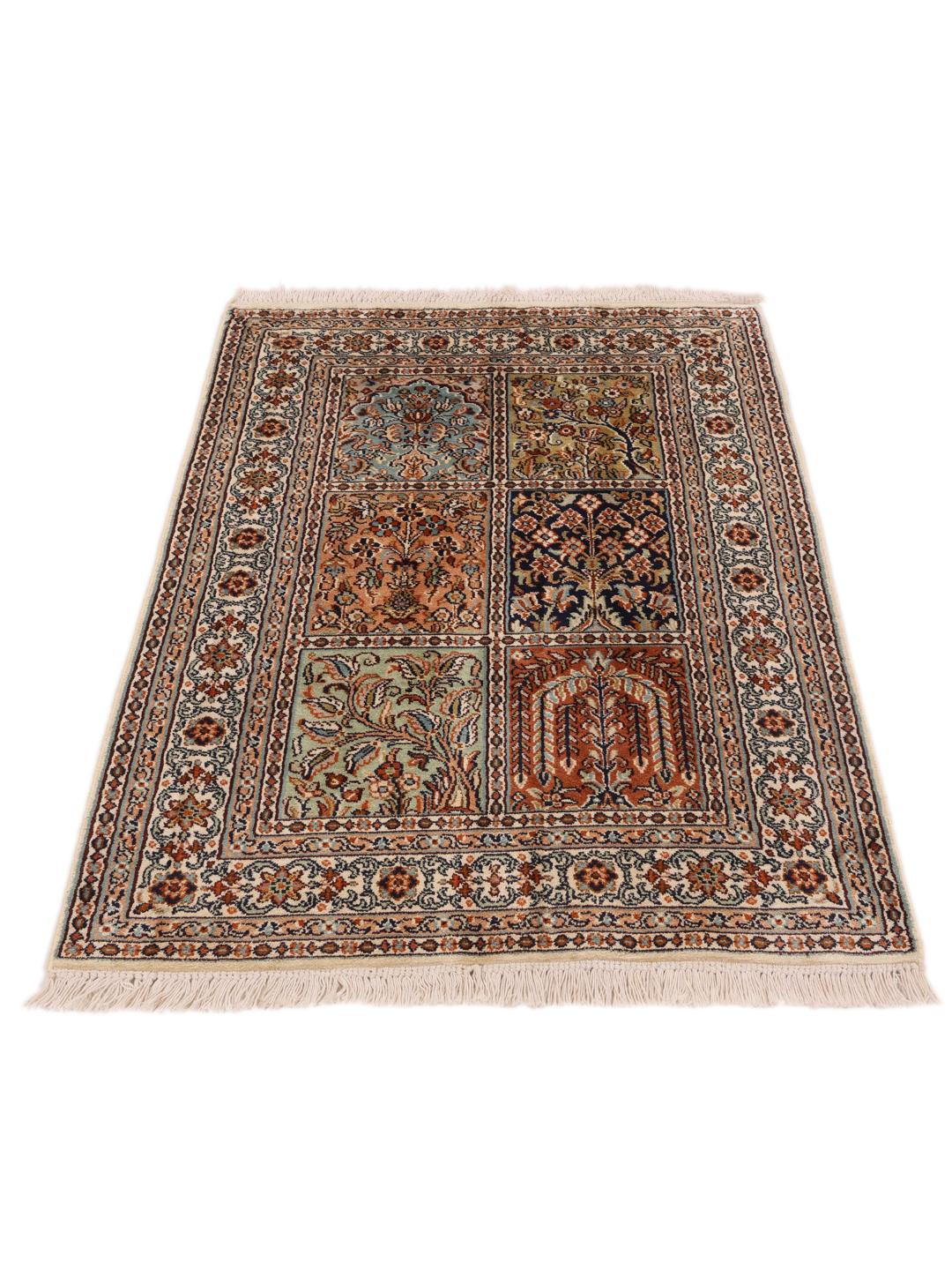
Visual language in these rugs is defined by highly detailed floral motifs, often organised into medallions, vine scrolls, or, as seen here, elegant panels. The use of vibrant, harmonious colours is a hallmark of the tradition, with designs often reflecting the lush, natural beauty of the Himalayan landscape that surrounds the weavers.
Owning a Kashmir silk rug is considered a mark of appreciation for historical craftsmanship. These pieces are highly valued by collectors for their precision and the cultural heritage they carry, serving as enduring examples of a craft that bridges the gap between functional floor covering and fine artistic expression.