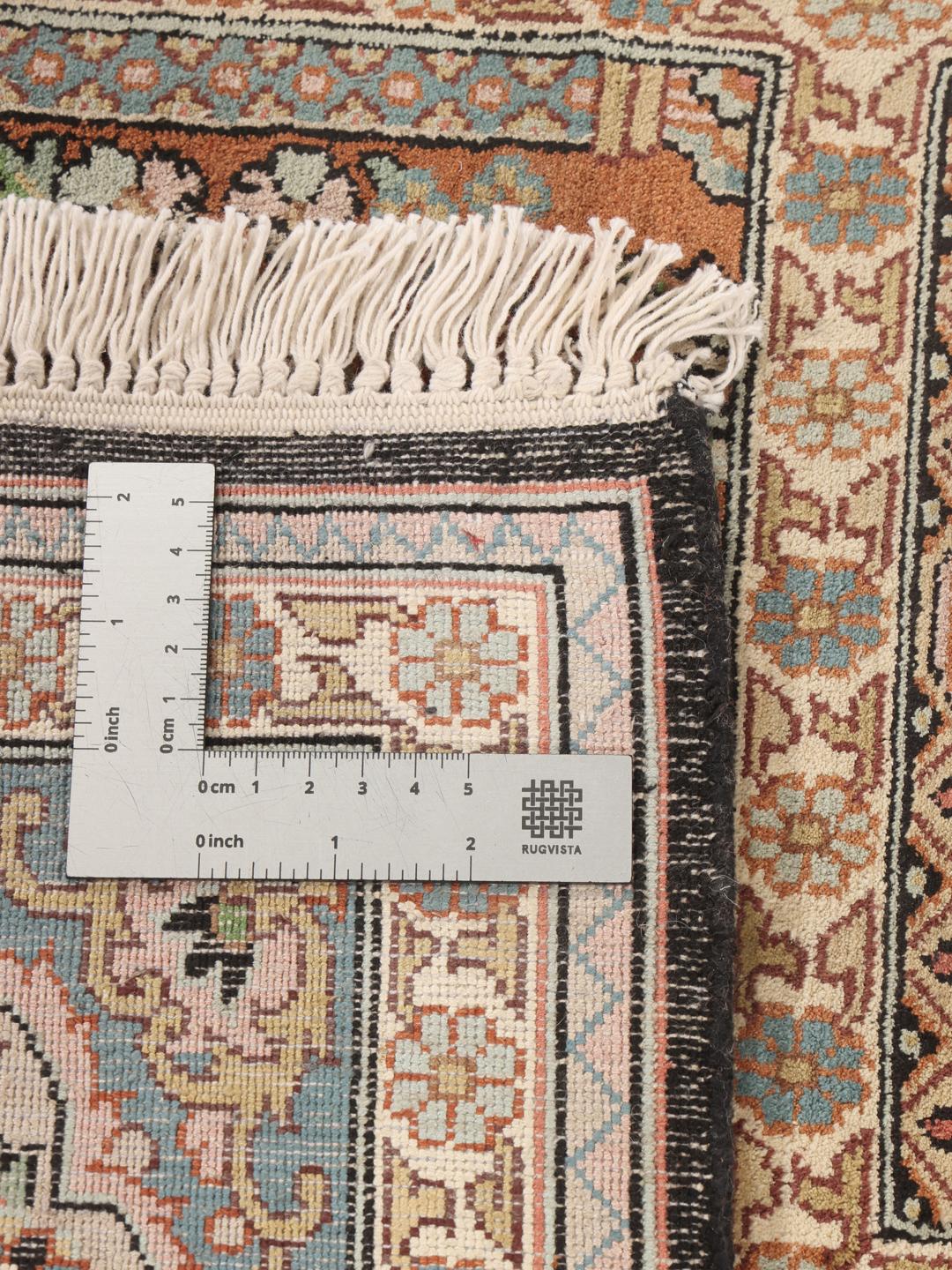
Kashmir rugs, particularly those crafted from silk, originate from the breathtaking valley of Kashmir in Northern India. This region has served as a cultural crossroads for centuries, blending influences from the Middle East and Central Asia with indigenous Indian artistic sensibilities. The tradition of weaving in this mountainous landscape has been nurtured by generations of families who have passed down complex techniques for handling delicate fibres.
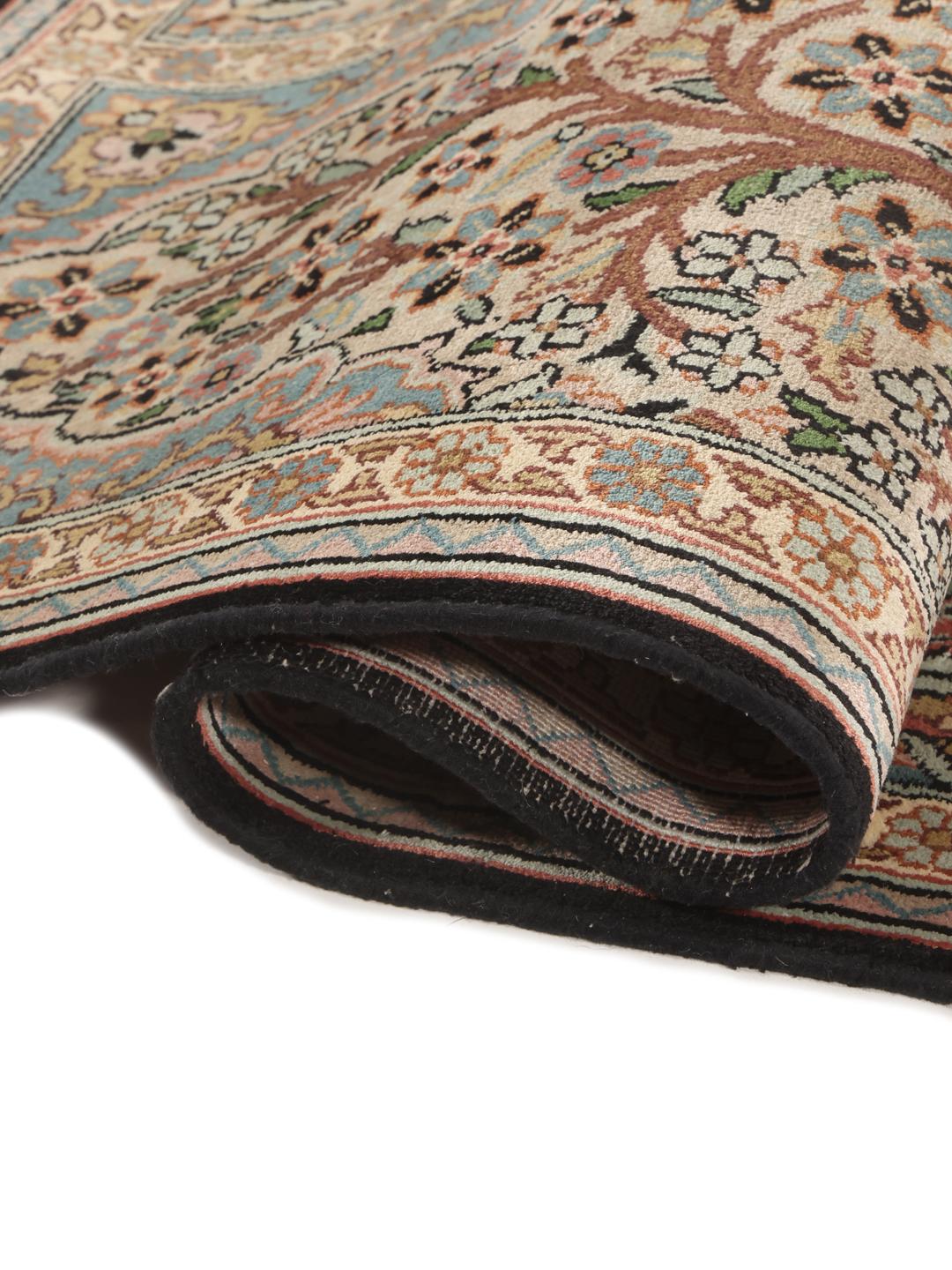
The term Kashmir silk refers to a specific, highly regarded style of weaving that utilises fine silk strands to achieve a distinctively soft, reflective pile. In this context, the quality is determined by the mastery of the weaver in managing tension and precision. The use of high-quality silk threads allows for a level of intricate pattern work that would be impossible with coarser materials, resulting in a finished product that is prized for its luminous quality.
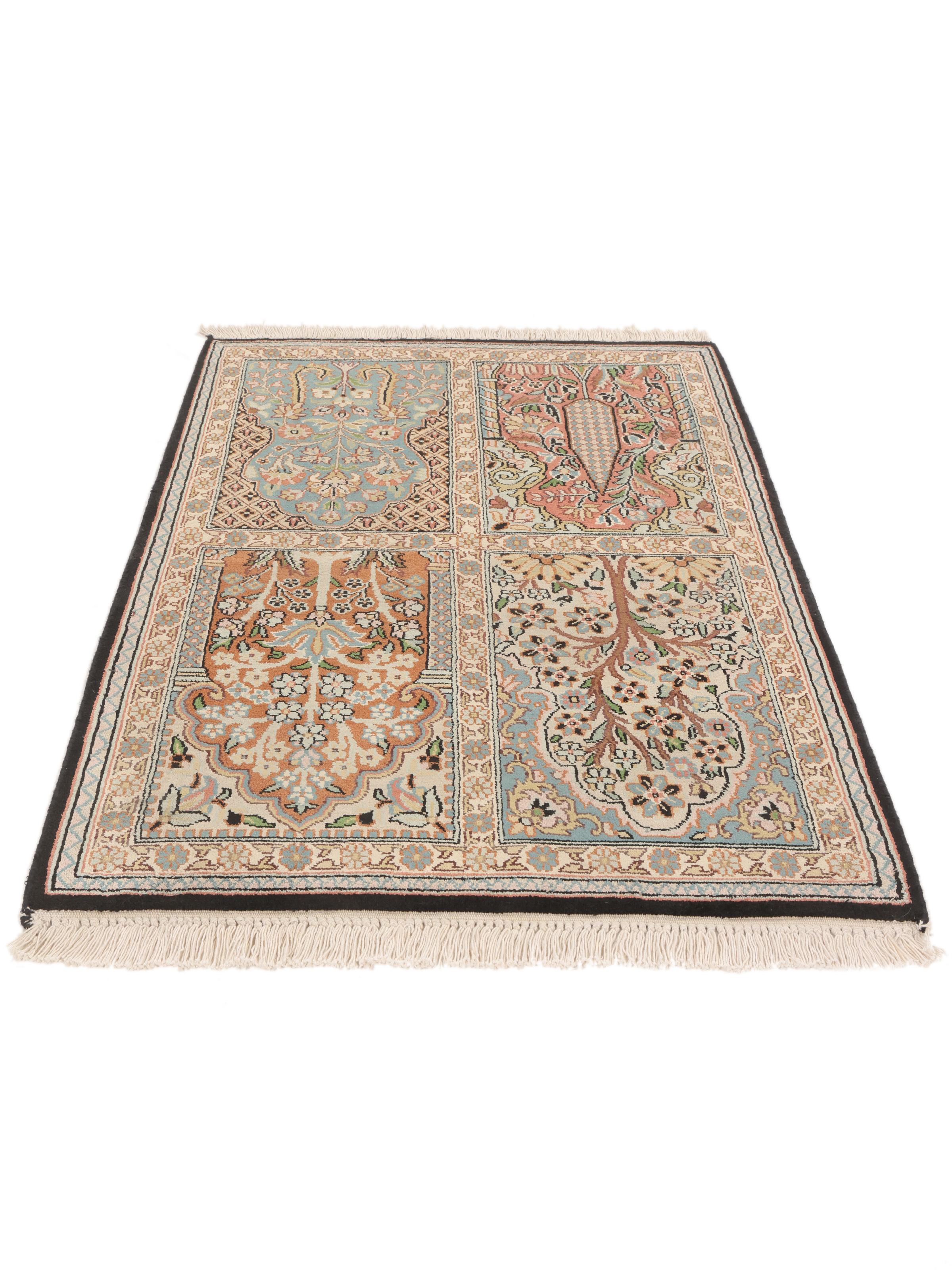
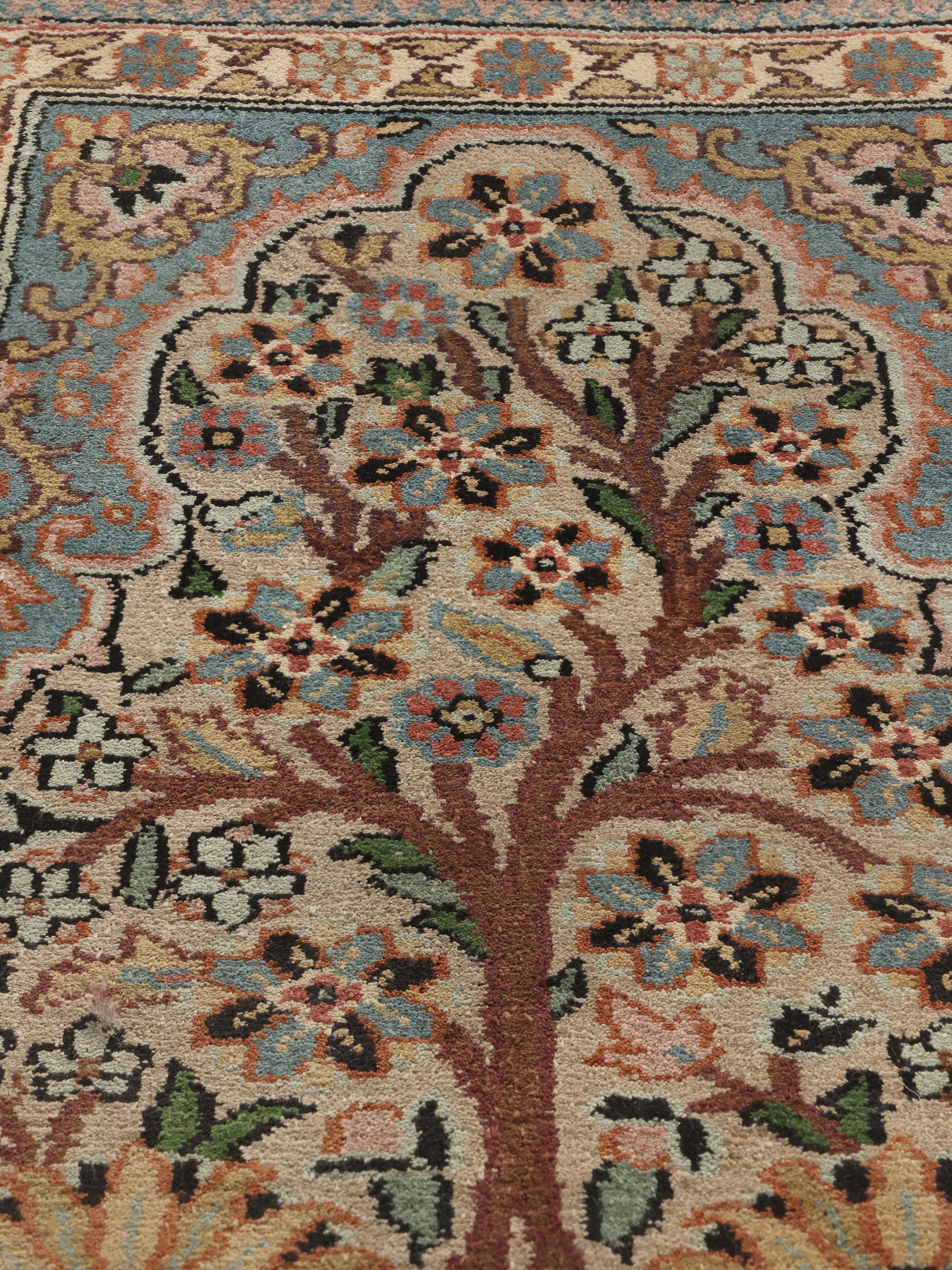
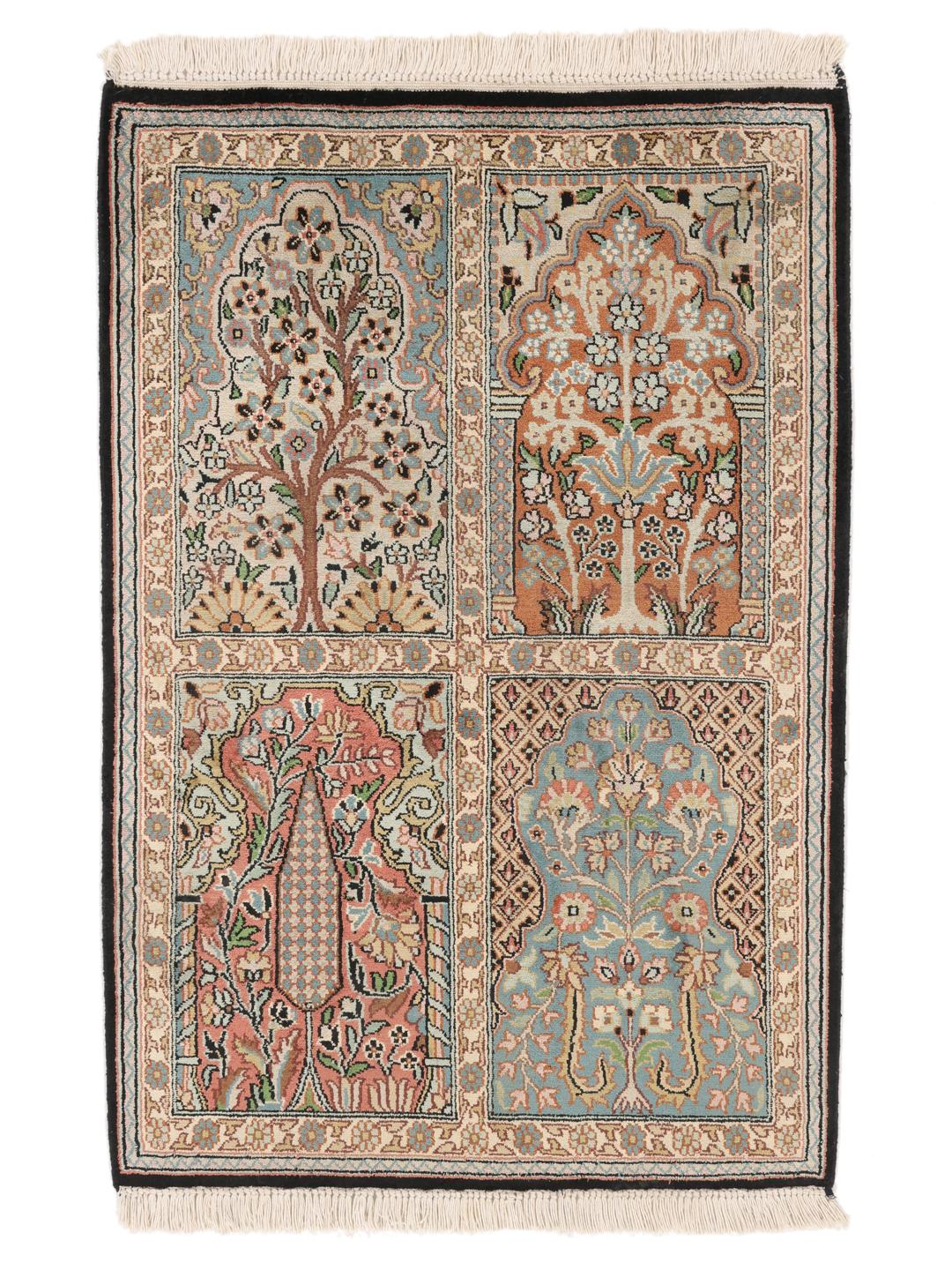
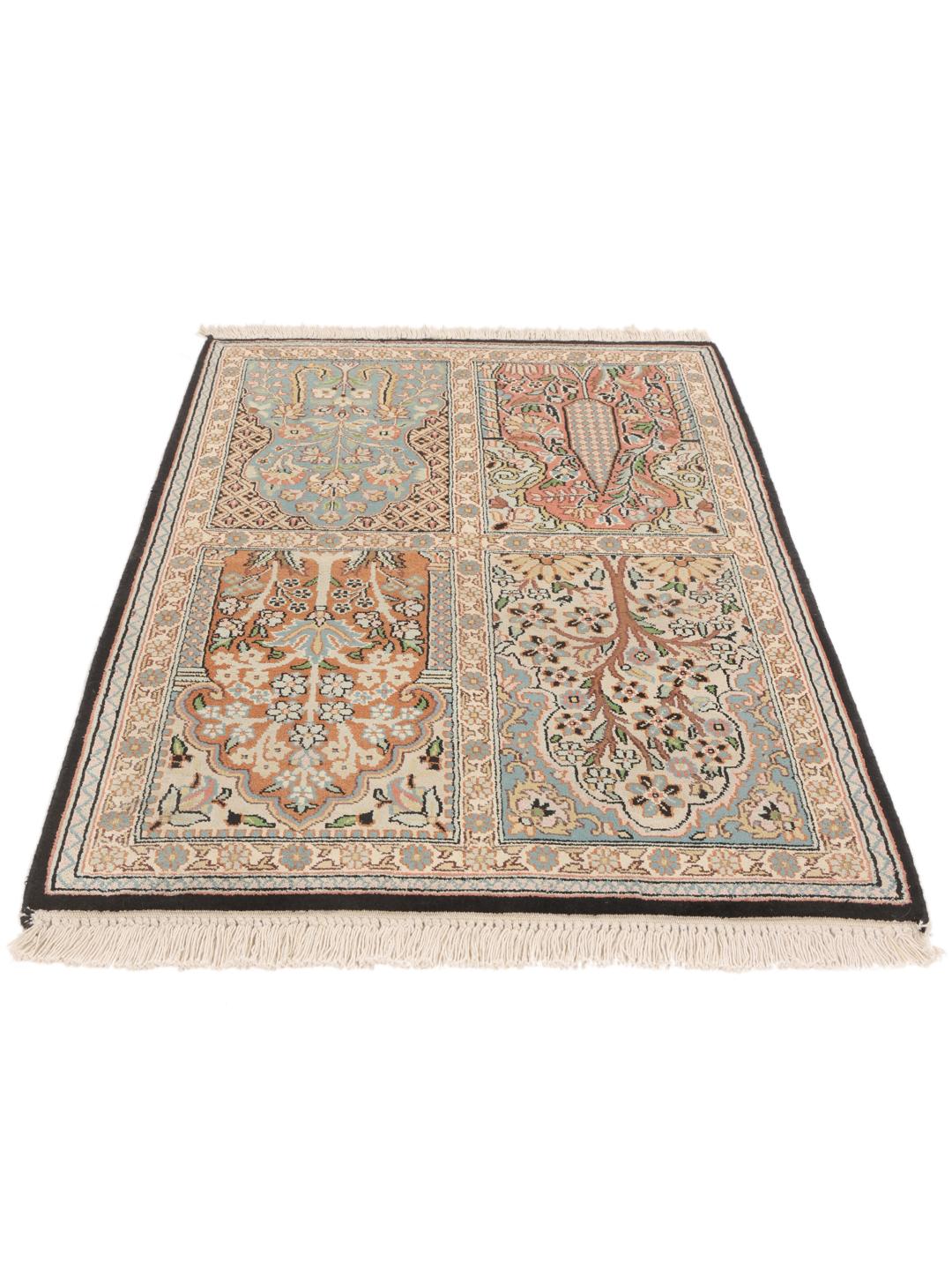
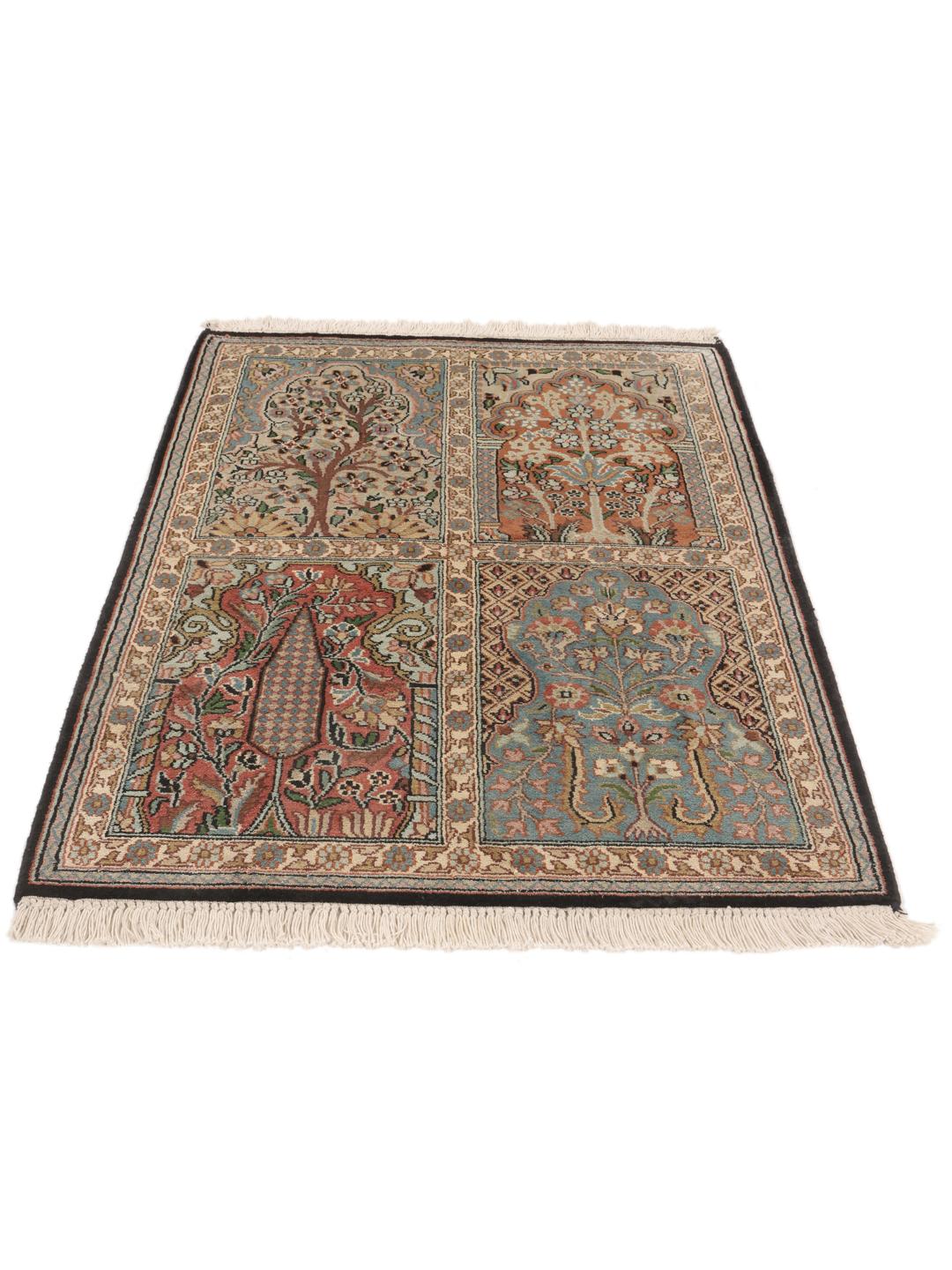
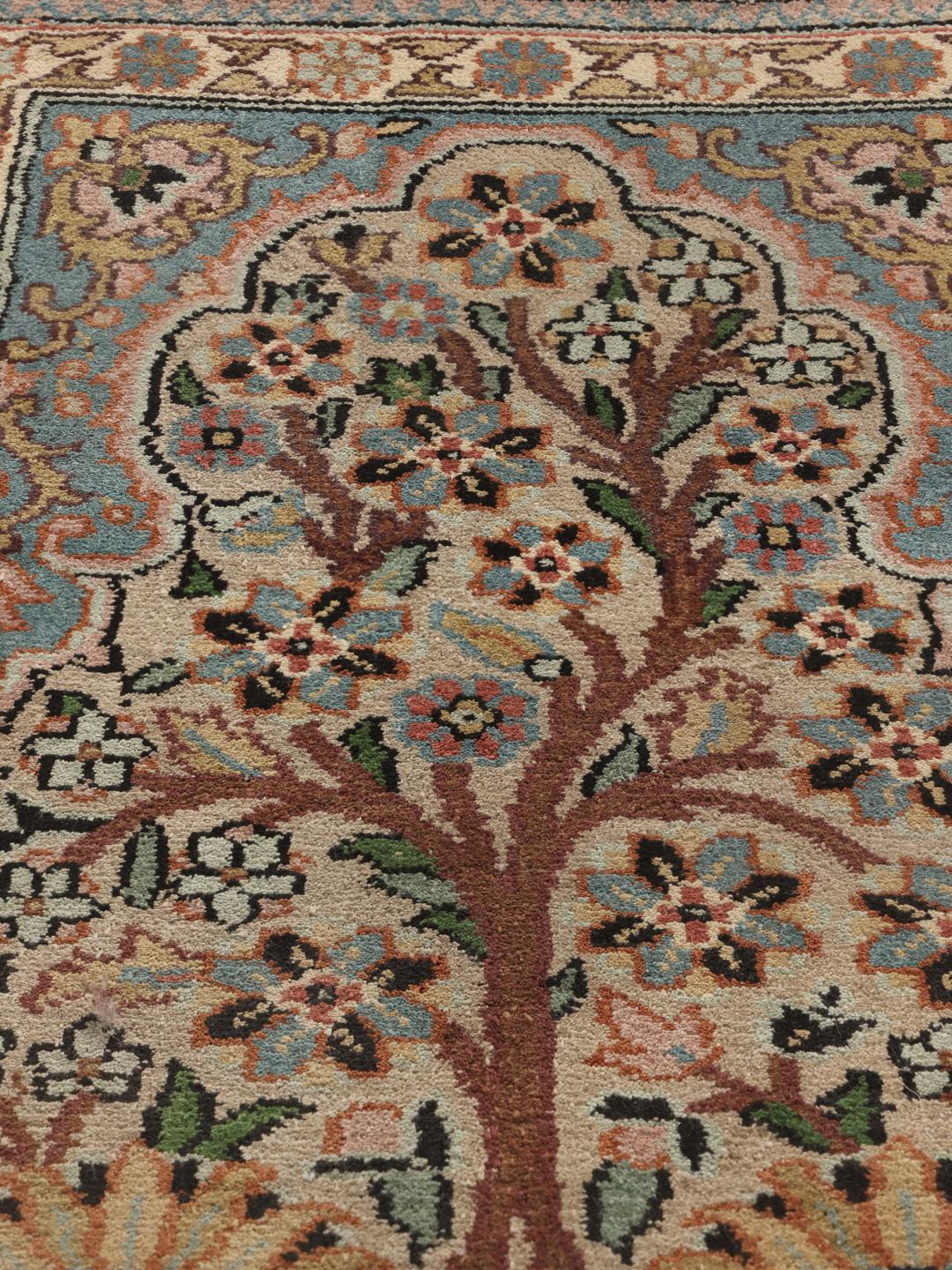
Visually, these rugs are defined by their sophisticated floral motifs, often drawing inspiration from the lush nature of the valley itself. You will frequently find depictions of trees, blooming flowers, and intricate vines, all framed by ornate decorative borders. This specific piece stands out for its unique panel design, where individual botanical scenes are organised into a cohesive, structured layout, showcasing the versatility of the Kashmir tradition.
Owning a Kashmir silk rug is a way of participating in a storied legacy of craft. These pieces are highly valued by collectors not only for their aesthetic appeal but for the immense human skill required to produce them. To possess such a rug is to hold a piece of regional history, representing a commitment to preserving traditional methods of artistry in a modern world.