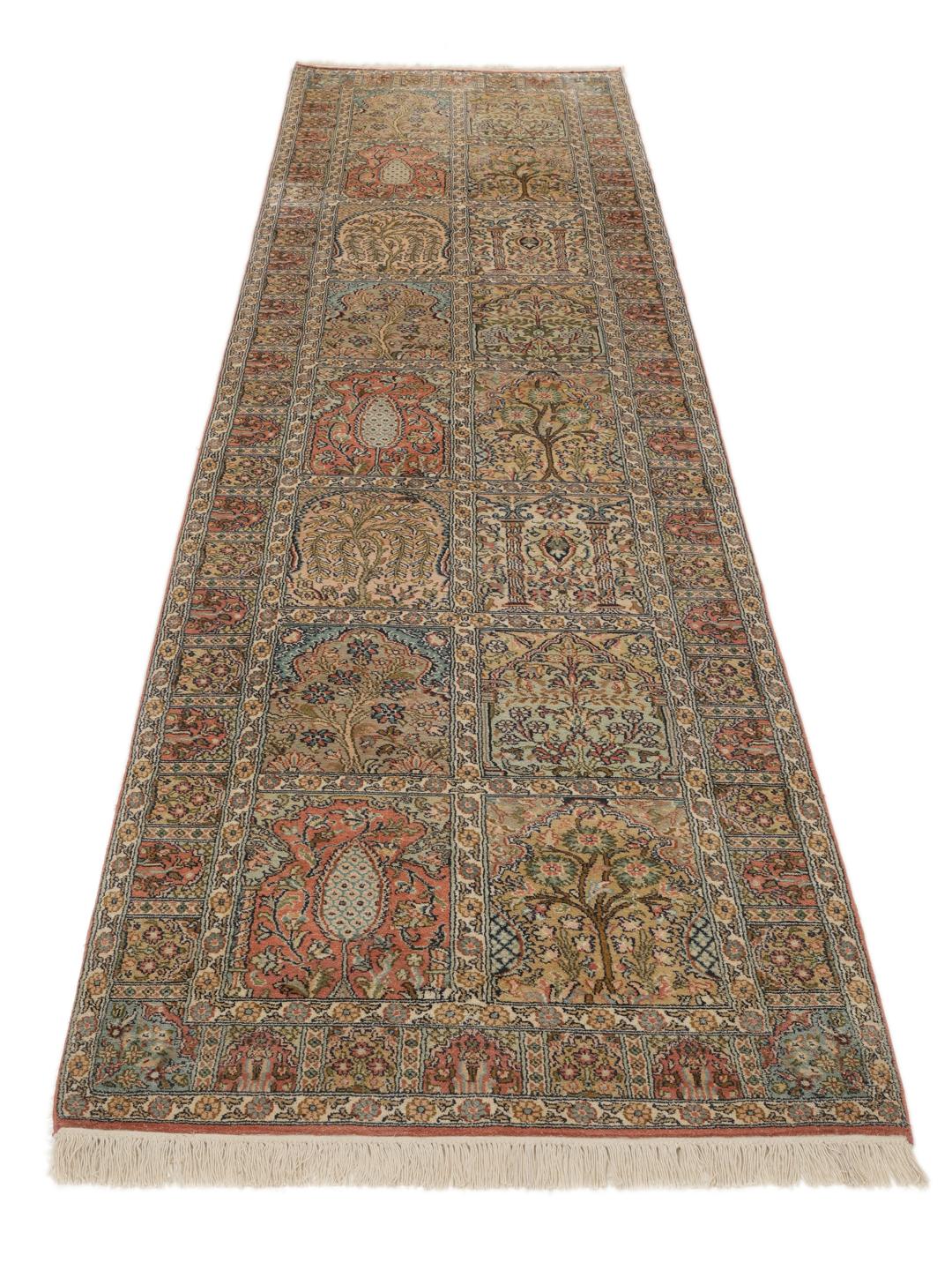
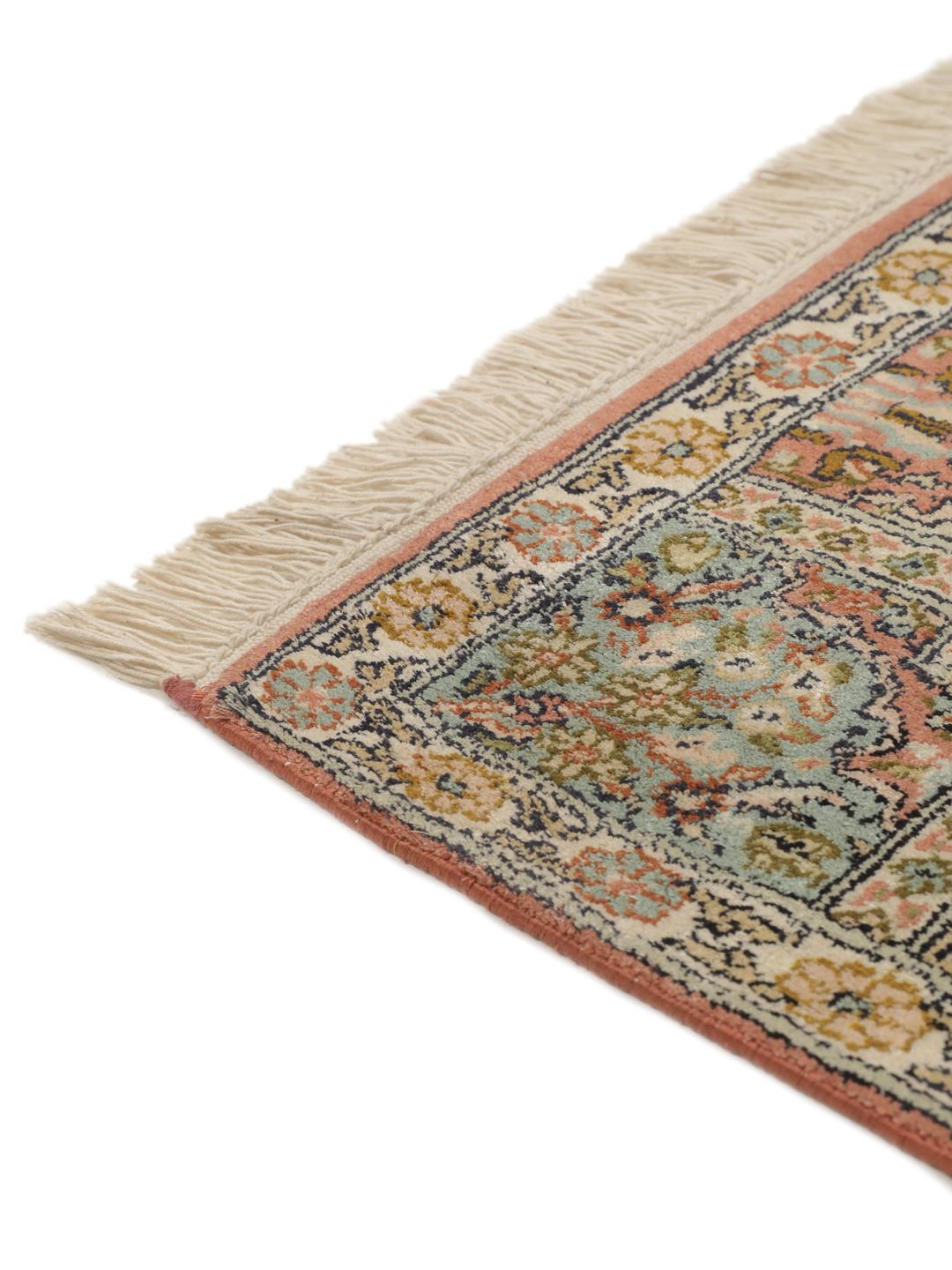
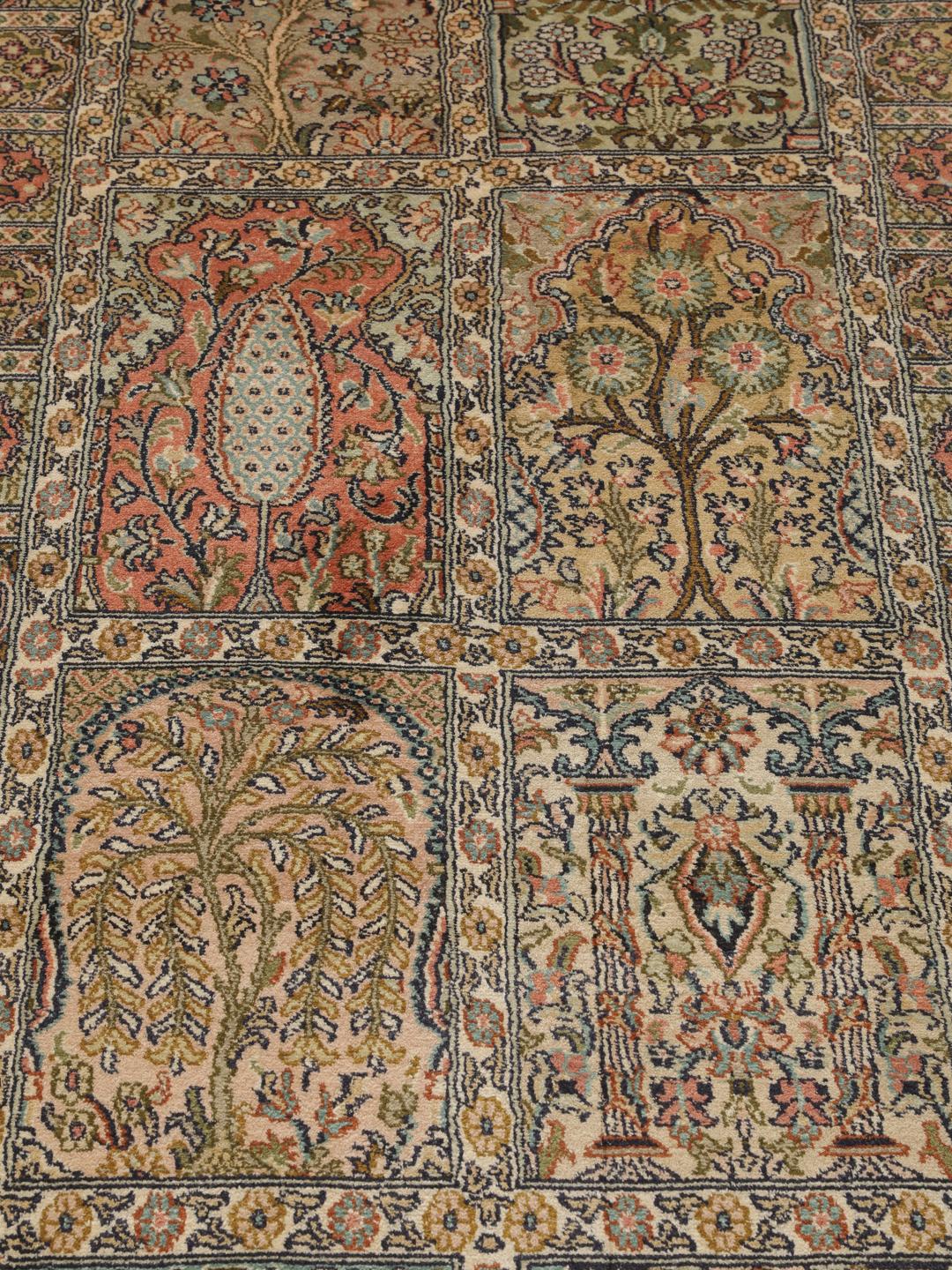
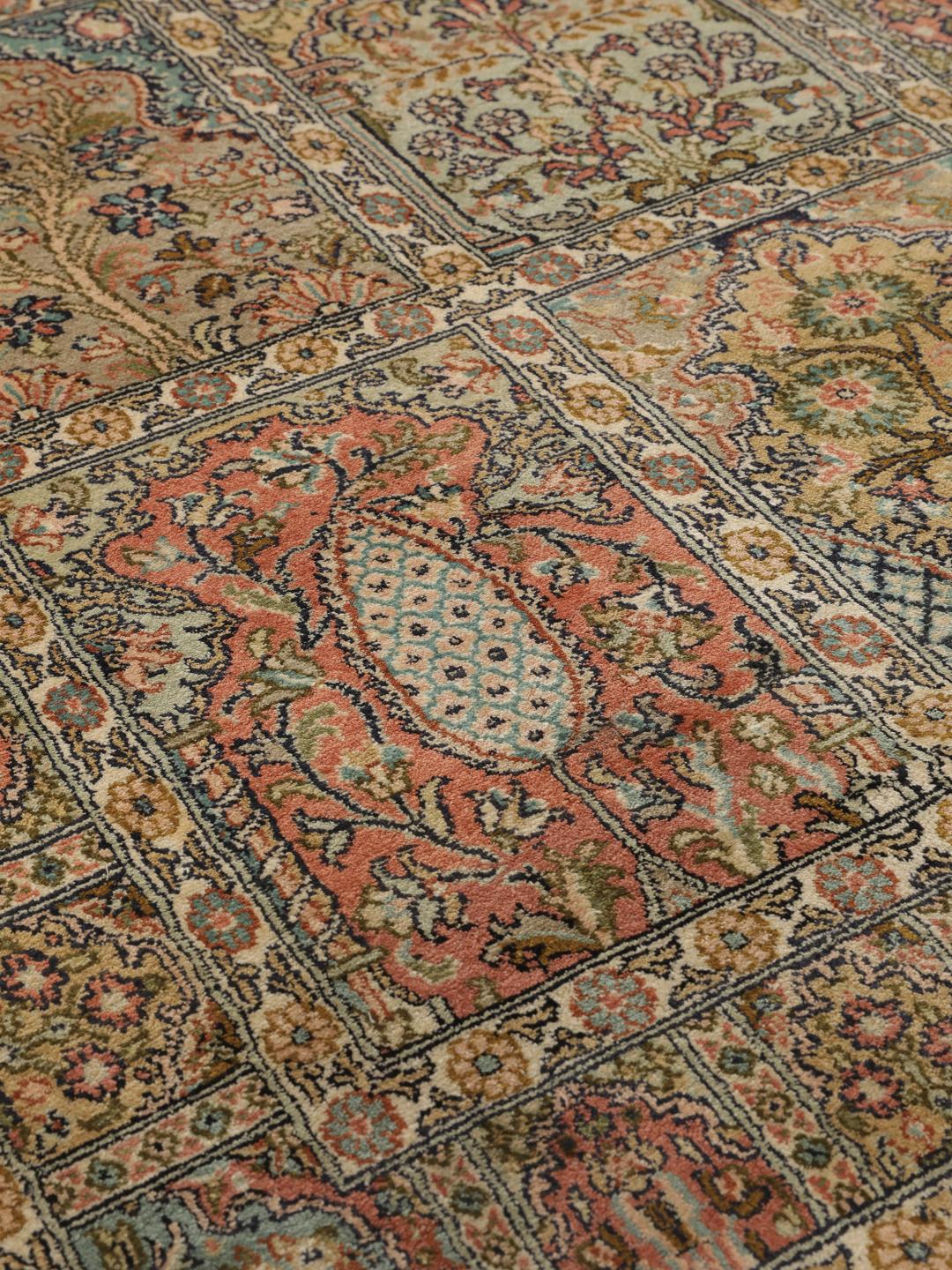
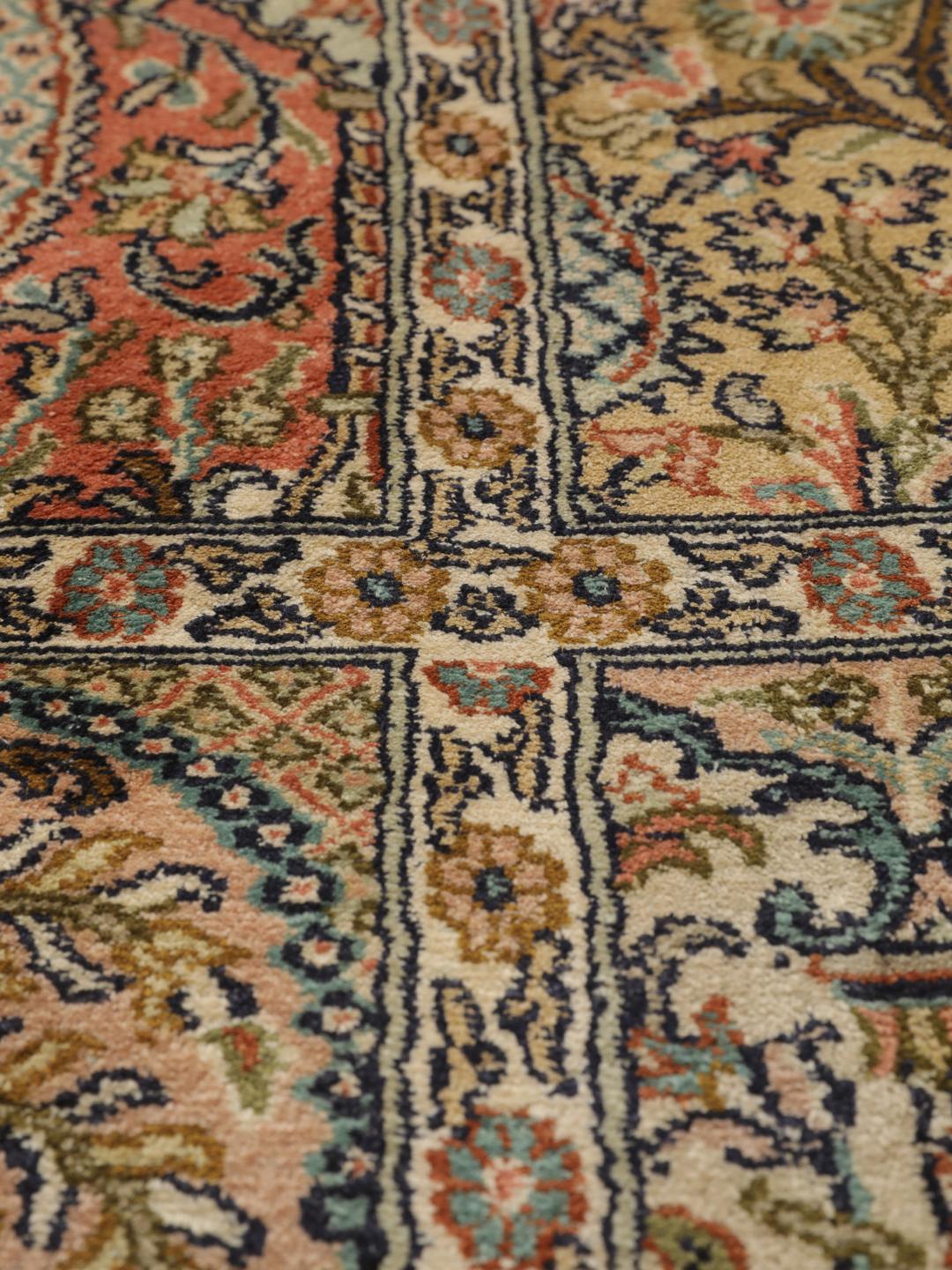
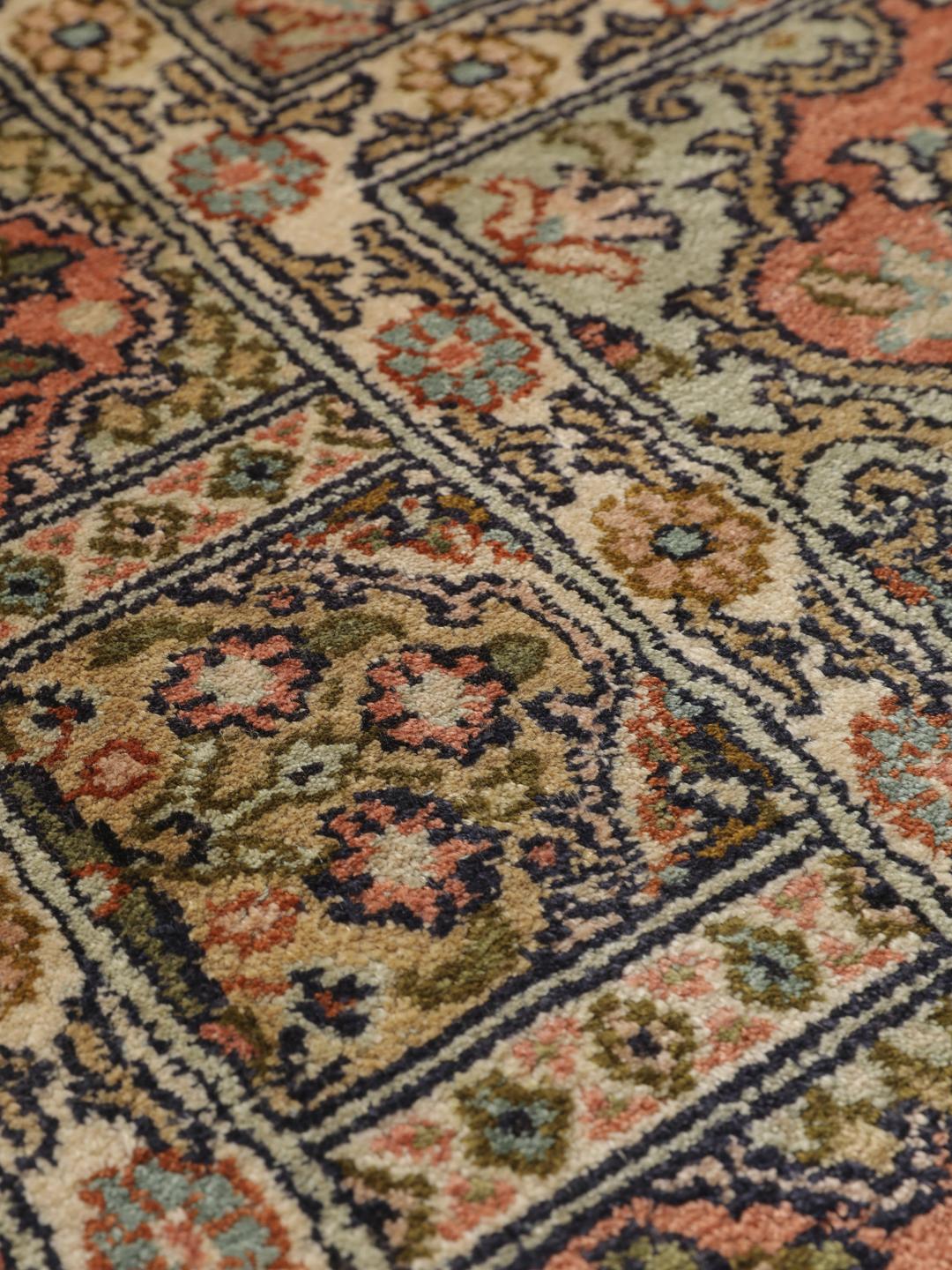
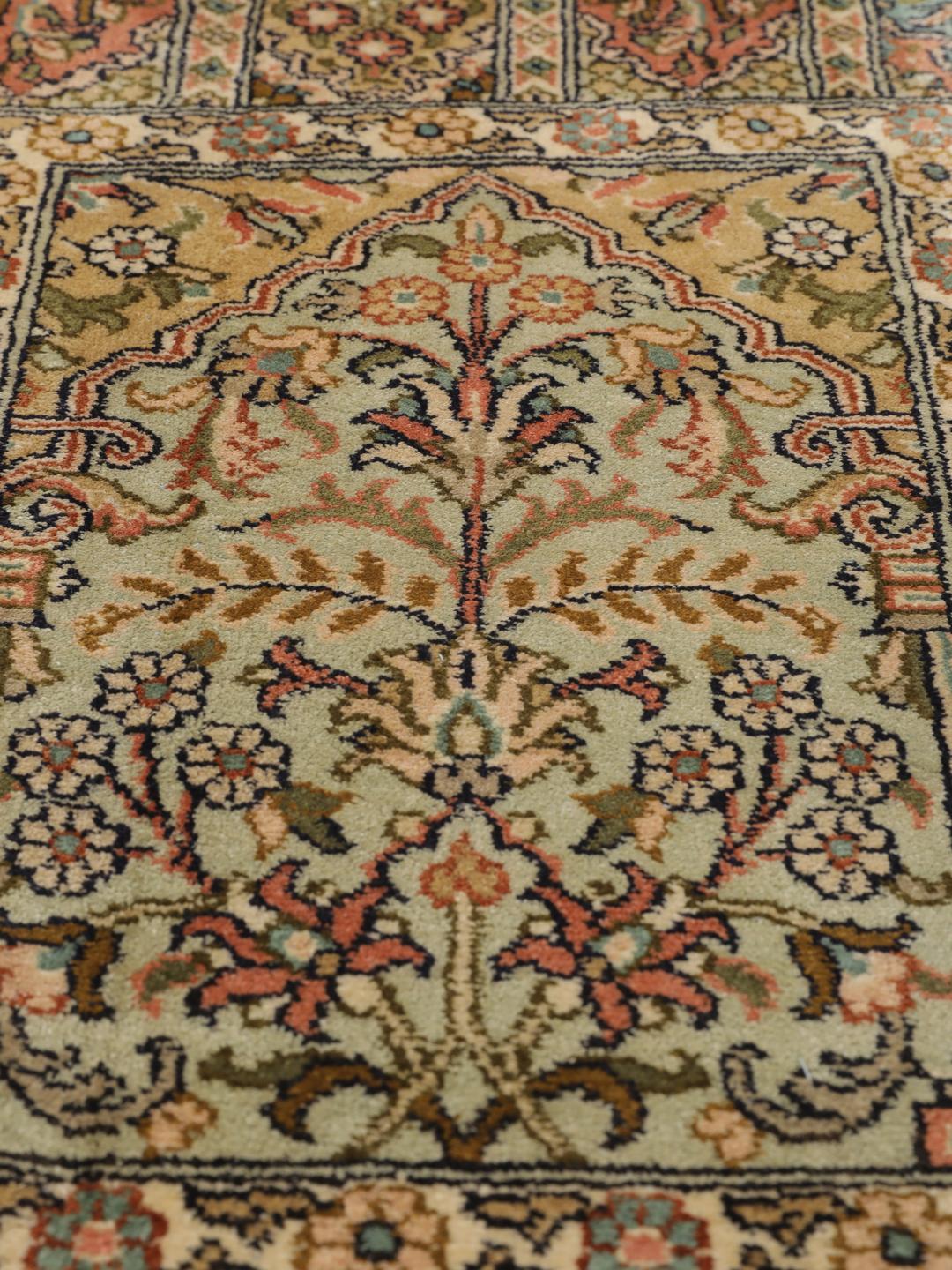
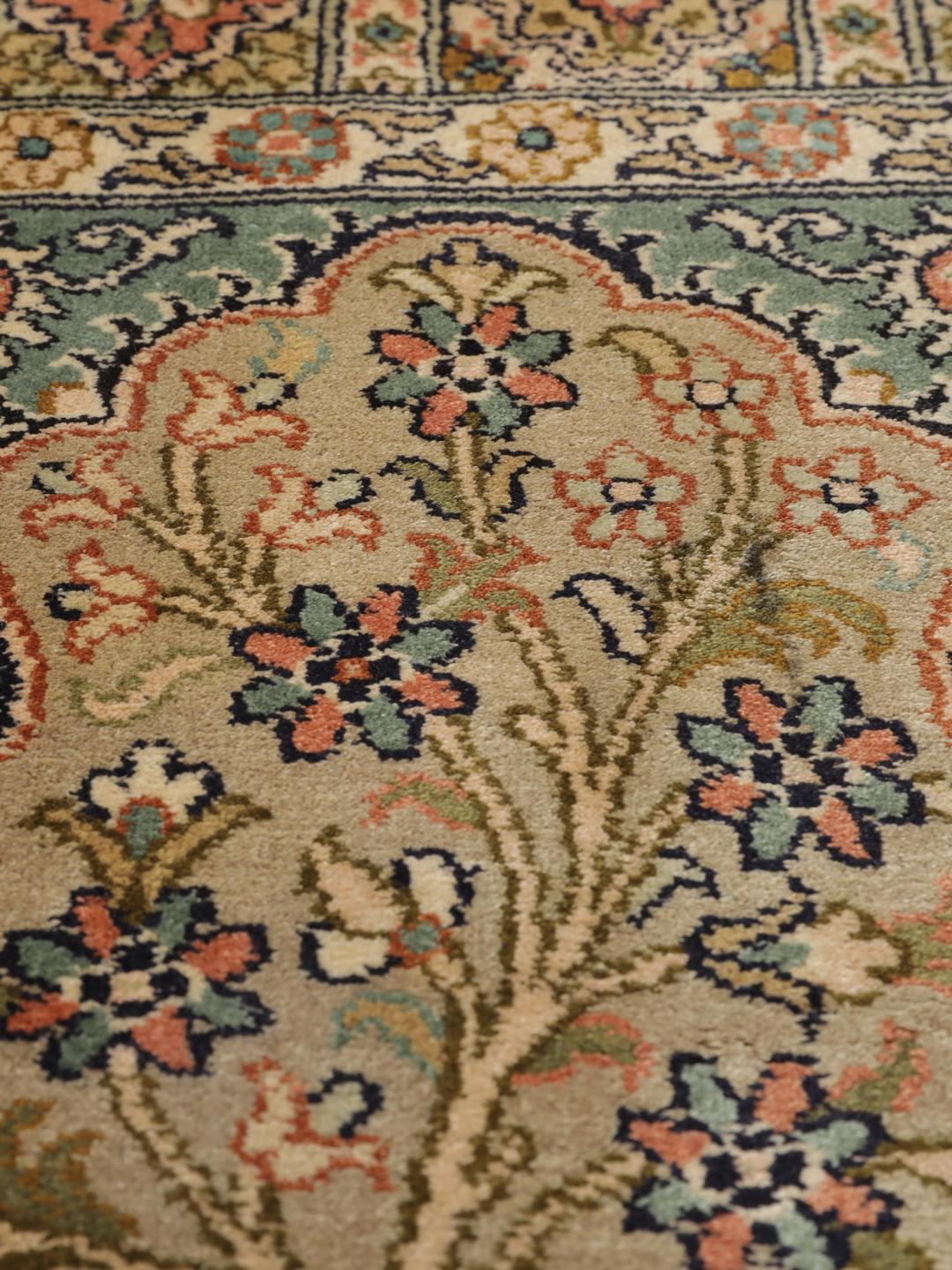
Kashmir silk rugs represent the pinnacle of weaving traditions in Northern India, a region historically influenced by the artistic exchange along the Silk Road. The craft of weaving these rugs was introduced to the valley of Kashmir centuries ago, blending Middle Eastern techniques with the distinct aesthetic sensibilities of the Indian subcontinent. Over time, this synthesis created a unique style characterised by extreme detail and the use of fine, lustrous silk.
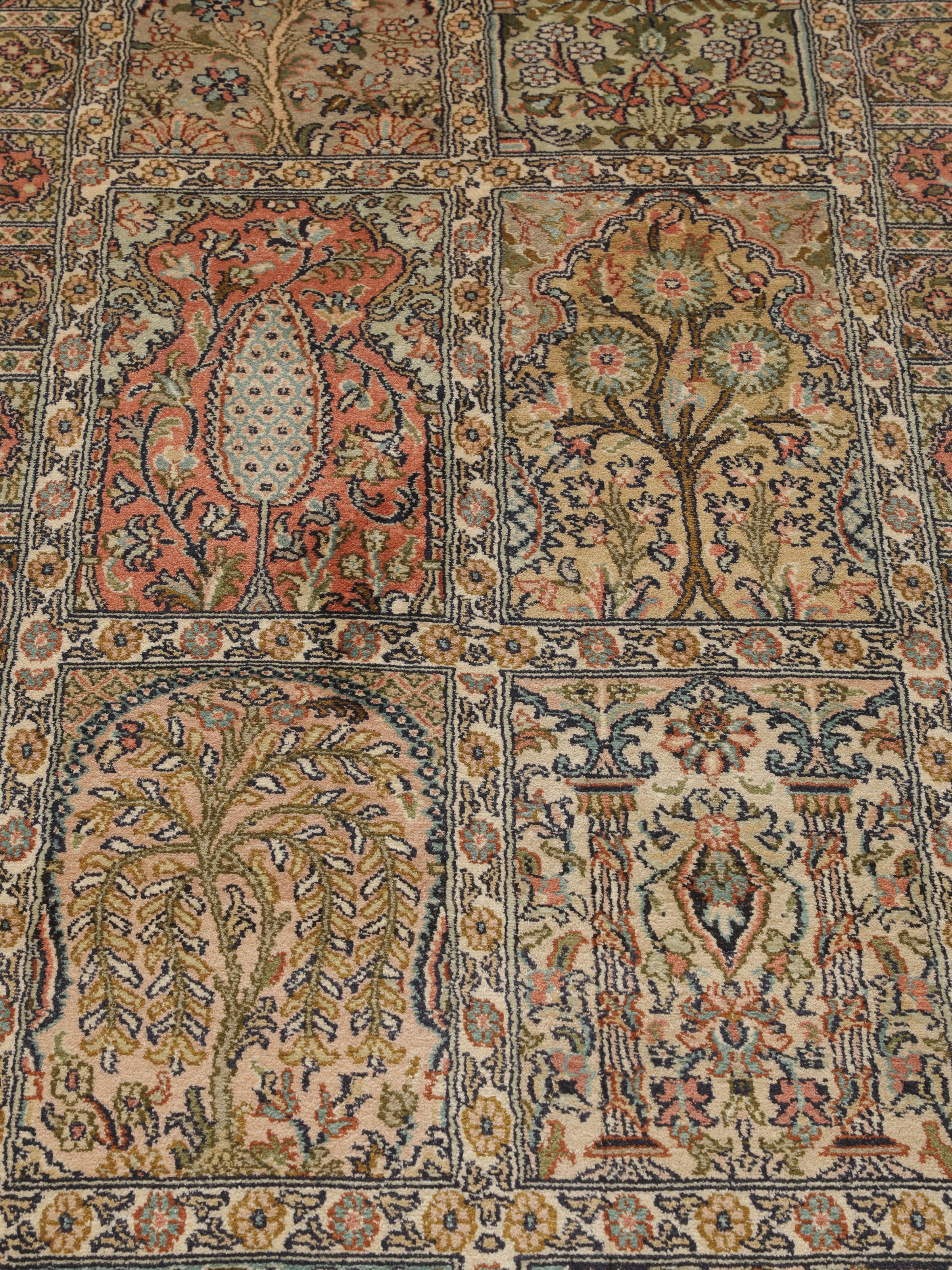
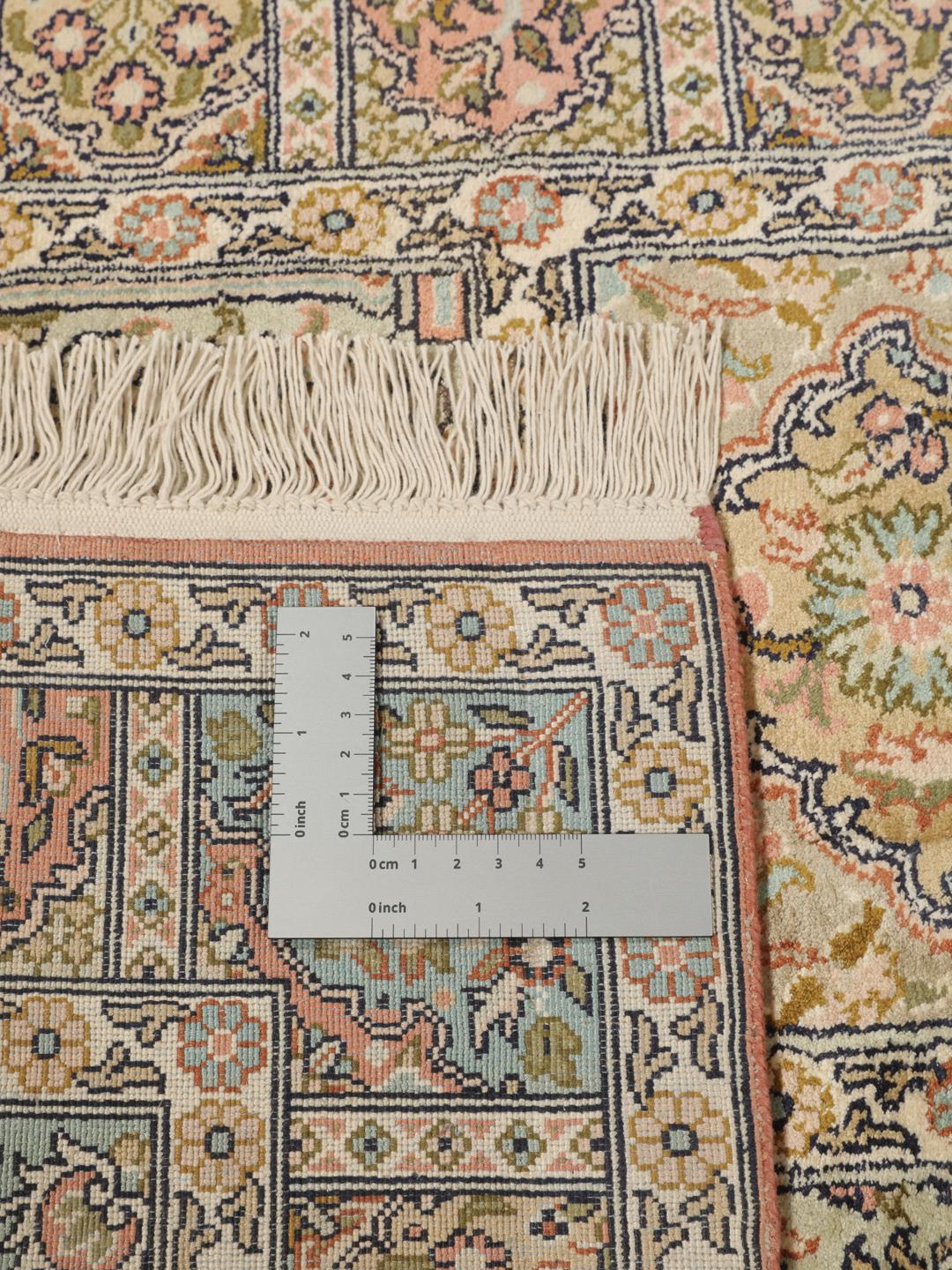
The term Kashmir silk refers to the specific style of hand-knotting that utilises thin, high-quality silk threads to achieve a remarkably dense pile. This method is fundamental to the rug's identity, as it allows weavers to execute highly intricate, curvilinear patterns that would be impossible with coarser materials. The fineness of the knotting not only defines the visual clarity of the designs but also contributes to the rug's legendary durability and soft, almost velvet-like texture.
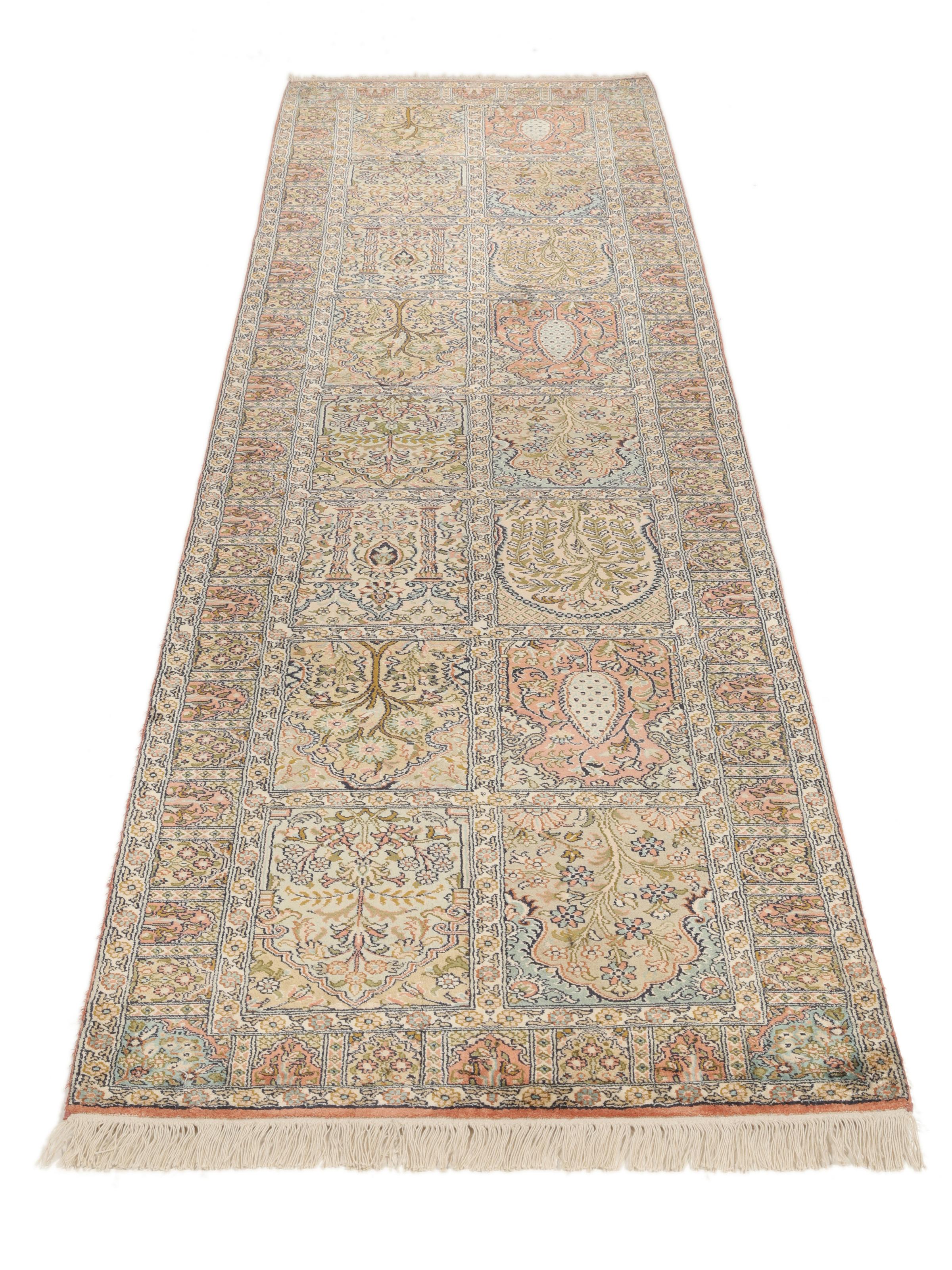
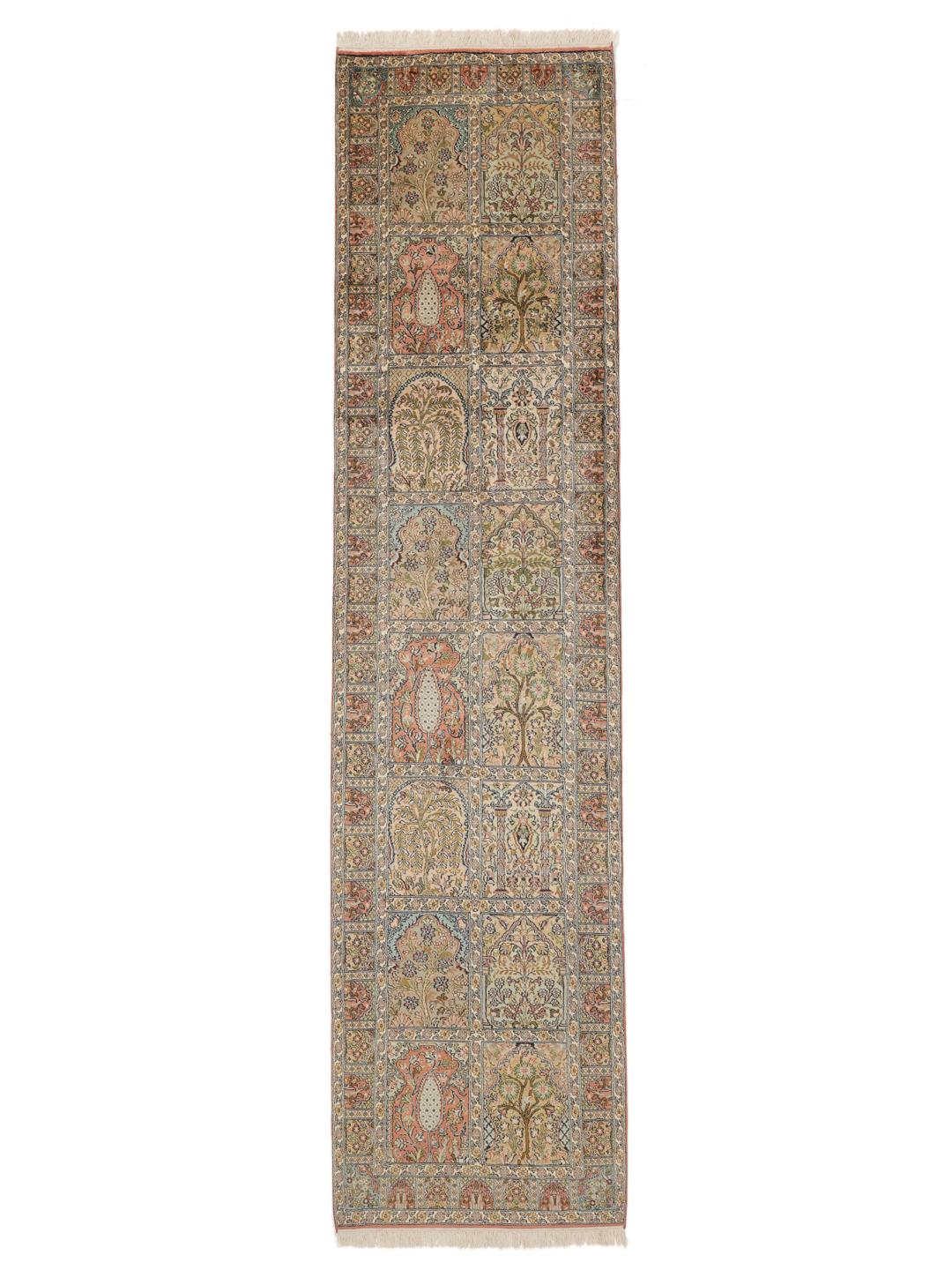
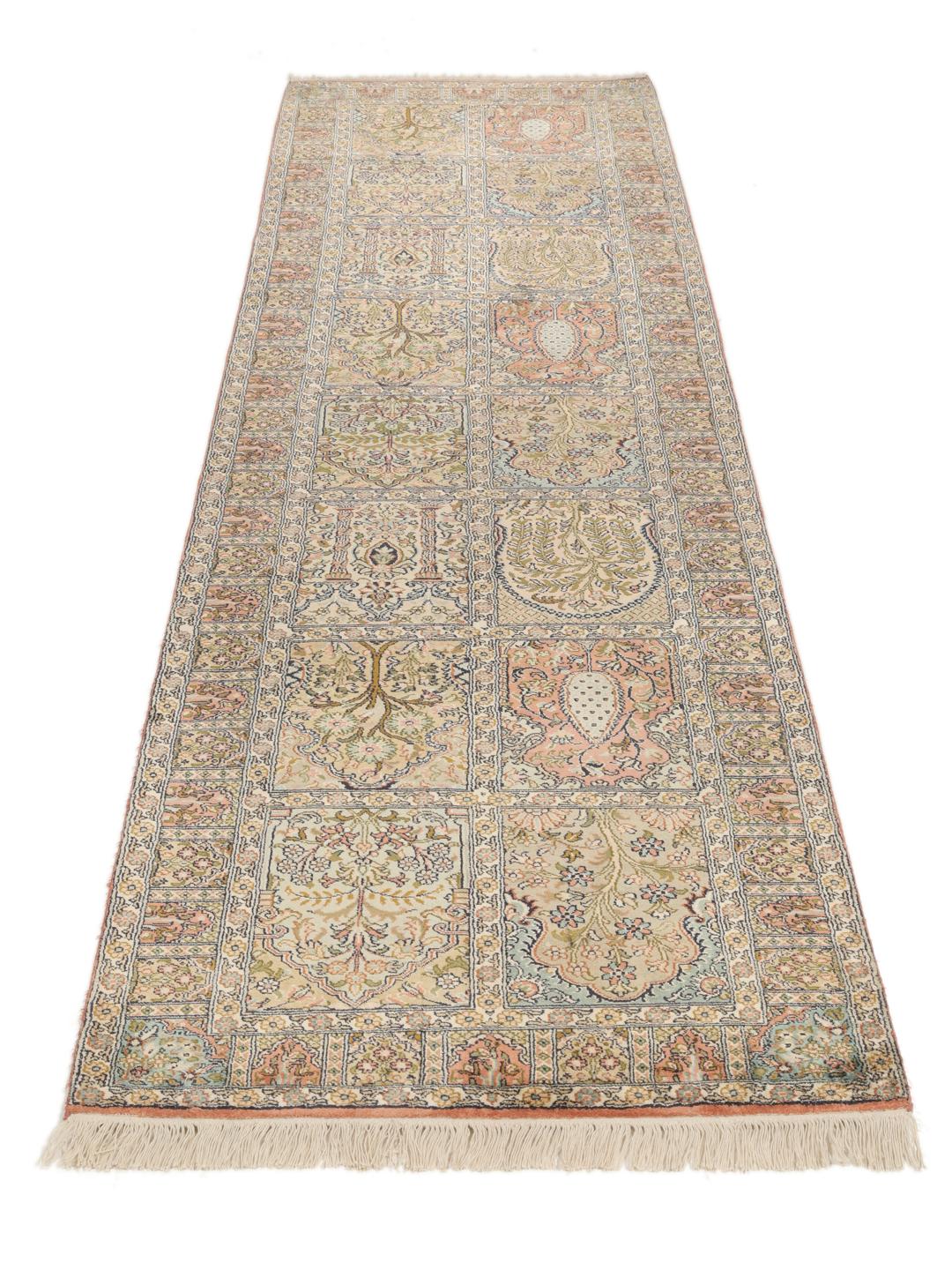
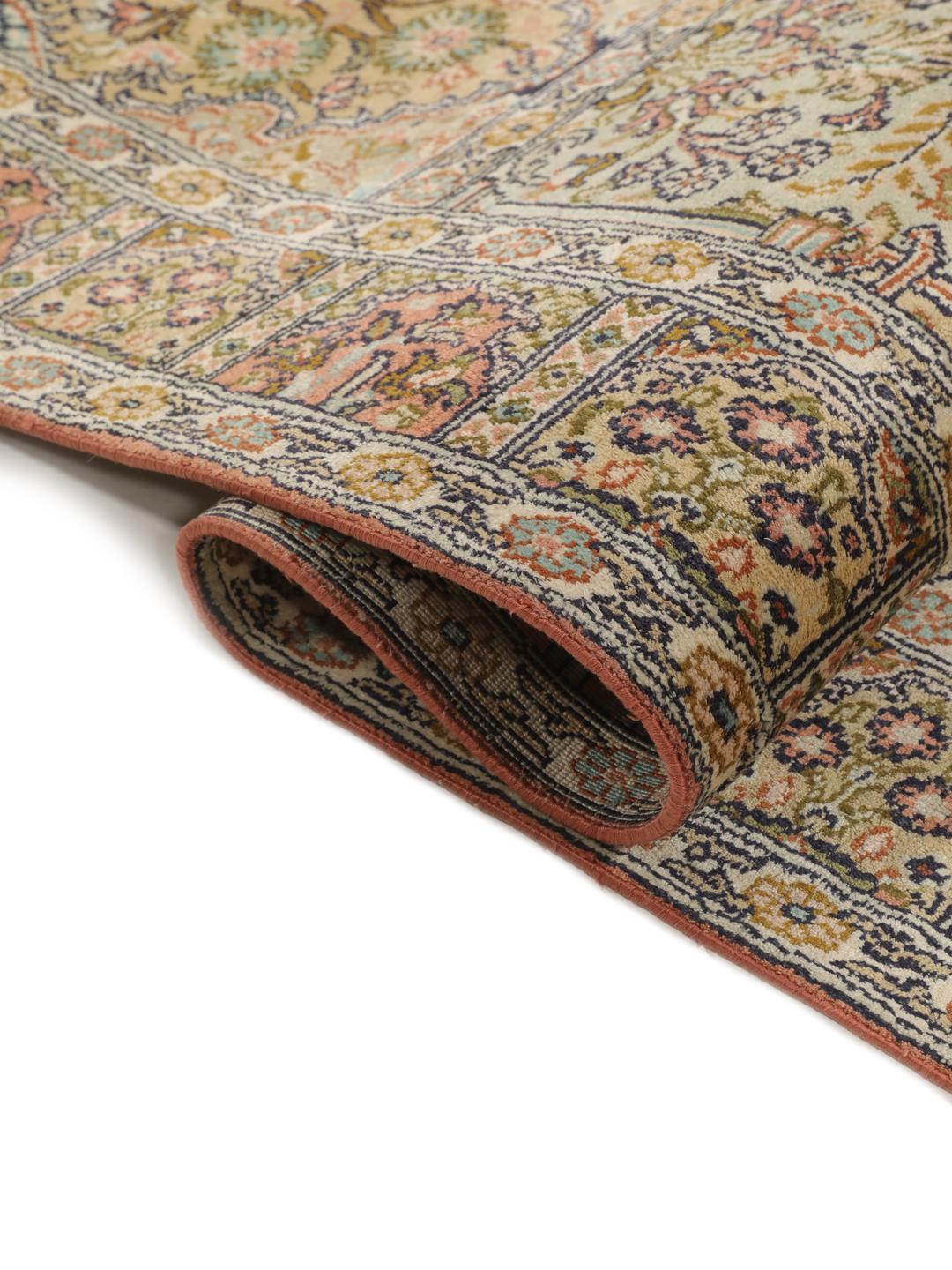
Signature design elements in these rugs often include elaborate floral patterns, tree-of-life motifs, and sophisticated borders that draw inspiration from traditional Mughal miniature paintings. The use of panel layouts, as seen in this runner, is a classic feature that frames various botanical scenes, creating a sense of order and balance. These motifs are not merely decorative but are deeply rooted in the cultural history of the region, symbolising prosperity, growth, and the beauty of the natural world.
Collecting a genuine Kashmir silk rug is an investment in heritage and human ingenuity. These pieces are highly valued by collectors for their technical complexity and the way they bridge the gap between traditional craft and modern interior design. Owning one is a way to preserve a living history, as each rug carries the signature of the weaver's patience and the storied traditions of a region that has perfected the art of silk weaving over many generations.