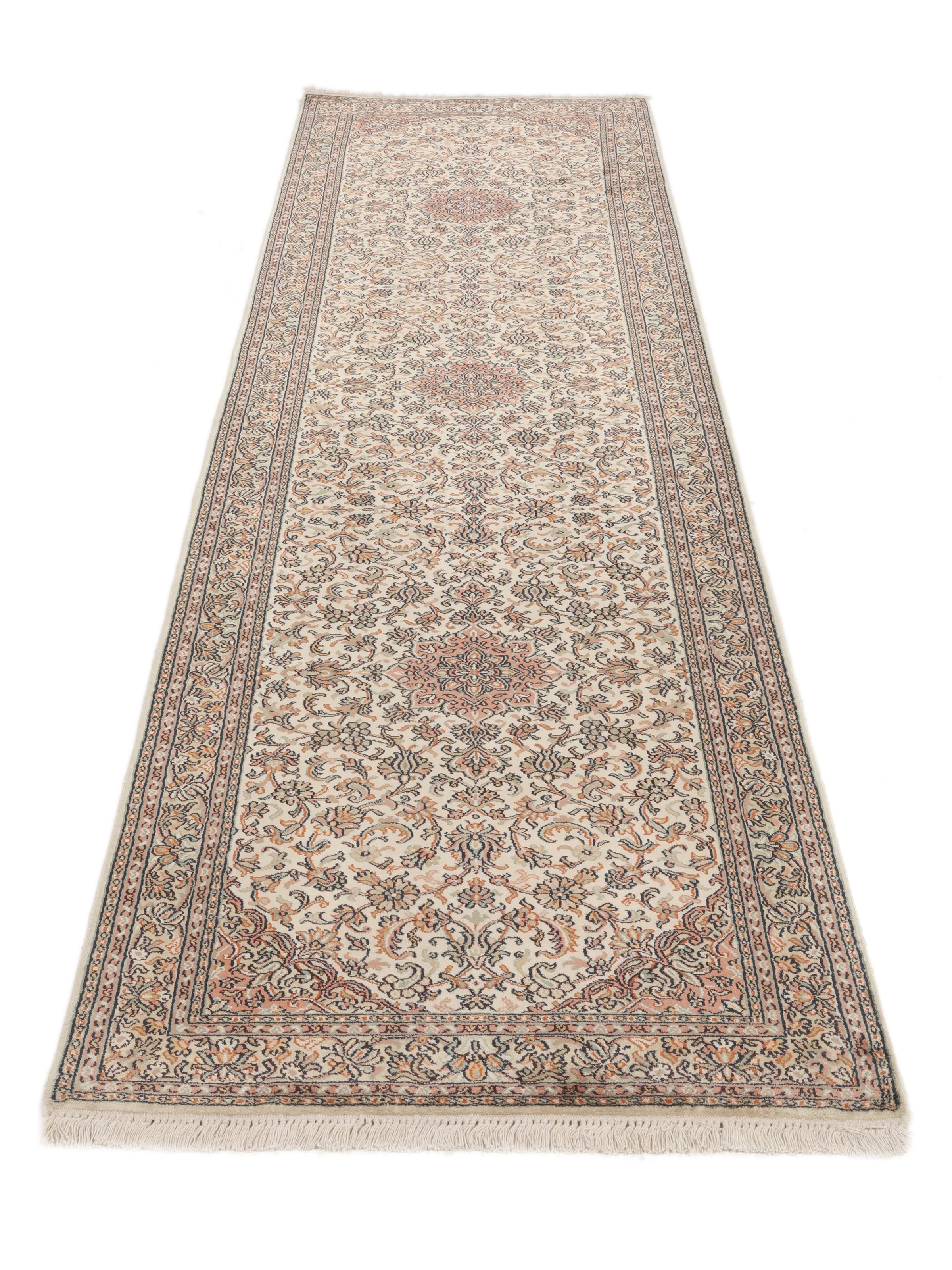
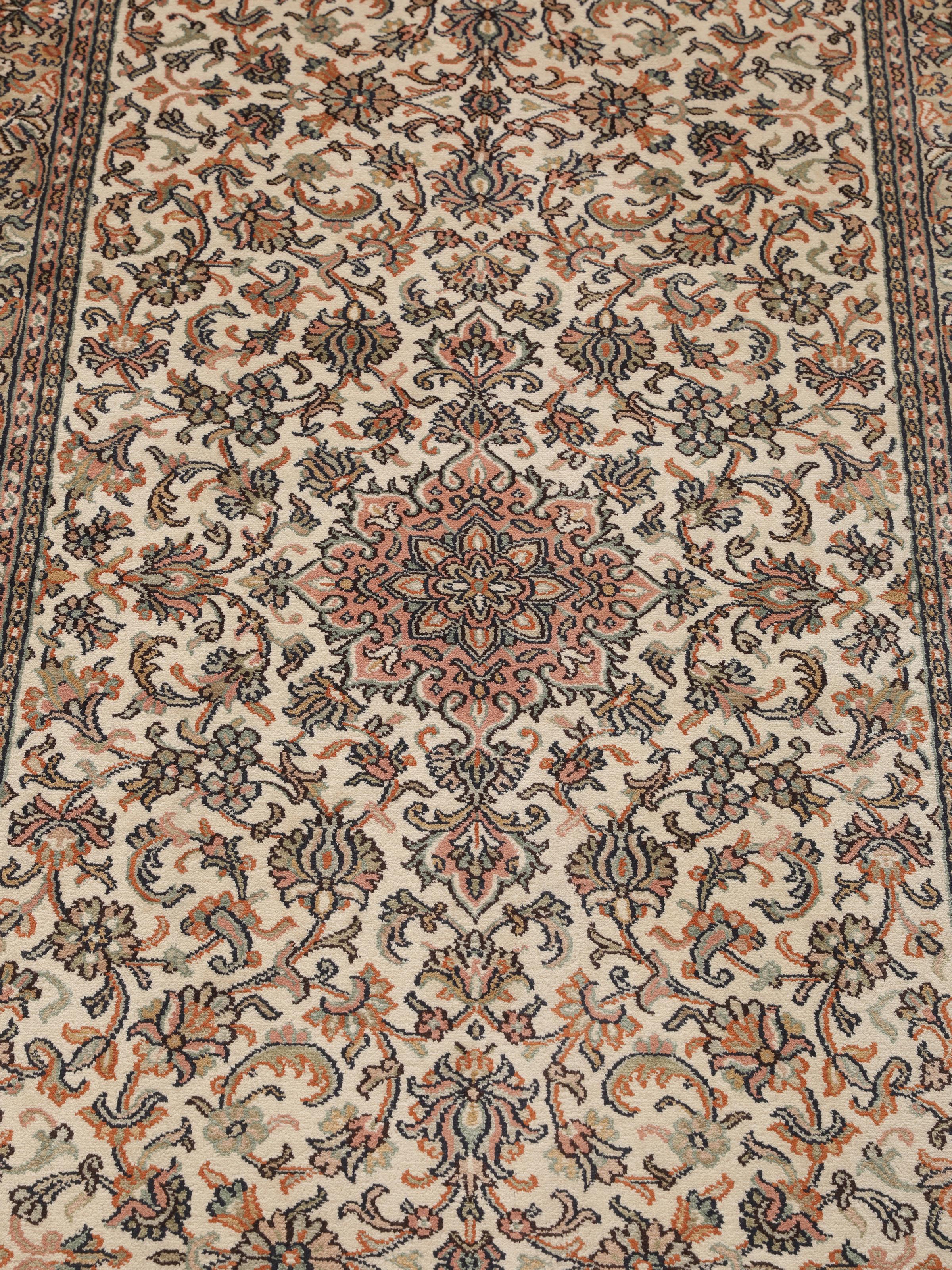
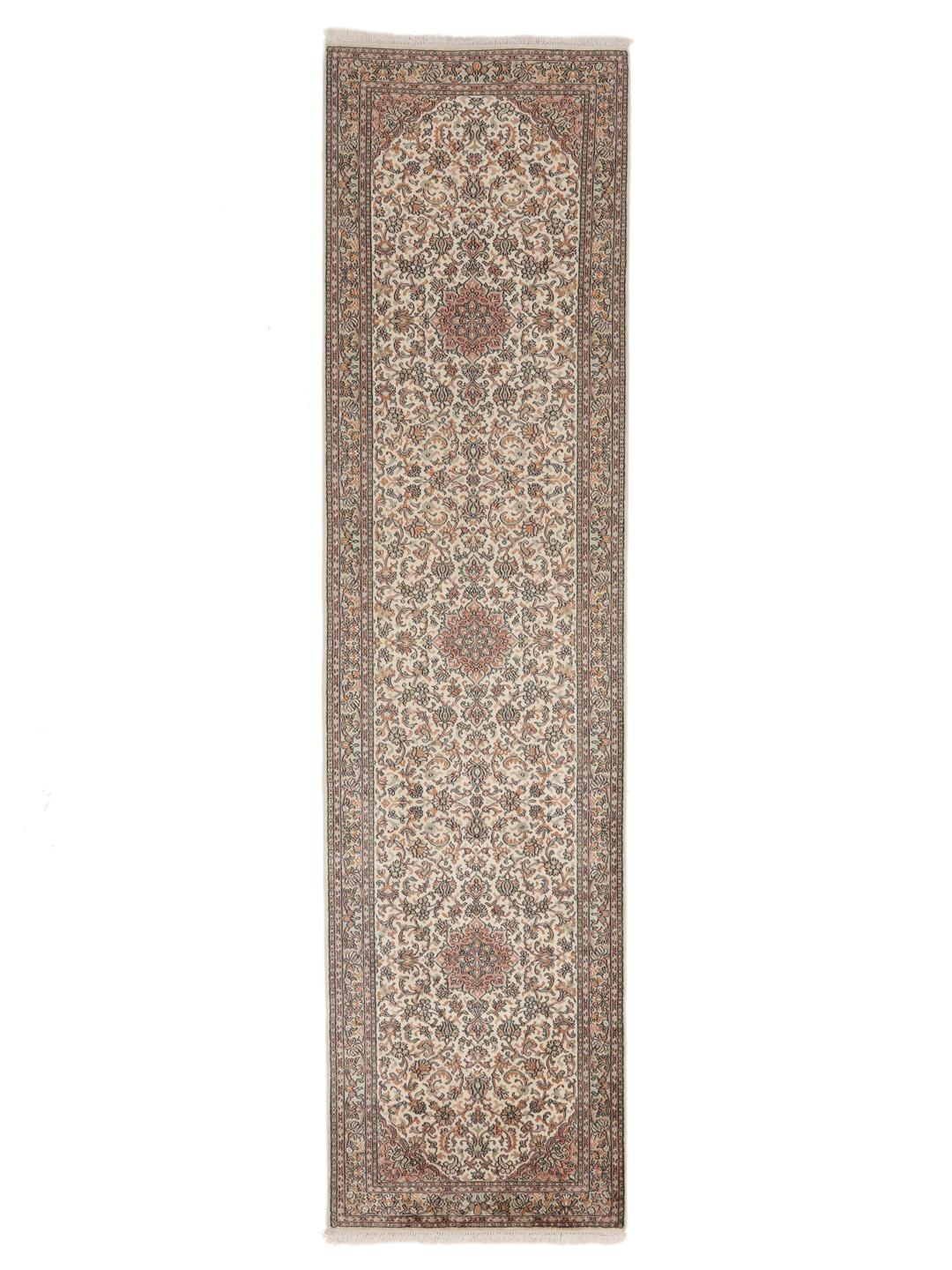
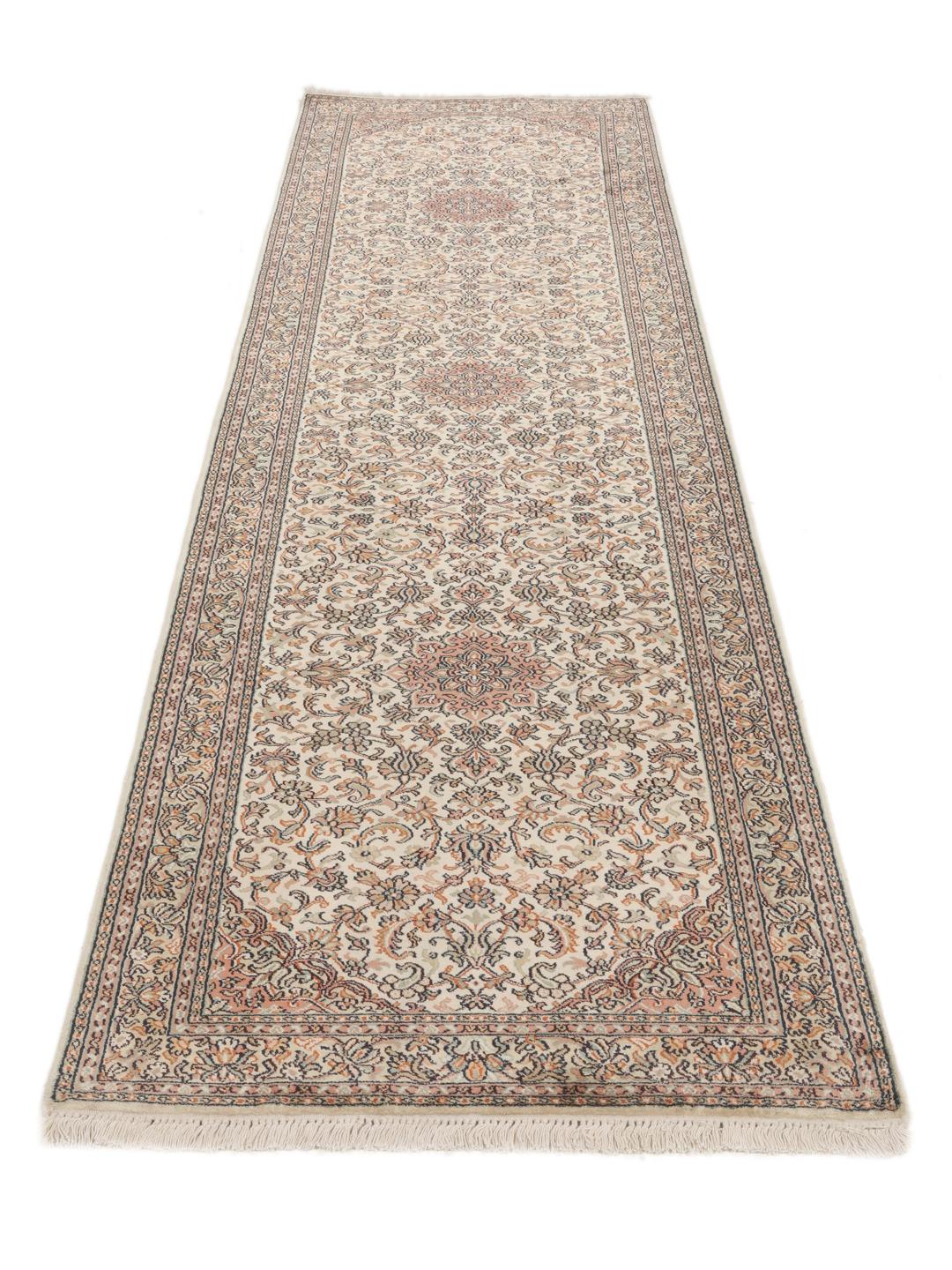
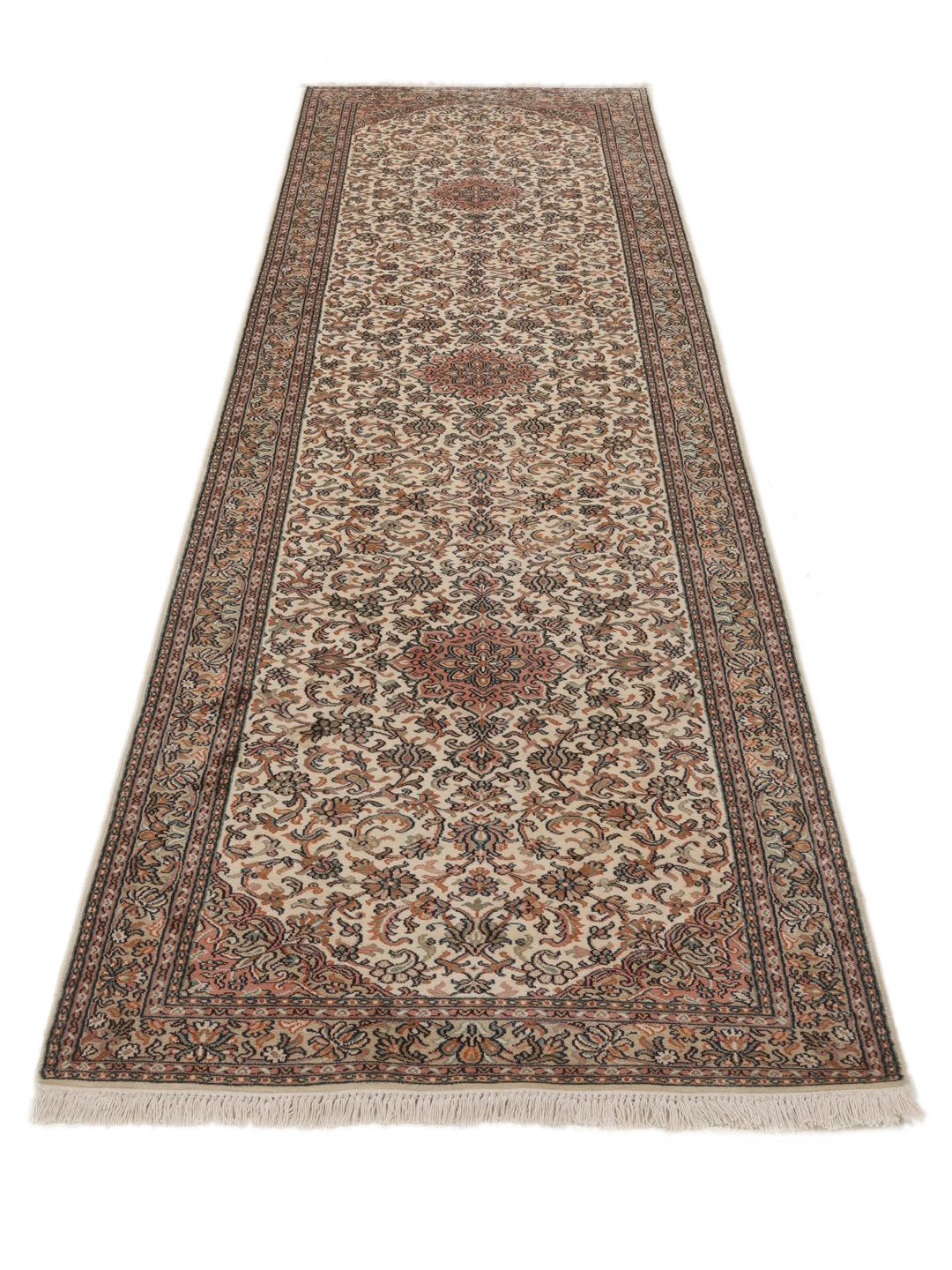
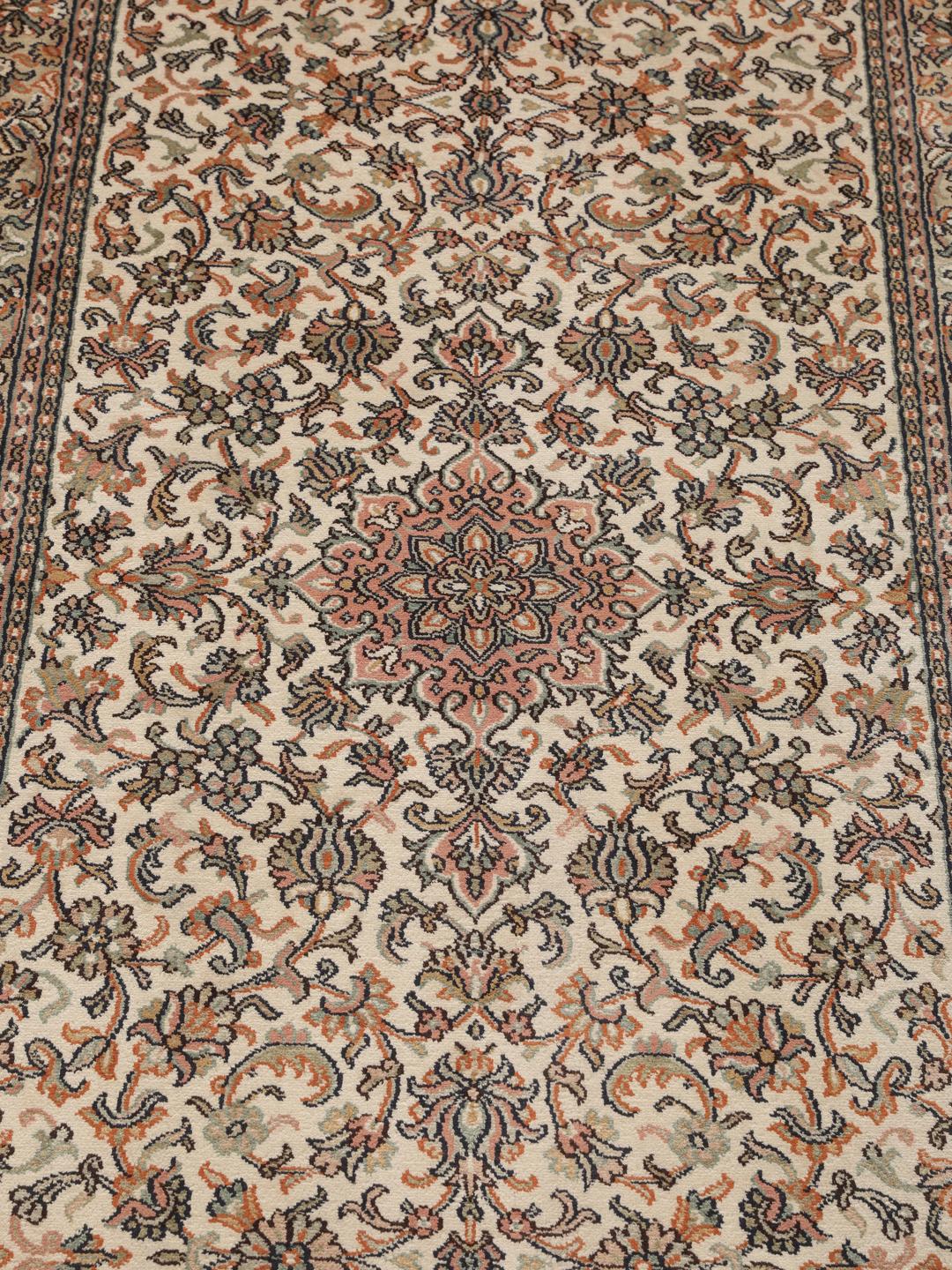
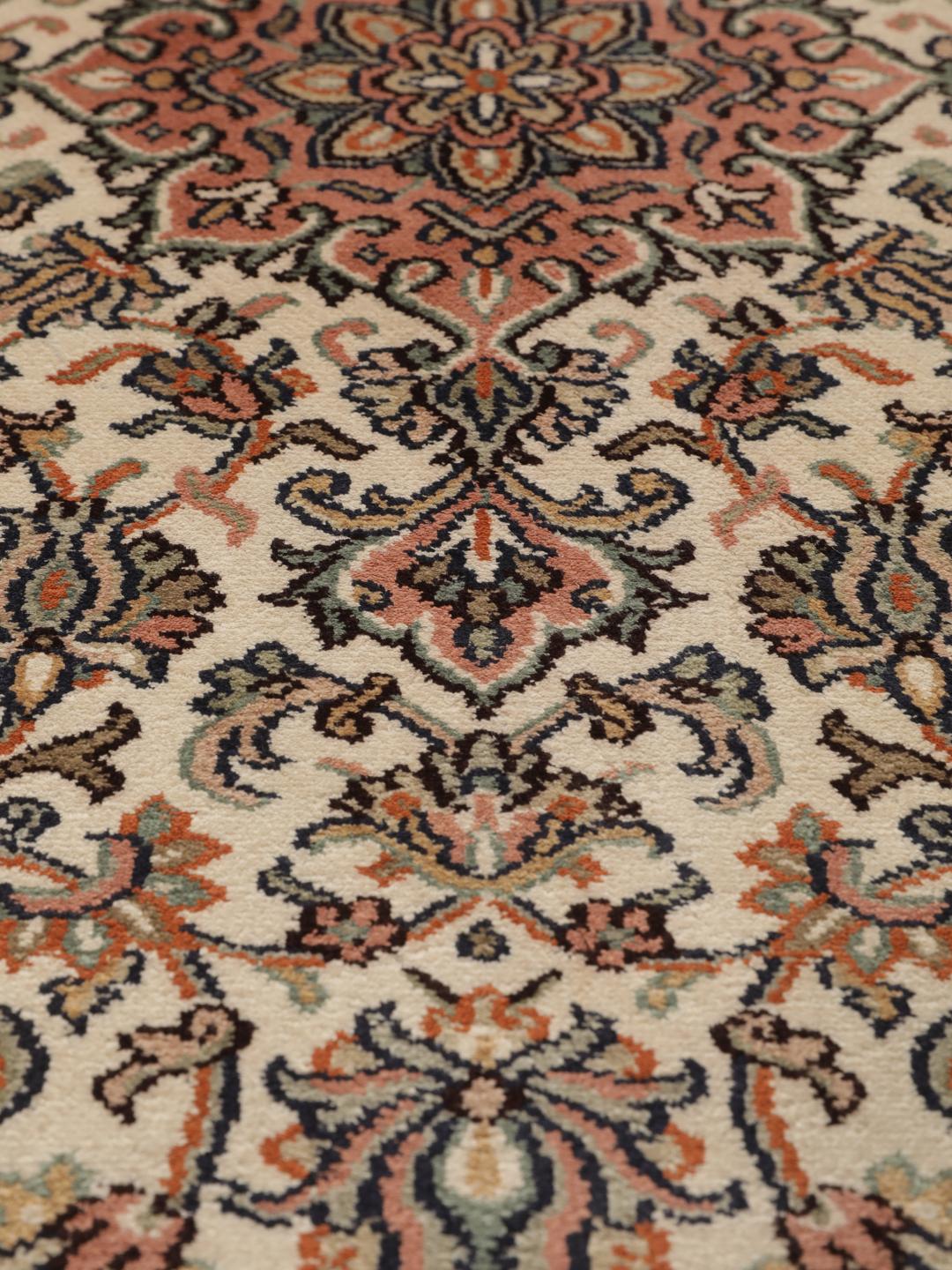
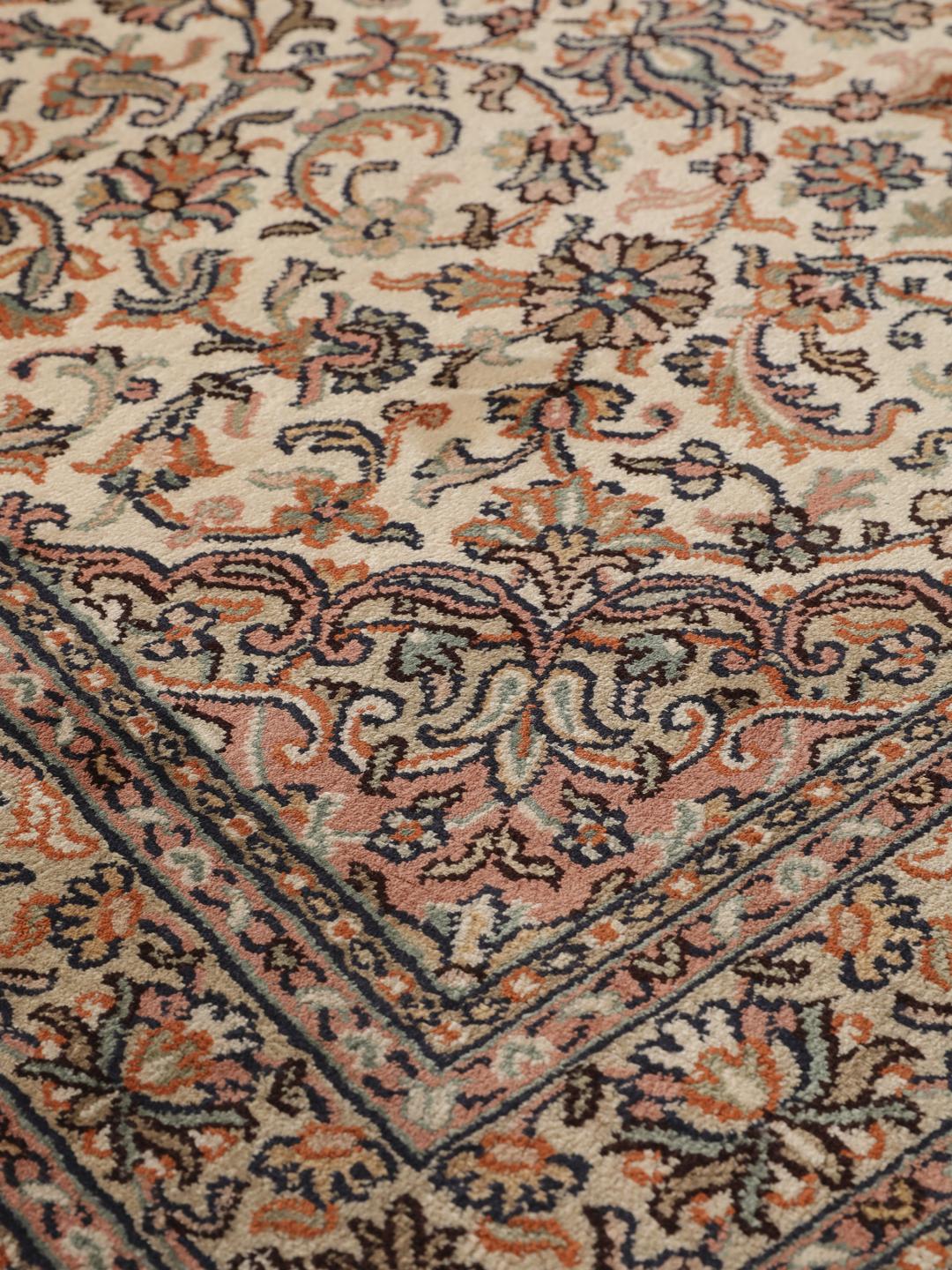
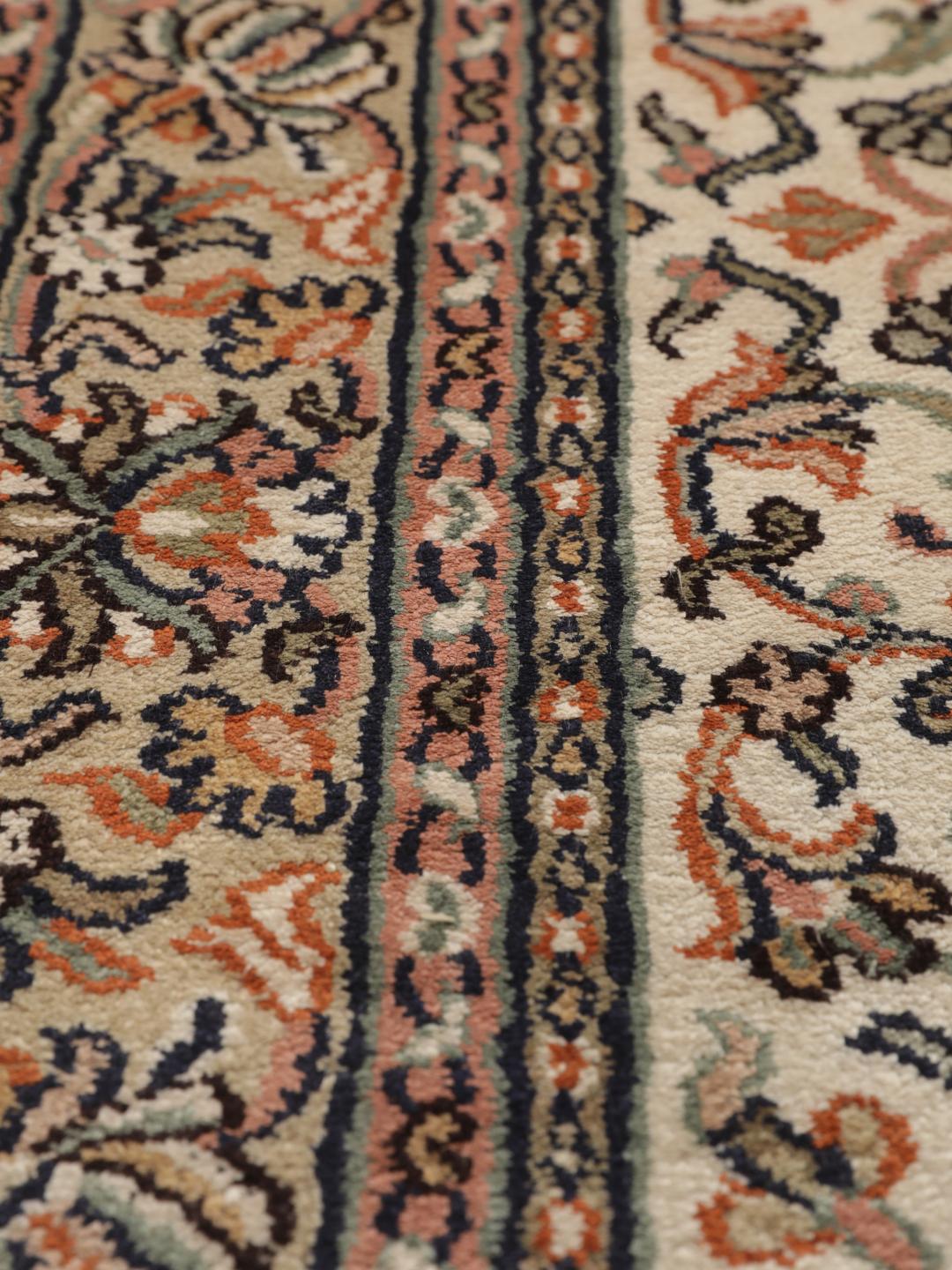
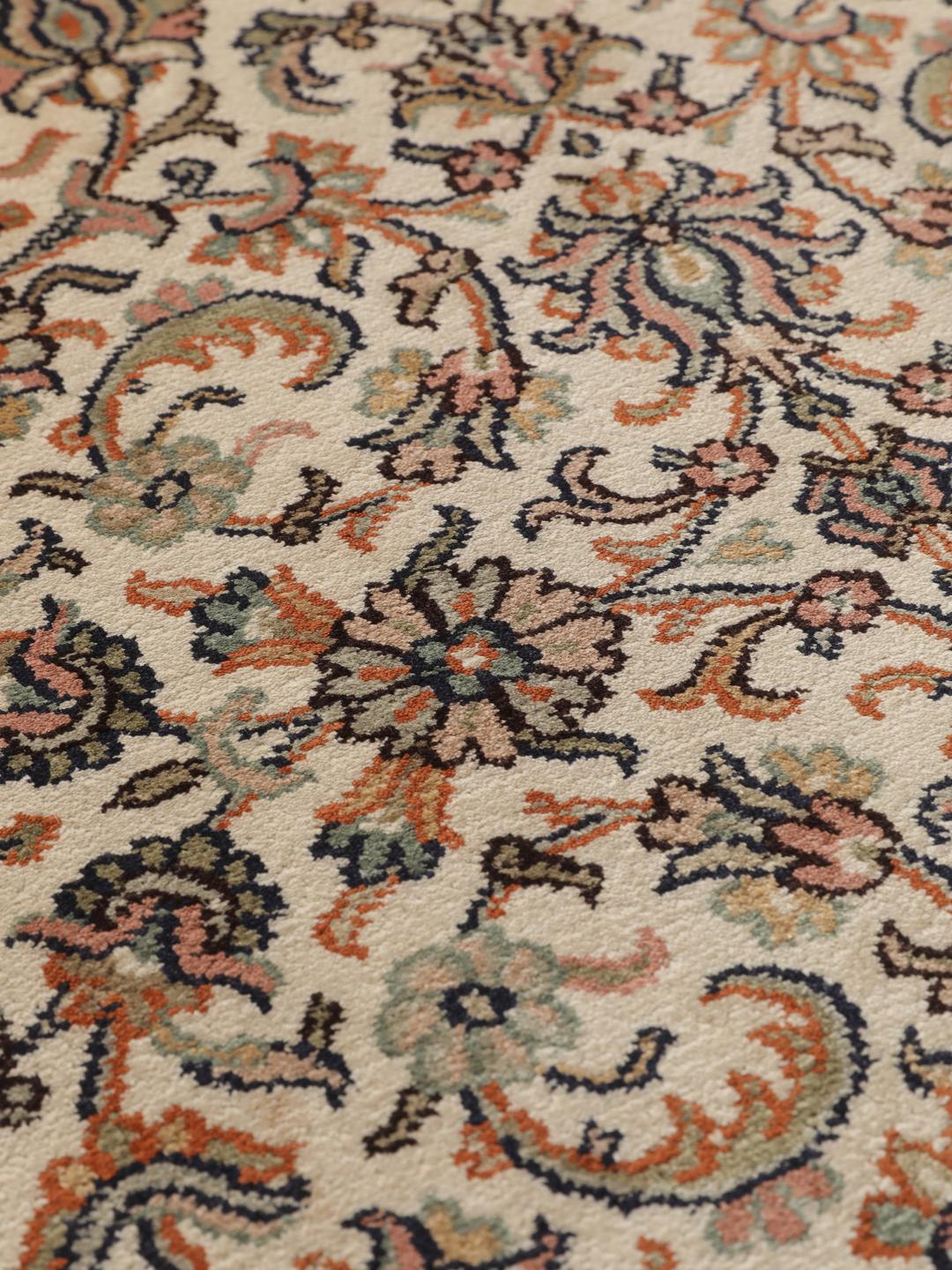
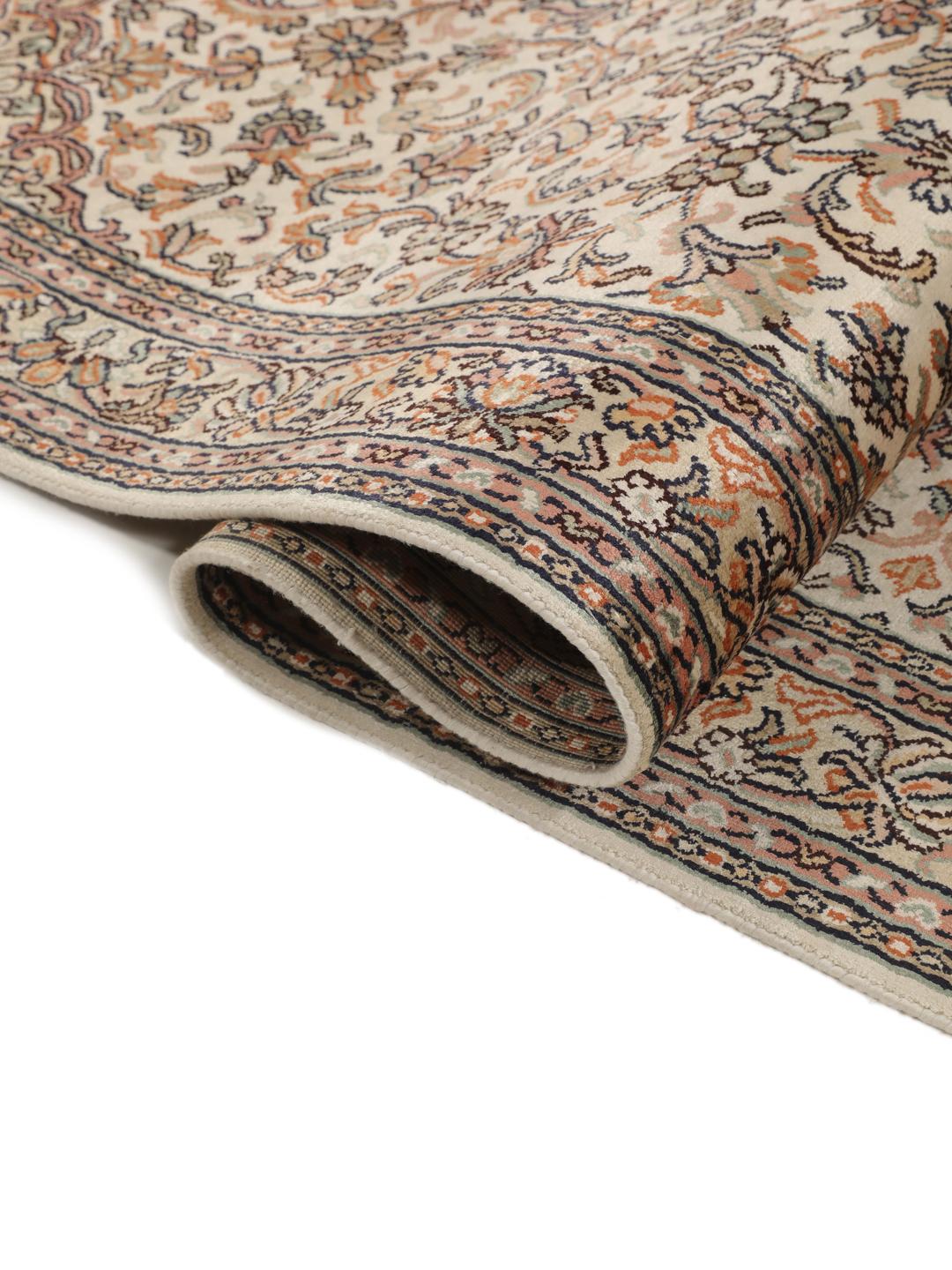
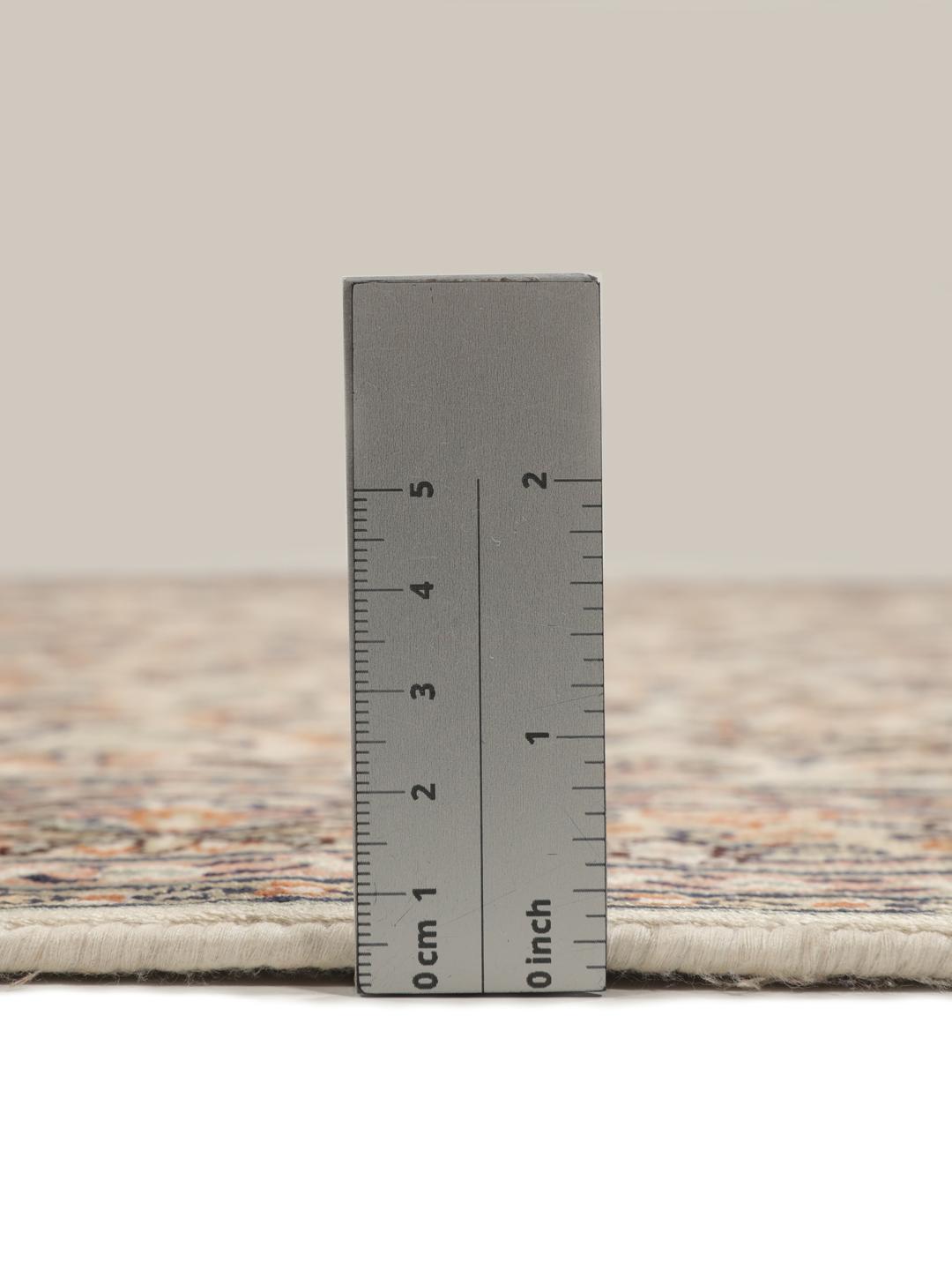
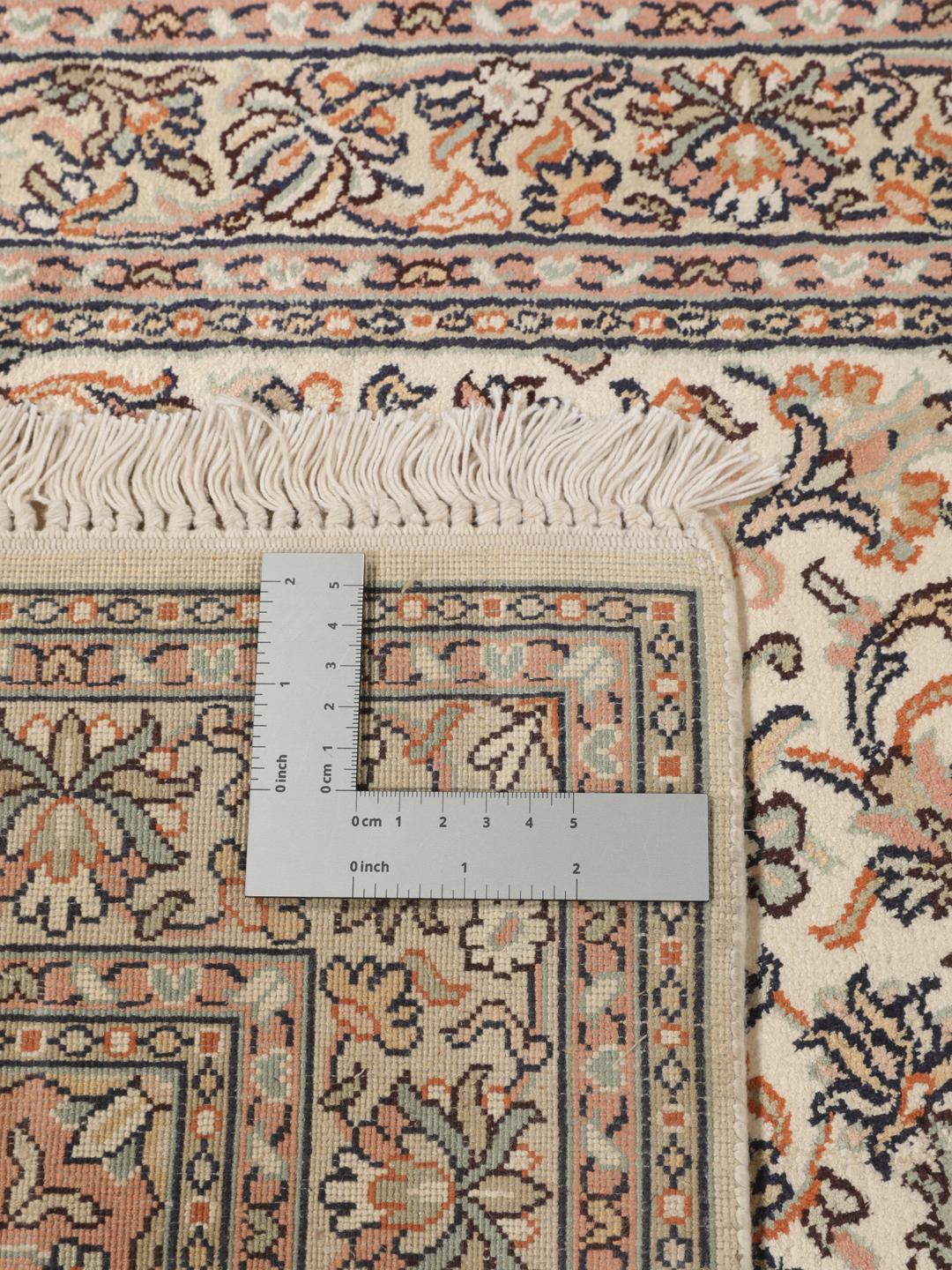
Kashmir rugs are celebrated worldwide for their association with the rich artistic heritage of Northern India. The tradition of weaving in this region dates back centuries, heavily influenced by Middle Eastern techniques brought along the ancient trade routes. Over time, these influences blended with local aesthetic sensibilities, resulting in a unique style that is recognised for its intricate floral and paisley designs.
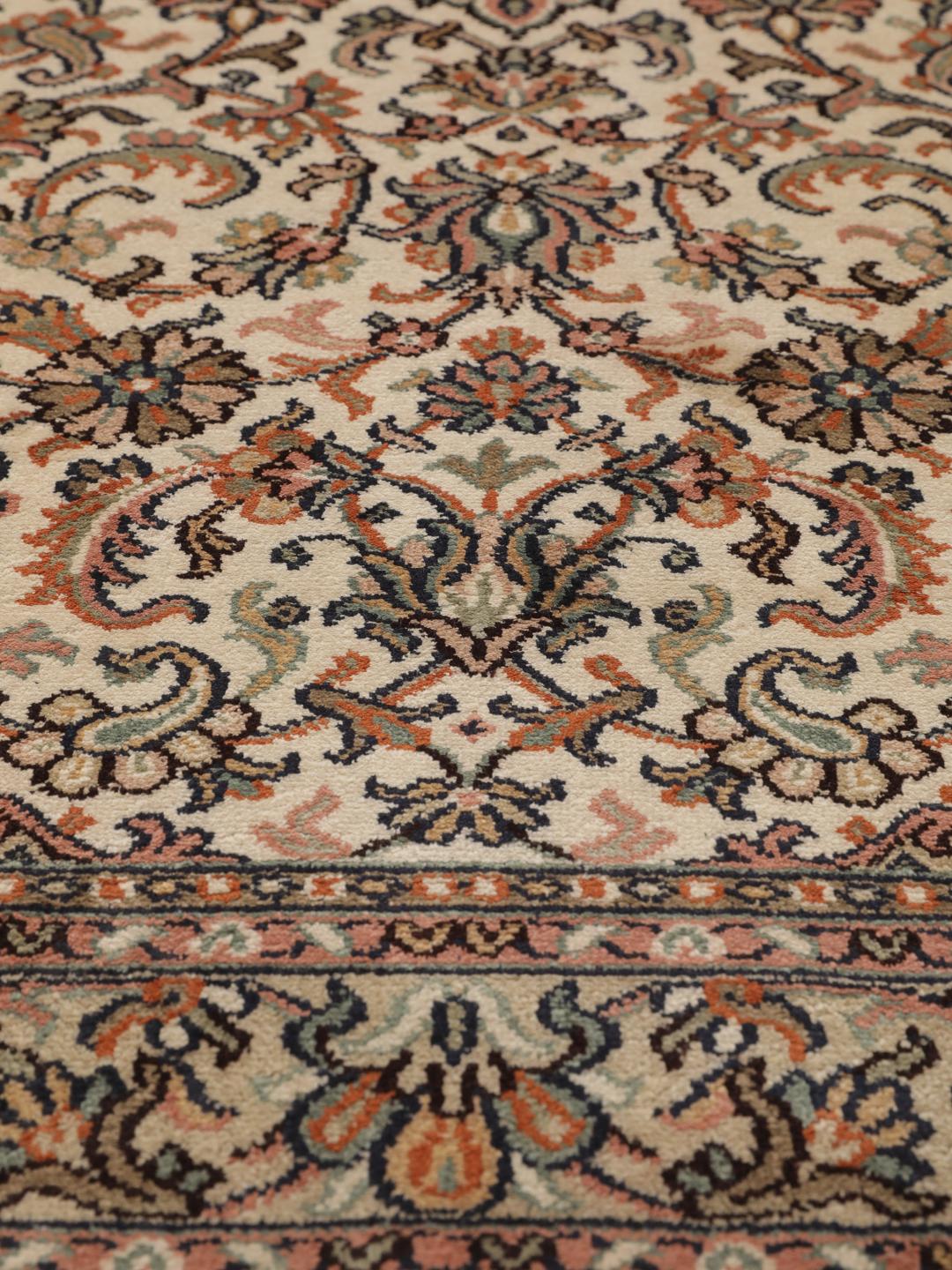
The term 'Kashmir' refers not only to the geographical origin but also to a specific, highly refined standard of weaving. The technical mastery involved in these pieces relies on a delicate balance of tension and knotting, which creates a surface that is both incredibly soft and remarkably durable. This technique allows for the incorporation of complex, curvilinear motifs that are difficult to achieve in simpler, coarser rug traditions.
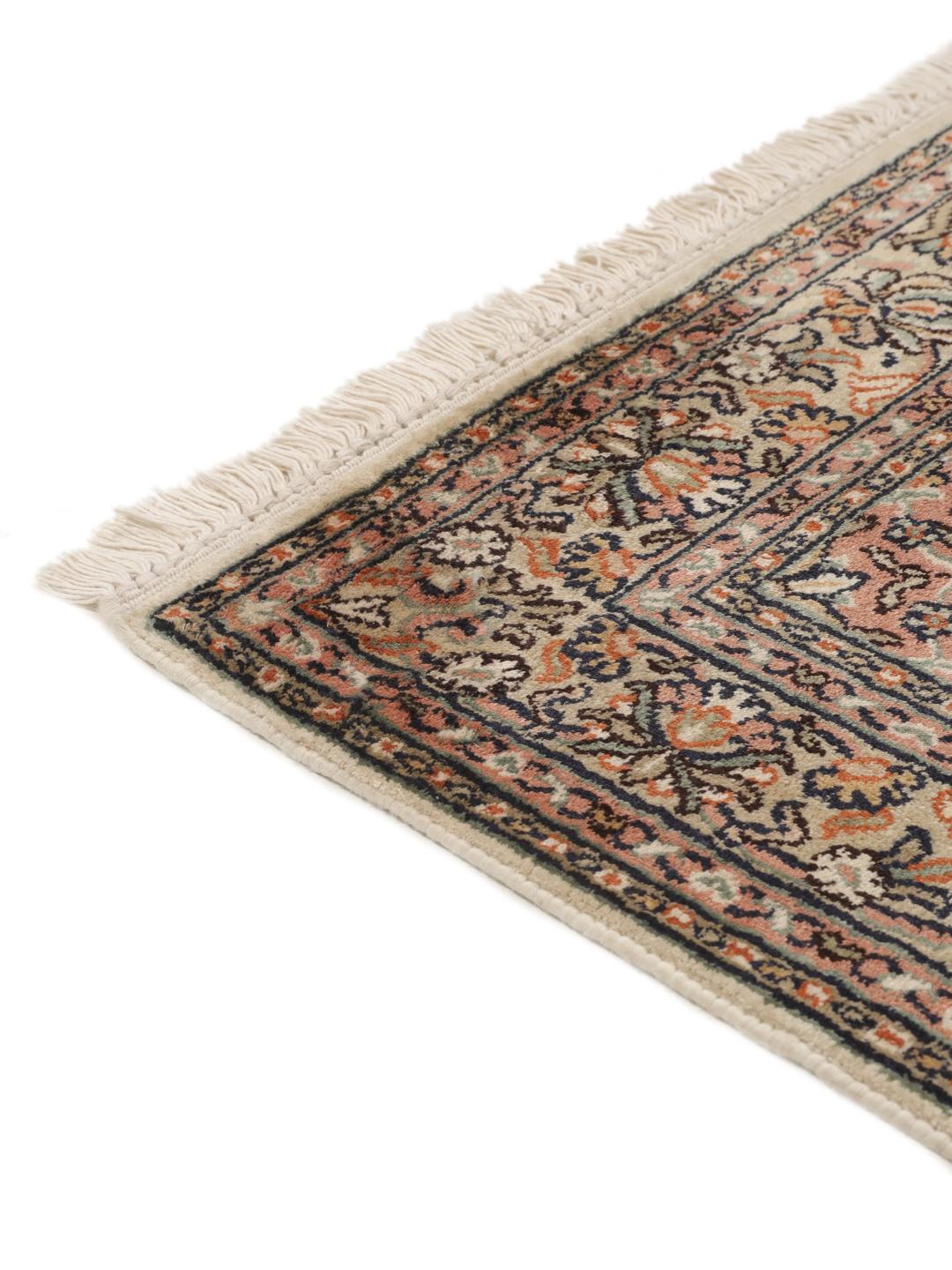
The signature design language of these rugs often centres on elaborate floral compositions, such as the Tree of Life or dense, flowing vine patterns. These motifs are typically framed by ornate, multi-layered borders that provide a formal structure to the intricate central field. The use of a soft, neutral palette is a hallmark of the tradition, designed to highlight the precision of the pattern rather than overwhelm it with high-contrast colours.
Owning a piece from this tradition is an investment in cultural history. These rugs are highly valued by collectors for their blend of technical complexity and artistic narrative. To possess one is to own a piece of a centuries-old craft legacy, representing a level of skill that remains a pinnacle of textile art and a symbol of lasting beauty in any interior.