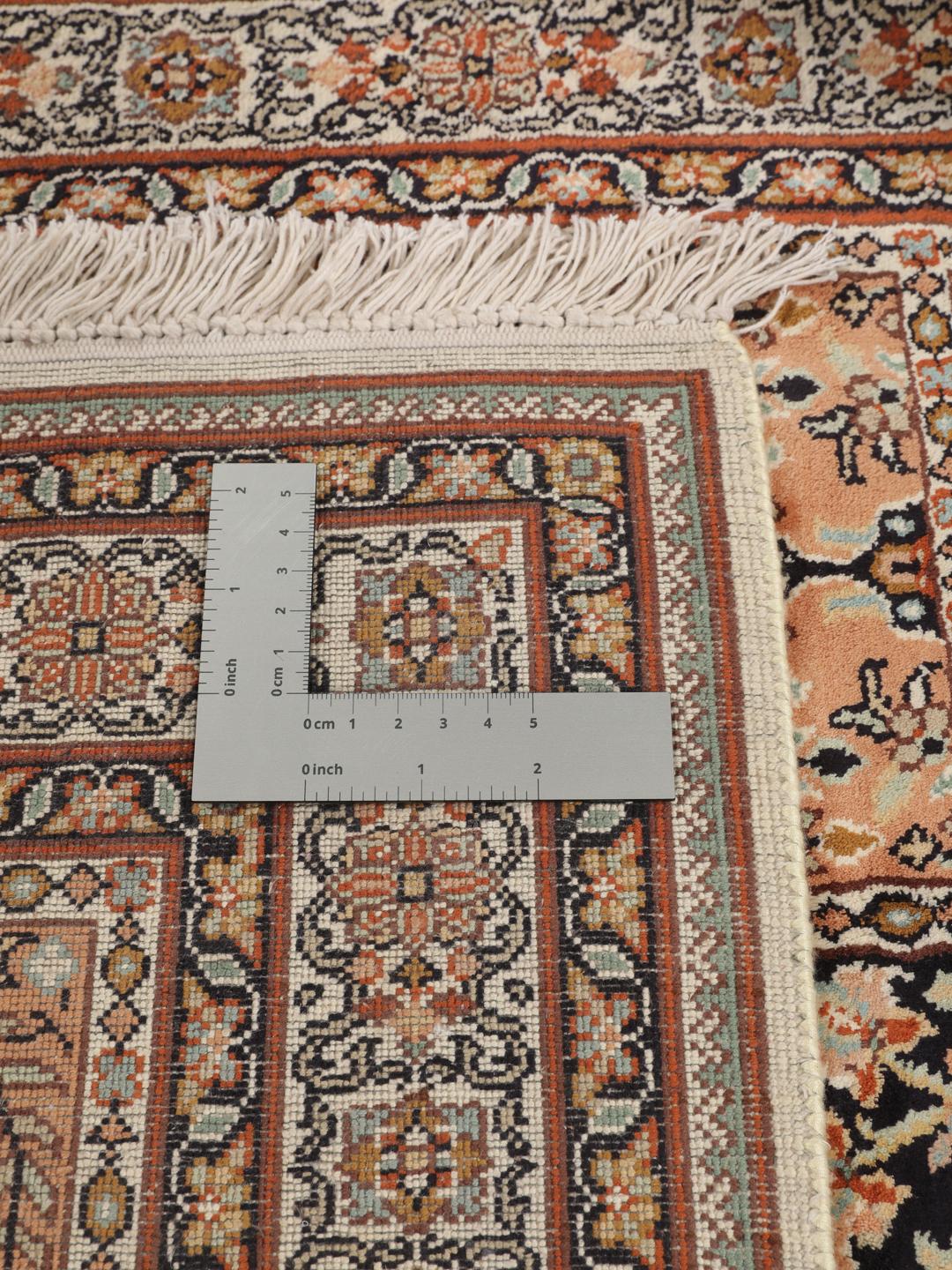
Kashmir rugs are celebrated for their deep roots in the artistry of Northern India, a region that has long been a hub for the finest textile traditions. The craft was historically influenced by Middle Eastern techniques brought to the valley, which local artisans then adapted to reflect their own unique aesthetic, resulting in the distinctive style we recognise today.
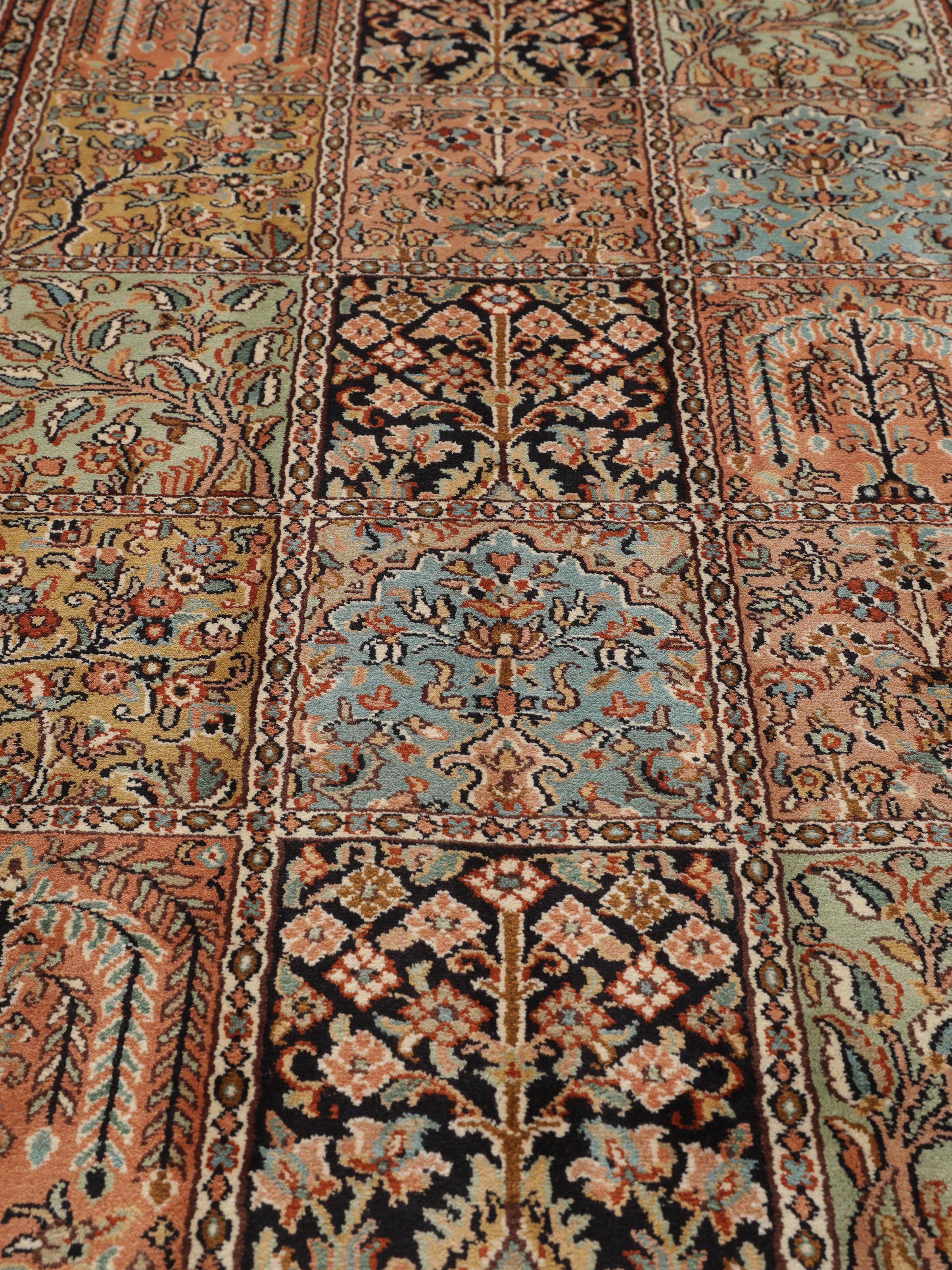
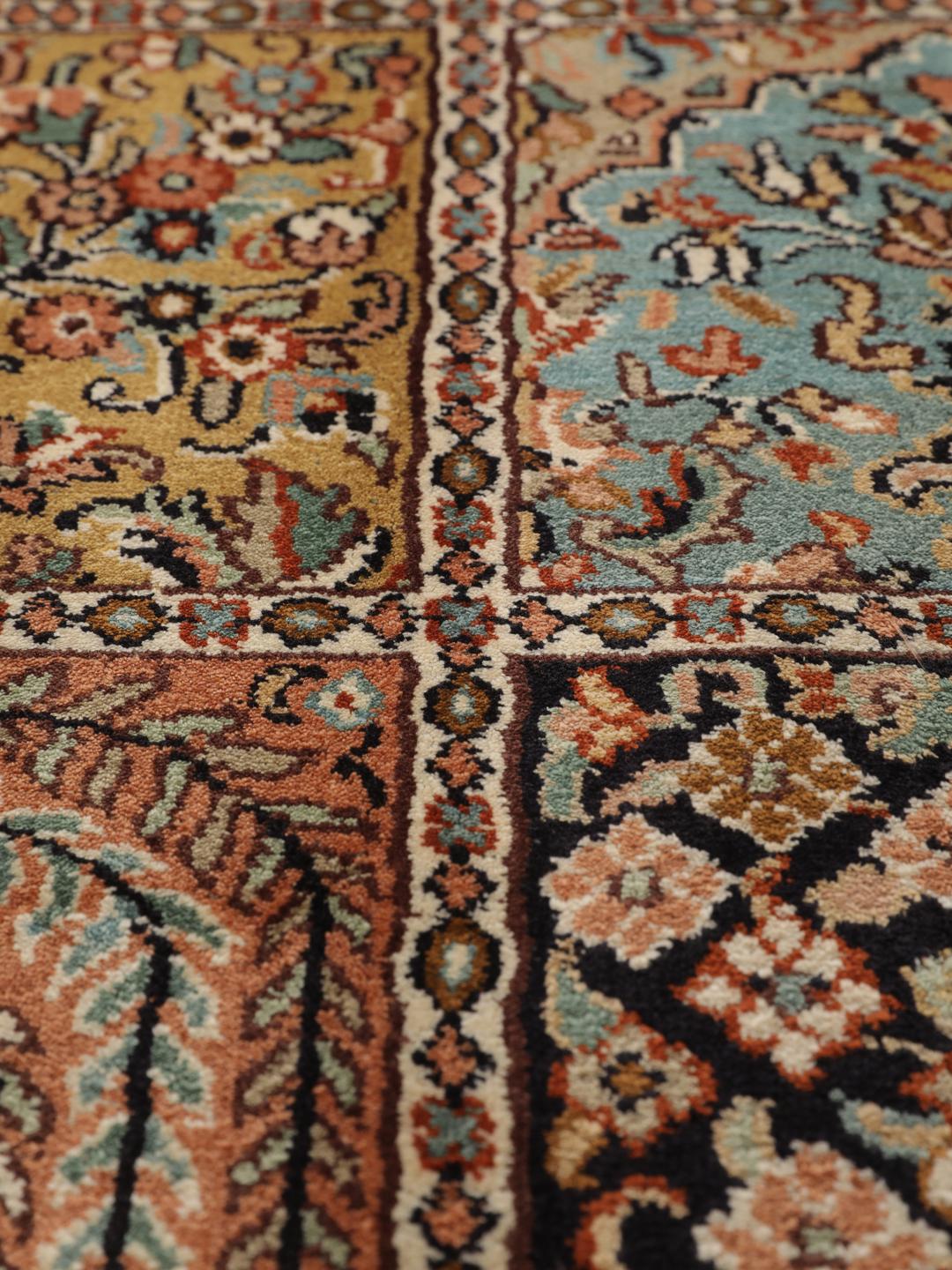
The production of these rugs often involves the use of silk, which is prized for its ability to hold vibrant dyes and its natural, luminous sheen. Silk allows for an incredibly fine knotting process, which is why these rugs are famous for their ability to display complex, curvilinear designs and minute details that would be impossible to achieve with coarser materials.
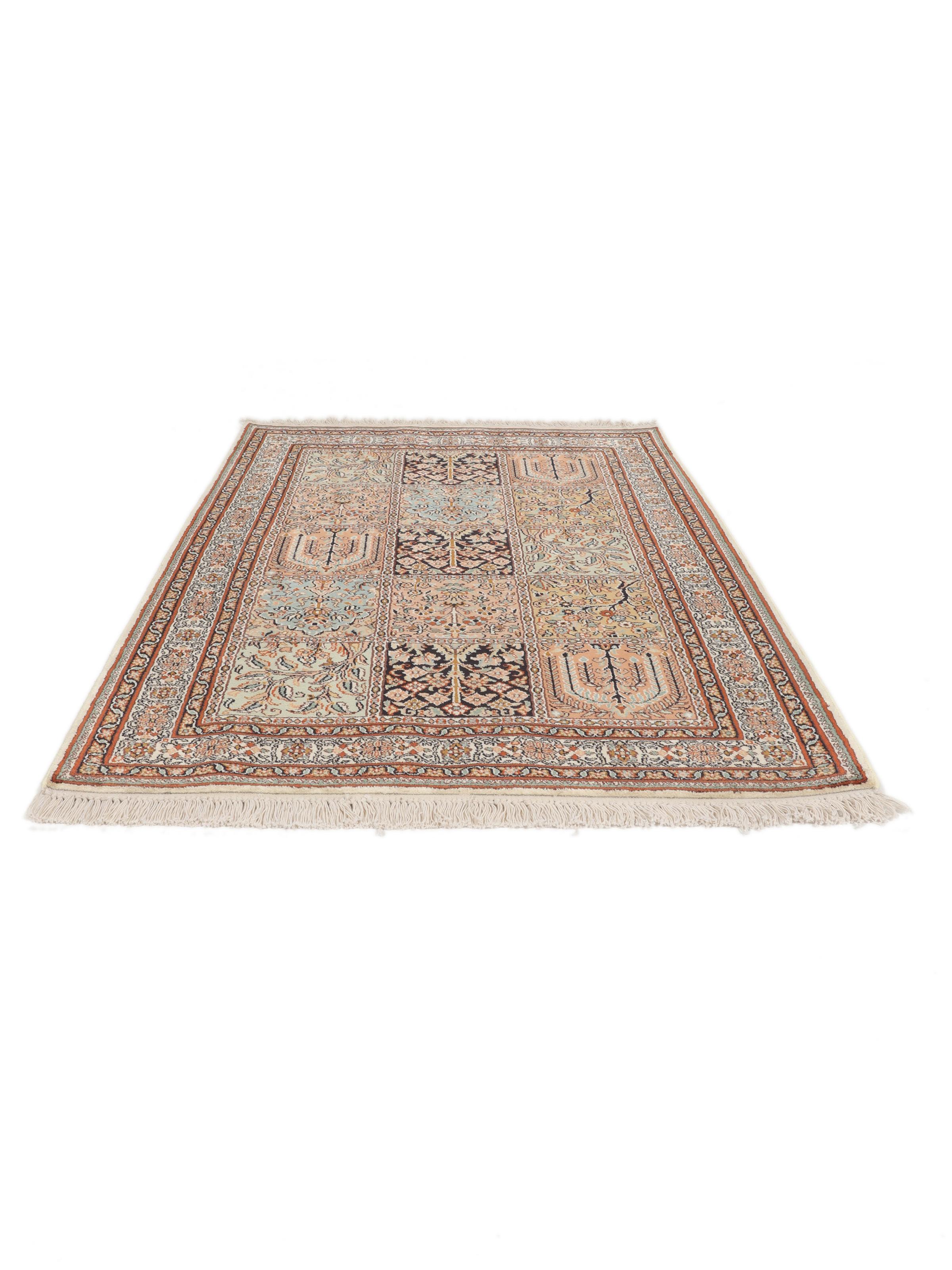
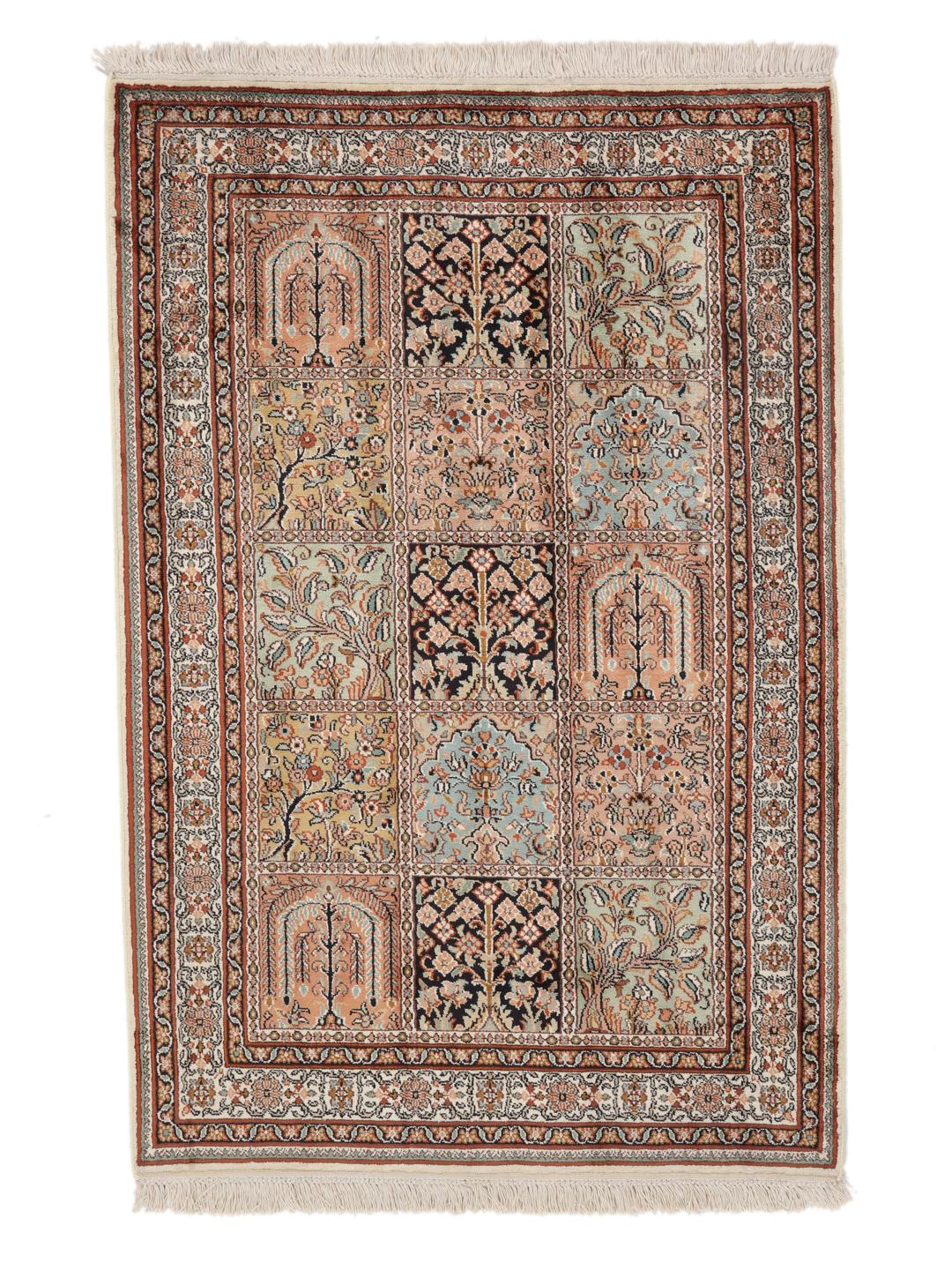
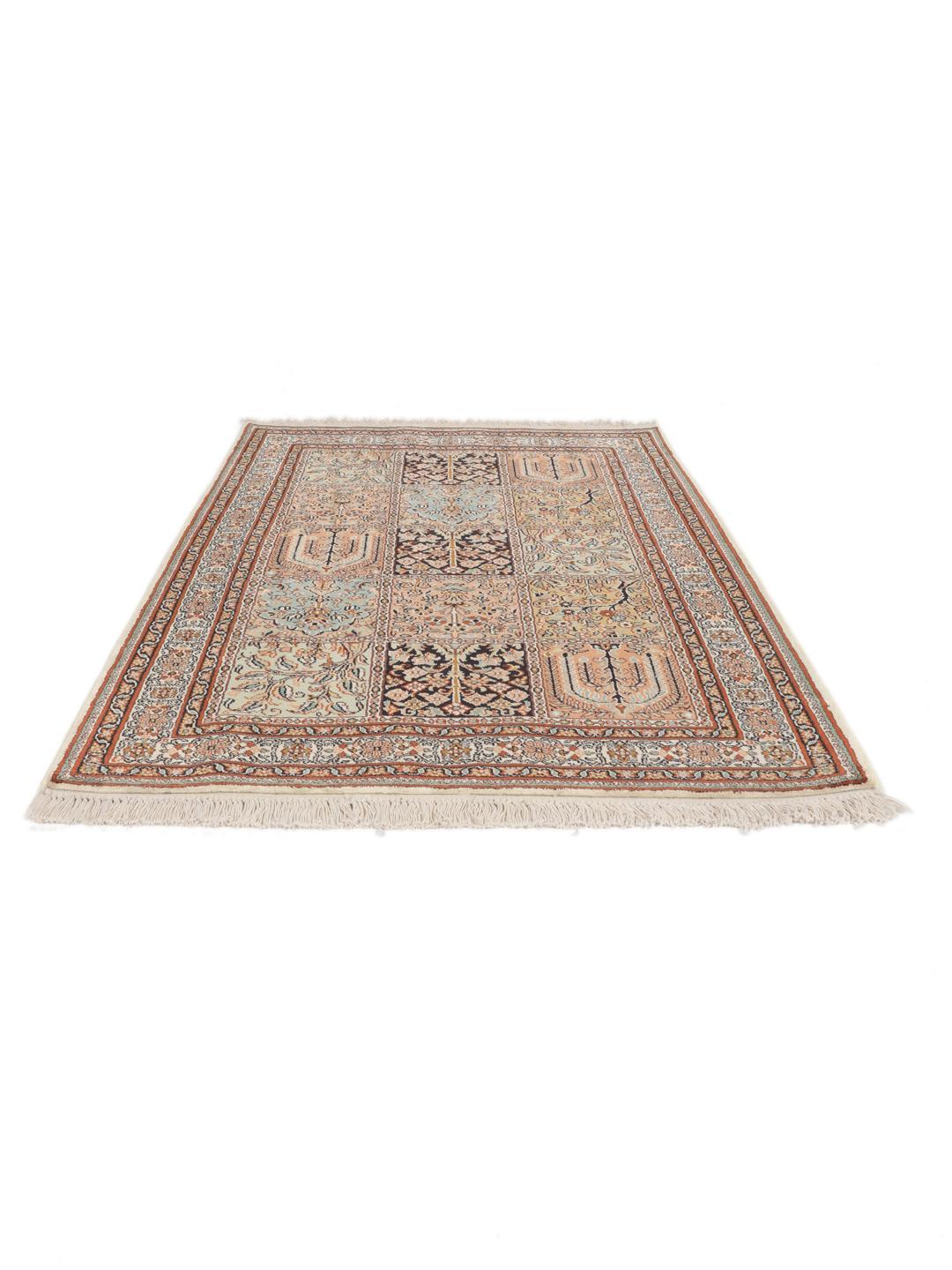
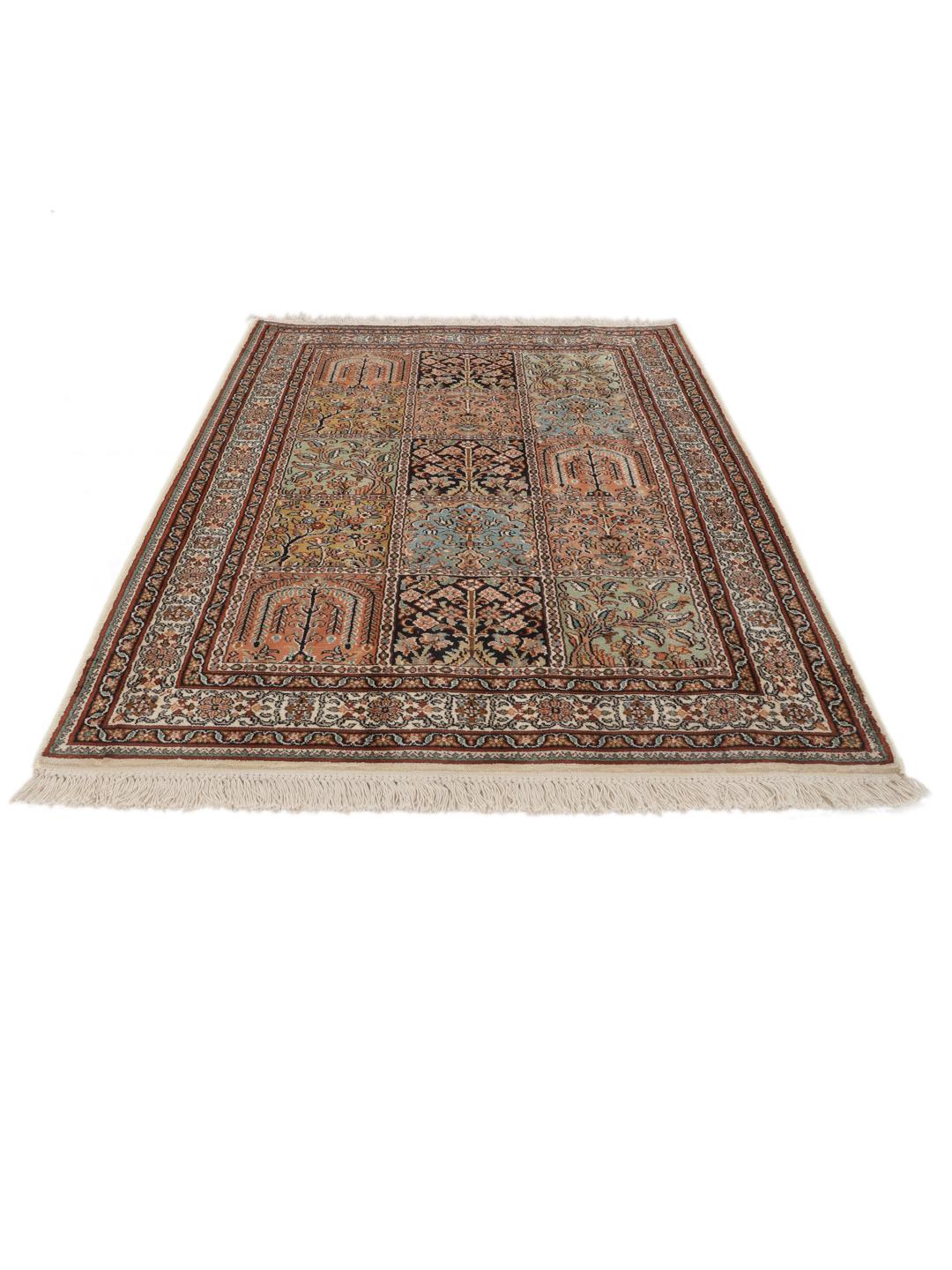
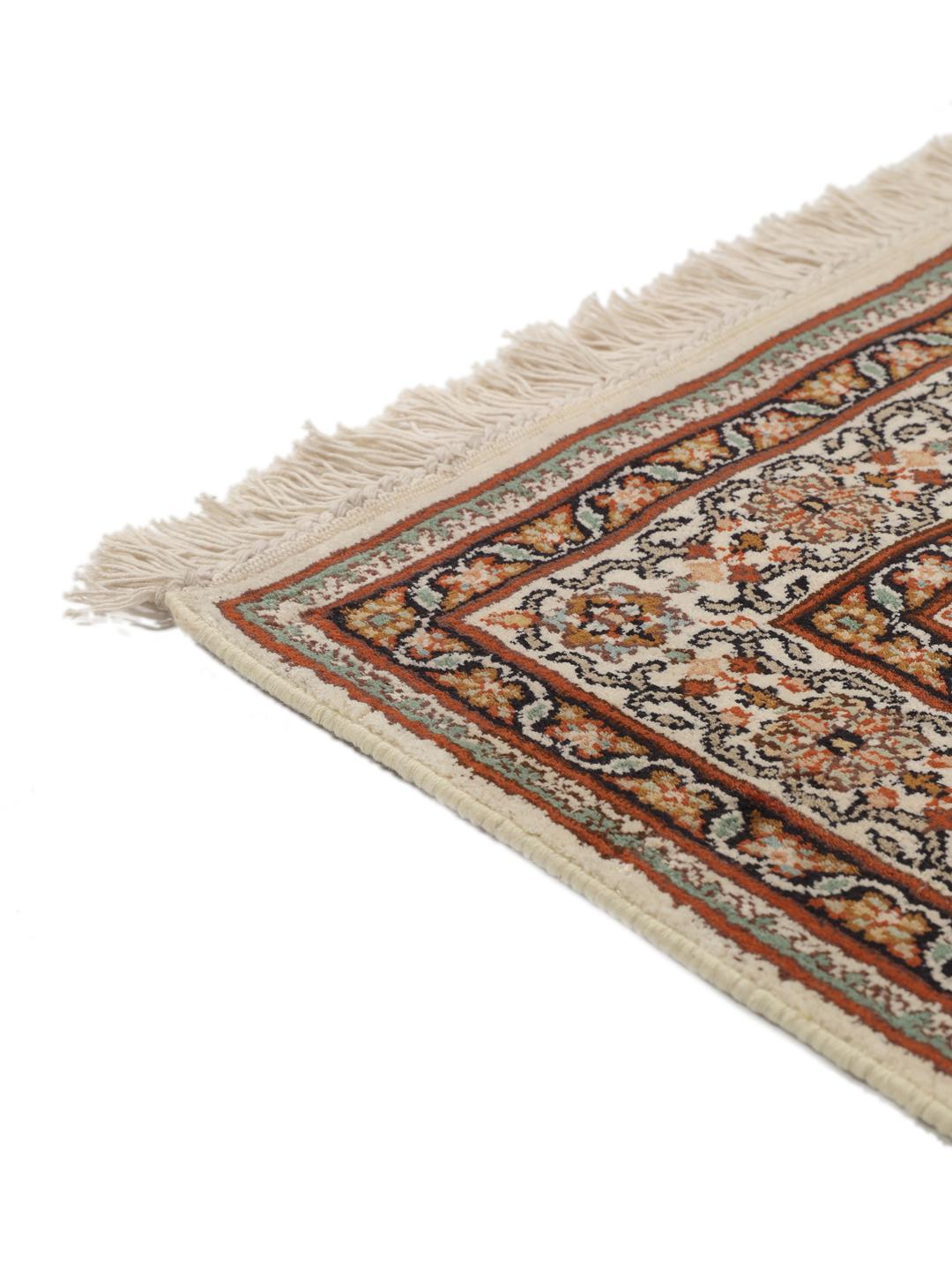
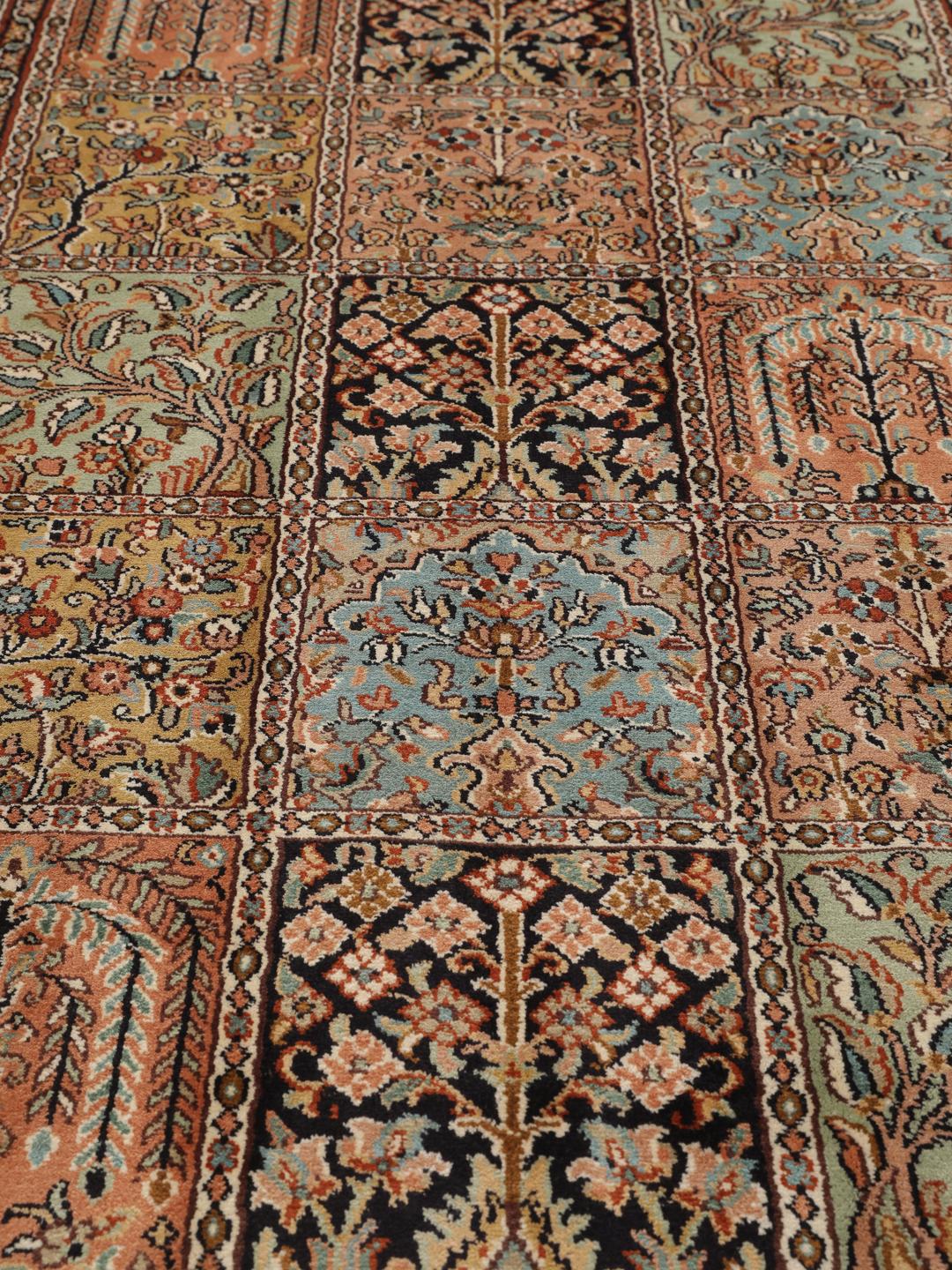
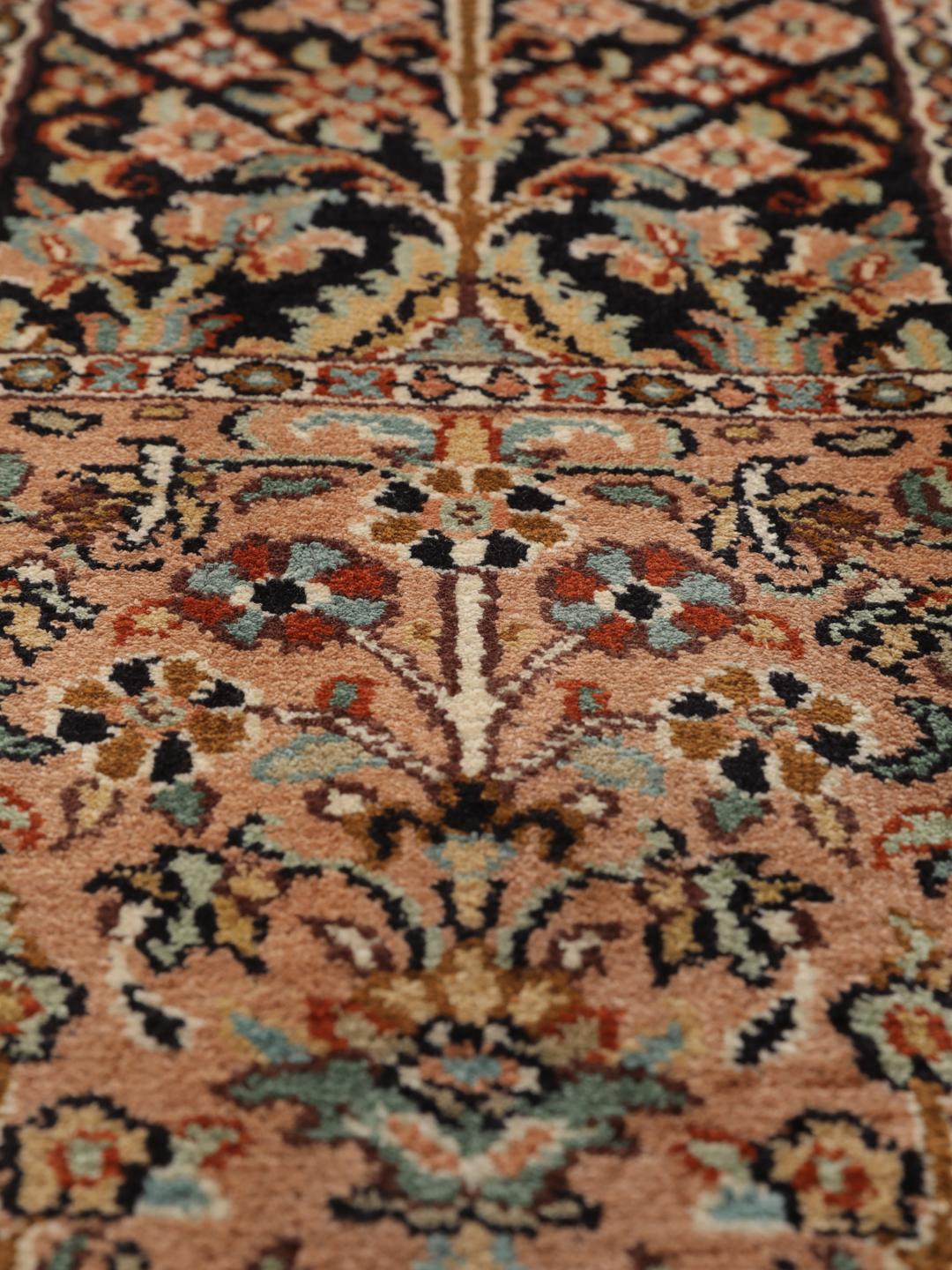
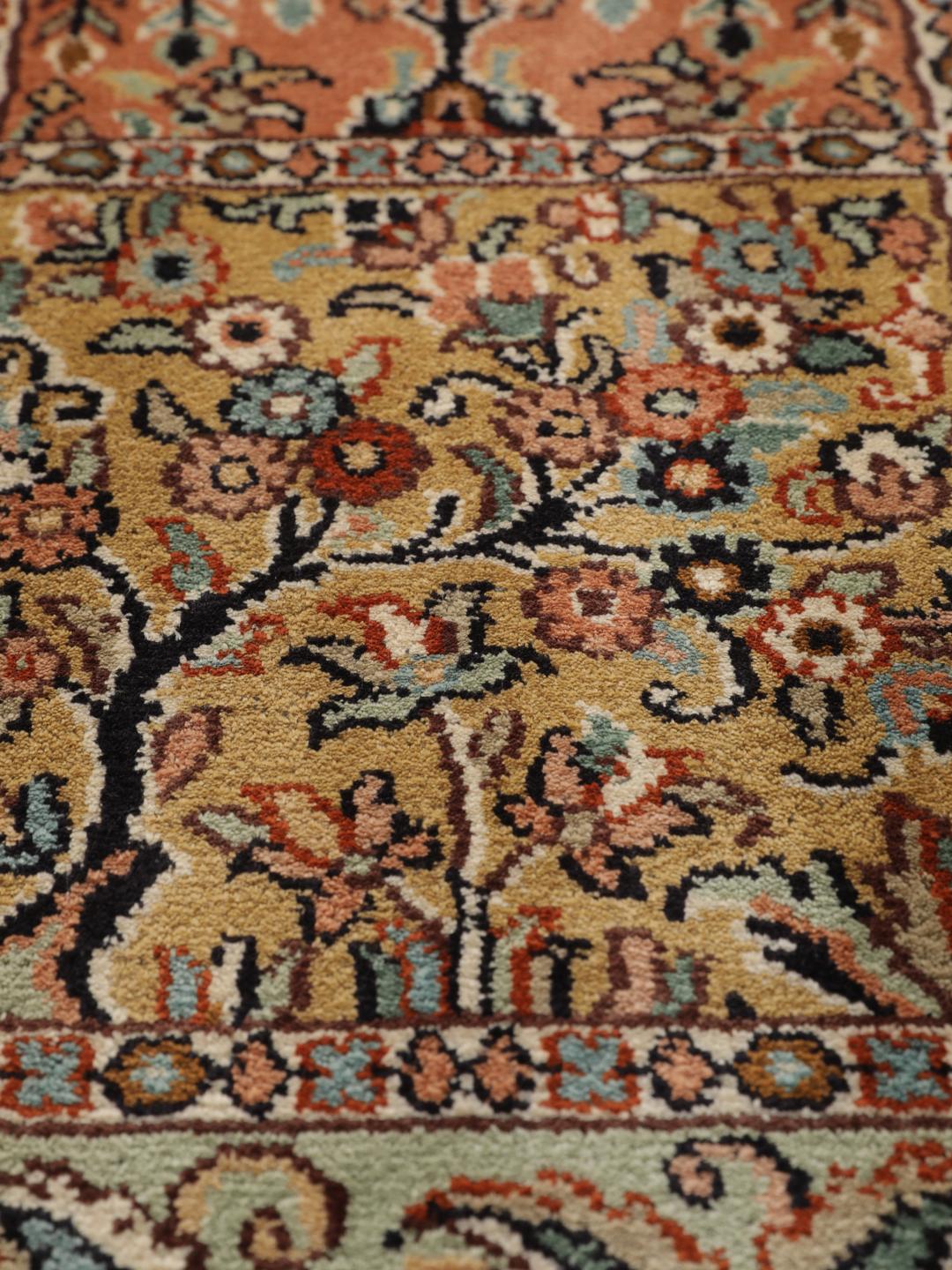
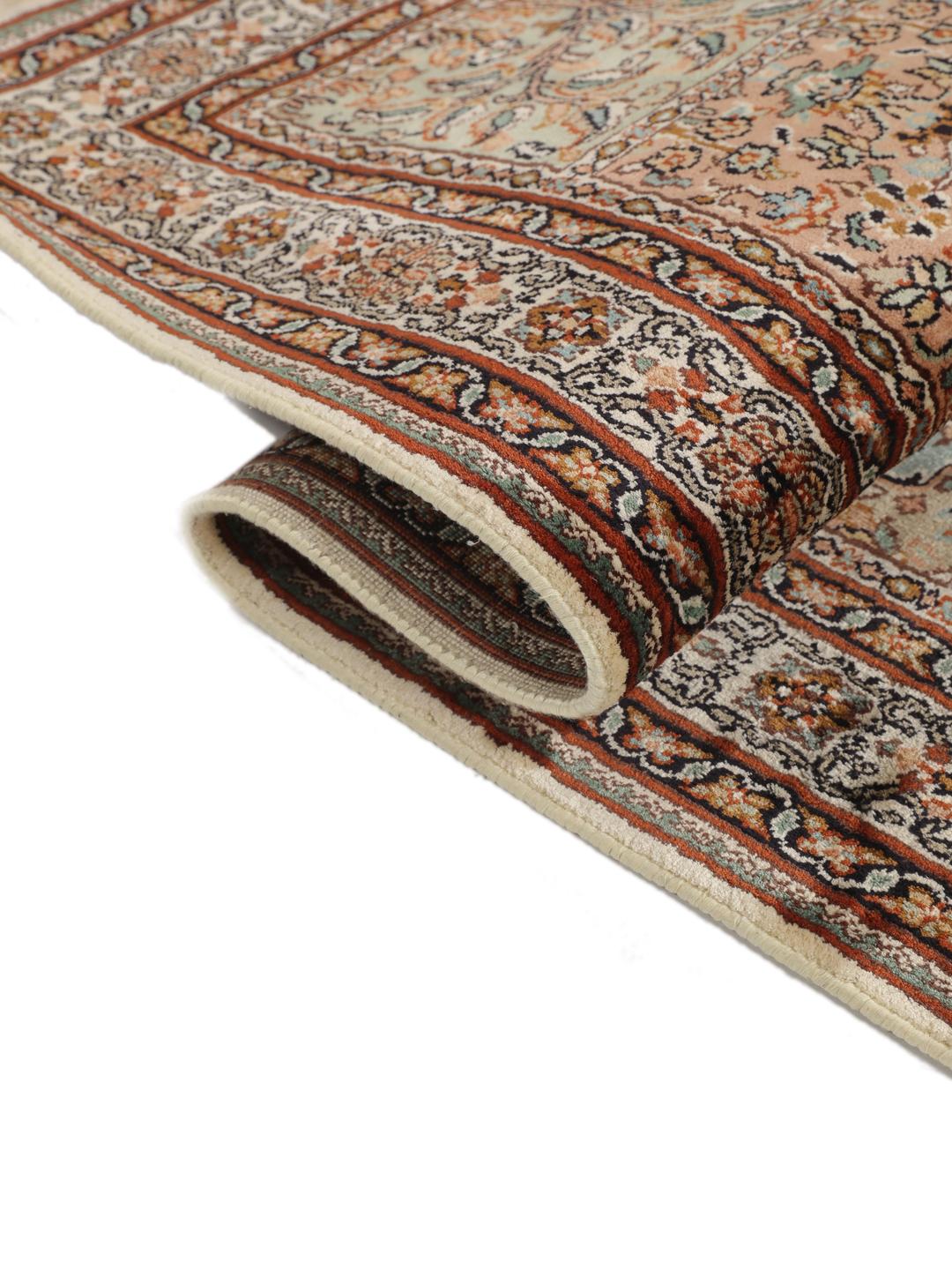
The design of this rug showcases a classic panel motif, a traditional layout that draws inspiration from historical garden carpets. Each panel acts as a frame for stylised floral and tree-of-life patterns, which are symbolic representations of growth, prosperity, and the natural world, all enclosed within a highly decorative border that anchors the composition.
Owning a Kashmir silk rug is widely considered an investment in cultural heritage and refined skill. These pieces are collected not just for their aesthetic appeal, but as embodiments of a craft that has been passed down through generations, representing a level of dedication and beauty that remains a hallmark of luxury interior design.