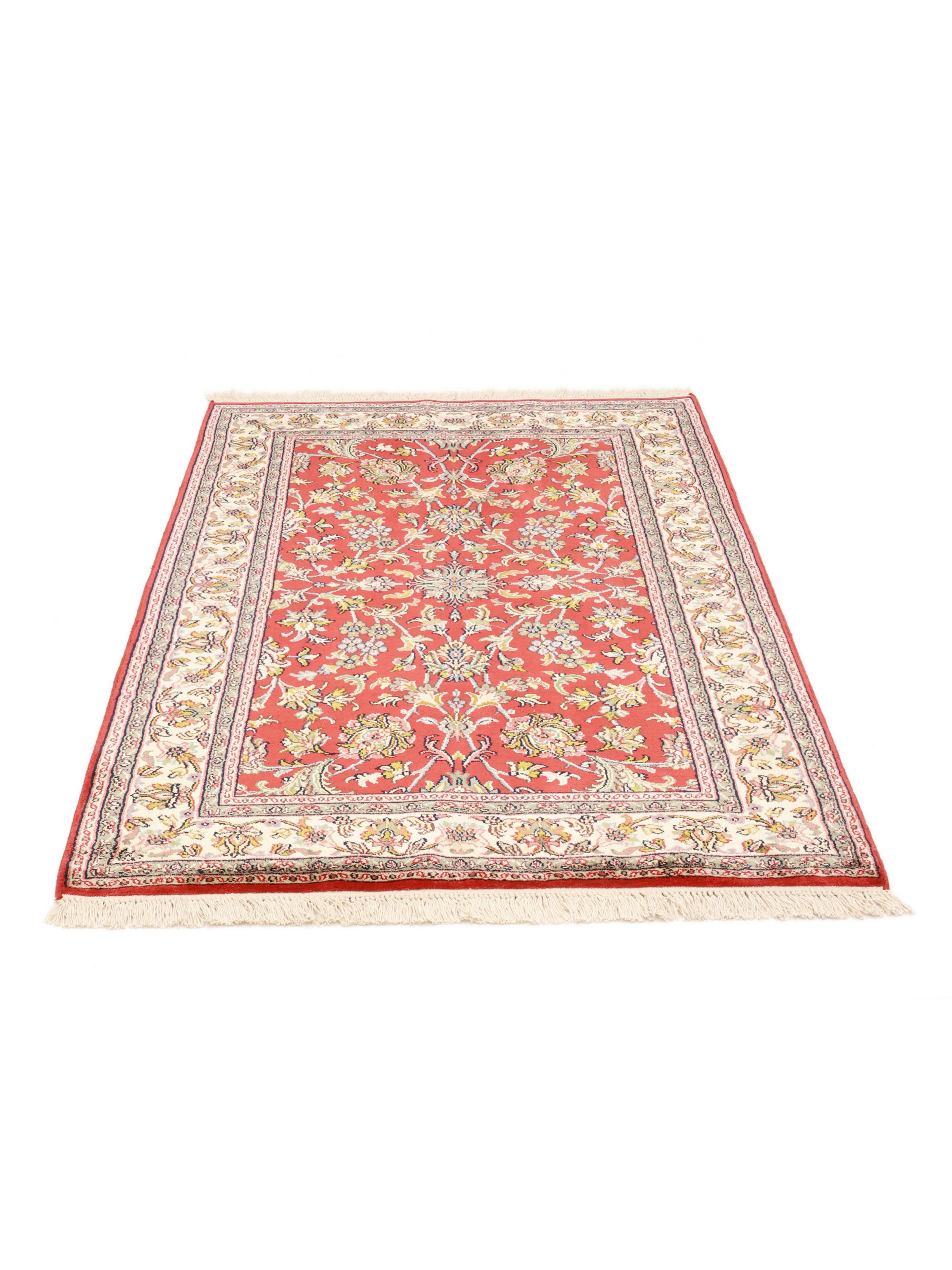
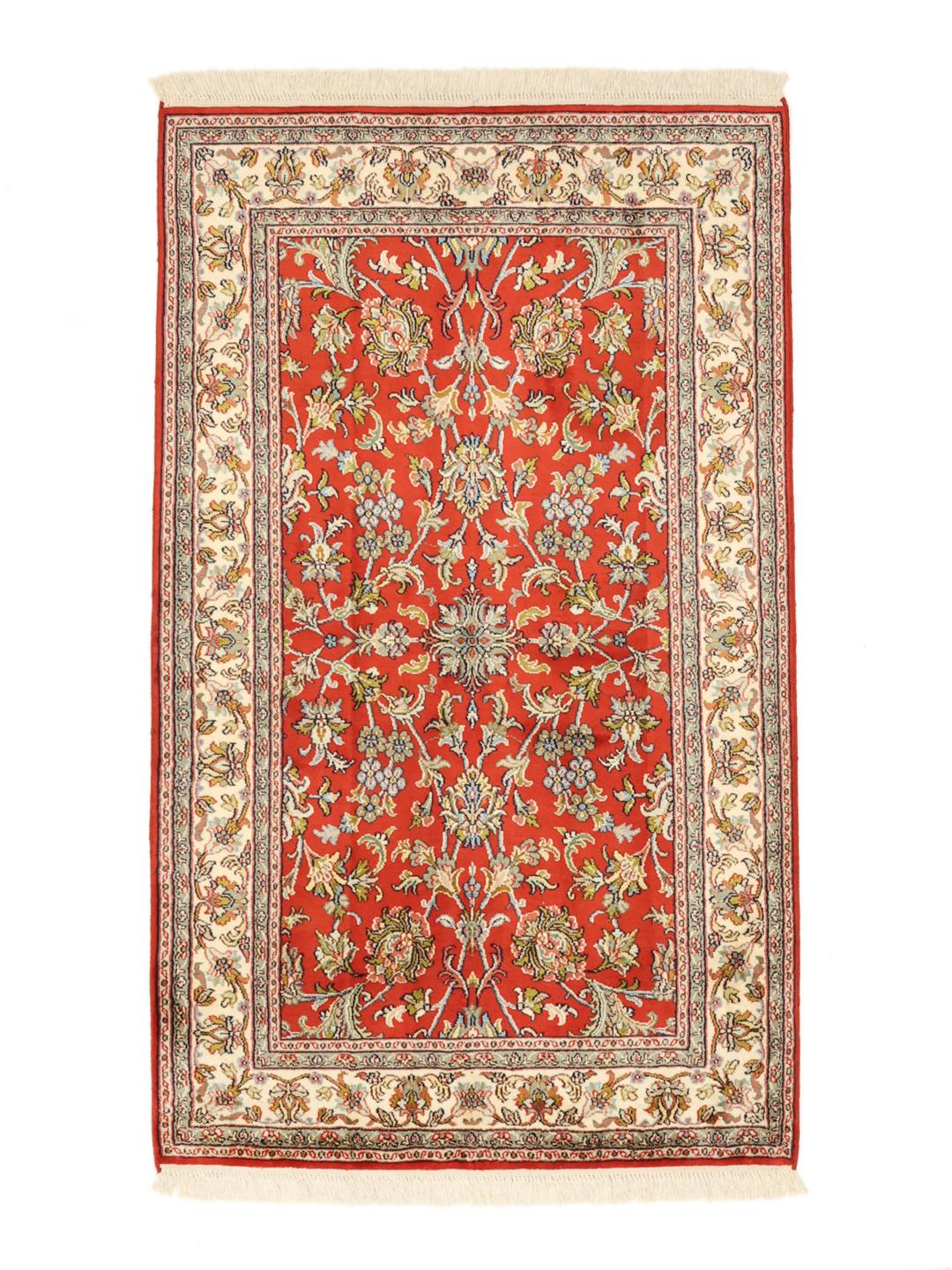
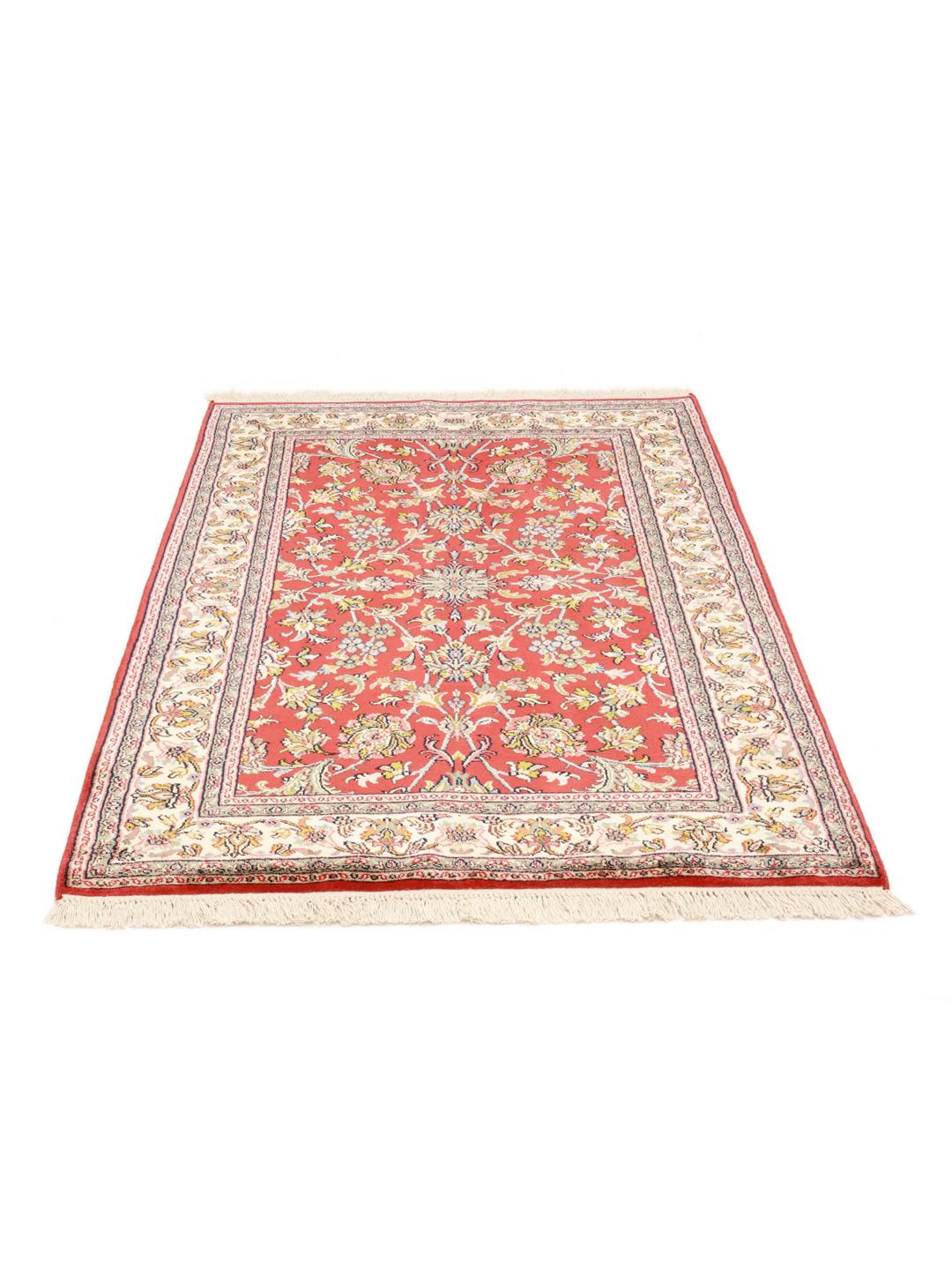
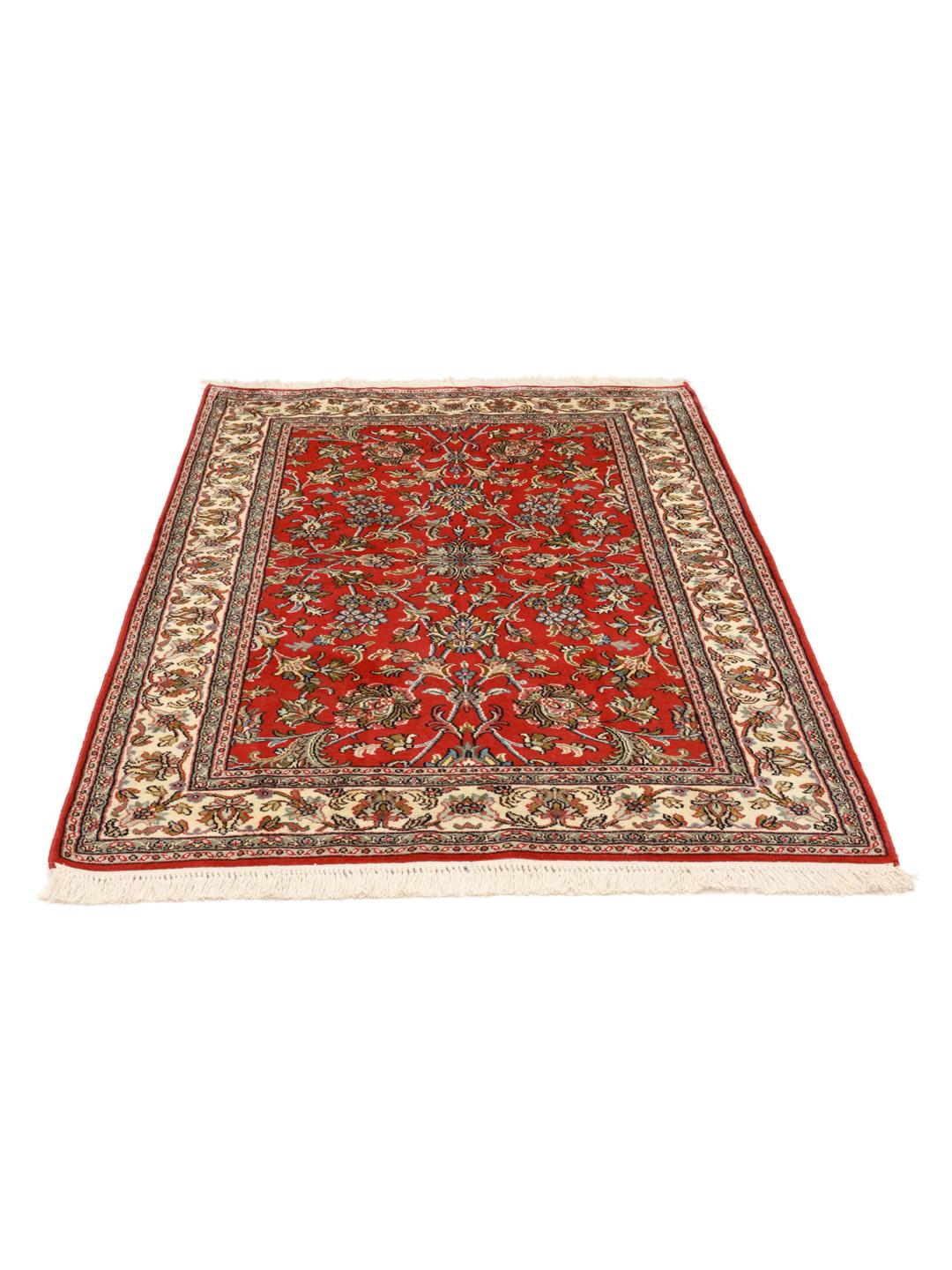
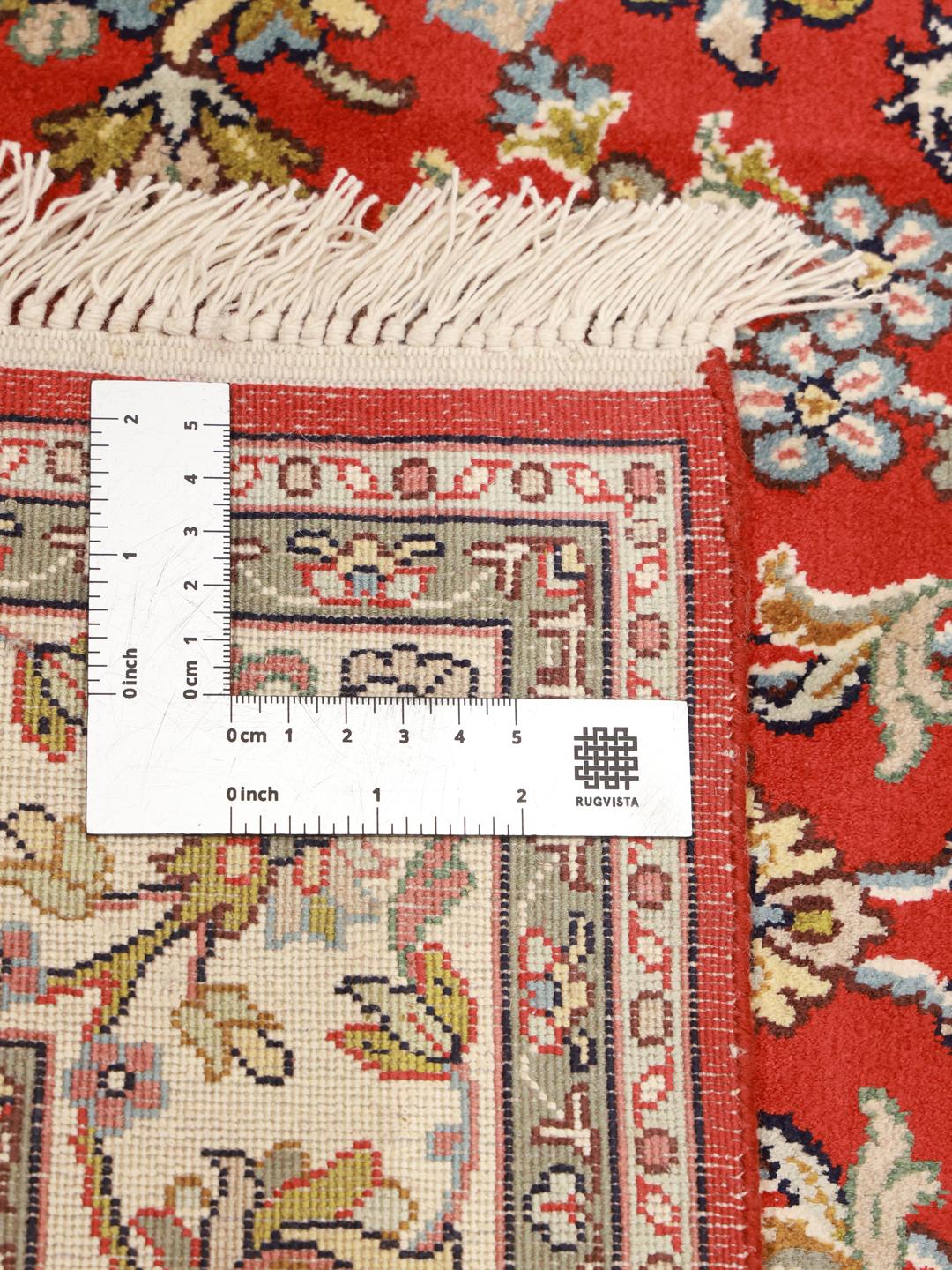
The tradition of rug weaving in the Kashmir region of India is a storied craft that has evolved over centuries, heavily influenced by techniques from the Middle East brought to the valley by Central Asian artisans. Over time, these influences merged with local artistic sensibilities to create a distinct style characterised by intricate floral motifs and the use of the finest materials. Today, Kashmir remains a world-renowned centre for this refined craft.
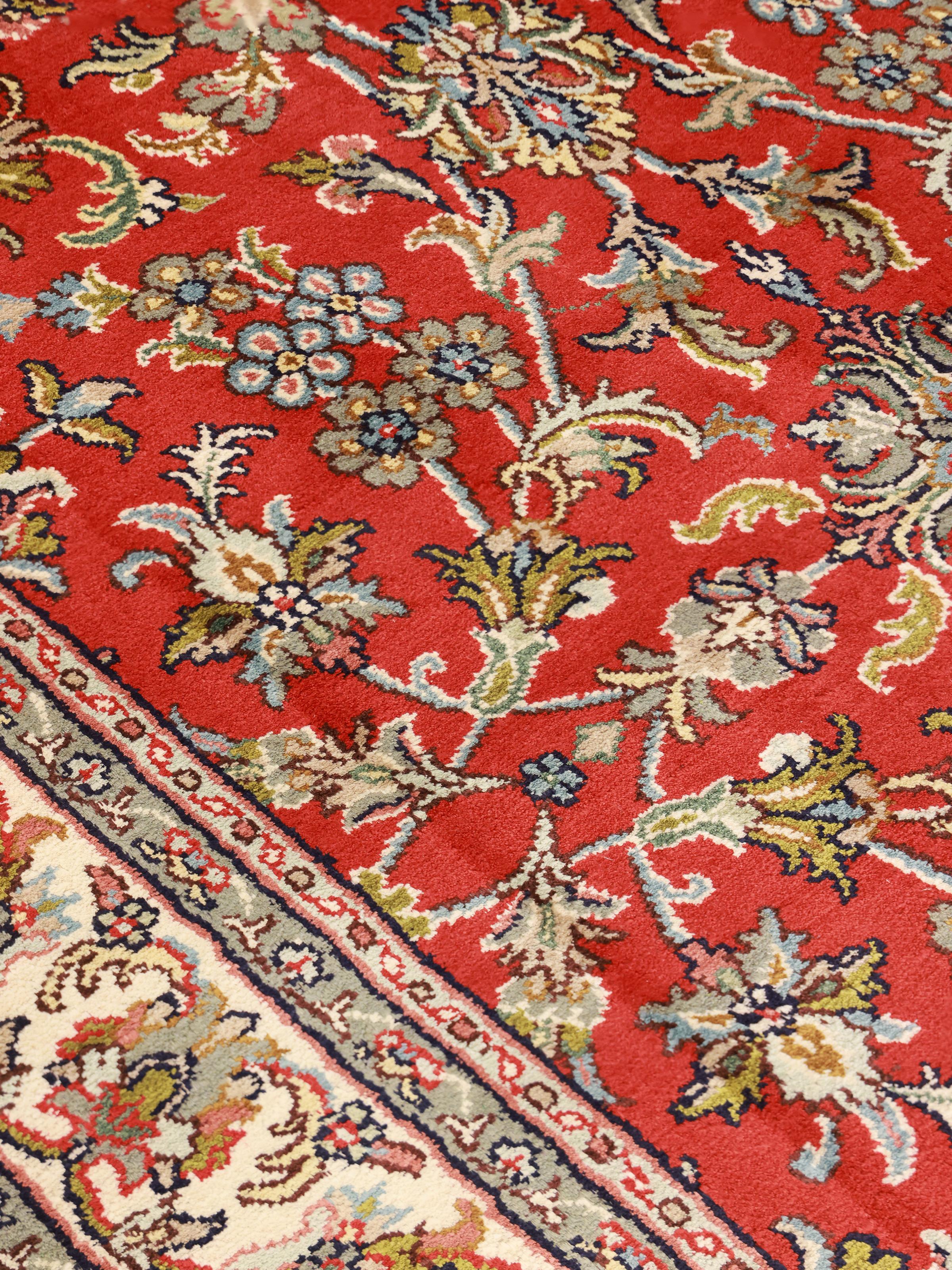
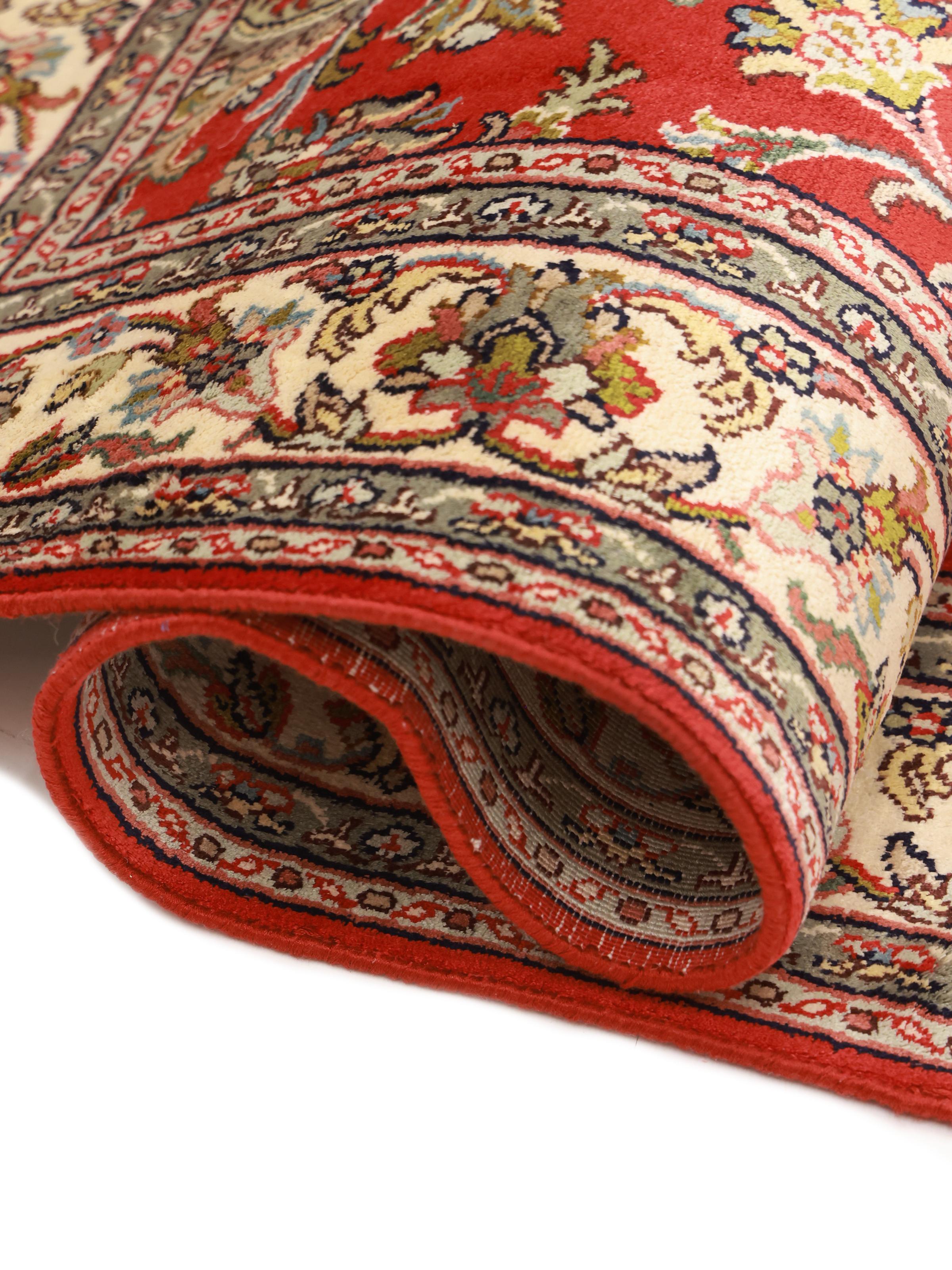
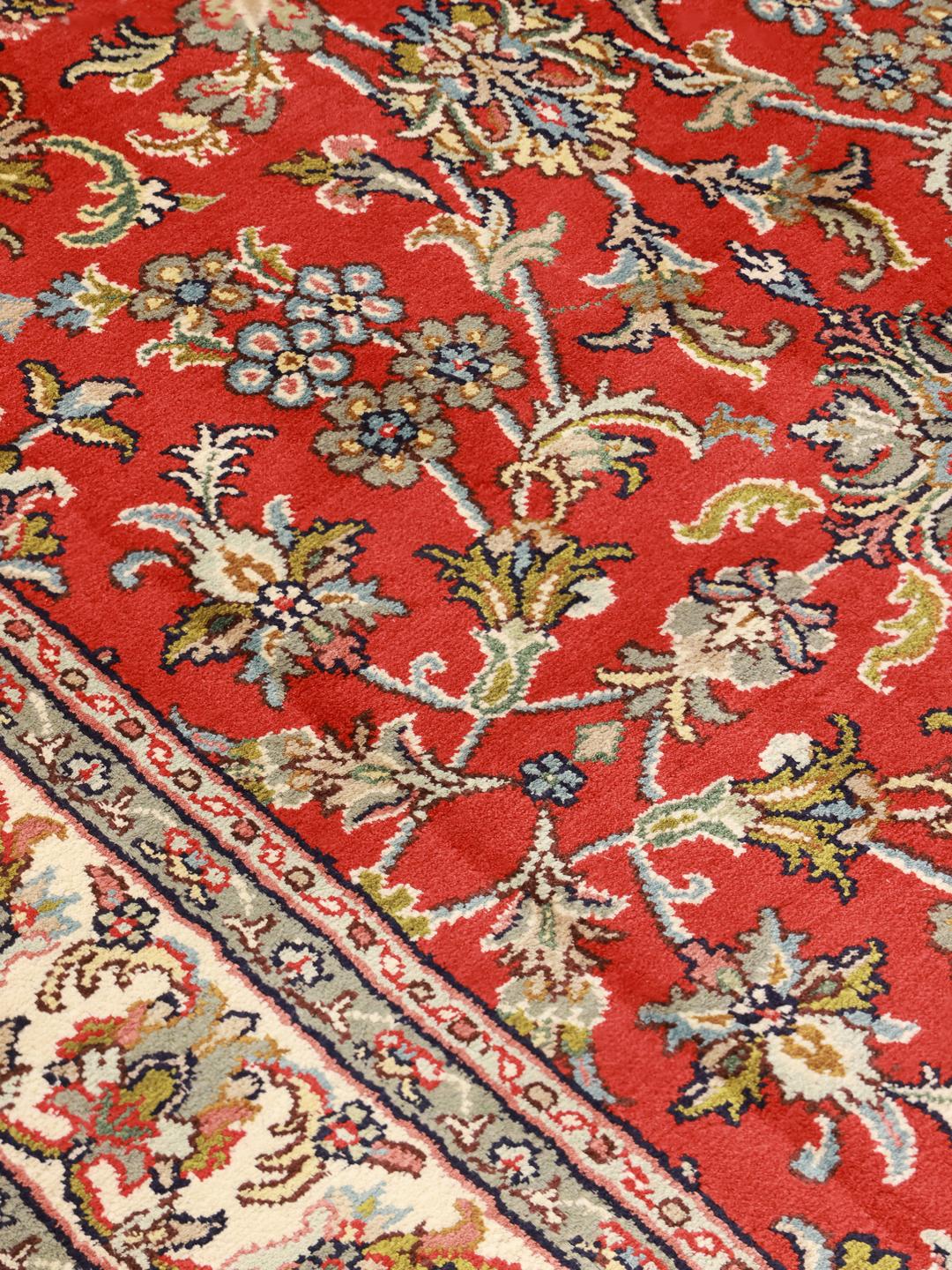
The term 'Kashmir silk' refers to the specific material and regional style that defines these rugs. Silk is prized in weaving for its high tensile strength and its ability to take dye with incredible vibrancy. When woven into a pile, it creates a surface that is not only soft to the touch but also possesses a natural, shimmering lustre that changes depending on the light in the room, adding a dynamic quality to the rug.
Signature design elements in Kashmir rugs often revolve around the 'Tree of Life' or dense floral arabesques, known as the 'Islimi' style. These patterns are typically symmetrical, featuring delicate vines, flowers, and leaves that wind across the field. The borders are equally elaborate, often mirroring the central theme to create a cohesive, balanced look that feels both traditional and sophisticated.
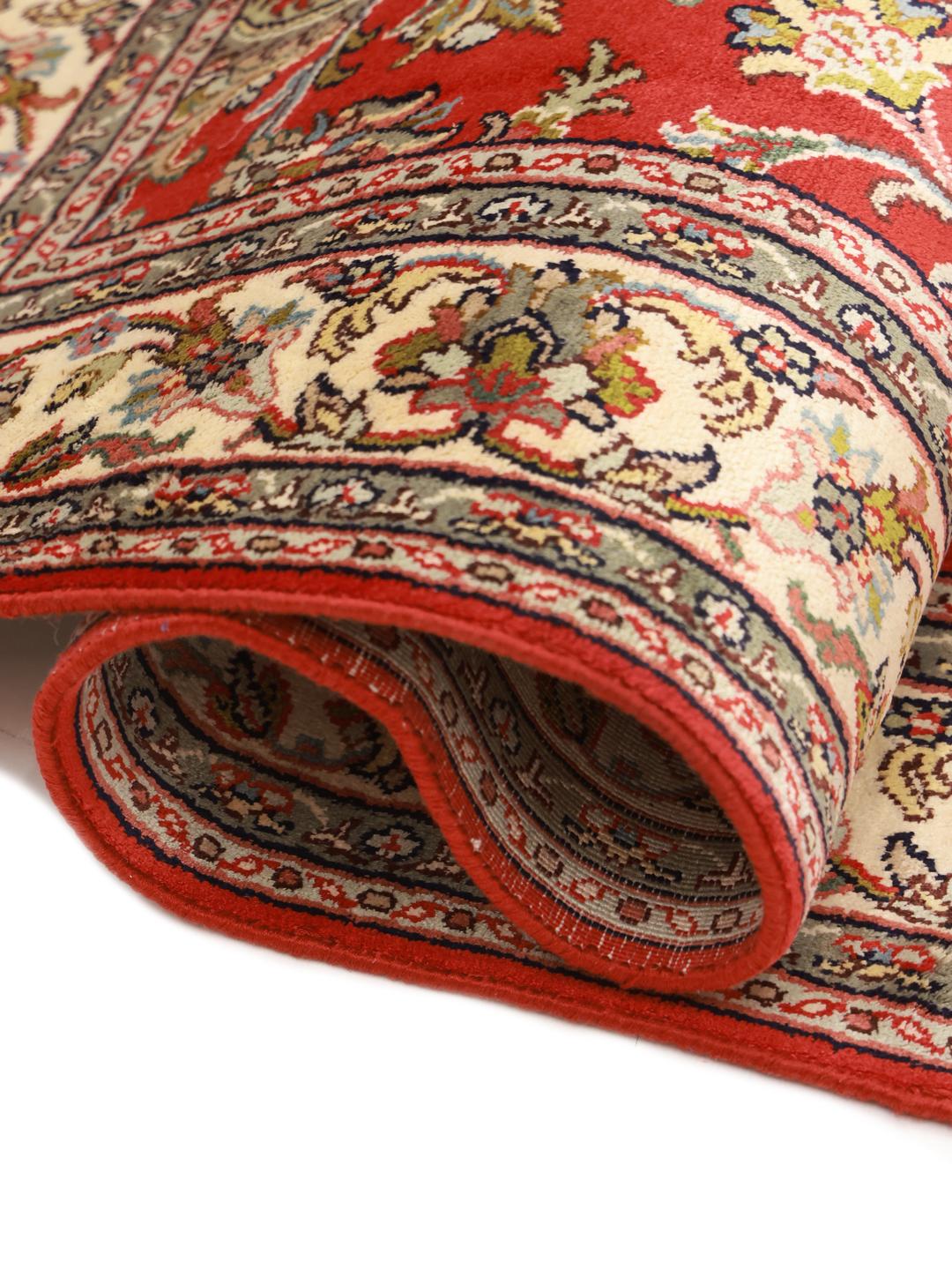
Owning a hand-knotted rug from this tradition is about more than just floor decor; it is an appreciation of cultural heritage and human skill. These pieces are collected for their artistic complexity and the sheer time required to produce them. By acquiring this rug, you are preserving a craft that relies on the steady hands and experienced eyes of master weavers, ensuring that this legacy of beauty continues.