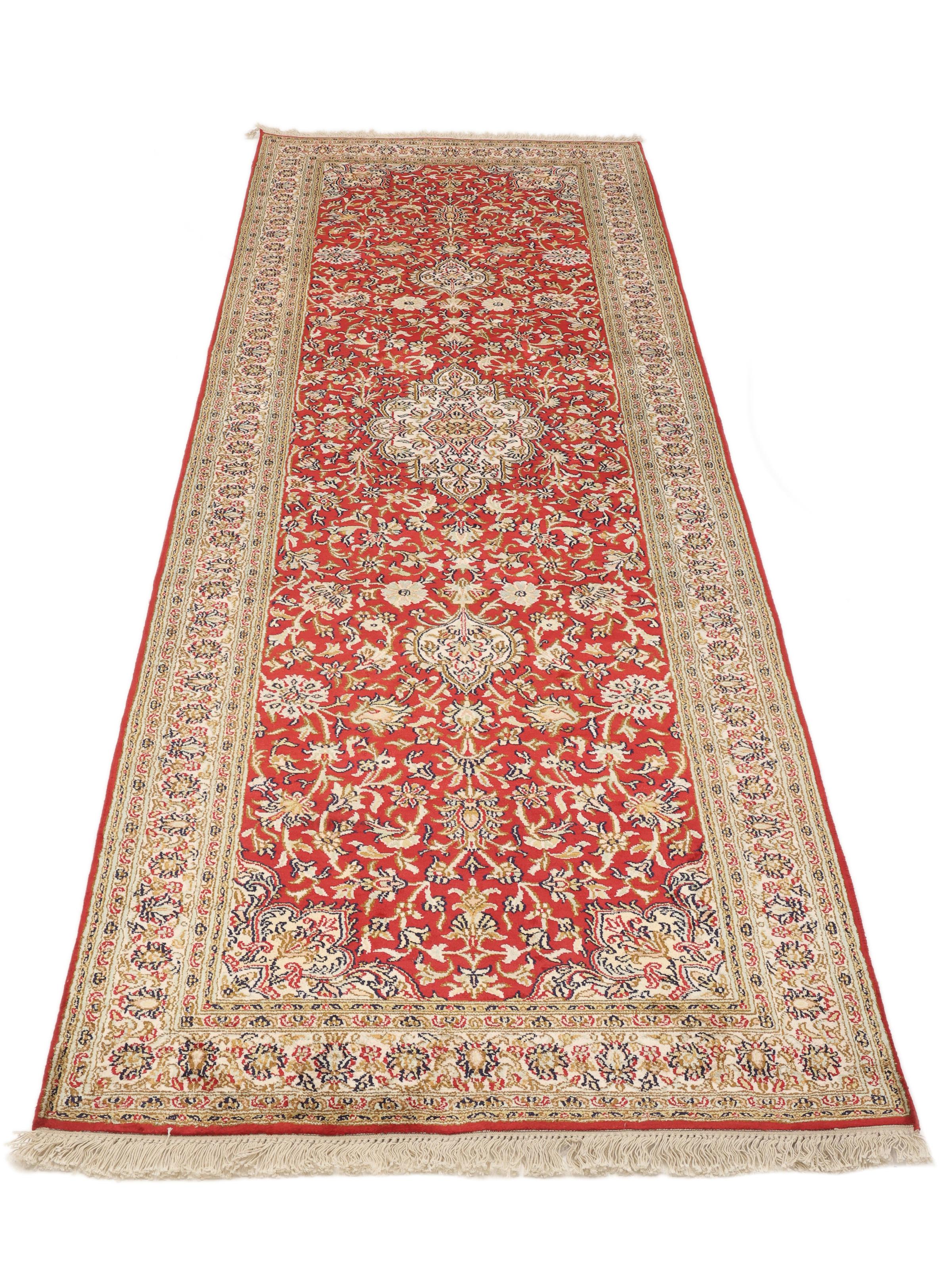
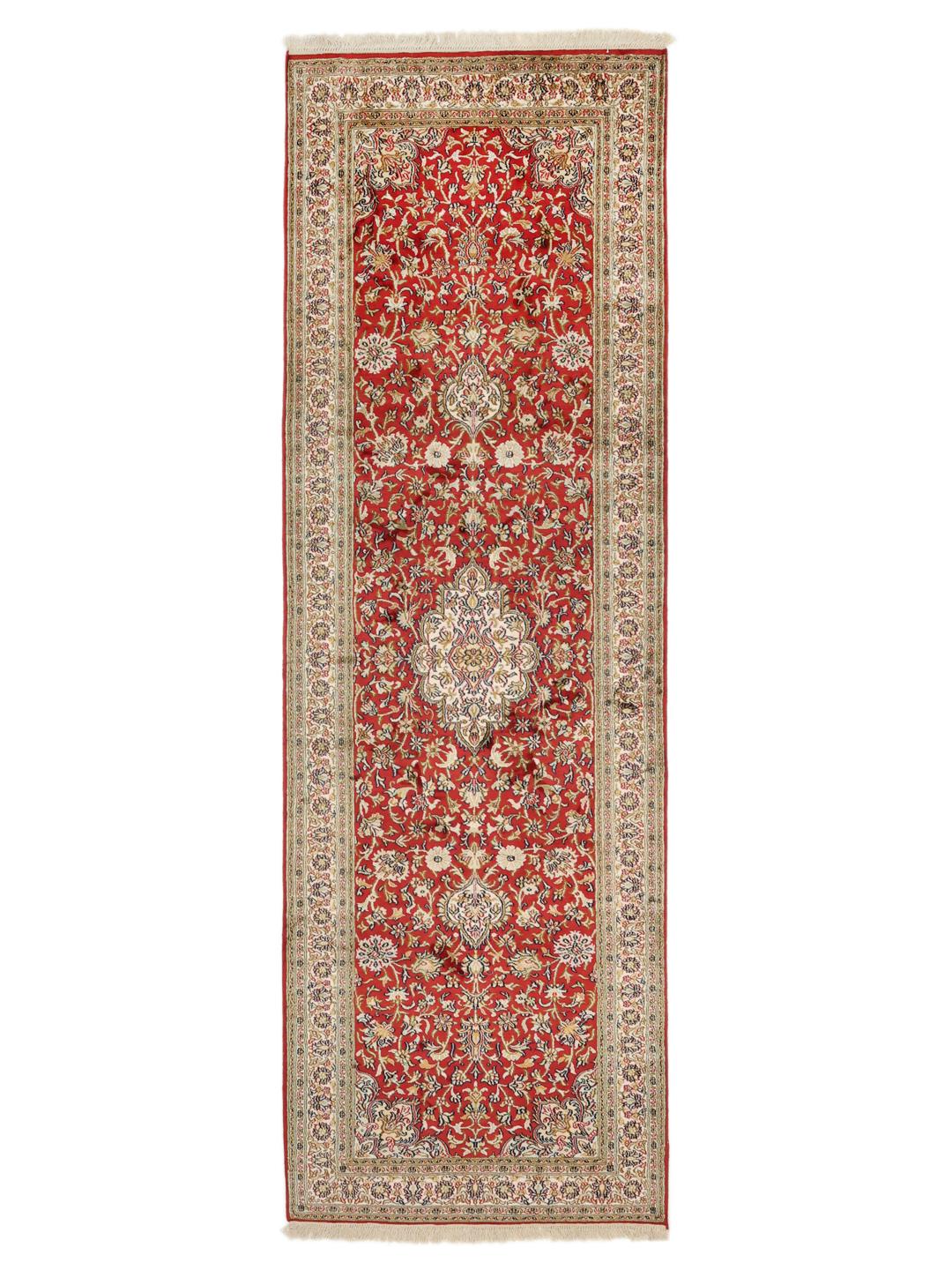
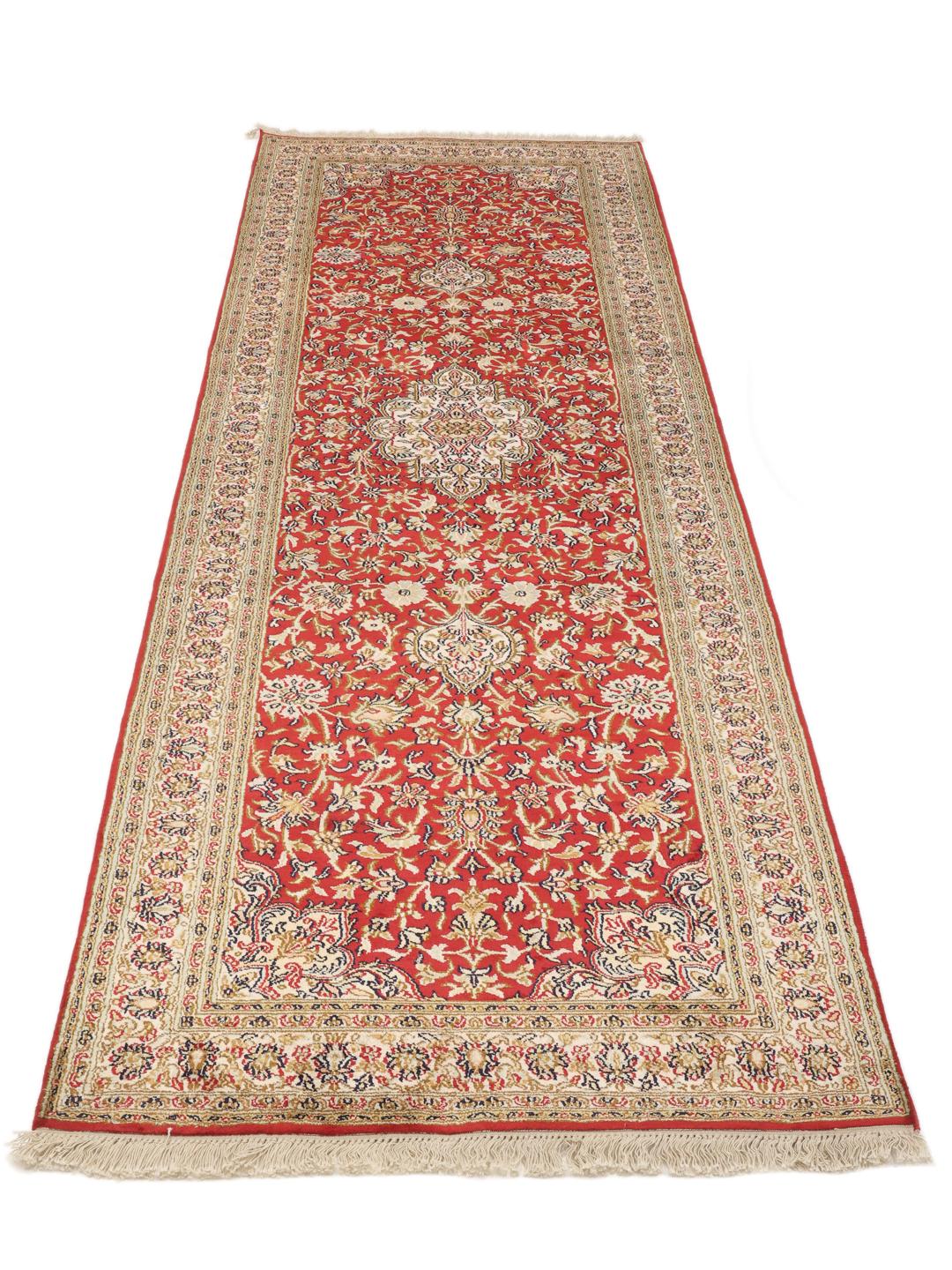
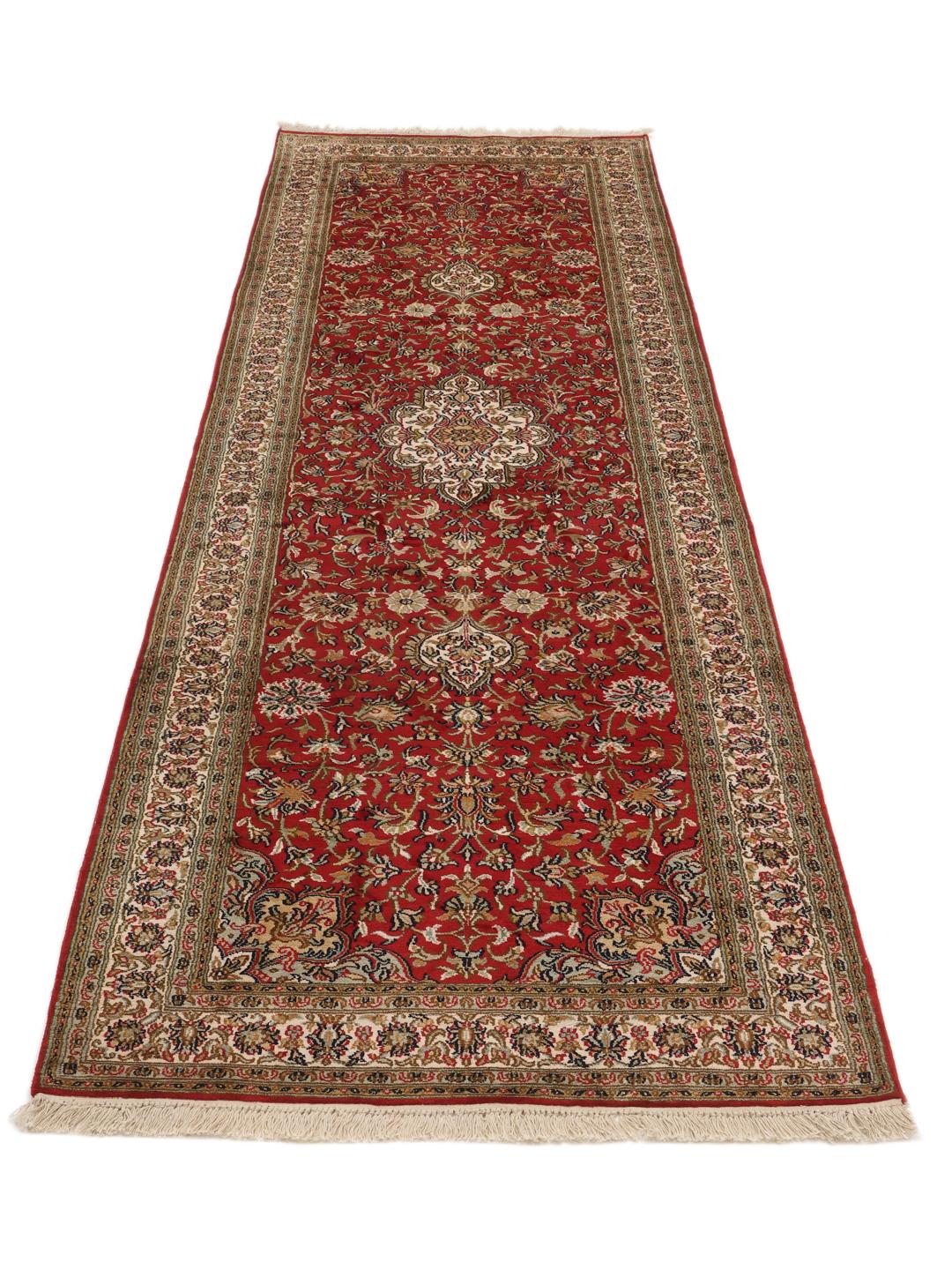
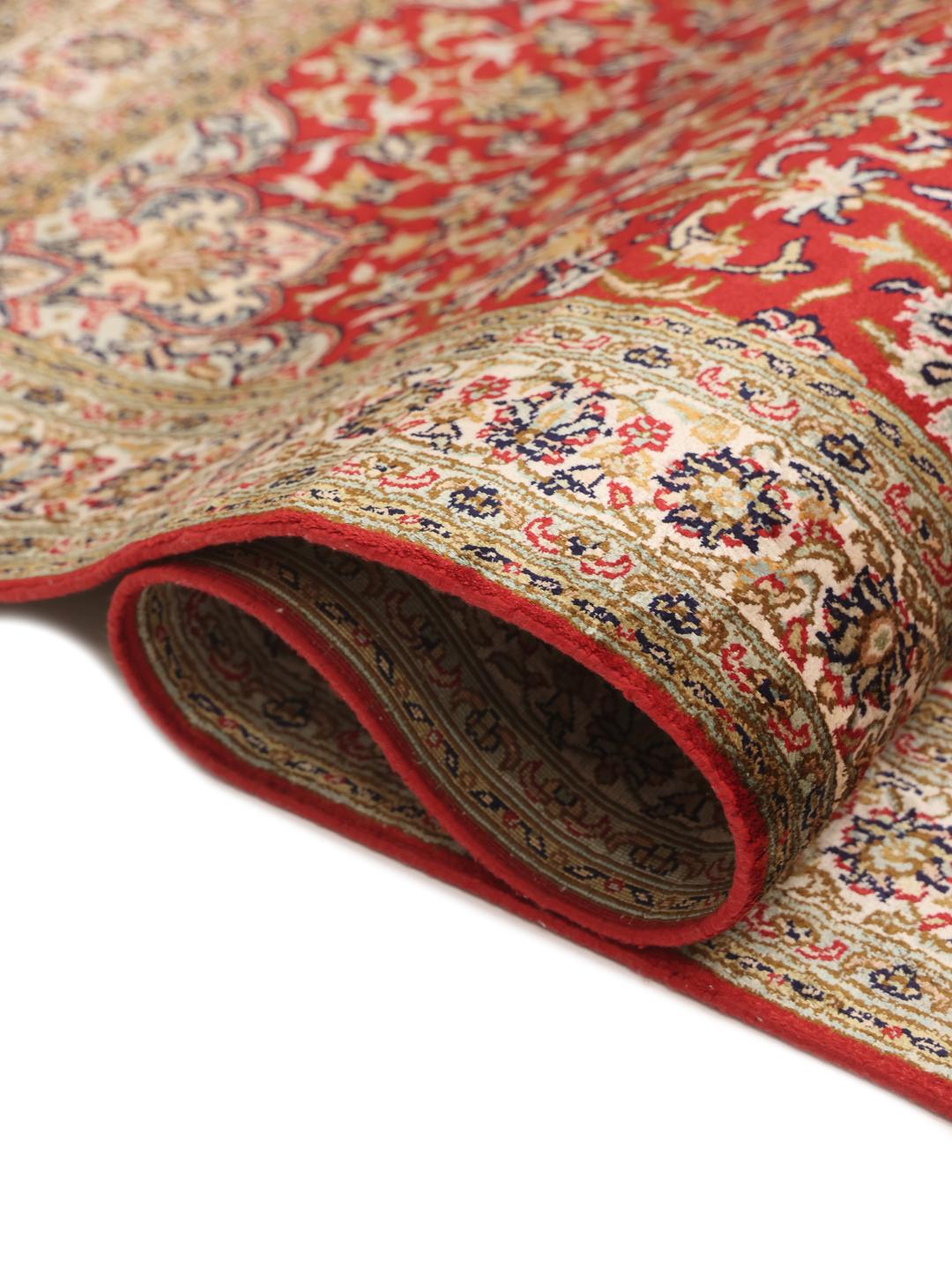
Kashmir silk rugs are celebrated globally for their roots in the historic Indian region of Kashmir, where weaving techniques have been refined over centuries. This tradition was heavily influenced by Middle Eastern weaving styles brought to the region, which then evolved into a distinct Indian aesthetic characterised by complex, curvilinear floral patterns and an incredible level of detail.
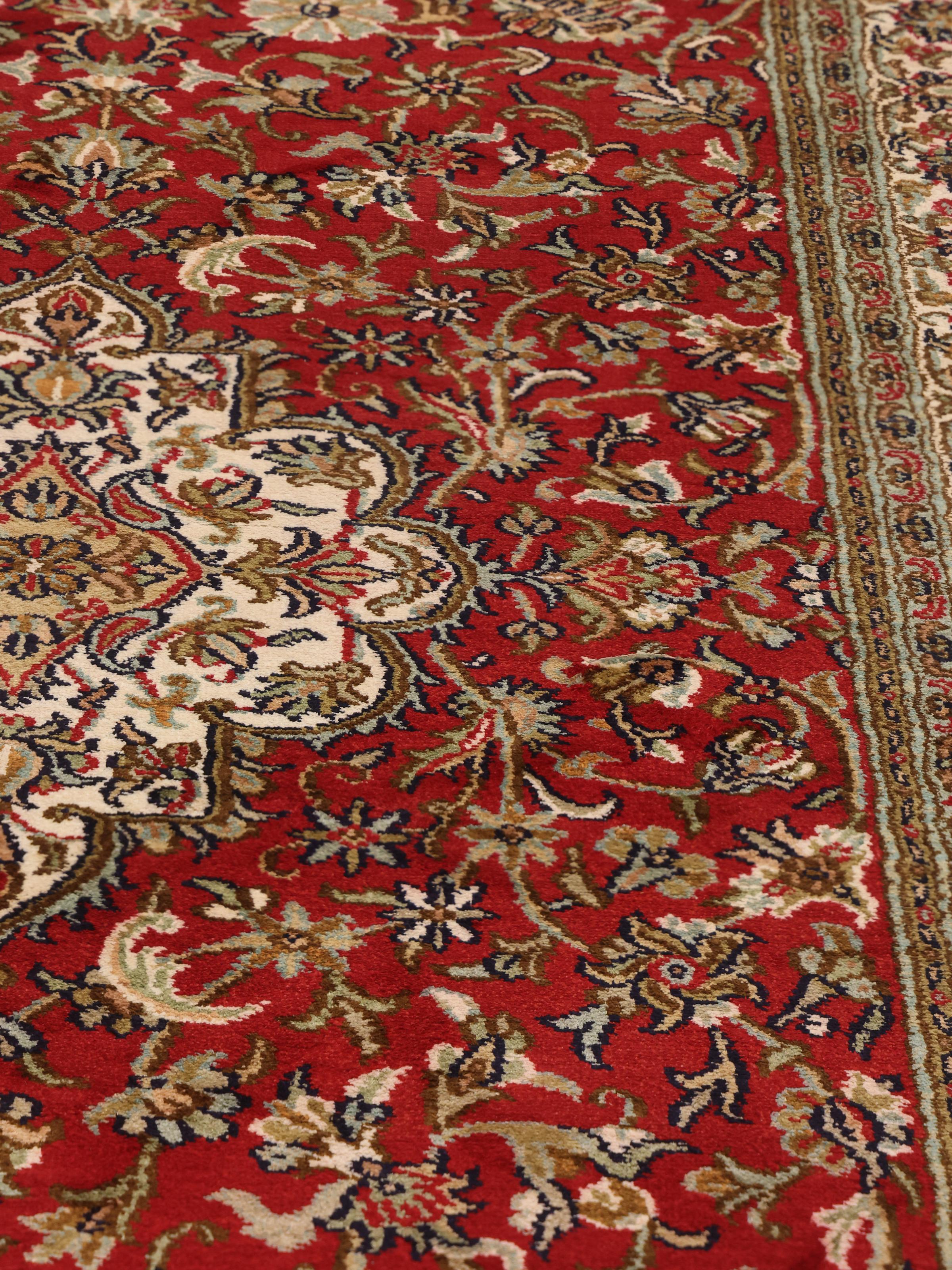
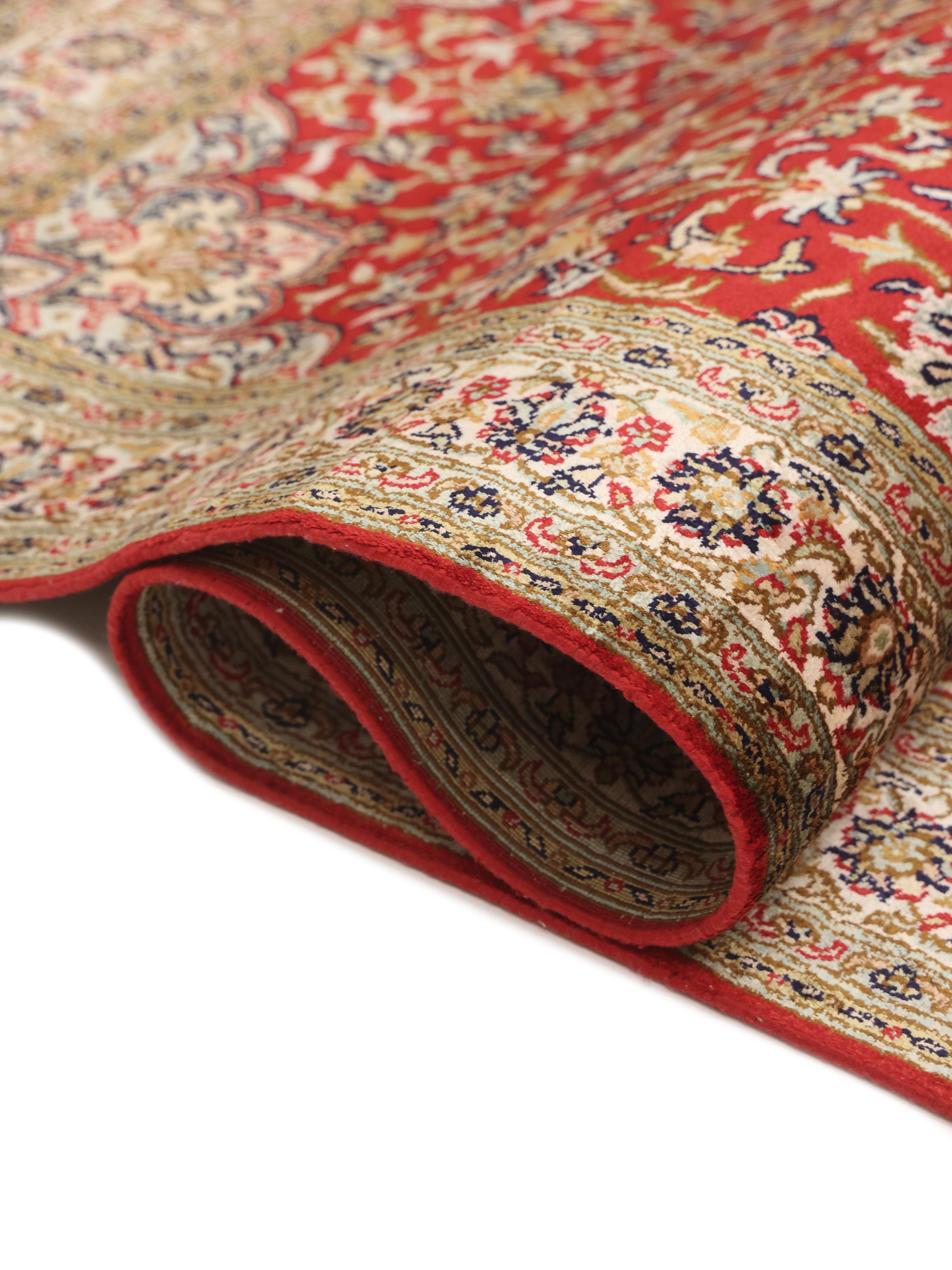
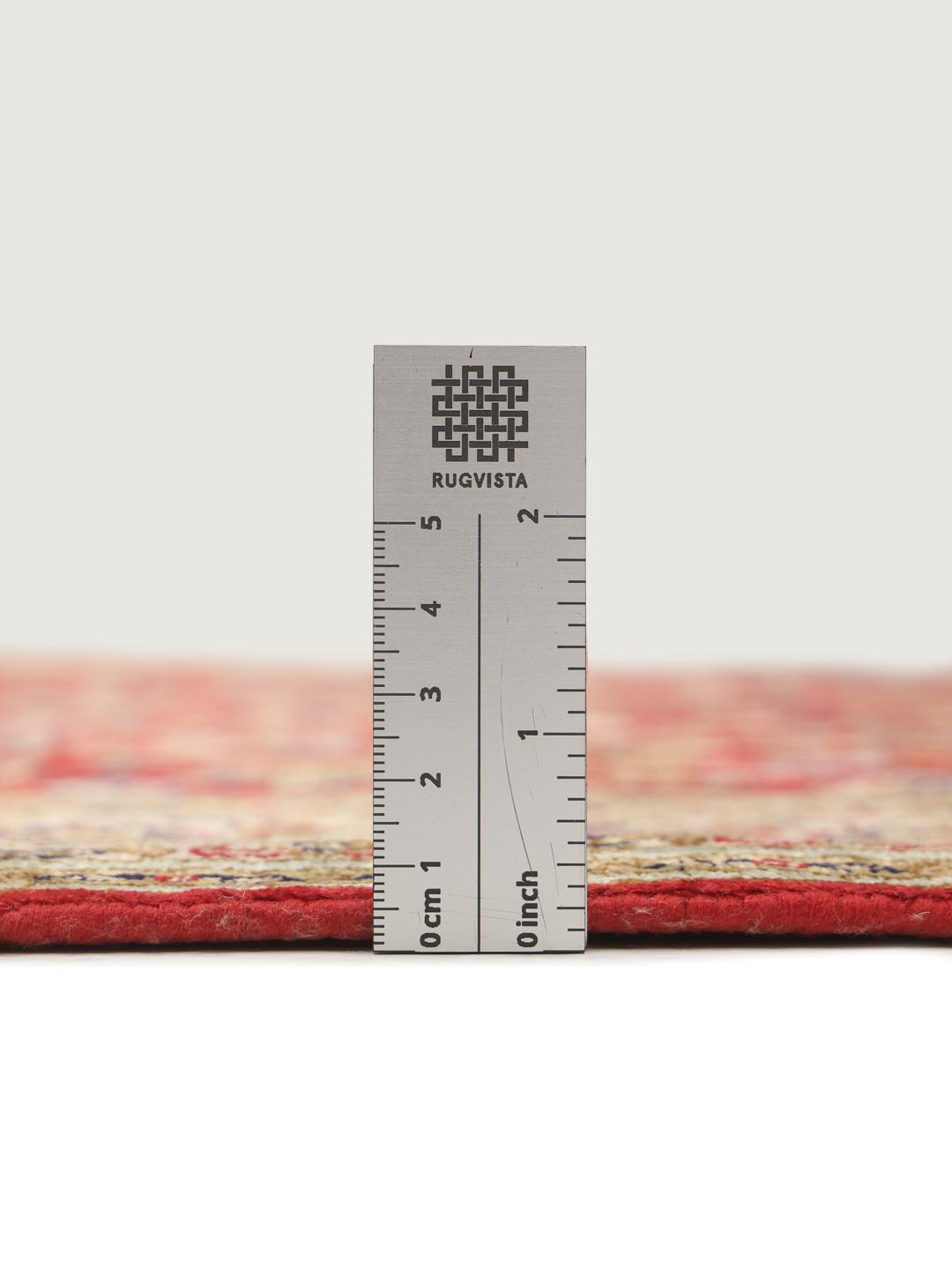
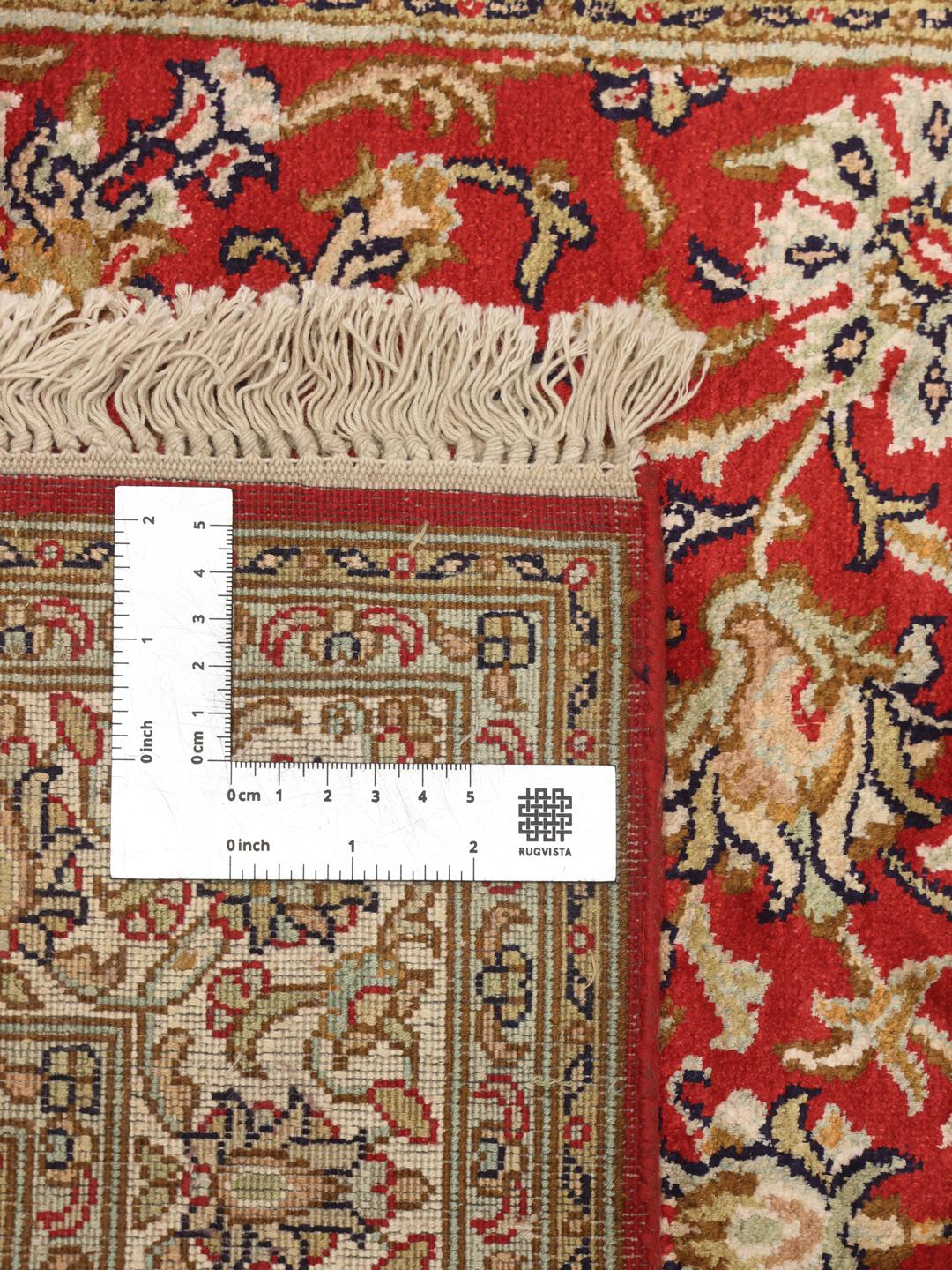
The term silk in this context refers to the primary material used for the pile, which is prized for its strength and natural lustre. In the tradition of Kashmir weaving, this material is carefully knotted onto a sturdy foundation to create a pile that is not only soft to the touch but also surprisingly resilient, allowing for the intricate, flowing designs that define the category.
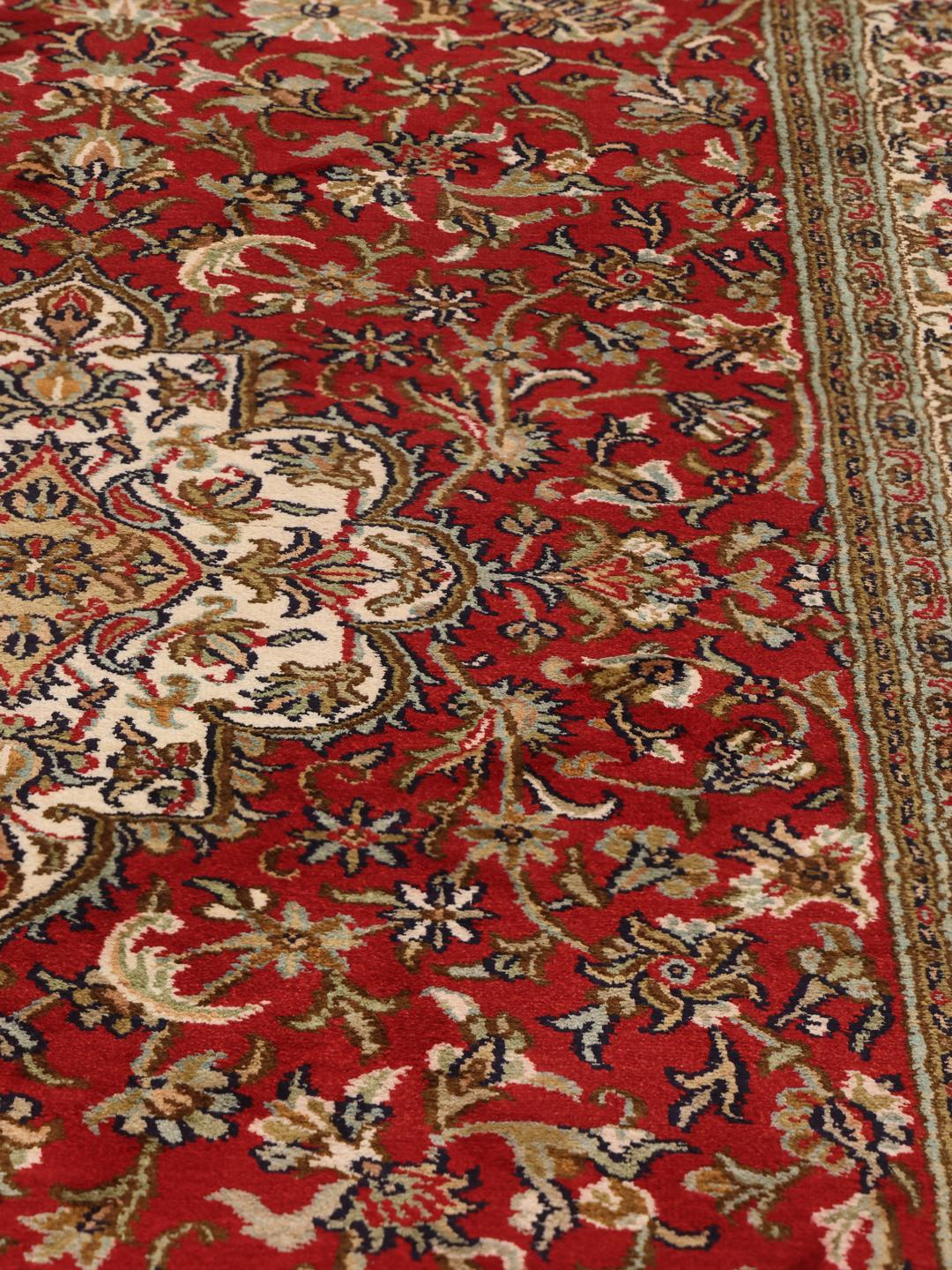
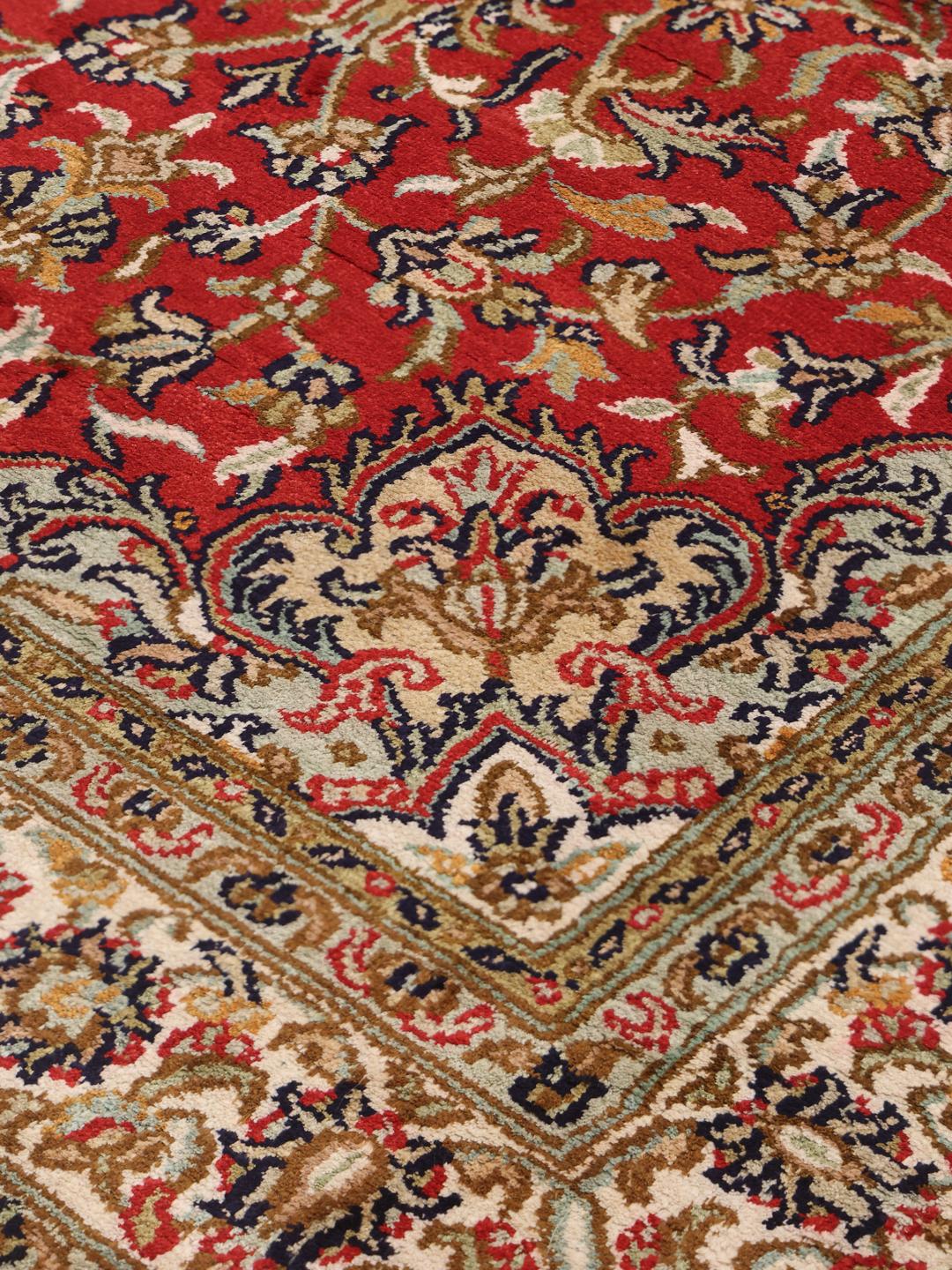
Signature design elements of these rugs often include the classic boteh motif, sprawling floral vines, and central medallions, all framed by ornate, multi-layered borders. The colour palette typically emphasises deep, rich tones, often utilising red as a primary field colour to provide a striking contrast against the delicate, lighter-toned floral work found throughout the field.
Collectors value these rugs for their combination of artistic beauty and technical mastery. Owning a piece from this tradition is an investment in cultural heritage, representing a level of skill that has been passed down through generations of weaver families. Each runner is a testament to this enduring legacy, offering both visual splendour and lasting quality.