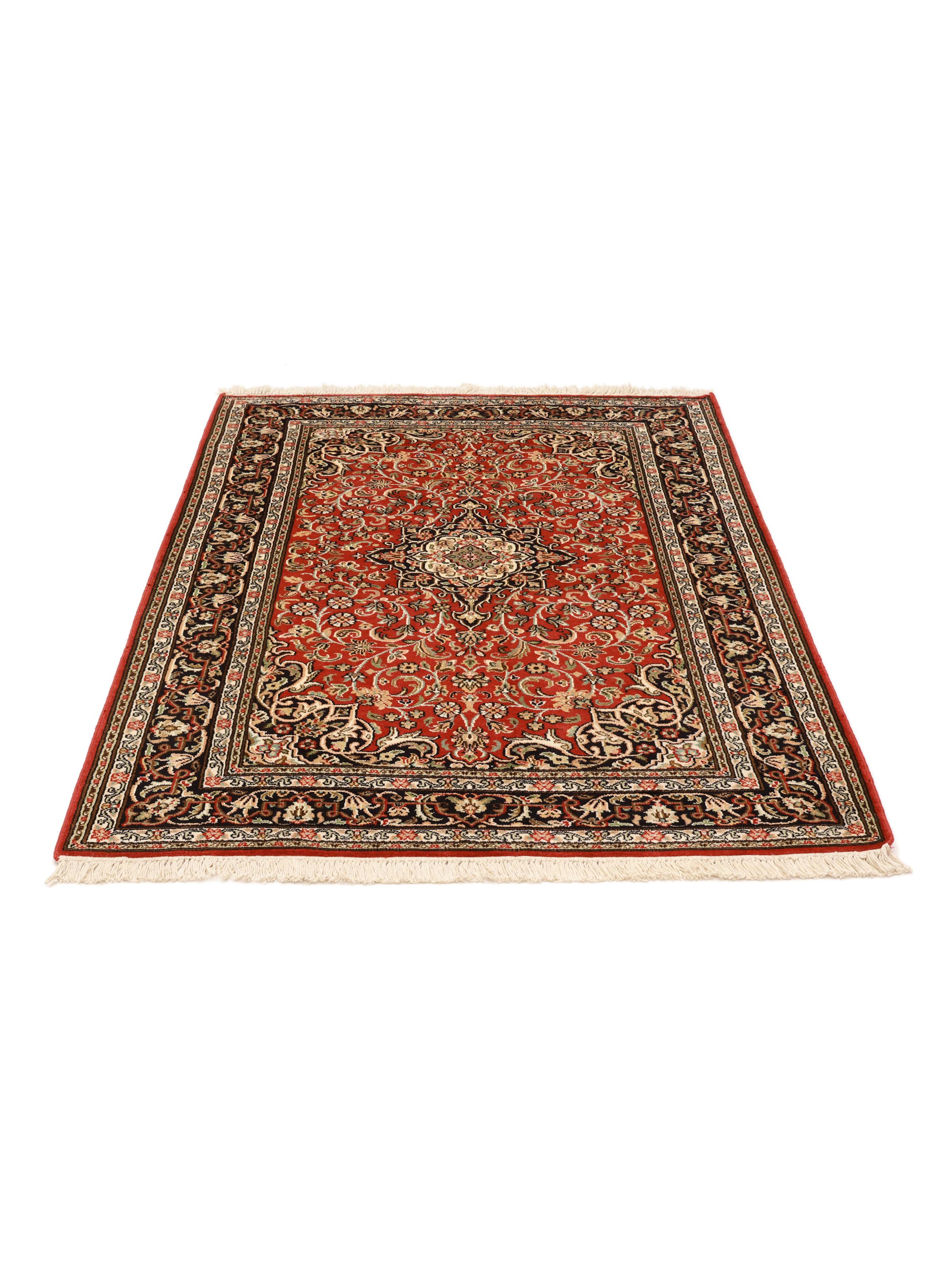
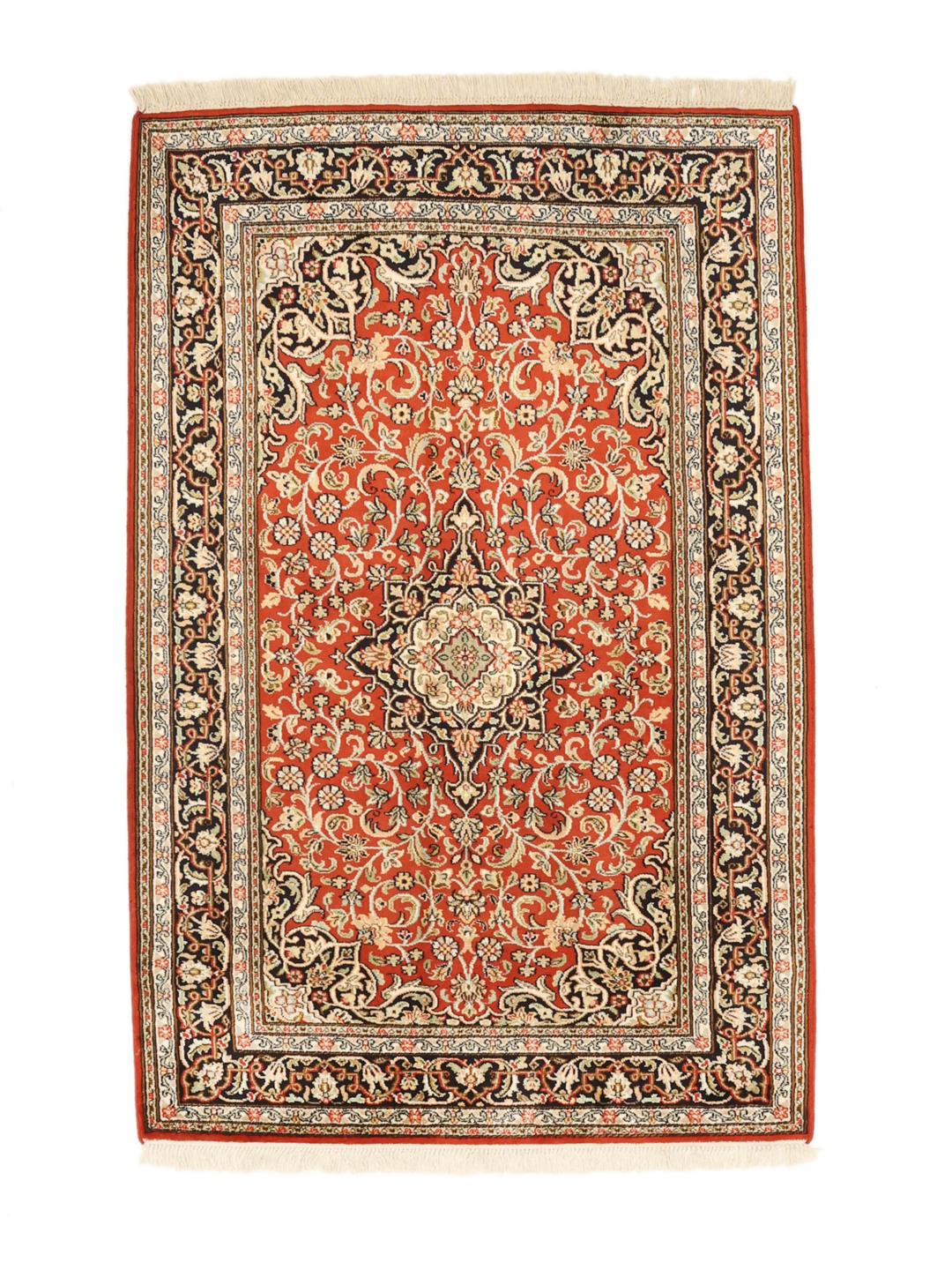
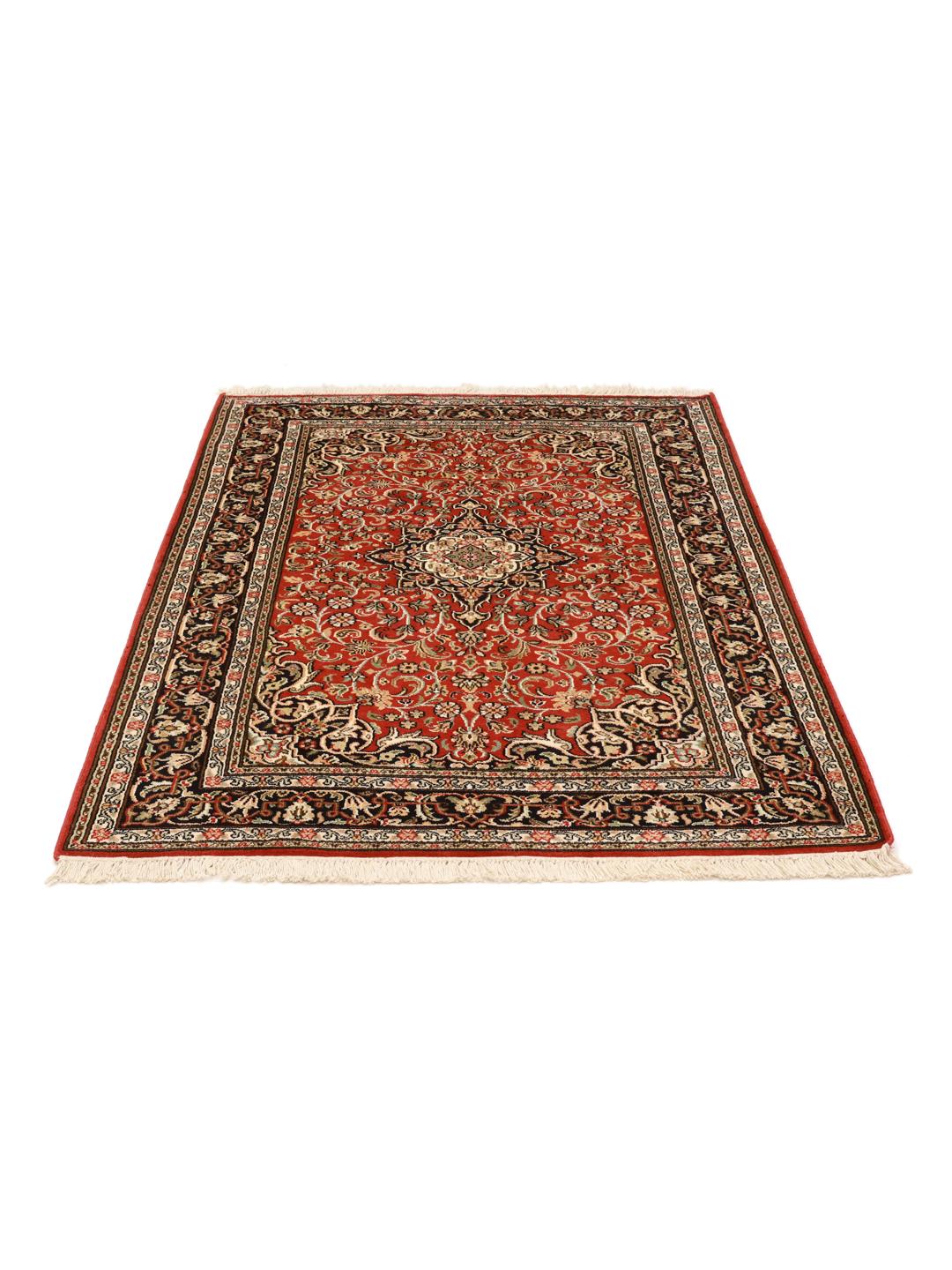
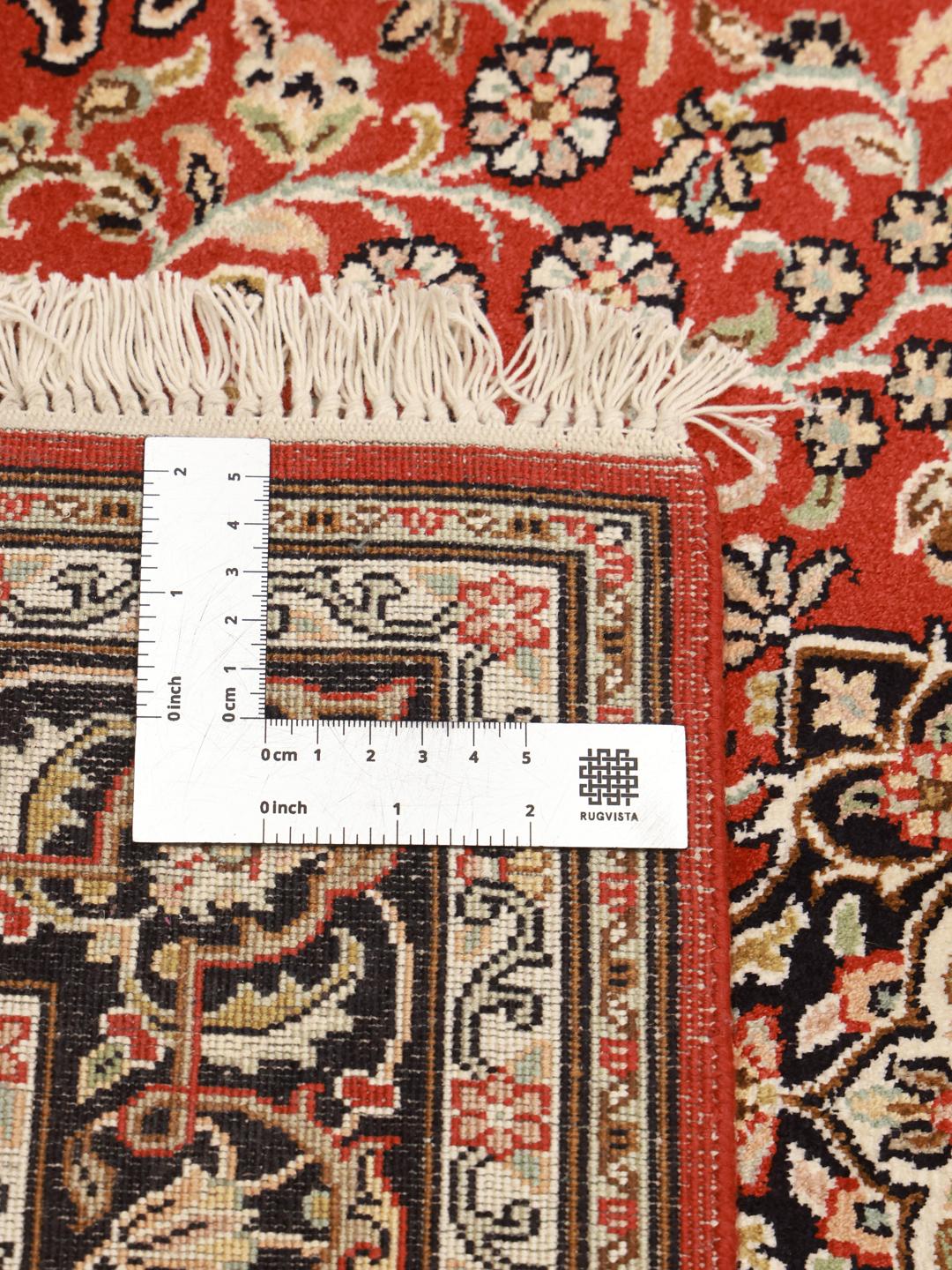
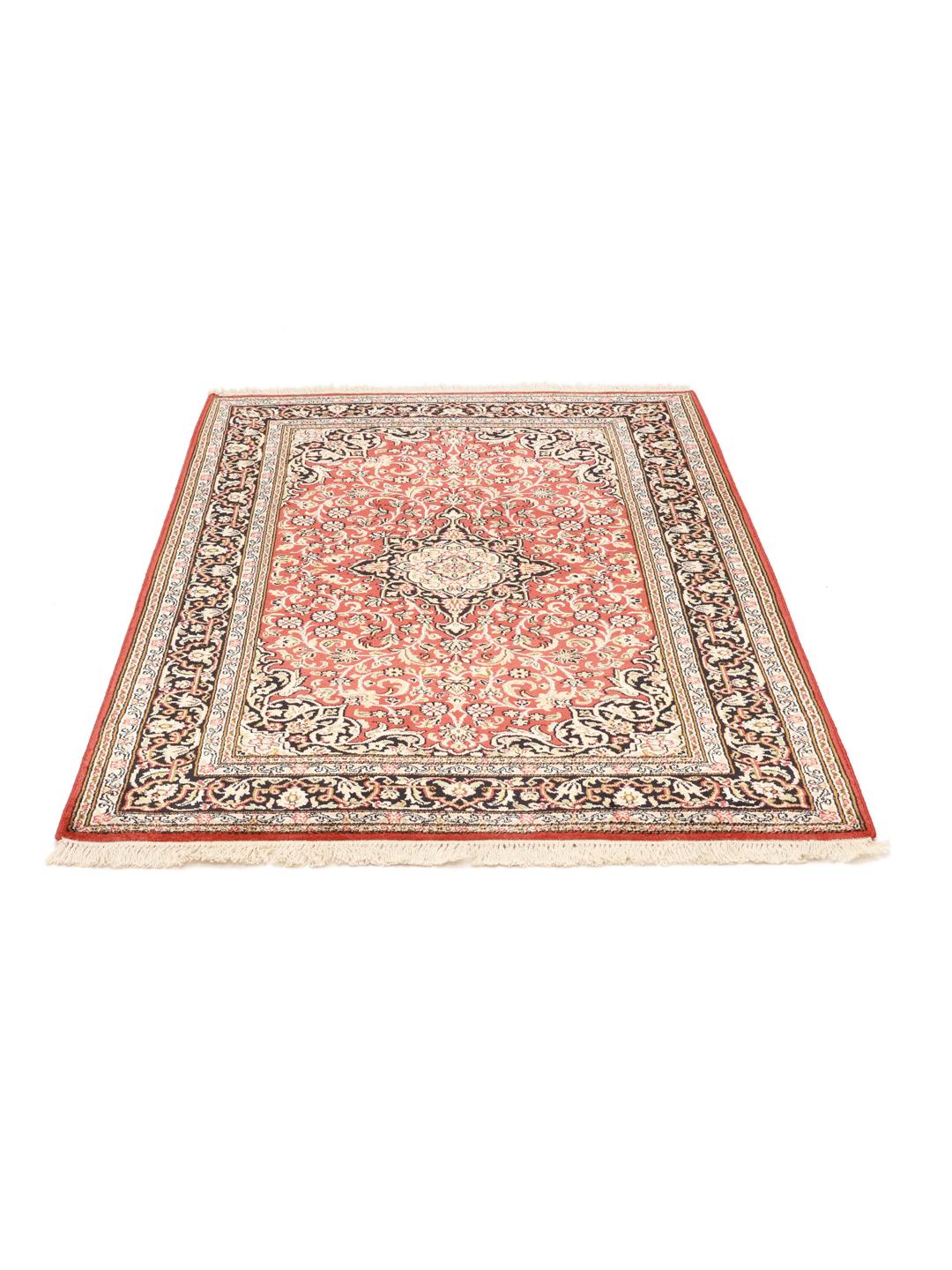
Kashmir rugs carry a rich heritage that traces back to the 15th century, when weaving techniques were introduced to the Kashmir valley from Central Asia. Over centuries, local artisans refined these methods, blending regional artistic sensibilities with the sophisticated motifs of the Middle East. This evolution resulted in the distinctive style we recognise today, characterised by intricate floral patterns and a refined aesthetic.
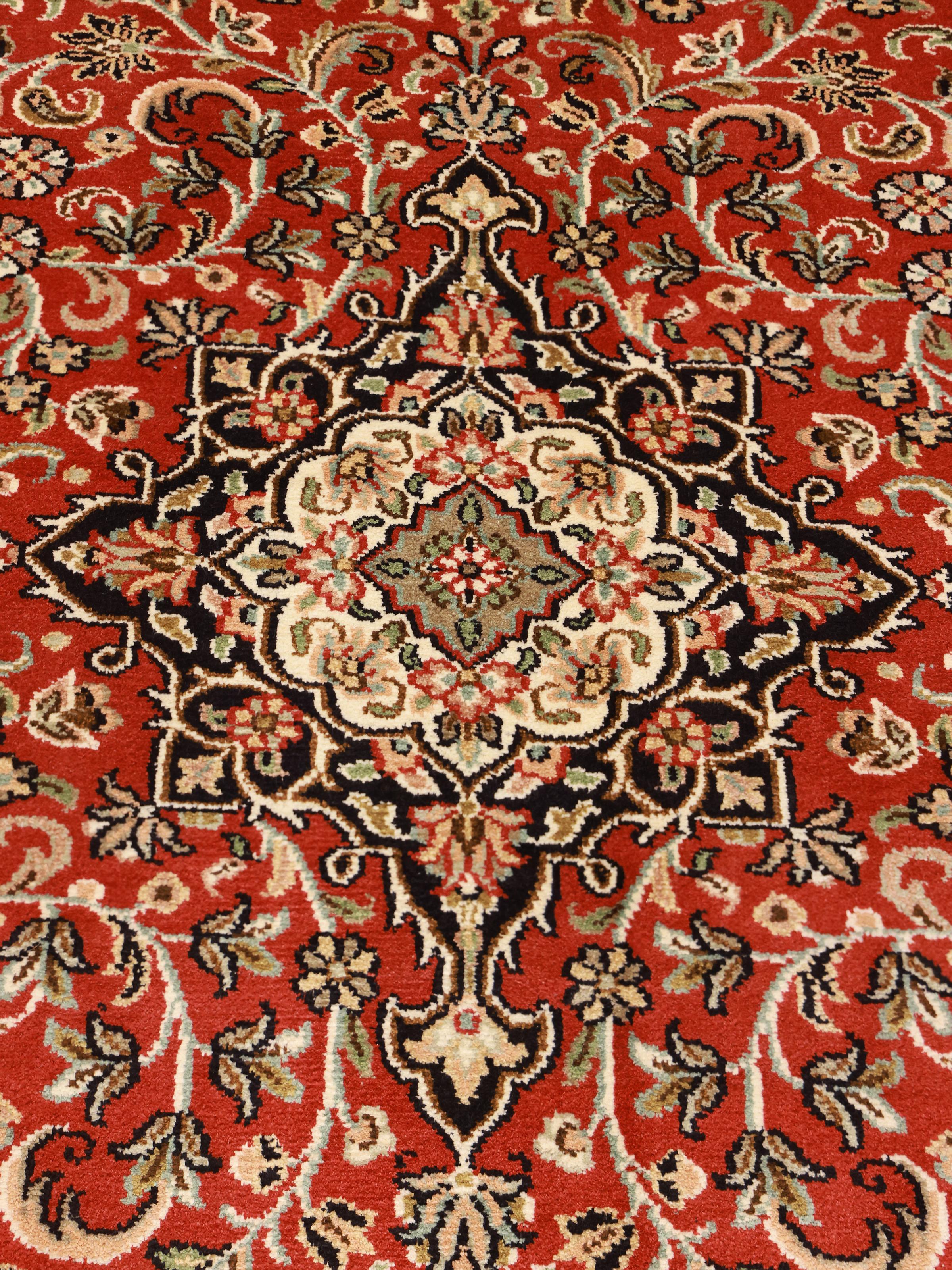
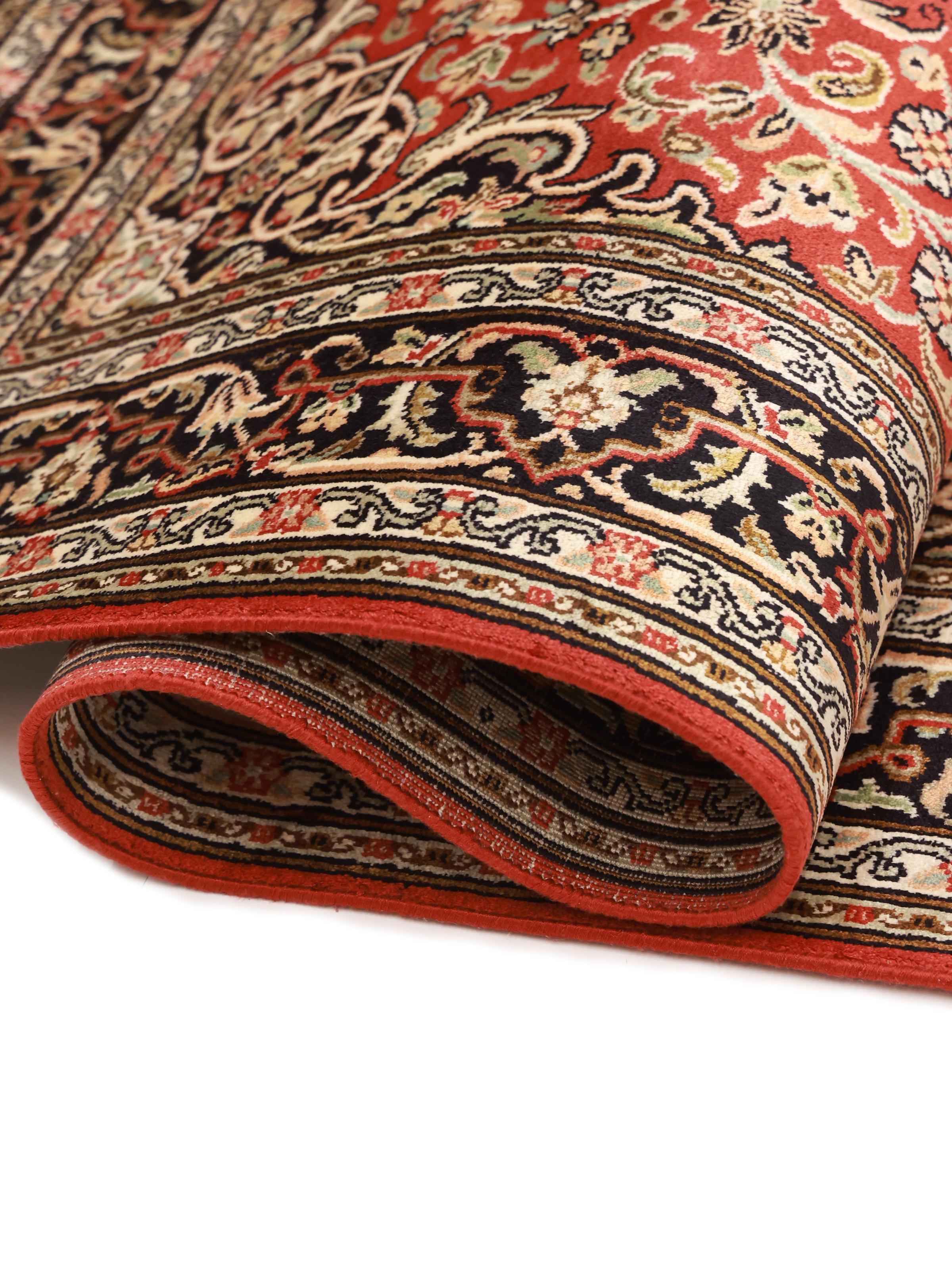
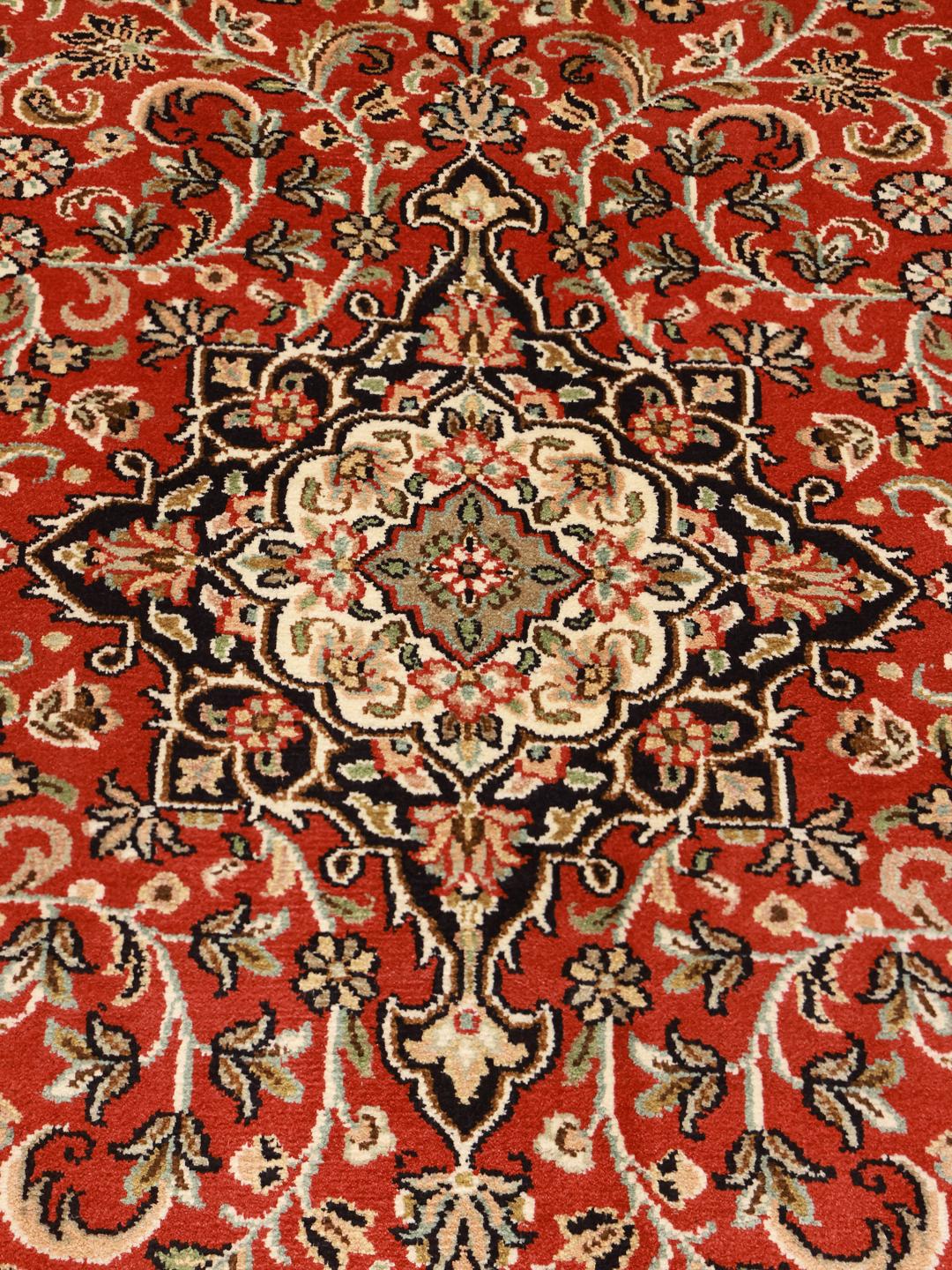
The term Kashmir silk refers to the exceptional quality of the material used in these rugs. Silk is prized for its long, strong fibres, which allow for a much tighter knot density than wool. This density is essential for achieving the incredibly fine, detailed patterns and the signature lustre that makes these rugs shimmer under natural light. This craft requires a steady hand and a deep understanding of textile tension.
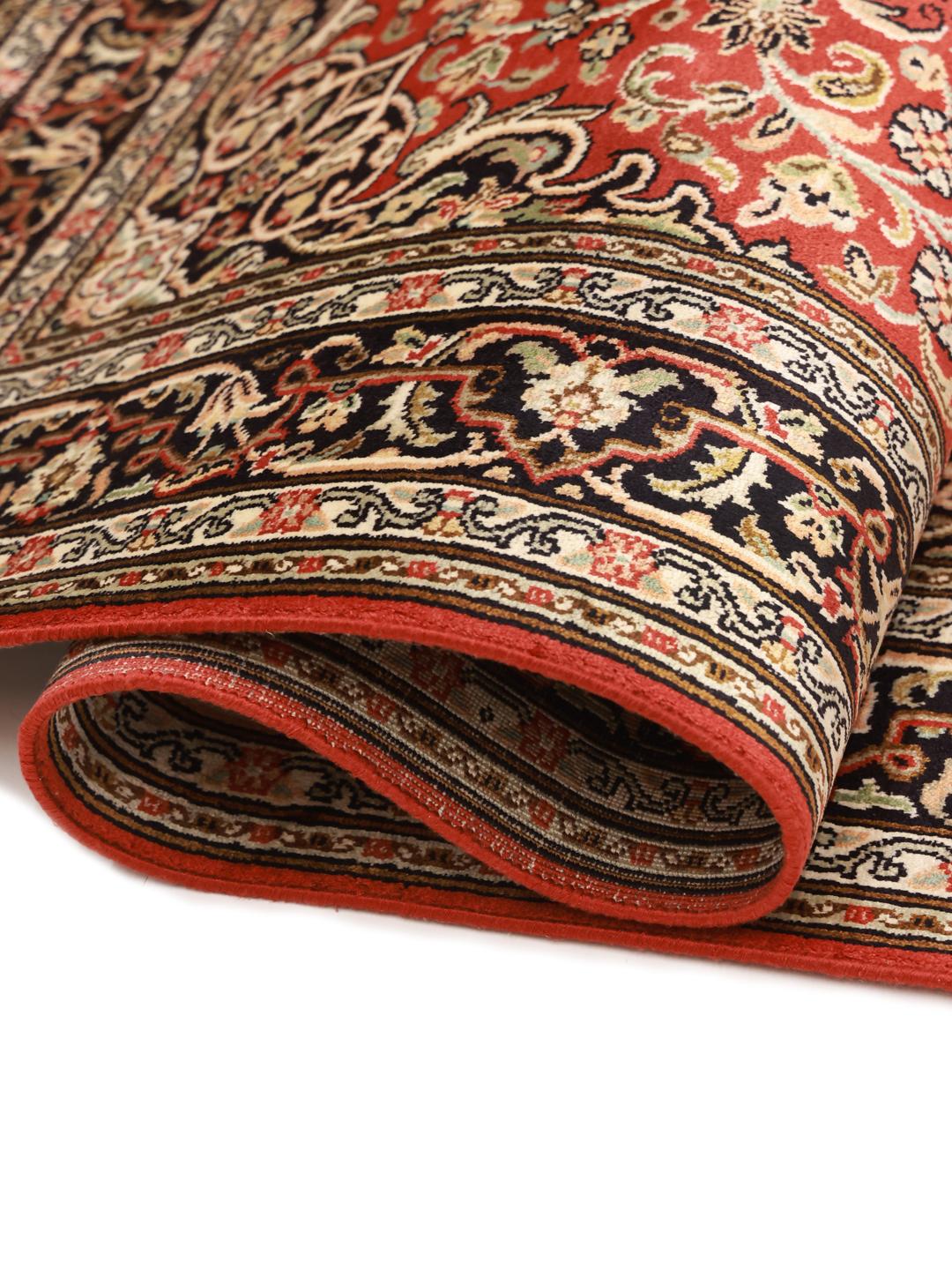
Signature design elements of these pieces often include elaborate central medallions surrounded by dense floral scrolls, vines, and palmettes. While the patterns draw from historical garden themes, each weaver often introduces subtle variations in colour or motif, ensuring that every rug tells its own story. The borders are typically multi-layered, framing the central field with precise, balanced geometry that reflects a high degree of artistic discipline.
Owning a Kashmir silk rug is an investment in cultural tradition and human skill. These rugs are highly valued by collectors for their combination of material luxury and historical significance. When you bring this rug into your home, you are not just acquiring a floor covering, but a piece of art that represents generations of refined craft and the enduring beauty of Indian textile traditions.