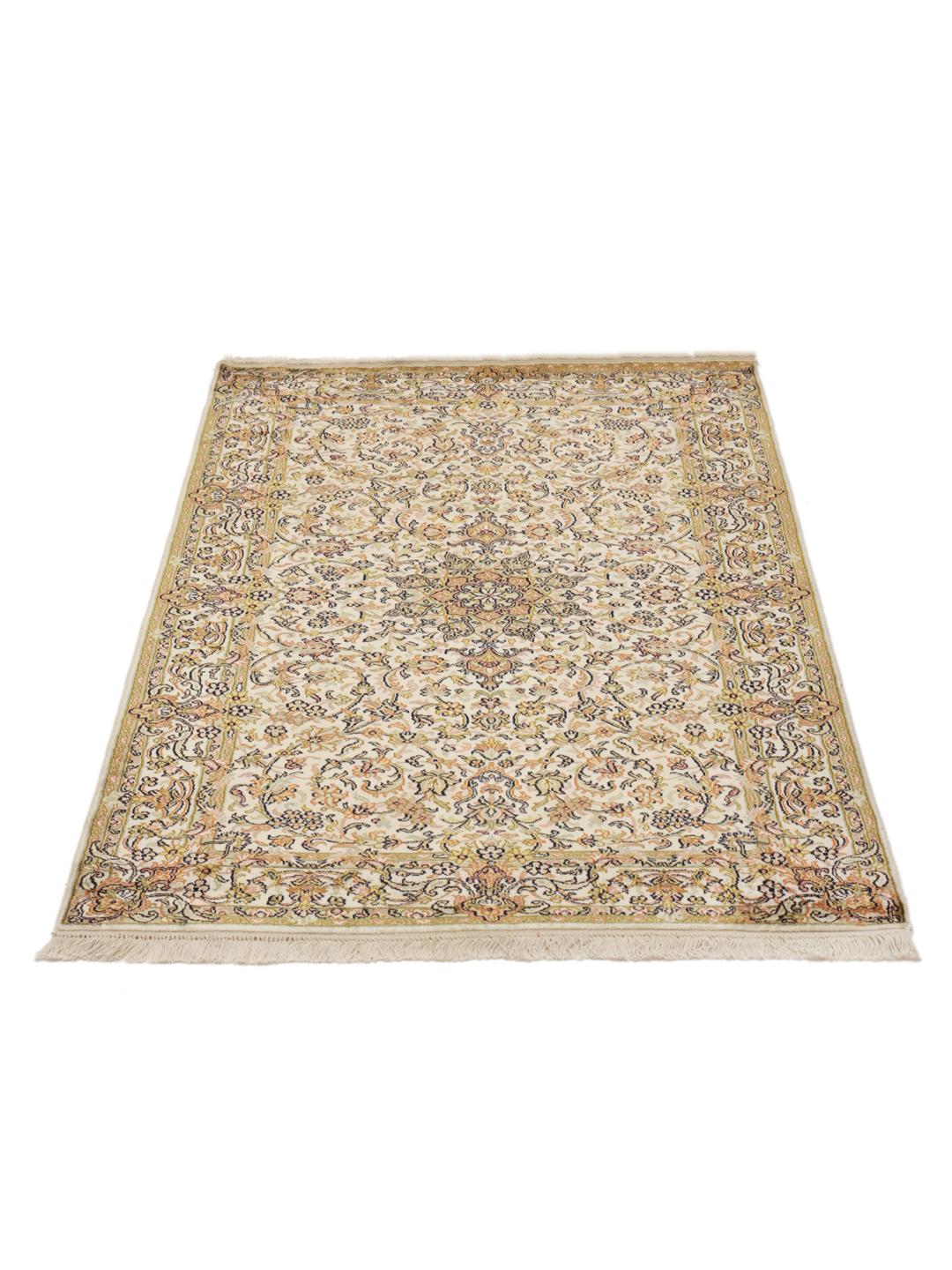
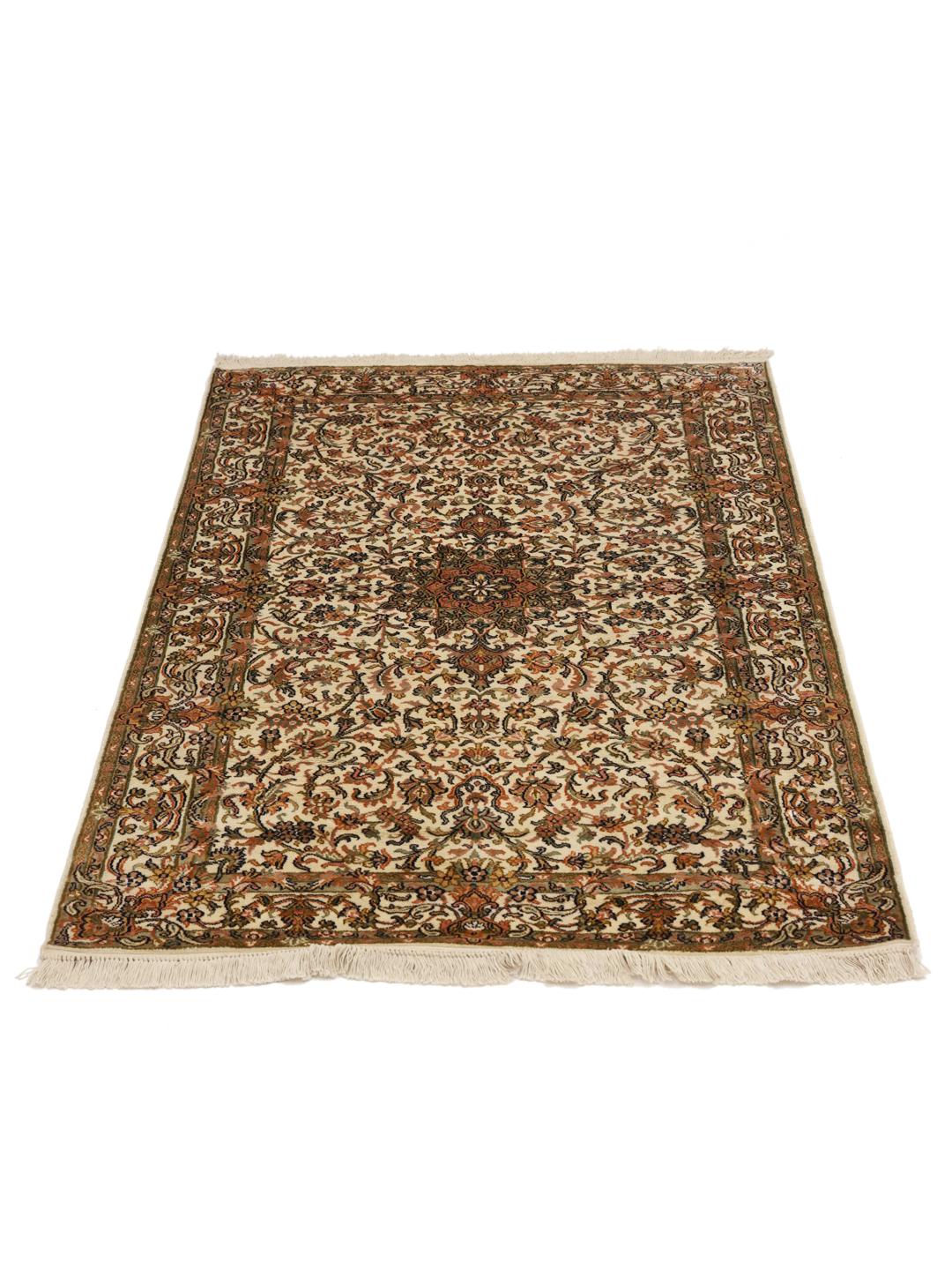
The tradition of weaving in Kashmir, India, is a storied craft that has flourished for centuries, heavily influenced by the artistic currents of the Middle East. Originally inspired by the intricate carpets brought along the Silk Road, local artisans adapted these complex designs to reflect their own regional aesthetic, resulting in the world-renowned Kashmir silk style we see today.
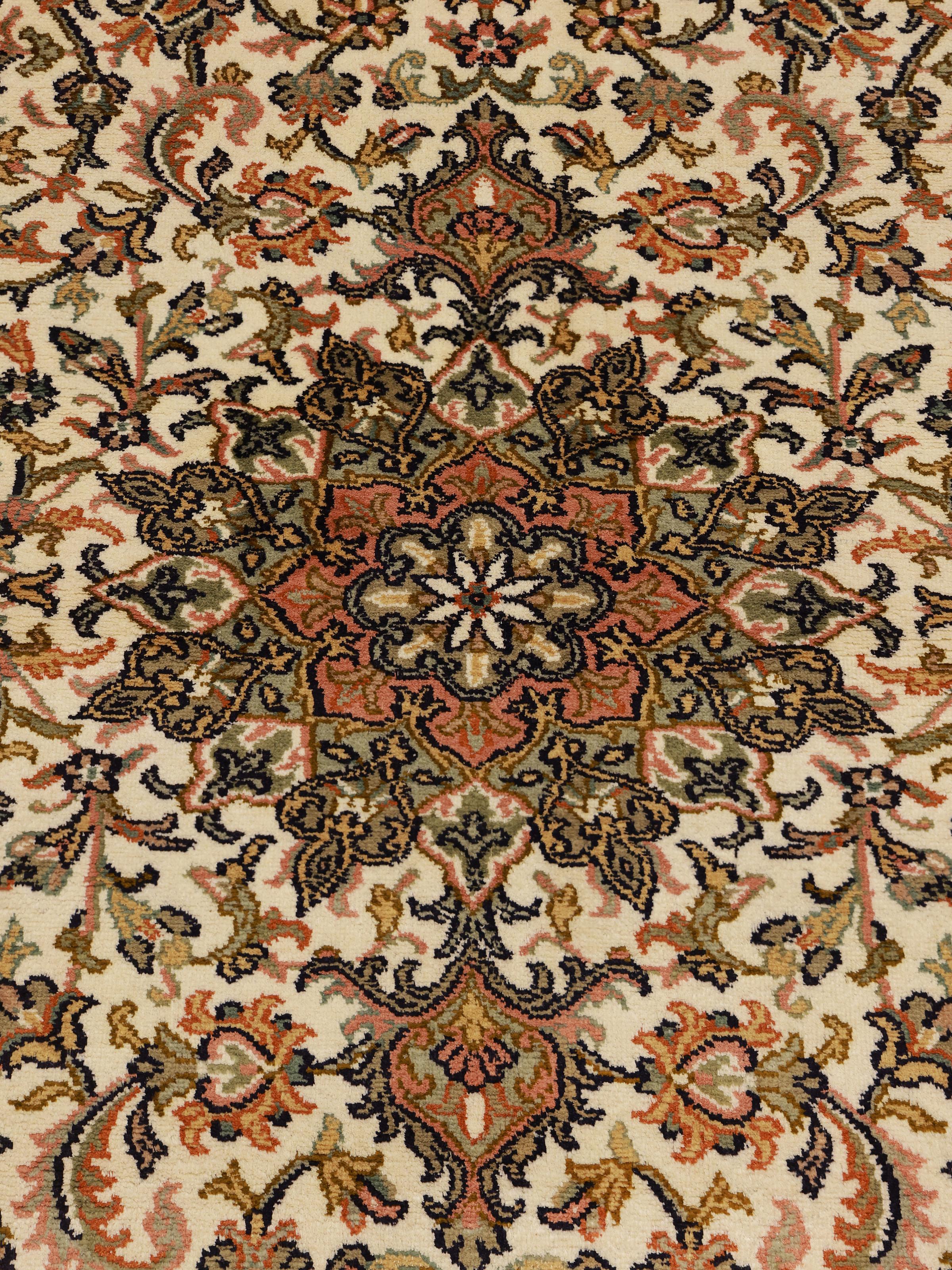
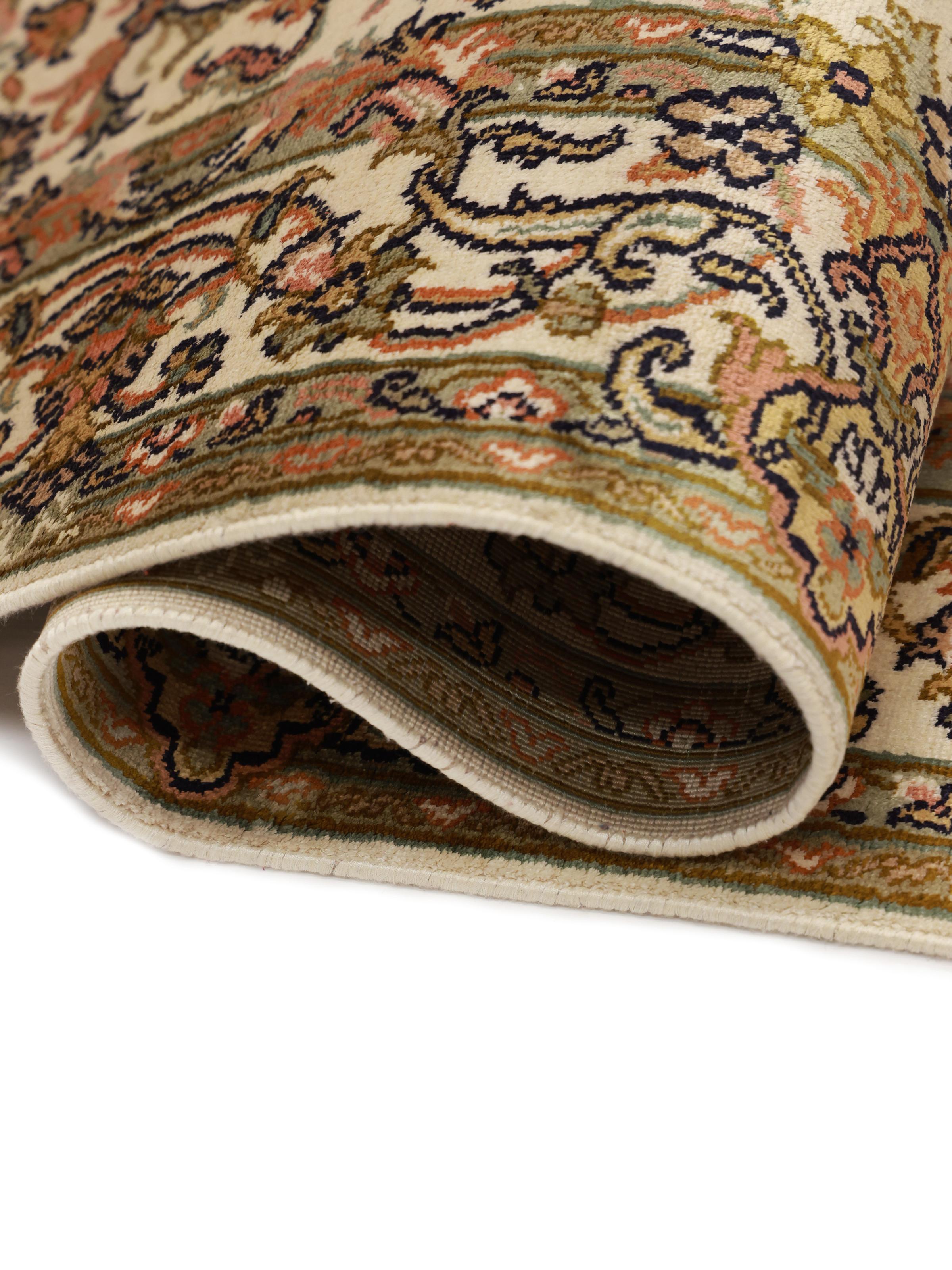
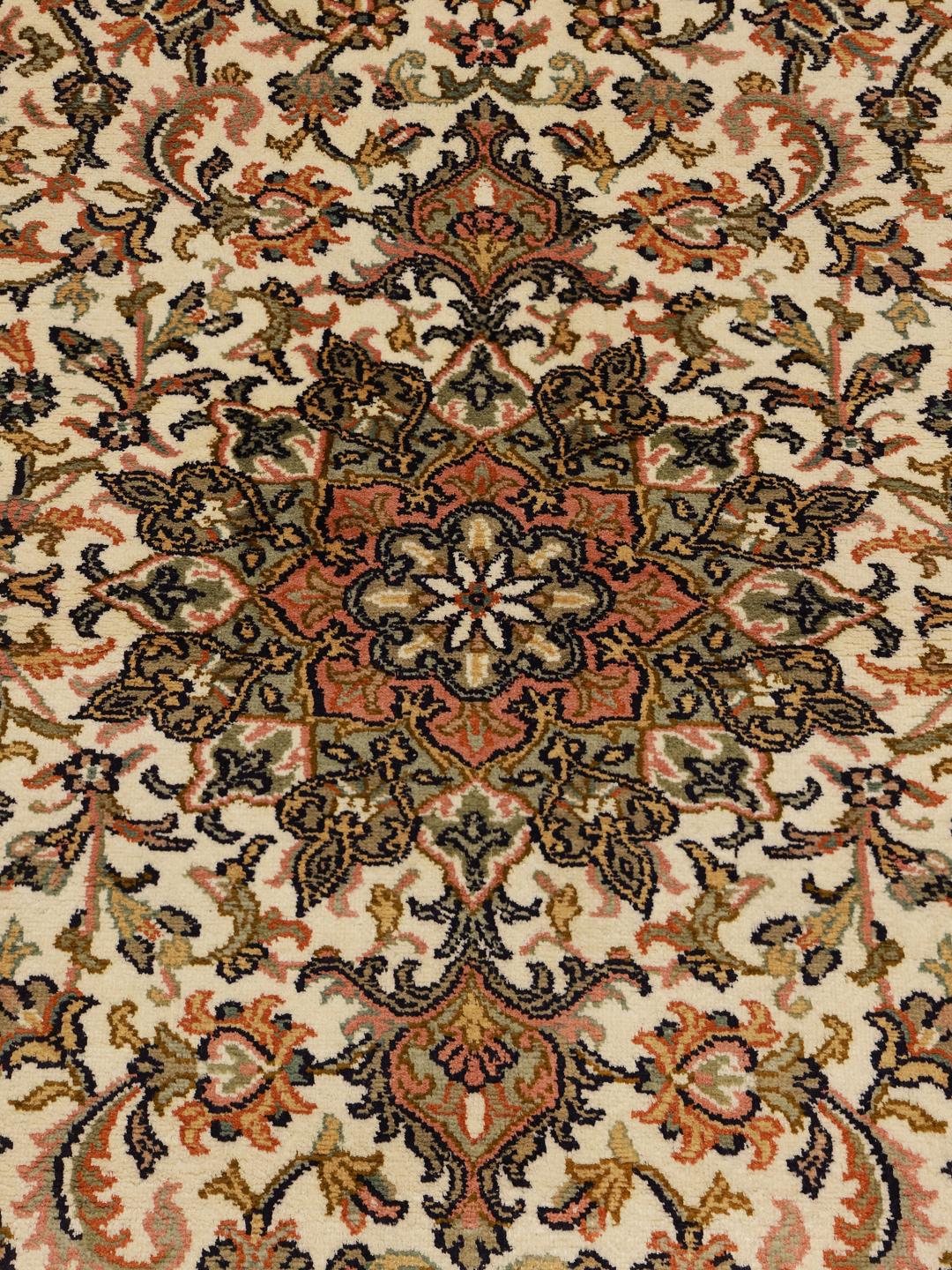
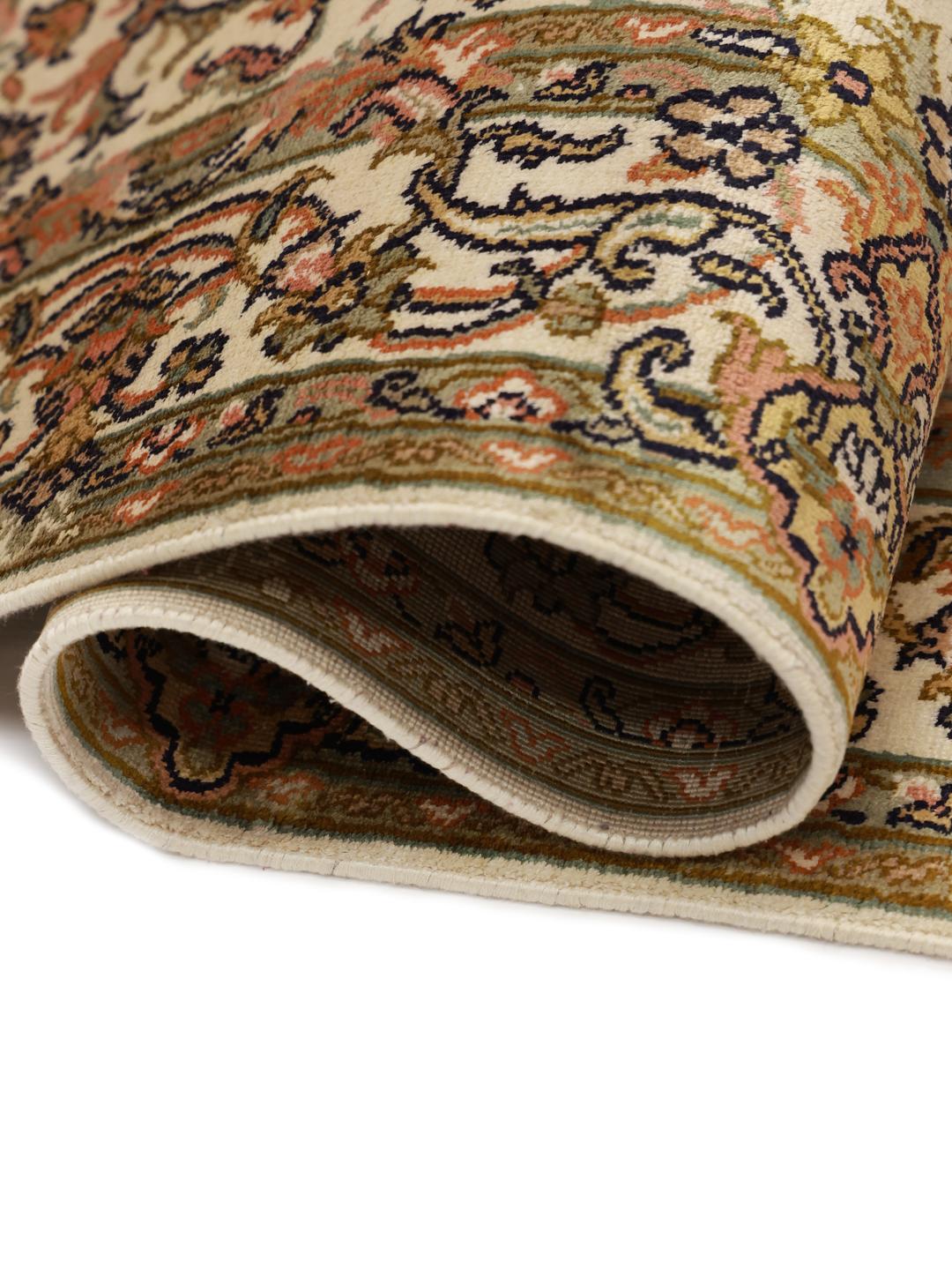
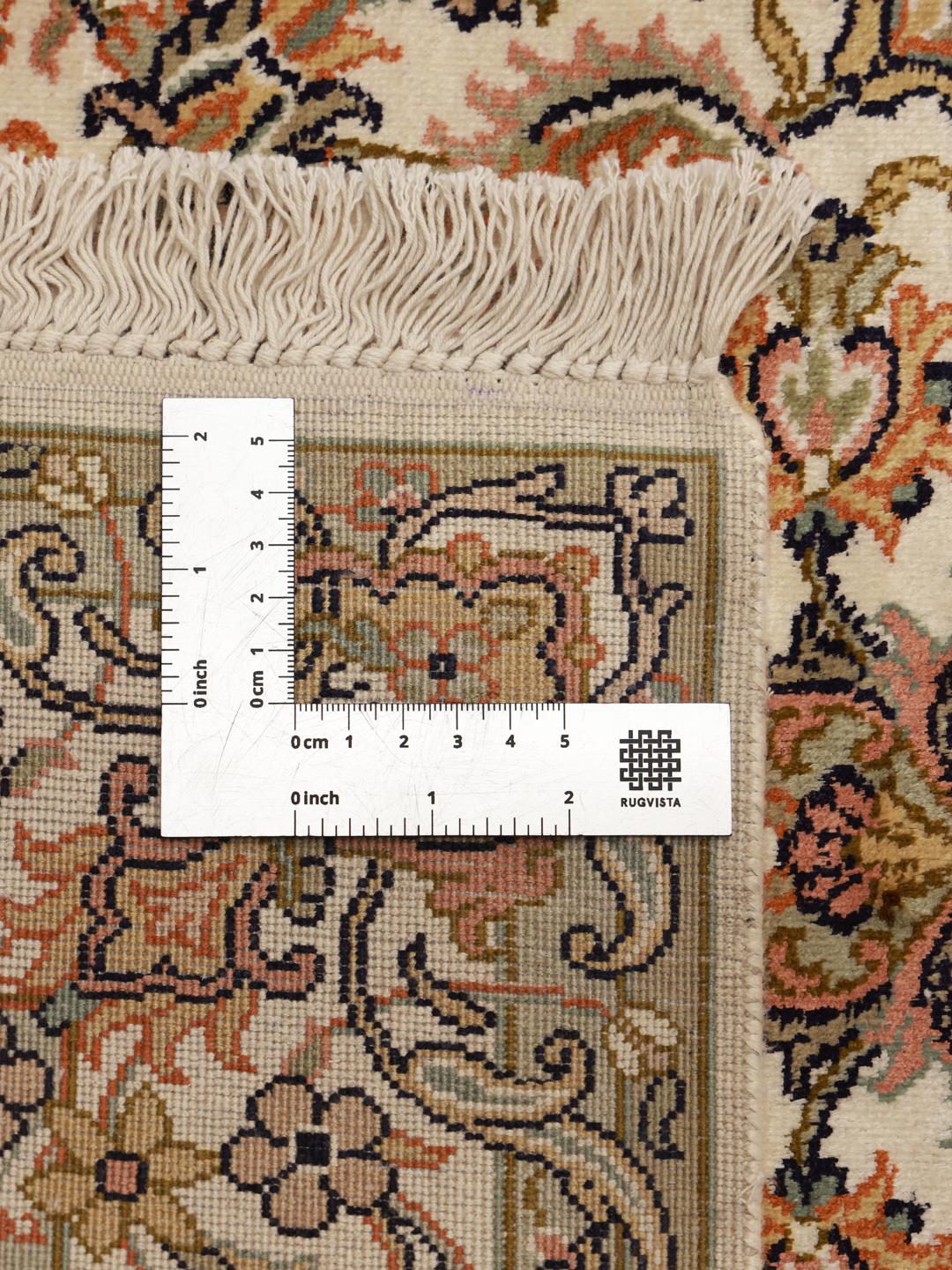
The defining quality of these rugs lies in the use of high-quality silk, which allows for the creation of exceptionally fine details. The term hand-knotted refers to the traditional method where each individual knot is tied by hand onto the warp threads. This process is essential for achieving the high knot density that allows these rugs to display such precise, painterly floral motifs that seem to glow with natural light.
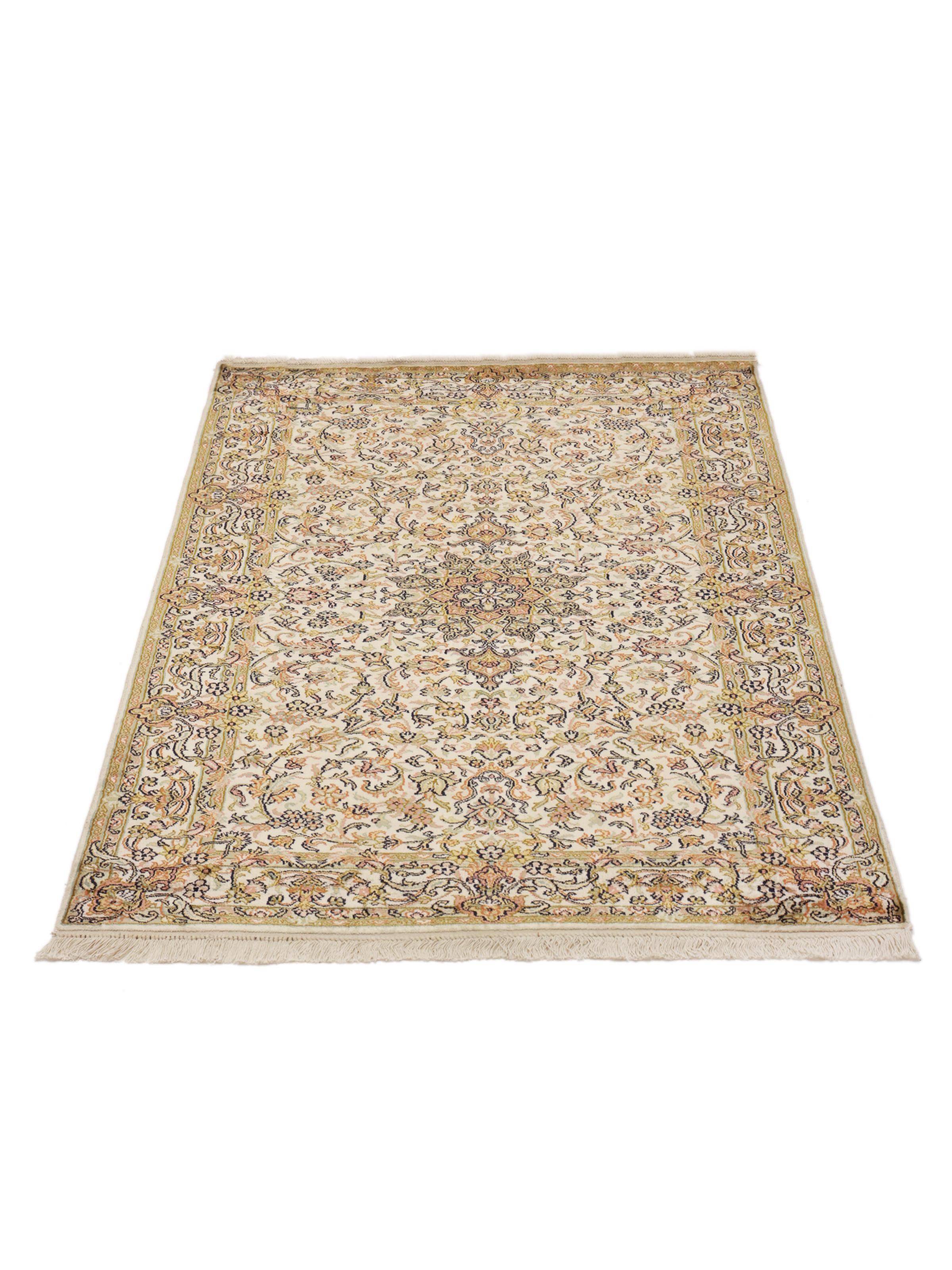
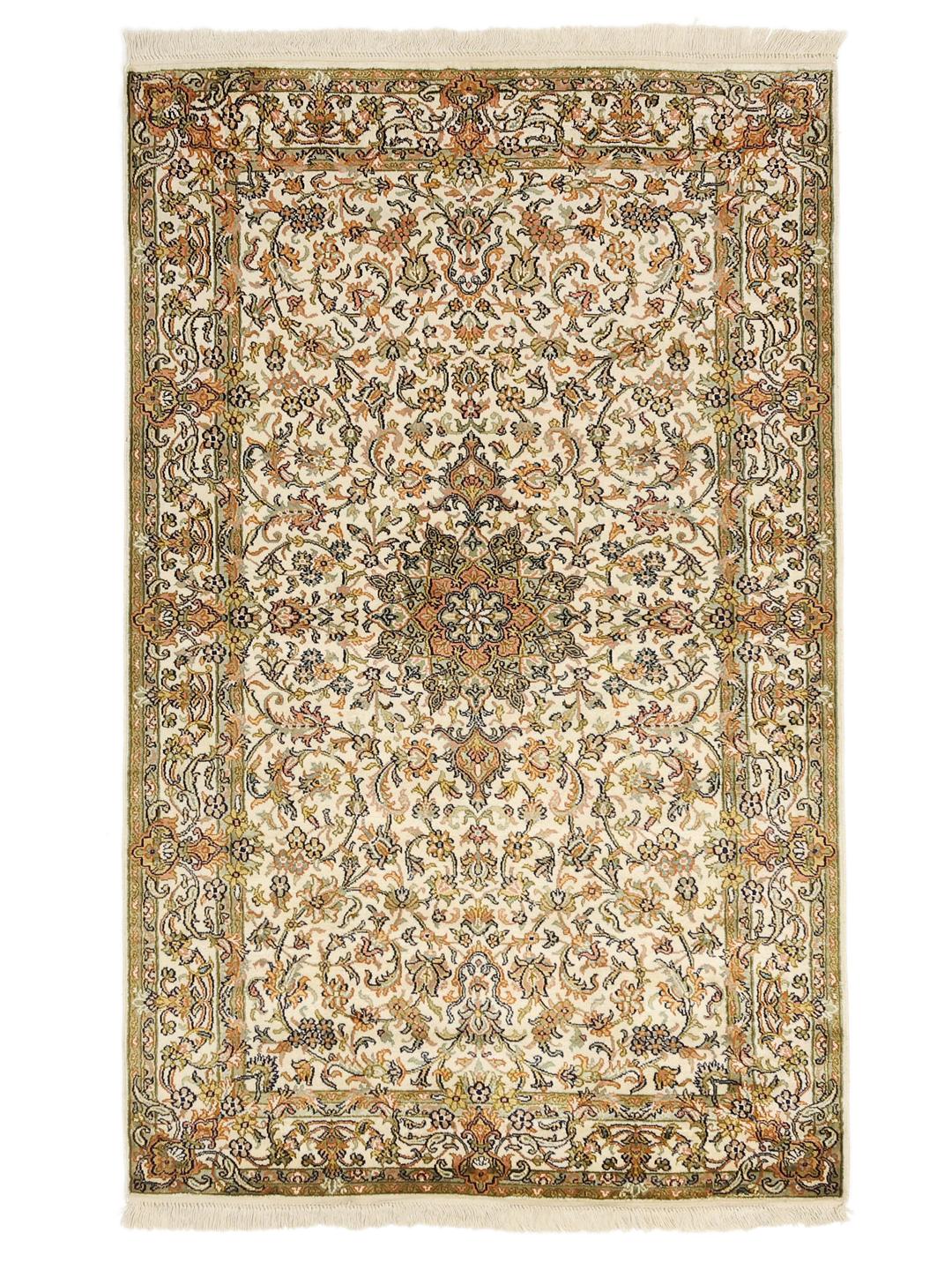
The visual language of a Kashmir silk rug is typically characterised by a central medallion surrounded by a field of flowing floral vines, leaves, and blossoms. These designs are often framed by a detailed, repeating border that balances the complexity of the centre. The soft, elegant colour palette is often inspired by the landscape and traditional textile arts of the region, emphasising grace and symmetry.
Owning a Kashmir silk rug is more than just purchasing a floor covering; it is an investment in a legacy of skill and patience. Collectors value these pieces for their lasting quality and the way they bridge the gap between functional household items and fine art. By bringing one into your home, you are continuing a tradition of appreciation for the slow, deliberate work of human hands.