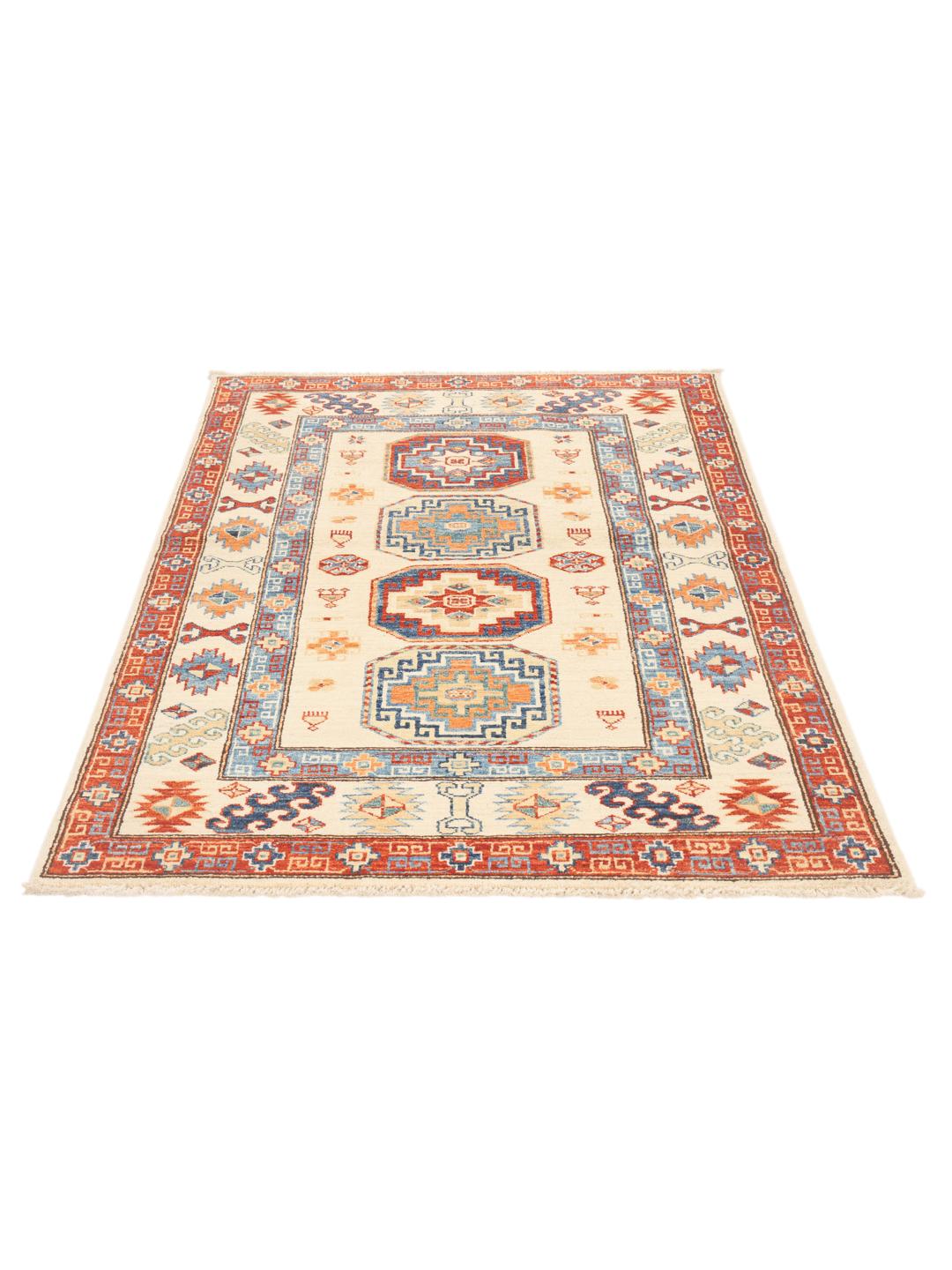
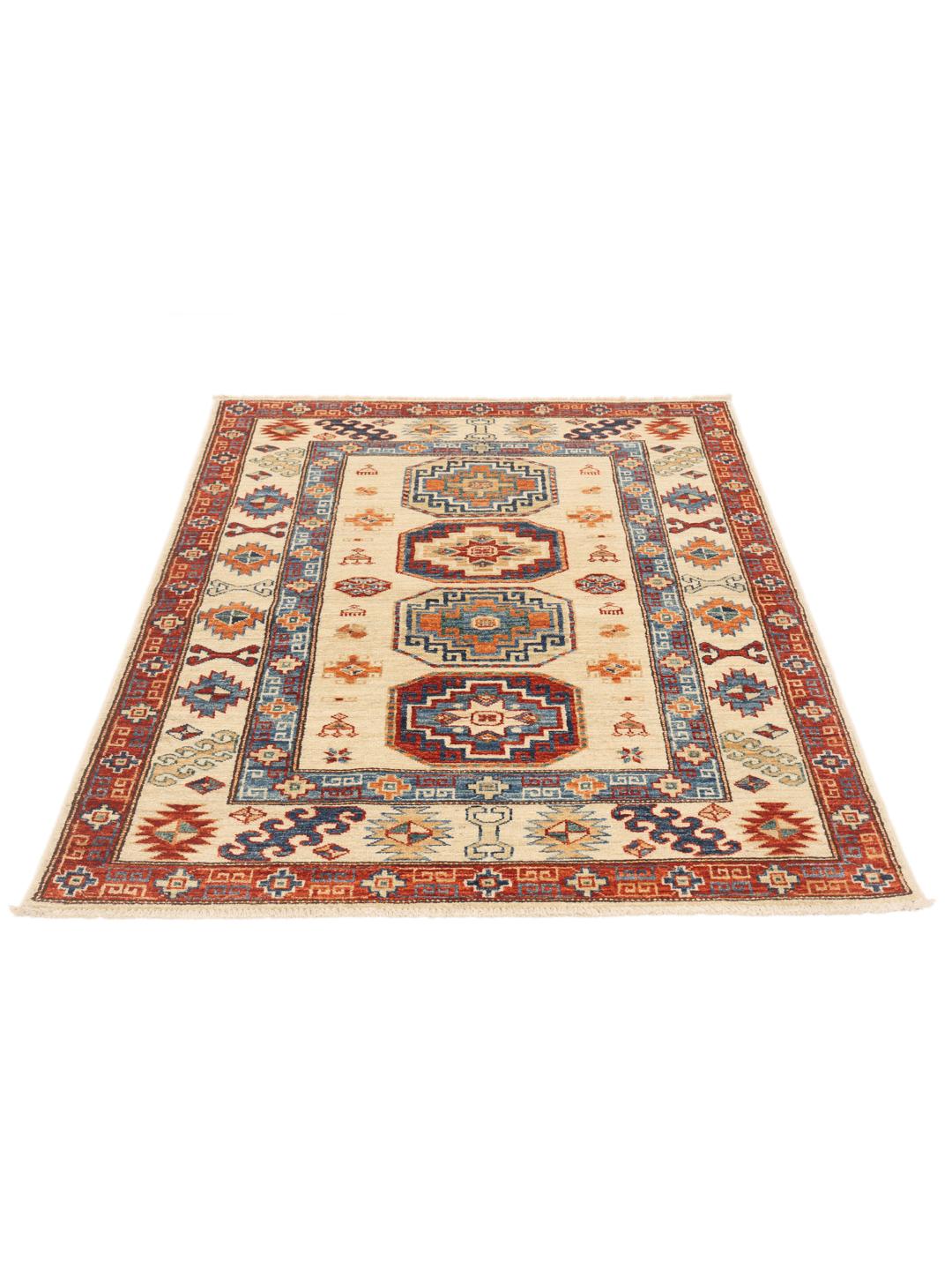
Kazak rugs represent a storied tradition that has evolved over centuries, drawing inspiration from the nomadic tribes of the Caucasus region. While the name originally refers to these mountain-dwelling weavers, the tradition has found a new and vibrant home in Afghanistan. Today, Afghan weavers have mastered these historic techniques, creating rugs that honour the bold, geometric spirit of the original Kazak style while introducing their own regional flair.
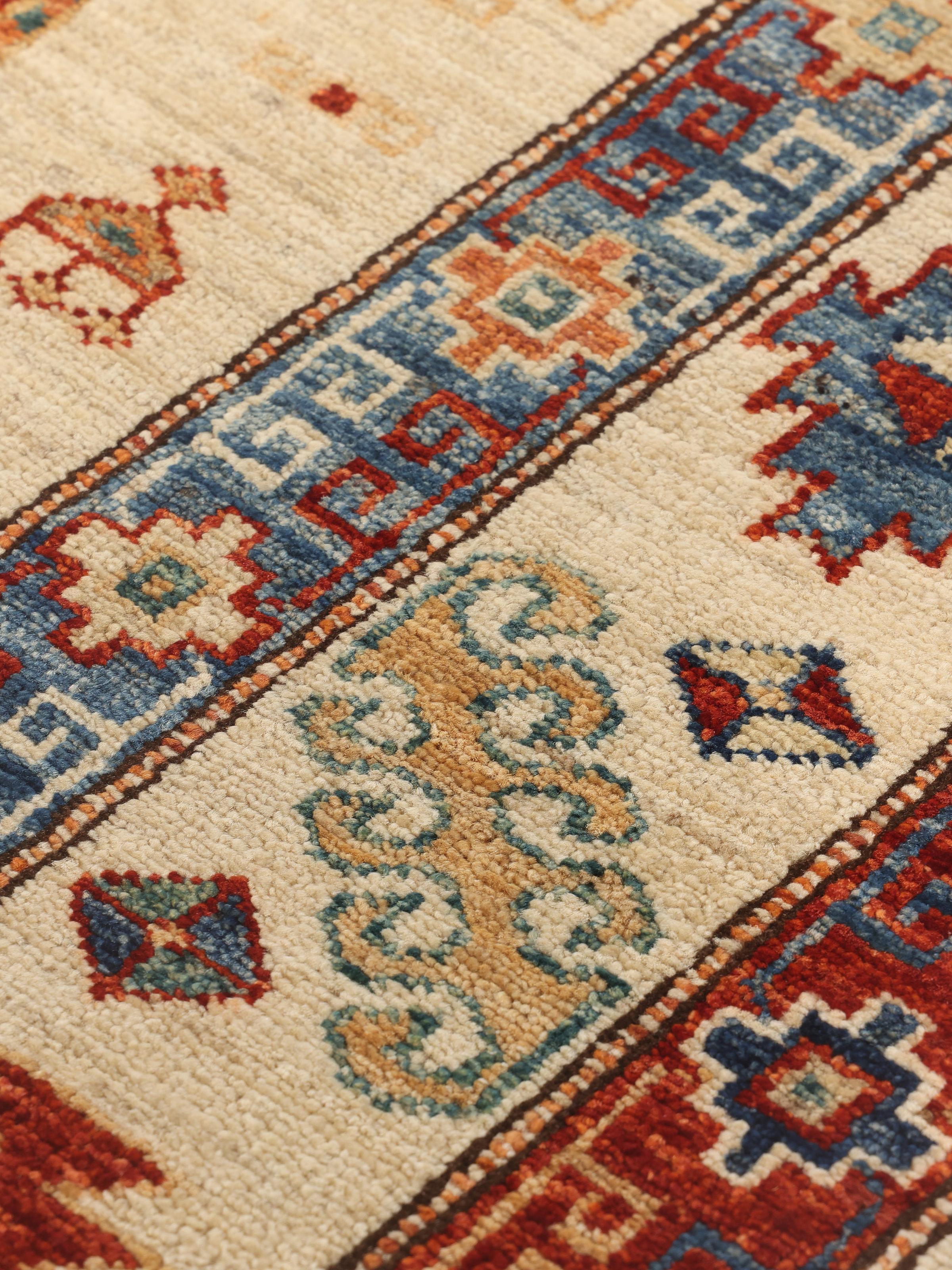
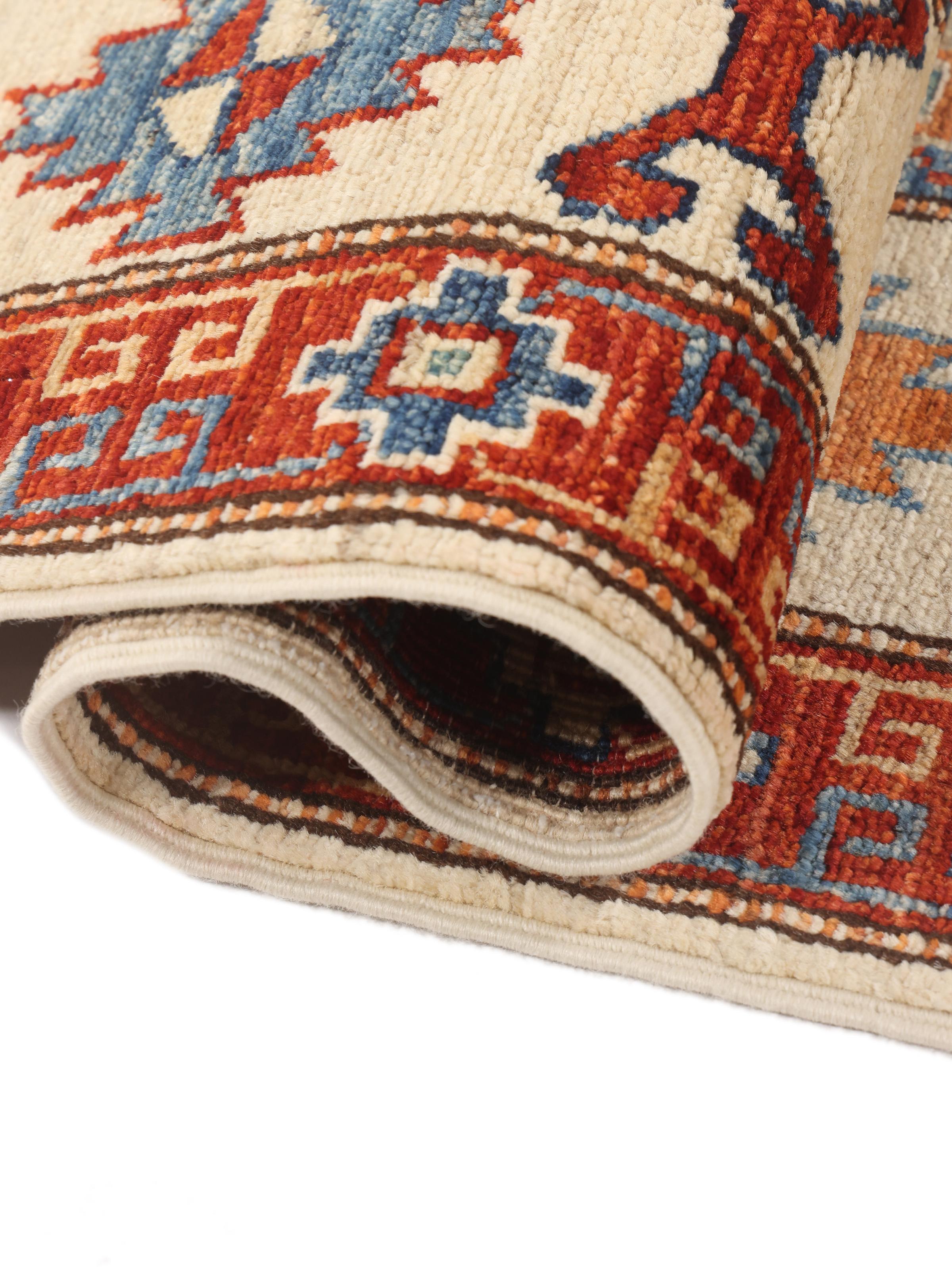
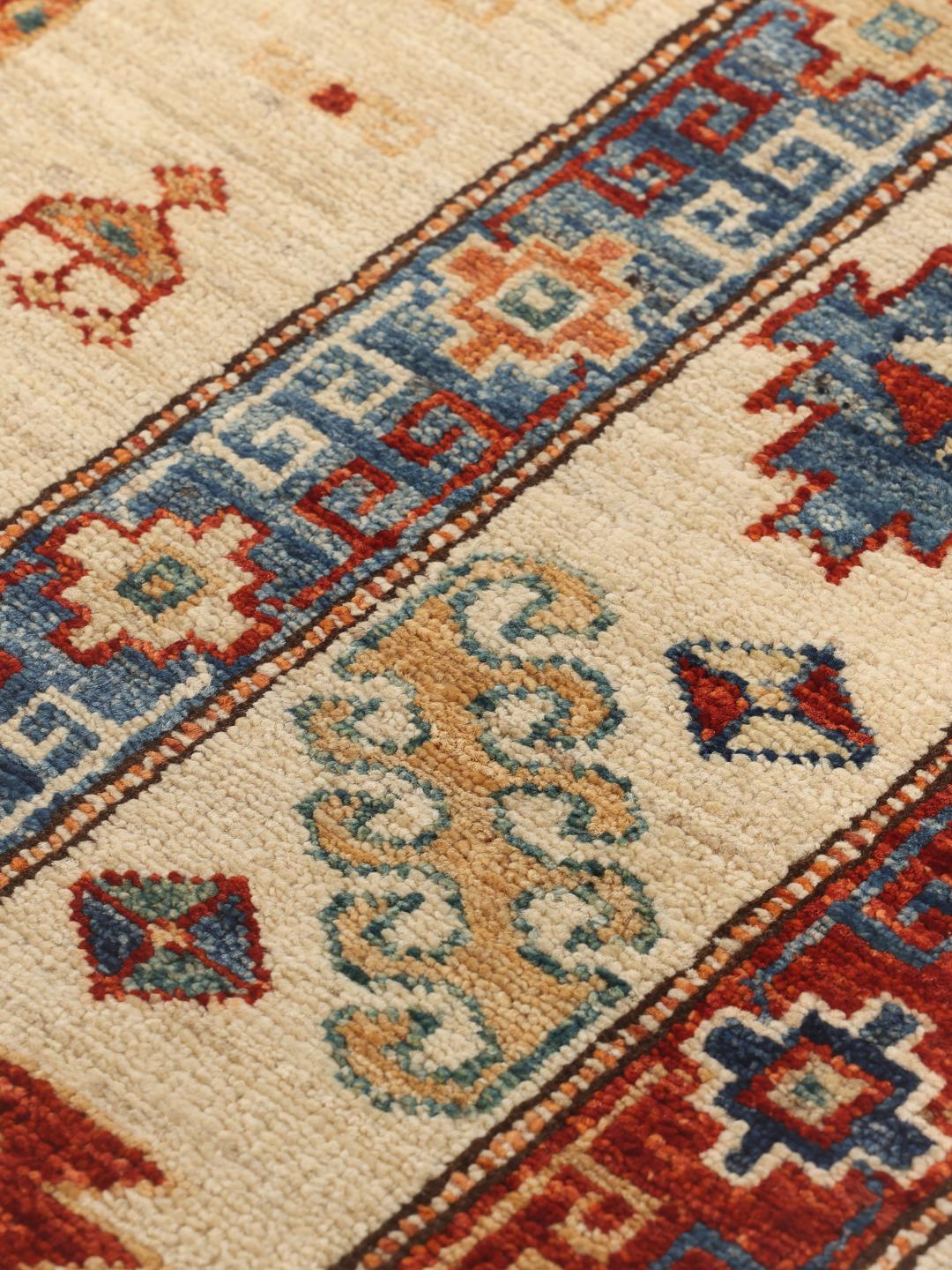
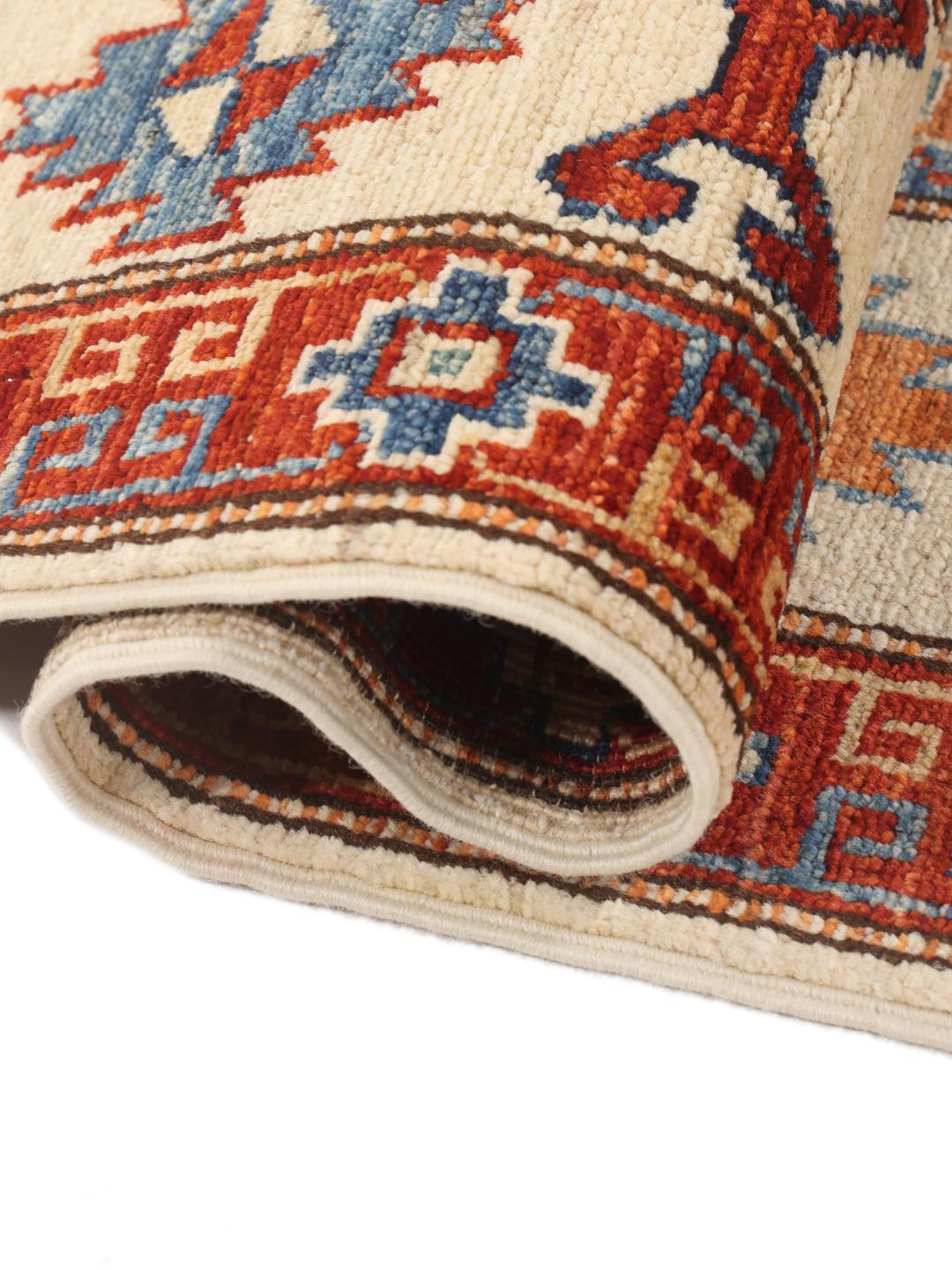
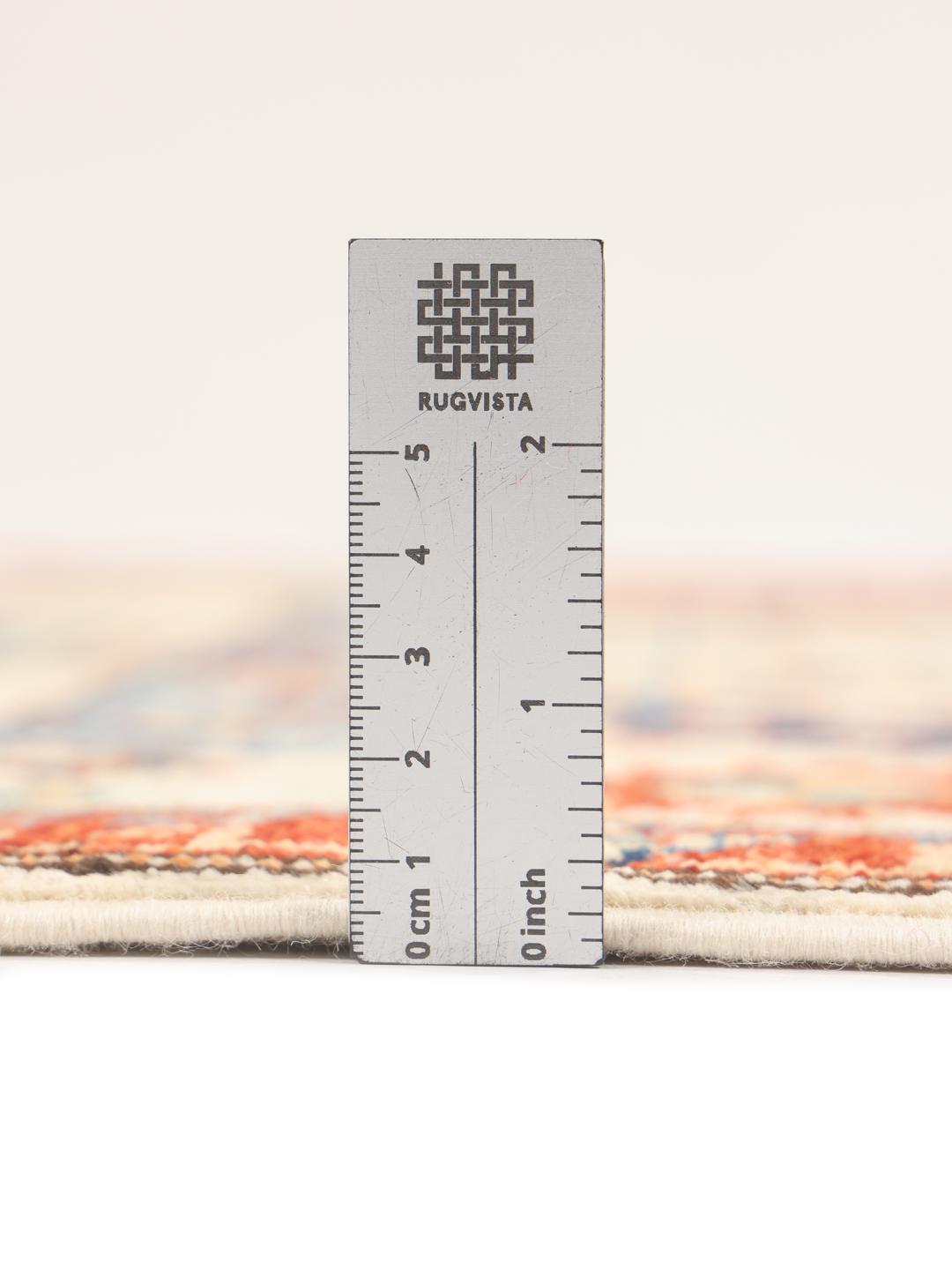
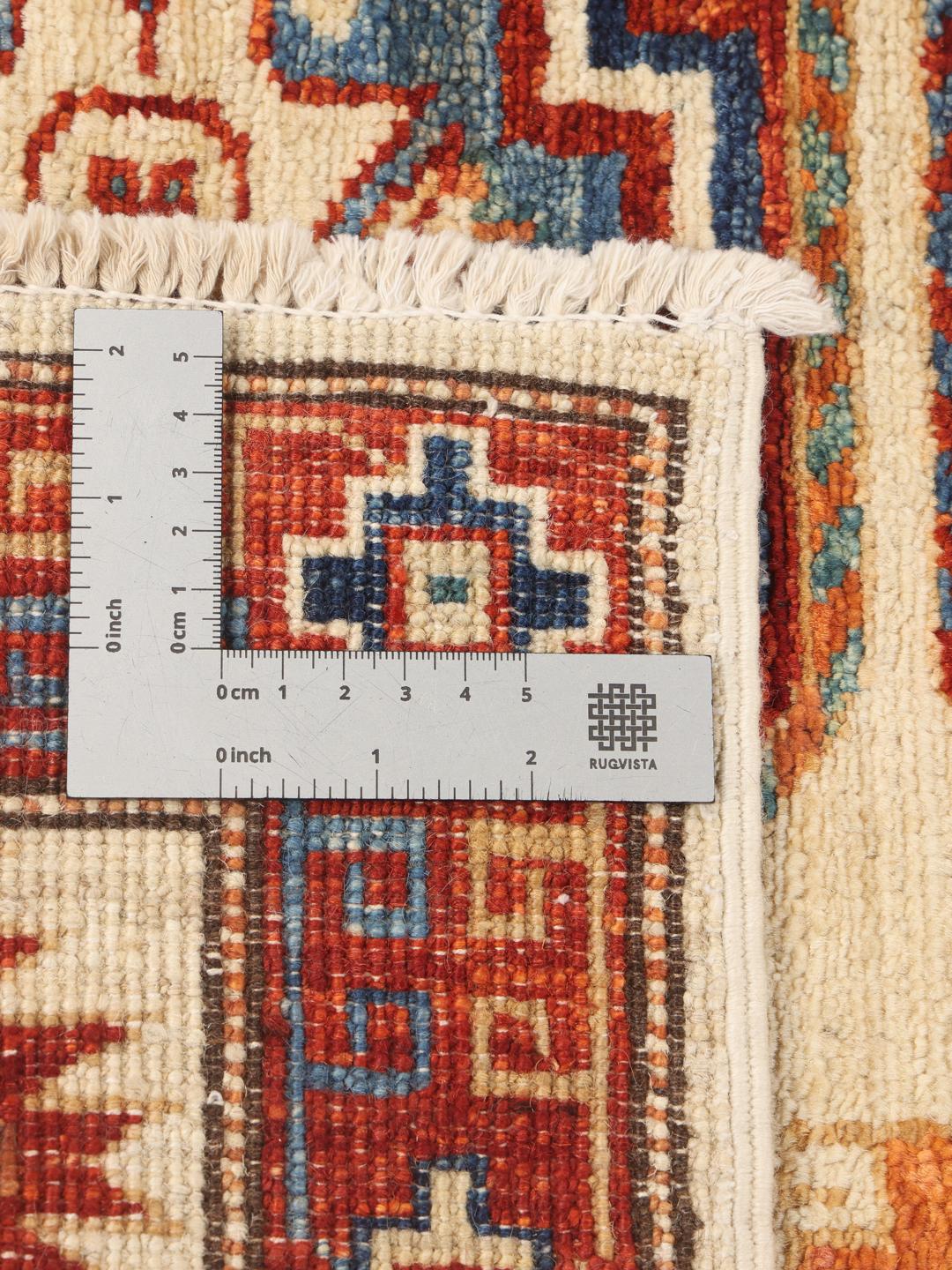
The term hand-knotted refers to the technique where each individual knot is tied by hand onto the warp and weft foundation. This method is the hallmark of quality in the rug-making world, as it allows for intricate designs and a pile that is incredibly dense and durable. The use of high-quality wool further enhances the longevity of the rug, as the natural lanolin in the fibres provides a degree of stain resistance and a soft, lustrous sheen that improves with age.
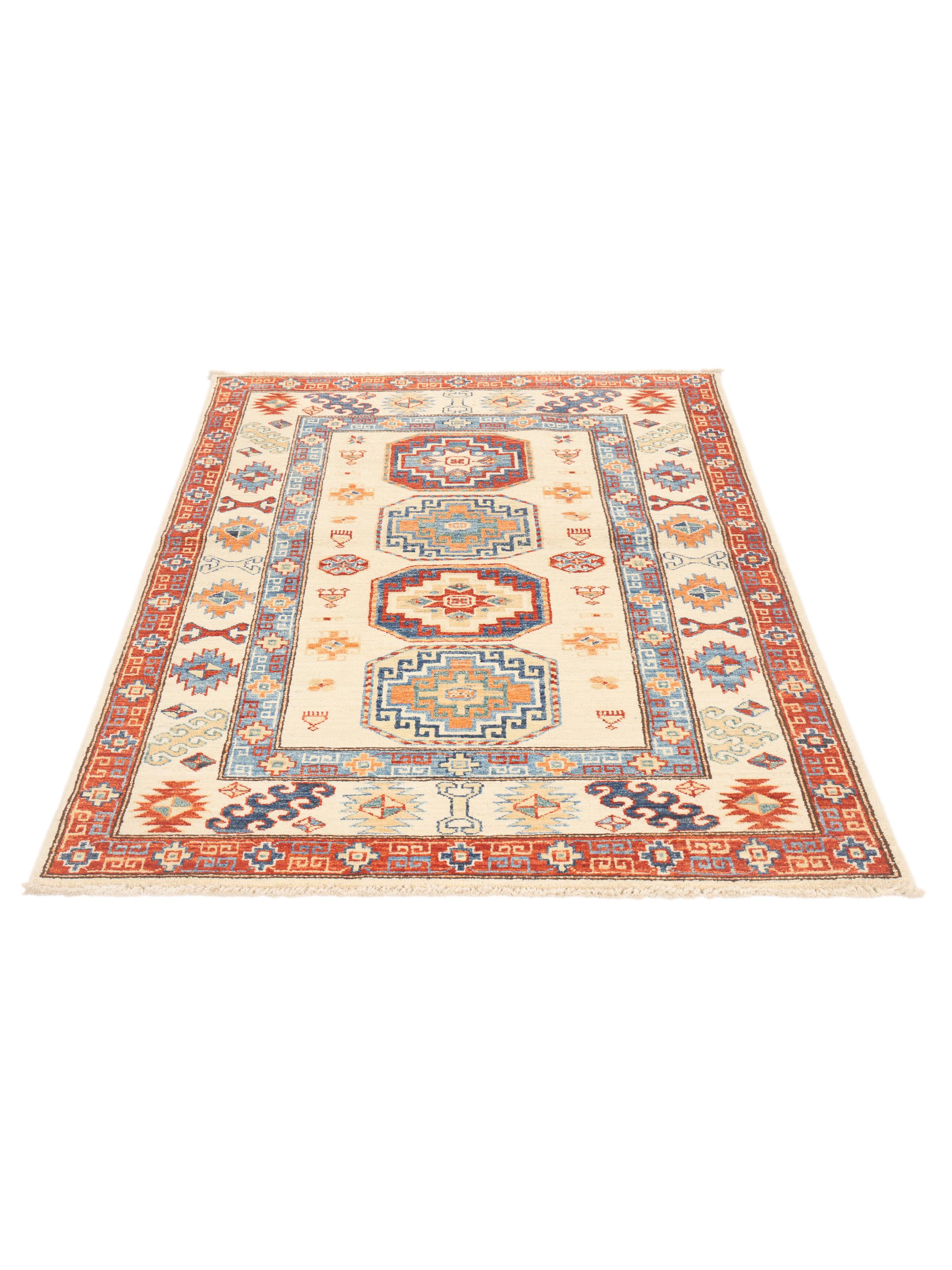
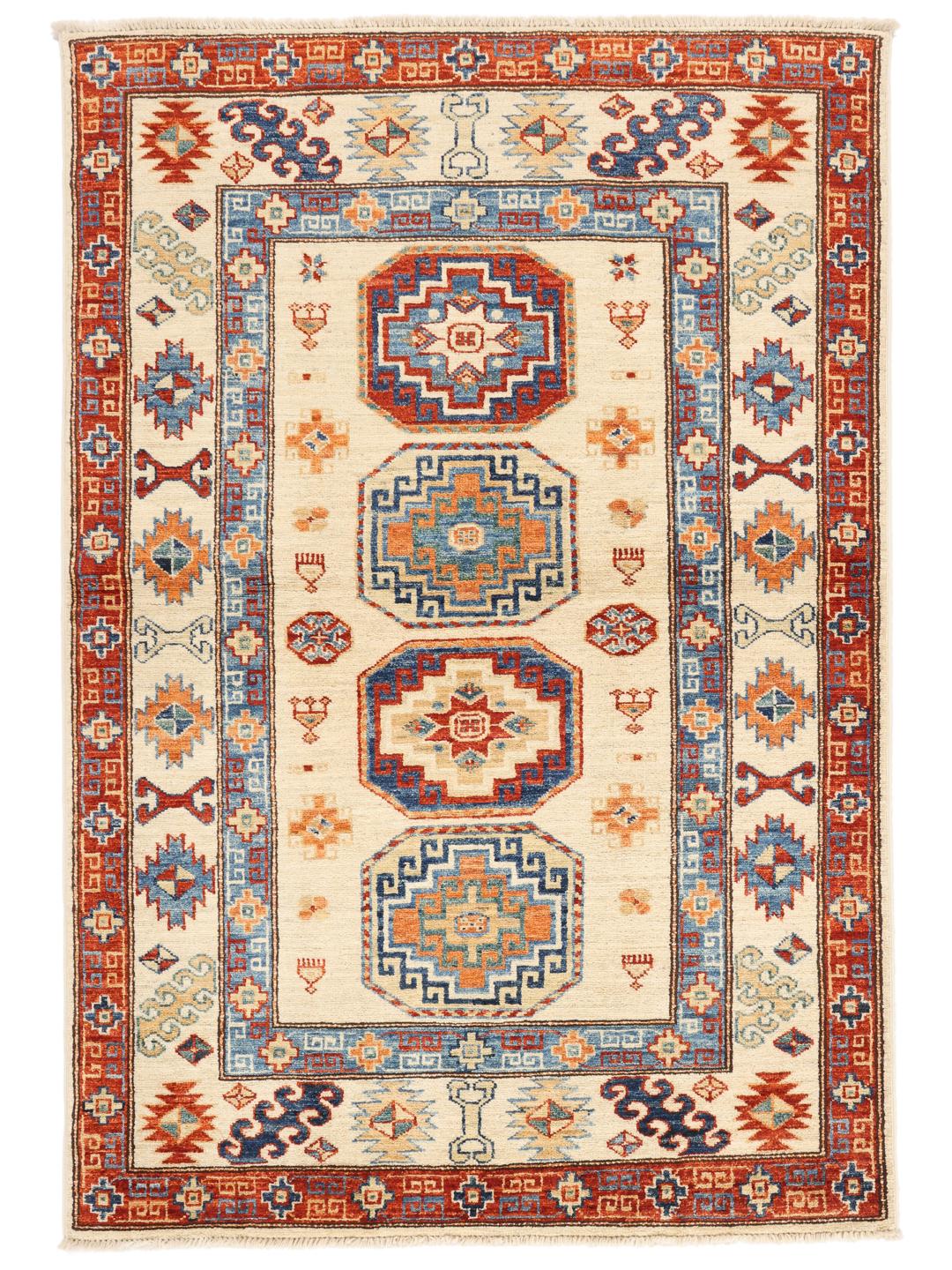
Signature design elements of the Kazak tradition include large-scale geometric medallions, often referred to as guls, and a strong, compartmentalised layout. These rugs frequently feature bold, primary colours and stylized motifs that often represent tribal symbols, animals, or protection. In this specific piece, the use of a crisp, light-toned field creates a beautiful contrast against the deeper, saturated colours of the motifs, making the pattern stand out with striking clarity.
Collecting a Kazak rug is an investment in cultural heritage and artisanal skill. These pieces are highly valued because they represent a living history, connecting the owner to the ancient trade routes and tribal customs of Central Asia. Owning one is more than just a decor choice; it is a way to preserve a craft that has been passed down through generations, ensuring that these beautiful, hand-made traditions continue to thrive in the modern world.