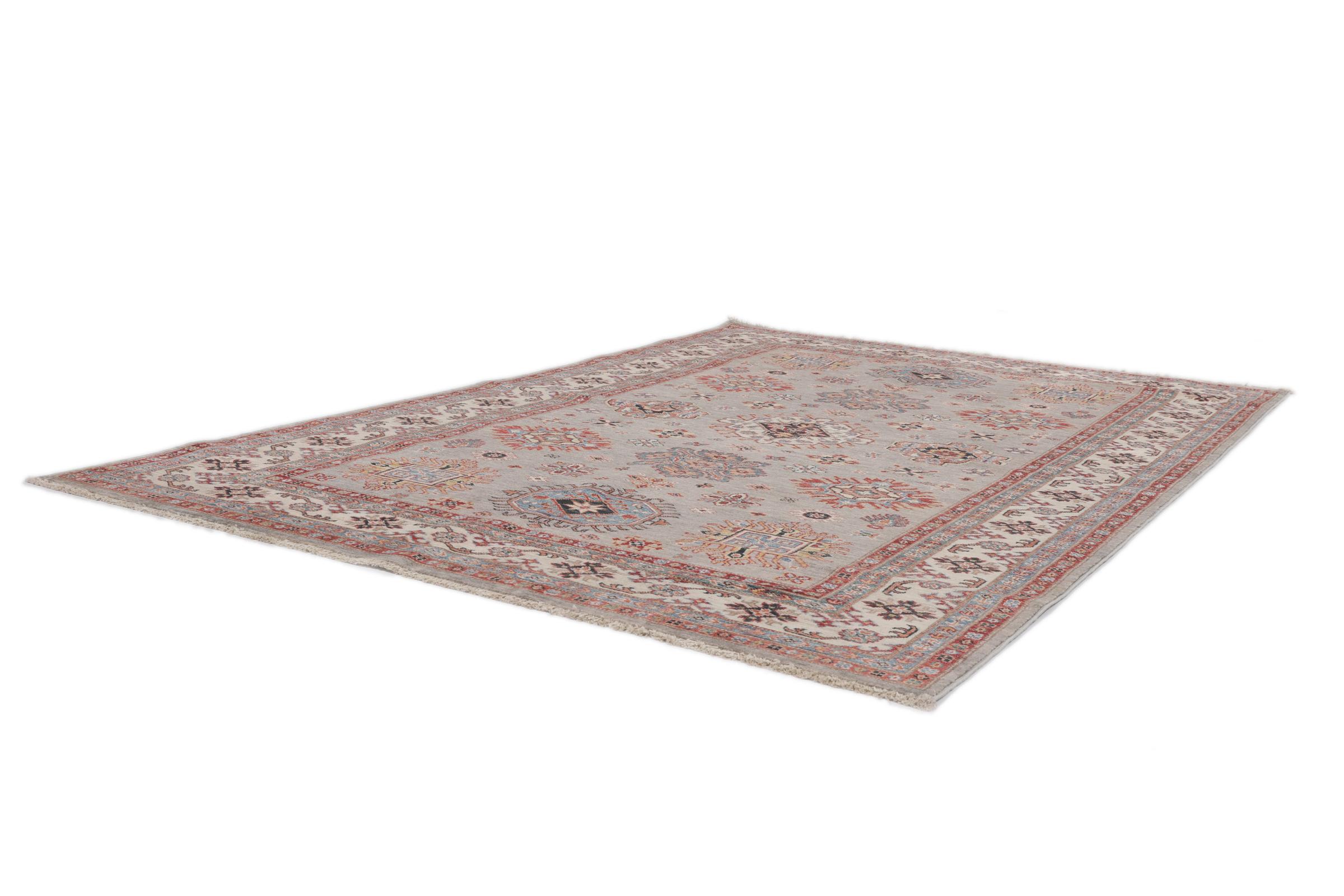
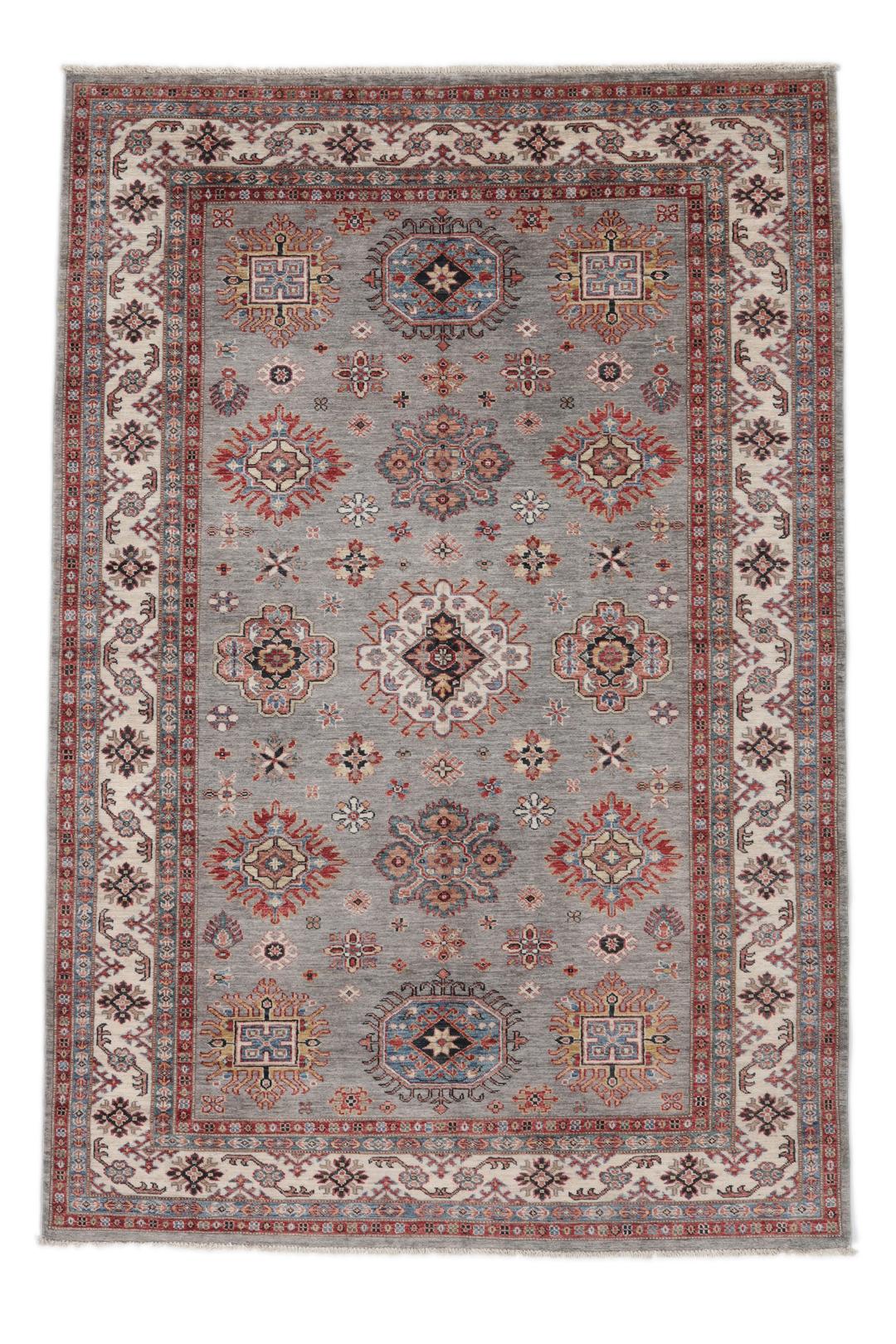
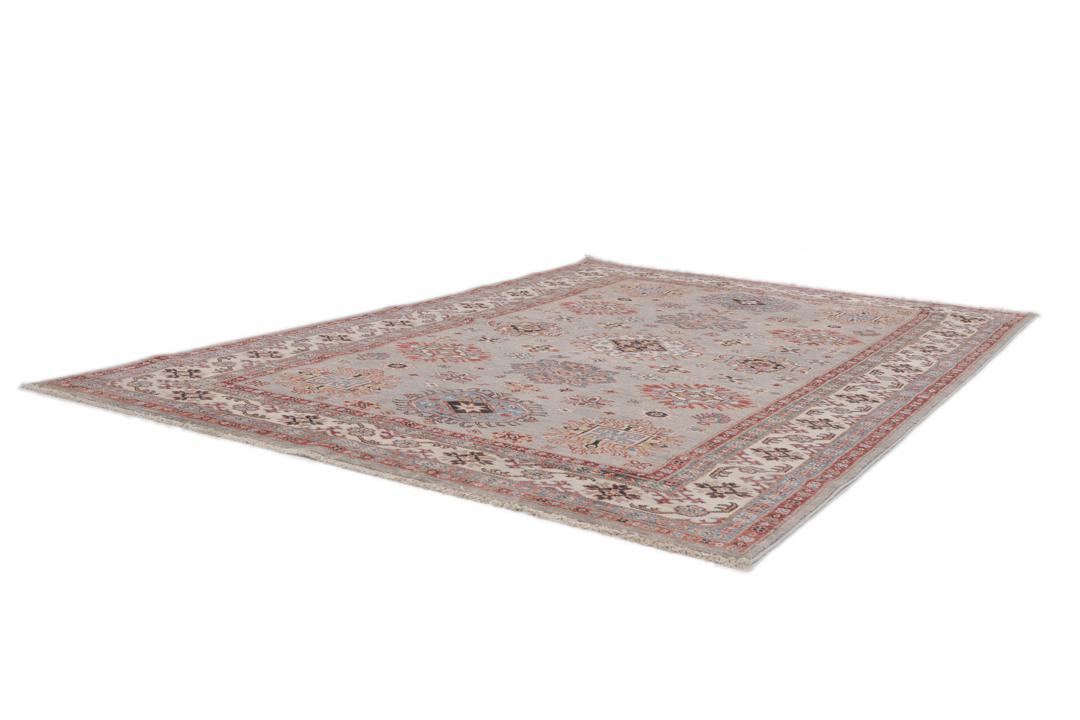
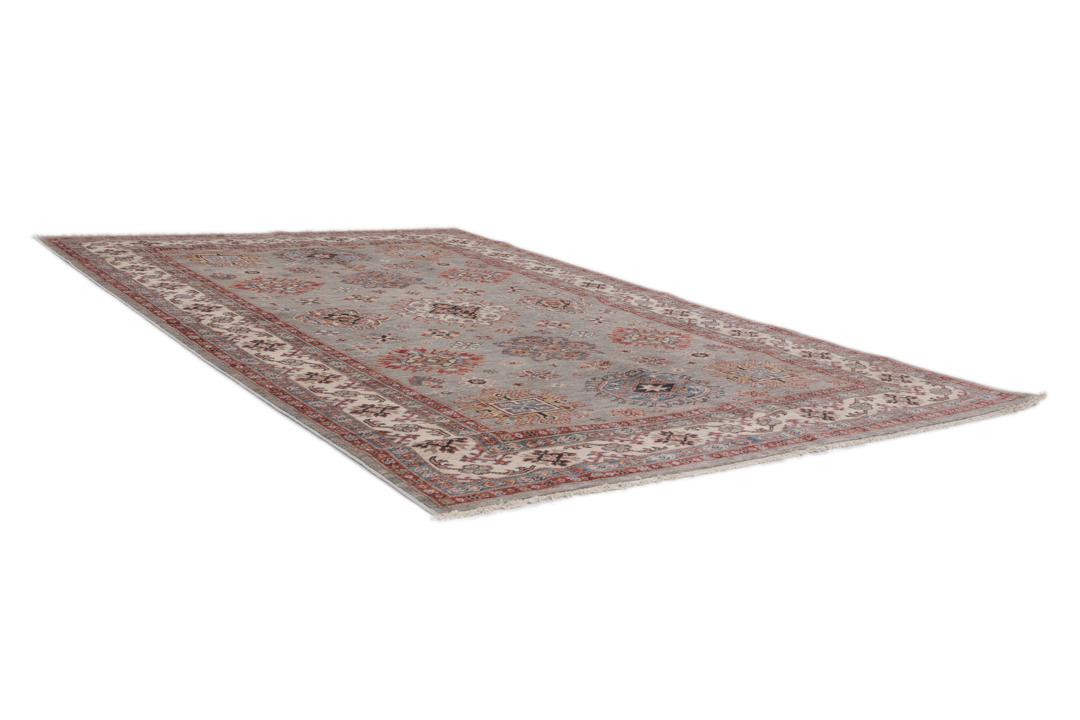
Kazak rugs originate from the Caucasus region, historically serving as a testament to the nomadic traditions of the local tribes. While the style takes its name from these mountain communities, the craft has evolved significantly over generations. Today, some of the most impressive examples, like this one, are crafted in Afghanistan, where weavers have mastered the art of blending ancient techniques with high-quality wool to produce rugs of remarkable character.
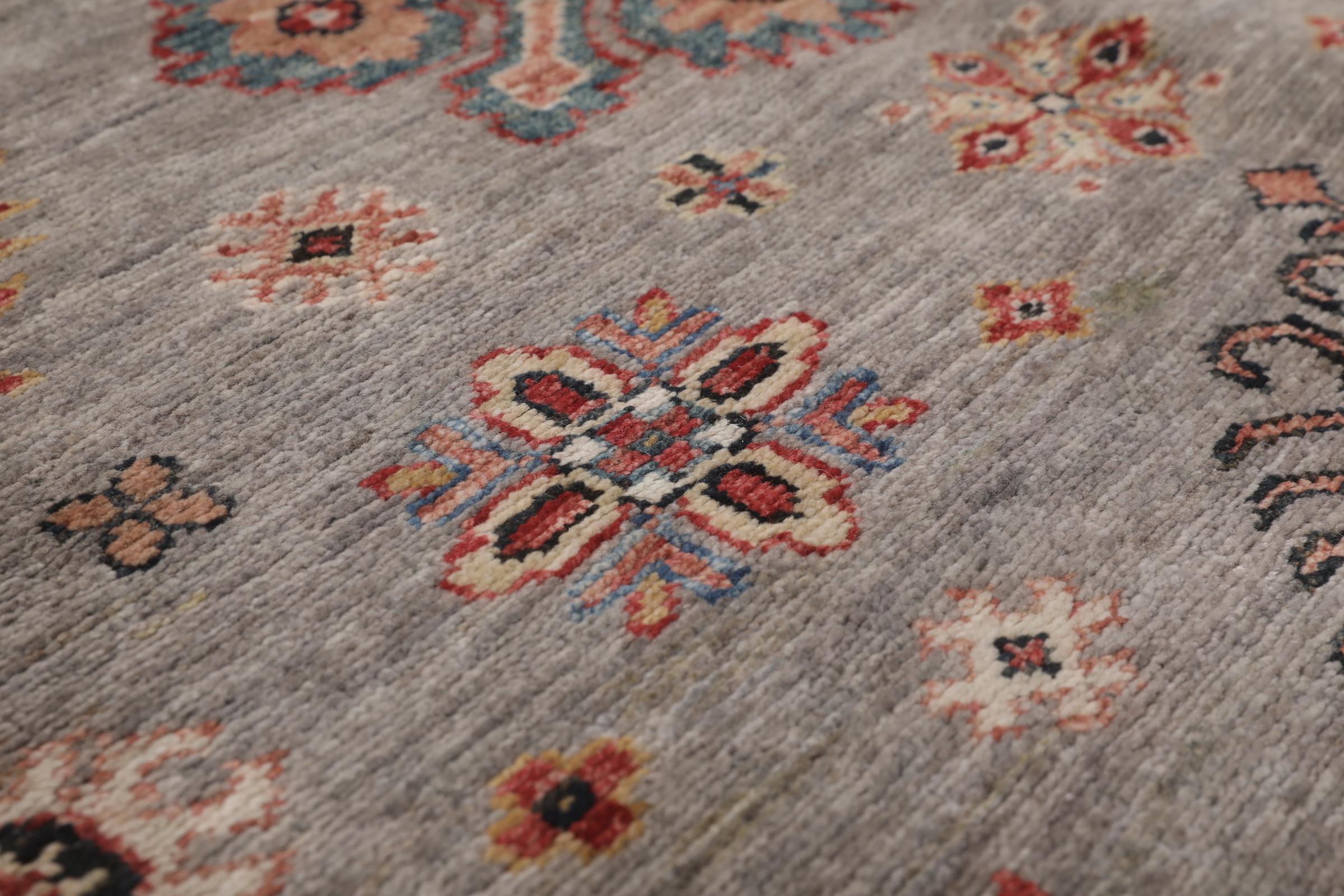
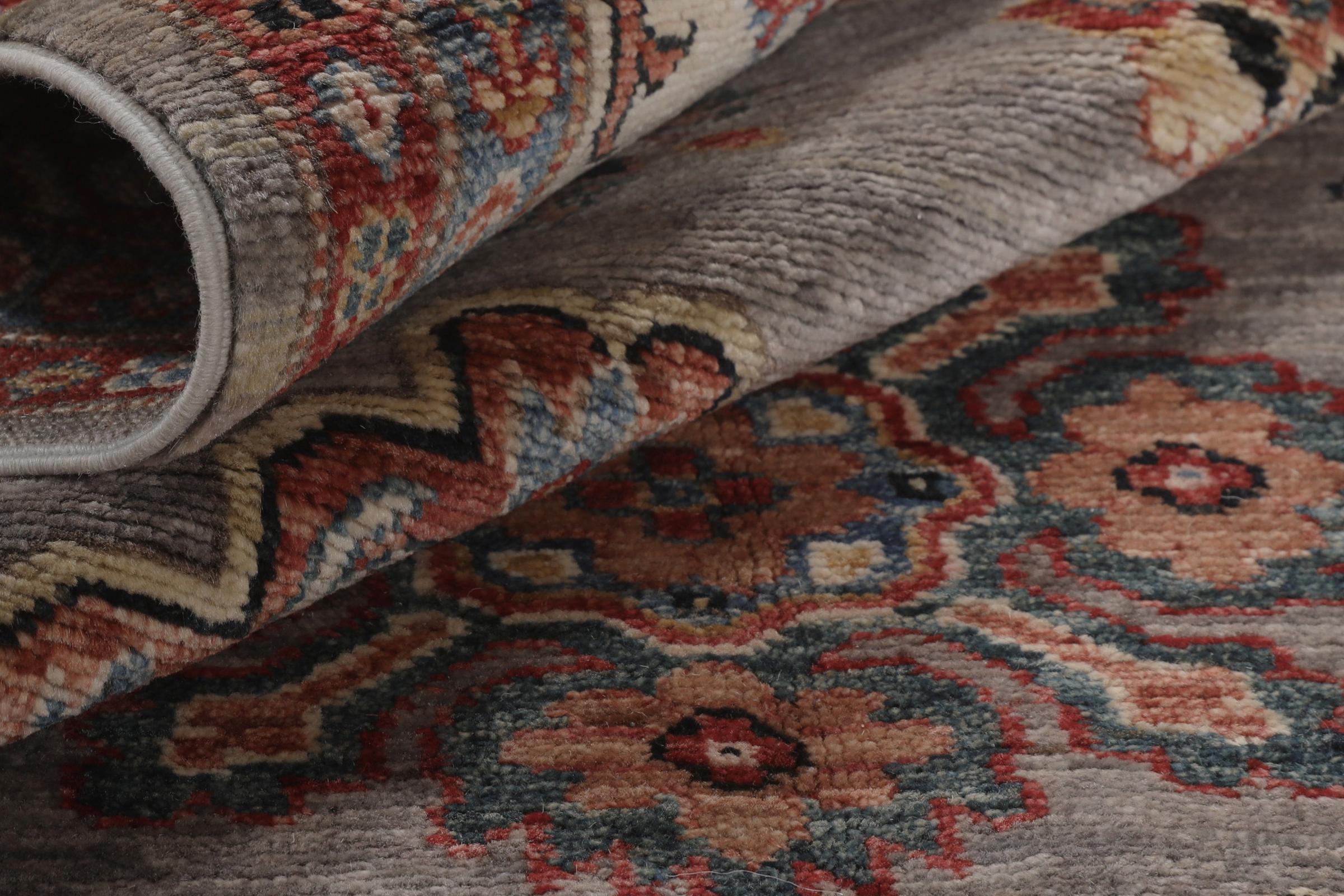
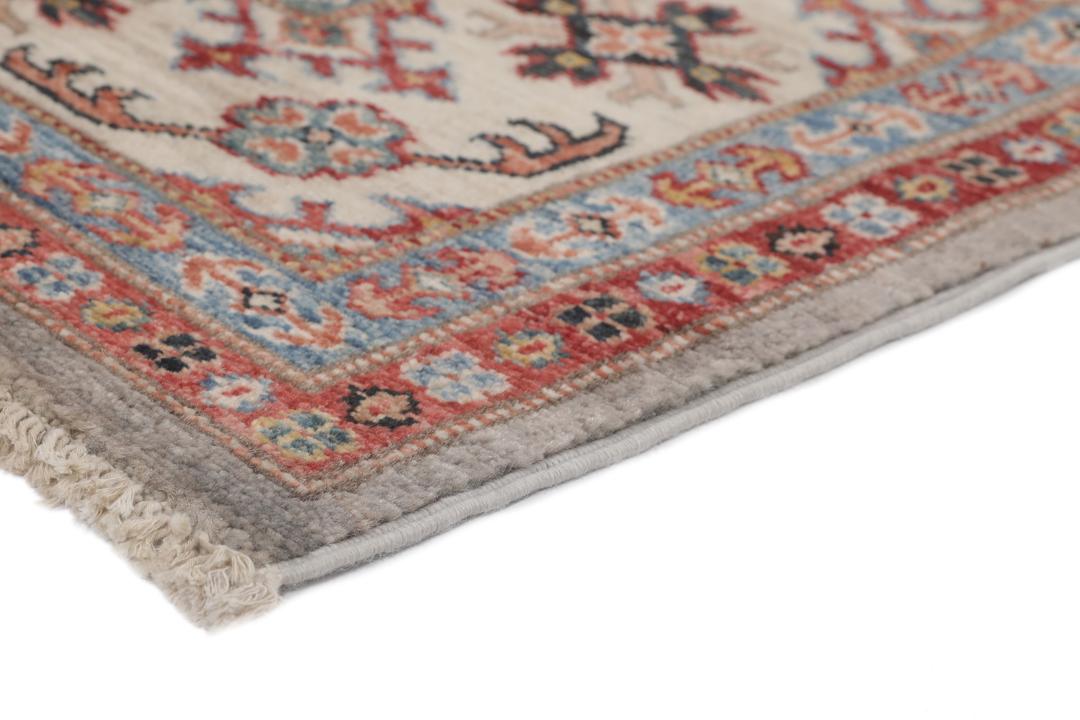
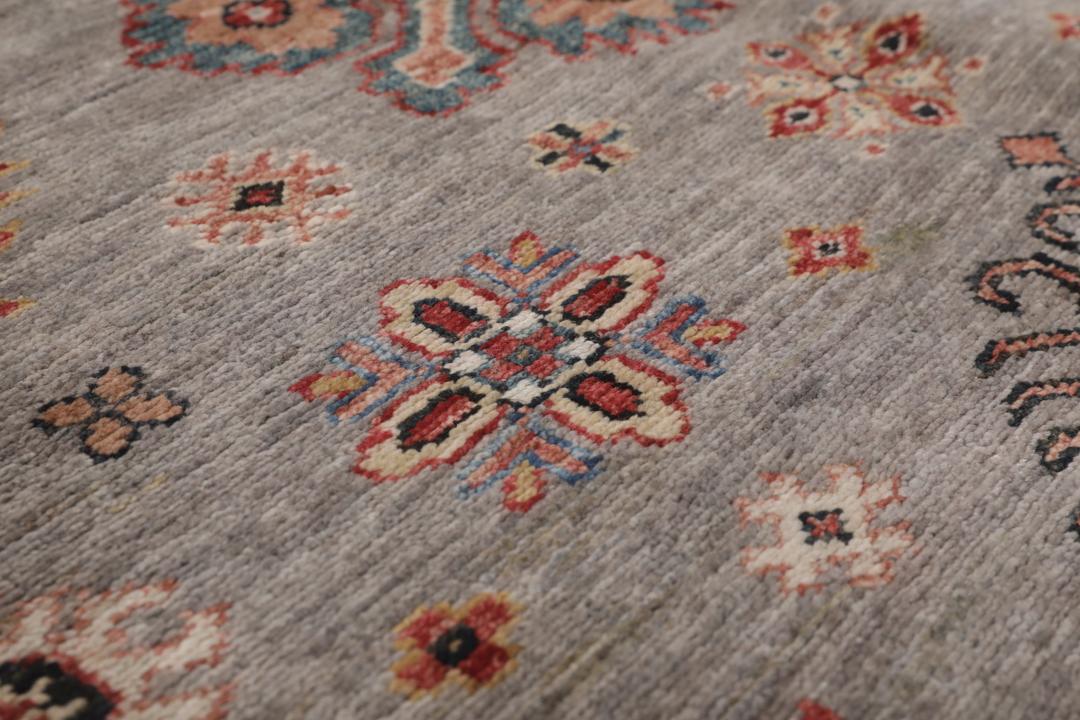
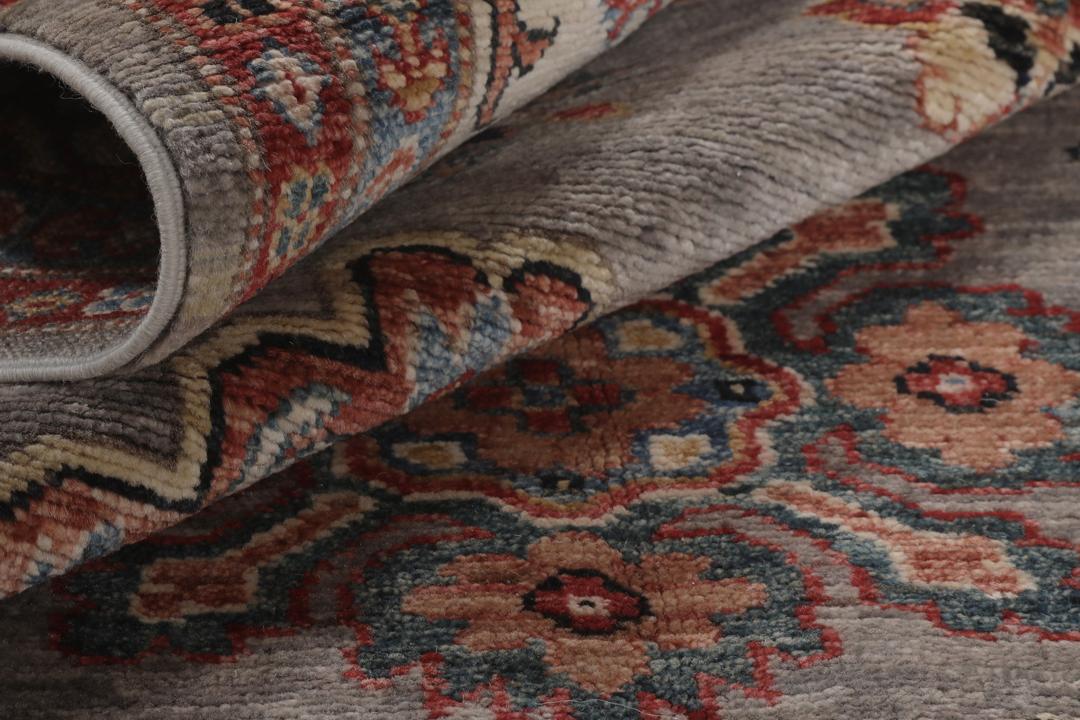
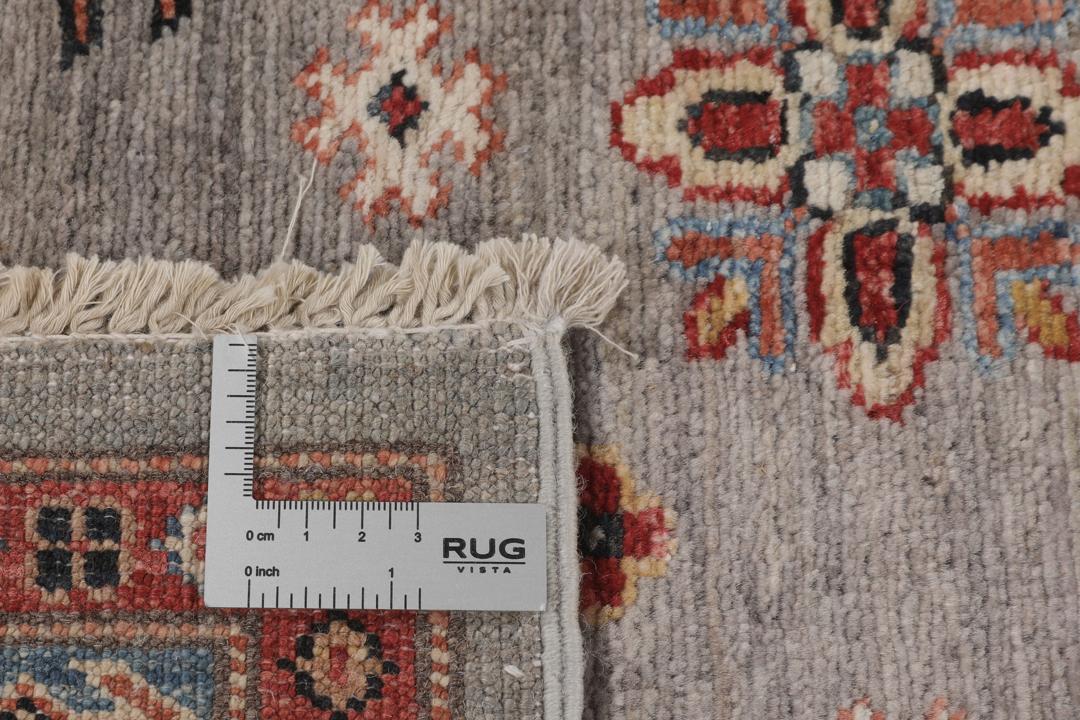
The term 'Kazak' refers to a specific design language that is defined by its bold, geometric motifs and powerful use of colour. These rugs are typically hand-knotted, a method that involves tying individual strands of wool onto a foundation. This technique allows for the creation of intricate, sharp patterns that retain their clarity throughout the life of the rug, ensuring that the design remains as vibrant as the day it was finished.
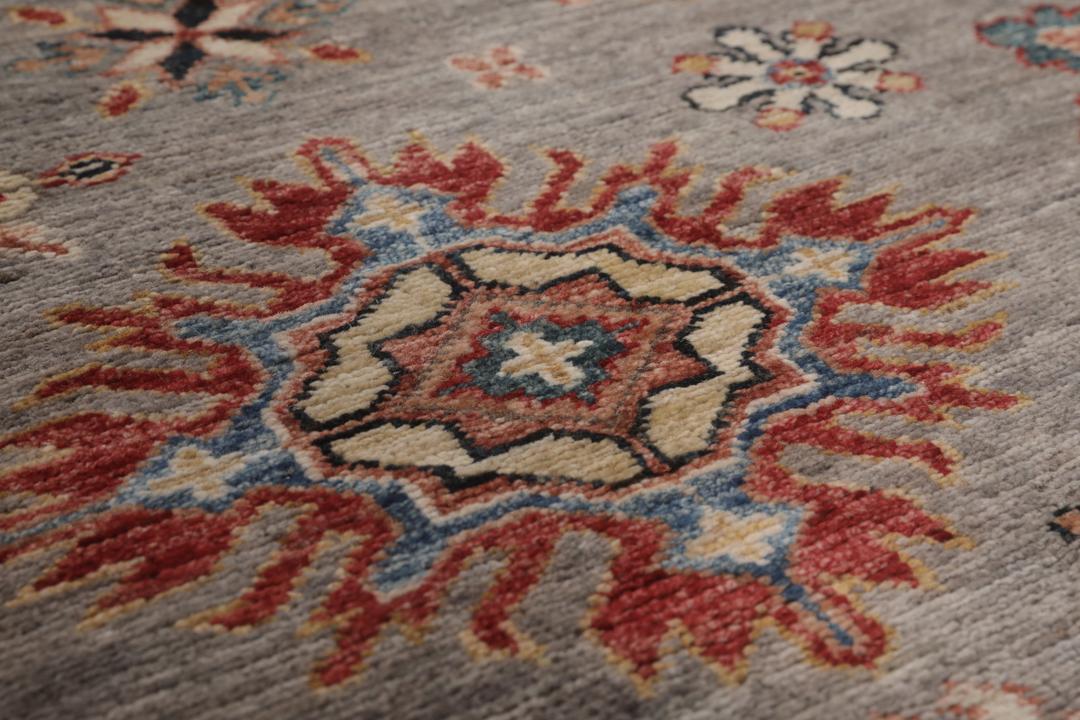
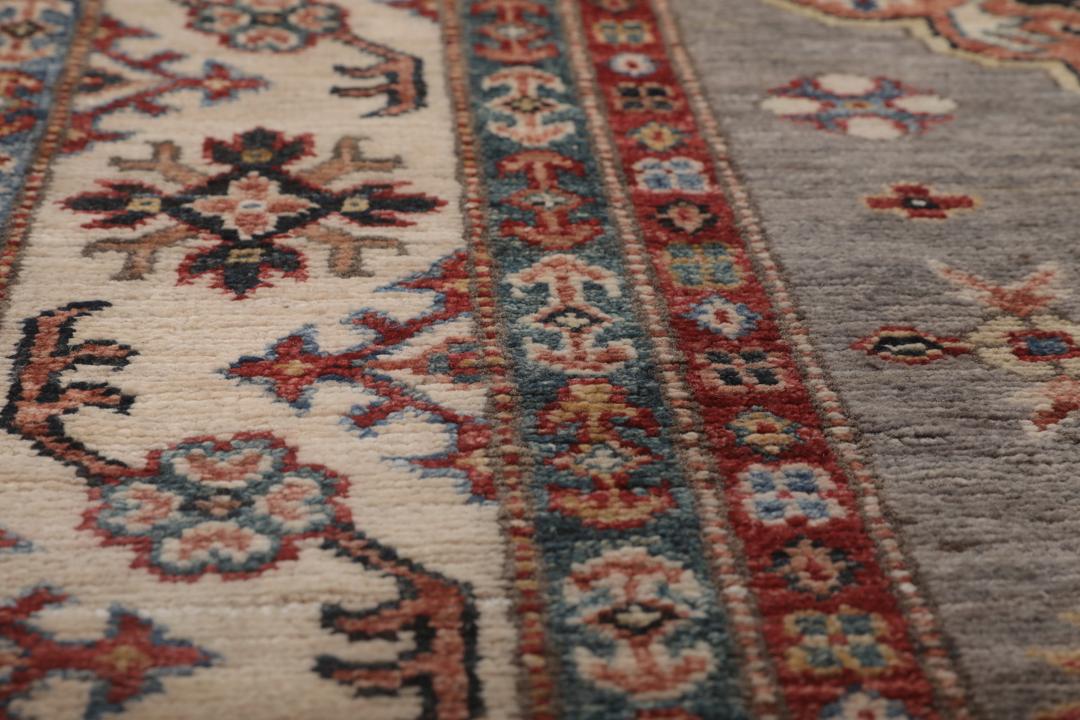
Signature elements of this tradition include the use of large-scale medallions, latch-hook motifs, and stylised floral or animal figures, all framed by protective, highly decorative borders. While traditional Kazak rugs were often characterised by strong reds and blues, contemporary versions often feature more varied palettes, such as this piece's elegant grey backdrop. This shift allows the traditional motifs to appear in a more modern, versatile light, making them easier to integrate into diverse home environments.
Collecting a Kazak rug is an investment in cultural heritage and human skill. These pieces are highly valued not only for their striking visual appearance but for the stories woven into their very structure. By choosing a rug from this tradition, you are supporting a legacy of craftsmanship that has survived for centuries, bringing a piece of history into your home that is built to endure for generations to come.