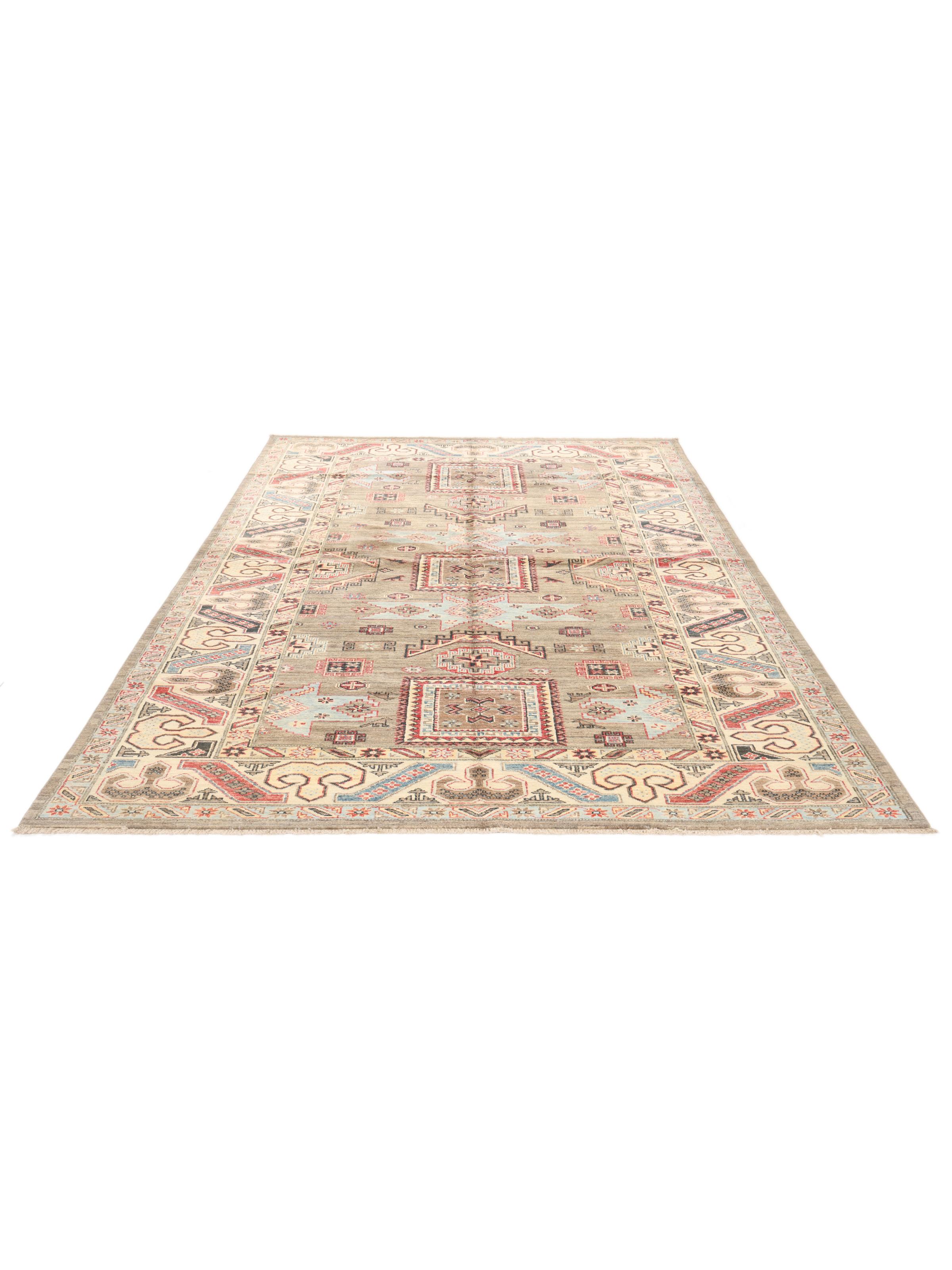
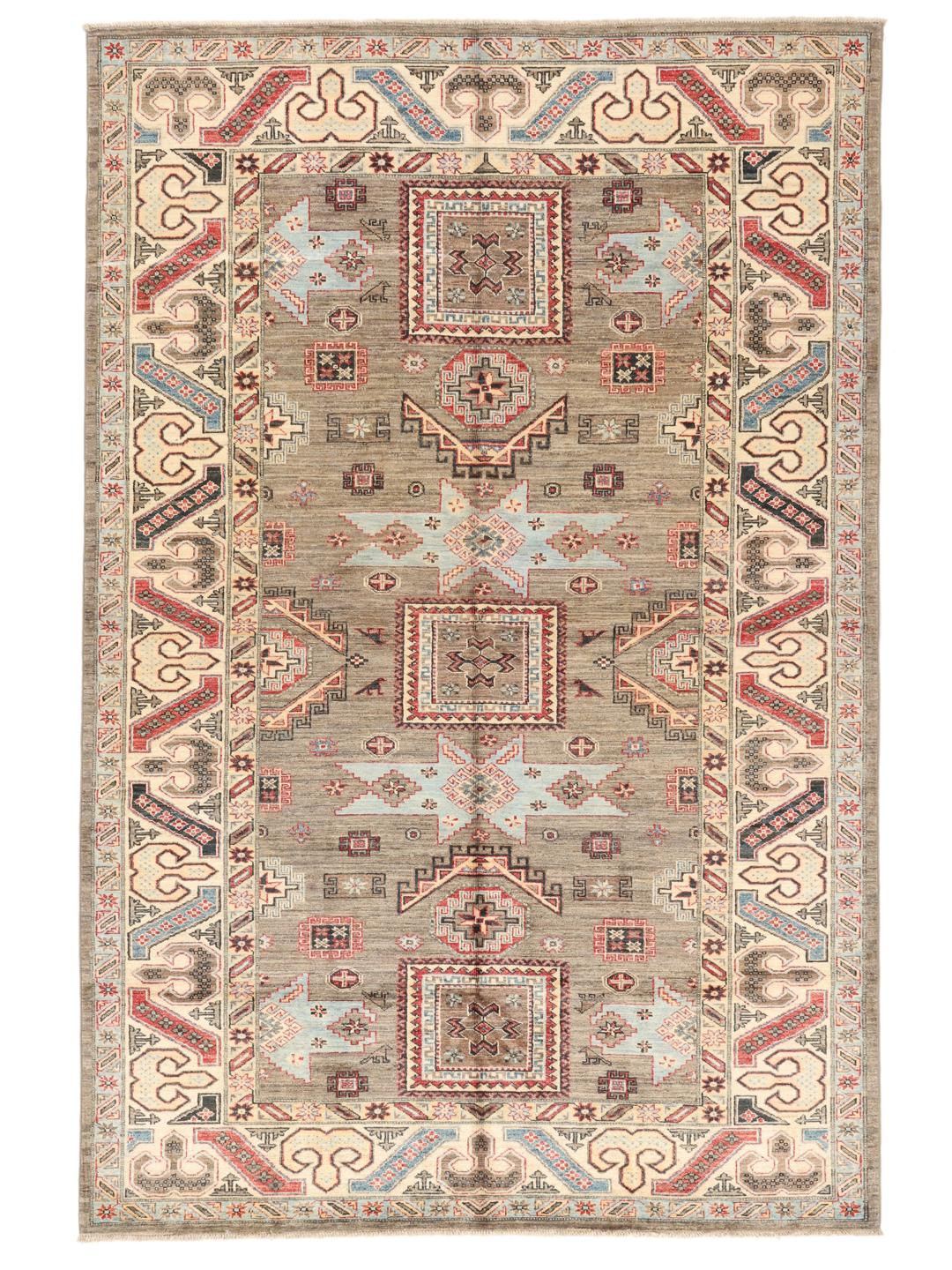
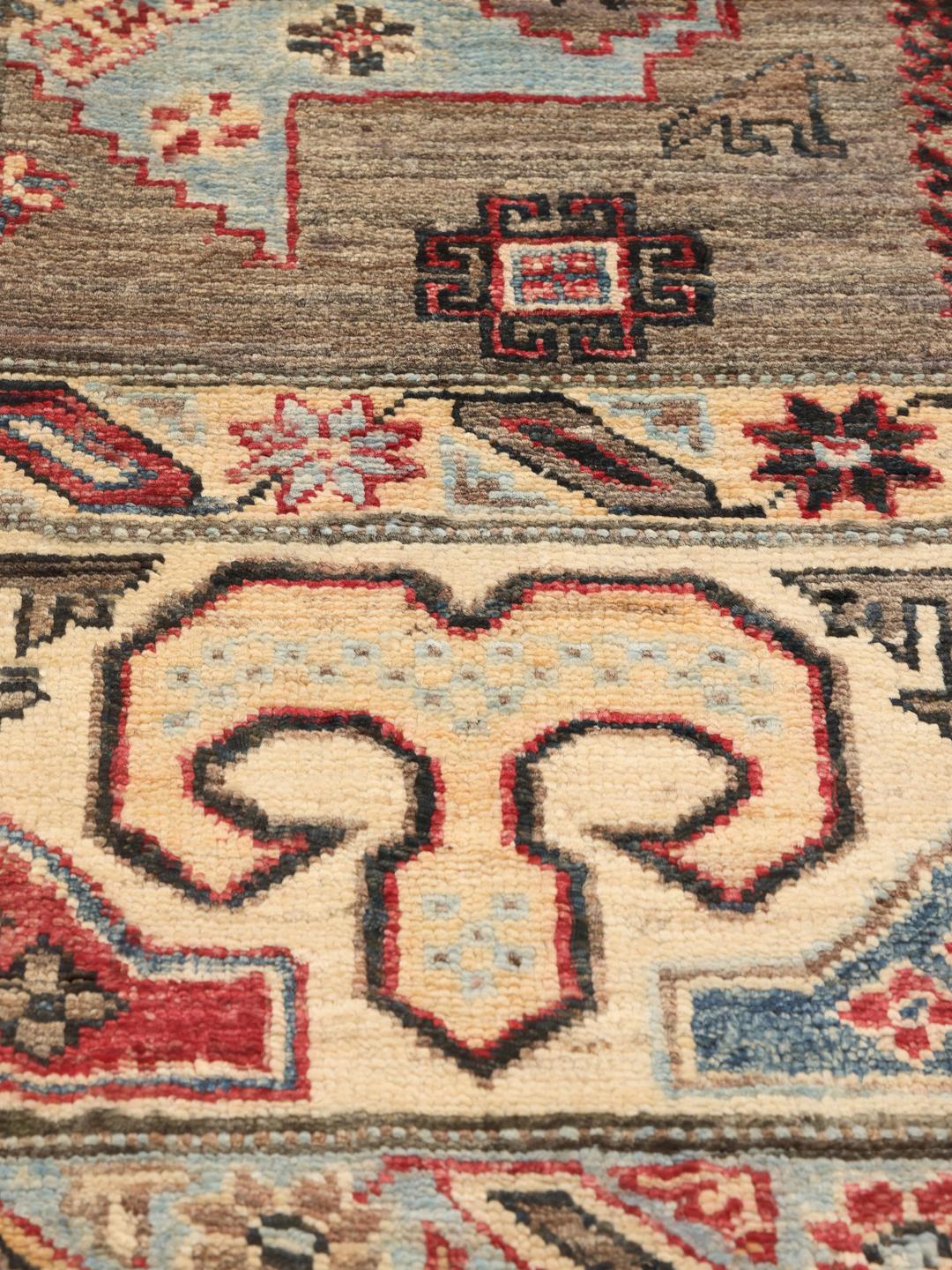
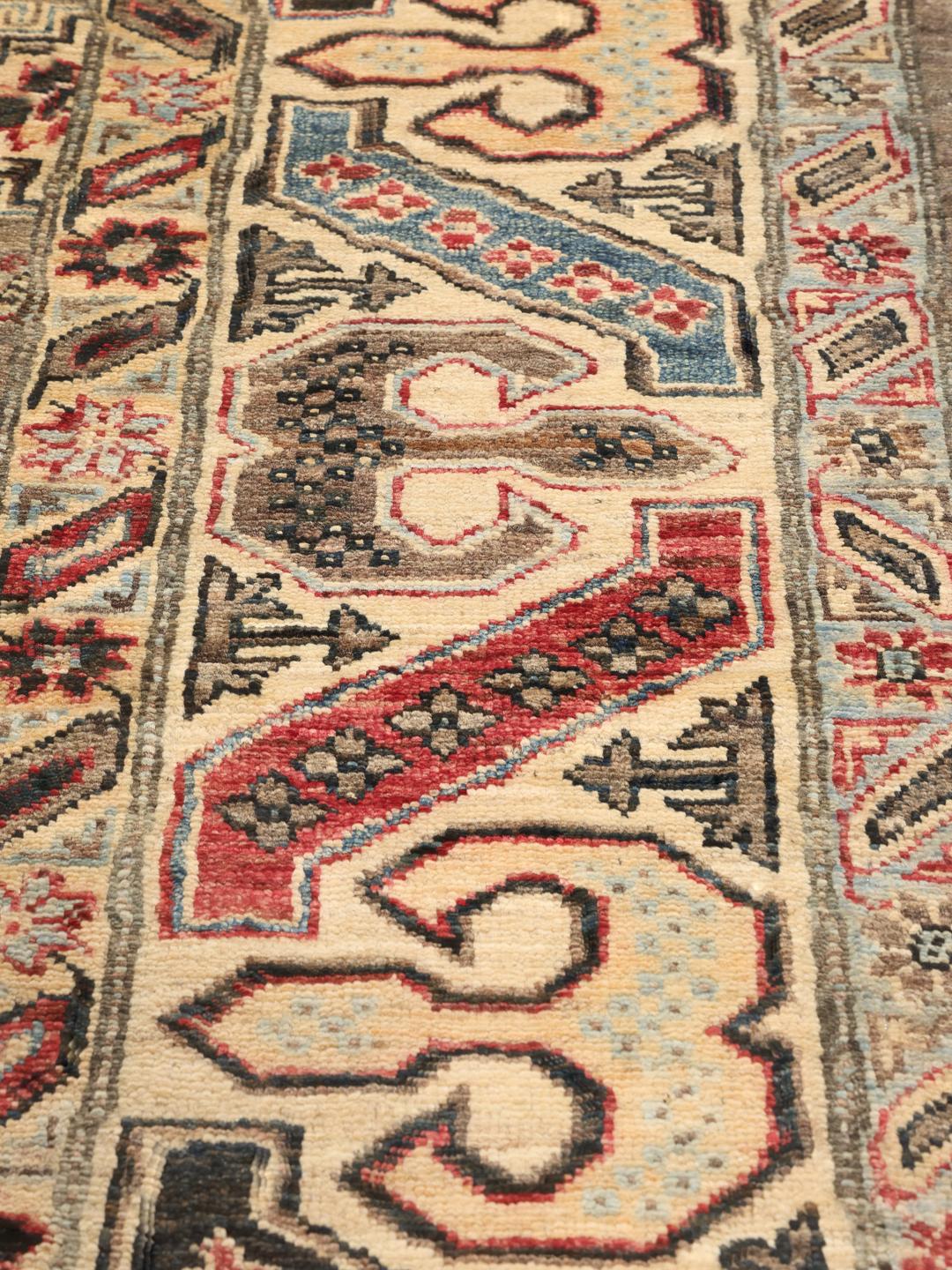
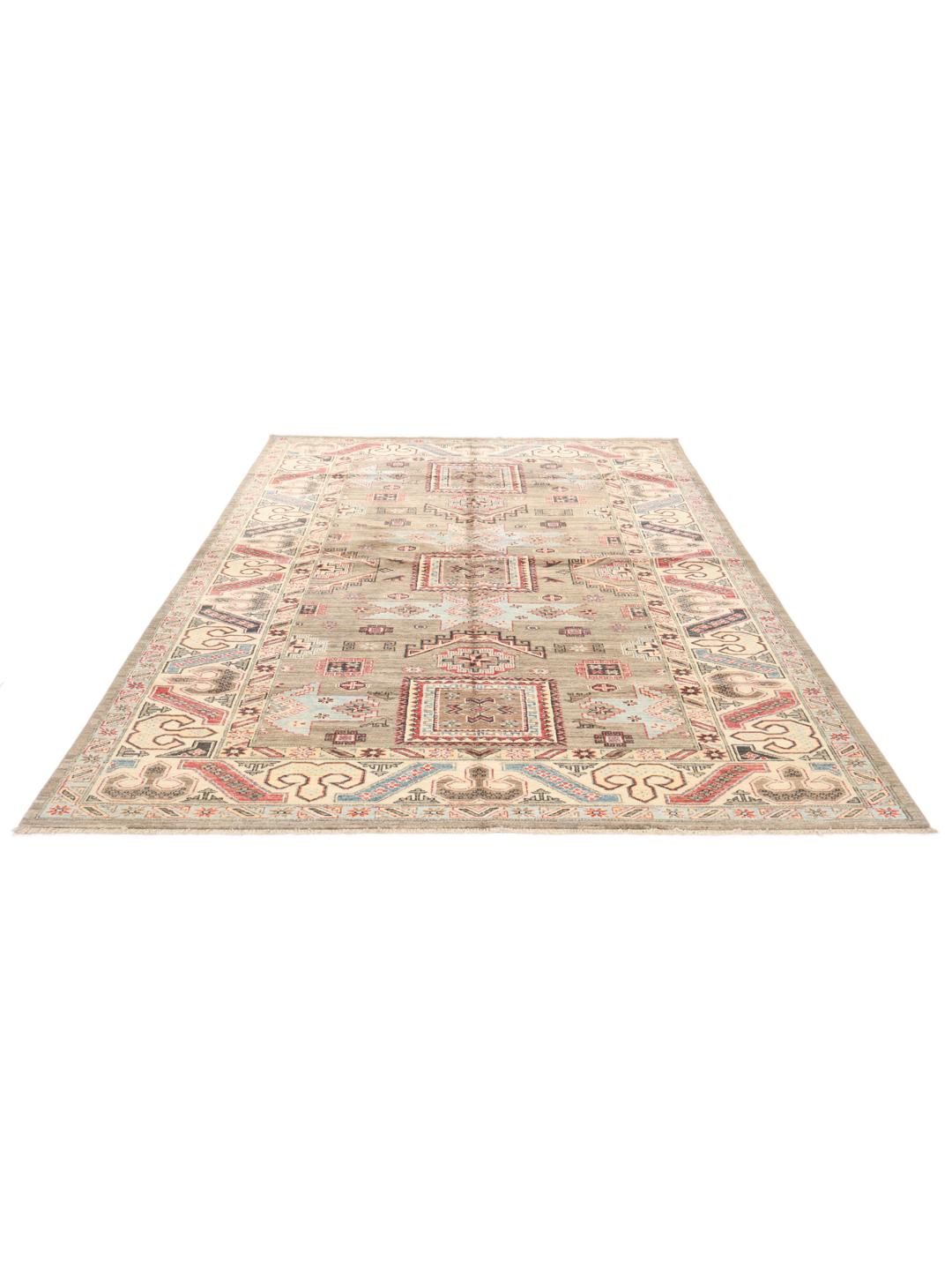
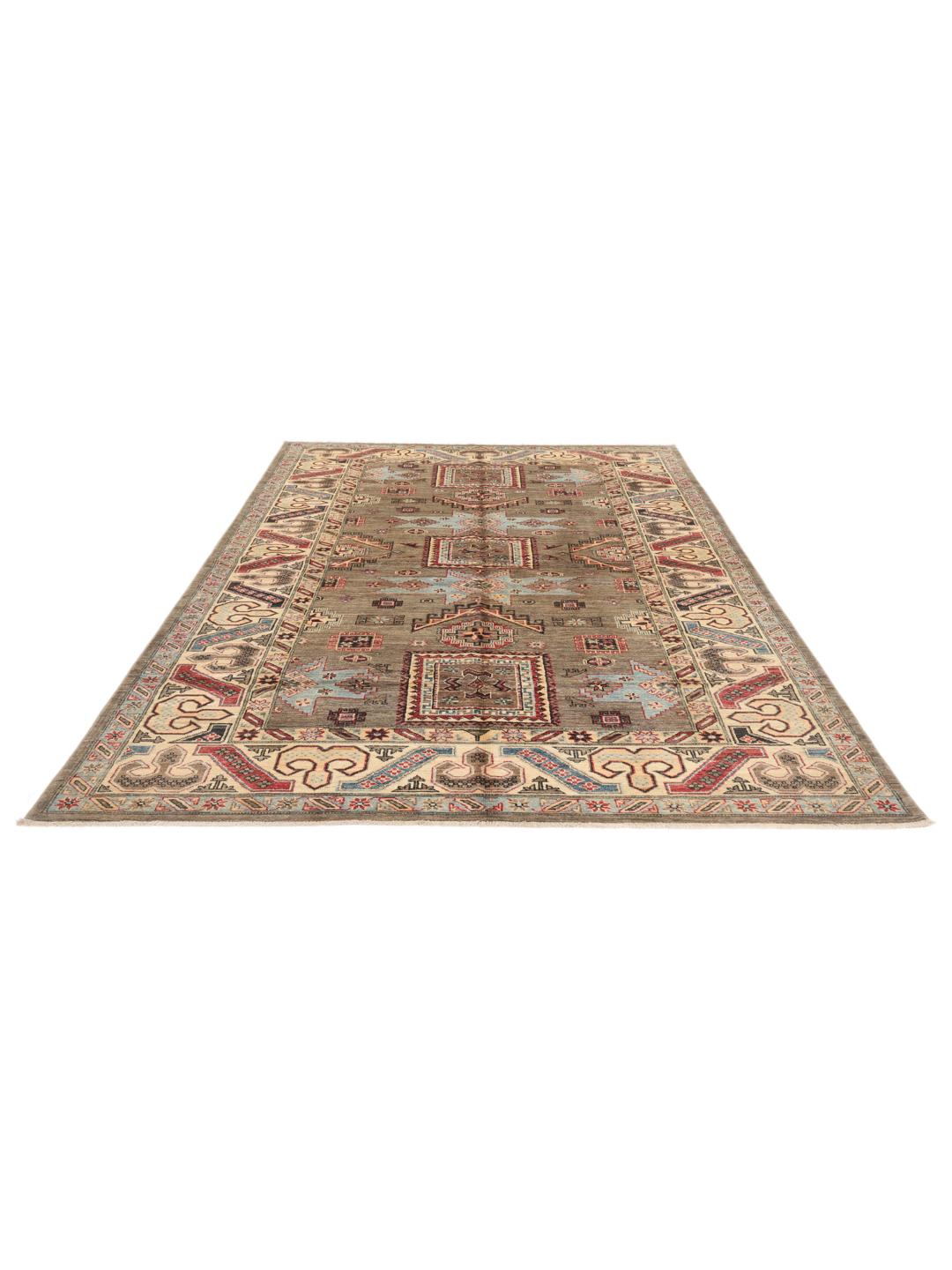
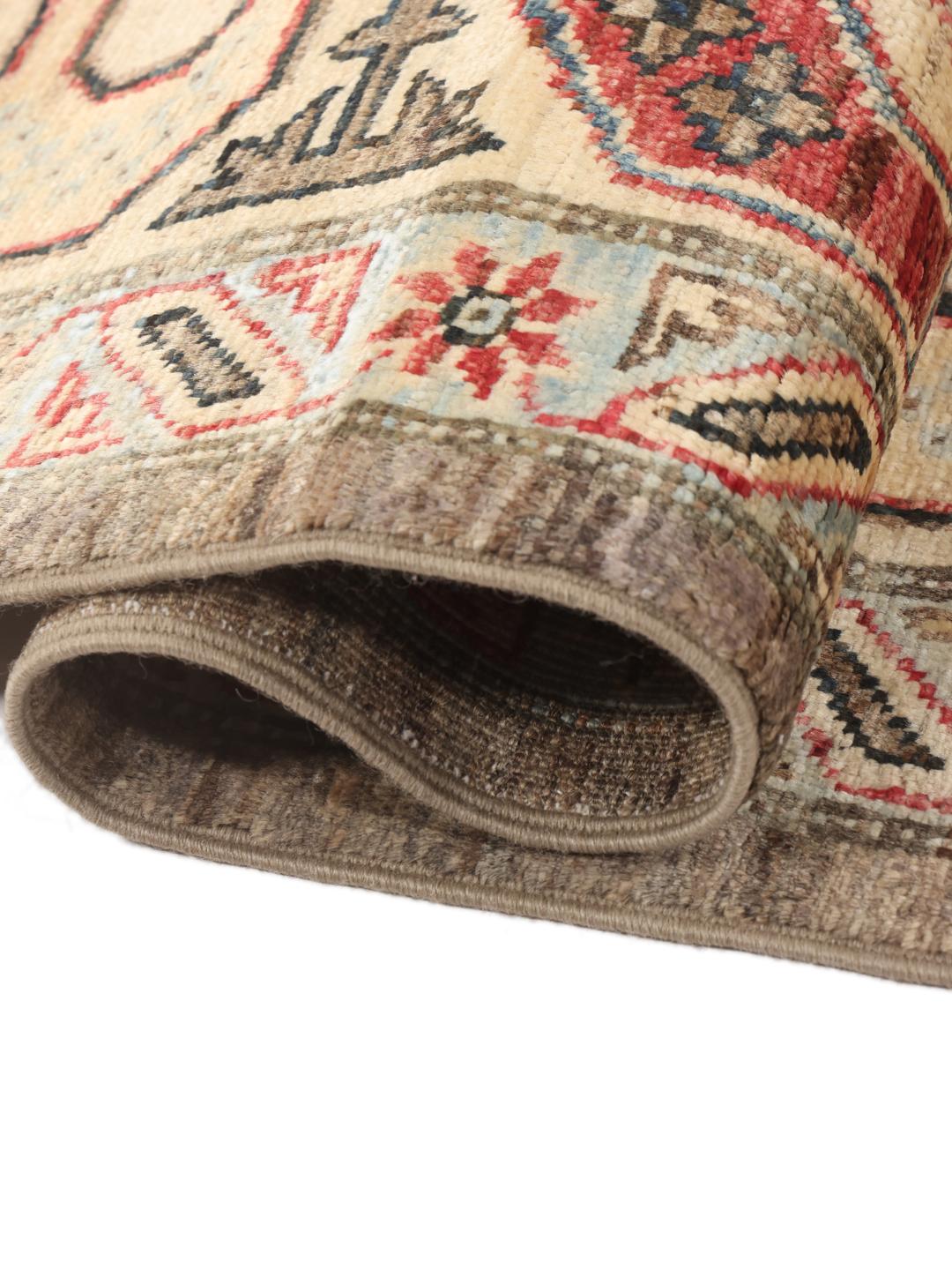
Kazak rugs take their name from the historical region of the Caucasus, where tribal weavers developed a distinct visual language defined by bold geometry and vibrant, saturated colours. While the original Kazak rugs were woven by nomadic tribes, the tradition has evolved significantly, with modern artisans in Afghanistan keeping these ancient techniques alive by adapting them for contemporary homes.
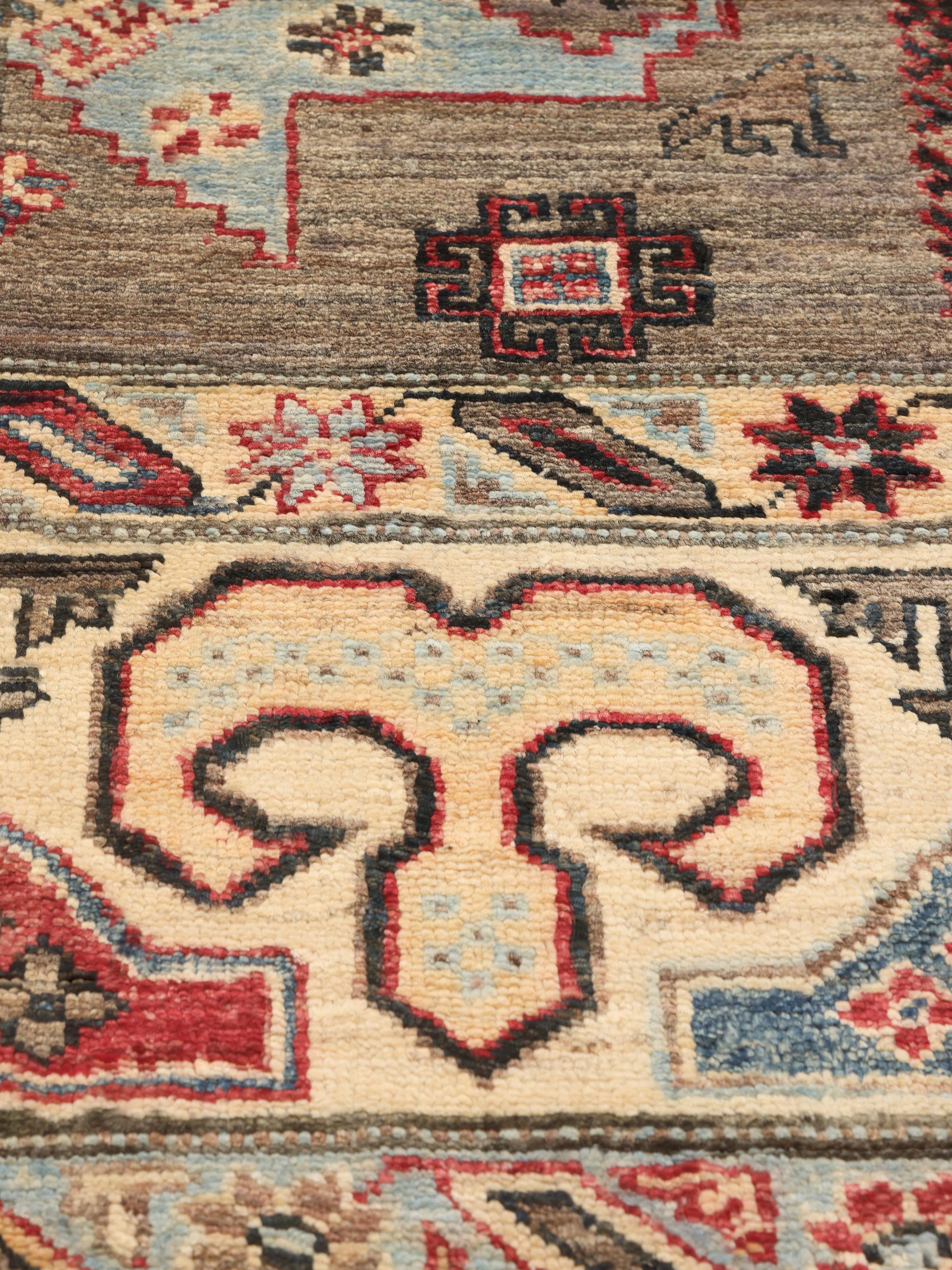
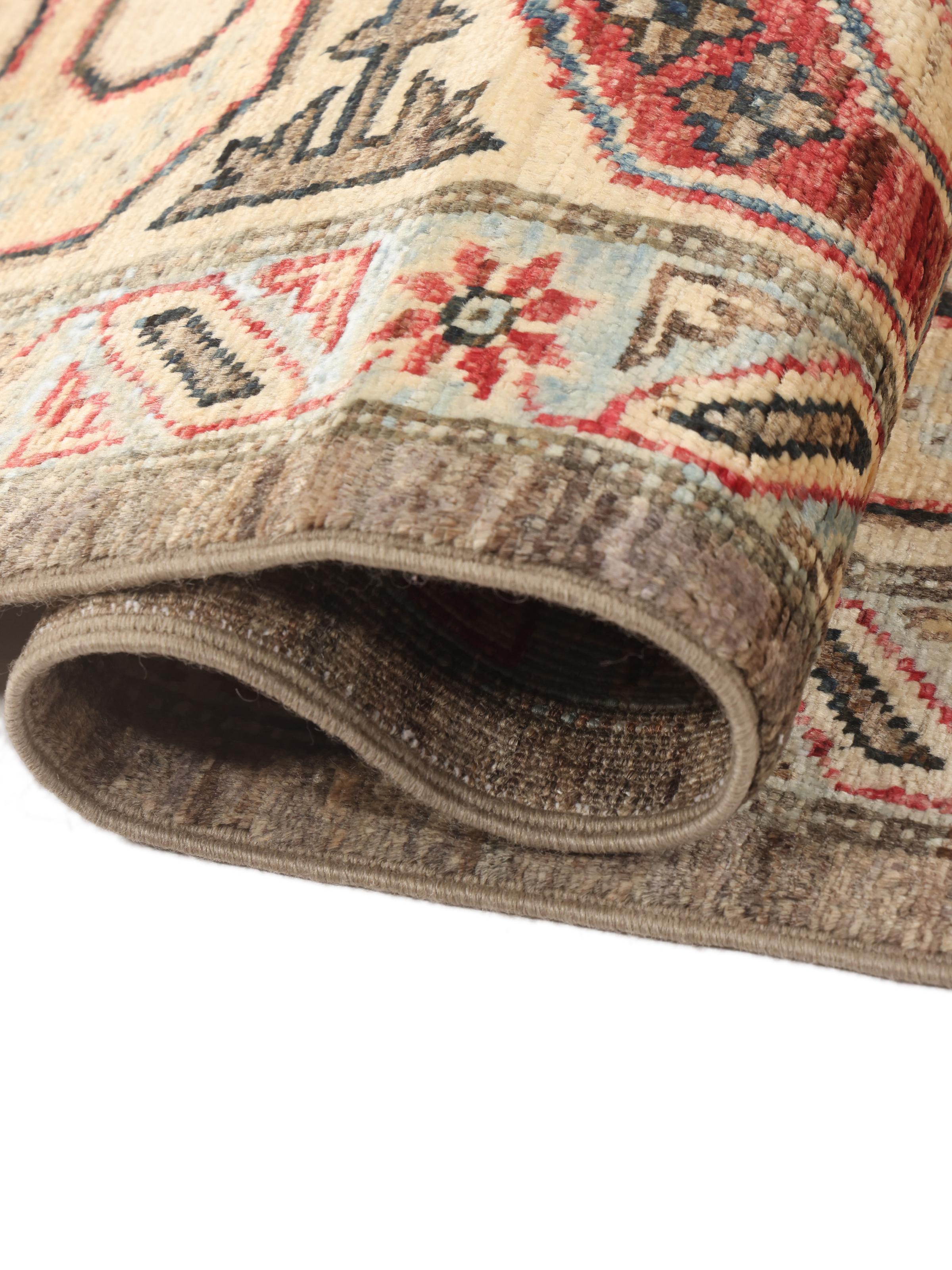
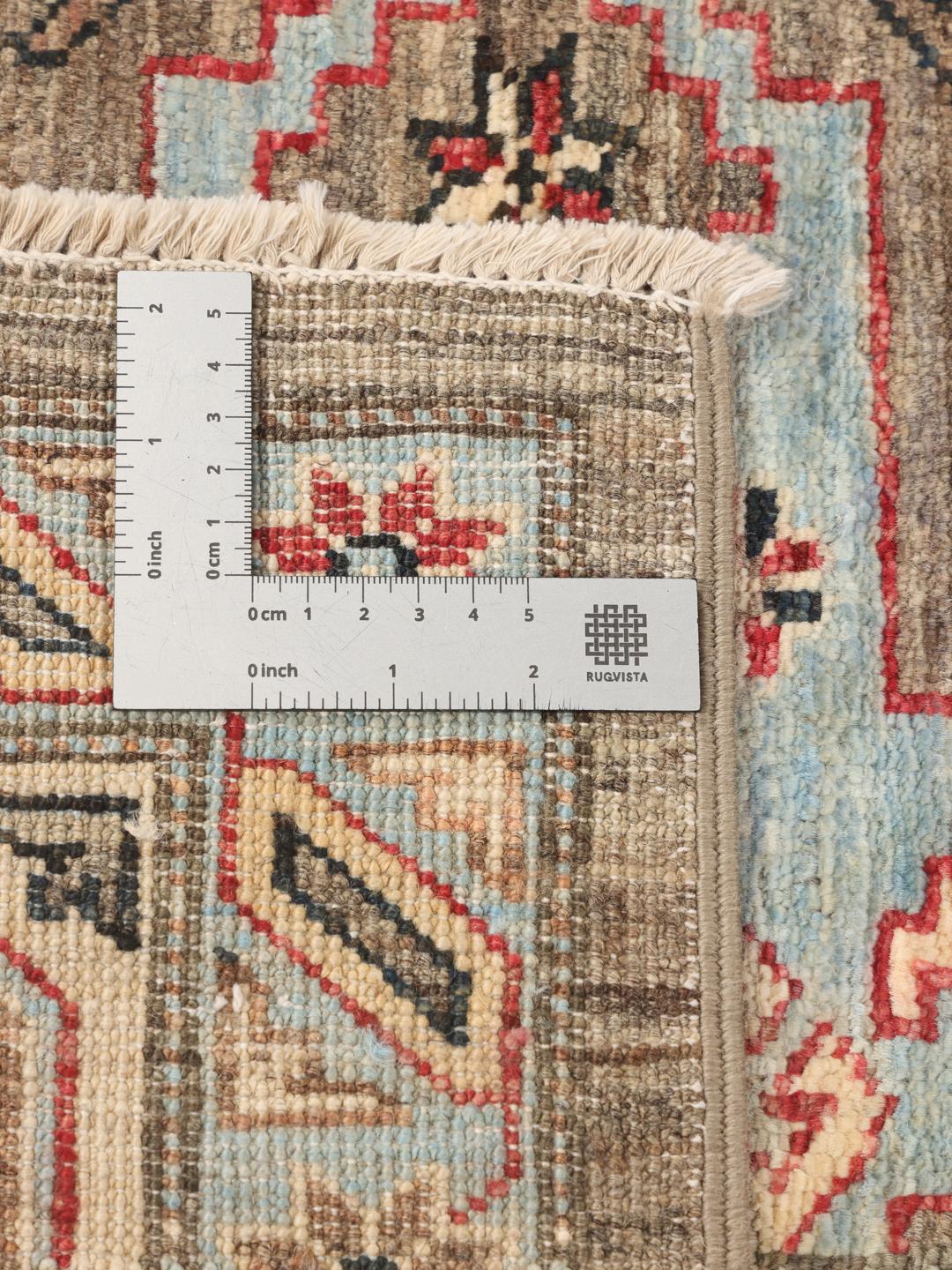
The term hand-knotted refers to the traditional method of construction where each individual pile yarn is tied by hand around the foundation threads. This laborious process is what gives these rugs their characteristic longevity and dense, luxurious feel. It is a craft that relies entirely on the artisan's skill, ensuring that every piece has its own subtle personality.
Signature elements of this tradition include large-scale medallions, geometric floral motifs, and stepped borders that create a rhythmic, balanced field. These designs are not merely decorative but are deeply rooted in the cultural heritage of the weaving communities, often incorporating symbols that reflect local folklore and the natural world.
Collecting a rug from this tradition is an investment in human skill and cultural history. These pieces are valued for their ability to bring a sense of grounded, organic beauty to any room. When you choose a hand-knotted piece, you are supporting a legacy of craftsmanship that has survived for centuries, ensuring that these stories continue to be woven into the fabric of our homes.