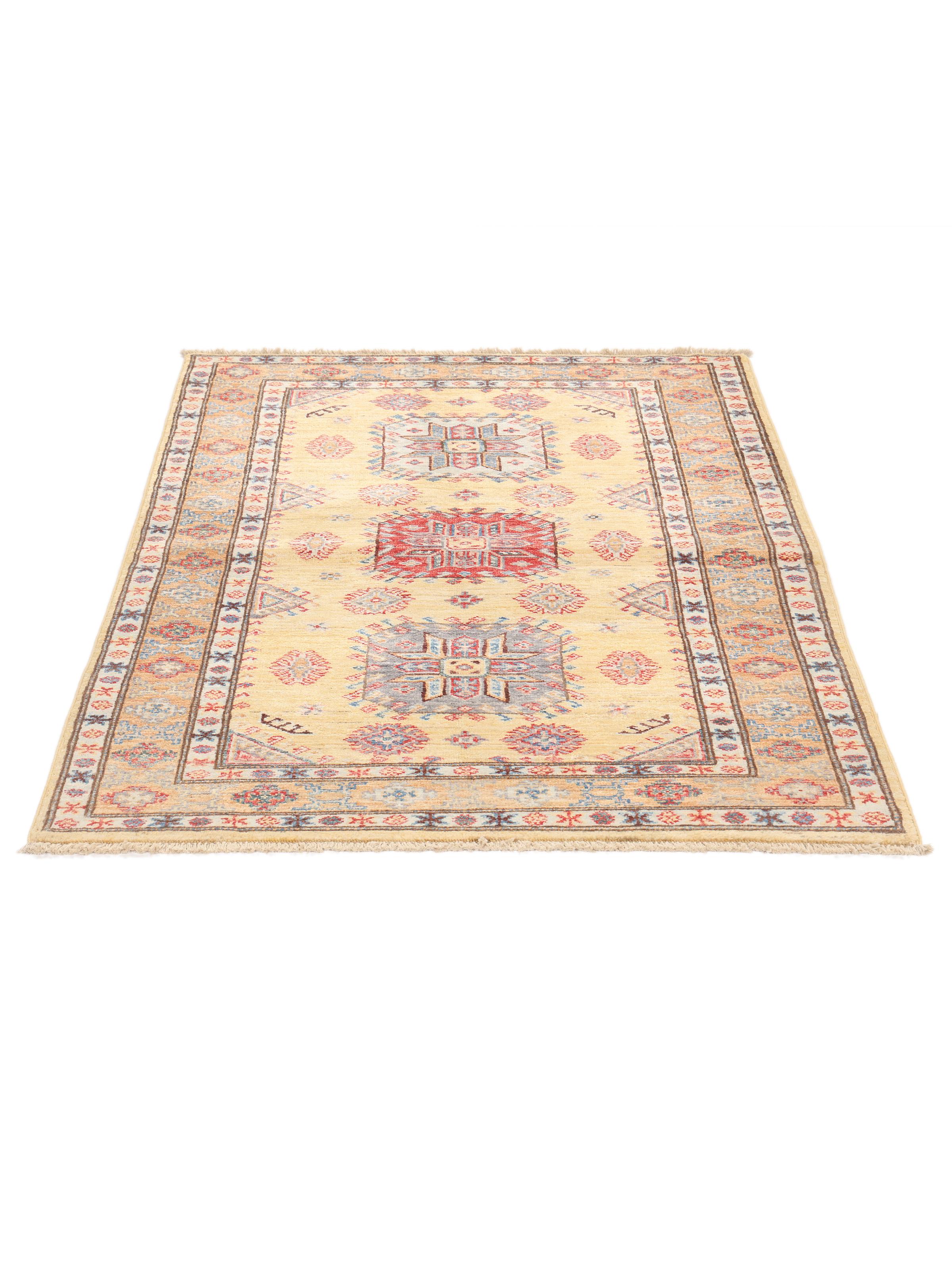
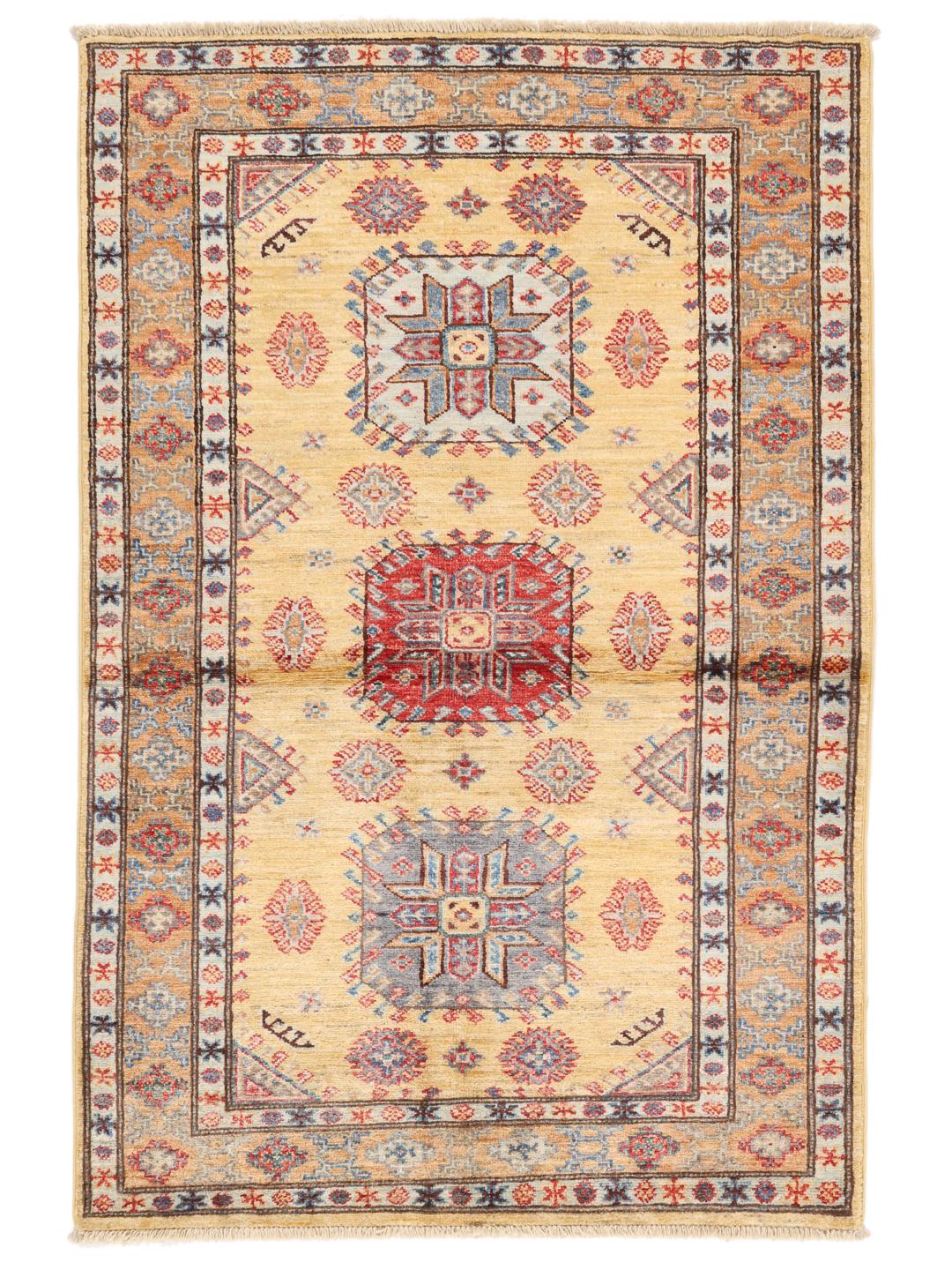
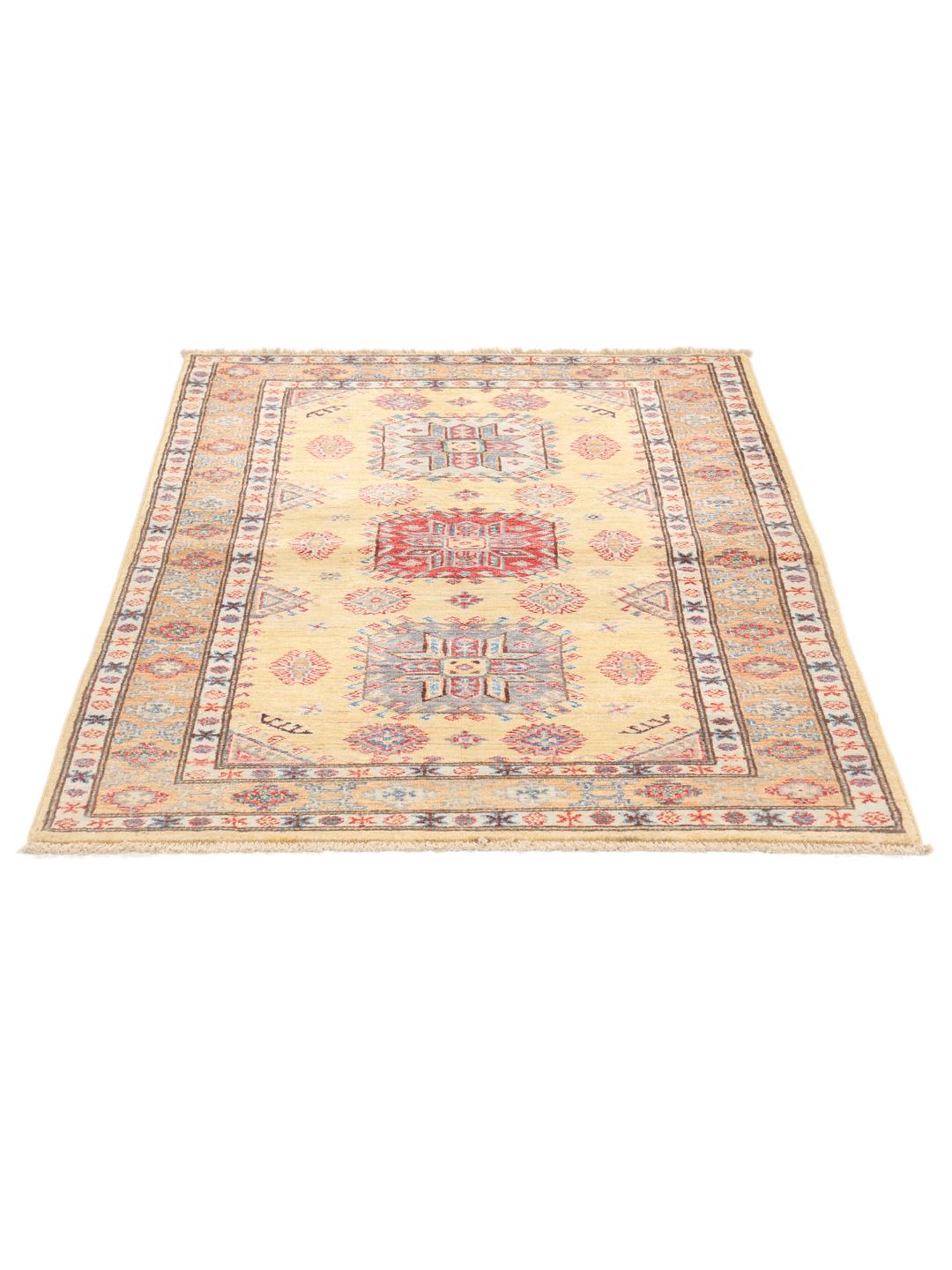
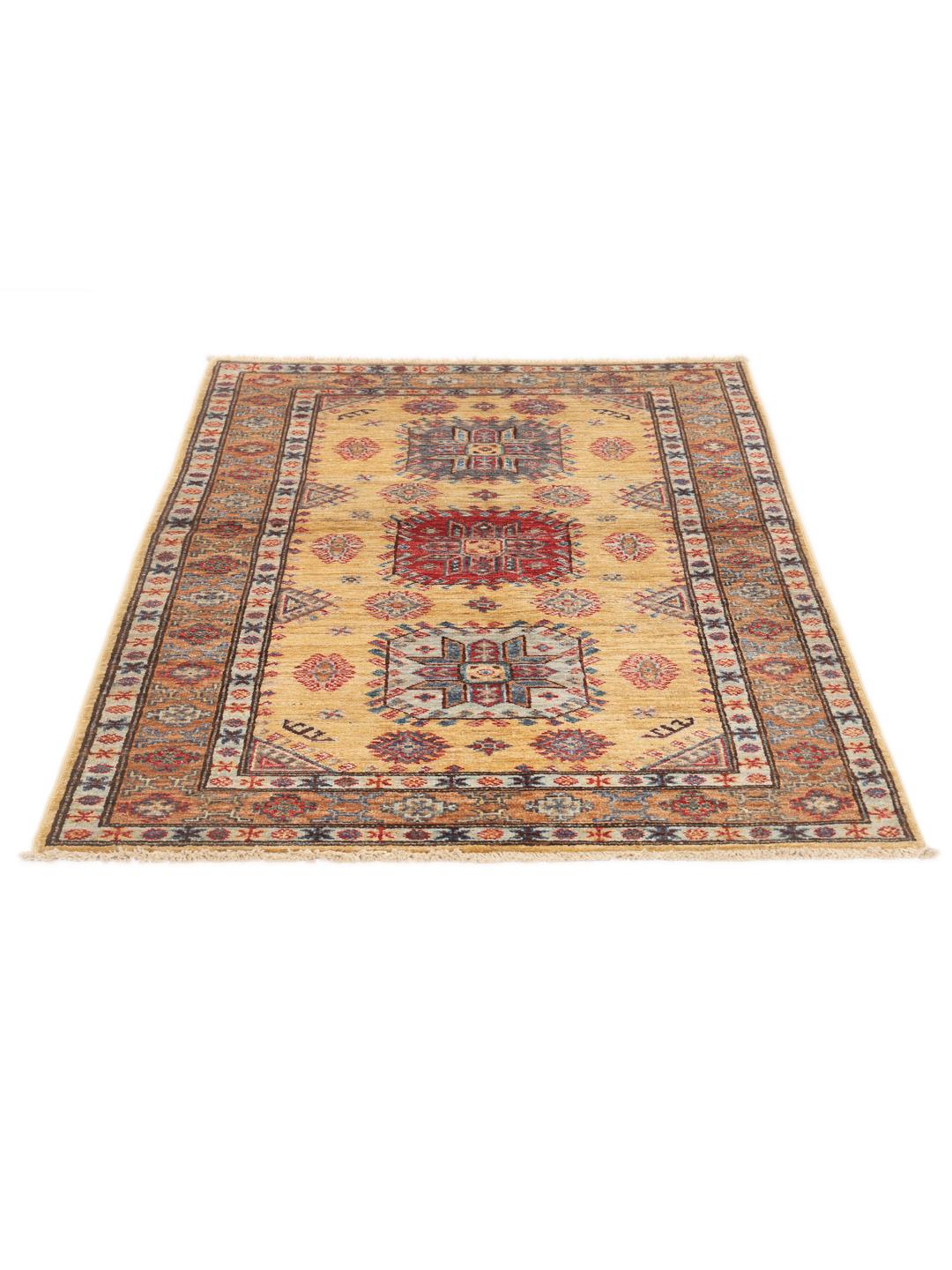
The Kazak rug tradition finds its roots in the mountainous regions of the Caucasus, where nomadic tribes developed a distinct style of weaving that prioritised bold geometry and expressive, saturated colours. Over time, these weaving techniques migrated across the Middle East, finding a new and vibrant home in Afghanistan. Today, Afghan weavers continue to honour these ancient techniques, producing rugs that carry the spirit of the original Kazak designs while adapting them for contemporary homes.
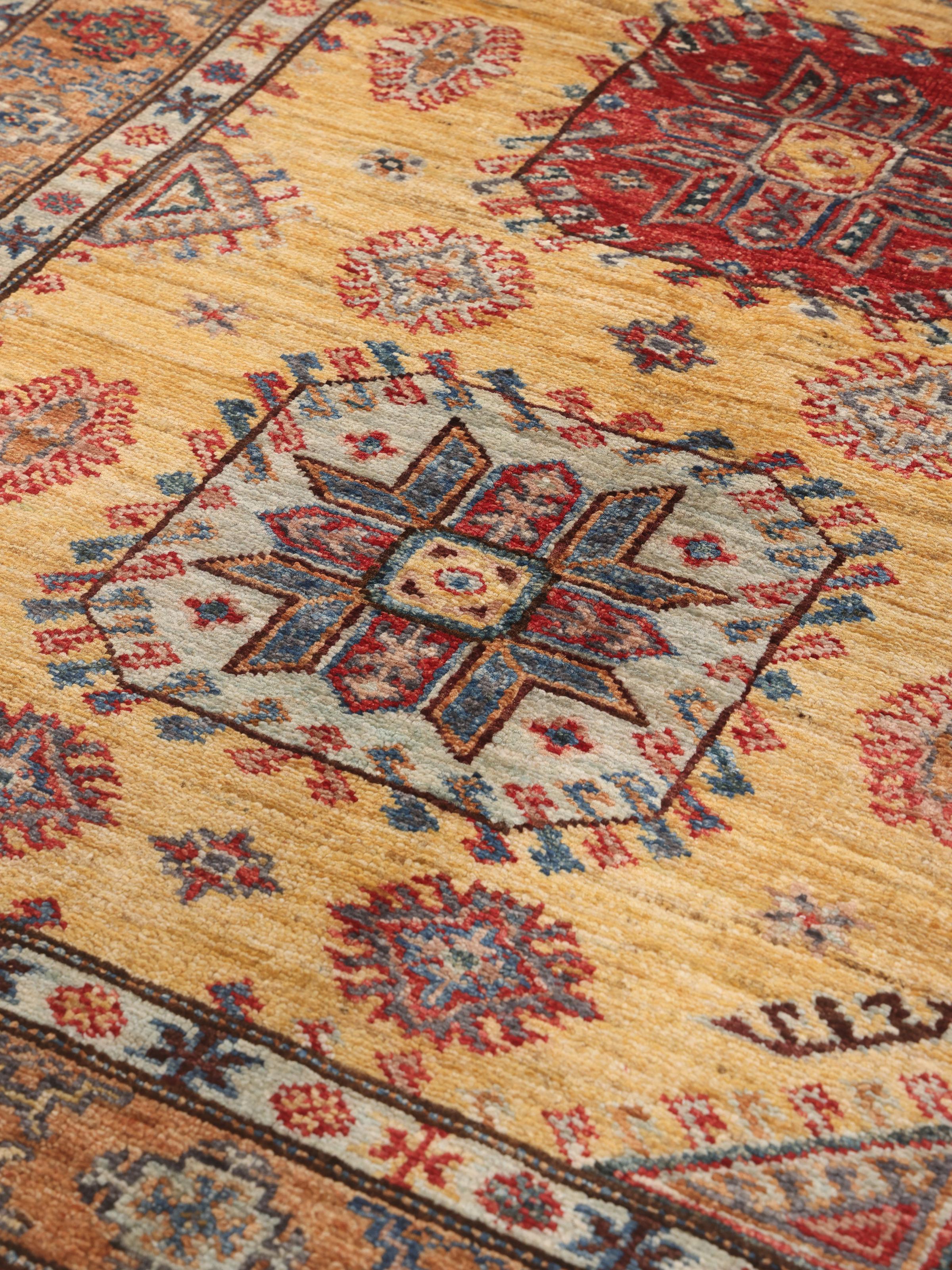
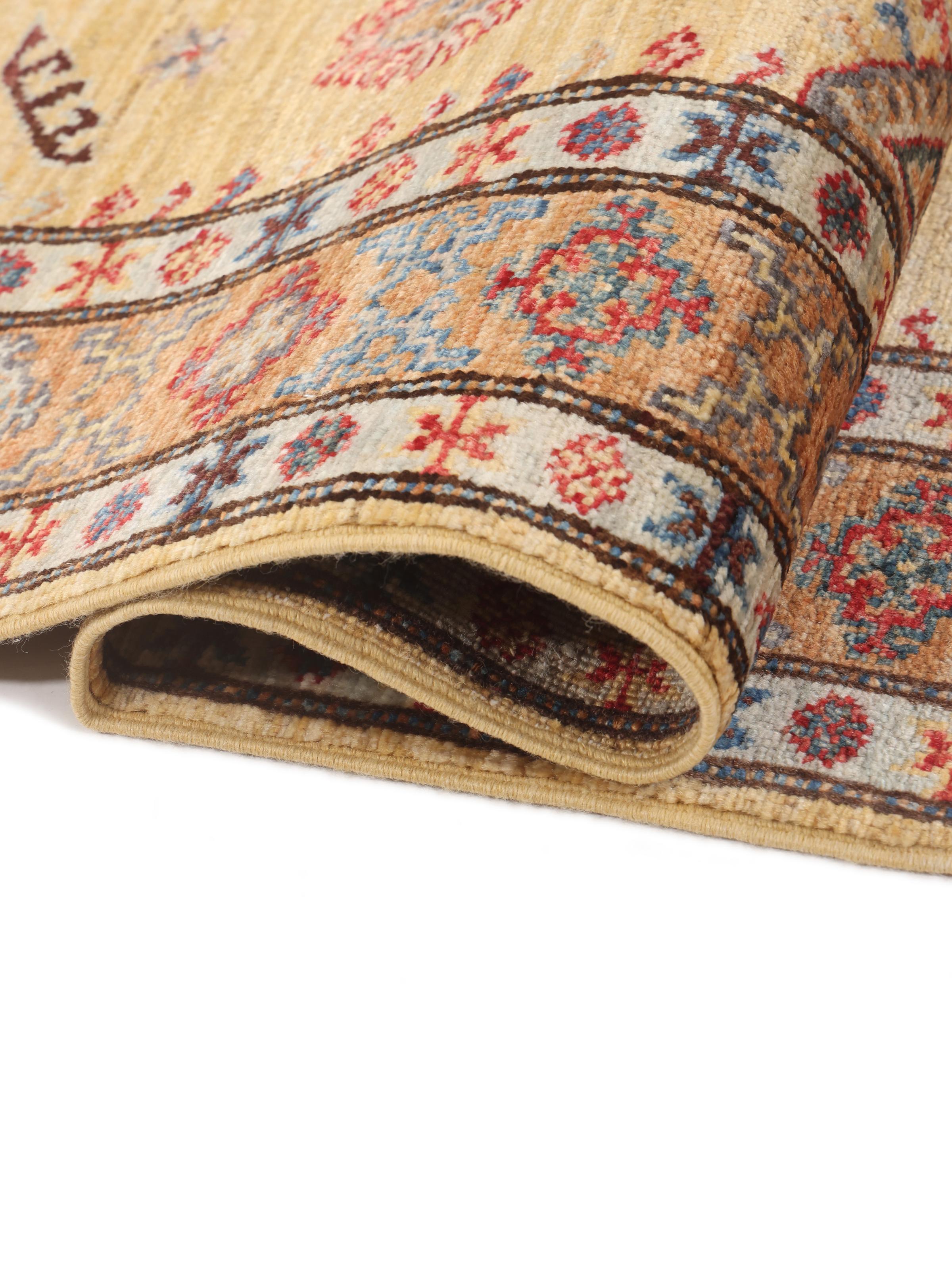
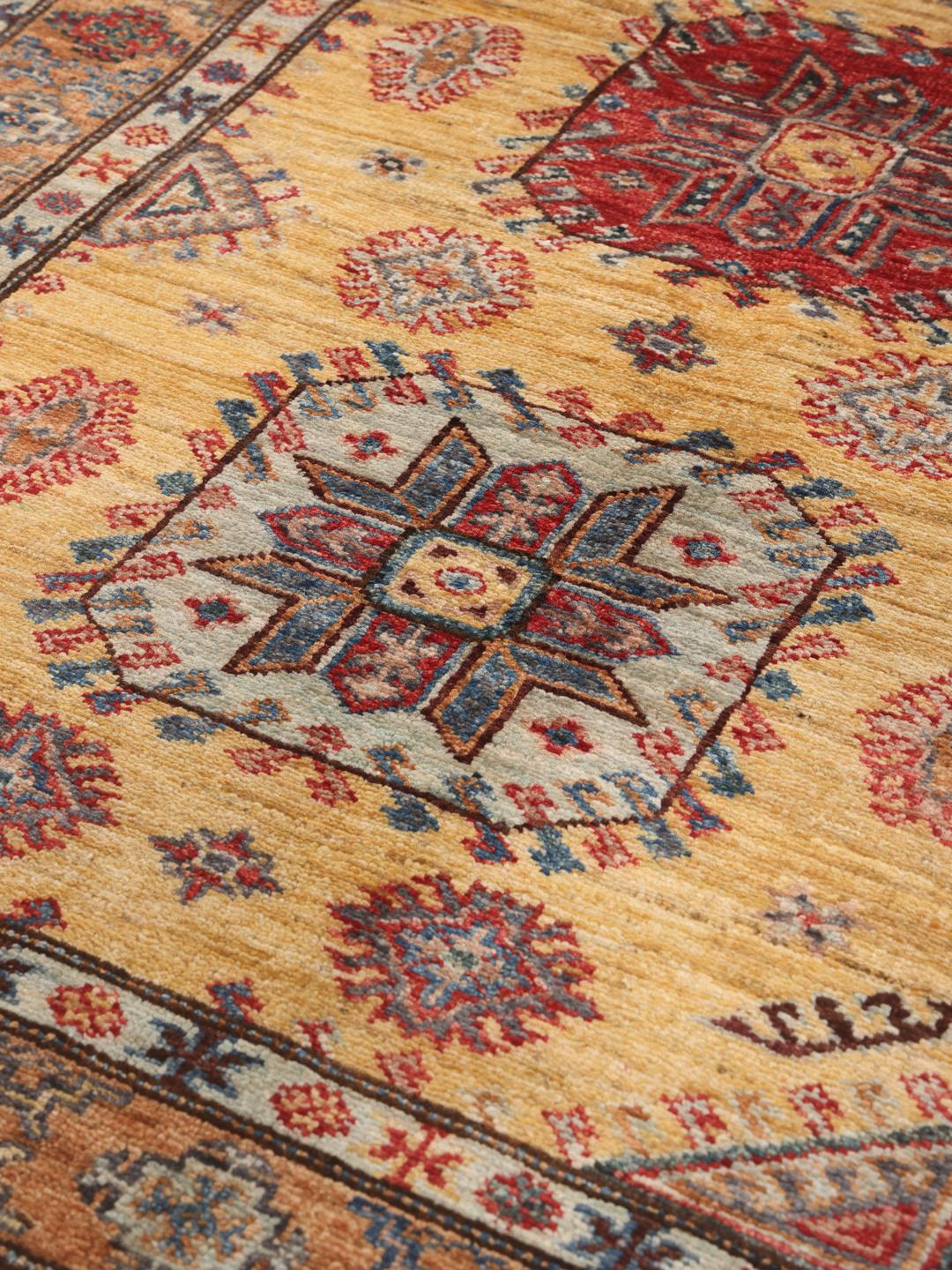
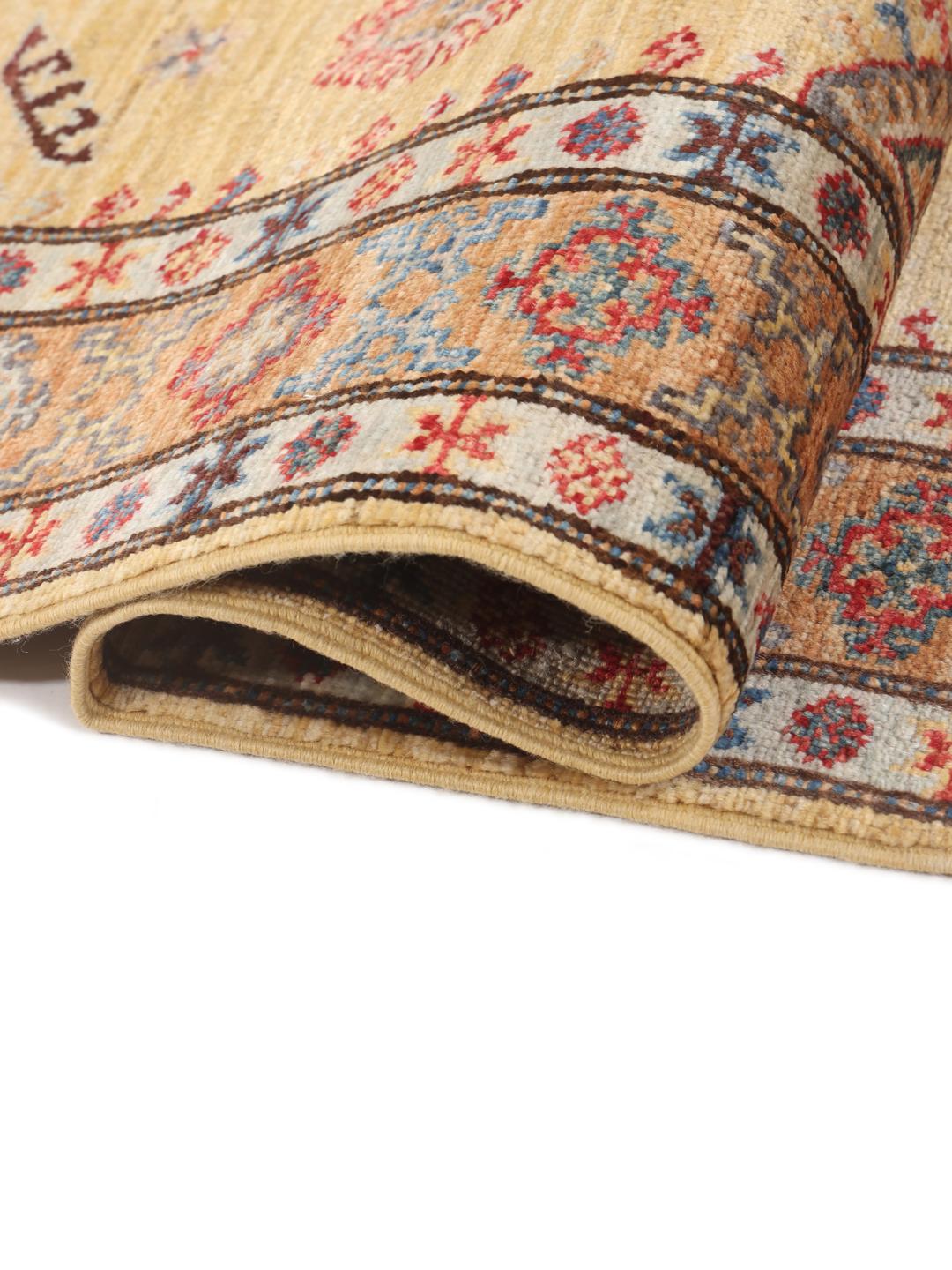
The term Kazak refers to a specific, highly regarded style of weaving known for its sturdy construction and vibrant, expressive motifs. These rugs are typically hand-knotted with a wool pile, which is prized for its natural lanolin content, providing a soft yet durable texture that ages gracefully. The foundation is often built with sturdy natural fibres, creating a rug that is both heavy and substantial, capable of lasting for generations if properly cared for.
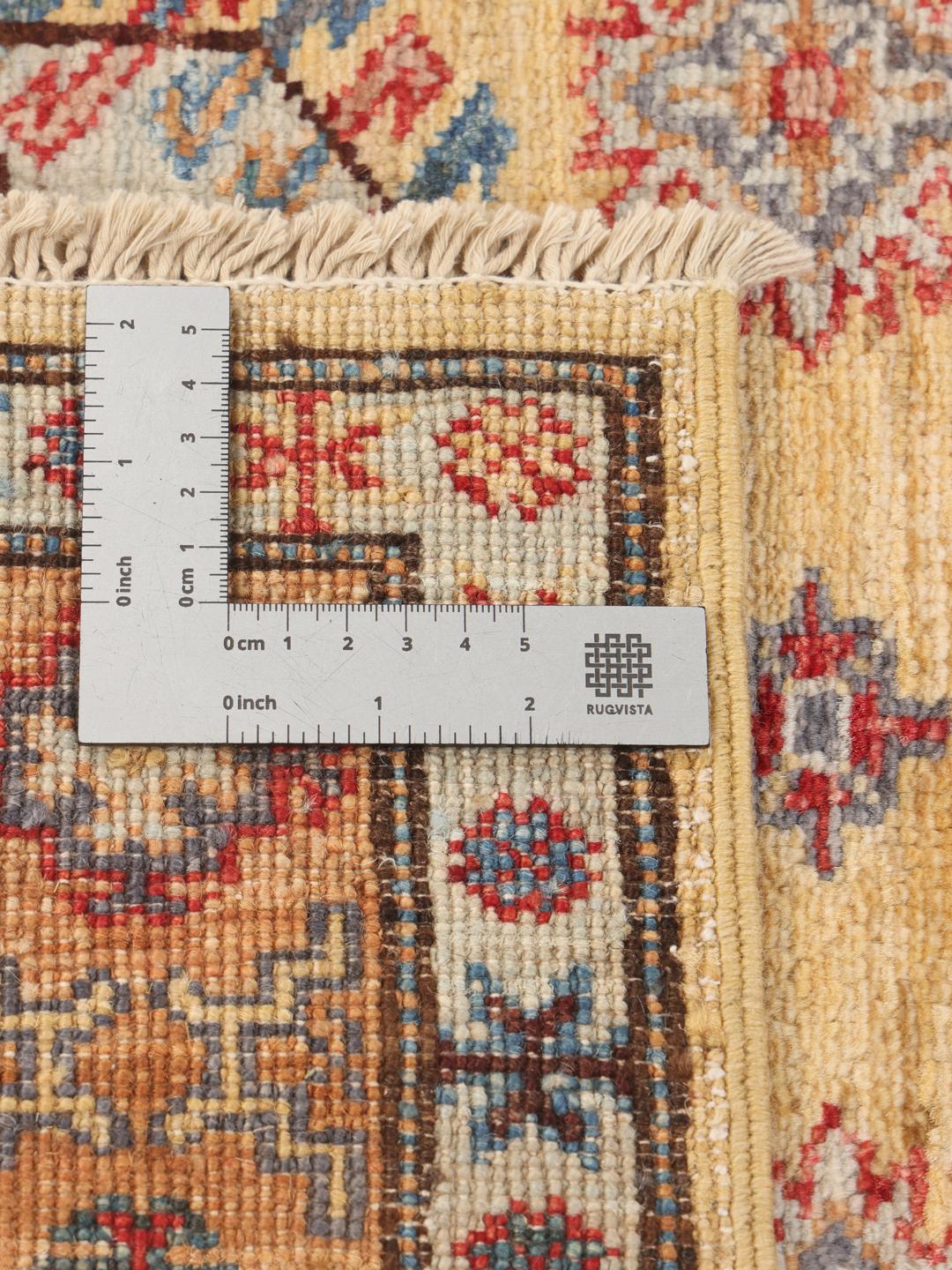
Signature design elements of the Kazak tradition include large, stylised geometric medallions often referred to as guls, surrounded by intricate borders filled with serrated leaves, stars, or latch-hook motifs. This specific rug showcases a sophisticated arrangement of these classical motifs, set against a warm field that highlights the depth of the dyes. The use of repeating patterns and bold, contrasting colours is a hallmark of the style, designed to draw the eye and anchor a room.
Collectors and design enthusiasts value Kazak rugs for their authentic connection to traditional weaving arts and their undeniable visual impact. Owning a piece from this tradition is an act of appreciation for the patience and skill required to create a textile of such complexity. These rugs are not just decor; they are enduring symbols of a craft that has survived for centuries, bringing a sense of history and human connection to any space they inhabit.