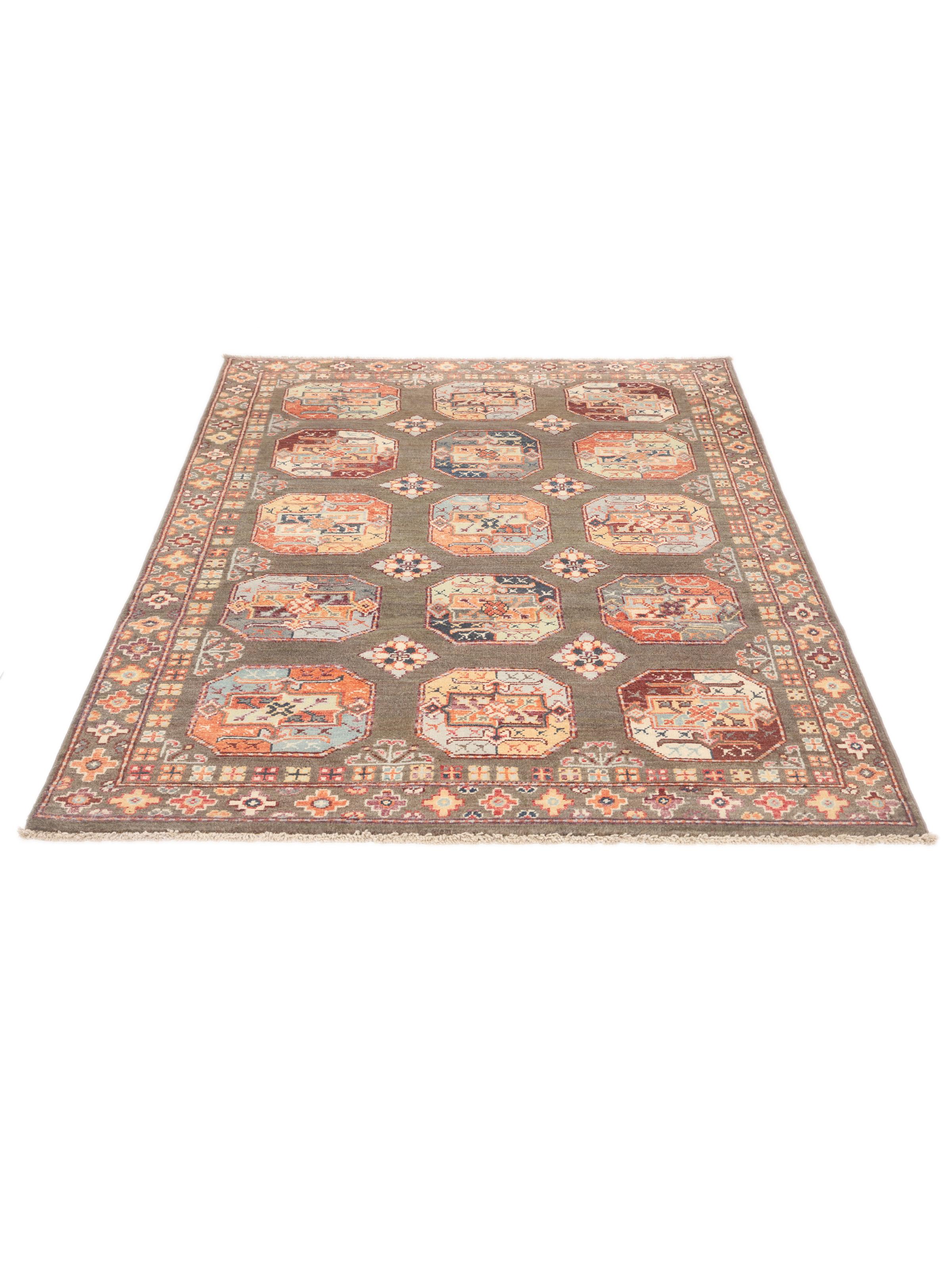
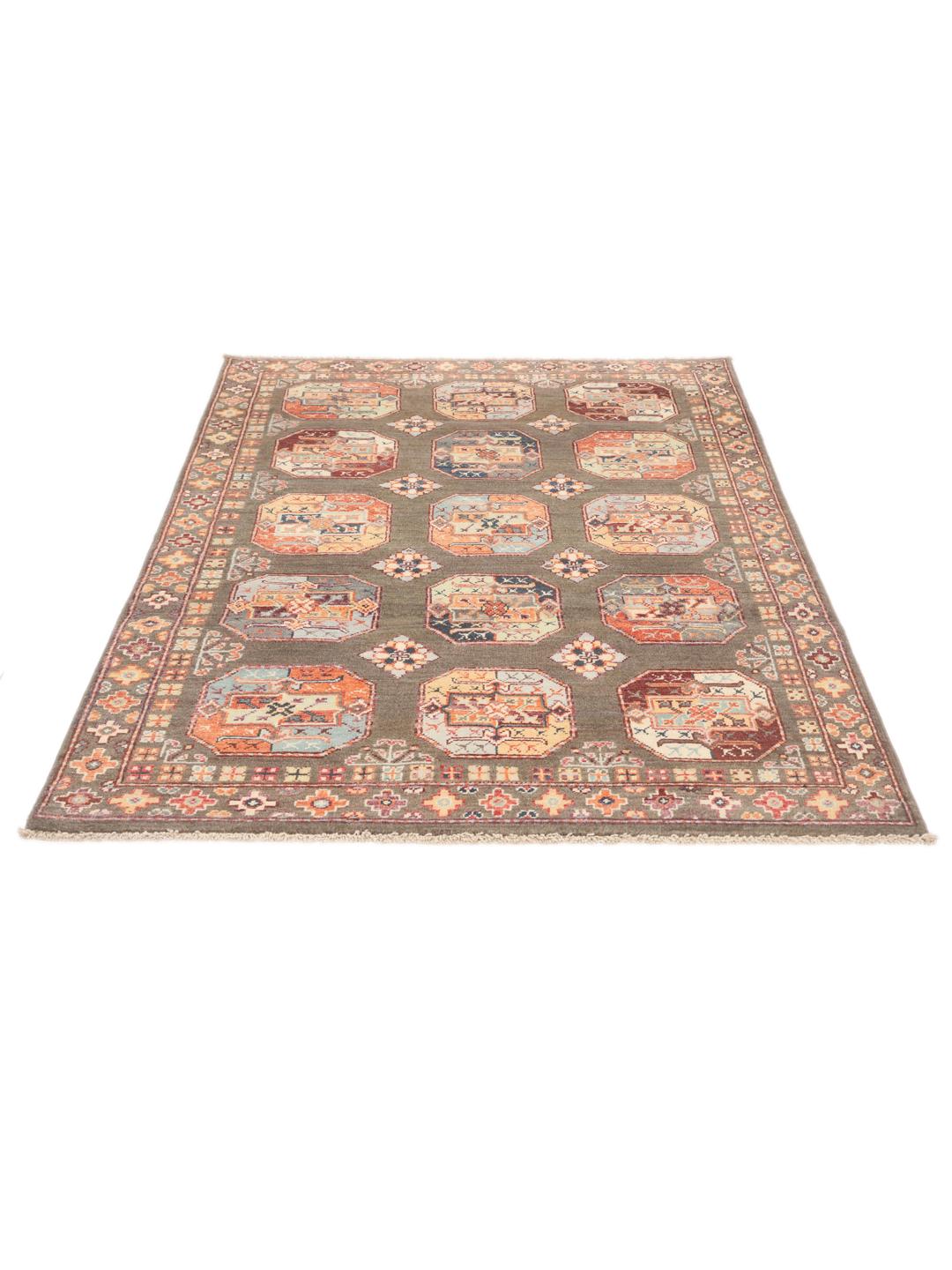
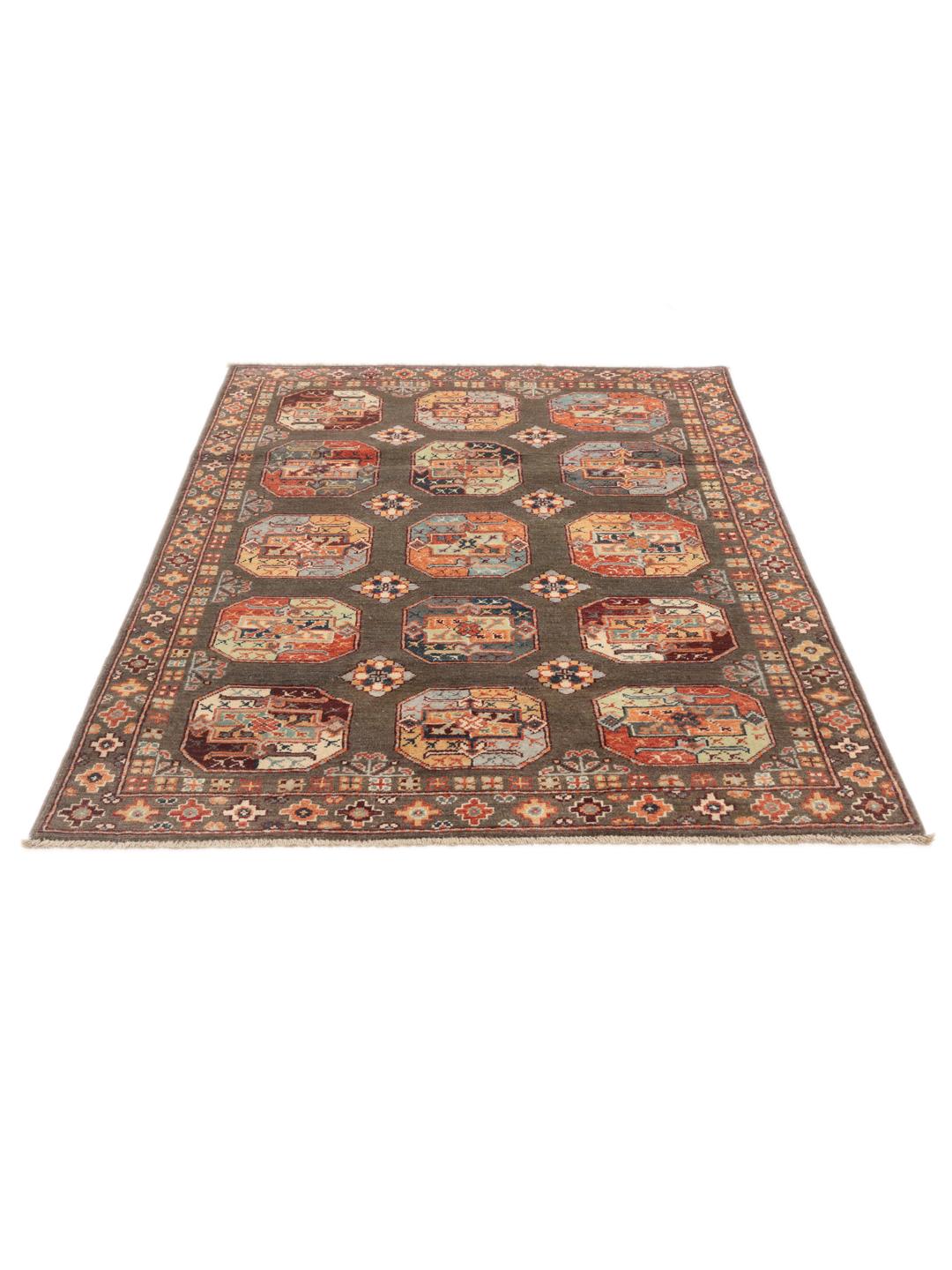
Kazak rugs originate from the Caucasus region, historically renowned for their bold, geometric designs and vibrant use of colour. While the tradition began in the mountainous areas between the Black and Caspian Seas, the style has evolved and migrated over centuries. Today, some of the most impressive examples are hand-knotted in Afghanistan, where weavers have mastered these classic techniques to produce rugs of exceptional character.
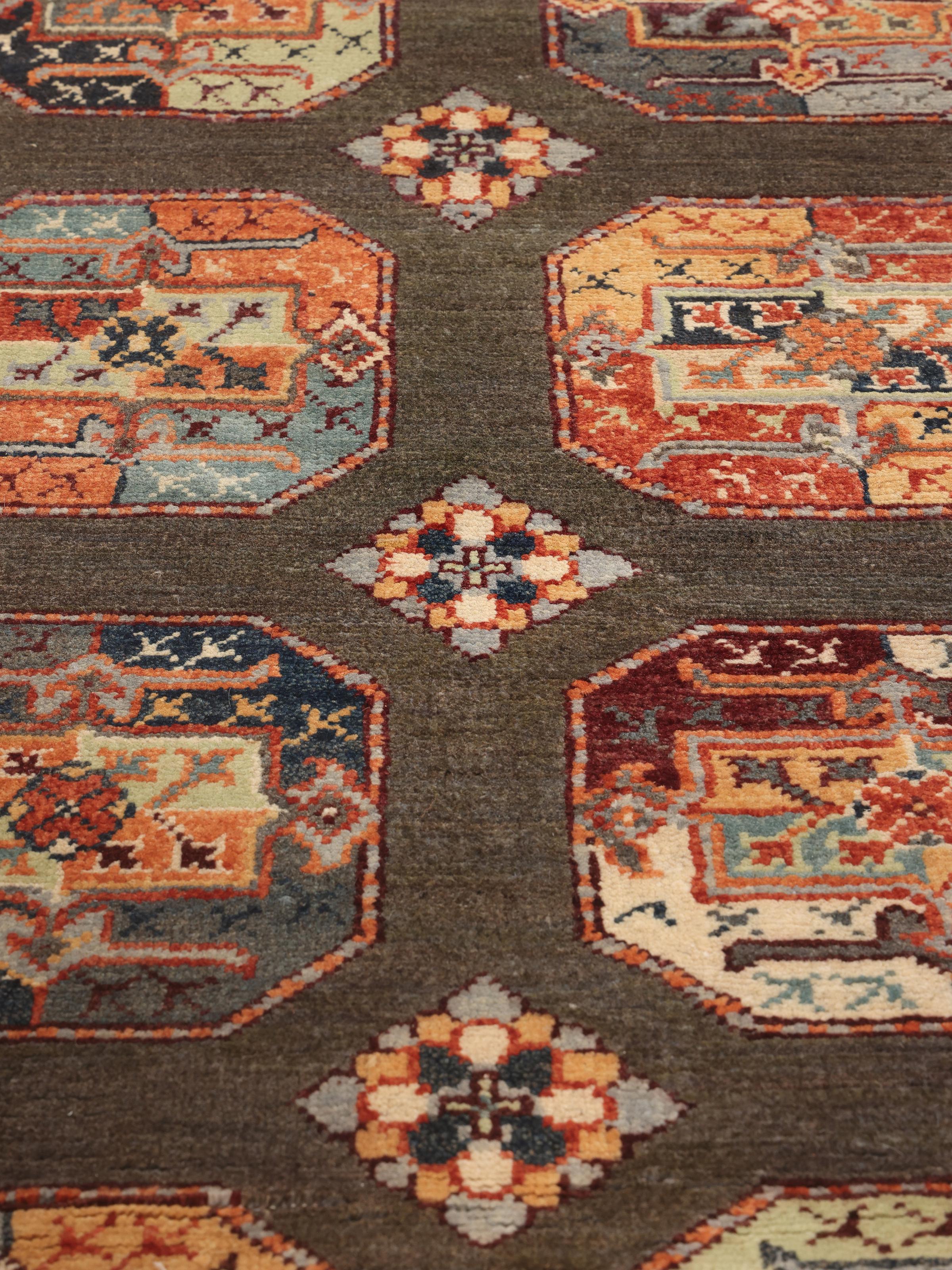
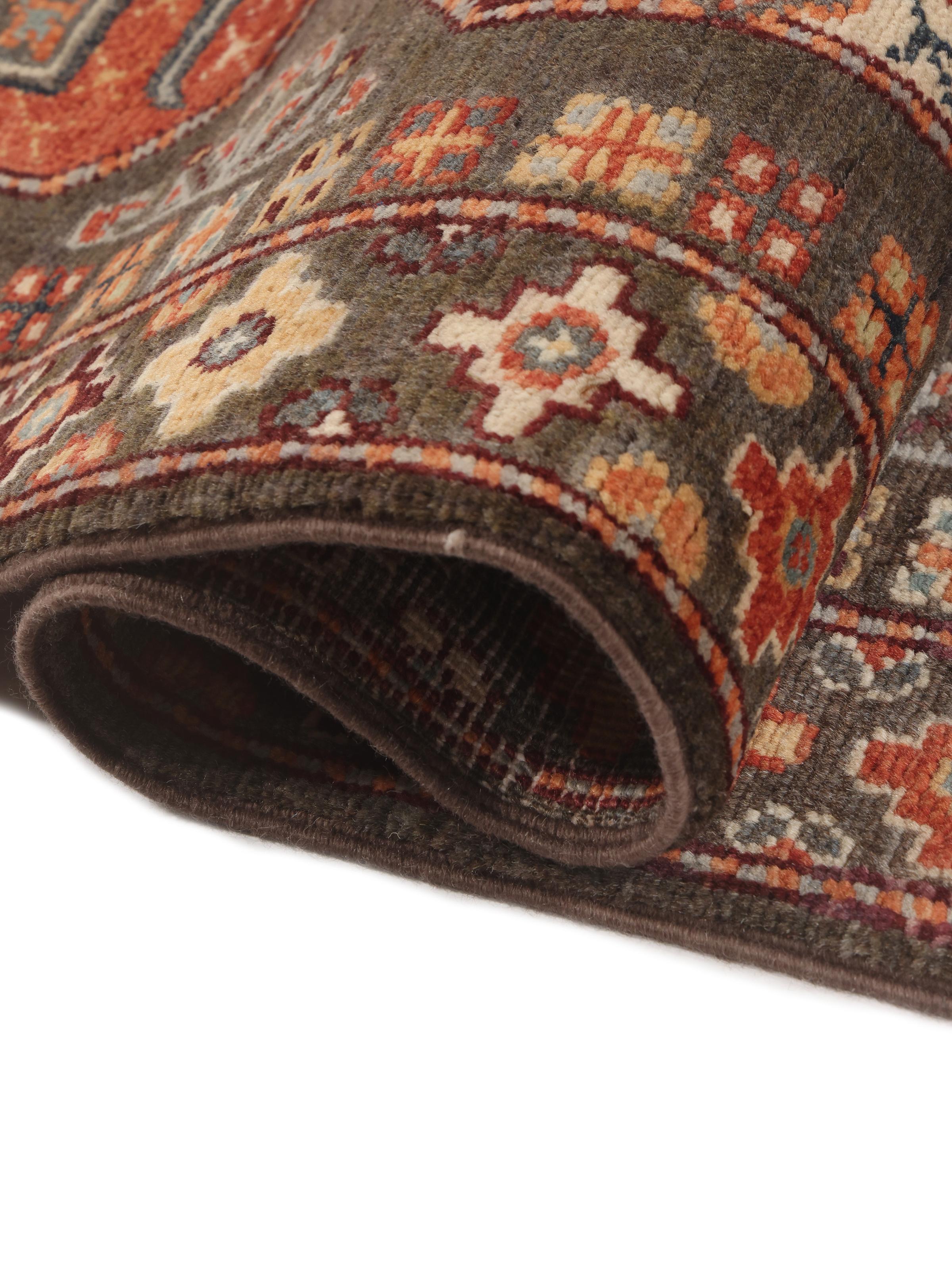
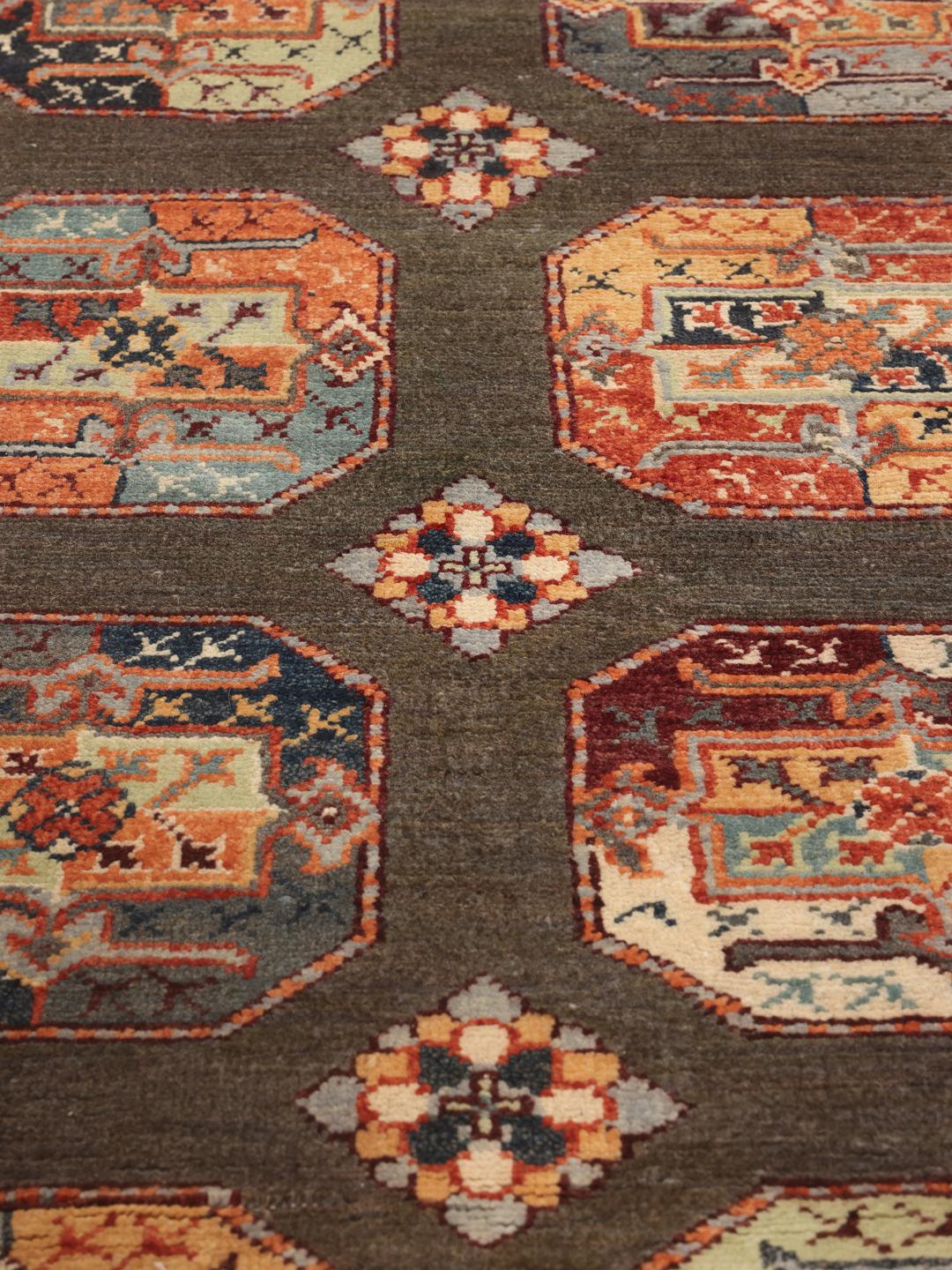
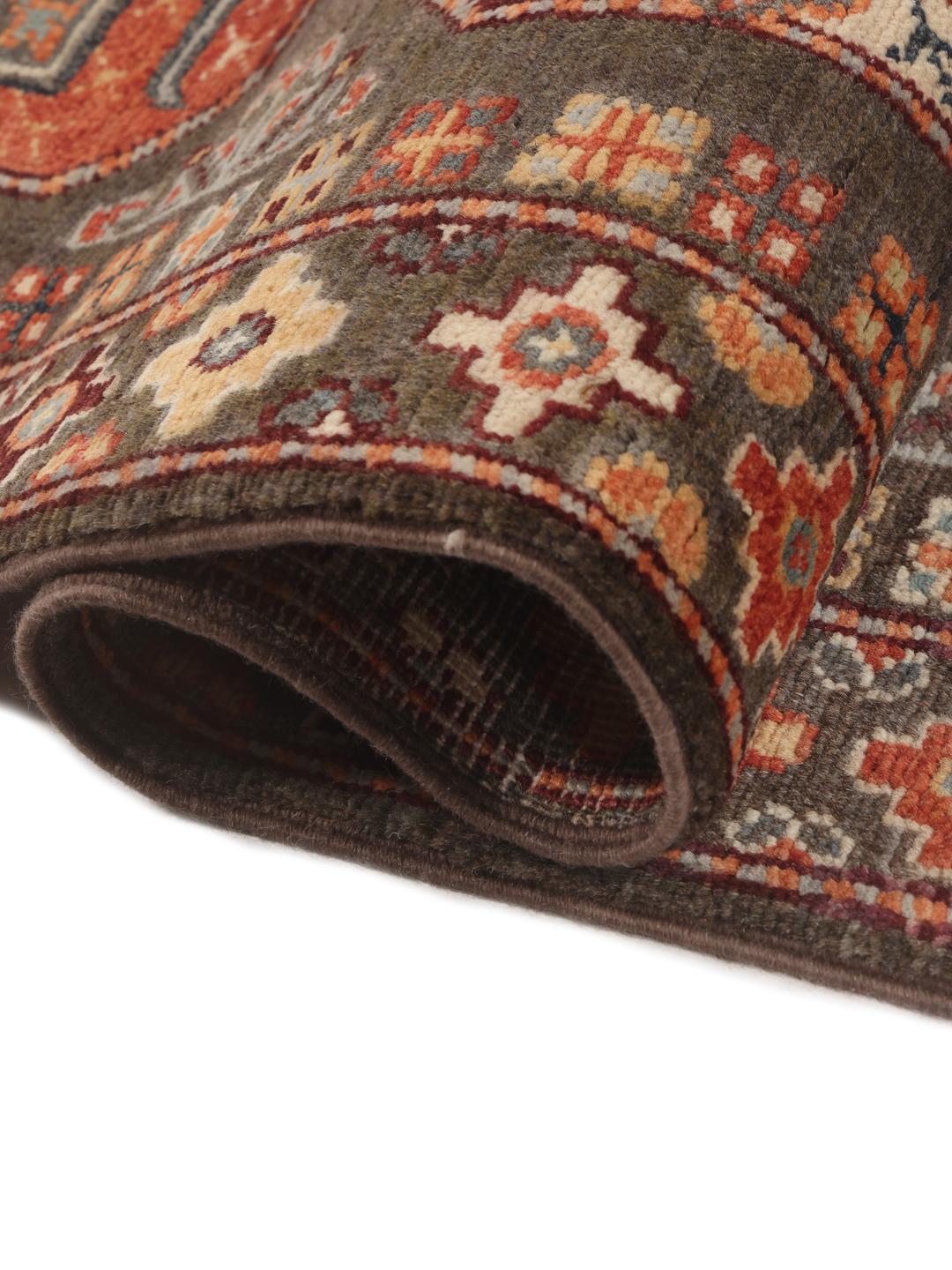
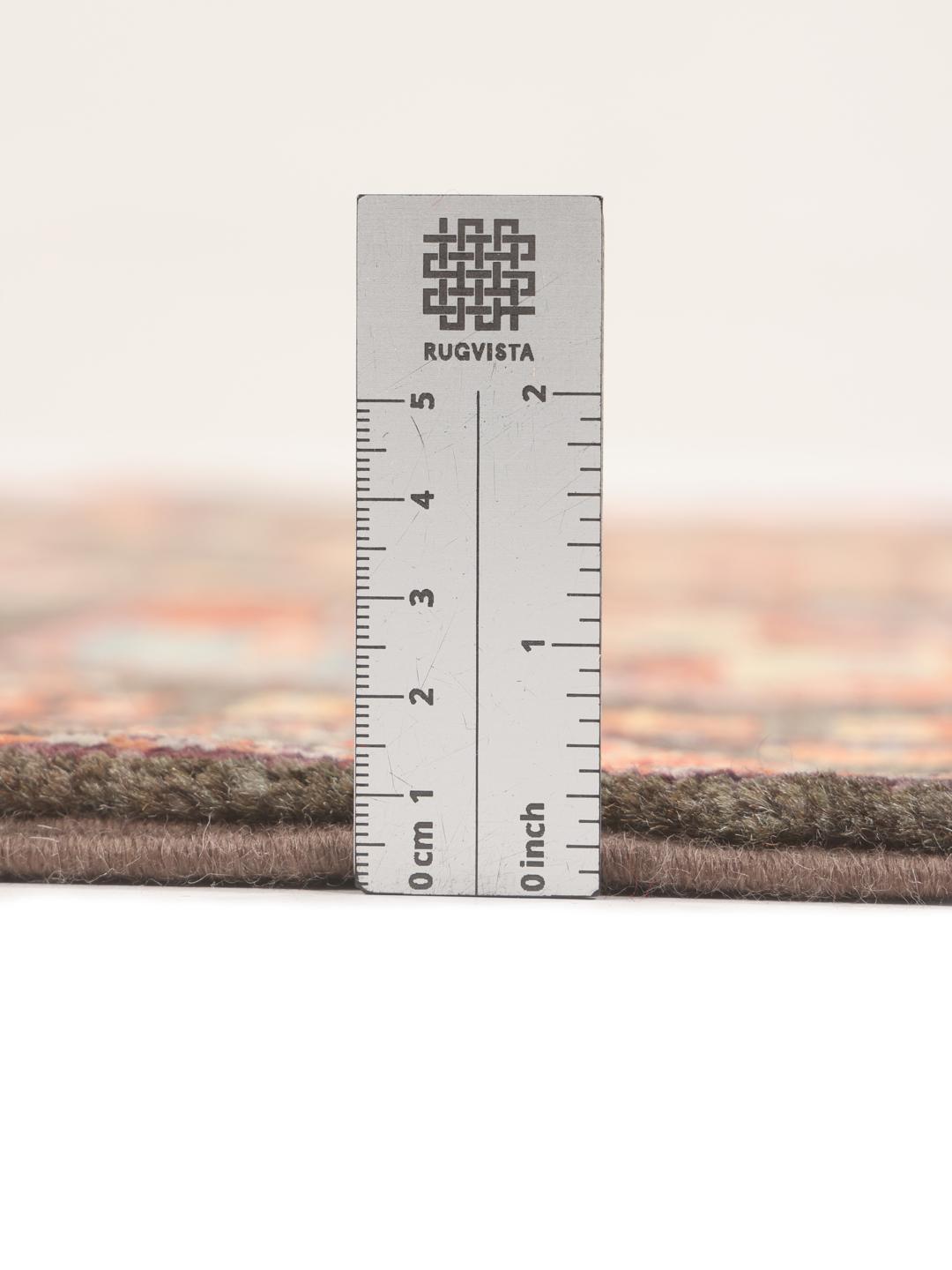
The term Kazak refers to these specific, tribal-inspired designs that favour large-scale geometric motifs over the more curvilinear patterns found in other regional styles. These rugs are known for their sturdy construction, which is a direct result of the traditional knotting techniques employed during the weaving process. This method ensures that the rug maintains its shape and beauty even after years of daily use.
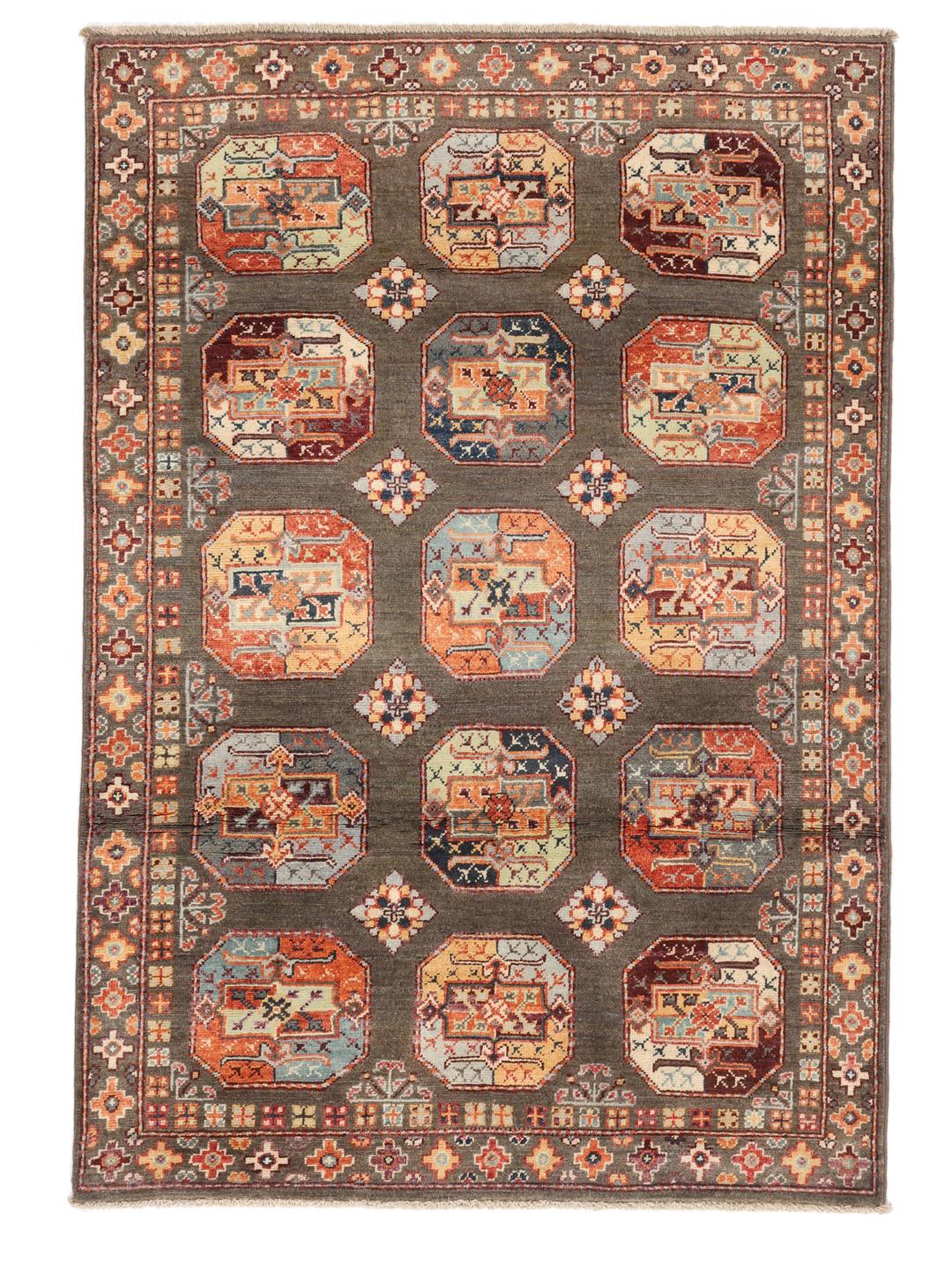
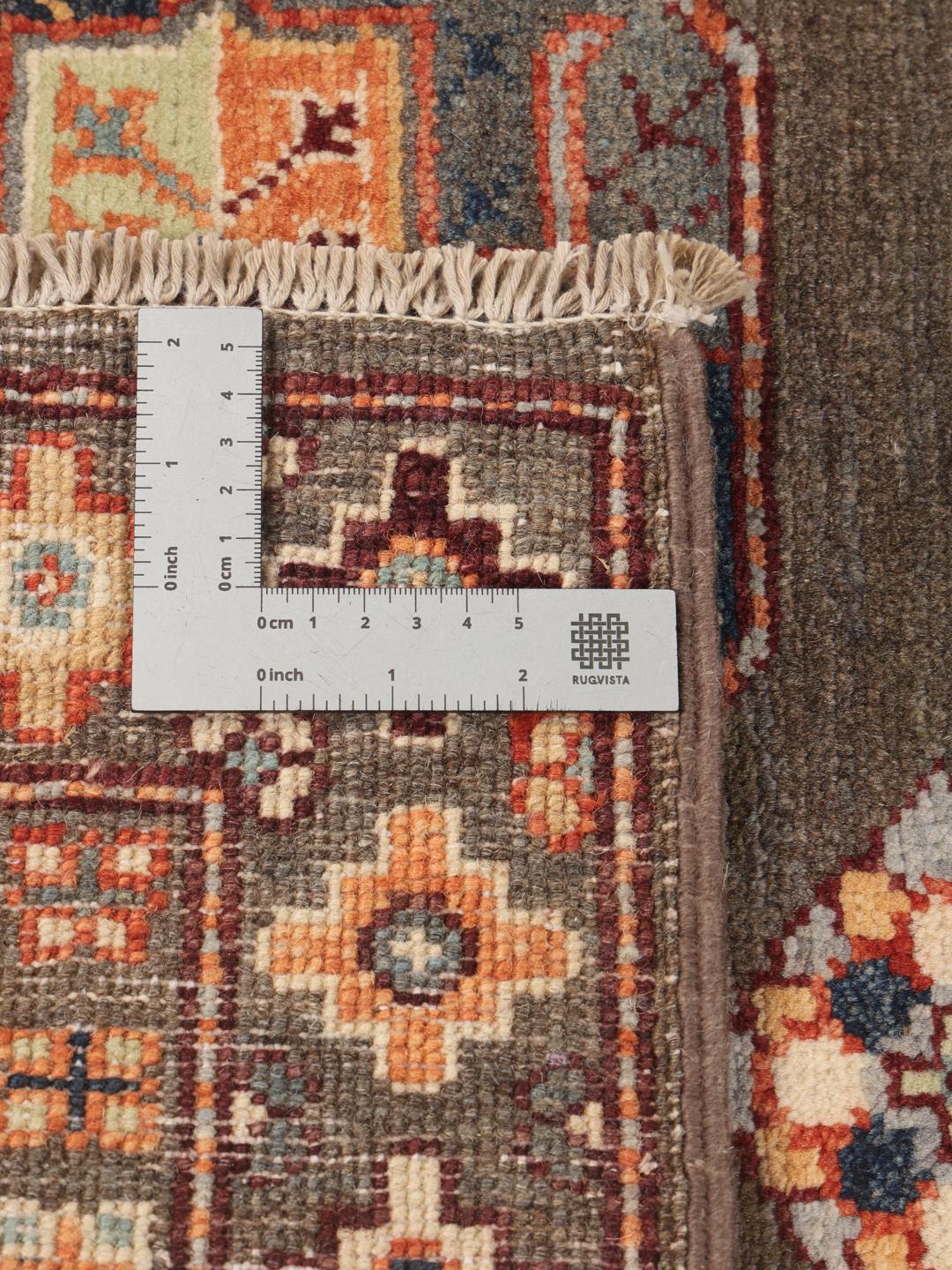
Visual language in Kazak rugs is typically dominated by strong, repeating medallion motifs, often referred to as gul or stepped diamonds, set against a rich, earthy field. The borders are usually formal and highly detailed, creating a balanced frame for the central pattern. This particular rug is a fine example of how these historic motifs are adapted to create a striking, rhythmic design that commands attention.
Collecting a Kazak rug is an investment in cultural heritage and human skill. These pieces are valued for their raw, authentic aesthetic and the connection they provide to ancient weaving traditions. Owning one means you are preserving a craft that has been passed down through generations, bringing a sense of history and permanence into your home.