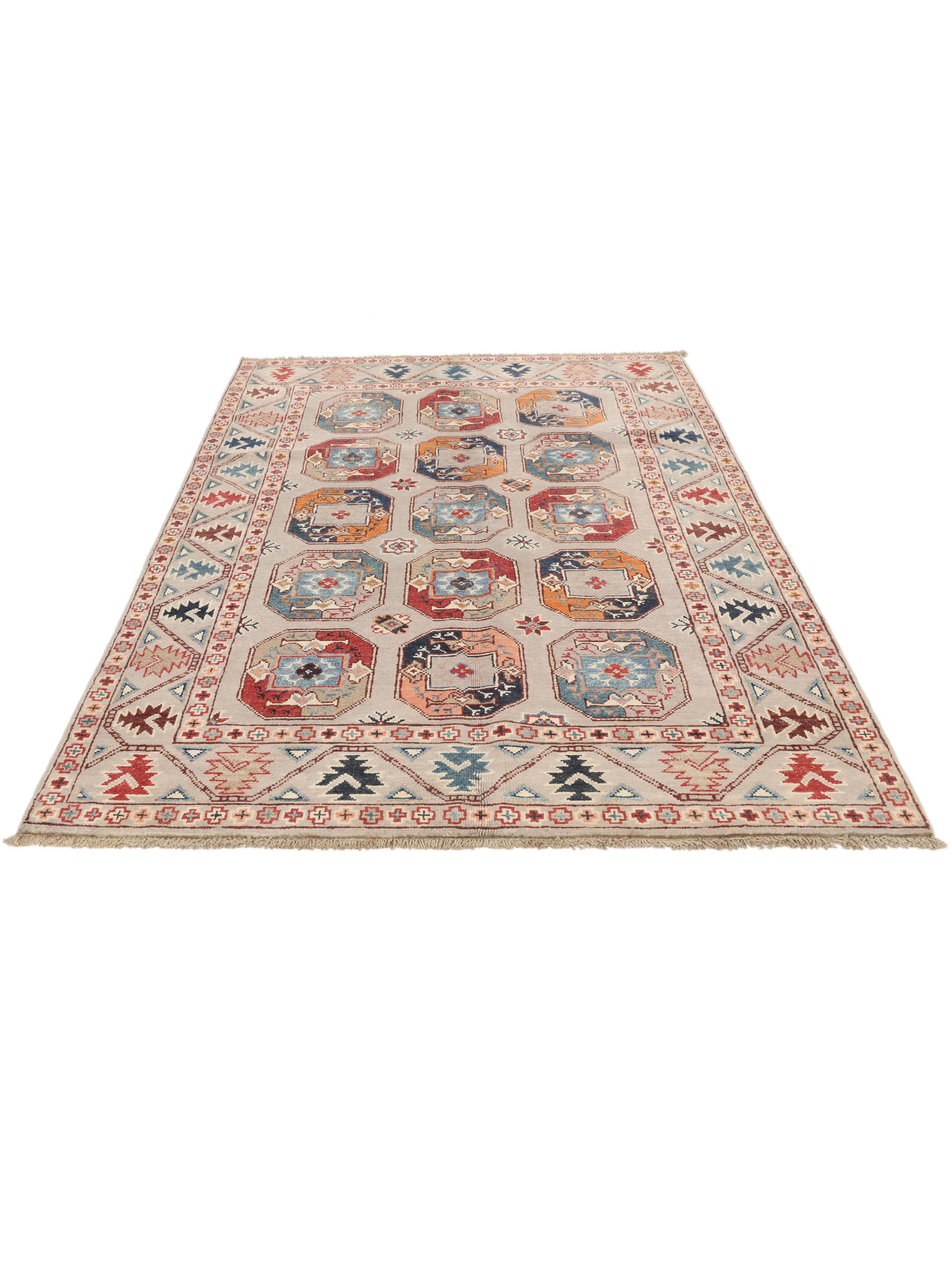
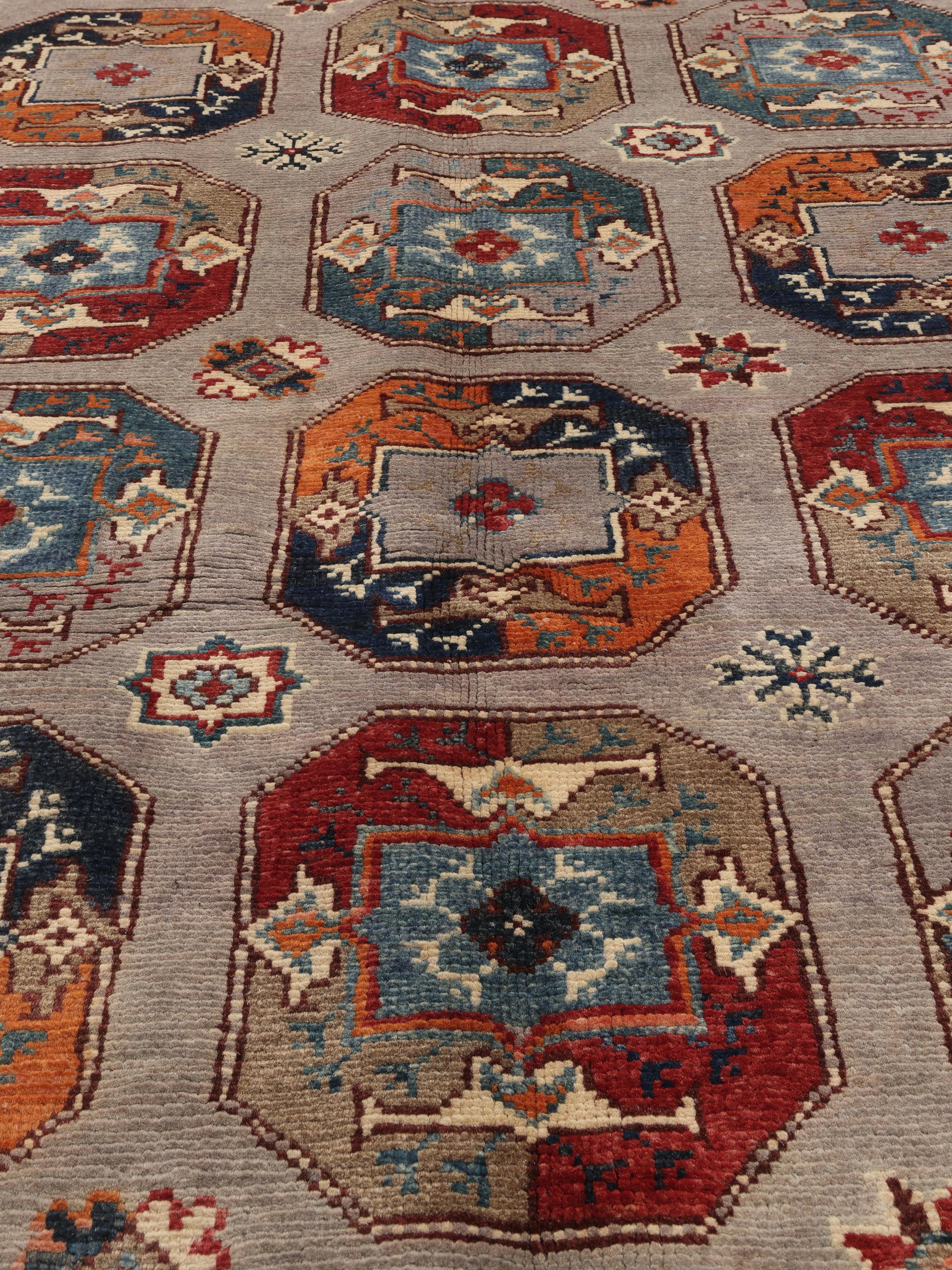
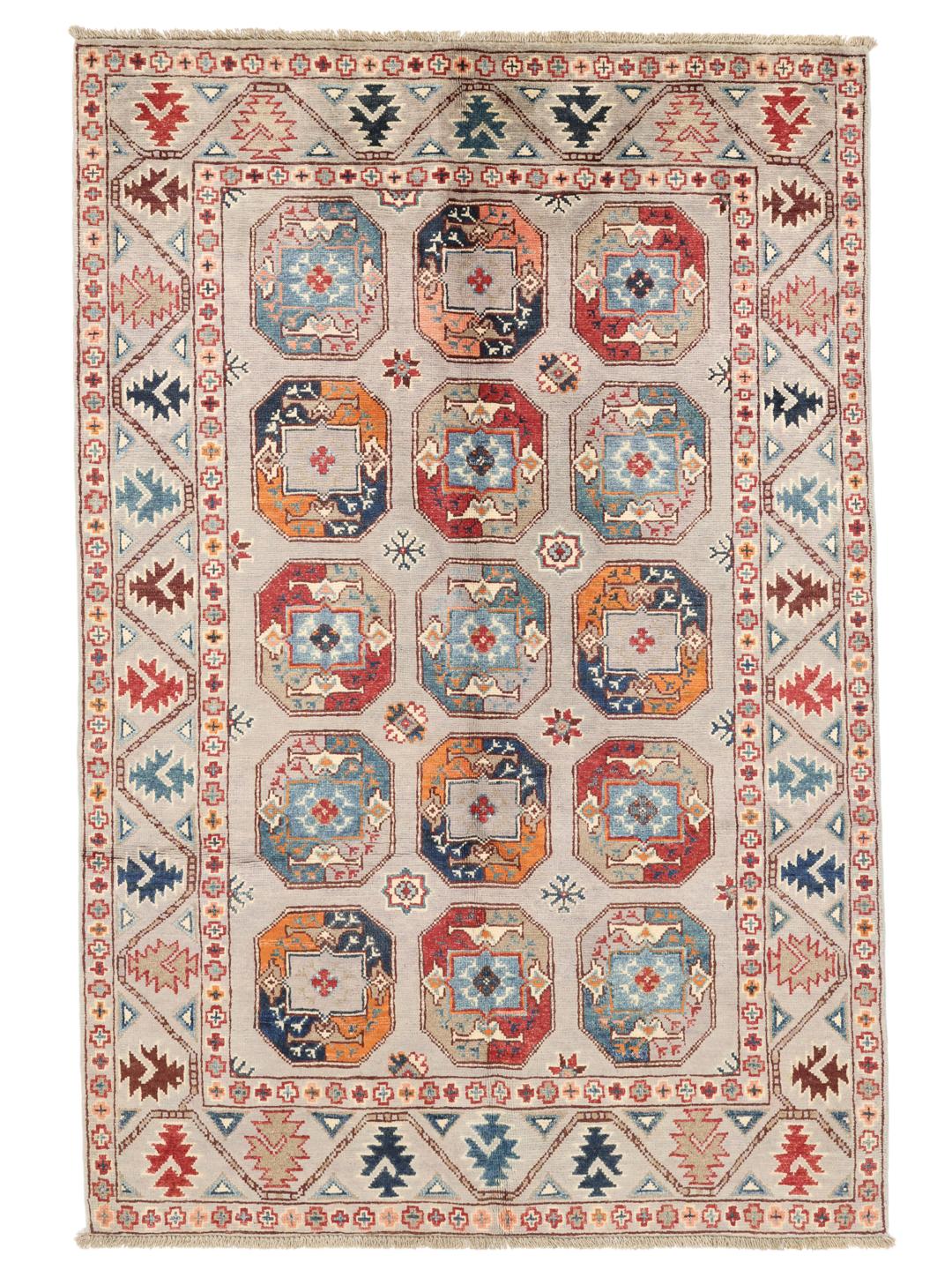
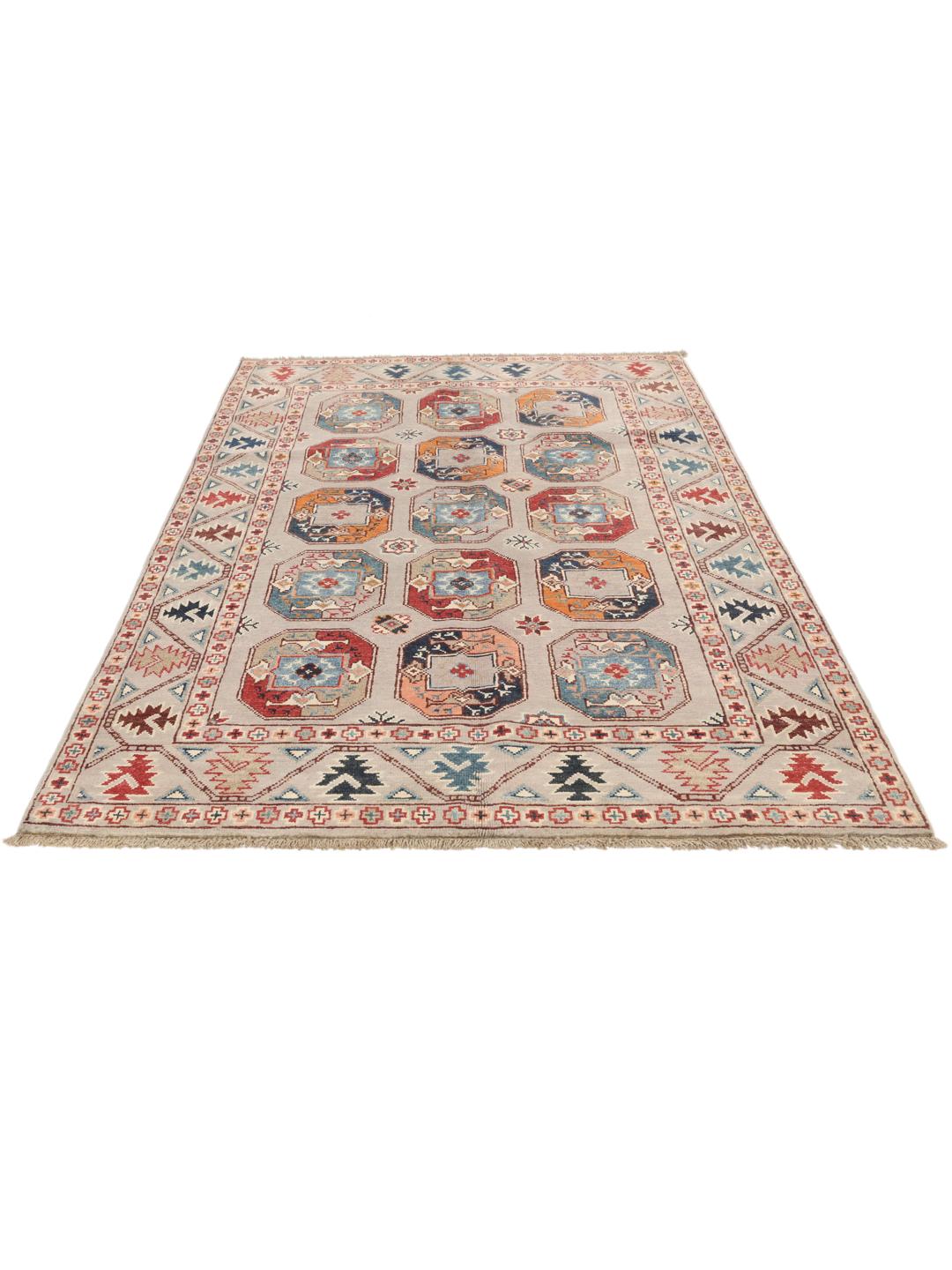
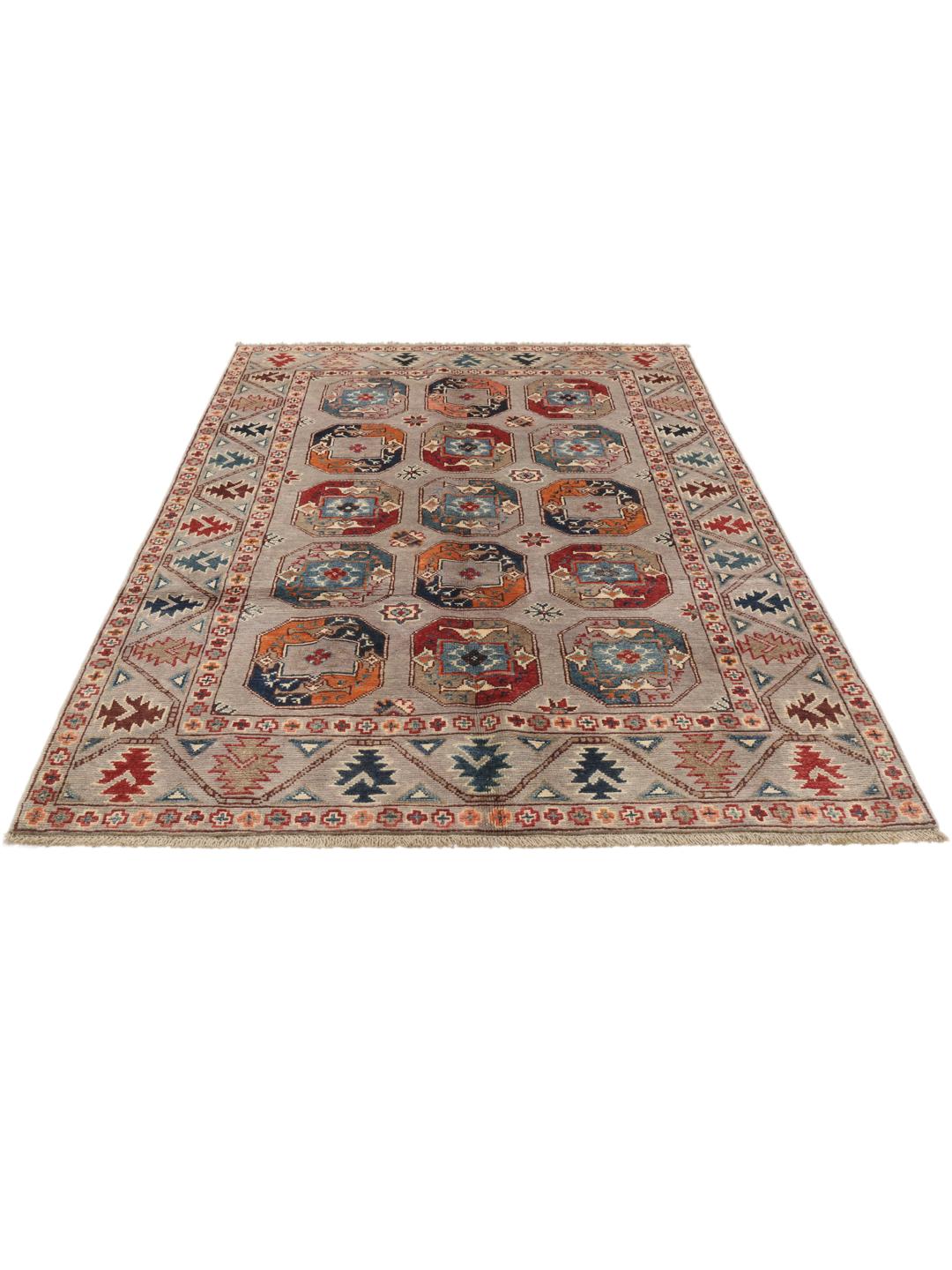
Kazak rugs originate from the Caucasus region, a mountainous area known for its rich weaving heritage that dates back centuries. While the traditional designs have deep roots in this region, the craft has evolved significantly over time. Today, some of the most vibrant and high-quality examples are produced in Afghanistan, where weavers carry forward these ancient, bold design traditions with renewed energy.
The term 'Kazak' refers to a specific style of village rug, characterised by its spontaneous, bold, and geometric aesthetic. These rugs are distinct from the more formal, courtly styles often found in other parts of the Middle East. The beauty of a Kazak lies in its ability to balance strong, graphic shapes with a sense of movement and warmth, making them highly sought after by collectors who appreciate traditional folk art.
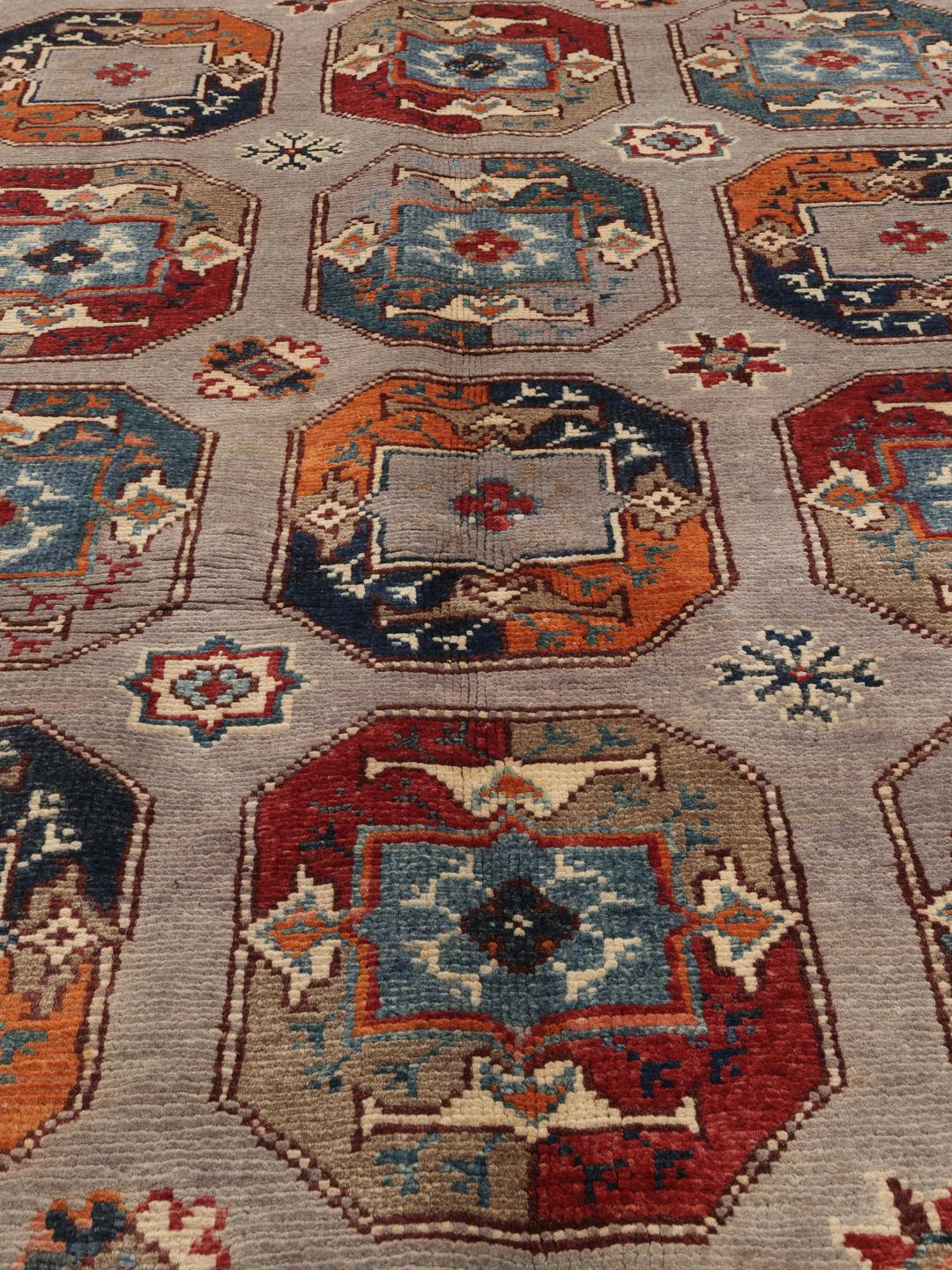
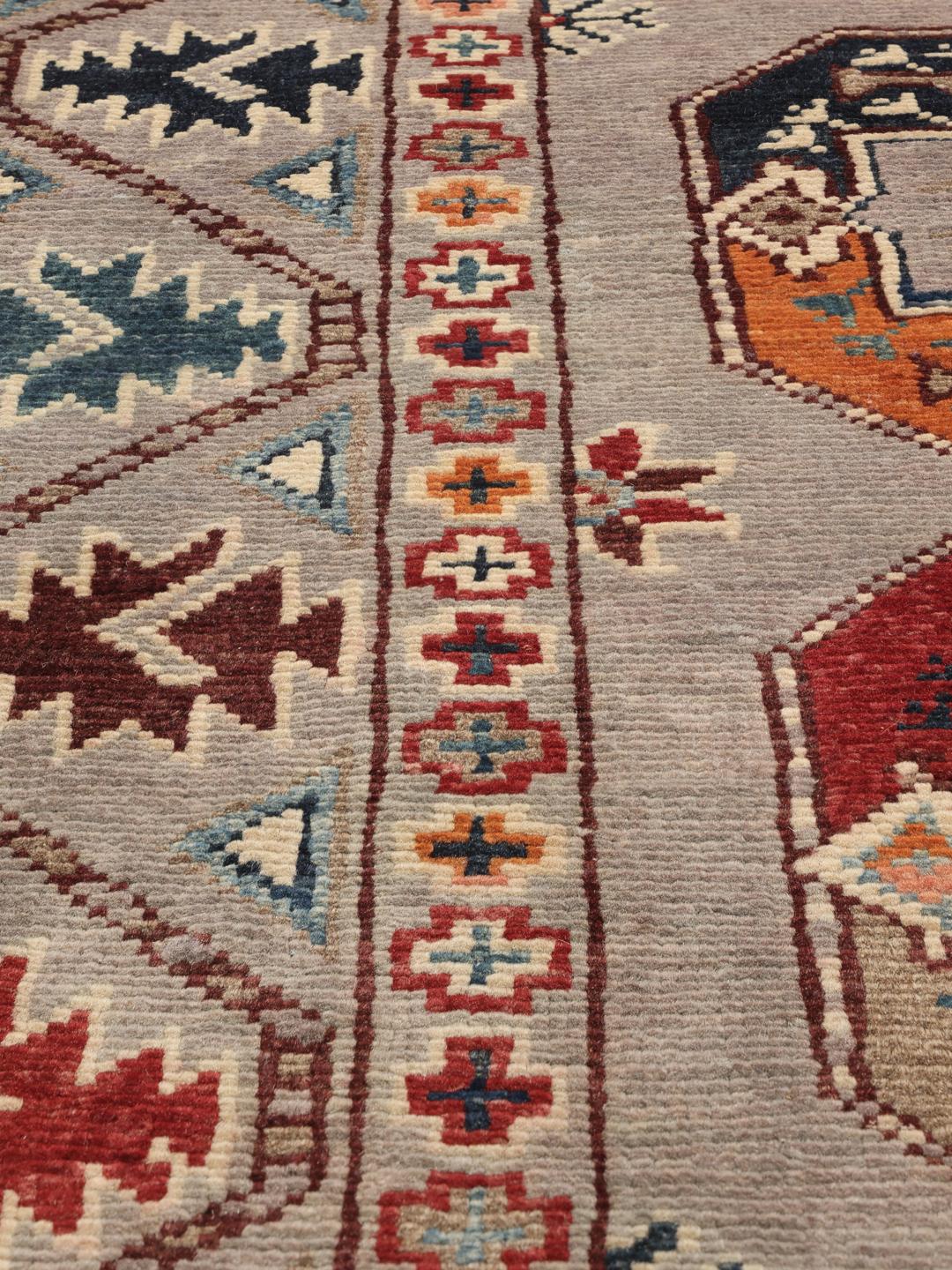
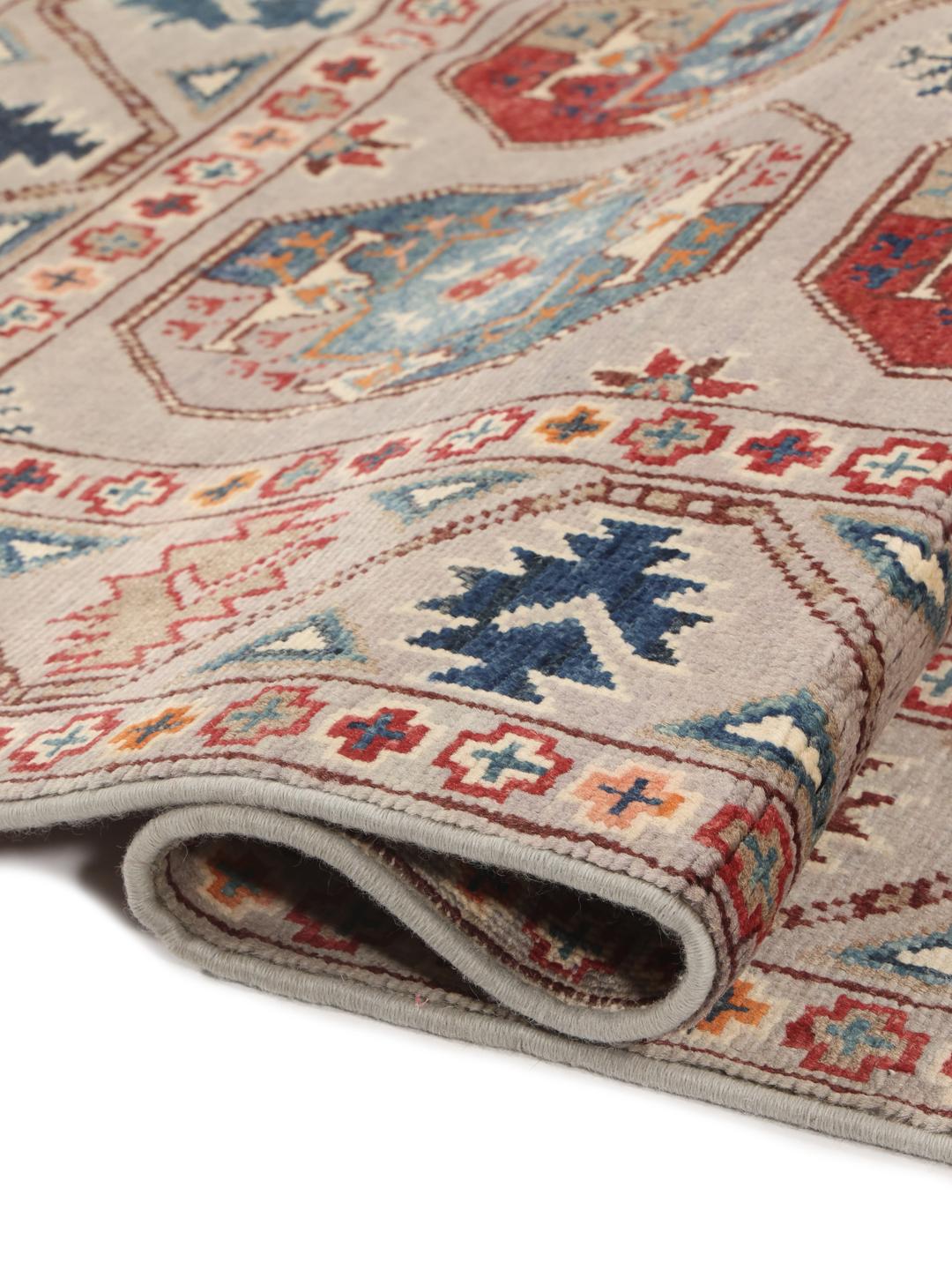
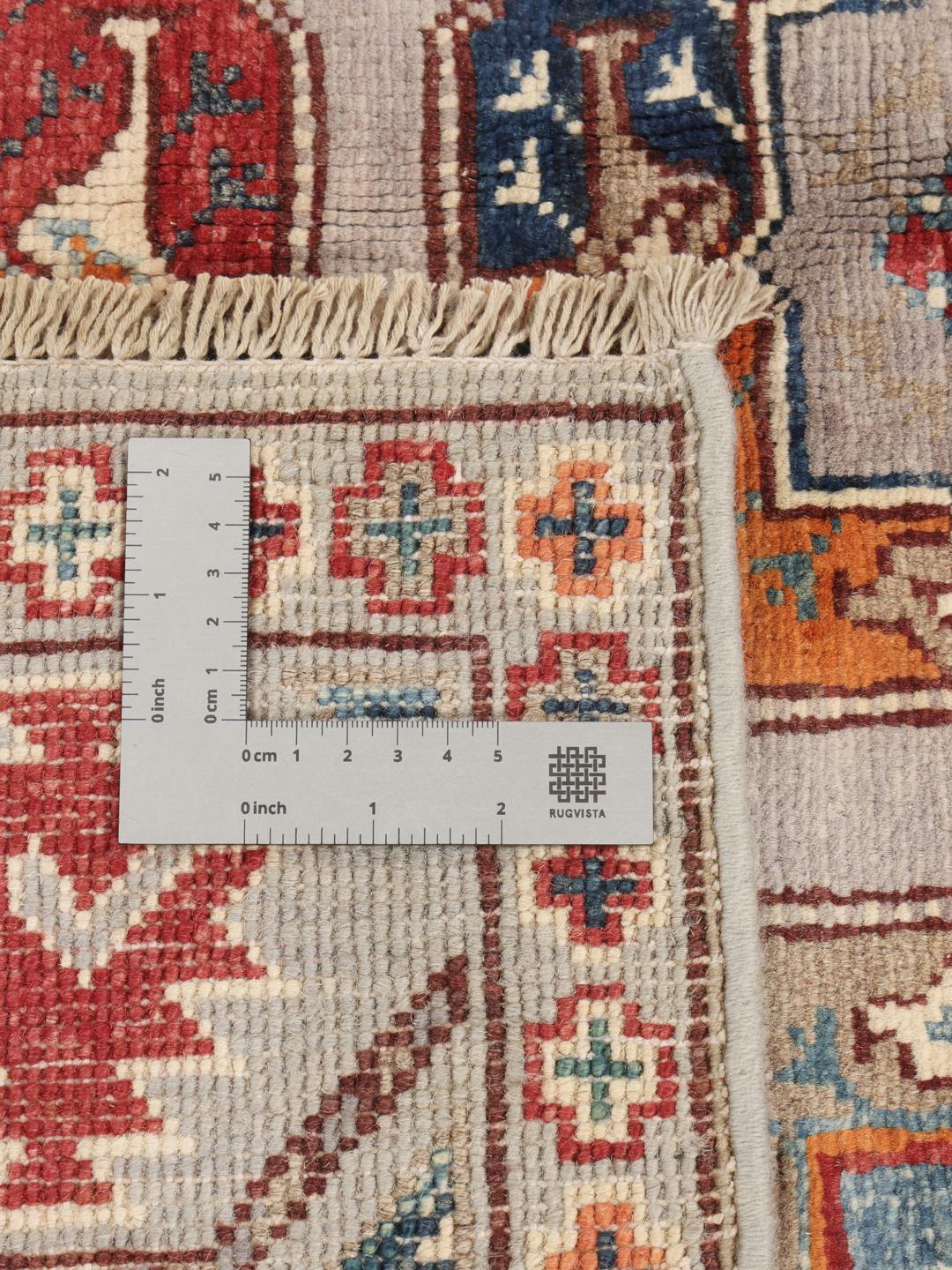
Signature elements of this tradition include large-scale geometric medallions, often referred to as 'guls' or 'memling' motifs, which are frequently arranged in a rhythmic, repeating pattern. The borders are typically wide and feature stylised floral or geometric guard stripes that frame the central field perfectly. The colours are traditionally derived from natural sources, resulting in a rich, saturated palette that ages beautifully over time.
Collecting a rug from this tradition is an act of preserving history. These rugs are valued not only for their striking visual presence but also for the skill required to translate complex geometric motifs into a knotted medium. Owning one means connecting with a long-standing lineage of craft, where every rug serves as a testament to the artisan's vision and the enduring cultural legacy of the weaving regions.