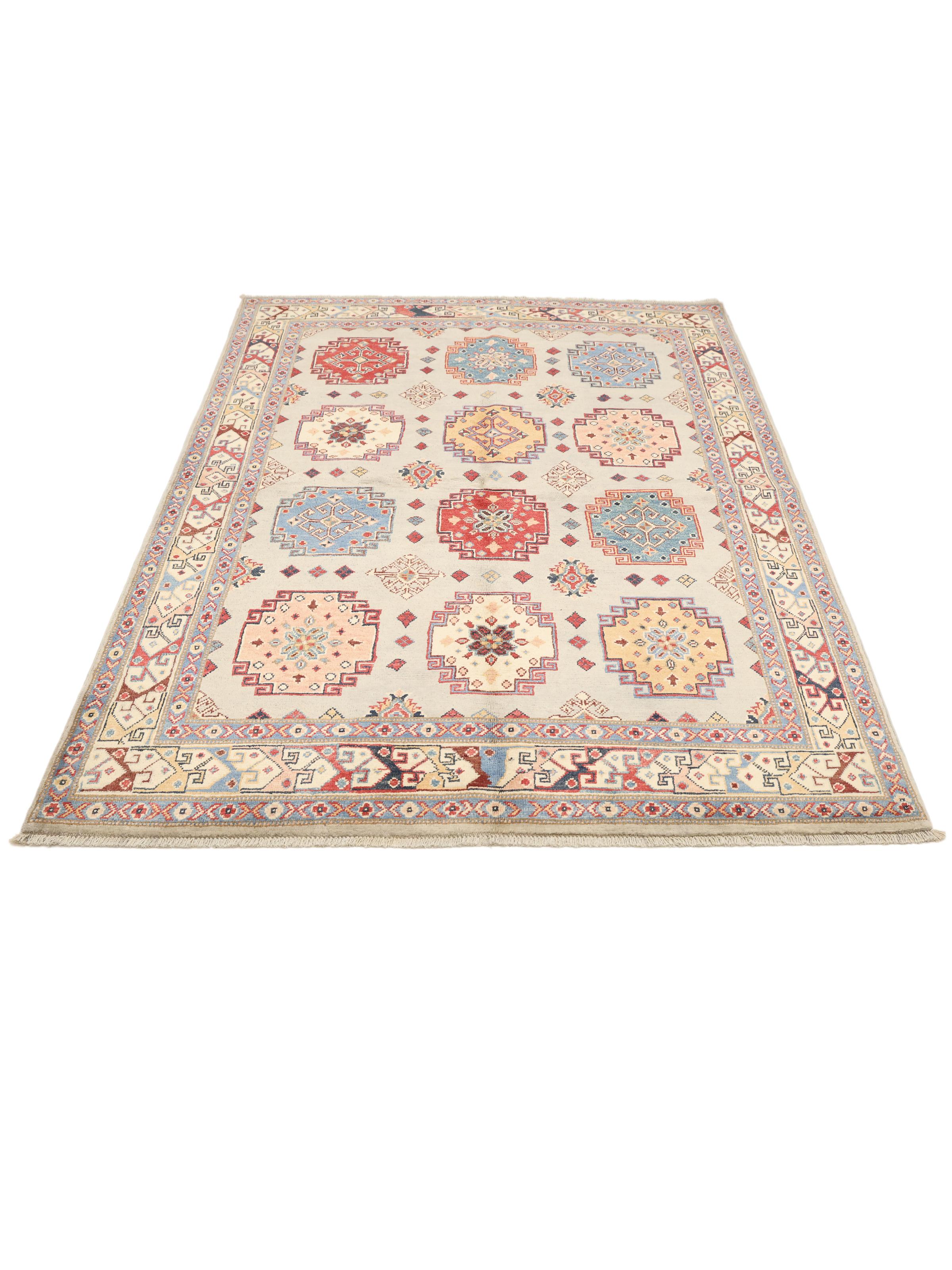
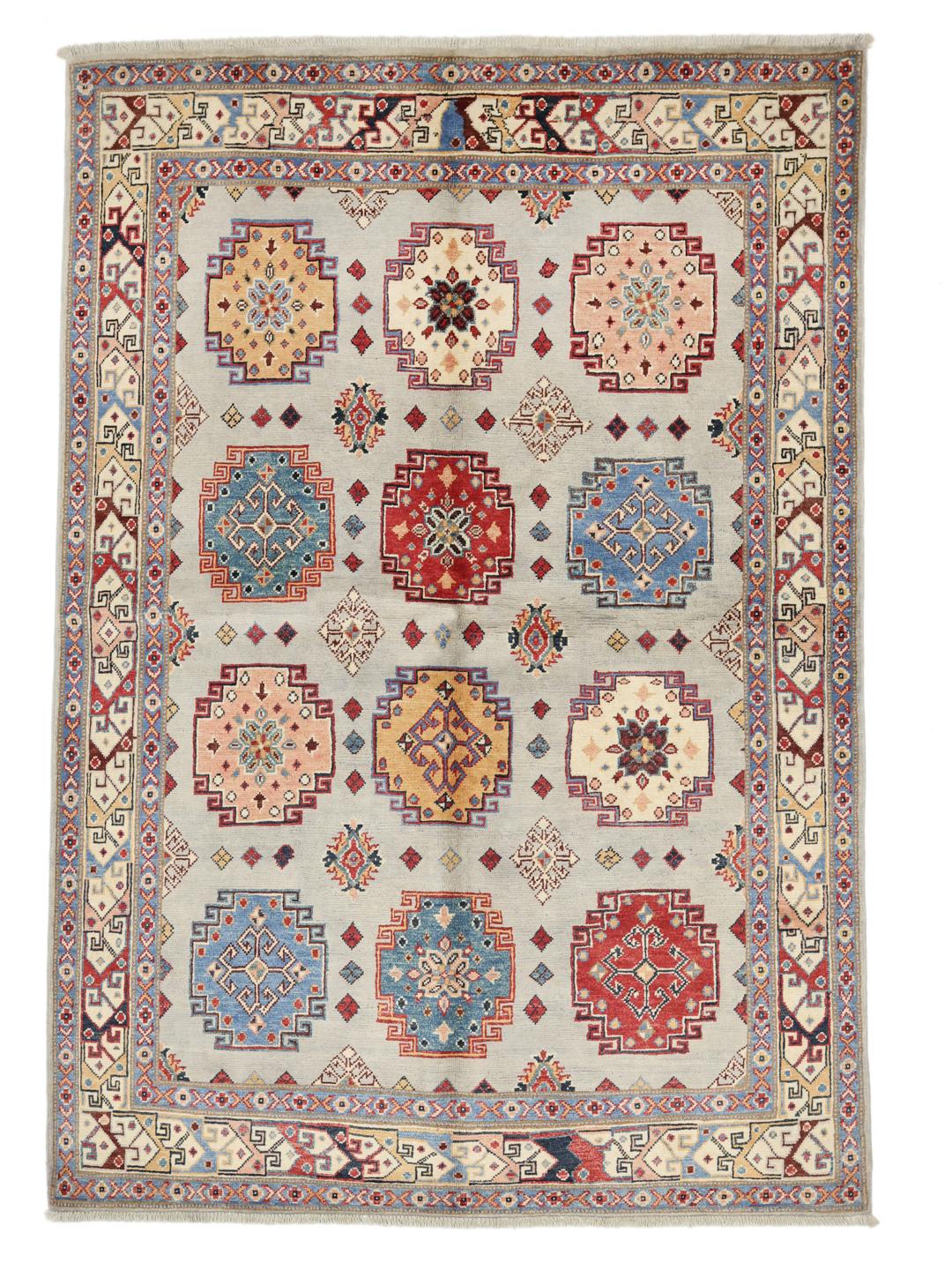
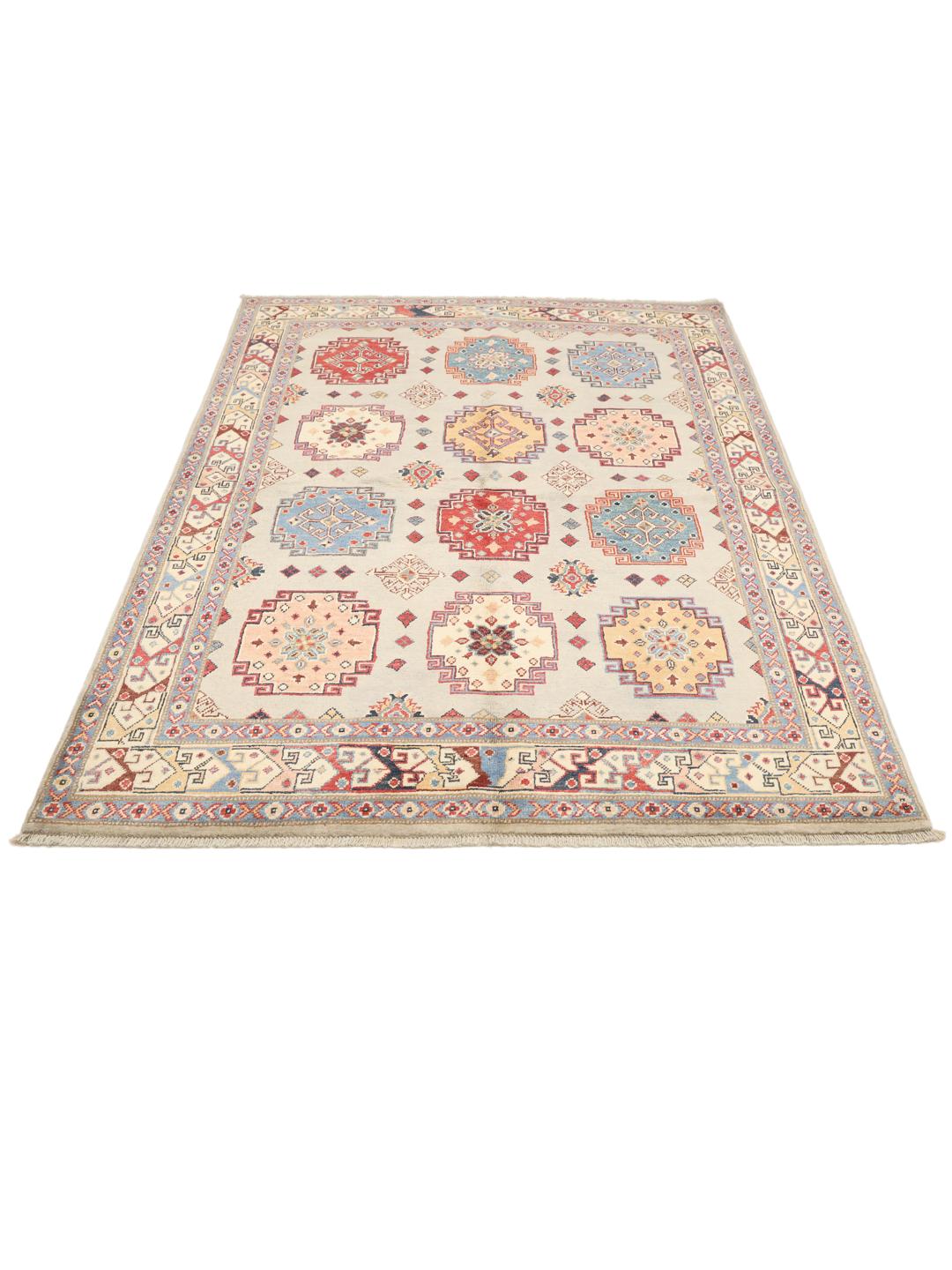
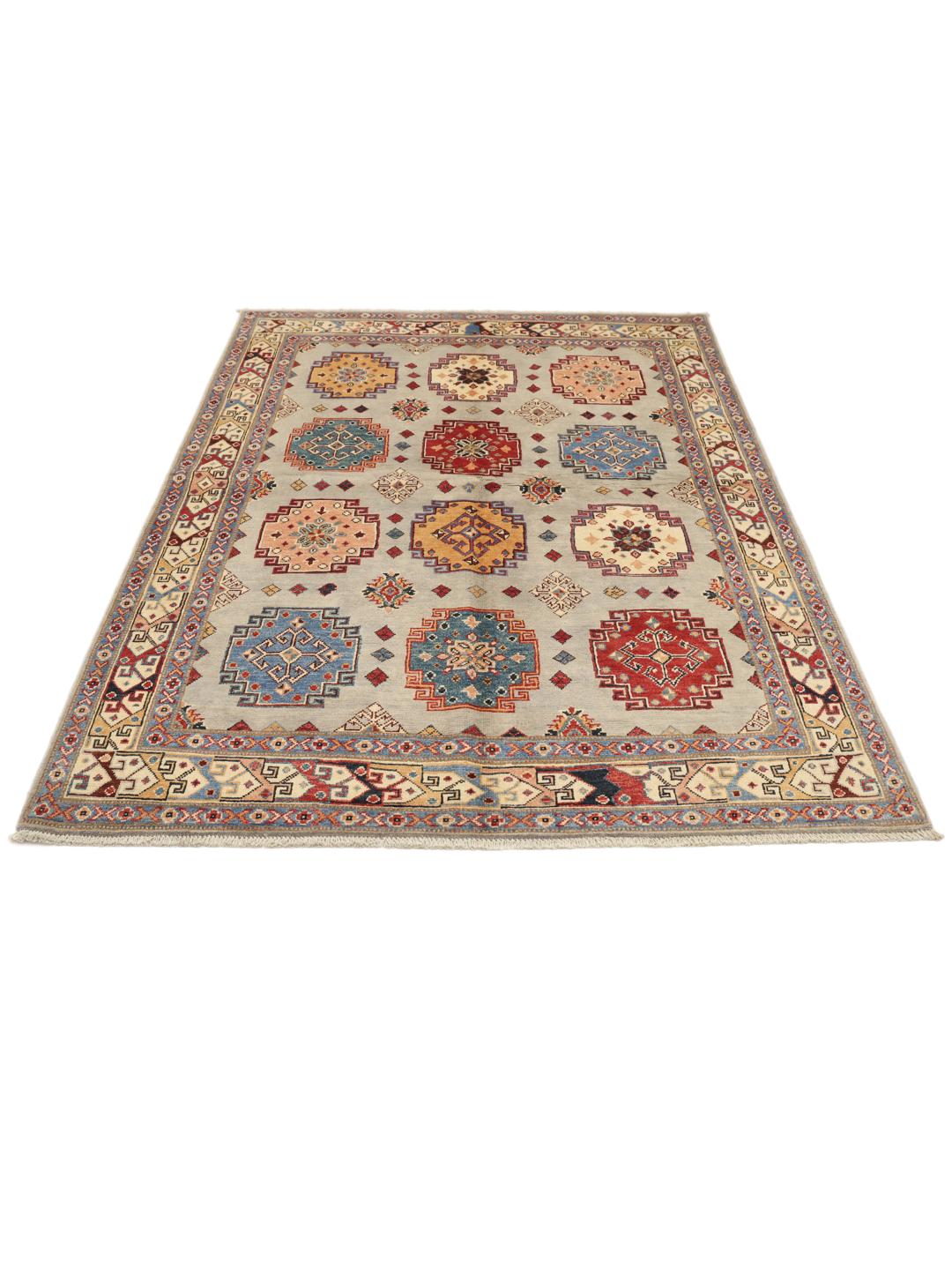
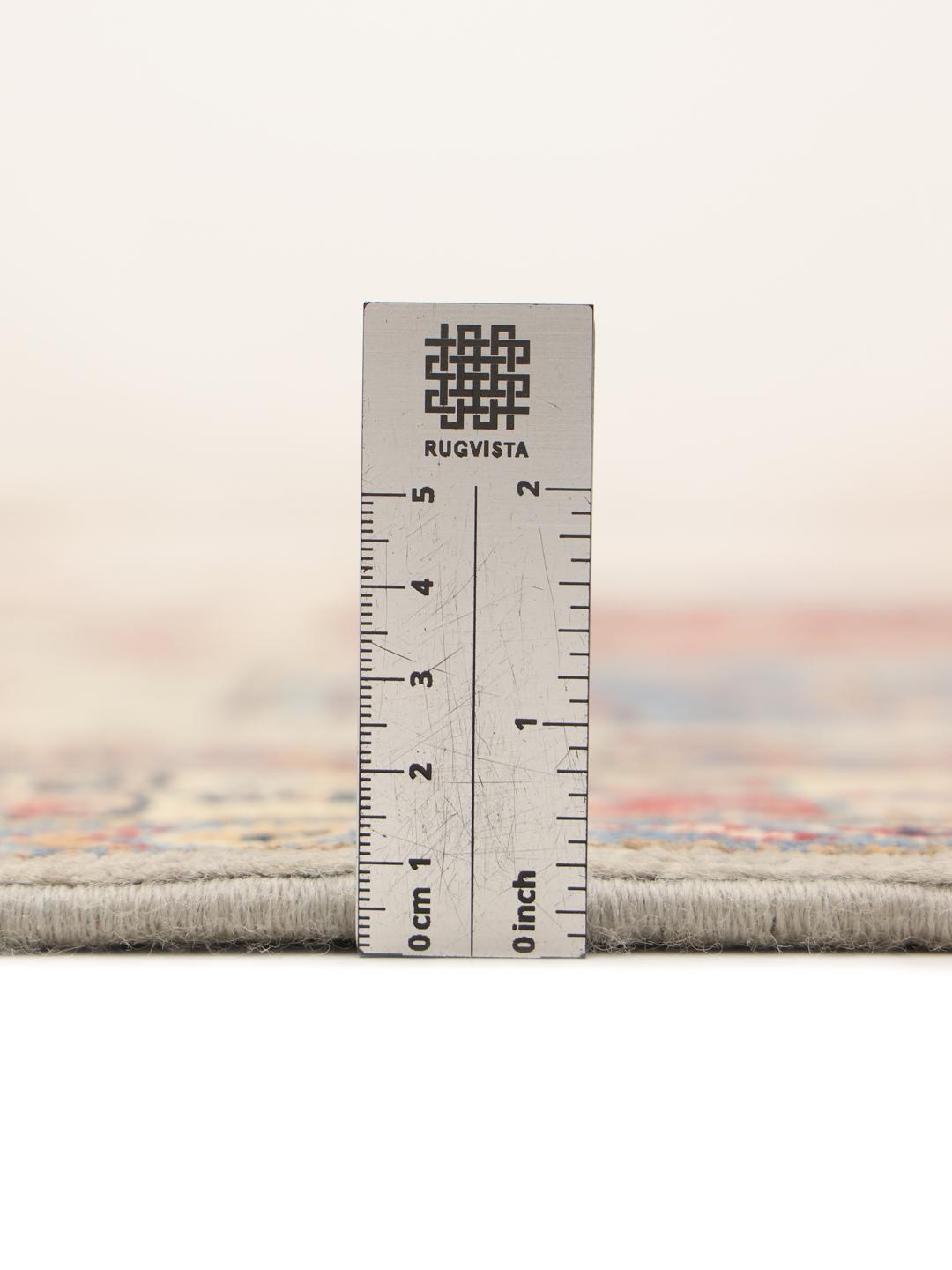
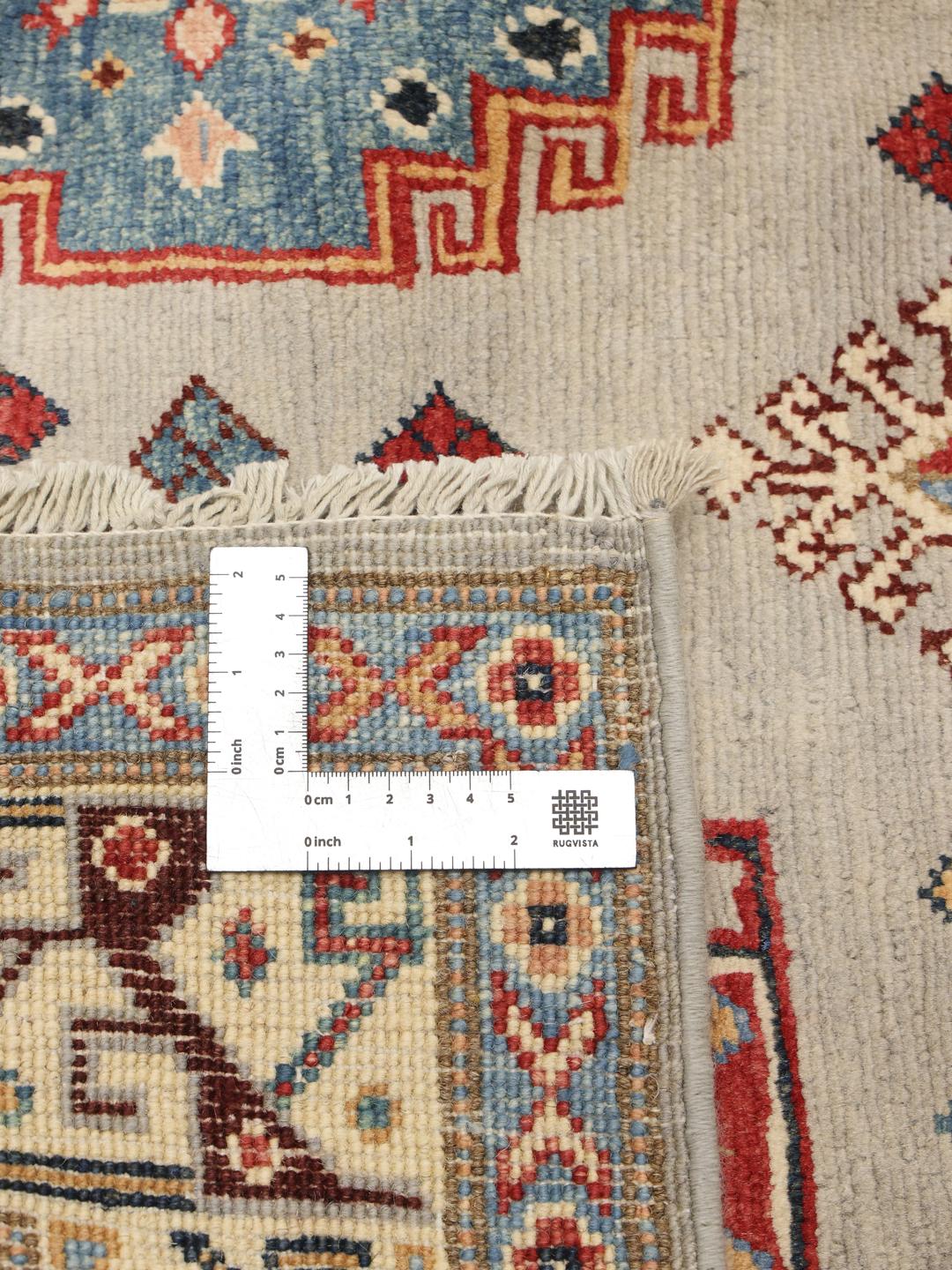
The Kazak rug tradition originates from the mountainous regions of the Caucasus, where nomadic tribes developed a distinct style of weaving characterised by bold, geometric designs and a vibrant use of colour. While the original Kazak rugs were crafted for personal use within tribal settings, the style gained international recognition for its rustic charm and artistic freedom. Today, the tradition is kept alive by talented weavers in Afghanistan who have mastered these classic techniques.
The term 'Kazak' refers not to a single village, but to a vast design tradition that values individuality. Unlike more formal, workshop-produced rugs that follow strict, pre-determined patterns, Kazak rugs often reflect the weaver's personal vision and local cultural motifs. This approach results in a visual language that feels spontaneous and deeply connected to a long-standing regional history of nomadic artistry.
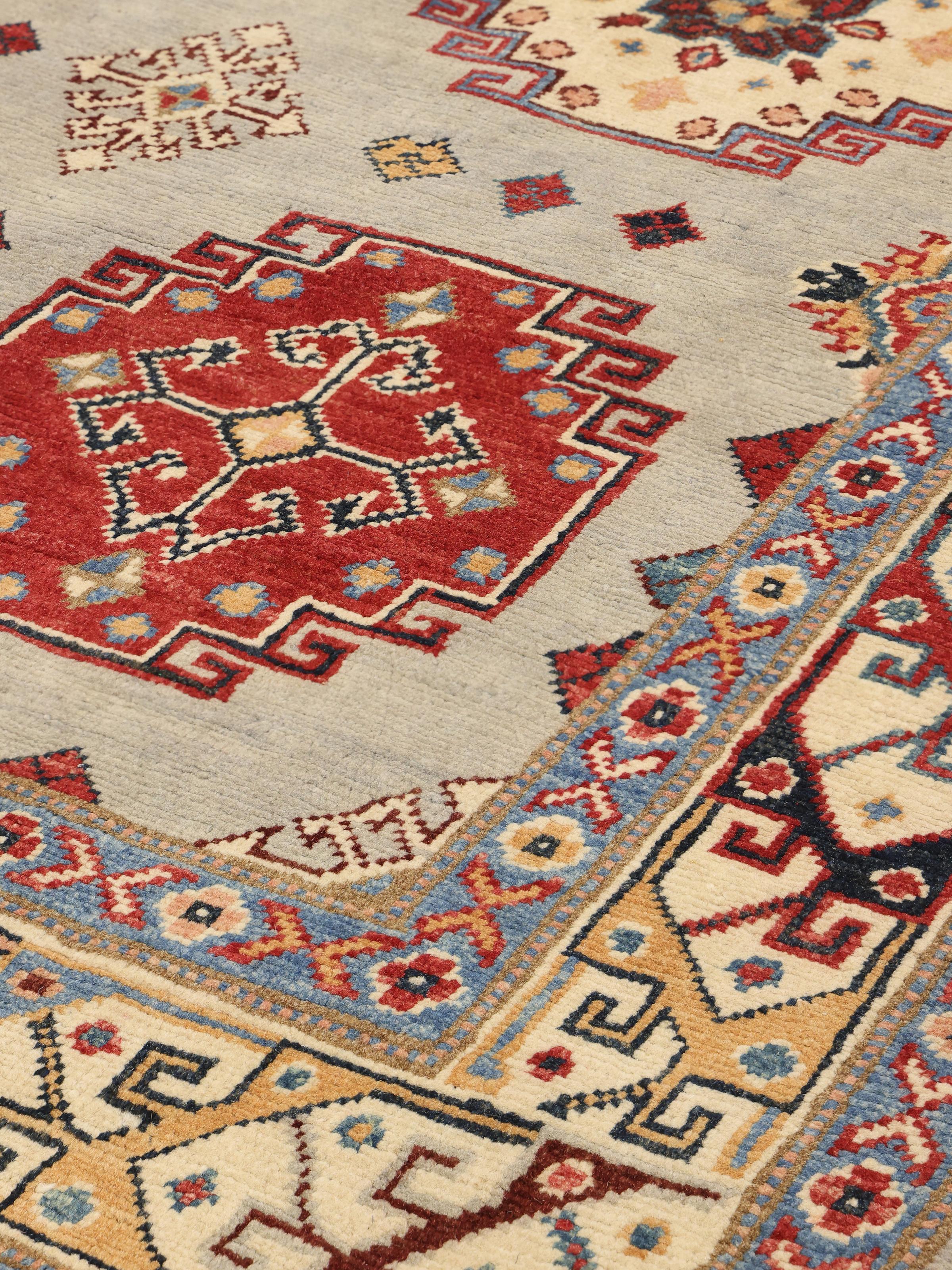
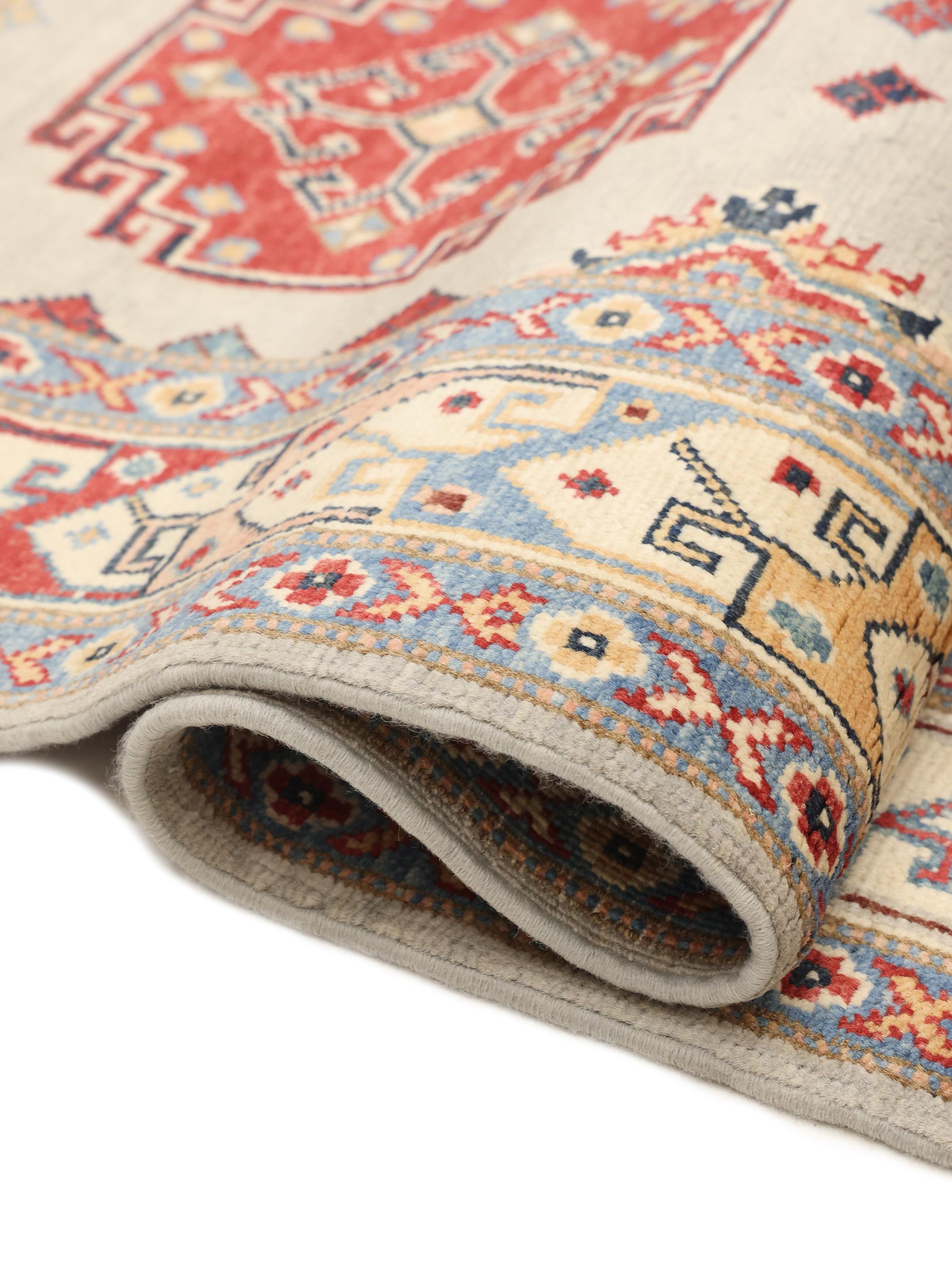
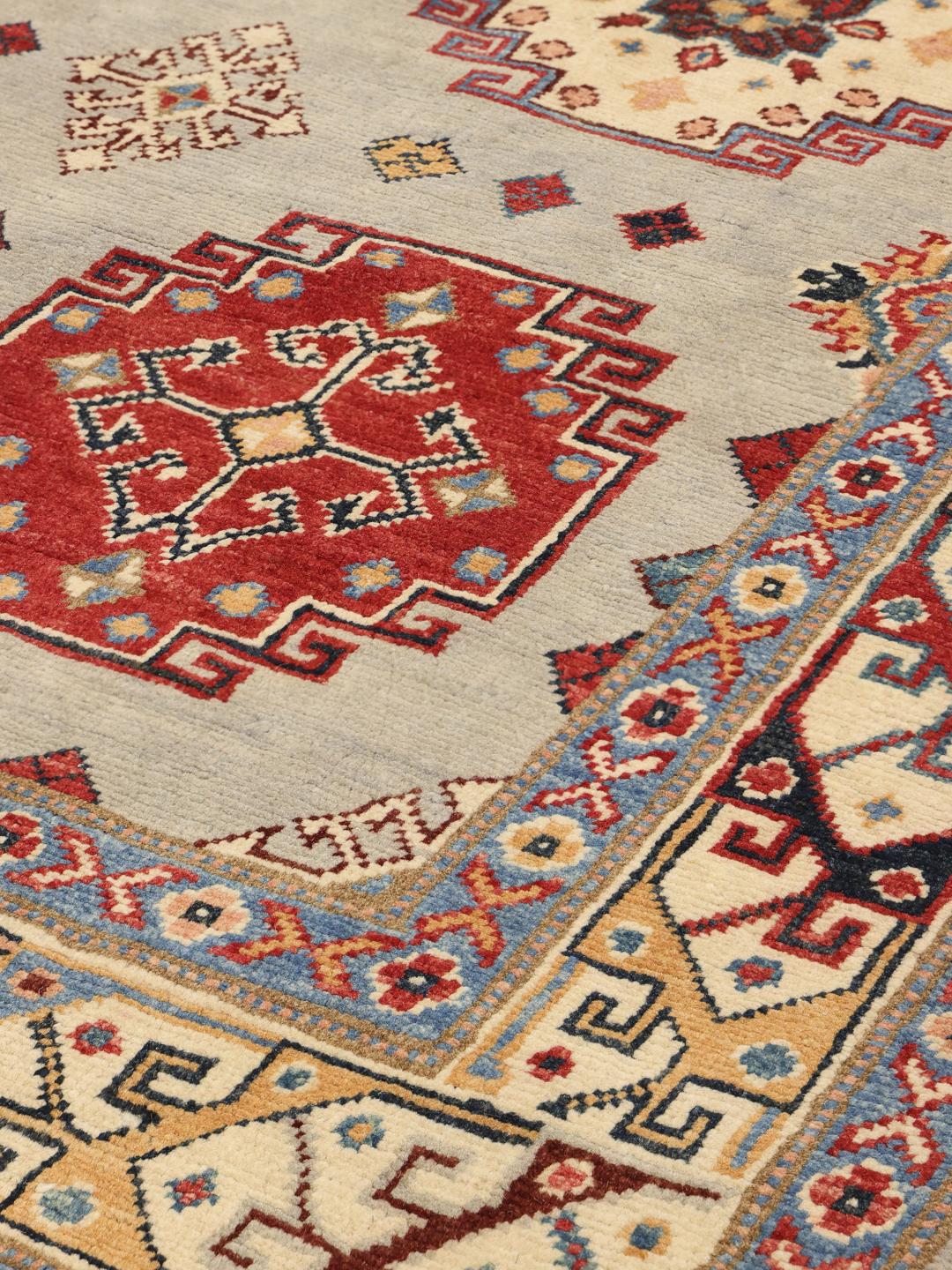
Visually, these rugs are defined by their large, simplified geometric motifs, such as the iconic medallion or 'gul' shapes, which are often set against a field of contrasting colour. The borders are typically filled with stylised tribal symbols, creating a frame that complements the central design. This specific piece features a classic arrangement that celebrates the traditional motifs of the region, ensuring it fits beautifully into both traditional and modern homes.
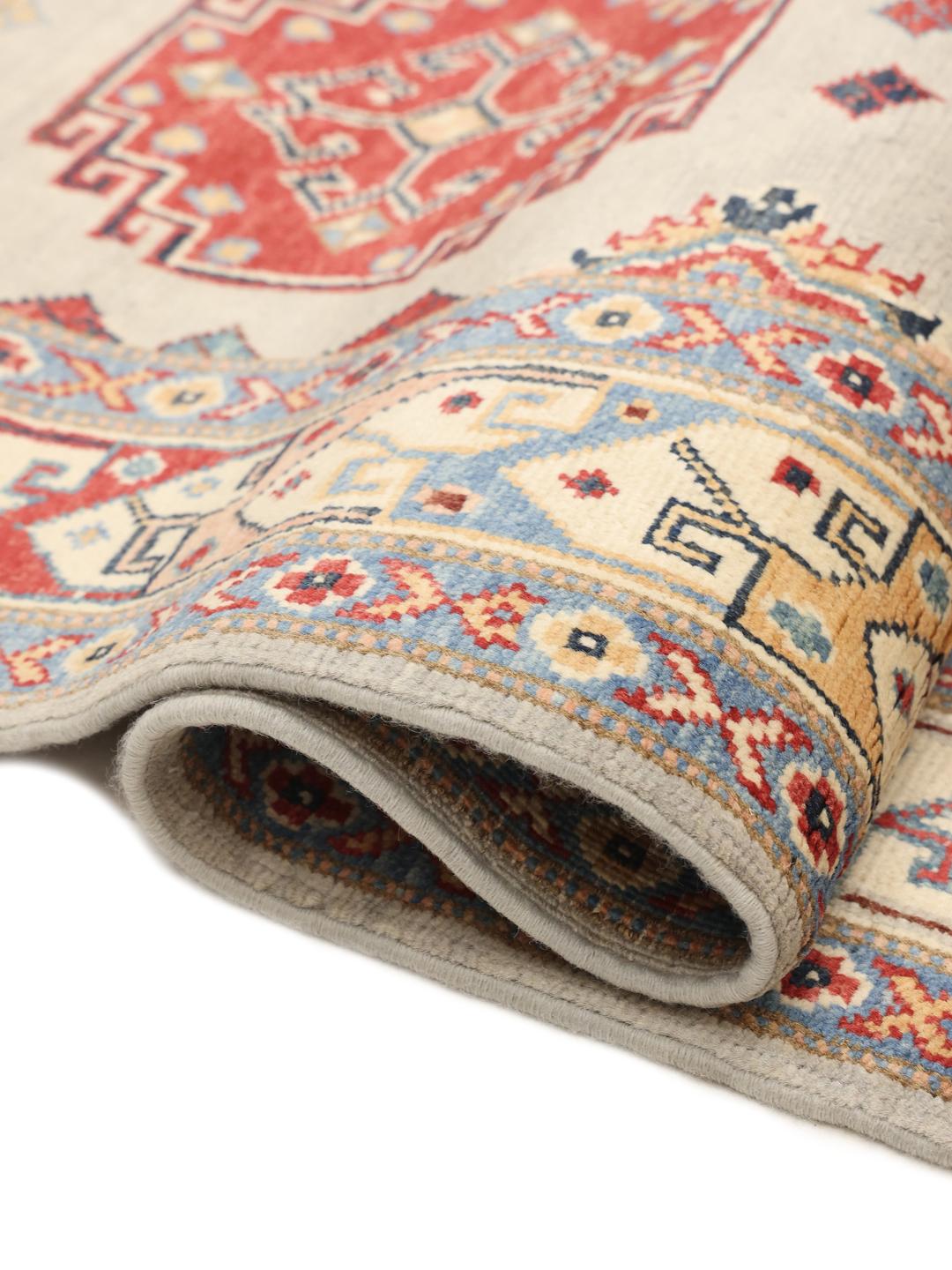
Owning a Kazak rug is an opportunity to connect with a storied tradition of craftsmanship that has survived for centuries. These rugs are highly prized by collectors and enthusiasts who value the human element inherent in every knot. By bringing a Kazak rug into your home, you are not just adding a decorative layer to your floor, but participating in a global history of textile art that honours skill, heritage, and the beauty of handmade work.