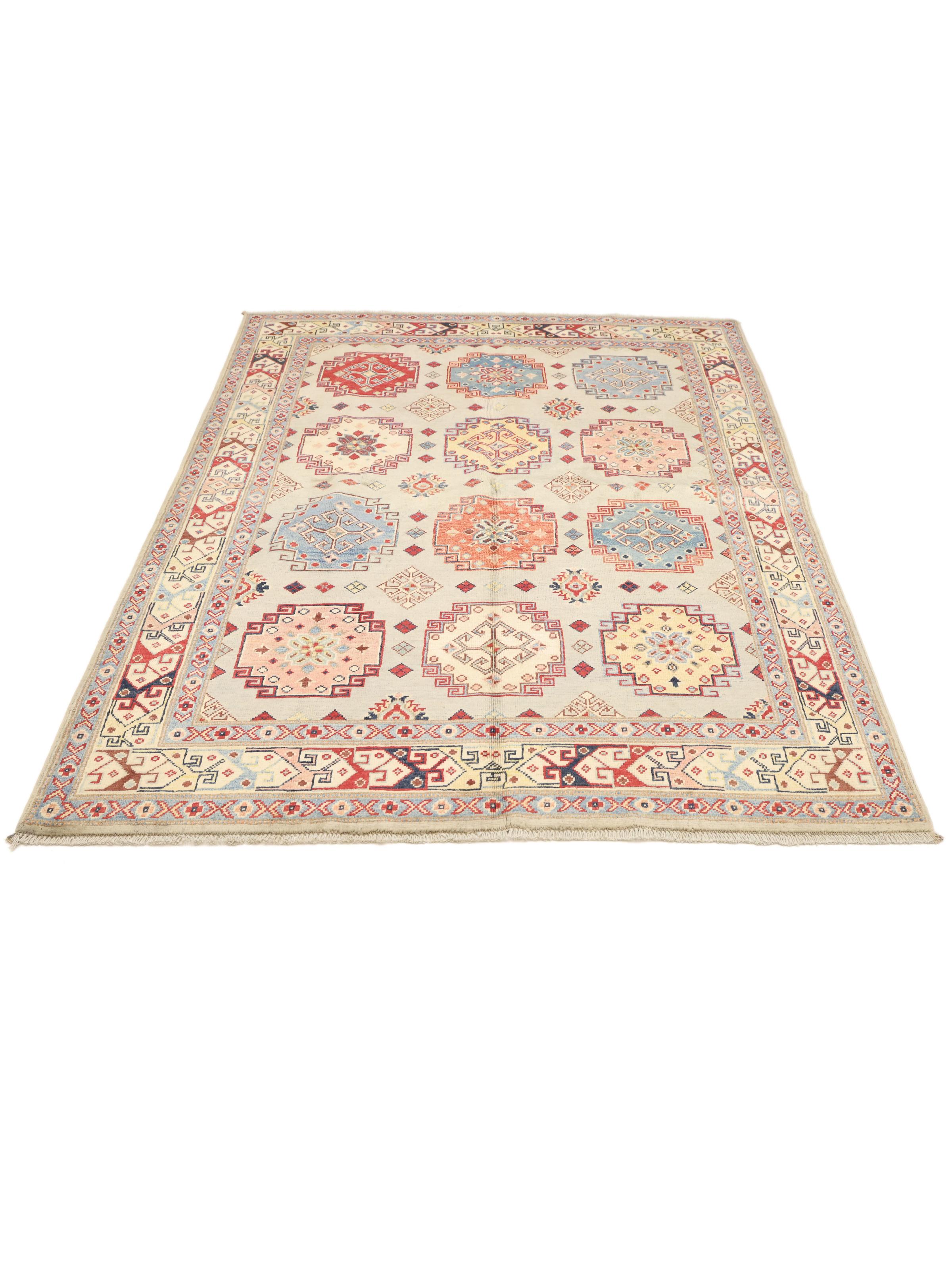
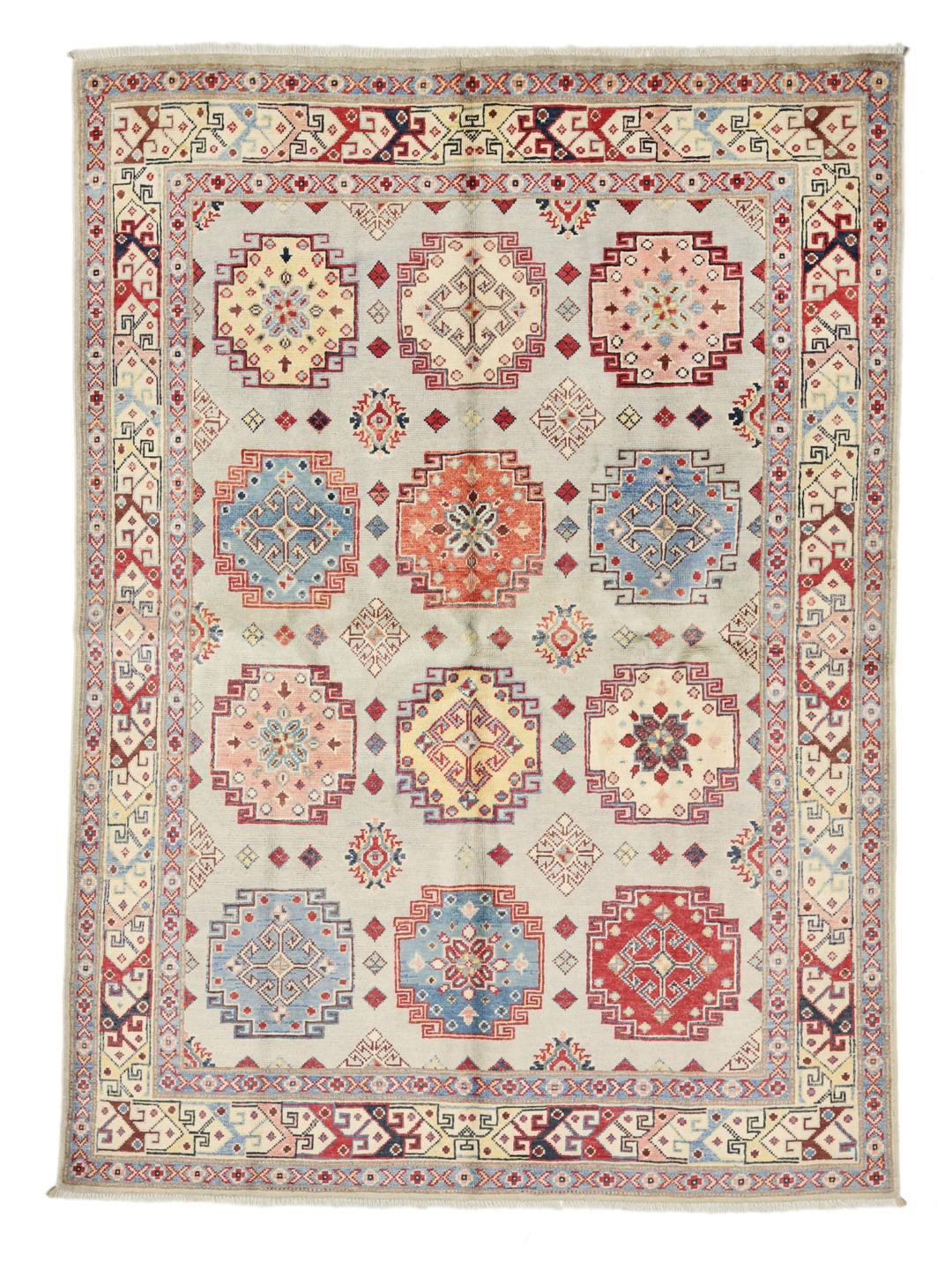
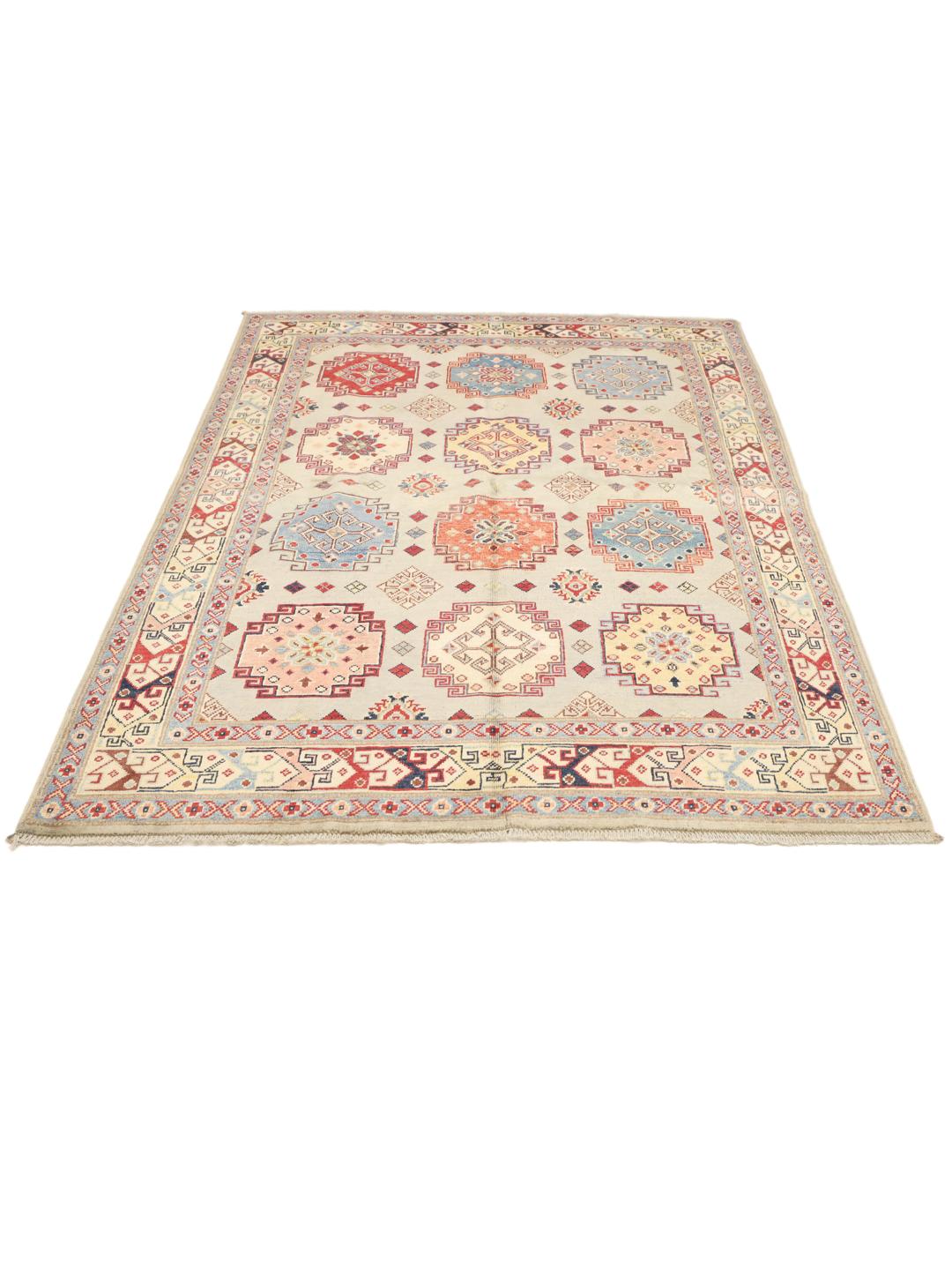
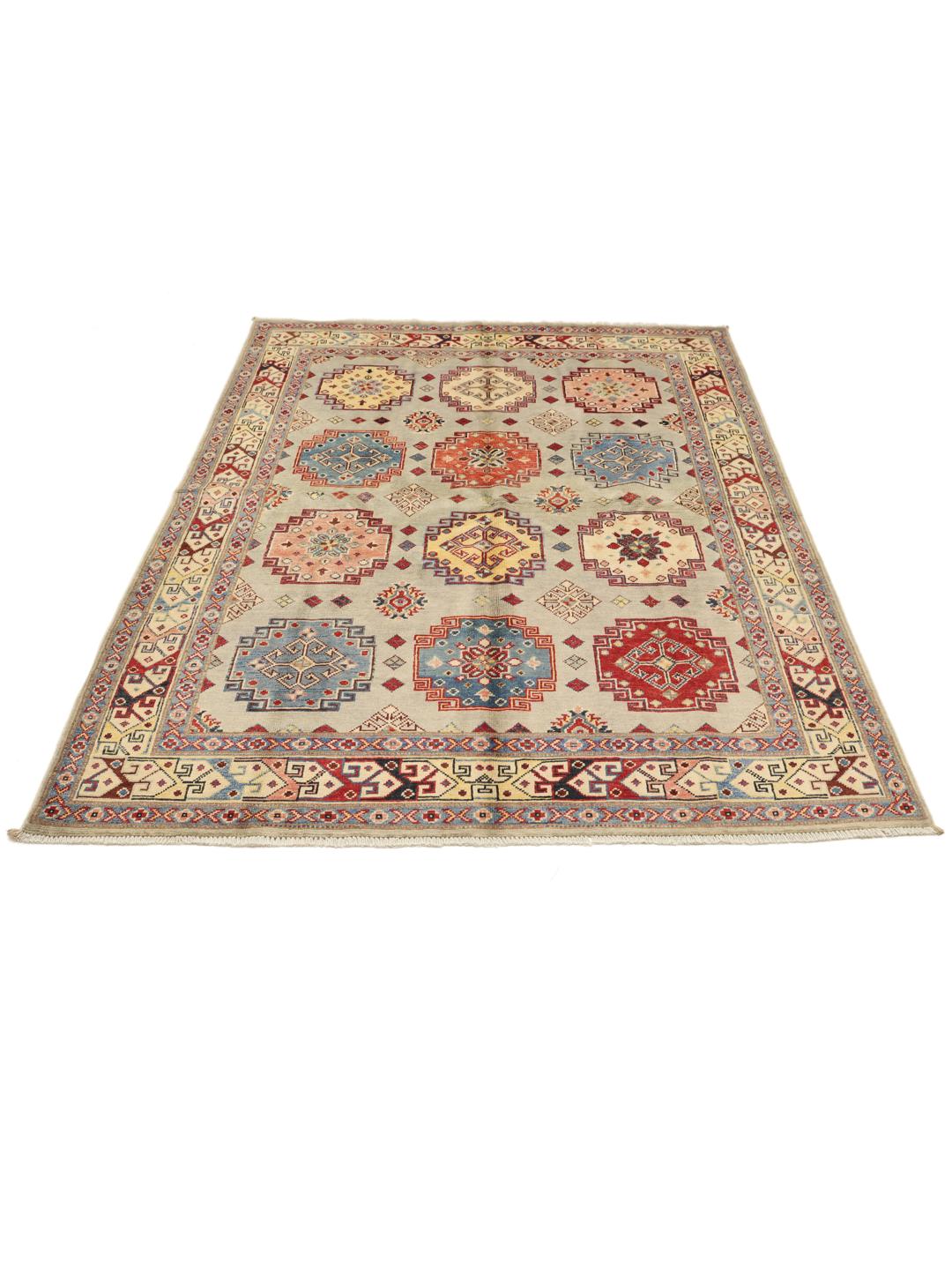
Kazak rugs originate from the Caucasus region, a historical crossroads of culture and design. While their roots are deeply embedded in the nomadic traditions of the Caucasus, the production of these iconic rugs has evolved over centuries. Today, Afghanistan has become a primary hub for this craft, where weavers continue to honour the legacy of these designs by utilising traditional techniques and high-quality local wool.
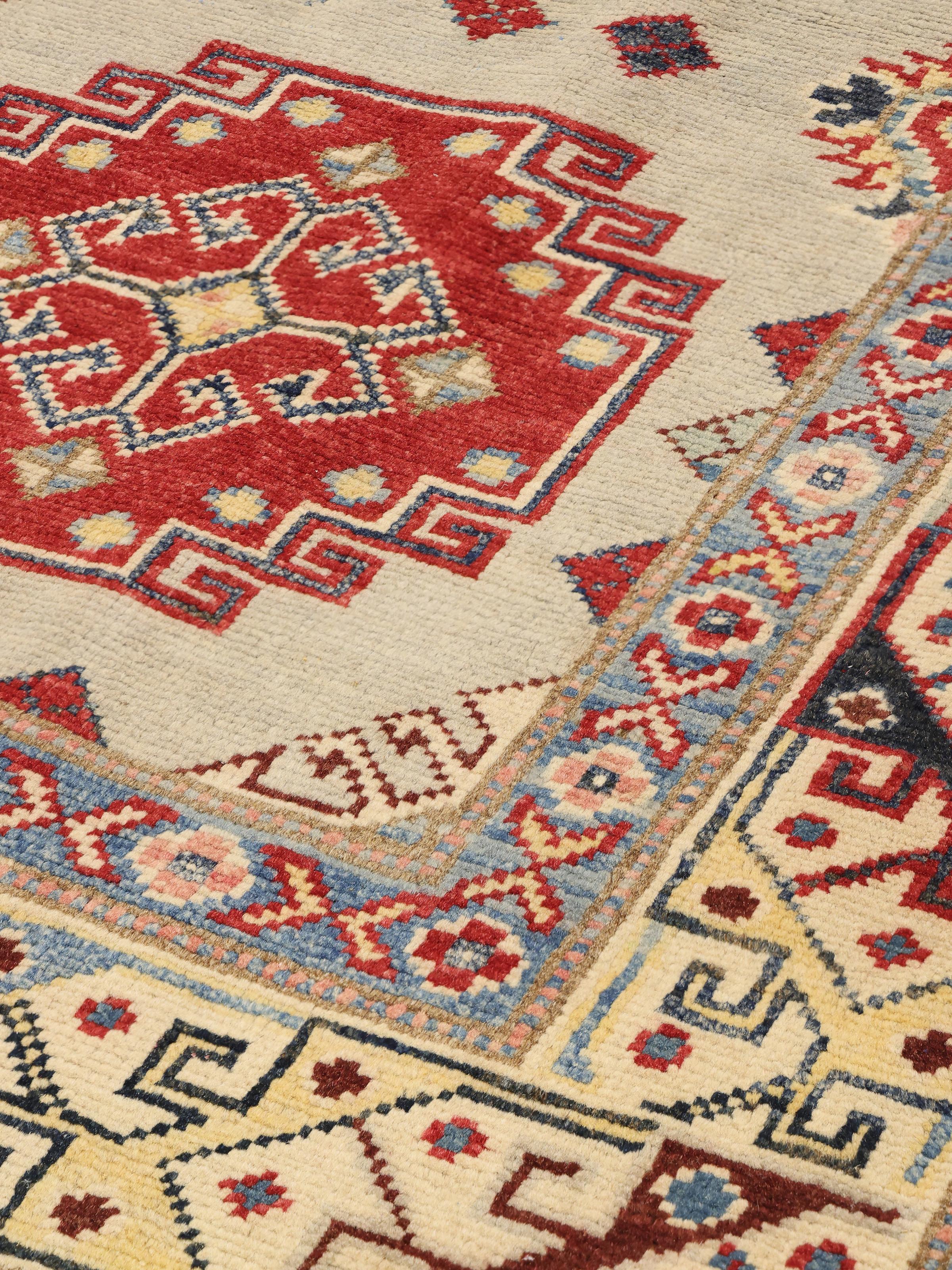
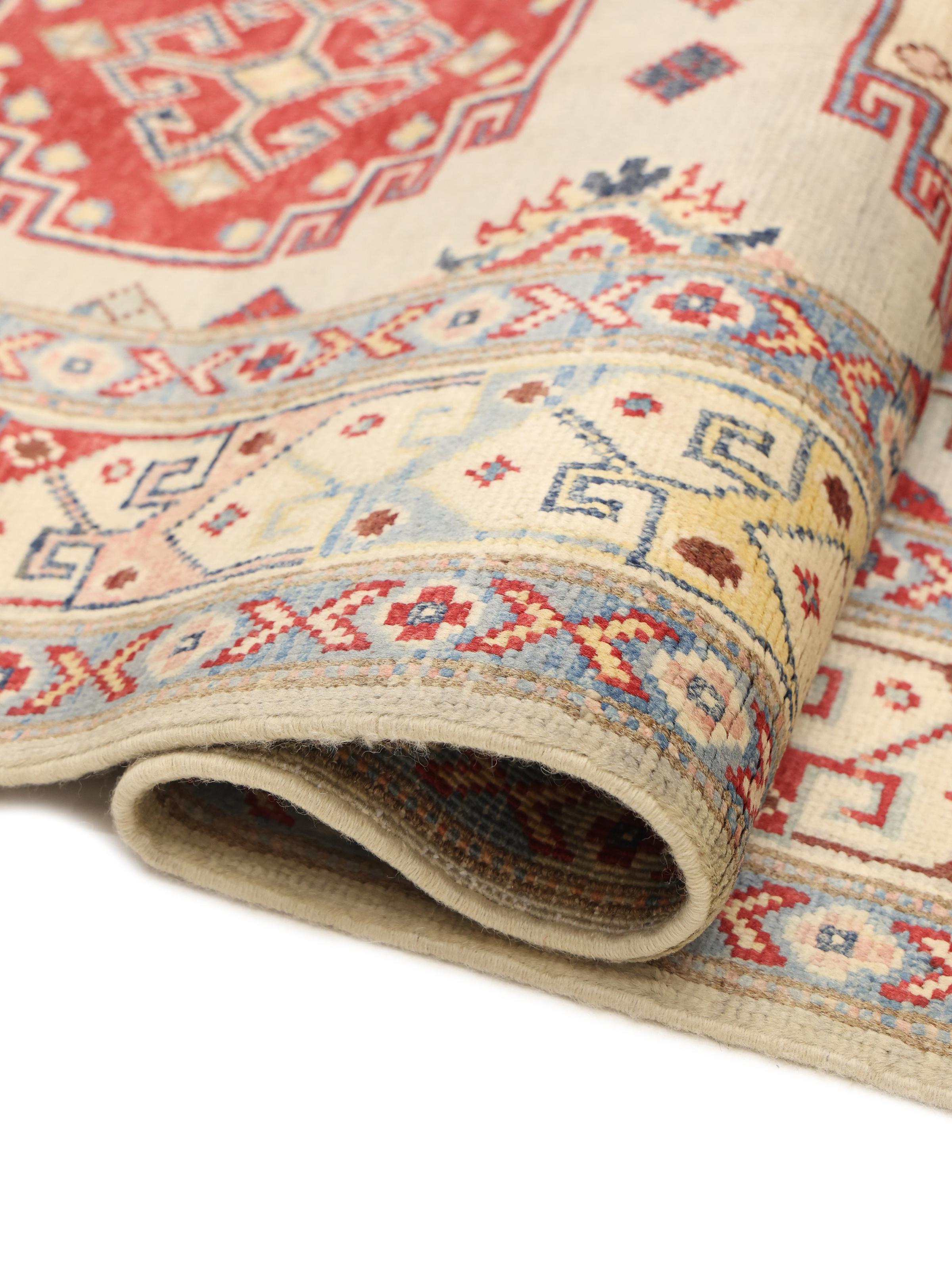
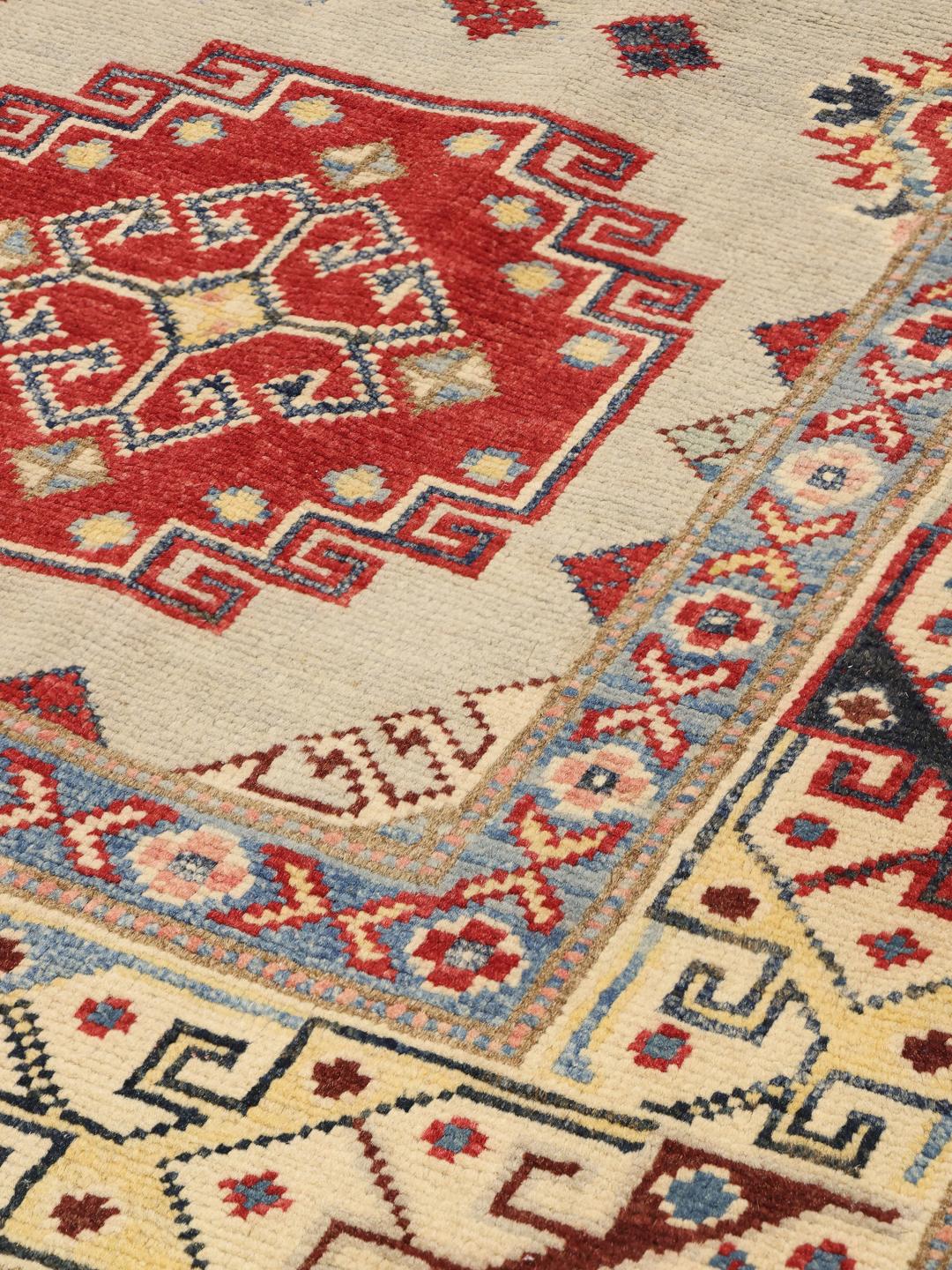
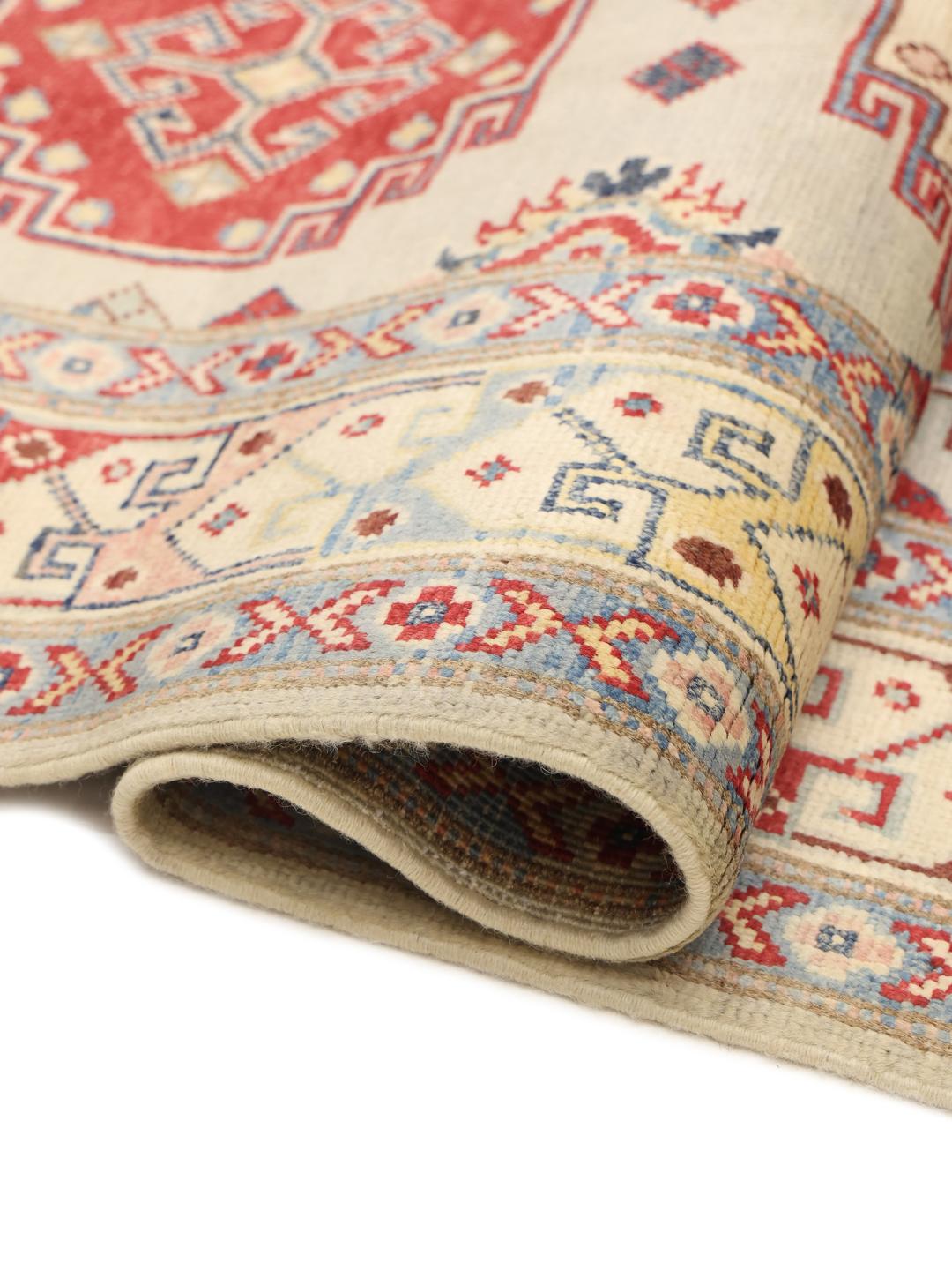
The term Kazak refers to a specific, bold aesthetic that prioritises strong geometric forms and saturated, earthy colours. These rugs are highly regarded for their durability and the distinct lustre of the wool pile, which is often finished with a firm hand-knotting technique. This construction is crucial for maintaining the sharpness of the intricate patterns over decades of use.
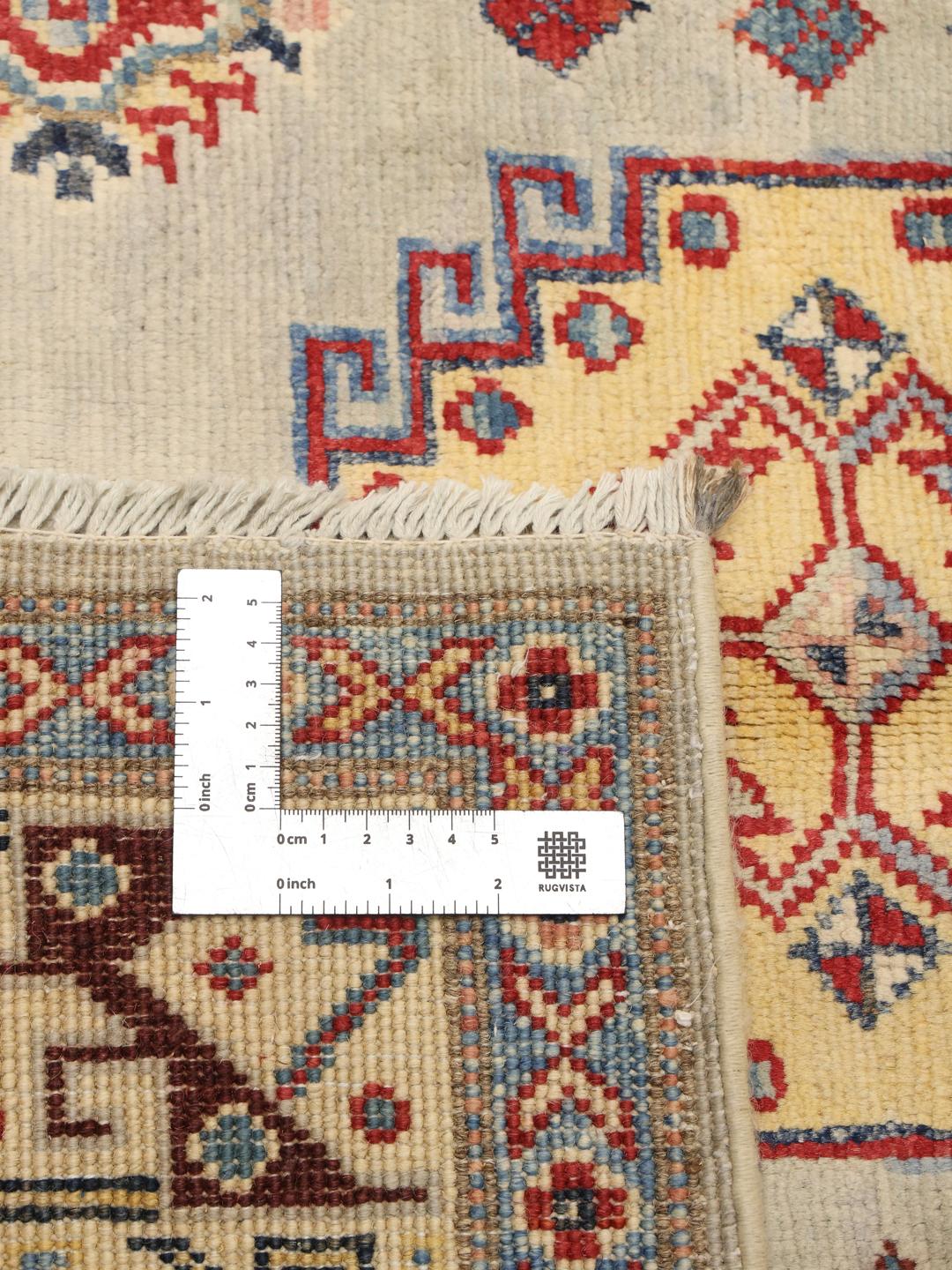
Visually, these rugs are characterised by iconic repeating motifs, such as the medallion or the gul, which are often arranged in rows across a field of vibrant colour. The borders are typically formal and decorative, framing the central field with repeating geometric patterns that draw the eye inward. This specific rug features a balanced layout where the motifs stand out clearly against the field, reflecting the classic design language of the genre.
Collectors and enthusiasts value Kazak rugs for their authentic connection to a long-standing textile history. They are not merely floor coverings but are considered functional art that brings cultural depth into the home. By acquiring a piece from this tradition, you are continuing a legacy of craftsmanship that has been passed down through generations, ensuring that these skills and stories remain vibrant and relevant.